Annual Conservation Issue Celebrating the International Year of Caves and Karst - National Speleological Society
←
→
Page content transcription
If your browser does not render page correctly, please read the page content below
Annual Conservation Issue
Celebrating the International Year
of
Caves and Karst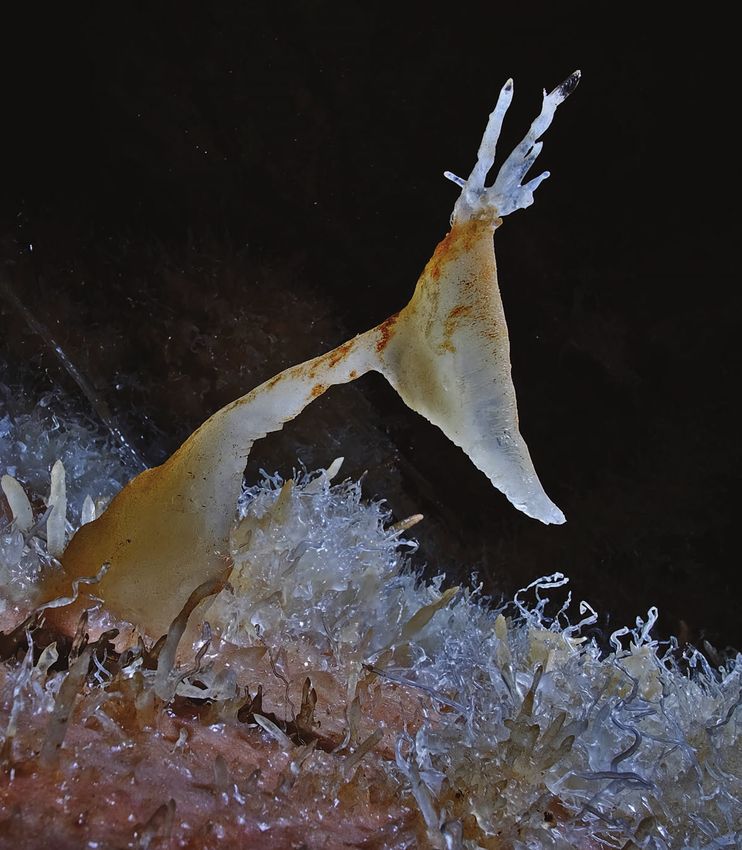
Welcome to the International Year of Caves and Karst!
                                                                        A Guide to Planning Virtual Events
                       USA
Feb-May, 2021—NSS Virtual Cave Rescue                                                        Dr. George Veni,
Series. Second and Fourth Wednesdays of the                                       International Union of Speleology President
month through the end of May, 2021. 8-10 pm
(Eastern) on the NSS Zoom channel. Topics
include patient perspectives, rescue pre-planning                                                           the world’s activities closed because of
and operations, patient management, hazardous
atmospheres, rescuer care, and more. To register                                                            COVID-19.
for these talks, go to: tinyurl.com/4jzmz7et                                                                      Below, find new directions on how you
June 28-July 2, 2021—NSS Convention in                                                                      and your clubs can create virtual IYCK events
Weed, California. http://nss2021.caves.org/                                                                 and conduct other valuable activities safely
August 6-8, 2021—Come to the 68th Annual                                                                    during the pandemic. If you have your health,
Indiana Cave Capers 2021 Edition! This year
we are back at Crawford County 4H Fairgrounds                                                               a computer or phone, and some free time,
near Morengo, Indiana, home of the 2007 NSS                                                                 you can make important contributions to
National Convention. This will be another great                                                             the advancement of speleology while staying
Capers hosted by the Central Indiana Grotto
featuring access to some of the most rare and                                                               safe at home.
beautiful caves in Indiana. Enjoy camping, live                 For the first time in history, the global         Visit the IYCK Website. The website
music, banquet, speaker, prizes and more!                 speleological community is united in 2021         has a lot of general information about caves
Watch for pre-registration discounts and more             in one grand project, the International Year      and karst. Share it with people so they can
info coming soon. For more information, go to
www.cigcaves.com.                                         of Caves and Karst (IYCK). The main goal          learn more. Go to the Download page for
August 13 - 15, 2021—Karst-O-Rama, at Great               of the IYCK is to teach the world about the       the logo, leaflet, posters, and other materials
Saltpetre Cave Preserve, Mt. Vernon, Kentucky.            many benefits of caves and karst. As I write      to help you. You do not need special permis-
We’re bringing Karst-O-Rama back! Great cave              these words, the International Union of           sion. The information is free and open to
trips and camping, vendors, and a live band with
a costume party pair well with our sauna, hot             Speleology (UIS) and its 55 member coun-          everyone. Also, remember to share the UIS
tub, creek splashing, and, of course, feeding             tries are joined by over 150 international        Facebook page.
your thirst at the Guano Grill for three days of          and national organizations as partners, and             Understand the IYCK goals. The
downright speleo-fun! This year’s theme has yet
to be decided. KOR is hosted by the Greater
                                                          more organizations have told me they are          purpose of the IYCK is teach the world about
Cincinnati Grotto with pre-registration discounts         planning to join. Several of these partners       caves and karst. Think about the best ways to
and info available soon! For more information,            are not cave organizations, which is a success    reach people who need to know what spele-
see our website at: karstorama.com/.                      in itself. Their alliance with the UIS proves     ologists understand. If you organize meetings
November 1-5, 2021—2021 National Cave                     that the IYCK is seen as broadly important,
and Karst Management Symposium (NCKMS
                                                                                                            for cave explorers and scientists, that is good,
2021) will be held in San Marcos, TX, part of             and not limited to speleologists.                 but it is important that they include the public
the beautiful Texas Hill Country. Featuring Dale                The greatest alliance came in               too, or at least some influential people who
Pate, NPS National Cave and Karst Program                 September, when the UIS was invited by            need to learn about caves and karst. I’ll give
Coordinator from 2007 to 2017 and Cave
Specialist for Carlsbad Caverns National Park             the United Nations Educational, Scientific,       some examples below but remember to stay
from 1991 to 2002, to speak at the banquet!               and Cultural Organization (UNESCO) to             focused on the public.
Learn about “Endangered Species, Endangered               hold the Opening Ceremony of the IYCK at                  “International” does not always
Caves, Endangered Aquifers.” Field trips to local
caves and special access to local show caves!
                                                          UNESCO Headquarters in Paris. Speleology          mean “big.” Some people think that
Glass-bottom boat tour of local spring! T-shirt!          has never had such a high international stage     because this is the International Year, they
Online pre-registration is open. Reserve your             to reach large numbers of influential national    need to plan big and complicated activities.
hotel room for reduced rates in an arranged               ambassadors and their governments and             If you can do that, excellent! But many
block of rooms at two hotels. More details at
symposium2021.nckms.org                                   show them how very important caves and            times, several small activities can be better at
                                                          karst are to their countries.                     reaching the public than one big event. The
           INTERNATIONAL                                        Yet despite this success in partners, we    UIS has said from the start that you should
July 23-29, 2021—18th International Congress              are challenged by the COVID-19 pandemic.          “do what you can.” No activity is too small!
of Speleology, (Lyon, France), http://uis2021.            Soon after we received the UNESCO invi-                 Use virtual tools. There are now many
speleos.fr/                                               tation, Paris was declared a COVID “red           ways to connect with people. Use teleconfer-
                                                          zone”; thus, the Opening Ceremony was             ence tools like Zoom to give lectures about
        Send items for the calendar to davebunnell@       held virtually on 26 January 2021. Watch          caves and karst. Do you know teachers?
 comcast.net at least 4 weeks before desired month of
  publication (e.g., by April 1 for the May issue).
                                                          the IYCK Website (www.uis-speleo.org) and         Offer free lectures for their students about
                                                          UIS Facebook page (https://www.facebook.          caves. You can do the same for meetings of
                                                          com/uisspeleo) for announcements about all        non-speleological organizations. You can
                                                          IYCK events. The UIS is now working with          also record your voice in PowerPoint as you
                                                          UNESCO to schedule an IYCK celebration            give your lecture, then load it on YouTube
Announcements.................................. 36        sometime later in 2021 as allowed by the          or social media for download. Go out into
President’s Message........................... 37         virus.                                            the karst with your camera or camera phone
Underground Update........................... 38                Over the past few months, I have            and record a field trip that you can share.
Classified Ads...................................... 39   received many messages from people who            For a small amount of time and effort, you
                                                          want to organize activities of the IYCK, but      can reach hundreds or thousands of people
            Front cover:                                  don’t know how because of the pandemic.           this way over the year.
“The Reindeer” by Florian Bachmann,                       One year ago, the UIS published a Planning
   from the 2020 NSS Photo Salon                          Guide to help our members and partners
                                                          develop IYCK events. Two months later,            concluded on page 39

2                   NSS News, April 2021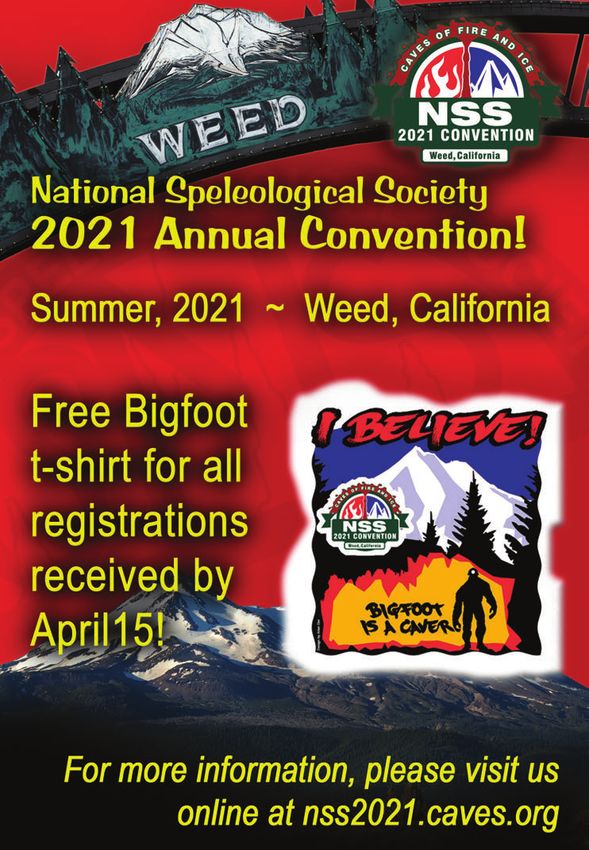
POSTMASTERS OR MEMBERS:
 Send address changes to the National Speleological
 Society Office, contact information below.
                                                                                                                            NSS News  April 2021
         National Speleological Society Office
            6001 Pulaski Pike NW, Huntsville, AL 35810                                                                            Volume 79 Number 4
                         Tel: (256) 852-1300

                                                                              Annual Conservation Issue—Editor, Val Hildreth Werker
         e-mail: nss@caves.org; Web site: http://caves.org/
  Please contact the office for address changes or back issues.

              NSS EXECUTIVE COMMITTEE                                        Dare Mighty Things—Steward and Sustain..............................................4
                      President                                                 Val Hildreth-Werker and Jim C. Werker
                    Geary Schindel
                              Bexar Grotto                                   International Year of Caves and Karst: Many Partners, Many Events.......4
                             San Antonio, TX
                          president@caves.org
                                                                                George Veni
                           (210).326.1576 cell
                                                                             Meet Our 2021 USA Cave Animal of the Year............................................5
    Operations VP                            Administrative VP                  Matthew L. Niemiller and Gretchen M. Baker
   Maureen Handler                            Adam Weaver.
 Sewanee Mountain Grotto
      Sewanee, TN
                                                 Paha Sapa Grotto
                                                  Rapid City, SD
                                                                             San Antonio Zoo’s Center for Conservation and Research........................6
     (423) 605-5569                               (605) 545-5550                Andrew Gluesenkamp and Danté Fenolio
     ovp@caves.org                                avp@caves.org
                                                                             Driftless Area Karst Conservation Task Force............................................9
     Executive VP                          Secretary/Treasurer                  Dawn Ryan
      Scott Engel                             Kristine Ebrey
   Smoky Mountain Grotto                    Sewanee Mountain Grotto          Puliamo il Buio 2020 – Let’s Clean Up the Dark in
        Knoxville, TN
                                                                             Pertosa-Auletta Caves.............................................................................10
                                              South Pittsburg, TN
      (225) 281-3914                            (423)-991-3034
      evp@caves.org                              s-t@caves.org                  Rosangela Addesso, Simona Cafaro, Ferdinando Didonna,
                      NSS NEWS EDITOR                                           Francesco Maurano
                      Dave Bunnell, Ph.D.
                               Box 879                                       Minimum-Impact Caving Guidelines......................................................13
                        Angels Camp, CA 95222                                   Val Hildreth-Werker and Jim C. Werker
                       nssnews@caves.org
 Please include “NSS News” in your subject line when e-mailing
                                                                             Updated Cave Protection Laws on NSS Webpages..................................14
       material to help me sort it from the spam. Thanks!                       Thomas M. Lera
Questions about submitting features and photos? Please see the style
and submission guidelines:on the NSS web site:                               NSS Cave Vandalism Deterrence Commission.........................................14
            https://caves.org/pub/nssnews/style.shtml
                                                                                Sarah Richards
                          ADVERTISING
   Complete advertising information, including rate cards, mechanical        Shocking Sale of “Calming” Calcite Speleothems...................................15
specs and deadlines is available online at                                      Carlos Artiquez
   https://caves.org/pub/nssnews/ads.shtml
   New advertisers should contact Matt Bowers, NSS Director of
Business Development at 209-529-9000 or matt.bowers@caves.org.
                                                                             Central Oregon Caves Graffiti Project: 2021 Update...............................16
   Payments for ads should be sent to the NSS office. New                       Neil Marchington
advertisers are expected to pay for ads prior to publication.
                                                                             30 Years of Saving Caves........................................................................17
                  DEPARTMENT EDITORS                                            Amber Lehmann
       ASSISTANT COPY EDITOR                   NEWSLETTER REVIEW
          Gary Gibula                            Ian Reuter                  Paleoclimatology Sampling in a California Cave....................................19
        garygibula@aol.com                      5560 Sierra Court               Greg Roemer-Baer
                                              Rapid City, SD 57702
        CONSERVATION                           ianreuter@aol.com             Responsible Speleothem Sampling........................................................21
 Jim & Val Hildreth-Werker
                                              CAVE CHRONICLES                   Sarah Truebe, PhD
             PO Box 207
     Hillsboro, NM 88042-0207
           (575) 895-5050
                                             Philip Rykwalder
                                              philip@cavenow.com
                                                                             Surface Vegetation Needs Conservation, Too: A Case Study of Roots in
      werks@cunacueva.com                                                    Lava Caves, El Malpais NM, New Mexico................................................22
         SPELEAN SPOTLIGHT                                                      Kathleen Lavoie, Jessica Snider, Diana Northup
          Gary Gibula
        garygibula@aol.com                                                   Cave Preservation Network Spotlight: Bluff Dwellers Cave, Missouri.....24
                                                                                Nicole Ridlen
Deadline: Ads, articles, and announcements should be sent to the
editor by the 1st of the month, 1 month before the month of issue (e.g.,
                                                                             Reflections of a Conservationist .............................................................26
material for the March issue needs to be in by Feb. 1).                        Ethan Oleson
    The NSS News (ISSN 0027-7010) is published monthly with
the Members Manual and American Caving Accidents published as                What It Means to Be a Member of a High School Cave
additional issues by the National Speleological Society, Inc, 6001
Pulaski Pike NW, Huntsville, AL 35810. Periodicals Postage Paid at
                                                                             Conservation Club...................................................................................28
Huntsville, Al and additional mailing offices. Tel: (256)852-1300, e-mail:      Scout Jessop
nss@caves.org, web: http://caves.org/
    Regular membership with electronic copy of NSS News in the               Cave Restoration and Formation Repair Projects in Lechuguilla,
NSS is $40 per year. Members may elect to receive paper copy
of NSS NEWS for $10 per year. Please visit members.caves.org
                                                                             Cottonwood, and Fort Stanton Caves......................................................29
for descriptions of other membership categories. Non member                     Mike Mansur
Subscriptions to the NSS News are $36 per year. Individual copies
are $3.00 each or 5 or more copies for $1.00 each. Contact the               Fort Stanton Cave Formation Repair and Restoration Project: The Tools
Huntsville office for membership applications, subscriptions, orders,
or for replacement of issues missing or damaged in the mail. Moving?
                                                                             and Techniques We Used........................................................................32
Address changes can be made from your profile in the Account +                  Mike Mansur
Settings tab- Profile tab, for assistance call the office.
Copyright ©2021 by the National Speleological Society
                                                                             Grand Caverns Spring Restoration Volunteer Value................................34
                                                                                Meredith Hall Weberg
                                                                             The Learning Must Go On! Conservation Education during COVID.........35
                                                                                Dave and Tracy Jackson

                                                                                                                              NSS News, April 2021                                3
Dare Mighty Things—Steward and Sustain
               Val Hildreth-Werker and Jim C. Werker, NSS Conservation Joint Chiefs
         We dedicate this 2021 NSSNews              tolls of COVID and the puzzling aftermath          to harbor a daunting array of indicator
    Conservation Issue to the honor and             syndromes and other pathogenesis will never        values. Newly discovered spelean assets
    memory of those affected by the heart-          truly return us to a pre-pandemic world.           are explained in an ever-increasing volume
    breaking consequences of the COVID              Working together to seize and surmount the         of academic information. Caves hold data
    pandemic. May we continue to “dare              challenges ahead, cavers continue to dare          on past and present climates, extremophile
    mighty things” as we honor our caving           mighty things and find new ways to protect         and indicator species, vital karst ground-
    family and celebrate the International Year     and sustain our underEarth.                        water quality, historic and prehistoric
    of Caves and Karst 2021.                              This is the year to reach out and cele-      cultural remains. The fabric and fragments
         Theodore Roosevelt’s words, from his       brate caves! Help engage the world in cave         of natural history await discovery, cradled
    famous1899 speech in Chicago, still ring        awareness throughout this International Year       within spelean spaces.
    true for 2021:                                  of Caves and Karst 2021. Accomplishments                Cave exploration, survey, inventory,
         “Far better it is to dare mighty things,   through speleological exploration are              and cartography open portals to valuable
    to win glorious triumphs, even though           progressing side-by-side with space explo-         scientific stories of natural and cultural
    checkered by failure, than to take rank         ration. We explore the mighty frontiers of         processes. Surprisingly robust over eons,
    with those poor spirits who neither enjoy       inner Earth as humankind spans the mighty          yet delicately balanced on micro-ecological
    much nor suffer much, because they live         reach to other planets. We celebrate both as       scales, caves are birthed by the natural
    in the gray twilight that knows not victory     NASA’s Perseverance rover safely begins a          interdigitating processes of rock, water,
    nor defeat.”                                    new era at Mars’ Jezero Crater to seek signs       and microbial life. Earth’s cave passages,
         From March 2020, ‘round the                of ancient life, collect and cache samples of      features, and contents provide planetary
    seasons ’til now, was a year like no other      rock and regolith (broken rock and soil) for       models for identifying and perpetuating
    in our living memory. Through the chaotic       possible return to Earth, and demonstrate          sustainable practices. We encourage all
    panoply of societal challenges thrust           new exploration technologies as we strive          to stay up-to-date and employ mini-
    forward by pathogens and pandemic,              toward a future of more sustainable options.       mum-impact caving protocols—all caves,
    several things are clear. Beyond balancing            Caving encompasses conservation              whether on Earth or beyond, deserve our
    every decision against the threats of getting   and sustainability. Spelean systems archive        careful, informed respect and stewardship.
    sick or infecting others, even when we are      keys to sustaining life on Earth and clues to      Know how to behave in a cave—see page
    again freely traveling, caving, and going       potential life on other planets. They are the      13, this issue. See https://caves.org/
    to speleo-gatherings, the lingering social      sacred voids of Earth, appointed by nature         conservation/cavingcode.shtml

                                                    and protection for caves and karst. It is simple         New UIS Bulletin: Special
                                                    to join. Just send your logo and website              International Year of Cave and
                                                    address to the address on the Partners page                     Karst Issue
                                                    of the IYCK Website www.iyck2021.org                    You are welcome to visit the UIS
                                                    and then send your event announcements             Website www.uis-speleo.org and download
    The International Year of Caves                 as shown on the Events page. No event is           Volume 62-2 of the UIS Bulletin. Available
    and Karst: Many Partners, Many                  too small. It is all important.                    to all! http://uis-speleo.org/wp-content/
                Events                                   When each event is completed, please          uploads/2021/02/uisb622.pdf
     The International Year of Caves and            send a short report to the Event Results page                 Nivaldo COLZATO (Brazil),
Karst (IYCK) is designed to teach people            on the website http://iyck2021.org/index.            Adjunct Secretary / UIS Bulletin Editor
around the world about caves and karst. It          php/event-results/. This page provides links        UIS-Union Internationale de Spéléologie
is an event organized by the International          to video lectures, news reports, and other
Union of Speleology (UIS), but the UIS can’t        information on the results of all IYCK events.
reach the world alone, which is why we’re           At the end of the IYCK, all the results will
excited to have more than 150 national                                                                   US Cave Laws Updated on NSS
                                                    be compiled into one document that anyone                      Website!
and international organizations partnering          can use to demonstrate the global interest,
with us.                                                                                                      Excellent, useful reference tools!
                                                    value, and support for caves and karst, which       Check out revised reference materials and
     A growing number of events are sched-          we believe will help us all find more support
uled for the International Year of Caves and                                                            pdfs of US Cave Laws at https://caves.
                                                    and funding for exploration, research, and          org/conservation/laws.shtml.
Karst. Find the full list at http://iyck2021.       protection. (See more detailed info starting
org/index.php/events/. Some are sched-                                                                        Thanks to Tom Lera’s perseverance,
                                                    on inside front cover of this issue).               all federal cave protection acts, state cave
uled throughout the year. If you missed                  Join us! http://iyck2021.org/. And visit
our IYCK Opening Ceremonies, already                                                                    and archaeology protection statutes,
                                                    the UIS Facebook page https://www.face-             and Puerto Rico cave and archaeology
viewed by over 6,500 people, watch them             book.com/uisspeleo, UIS Twitter account
at https://www.youtube.com/channel/                                                                     protection statutes are accessible and
                                                    https://twitter.com/uisspeleo, and/or the           up-to-date via the NSS Conservation
UCzSiErLj5x6viNbvAdehDvA.                           UIS Instagram page https://www.instagram.
     The most important thing is that more                                                              Web Pages. The extensive 2020 research
                                                    com/uisspeleo/.                                     and formatting efforts are recognized
partners are joining us and posting events                                          George Veni
daily, and we ask you to be one of them.                                                                with an NSS Certificate of Appreciation
                                                             President, International Union of          to long-time NSS Conservation Team
This is a unique chance to be part of a team                                      Speleology and
making a global impact to improve knowl-                                                                contributor, Thomas Lera. (See Updated
                                                        Executive Director, National Cave and           Cave Protection Laws in this issue).
edge, and from there, appreciation, funding,                              Karst Research Institute

4                  NSS News, April 2021
Meet Our 2021 USA Cave Animal of the Year
                  Matthew L. Niemiller and Gretchen M. Baker; photos by Matthew
      In 2021, the USA Cave Animal of the            Are all Beetles Found in Caves
Year program enters its second year. The                Considered Troglobitic?
program brings attention to the amazing                 With more than 400,000 described
animals that live underground. Cave animals       species, it is not surprising that many species
call caves their homes. As cavers, we are the     of beetles can be found in caves. Some
visitors to these homes, and it’s good to get     species accidentally wander or get washed
to know our hosts a little better.                into cave systems from the surface. Others
      What is the focus for 2021? The USA         are common in caves but also are common
Cave Animal of the Year is the cave ground        on the forest floor or in other surface habi-
beetle, specifically cave beetles in the          tats. Some species are guanophiles that feed      Pseudanophthalmus alabamae from DeKalb
genus Pseudanophthalmus. They are found           on the guano of bats, raccoons, and other         County, Alabama
throughout much of the Appalachians and           mammals. However, the truly troglobitic
Interior Low Plateau karst regions of the         species, such as Pseudanophthalmus cave           tails, millipedes, and other arthropods, as
eastern United States.                            beetles, are adapted for a life in complete       well as small annelid worms that live in the
      Cave ground beetles are small beetles       darkness and are found almost entirely in         silt and mud along the banks of cave streams.
in the family Carabidae. Many beetles live        subterranean habitats.                            Cave ground beetles also have been observed
and can be found in caves. However, cave                                                            scavenging on the carcass of a dead crayfish.
ground beetles are troglobitic, which means              Where Can I Find Them?
that they are specialized for living in subter-        Cave ground beetles are known from             Protecting Cave Ground Beetles
ranean habitats, including caves.                 caves and other subterranean habitats                  Because many cave ground beetle
      Pseudanophthalmus is the most diverse       throughout the Appalachians and Interior          species have exceptionally small ranges (for
group of cave beetles in the United States        Low Plateau karst regions but are also known      example, single-site endemics) they are at an
with over 140 described species and at least      from the Edwards Plateau and Balcones             increased risk of extinction. Like other small
80 species new to science that are awaiting       Escarpment, Ozark Highlands, California,          invertebrates that occur in caves, they are
taxonomic description.                            and the Hawaiian Islands.                         vulnerable to any threats that result in the
                                                       Pseudanophthlamus cave beetles are           degradation or loss of critical habitat, such
   Getting to Know Cave Ground                    known from cave systems in 10 states.             as pollution, mining, and flooding of caves
              Beetles                             Although cave ground beetles are known            associated with impoundments.
      Cave ground beetles are a diverse group     from karst regions throughout the country,
of generally small (3–7.5 mm) beetles that        most species have very small ranges and             Cave Animals Of The Year From
are commonly encountered by cavers. These         are known from just a few cave systems,                    Other Countries
unique beetles lack eyes and flight wings         including several that have been documented             Countries that celebrate Cave Animal
and are depigmented (generally amber in           from just a single cave (single-site endemics).   of the Year agreed to feature cave beetles
color). They generally have long, slender         However, it is not uncommon to find more          to celebrate the International Year of Cave
bodies and elongate legs and antennae.            than one species in a cave system in parts        and Karst 2021. If you’d like to learn about
Most species have converged on a similar          of Alabama, Georgia, Kentucky, Tennessee,         some additional cave beetles, you can find
set of morphological adaptations for living       and Virginia.                                     links on our website for Germany (Cave Rove
in the darkness of caves and are exceedingly           Cave ground beetles are most often           Beetle), Italy (Stammer’s italodytes), Australia
difficult to identify to species based on their   encountered as they move along riparian           (cave beetles in general), Switzerland (cave
external appearance. Cave ground beetles          zones along cave streams or in other areas        beetle), Austria (Arctaphaenops angulipen-
are one of the top predators in terrestrial       where organic material and their prey have        nis), and Greece.
cave ecosystems.                                  concentrated. They can be found actively
                                                  searching for prey on silt and mud banks                 How You Can Participate
Darlingtonea kentuckensis from Fletcher           as well as underneath and within boul-                 We need your help spreading the word
Spring Cave, Rockcastle County, KY
                                                                  der and cobble along cave         about Cave Animal of the Year. First, visit the
                                                                  streams. Cave ground beetles      website: https://caves.org/conservation/
                                                                  have even been observed           caveanimaloftheyear where you’ll find even
                                                                  on the ceilings of passages       more information about caves as animal
                                                                  with active streams. Cave         habitats, cave beetles, and last year’s Cave
                                                                  ground beetles are small and      Animal of the Year, pseudoscorpions. Please
                                                                  can be difficult to find to the   share the website address with friends and
                                                                  untrained eye.                    on your Grotto social media. If you’re lucky
                                                                                                    enough to find a cave beetle while caving,
                                                                  What Do Cave Ground               help others see it and learn about these cave
                                                                      Beetles Eat?                  species. We invite you to make a photo of
                                                                      All cave ground beetles,      it and post it on the USA Cave Animal of
                                                                 like most other carabid            the Year Facebook page. Have another
                                                                 beetles, are predatory. They       great year of learning about and helping to
                                                                 likely feed on the eggs of         conserve habitat for the fascinating animals
                                                                 other insects as well as spring-   that make caves their homes!

                                                                                                    NSS News, April 2021                          5
San Antonio Zoo’s Center for Conservation and Research
                Andrew Gluesenkamp and Danté Fenolio; photos by Danté Fenolio
                                 San Antonio Zoo, 3908 N St. Mary’s Street, San Antonio, Texas 78212
                                                    andy.gluesenkamp@sazoo.org

                Overview                         systematics, development and morphology,                  Texas Tetra Project
     San Antonio Zoo’s Center for                and conservation management. Research                Project Partner: University of
Conservation and Research (SAZ CCR)              and management projects cover a diversity       Minnesota
was established to further the San Antonio       of organisms including fish, amphibians,             The Mexican tetra (Astyanax mexica-
Zoological Society’s mission to secure a place   reptiles, crustaceans, and bats, as well as     nus) is native to the Rio Grande and Nueces
for wildlife by actively engaging in boots-on-   imperiled ecosystems including the Amazon       River drainages in South Texas. This species
the-ground research. This is accomplished by     rainforest, the deep ocean, caves, and karst.   is widespread in spring fed rivers and streams
providing guidance on conservation issues        A team of four staff (a conservation manager    in central Texas, likely as the result of “bait
to policy makers; information dissemina-         and three conservation technicians) are         bucket” introductions beginning in the middle
tion in the form of peer-reviewed papers,        responsible for day-to-day operations, animal   of the last century. Although Texas popula-
books, technical reports, public outreach,       care, and laboratory management, in addi-       tions are derived from surface stock, this
education, and popular media; as well as         tion to assisting with project design, data     species occurs in several cave and spring
providing research opportunities, training,      collection, field work, and outreach efforts.   systems. The Texas Tetra Project seeks
and guidance for both students and accom-             Importantly, conservation staff develop    to explore the evolutionary history of this
plished researchers.                             species-specific care and husbandry proto-      species in Texas. Ongoing efforts include
     Research and conservation projects          cols for rare and endangered organisms.         documentation of subterranean popula-
span three continents and include field and      Most of these are obscure subterranean          tions and comparison of gene expression,
laboratory studies; captive breeding and         species for which there are no established      morphology, physiology, and behavior
husbandry of rare or imperiled species;          husbandry or captive reproduction protocols.    among cave and surface populations.
collaboration with academic researchers,
members of the private sector, local, state,     Selected Programs and Projects                   Cooperative study and conserva-
tribal governments, and federal agencies.                                                          tion of groundwater species in
     Our work is funded primarily by research    Subterranean bioinventory work in                              Texas
grants, contracts, and private donations. We      China – Chinese Cavefish Working                    Project Partners: University of Texas at
are fortunate to have recently received NSS                    Group                             Arlington, University of Texas at Austin,
sponsorship of our efforts. In celebration of         Project Partners: Chinese Academy          Texas State University at San Marcos, the
the International Year of Caves and Karst        of Sciences, University of Alabama              University of Texas Rio Grande Valley,
http://iyck2021.org, the NSS has pledged         - Huntsville, New Jersey Institute of           United States Fish and Wildlife Service
to cover the cost of feeding our laboratory      Technology, and Louisiana State University           The San Antonio Zoo Center for
populations of cave organisms for one year.           The goals of this effort are to survey     Conservation and Research is developing
We are immensely grateful for this thoughtful    historic and new localities, for mulate         husbandry guidelines and reproduction proto-
and generous gesture and we look forward         conservation strategies, and clarify the        cols for rare endangered species that inhabit
to thanking y’all in person at the National      systematics and taxonomy of critically endan-   the Edwards Aquifer. Labs have been built
Cave and Karst Symposium, to be held in          gered Chinese cavefish and cave species         from repurposed shipping containers on zoo
San Marcus,Texas on November 1-5, 2021           new to science. One reason for the decline      grounds. These are used to keep and breed
https://symposium2021.nckms.org.                 of Chinese cave fauna is overuse and abuse      federally listed species including the Texas
     The knowledge, experience, and dedica-      of aquifers throughout southern China, a        blind salamander (Eurycea rathbuni), Salado
tion of SAZ CCR staff are core to achieving      problem we can relate to in San Antonio.        salamander (E. chisholmensis), groundwa-
our mission. Senior staff (Danté Fenolio, VP     This project has resulted in the discovery of   ter amphipods, and spring-inhabiting riffle
and Andy Gluesenkamp, Director) both have        several species new to science, and several     beetles. These organisms live nowhere else
extensive experience in ecology and evolu-       peer-reviewed papers have been published        on earth and, in addition to threats to their
tionary biology, taxonomy and phylogenetic       or are pending.                                 habitat in the form or reductions in the qual-

Sinocyclocheilus furcodorsalis,
Guangxi, China

Right: Triplophysa huanjiangensis, Guangxi Huanjiang, China

6                NSS News, April 2021
Adult Grotto Salamander                                                 Georgia Blind Salamander
                                           (Eurycea spelaea)                                                       (Eurycea wallacei)

ity and quantity of groundwater, they suffer     tory population of this species and efforts     they are critically necessary. The quality of
from a syndrome known as “out-of-sight,          are underway to establish husbandry and         the groundwater where these species exist
out-of-mind.” In addition to our work with       breeding protocols. Surveys for suitable        is declining and wildlife authorities anticipate
laboratory populations and field studies,        habitat are underway at Amistad National        the decline of the salamander owing to
we are working with researchers from UT          Recreation Area and at sites along the          anthropogenic influences. Our program was
Austin on eDNA surveys for rare and listed       Devil’s River. Fieldwork in Mexico includes     the first to breed both species in captivity.
groundwater species. We are also collaborat-     revisiting known sites and documenting new      The husbandry and breeding protocols have
ing with researchers from UT Arlington on a      sites via cave and spring surveys as well as    been published for the crayfish and are in
genetic study of the Texas blind salamander      eDNA sampling. We are also collaborating        preparation for the salamander.
(E. rathbuni) and recently received funding to   on efforts to document the distribution and
pursue rediscovery of the rarest salamander      collect additional material of the toothless     Development of husbandry and
in the world, the Blanco blind salamander        blindcat (Trogloglanis pattersoni) and the      captive reproduction protocols for
(E. robusta). Finally, we are collaborating on   widemouth blindcat (Satan eurystomus)                   the Ozark Cavefish
descriptions of two new species of salaman-      from the Edwards Aquifer in and around                Project Partners: University of Alabama
ders from the Edwards Aquifer.                   San Antonio using drift nets, bottle traps,     - Huntsville, United States Fish and
                                                 and eDNA metabarcoding.                         Wildlife Service, The Nature Conservancy
Mexican Blindcat Project – Blindcat                                                                    This effort involved developing a
         Working Group                             Development of husbandry and                  research colony of the Ozark Cavefish
     Project Partners: National Park Service,     captive reproduction protocols for             (Troglichthys rosae) at SAZ CCR. The effort
University of Texas at Austin Biodiversity             Floridan Aquifer species                  started with the incidental take of several
Collections, Zara Environmental LLC.                 Project Partners: University of             individual fishes by way of road work in
     The Mexican blindcat (Prietella phre-       Alabama - Huntsville, Florida Fish and          Arkansas and quickly turned into this partner-
atophila) is a rare subterranean catfish         Wildlife Conservation Commission,               ing program with TNC and USFWS. Goals
known from twelve sites in Coahuila, Mexico.     Georgia Department of Natural Resources         of this project include development of captive
Our team recently documented two popula-             This effort involved developing             husbandry and breeding protocols for this
tions in Val Verde County, Texas, marking        a research colony of the Georgia Blind          federally listed species. The long-term quality
the first US occurrences of this species. This   Salamander (Eurycea wallacei) and the           of the groundwater where this species exists
project seeks to determine the distribution,     Dougherty Plain Cave Crayfish (Cambarus         is in question. Our program was the first to
ecology, and conservation status of this         cryptodytes) at SAZ CCR. Goals of this          work with this species in captivity. Husbandry
species by conducting fieldwork in the US        project include development of captive          protocols are being developed now.
and Mexico. We maintain the only labora-         husbandry and breeding protocols before

                                                                           Female Cambarus cryptodytes in berry,
                                                                           the Dougherty Plain Cave Crayfish

 Mexican Blindcats,
 Prietella phreatophila

                                                                                                 NSS News, April 2021                          7
Ozark cavefish, Troglichthys
                                              rosae juvenile

                                                                             Caecidotea macropopoda, an
     Cave bioinventory work and                                              isopod from an Oklahoma cave
    monitoring of imperiled ground-
    water species in the Ozarks and
             Appalachians
      Pr oje c t P a r tn e r s : U n i v e r s i t y o f
Alabama - Huntsville, United States Fish
and Wildlife Service, Nature Conservancy,
Roger’s State University, New Jersey
Institute of Technology, Oklahoma
Department of Wildlife Conservation,
Arkansas Game and Fish Commission,
Missouri Department of Conservation,
Georgia Department of Natural Resources,
Tennessee Wildlife Resources Agency,
Kentucky Department of Fish and Wildlife,
Alabama Department of Conservation and
Natural Resources
      This 20-year-old project seeks to
confirm historic localities, formulate conser-
vation strategies, and clarify systematics of
critically endangered species and species
new to science. We survey known as well
as unsurveyed cave systems and conduct
bioinventories on behalf of state and federal
wildlife agencies. This project also performs
annual surveys of several federally endan-
gered cave species.

    Population ecology of the grotto
              salamander
      Pr oje c t P a r tn e r s : U n i v e r s i t y o f
Alabama - Huntsville, United States Fish
and Wildlife Service, New Jersey Institute
of Technology, Oklahoma Department
of Wildlife Conservation, The Nature
Conservancy
      SAZ CCR is conducting long-term
population ecology studies of the grotto sala-
mander (Eurycea spelaea) in the Ozarks of
Oklahoma. In the past, we have marked indi-
viduals with acrylic elastomer and conducted
stable isotope analysis to decipher the food
webs in the cave streams where larval
salamanders live. Populations are being
monitored for change in abundance relative
to the decrease in bat numbers because of
infection with White Nose Syndrome. The
species is listed as a species of concern in
all states where it occurs. The project was
initiated in 2001.

8                    NSS News, April 2021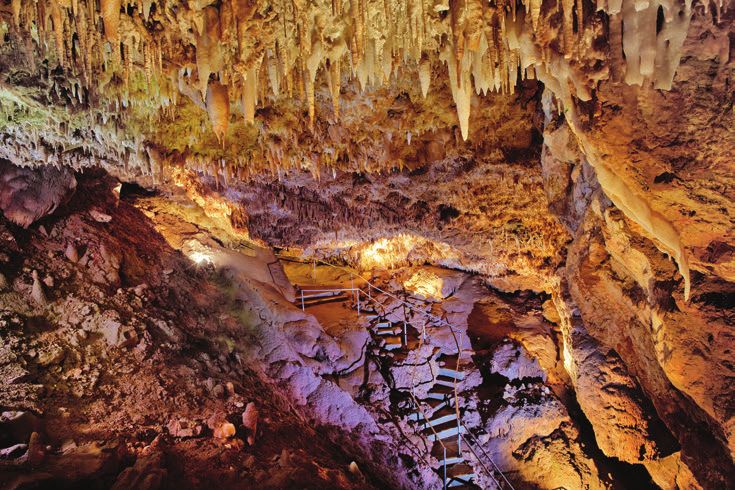
Celebrating the International Year of Caves and Karst:
                          Driftless Area Karst Conservation Task Force
                                        Dawn Ryan,* DARK CTF Coordinator
      The Driftless Area is one of the most
interesting geologic regions in the Midwest
and covers nearly 10,000 square miles
in parts of Minnesota, Illinois, Iowa, and
Wisconsin. This karst terrain includes deep
river valleys such as the Mississippi, sink-
holes, caves and limestone bluffs providing
scenic and recreational opportunities. It is
also an important agricultural area where
land use on karst can create a whole gamut of
water quality problems. With this understand-
ing and looking toward the International Year
of Caves and Karst, we created the Driftless
Area Karst (DARK) Conservation Task Force.
      We borrowed the concept from the
Virginia Cave and Karst Trail (https://
www.dcr.virginia.gov/natural-heritage/
vacavetrail), a feature that we visited
during the 2019 National Cave and Karst
Management Symposium in Virginia. The
“trail” is promoted as a public outreach tool
to educate the public on caves and karst
features, with stops along the driving route
at fee-based show caves, scenic views, and
                                                 Turquoise Lake in Mystery Cave. Photo courtesy MNDR
self-guided hikes.
      Representatives from the four states       Conservation (DARK) partnerships with the         sibility, free or fee based, dog friendly, and
decided on approximately 10 existing karst       National Speleological Society, National          maps and photos of each site.
resources for each state, designating sites of   Park Service, Northeast Iowa Resource                   The University of Minnesota is provid-
public interest that could include show caves,   Conservation & Development (RC&D),                ing free use of their Flyover Country App
hikes to sinkholes, springs, overlooks, and      League of Women Voters of Jo Daviess              (https://flyovercountry.io/). The mobile app
museums that exemplify karst in their region.    County, Illinois State Geological Survey,         is designed for geoscience outreach and links
Criteria for the sites require that they are     Meredith Hall Weberg from the Virginia            users with interesting landscape features. The
open to the public, provide safe parking,        Cave and Karst Trail, several state organiza-     user chooses which DARK Discovery Area
and have a relationship to the Driftless Area    tions, and citizen scientists from Minnesota,     to visit and downloads information from the
karst. Grouped into “Discovery Areas” based      Iowa, Illinois, and Wisconsin.                    website about the discovery feature along
on geographic location, these karst areas are         This is truly a collaborative project with   with GPS directions to their phone, and the
featured on the DARK website and Flyover         several organizations providing support and       App works even if there is no cell service.
Country App.                                     resources integral to the effort.                 An example of a discovery area includes a
                                                      The NSS is providing webhosting for the      self-guided hike to Big Spring in Forestville/
      Collaborators and DARK                     DARK Conservation Task Force. DARK’s              Mystery Cave State Park, a tour of Mystery
            Partnerships                         website address is: driftless.caves.org.          Cave, and a self-guided hike to Cherry Grove
    With help from our colleagues,                    The NPS Rivers, Trails, & Conservation       Blind Valley Scientific and Natural Area,
Minnesota Department of Natural Resources        Assistance Program is providing an intern         which is the origin of the water flowing from
hydrologist Jeff Green and Whitewater            to develop the interactive website that will      Big Spring in Forestville.
State Park Interpreter, Sara Holger, we          provide site interpretation and information
were are able to create Driftless Area Karst     such as, ease and time needed to visit, acces-       Driftless Area Karst Discovery
                                                                                                        Routes 2021 and Beyond
                                                                          Big Spring in                 The Website and App are scheduled
                                                                          Forestville/Mystery      to be active in March or April 2021. Once
                                                                          Cave State Park.         everything is activated, we plan to keep the
                                                                          Photo courtesy
                                                                                                   Website and App available even after the end
                                                                          MNDR
                                                                                                   of IYCK2021 (See http://iyck2021.org).

                                                                                                   * About the author: Dawn Ryan is a Life Member
                                                                                                   and Fellow of the National Speleological
                                                                                                   Society (NSS#50407) and Fellow of the Cave
                                                                                                   Research Foundation. Ryan manages Mystery
                                                                                                   Cave in Forestville/Mystery Cave State Park,
                                                                                                   Preston, Minnesota.

                                                                                                   NSS News, April 2021                        9
Puliamo il Buio 2020 – Let’s Clean Up the Dark in Pertosa-Auletta Caves
      Rosangela Addesso, Simona Cafaro, Ferdinando Didonna, Francesco Maurano

      The Pertosa-Auletta complex is a karst                      Background                               Grotte di Pertosa-Auletta extend for a
show cave system located near the villages              Puliamo il Buio— Let’s Clean Up the          total length of 3000 meters and are divided
of Pertosa and Auletta, in the province of         Dark, organized by the Italian Speleological      into three main branches (Fig. 2). The middle
Salerno, Campania, Italy. This important           Society every year since 2005, is an initiative   and southern branches are decorated with
karst site in southern Italy is protected within   dedicated to the cleaning of underground          abundant speleothems and respectively show
a national park, Parco Nazionale del Cilento,      environments throughout Italy. We provide         both paleo (fossil) and active (spring) sites. In
Vallo di Diano e Alburni. Pertosa-Auletta is       documentation as evidence of the offenses,        the middle branch there is a short path open
included in the European Geoparks Network          assess the danger and degree of damage,           to the public.
for its important geological and cultural heri-    propose possible remedies to the public                 Our cleaning activities took place in the
tage. In 1998, the park and several ancient        and local administrations, and coordinate         tourist branch, represented on the plan map
Greek towns became a UNESCO World                  the cave clean up events. Clean up the Dark       from point 1 to 5 (Fig. 2). About 800 meters
Heritage Site.                                     follows the footsteps of international “Clean     long, this section is characterized by a succes-
      Although the cave receives routine main-     up the World” events, which are coordinated       sion of large rooms adorned with imposing
tenance, its management body, Fondazione           in Italy by the Legambiente Associazione          speleothems and morphologies that cover
MIdA (Musei Integrati dell’ Ambiente),             (League for the Environment, a not-for-profit     the ground almost completely.
dedicated a day to evaluate conservation           environmental association).
concerns that had escaped attention during                                                                          The Program
the usual cleaning activities in cave. The goal                      The Site                              The event was organized in five phases:
was to identify new strategies and actions               Pertosa-Auletta is among the most            1.    Present cave descriptions and guide-
to enhance sustainable management of the           important karst springs in southern Italy.               lines for cleaning activities in the show
show cave. Activities focused on mitigat-          Aspects of scientific importance include the             cave.
ing trash left along the cave pathways and         karst phenomenon, hydrogeology, archeol-           2.    Organize work groups and distribute
exploring methods to decrease future litter-       ogy, and speleo-biology. Pertosa-Auletta also            forms to complete during cleaning
ing in the cave. The over-arching objective        constitutes a significant economic reality in            activities (document typology, quantity,
of this ongoing project is to safeguard and        the territory, being a tourist site since the            and collecting area of objects).
conserve the cave ecosystem.                       middle of the last century. The main entrance      3.    Conduct small group conversations
      Thanks to the help of twenty-eight           to the karst cavity, located in the left bank            on Sustainable Development Goals in
speleologists (Fig. 1) from three different        of the Tanagro River, opens at 263 meters                Italian Speleology.
regions in the south of Italy (Campania,           above mean sea level along the western slope       4.    Perform cave cleaning activities in
Basilicata, and Puglia) and seven speleo-          of the Alburni Mountains.                                work groups.
logical groups (Gruppo Speleo Alpinistico                Thanks to the efforts of many spele-         5.    Discuss data collections and final
Vallo di Diano, Gruppo Speleo Melandro,            ologists engaged in various exploratory                  reports from each group.
Gruppo Speleologico Natura Esplora,                campaigns, both the cave survey and the
Gruppo Speleo Archeologico Vespertilio,            sur face topographical survey are well                  The Guidelines for Cleaning
Centro Altamurano Ricerche Speleologiche,          defined. Initial exploration of the cavity and          Activities in the Show Cave
Gruppo Speleologico Castel di Lepre,               a first survey was carried out in 1924 by SME      •     Collect all solid and liquid waste
Gruppo Speleologico CAI Napoli), together          (Società Meridionale di Elettricità) to enable           dispersed in the cave environment,
with MIdA staff, we were able to identify,         exploitation of water resources. In 1952,                especially those of organic origin (for
document, and remove many objects left             the IGM (Istituto Geografico Militare) did a             example paper, cloth, etc.).
in the cave due to tourist activities. We          precision survey of the entire cavity, with a      •     Separate waste, if possible.
accomplished meticulous trash retrieval            first relief published by Lieutenant Dutto.        •     Remember to thoroughly look in the
and cleanup outside of trail boundaries and        Various survey and exploration expeditions               ravine and niches of the rock.
from the ravine where tourists pitched their       conducted by the GS-CAI Napoli (Gruppo             •     Always move with caution. Avoid
unwanted items.                                    Speleo Club Alpino Italiano Napoli) acquired             damaging speleothems and surfaces.
                                                   more details over time.                            •     Always operate with safety first in
                                                                                                            mind.
                                                                                                      •     Use clean gloves and clothing.
                                                                                                      •     Catalog, photograph, and define quan-
                                                                                                            tities of all the found objects.
                                                                                                      •     Communicate with the managers
                                                                                                            and suggest solutions to minimize the
                                                                                                            phenomenon of the abandonment of
                                                                                                            materials (tourist trash) in the cave.
                                                                                                      •     Before the in-cave activity, reread
                                                                                                            the “Protocol for Minimum-Impact
                                                                                                            Speleology” by Val-Hildreth Werker
                                                                                                            and Jim C. Werker. See Minimum-
                                                                                                            Impact Caving Guidelines (https://
                                                                                                            caves.org/conservation/cavingcode.
Figure 1: 28 cavers who participated in the cleanup                                                         shtml).

10               NSS News, April 2021
Figure 5: an old flashcube covered in calcite
Figure 2: map showing the 3 branches of the cave
Take with you: Sustainable Development was approved with
• gloves the definition of the 17 sustainable develop-
• bags ment goals and the 169 sub-goals, aimed
• brush and dustpan at ending poverty, fighting inequality, social
• bubbish pick-up stick, a tool with exten- and economic development, and nature
sion to reach off trail conservation.
• hammer, chisel, trowel (tools for care- Achieving the SDGs requires collabora-
fully removing objects calcified into tions among governments, institutions, the
cave surfaces, after thoughtful inspec- private business sector, civil society, and
tion and do-no-harm evaluation) citizens to ensure a better planet for future
• mini vacuum cleaner generations.
• spray bottles with water, brushes with Based on 131 available indicators that
soft bristles, and sponges to catch allow coverage of 105 of the 169 SDG
excess water (when cleaning human sub-objectives, Italy has currently achieved
Figure 3: electrical cable remnants calcited
impacts from cave surfaces) into surfaces 12 of the 2030 objectives and our nation is
close to accomplishing other objectives. For
What Did We Find in the Cave? The Sustainable Development example, throughout Italy we have already
In all cave areas, we found remains of Goals in Italian Speleology achieved the targets for sanitation, access to
electrical cables, especially near the electrical During the “Clean Up the Dark” day clean electricity and fuels, and percentage
and monitoring stations; some of these were at Pertosa-Auletta, the Italian Speleological of land area covered by trees (targets 6.3,
calcited into cave surfaces (Fig. 3). Society (SSI) organized a workshop to 7.1 and 15.1). However, some challenges
Numerous plastic objects were collected, explore and understand global development remain; Italy is still a long way off with objec-
in some cases covered by calcite (Fig. 4). issues, and to help us prepare for wide- tives relating to teacher training, violence
Other objects found: coins, clothing, spread promotion during the Interna-tional against women, and the national percentage
light bulbs, corrugated pipes, nails, iron, Year of Caves and Karst 2021. We specifi- of young people not in ed-ucation, employ-
chewing gum, electrical tape residues, old cally discussed the relationships between ment, or training programs (objectives 4.c,
flashes ... (Fig. 5) show caves, speleology, and sustainable 5.2 and 8.6). However, the really big chal-
development goals. lenge is a knowledge-based transition to
Suggestions for Show Cave The Sustainable Development Goals sustainable development.
Management (SDGs) are 17 goals agreed upon by 150 The workshop was based on these 5
• Sensitize tourists (at the entrance!) inter national leaders from the United discussion points:
about the abandonment of waste in Na-tions Organization in September 2015. 1. Formulate the way in which Italian
the cave. Each goal fits three overarching catagories: Speleology contributes to the SDGs;
• The cave guides must collect waste to contribute to global development; to 2. Identify common contributions to insti-
along the walking paths. promote human well-being; and to protect tutions and to the public;
• Plan at least two events per year for the environment. The 2030 Agenda for 3. Increase the visibility of the importance
cleaning the underground environment. of karst and caves;
• It is necessary to schedule reconnais- 4. Improve the involvement of speleolo-
sance of the lighting system. Verify the gists and increase the possibilities of
functioning of the lamps and remove or support for protection actions;
replace worn or degraded appliances. 5. Present the results on the occasions of
• All waste produced from cave main- the 70th Anniversary of the SSI and
tenance works must be transported at events of the International Year of
outside of the cave environment. Caves and Karst 2021.
• If work in the cave is carried out by
external companies, it is necessary to In particular, we identify the following
remind the workers and supervisors of goals within the SDGs to aid in formulat-
the absolute prohibition of abandoning ing the ways in which Italian Speleology
waste. and caves contribute to the international
Figure 4: Plastic objects collected were often
covered in calcite. Sustainable Development Goals.
NSS News, April 2021 11SDG 3: To ensure health and well- together from many scientific disciplines to SDG 17. Strengthen the means of
being for all ages; cooperate in studies of the impacts of climate implementing the objectives and renew
Our focus group identifies that caves and change in cave environments, fluxuations the global partnership for sus-tainable
speleology contribute to the goal through: in spelean microclimates, documenting development;
speleotherapy, thermal baths in caves (Grotta biodiversity variations, and investigating In reading this document, we are
Giusti https://www.grottagiustispa.com). paleoclimatic and paleoenvironmental recon- contributing to the goals of partnerships
Cave visits also can enhance physical health structions from cave concretions. for sustainable development. As SSI and
and mental balance for all ages. the speleological community, we believe
SDG 14. Conserve and sustainably use in meetings (national and international),
SDG 4. Provide quality, equitable, the oceans, seas and marine resources relationships/partnerships with other
and inclusive education and learning for sustainable development; speleological organizations, touristic cave
opportunities for all; Speleologists investigate the Importance associations, schools, public education
Speleology contributes constantly to of marine caves and coast monitoring, study services, national and regional Parks, and
general public educational outreach and, in marine bio-speleology, and promote citizen local authorities. An important moment for
some cases, caving groups include educa- science contributions on marine caves and sharing these goals will be Speleo Kamaraton
tion as part of their established objectives. groundwaters (https://phreatic.org/). 2021 International Meeting of Speleology
Examples include: speleology courses (I-II-III (http://www.speleokamaraton.eu/).
level); guided excursions; museum collabo- SDG 15. Protect, restore, and promote
rations; conferences/conventions; events sustainable use of terrestrial ecosys- Advancing the United Nations
(inlcuding speleo diversity events for people tems, sustainably manage for-ests, Sustainable Development Goals
with disabilities); outreach campaigns, such combat desertification, halt and The strength of the Italian speleological
as “The water we will drink” (http://www. reverse land degradation, and halt community vision is enabled by:
acquacheberremo.it/); project planning biodiversity loss; • The interconnected speleological
(PON, POR, LIFE), schools/didactics proj- Caves are ecosystems with relevant community;
ects, documentation and scientific study; genetic diversity. Speleology contributes • Excellent experience and local
cave cadaster/library/publications; steward- to the conservation of biodiversity through knowledge;
ship outreach; participation in exhibitions/ appropriate cave protection measures, regu- • Trust and common goals.
fairs; training events; all with total respect lar monitoring, and official descriptions of These strengths must be used to
for gender equality. new species. The bio-speleological research promote the conservation of caves and karst
of the Italian speleological community and in the broader perspective of the Sustainable
SDG 6. Ensure the availability and SSI advance the study of biodiversity in Development Goals.
sustainable management of water and underground habitats (https://animalidi-
sanitation facilities for all; grotta.speleo.it/). SSI maintains a catalogue References
Speleologists and cavers contribute of the fauna in natural and artificial caves https://www.un.org/sustainabledevelopment/
constantly to: monitoring, surface and cave throughout Italy. As well, SSI supports the VdHK POSITION PAPER SUSTAINABILITY:
exploration; cave diving exploration and monitoring and protection of bat colonies, Contribution of German cave and karst
research to the UN Sustainable Development
survey, hydrogeology studies; “Clean Up the and advocates specific cave access protocols
Goals (Agenda 2030)
Dark” actions (https://www.puliamoilbuio. in collaboration with bat specialists. UIS Bulletin Volume 60-1 - July 2018 :Cave
it/). In many areas, cavers are the guardians For SSI, it is important to protect caves Protection at the Highest Level: UIS Engaged
of the underground and of the karst waters. and cave life by including underground habi- in “UN Global Sustainable Development Goals”
tats in the environmental conservation laws By Bärbel Vogel (Germany) - UIS Adjunct
SDG 8. Promote sustained, inclusive, of the European Community. Supporting Secretary
and sustainable economic growth, the protection of these biotopes is often Hildreth-Werker V, Werker JC, 2006. Do Cavers
Need a Code of Conduct? [Minimum Impact
full and productive employment, and fundamentally based on the presence of
Code of Ethics for Caving]. In: Hildreth-
decent work for all; bats that use cavities for hibernation; in Werker V, Werker JC, editors. 2006. Cave
Caves are also an important economic fact, they are protected in accordance with Conservation and Restoration. Huntsville,
resource for tourism and valorization of the Directive 92/43 / EEC of 21 May 1992 Alabama: National Speleological Society. p
territory. Speleology assists this economic on the conservation of natural habitats and 266. [Chapter pp 263-267.]
process and enhances balance in the sustain- wild fauna and flora (Directive Habitat). Hildreth-Werker V, Werker JC, editors. 2006.
able conservation of natural and cultural If the caves are identified as HABITAT Cave Conservation and Restoration. Huntsville,
Alabama: National Speleological Society. xiv+
resources. Moreover, speleology offers of Community Interest (tourist caves are
600 p. [Honored in the U.S. and Australia with
training for job opportunities in multiple excluded), and the species living in the caves several awards, the volume contains a wealth
disciplines including rope access integrated are safeguarded based on their presence of detail from 46 contributors describing tools
services, tree-climbing, internships in speleo- or absence in the Annexes of the Directive and methods for cave conservation manage-
logical sciences and resource management, as species of community interest, the cave ment, restoration, and speleothem repair.]
work-study jobs, educational cave tour inno- and its fauna are considered protected Available at the NSS Bookstore https://
vations in the outdoor sector, as well as tours ecosystems. members.caves.org/store/default.aspx
to mines and museums. SSI supports these protection initiatives ISBN 1-879961-15-6
by structuring regional cave registers that
SDG 13. Take urgent action to combat report protection status. These registers are a
climate change and its impacts; fundamental tool that competent authorities
Speleology contributes to monitoring use in land and resource management of the
climate changes. The speleological commu- territory (https://speleo.it/catastogrotte/).
nity is very sensible in promoting plastic-free,
sustainable product use. Speleologists come
12 NSS News, April 2021You can also read


