TRAINING PROGRAMME THE MAY 50K FOR MENTAL HEALTH UK - AWS
←
→
Page content transcription
If your browser does not render page correctly, please read the page content below
THE MAY 50K FOR MENTAL HEALTH UK
TRAINING PROGRAMME

WELCOME
Congratulations on taking your first steps in achieving something awesome this year and all
in support of Mental Health UK! Plus, a big thank you for being part of the first ever May 50K
for Mental Health UK! We’re thrilled to have you on board.
Below is a guide to help you be prepared for your trekking adventure. Enjoy the journey.

PREPARATION
Preparation is key when it comes to taking part in the mighty May 50K for Mental Health UK.
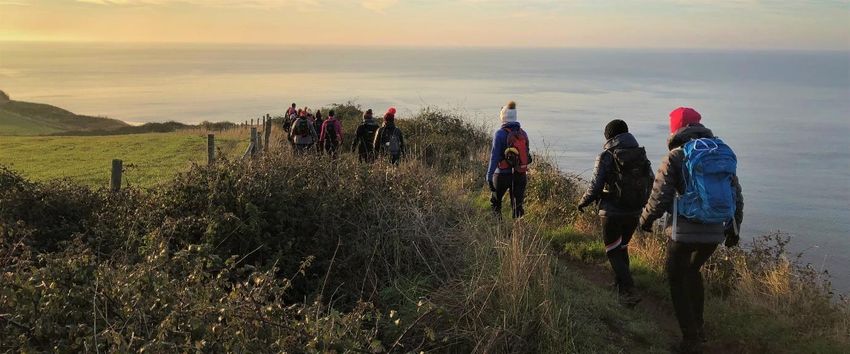
The level of difficulty is graded as ‘Tough’ given you will be trekking 50kms along the
undulating Jurassic Coast in one day. The trek sees you walking on trails that can be muddy
and rocky at times. There are plenty of hills and the best way to be prepared is to include all
of these elements within your training. An appropriate level of fitness and overall endurance
will go a long way to helping you enjoy this incredible challenge in support of people
affected by mental health problems including friends, family and carers.

THE ROUTE
The route covers approximately 50kms between Swanage to Weymouth. Please see the map
below.

                                                                                                  1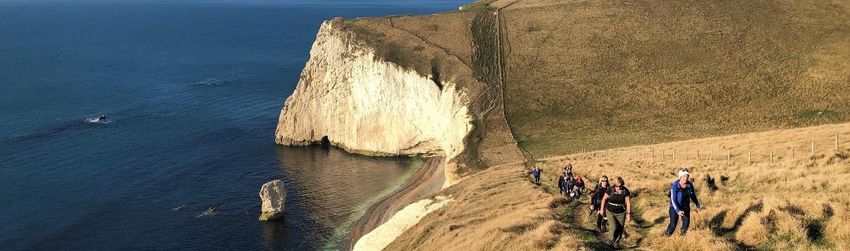
TOP 11 TIPS

        1. Find the right footwear
        Different shoes work for different people. Make sure you spend time trying on different
        styles and find something with good support and grip that suits you. We strongly
        recommend well-worn in waterproof hiking boots.

        2. Use your kit
        Use your kit as much as possible during your training walks including your boots, rucksack
        (packed with your waterproofs, warm clothing and a minimum of 2-litres of water) and
        trekking poles (if you plan to bring these). That way you will be familiar with your kit, know
        where it may rub and strengthen your body accordingly.

        3. Train to time
        Always thinking about how many miles you are covering can become stressful, which is
        why our training plans are mostly set to time. This means you can focus on building
        sustainably as the weeks go by.

        4. Have a routine
        Work, family and social life means that you might need to rework our training plans to
        make them fit around your lifestyle. Schedule in your training for the days and times you
        know will give you the best opportunity to focus on each session and get the most out of
        it.

        5. Set targets
        Starting at the beginning of a training plan can be daunting, so try and break it up into
        manageable chunks and remember to reward yourself for reaching personal milestones!
        Mobile apps such as ‘Strava’ are a great way to monitor your progress.

        6. Add variety to your training
        Including cross-training such as cycling, running, swimming and gym work can quickly
        enhance your fitness, especially if you’re struggling to fit in the much longer training walks.

        7. Increase your strength
        For this challenge you’ll be on your feet for many hours, so building a strong core and
        having good posture will really help the kms feel easier and reduce the likelihood of injury.

        8. Fuel and recover
        You need to take care of your body when you’re training to reduce the risk of injury and
        fatigue, so we have included sections with information on stretching, energy and nutrition
        to make sure you’re in the best condition you can be.

        9. Plan your route
        Look online for popular hiking trails in your area, ask friends and family if they have any
        recommendations or check out suggested routes on mobile apps such as Strava,
        Bikemap, etc. However, you do it, make sure you have a plan before you set off, so you
        can prepare for the distance you’ll be covering and won’t spend precious training time
        figuring out where to go. Make sure you have suitable clothing & equipment for the time
        of day too.

        10. Keep it social
        One of the best things about walking is that it’s an accessible and sociable activity. Invite
        family & friends along on your training walks to keep you company & motivated.

        11. Check the weather
        The changeable British weather is part of the excitement and challenge of walking.
        Check out your Kit List and make sure you’re prepared and comfortable in all conditions.
        To check the weather forecast we recommend using http://www.mwis.org.uk/.
                                                                                               2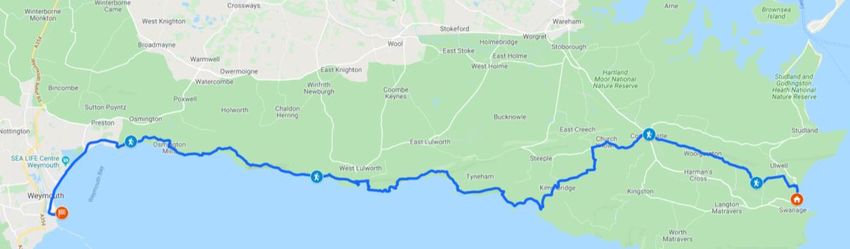
KICK OFF YOUR TRAINING WITH THE RIGHT FOOTWEAR

BOOTS
Choose a comfortable pair of waterproof walking boots with ankle support and a stiff heel
counter to give lateral support. The midsole should be firm yet comfortable. It is worth
investing in a good pair of trekking or hiking boots, and appropriate socks. New boots must
be worn in. Wear them around the house, on the way to work, etc, and then on longer walks.
Once they have conformed to the shape of your feet there is less likelihood of getting blisters.
FEET FIRST
There are some common foot problems which are very easy to treat and avoid:
• To avoid blisters, keep your feet dry and wear socks made with fibres which draw
    moisture away from your skin - steer clear of pure cotton. Don’t lace your shoes too
    tightly or too loosely. The irritation from the pinching and rubbing may cause blisters.
• Aching arches are usually caused by pounding when you walk. Make sure you touch the
    ground with your heel first and pushing off with your toe. Arch supports may help.
• Blackened toenails are caused by the big toe hitting the front of your shoe. Keep your
    toenails neatly trimmed. Make sure that if one of your feet is slightly larger than the other,
    as most are, that your boots fit the larger one.

TRAINING PLAN

INTRO
This training plan is designed to get you to the start line of your May 50K for Mental Health UK
feeling prepared and confident to achieve your goal.

1. Is this the right plan for me?
   This 15-week plan is suitable for those who are just starting out and those who already
   hike regularly and are looking to increase the miles. It involves a mix of activities and
   exercises to get you in the best physical condition for your challenge. If you ever feel like
   you’re struggling in the early weeks, you can always swap the longer hikes with more
   cross training or repeat a week in the plan if you don’t feel ready for the next step just
   yet.

2. Why train this way?
   If you keep doing the same thing over and over again you can’t expect different results,
   so this plan is designed to give you variety and progression. To help you with motivation
   and record of progression, we recommend using mobile apps such as Strava.

3. What if I miss a session, get a niggle or become sick?
   No training guide is designed to be a tablet of stone. View your May 50K training as a
   journey (which might not always go to plan!). Feel free to chop and change the plan
   and shift hike and exercise sessions to different days that may work better for you. If you
   miss days through work, holiday, sickness or injury then don’t play catch up. Step back
   into the plan where you left off and be patient. Enjoy the journey as much as the end
   result.

4. Before and after
   Always include a warm-up and cool-down session for each of the activities in the training
   plan, and stretch well using the exercises in this guide.

                                                                                                   3
15 WEEK TRAINING GUIDE

WEEK   MON               TUE               WED            THU            FRI           SAT           SUN
                                           Rest &                                      Cross
   1   Rest              Brisk hike        core           Hilly hike     Rest          training      Long hike
                         30 x mins walk    On these       10 mins                      Optional      Easy walk
       Rest is vital     to include 3 x    days we        steady                       cross         100 mins off
       to                5 min brisk       recommend      walking + 8                  training      road if
       progression       effort & 2 mins   doing yoga     x 90 secs                    (swim, run,   possible.
       and               easy recovery     or             brisk uphill                 bike, cross
       adaptation.                         conditioning   efforts with                 trainer,
       The yellow                          sessions.      easy walk                    rowing) –
       dot is a                                           back                         easy 30
                                                          recovery +                   mins.
       reminder to
                                                          10 mins
       complete                                           steady
       the                                                walking.
       stretches

                                           Rest &                                      Cross
   2   Rest              Brisk hike        core           Hilly hike     Rest          training      Long hike
                         30 mins walk      On these       10 mins                      Optional      Easy 1 hour
                         to include 5 x    days we        steady                       cross         45 mins off
                         4 mins brisk      recommend      walking + 10                 training –    road if
                         effort, 90 secs   doing yoga     x 90 secs                    easy 30       possible.
                         easy effort       or             brisk uphill                 mins.
                         recovery.         conditioning   efforts with
                                           sessions.      easy walk
                                                          back
                                                          recovery +
                                                          10 mins
                                                          steady
                                                          walking.

                                           Rest &                                      Cross
   3   Rest              Brisk hike        core           Hilly hike     Rest          training      Long hike
       Stretching        40 mins walk      On these       10 mins        Notice how    Optional      Easy 2 hours
       well the day      to include 5 x    days we        steady         you feel on   cross         off road if
       after your        5 mins brisk      recommend      walking + 12   your rest     training –    possible.
       long hikes will   effort, 90 secs   doing yoga     x 90 secs      days, are     easy 30-40
       help you feel     easy effort       or             brisk uphill   there small   mins.
       better as you     recovery.         conditioning   efforts with   changes
       move                                sessions.      easy walk      you can
       through the                                        back           make to
       week ahead!                                        recovery +     improve
                                                          10 mins        your
                                                          steady         recovery?
                                                          walking.

                                           Rest &                                      Cross
   4   Rest              Brisk hike        core           Hilly hike     Rest          training      Long hike
       Remember          40 mins walk      On these       10 mins                      Optional      Easy 2 hours
       to note           to include 5 x    days we        steady                       cross         20 - 2 hours
       down the          5 mins brisk      recommend      walking + 6-                 training –    30 mins off
       positives at      effort, 60 secs   doing yoga     8 x 2 mins                   easy 30-40    road if
       the end of        easy effort       or             brisk uphill                 mins.         possible.
       each training     recovery.         conditioning   efforts with
       week.                               sessions.      easy walk
                                                          back
                                                          recovery +
                                                          10 mins
                                                          steady
                                                          walking.

                                                                                                              4
Rest & Cross
5 Rest Easy hike core Brisk hike Rest training Long hike
Get into a 45 - 60 mins On these 40 mins walk Optional Easy 1 hour
good habit easy walk at a days we to include 3 cross 30 min - 1
of regular conversational recommend x 5 mins training – hour 45 mins
stretching. effort. doing yoga brisk effort & easy 30-40 off road if
or 90 seconds mins. possible.
conditioning easy
sessions. recovery.
Rest & Cross
6 Rest Brisk hike core Hilly hike Rest training Long hike
50-60 mins On these 10 mins Optional Easy 2 hour
walk to days we steady cross 45 mins - 3
include 6 x 5 recommend walking + 8 training – hours off
mins brisk doing yoga x 2-3 mins easy 30-40 road.
effort, 90 secs or brisk up and mins.
easy recovery. conditioning down hill
sessions. efforts with
easy walk
back
recovery +
10 mins
steady
walking.
Rest & Cross Fartlek
7 Rest Brisk hike core training Rest hike Long hike
50-60 mins On these Cross 30-45 mins Easy 3 hour
walk to days we training 45- hilly ‘fartlek’. 30 min hike
include 3 x 10 recommend 60 mins at A mix of off road.
mins brisk doing yoga an easy short and
effort, 120 secs or effort. long faster
easy recovery. conditioning efforts up
sessions. and down
hill as you
feel during
the hike
using
landmarks
as targets.
Rest & Cross Fartlek
8 Rest Brisk hike core training Rest hike Long hike
50-60 mins Cross 40-50 mins 3 hours 45
walk to training 45- hilly ‘fartlek’ mins - 4
include 4 x 8 60 mins at walk using hours mins
mins brisk an easy landmarks. off road.
effort, 90 secs effort.
easy recovery.
Rest & Cross Fartlek
9 Rest Brisk hike core training Rest hike Long hike
540 mins ‘out Cross 40-50 mins 4 hours - 4
and back’ training 45- hilly ‘fartlek’ hours 15
walk – walk 60 mins at walk using mins walk
out for 20 an easy landmarks. with the
minutes, turn effort. final 60-90
and get back mins to
to the start 2-3 include brisk
mins quicker uphill efforts.
over an
undulating
route.
Rest & Cross
10 Rest Brisk hike core training Rest Easy hike Long hike
This is a 40 mins walk Cross 30-40 mins 2 hours easy
slightly lighter to include 4 x training 40 easy walk. hike.
week to 5 mins brisk mins at an
allow more effort, 90 secs easy effort.
adaptation easy recovery.
to the
training.
Rest & Cross Fartlek
11 Rest Brisk hike core training Rest hike Long hike
Now we are 50 mins ‘out Cross 45-60 mins 20-22km off
in our peak and back’ training 45- ‘fartlek’ road walk
training walk – walk 60 mins at walk using with 3 x 3km
weeks work out for 25 an easy landmarks. at a brisk
to make sure minutes, turn effort. effort over
your nutrition and get back an
and snacking to the start 2-3 undulating
between mins quicker route.
meals is spot over an
on! undulating
route.
Rest & Cross Fartlek
12 Rest Brisk hike core training Rest hike Long hike
Look back 45-60 mins Cross 60 mins hilly 22-25km off
on all your with the final training 45- ‘fartlek’ road walk
positives to 25 mins at a 60 mins at walk using to include
see how far brisk effort an easy landmarks. 10km at a
you have over an effort. brisk effort
come! undulating over an
route. undulating
route with
some sharp
hills.
Rest & Cross Fartlek
13 Rest Brisk hike core training Rest hike Long hike
Progression 50 - 60 mins 60 mins hilly 4-5 hour
walk of 30 easy cross ‘fartlek’ easy walk.
mins easy, 30 training. walk using
mins brisk. landmarks
over a hilly
route.
6Rest & Cross Fartlek
14 Rest Brisk hike core training Rest hike Long hike
In the final 40 mins walk 30-40 mins 40 mins 90-100 mins
two weeks to include 4 x easy cross ‘fartlek’ easy
you will see 5 mins brisk training. walk using relaxed
your training effort, 90 secs landmarks. walk.
cut back a easy recovery.
little to
ensure you
are feeling
recovered
for event
day!
Rest & THE MAY
15 Rest Brisk hike core Easy hike Rest 50K Rest
Look back 30-40 mins 15-20 mins Good luck Be proud of
on all your walk to easy walk. and enjoy all you've
positives to include 3 x 5 the achieved!
see how far mins brisk challenge!
you have effort, 90 secs
come! easy recovery.
INJURY PREVENTION TIPS
Warm up and stretch
It’s important to warm up before exercise and warm down afterwards in the correct way. This
will help you avoid injuries and prepare your body for the exercise to follow. And don’t forget
– only stretch after your muscles have warmed up.
Have enough rest
Rest is as important as training. It’s vital that you allow your body adequate time to recover,
particularly from hard sessions, so make sure you have enough rest days.
Strengthen up
Doing regular core and lower-limb strengthening may help lessen the risk of injury and should
be incorporated into your training programme early on. Ask physiotherapists, sports masseurs
and gym instructors to show you exercises that will suit you.
CONDITIONING
These exercises are designed to strengthen specific muscle groups which will help you with
your challenge. It’s important to use just your own body weight in the early weeks. But in the
latter weeks, you can add small weights to your ankles to help build strength. The idea of the
conditioning is to complete each exercise then move on to the next. Once you’ve finished
all the exercises, you can then repeat three to five times. You can also increase the number
of repetitions for each exercise to 20, 30, 40 or 50, depending on how strong you feel. Don’t
forget to stretch before and after the session to keep the muscles loose and long.
Calf raises
Stand with your feet together, at arm’s length away from the wall. Have your fingers just
touching the wall for balance. Raise yourself slowly on to the tips of your toes and slowly
lower. Repeat 20 times.
7Squats
Stand with your feet shoulder width apart, hands on hips. Keep your back straight and head
up while you slowly lower yourself so that your knees are bent 90 degrees. Then stand up so
that your knees are locked straight. Repeat 20 times.
Step ups
Using the bottom step of a staircase or a low bench, start with your left foot on the step and
your right foot on the floor. Stand up straight on your left leg, bringing your right foot up to the
step above and then lower back down to the floor. Repeat 20 times. Change leg and
repeat.
Leg extensions
Sit on a high sofa, bed or bench with the backs of your knees just on the edge and your feet
hanging down. Lean back, with your hands behind you for support. Keeping the back of
your knee on the seat, slowly lift your left foot up so that your leg becomes straight, and lower
again. Repeat 20 times. Change leg and repeat.
Leg raises
Lie on your stomach on a mat or soft floor with your hands under your chin. Keeping your left
leg straight, slowly raise it six inches off the floor and then slowly lower. Repeat 20 times.
Change leg and repeat.
Hamstrings
Stand with feet 1 metre apart. With legs straight and hands behind back slowly bend forward
at the hips keeping back straight and head up. Should feel a slow pull in muscles at the back
of legs. Hold for 10 secs, stand up and lean slightly backwards, repeat 3 times. Should feel
pull but no pain.
Quads
Standing with feet together, bring left foot up and put left hand on lower shin by ankle and
pull behind bottom. Keep back straight and head up. May need to balance with right hand
on wall. Should feel slow pull-down front of leg. Hold for 10 secs, swap legs, repeat 3 times.
Should feel pull but no pain.
Groin
Stand with feet 1 metre apart and both feet pointing forward. Keeping back straight and
head up slowly lunge down to right side feeling pull on inside of left leg. Hold for 10 secs,
swap legs, repeat 3 times. Should feel pull but no pain.
Hips
Stand with feet shoulder width apart and hands on hips. Keeping head still rotate hips round
clockwise 10 times and anti-clockwise 10 times. Repeat three times.
Torso
Stand with feet shoulder width apart and hands on head. Keep feet pointing forward but
twist body as far as is comfortable, hold for 1 second, face forward, twist body in other
direction, hold for 1 second, face forward. Repeat 10 times.
Shoulder
Stand with feet shoulder width apart. Start with hands by hips and keeping arms straight
slowly swing arms round backwards 10 times, change direction swinging arms forwards 10
times. Repeat 3 times.
Standing stretch
Stand with feet together. Place hands together and reach as high as you can, hold for 10
secs, relax. Repeat 3 times.
Please note, you should only stretch warmed up muscles. Don’t stretch too far, all you should
feel is a slow pull, never any pain. Never bounce, always stretch slowly. People with old
injuries or back problems should be especially careful whilst exercising and stretching.
8FOOD & DIET
What you eat when you start to train will impact on your walking and energy levels. Initially
while the training is at a low weekly mileage it would be best to concentrate on eating in a
regular pattern and trying to reduce your daily intake of saturated fats. This includes less fried
foods and dairy products as these will counter any training you start to do.
As your mileage increases it would be worth trying to ensure that at least one meal a day is
high in carbohydrate; this is the product that once stored in your system will give you energy.
Carbohydrate is found mainly in the form of potatoes, bread, pasta and rice and so is easy
to base any meal around. Combined with this increased intake of carbohydrate must also
be a good mixture of vitamins and minerals found in fruit and vegetables. Fruit in particular is
an ideal food for this challenge because it is high in fructose which provides energy as it is
more easily absorbed from the stomach for use than other sugars (such as insulin obtained
through eating chocolate). Bananas are usually the preferred energy provider when
needing to maintain energy.
Fluids are another area in which you will have to increase your intake as you will start to lose
more from your system by sweating and other exercise related matters. This is simply
combated by drinking a lot more water. You can also increase your energy levels through
the intake of isotonic drinks or concentrated fruit juices, some people find these work very
well and the psychological effect by itself is often enough to make them worthwhile. If you
intend to use these on the challenge it is a good idea to get your body used to them while
training.
Basically, if you are careful with your diet, trying to eat more healthily and ensuring you eat
plenty of carbohydrate before and after training sessions, you will be fine. You may well find
yourself enjoying eating more as the guilt disappears because you know you have exercised!
TRAINING GUIDE NOTES
This programme is a rough training guide. Obviously with work, family and fundraising
commitments you may not always be able to achieve what we have set out for you.
However, in order to get close to achieving the training it is very important to organise your
time properly. There are plenty of ways to ensure that you maximise your training, even if you
feel you have no time outside work.
• Organise your week to make time to get out to do some training.
• Get up an hour earlier and go out for a quick walk, run or cycle with some stretching
in the morning before work while it is still light.
• If you can walk to work, do so. If you get to work by public transport, get off a stop or
two earlier than usual, so that you walk some distance each day. If you drive, park
further away than usual, or walk a longer route to work.
• Use your lunchtimes to take regular brisk walks or a run around your work area, not just
a stroll around the shops.
• Find a steep set of stairs i.e. five floors of a department store/office block and climb
them five times, at least three times per week.
• Swimming, running, cycling, rowing and any other sport will also help get you
prepared.
• Joining a leisure centre is a good idea as the local fitness instructors may well be able
to design a programme specifically for you. Most good gyms have a walking
machine, or even better a stair climber, where you can clock up mileage more safely
and comfortably but do try to walk as much as possible in ‘real’ conditions and
wearing your rucksack and boots.
9ENJOY THE JOURNEY
You may not stick to the training guide exactly, but you need to keep it in mind and to do
regular exercise every week according to the guide. You will enjoy this challenge far more if
you are physically fit.
You’ve signed up to take part in an incredible event in support of a fantastic charity, so
make the most of the experience, enjoy being in the great outdoors and know that you are
helping people affected by mental health problems!
Train hard, smile harder and enjoy the journey.
#ewecandoit #TheDifferenceWeMake #mentalhealthuk
https://mentalhealth-uk.org/
10You can also read


