TRANSPORTATION MANAGEMENT PLAN - MAY 2018 - University of ...
←
→
Page content transcription
If your browser does not render page correctly, please read the page content below

TRANSPORTATION
MANAGEMENT PLAN
     MAY 2018

   DRAFT
DRAFT
           TABLE OF CONTENTS
           Introduction............................................................................................................................... 1
           History/Context ..................................................................................................................... 4
           Performance Goals............................................................................................................... 6
           TMP Framework..................................................................................................................... 7
           Transit ......................................................................................................................................... 8
           Pedestrian............................................................................................................................... 10
           Bicycle....................................................................................................................................... 12
           General Purpose Vehicles Access/Circulation/Management....................... 14
           Shared-Use Transportation............................................................................................ 16
           Parking Management........................................................................................................ 18
           Outreach and Education.................................................................................................. 20
           Annual Operations Plan.................................................................................................... 21
           Stadium TMP Technical Advisory Group................................................................. 22
           Annual Monitoring............................................................................................................... 22

May 2018                                                                                                                                      Husky Stadium Transportation Master Plan   iii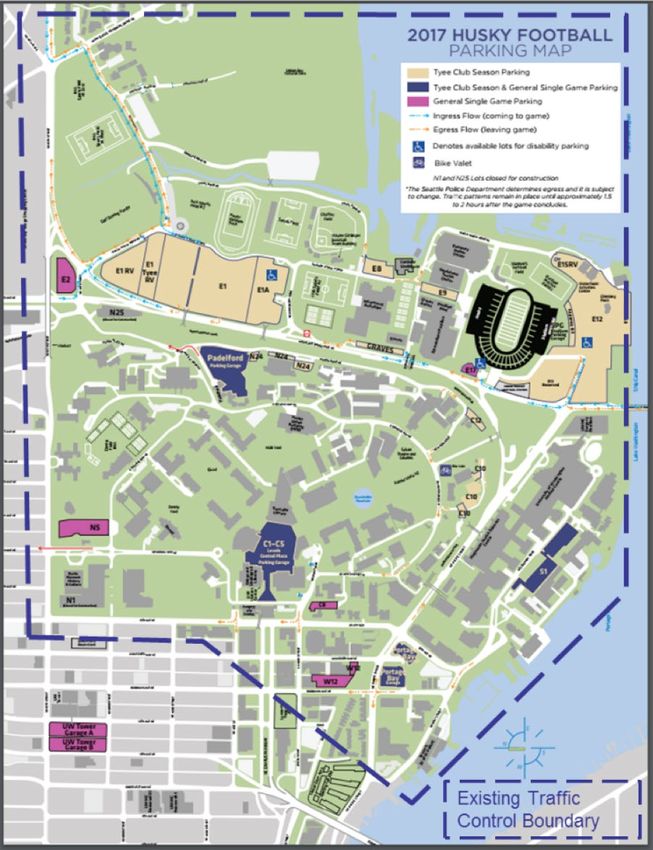
HUSKY STADIUM
TRANSPORTATION
                                                                                                  DRAFT
MANAGEMENT PLAN
Since 1920, Husky Stadium has stood near the intersection of Pacific St and Montlake Blvd bordered to the east by
Union Bay and Lake Washington. For nearly 100 years the University of Washington Huskies have practiced year-round
and played home football games in the fall. Generations of UW graduates have stepped across stages every June. The
University and the surrounding communities have grown up around the stadium. The area today is a vibrant interlacing
of people, infrastructure and vehicles.

This Transportation Management Plan                Objectives of this TMP include:                    ҘҘ Develop weekday event management
(TMP) for Husky Stadium updates a plan             ҘҘ Develop a TMP that includes forward-               strategies, including strategies to meet
developed in 1986. It responds to changes in          looking strategies that continue to                the unique challenges of weekday football
the transportation infrastructure surrounding         effectively move stadium attendees into            games (as of 2018, one weekday game per
Husky Stadium and responds to changes in              alternatives to cars in order to decrease          season is required two out of every three
technology and mode choices. In addition,             congestion and parking impacts on the              years).
it considers future investments in the                surrounding community.                          ҘҘ Build a flexible structure for annual
transportation system - investments that will                                                            operating plans that can address future
                                                       ●● Promote transportation choices available
influence the effectiveness of key elements                                                              changes in the transportation system
                                                          through expanding transit options,
of the plan. This TMP is not intended to                                                                 (e.g. SR 520 improvements, proposed
                                                          such as Sound Transit Link light rail and
address transportation to and from other                                                                 second bascule bridge, bus route changes
                                                          RapidRide.
Seattle Campus events/activities or venues.                                                              prompted by One Center City).
Transportation management strategies for other         ●● Incorporate strategies that acknowledge
University events and activities are detailed in          newer trends in transportation (e.g. car
the University of Washington (UW) TMP.                    share, ride share, bike share).

May 2018                                                                                                     Husky Stadium Transportation Master Plan   1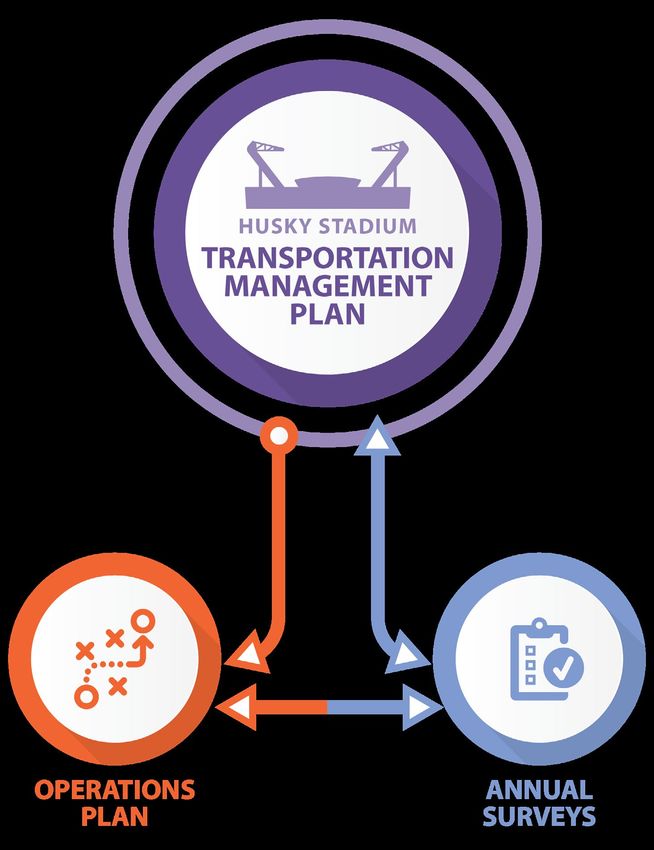
DRAFT
ҘҘ Reduce dependence on charter coaches            would be reviewed with the Stadium TMP             The potential frequency of non-football events
   in order to decrease congestion on              Technical Advisory Group prior to each football    at Husky Stadium is limited as this facility serves
   roadways surrounding the stadium,               season, and would apply to all events the          as the practice facility for the UW football team.
   reduce dependence on curb space in the          following year. The annual operations plan will    Between the football season itself, spring
   U-District to stage buses, and address          specify event attendance limits which would        practice and late summer practice before the
   general issues with availability.               trigger the operations plan to be implemented.     season opens in September, the window for
ҘҘ Provide the accountability tools to achieve     The Stadium TMP Technical Advisory Group           potential non-football events is small. This TMP
   outcomes and report to stakeholders.            includes representatives from the Seattle          limits the number of events greater than 24,000
                                                   Department of Construction and Inspections         attendees to no more than 15 per calendar year,
This TMP identifies overall performance goals
                                                   (SDCI), Seattle Department of Transportation       inclusive of football games.
and potential demand management strategies
                                                   (SDOT), Seattle Police Department (SPD),           Transportation demand management strategies
for multiple travel modes. The specific measures
                                                   University of Washington departments,              have been developed and are outlined for the
implemented on an annual basis to achieve the
                                                   Washington State Department of Transportation      following TMP areas:
performance goals depend on the completion
                                                   (WSDOT), King County Metro, Sound Transit,
of planned municipal, regional and state                                                               ҘҘ Transit
                                                   and a representative from the City-University
infrastructure improvements, size of the stadium                                                       ҘҘ Pedestrian
                                                   Community Advisory Committee (CUCAC) (or
events, changes in mobility technology, and
                                                   successor agencies).                                ҘҘ Bicycle
timing of events. As such, the implementation
of this TMP will rely on the development of an     Two event sizes are considered in the               ҘҘ General Purpose Vehicle Access/
annual operations plan to be developed by the      application of strategies identified in this TMP       Circulation/Management
UW with input from key operations staff from       and the development of the annual operations
                                                                                                       ҘҘ Shared-use Transportation
the local agencies and from the surrounding        plan. The event ranges covered by the plan fall
                                                                                                          (e.g. Transportation Network Companies,
neighborhoods. The scope and review                into two tiers: 1) an event with between 42,000
                                                                                                          car-share)
procedures for the annual operations plan          and 70,000 attendees, and 2) an event with
                                                   between 24,000 and 42,000 attendees. The            ҘҘ Parking Management
are discussed in more detail in a subsequent
section.                                           upper range corresponds to use of the upper         ҘҘ Outreach and Education
                                                   bowl, while the lower range is consistent with
The TMP establishes a Stadium TMP Technical
                                                   the maximum occupancy of the lower bowl
Advisory Group. The annual operations plan
                                                   area only.

2   Husky Stadium Transportation Master Plan                                                                                                    May 2018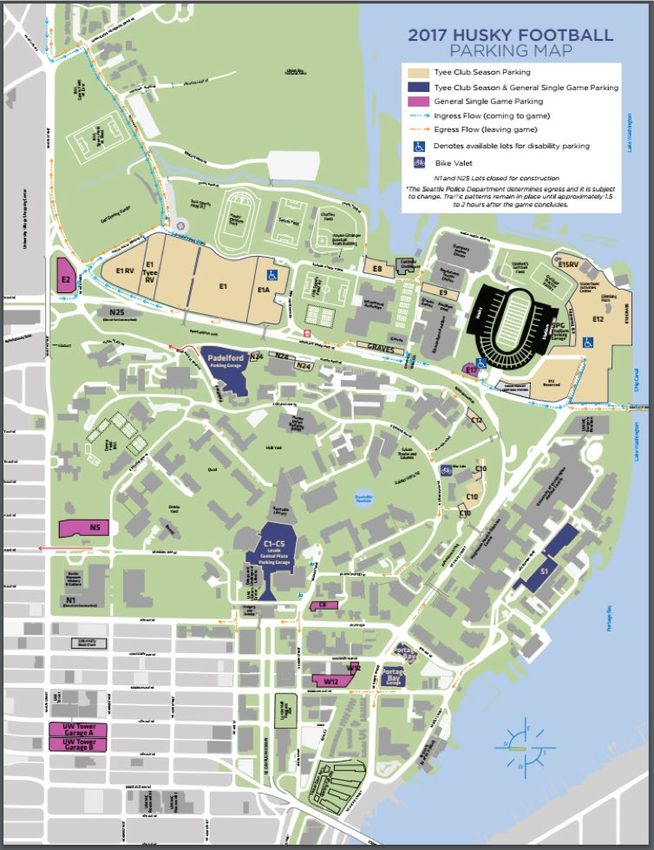
DRAFT

Figure A: Transportation Management Plan Implementation Strategy

May 2018                                                            Husky Stadium Transportation Master Plan   3
DRAFT
HISTORY/CONTEXT
                                                  There was a secondary goal to expedite             Figure C, the 16 percent bus goal has not only
                                                  postgame traffic traveling to SR 520 and I-5.      been met, but far exceeded.
The 1986 University of Washington Stadium         Figure B shows the TMP mode split goal             In 2012, Husky Stadium was renovated, and
Expansion Parking Plan and Transportation         established in the 1986 plan, which identified     seating capacity came down to 70,000. During
Management Program and Stadium Expansion          goals for automobile, bus, walk, and boating       renovation, UW’s football games were played at
Parking Plan and Transportation Management        trips.                                             CenturyLink Field. UW’s payment of rider fares
Program Operational Supplement documented         Concurrently, over the past three decades King     (the scrip required in the 1986 TMP) has been
strategies and specific steps for mitigating      County Metro service has expanded, Link light      waived since that time on the basis of strong
transportation impacts on the surrounding         rail has opened and the region’s embrace of        transit ridership numbers without scrip.
community. The expanded stadium could             Single-Occupancy Vehicle (SOV) alternatives        The UW conducts an annual attendee
accommodate 72,000 attendees (brought             has grown. As a result, transit access to the      intercept survey as part of the monitoring
down to 70,000 in 2012), so the focus of the      stadium has improved and, as shown in              and reporting process. The survey is
1986 TMP, a building permit requirement, was
to accommodate a sellout crowd with lesser
parking impact to the residential areas near
campus. The keys to accomplishing this goal                            4%
included the following:                                         8%                                            Automobile

ҘҘ Providing incentives for taking transit,                                                                   Bus (Metro, Light Rail, Charter)
   carpooling, or using other modes to games
   by mandating “free” (i.e., UW pays) transit
                                                            16%                                               Walk
   scrip for all ticket purchasers,
                                                                                                              Boat
ҘҘ Expanding transit service,                                                    72%
ҘҘ Providing discount pricing for carpools, and
ҘҘ Providing additional on-campus parking.                                                         Figure B: Husky Stadium 1986 TMP Goals

4   Husky Stadium Transportation Master Plan                                                                                                     May 2018
conducted in the fall of each year at a game
WALK
DRAFT TRANSIT
against a PAC-12 opponent to capture a high-
attendance event. 80 80
70 70
Figure C illustrates the recent historical game
60 60
day mode splits. The range of bus ridership
50 50
PERCENT
PERCENT
can vary from game to game and season to
season due to several factors such as weather, 40 40
35.7
30 30
36.6
the Husky’s opponent and UW’s season record.
32.3
32.5
30.2
31.2
25.4
25.3
20 20
25.1
In 2007, transit ridership to the surveyed
22.3
21.7
20.6
19.6
18.4
18.9
16.0
14.5
17.7
15.8
10 10
15.5
game reached approximately 32 percent. In
12.5
8.1
that year, the University of Washington paid 0 0
King County Metro to provide more than 150
86
07
08
09
10
11
13
14
15
16
17
86
07
08
09
10
11
13
14
15
16
17
19
20
20
20
20
20
20
20
20
20
20
19
20
20
20
20
20
20
20
20
20
20
additional coaches per game to meet transit YEAR YEAR
demand. However, in 2008, the Federal Transit
Administration (FTA) declared that public transit
AUTOMOBILE BOAT
operators cannot operate sporting event
80 80
shuttles if a private transit provider is available. A
70 70
waiver was adopted to allow King County Metro
72.0
60 60
to continue providing service to the games,
50 50
but this waiver expired in 2016. The availability
54.9
PERCENT
PERCENT
51.8
47
47.8
40 40
45.0
and access challenges of relying on private
45.4
44.8
41.9
40.4
operators will be discussed later in this TMP. 30 30
32.7
20 20
In March 2016, Link light rail opened near the
5.2
5.0
10 10
4.8
4.5
3.9
3.9
3.7
stadium, resulting in transit mode split of 35
2.4
3.4
2.6
1.5
0 0
percent. This represented an all-time high based
86
07
08
09
10
11
13
14
15
16
17
86
07
08
09
10
11
13
14
15
16
17
on historical data.
19
20
20
20
20
20
20
20
20
20
20
19
20
20
20
20
20
20
20
20
20
20
YEAR YEAR
Figure C: Husky Stadium Game Day Historical Modes of Travel
May 2018 Husky Stadium Transportation Master Plan 5DRAFT
PERFORMANCE GOALS
Two goals have been identified within this TMP. GOAL 1. Transportation Demand Management
These two goals address both the demand
Non-Auto Mode Split
management objectives and operational Target Year
objectives. The demand management goals Weekday Event Weekend Event
defined in this TMP include consideration 2019 61 % 52 %
for weekday and weekend events as well as 1-yr following opening of Northgate Link 63 % 54 %
increasing non-auto* goals in the future as service (estimated at 2021)
the public transportation system evolves and
1-yr following opening of Lynnwood Link 65 % 58 %
expands.
service (estimated at 2024)
1-yr following opening of Everett Link service 67 % 62 %
(estimated at 2035)
*Includes Transit, Boat, Pedestrian, and Bicycle Travel Table 1: TDM Goals for Non-Auto Modes of Travel
6 Husky Stadium Transportation Master Plan May 2018DRAFT
COMPONENTS OF THE TMP
GOAL 2. Traffic Control
Management
Beginning in 2019, for all stadium events
on weekends and weekdays, traffic control
measures such as detours or lane closures are
targeted to subside 45-60 minutes after the end
of an event. 1. Transit 5. Shared-Use
Transportation
TMP FRAMEWORK
There are seven programmatic components
of the TMP, each one providing strategies to
2. Pedestrian 6. Parking
support the success of the overall TMP. These
strategies may be implemented one at a time,
or in combination with others. UW Athletics will
choose among these strategies and potentially
others, to limit vehicle trips and encourage the
use of non-auto mobility options. Past success 3. Bicycle and 7. Marketing and
has shown that, taken together, these combined Bike Share Education
strategies are effective at reducing vehicle trip
rates and managing event circulation.
4. General Purpose
Vehicles
May 2018 Husky Stadium Transportation Master Plan 7DRAFT TRANSIT
(Public, Private Shuttles, and Future MicroTransit)
Event level congestion around during events is critical. The transit component current bus transit serving these areas, Link
Husky Stadium makes transit of this TMP identifies strategies to maintain and light rail will afford a more frequent, reliable, high
a desirable choice for attending football games. enhance use of transit by event attendees from capacity trip with extended service hours. Light
Husky Stadium patrons enjoy excellent transit across the region. rail also operates in a separate right of way and
service due to the stadium’s proximity to Sound Sound Transit’s Link light rail opened at the is not subject to roadway congestion.
Transit’s University of Washington Station, as University of Washington in March of 2016. The King County Metro, in partnership with the City
well as to the Montlake Triangle and Stevens Northgate Link Extension, opening in 2021, of Seattle, will also offer more frequent service
Way, which accommodate King County Metro, includes the U District Station at NE 43rd with expanded hours through four RapidRide
Community Transit, and Sound Transit bus Street and Brooklyn Ave NE. Light rail service is lines that will serve the University District. All four
service. Before and after events, transit service expected to further expand in 2023, including RapidRide lines are expected to be operational
is an effective choice for transporting event service to Overlake and Bellevue, and in 2024 by 2024, with the Roosevelt line coming on-line
patrons to and from the stadium. Maintaining to Lynnwood, Federal Way, Des Moines, and by 2021.
non-event related transit travel through the area Downtown Redmond. As compared to the
8 Husky Stadium Transportation Master Plan May 2018POTENTIAL TRANSIT 6. Manage the areas around University of
DRAFT
Weekday games require special planning
IMPROVEMENT STRATEGIES Washington Station for customers to reduce and communication. This begins as soon as
conflicts between pedestrians and cyclists. the University is made aware of the season
1. Incorporate Sound Transit’s event service
7. Work with the transit agencies to promote schedule. While schools learn of the season
(i.e. extended service hours, additional
and facilitate advance transit ticket sales. schedule approximately a year ahead of time,
train cars, or operate extra trains during
game time is often not known until just a few
event arrival and departure) into the annual 8. Encourage employees who work at Husky
weeks before each game. For events occurring
operations plans. Stadium to use non-auto modes of travel.
during the weekday, transit will be of even
2. Promote education programs and real-time 9. Provide information about ride-match greater importance due to commute traffic
information tools that offer a range of transit opportunities for stadium event employees. conditions and the resulting need to further
choices, emphasizing links to alternative increase the use of non-auto modes by game
10. Provide supplemental transit service as
transportation modes. attendees. Strategies and measures identified
necessary to achieve non-auto commute
3. Provide information and incentives for goals. Stage buses proximate to the for the weekend events will be implemented for
patrons to try new transit services as they stadium entrance post-event in order to the weekday events, as well. An increased effort
come on-line such as RapidRide and Link expedite the egress of attendees from the regarding communication to agency partners,
light rail extensions. stadium area. stadium neighbors and the general public
4. Work with King County Metro, Sound regarding the event schedule will be activated
Transit, Community Transit, SDOT (and for weekday games.
future transit service providers) to optimize For smaller events, the strategies for larger
transit operations during peak event events will be scaled and adjusted to meet the
periods. TRANSIT GOALS event needs.
5. Work with partner agencies to improve √ Maximize use of transit by event
pedestrian and bicycle access to Link and attendees to reduce congestion.
RapidRide stations.
√ Reduce and replace private
shuttles with emerging public
transit.
May 2018 Husky Stadium Transportation Master Plan 9DRAFT PEDESTRIAN
Most attendees of Husky to the Eastside along the SR 520 floating bridge 6. Work with SDOT, SPD and UWPD to
Stadium events are opened in 2017. monitor and control key unsignalized
pedestrians at some point intersections and access to parking to
POTENTIAL PEDESTRIAN
during their travel and all depend on safe reduce pedestrian/vehicle conflicts at
IMPROVEMENT STRATEGIES those locations and accommodate high
pathways and crossings to get to and from the
1. Protect and improve upon the pedestrian- pedestrian flows.
stadium. The University of Washington provides
oriented stadium area. Make all
a network of pedestrian paths throughout the No significant differences in the TMP strategies
transportation choices, policies and
campus with connections to the local public for weekday or weekend games are anticipated.
improvements supportive of the pedestrian
streets and trail networks. In addition, there Localized traffic control for pedestrian
environment and experience.
is an expansive pedestrian plaza in front of management strategies in and around the
2. Improve event signage to and from Husky University of Washington Link Station may be
Husky Stadium with convenient, pedestrian
Stadium and transportation destinations, adjusted based on the size or timing of the
connections to the Burke-Gilman Trail, concentrating efforts on directing attendees event. This would be identified in the annual
University of Washington Station, campus, and along key pedestrian routes. operations plan to be developed by UW
future RapidRide. A grade-separated pedestrian
3. Work to enhance the quality and security of Athletics in conjunction with the Stadium TMP
bridge over Montlake Boulevard provides Technical Advisory Group.
pathways adjacent to the stadium through
additional access over arterial streets and is
maintenance of paths, quality lighting, event For smaller events, the strategies for larger
accessible by elevator. This grade-separated signage, and other investments. events will be scaled and adjusted to meet the
connection, along with three other pedestrian
4. Minimize vehicular traffic in the area around event needs.
bridges over Montlake Boulevard, provides high
the University of Washington Link Station
capacity, unimpeded access to the stadium
area at pre- and post-game time.
from the core of the University of Washington
5. Manage pedestrian pathways in the area
campus and Burke-Gilman Trail. Additionally,
around the University of Washington
new and enhanced connections for pedestrians
Station, including reducing conflicts with
and bicycles are planned to connect the
other modes and improving efficiency for
stadium to areas south of the Montlake Cut via
accessing the station.
a second bascule bridge. A new trail connection
10 Husky Stadium Transportation Master Plan May 2018This page intentionally blank.
DRAFT              BICYCLE
                  The number of Husky football         where there is a dense and active concentration    2. Provide at least one bicycle valet parking
                  fans cycling to the stadium          of pedestrian activity.                               location per large event.
                  is currently limited. The most       Bike share, where people rent bicycles for         3. Work with bike share providers to manage
recent survey conducted in 2017 showed                 short trips, is being implemented by the City of      flow and supply during events.
1.2% of those surveyed came by bicycle. This           Seattle on an experimental basis as of 2018.       4. Enhance bicycle parking at strategic
percentage includes bike share and personal            If successful and expanded to places like the         locations by providing fixed, covered, locker,
bikes. While the percentage seems small, in raw        Eastside along the SR 520 trail, bike share may       or cage parking and/or provide temporary
numbers this could be as many as 700 bicycles          become a viable option for attending events,          bicycle parking during game days through
for a sellout game. There are a variety of factors     giving people a wider range of options to get to      mobile or stationary bicycle facilities.
that influence bike usage. These factors include       the game and allowing them to make decisions
the timing of the event, nature of the event,                                                             5. Provide open source event information that
                                                       at the spur of the moment for trips to and from
and the weather conditions. The purpose of                                                                   can be integrated with bike share apps to
                                                       an event. Bike share parking is not limited to
this TMP’s bicycle strategies is to encourage                                                                provide real-time information and historic
                                                       defined areas around the city, as bike share
access to stadium events by bicycle, minimize                                                                data (as available from bike share providers)
                                                       bikes are self-locking. While convenient for
bike share parking in pedestrian pathways, and                                                               to those traveling to and from Husky
                                                       users, unrestricted bike parking at large events
reduce bicycle conflicts with other modes.                                                                   Stadium events.
                                                       can present problems.
During major stadium events, UW Athletics                                                                 6. Proactively intercept and manage the bike
                                                       POTENTIAL BICYCLE
provides a free bike valet service to store                                                                  share users prior to the primary stadium and
                                                       IMPROVEMENT STRATEGIES
and manage bicycles. UW Athletics has                                                                        University of Washington Station plaza area
                                                       1. Through signage and advance information,           to collect and redistribute the bike share
implemented the Bike Valet on Rainier Vista
                                                          direct cyclists to parking at key intercept        bikes to locations away from the core plaza
near the junction with the Burke-Gilman Trail
                                                          locations. This includes bike share users to       area.
and Stevens Way (see Figure D). This location
                                                          reduce bicycle conflicts with other modes in
intercepts commuters from the Burke-Gilman                                                                7. Offer incentives for employees to bicycle to
                                                          the immediate vicinity of the stadium.
Trail and limits the bicycle activity in the stadium                                                         work, such as bike share membership or
and University of Washington Station plaza area                                                              free bike share trip codes.

12    Husky Stadium Transportation Master Plan                                                                                                     May 2018
DRAFT
No significant differences in the TMP strategies
for weekday or weekend games are anticipated.
The timing of the event, with respect to
daytime or evening hours, would affect the
use of bicycles as a transportation mode for
the event. Basic elements such as the bike
valet and bike share intercept locations should
be implemented in both time periods. No
new bike share or bike valet locations have
been identified in this TMP. Instead, continued
monitoring of the bike share program and
evaluation of bike valet station locations and
effectiveness should be reviewed as part of the
annual operations plan.
For smaller events, the strategies for larger
events will be scaled and adjusted to meet the
event needs.
Figure D: Existing Bicycle Valet Location
May 2018 Husky Stadium Transportation Master Plan 13DRAFT GENERAL PURPOSE VEHICLES ACCESS/
CIRCULATION/MANAGEMENT
The desire of the UW is to The purpose of stadium event traffic control POTENTIAL GENERAL-PURPOSE
continue to decrease the use of automobiles is to monitor vehicle and pedestrian volumes VEHICLE MANAGEMENT
to access events. Fewer cars translate under post-event conditions and increase the STRATEGIES
to fewer parking impacts in surrounding safety and efficiency of egress from parking 1. Provide a broad communication and
neighborhoods, less congestion on area lots. In the future, with planned City of Seattle/ outreach campaign in advance of events to
roads and better environmental performance. SDOT investments in the U-District Intelligent deter Single Occupancy Vehicle (SOV) travel
Active management of this mode is critical to Transportation System (ITS), the need for and encourage use of non-auto modes.
maintaining a safe and reliable transportation manual control may decrease. Advanced
2. Accommodate routes for transit, freight
system for both event and non-event technologies in signal control will allow for
and emergency services to access UW and
commuters. We also recognize that tailgating a more adaptive system to respond to and
Seattle Children’s hospitals.
is part of the Husky Football community be controlled by SDOT from the City’s traffic
experience and is a contributing factor to a level management center, to better flush traffic away 3. Coordinate with SDOT on the use of
of sustained automobile use for game day. from the stadium. dynamic message signs to route vehicles
to parking and facilitate egress from the
This TMP’s general-purpose vehicle strategies Parking management is a critical element of
stadium area.
will push to increase average auto-occupancy managing general purpose vehicles accessing
and maintain freight and emergency service events. These strategies are discussed in a 4. Work with SDOT, SPD, and UWPD to
access to the stadium, area hospitals, and subsequent section of this TMP. develop annual plans for intersection control
surrounding destinations. and road closures to direct vehicles in and
out of the stadium area.
Traffic control is an important element in
managing vehicles in the area. Currently,
traffic control is utilized in a core area around
the campus (see Figure E). Additional traffic
control is implemented by the Seattle Police
Department north of the campus as needed.
14 Husky Stadium Transportation Master Plan May 2018No significant differences in the TMP strategies
DRAFT
for weekday or weekend games are anticipated.
A greater emphasis will be placed on the
communication and outreach campaign in
advance of the weekday events to deter non-
essential travel away from the area and encourage
use of alternative routes or non-auto modes for
non-game travel.
Figure E: Husky Stadium Traffic Control Boundary (2017)
May 2018 Husky Stadium Transportation Master Plan 15DRAFT
SHARED-USE TRANSPORTATION
Shared-use transportation Car-share options provide additional 5. Work with car-share companies to identify
includes a range of methods opportunities for attendees to tailor a commute designated parking areas to accommodate
for providing flexible travel mode that meets their need. For example, they vehicles.
options through the sharing of transportation can take the train to the event, but utilize car- No significant differences in the TMP strategies
resources, in this case automobiles. The share options to travel back home. for weekday or weekend games are anticipated.
primary intent of the shared-use transportation POTENTIAL SHARED-USE For smaller events, the strategies for larger
strategies is to minimize impacts of car- TRANSPORTATION STRATEGIES events will be scaled and adjusted to meet the
share and ride-share Transportation Network
1. Support the expansion of higher occupancy event needs.
Companies (TNC) vehicles (both congestion and
mobility options for TNCs (such as Uber
drop-off/pick-up conflicts) on the street system
Pool), through preferred pick-up/drop-off
near the stadium.
locations.
TNC options continue to expand and while their
2. Define methods for appropriately managing
use may decrease parking demand, they are a
TNCs such as implementing geofencing
factor in congestion. To manage TNC vehicle
technology or “venues” functions.
access in the stadium area, UW Athletics
provides for a designated TNC drop-off/pick-up 3. Designate pick-up and drop-off locations
zone away from the immediate stadium area on away from the activity center to reduce
game days. The UW-managed designated TNC conflicts with pedestrians and vehicles.
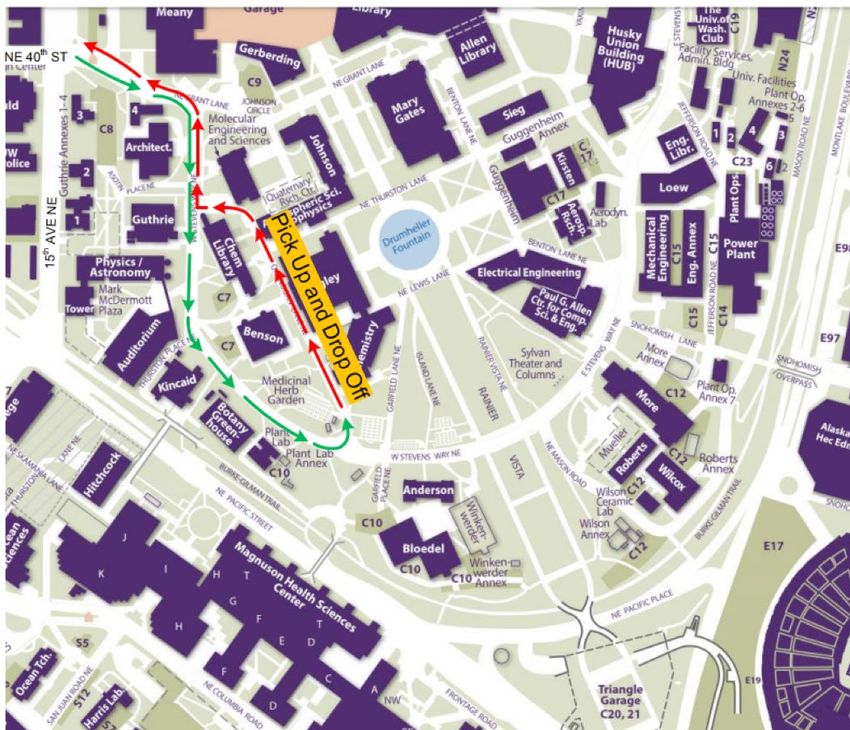
area for the 2016 and 2017 football seasons Specific locations will be reviewed annually
is shown in Figure F. The overall operations and any changes will be outlined in the
of the TNC areas are reviewed each year and operations plan.
any changes will be identified in the annual 4. Implement temporary wayfinding to direct
operations plan. event attendees to the designated areas, via
routes that are designed to accommodate
the pedestrian flows.
16 Husky Stadium Transportation Master Plan May 2018DRAFT Figure F: TNC Pick-Up/Drop-Off Area (2017 Season) May 2018 Husky Stadium Transportation Master Plan 17
DRAFT
                    PARKING MANAGEMENT
                   UW Athletics manages the         POTENTIAL PARKING                                   For weekday events, non-stadium use of
                   campus parking supply with       MANAGEMENT IMPROVEMENT                              campus lots is higher than for the weekend
UW Transportation Services during large events      STRATEGIES                                          games due to the regular operations of the
in a variety of ways to reduce vehicle parking      1. Monitor carpool user rates and change the        academic quarter. This requires specialized
in neighborhoods. Pricing is used to incentivize       rates as needed to incentivize more riders       communication with campus commuters. The
carpools with three (3) or more passengers (as         per vehicle.                                     UW will proactively manage the use of the lots
of 2018). The University continues to financially                                                       located north and south of the stadium along
                                                    2. Develop designated carpool parking areas
support Residential Parking Zones to better                                                             Montlake Boulevard for weekday event days.
                                                       with closer access to the stadium to
protect surrounding residential neighborhoods.                                                          This could include restricting student, staff,
                                                       incentivize that mode choice.
The specific zone boundaries are determined                                                             and faculty parking in these lots the day of
by the City of Seattle. Each season, game           3. Set parking prices to incentivize transit use.   the event, as done historically. The UW also
dates are updated on parking restriction signs      4. Continue to monitor available parking            actively promotes flexible work hours on days
in these neighborhoods. The UW also actively           as new academic development occurs               with larger events in order to reduce campus
encourages game-day use of the major parking           on campus. Campus parking should be              demand for parking.
lots on campus as shown in Figure G.                   maximized, and tailgating areas adjusted as
                                                       necessary to prevent parking spillover into
                                                       neighborhoods.
                                                    5. Work with off-site parking providers with
                                                       surplus capacity adjacent to transit stations
                                                       to provide information to fans about
                                                       convenient and competitive parking options

18    Husky Stadium Transportation Master Plan                                                                                                  May 2018
DRAFT Figure G: Husky Stadium Game Day Parking May 2018 Husky Stadium Transportation Master Plan 19
DRAFT
                  OUTREACH AND EDUCATION
                Outreach and education is         POTENTIAL MARKETING AND                            6. Encourage multimodal trip chaining such as
                essential for encouraging and     EDUCATION STRATEGIES                                  train-to-bus or bus-to-bike.
supporting travel behavior choices that help      1. Proactively communicate upcoming event          7. Educate employees on non-auto options
meet TMP goals. The UW conducts several              schedules to the campus community,                 for traveling to the stadium, particularly for
outreach programs to inform event attendees.         surrounding neighborhood community, and            weekday event conditions.
Outreach timing and content is informed by           key stakeholders surrounding the stadium        8. Work with off-site parking providers adjacent
the UW’s knowledge of the schedule for the           (i.e. UW and Seattle Children’s hospitals).        to transit stations to provide information
upcoming football season, the projected date of
                                                  2. Aggressively promote non-auto mode travel          to fans about convenient and competitive
Commencement and other special events.
                                                     to ticket buyers through ticket information,       parking options.
                                                     website, and additional promotions.
                                                  3. Provide open source and real-time parking
                                                     information related to events for application
                                                     developers.
                                                  4. Provide communication and a marketing
                                                     campaign to promote non-auto travel and
                                                     inform non-event travelers of alternative
                                                     routes.
                                                  5. Work with transportation agency providers
                                                     to promote non-auto options.

20   Husky Stadium Transportation Master Plan                                                                                                   May 2018
ANNUAL OPERATIONS PLAN
DRAFT
UW Athletics will prepare an annual operations
Operations Focus
plan identifying the specific operational elements Plan
of the TMP. This plan will be drafted by UW
●● Identify intersections and traffic management strategies for each
Athletics in coordination with representatives
Traffic Control ●● Staffing plan
from the area transportation and public
●● Schedule
safety agencies. The operations plan will be
●● Identify transit staging areas
informed by the results of the previous year’s
●● Coordination plan for additional service or special service
intercept survey and observed operations, the
Transit ●● Staffing/communication plan
football season schedule, any changes to the
●● Confirm staging/layover areas
background transportation infrastructure or
●● Coordination plan with ST (train service/pedestrian management in the plaza)
service, feedback from transit partners and
Communication ●● Identify key stakeholders
neighborhoods, and will address TMP strategies Plan ●● Communicate event schedules
to achieve the performance goals outlined in
●● Staffing plan
this TMP. The operations plan will be provided Parking
●● Identify management responsibilities or restrictions at key lots
to the Stadium TMP Technical Advisory Group
for review and comment. ●● Identify bike valet location and staffing
Bicycle ●● Bike share management provisions
Specific elements of the plan may be revised
●● Coordinate with bike share companies
year to year based on consideration of the
●● Coordinate with TNC companies
previous year’s operations. A general framework
TNC ●● Identify and confirm management strategies, including staging areas and staffing
of the annual operations plan includes the
following and may be modified as needed to
Boating ●● Staffing and game day management plans for Husky Harbor
meet current need:
●● Review traffic control plans for any locations not identified for vehicular management
Pedestrian ●● Identify any plaza/light rail pedestrian management strategies
Table 2: Focus of the Annual Operations Plan
May 2018 Husky Stadium Transportation Master Plan 21DRAFT
STADIUM TMP ANNUAL
TECHNICAL MONITORING
ADVISORY GROUP UW Athletics will monitor and report annually The parameters of the annual survey include the
on performance related to the goals outlined following:
The UW will convene and facilitate a Stadium
in this TMP. The annual report will be informed ҘҘ Conduct the survey for a single weekend
TMP Technical Advisory Group, which will
by observed conditions, feedback from TMP football game and for a weekday football
meet at least twice per year. The group will
partners, including surrounding neighborhoods, game for years that a game is played
be composed of representatives of the UW,
and surveys. UW Athletics will conduct an
SDCI, SDOT, SPD, WSDOT, King County ҘҘ Conduct the survey when UW fall quarter
annual survey and provide the results to the
Metro, Sound Transit, and the City-University classes are in session
Stadium TMP Technical Advisory Group. The
Community Advisory Committee (CUCAC) ҘҘ Conduct the survey for a game against a
survey will be captured through an attendee
representative, as well as other necessary conference opponent
intercept process as attendees enter the
governmental agencies. The purpose of this
stadium. Due to the higher volume and ҘҘ Survey questions should capture the
group is to review the annual report and
compressed nature of pedestrian flows under following:
determine whether satisfactory progress
post-event conditions, intercept surveys would ●● Identify arrival and departure mode
towards the goals of the TMP are being
not be conducted under post-event conditions. choice, specifying “last mile” mode
met, and whether changes to the TMP or
modifications to the Operations Plan are characteristics
necessary. ●● Identify average vehicle occupancy
●● If parking, general location/area
ҘҘ Measure parking impacts to surrounding
neighborhoods
ҘҘ Monitor TNC operations
22 Husky Stadium Transportation Master Plan May 2018This page intentionally blank.
You can also read


