CANADA - UNITED STATES JOINT MARINE POLLUTION CONTINGENCY PLAN (JCP) ANNEX 3 PACIFIC - GEOGRAPHICAL ANNEX (CANUSPAC)
←
→
Page content transcription
If your browser does not render page correctly, please read the page content below
CANADA - UNITED STATES JOINT
MARINE POLLUTION CONTINGENCY PLAN (JCP)
                           ANNEX 3

      PACIFIC - GEOGRAPHICAL ANNEX
                      (CANUSPAC)

               This Annex is the responsibility of:

    Canadian Coast Guard              United States Coast Guard
      Western Region                      Thirteenth District
      25 Huron Street                     Response Division
       Victoria, B.C.              915 Second Avenue, Room 3506
         V8V 4V9                         Seattle, Washington
          Canada                             98174-1067
                                                 USA

                            June 2014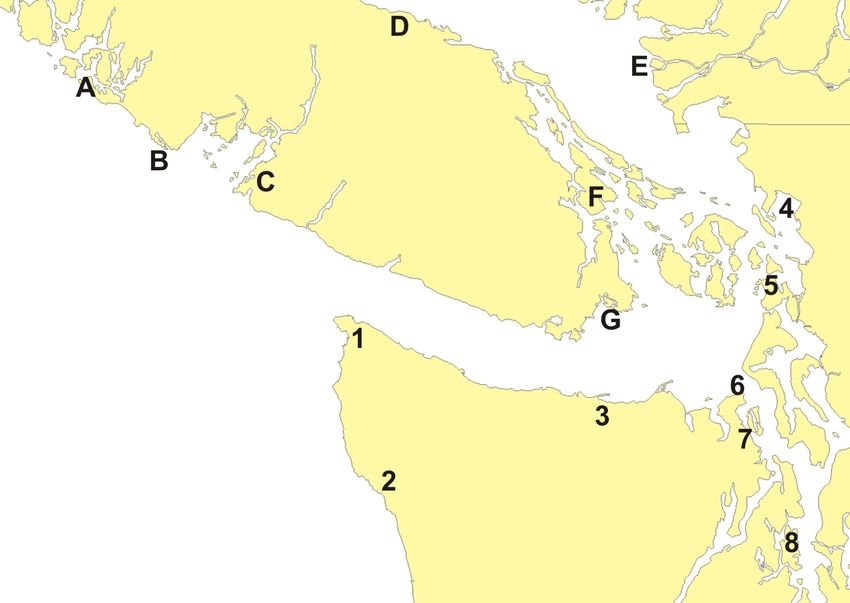
CANUSPAC Annex

Emergency Contact Numbers

These numbers are provided for plan activation.

        FOR NOTIFICATION OF THE CANADIAN REPRESENTATIVE

Contact CCG-Western Region Environmental Response at the 24-hour MCTS Centre in
                                 Vancouver.

                                Ph: 604-666-6012
                                Fax: 604-666-8453

     FOR NOTIFICATION OF THE UNITED STATES REPRESENTATIVE

  USCG Sector Puget Sound at the 24-hour Joint Harbor Operations Center in Seattle.

                                Ph: 206-217-6001
                                Fax: 206-217-6348

                                         3 of 31                             June 2014
CANUSPAC Annex

Revision Record

TRANSMITTAL   DATE     DATE          ENTERED BY:
NUMBER        ISSUED   ENTERED       Signature
     1
     2
     3
     4
     5
     6
     7
     8
     9
     10
     11
     12
     13
     14
     15
     16
     17
     18
     19
     20
     21
     22
     23
     24

                           4 of 31                         June 2014
CANUSPAC Annex
Table of Contents
CANADA - UNITED STATES JOINT ............................................................................. 1
MARINE POLLUTION CONTINGENCY PLAN (JCP) .................................................. 1
ANNEX 3............................................................................................................................ 1
PACIFIC - GEOGRAPHICAL ANNEX ............................................................................ 1
(CANUSPAC)..................................................................................................................... 1
Letter of Promulgation ........................................................................................................ 2
Emergency Contact Numbers ............................................................................................. 3
Revision Record .................................................................................................................. 4
Table of Contents ................................................................................................................ 5
100 Purpose ..................................................................................................................... 7
200 Area of Coverage ..................................................................................................... 7
300 Responsibilities ........................................................................................................ 8
400 Plan Review and Update .......................................................................................... 9
500 Pattern of Response................................................................................................ 10
501 Response Operations .......................................................................................... 10
502 Response Actions ............................................................................................... 10
600 Operational Structure ............................................................................................. 11
601 Designation of On-Scene Commander and Coordinator.................................... 11
602 Other Critical Personnel ..................................................................................... 12
603 Government Resources Available for Normal Response Operations ................ 12
604 Liaison Officer ................................................................................................... 12
700 Notification Procedures ......................................................................................... 13
701 Plan Activation ................................................................................................... 13
702 Plan Deactivation ............................................................................................... 14
800 Procedures for Border Clearance ........................................................................... 14
801 Responding from Canada into the United States - Customs and Excise
Regulations ................................................................................................................... 14
801.1 Customs and Excise Procedures for entry into the United States ............... 14
801.2 Employment and Immigration Regulations for entry into the United States
15
802 Responding from the United States into Canada - Revenue Canada Regulations
16
802.1 Revenue Canada Procedures ....................................................................... 17
802.2 Employment and Immigration Regulations for entry into Canada ............. 17
802.3 Employment and Immigration Procedures for entry into Canada .............. 18
900 Procedures for the Non-Application of Coasting Trade Laws............................... 18
901 Canadian Equipment entering into the United States......................................... 18
902 U.S. equipment entering into Canada................................................................. 19
1000 Exercises........................................................................................................... 20
1100 Detailed Sections to the Operational Supplement .................................................. 20
1101 Communications Plan .................................................................................... 20
1102 Response Resources Inventory ........................................................................... 21
1103 Sensitive Environments Plan ......................................................................... 21
1104 Logistics Plan ................................................................................................ 21
1105 Integration of Volunteers ............................................................................... 22
5 of 31 June 2014CANUSPAC Annex
1106 Salvage and Rescue Inventory ............................................................................ 22
1107 Disposal............................................................................................................... 22
1108 Joint Response Team Contact List ...................................................................... 22
1109 Public Information Coordination ........................................................................ 23
Appendix 1: Contact List ............................................................................................. 24
Appendix 2: Customs/Immigration checklist - United States into Canada.................. 29
Appendix 3: Customs / Immigration Checklist - Canada into United States ............... 30
Appendix 4: Response Equipment Depots within CANUSPAC ................................. 31
6 of 31 June 2014CANUSPAC Annex
100 Purpose
The purpose of the Pacific Geographical Annex (CANUSPAC) to the Canada -
U.S. Joint Marine Pollution Contingency Plan (2014), is to identify the specific
processes whereby both Coast Guards communicate, consult and coordinate in
response to discharge or threat of discharge of pollution into the contiguous
waters of interest of both Canada and the United States.
The response to marine pollution or threat of marine pollution shall be consistent
with the Canadian Coast Guard Marine Spills Contingency Plan - Pacific Region
and the Northwest Area Contingency Plan (USCG).
No action contained within this Annex shall be interpreted as usurping the
authority or processes identified in the respective national response systems.
200 Area of Coverage
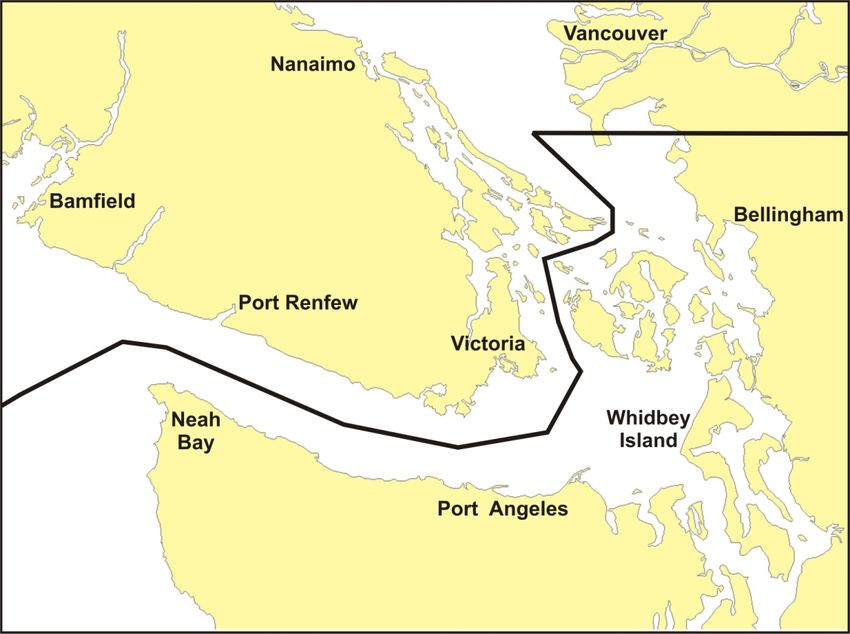
This Geographical Annex applies to the contiguous waters defined by the
international boundary between British Columbia and Washington comprising the
waters of the Juan de Fuca region on the Pacific Coast as shown in Figure 1
below.
Figure 1: CANUSPAC Area of Coverage
7 of 31 June 2014CANUSPAC Annex
300 Responsibilities
For current contact information see Appendix 1.
Canada
Position Responsibilities
Assistant Commissioner Regional Authority
Canadian Coast Guard Development, maintenance and
Western Region promulgation of CANUSPAC
Geographical Annex
Plan activation
Regional Director of Marine Programs Plan activation
Canadian Coast Guard
Western Region
Superintendent JRT Co-Chair
Environmental Response Execution and functions regarding
Canadian Coast Guard preparedness exercises and
Western Region overseeing issues of operational
readiness for their geographical
areas of responsibility
Recommends plan activation
Response Officer Incident Commander for Vancouver
Environmental Response Island
Canadian Coast Guard Recommends plan activation
Victoria Base
Response Officer Incident Commander for South
Environmental Response Coast and Lower Mainland
Canadian Coast Guard Recommends plan activation
Richmond Base
8 of 31 June 2014CANUSPAC Annex
United States
Position Responsibilities
District Commander District Commander
Thirteenth Coast Guard District Plan activation
United States Coast Guard
Chief, Response Department Joint Response Team Alt Co-Chair
United States Coast Guard Execution and functions regarding
Thirteenth Coast Guard District preparedness exercises and
overseeing operational readiness for
their geographical areas of
responsibility
District Response Advisory Team
Command Center
Commander Captain of the Port
Sector Puget Sound Federal On Scene Coordinator
United States Coast Guard Recommends Plan activation
Command Center Provides communication support for
United States Coast Guard operation as requested by District
Thirteenth Coast Guard District Commander and Chief, Response
Department
400 Plan Review and Update
The Annex will be reviewed annually and updated as follows:
Review
The CCG and the USCG will annually review this plan to take into consideration
changes in law, policy, environmental factors, and lessons learned after oil
pollution incidents and exercises.
Revisions
The CCG/USCG will jointly distribute agreed upon revisions to all JRT Members.
Revision Record
Upon receiving a revision transmittal, please ensure that its number is next in
sequence to the previous issue. Process the revisions according to the transmittal
instructions and indicate your completion of the change on the Revision Record.
Revision Requests
All requests or suggestions for revision to this Annex should be forwarded to
Regional Director of Marine Programs, CCG Western Region or the District
Commander (drm), Thirteenth Coast Guard District.
9 of 31 June 2014CANUSPAC Annex
500 Pattern of Response
In the spirit of the International Convention on Oil Pollution Preparedness,
Response and Co-Ordination 90 (OPRC) and the long history of cooperation
between both Coast Guards, the following are the guiding principles for a
response under the authority of this Annex:
For every response to marine pollution, the safety of the response personnel,
crews, and the public is paramount;
Timely, accurate and open communications are essential from the initial
notification of pollution through the conclusion of the response activities and
debrief;
Wherever possible, both Coast Guards will consult the other on response
actions that may impact the other; and
Wherever practicable, both Coast Guards will coordinate response activities to
maximize clean-up effort.
501 Response Operations
Response actions of the USCG and CCG may be classified as coordinated, joint,
or separate response operations. The location, time and nature of the response
operations will determine the extent of interactions. During a joint coordinated
response, there exists a requirement for the co-chairs and members of the JRT to
provide the following:
Conflict resolution
Hastening procedures within their jurisdiction
All requests for such actions should be made through the respective co-chairs.
The co-chairs will be responsible for facilitating the request.
502 Response Actions
Coordinated actions will involve activities that are enhanced by involvement and
input of both parties. Examples include logistic activities near and cross-border
such as: beach cleanup; waste disposal; Shoreline Cleanup Assessment Technique
(SCAT) process; and salvage operations.
Joint response actions are those that can best be completed by both parties sharing
limited resources and expertise. Examples of joint operations may include: initial
over-flights, wildlife protection, personnel support, securing of source,
10 of 31 June 2014CANUSPAC Annex
establishment of on-scene communications, open water skimming, and public
affairs.
Separate response actions will involve those activities that are required/ permitted
in one country but not the other. Examples may include in-situ burning or
shoreline cleaning well away from the border.
600 Operational Structure.
Canada
Refer to the Canadian Coast Guard Marine Spills Contingency Plan – National
Chapter, Section 4, Response Management Structure.
United States
Refer to the Northwest Area Contingency Plan, Section 2100, Command
Structure.
601 Designation of On-Scene Commander and Coordinator
For the purpose of this Annex the two Coast Guards will be the primary
coordinating agencies for all marine spills, even in cases where other lead
agencies or polluters provide an Incident Commander (IC) or On-Scene
Coordinator.
Canada
The source of the pollution determines lead agency. For any source originating in
Canadian waters that enters foreign waters, the Canadian Coast Guard will
appoint an On-Scene Commander for operations within Canadian Waters.
Further details of the lead agency designation can be found within the Mandate
and Role section of the CCG Marine Spills Contingency Plan – National Chapter
Section 1.
http://www.ccg-gcc.gc.ca/eng/Ccg/er_National_Response_Plan/s1#171
United States
Each responsible party for a vessel or a facility from which oil is discharged, or
which poses the substantial threat of a discharge of oil, must take action to
respond to the spill (Oil Pollution Act of 1990). The USCG is the Federal On-
Scene Coordinator (FOSC) and will determine if sufficient action is being taken.
In cases where the responsible party cannot be located or is unwilling or unable to
respond, the USCG will assume control of the response and use federal funds to
minimize and mitigate damage.
Refer to the Northwest Area Contingency Plan for further details.
11 of 31 June 2014CANUSPAC Annex
602 Other Critical Personnel
Canada
Refer to the Canadian Coast Guard Marine Spills Contingency Plan for Pacific
Region and its accompanying Area Plan for specific personnel involved in a
response.
United States
Refer to the Northwest Area Contingency Plan (NWACP) Section 9101, Regional
Response Team and Area Committee Charter.
603 Government Resources Available for Normal Response
Operations
Refer to the Canadian Coast Guard Marine Spills Contingency Plan - Pacific
Region Area Plan and Northwest Regional Area Plan for Response Inventory.
See Appendix 4 for locations of response resource depots.
604 Liaison Officer
During a coordinated response, both Coast Guards shall exchange representatives
to participate as International Coast Guard liaison officers to facilitate the flow of
information and to support coordinating activities two separate command posts
are used.
The liaison officer shall report to the respective OSC. Such a representative shall
be someone with some degree of decisions-making authority, plus functional
knowledge and experience in;
spill management
contingency planning
pollution response equipment
the Joint Contingency Plan, and
Coast Guard and industry response capabilities.
International Coast Guard Liaison officers shall have immediate access to, and be
able to speak for, their own Coast Guard On-Scene Commander or Coordinator.
12 of 31 June 2014CANUSPAC Annex
700 Notification Procedures
Emergency Notifications
1. Notifications to Canada.
In the event of a harmful substance incident in U.S.contiguous waters that
requires notification to the Canadian authorities the following office shall be
notified:
Casnadian Coast Guard Regional Marine Information Center:
1-800-889-8852 (24-hour number)
2. Notifications to United States. In the eve
In the event of a harmful substance incident in Canadian contiguous waters that
requires notification to the American authorities the following office shall be notified:
USCG Sector Puget Sound at the 24-hour Joint Harbor Operations Center in Seattle.
Ph: 206-217-6001
Fax: 206-217-6348
701 Plan Activation
The CCG Assistant Commissioner or the District Commander 13th Coast Guard
District, or their designated representatives, may activate by agreement the JCP
and CANUSPAC Annex. The JCP and CANUSPAC Annex shall be activated
only by formal initiation. This will normally be done by telephone followed by an
activation message or letter sent via email or fax. Refer to Appendix 5 of the JCP
for message format.
The activation of the CANUSPAC Annex will occur when:
A pollution incident originates within the area of responsibility of one Party
and is accompanied by a threat of the pollutant spreading into the area of
responsibility of the other Party, or where the spreading has already occurred;
A pollution incident occurs where no pollutants have spread, or threaten to
spread into both areas of responsibility, but the magnitude of the incident or
other factors makes a joint response desirable; or
A pollution incident originates outside the areas of responsibility of both
Parties and results in a threat to the spread of the pollutant into the area of
responsibility of one or both Parties.
13 of 31 June 2014CANUSPAC Annex
702 Plan Deactivation
A recommendation to deactivate the JCP in response to a particular incident shall
be made by agreement of the two OSCs. The JRT co-chair from the Party which
originally activated the JCP shall deactivate it by message after consultation with
the co-chair from the other Party. The message will clearly establish the date and
time of the cessation of the joint response. Refer to Appendix 6 of the JCP for
message format.
800 Procedures for Border Clearance
801 Responding from Canada into the United States - Customs
and Excise Regulations
During an emergency, United States Customs and Border Protection Regulations
provide for the movement of work force and equipment from Canada into the
United States. Title 19, United States Code Section 1322 International Traffic and
Rescue work, (b) states (in part):
The Secretary of the Treasury may provide by regulation or
instruction for the admission, without entry and without the
payment of duty or tax imposed upon or by reason of importation,
of:
(1) Aircraft, equipment, supplies, and spare parts for use in
searches, rescues, investigations, repairs, and salvage in
connection with accidental damage to aircraft,
(2) Fire-fighting and rescue and relief equipment and supplies for
emergent temporary use in connection with,
(3) Rescue and relief equipment and supplies for emergent
temporary use in connection with floods and other disasters
Pursuant to this section, U.S. Customs and Border Security Regulations allow
pollution response, rescue and relief equipment into the country without payment
of duty.
801.1 Customs and Excise Procedures for entry into the United States
When federal involvement becomes necessary in a trans-boundary incident, a
USCG official notifies U.S. Customs and Border Protection Service (USCBP)
Port Director that the JCP (CANUSPAC) has been activated, and that CCG and/or
response organization personnel and equipment will be arriving to deal with a
14 of 31 June 2014CANUSPAC Annex
release affecting or threatening the United States. The telephone notification will
be followed by a FAX to U.S. Customs and a copy to the FOSC.
U.S. Customs and Border Protection Service should be notified as soon as
possible after the arrival in the U.S. of any carrier and/or equipment. This may be
done by telephone and/or fax if necessary. In no way shall any carrier responding
to an emergency be delayed by U.S. Customs to report its arrival.
The United States Customs and Border Protection Service Port Director may
authorise or direct the following;
Expedited entry/clearance for response equipment involved with emergency
response with no duty or other fees to be collected (clearance is valid for 90
days).
Where equipment enters the United States at other than a port of entry, e.g.,
air or water, it must be reported to USCBP within 10 days, or as soon as is
practicable.
Material, equipment and supplies dispatched from Canada must remain under
supervisory control of an appropriate Canadian authority.
Equipment brought into the United States must be returned to Canada within
90 days unless an extension is granted or other arrangements are made at the
time of entry or during the response. Consumables need not be brought back
into Canada.
Equipment returning to Canada will be required to be checked out through
USCBP prior to the leaving the United States.
801.2 Employment and Immigration Regulations for entry into the
United States
The Immigration and Nationality Act provides the USCBP the responsibility for
regulating the movement of people across the international borders into the U.S.
This includes the ability to expedite the movement of emergency workers from
Canada into the U.S., upon request from the USCG, to assist the U.S. in
responding to emergencies.
Section 212(d)(3) of the Immigration and Nationality Act provides the District
Director, USCBP, the discretion to allow Canadian workers, with special skills,
who might not otherwise be allowed into the U.S. to temporarily enter the U.S. to
assist in the response;
When United States federal involvement in a trans-boundary incident becomes
necessary, a USCG official notifies USCBP of an international spill and the
need for trained Canadian workers to support the emergency response.
15 of 31 June 2014CANUSPAC Annex
The USCG official must specify that the Canada/United States Joint
Plan/CANUSPAC has been activated. Initial telephone notification will be
followed up with a FAX to USCBP and the FOSC.
The USCG official certifies to the USCBP that insufficient trained response
workers are available to respond in a timely manner.
Secure from United States Immigration a form 1-94 for each foreign worker
that is not a citizen of Canada or of the British Commonwealth. All personnel
should have government identification with them. In addition, non-Canadian
citizens must have passport or visa with them.
Response organisations must provide safe transport for an USCBP Inspector
to inspect response operations.
US Coast Guard should provide 24-hour advanced notice of entry if possible.
Workers from Canada may work only 90 days in the United States, unless
other provisions are made.
Upon departing the United States, the Canadian workers must check out
through an Immigration and Naturalization Service (INS) office.
See Appendix 1 for full contact information for U.S. Customs and Border
Protection.
See Appendix 2 for the U. S. Customs and Immigration checklist.
802 Responding from the United States into Canada - Revenue
Canada Regulations
In the event of an emergency, Customs Border Services have specific regulations
governing the movement of persons and goods. Revenue Canada Memorandum
D8-1-1 provides guidelines and information regarding the temporary importation
of emergency equipment.
Officials of federal, provincial or municipal governments may declare
emergencies. However, when time or circumstances do not permit an official
notice of an emergency, Customs Officers will have to assess the situation as it
develops by consulting with local response agencies.
When time permits, a Temporary Admission Permit E29B will be issued covering
all equipment and supplies not consumed in Canada. This permit will be issued
covering emergency supplies and equipment without collection of security (duty
or Goods and Services Tax GST). In the case of consumables being imported, the
duty and GST is waived by virtue of tariff item No.9993.00 and Order-In-Council
16 of 31 June 2014CANUSPAC Annex
73-2529. When the situation is urgent, the paperwork will be reduced to a simple
blotter record of the E29Bs describing the goods in general terms. This record can
be cancelled whenever evidence that the goods have been consumed or exported
from Canada is provided, preferably from an official or person involved in the
emergency situation.
When goods are brought into Canada, where there are no Customs or Royal
Canadian Mounted Police in attendance, a record kept by a responsible individual
(i.e. federal officer, municipal mayor, provincial government representative or
other individual charged with responsibility of directing the emergency
countermeasures) will be accepted for the purpose of completing form E29B.
802.1 Revenue Canada Procedures
The CCG IC will notify the Canada Border Service Agency at the port of entry as
soon as possible that the JCP/CANUSPAC has been activated, and goods will be
entering Canada. The telephone notification will be confirmed with a FAX and/or
email to Customs and a copy to the OSC.
The driver of the vehicle/vessel/aircraft transporting goods to Canada should
adhere to the following:
Carry two copies of the equipment list including serial numbers and monetary
value. Stop at U.S. Customs during crossing to get the equipment list
stamped. A copy of any lists presented to Canada Customs, preferably with
some type of Canada Customs stamp, should expedite the return of equipment
to the United States.
Present the list to Canada Customs for clearance approval. Should problems
arise, ask to speak to a Senior Officer (usually a Superintendent). Report to
Canada Customs when leaving Canada so that temporary admissions permits
can be cancelled.
802.2 Employment and Immigration Regulations for entry into Canada
Emergency response personnel may be granted entry under the Canada
Immigration Act section 19(1)(j), which allows them to be granted admission as
visitors. Under this provision responders are not required to obtain employment
authorization. It is advised that personnel carry a visa or other proof of
citizenship.
Provisions under the Canada Immigration Act Section 19(3) provide for case by
case admission of people with special skills that would otherwise not be
admissible.
17 of 31 June 2014CANUSPAC Annex
802.3 Employment and Immigration Procedures for entry into Canada
Employment and Immigration officers are not always present at Customs Border
Crossings. In their absence, Customs Border Services may function on behalf of
Employment and Immigration and grant temporary authority to work in Canada
on an emergency basis. To facilitate the process of gaining temporary authority to
work in Canada, United States citizens should notify the specific Border Crossing
of their needs prior to arriving for entry into Canada. It is also advisable for
United States responders to co-ordinate entry for an official of the CCG involved
in the emergency situation by contacting Employment and Immigration / Customs
and confirm the need for their entry into Canada.
Refer to Appendix 1 for full contact information for Canada Customs, Excise and
Taxation Agency and Canada Citizenship and Immigration.
Refer to Appendix 2 for Canada Customs and Immigration checklist.
CBSA has a “Procedures for processing”
900 Procedures for the Non-Application of Coasting
Trade Laws
901 Canadian Equipment entering into the United States
U.S. Customs officials, with prior notification, will allow the entrance of
Canadian response equipment during an emergency without duty in accordance
with the following regulation (19 CFR §10.107).
During an emergency, United States Customs and Immigration Regulations
provide for the movement of work force and equipment from Canada into the
United States. Section 1322(b) of Title 19, United States Code, states (in part):
The Secretary of the Treasury may provide by regulation or
instruction for the admission, without entry and without the
payment of duty or tax imposed upon or by reason of importation,
of fire-fighting and rescue and relief equipment and supplies for
emergent temporary use in connection with conflagrations.
Rescue and relief equipment and supplies for emergent temporary
use in connection with floods and other disasters.
Pursuant to this section, United States Customs Regulations allow rescue and
relief equipment into the country without payment of duty.
18 of 31 June 2014CANUSPAC Annex
When federal involvement becomes necessary in a trans-boundary incident, a
USCG official notifies United States Customs and Border Security Agency, Port
Director that the JCP / CANUSPAC Annex has been activated to deal with a
release affecting or threatening the United States. The telephone notification will
be confirmed with a FAX to Customs and a copy to the FOSC.
The United States Customs Port Director may authorize or direct the following:
U.S. Customs should be notified as soon as possible after the arrival in the
U.S. of any carrier and/or equipment. This may be done by telephone and/or
fax if necessary. In no way shall any carrier responding to an emergency be
delayed by Custom to report its arrival.
Expedited entry/clearance for response equipment involved with emergency
response with no duty or other fees to be collected (clearance is valid for 90
days).
Where equipment enters the United States at other than a port of entry, e.g.,
air or water, it must be reported to United States Customs within 10 days, or
as soon as is practicable. Material, equipment and supplies dispatched from
Canada must remain under supervisory control of an appropriate Canadian
authority.
Equipment brought into the United States must be returned to Canada within
90 days unless an extension is granted or other arrangements are made at the
time of entry or during the response; and consumables need not be brought
back into Canada.
To facilitate the movement of equipment across the border into the United
States and back into Canada, it is advisable to identify ahead of time, which
Ports of Entry are open at the time projected for crossing.
It is important to maintain a list of equipment and supplies carried in each
vehicle to be taken across the border. This list will be presented to the United
States Customs Agent when crossing the border. It will help re-entry into
Canada if the list has been stamped by Canadian Customs prior to departing
Canada.
Canadians will be required to check equipment through United States
Customs prior to leaving the United States. Canadian-flag oil spill recovery
vessels must report arrival and make entry when coming into the U.S. These
vessels may discharge oil recovered from U.S. waters to a U.S. port
(SEC.1117. 46 USC 12101) (P. L. 104-324 §1117).
902 U.S. equipment entering into Canada
19 of 31 June 2014CANUSPAC Annex
Remission of duties may be granted to response equipment imported into Canada
to be used temporarily for an actual or imminent pollution incident. Goods do not
include personnel and all goods that have not been expended or destroyed in
resolving the emergency must be exported from Canada. The issuance of Canada
Customs form E29B by Customs officers will be required at the time of
importation or after the fact depending on the circumstances. Where Customs
officers or Royal Canadian Mounted Police are not in attendance a record will be
kept by a responsible person for completing the E29B.To ensure that there are no
undue impediments and to expedite such procedures for the importation of
equipment requires co-ordination by responsible agencies with field Customs
officials. Local Senior Customs officials should be included in Area Planning
meetings and Regional Environmental Emergency Team (REET) meetings
whenever possible.
1000 Exercises
The scope and frequency of exercises will be in accordance with the JCP. See
section 302.
1100 Detailed Sections to the Operational Supplement
1101 Communications Plan
During the notification stage of an incident involving the joint plan activation,
communications will generally be via telephone, email and fax. Incident specific
communications will be assembled into a communications plan as quickly as
possible and distributed via fax and email.
Cell phones can be used when and where there is adequate coverage.
VHF radio will also be used extensively during an incident, especially on scene.
Common radio frequencies may be utilized and will be included in the incident
specific communications plan.
As an incident progresses, a more detailed specific Communications Plan and
equipment list will be developed for the incident action plan. This
communications plan will be developed between the CCG and USCG OSC’s.
Canada
Refer to the Canadian Coast Guard Marine Spill Contingency Plan – Pacific
Region Chapter for information on Command Posts. The Coast Guard uses
20 of 31 June 2014CANUSPAC Annex
several channels as stand alone simplex and has access to repeaters in cooperation
with private industry.
United States
Communications information is found in Northwest Area Contingency Plan,
Section 9501 Communications Manual.
1102 Response Resources Inventory
Canada
Refer to the Canadian Coast Guard Marine Spills Contingency Plan for Pacific
Region and the accompanying South Coast and Interior Area Plan for response
inventory located at each site.
United States
Refer to the Northwest Area Contingency Plan, Geographic Response Plans for
the Strait of Juan De Fuca and San Juan Islands for response inventory .
1103 Sensitive Environments Plan
Canada
Environment Canada’s National Environmental Emergency Center ( NEEC) will
coordinate all environmental sensitivity information Other federal, First Nation,
provincial and/or local sources of environmental sensitivity information will be
incorporated into an Environmental Unit with the ICS.
United States
The National Oceanographic and Atmospheric Administration Scientific (NOAA)
Support Coordinator will coordinate all Environmental Sensitivity Information
(ESI). Sources of this information will be ESI maps and the Sensitive Areas
Contingency Plan part of the Subarea Contingency Plan. Real-time
environmental information will be obtained via discussions with appropriate
resource personnel from US Fish and Wildlife Service, NOAA Fisheries,
Washington State Fish and Wildlife and other local knowledge sources.
1104 Logistics Plan
Canada
Refer to Canadian Coast Guard Marine Spills Contingency Plan- Pacific Region
Area Plan.
United States
Refer to the Northwest Area Contingency Plan.
21 of 31 June 2014CANUSPAC Annex
1105 Integration of Volunteers
Canada
Refer to Canadian Coast Guard Marine Spills Contingency Plan - National
Chapter Section 2-2.
United States
Volunteer information is found in the Northwest Area Contingency Plan.
1106 Salvage and Rescue Inventory
See Appendix 1 for contact information
Canada
Rescue: Contact the Rescue Coordination Centre via CCG RMIC
Salvage: Contact the Transport Canada Marine Safety Office via CCG
RMIC.
United States
Rescue: Contact the 13th Coast Guard District Command Center
Salvage: The USCG has authority to access Federal civilian equipment,
personnel and services. The current list of civilian contractors with
a Basic Ordering Agreement (BOA) is accessible through the
Northwest Area Contingency Plan.
1107 Disposal
Canada
Disposal of hazardous waste in British Columbia falls under the authority of the
Provincial Government through the BC MOE. The Waste Management
Guidelines for Marine Oil Spill Response in British Columbia and Inventory of
Potential Sites for Disposal / Storage of Oily Waste provide guidance on this
matter.
United States
Refer to Northwest Area Contingency Plan, Section 9405, Washington State
Disposal Guidelines.
1108 Joint Response Team Contact List
Refer to Appendix 1 for current contact information.
22 of 31 June 2014CANUSPAC Annex
1109 Public Information Coordination
Coordinated public information releases are preferred but not always possible. To
the maximum extent possible, coordinated press and media releases/briefings will
be conducted. If joint press releases are not possible, the respective public affairs
officers will coordinate to the maximum extent possible to ensure information
released separately is consistent and accurate.
Canada
Refer to Canadian Coast Guard Marine Spills Contingency Plan-National
Chapter, Section 4.3 and Pacific Chapter, Section 3 and Section 2-Operational
Annex.
United States
Refer to the NWACP Joint Information Center Manual developed for the National
Response Team by the USCG Public Information Assist Team.
23 of 31 June 2014CANUSPAC Annex
Appendix 1: Contact List
Canadian Coast Guard
Assistant Commissioner Regional Director of Marine Programs
Canadian Coast Guard Canadian Coast Guard
Western Region Western Region
25 Huron Street, Victoria, B.C. 25 Huron Street
V8V 4V9 Victoria, B.C.
Ph. 250 – 480 – 2765 V8V 4V9Ph. 250 480 2711Fax 250 480
Fax. 250 480 2702 2702
Superintendent Senior Response Officer
Environmental Response Environmental Response
Canadian Coast Guard Canadian Coast Guard
Western Region Sea Is. Base
4260 Inglis Drive 4260 Inglis Drive
Richmond, B.C. Richmond, B.C.
V7B-1L7 V7B-1L7
Ph. (604) 270-3273 Ph. (604) 270- 4387
Fax. (604) 270-7349 Fax. (604) 270-7349
Cell. (604) 340-1954 Cell. (604) 816 7432
Senior Response Officer MCTS Vancouver
Environmental Response Marine Information Centre
Canadian Coast Guard Ph. (604) 666-6012
25 Huron St. 1 800 889 8852
Victoria, B.C. Fax. (604) 666-8453
V8V 2J8
Ph. (250) 363-3861
Fax. (250) 363-3076
Cell. (250) 361-8319
24 of 31 June 2014CANUSPAC Annex
United States Coast Guard
District Commander Incident Management & Preparedness
United States Coast Guard Advisor
Thirteenth Coast Guard District United States Coast Guard
915 Second Avenue Room 3590 Thirteenth Coast Guard District
Seattle, WA 98174-1067 915 Second Avenue, Suite 3408
Ph. (206) 220-7001 Seattle, WA 98174
Fax. (206) 220-7009 Office: (206) 220-4662
Fax: (206) 220-7342
Chief, Response Division District 13 Command Center
United States Coast Guard (Jackson Federal Bldg, Seattle, WA)
Thirteenth Coast Guard District Ph. (206) 220-7001
915 Second Avenue Room 3506 Fax (206) 220-7009
Seattle, WA 98174-1067
Ph. (206) 220-7001
Fax. (206) 220-7009
Canadian JRT Members
Superintendent Environment Canada
Environmental Response Manager, Enforcement Division
Canadian Coast Guard Pacific and Yukon Region
Western Region 201-401 Burrard Street, Vancouver
4260 Inglis Drive B.C. V6C-3C4
Richmond, B.C. Ph. (604) 666-0064
V7B-1L7 Fax (604) 666-7463
Ph. (604) 270-3273
Fax. (604) 270-7349
Cell. (604) 340-1954
British Columbia Ministry of Transport Canada – Marine Safety
Environment Regional Director
A/Manager, Hazard Management 602 - 800 Burrard St.
BC Ministry of Environment Vancouver, B.C.
P.O. Box 9342, Stn Prov Govt V6Z 2J8
Victoria, BC V8W 9M1 Ph.# (604)-666-5470
Tel: (250)387-9950 Fax # (604)-666-5444
cell: (250)686-3705
FAX: (250)953-3856
Canada Board Services Agency Canada Board Services Agency
Superintendent, Immigrations Superintendent, Immigrations
Customs Operations Victoria 200 Highway #99
107-816 Government St. Surrey, B.C.
Victoria, B.C. V3S-9N7
V8W 1X1 Ph. (604) 541-5623
Ph. (250) 363-3339 Fax (604) 541-5621
Fax (250) 363-3179
25 of 31 June 2014CANUSPAC Annex
United States JRT Members
United States Coast Guard U. S. Customs and Border Service
Chief, Planning Division Area Port Director
United States Coast Guard 9901 PACIFIC HIGHWAY
Thirteenth Coast Guard District BLAINE, WA 98230
915 Second Avenue Room 3506 Ph 360-332-5771
Seattle, WA 98174-1067 Fax 360-332-4701
Ph. (206) 220-7337
Fax. (206) 220-7342
24 Hr (206) 220-7001
NOAA Commander (FOSC/COTP)
Emergency Response Division Sector Puget Sound
7600 Sand Point Way N.E. United States Coast Guard
Seattle, WA 98115-0070 1519 Alaskan Way South
Ph. (206) 526-6317 Seattle, WA 98134-1192
Fax (206) 526-6329 Ph. (206) 217-6001
24 Hr (206) 526-4911 Fax (206) 217-6348
e-mail: sectorpugetsoundcc@uscg.mil
Federal Emergency Management Agency Department of Labor (OSHA)
FEMA Region X Assistant Regional Administrator
National Preparedness Division U.S. Department of Labor, OSHA
Technical Hazards Program Specialist 1111 Third Avenue, Suite 715
130-228th Street SW Seattle, WA 98101-3212
Bothell, WA 98021 Ph (206) 553-5930
Ph (425)-487-4686 24 Hr (800) 321-6742
24 Hr (425) 487-4600 Fax (206) 553-6499
Fax (425) 487-4777
24 Hr Fax (425)) 487-4404
Environmental Protection Agency Department of the Interior
Manager, EPA Emergency Response Regional Environmental Officer
Program U.S. Department of the Interior
U.S. Environmental Protection Agency 500 N. E. Multnomah Street
200 Sixth Avenue, Suite 356
Mailcode ECL-116 Portland, OR 97232-2036
Seattle, WA 98101 Ph (503) 231-6157
Ph (206) 553-1674 24 Hr (503) 807-3829 (cell)
24 Hr (206) 553-1263 24 Hr (503) 684-4082 (primary)
Fax (206) 553-0175 Pager none
Fax (503) 231-2361
26 of 31 June 2014CANUSPAC Annex
State of Washington General Services Administration (GSA)
Spill Prevention, Preparedness, and Deputy Regional ER Coordinator
Response Acting Program Manager General Services Administration (FZM)
Washington Department of Ecology 400 15th Street S.W.
M/S PV-11 Auburn, WA 98001-6599
Olympia, WA 98504-8711 Ph (253) 931-7024
Ph (360) 407-7450 Fax: (253) 931-7389
24 hour (800) 258-5990
Fax (360) 407-6902
Department of Defense Department of Energy
(United States Army) Emergency Preparedness Specialist
Mr. Paul E. Peloquin U.S. Department of Energy
U.S. Army Engineers P. O. Box 550 (A6-35)
North Pacific Division Richland, WA 99352
P.O. Box 2870 Ph (509) 376-8519
Portland, OR 97208-2870 24 Hr (509) 373-3800
Ph (503) 808-3887 Fax (509) 376-4485
Fax (503) 808-3904
E-mail:
peloquin.e.paul@nwd01.usace.army.mil
27 of 31 June 2014CANUSPAC Annex
Canada Border Services Agency
Superintendent, Immigrations Customs Operations Sidney
200 Highway #99 Port of Sidney
Surrey, B.C. 101-1640 Electra Blvd.
V3S-9N7 Sidney, B.C.
Ph. (604) 541-5623 V8L-5V4
Fax (604) 541-5621 Ph. (250) 363-6644
Fax (250) 363-6764
Superintendent ph (250)363-6817
Customs Operations Victoria Superintendent, Customs
107-816 Government St. 200 Highway #99
Victoria, B.C. Surrey, B.C.
V8W 1X1 V3S-9N7
Ph. (250) 363-3339 ph. (604)535-9754
Fax (250) 363-3179 Fax (604) 541-5621
Commercial Operations
#28, 176 Street,
Surrey, B.C.
V3S-9R9
ph. (604)
Fax. (604) 538-8961
attn “Administrative Supervisor”
U.S. Bureau of Customs and Border Protection (Customs)
U.S. Bureau of Customs and Border U.S. Bureau of Customs and Border
Protection (Customs) Protection (Customs)
Port Director Area Port Director
2202 Port of Tacoma Rd. 9901 Pacific Highway
Tacoma, Wa 98421 Blaine, WA 98230
Ph. (206) 593-6338 Ph. 24 hr. (360) 332-5707
Fax: (206) 593-6351 Fax: (360) 332-2339
28 of 31 June 2014CANUSPAC Annex
Appendix 2: Customs/Immigration checklist - United
States into Canada
Item # Action Items prior to leaving for the Border.
1 Has the JCP-CANUSPAC Annex been activated?
2 Has the OSC requested personnel or equipment assistance from the U.S.
into Canada?
3 Has the Canadian Coast Guard informed the Canada Boarder Services
Agency at the port of entry that the JCP been activated and US equipment
and/or personnel will be crossing the border?
4 Has the USCG or US contractors forwarded their personnel and equipment
lists to the CCG?
5 Are the lists of personnel and equipment complete?
6 Have these lists been forwarded to the Canada Board Sevices Agency at
the border crossing point?
Item # Action Items while en route to the Border.
1 Prior to leaving the U.S., ensure a duplicate copy of the personnel and
equipment list accompanies each vehicle or vessel.
2 Ensure each vehicle or vessel has contact information for the CCG in case
there are problems at the border.
3 Upon arriving at the border, stop at the U.S. side of the border and have the
lists stamped.
4 If there is a long back-up at the border, call your CCG contact who will
assist in expediting you through the line.
5 Present the lists to the Canada Boarder Services Agency at the border. If
there is a problem, ask for the Senior Officer or Superintendent.
6 If a problem continues, contact the CCG personnel who requested the
equipment or personnel?
7 Retain copies of the lists for re-entry into the U.S.
29 of 31 June 2014CANUSPAC Annex
Appendix 3: Customs / Immigration Checklist - Canada
into United States
Item # Action Items prior to leaving for the Border.
1 Has the JCP-CANUSPAC Annex been activated?
2 Has the OSC requested personnel or equipment assistance from the Canada
into U.S.?
3 Has the United States Coast Guard informed the U.S. Customs and
Boarder Protection Service at the port of entry that the JCP been activated
and Canadian equipment and/or personnel will be crossing the border?
4 Has the CCG or Canadian contractors forwarded their personnel and
equipment lists to the USCG?
5 Are the lists of personnel and equipment complete?
6 Have these lists been forwarded to U.S. Customs Boarder Protection
Service at the border crossing point?
7 Time permitting, complete an I-94 form for each individual entering the
U.S.
Item # Action Items while en route to the Border.
1 Prior to leaving the Canada, ensure a duplicate copy of the personnel and
equipment list accompanies each vehicle or vessel.
2 Ensure each vehicle or vessel has contact information for the USCG in
case there are problems at the border.
3 Upon arriving at the border, stop at the Canadian side of the border and
have the lists stamped.
4 If there is a long back-up at the border, call your USCG contact who will
assist in expediting you through the line.
5 Present the lists to Inspector at the border with the list. If there is a
problem, ask for the Senior Officer or Superintendent.
6 If a problem continues, contact the USCG personnel who requested the
equipment or personnel?
7 Retain copies of the lists for re-entry into Canada.
30 of 31 June 2014CANUSPAC Annex
Appendix 4: Response Equipment Depots within CANUSPAC
CCG Depots
A – Tofino
B – Ucluelet
C – Bamfield
D – French Creek
E – Richmond
F – Ganges
G – Victoria
USCG Depots
1 – Neah Bay
2 – Quillayute River
3 – Port Angeles
4 – Bellingham
5 – Anacortes
6 – Port Townsend
7 – Indian Island
8 – Manchester
31 of 31 June 2014You can also read


