TRANSPORT - Dublin Climate Change Action Plans
←
→
Page content transcription
If your browser does not render page correctly, please read the page content below
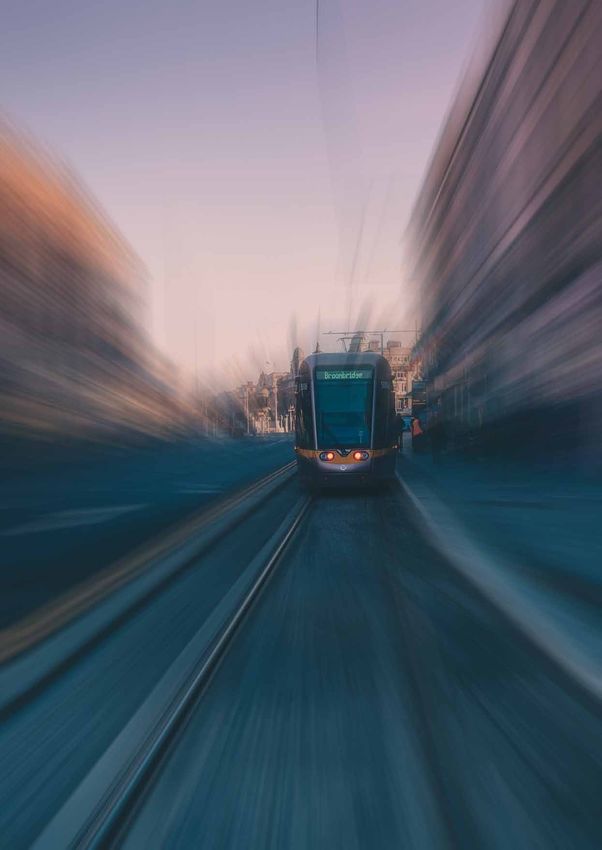
TRANSPORT

70   DUBLIN CITY COUNCIL CLIMATE CHANGE ACTION PLAN   Photo Source: Mark Dalton / Pexels.com
ACTION AREA: TRANSPORT
DUBLIN CITY COUNCIL CLIMATE CHANGE ACTION PLAN 71
Council will continue to work with its
                                          i

                                                                            CASE STUDY
                     neighbouring local authorities and the
                     National Transport Authority to achieve
                     a doubling of all active travel and public
                     transport trips and to halve private vehicle
                     trips to Dublin by 2030.
                     - Dublin City Development Plan 2016-2022

             Dublin City Council, through its own development plan
             strategy and policies, promotes the integration of land use
             and transportation, and works with a range of stakeholders
             to improve transportation in the City, and to encourage
             modal shift away from private cars to more sustainable
             transport methods.
                                                                                         Smart Workplace Mobility Hub
             For example, DCC is working with the National Transport
                                                                                         There are approximately 1,500 staff
             Authority and its neighbouring local authorities to
                                                                                         members that work in Dublin City Council’s
             implement the Greater Dublin Area Transport Strategy
                                                                                         Civic Offices on Wood Quay. According to
             2016-2035, which sets out a strategic vision for transport
                                                                                         the Smart Travel Workplace Survey 2016,
             in Dublin. With private car journeys currently accounting
                                                                                         these 1,500 staff members use the following
             for 32% of the modal split, the Strategy aims to double
                                                                                         transport methods to get to and from work:
             trips made by walking, cycling and public transport, while
             significantly reducing private car journeys by 2030.                        • Walk: 8%
                                                                                         • Cycle 15.5%
             Other measures that DCC has taken to date to encourage                      • Public Transport 38%
             more active and sustainable travel in the City are a                        • Car 33%
             reduction in speed limits to 30 km in certain areas and the                 • Motorcycle 2%
             introduction of traffic calming measures to improve the                     • Car-pooling 3.5%
             safety of the streets.
                                                                                         There are currently 280 parking spaces in
             OPERATIONS                                                                  the staff car park in Wood Quay.

             In 2017, Dublin City Council’s transport fleet consumed 22.7                Through the 2018 call of the Smart
             GWh of energy, which amounted to 5,360 tonnes of CO2.                       Dublin SBIR Challenge, DCC and the SEAI
             The Council has 980 vehicles in its fleet, which are broken                 (Sustainable Energy Authority of Ireland) are
             down into 24 different vehicle types, including cars, vans,                 looking to test shared mobility options for
             lorries and road sweepers.                                                  staff through the piloting of a smart mobility
                                                                                         hub that will include e-cars, e-bikes and
             As transport accounts for 12% of DCC’s overall energy                       push bikes, with the aim of promoting more
             use, the Council is steadily replacing the fleet with newer,                sustainable travel.
             more fuel efficient vehicles, including electric vehicles.
             DCC currently has three electric vehicles that can be used
             by staff and booked through an online system within the
             Council. A further 13 small electric vans have also recently
             been procured for use in the Council’s depots and DCC will
             aim to fully electrify its fleet by 2030.

             The Council is also developing a smart mobility hub within
             the Civic Offices, which will give staff access to bikes,
             electric bikes and electric cars so that they can move
             efficiently from one Council building to another.

     72   DUBLIN CITY COUNCIL CLIMATE CHANGE ACTION PLAN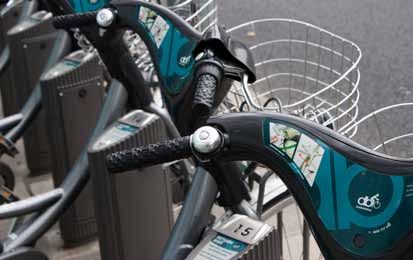
a pedestrian-friendly City. DCC is also in the process of
CASE STUDY

                                                               developing a public lighting master plan that will improve

                                                                                                                                 ACTION AREA: TRANSPORT
                                                               the ambiance and safety of streets for pedestrians, cyclists
                                                               and drivers.

                                                               Traffic Calming Measures
                                                               Over the last decade, there has been a gradual lowering
                                                               of speed limits throughout Dublin City and its suburbs, in
                                                               order to reduce pollution levels and make the City safer and
                                                               more enjoyable for cyclists and pedestrians to get around.
                                                               The 30 kilometre speed limit currently applies to the north
             Carbon Offsetting for Staff Flights               and south quays in the City Centre and all residential areas
             DCC has teamed up with Vita, which is an          between the Royal and Grand Canals. Dublin City Council
             Irish overseas development agency providing       is now considering extending the 30 kilometre speed limit
             African families with efficient stoves, solar     to all remaining suburbs within the Council’s boundary.
             lighting and clean water programmes to help       The Special Speed Limit Bye-Laws 2018 were accepted by
             them create food and energy.                      the Council in May 2018 and were put forward for public
                                                               consultation throughout June and July. In August 2018,
             These programmes reduce carbon                    DCC also launched a new publicity campaign with the
             emissions by over 60% and create saleable         Road Safety Authority to make citizens aware of the speed
             carbon credits, which Vita then sells on to       limits in their area and along the routes they travel, and to
             organisations like Dublin City Council, that      highlight the quality of life benefits for communities living
             may not be obliged to offset their carbon         in a 30 kilometre ‘Slowzone’ area.
             footprint, but choose to do so in order to lead
             by example.                                       Last Mile Delivery
                                                               Dublin City Council is currently planning to develop a
             As the first local authority in Ireland to        number of delivery hubs that will enable trucks and vans
             partner with Vita’s Green Impact Fund,            to drop off goods at certain points instead of travelling all
             the Council was able to offset the carbon         the way into the City Centre. Couriers will then collect the
             associated with its business flights in 2017,     parcels from the hub and deliver them to locations in the
             which amounted to 119 tonnes of CO2. This         City Centre using sustainable transport methods. This is
             initiative will be repeated by the Council on     part of a 'last mile delivery' initiative that aims to reduce
             an annual basis.                                  traffic and pollution in the City Centre. It follows on from
                                                               a successful pilot scheme involving the Council and the
                                                               international delivery company UPS in the north inner City,
                                                               which has removed 200 vehicle movements a day from the
                                                               City Centre. The Council has drafted bye-laws to expand
PLANNING & PUBLIC REALM                                        this scheme and recently carried out a consultation with
                                                               businesses and potential operators.
Key to encouraging people to walk and cycle is the
design of streets and the public realm. DCC is working to      To complement this initiative, the Smart Dublin
implement street design guidelines that make the streets       programme has also launched an all-island joint SBIR
more inviting and improve the public realm, by taking a        challenge involving Dublin City and Belfast City Councils.
corporate cross-departmental approach. Two important           Both cities are looking for ways to enhance the efficiency
corporate plans - Public Realm Strategy Your City Your Space   and effectiveness of these deliveries, reducing the number
2012 and The Heart of Dublin Public Realm Masterplan           of goods vehicles in their respective urban centres, which,
for the City Core 2016 - seek to improve the quality and       in turn, will improve air quality, noise pollution and road
experience of Dublin’s public realm and to make Dublin         safety.

                                                                        DUBLINDUBLIN
                                                                               CITY COUNCIL
                                                                                      CITY COUNCIL
                                                                                             DRAFT CLIMATE CHANGE ACTION PLAN   73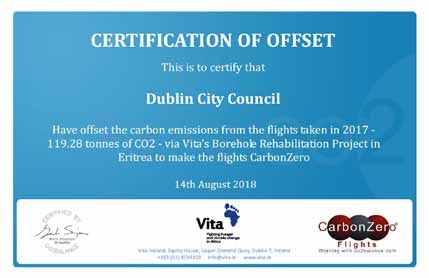
Dublin City Centre Transport Study 2016                         Partnerships, Community Engagement, Communication
             The Dublin City Centre Transport Study has been prepared        and Promotion
             in order to integrate the transport policies and proposals of   Partnerships
             DCC and the National Transport Authority (NTA) and inform       Since 2010, DCC has been developing and implementing
             an agreed framework for strategic investment in the City’s      successful behavioural change programmes to encourage
             transport system. The study relates directly to the policies    more sustainable forms of transport. For example, the
             and objectives set out in the DCC Development Plan and          safe routes to school scheme and the Green Schools
             is guided by the Transport Strategy for the Greater Dublin      programme, in partnership with An Taisce, are encouraging
             Area 2016-2035. The study examines the issues relating to       thousands of children and their parents to walk, cycle or
             the management and movement of people and goods to,             scoot to school. DCC will continue to seek new and expand
             from and within Dublin City Centre, and proposes a series       on existing partnerships to encourage sustainable travel
             of specific measures and changes to the transport network       and safer travel behaviours.
             in order to ensure that transport in Dublin can continue to
             function effectively and has the capacity to cater for the
             City’s future growth. The Dublin City Transport Study sets       CASE STUDY   Community Engagement
             out a number of individual scheme proposals that will                         Dublin City Council will engage with local
             provide a basis upon which to reconfigure the physical                        communities to develop a vision for the
             layout of the core City Centre area, thereby providing                        future of their neighbourhoods with a strong
             a basis for an enhancement of the public realm and                            focus on local living, sustainable mobility
             facilitating the delivery of a core pedestrian network.                       and quality of life. Hike It! Bike It! Like It!
                                                                                           Drimnagh was set up in 2011 in partnership
             Air Quality                                                                   with the Drimnagh Smarter Travel
             DCC is working in partnership with the EPA on expanding                       Community Campaign. It aimed to promote
             and enhancing ambient air quality monitoring in Dublin                        active travel to local schools and to the staff
             in accordance with the National Ambient Air Monitoring                        of Crumlin Children’s Hospital.
             Programme. Data from all monitoring stations in the
             Dublin Region can now be viewed in real time on the                           The project has resulted in a 52% increase
             EPA website at www.epa.ie/air/quality/data/. Further                          in people cycling to work or school in the
             enhancements planned include improved communication                           Drimnagh area. Local schools have also
             and interpretation of air quality data on the Dublin City                     recorded a large increase in the number of
             Council website.                                                              students walking to school, with almost 70%
                                                                                           of students now travelling on foot each day.

             SUSTAINABLE TRAVEL, INFRASTRUCTURE &                                          The project was a finalist in both the 2013
             BEHAVIOUR CHANGE                                                              Green Awards and the Excellence in Local
                                                                                           Government Awards.
                     Less dependency on the private car for
                                          i
                     routine trips and replacement by public
                     transport, walking and cycling will result              Communications and Promotion
                     in a reduction in consumption of non-                   DCC will establish a portal dedicated to communication
                     renewable resources and CO2 emissions,                  and promotion of active travel within existing platforms.
                     helping to meet national emission
                     reduction targets. It will also bring health            Cycle Network and Walking and Targets
                   benefits. This is all the more important                Of the transportation modes that DCC can influence and
                     when we consider that the population of                 shape, cycling has been the predominant focus. DCC has
                     the inner City is expected to grow by over              had immense success with the dublinbikes scheme and
                     40,000 by the year 2020.                                there is a continuous demand to expand this programme,
                     - Dublin City Development Plan 2016-2022                which will help to reduce emissions and provide more
                                                                             options for sustainable modes of transport.

     74   DUBLIN CITY COUNCIL CLIMATE CHANGE ACTION PLAN
DCC is also actively working to improve cycling infrastructure cargo bicycles. The new secure cycling facility is free to use
through the development of segregated cycle paths where and it is open Monday to Thursday from 7am to midnight,
ACTION AREA: TRANSPORT
possible, such as the Sutton-to-Sandymount Cycleway, Friday from 7am to 1am, Saturdays from 8am to 1am and
Dodder Greenway, Royal and Grand Canal Cycleways and the Sundays from 10am to 7pm.
Clontarf-to-City Centre Cycle Scheme.
City Challenge – Walking and Cycling
DCC will accelerate the delivery of cycling and walking DCC will embark on a City Challenge that seeks to generate
infrastructure with continuous segregation of vehicles interest in the development of cycling and walking
and high levels of perceived safety. The Greater Dublin infrastructure and to foster the development of creative and
Area Cycle Network Plan has identified 471 kilometres of a appropriate infrastructure and engagement solutions that
possible cycle network for Dublin City. DCC will focus on the are aligned with the Dublin context conditions. This will be
development of greenways, primary and secondary routes, carried out using the BETA framework.
while significantly improving the walking environment
and creating opportunities for sojourning along the same
corridors. There are 60 kilometres of segregated cycling
CASE STUDY
tracks and pedestrian routes currently under planning and
development for delivery over the next five years. Routes
under planning and development include the Liffey Cycle
Route, East Coast Trail, Dodder Greenway, Royal and Grand
Canal Greenways and the Clontarf-to-City Centre.
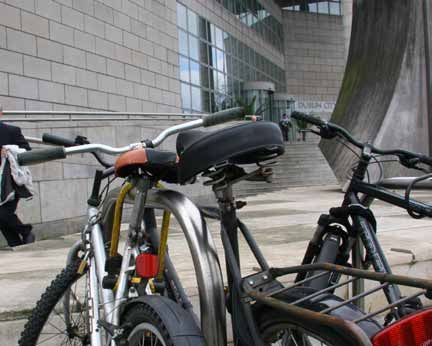
Cycle Parking
Dublin City Council has drafted a strategy for the provision of
public cycle parking throughout the City. Since 2018, 2,100
cycle parking spaces have been provided at 110 locations
and a further 2,000 spaces are proposed to be installed in
2019 at over 120 locations. Further installations will be made Smart Dublin Cycling Challenge
to provide over 20,000 public parking spaces by 2030. Dublin City Council will seek smart
solutions to mobility problems using the
DCC will also work with relevant transport bodies and Smart Dublin programme. An example
businesses to expand the availability of sheltered bicycle is the Smart Dublin cycling challenge,
parking to enable people to cycle to and from key public which was launched in 2016 to help
transport nodes and strategic destinations such as the improve cycling across Dublin using smart
recent installations for Drury Street bike parking facilities. technology.
DCC will reassess cycle parking standards for developments
The challenge resulted in the development
as part of the review of the Dublin City Development Plan
of BikeLook, which monitors bicycle
2016-2022.
usage and deters and detects bicycle
theft; Fluidedge, which allows cyclists to
Upgraded Cycle Parking Facility Opens in Drury Street
record actual or perceived obstacles to aid
Car Park
safe cycling in Dublin, a See.Sense ICON
A newly-expanded cycle parking facility was opened in Drury
intelligent and connected bicycle light,
Street Car Park in June 2018. The newly expanded facility,
which collects anonymised, crowd-sourced
which was funded with the support of the National Transport
data such as road surface conditions,
Authority, has a capacity for 332 bicycles, almost twice the
collisions and near-miss hotspot areas,
capacity of the original facility that opened in the car park
and a Smartcharge, which aids cyclists in
in 2009. During the upgrade of the cycle facility, new lighting
predicting the ease of a journey, improving
and CCTV security cameras were installed and fire alarms
safety along the way and creating a secure
and fire exits were upgraded. Also, for the first time in a cycle
parking facility at the end of the journey.
facility in Dublin city, a public bicycle maintenance area with
basic tools will be provided and parking will be available for
DUBLINDUBLIN
CITY COUNCIL
CITY COUNCIL
DRAFT CLIMATE CHANGE ACTION PLAN 75Car Sharing
CASE STUDY
Dublin City Council supports car sharing and the expansion
of car clubs across the City. Bye-laws regulating the
licensing of car clubs were introduced in 2013. Two licenses
have been issued to GoCar and YUKO Toyota Car Club.
CASE STUDY
GoCar
GoCar is Ireland’s largest car sharing
Council Bike Schemes operator, with almost 500 vehicles across 15
DCC has had immense success with counties, and has over 30,000 members. In
the dublinbikes scheme and there is the last three years, the operator has seen
a continuous demand to expand this 600% growth in monthly journeys.
programme, which will help to reduce
GoCar provides a convenient, cost-effective,
emissions and provide more options for
and sustainable alternative to car ownership.
sustainable modes of transport.
By allowing multiple people to use the
same vehicle at different times, car sharing
The Just Eat dublinbikes scheme is one of
reduces car ownership and car dependency,
the most successful bike rental schemes in
congestion, noise and air pollution, and frees
the world, with more than 66,000 subscribers
up land traditionally used for parking spaces.
and 25 million journeys since its launch in
2009. On its busiest day to date, September Each GoCar replaces approximately 10-20
16th 2016, 18,041 journeys were made in private cars, is environmentally friendly, and
one day. The scheme currently has 1,600 creates more liveable cities by encouraging
bikes available at 115 stations around the people to sell their cars and only use a
City. The scheme has been a huge success car when essential, while walking and
since its launch and this is partly down to the using public transport more often too.
careful selection of the station locations, the International studies have also shown a
high level of maintenance of the bikes, as reduction in the number of kilometres
well as the low annual fee. In addition to the travelled per year of more than 60% for car-
Just Eat dublinbikes, another bike sharing sharing users.
scheme, BleeperBike, is also successfully
operating in the City. DCC launched the new
stationless bike scheme in 2018 that made
over 200 more rental bikes available in the
City, with more planned for the near future.
The scheme, which is operated by two Irish
companies, Urbo and BleeperBike, differs
to the dublinbikes scheme in that the bikes
do not need to be picked up or dropped off
at specific locations but must be returned
to metal Sheffield stands located around
the City. A user can locate a bike via an app,
which unlocks the bike and completes the
journey when returned to one of the stands.
DCC will continue to monitor its performance
and any expansions will take account of
emerging business models for bike sharing.
The Council plans to eventually expand these
services to outer suburban areas in the City,
with BleeperBike already operating in other
Dublin Local Authority areas.
76 DUBLIN CITY COUNCIL CLIMATE CHANGE ACTION PLANResearch and Innovation PUBLIC TRANSPORT
ACTION AREA: TRANSPORT
Participation in European Commission Research In order to ensure an efficient, reliable and
Programmes i
effective bus system, it is intended, as part
DCC aspires to be a Future Cycling City and will collaborate of the Strategy, to develop the Core Bus
with cycling cities such as Amsterdam, Copenhagen and network to achieve, as far as practicable,
Munich to learn and share experiences in the development continuous priority for bus movement
and promotion of cycling infrastructure. DCC will on the portions of the Core Bus Network
collaborate with Transport for Greater Manchester and within the Metropolitan Area. This will
Edinburgh in benchmarking the City’s status
on sustainable mean enhanced bus lane provision on
mobility using EC Sustainable Urban Mobility Indicators. these corridors, removing current delays on
This collaboration will leverage on European Commission the bus network in the relevant locations
Programmes. DCC will also lead local innovation and and enabling the bus to provide a faster
research programmes and encourage citizens and business alternative to car traffic along these routes,
participation in the development and deployment of making bus transport a more attractive
sustainable transport solutions. alternative for road users.
- Transport Strategy for the Greater Dublin Area
2016-2035, NTA
Canal Cordon Count
CASE STUDY
For over 20 years, DCC has been conducting DCC will continue to work with the relevant transportation
its Canal Cordon Count, which is conducted bodies (National Transport Authority, Transport for Ireland,
between 7am - 7pm over a period of eight Dublin Bus, Luas, Irish Rail, Bus Éireann, Road Safety
days. This exercise provides DCC with Authority and private operators) to introduce measures
information on how people are travelling to achieve modal shift and to make it easier for citizens to
into and out of the City from 33 points along switch from one public transport system to another.
the Grand Canal and the Royal Canal. This
allows DCC to assess the impacts of policies Dublin Bus Priority Traffic Light Management System
that affect the movement of people and its Dublin City Council provides city-wide bus priority via a
progress in achieving modal shift. The 2017 Centralised Bus Priority application that, by monitoring the
survey indicates that from 2006, inbound progress of buses in service through the City, provides bus
private car travel into the City Centre has priority by interfacing with the Traffic Signal Management
decreased by 15%, while pedestrians have System. This innovative, data-driven application provides
increased by 46%. The number of cyclists has a means of improving bus journey times and a quantifiable
increased by 157% in the same period[29]. means of measuring the improvements to the bus service.
DUBLINDUBLIN
CITY COUNCIL
CITY COUNCIL
DRAFT CLIMATE CHANGE ACTION PLAN 77Transport
NO ACTION TIMEFRAME LEAD DEPT(S) INDICATORS TARGET(S) IMPACTED
ACTIONS CURRENTLY BUDGETED
OPERATIONS
T1 Develop strategy to convert fleet 2018 onwards Environment and Strategy produced
to low emission vehicles Transportation
T2 Pilot more electric vehicles Ongoing Environment and Report on pilot and plan for
within Council fleet Transportation scaling up
T3 Conduct detailed study of staff 2019 onwards Environment and Yearly survey
modal split Transportation
T4 Promote Cycle-to-Work Scheme Ongoing Environment and # of staff availing of scheme
to DCC staff Transportation
T5 Implement Smart Mobility Hub in 2019 onwards Smart Dublin # of staff using hub
Civic Offices
T6 Carbon offset programme for Ongoing Environment and Tonnes of CO2 offset
staff flights Transportation
T7 Occupational driver training for 2018 onwards Fleet # of staff trained
fleet staff Management
Services
T8 Assess potential for using an 2019 Smart Dublin Assessment report complete
e-mobile for real time air quality
monitoring in the City Centre
Sustainable Transport Measures
T9 Implement the measures Ongoing Environment and # of measures implemented
outlined in the Dublin City Centre Transportation
Transport Study 2016
T10 Implement traffic calming Ongoing Environment and # of traffic calming
programme Transportation measures
T11 Expand 30 km/h speed limit 2018 onwards Environment and # of residential areas with
zones to all residential areas of Transportation 30 km/h speed limit
the City
T12 D30 public awareness campaign 2018 onwards Environment and # of citizens engaged
of speed limits in City Transportation
T13 Regular maintenance of regional Ongoing Environment and # of complaints regarding
and local roads Transportation obstructions
T14 Rolling out last mile delivery eco 2019 onwards Environment and # of last mile delivery eco
hubs in the City Centre area Transportation hubs established
T15 Develop ‘last mile’ delivery 2018 onwards Smart Dublin / # of solutions trialled
solutions, as part of SBIR Environment and
challenge Transportation
T16 Phase I Pedestrian Zones 2016-2022 Environment and Schemes completed
(2016-2022): Transportation
- Liffey Street
- Mary Street
- Talbot Street
- Castle Street/Cork Hill
- Barnardo's Square
- Temple Bar Public Realm
78 DUBLIN CITY COUNCIL CLIMATE CHANGE ACTION PLANEnergy
Efficiency
GHG
Reduction
Resilience
Public
Awareness
NO ACTION TIMEFRAME LEAD DEPT(S) INDICATORS TARGET(S) IMPACTED
ACTION AREA: TRANSPORT
T17 Phase II Pedestrian Zones (2023-2028): 2023 - 2028 Environment and Schemes completed
- Dame Street West Transportation
- Lord Edward Street
- Parnell Street
- O'Connell Bridge
- D'Olier Street
- Lombard Street
- Westland Row
- Nassau Street
- Aungier Street/
Valentine District
- Merrion Square
- Pearse Street
- North Lotts
- North Quays
T18 Phase III Pedestrian Zones (2029 and 2029 onwards Environment and Schemes completed
beyond): Transportation
- South Quays
- Tara Street
- Parkgate Street
T19 To investigate the introduction of 2019 Environment and Investigation
traffic-free areas on sections of: Transportation complete
- Drury Street
- South William Street
- Exchequer Court
- Dame Court
- Dame Lane
retaining access for car parks and
deliveries
T20 World Car Free Day Annual Environment and Promotion of EU
Transportation event
T21 European Mobility Week Annual Environment and Promotion of events
Transportation
T22 DCC to liaise with NTA on BusConnects Ongoing Environment and # of meetings
programme Transportation
T23 2 EV charging point trials in the 2019 Environment and 2 charging points
Docklands Transportation, installed
Smart Dublin
T24 Assessment of Council public car parks 2019 onwards Environment and Assessment complete
for trickle and rapid charge EV points Transportation
INFRASTRUCTURE & BEHAVIOUR CHANGE
T25 Organise Pedestrian Days in areas with 2019 onwards Environment and # of pedestrian days
high footfall Transportation held
T26 Set up partnership and create a Ongoing Environment and # of communities /
communications engagement and Transportation areas involved
promotion platform
T27 Develop cycle action plan: 471 km of Ongoing Environment and Plan completed
possible network Transportation
T28 Dodder Greenway (Pedestrian and Cycle Ongoing Environment and Planning application
Improvement) - 7.5 km section Transportation approved
T29 2.7 km Clontarf-to-City Centre Cycle 2018 onwards Environment and Scheme completed
Scheme Transportation
T30 Liffey Cycle Route (6.8 km) 2018 onwards Environment and Scheme complete
Transportation
DUBLIN CITY COUNCIL CLIMATE CHANGE ACTION PLAN 79NO ACTION TIMEFRAME LEAD DEPT(S) INDICATORS TARGET(S) IMPACTED
T31 Fitzwilliam Cycle Route - 1 km route with 2019 Environment and Scheme complete
upgrades for junctions Transportation
T32 Sandyford-to-City Centre Cycle Scheme - 2018 Environment and Report completed
proposal and options for 9 km route onwards Transportation
T33 Royal Canal Phase 3 - 7.5 km two-way cycle 2018 Environment and Scheme complete
track with pedestrian route onwards Transportation
T34 Grand Canal Premium Cycle Route - 4.4 2018 Environment and Feasibility study
km addition to route linking Portobello to onwards Transportation completed
Blackhorse
T35 Pedestrian and cycle bridges:
- Pedestrian and cycle bridges for Blood Stoney -2020/2021 Environment and Planning permission
- Pedestrian and cycle bridges for the Point -2020 Transportation submitted
-Dodder PT Bridge -2023
T36 Cycle Training Programmes for 6th Class Ongoing Environment and # of students
students / Pedal Power Labs* Transportation, participating
Schools
T37 Feasibility of emissions-linked parking charges 2020 Environment and # of parking spaces
in City Centre Transportation
T38 Increase number of public bike parking Ongoing Environment and # of parking spaces
facilities* Transportation added (2,000 by 2019,
20,000 by 2030)
T39 Expand Stationless Bike scheme and add Ongoing Environment and # of bikes available
ebikes* Transportation (1,150 by end of 2019)
T40 Expand dublinbikes scheme Ongoing Environment and # of dublinbikes,
Transportation # of locations
T41 Implement policy to increase modal shift to Ongoing Environment and # of additional cycle
cycling Transportation lanes provided, # of
cordon count results
T42 DCC to host Velo City 2019 2019 Environment and Event hosted
Transportation
T43 Install pilot Electric Vehicle charging station at 2019 Environment and EV charge point
John Rogerson's Quay Transportation installed
T44 Assessment of Rediscovery Centre car park in 2019 Environment and EV charge point
Ballymun for trickle or rapid electric vehicle Transportation installed
charging station
T45 Samuel Beckett Bridge segregated cycle lane 2019 Environment and Segregated lane
Transportation complete
T46 DCC aspires to be a Future Cycling City* Ongoing Environment and # of collaborations
Transportation
T47 DCC will continue to seek new and expand on Ongoing Environment and # of partnerships
existing partnerships to encourage sustainable Transportation
travel and safer travel behaviours
T48 DCC will engage with local communities 2020 Environment and # of engagements
to develop a vision for the future of their Transportation
neighbourhoods with a strong focus on local
living, sustainable mobility and quality of life
T49 East Coast Trail (10.8 km in DCC area) 2020 Environment and Trail complete
Transportation
PUBLIC TRANSPORT
T50 Sustainable transport hubs – various locations 2020 SMART Cities / # of hubs
Environment and
Transportation
* Please see Appendix IV for full action
80 DUBLIN CITY COUNCIL CLIMATE CHANGE ACTION PLANEnergy
Efficiency
GHG
Reduction
Resilience
Public
Awareness
NO ACTION TIMEFRAM E LEAD DEPT(S) INDICATORS TARGET(S) IMPACTED
ACTION AREA: TRANSPORT
T51 Support the development of bus routes Ongoing Environment and Frequency of services
including the Bus Connects programme Transportation
T52 Carry out Canal Cordon Count Ongoing Environment and Annual report
Transportation complete
T53 Implement policy to increase modal Ongoing Environment and # passengers as %
shift to public transport Transportation of modal share, # of
cordon count results
T54 Implement policy to give bus priority on Ongoing Environment and # of bus priority
core bus network Transportation junction interventions
ACTIONS AWAITING BUDGET
T55 Develop a strategy to promote car 2019 onwards Environment and Strategy document
sharing Transportation developed
T56 The Council will undertake an 2020 Environment and Study complete
assessment of the number of existing Transportation
and potential future electric vehicle
charge points in its jurisdiction and
expand the availability
T57 Replace diesel hand sweepers/power Ongoing Waste Services % reduction
washers with electric models
T58 Dublin City Council to promote Mobility- Ongoing Environment and Number of Initiatives
as-a-Service (MaaS) initiatives in the City Transportation in place; number
to increase active travel options of service providers
participating in
improving mobility
options
T59 Create a baseline of sustainable urban 2020 Environment and Baseline complete
mobility for Dublin in line with EC Transportation
indicators
T60 INTERREG Building an Ecosystem to Ongoing Environment and Project complete
Generate Opportunities in Open Data Transportation
(BE GOOD) project to promote the safe
wellbeing of the City and improvements
in public transport services
T61 DCC is working in partnership with Ongoing Environment and Monitoring expanded
the EPA on expanding and enhancing Transportation
ambient air quality monitoring in Dublin
in accordance with the National Ambient
Air Monitoring Programme
T62 DCC is exploring the feasibly of carrying 2020 onwards Environment and Study complete
out an air quality status study in Dublin Transportation
Port
EXAMPLES OF RELEVANT LEGISLATION/POLICIES/GUIDANCE
• Climate Action and Low Carbon Development Act 2015 • Greater Dublin Area Transport Strategy 2016-2035
• Design Manual for Urban Roads and Streets (DMURS) • National Cycle Policy Framework 2009-2020
• Dublin City Centre Transport Study 2016 • National Transport Authority’s Permeability Best Practice Guide
• Dublin City Council Corporate Plan 2015-2019 • Public Realm Strategy - Your City Your Space 2012
• Dublin City Development Plan 2016-2022 (Policies CC4; MTO1; • Public Transport Act 2016
MT7; MT8; MT9; MT10; MT14, MT20; SN29; SC1; SC3; SCO8; SCO9; • Smarter Travel: A New Transport Policy for Ireland 2009-2020
SC19) • The Heart of Dublin Public Realm Masterplan for the City Core
• Electric Vehicle Grant Scheme and VRT Relief 2016
DUBLIN CITY COUNCIL CLIMATE CHANGE ACTION PLAN 81You can also read


