2019 SOUTH DUBLIN COUNTY COUNCIL ENERGY REVIEW
←
→
Page content transcription
If your browser does not render page correctly, please read the page content below
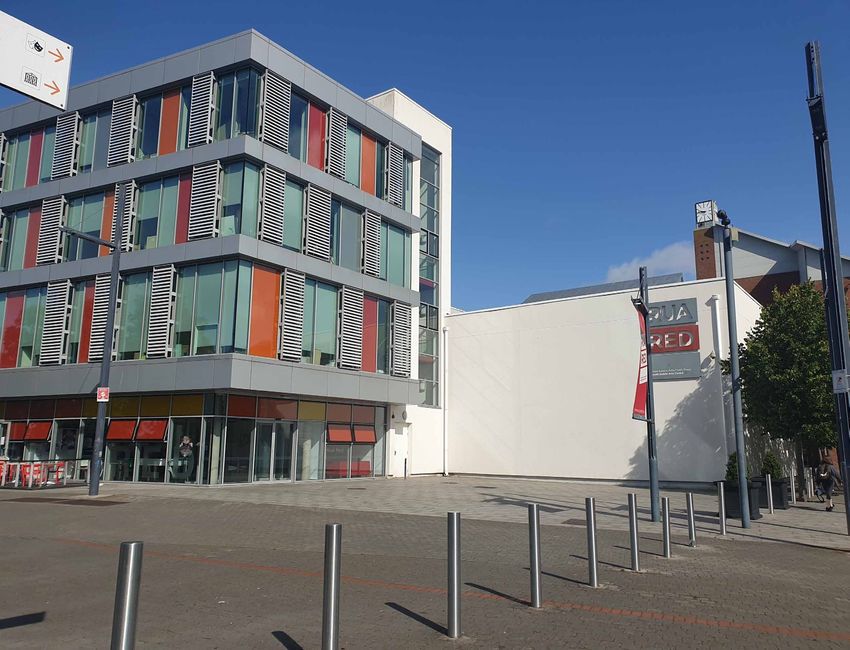
SOUTH DUBLIN
COUNTY COUNCIL
 ENERGY REVIEW
        2019
SECTION | 01 | 02 | 03 | 04 | 05 | 06 01
Table of Contents
01. 02.
Introduction 02 SDCC Energy
Current Status & Obligations 03 Consumption 2019 05
Methodology 04
03. 04.
Significant Energy Users 09 Non-SEU Projects 20
Public Lighting 12
Leisure Centres 14
Offices 16
Transport 18
05. 06.
Conclusion 21 Appendices 24
SEU Summary 24
Project Plan to 2020 Summary 24
Table of Figures 24
Table of Tables 24
Abbreviations 2502 South Dublin County Council ENERGY REVIEW 2019
01. Introduction
Codema has developed the 2019 Energy Review on behalf of
South Dublin County Council (SDCC), which is one of the largest
local authorities in Ireland. This is the fourth such report to
be completed by Codema. The aim of the Energy Review is to
highlight the total amount of energy SDCC consumed in the past
year, along with the total cost and carbon emissions associated
with this energy use. Further details relating to years prior
to 2019 may be found in SDCC’s 2016, 2017 and 2018 Energy
Reviews.
This Energy Review also aims to clearly demonstrate where
energy is used in the Council, what drives its consumption, and
where the greatest energy-saving potential is; this will help
SDCC to identify where it currently is in relation to public sector
energy targets, and what areas it needs to prioritise in order to
meet both its existing 2020 targets and new 2030 targets.
As part of this process, Codema has analysed SDCC’s total energy
use and broken this down into four Significant Energy Users
(SEUs), which are explained in detail within this Energy Review.
Codema gives an overview of the current energy use associated
with each SEU and provides detailed recommendations on the
action SDCC must take to reduce energy consumption in each
SEU area to meet its 2020 and 2030 targets.
Codema has also included a summary of SDCC’s progress
in terms of its carbon emissions. In SDCC’s Climate Change
Action Plan 2019-2024, the Council committed to reducing
its greenhouse gas emissions (GHGs) by 40% by 2030. This
target goes beyond the national public sector target of a 30%
reduction by 2030, which was set by the Government in 2019, SOUTH
DUBLIN
but this is likely to increase to 50%, in line with the new EU COUNTY
COUNCIL
Green Deal. From 2021 onwards, these new statutory targets
will require carbon emissions to be reported annually to the
Sustainable Energy Authority of Ireland (SEAI), alongside energy
consumption.
Public Leisure OFFICES Transport
Lighting CentresSECTION | 01 | 02 | 03 | 04 | 05 | 06 03
Current Status & Obligations SDCC Energy Overview 2019
In 2019, SDCC consumed a total of 47 gigawatt
hours (GWh) of primary energy; this is the equivalent
of 8,678 tonnes of CO2 and Codema estimates
the associated cost of this energy use to be
approximately €3.1 million. This information comes consumed 8,678 €3.1 million
from Codema’s database, which incorporates the 47 GWh of tonnes associated
data from the Monitoring and Reporting (M&R) primary of CO2 ENERGY COST
system developed by the Sustainable Energy energy Emitted
Authority of Ireland (SEAI) and the Department
of Climate Action, Communication Networks and
Transport (DCACNT). It is important to note that
these figures may vary, as changes to data within Public Sector Obligations
the M&R system for previous years are accounted
for, such as the addition of missing accounts, the
removal of accounts that are no longer linked to
SDCC and also changes in conversion factors. These
changes are made throughout the system, from the Achieve reduction
baseline year to date, and don’t affect the baseline or savings of target of
reduction target. 33% by 2020 3% per year
Codema has been entering this yearly data into the
M&R system on behalf of SDCC since 2011, in order
to comply with the reporting requirements of the
European Energy Efficiency Directive 2012/27/EU.
The directive has been transposed into Irish Law as SDCC Progress Baseline-2019
Statutory Instrument S.I. 426 of 2014, which sets out
several obligations on public bodies with respect
to their “exemplary role” for energy efficiency by
achieving savings of 33% by 2020. This is an average
reduction target of 3% per year. improved 4,448 33% public
energy tonnes of sector target
To date, as reported by the M&R system, SDCC performance CO2 saved met, need to
has improved its energy performance by 34.4%, by 34.4% look towards
compared to the baseline year (which is an average 2030 target
of between 2006-2008). This amounts to an absolute
saving of 13 GWh of primary energy or 4,448 tonnes
of CO2, compared to the baseline year. The overall
energy performance in 2019 improved by 6.7%, when
compared to the previous year.
This means that SDCC has achieved its goal of
33% energy efficiency savings by 2020, one year
ahead of target. As mentioned earlier, further
2030 public sector targets have been set, based
on the Government’s Climate Action Plan 2019 To
Tackle Climate Breakdown. A new target of 50%
improvement in energy efficiency from the 2006-2008
baseline and a 30% reduction in CO2 by 2030 have
been set. This will require continued and increased
focus on the energy performance of SDCC’s buildings
and operations over the coming decade.04 South Dublin County Council ENERGY REVIEW 2019
01. Introduction
(continued)
It should be noted that a significant factor in the achievement This is a measure of the key activity that has the greatest
of the 33% target has been a reduction in the primary energy influence on energy consumption. An EnPI is calculated by
conversion factor used by SEAI for electricity. This reduction dividing the organisation’s Total Primary Energy Requirement
is due to the gradual increase in the efficiency of electricity (TPER) by an activity metric.
generation and transmission over recent years. Significant
decreases were observed in 2018 and 2019, some of which When there are multiple variables that drive energy
is due to the Moneypoint coal-fired plant being down due to consumption, a composite performance indicator is used.
a fault. Moneypoint is back operating to a fuller capacity in Determining a single performance indicator for complex
2020, so we may see a reversal of some of the gains from situations where multiple variables drive consumption can
the previous two years. If the primary energy factor were to be difficult, because different aspects of the facility consume
return to its 2017 value, and taking into account any additional different amounts of energy and are driven by different
projects coming into effect in 2020, then SDCC would only variables. In such cases, a composite performance indicator
achieve a 31.9% improvement in energy efficiency, and fail based on more than one variable is used. The proportion of
to meet its 2020 target. While it is unlikely that the primary each variable’s contribution is defined on a weighted scale.
energy factor would worsen to this extent, it shows that
SDCC’s achievement of the 33% target is by no means locked In the case of SDCC, the overall performance indicator is
in at this stage. based on population served. Therefore, SDCC’s EnPI is the
TPER divided by the population served for that year. Therefore,
Methodology the performance of SDCC is determined not only by its annual
Through this Energy Review, Codema highlights the areas energy use, but also by a rise or fall in population in the South
within the Council that are consuming the most energy (i.e. the Dublin area in the same year. Savings are based on cumulative
SEUs) and sets out possible solutions for each of these areas absolute primary energy and carbon savings from the baseline
in order to achieve additional savings. year to 2019.
In order to calculate potential energy savings in SDCC, it is In 2010, the Dublin Local Authorities outsourced waste
necessary to analyse changes in other factors that are directly collection within the region. Also, in 2013, water services
related to the Council’s energy use. With this in mind, Codema within the local authorities were transferred to Irish Water.
uses Energy Performance Indicators (EnPIs) to measure The M&R system and Codema’s database have provisions to
SDCC’s energy performance more accurately. This method account for these changes, and therefore accurately track
determines how efficiently SDCC is using energy, as it is the actual energy performance of the local authority from the
normalised to account for changes in the activity level related baseline year to 2019, which takes proper account of services
to the energy use, or the “activity metric”, of the local authority. that have been outsourced.
Formula for Calculating EnPIs for SEUs
( )
X
ACTIVITYO = ∑ Subactivityi
Subactivityi ,baseline
x Weightingi x 1,000
i=1SECTION | 01 | 02 | 03 | 04 | 05 | 06 05
02. SDCC Energy Consumption 2019
The energy database shows that SDCC consumed 47 GWh of
primary energy and produced 8,678 tonnes of CO2 in 2019.
Codema estimates the costs associated with this energy use to be
approximately €3.1 million for the year. This is broken down into
three principal energy categories; electricity, gas/heating and
transport fuels. Electricity consumption comprises of metered
electrical accounts (MPRNs) from SDCC’s public buildings and
unmetered public lights. Thermal energy consumption consists
of metered gas accounts (GPRNs) and heating fuels data from
buildings, and transport accounts for all the transport fuels within
SDCC, i.e. diesel, petrol and gas oil.
Electricity Thermal energy transport fuels
MPRNs Public GPRNs heating diesel petrol gas oil
Lighting fuels06 South Dublin County Council ENERGY REVIEW 2019
02. SDCC Energy Consumption 2019
(continued)
Figure 1: SDCC Consumption Categories - 2019
3,000,000
2,500,000
2,000,000
1,500,000
1,000,000
500,000
12% 76% 11%
0
Percentage of Total Primary Energy Requirement
Total
Estimated
Cost
Heating Fuels & Gas (GPRN) Electricity (MPRN & Public Lighting) Transport Fuels (Petrol, Diesel & Gas Oil)
€
Figure 1: SDCC Energy Categories - 2019
Figure 1 shows the breakdown of the consumption categories. improve its energy performance by a further 15.6% compared
The height represents the total estimated cost of that energy to its original baseline between now and 2030, in order to
type, and each coloured area highlights what percentage of meet the 50% energy efficiency target. This is estimated to
the overall energy use this energy type accounts for. Electricity be a reduction of 12.4 GWh[1] in primary energy. Therefore,
accounts for the largest share of energy consumed at an annual reduction of 1.5 GWh of primary energy between
approximately 76%. The reasons for this are the large number now and 2030 is necessary; this equates to the average yearly
of public lights in the South Dublin area and the vast amount reduction since the baseline.
of electricity accounts within SDCC’s buildings and facilities.
Figure 2 on the next page illustrates SDCC’s absolute energy
With regards to the energy cost, the analysis is much more consumption. The absolute energy consumption is the energy
complex, as fuel tariffs vary and the various energy accounts consumption with no activity metric associated. This is directly
have different suppliers. Also, the local authority’s targets are looking at the overall reduction of total primary energy from
measured in energy efficiency, not cost savings. In order to the baseline to 2019. Since the baseline, SDCC has seen a
estimate the total cost of energy attributable to the different reduction of 13 GWh of primary energy or 4,448 tonnes of CO2,
energy categories, Codema has used average national prices as mentioned previously.
for electricity, heating gas and the different fuel types sourced
from SEAI’s commercial fuel cost comparison charts. Figure 3 illustrates SDCC’s normalised annual energy
performance compared to the 50% glidepath to 2030. The
The energy database shows that SDCC improved its energy glidepath shows the average annual reduction required to
performance by 34.4% between the baseline and 2019, with a reach the 50% target. This takes into account the rise and fall
reduction in annual primary energy consumption of 13 GWh of the activity metrics, and tracks them compared to SDCC’s
of primary energy or 4,448 tonnes of CO2. This means that TPER of all fuel sources. In 2019, SDCC made good progress
SDCC has now achieved its goal of 33% energy efficiency and is now running ahead of its glidepath target.
savings by 2020, a year ahead of target. The new targets of
50% improvement in energy efficiency, coupled with a 30% In 2019, SDCC’s absolute energy consumption decreased
reduction in CO2 by 2030 must now be tackled. This presents once more. The most significant gains were made in the area
a new gap-to-target of 15.6%, meaning that SDCC must of Public Lighting, with the retrofit of LEDs to existing street
lamps.
1. Codema calculated this figure using SEAI’s gap-to-target tool, which takes into account the potential changes in the conversion
factors and percentage increases of the activity metrics up until 2020.SECTION | 01 | 02 | 03 | 04 | 05 | 06 07
Figure 2: SDCC Absolute Annual Energy Consumption
70
60
50
40
30
20
10
0 Baseline 2009 2010 2011 2012 2013 2014 2015 2016 2017 2018 2019 2020
Total
GWh
Figure 2: SDCC Absolute Annual Energy Consumption
Figure 3: SDCC Annual Energy Performance
250
200
150
100
50
0 Baseline 2009 2010 2011 2012 2013 2014 2015 2016 2017 2018 2019- 2020 2021 2022 2023 2024 2025 2026 2027 2028 2029 2030-
34.4% 50%
kWh/ (Population
Served) TPER - EnPI 50% Glidepath - EnPI
Figure 3: SDCC Annual Energy Performance Compared to 50% Glidepath to 203008 South Dublin County Council ENERGY REVIEW 2019
02. SDCC Energy Consumption 2019
(continued)
Climate Change Action Plan & Carbon
Emissions
In 2018 and 2019, Codema helped to prepare SDCC’s Climate
Change Action Plan 2019-2024, in cooperation with the various
departments and the Elected Members of South Dublin County
Council. This plan sets out how the Council will improve
energy efficiency and reduce greenhouse gas emissions in
its own buildings and operations, while making South Dublin
a more climate-resilient area with engaged and informed
citizens. This will be achieved by a range of ongoing and
planned actions in five key areas, which will be continuously
monitored, evaluated and updated to 2030 and beyond.
The key targets included in this plan are the statutory 33%
improvement in the Council’s energy efficiency by 2020, now
superseded by the 50% 2030 target, as well as a 40% reduction
in the Council’s greenhouse gas emissions by 2030.
In terms of greenhouse gas emissions, SDCC is already
making good progress towards its 40% reduction target and is
ahead of its glidepath, as presented in Figure 4. Compared to
the baseline year, SDCC’s CO2 emissions in 2019 had reduced
by 33.6% to 8,678 tonnes. This leaves a gap-to-target of 832
tonnes of CO2 between now and 2030.
16,000
14,000
12,000
10,000
8,000
6,000
4,000
2,000
0 2009 2010 2011 2012 2013 2014 2015 2016 2017 2018 2019 2020 2021 2022 2023 2024 2025 2026 2027 2028 2029 2030
CO2 Emissions
Total Emissions (tCO2) Target Glidepath
in tCO2
Figure 4: SDCC Annual CO2 Emissions Performance Compared to 40% GlidepathSECTION | 01 | 02 | 03 | 04 | 05 | 06 09
03. Significant Energy Users
To help better understand SDCC’s energy use, Codema has broken
up the Council’s total energy consumption into Significant Energy
Users (SEUs). These SEUs help identify the measures that will
contribute most effectively to energy savings and will have the
most positive impact on energy efficiency targets. This approach
ensures the most efficient use of resources for maintaining and
improving energy efficiency in critical areas within SDCC. Codema
developed these SEUs by creating an energy database, which
includes all the data reported in the M&R system back to the
baseline, data compiled by Codema through energy audits, and
direct contact with SDCC staff.
Codema compiled all of the Council’s electricity and gas accounts,
and developed a full list of buildings by marrying electrical
and gas accounts for each of these buildings. SDCC’s Transport
Department provided all of the fuels data, and all data on public
lighting was compiled through contact with the Public Lighting
Department and the Unmetered Registrar (UMR).
The database gives a breakdown of each of SDCC’s SEUs into Total
Primary Energy Requirement (TPER), CO2 and cost year-on-year,
and compares this back to the baseline. Codema also compares
this data to an energy performance indicator to track the energy
performance of each SEU.
Through analysis of this data, Codema has identified four key
areas, or SEUs, which account for 80% of SDCC’s total primary
energy requirement and can be broken down as follows:
Public Leisure Offices Transport
Lighting Centres 12% 9%
44% 15%10 South Dublin County Council ENERGY REVIEW 2019 03. Significant Energy users (continued) Figure 5 on the next page shows the breakdown of SDCC’s SEUs. Public Lighting is the largest SEU, accounting for 44% of the total energy consumed. This is followed by Leisure Centres at 15%, while Offices, which comprise of County Hall in Tallaght and the Civic Offices in Clondalkin, account for 12%. The last SEU, Transport, accounts for 9% of the total energy consumed. The remainder of the consumption is made up of smaller accounts within SDCC, such as community centres, libraries, arts and civic centres, housing, depots, and heating fuels. The management of energy in these four SEUs is critical for SDCC to achieve its 50% energy reduction target and 40% absolute carbon reduction target by 2030. Small percentage energy reductions in these areas have a much greater effect on overall consumption than large percentage reductions in the less significant areas. This targeted, holistic approach to these SEUs will help maximise their impact and will go beyond the typical energy-saving projects that are usually reactionary or part of routine maintenance. Codema therefore recommends that SDCC uses a structured approach at senior management level in order to carefully plan and execute energy reduction projects. Initially, an Energy Management Team should be set up to help drive energy performance throughout the local authority. A representative from all identified SEUs should be included in this Energy Management Team, which is driven by senior management. Figure 6 shows how the SEUs performed in 2019, compared to 2018. Most of the SEU areas recorded an improvement in energy performance in 2019, compared to the previous year. The greatest improvement was seen in Public Lighting, with a year-on-year improvement in performance of 9.6%, or a 2.6 GWh saving in primary energy. This was due to the continued roll-out of the LED retrofit programme, as well as efficiency gains from improvements to the national electrical grid. Transport saw an improvement of 0.4%, with a reduction in diesel consumption. Offices’ energy performance improved by 3.8% due to a decrease in electrical consumption in both County Hall and Clondalkin Civic Offices. Energy performance in the Leisure Centres remained static in 2019 with very little change in performance.
SECTION | 01 | 02 | 03 | 04 | 05 | 06                                                                                       11

                                        Figure 4 SEU Analysis

                                           Miscellaneous 9%
                                           Community 7%
                                           Housing 4%                 Other
                                                                      20%

                                                                                                          Public
                                                                                                          Lighting
                                                            Transport                                     44%
                                                            9%

                                                                 Offices
                                                                 12%
                                                                                Leisure
                                                                                Centres
                                                                                15%

                                          Figure 5: SEU Analysis

                                                                                                          Public Lighting

                                                                                                          Offices

                                                                                                          Transport

                                                                                                          Leisure Centres

                                          -10    -9    -8       -7   -6   -5   -4   -3     -2   -1    0

                                            EnPI Percentage Change - %                   Decrease in Yearly Energy Use

                                          Figure 6: SEU Performance Change Between 2018 & 2019
12 South Dublin County Council ENERGY REVIEW 2019
03. Significant Energy Users
(continued)
Public
Lighting
Public Lighting is the largest SEU within SDCC. In 2019, SDCC Public Lighting 2019
Public Lighting accounted for 44% of SDCC’s primary energy
consumption, which amounted to 20.7 GWh of primary energy
consumption, 3,622 tonnes of CO2 and an estimated €1.3
million in energy costs. Public Lighting consists of over 29,000
lamps, which are broken up into three main different light consumed 3,622
sources, which are listed below in order of their efficiency: 20.7 GWh tonnes
of primary of CO2
• Light Emitting Diode (LED) – 10,919 lamps energy Emitted
• Low Pressure Sodium (SOX) – 13,432 lamps
• High Pressure Sodium (SON) – 5,523 lamps
€1.3m IMPROVED energy
associated performance
LED 10,919 lamps
Energy Cost by 34.5% since
baseline
SOX 13,432 lamps
SON 5,523 lamps
Identification of relevant variables for Public
Lighting
In relation to Public Lighting, the relevant variables for the
development of EnPIs to track the energy performance are
very constant. Public Lighting only consumes electricity and
has a predictable load. Public Lighting is also charged on
a predefined number of burn hours per year, and is largely
unmetered. Burn hours are reflected seasonally, and don’t
Public Leisure Vehicle change from Offices
year to year.
Lighting Centres Fuels 11%
45% 13% 11% One variable that is not consistent, and drives energy
consumption in Public Lighting, is the quantity of lights. As
the region grows to support a rise in population, the quantity
of lights increases. This is reflected in the data received from
the Unmetered Registrar (UMR). Therefore, to accurately track
the energy performance, Public Lighting is compared to the
number of unmetered public lights for that given year:SECTION | 01 | 02 | 03 | 04 | 05 | 06 13
Figure 5: Public Lighting Energy Performance
Public Lighting EnPI = kilowatt hours 1,200
(kWh) TPER / Number of public lights 1,000
Energy Performance of Public Lighting 800
In 2019, SDCC’s Public Lighting Department retrofitted
1,736 SOX fittings to LEDs. The result of this saw energy 600
performance in Public Lighting improve by 9.6% compared to
the previous year. This resulted in an absolute reduction of 2.6 400
GWh of primary energy and 838 tonnes of CO2. To date, SDCC’s
200
Public Lighting Department has already retrofitted 10,919
lights with LEDs. The energy database shows that Public 0 Baseline 2009 2010 2011 2012 2013 2014 2015 2016 2017 2018 2019 2020
Lighting has improved its energy performance by 34.5% since kWh / No.
the baseline, based on its EnPI. This is an absolute reduction Public Lights
of 9.8 GWh of primary energy and 3,450 tonnes of CO2.
Figure 7: Public Lighting Annual Energy Performance
Public Lighting
Plan tOWARDS
2030
Figure 6: Public Lighting Plan to 2020
As Public Lighting is key to SDCC achieving its energy
efficiency improvement target, the Council must commit to
further annual energy reductions in this area between now 1.6
and 2030. Energy reduction in electricity has more impact on
the Council’s targets than any other energy type, due to the 1.4
high primary energy conversion factor.
1.2
Within SDCC’s stock of public lighting, there are currently over
13,000 SOX lamps. The manufacture of these SOX lamps is 1
in the process of being phased out, so these will have to be
replaced as a priority. LED lights, with their very high energy 0.8
efficiency, are the obvious replacement. If SDCC commits to
replacing 950 of these SOX lamps by the end of 2020, it could 0.6
produce savings of 700 megawatt hours (MWh) of TPER and
0.4
514 tonnes of CO2. This would have a significant impact on the
Council’s targets towards 2030.
0.2
An ongoing programme to replace the remaining SOX street
0 Yearly Reduction Replace SOXs
lighting with LEDs beyond 2020 has been formulated and is Target towards 2030 (950 Lamps)
due to commence towards the end of the year. TPER-
GWh
Figure 8: Public Lighting Plan towards 203014 South Dublin County Council ENERGY REVIEW 2019
03. Significant Energy Users
(continued)
Leisure
Centres
Leisure Centres are the second largest energy consumer
SDCC Leisure Centres 2019
within SDCC. SDCC currently operates two large leisure
centres, namely Tallaght and Clondalkin Leisure Centres. In
2019, these leisure centres accounted for 15% of the local
authority’s primary energy requirement. This is a consumption
of 6.9 GWh of primary energy, 1,256 tonnes of CO2, and an
consumed 1,256
estimated €352,380 in energy spend.
6.9 GWh tonnes
of primary of CO2
Identification of relevant variables for the energy Emitted
Leisure Centres
In relation to the Leisure Centres, electricity and gas are the
two main energy types. With multiple variables driving energy
consumption, a composite performance indicator is used to
determine the overall energy performance. €352,380 increased energy
associated performance
Factors such as footfall, opening hours and floor area are Energy Cost by 22.3% since
the significant variables influencing the overall energy baseline
consumption. Consequently, a composite metric is appropriate,
dividing energy consumed (kWh TPER) by a weighted scale of
total floor area (m2) and Heating Degree Days (HDD). This is
shown in the formula below: Energy Performance of Leisure Centres
The Energy Database shows that the Leisure Centres have
improved their energy performance by 22.3% since the
baseline, compared to the EnPI.
Leisure Centre EnPI =
kWh TPER/ (m2)(HDD) As highlighted in previous Energy Reviews, there was a
decrease in the Leisure Centres’ energy consumption around
2011. In analysing the electrical and gas consumption from
both facilities to help identify this reduction, there was a
similar reduction across both facilities. This reduction could
be the result of the effect of the recession on the activity levels
of the facilities.SECTION | 01 | 02 | 03 | 04 | 05 | 06 15
Figure 7: Leisure Centres’ Energy Performance
4,000
In 2019, the total primary energy consumption in the Leisure 3,500
Centres’ SEU was almost the same as 2018. However, Figure
3,000
9 shows that significant energy savings achieved in Tallaght
were counteracted by an equally large increase in energy 2,500
consumption in Clondalkin. A significant spike was recorded
in Clondalkin’s gas consumption, which increased by over 67% 2,000
compared to the previous year. In contrast to this, Tallaght
1,500
reduced its electricity consumption by 43% in 2019.
1,000
500
0 Baseline 2009 2010 2011 2012 2013 2014 2015 2016 2017 2018 2019 2020
kWh/(m2)
(HDD) Clondalkin Tallaght
Figure 9: Leisure Centres’ Annual Energy Performance
Leisure Centres’
Plan towards
2020
Figure 8: Potential for EPC in SDCC Leisure Centres
Codema is currently helping SDCC to implement an Energy
Performance Contract (EPC) project within Tallaght and 1.8
Clondalkin Leisure Centres. The EPC model puts the
responsibility onto the contractor to guarantee energy savings 1.6
over the lifetime of the contract. Energy savings are verified
by a Measurement and Verification (M&V) process developed 1.4
by both the Energy Service Company (ESCo) and the client.
The EPC method is already working very successfully in 1.2
Dublin City Council (DCC), where it awarded an EPC in 2016
for the upgrade of three of its sports facilities - Ballymun, 1
Finglas and Markievicz Sports and Fitness Centres. The
Energy Performance Contract has operated as expected to 0.8
date, achieving actual cost savings of €318,281 and energy
savings of 38%. Based on the actual results for the first two 0.6
years, the project is forecast to save €1,682,503 that would
otherwise have been spent on gas and electricity. When the 0.4
extra costs for EPC service payments are taken into account,
DCC will save €1,532,604 over the contract term, while still 0.2
having an asset that is fully maintained and has had continued
investment throughout the eight-year term. 0 Yearly Reduction Leisure Centre
Target towards 2030 EPC
TPER-
The initial energy audits of Tallaght and Clondalkin Leisure GWh
Centres have been completed to identify the energy savings,
and show that a potential 1.6 GWh of primary energy and Figure 10: Leisure Centres’ Plan towards 2030
373 tonnes of CO2 could be saved by implementing an EPC in
these facilities.16 South Dublin County Council ENERGY REVIEW 2019
03. Significant Energy Users
(continued)
Offices
SDCC has two large public office buildings, namely County
SDCC Offices 2019
Hall in Tallaght and its Civic Offices in Clondalkin. In 2019,
these offices accounted for 12% of SDCC’s primary energy
consumption. This is a consumption of 5.7 GWh of primary
energy, 1,019 tonnes of CO2 and an estimated €359,113 in
energy spend.
consumed 1,019
5.7 GWh tonnes
Identification of relevant variables for the of primary of CO2
Offices energy Emitted
In relation to the office facilities, there are two main energy
types, electricity and gas. When there are multiple variables
that drive energy consumption, a composite performance
indicator is used, as mentioned in the methodology section.
It is difficult to find a single significant driving factor for the
overall electrical consumption, as there are many variables €359,113 IMPROVED energy
that determine this, such as the number of employees,
associated performance
Energy Cost by 14.9% since
opening hours, floor area, etc. Gas consumption is mainly
baseline
dependent on the external temperature. Therefore, the
composite performance indicator used to measure the Offices’
energy performance is the energy consumed (kWh TPER),
divided by a weighting scale of total floor area (m2), heating Energy Performance of the Offices
degree days (HDD) and full time employees (FTE). This is The database shows that the Offices have improved their
derived from the formula given in the methodology, as shown energy performance by 14.9% since the baseline. This is an
below: absolute reduction of 1.7 GWh of primary energy and 610
tonnes of CO2. In the Clondalkin Civic Offices, however, the
energy consumption has continued to increase. In 2019, the
Offices' EnPI = office's energy consumption increased by 32% since the
baseline. More notably, the gas consumption has increased by
kWh TPER/ (m2)(HDD)(FTE) 58% since the baseline, after correction for weather factors.
In 2019 alone, the gas consumption in Clondalkin increased
by 4% compared to the previous year, despite the fact that
new, high-efficiency gas boilers had been installed only a
couple of years ago. This clearly shows that the existing
energy management and control systems in place need to
be reviewed and updated. It is therefore recommended that a
performance-based maintenance contract be considered. This
will help drive energy performance throughout the lifetime of
the maintenance contract.SECTION | 01 | 02 | 03 | 04 | 05 | 06 17
8,000
The energy performance in County Hall has improved by 17%
since the baseline, due to a steady reduction in electricity 7,000
consumption over this period. However, the gas consumption
6,000
trend is going in the opposite direction, with significant
increases in gas consumption noted over the past three years 5,000
in particular. Gas consumption has increased by over 26% 4,000
since 2016, after taking account of the weather. While efforts
to reduce electricity consumption in the facility are clearly 3,000
working, this demonstrates that further attention needs 2,000
to be given to the management and control of the heating
1,000
systems in County Hall. This facility will soon be connected
to the Tallaght District Heating System (TDHS). While this 0 Baseline 2009 2010 2011 2012 2013 2014 2015 2016 2017 2018 2019 2020
will address some of the issues in relation to consumption, kWh/
(m2)(HDD)(FTE) County Hall Clondalkin
general control issues will still have to be addressed.
Figure11:
Figure 13:Offices'
Office Facilities’ EnergyPerformance
Annual Energy Performance
Offices’ Plan
towards 2020
Figure 14: Offices’ Plan to 2020
3
Following a meeting with SDCC’s facilities manager, Codema
carried out a detailed energy audit of County Hall in Tallaght 1.6
in 2018. This energy audit has identified lighting retrofits in 1.4
particular as having significant potential for continuous energy
1.2
savings in the facility. The lighting retrofit works in County
Hall could achieve savings of 517 MWh in primary energy and 1
115 tonnes of CO2. In 2019,facilities management started the 0.8
retrofit of the light fittings in County Hall. To date, close to
0.6
50% of the facility has been retrofitted with LEDs. Facilities
management aims to retrofit the entire facility by the end of 0.4
2020. The remaining works will see savings of 256 MWh in
0.2
primary energy and 58 tonnes of CO2. The reductions could be
greater still if some unessential fittings are removed, and a full 0 Yearly Reduction
Target towards 2030 SDCC TDHS
roll-out of occupancy sensors and light dimming controls is TPER-
carried out throughout the building. GWh County Hall Lighting Project
Codema is also currently working with SDCC to develop
Ireland’s first large-scale district heating network involving Figure 12: Offices' Plan towards 2030
its County Hall and surrounding facilities. The contract for the
Tallaght District Heating Scheme is due to be signed in the
other nearby interested customers in the public and private
summer of 2020, with works commencing later in the year.
sector in the following phases. This innovative district heating
This project is estimated to save the Council 1 GWh in primary
scheme will provide low-carbon heat to the Tallaght area,
energy and 1,736 tonnes of CO2. The proposed system seeks to
and will be the first of its kind in Ireland and the UK, and the
utilise a low temperature waste heat source from a data centre
only not-for-profit energy utility in Ireland. If all of the above
through a large-scale heat pump, in order to supply space
confirmed projects are completed within the Offices, they
heating and hot water to a cluster of nearby local authority
could collectively save SDCC 1.25 GWh of TPER in total and
buildings. The system will also have the capacity to supply
1,794 tonnes of CO2 by the end of 2020.18 South Dublin County Council ENERGY REVIEW 2019
03. Significant Energy Users
(continued)
Transport
Transport is the fourth largest SEU within SDCC and SDCC Transport 2019
comprises of fuels used by Council vehicles (including light
and heavy vehicles), and fuels used by the park services. In
2019, transport accounted for 9% of SDCC’s primary energy
consumption. This amounts to 4.4 GWh of primary energy,
1,044 tonnes of CO2, or an estimated €358,557 in energy costs. consumed 1,044
4.4 GWh tonnes
Within Transport, diesel accounts for 70% of the total of primary of CO2
primary energy consumption, while gas oil accounts for 28%. energy Emitted
Petrol accounts for just 2%, as it is only used to fuel small
equipment. A breakdown of this is shown in Figure 13.
Identification of relevant variables for
Transport €358,557 IMPROVED energy
Due to a lack of robust data relating to kilometres driven associated performance
or efficiency of the fleet, Codema has used the number of Energy Cost by 15.6% since
vehicles to develop a performance indicator for Transport. baseline
Figure 9: SDCC Transport Fuels Consumption 2017
Therefore, the EnPI for Transport is the kWh consumption of
primary energy divided by the total number of vehicles.
This formula is: Petrol 2%
Diesel 70%
Fleet EnPI =
Gas Oil 28%
kWh TPER / Number of vehicles
Offices
11%
Figure 13: SDCC Transport Fuels TPER - 2019SECTION | 01 | 02 | 03 | 04 | 05 | 06 19
8,000
7,000
Energy Performance of Transport
The database shows that the energy performance of Transport 6,000
has improved by 15.6% since the baseline. There was a sizable 5,000
reduction in diesel use in 2019, which amounted to a saving of
6% on the previous year. The is due to the impact of the new 4,000
vehicles that were purchased as part of the latest three-year 3,000
vehicle replacement programme.
2,000
Gas oil consumption increased by 9%.This could be due to an 1,000
increase in adverse weather conditions requiring additional
0 Baseline 2009 2010 2011 2012 2013 2014 2015 2016 2017 2018 2019 2020
road services. Without the use of a more robust energy
kWh/
performance indicator, such as kilometres travelled, to track Vehicle Diesel Gas Oil Petrol
this fuel use, it is difficult to determine a definitive reason for
this.
Figure 14: Transport Annual Energy Performance
Transport Plan
towards 2030
Figure 11: Transport Plan to 2020
1.8
In 2019, SDCC’s Transport Department commenced a
three-year replacement programme of 69 vehicles. This 1.6
programme is following on from previous vehicle replacement
programmes. Over time, continued programmes such as 1.4
these will replace all of the Council’s fleet with more up-to-
date, energy-efficient alternatives. The replacements in 2020 1.2
have not commenced due to an analysis being carried out
to ensure the best fit-for-purpose vehicle replacements as 1
opposed to like-for-like replacements. This will be the end of
the current three-year replacement programme, with a new 0.8
replacement programme to be devised for the period between
2021 - 2024. 0.6
In addition to this, the Transport Department, in conjunction 0.4
with the Association of Irish Energy Agencies (AIEA), is rolling
out a pilot eco-driving scheme among a number of its depots. 0.2
From this three-year programme and planned eco-driving 0 Yearly Reduction Fleet 3-Year Programme
scheme, savings of 230 MWh of TPER and 67 tonnes of CO2 Target towards 2030
TPER-
are expected to be achieved.
GWh
Figure 15: Transport Plan towards 203020 South Dublin County Council ENERGY REVIEW 2019
04. Non-SEU Projects
Non-SEU Projects
In 2018, Codema carried out a feasibility study on behalf of renewables, improvements in energy efficiency should always
SDCC to evaluate the possibility of developing a renewable be targeted first. With this in mind, LED lighting upgrades
energy generation project at the now closed Arthurstown would be recommended as a key component of any PV project.
Landfill site, which has been capped and sealed since 2013. The full cost of such a project might be in the region of
Ongoing leachate treatment at the facility still results in a €400,000. If all the available roof space on these facilities was
significant electrical demand on the site, and this may be set utilised, the total combined electricity generation from these
to increase if a proposal to import leachate from other waste 13 sites could amount to 130,000 kWh per year. LED retrofits
sites progresses. This report detailed the various options could save a further 160,000 kWh. This could potentially reduce
available to SDCC in order to make best use of this large site, SDCC’s carbon emissions by 110 tonnes of CO2 per year.
with wind and solar photovoltaic (PV) generation emerging as
the two most likely options. Codema has carried out similar assessments for all four
Dublin Local Authorities (DLAs), and in March 2020 submitted
A follow-up report was presented to SDCC in 2019, an expression of interest for funding for a combined project
examining a scaled-down project, which would just supply under the 2020 Climate Action Fund.
enough electricity to cover the annual consumption of the
site and allow it to operate in a carbon-neutral manner. In The Climate Action Plan 2019 to Tackle Climate Breakdown
early 2020, technical guidance relating to the new Renewable set out a requirement for all public buildings to achieve
Electricity Support Scheme (RESS) auction process was a minimum Building Energy Rating (BER) of B by 2030. A
published, with the first auction taking place in summer study was recently completed by Codema to determine what
2020. This system will guarantee a minimum price for any this will require of SDCC, and the effect it may have on the
renewable electricity sold to the grid. The options proposed Council’s energy efficiency and emissions targets. The study
for Arthurstown are currently being reviewed with a view was limited to just the 19 buildings that currently have Display
towards potential participation in future RESS auctions, Energy Certificates (DECs). If these buildings were upgraded
possibly under the Community-led projects category. to achieve the B BER standard, a theoretical reduction in CO2
emissions of 1,410 tonnes is predicted, at a total cost of €5.5
In early 2020, Codema conducted an analysis to determine million. In reality, the actual savings would probably be closer
the potential for the installation of solar PV on Council to 900 tonnes of CO2 per year, due to overestimations inherent
buildings. From a shortlist of 38 SDCC buildings, 13 in the BER calculation methodology.
were deemed as potentially suitable. Before consideringSECTION | 01 | 02 | 03 | 04 | 05 | 06 21
05. Conclusion
SDCC has achieved energy savings of 34.4% between the baseline
year and 2019. While these savings are substantial and SDCC has
now achieved its 2020 energy efficiency target, the Council still
needs to look towards 2030 and the new 50% energy efficiency
and 40% carbon reduction targets. These targets will require the
Council to save a further 15.6% to achieve the 50% energy saving
target by 2030.
As many of the “low hanging fruit” energy saving actions have already been taken,
achieving these targets will require the development of significantly more ambitious and
innovative energy programmes and projects.
The energy efficiency projects detailed within each of the four key SEUs in this report
will contribute towards SDCC energy efficiency savings by 2030, but SDCC will still fall
short of meeting this 50% target. Small percentage energy reductions in these areas will
have a much greater effect on overall consumption than seemingly large reductions in
the less significant areas. Codema therefore recommends that SDCC uses a structured
approach at senior management level in order to carefully plan and execute these
energy reduction projects. This targeted, holistic approach to these SEUs will help
maximise their impact and will go beyond the typical energy-saving projects that are
usually reactionary or part of routine maintenance.
Under S.I. 426 of 2014, it is a statutory requirement for SDCC to undertake an
organisational energy audit every four years, and to report completion to the SEAI.
The first audit was required to take place prior to 5th December 2015, and then every
four years thereafter. No such energy audit has yet been carried out by SDCC. If an
organisation has a valid, certified energy or environmental management system (ISO
50001, ISO 14001 or equivalent) and it can demonstrate to SEAI that the management
system meets the Minimum Criteria for Energy Audits, then this may be accepted as an
alternative to stand-alone energy audits.
It is strongly recommended that SDCC works towards the development of a structured
energy management system, with the goal of achieving certification under the ISO
50001 standard. Codema has been actively engaged with the three other Dublin local
authorities in this regard over the past number of years. This approach has seen huge
success in Fingal County Council and Dún Laoghaire-Rathdown County Council, who
both recently achieved certification to the latest 2018 standard, while Dublin City Council
is also currently working towards certification. In order for this to be a success, support
and resources need to be allocated across all SEU areas, with commitment from the
top management level being crucial. Codema will support SDCC in the setting up and
ongoing development of this energy management system. As the implementation of the
Energy Management System may take some time, Codema can carry out an energy audit
in the meantime to satisfy the Council’s statutory requirements.
In terms of the smaller accounts, it is recommended that SDCC develops a framework
that will incorporate the maintenance and upgrade of systems within these facilities.
This framework will also incorporate an energy efficiency aspect to the works. Codema
will help SDCC develop this framework that will focus on the smaller energy consumers
within the local authority. This is important as it strengthens the “exemplary role” to the
public, as set out in S.I. 426 of 2014.22 South Dublin County Council ENERGY REVIEW 2019
Figures 16 and 17 on the next page illustrate SDCC’s gap-to-target model to 2030 for
both energy efficiency and CO2 emissions. As stated earlier in this report, SDCC has
achieved its 33% energy efficiency target one year ahead of the target deadline of 2020
and is also on track to achieve the 40% absolute carbon reduction by 2030. This is a
huge achievement for the Council but to ensure that this continues, the Council will
have to continue to actively identify energy efficiency and carbon reduction measures.
The greatest concern is that even with all the planned energy efficiency projects, there
is still a further gap of 12.4 GWh in energy reductions, which will need to be realised
over the next decade. This will be a major challenge, and must be addressed now. It is
the cumulative effect of GHGs in the atmosphere which determines the extent of global
heating, so given the urgency of the climate emergency, these actions cannot be put off
until the latter part of this decade.
It is clear now also that the 40% GHG reduction target set by the Council will easily
be met, so it would be advisable to review this target upwards in an effort to show
leadership on climate action.
SEU Area Action Estimated
Savings
Public Replace 950 SOXs with 0.7 GWh
Lighting LEDs
LEisure EPC in Tallaght and 1.6 GWh
Centres Clondalkin Leisure
CentreS
Offices Connection of TALLAGHT 1.3 GWh
District Heating SCHEME
& LED upgrades in
County Hall
Transport Procurement of Electric 0.2 GWh
Vehicles & Introduction
of Energy Management
SystemSECTION | 01 | 02 | 03 | 04 | 05 | 06 23
12
2030 Target -
12.4 GWh
10
8
6
4 Fleet 3-Year Programme 0.2
Offices LED Retrofit 0.3
SDCC TDHS 1.0
Leisure Centre EPC 1.6
2
LED Public Lighting Retrofit 0.7
0
GWh Reduction Target to 2030 GWh - Plan towards 2030
TPER-
GWh
Figure 16: SDCC Energy Efficiency Plan towards 2030
3,000
Fleet 3-Year Programme 67
Offices LED Retrofit 58
Leisure Centre EPC 373
2,500
LED Public Lighting Retrofit 514
2,000
SDCC TDHS 1,736
1,500
1,000
2030 Target -
500 832 tonnes CO2
0
CO2 Reduction Target to 2030 Plan towards 2030
Tonnes CO2
Figure 17: SDCC Carbon Reduction Plan towards 2030 Target24 South Dublin County Council ENERGY REVIEW 2019 06. Appendices SEU Summary Table 1: SEU Summary SEU TPER - GWh Tonnes CO2 Cost % +/- since baseline Public Lighting 20.7 3,622 €1,282,941 -34.5 Leisure Centres 6.9 1,256 €352,381 -22.3 Offices 5.7 1,019 €359,113 -14.9 Transport 4.4 1,044 €358,557 -15.6 Total 37.7 6,941 €2,352,992 Project Plan towards 2030 Summary Table 2: Project Plan Summary SEU TPER - GWh Tonnes CO2 Public Lighting 0.7 514 Leisure Centres 1.6 373 Offices 1.25 1,794 Transport 0.23 67 Total 3.78 2,748 Table of Figures Figure 11: Offices' Annual Energy Performance 17 Figure 1: SDCC Energy Categories - 2019 6 Figure 12: Offices' Plan towards 2030 17 Figure 2: SDCC Absolute Annual Energy Consumption 7 Figure 13: SDCC Transport Fuels TPER - 2019 18 Figure 3: SDCC Annual Energy Performance Compared to 50% Figure 14: Transport Annual Energy Performance 19 Glidepath to 2030 7 Figure 15: Transport Plan towards 2030 19 Figure 4: SDCC Annual CO2 Emissions Performance Compared Figure 16: SDCC Energy Efficiency Plan towards 2030 23 to 40% Glidepath 8 Figure 17: SDCC Carbon Reduction Plan towards 2030 Figure 5: SEU Analysis 11 Target 23 Figure 6: SEU Performance Change Between 2018 & 2019 11 Figure 7: Public Lighting Annual Energy Performance 13 Figure 8: Public Lighting Plan towards 2030 13 Table of Tables Figure 9: Leisure Centres’ Annual Energy Performance 15 Table 1 SEU Summary 24 Figure 10: Leisure Centres’ Plan towards 2030 15 Table 2 Project Plan towards 2030 Summary 24
SECTION | 01 | 02 | 03 | 04 | 05 | 06                                                            25

Abbreviations
AIEA                        Association of Irish Energy Agencies
BER                         Building Energy Rating
CO2                         Carbon Dioxide
CHP                         Combined Heat and Power
DCACNT                      Department of Climate Action, Communication Networks and Transport
DCC                         Dublin City Council
DLAs                        Dublin Local Authorities
EnPIs                       Energy Performance Indicators
EPC                         Energy Performance Contract
ESCo                        Energy Service Company
FTE                         Full Time Employees
GHG                         Greenhouse gas
GPRNs                       Metered Gas Accounts
GWh                         Gigawatt hour
HDD                         Heating Degree Days
kWh                         Kilowatt hour
LED                         Light Emitting Diode
m²                          Metres Squared
M&R                         Monitoring and Reporting
M&V                         Measurement and Verification
MPRNs                       Metered Electrical Accounts
MWh                         Megawatt hour
PV                          Photovoltaic
RESS                        Renewable Energy Support Scheme
SDCC                        South Dublin County Council
SEAI                        Sustainable Energy Authority of Ireland
SEUs                        Significant Energy Users
SON                         High Pressure Sodium
SOX                         Low Pressure Sodium
TDHS                        Tallaght District Heating Scheme
TPER                        Total Primary Energy Requirement
UMR                         Unmetered Registrar
stnetnoC fo elbaT
The Loft, 2-4 Crown Alley,
Temple Bar, Dublin 2, Ireland D02 TK74
+353 (0)1 707 9818
www.codema.ie
You can also read


