Tullow Ghana Ltd Accra, Ghana - Independent External Monitoring Group GHANA Site Visit: May 2018 - Tullow Oil
←
→
Page content transcription
If your browser does not render page correctly, please read the page content below
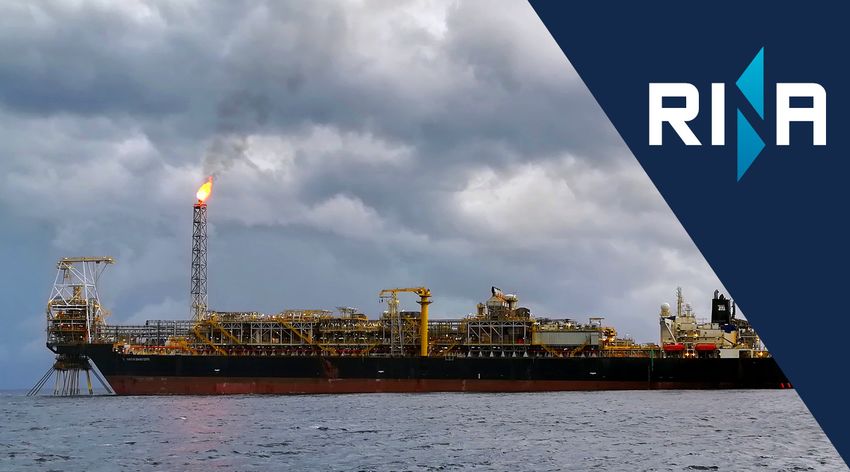
Tullow Ghana Ltd
Accra, Ghana
Independent External Monitoring Group

GHANA Site Visit: May 2018

Doc. No. P0008071-1-H1 Rev. 0 - June 2018

Rev.            0
Description     First Issue
Prepared by     AAG, LMZ, MATSP, ROC
Controlled by   BAS
Approved by     EN
Date            29 June 2018
Independent External Monitoring Group
  GHANA Site Visit: May 2018

  Rev.       Description                   Prepared by                     Controlled by                    Approved by                 Date
                                           A. Gagliardo
                                            L. Meozzi
   0          First Issue                                                     B. Scorza                      E. G. Napoli            29 June 2018
                                             M. Spotti
                                           R. O’Connor

                        All rights, including translation, reserved. No part of this document may be disclosed to any third party,
                                  for purposes other than the original, without written consent of RINA Consulting S.p.A.

Doc. No. P0008071-1-H1 Rev. 0 - June 2018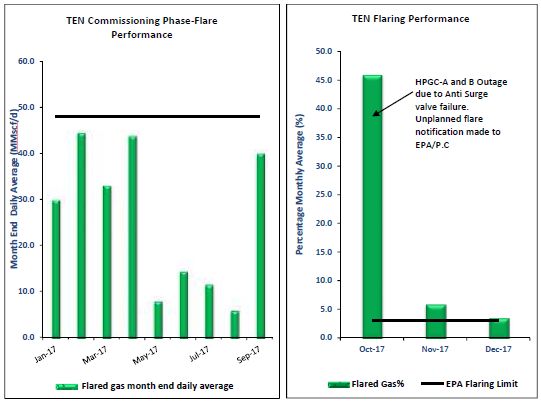
Independent External Monitoring Group
    GHANA Site Visit: May 2018

                                      TABLE OF CONTENTS
                                                                             Page
LIST OF TABLES                                                                  2
LIST OF FIGURES                                                                 2
ABBREVIATIONS AND ACRONYMS                                                      3
EXECUTIVE SUMMARY                                                               5
1    INTRODUCTION                                                               8
       1.1     JUBILEE AND TEN                                                  8
       1.2     MARITIME BOUNDARY UPDATE                                         9
       1.3     REPORT ORGANIZATION                                              9
2      INDEPENDENT VERIFICATION SCOPE OF THE WORK AND ADOPTED METHODOLOGY      10
3      SITE VISIT DESCRIPTION                                                  11
4      REVIEW OF ENVIRONMENTAL AND SOCIAL ACTION PLAN COMMITTMENTS             12
5      REVIEW OF PROJECT MONITORING DATA AND SITE VISIT FINDINGS               24
       5.1     ESMS ORGANIZATION AND REPORTING                                 24
               5.1.1   Organization and Staffing                               24
               5.1.2   Training                                                25
               5.1.3   Certification                                           25
               5.1.4   Periodical Review of ESAP Related Plans                 26
               5.1.5   Management of Change                                    26
               5.1.6   Reporting                                               26
       5.2     BIOPHYSICAL COMPONENTS                                          26
               5.2.1   Waste Management                                        26
               5.2.2   Waste Water Management                                  29
               5.2.3   Air Quality                                             31
               5.2.4   Chemical Management                                     34
               5.2.5   Noise                                                   35
               5.2.6   Ecology                                                 35
       5.3     HEALTH & SAFETY COMPONENTS                                      35
               5.3.1   HS Management                                           36
               5.3.2   Process Safety Management                               39
               5.3.3   Incident Investigation & Reporting                      39
               5.3.4   Competency Management & Training Activities             41
               5.3.5   Emergency Management                                    41
               5.3.6   HS Performance Monitoring                               42
               5.3.7   SCEs/ECEs Management                                    43
       5.4     SOCIAL COMPONENTS                                               44
               5.4.1   TGL Social Performance Strategy                         44
               5.4.2   Community Engagement/Consultation and Disclosure        45
               5.4.3   Grievance Management                                    46
               5.4.4   Exclusion Zone Management                               46

Doc. No. P0008071-1-H1 Rev. 0 - June 2018                                   Page 1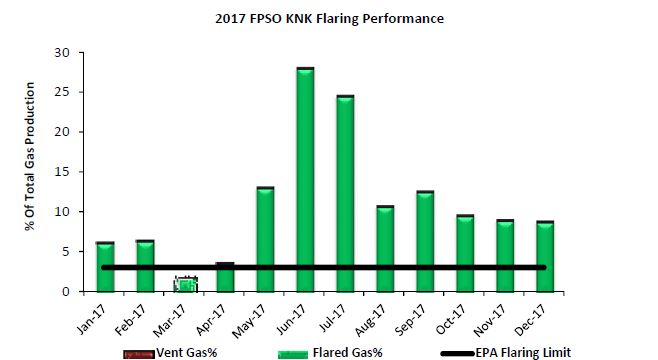
Independent External Monitoring Group
 GHANA Site Visit: May 2018

                                           LIST OF TABLES
Table 5.1:    Produced Water Annual Concentration for 2017             29
Table 5.2:    TGL Consequence Severity Table                           30
Table 5.3:    Total GHG Emission by Source TGL Activities in 2017      31
Table 5.4:    Air Quality Community Monitoring Results 2017            34

                                          LIST OF FIGURES
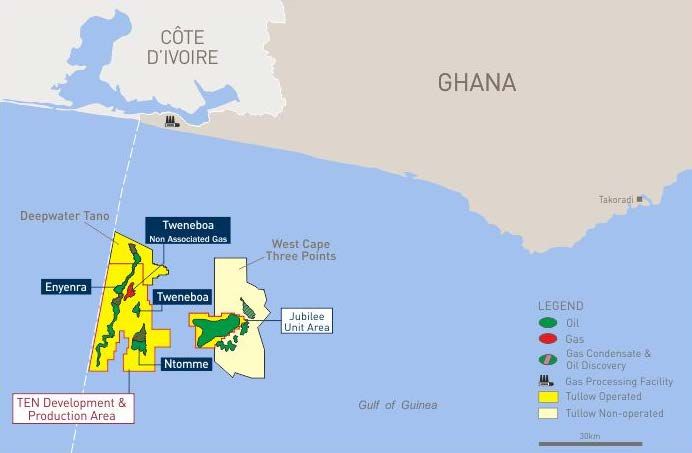
Figure 1.1:   Location of the Jubilee and TEN Oil Fields                8
Figure 5.1:   Jubilee Flaring Performance 2017                         32
Figure 5.2:   TEN Flaring Performance 2017                             33

Doc. No. P0008071-1-H1 Rev. 0 - June 2018                           Page 2
Independent External Monitoring Group
GHANA Site Visit: May 2018
ABBREVIATIONS AND ACRONYMS
AoI Area of Influence
ALARP As Low As Reasonably Practicable
AMR Annual Monitoring Report
AZ Advisory ZOne
BULT Business Unit Leadership Team
CCR Central Control Room
CLO Community Liaison Officer
DWI Detailed Work Instructions
EHS Health Safety Environment
EHSAP EHS and Asset Protection
EMR Environmental Monitoring Report
EMP Environmental Management Plan
E.Mon.P Environmental Monitoring Plan
ESAP Environmental and Social Action Plan
ESIA Environmental And Social Impact Assessment
ESMS Environmental And Social Management System
EZ Exclusion Zone
FFDP Full Field Development Plan
FPSO Floating Production, Storage and Offloading
GNCFC Ghana National Canoe Fishermen Council
GNGC Ghana National Gas Company
Gh EPA Ghana Environmental Protection Agency
GHG Greenhouse Gases
GNGC Ghana National Gas Company
GTG Gas Turbine Generators
HIPO High Potential Incidents
HR Human Resources
IESC Independent Environmental and Social Consultant
IFC International Finance Corporation
IMS Integrated Management System
IOGP International Association of Oil & Gas Producers
IRIA Incident Reporting, Investigation and Analysis
ITLOS International Tribunal of the Law of the Sea
IVB Independent Verification Body
JEAM John Evans Atta Mills
KNK Kwame Nkrumah (FPSO)
LDSP Livelihood Diversification and Support Project
LTI Lost Time Injury
LTIF Lost Time Injury Frequency
Marine Pollution: International Convention for the Prevention of Pollution from
MARPOL
Ships
MMO Marine Mammals Observation
MOC Management of Change
MSDS Material Safety Data Sheets
NADF Non-Aqueous Drilling Fluids
NORM Naturally Occurring Radioactive Material
Doc. No. P0008071-1-H1 Rev. 0 - June 2018 Page 3Independent External Monitoring Group GHANA Site Visit: May 2018 OOC Oil on Cuttings OIW Oil in Water OF Operations Framework OIM Offshore Installation Manager OMF Operational Management Framework OSCP Oil Spill Contingency Plan OSCR Offshore Safety Case Regulation OWS Oil Water Separator PC Petroleum Commission PCDP Public Consultation and Disclosure Plan PPE Personal Protective Equipment PS Performance Standard PTW Permit to Work KPI Key Performance Indicator SCEs/ECEs Safety and Environmental Critical Elements SDS Safety Data Sheet SEI Socio-Economic Investment SP Social Performance STEM Science, Technology, Engineering and Mathematics TEN Tweneboa, Enyenra, Ntomme TGL Tullow Ghana Limited TR Temporary Refuge TRIF Total Recordable Injury Frequency TRP Turret Remediation Project WHO World Health Organisation WMP Waste Management Plan Doc. No. P0008071-1-H1 Rev. 0 - June 2018 Page 4
Independent External Monitoring Group
 GHANA Site Visit: May 2018

                                         EXECUTIVE SUMMARY
The Jubilee Phases 1, 1A and Tweneboa, Enyenra, Ntomme (TEN) Oil and Gas Development Project (or “the
Project”) involves the extraction of hydrocarbons from the two oil fields located offshore Ghana.
The Jubilee oil field lies in deep waters, with depth ranging between 1,100 and 1,700 meters; it is located at
approximately 60 km from the shoreline at the western edge of Ghana and covers an area of about 110 Km2. The
TEN field is located approximately 20 km west of Jubilee field and some 45 km offshore from the Ghana mainland.
The Jubilee Phase 1 consists of drilling and development of 17 oil, gas and reinjection wells connected with a
Floating Production, Storage and Offloading (FPSO) Vessel for commercialization of the produced oil.
The Jubilee Phase 1A development project, designed to increase production and recover additional reserves, was
approved by the Government of Ghana in January 2012. Phase 1A included the drilling and completion of 8
additional oil production and water injection wells, the tie-in to the existing FPSO unit and the installation of
additional subsea equipment for water injection.
On 29 May 2013, the Government of Ghana formally approved the TEN Project and Tullow Ghana Ltd (TGL)
commenced with its second major operated deep-water development project in Ghana. Similar to Jubilee, the
development includes the use of an FPSO, named FPSO Prof. John Evans Atta Mills (JEAM). The TEN field
produced first oil in August 2016 and is now operational.
Within the project disbursement agreement, TGL, the designated Unit Operator, and the International Finance
Corporation (IFC) have established a range of Environmental and Social management measures applicable for the
Jubilee Phases 1 and 1A Project, which have been included in an Environmental and Social Action Plan (ESAP),
developed in compliance with IFC’s Performance Standards and Guidelines. Following TGL request to add TEN
assets into the Reserve Based Lending facility to finance its development, the TEN Project is being developed
according to the same IFC Performance Standards (2006).
This report provides the findings and observations of the independent environmental and social consultant (IESC)
as a result of the external independent monitoring group visit and review carried out in May 2018, relevant to the
period of 2018 and up to the time of the site visit.
The IESC site visit included the TGL headquarters in Accra, the KNK FPSO (Jubilee), the onshore TGL shore base
in Takoradi, meeting with the National Ghana Canoe Fisherman Council, and a visit to Axim Fishing Community.
At the time of the 2018 independent external verification, all actions foreseen by the ESAP (dated December 2010)
have been already implemented by TGL; nonetheless the external independent monitor has conducted a systematic
review of all actions included in the ESAP in order to provide a follow up on the current status of their
implementation.
Based on the conducted review, no non-compliance situations with respect to the implementation of the ESAP
requirements were identified for the period in review. Some observations have been made by the IESC regarding
specific ESAP items, however, these are suggestions for improvement and are not deemed to be non- compliances.
The following provides an overview of the main IESC findings and suggestions, while additional details can be found
in the respective sections of the report.
The IMS system launched in 2015 is now fully operational and sets all the mandatory policies, standards and
controls required to ensure TGL activities and associated risks are managed. TGL Business Unit reviewed the local
system to be in compliance with the Tullow Group IMS. The results of an independent internal audit will identify if
the Corporate function have embedded mandatory requirements across the group and if TGL requirements are in
line with Group Requirements.
In general, good management of Project personnel is acknowledged, with no major issues reported in the past year.
TGL management, i.e. Business Unit Leadership team (BULT), has significantly changed and in particular, a new
TGL Managing Director and TGL EHS and Asset Protection (EHSAP) Manager have been appointed. These offices
continue to be supported by the Environment Team Lead, the Asset Protection Team Lead, and the Health and
Safety Team Leads. The EHSAP structure remains adequate for the current activities. The position of the SP
Manger has remained stable since 2015 while some changes occurred in the composition of the SP team. Two
CLOs, out of the six formerly part of TGL SP team, have left and their positions are currently vacant. Due to the
latest changes in TGL personnel, IESC suggests organizing an additional training session in IFC PSs (2012
version). TGL working relationship with the CLOs is currently a challenge. . For several years they have been
reporting general discontent related to their salary, increased workload, inadequate tools and limited transportation
allowances. Even if some improvements in their labour conditions have been reported, TGL should seek an
acceptable long-term solution to these problems as acknowledgment of the important role they play. This aspect is

Doc. No. P0008071-1-H1 Rev. 0 - June 2018                                                                    Page 5
Independent External Monitoring Group GHANA Site Visit: May 2018 particularly important now that the demand for positions with similar experience and background from other O&G companies is increasing. Extensive Environmental, Health and Safety (EHS) training continued in 2017 covering a wide range of topics, including oil spill management and response (IMO level III), project-management, essentials of Oil and Gas (O&G) for non-technical personnel, and specific training required across different working environments. Environmental monitoring actions continue to be carried out by the Project. For the 2017 reporting period, the previously established EMPs remained in place and the monitoring requirements are still undertaken according to the TGL Monitoring Plan. Some of the TGL EMPs have not been reviewed within the nominated time frame (annually, or every 2 years depending on the document). The Environmental Management Plan, which is the main document providing guidance on the environmental management framework for both Jubilee and TEN, has been recently updated and will remain valid in its current revision for the next three years, until March 2020. The Environmental Monitoring Plan and the Waste Management Plan, expected to be updated, are still currently under review. In any case the main environmental plans that are subsidiary to the EMP have been modified and implemented to include management and monitoring requirements also for the TEN project. TGL ongoing activities on the FPSO’s production and operations logistical support, including the chemical facilities, are still covered by the permit released on May 25th, 2015 with a validity of 3 years, successively the permit will be renewed. Flaring for both FPSOs in 2017 exceeded Gh EPA limits for a number of months,, attributed to numerous process upsets and maintenance activities onboard the KNK FPSO, and the commissioning activities onboard the TEN FPSO. All flaring events associated with planned maintenance activities were anticipated and accordingly approved by Gh EPA. In December 2017 TGL developed the Flare and Vent Management Plan, which outlines the situations where venting and flaring occur, and the preferred management options available to TGL. Flaring remains a constant aspect of the Project and although the IESC understands that production flaring, while not specifically permitted by the Gh EPA permit, will remain a continuous Project necessity. Additional details have been requested by the IESC as the flaring exceedance situation over recent years appears to be almost routine and not an exception. The IESC would appreciate receiving additional Project data to determine what is routine, non-routine and whether mitigation/avoidance measures are available to the Project. The IESC has been provided with environmental monitoring records for the period under review and notes that emission monitoring and record keeping is up to date. Waste management and housekeeping was observed to be good across all sites visited and the management approach found to be proactive. Overall, during the site visit, the monitoring team continued to observe a sound Health and Safety (HS) culture across all levels of TGL’s Organization, which is reflected in the health and safety findings of this report. TGL’s strong commitment and awareness towards safety is evident at all visited Project facilities both onshore and offshore. HS Management Systems enforced on both FPSOs are considered adequate, effectively implemented and maintained to control and manage any unexpected hazardous scenario that could pose a threat to the health of the people or the integrity of the assets, as well as major oil spills that could result in severe environmental damage. During the reporting period, TGL provided evidence of the efforts made to consistently develop and implement its Integrated Management System (IMS) at all organization levels. The successful delivery of improvement plans for Process Safety, as well as for contractors to improve their HS performances after the recording of LTIs, the constant update and integration of relevant safety management documents (such as the KNK and JEAM FPSO Operational Safety Case) and regular auditing and training activities are good examples of the system’s integration. The management of process safety is considered adequate and the risk level associated to major hazards is As Low As Reasonably Practicable (ALARP) as reported into the respective FPSO Operations Safety Cases. Moreover, to monitor, evaluate and manage process safety risks on the FPSOs, a software package called RiskPoynt, based on the Swiss Cheese Model, allows TGL to assess the level of risk by providing in real-time the impairment status (i.e. effectiveness/availability of the barrier in case of incident) of the safety barriers. During the reporting period, this system has been successfully introduced and rolled out for both Jubilee and TEN projects. To ensure a comprehensive and cost-effective Asset Integrity Management System, TGL continues to adopt, for both FPSOs, a Computerized Maintenance Management System (CMMS - MAXIMO) allowing the maintenance/inspection team to effectively track the tasks to be carried out, keep records and plan future activities. The CMMS, rolled out for both FPSOs in 2016, allowed TGL to attain specific Process Safety KPIs (such as Safety Critical Maintenance Plan) in 2017, therefore assuring inspection and maintenance activities of all the identified SCEs/ECEs. Doc. No. P0008071-1-H1 Rev. 0 - June 2018 Page 6
Independent External Monitoring Group
 GHANA Site Visit: May 2018

The Turret Remediation Project (TRP) on the KNK FPSO continued in 2017 with the FPSO Interim Mooring project
completed in March 2017, which in turn allowed the release of the Anchor Handling vessels. Currently the project
is undertaking a Bearing Stabilisation program, which will include the lifting of the Turret in order to fix the damaged
bearings and enable the FPSO heading to be changed for ta permanent spread mooring system to be installed,
foreseen in March 2019.
Regarding social aspects, TGL SP strategy in 2017 was focused on the following key areas of intervention: socio-
economic activities, which fall under the - Socio-economic Investment (SEI) Strategy, impact (fisheries)
management and stakeholder engagement. The reference documents for TGL social activities have not undergone
changes, but considering the past modifications to the SP strategy, IESC recommends updating at least the Public
Consultation and Disclosure Plan (PCDP). SP Project beneficiaries remained mainly the fishing communities of the
six coastal districts of the Western Region. Among the impact management projects, TGL continues to finance the
Livelihood Diversification and Support Project (LDSP), aimed at providing fishermen affected by the general decline
of fish catch and Project impacts with alternate sources of income.
Fishermen Sea Access remains a pillar of TGL SP strategy. TGL is focused on ensuring safety and deterring
incursions into the Exclusion Zone (EZ) and Advisory Zone (AZ) through a new prevention strategy, which led to
the decrease of EZ incursions (but not in the AZ). TGL refers to the Government for the identification of alternative
solutions to face the problem of fishermen encroachment, which now needs to be tackled at industry level. In 2017
the JV Partners commissioned the development of a “Sea Access Framework” to improve the management of sea
access. The process has been handed over to the Petroleum Commission (PC) and the report is expected to be
issued by the end of May 2018.
Regarding stakeholder engagement, the IESC notes that community engagement continues to be of a good
standard. In 2017 considerable effort was made to engage with deep‐sea fishermen and the canoe council
executives to continue to educate them on the FPSOs EZ and AZ and on the seismic campaigns. TGL became
aware of the need to invest more effort to engage also with canoe owners, as they are generally different from the
fishermen (often women) and thus are less sensitive to fishing restrictions (in particular with reference to AZ and
EZ). The main step undertaken to allow their engagement was their identification through a data collection and
validation exercise, led and implemented by the Fisheries Commission, and expected to be completed by the end
of 2018. The information collected will be essential also to facilitate and shorten the process of grievance resolution,
whose duration exceeds the timeline defined by the grievance process (up to 8-9 months). Beyond the delays
caused by the need to involve several stakeholders to assist with investigation and follow-ups (including chief
Fisherman/Landing beach Committee and Canoe Council/Fisheries Commission), long timeframes are also
reported due to the TGL internal resolution process (which requires the involvement of a number of different TGL
departments). TGL should do everything in its power to shorten the duration of the grievance resolution process (in
particular by pushing all the departments involved), in order to reduce the impacts on the livelihood of fishermen,
who reportedly cannot work until the damaged equipment is reimbursed and replaced.
Finally, IESC note that the TGL website is still not used sufficiently by the Company to disclose Project information
on social management. IESC reiterate its suggestion to consider the disclosure on the TGL website of the PCDP,
TEN NTS, main Project milestones in the field of community engagement in order to reach other possibly interested
stakeholders and give more visibility to TGL efforts. IESC suggests also disclosing on the Company website the
outcomes of the community ambient air quality study undertaken in 2017, which confirmed that the ambient air
quality of the coastal districts is not being impacted by offshore flaring.

Doc. No. P0008071-1-H1 Rev. 0 - June 2018                                                                       Page 7
Independent External Monitoring Group
 GHANA Site Visit: May 2018

1          INTRODUCTION
1.1        JUBILEE AND TEN
The Jubilee Phases 1, 1A and Tweneboa, Enyenra, Ntomme (TEN) Oil and Gas Development Project (or “the
Project”) involves the extraction of hydrocarbons from the two oil fields located offshore Ghana.
The Jubilee oil field lies in deep waters, with depth ranging between 1,100 and 1,700 meters; it is located at
approximately 60 km from the shoreline at the western edge of Ghana and covers an area of about 110 Km2. The
TEN field is located approximately 20 km west of Jubilee field and some 45 km offshore from the Ghana mainland.
Tullow Ghana Limited (TGL) has been designated as the Unit Operator under the Unitization and Unit Operator
Agreement signed with the Ghanaian Ministry of Energy.

                               Figure 1.1:     Location of the Jubilee and TEN Oil Fields

The Jubilee Phase 1 Project included the development of a total of 17 wells, construction and operation of the
pipeline underwater network to collect the oil and gas to the Floating Production, Storage and Offloading (FPSO)
Vessel, operation of the Kwame Nkrumah (KNK) FPSO and related supporting vessels and operation of the onshore
facilities (Tullow Logistic Shore Base, the adjacent pipe yard and chemicals storage area and the Takoradi port
facilities). All the related drilling activities were concluded in 2011 with the completion of the last oil production well.
The Jubilee Phase 1A development project, designed to increase production and recover additional reserves, was
approved by the Government of Ghana in January 2012. Phase 1A included the drilling and completion of 8
additional oil production and water injection wells, the tie-in to the existing FPSO unit and the installation of
additional subsea equipment for water injection. The Jubilee Phase 1A development plan ("Phase 1A Addendum”)
was subject to the condition that a Full Field Development Plan (FFDP) would be submitted to the Minister for
Energy by 31 December 2012. The FFDP was submitted on 19th December 2012 but was rejected as it did not
take into account resources outside of the Jubilee field (the West Cape Three Points area). As such, the Greater
Jubilee Full Field Development was developed and submitted (which included the included Akasa, Mahogany &
Teak reservoirs) for approval. During this period, the 1A application remained in place with TGL drilling activities
undertaken falling under the 1A approval.
On 29 May 2013, the Government of Ghana formally approved the TEN Project and TGL commenced with its
second major operated deep water development project in Ghana. Similar to Jubilee, the development includes

Doc. No. P0008071-1-H1 Rev. 0 - June 2018                                                                           Page 8
Independent External Monitoring Group
GHANA Site Visit: May 2018
the use of an FPSO, with a production capacity of 80,000 barrel oil per day (bopd), tied in to subsea infrastructure
across the field. The vessel was converted in Singapore and in September 2015 was officially named FPSO Prof.
John Evans Atta Mills (JEAM) after the late Ghanaian president who oversaw First Oil from Ghana’s Jubilee Field
in 2010. First oil was achieved on time and on budget in August 2016, three years after the Plan of Development
was approved by the Government of Ghana. Following first oil, the oil production, gas compression/injection and
water injection systems were commissioned and are now operational. In January 2017, the capacity of the FPSO
was successfully tested at an average rate of over 80,000 bopd during a 24 hour flow test.
In 2017 KNK FPSO continued with oil and gas production and export to the Ghana National Gas Company (GNGC),
with a total export volume of 30,980 mmscf. Total gas export from TEN amounted to 296 mmscf. Gas export from
TEN is currently now available as a substitute to ensure the sustained supply of natural gas to the GNGC plant and
subsequently to VRA Aboadze Thermal Plant for power generation. Total gas export from Jubilee and TEN for 2017
therefore amounted to 31, 276 mmscf.
TGL and the International Finance Corporation (IFC) have agreed a range of Environmental and Social
management measures applicable for the Jubilee Phases 1 and 1A Project, which have been included in an
Environmental and Social Action Plan (ESAP), developed in compliance with IFC’s Performance Standards and
Guidelines. Prior to 2015, Jubilee was the only applicable project subject to IFC Performance Standards,
nevertheless when TGL decided to develop the TEN project, it requested approval from IFC (and the involved
lenders) in order to add TEN assets into the Reserve Based Lending facility to finance its development. Therefore,
the TEN project has being developed according to the same IFC Performance Standards (2006) and TGL is
required to deliver an Annual Monitoring Report (AMR), which includes reporting of TEN activities. TGL
environmental and social monitoring performances are required to be verified on an annual basis by an external
independent monitoring group. RINA Consulting S.p.A. as the Independent Environmental and Social Consultant
(IESC) has been appointed by TGL to carry out the annual external independent monitoring of the implementation
of the ESAP and related management measures for both Jubilee and TEN projects.
1.2 MARITIME BOUNDARY UPDATE
Ghana and the Côte d’Ivoire have been locked in maritime boundary disputes over the last few years, which
impacted the TEN Project and the field’s precise location in respect of its western border which exactly lied on the
disputed maritime boundary between Ghana and Cote d’Ivoire.
In April 2015, the Special Chamber of the International Tribunal of the Law of the Sea (ITLOS) in Hamburg rejected
Côte d’Ivoire’s request that Ghana be ordered to suspend all oil exploration and exploitation in the disputed zone,
which as stated by Côte d’Ivoire, is the western part of TEN field that supposedly falls into Côte d’Ivoire’s territorial
waters. ITLOS ordered a number of provisional measures which both Ghana and Côte d’Ivoire were required to
comply with; these include continued cooperation and ‘no new drilling’ until ITLOS gives its decision on the maritime
boundary dispute. ITLOS decision was made in September 2017 in favour of Ghana: the tribunal has found that
Ghana did not violate the sovereign rights of Ivory Coast by conducting O&G activities in the disputed area. The
new maritime boundary as determined by the tribunal does not affect the TEN fields and this allowed TLG to resume
drilling.
1.3 REPORT ORGANIZATION
This document is organized as follows:
section 1: provides a general introduction to the Project;
section 2: presents the IESC scope of the work and adopted approach to conduct the independent external
verification;
section 3: outlines the agenda of the site visit, along with the list of documents collected and reviewed;
section 4: provides the outcomes of the review of the ESAP commitments; and
section 5: presents the team findings and observations from the site visit, and the outcomes of the review of
the monitoring data collected in agreement with monitoring plans in place for the Project.
Doc. No. P0008071-1-H1 Rev. 0 - June 2018 Page 9Independent External Monitoring Group
GHANA Site Visit: May 2018
2 INDEPENDENT VERIFICATION SCOPE OF THE WORK AND
ADOPTED METHODOLOGY
The scope of the external independent verification, as defined by the relevant Terms of Reference issued by TGL
on March 9th, 2017 to include the TEN project is to:
1. identify instances where commitments or actions from ESAP have not been implemented (defined as “non-
compliances” for the Project) or provide evidence of the implementation of each ESAP related component;
2. review and verify the environmental and social monitoring data collected for the Jubilee and TEN Project and
reported within: the AMR issued to IFC, the statutory reports to the Ghana Environmental Protection Agency
(Gh EPA), the TGL Corporate reporting requirements and social and community engagement and complaints
management;
3. review and verify the effective implementation of HS management system requirements for the safe
management of all operations and potential occupational hazards, and the prevention and mitigation of loss of
containment and, specifically, of any oil spill scenarios; and
4. conduct a visit of selected Project facilities and interview TGL personnel in order to evaluate the implementation
of ESAP related monitoring requirements.
In order to carry out the above scope of the work, IESC has involved a multidisciplinary team including one
Environmental, one Health & Safety and one Social expert, with extensive experience in the Oil and Gas Sector.
The adopted methodology has included:
the desk review of the ESAP and related implementation plans to understand Project commitments;
the desk review of the latest issued 2017 AMR report (dated March 2018);
the systematic spot check of the raw monitoring data, by collecting and reviewing, for each environmental and
social component, the Project records and reports (including a sample of statutory reports to the Gh EPA and
Gh EPA environmental audits undertaken in 2017);
the evaluation of project performances through the visit of main operating facilities and the interview of TGL
Environmental, Health and Safety (EHS) personnel;
the evaluation of project social related components by conducting joint meetings with coastal communities and
TGL representatives;
the identification of gaps with respect to the ESAP commitments (non-compliances), or the verification of their
implementation; and
the identification of possible areas of improvement for the implementation of the ESAP commitments and
related environmental and social monitoring requirements.
Doc. No. P0008071-1-H1 Rev. 0 - June 2018 Page 10Independent External Monitoring Group
GHANA Site Visit: May 2018
3 SITE VISIT DESCRIPTION
The site visit of the independent external monitoring group has been organized in order to reflect the different fields
of expertise of the team members (biophysical environment, health & safety, social) and to cover as much as
possible all Project related facilities and stakeholders.
The following provides an outline of the site visit conducted along with the scope of each visit or activity carried out.
Each visit or activity has been carried out jointly with the TGL EHS and Social Performance (SP) teams:
kick-off meeting in Accra at TGL Headquarter (held on 8th May) with TGL and MODEC staff. Interviews with
Project staff;
brief introductory meeting with Takoradi Leadership (9th May);
visit to KNK FPSO (9th and 10th May) with the main purpose to verify TGL EHS Management System
requirements and their implementation. The visit included a kick-off meeting, followed by a walkthrough of the
key topside facilities of the FPSO, meetings with TGL/MODEC personnel (FPSO OIM, FPSO Operations Team
Lead, FPSO Superintendent, FPSO Safety Specialist, etc.), verification of correct implementation of EHS
procedures and concluded with an informal close-out meeting, during which the IESC presented the main
findings of the visit to the FPSO top management;
meetings in the TGL Takoradi Office with the SP team (9th and 10th May) and one Community Liaison Officer
(CLO) to receive an update of the main progress and changes in implementing activities with local communities
through social engagement and investments;
visit to Axim Fishing Community to meet the Chief of Lower Axim Traditional Area, Axim Fishermen Chief and
the canoe owners involved in the Grievance Redress Process. Discussion with two CLOs (9th May);
meeting with Executives of the Ghana National Canoe Fishermen Council (GNCFC) (10th May);
visit to the TGL shore base, Pipeyard and Warehouse facilities to observe the implementation of EHS aspects
on site, and discussions with Project staff (10th May); and
ESHS wrap up meeting with Takoradi Leadership (10th May);
final interviews in Accra (11th May) with TGL and MODEC staff and additional documentation request/review;
close out meeting with TGL Management to present initial monitoring team findings and discuss any remaining
queries.
Data collected and reviewed, relevant to the period under review included the following main documents:
1. Annual Monitoring Report 2017;
2. Grievance Report for 2017;
3. Presentation on TGL approach in addressing canoe accidents;
4. Jubilee Operations Safety Case;
5. TGL/MODEC Permit to Work;
6. TGL EMEX Incident Investigation Reports (ref. 4008, 4087);
7. KNK FPSO 2017 Training Matrix;
8. TGL LTIF and TRIF Summary 2017;
9. Environmental Management Plan Jubilee and TEN Development Rev.6 reviewed in March 2018;
10. Environmental Monitoring Plan issued in August 2015;
11. TGL Waste Management Plan Rev.4 reviewed in July 2015;
12. Flare and Vent Management Plan Rev A December 2017;
13. Jubilee and TEN Field Environmental Monitoring FPSO Operations – Monthly Environmental Reports (2017);
14. KNK FPSO Stack Emission Report May 2017.
Doc. No. P0008071-1-H1 Rev. 0 - June 2018 Page 11Independent External Monitoring Group
GHANA Site Visit: May 2018
4 REVIEW OF ENVIRONMENTAL AND SOCIAL ACTION PLAN
COMMITTMENTS
The Jubilee and TEN ESAP represents the key reference document established within the loan agreement between
IFC and TGL and defines the environmental and social management measures in place for the Project.
The document was last revised on 9th April 2014, and outlines the related actions to be implemented, the completion
indicator for each Performance Standard (PS) applicable to the Project, and the timetable for completion in a tabular
format. At the time of the present independent external verification, all actions foreseen by the ESAP have been
implemented by TGL. However, as part of the scope of the work, the IESC has conducted a systematic review of
all actions included in the ESAP in order to provide a follow up on the current status of their implementation.
The relevant observations collected by the independent external monitoring team are reported, using the same
table format in place for the existing ESAP, in the “May 2018 Status” column. Previous years tracking columns of
ESAP items (IESC year on year status and feedback from 2011 to 2017) has been removed from the ESAP table
for ease of readability. The “May 2018 Status” column outlines the IESC feedback and changes registered during
the 2018 visit.
Some of the observations anticipated in the table and relevant to possible improvements for the implementation of
the ESAP actions or related plans, along with the detailed description of the monitoring requirements in place, are
presented in Section 5 of the present report.
Based on the observations reported in the table below, it is confirmed that no non-compliance situations, as
defined in Section 4 of the present report, were observed with respect to ESAP commitments, neither for the Jubilee
nor the TEN Projects. The IESC did identify some instances where ongoing obligations of TGL were inconsistent
with ESAP requirements; however, based on discussions and TGL provision of documentation, these are not
deemed to represent non-compliances. Additional suggestions have been incorporated (as underlined text) in the
relevant sections of this report to ensure the continued and effective implementation of ESAP items.
Doc. No. P0008071-1-H1 Rev. 0 - June 2018 Page 12Independent External Monitoring Group
GHANA Site Visit: May 2018
ENVIRONMENTAL AND SOCIAL ACTION PLAN
Tullow Oil (#27918 and 31483)
April 9, 2014
Completion
Item Action TGL Update/Comments May 2018 Status IESC
Indicator
TULLOW OIL PLC
PS1: Social and Environmental Assessment and Management Systems
(a) The Company
has submitted draft
revised guidelines
and practice
acceptable to IFC.
(b) The Company
has provided
evidences that any
Tullow Oil will revise the Applicable Project is
Risk Management in compliance with
(a) Completed.
Guidelines and EIA IFC Performance
(b) Tullow’s operation demonstrate
Recommended Practice to Standards or has
compliance with IFC performance
1 ensure that Applicable shown that the No update or further action required
standards 1, 2, 3, 4 and 6. Performance
Projects are assessed and Applicable Project
standards 5, 7 and 8 are currently not
managed according to can come into
applicable to TGL operations.
IFC's Performance compliance with the
Standards. Performance
Standards within a
reasonable time
period following the
implementation of
an action plan to be
agreed upon
between the
Company and IFC.
Tullow Oil will reconfigure
the IMS to ensure that the
Head of EHS reviews all The Company has
Applicable Projects to submitted a draft
2 Completed. No update or further action required
ensure that they are reconfigured IMS
evaluated and managed acceptable to IFC.
according to the IFC
Performance Standards.
Doc. No. P0008071-1-H1 Rev. 0 - June 2018 Page 13Independent External Monitoring Group
GHANA Site Visit: May 2018
ENVIRONMENTAL AND SOCIAL ACTION PLAN
Tullow Oil (#27918 and 31483)
April 9, 2014
Completion
Item Action TGL Update/Comments May 2018 Status IESC
Indicator
The Company has
Training in the IFC’s provided evidence
IFC performance standards training
Performance Standards of training and TGL management, the Business Unit Leadership
completed for key staff 2013/2014. Further
and the applicable IFC EHS developed a Team (BULT), has recently changed considerably
training is now required due to
3 Guidelines will be provided specific training (affecting almost all positions). As such, IESC
organizational changes in particular in the
to those involved with the procedure to be suggests organising refresher training session in
TGL management structure since the last
risk management of included in the IFC PSs (2012 version).
training.
Applicable Projects. Corporate training
plan.
JUBILEE FIELD DEVELOPMENT PROJECT- PHASE 1
PS1: Social and Environmental Assessment and Management Systems
(a) A draft ESIA has
been submitted to
The Project will prepare the
IFC for review and
ESIA for Ghana EPA,
comments.
4 incorporating the results of Completed. No update or further action required
(b) The final ESIA
the Environmental Baseline
has been disclosed
Survey (EBS).
in Tullow Oil
website.
The Project will develop No update reported or further action required.
and implement a A new Management of Change (MOC) procedure
management of change (a) Tullow Oil has (TGJ-OPS-PRC-12-0001) has been issued in May
procedure and Tullow Oil submitted the 2017 to account for the implementation of BEST
will use reasonable procedure (Brownfield Engineering System Toolkit). BEST is
endeavours, by exercising acceptable to IFC. an online web-based system designed to manage
its contractual rights (b) The procedure is MOC requests but also RCA, TQ, CTO, etc. via
5 Completed.
pursuant to any relevant integrated in the dedicated software modules.
Project Agreements, to Project BEST is now operational for the Jubilee and TEN
ensure that the procedure is environmental and Project.
part of the Project social management TGL shall issue a MOC or justification in case a
environmental and social system (ESMS). commitment outlined in the EMP is not undertaken.
management system The MOC or the justification shall indicate why the
(ESMS). planned activities are not undertaken.
Doc. No. P0008071-1-H1 Rev. 0 - June 2018 Page 14Independent External Monitoring Group
GHANA Site Visit: May 2018
ENVIRONMENTAL AND SOCIAL ACTION PLAN
Tullow Oil (#27918 and 31483)
April 9, 2014
Completion
Item Action TGL Update/Comments May 2018 Status IESC
Indicator
(a) The Project has
developed an
ESMS development
schedule and
submitted it to IFC.
The Project will have an (b) The Project has ISO 14001 has been successfully renewed in
ESMS that periodically developed the 2017.
reviews the environmental ESMS for the Both Tullow Group and TGL plan to obtain the
and social aspects of the production, drilling certification for the new ISO 14001:2015 standard
6 Completed.
Project to determine and installation in 2018.
whether the Environmental phase, acceptable The EMP remains the main TGL plan providing
Management Plan (EMP) to IFC. guidance on the environmental management
needs to be revised. (c) The Project has framework.
developed the
ESMS for
production
operations,
acceptable to IFC.
(a) Inclusion of a
draft EMP
disclosure and
reporting procedure
in the Project’s
The Project will disclose the Public Consultation
EMP, including this Action and Disclosure Disclosure and engagement activities on project
Plan, to local communities Plan. Completed and ongoing. ESMS updates
7 progress for affected communities are regularly
as it evolves and report on provided annually in AMR.
(b) Disclosure of organized, as detailed in section 5.4.2.
completion of its action
items. EMP updates,
including this Action
Plan, and public
disclosure of EMP
completion
reporting.
Doc. No. P0008071-1-H1 Rev. 0 - June 2018 Page 15Independent External Monitoring Group
GHANA Site Visit: May 2018
ENVIRONMENTAL AND SOCIAL ACTION PLAN
Tullow Oil (#27918 and 31483)
April 9, 2014
Completion
Item Action TGL Update/Comments May 2018 Status IESC
Indicator
The Project will develop a
staffing and training plan to The Project has
TGL provided trainings are fully described in the
ensure the ongoing developed and
AMR and MODEC training matrix has been
8 management of the project submitted a draft Completed.
reviewed during the site visit. Training is detailed
according to the plan acceptable to
further in sections 5.1.2 and 5.3.4.
commitments in the ESIA IFC.
and EMP.
The Project has
hired a qualified,
independent
external expert,
The Project will retain a
acceptable to IFC,
qualified, independent External monitoring in place as per scope of work
based on a term of
9 external expert to verify its Completed and ongoing. of the present site visit and report. Annual reporting
reference agreed by
environmental and social ongoing.
IFC. The Project
monitoring information.
has publicly
disclosed the report
of the external
expert annually.
PS2: Labor and Working Conditions
The Company will have a
Human Resources Policy
that communicates to
The Company has
workers their rights under In general, good management of Human
developed and
10 Ghanaian law and spells Completed. Resources (HR) is acknowledged at TGL. More
submitted the policy
out terms of employment, detailed information is provided in section 5.1.1.
acceptable to IFC.
including equal opportunity
principles, benefits, and
leave policies.
Doc. No. P0008071-1-H1 Rev. 0 - June 2018 Page 16Independent External Monitoring Group
GHANA Site Visit: May 2018
ENVIRONMENTAL AND SOCIAL ACTION PLAN
Tullow Oil (#27918 and 31483)
April 9, 2014
Completion
Item Action TGL Update/Comments May 2018 Status IESC
Indicator
PS3: Pollution Prevention and Abatement
(a) Availability of the
Project’s
The Project will define environmental
routine inspection and monitoring program Environmental monitoring ongoing in line with the
maintenance of engines, for the drilling and EMP. Environmental monitoring results for 2017
generators, and other field installation and have been provided to IESC, and results
equipment, noise, and air production phase summarized in the AMR. Most of the monitoring
11 acceptable to IFC. Completed.
emissions monitoring and requirements for the period under review have
use of low-sulfur diesel fuel, (b) Revised been met at the time of the site visit. Some
as part of the Project’s environmental comments and suggestions have been included in
environmental monitoring monitoring program section 5.2.
program. for the production
operations phase,
acceptable to IFC.
Ongoing. Data provided through AMR report to IFC
Periodic public
and statutory reports to Gh EPA. The AMR 2017
reporting of GHG
The Project will maintain a reports an increase in GHG emissions compared to
emissions for the
12 monitoring program for Completed and ongoing. 2016, mostly due to flaring from the commissioning
Jubilee Field
greenhouse gases (GHG). of the TEN FPSO and several maintenance
production
activities being carried out on the KNK FPSO.
operations.
Additional details can be found in section 5.2.3.
The Project will include
Availability of the
drilled cuttings and fluid
cuttings deposition Log of all drilling waste produced and disposed of
disposal methods and
model and the are provided within the relevant Well Terminal
procedures in the Project’s
drilled cuttings and Reports, and to the Gh EPA. No drilling activities
13 Waste Management Plan. A Completed.
fluid disposal were undertaken in 2017. In February 2018 TGL
cuttings deposition model
methods and commenced the multi-year incremental drilling
will be developed and
procedures, program to maximize production.
included in the Jubilee Field
acceptable to IFC.
ESIA.
Doc. No. P0008071-1-H1 Rev. 0 - June 2018 Page 17Independent External Monitoring Group
GHANA Site Visit: May 2018
ENVIRONMENTAL AND SOCIAL ACTION PLAN
Tullow Oil (#27918 and 31483)
April 9, 2014
Completion
Item Action TGL Update/Comments May 2018 Status IESC
Indicator
The Project will ensure that Availability of the
14 a Hydrotest Water Disposal plan, acceptable to Completed. No update reported or further action needed.
Plan will be prepared. IFC.
Produced water is continuously monitored through
The Project will install a an analyser and off-spec water is automatically
Availability of the
produced water discharge diverted to the Off-spec Water Tank for further
sampling point and
15 sampling point in the FPSO Completed. treatment and/or additional retention time. Results
procedures,
and relevant procedures of sampling are provided in the AMR and data
acceptable to IFC.
developed. presented to the monitoring team. No further action
required.
The Project will develop
tanker vetting procedures to
ensure compliant
Availability of tanker
management of ballast
vetting and ballast Both components are embedded within the EMP
water. Ballast water
16 water management Completed. reviewed by TGL in 2015. Monitoring results of
management measures will
procedures, 2017 show ballast water used only by JEAM FPSO.
be detailed and included in
acceptable to IFC.
the environmental
management system for
operations.
The Company will update (a) Availability of a
the Drilling Waste draft Project’s WMP
Management Plan (WMP) to and Chemical The WMP has been reviewed in 2015. The updated
include methods and Handling (COSHH) version is currently under review. Monitoring
procedures, adopted by the Procedure for the requirements remain in place and are regularly
Project for the management drilling and implemented by the Project. Monitoring results
of drilled cuttings and fluid installation phase, have been provided for 2017 and additional details
17 Completed.
disposal, and all planned acceptable to IFC. incorporated in the AMR (see section 5.2.1 for
activities during facility (b) Waste details).
installation, as needed. An Management Plan Waste handling and management is ongoing with
Operations Phase WMP will and Chemical TGL expanding their waste management handlers
then be developed. Audits Handling (COSHH) to assist in the development of local providers.
of the waste management Procedure for the
facilities regularly production
Doc. No. P0008071-1-H1 Rev. 0 - June 2018 Page 18Independent External Monitoring Group
GHANA Site Visit: May 2018
ENVIRONMENTAL AND SOCIAL ACTION PLAN
Tullow Oil (#27918 and 31483)
April 9, 2014
Completion
Item Action TGL Update/Comments May 2018 Status IESC
Indicator
conducted. The Chemical operations phase,
Handling (COSHH) acceptable to IFC.
Procedure will be
implemented to handle all
hazardous chemicals and
the Company will ensure
that it is adopted by its
contractors.
The Project will update the
existing Emergency
Response Plan (ERP), to (a) Availability of a
include response draft Project’s ERP
procedures to emergencies for the drilling and
potentially associated to all installation phase,
ERP remains in place and is updated as necessary.
18 construction and production acceptable to IFC. Completed.
No further update.
operations activities (b) ERP for the
planned, including fire production
prevention and protection, operations phase,
environmental acceptable to IFC.
emergencies, and other
incident responses.
Quantitative modeling of
defined potential surface
and subsurface oil spill (a) Availability of the
release scenarios will be Project’s OSCP for
conducted and an the drilling and
assessment of potential for installation phase, Current OSCP for the production and operations
oil spill related impacts to including the spill phase remains in place.
19 offshore and coastal trajectory model, Completed. The Jubilee OSCP is set to cover TEN Operations,
environmental resources, acceptable to IFC. with response resources and equipment to be
including turtle nesting (b) OSCP for the shared with TEN.
beaches, will be conducted production
for both the operations phase,
drilling/installation phase acceptable to IFC.
and the production
operations phase, and
Doc. No. P0008071-1-H1 Rev. 0 - June 2018 Page 19Independent External Monitoring Group
GHANA Site Visit: May 2018
ENVIRONMENTAL AND SOCIAL ACTION PLAN
Tullow Oil (#27918 and 31483)
April 9, 2014
Completion
Item Action TGL Update/Comments May 2018 Status IESC
Indicator
incorporated in the Oil Spill
Contingency Plan (OSCP).
The OSCP will define
specific measures for
protecting turtle habitat and
other protected and
sensitive coastal habitats.
The Project will develop spill
scenarios for the operations
phase Oil Spill Contingency
Plan (OSCP).
The Project will develop and
Availability of the
adopt a H2S Program and
Project’s H2S
20 ensure that it is also adopted Not applicable. No further update reported or action needed.
Program,
by its contractors, as
acceptable to IFC
needed.
PS4: Community Health, Safety and Security
(a) The Project will Education and awareness programs with fishermen
develop a program to and their representatives are still ongoing. Focus in
avoid intrusion into the 2017 was on seismic surveys, while in 2018 it will
safety zones around (a) Education be on drillings.
the drilling rigs and program information Procedures for offshore facilities and managing
FPSO to include: and schedule for traffic along with the Security Plan consistently
Education program for meeting with implemented.
the nearby villages and villages. TGL focuses its effort not only on enforcing the
21 other fishers known to (b) Procedures Completed and ongoing. access prohibition to the AZ and EZ but also in
use the project area. provided to and preventing canoe incursions. Sections 5.4.1 and
(b) Procedure for boat accepted by IFC. 5.4.4 provide details on the management of Sea
traffic management (c) Security Plan Access and on the implementation of the
and for warning boats provided to and prevention strategy for canoe incursions.
away from the safety accepted by IFC. A Social Performance Induction for Navy
zone, including rules of Deployment has been recently developed by TGL
engagement for use of in compliance with the Voluntary Principles on
physical intervention. Security and Human Rights.
Doc. No. P0008071-1-H1 Rev. 0 - June 2018 Page 20Independent External Monitoring Group
GHANA Site Visit: May 2018
ENVIRONMENTAL AND SOCIAL ACTION PLAN
Tullow Oil (#27918 and 31483)
April 9, 2014
Completion
Item Action TGL Update/Comments May 2018 Status IESC
Indicator
(c) The Project will
develop a security
plan, based on a
security risk
assessment, which
may include, among
other things, the
adaptation of the US-
UK Voluntary
Principles on Security.
PS6: Biodiversity Conservation and Sustainable Natural Resource Management
The Project will develop and
implement a program for
(a) Availability of the
training vessel’s and
program,
helicopter’s operators in
acceptable to IFC. Program in place and consistently implemented.
marine mammal
(b) Observations MMO trained Offshore EHSS Coordinators spotters
observation and monitoring
analyzed by an continue to collect data and report on a monthly
22 at and in the vicinity of the Completed and ongoing.
experienced marine basis. Overview incorporated in the AMR. Annual
proposed Jubilee Field
mammal biologist MMO report once completed will be delivered to Gh
development. The program
and reported in the EPA. No issues to report.
will be included in the final
annual monitoring
Jubilee ESIA and developed
report to IFC.
in consultation with the
Ghana EPA.
The Project will develop and
enforce a specific policy and
procedures to ensure that Availability of the
traffic and operations of policy and
23 drilling vessels, support Completed. Procedure remains in place. No update for 2017.
procedures,
vessels and helicopters will acceptable to IFC
minimize disturbance to
marine mammals.
Doc. No. P0008071-1-H1 Rev. 0 - June 2018 Page 21Independent External Monitoring Group
GHANA Site Visit: May 2018
ENVIRONMENTAL AND SOCIAL ACTION PLAN
Tullow Oil (#27918 and 31483)
April 9, 2014
Completion
Item Action TGL Update/Comments May 2018 Status IESC
Indicator
The Project will ensure that
support helicopters will
routinely avoid flying over
the Amansuri wetland and
that, if avoidance is not Availability of the
feasible due to weather policy and Procedure in place. No further update reported or
24 Completed.
conditions, a minimum procedures, action needed.
altitude will be specified, acceptable to IFC
according to international
good practice, when flying
over this area to minimize
disturbance to wildlife.
TEN Project
TGL will develop a Safety Availability of the
Case for the TEN Project, Safety Case and
including definition of closeout of all
Completed TGL developed specific safety cases for each of the
environmental and societal mitigation measures
25 two FPSOs in 2016. Jubilee and TEN safety cases
hazards, and demonstrating identified to TEN Safety case in place. were revised and reissued in 2017.
ALARP levels for all relevant demonstrate
risks, including risks to ALARP levels,
coastal resources. acceptable to IFC
TGL will develop an
updated integrated OSCP
for both Jubilee and TEN,
which will include:
a) Blowout Prevention Completed
Availability of the The Jubilee OSCP is set to cover TEN Operations,
and Control Plan Current Jubilee OSCP used as a base
26 integrated OSCP, with response resources and equipment to be
(including measures document to develop a specific contingency
acceptable to IFC. shared with TEN.
identified by the relief plan for TEN Operations.
well feasibility study).
b) Well Control
Emergency Response
Plans for the TEN field.
Doc. No. P0008071-1-H1 Rev. 0 - June 2018 Page 22Independent External Monitoring Group
GHANA Site Visit: May 2018
ENVIRONMENTAL AND SOCIAL ACTION PLAN
Tullow Oil (#27918 and 31483)
April 9, 2014
Completion
Item Action TGL Update/Comments May 2018 Status IESC
Indicator
The Project has
reviewed and
updated the terms of
reference of the
TGL will include the TEN independent
External monitoring in place as per scope of work
Project to the scope of work external expert,
27 Completed (2017) of the present site visit and report. Annual reporting
of the independent external acceptable to IFC.
ongoing.
expert. The Project has
publicly disclosed
the report of the
external expert
annually.
All relevant environmental and social
management plans have been updated to
TGL will review and update Cover TEN operations. Relevant environmental management plans have
all plans and procedures Availability of the Environmental Management Plan, been updated to cover TEN operations. The Public
agreed and developed for relevant updated Waste Management Plan Consultation and Disclosure Plan (PCDP) should
28
Jubilee field as part of the plans and be updated to reflect the latest changes in the
Environmental Monitoring Plan
ESAP, for implementation at procedures. engagement strategy (including formal reference to
the TEN Project. Ghana Incident Management Plan the TEN Project).
TEN Oil Spill Contingency Plan
Public Consultation and Disclosure Plan
Doc. No. P0008071-1-H1 Rev. 0 - June 2018 Page 23Independent External Monitoring Group
GHANA Site Visit: May 2018
5 REVIEW OF PROJECT MONITORING DATA AND SITE VISIT
FINDINGS
Consistently with the scope of work, as defined in Section 2 of the present report, during the visit the IESC group
undertook an extensive review of the project environmental, health & safety and social monitoring data as reported
in the TGL corporate documents, statutory reports to Ghana EPA and AMR to the IFC. This review has been
supplemented with the visit to the Project facilities, as described in Section 3, in order to evaluate the TGL
Environment, Health, Safety and Social performance performances with respect to the ESAP and related plans
requirements.
The relevant findings of the review of the Project Monitoring data and site visits conducted are presented in the
following sections and structured in order to reflect the different monitoring components applicable to the Project.
Along with the check of consistency between required, collected and reported data, some observations relevant to
possible improvements of current Project practice in implementing monitoring requirements are provided.
5.1 ESMS ORGANIZATION AND REPORTING
A key factor for the successful implementation of a project ESMS is the availability of adequate staff resources,
training programs and reporting standards, consistent with ESAP requirements.
Over the past two years, TGL has worked on the adoption and integration of the Tullow Group Integrated
Management System (IMS) into the TGL management system (the Operations Framework, OF). The system is now
fully operational and covers all the management aspects of Non-Technical Risks. Recently, TGL has reviewed its
management system to confirm compliance with Group IMS and local legislation and regulations. An internal audit
was conducted to assess how effectively TGL management system is aligned with Group requirements. The results
of the audit will be available in the second quarter of 2018 and will be followed by an action plan with timelines to
achieve full compliance. TGL reported that no major non-compliances result is expected.
The Jubilee FPSO (KNK FPSO) is owned by TGL whilst MODEC act as the O&M contractor, and as such the EHS
Management System reflects the structure of TGL OF. The TEN FPSO (JEAM FPSO) is owned and operated by
MODEC and therefore implements an EHS Management System based on MODEC corporate standards.
In the case of JEAM FPSO, TGL as field operator is responsible only for assuring that the arrangements are
adequate and that MODEC procedures and processes meet or exceed the Tullow Corporate EHS requirements.
In addition, where support or interfaces are required with TGL, interface/bridging procedures are developed and
integrated into the overall TEN EHS Management System.
Further to the above, other facilities which form part of the Jubilee and TEN projects have different ownership. For
instance, subsea installations (wells, manifolds, etc.) of the TEN field are owned by TGL whilst the JEAM FPSO
installations are owned by MODEC. Based on the above, a full understating of the various Project interfaces (e.g.
TGL/ MODEC) still appears to be difficult. For this reason, IESC reiterates the past suggestion to include in the next
issue of the AMR a thorough description of all Project interfaces (both Jubilee and TEN field) including details
relevant to their management.
5.1.1 Organization and Staffing
TGL workforce at the time of the site visit consisted of 363 persons, 73% of which are Ghanaians. A general good
management of Project personnel is acknowledged, with no major issues reported in the past year. The Employee
Engagement Forum, which was launched in 2015 to discuss employee concerns and input into key business
initiatives, is becoming more and more structured, with a proper statement and operating rules. The Employee
Relations Procedure defining workers internal grievance mechanism continues to exist. Two grievances were raised
by employees in 2017: both employees complained about their performance assessment and feedback by their
managers.
Regular coordination activities continue to take place between TGL and MODEC Human Resources (HR) in order
to prevent possible workers’ strikes from reoccurring.
TGL management, the Business Unit Leadership team (BULT), has partially changed. In particular, a new TGL
Managing Director and TGL EHS and Asset Protection (EHSAP) Manager have been appointed. These positions
continue to be supported by the same Environmental Team Lead, Asset Protection Team Lead and the Health and
Safety Team Leads. The EHSAP structure remains adequate for the current activities.
Doc. No. P0008071-1-H1 Rev. 0 - June 2018 Page 24You can also read


