2019 PROGRAM CATALOG - Change lives. Change organizations. Change the world - Stanford Graduate School of Business
←
→
Page content transcription
If your browser does not render page correctly, please read the page content below

2019 PRO GR AM CATALO G

Change lives. Change organizations. Change the world.          stanfordexeced.com


“The interaction with Stanford faculty, the exposure to
 global industry leaders, and the diversity of my peer
 group were remarkable. The overall experience was
 invigorating and I return to work with a new set of
 leadership tools to put into action.”
Diane Bryant | SEP ’11

Message from the Associate Dean

From the moment you step onto the Stanford campus, you will experience the powerful
ideas and innovative practices that our participants describe as “life changing.”

For over 100 years, Stanford has helped equip executives with the skills and thought
processes that make world-class leaders and strategists. Immersed in an environment
that’s continually focused on what’s next, participants gain the vision and skill to bring
more innovative approaches to their organizations, and shape new paths to success. They
learn what it takes to lead, to innovate, and to expand markets, and today their success
across diverse industries illustrates the broadly applicable value of coming to Stanford.

Our unique approach combines faculty research with real-world experience to create
an immersive, forward-thinking learning environment, celebrated worldwide for its
rigorous yet highly collaborative atmosphere. Challenged by passionate Graduate School
of Business faculty members, and inspired by the beautiful facilities and climate,
participants find many opportunities to build upon their own experiences. Whether over
dinner at the award-winning Stanford Graduate School of Business residences or during
collaborative sessions at the Knight Management Center, participants have ongoing
opportunities to share ideas and opinions with peers and thought leaders from around
the world. Remember, learning begins the day you step onto the Stanford campus, and
its impact lasts a lifetime.

I invite you to apply to one of our programs. Please let me know if we may assist in any way.

Sincerely,

Dave Weinstein
Associate Dean, Stanford Graduate School of Business, Executive Education

Contents

Overview                                        Organizational Leadership
4   Why Stanford Graduate School of Business?   29 NEW! Big Data, Strategic Decisions:
5   Open Enrollment Programs                        Analysis to Action
5   Custom Executive Programs                   30 NEW! The Emerging COO: Driving
6   Participating Companies                         Innovation and Operational Excellence
                                                31 Leading Change and
General Management
                                                    Organizational Renewal
7  Stanford Executive Program:
                                                32 Teams for Innovation
   Be a Leader Who Matters
                                                    and Success
10 Executive Leadership Development:
                                                33 People, Culture, and Performance:
   Analysis to Action
                                                    Strategies from Silicon Valley
12 Executive Program for Growing Companies
                                                Personal Leadership
13 Executive Program in International
   Management                                   34 Asian American Executive Program
                                                35 Executive Program in Women’s Leadership
Corporate Governance
                                                38 Executive Program in Leadership:
14 Directors’ Consortium
                                                    The Effective Use of Power
Financial Management                            39 Interpersonal Dynamics for High-
15 The Emerging CFO:                                Performance Executives
    Strategic Financial Leadership Program      40 NEW! Interpersonal Dynamics Weekend
16 Finance and Accounting for the                   Lab: Leadership from the Inside Out
    Nonfinancial Executive                      41 LGBTQ Executive Leadership Program
17 Mergers and Acquisitions
                                                Strategy
Innovation                                      42 Executive Program for Nonprofit Leaders
18 The Corporate Entrepreneur:                  43 Executive Program in
    Driving Innovation and New Ventures              Social Entrepreneurship
19 Customer-Focused Innovation                  44 Executive Program in Strategy
20 Design Thinking Bootcamp:                         and Organization
    From Insights to Innovation                 45 Strategy Beyond Markets: Building
21 The Innovative Health Care Leader: From           Reputation and Competitive Advantage
    Design Thinking to Personal Leadership      46 Supply Chain Management: Strategies
22 The Innovative Technology Leader                  and Innovations
23 Stanford Go-to-Market – Mexico City          Online
24 Stanford Ignite – Full-Time                  47 Stanford Innovation and
25 Stanford Ignite – Part-Time                      Entrepreneurship Certificate
26 Stanford Ignite – Post-9/11 Veterans         48 Stanford LEAD: Overview
Marketing                                       49 Stanford LEAD: Corporote
27 NEW! Innovative Marketing for                    Innovation Certificate
    Strategic Advantage                         50 NEW! Stanford LEAD:
    (formerly Strategic Marketing Management)       Personal Leadership Certificate
Negotiation                                     Take the Next Step
28 Influence and Negotiation
   Strategies Program
Why Stanford Graduate School of Business?

RENOWNED FACULTY AND RESEARCH
Stanford Graduate School of Business (GSB) faculty includes 3 Nobel laureates, 5 recipients of the John Bates Clark
Medal in Economics, 4 members of the National Academy of Sciences, and 19 members of the American Academy of Arts
and Sciences. Stanford GSB faculty members lead each executive program and are deeply engaged with the participants,
providing innovative models and mindsets that are shaping the future of modern leadership and business. Research
centers have been established to study current topics. For more information, please visit centers.stanfordexeced.com.

RESEARCH-BASED LEARNING MODEL
Research-based management frameworks provide the foundation for all Stanford GSB Executive Education programs.
Study groups, interactive simulations, real-world business challenges, guest speakers, and case discussions reinforce the
practical applications of these frameworks.

WORLDWIDE RECOGNITION AND PAST PARTICIPANT BASE
With a global reputation for excellence, Stanford Graduate School of Business Executive Education programs have
attracted close to 57,000 senior executives from more than 18,000 companies, creating a vast network of past
participants from around the world.

4   STANFORD GRADUATE SCHOOL OF BUSINESS / EXECUTIVE EDUCATION
GLOBALLY DIVERSE, SENIOR-LEVEL PARTICIPANTS
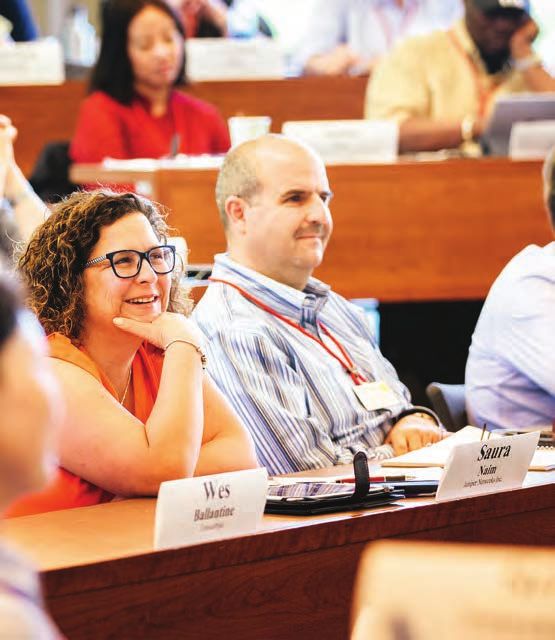
Faculty directors review all applicants to ensure a global mix of experienced participants for each program. Program
demographics are carefully balanced, with approximately half of all participants coming from outside North America.

A COLLABORATIVE LEARNING COMMUNITY
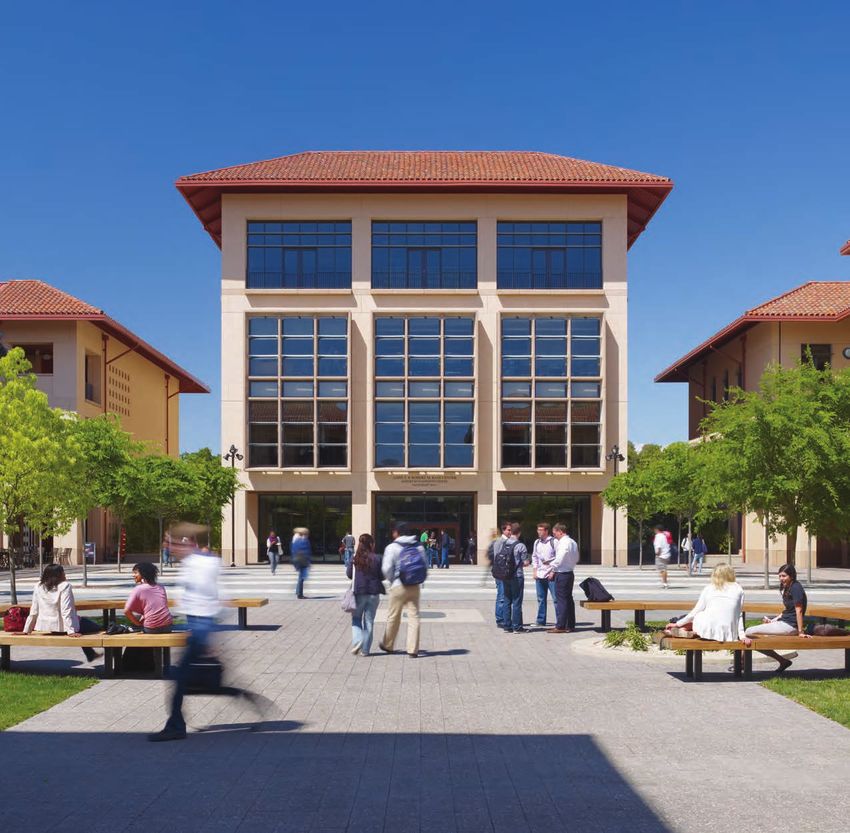
The Knight Management Center, with 360,000 square feet in 8 buildings and 50% of its 12.5-acre site preserved for open
space, consolidates the facilities of Stanford Graduate School of Business into a vibrant and unified indoor/outdoor, living/
learning community. The Knight Management Center is Platinum-certified by the U.S. Green Building Council’s Leadership in
Energy and Environmental Design (LEED) program, and features tiered classrooms with extensive floor-to-ceiling glass, the
latest in audiovisual technology, and numerous breakout and study rooms.

STANFORD GSB RESIDENCES
The residences are situated directly across the street from the Knight Management Center and are comprised of two
buildings—Schwab Residential Center and Jack McDonald Hall. Residences offer fully furnished individual rooms and
services including a business center, exercise room, dry cleaning, and daily housekeeping.

You will also be treated daily to the award-winning cuisine of Executive Chef Raul Lacara and the friendly and efficient
service of the Schwab Executive Dining staff. Ranking #1 in the Financial Times Open Enrollment Survey for Food and
Accommodation, Schwab Executive Dining’s on-premises kitchen under Chef Lacara’s leadership consistently receives high
praise for its culinary excellence.

Open Enrollment Programs
Stanford Graduate School of Business offers a frequently updated portfolio of open enrollment executive education
programs ranging from several days to several weeks in length. All programs feature Stanford faculty members as
instructors, complemented by distinguished guest speakers and visiting academics. Open enrollment programs take place
throughout the year, most often on the Stanford campus. All prospective participants are subject to an application process
to ensure a high-quality cohort. Curricula are rigorous, with classroom and study group sessions scheduled from morning
through evening.

Custom Executive Programs
Stanford Graduate School of Business collaborates with select organizations to design and deliver custom executive
programs that address an organization’s specific business challenges. To ensure maximum impact and relevance, these
custom programs involve close cooperation between an organization’s executive leaders and Stanford faculty. Programs
include a combination of highly interactive classroom sessions, case discussions, small group exercises, electronically
mediated tools, and intensive study groups to encourage participants to think strategically and effectively manage change in
their organizations. More information is available at custom.stanfordexeced.com.

                                                                                                        stanfordexeced.com      5
Participating Companies
More than 18,000 companies have participated in Executive Education programs including:

CONGLOMERATE                             GOVERNMENT, NONPROFIT                     RETAIL, TRADE
Aditya Birla Group                       Bill & Melinda Gates Foundation           Amazon
ALFA                                     Central Intelligence Agency               Gap
Mitsubishi Corporation                   Enterprise Ireland                        Rakuten
Mitsui & Co.                             European Commission                       SKF Eurotrade
Reliance Industries                      Federal Aviation Administration           Target Corporation
Siam Cement Group                        U.S. Department of Defense                Wal-Mart Stores
Siemens                                  U.S. Department of Energy                 Williams-Sonoma
Sumitomo Corporation                     World Bank Group
Swire Group                                                                        TECHNOLOGY, INTERNET
                                         HEALTH CARE, PHARMACEUTICALS              Adobe Systems
ENERGY, NATURAL RESOURCES                Bayer                                     Agilent Technologies
Areva                                    Boston Scientific                         Apple
ATEL Capital Group                       F. Hoffmann-La Roche                      Cisco Systems
BP                                       Johnson & Johnson                         Citrix
Chevron Corporation                      Merck KGaA                                DocuSign
CPC Corporation                          Novo Nordisk A/S                          Dolby Laboratories
ExxonMobil                               Permanente Medical Group                  Facebook
Mitsubishi Electric Corporation          Pfizer                                    Google
OMV                                                                                Hewlett Packard Enterprise
Saudi Aramco                             MANUFACTURING (CONSUMER)                  Hitachi
Schlumberger                             Clorox Company                            Infosys
ScottishPower                            Colgate-Palmolive Company                 Intel Corporation
Shell Oil Company                        Kimberly-Clark Corporation                Juniper Networks
Southern Company                         Nestlé USA                                LG CNS
Total S.A.                               PepsiCo                                   Maxim Integrated Products
Westinghouse Electric Corporation        Unilever                                  Mercado Libre
                                                                                   Microsoft Corporation
ENTERTAINMENT, MEDIA                     MANUFACTURING (INDUSTRIAL)                Oracle
Axel Springer                            Boeing Company                            Salesforce
Bonnier                                  Brickworks                                Singapore Technologies Engineering
New York Times Company                   CEMEX                                     Symantec Corporation
Sony Pictures                            General Motors                            Twitter
Televisa Grupo, S.A.B.                   Honda                                     VMware
Wall Street Journal                      Lockheed Martin
Washington Post                          Monsanto Company                          TELECOMMUNICATIONS
                                         NCC AB                                    Alcatel-Lucent
FINANCIAL SERVICES, INSURANCE            Renault                                   AT&T
American Express                         Tenaris/Techint                           Deutsche Telekom
Banco do Brasil                          Toyota                                    Elisa
Bank of America                          Vitro                                     Motorola
Barclays Bank                                                                      Nippon Telegraph and Telephone
Capital One Financial Corporation        PROFESSIONAL SERVICES                     Nokia
Citigroup                                Bain & Company                            SK Telecom Company
Credit Suisse Group                      Capgemini                                 Verizon Communications
Fidelity Investments                     Deloitte
GIC Private Limited                      Hyatt Hotels                              TRAVEL, TRANSPORTATION
Hong Kong Exchange and Clearing          KPMG                                      A.P. Moller–Maersk
HSBC Holdings                            PricewaterhouseCoopers                    Air New Zealand
Itaú                                     White & Case                              Airbnb
Munich Re                                                                          FedEx
OCBC Bank                                                                          Hertz Corporation
PT Bank Mandiri                                                                    JetBlue Airways Corporation
State Farm Insurance                                                               LAN Airlines
Visa                                                                               PACCAR
Westpac Banking Corporation                                                        Uber
GENERAL MANAGEMENT
Stanford Executive
Program: Be a Leader
Who Matters
Dates: June 22 – August 3, 2019
Final Application Deadline: April 5, 2019
Tuition: $73,000 USD
Program tuition includes private accommodations, all meals, and course materials.
PROGRAM OVERVIEW
WHO SHOULD ATTEND
Leading. Innovating. Scaling. At the Stanford Executive Program, you’ll focus on all
The Stanford Executive Program is
three. In six weeks of immersive, thought-provoking learning, you’ll experience cutting-
designed for:
edge research and Silicon Valley innovation. Discover what it means to lead by design.
• Senior-level leaders at large companies
Strengthen business fundamentals and transform them into actionable insights. Learn
who are inspired to innovate
what it takes to transform as an organization and how to scale excellence. Then return to
• Senior-level leaders at growth
work—energized and inspired—with a plan and the tools to drive success.
companies who are challenged to scale
For over 65 years, global business leaders have come to the Stanford Executive Program to • Seasoned and influential executives who
learn from world-class Graduate School of Business (GSB) faculty, Silicon Valley business will use this opportunity to make an even
leaders, Stanford professors, and each other. You’ll develop a diverse and dynamic network greater difference in their organization’s
of relationships that will last a lifetime, and you will earn GSB alumni status. The unique future
environment and amazing weather at Stanford will also energize your health with daily
exercise classes, award-winning food, and enriching extracurricular activities.
KEY BENEFITS
The Stanford Executive Program will help you:
• Lead by design with authenticity, power, and a deeper understanding of human behavior
and your own leadership strengths
• Create and scale an organizational culture where innovation and excellence thrive
• Turn financial, marketing, customer, and economic data into breakthrough insights that
drive global success
• Act strategically and proactively to navigate market and beyond-market forces
“I think asking your team to be
innovative and collaborative is
one thing, but I’ve learned more
about the way others actually
learn, and it’s an opportunity for
me to lead differently.”
Tricia Smith
Executive Vice President; General Merchandise Manager
Nordstrom
EXECUTIVE EDUCATION / GENERAL MANAGEMENT 7“Stanford SEP gave me new insight about our business opportunities in
the future. It also encouraged me to think about strategic direction and
culture at the company, and to initiate new programs that were only
ideas previously. The networking opportunities are impressive.”
Geoff A. Hunziker | President | eFlow LLC.
• Return to work rejuvenated with strategic action plans and the leadership skills to
SAMPLE DAILY SCHEDULE effectively implement them
Morning Exercise
• Learn from others in the program, gain new perspectives, and collaborate with a global
Bootcamp (optional)
network of experienced and diverse change agents
Breakfast • Network with fellow GSB alumni by earning GSB alumni status and a lifetime
Full breakfast at the Schwab
membership in the GSB Alumni Association
Residential Center
Study Groups CURRICULUM HIGHLIGHTS
Prepare for the day with small discussion
groups From design thinking and big data to negotiation, financial engineering, and strategic
management, you’ll experience the very best of the Stanford GSB—concentrated and
Morning Session I customized to meet the needs and know-how of senior-level leaders like you. You’ll gain
Alternative Growth Strategies mastery of fundamental business skills, explore cutting-edge ideas, and discover agile,
Morning Session II innovative solutions to the challenges, demands, and opportunities faced by today’s
Big Data: Discoveries and Innovations leaders.
Lunch The program’s six-week curriculum is highly integrated and designed to maximize linkages
Outdoor lunch across three themes:
• Leading people: Understand human behavior; develop models and mindsets
Afternoon Session I
Strategic Crisis Management for innovation
• Leading organizations: Create systems; build a culture where excellence thrives
Afternoon Session II
and scales
Leading by Design
• Leading change: Strategically address market and beyond-market forces for
Guest Speaker competitive advantage
Tom Mendoza, Vice Chairman of NetApp
One Year of 1:1 Online Executive Coaching complements your learning on campus and
Dinner helps you turn intentions into impact back at the office.
Reception and dinner in
Schwab Dining Room Turbo Sessions give you an in-depth, behind-the-scenes look at the latest faculty
research—from business and engineering to cyber security and political science.
Evening
Individual study Learning-in-Action Sessions with senior faculty give you time to review key takeaways from
the week and think about how to specifically apply them to your company.
Experiential Leadership opportunities allow you to explore your personal leadership
potential, experience growth through mental and physical challenges, work in groups to
problem-solve, build trust through teamwork, and learn how to communicate with power
and confidence.
8 EXECUTIVE EDUCATION / GENERAL MANAGEMENT gsb.stanford.edu/exec-ed/sepFACULTY DIRECTOR
William P. Barnett is the Thomas M. Siebel Professor of Business
Leadership, Strategy, and Organizations, Stanford Graduate
School of Business; and Affiliated Faculty, Woods Institute for
the Environment at Stanford. Professor Barnett’s research
focuses on competition within and among corporations and how
competition affects the founding, growth, performance, survival,
and innovativeness of organizations. His course, Leading by Design,
spans the entire six-week program, emphasizing what will make a
difference for you as a leader and your company as a competitor.
OTHER STANFORD GRADUATE SCHOOL OF BUSINESS FACULTY
Jennifer L. Aaker Haim Mendelson
The General Atlantic Partners Professor The Kleiner Perkins Caufield & Byers
of Marketing Professor of Electronic Business and
Susan Athey Commerce, and Management
The Economics of Technology Margaret A. Neale
Professor; Professor of Economics (by The Adams Distinguished Professor
courtesy), School of Humanities and of Management
Sciences; Senior Fellow, Stanford Institute Charles A. O’Reilly III TYPICAL PARTICIPANT MIX
for Economic Policy Research The Frank E. Buck Professor of Management Management Function
Anne Beyer Hayagreeva Rao 8% Corporate Development
Associate Professor of Accounting The Atholl McBean Professor of 5% Finance/Accounting
Steven Callander Organizational Behavior and Human 52% General Management
3% Human Resources
The Herbert Hoover Professor of Public Resources; Professor of Sociology (by
4% Information Technology
and Private Management, Professor of courtesy), School of Humanities and Sciences 1% Logistics
Political Economy Baba Shiv 6% Operations/Production
Peter M. DeMarzo The Sanwa Bank, Limited, Professor 6% Research/Development
The Staehelin Family Professor of Finance of Marketing 8% Sales/Marketing
7% Other
Yossi Feinberg Kenneth W. Shotts
Industry
The John G. McCoy–Banc One Corporation The David S. and Anne M. Barlow Professor
2% Advertising/Marketing Services
Professor of Economics; Senior Associate of Political Economy; Professor of Political 1% Aerospace/Defense
Dean for Academic Affairs Science (by courtesy), School of Humanities 3% Agriculture/Food/Beverages
Francis J. Flynn and Sciences 1% Computer/Peripherals
The Paul E. Holden Professor of Jesper B. Sørensen 7% Construction/Engineering/Materials
Organizational Behavior The Robert A. and Elizabeth R. Jeffe 5% Consulting
2% Education
George Foster Professor of Organizational Behavior;
7% Electronics/Semiconductors
The Konosuke Matsushita Professor Professor of Sociology (by courtesy), School 1% Entertainment/Leisure
of Management of Humanities and Sciences; Faculty Director, 1% Family Foundation
Stanford Institute for Innovation in 23% Financial Services/Insurance
Deborah H. Gruenfeld Developing Economies 1% Food Service/Lodging
The Joseph McDonald Professor and 3% Government
Professor of Organizational Behavior Sarah A. Soule
1% Health Care Services
The Morgridge Professor of Organizational
Charles I. Jones 3% Internet Services
Behavior; Senior Associate Dean for 1% Legal/Advocacy Services
The STANCO 25 Professor of Economics Academic Affairs; Professor of Sociology (by 3% Manufacturing/Consumer Products
Edward P. Lazear courtesy), School of Humanities and Sciences 9% Manufacturing/Industrial Products
The Davies Family Professor of Economics; 2% Mining/Metal Processing
Ilya A. Strebulaev
Morris Arnold and Nona Jean Cox Senior 1% Nonprofit
The David S. Lobel Professor of Private Equity
Fellow, Hoover Institution; Senior Fellow (by 4% Petroleum/Oil/Gas/Energy
courtesy), Stanford Institute for Economic Seungjin Whang 1% Pharmaceuticals/Med Devices
Policy Research; Professor of Economics (by The Jagdeep and Roshni Singh Professor of 2% Printing/Publishing
courtesy), School of Humanities and Sciences Operations, Information and Technology 1% Real Estate
3% Retail/Wholesale
Hau L. Lee Stefanos Zenios
5% Software
The Thoma Professor of Operations, The Investment Group of Santa Barbara 5% Telecommunications/
Information and Technology Professor of Entrepreneurship and Professor Information Services
of Operations, Information and Technology 1% Transportation
Jonathan Levav
1% Utilities
Associate Professor of Marketing
Region
Brian Lowery 1% Africa
The Walter Kenneth Kilpatrick Professor of 24% Asia
Organizational Behavior; Senior Associate 10% Australia/New Zealand
Dean for Academic Affairs 22% Europe
5% Middle East
32% North America
6% South America
gsb.stanford.edu/exec-ed/sep EXECUTIVE EDUCATION / GENERAL MANAGEMENT 9GENERAL MANAGEMENT
Executive Leadership
Development:
Analysis to Action
Dates: January 13 – 18 and April 21 – 26, 2019 (a two-module program)
Application Deadline: November 30, 2018
Tuition: $28,000 USD
Program tuition includes private accommodations, all meals, and course materials.
OVERVIEW
WHO SHOULD ATTEND
Two weeks. Two modules. One incredibly rigorous general management program for
Executive Leadership Development is ideal
executives on the verge of achieving great things. Executive Leadership Development:
for emerging leaders preparing to take
on more significant leadership roles. It’s
Analysis to Action prepares you to take the helm—to analyze critically, articulate
specifically designed for: strategically, think holistically, and lead with confidence.
• High-potential leaders on the fast track Over the course of six months and two on-campus modules, you’ll interact with Stanford’s
who are poised and motivated to take on world-class Graduate School of Business faculty and gain insights from a diverse group of
significant managerial responsibility in
highly motivated peers. You’ll experience dynamic presentations, hands-on role playing,
their organizations
guest speakers, two 360-degree leadership assessments, three one-on-one coaching
• Mid-level executives with at least 10
sessions, and more. It’s experiential and empowering. You’ll learn how to use strategies
years of work experience and a minimum
of three to five years of management and frameworks designed to improve your executive decision making. You’ll use design
experience—from any size company, any thinking principles to solve real-world business challenges. And you’ll develop and refine a
industry, and any country set of personal leadership skills to achieve greater results.
• Individuals who are eager, engaged, and
inspired to make a positive impact in KEY BENEFITS
this program and in their organizations
Executive Leadership Development: Analysis to Action will help you:
SAMPLE DAILY SCHEDULE • Improve core analytical skills required for approaching business challenges holistically
Breakfast and making better executive decisions
Full breakfast at Schwab Residential Center • Develop greater awareness of your leadership style and how it’s perceived by others
Study Group Discussions • Enhance your understanding of the critical interface between execution issues, and
Morning Session I internal and external strategic challenges to the organization
Executive Decision Making
• Apply design thinking principles to solve business problems—learn effective ways
Morning Session II
Industry Analysis and Strategy of designing teams, business operations, change management initiatives, and
Lunch organizational structures and culture
Buffet lunch • Understand relevant psychological principles needed to create high-performance teams
Afternoon Session I and increase employee motivation
Accounting
• Hone interpersonal skills to increase your impact within and outside of your organization
Afternoon Session II
Strategy Beyond Markets: Self-Regulation
Late Afternoon
Capture Your Takeaways
Dinner
Cocktail reception followed by a
served dinner
Evening
Networking with participants
“The course mixed rigour, intensity, and some fun, making for a conducive setting for learning.
The quality of the teaching staff was excellent. Some of the principles taught served to confirm for
me that I was proceeding along the right path for my organization, while others gave me new insights
and ideas to apply. If you are a new leader, the course will provide you with much food for thought,
and is highly recommended.”
Jill Tan | Official Assignee & Public Trustee | Insolvency & Public Trustee’s Office | Singapore
10 EXECUTIVE EDUCATION / GENERAL MANAGEMENT gsb.stanford.edu/exec-ed/eldGENERAL MANAGEMENT
LEADERSHIP ASSESSMENT AND PERSONAL COACHING
Personal leadership development is a key focus of the program. To enhance your
awareness of your leadership style and how it’s perceived by others, we combine
classroom learning with Stanford’s proprietary 360-degree, in-depth leadership
assessment tool called LEAP (Leadership Evaluation and Action Planning). LEAP
is designed to help you strengthen your leadership skills so you can improve your
performance, energize your workplace, and advance your career. It also helps you set
priorities and develop a 100-day action plan with one-on-one leadership coaching.
FACULTY DIRECTORS
Francis J. Flynn, the Paul E. Holden Professor of Organizational
Behavior at Stanford Graduate School of Business, specializes in
interpersonal relations in organizations. His work bridges the fields TYPICAL PARTICIPANT MIX
of management and social psychology, leading to scholarly as well as Management Function
practical insights on organizational life. 8% Corporate Development
4% Finance/Accounting
37% General Management
6% Human Resources
Anne Beyer, an Associate Professor of Accounting at the Stanford
4% Information Technology
Graduate School of Business, is the Michelle R. Clayman Faculty 2% Logistics
Scholar for 2008-2009 and 2010-2013. Her research interest is in 6% Operations/Production
the area of financial accounting with a focus on corporate disclosure, 9% Research/Development
capital market prices, and corporate governance. 15% Sales/Marketing
9% Other
Industry
4% Aerospace/Defense
OTHER STANFORD GRADUATE SCHOOL OF BUSINESS FACULTY 4% Agriculture/Food/Beverages
2% Biotechnology
Steven J. Callander Hayagreeva Rao 2% Broadcasting
The Herbert Hoover Professor of Public The Atholl McBean Professor of 4% Consulting
and Private Management, Professor of Organizational Behavior and Human 2% Education
Political Economy Resources; Professor of Sociology 5% Electronics/Semiconductors
(by courtesy), School of Humanities 2% Entertainment/Leisure
Glenn R. Carroll 13% Financial Services/Insurance
The Laurence W. Lane Professor of and Sciences
4% Government
Organizations; Senior Associate Dean for Kenneth W. Shotts 6% Internet Services
Academic Affairs; Professor of Sociology The David S. and Anne M. Barlow Professor 4% Manufacturing/Consumer Products
(by courtesy), School of Humanities and in Political Economy; Professor of Political 7% Manufacturing/Industrial Products
Sciences Science (by courtesy), School of Humanities 2% Mining/Metal Processing
and Sciences 2% Nonprofit
Wesley R. Hartmann 2% Petroleum/Oil/Gas/Energy
Professor of Marketing Jesper B. Sørensen 2% Printing/Publishing
Hau L. Lee The Robert A. and Elizabeth R. Jeffe 2% Real Estate
The Thoma Professor of Operations, Professor and Professor of Organizational 13% Software
Information and Technology Behavior 4% Telecommunications/
Information Services
Brian Lowery Sarah A. Soule
6% Transportation
The Walter Kenneth Kilpatrick Professor of The Morgridge Professor of Organizational 8% Oher
Organizational Behavior; Senior Associate Behavior; Senior Associate Dean for
Region
Dean for Academic Affair Academic Affairs; Professor of Sociology (by
22% Asia
courtesy), School of Humanities and Sciences 9% Australia/New Zealand
Benoît Monin
The Bowen H. and Janice Arthur McCoy Ilya A. Strebulaev 11% Europe
The David S. Lobel Professor of Private Equity 2% Middle East
Professor of Leadership Values
43% North America
Joel C. Peterson Stefanos Zenios 13% South America
The Robert L. Joss Consulting Professor The Investment Group of Santa Barbara
of Management Professor of Entrepreneurship and Professor
of Operations, Information and Technology
gsb.stanford.edu/exec-ed/eld EXECUTIVE EDUCATION / GENERAL MANAGEMENT 11GENERAL MANAGEMENT
Executive Program
for Growing Companies
Dates: August 4 – 15, 2019
Application Deadline: June 21, 2019
Tuition: $25,000 USD
Program tuition includes private accommodations, all meals, and course materials.
OVERVIEW
Grow faster. Grow stronger. Grow sustainably. It’s what every rapidly growing company
needs to do to survive and thrive in today’s dynamic global marketplace. New strategies
WHO SHOULD ATTEND are needed. New thinking is required. Strong leadership is demanded. And that’s exactly
The Executive Program for Growing
what the Executive Program for Growing Companies delivers.
Companies will help you determine This two-week, comprehensive, general management program is solely focused on the needs,
what’s next for your growing company.
challenges, and opportunities of growing companies. You’ll learn how to create and execute
It’s specifically designed for:
strategies in order to move faster, operate more efficiently, and expand into new markets.
• CEOs and top executives at small- to
You’ll focus on the management systems that need to be put in place to sustain growth.
medium-sized companies
You’ll gain exposure to leading research happening at Stanford’s world-renowned Center for
• Division or business unit leaders within
Entrepreneurial Studies and identify engines that can drive or inhibit growth. And through case
larger organizations
studies, guest speakers, and peer interactions you’ll share stories of success and failure.
• Executives with at least 10 years of
management experience—from any size
company, any industry, and any country
KEY BENEFITS
The Executive Program for Growing Companies will help you:
TYPICAL PARTICIPANT MIX • Explore interdisciplinary frameworks for analyzing and managing growth and identify
Management Function growth accelerators and inhibitors
19% Corporate Development
3% Finance/Accounting • Build tools to foster and sustain an entrepreneurial organizational culture
56% General Management
• Learn how to put senior-level managers in place to handle operations, so you can focus
4% Human Resources
1% Logistics on higher-level vision and strategy
5% Operations/Production • Understand a leader’s role and responsibilities in facilitating a company’s growth
7% Sales/Marketing
5% Other • Align your company’s growth strategy with your organization’s culture and environment
Industry
1% Accounting FACULTY DIRECTOR
3% Advertising/Marketing Services George Foster, the Konosuke Matsushita Professor of Management,
3% Agriculture/Food/Beverages
Stanford Graduate School of Business, conducts research on
4% Construction/Engineering/Materials
1% Consulting the management of new enterprises, the globalization strategies
1% Education of growing companies, and the performance of venture-backed
4% Entertainment/Leisure entrepreneurial companies. He is actively involved in the Silicon
10% Financial Services/Insurance Valley business community and serves on the boards of directors of
5% Health Care Services a venture capital firm and several start-up companies.
1% Internet Services
6% Manufacturing/Consumer Products
9% Manufacturing/Industrial Products
1% Nonprofit
6% Real Estate
8% Retail/Wholesale
17% Software
10% Telecommunications/
Information Services
3% Transportation
1% Utilities
6% Other
Region
4% Africa
11% Asia
13% Australia/New Zealand
22% Europe
2% Middle East
24% North America
24% South America
12 EXECUTIVE EDUCATION / GENERAL MANAGEMENT gsb.stanford.edu/exec-ed/epgcGENERAL MANAGEMENT
Executive Program in
International Management
Dates: August 17 – 31, 2019
Application Deadline: July 5, 2019
Tuition: $19,900 USD
Lodging not included in program tuition. This program will take place in Singapore.
OVERVIEW
East meets West. Stanford meets the National University of Singapore (NUS). The
Stanford–NUS Executive Program in International Management is the perfect balance.
Immerse yourself in the vibrant cultures of two of the world’s most respected institutions, WHO SHOULD ATTEND
renowned for their approach to critical thinking and challenging assumptions, as well as The Stanford–NUS Executive Program
uncompromisingly high standards and academic rigor. in International Management is ideal for
senior-level and high-potential executives
In two weeks of highly intensive sessions held in Singapore, you’ll explore general
who conduct business in the Pacific Rim.
management concepts in all major functional areas and increase your expertise with It’s specifically designed for:
current insights and knowledge of global and Asian business. Taught by full-time faculty
• General managers and other functional
from both NUS Business School and Stanford Graduate School of Business, you’ll gain a managers with 10 to 15 years of
thorough grounding on the recent developments in business management, strategy, and experience—from any size company, any
leadership from both sides of the Pacific Rim. industry, and any country
KEY BENEFITS TYPICAL PARTICIPANT MIX
Stanford–NUS Executive Program in International Management will help you: Management Function
4% Finance/Accounting
• Learn fundamental concepts and gain fresh insights on management strategy 85% General Management
11% Sales/Marketing
• Improve analytical and behavioral skills
Industry
• Understand the differences in culture and management practices from both Western and 11% Computer/Software
Eastern perspectives 4% Construction/Engineering/Materials
4% Education
• Develop a strong network of peers from different industries and countries
18% Financial Services/Insurance
11% Government
FACULTY DIRECTORS 4% Manufacturing
Glenn R. Carroll, the Laurence W. Lane Professor of Organizations 26% Military
14% Petroleum/Oil/Gas
and Senior Associate Dean for Academic Affairs at Stanford
4% Retail/Wholesale
Graduate School of Business, has pioneered ecological approaches 4% Utilities
to organizational analysis, as well as their application to strategy.
Region
His research interests include organizational theory, strategic 53% Asia
management, and industrial evolution. He is also Professor of 4% Australia/New Zealand
Sociology (by courtesy), School of Humanities and Sciences. 29% Europe
14% North America
Prem Shamdasani is Associate Professor and Associate Dean
for Executive Education at NUS Business School. His research
and teaching interests include brand management, new product
marketing, retail strategy, relationship marketing, and cross-cultural
consumer behavior. He has received numerous commendations and
awards for teaching excellence.
Seungjin Whang, the Jagdeep and Roshni Singh Professor of
Operations, Information and Technology at Stanford Graduate
School of Business, is an expert in supply chain management and
the economics of information systems.
gsb.stanford.edu/exec-ed/nus EXECUTIVE EDUCATION / GENERAL MANAGEMENT 13CORPORATE GOVERNANCE
Directors’ Consortium
A joint offering with Stanford Law School
Dates: March 26 – 29, 2019
March 25, 2019: Finance and Accounting Basics Optional Session
Application Deadline: February 8, 2019
Applications reviewed on a rolling basis.
4-day Tuition: $12,600 USD / 5-day Tuition: $14,550 USD
Program tuition includes meals and materials. Lodging is not included. Housing is available on the
Stanford campus. Please contact the Program Director for details.
OVERVIEW
WHO SHOULD ATTEND Stanford Business. Stanford Law. Four rigorous days of learning from world-class faculty
combined with invaluable networking. Directors’ Consortium gives you the leading-edge
The Directors’ Consortium is essential for
strategies, frameworks, and best practices for making complex and crucial board decisions
directors who must make complex board
decisions. It’s specifically designed for: in uncertain times.
• Current board members of public Cybersecurity, shareholder activism, social media, financial literacy, liability risk. The list
companies of issues and responsibilities for board members is ever increasing and changing. Drawing
• Board members of companies that may on cutting-edge research, current governance issues, emerging topics, and practical
be taken public in the near future knowledge, Directors’ Consortium goes beyond compliance to explore how directors can
• Board members of foreign corporations best represent shareholders and other stakeholders. You’ll learn about financial reporting,
that are or may be listed on U.S. compensation, fiduciary duties, CEO succession, and more. You’ll develop a greater
exchanges
understanding of the board’s oversight and advisory roles. And you’ll examine real-world
* The disciplines covered will also be relevant scenarios and formulate action plans with a set of people who confront similar problems.
to private, family-owned, and nonprofit
organizations, but not all of the specific KEY BENEFITS
regulations and processes of public companies
will apply to such entities. Directors’ Consortium will help you:
• Understand your fiduciary, legal, and ethical oversight responsibilities
TYPICAL PARTICIPANT MIX • Explore shareholder activism and the impact of social media
Management Function • Benchmark against best practices in corporate governance
8% Corporate Development
76% General Management • Evaluate the role of the board in strategy development, evaluation, and evolution
11% Information Technology • Develop frameworks for prudent legal strategies to navigate litigious environments
5% Other
• Formulate strategies for managing CEO succession and evaluating executive compensation
Industry
6% Aerospace/Defense
3% Construction/Engineering/Materials FACULTY DIRECTOR
15% Consulting David F. Larcker, the James Irvin Miller Professor of Accounting at
6% Electronics/Semiconductors Stanford Graduate School of Business and Senior Faculty of the Arthur
21% Financial Services/Insurance
and Toni Rembe Rock Center for Corporate Governance at Stanford,
7% Health Care Services
3% Internet Services is a leading researcher in executive compensation and corporate
3% Manufacturing/Consumer Products governance. He specializes in the design of compensation contracts
3% Manufacturing/Industrial Products and the evaluation of governance choices by firms. He is also Professor
3% Nonprofit of Law (by courtesy), Stanford Law School.
3% Petroleum/Oil/Gas/Energy
3% Real Estate
6% Retail/Wholesale
9% Software
6% Telecommunications/
Information Services
3% Other
Region
2% Africa
2% Asia
6% Europe
90% North America
14 EXECUTIVE EDUCATION / CORPORATE GOVERNANCE gsb.stanford.edu/exec-ed/dirFINANCIAL MANAGEMENT
The Emerging CFO:
Strategic Financial
Leadership Program
Dates: February 24 – March 1 and May 12 – 17, 2019 (a two-module program)
Application Deadline: January 11, 2019
Tuition: $28,000 USD
Program tuition includes private accommodations, all meals, course materials, and one-on-one coaching.
OVERVIEW
WHO SHOULD ATTEND
Strategy, finance, leadership. You’ll get it all in the Emerging CFO: Strategic Financial
The Emerging CFO: Strategic Financial
Leadership Program. Experience two 1-week modules on campus filled with dynamic
Leadership Program is ideal for those
lectures, a Venture Capital panel, and discussions around real business challenges. who aspire to become strategic CFOs. It’s
Enhance your learning with a webinar, a 360-degree assessment, and personal leadership specifically designed for:
coaching. It’s intensive, thought-provoking, and empowering. • Senior finance executives with at least
At Stanford we encourage you to think beyond finance to big picture, organization- wide 10 years of work experience, at least
7 years of financial management
concerns. You’ll learn how to make better strategic financial decisions, build strategic
experience, and a high level of
partnerships with key stakeholders, and develop a more effective leadership style to help managerial responsibility within their
lead your organization through globalization and growth. You’ll learn about emerging organization
trends and challenges in finance such as mergers and acquisitions, value creation, and • Examples of functions and titles may
behavioral finance. And you’ll gain a deeper understanding of the importance of aligning include CFO, treasurer, controller, VP of
finance with strategy and leadership. finance, and other senior level financial
positions—from any size company, any
KEY BENEFITS industry, and any country
The Emerging CFO: Strategic Financial Leadership program will help you: TYPICAL PARTICIPANT MIX
• Hone strategic skills in the context of financial leadership Management Function
• Transition from information provider to strategic partner 5% Corporate Development
84% Finance/Accounting
• Gain a greater understanding of current trends in finance 7% General Management
2% Human Resources
• Improve negotiation, conflict management, and communication skills
2% Other
• Assess and enhance your personal leadership style Industry
• Drive innovation and lead cultural change 2% Chemicals
2% Construction/Engineering/Materials
3% Consulting
FACULTY DIRECTORS 7% Electronics/Semiconductors
Ilya A. Strebulaev, the David S. Lobel Professor of Private Equity, is 2% Entertainment/Leisure
an expert in corporate finance, venture and angel capital, innovation 14% Financial Services/Insurance
financing, corporate innovation, and financial decision making. His 2% Food Service/Lodging
3% Government
recent work has examined the valuation of VC-backed companies,
3% Health Care Services
decision making by startup investors, returns to VC investors, and 3% Internet Services
impact of venture capital investments. Ilya’s work has been widely 5% Manufacturing/Consumer Products
published in leading academic journals and has been awarded a 10% Manufacturing/Industrial Products
number of prestigious academic awards. His research has also been 2% Mining/Metal Processing
featured in a variety of media, including the New York Times and the 4% Nonprofit
7% Petroleum/Oil/Gas/Energy
Wall Street Journal.
2% Real Estate
10% Software
Amit Seru, the Steven and Roberta Denning Professor of Finance,
3% Telecommunications/
focuses on issues related to financial intermediation and regulation, Information Services
interaction of internal organization of firms with financing and 2% Transportation
investment, and incentive provision in firms. His papers in these 9% Other
areas have been published in several journals, including, the 5% Utilities
American Economic Review, the Quarterly Journal of Economics, the Region
Journal of Political Economy, the Journal of Finance, the Journal of 5% Africa
Financial Economics, and the Review of Financial Studies. 4% Asia
2% Australia/New Zealand
10% Europe
14% Middle East
60% North America
5% South America
gsb.stanford.edu/exec-ed/ecfo EXECUTIVE EDUCATION / FINANCIAL MANAGEMENT 15FINANCIAL MANAGEMENT
Finance and Accounting
for the Nonfinancial
Executive
Dates: October 20 – 25, 2019
Application Deadline: September 6, 2019
Tuition: $12,600 USD
Program tuition includes private accommodations, all meals, and course materials.
OVERVIEW
WHO SHOULD ATTEND
Balance sheets and income statements. Cash flow and financial management. Many executives
Finance and Accounting for the
rise to positions of great responsibility with less knowledge of finance and accounting than
Nonfinancial Executive is ideal for
executives with little to no academic
they’d like to have. Finance and Accounting for the Nonfinancial Executive will demystify the
training in finance or accounting. It’s data, clarify key concepts, and teach you important frameworks and fundamentals.
specifically designed for:
This highly focused curriculum taught by world-class faculty from Stanford Graduate School
• Mid- to senior-level executives in general of Business will help you identify trends, make performance comparisons with competitors,
management, corporate planning,
and practice financial forecasting. You’ll explore how much debt a company should accept, the
marketing and sales, or other functional
areas—from any size company, any appropriate analysis for better investment decisions, the measurement of the cost of capital,
industry, and any country and the payment of cash dividends to investors. Bottom line, you’ll learn how to make better
• Anyone in a top-level position who financial management decisions to increase the value of your company in the marketplace.
doesn’t feel comfortable with the ability
to understand financial statements, KEY BENEFITS
financial information, and making
financially based decisions Finance and Accounting for the Nonfinancial Executive will help you:
• Become a well-informed, strategic user of accounting and financial data
TYPICAL PARTICIPANT MIX • Understand the core concepts, terms, and techniques of finance and accounting
Management Function
• Utilize financial concepts to make more informed decisions and become a greater asset
12% Corporate Development
34% General Management to your company
5% Human Resources • Engage more effectively with the financial stakeholders in your company
5% Information Technology
17% Operations/Production • Communicate with the key sources of finance—banks, other lenders, and investors
18% Sales/Marketing • Gain a broad overview of the financial marketplace and the role a company plays within it
9% Other
Industry FACULTY DIRECTORS
5% Advertising/Marketing Services
2% Aerospace/Defense George G. C. Parker, the Dean Witter Distinguished Professor of
3% Agriculture/Food/Beverages Finance, Emeritus, and Faculty Director of the Stanford Master of
5% Biotechnology Science in Management for Experienced Leaders (MSx) program, is a
4% Computer/Peripherals recognized expert in financial services and is acclaimed for his spirited
4% Construction/Engineering/Materials
teaching of both MBA students and executives. He is the author of Risk
5% Electronics/Semiconductors
4% Entertainment/Leisure Management: Problems and Solutions (McGraw-Hill College, 1995).
7% Financial Services/Insurance
5% Government Anne Beyer, an Associate Professor of Accounting at the Stanford
10% Health Care Services Graduate School of Business, is the Michelle R. Clayman Faculty
4% Internet Services Scholar for 2008-2009 and 2010-2013. Her research interest is in
6% Manufacturing/Consumer Products the area of financial accounting with a focus on corporate disclosure,
5% Nonprofit
capital market prices, and corporate governance.
6% Petroleum/Oil/Gas/Energy
2% Printing/Publishing
5% Real Estate
2% Software
5% Telecommunications/
Information Services
2% Transportation
9% Other
Region
7% Asia
9% Australia/New Zealand
9% Europe
2% Middle East
71% North America
2% South America
16 EXECUTIVE EDUCATION / FINANCIAL MANAGEMENT gsb.stanford.edu/exec-ed/fanfeFINANCIAL MANAGEMENT
Mergers and Acquisitions
Dates: July 21 – 26, 2019
Application Deadline: June 7, 2019
Tuition: $13,500 USD
Program tuition includes private accommodations, all meals, and course materials.
OVERVIEW
Experiential. Immersive. Collaborative. Through a dynamic mix of lectures, case studies,
class discussions, hands-on learning, and guest speakers, this program provides critical
insights and powerful tools for the successful formulation and execution of an M&A
strategy—one that creates true value for your organization. At the end of the day, you’ll put
classroom learning into action, applying key concepts learned from a similar merger deal.
WHO SHOULD ATTEND
By combining the expertise of Stanford’s strategy, finance, accounting, and organizational
The Mergers and Acquisitions program
behavior faculty, the Mergers and Acquisitions program offers a unique, interdisciplinary
requires no prior M&A experience. It’s
overview of the major elements of M&A transactions. You’ll examine all of the key aspects specifically designed for:
of a merger—target selection, alternative valuation and pricing models, deal design,
• Senior-level executives and
negotiation strategies, accounting and tax planning, integration planning, and the post- entrepreneurs with at least 10 years of
merger retention of human and intellectual capital. management experience, whose firms
are potential acquirers or targets for
KEY BENEFITS acquisition by another firm
• Examples of functions and titles include
The Mergers and Acquisitions program will help you:
business development, corporate
• Gain critical insights and powerful tools to formulate and execute a successful merger development, finance, CEO, general
or acquisition manager, strategic planner, and banker
• Understand all aspects of M&A transactions (strategy, finance, accounting, negotiations,
legal, and culture) TYPICAL PARTICIPANT MIX
Management Function
• Increase your awareness of the common pitfalls of failed M&As 35% Corporate Development
• Develop the critical competencies needed for successful post-merger integration 13% Finance/Accounting
and performance 35% General Management
2% Logistics
• Refresh your basic finance and accounting skills with optional online and 5% Operations/Production
classroom tutorials 4% Research/Development
6% Sales/Marketing
FACULTY DIRECTOR Industry
2% Advertising/Marketing Services
Ron Kasznik, the Paul L. and Phyllis Wattis Professor of Management 8% Aerospace/Defense
at Stanford Graduate School of Business, specializes in financial 6% Agriculture/Food/Beverages
accounting and its interactions with the capital markets. Specifically, 2% Chemicals
his research looks at the determinants and outcomes of corporate 22% Computer/Peripherals/
discretionary disclosures, with particular emphasis on managerial Electronics/Software
4% Construction/Engineering/Materials
incentives to manage expectations of future firm performance.
6% Consulting
These incentives are attributable to financial transactions such 2% Education
as M&A and other corporate restructuring, as well as executive 2% Entertainment/Leisure
compensation plans. 9% Financial Services/Insurance
2% Government
2% Health Care Services
12% Manufacturing
9% Petroleum/Oil/Gas/Energy
4% Pharmaceuticals/Med Devices
4% Telecommunications/
Information Services
2% Transportation
2% Utilities
Region
3% Africa
8% Asia
7% Australia/New Zealand
18% Europe
3% Middle East
48% North America
13% South America
gsb.stanford.edu/exec-ed/maq EXECUTIVE EDUCATION / FINANCIAL MANAGEMENT 17INNOVATION
The Corporate
Entrepreneur:
Driving Innovation and
New Ventures
Dates: March 10 – 15 and May 19 – 24, 2019 (two-module program)
Application Deadline: January 25, 2019
Tuition: $25,000 USD (per person)
Program tuition includes private accommodations, all meals, and course materials.
TYPICAL PARTICIPANT MIX
Management Function OVERVIEW
22% Corporate Development
3% Finance/Accounting Finance, strategy, and marketing. Design thinking, leadership, and culture. The Corporate
36% General Management
Entrepreneur: Driving Innovation and New Ventures covers all that and more—moving from
3% Human Resources
6% Information Technology idea to plan for execution so you can successfully drive change and innovate from within.
6% Operations/Production Individuals and multiple participants from one company will experience two 1-week modules
10% Research/Development on campus filled with lectures, hands-on team projects, guest speakers, coaching sessions,
14% Sales/Marketing and pitch presentations at the end. In between the modules, you can apply your newfound
Industry strategies and insights on the job and work to further develop your project with team
7% Aerospace/Defense
members, supported by faculty.
5% Agriculture/Food/Beverages
3% Biotechnology Every morning, you’ll learn strategic frameworks based on cutting-edge research from
2% Broadcasting
2% Consulting Stanford’s world-renowned Graduate School of Business faculty. Every afternoon you’ll put
2% Education theory into practice, working in small teams on an actual innovation project. You’ll start
8% Electronics at the Hasso Plattner Institute of Design (d.school), where you’ll learn the fundamentals
2% Entertainment/Leisure of design thinking. You’ll build a business model, develop project milestones, and create
33% Financial Services/Insurance
an action plan for implementation that addresses internal resistance. You’ll work with a
14% Manufacturing
5% Petroleum/Oil/Gas communication coach to hone your presentation skills and then pitch your team project to
5% Pharmaceuticals/Medical Devices senior executives. This is learning by doing; this is innovation in action.
5% Telecommunications/
Information Services KEY BENEFITS
2% Transportation
5% Utilities The Corporate Entrepreneur: Driving Innovation and New Ventures program will help you:
Region • Ideate, evaluate, and plan for implementation of new ventures within your division or
7% Asia
14% Australia/New Zealand company—from developing a new product or market to introducing a new distribution
30% Europe channel or making a strategic pivot
42% North America • Learn key skills and frameworks to execute on innovation—finance, marketing, design
7% South America
thinking, strategy, value chain, leadership, storytelling, and culture—through lectures
and by working on a hands-on project during the program
• Identify and overcome the challenges established companies face when trying to
innovate, and learn how to sell your idea within your organization
• Potentially develop your company’s new venture or business challenge (guaranteed if
4–6 participants from one company attend)
• Build a strong network of peers with whom you can interact and exchange ideas
FACULTY DIRECTOR
Yossi Feinberg is the John G. McCoy-Banc One Corporation Professor
of Economics and Senior Associate Dean for Academic Affairs at
Stanford Graduate School of Business. He works on the modeling
of costly decision making, reasoning about unawareness, dynamic
interactive decisions, and reasoning about high order uncertainties.
His research centers on the analysis of information in strategic
decision making. He is also Faculty Director, Stanford Ignite.
18 EXECUTIVE EDUCATION / INNOVATION gsb.stanford.edu/exec-ed/tceINNOVATION
Customer-Focused
Innovation
Dates: October 13 – 18, 2019
Application Deadline: August 30, 2019
Tuition: $16,000 USD
Program tuition includes private accommodations, all meals, and course materials.
OVERVIEW
Clean models. Dirty hands. Customer-Focused Innovation is the perfect blend of theory and
practice, strategy and innovation—an opportunity to flex both your business and creative
muscles. At Stanford, we teach innovation as a mindset, not a project. WHO SHOULD ATTEND
Every morning, you’ll learn strategic frameworks and models based on cutting-edge research Customer-Focused Innovation is for
from Stanford’s world-renowned Graduate School of Business faculty. You’ll learn how to strategic and creative thinkers who strive
to build organizations that are innovative
better understand customer experiences, develop deeper customer insights, and diffuse
and nimble. It’s specifically designed for:
customer learning throughout the organization. You’ll discuss strategies for reducing the
• C-level and senior executives who are
knowing-doing gap and building a customer-centric culture.
leading and directing teams that are
In the afternoon, you’ll work in small, diverse teams led by faculty and trained coaches charged with planning and implementing
innovation programs within their
from Stanford’s Hasso Plattner Institute of Design (d.school) to solve a real-world challenge
companies—no matter the size, industry,
utilizing design thinking methods and tools. You’ll also focus on the leader’s role in driving or country
teams to develop more innovative output.
• Executives with responsibility for
And because we’re committed to implementation, you’ll receive post-program coaching to research and development, product
design and development, innovation, new
help bring customer-focused innovation back to your company.
business development, marketing, or
brand management
KEY BENEFITS
*Due to the goals of this program, it is not
Customer-Focused Innovation will help you: appropriate for consultants or for those who
• Observe and understand the needs of customers, develop fast experiments and work for consulting agencies or design firms.
prototypes with users, and develop prediction markets
• Learn how to accept and overcome the risks and ambiguities inherent in innovation TYPICAL PARTICIPANT MIX
Management Function
• Harness the creativity of your employees and encourage empathy with your customers 10% Corporate Development
• Develop strategies to create an ambidextrous culture to support innovation 3% Finance/Accounting
37% General Management
• Refine your unique leadership style and assess your role in promoting innovation across 7% Information Technology
your organization 4% Operations/Production
16% Research/Development
FACULTY DIRECTORS 14% Sales/Marketing
9% Other
Hayagreeva Rao, the Atholl McBean Professor of Organizational
Industry
Behavior and Human Resources at Stanford Graduate School of
3% Advertising/Marketing Services
Business, is an expert in social and cultural causes of organizational 3% Agriculture/Food/Beverages
change. His recent work investigates the role of social movements as 4% Construction/Engineering/Materials
motors of organizational change in professional and organizational 6% Education
fields. Rao is also Professor of Sociology (by courtesy), School of 4% Electronics/Semiconductors
Humanities and Sciences; and Academic Codirector of Stanford 7% Entertainment/Leisure
10% Financial Services/Insurance
Innovation and Entrepreneurship Certificate.
5% Internet Services
18% Manufacturing
Robert I. Sutton, Professor of Management Science and Engineering 5% Petroleum/Oil/Gas/Energy
at Stanford School of Engineering, is cofounder of the Hasso Plattner 3% Printing/Publishing
Institute of Design. He is also Professor of Organizational Behavior 2% Real Estate
4% Retail/Wholesale
(by courtesy) at Stanford Graduate School of Business. Sutton
4% Software
studies the links between managerial knowledge and organizational 3% Telecommunications/
action, innovation, and organizational performance. Information Services
10% Transportation
9% Other
Region
2% Africa
8% Asia
20% Australia/New Zealand
16% Europe
2% Middle East
44% North America
8% South America
gsb.stanford.edu/exec-ed/cfi EXECUTIVE EDUCATION / INNOVATION 19You can also read


