A GLOBAL-STANDARD SPORT & ENTERTAINMENT PRECINCT IN IPSWICH - Strategic Business Case
←
→
Page content transcription
If your browser does not render page correctly, please read the page content below
A GLOBAL-STANDARD SPORT & ENTERTAINMENT
PRECINCT IN IPSWICH
Strategic Business Case

                                             PR143741-1
                                   A GLOBAL-STANDARD
                                SPORT & ENTERTAINMENT
                                   PRECINCT IN IPSWICH
                                                  FINAL
                                           February 2020

                                        rpsgroup.com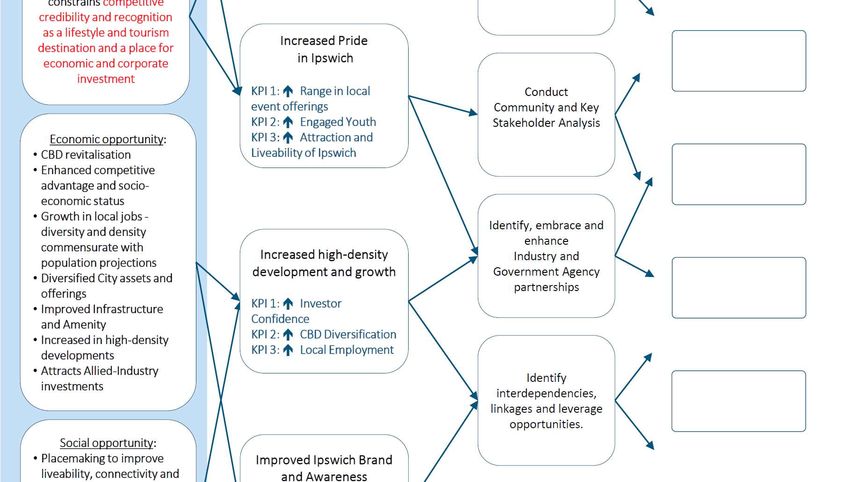
STRATEGIC BUSINESS CASE

Document status

Version     Purpose of document               Authored by          Reviewed by          Approved by          Review date

            Initial draft of Benefits, Risks
DraftA      and Issues for preliminary client MW                   LB, CE               MW                   22/11/2019
            review
DraftB      Draft Business Case               MW                   LB, CE               MW                   4/12/2019
            Updated draft Business Case
DraftC      incorporating feedback on         MW                   LB, CE               MW                   04/02/2020
            Benefits, Risks and Issues
FinalA      Final full draft Business Case    MW                   LB, CE               MW                   02/03/2020

Approval for issue

Mark Wallace                                                                                       2 March 2020

This report was prepared by RPS within the terms of RPS’ engagement with its client and in direct response to a scope
of services. This report is supplied for the sole and specific purpose for use by RPS’ client. The report does not account
for any changes relating the subject matter of the report, or any legislative or regulatory changes that have occurred
since the report was produced and that may affect the report. RPS does not accept any responsibility or liability for loss
whatsoever to any third party caused by, related to or arising out of any use or reliance on the report.

 Prepared by:                                                  Prepared for:

 RPS                                                           Ipswich City Council

 Mark Wallace                                                  Greg Chemello

 Director – Strategy and Investment                            Interim Administrator

 Level 4, HQ South                                             PO Box 191
 520 Wickham Street
 Fortitude Valley QLD 4006                                     Ipswich QLD 4305

 T     +61 7 3539 9500                                         T     +61 7 3810 6731

 E     mark.wallace@rpsgroup.com.au                            E     council@ipswich.qld.gov.au

PR143741-1 | A GLOBAL-STANDARD SPORT & ENTERTAINMENT PRECINCT IN IPSWICH | FINAL | February 2020
                                                                                                                     Page ii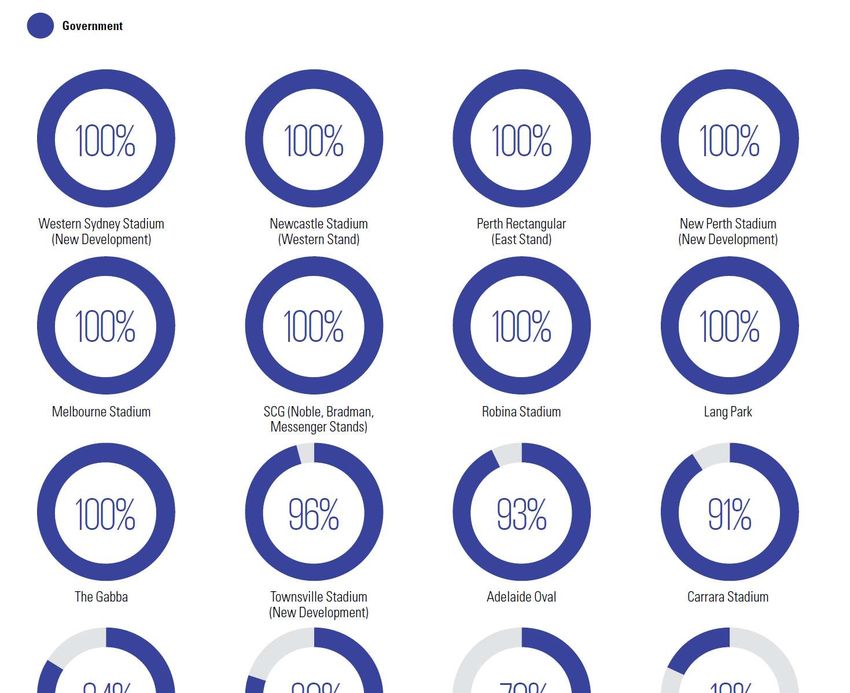
STRATEGIC BUSINESS CASE

Contents
Executive summary ..........................................................................................................................................1
1        INTRODUCTION ......................................................................................................................................4
         1.1 Broad Project Concept ...................................................................................................................4
         1.2 Strategic Business Case Methodology ..........................................................................................4
         1.3 Analysis to Support the Strategic Business Case ..........................................................................5
         1.4 Guidance for Development of this Strategic Business Case .........................................................6
         1.5 Governance Arrangements for this Strategic Business Case........................................................6
         1.6 Strategic Business Case Structure ................................................................................................7
         1.7 Glossary and Abbreviations ...........................................................................................................7
2        PROJECT CONTEXT ..............................................................................................................................8
         2.1 Background on Service Needs and Issues ....................................................................................8
             2.1.1 One of Australia’s Fastest Growing Regions ....................................................................8
             2.1.2 Need for Socio-Economic Intervention .............................................................................9
             2.1.3 Economic Potential .........................................................................................................10
             2.1.4 Sport as an Economic Driver ..........................................................................................12
             2.1.5 Revitalising North Ipswich ...............................................................................................12
         2.2 Strategic Priorities ........................................................................................................................13
             2.2.1 Alignment with Ipswich City Council Policies and Priorities ...........................................14
             2.2.2 Alignment with Queensland Government Policies and Priorities ...................................15
             2.2.3 Alignment with Australian Government Policies and Priorities .......................................16
3        SERVICE NEED .....................................................................................................................................18
         3.1 Problem and Service Need Definition ..........................................................................................18
         3.2 Rectangular Field Sports Demand ...............................................................................................18
             3.2.1 History of Rugby League in Ipswich ...............................................................................18
             3.2.2 Western Corridor NRL Bid ..............................................................................................18
             3.2.3 A League Competition Expansion ..................................................................................20
             3.2.4 Impacts of a Lack of Suitable Stadium ...........................................................................20
         3.3 Impact of SEQ Olympic Bid..........................................................................................................21
         3.4 Favourable Demographic and Sporting Profile ............................................................................22
         3.5 Lessons in Stadium Development ...............................................................................................26
             3.5.1 Stadium Ownership and Operation.................................................................................26
             3.5.2 Stadium Taskforce Final Report .....................................................................................28
         3.6 Stadium Case Studies ..................................................................................................................30
             3.6.1 Identified Case Studies ...................................................................................................30
             3.6.2 Stadium Case Study Profiles and Lessons ....................................................................31
             3.6.3 Key Lessons from Stadium Developments .....................................................................36
         3.7 Project Investment Logic Map ......................................................................................................37
             3.7.1 Problem/Opportunity Analysis ........................................................................................38
             3.7.2 Investment Logic Map .....................................................................................................38
4        PRELIMINARY STAKEHOLDER ANALYSIS .......................................................................................40
         4.1 Previous Community Consultation Completed ............................................................................40
         4.2 Engagement Activity During the Preparation of the Strategic Business Case ............................41
         4.3 Project Stakeholder Categories ...................................................................................................41
         4.4 Potential Future Stakeholder Engagement ..................................................................................41
5        BENEFITS SOUGHT .............................................................................................................................42
         5.1 Assessment of Benefits in the Strategic Business Case .............................................................42
         5.2 Identifying Benefits .......................................................................................................................42
6        PROPOSED INITIATIVE ........................................................................................................................45
         6.1 Previous Analysis of Stadium Concept ........................................................................................45

PR143741-1 | A GLOBAL-STANDARD SPORT & ENTERTAINMENT PRECINCT IN IPSWICH | FINAL | February 2020
                                                                                                                                                    Page iii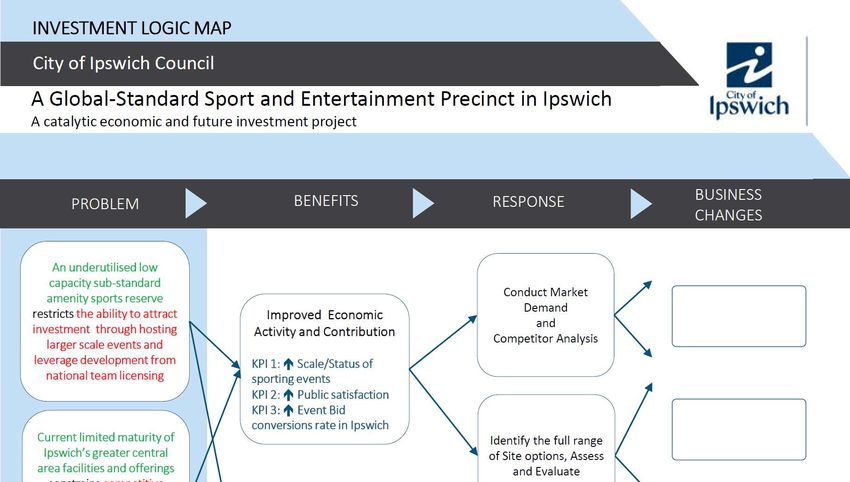
STRATEGIC BUSINESS CASE

         6.2      Current Stadium Concept .............................................................................................................47
7        RISK ASSESSMENT .............................................................................................................................48
         7.1 Purpose and Types of Risks ........................................................................................................48
         7.2 Approach ......................................................................................................................................48
         7.3 Risk Register ................................................................................................................................49
8        PRELIMINARY BUSINESS CASE PLANNING ....................................................................................51
         8.1 Aim of the Preliminary Business Case .........................................................................................51
         8.2 Preliminary Business Case Timeframes and Milestones .............................................................51
              8.2.1 Preliminary Business Case Activities .............................................................................51
              8.2.2 Risk Management in the PBC.........................................................................................53
9        ASSURANCE .........................................................................................................................................54
10       CONCLUSIONS AND RECOMMENDATIONS .....................................................................................55
         10.1 Key Findings of the Strategic Business Case ..............................................................................55
         10.2 Conclusions ..................................................................................................................................56
         10.3 Recommendations .......................................................................................................................56
Benefit REGISTER ..........................................................................................................................................59

Tables
Table 1 Ipswich City Council Policies and Priorities .........................................................................................14
Table 2 Queensland Government Policies and Priorities .................................................................................15
Table 3 Australian Government Policies and Priorities ....................................................................................16
Table 4 Participation in Sport, Children and Adults, by Sport, Queensland, 2018 ...........................................23
Table 5 Case Study Stadium Profiles, 2019 .....................................................................................................31
Table 6 Identified Benefits, Global-Standard ....................................................................................................42
Table 7 North Ipswich Reserve Stadium Concept Analysis and Assessments................................................45
Table 8 Risk Descriptors...................................................................................................................................48
Table 9 Likelihood and Consequences Risk Assessment................................................................................49
Table 10 Risk Register .....................................................................................................................................50
Table 11 Preliminary Business Case Workstreams .........................................................................................52
Table 12 Benefits Register ...............................................................................................................................59

Figures
Figure 1 North Ipswich Reserve Stadium Concept ............................................................................................4
Figure 2 Building Queensland Business Case Purpose .....................................................................................5
Figure 3 Building Queensland Business Case Development Framework..........................................................6
Figure 4 Historical and Projected Population, Ipswich LGA, 2006 to 2041 ........................................................8
Figure 5 SEIFA Indices, Ipswich LGA, Compared to Australia (1000), 2011 and 2016 .....................................9
Figure 6 Share of Employment, by Industry by Place of Work, Ipswich LGA, 2016 ........................................11
Figure 7 Tourism Share of Industry Gross Value Added, Ipswich LGA and Queensland, 2017/18.................11
Figure 8 Sports Precinct, North Ipswich Open Space Master Plan ..................................................................13
Figure 9 Existing, Planned and Proposed Venues, SEQ Olympics 2032 Bid .................................................21
Figure 10 Ipswich Venues, SEQ Olympics 2032 Bid .......................................................................................22
Figure 11 Age Profile, Ipswich LGA and Queensland, 2018 ........................................................................23
Figure 12 Average Attendance Levels, Rectangular Field Football Codes, Sample Fixtures/Events
             in 2019 ..........................................................................................................................................24
Figure 13 Visitors to Ipswich, by event/activity, 2011 to 2019 ..........................................................................25
Figure 14 Stadium Ownership, Major Stadium Venues across Australia, as of 2018 ......................................26
Figure 15 Stadium Utilisation Levels, Select Stadiums, Australia ....................................................................27

PR143741-1 | A GLOBAL-STANDARD SPORT & ENTERTAINMENT PRECINCT IN IPSWICH | FINAL | February 2020
                                                                                                                                                        Page iv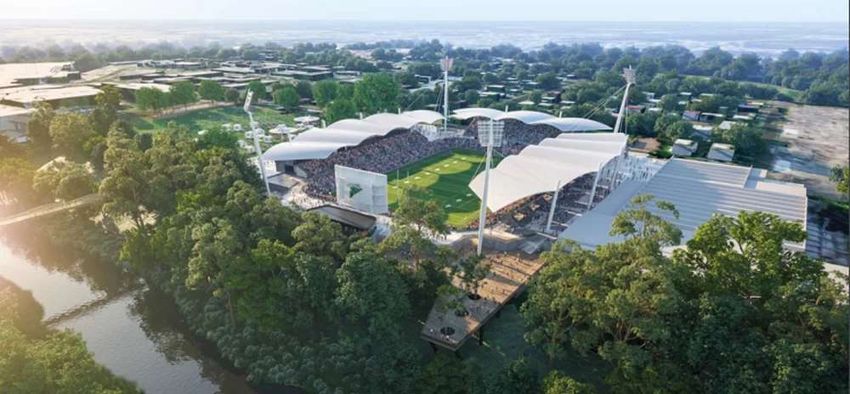
STRATEGIC BUSINESS CASE

Figure 16 Australian Regions, by Population and Stadium/Franchise Coverage ............................................29
Figure 17 Key Lessons from Case Study Stadiums .........................................................................................36
Figure 18 A Global-Standard Sport and Entertainment Precinct in Ipswich, Strategic Business Case
            Investment Logic Map ..................................................................................................................39

Appendices
Appendix A Benefits Register ...........................................................................................................................58

PR143741-1 | A GLOBAL-STANDARD SPORT & ENTERTAINMENT PRECINCT IN IPSWICH | FINAL | February 2020
                                                                                                                                                 Page v
STRATEGIC BUSINESS CASE
EXECUTIVE SUMMARY
This report represents the Strategic Business Case by Ipswich City Council for a Global Standard Stadium
and Entertainment Precinct at the North Ipswich Reserve.
The concept of a national standard rectangular stadium for the Ipswich region has a long and extensive
history, dating back to 2004 reviews of sporting facility requirements. This Strategic Business Case builds
upon previous research, concepts, stakeholder engagement and planning.
Context and Need
The Stadium concept recognises the role of Ipswich as a growth area in SEQ, as the anchor of the wider
Western sub-region and home to a young population demographic in a city with a long and cherished
sporting history.
Recent feedback on both NRL and A-League national sporting franchise bids have indicated the lack of a
Tier 2 national standard rectangular stadium as a constrain to otherwise strongly supported
applications. Ipswich has been consistently identified nationally by both leagues as a destination of choice
for a new national franchise.
The stadium concept is not only required to support a national franchise but is also identified as a planned
facility in the SEQ 2032 Olympics Feasibility Study by Council of Mayors SEQ, which was endorsed and
accepted by the Queensland and Federal Governments in December 2019.
Finally, the stadium concept is required to meet the needs of a growing critical mass of residents in the
City and wider Western sub-region, meeting the requirements and criteria of the Stadiums Taskforce.
Case study analysis as well as research into stadia best practice confirm the need to progress the stadium
concept as part of an integrated entertainment precinct that helps to delivery the North Ipswich Open
Space Master Plan as well as realise the potential of sport, tourism and entertainment to generate positive
returns to the community and economy.
Investment Logic Map and Benefits
The Project Investment Logic Mapping Workshop, facilitated by Rukus Consulting involved senior executive
representatives of Council. The result of the Workshop was a preliminary Investment Logic Map which
established and reinforced the logic for the proposed global standard stadium and entertainment
precinct at North Ipswich.
A diverse range of quadruple bottom line benefits of the project were identified in the Business Case
for the project. These include:
Increased Non-Residential Rates Revenue to Council;
Positive Cash Flows from the Successful Operation of the Centre;
Improved Economic Activity and Contribution;
Major Project Construction Activity;
Local Employment Generation;
Enhanced Economic and Investment Brand for Ipswich;
Leveraged Investment in Transport Infrastructure;
Increased Social Pride and Capital;
PR143741-1 | A GLOBAL-STANDARD SPORT & ENTERTAINMENT PRECINCT IN IPSWICH | FINAL | February 2020
Page 1
STRATEGIC BUSINESS CASE
Local Event Offering;
Improved Liveability;
North Ipswich Open Space Master Plan Implementation;
Improved Access to the Bremer River;
Social and Community Facility Enhancement;
Increased Youth Engagement and Civic Participation;
Socio-Economic Revitalisation;
Improved Transport Choice to Ipswich Central;
Increased Public Transport Usage to Major Events in Ipswich;
Incorporation of Passive and Green Energy Options; and
Bremer River North Bank Environmental Remediation.
A likelihood and consequences based risk assessment confirmed a number of Medium and High risks
associated with the project, namely involving the relationship between the concept and required public and
pedestrian transport infrastructure investment, environmental remediation work and general stadium
performance and activation issues. All risks have appropriate mitigation actions.
Conclusions
The research, analysis and assessments within this Strategic Business Case confirm that the concept of a
Global-Standard Sport and Entertainment Precinct in Ipswich has merit and is founded on a robust,
evidence-based rationale. A latent opportunity to elevate Ipswich through the attraction and retention of a
national sporting franchise in rugby league and/or football (soccer) exists and is likely to realise in the short-
to-medium term if a commitment is made to major regional outdoor stadium capacity of 20,000-25,000 seats.
There are a number of risks identified with the specific concept, particularly the need for investment in public
and pedestrian transport to realise the full potential of the Global-Standard Sport and Entertainment Precinct.
However, such investment will likely be required in the medium term in response to the extensive population
growth in Ipswich and the wider western sub-region is realised.
Recommendations
It is recommended that Ipswich City Council progress to the preparation of a Preliminary Business
Case for under the Queensland Government’s Project Assessment Framework and Building Queensland’s
Business Case Development Framework.
The Preliminary Business Case development should note that:
The Global-Standard Sport and Entertainment Precinct is aiming to achieve the following objectives:
– Attract and support a national sporting franchise to anchor the proposed stadium component;
– Hosting non-sporting events to maximise stadium utilisation;
– Integrate the Precinct with Ipswich CBD, other aspects of the North Ipswich Open Space Master
Plan area and key public and pedestrian transport infrastructure;
– Generate increased employment opportunities in the inner city of Ipswich; and
PR143741-1 | A GLOBAL-STANDARD SPORT & ENTERTAINMENT PRECINCT IN IPSWICH | FINAL | February 2020
Page 2
STRATEGIC BUSINESS CASE
– Diversify local economic activity.
Any new stadium development in Ipswich must be considered as part of a wider sport and
entertainment precinct;
The precinct should be targeted at meeting global standards, particularly if SEQ is successful in
securing the 2032 Olympics;
Previous analysis has indicated a number of potential locations for a stadium development within
Ipswich, with the North Ipswich Reserve consistently identified as a preferred location. Consideration
should be given to a number of potential sites as part of the Options development and Cost Benefit
Analysis in the Preliminary Business Case;
Stadium staging is a key success factor of stadium developments nationally; and
The Preliminary Business Case is an optimal time for Council to re-engage with stakeholders and the
general community regarding the development of the Global-Standard Sport and Entertainment
Precinct, ensuring the continued relevance of previous comprehensive consultation and engagement
efforts dating back to 2000.
PR143741-1 | A GLOBAL-STANDARD SPORT & ENTERTAINMENT PRECINCT IN IPSWICH | FINAL | February 2020
Page 3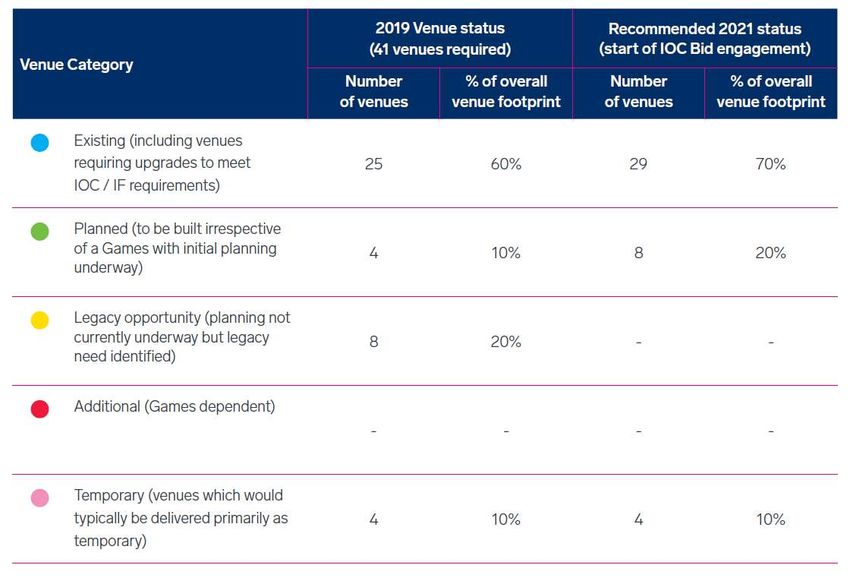
STRATEGIC BUSINESS CASE

1          INTRODUCTION
This section provides scope and context for the Strategic Business Case for a Global-Standard Sport and
Entertainment Precinct in Ipswich.

1.1        Broad Project Concept
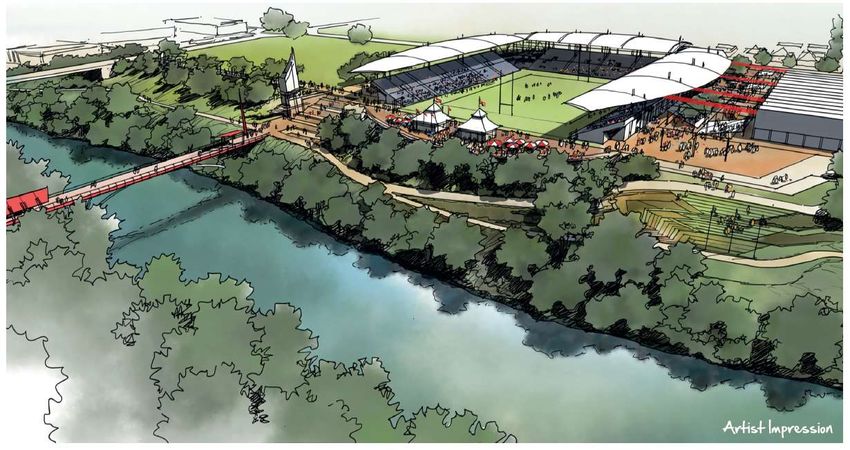
Ipswich City Council is seeking to facilitate the establishment of a sport and entertainment precinct of a
global standard in Ipswich (The Project).

The North Ipswich Reserve (54 The Terrace, North Ipswich QLD 4305) has been identified in previous
research and stakeholder engagement as the preferred location for a stadium-centric sport and
entertainment precinct, supporting an Ipswich-based National Rugby League and/or A-League franchise.

                               Figure 1 North Ipswich Reserve Stadium Concept

1.2        Strategic Business Case Methodology
A Strategic Business Case is the first document in the business case suite of the Building Queensland
Business Case Development Framework (BCDF). It aims to ensure the problems and service need are
substantiated and effectively articulated and that the benefits sought are likely to be achieved through the
proposed initiatives. Furthermore, completing a robust Strategic Business Case underpins the integrity of the
deliverables under the future stages of the BCDF, being a Preliminary Business Case (PBC) and Detailed
Business Case (DBC) which progressively fine tune the options.

The development of this Strategic Business Case has been led by Ipswich City Council because Council
considers the Project as potentially transformational and catalytic to the Ipswich economy and urban form
and will generate employment and community welfare benefits.

The delivery of new stadia and sport and entertainment precincts generally have long been a tripartite
responsibility of Local, State and Federal Governments. Major regional and nationally significant stadia are
recognised contributors to local and national economies, driving both local revitalisation and economic
dynamism as well as providing much needed modern capacity for attracting international visitors from around
the world.

The purpose of a Strategic Business Case is to conceptualise the Project, articulate service needs and
identify intended benefits. In short, a Strategic Business Case should establish the “why” of a Project.
Questions of “what” and “how” are explored and answered in subsequent Business Cases.

PR143741-1 | A GLOBAL-STANDARD SPORT & ENTERTAINMENT PRECINCT IN IPSWICH | FINAL | February 2020
                                                                                                             Page 4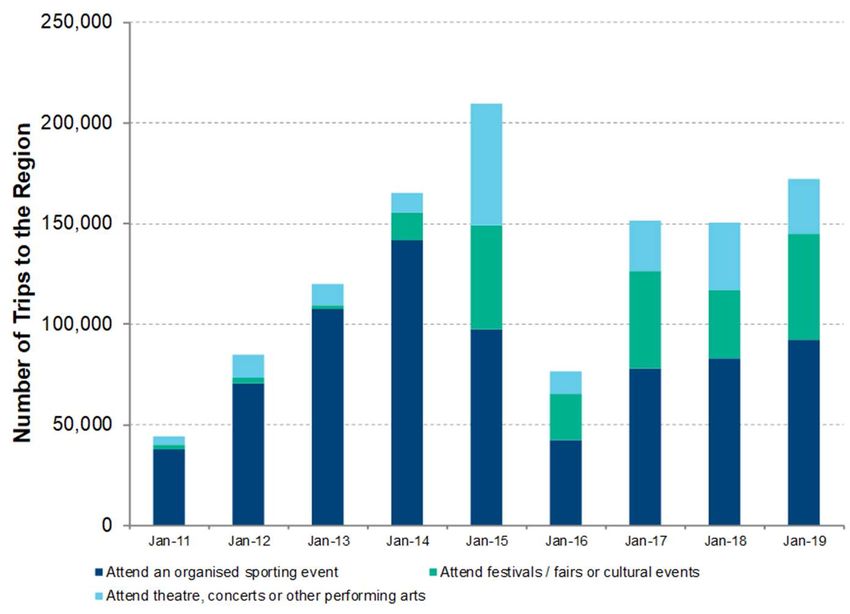
STRATEGIC BUSINESS CASE
Figure 2 Building Queensland Business Case Purpose
At the time this Strategic Business Case was being completed, Council had proceeded to market for the
preparation of a Preliminary Business Case for the project in line with Building Queensland Guidelines.The
decision to progress to a Preliminary Business Case was announced by Council in September 20191.
1.3 Analysis to Support the Strategic Business Case
This Strategic Business Case builds upon a comprehensive history of research and analysis, as well as
supporting stakeholder engagement activity, design, policy, planning and strategy activities by and for
Ipswich City Council.
Key supporting analysis includes:
Report on a Major Regional Outdoor Sports Stadium | 2004
Ipswich Regional Centre Strategy Master Plan | 2008
North Ipswich Reserve Stadium Business Plan | 2009
Ipswich Rectangular Stadium Location Analysis | 2011/12
Ipswich Woollen Mills Conservation Management Plan | 2016
Queensland Woollen Mill North Terrace Revitalisation Plan Concept Design | 2016
North Ipswich Open Space Master Plan Report | 2017
This analysis includes both contextual reports and research, as well as assessments specifically related to
the Project itself.
1
As report in Ipswich First, entitled Council progresses North Ipswich Reserve Stadium plan accessed at
https://www.ipswichfirst.com.au/council-progresses-north-ipswich-reserve-stadium-plan/
PR143741-1 | A GLOBAL-STANDARD SPORT & ENTERTAINMENT PRECINCT IN IPSWICH | FINAL | February 2020
Page 5STRATEGIC BUSINESS CASE
1.4 Guidance for Development of this Strategic Business Case
In addition to the Building Queensland BCDF, this Strategic Business Case has been developed in
accordance with the requirements and guidance material under:
Queensland Treasury’s Project Assessment Framework (PAF);
Building Queensland’s Cost Benefit Analysis Guide – Supplementary Guidance (December 2016);
Building Queensland’s Social Impact Evaluation Guide – Supplementary Guidance (December 2016);
and
Infrastructure Australia’s Assessment Framework.
Figure 3 Building Queensland Business Case Development Framework
1.5 Governance Arrangements for this Strategic Business Case
Governance arrangements have been established for Strategic Business Case to guide and inform decision-
making and to facilitate a transparent and accountable reporting framework. The Project Owner for this
phase is Ipswich City Council, represented by Andrew Hornery, Planning Officer (Built Environment),
Infrastructure and Environment Department.
RPS are the primary authors of the Strategy Business Case responsible for the compilation of all evidence
and analysis within the Business Case document in partnership with Ipswich City Council.
PR143741-1 | A GLOBAL-STANDARD SPORT & ENTERTAINMENT PRECINCT IN IPSWICH | FINAL | February 2020
Page 6STRATEGIC BUSINESS CASE
1.6 Strategic Business Case Structure
This Strategic Business Case is comprised of the following key sections:
Introduction – overview of the methodology, governance and structure of the Strategic Business Case;
Project Context – summary of background service needs, strategic priorities, issues and impacts
requiring Government intervention and the importance of taking action;
Service Need – overview of the need for the Project and associated services including Investment
Logic Mapping outcomes;
Preliminary Stakeholder Analysis – summary of previous and recent stakeholder analysis undertaken
as part of the development of the Strategic Business Case;
Benefits Sought – outline of the benefits sought for the Project (including Benefits Register in Appendix
A);
Proposed Initiative – summary of previous and recent design and conceptualisation work for the North
Ipswich Reserve Stadium concept and its alignment with service need and benefits identification and
analysis;
Risk Assessment – outlined of potential Strategic Responses and Potential Initiatives for further
examination;
Preliminary Business Case Planning – Outlined of Preliminary Business Case requirements and
directions;
Assurance – outline of the Gateway and assurance process for future Business Cases;
Conclusions and Recommendations – summary of the conclusions reached in the Strategy and
recommendations on the progression of the project to the Preliminary Business Case phase.
1.7 Glossary and Abbreviations
The following terms and abbreviations are utilised throughout the Business Case.
Term/Abbreviation Description
BCDF Business Case Development Framework
DBC Detailed Business Case
ICC Ipswich City Council
ICN Industry Capability Network
ILM Investment Logic Map
FFA Football Federation Australia
LGA Local Government Area
NRL National Rugby League
PAF Project Assessment Framework
PBC Preliminary Business Case
SBC Strategic Business Case
SEQ South East Queensland
SEIFA Socio-Economic Index for Advantage
PR143741-1 | A GLOBAL-STANDARD SPORT & ENTERTAINMENT PRECINCT IN IPSWICH | FINAL | February 2020
Page 7STRATEGIC BUSINESS CASE
2 PROJECT CONTEXT
This section provides context for the proposed Project.
2.1 Background on Service Needs and Issues
This Strategic Business Case addresses economic and social needs and opportunities within the Ipswich
City Council region, leveraging an extensive local history in sport to catalyse investment, urban regeneration
and economic prosperity and dynamism. The area of interest is focussed on the Ipswich City Council Local
Government Area (LGA) which is located approximately 42km kilometres west of the State’s capital,
Brisbane and covers an area of 1,204 sq.km.
2.1.1 One of Australia’s Fastest Growing Regions
Ipswich is recognised as one of Australia’s fastest growing regions. In 2018, the City of Ipswich had a
population of over 213,000 people. This is expected to grow and accelerate over the next 20+ years,
doubling by 2035 and approaching 550,000 people by 2041.
600,000
500,000
400,000
Population
300,000
200,000
100,000
0
2006
2008
2010
2012
2014
2016
2018
2020
2022
2024
2026
2028
2030
2032
2034
2036
2038
2040
Historical Projected
Figure 4 Historical and Projected Population, Ipswich LGA, 2006 to 20412
This growth is being driven by a combination of the intensification and development of established parts of
the City, coupled with strong new residential growth along the “Centenary Highway Corridor” including major
developments such as Springfield and Ripley.
Ipswich is the anchor of a wider residential and economic sub-region in the western part of South East
Queensland. According to ShapingSEQ: South East Queensland Regional Plan 2017, the Western Sub-
Region (including Ipswich, Lockyer Valley, Somerset, Scenic Rim and urban parts of Toowoomba) was home
to almost 440,000 residents (or almost 2.5 times that of Ipswich LGA alone) in 2016, growing to 861,000 by
2041. This wider sub-region represents the secondary catchment of services and facilities based in Ipswich
and represents an integrated socio-economic structure within the wider SEQ region.
South East Queensland (SEQ) is also the most rapidly growing part of the State. The region contains 3.5
million people and is easily the most populated part of Queensland, which contains 5 million residents overall
2
ABS (2019) Estimated Residential Population Cat No. 3218.0, Australian Bureau of Statistics, Canberra and
PR143741-1 | A GLOBAL-STANDARD SPORT & ENTERTAINMENT PRECINCT IN IPSWICH | FINAL | February 2020
Page 8STRATEGIC BUSINESS CASE
in 2018. The SEQ region is growing at about 2.2% per annum3, faster than the State as a whole (1.7% per
annum) 4. As a result, both SEQ and Queensland are becoming more central to the growth and prosperity of
Australia with each year.
2.1.2 Need for Socio-Economic Intervention
The Ipswich region has experienced a significant improvement in local household socio-economics and
residential quality of life in recent years. However, according to indexes from the ABS Census periods, the
socio-economic improvements in Ipswich have grown slower than the broader socio-economic trends for
Australia as a whole. This is reflected in the Socio-Economic Index for Advantage (SEIFA) and associated
sub-indices – composite indices that provide an overview of the socioeconomic and equity characteristics of
the region.
Overall, Ipswich continues to have a below average level of socio-economics in the population, which has
worsened relative to Australia. All major SEFIA indices experience a decline against the national average
between 2011 and 2016, the exception being the Index of Education and Occupation (i.e. skills) indicating
that Ipswich workers are upskilling at a faster rate than Australia as a whole.
1,060
2011 2016 Aust
1,040
1,020
1,000
Index (Aust=1000)
980
960
940
920
900
880
860
Index of Relative Index of Relative Index of Economic Index of Education
Socio-economic Socio-economic Resources and Occupation
Advantage and Disadvantage
Disadvantage
Figure 5 SEIFA Indices, Ipswich LGA, Compared to Australia (1000), 2011 and 20165
However, these indices are not necessarily representative of the socio-economic composition of Ipswich.
While the region continues to have pockets of more structurally disadvantaged households, the prevailing
driver of lower socioeconomic indices is the continued younger age profile of the region. While Australia and
Queensland as a whole are experiencing rapid ageing, Ipswich continues to be an overwhelmingly young
region, with above average shares of population aged below 456. Younger households are more likely to
3
id Profile (2019) Population, Australia, accessed at https://profile.id.com.au/australia/population-estimate?WebID=330
4
QGSO (2019) Population Growth Highlights and Trends Qld 2019, Queensland Government Statisticians Office, Queensland
Government, accessed at http://www.qgso.qld.gov.au/products/reports/pop-growth-highlights- trends-qld/pop-growth-highlights-trends-
qld-2019-edn.pdf
5
ABS (2018) Census of Population and Housing: Socio-Economic Indexes for Areas (SEIFA), Australia, 2016, Cat No. 2033, Australian
Bureau of Statistics, Canberra
6
ABS (2019) Population by Age and Sex, 2018 Cat No 3235.0 Australian Bureau of Statistics, Canberra
PR143741-1 | A GLOBAL-STANDARD SPORT & ENTERTAINMENT PRECINCT IN IPSWICH | FINAL | February 2020
Page 9STRATEGIC BUSINESS CASE
include fewer workers (with a higher chance of households having one parent not in the workforce due
parenting responsibilities) and workers are more likely to be in the early stages of their respective careers.
Despite this, new residents and workers are better educated and more skilled than 5 years earlier,
suggesting that the region may experience an acceleration in overarching socio-economic status in the future
as these workers and households mature. However, this will be contingent on new workers and households
having access to a diverse range of high-quality employment opportunities, underpinned by a dynamic and
prosperous economy.
2.1.3 Economic Potential
The City of Ipswich is a connected community, full of ideas, energy and innovation. Leading the way means
embracing new ways of working, new ways of learning and new ways of living. Ipswich is open for business
and actively encourages growth, investment and strategic repositioning.
The Ipswich economy is underpinned by regionally significant health and education capacity (including
private and public hospitals and university campuses), which represent two of the largest employing sectors
in the economy. This is being supported by current and proposed investments in the health and education
sectors including:
$178m Stage 1a redevelopment of Ipswich Hospital, including new mental health, MRI, community
health and health administration capacity7; and
$64m in private investment is funding the construction of new facilities at St Andrews Hospital in the
Ipswich health precinct, which will in turn attract new specialists and new healthcare professionals to the
city8.
Additionally, Ipswich remains a major industrial and manufacturing hub in SEQ, with 1 in 8 jobs in Ipswich in
2016 in the manufacturing sector. Growth in manufacturing and industrial activity in Citiswitch Industrial Park
on the Warrego Highway is complementing existing clusters of activity in the South West Industrial Gateway.
Ipswich also leverages its role as a regional service hub for the wider Western sub-region of SEQ, helping to
drive retail and public administration and safety as major employing sectors.
Future growth in these sectors will be complemented and supported by the $150m redevelopment of the
Ipswich Mall. This will include a new Council administration building, a new library, an open space hosting
major public events, markets, artisans and food experiences will revitalise the city’s heart9.
7
BQ (2019) Ipswich Hospital Redevelopment Stage 1a Detailed Business Case Summary accessed at
http://buildingqueensland.qld.gov.au/wp-content/uploads/2019/11/Ipswich_Hospital_Redevelopment_CBA_summary.pdf
8
ICC (2019) Attraction and Investment accessed at https://www.ipswich.qld.gov.au/business/business-attraction-and-investment
9
ICC (2019) Attraction and Investment accessed at https://www.ipswich.qld.gov.au/business/business-attraction-and-investment
PR143741-1 | A GLOBAL-STANDARD SPORT & ENTERTAINMENT PRECINCT IN IPSWICH | FINAL | February 2020
Page 10STRATEGIC BUSINESS CASE
Health Care and Social Assistance
Manufacturing
Retail Trade
Education and Training
Public Administration and Safety
Accommodation and Food Services
0% 4% 8% 12% 16%
Share of Employment
Queensland Ipswich
Figure 6 Share of Employment, by Industry by Place of Work, Ipswich LGA, 201610
Despite this, the major economic sector of tourism is under-represented in Ipswich compared to other
regionally significant economies in South East Queensland. Accommodation and Food Services account for
a below average share of local employment while data from the Tourism Satellite Account for Ipswich shows
the sector contributes on 2.1% to local industry Gross Value Added, less than a third of tourism’s contribution
to the Queensland economy in 2017/18 (at 6.6%)11. This reinforces the current role and function of Ipswich
as a regional service centre for the Western Sub-Region of SEQ, rather than an outwardly focused service
economy attracting visitors from around Australia and the world.
7%
6.6%
6%
Share of Industry Gross Value Added
5%
4%
3%
2.1%
2%
1%
0%
Ipswich (C) Queensland
Figure 7 Tourism Share of Industry Gross Value Added, Ipswich LGA and Queensland, 2017/18
10
ABS (2017) Census of Population and Housing 2016, Australian Bureau of Statistics, Canberra
11
ID (2019) Economy.ID – Ipswich: Tourism Satellite Account 2017/18, accessed at https://economy.id.com.au/ipswich/tourism-value
PR143741-1 | A GLOBAL-STANDARD SPORT & ENTERTAINMENT PRECINCT IN IPSWICH | FINAL | February 2020
Page 11STRATEGIC BUSINESS CASE
2.1.4 Sport as an Economic Driver
Sport and Recreation are increasingly recognised as major drivers of the Queensland and Australian
economy. The Queensland Sport and Active Recreation Strategy 2019-2029 Discussion Paper
acknowledges that:
Tourism generated by major sporting events is also significant. Spectators, competitors,
officials and journalists at these events mainly represent new visitors to Queensland. The
events themselves also create employment and regeneration for the destination. Outdoor
recreation and nature-based tourism all benefit local economies, so we need to invest in
active and outdoor recreation as well as organised sport.12
Similarly, the Queensland Government’s Our Active8! 2019-2022 Activate! Queensland Action Plan
establishes the following success factor:
Invest in public infrastructure that benefits the broader visitor economy and improves
community experience including precincts of importance and sport infrastructure. 13
The most recent estimate of the value of sport in Australia was the analysis by the Boston Consulting Group
in 2017 for the Australian Sport Commission. The report entitled; Intergenerational Review of Australian
Sport 2017 found that sport contributes:
$12b is spent annually on sport and sports infrastructure;
Contributes $39b to the Australian economy or 2-3% of Australian GDP;
Employs over 220,000 people; and
Draws on the support of over 1.8 million volunteers (worth $3b annually)14.
2.1.5 Revitalising North Ipswich
North Ipswich possesses a diverse range of revitalisation and redevelopment opportunities that leverage the
natural amenity of the Bremer River, extensive riparian open space and the proximity of the suburb to both
the proposed Ipswich CBD redevelopment and local cultural and historical heritage assets.
The North Ipswich Open Space Master Plan, prepared by Ipswich City Council in 2018, sets out the vision
and intent to guide future design and development of key open space along the Bremer River.
Over a number of years Council has been securing key sites along both sides of the Bremer, to realise a
greater vision of opening the city back up to the Bremer River and establishing a vibrant public linear open
space network.
The North Ipswich Reserve is part of a key precinct – the Sports Precinct – of the North Ipswich Open Space
Master Plan, which includes the collocation of a Stadium with a community oval and redevelopment of the
Woollen Mills. The Sport Precinct is the closest Precinct to the Ipswich CBD and major public transport
12
HPW (2018) Queensland Sport and Activate Recreation Strategy 2019-2029 Discussion Paper accessed at
https://www.hpw.qld.gov.au/__data/assets/pdf_file/0015/6225/discussionpaperqueenslandsportactiverecreationstrategy.pdf
13
HPW (2018) Queensland Government’s Our Active8! 2019-2022 Activate! Queensland Action Plan
https://www.hpw.qld.gov.au/__data/assets/pdf_file/0021/6177/active8sportrecreationstrategyactionplan.pdf
14
Boston Consulting Group 2017), Intergenerational review of Australian sport 2017. Australian Sports Commission, Canberra
accessed at
https://www.clearinghouseforsport.gov.au/__data/assets/pdf_file/0009/752733/Intergenerational_Review_of_Australian_Sport_2017.pd
f.
PR143741-1 | A GLOBAL-STANDARD SPORT & ENTERTAINMENT PRECINCT IN IPSWICH | FINAL | February 2020
Page 12STRATEGIC BUSINESS CASE
infrastructure, and is expected to be the largest attractor of visitors (both local and interstate/international
across the wider Master Plan area.
Figure 8 Sports Precinct, North Ipswich Open Space Master Plan
The delivery of the Sports Precinct is therefore a critical component of the implementation and realisation of
the North Ipswich Open Space Master Plan. Implementing the master plan will revitalise inner city Ipswich,
create a high amenity destination of choice within the Ipswich region and improve the attractiveness of the
location and wider city to new residents, business and investors alike.
2.2 Strategic Priorities
While the Project has the potential to address structural and demographically driven socio-economic
imbalances in the Ipswich community, it more importantly represents a positive and proactive economic
development opportunity that will catalyse the inner city of Ipswich and diversify the regional and SEQ
economies.
The following sections describe the relevant policies and priorities of all three spheres of government relating
to community development and economic growth of the Ipswich region. These policies and priorities have
driven the core analysis presented in this Strategic Business Case, including:
providing guidance in ensuring an investment in global-standard sport and entertainment facilities in
Ipswich aligns with key policies and frameworks from all levels of government, as presented in this
section;
identifying and assessing problems and service needs that in turn provide the foundation for identifying
the benefits sought, project objectives and potential initiatives to these problems and service needs; and
defining and assessing potential initiatives that may address the identified problems.
PR143741-1 | A GLOBAL-STANDARD SPORT & ENTERTAINMENT PRECINCT IN IPSWICH | FINAL | February 2020
Page 13STRATEGIC BUSINESS CASE
2.2.1 Alignment with Ipswich City Council Policies and Priorities
The following table summarises the key policies and priorities of Ipswich City Council and their relationship to
the proposed Project.
Table 1 Ipswich City Council Policies and Priorities
Document Description Strategic Priorities
Council’s Corporate Plan 2017-2022 sets Goal 1 – Strengthening Our Local Economy
the strategic direction for the city. Whilst and Building Prosperity (Jobs)
Advance Ipswich (the Plan) is a shared Goal 2 – Managing Growth and Delivering
vision with the community, the Corporate Key Infrastructure
5 Year Corporate Plan,
Plan enjoys the title of ‘Making it Happen’.
Ipswich City Council Goal 3 – Caring for Our Community
Combined with other strategic Council
documents, Council allocates resources Goal 4 – Caring for Our Environment
over a 5 year period to achieve specific Goal 5 – Listening, Leading and Financial
outcomes. Management
The City of Ipswich Destination
Management Plan aligns with the
complimentary development of attractions Priority actions include:
and activities as described in the Brisbane Investment, Planning and Advocacy;
City of Ipswich Visitor Economy 2014–2020 of doubling the Attractions and Experience;
Destination value of tourism by 2020.The Destination
Tourism Industry Cluster Development;
Management Plan, Management Plan is a critical part of the
2019-2023 overarching Economic and Workforce Events;
Development Plan which prescribes the path Marketing; and
to deliver quality corporate services, profiling Transport and Access.
the growth for the City of Ipswich and
measure development of key industries.
The Office of Economic Development (OED) A series key industry sectors have been
is a driver, facilitator and catalyst for identified by OED and Council:
economic development in the City of Energy and environment;
Ipswich. The mission of the OED is to attract
Ipswich City Council new business and investment, and build Food and agribusiness;
Office of Economic industry capability to compete locally, Defence and aerospace;
Development, nationally, and internationally, creating Advanced manufacturing;
better jobs for more people. The guiding Education and training;
vision over the next 25 years is to grow in
excess of 100,000 local jobs across the Transport and logistics; and
city’s key industry sectors. Property and construction.
The City of Ipswich is the second-oldest
local government area in Queensland after Key focus areas of the “City of Sport”:
Brisbane and also Queensland’s fastest Major Event Hosting;
growing city. With its rich, well-preserved Athlete Training Destination;
City of Sport, Ipswich heritage and burgeoning culture of
Sporting Stars and Accolades;
City Council innovation, Ipswich is renowned not only as
one of the world’s most intelligent and Superior Sporting Facilities;
liveable communities, but also as a region of Sports Science Expertise; and
spectacular natural beauty and open Open Spaces and Natural Environment.
spaces.
The North Ipswich Open Space Master Plan There are a number of key objectives that have
is a consolidation of various individual guided the NIOSMP focussed around the
studies and specialist, technical input following key areas:
concerning the planning and design of the
Connected linear Open Space Network;
Open Space network on the north banks of
North Ipswich Open the Bremer River. Integrated Pedestrian & Cycle Network;
Space Master Plan The North Ipswich Open Space Master Plan Unlocking Key Community Development
(NIOSMP) will sets strategic direction for the Sites;
future sustainable development of the Open Integration of a signature Sports Precinct;
Space network on the banks of the Bremer Public Transport;
River, with consideration to the opportunities
Vehicle Connectivity; and
for key sites such as the Woollen Mill, Boral
PR143741-1 | A GLOBAL-STANDARD SPORT & ENTERTAINMENT PRECINCT IN IPSWICH | FINAL | February 2020
Page 14STRATEGIC BUSINESS CASE
Document Description Strategic Priorities
Hancock Site (former) , Ipswich Rail Yards Protecting and enhancing the banks of the
and Sports Precinct. Bremer River.
Over a number of years Ipswich City Council
(ICC) has been securing key sites along
both sides of the Bremer, to realise a greater
vision of opening the city back up to the
Bremer River and establishing a vibrant
public linear open space network.
The Project aligns with a number of Council’s key policies and priorities. It is an anchor activity of the North
Ipswich Open Space Master Plan, will help to strengthen the local economy and build prosperity, will
reinforce and elevate Ipswich’s profile as a City of Sport and will help to diversify the economy.
2.2.2 Alignment with Queensland Government Policies and Priorities
The Queensland Government plays a central role in sports stadium and facilities planning, investment and
operation. Additionally, the State Government is one of the primary economic development agencies and
proponents in the State. Key policies and priorities of the Queensland Government are listed below.
Table 2 Queensland Government Policies and Priorities
Document Description Strategic Priorities
Recognising the need to sustainably
manage the region’s growth, the
Queensland Government through the 2017
South East Queensland Regional Plan
(ShapingSEQ) set clear directions for the
future development of Ipswich and the
Western Sub-Region. ShapingSEQ Grow – sustainability accommodating a
identifies the need for balanced and growing population
managed growth including setting targets for Prosper – a globally competitive economic
Queensland consolidated (i.e. infill development) and
Government’s South powerhouse
expansion (i.e. greenfield) development.
East Queensland This includes an additional 111,700 Connect – moving people, products and
Regional Plan – dwellings in Ipswich and 167,572 dwellings information efficiently
Shaping SEQ 2017 across the wider Western Sub-Region to Sustain – promoting ecological and social
2041. sustainability
Ipswich is recognised as an emerging Live – living in better designed communities
Regional Economic Cluster and Clustering
around the Ipswich regional activity centre
includes priority sectors of commercial and
professional services, health and tertiary
education complemented by a retail and
civic heart.
The State Infrastructure Plan (SIP) sets out
the Queensland Government’s strategic The SIP outlines the following four objectives to
direction for infrastructure by identifying guide infrastructure priorities:
State Infrastructure
Plan (Department of what is required from infrastructure improving prosperity and liveability;
State Development, (objectives) and how these objectives can infrastructure that leads and supports
Manufacturing, be best achieved (directions). These growth and productivity;
Infrastructure and objectives and directions seek to address infrastructure that connects communities
Planning) 2016 the high-level challenges Queensland will and markets; and
face over coming decades.
improving sustainability and resilience
In April 2018, the Stadium Taskforce (the
Taskforce), chaired independently by This Final Report indicates that taxpayers and
Stadium Task force experienced sports administrator John Lee, the Queensland Government will receive the
Report 2018/19 began a review of SQ. The Taskforce was maximum benefit from investment in stadiums
established to investigate hirer concerns by focusing on:
associated with the cost of hiring SQ
PR143741-1 | A GLOBAL-STANDARD SPORT & ENTERTAINMENT PRECINCT IN IPSWICH | FINAL | February 2020
Page 15STRATEGIC BUSINESS CASE
Document Description Strategic Priorities
venues, primarily on the Gold Coast and to community expectations associated with
undertake a review of SQ’s and Queensland ticket and food prices,
Government’s management and planning for community access and ensuring a home for
stadiums. our national sporting teams,
The Taskforce has identified that there is no management to ensure proper maintenance
immediate need for the development of any and upgrades for events and usage,
new stadiums in Queensland. The five
stadium assets held by SQ each have effective management of hirers
capacity to host additional one-off and expectations,
regular events, including new sporting venue specific considerations,
franchises in south east Queensland. future infrastructure needs, and
There is significant potential for the existing governance arrangements and financial
SQ venue portfolio to remain relevant and sustainability of SQ.
useful for the next 20 years in Queensland
subject to moderate mid-lifecycle capital
investment. This maintain, enhance and
maximise use policy approach to capital
investment is significantly cheaper for the
taxpayer than the option of building new
venues.
Ipswich plays a central and prominent role in the SEQ economy and is a residential destination of focus and
choice in the medium-term. It also anchors an extensive peri-urban region that hosts over 860,000 people by
2041.
The Stadium Taskforce Final Report 2018/19 didn’t identify a general need for additional stadium capacity in
SEQ. The report presumes that Ipswich residents are broadly serviced by Brisbane-based venues. This is
despite the Ipswich “catchment” having a population that exceeds regional stadium locations across
Queensland and fails to consider the transport and accessibility penalty that such an approach inflicts upon
Ipswich residents.
2.2.3 Alignment with Australian Government Policies and Priorities
A number of major Australian Government policies and priorities are directly relevant to the Project.
Table 3 Australian Government Policies and Priorities
Document Description Strategic Priorities
Build a more active Australia — More
Australians, more active, more often;
The Australian Government has a clear and Achieving sporting excellence — National
bold vision for sport in Australia — to ensure pride, inspiration and motivation through
we are the world’s most active and healthy international sporting success;
Sport 2030 – National nation, known for our integrity and sporting
Sport Plan success. Sport 2030 has four key priority Safeguarding the integrity of sport — A fair,
areas which will, when fully implemented, safe and strong sport sector free from
create a platform for sporting success corruption; and
through to 2030 and beyond. Strengthening Australia’s sport industry — A
thriving Australian sport and recreation
industry.
Measuring performance against key measures
including:
The Department of health is aiming for
Department of Health Whole-of-government leadership and
Australia to be the world’s most active
Corporate Plan coordination of major international sporting
sporting nation, known for its integrity,
2018/19 – Reshaping events in Australia is provided, including the
sporting success and world leading sports
Australian sport development and implementation of related
industry.
policies and strategies to support each
event.
PR143741-1 | A GLOBAL-STANDARD SPORT & ENTERTAINMENT PRECINCT IN IPSWICH | FINAL | February 2020
Page 16You can also read


