UCLA UCLA Encyclopedia of Egyptology - eScholarship
←
→
Page content transcription
If your browser does not render page correctly, please read the page content below

UCLA
UCLA Encyclopedia of Egyptology

Title
Ancestor Bust

Permalink
https://escholarship.org/uc/item/59k7832w

Journal
UCLA Encyclopedia of Egyptology, 1(1)

Author
Exell, Karen

Publication Date
2008-04-18

Peer reviewed

 eScholarship.org                           Powered by the California Digital Library
                                                            University of California
ANCESTOR BUST
تماثيل السلف النصفية
Karen Exell
EDITORS
WILLEKE WENDRICH
Editor-in-Chief
Area Editor Material Culture, Art, and Architecture
University of California, Los Angeles
JACCO DIELEMAN
Editor
University of California, Los Angeles
ELIZABETH FROOD
Editor
University of Oxford
JOHN BAINES
Senior Editorial Consultant
University of Oxford
Short Citation:
Exell, 2008, Ancestor Bust. UEE.
Full Citation:
Exell, Karen, 2008, Ancestor Bust. In Willeke Wendrich (ed.), UCLA Encyclopedia of Egyptology, Los
Angeles. http://digital2.library.ucla.edu/viewItem.do?ark=21198/zz000s5mbz
1031 Version 1, April 2008
http://digital2.library.ucla.edu/viewItem.do?ark=21198/zz000s5mbz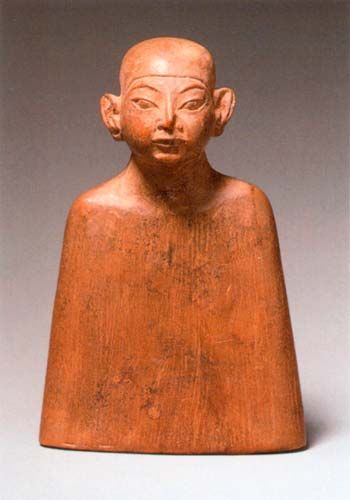
ANCESTOR BUST
تماثيل السلف النصفية
Karen Exell
Büste
Buste de laraires
Ancestor busts (also known as anthropoid busts) date to the New Kingdom. The majority of
extant examples are from Deir el-Medina. They are most commonly interpreted as belonging to the
cult of the recently deceased—that is, the ancestor cult.
باالنسان تعود إلى الدولة
ِ تماثيل السلف النصفية المعروفة أيضا كالتماثيل النصفية الشبيھة
غالبا ً ما يعتقد ان ھذه التماثيل تعود إلى. أغلب األمثلة الموجودة تأتي من ديرالمدينة.الحديثة
.طائفة المتوفين حديثا ً أو طائفة السلف
here are 150 extant examples of 2003: 71; Meskell 2003: 44), the rest, to sites
T so-called ancestor busts and
approximately ten extant
throughout Egypt—Tell el-Muqdam in the
Delta, Saqqara, Kom Medinet Ghurab,
representations of the busts on stelae and Sedment, Amarna, Abydos, Asfun, and Sesebi
figured ostraca (Friedman 1985: 82; (Keith-Bennett 1981b)—with a number of
Harrington 2003: 71; Meskell 2003: 44; fig.3). unprovenanced examples extant in museum
The category “ancestor bust” presents a collections. The earliest known example has
typological range from small amuletic been dated to the reign of Amenhotep II
examples (Keith-Bennett 1981b; figs. 1 - 2) to (Harrington 2003: 72), and the busts remained
limestone statues up to 0.5 m tall, though the in use into the 19th Dynasty (but see Keith-
majority are statues of approximately 0.23 – Bennett 1981a: 49 for a broader chronological
0.25 m in height (Harrington 2003: 74 – 75; span). A small number of the Deir el-Medina
figs. 1 - 2). A bust consists of a head, with or busts were recorded as having come from
without a tripartite wig, set on a base that was houses, where they may have sat in niches
sometimes decorated with a wsx-collar and/or found in the walls of the first or second room
a pendant lotus. The base has been compared (Friedman 1985: 82 - 83; Meskell 2002: 114),
to the top of a stela (Friedman 1985: 92 - 94), but the majority seem to have come from
the top section of a wrapped torso, or an other parts of the site—the tombs, chapels,
anthropoid coffin (Macy Roth 1988: 149; and the vicinity of the temple (Keith-Bennett
Romano 1999: 282). There are a number of 1981a: 48). At Amarna one example may have
double busts, of which one head wears a wig come from a workshop (Keith-Bennett
and one does not (Keith-Bennett 1981b: figs. 1981b: 52 [Am 1]). Unfinished examples from
15 - 17). A large proportion of the busts are Deir el-Medina suggest that the busts were
made from limestone, some with traces of made locally.
paint (figs. 4 and 5); there are also examples in
sandstone, granite, clay, and wood.
Approximately half of the busts are
provenanced to Deir el-Medina (Harrington
Ancestor Bust, Exell, UEE 2008 1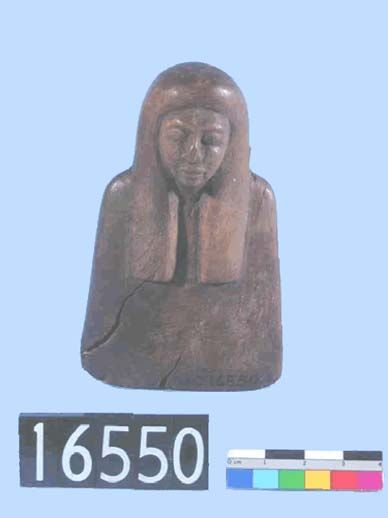
Figure 1. Small (78 mm) wooden ancestor bust        Figure 3. Limestone stela depicting the Lady of the
without a wig, from Deir el-Medina, 18th Dynasty,   House, Henut, offering incense and water to an
reign of Akhenaten.                                 ancestor bust. From Deir el-Medina.

                                                      The presumed use and meaning of the busts
                                                    have been influenced by the assumption of a
                                                    predominantly     domestic       context    and
                                                    hampered by the fact that only four of the 150
                                                    examples are inscribed (Keith-Bennett 1981a:
                                                    48 - 50). Friedman (1985) has argued that the
                                                    busts constituted the focal point of the
                                                    ancestor cult rites, thereby continuing the
                                                    tradition, documented since the Old
                                                    Kingdom, of the living presenting offerings to
                                                    the recently deceased. According to this
                                                    interpretation, the busts represented or
                                                    embodied the Ax-jqr, the “excellent spirits,” to
                                                    whom the Ax-jqr n Ra-stelae were also
                                                    dedicated (Demarée 1983). The anepigraphic
                                                    busts at Deir el-Medina were identified by
                                                    associated inscribed objects, such as the
                                                    headrests, offering tables, and Ax-jqr n Ra-
                                                    stelae found alongside them. A variant
                                                    suggestion (Harrington 2003) argues that the
                                                    majority of the busts represent women (based
                                                    on the presence of the tripartite wig) and form
Figure 2. Large (262 mm) limestone ancestor bust    the counterpoint to the Ax-jqr n Ra-stelae,
with wig and modius, possibly from Deir el-         which are almost wholly dedicated to men.
Medina, late 18th-early 19th Dynasty.               These interpretations also place the busts
                                                    within the network of artifacts associated with

Ancestor Bust, Exell, UEE 2008                                                                       2
the ancestor cult, centered on the concept that
the recently deceased could impact—positive-
ly or negatively—on the living. Included in
this network of artifacts are the Letters to the
Dead, which gave voice to the concept. The
busts were tangible intermediaries between
this world and the world of the supernatural,
of the dead and the gods, and provided
magical protection for the living (Meskell
2003: 46)—protection being perhaps
especially pertinent at Deir el-Medina, where
many of the men worked away from the
village much of the time. However, it is
possible that the busts had additional cultic
functions that have yet to be defined (Keith-
Bennett 1981a: 50). The anonymous nature of
the busts would have allowed them changing
contextual identifications and functions.
“Anthropoid bust” may be a more
appropriate term for these artifacts.
Figure 4. Unprovenanced wooden bust wearing a
wig.
Figure 5. Small limestone (?) bust, with traces of
blue paint, from Kom Medinet Ghurab.
Ancestor Bust, Exell, UEE 2008 3Bibliographic Notes
Keith-Bennett (1981a, 1981b) provides a useful catalog and brief pertinent discussion of
possible interpretations, with illustrations. Friedman (1985) discusses the Deir el-Medina
examples, and her interpretation of the busts as related to the ancestor cult has been
especially influential in the following works on the subject.
References
Demarée, Robert
1983 The Ax jqr n Ra-stelae: On ancestor worship in ancient Egypt. (Dissertation.) Leiden: Nederlands
Instituut voor het Nabije Oosten.
Friedman, Florence
1985 On the meaning of some anthropoid busts from Deir el-Medina. Journal of Egyptian
Archaeology 71, pp. 82 - 97.
Harrington, Nicola
2003 From the cradle to the grave: Anthropoid busts and ancestor cults at Deir el-Medina. In
Current research in Egyptology 2003: Proceedings of the Fourth Annual Symposium, University College
London, ed. Kathryn Piquette, and Serena Love, pp. 71 - 88. Oxford: Oxbow Books.
Keith-Bennett, Jean
1981a Anthropoid busts: II: not from Deir el Medineh alone. Bulletin of the Egyptological Seminar 3,
pp. 43 - 50.
1981b Catalogue of anthropoid busts from Egyptian sites other than Deir el Medineh. Bulletin of
the Egyptological Seminar 3, pp. 51 - 71.
Macy Roth, Ann
1988 Ancestor bust (Entry Number 90). In Mummies and magic: The funerary arts of ancient Egypt, ed.
Sue D'Auria, Peter Lacovara, and Catherine Roehrig, p. 149. Boston: Museum of Fine Arts.
Meskell, Lynn
2002 Private life in New Kingdom Egypt. Oxford: Blackwell.
2003 Memory's materiality: Ancestral presence, commemorative practice and disjunctive locales.
In Archaeologies of memory, ed. Susan Alcock, and Ruth Van Dyke, pp. 34 - 55. Oxford:
Blackwell.
Romano, James
1999 Large anthropoid bust (Entry Number 264). In Pharaohs of the sun: Akhenaten, Nefertiti,
Tutankhamen, ed. Rita Freed, Yvonne J. Markowitz, and Sue D'Auria, p. 282. Boston:
Museum of Fine Arts.
Image Credits
Figure 1 Small (78 mm) wooden ancestor bust without a wig, from Deir el-Medina, 18th Dynasty,
reign of Akhenaten. Charles Edwin Wilbour Fund, Brooklyn Museum of Art, New York,
53.246. Image source: Romano 1999, p. 282 [263].
Ancestor Bust, Exell, UEE 2008 4Figure 2 Large (262 mm) limestone ancestor bust with wig and modius, possibly from Deir el-
Medina, late 18th-early 19th Dynasty. Charles Edwin Wilbour Fund, Brooklyn Museum of
Art, New York, 54.1. Image source: Romano 1999, p. 282 [264].
Figure 3 Limestone stela depicting the Lady of the House, Henut, offering incense and water to an
ancestor bust. From Deir el-Medina. Image source: Harrington 2003, p. 77, fig. 5.
Figure 4 Unprovenanced wooden bust wearing a wig (Petrie Museum of Egyptian Archaeology,
University College London, UC 16550).
Image source: Digital Egypt
http://www.digitalegypt.ucl.ac.uk/religion/ancestor.html
Figure 5 Small limestone (?) bust, with traces of blue paint, from Kom Medinet Ghurab (Petrie
Museum of Egyptian Archaeology, University College London, UC 16031).
Image source: Digital Egypt
http://www.digitalegypt.ucl.ac.uk/gurob/tombs/somefinds.html
Ancestor Bust, Exell, UEE 2008 5You can also read


