Autonomous Cars to Race at Indianapolis Motor Speedway
←
→
Page content transcription
If your browser does not render page correctly, please read the page content below
FO CU S ON IN T E L L I G E N T M O B I L I TY / AUTO NO MY

      Autonomous Cars
      to Race at
      Indianapolis
      Motor Speedway
      By Ansys Advantage Staff

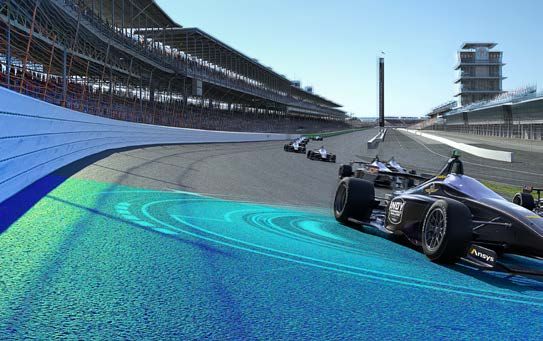
      A rendering of the autonomous version of Dallara’s 210 mph IL-15 race car. Images courtesy of Dallara.

      A
                  nsys is the exclusive simulation             platforms. And while drivers will always be
                  sponsor of a two-year, $1 million            at the heart of racing at IMS, we’re excited to
                  prize competition that will culminate        be part of this groundbreaking and exciting
                  in a head-to-head, high-speed                initiative.”
      autonomous vehicle (AV) race on Oct. 23, 2021,              The purpose of the race is to promote
      around the Indianapolis Motor Speedway’s famed           development, commercialization and consumer
      2.5-mile oval, which also plays host annually to         knowledge of fully autonomous vehicles and
      the Indianapolis 500 presented by Gainbridge,            advanced driver assistance systems (ADAS). The
      the largest single-day sporting event in the world.      hope is that the competition will create a pool
         The Indy Autonomous Challenge, organized              of young engineers ready to develop ADAS and
      by the Indianapolis Motor Speedway (IMS)                 autonomous vehicles and that motorsports fans
      and Energy Systems Network (ESN), is a                   will learn how these systems can make everyday
      competition among universities to create                 roads safer.
      software that enables self-driving Dallara race
      cars to compete in a head-to-head race on the            SIMULATION PLAYS A KEY ROLE IN THE RACE
      IMS track.                                               As the exclusive simulation sponsor for the Indy
         “There’s a fundamental connection between             Autonomous Challenge, Ansys will be making
      innovations on the racetrack and real-world              significant contributions, not only in software but
      improvements on the highway,” said IMS                   in team training and by conducting a simulation
      President J. Douglas Boles. “With the launch of          race as part of the challenge. The simulation race
      the Indy Autonomous Challenge, IMS continues             will feature models of the different race teams’
      to embrace its historic role as a catalyst for           autonomous cars. Each team’s software will drive
      the next generation of vehicle technologies in           the cars as they compete in the simulation race
      motorsports competition and wider consumer               before the third round of the competition.

12 I ANSYS ADVANTAGE                                                                                           ISSUE 1 | 2020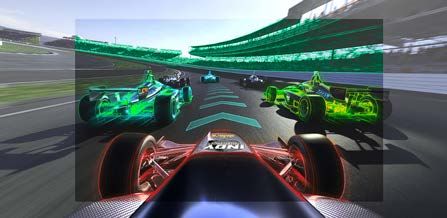
FIVE ROUNDS TO WIN
                                                             The Challenge consists of five rounds. Teams
                                                             submit a short white paper during the first
                                                             round, and in the second round, teams must
                                                             demonstrate vehicular automation by sharing
                                                             a short video of an existing vehicle or by
                                                             participating in Purdue University’s self-driving
                                                             go-kart competition at IMS.
                                                                The third round of the challenge will be a
                                                             simulation race, which will be held in February
                                                             2021 after a series of Hackathons hosted by ESN
                                                             and Ansys. The simulation race will be a close
                                                             replica of the actual race. It will be conducted
                                                             inside Ansys VRXPERIENCE Driving Simulator
                                                             powered by SCANeR. Inside of that giant
                                                             simulation will be a replica of the Indy Motor
                                                             Speedway with each team’s race car piloted by
                                                             the autonomous driving software the students
                                                             created. Each team will have free access to:
                                                             • Ansys VRXPERIENCE Driving Simulator
                                                               powered by SCANeR
                                                             • Ansys SCADE Suite software development
                                                               toolkit
                                                             • Simulation training
                                                             • 3D models of IMS and race vehicles

                                                                These tools offer the teams the technology
                                                             they need to develop their autonomous systems.
                                                             Each race car will have models of the entire
                                                             sensor suites and connected vehicle dynamics in
                                                             order to simulate the Indy Lights race car.
                                                                The race will start when the simulation
           “Ansys realizes that the world is undergoing a    starts running, then all the teams are hands off
       great mobility revolution,” says Sandeep Sovani,      while they watch their cars simultaneously race
       Ph.D., global director – automotive industry,         around the track. The winners of the virtual race
       Ansys. “It’s a great transformation that is going     will win the Ansys Indy Autonomous Challenge
       to bring enormous new value and well-being to         Simulation Championship cash prizes totaling
       society at large. For instance, AVs will reduce the   $150,000.
       number of automobile accident deaths, plus it            In the fourth round, teams will test their
       will free up our driving time and liberate us to      autonomous car software on the IMS racetrack.
       use that time more productively.”                     These tests will ensure that the car meets
           Sovani says saving an hour of driving time
       could result in a 12.5% growth in the gross
       domestic product of the U.S.A. alone.                                A GLOBAL EVENT
           Last year, Ansys announced its Ansys
       Autonomy tool chain for AV simulation. Two              Teams from all over the world have registered for the
       important pieces of that toolchain are being            Indy Autonomous Challenge, including:
       made available to students who are participating        • Ariel University, Israel
       in the Indy Autonomous Challenge: Ansys                 • Indian Institute of Technology, India
       VRXPERIENCE Driving Simulator powered                   • Korean Advanced Institute of Science &
       by SCANeR and Ansys SCADE Suite software                  Technology, South Korea
       development toolkit.                                    • Purdue University, U.S.A.
           “Ansys has launched a major initiative on AV        • Massachusetts Institute of Technology, U.S.A.
       simulation because simulation will play a crucial       • Texas A&M, U.S.A.
       role in the development of AV,” Sovani says.            • University of California, Berkeley, U.S.A.
       “Autonomous driving won’t happen without                • Technical University of Munich, Germany
       simulation to test the millions of potential            • Warsaw University of Technology, Poland
       driving scenarios.”

© 2020 ANSYS, INC.                                                                                       ANSYS ADVANTAGE I 13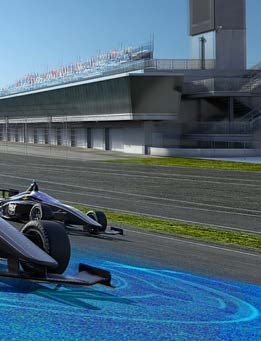
FO CU S / AUTO N O M Y

      safety and competition standards. Each team
      will use a standard Dallara IL-15 chassis, which
      is currently used in the Indy Lights series, and
                                                                     START YOUR ENGINES
      powertrain to ensure the focus of the testing is
                                                            • Feb. 28, 2020:
      on the software. Through Clemson University’s
      long-running vehicle prototype program                  Round 1 close
      Deep Orange, Clemson graduate automotive              • April 21–22, 2020:
      engineering students will collaborate with ESN          EV Grand Prix
      and Dallara to engineer an autonomous-capable           Autonomous (Optional
      version of Dallara’s 210 mph IL-15 chassis that         Round 2 Qualifier)
      can accommodate the competing university
      teams’ driverless algorithms. Participating           • May 20, 2020: Round 2 close
      teams will be directly involved in the converted      • May 21, 2020: Hackathon #1, Fundamentals of
      vehicle’s design and specifications through             Racing workshop
      monthly virtual design reviews and other
                                                            • May 22, 2020: Team Perk — Miller Lite Carb Day
      feedback channels throughout the competition.
          Finally, teams will race head-to-head on the      • May 23, 2020: Team Perk — Legends Day
      Indianapolis Motor Speedway for $1 million,             presented by Firestone
      $250,000 and $50,000 cash prizes in the fifth
                                                            • May 24, 2020: Team Perk — Indianapolis 500
      round. Win or lose, the teams will foster the next
                                                              presented by Gainbridge
      generation of engineers who are ready to lead
      the world into a more autonomous reality.             • July 11, 2020: Hackathon #2
          “What we’re asking universities to do is hard,”
                                                            • Oct. 17, 2020: Hackathon #3
      says Matt Peak, managing director at Energy
      Systems Network. “Our hope is that by bringing        • Feb. 20, 2021: Simulation Race,
      together and offering up to participating teams         sponsored by Ansys
      the world’s premier automotive proving ground,        • May 28–30, 2021: Official Vehicle Distribution
      performance chassis manufacturer, engineering
      research center and simulation platform, as           • May 30, 2021: Team Perk — Indianapolis 500
      well as nearly $1.5 million in total cash awards,       presented by Gainbridge
      universities will see the Challenge as not just       • June 5–6, 2021: Track Practice Days
      throwing down the gauntlet but also extending
      the helping hand to accelerate innovation and         • Sept. 4–6, 2021: Track Practice Days
      the arrival of new technologies.”                     • Oct. 19–20, 2021: Track Practice Days
                                                            • Oct. 21–22, 2021: Final Race Qualification
      For more information, visit
      indyautonomouschallenge.com.                          • Oct. 23, 2021: Final Race

14 I ANSYS ADVANTAGE                                                                                           ISSUE 1 | 2020
You can also read


