UNHCR and Livelihood Programmes in Turkey Damla Taskin - Oslo,15th November 2017 - Wapes
←
→
Page content transcription
If your browser does not render page correctly, please read the page content below
UNHCR
              and
Livelihood Programmes in Turkey

         Damla Taskin

                        Oslo,15th November 2017
Current Challenges

• Desperation, no possible
  solution
• Difficult living conditions
• Lack of sufficient
  humanitarian funds
• Burden sharing
The Office of the United Nations
 High Commissioner for Refugees
• Established on December 14,
  1950 by the United Nations
  General Assembly.

• The agency is mandated to lead
  and co-ordinate international
  action to protect refugees and
  resolve refugee problems
  worldwide.
Mission of UNHCR
Strives to ensure that everyone
can exercise the right to seek
asylum and find safe refuge
in another State, with the
option to:
• return home voluntarily
• integrate locally
• resettle in a third country.
What does UNHCR do in Turkey?

• Provides technical support to
  the GoT and humanitarian aid
  to refugees in Turkey
• Cash, tents, heaters, winter
  support, education etc
• Resettlement                      Verification
                                       of all
• Protection for access to rights    refugees
DISTRUBITION OF REGISTERED SYRIANS BY AGE AND
GENDER
2%1% 0-4
3% 14%
3% 5-9
4% 10-14
2%1%
3% 15%
3% 15-18
6% 4% 19-24
25-29
6% 13%
30-34
14% 35-39
8%
7% 40-44
45-49
50-54
9% FEMALE 55-59
11% 10%
10% 60-64
65-69
14% 8%
70-74
9% 75-79
16% 80-84
MALEOTHER NATIONALITIES AGE BETWEEN 18-59
250000
200000
150000
100000
50000
0
AFG IRQ IRN Others SOM Grand Total
Females 25623 34397 10247 3099 1549 74915
Males 83285 48849 15768 4331 1513 153746
Total 108908 83246 26015 7431 3062 228662
Females Males TotalApproach
What is Livelihoods?
• Livelihoods are activities that allow people to secure the
basic necessities of life such as food, water, shelter and
clothing.
• Livelihoods implies the transition from relief to self reliance.
• Income generation is key
• Wage employment or self employmentWhat is Livelihoods?
• Integration its true sense!
• You become a productive part of the society
• You are not a burden but contribution to the society
• Is it easy? Not exactly a walk in the park
• Requires dedication, collaboration and resources from many
parties including GovernmentsApproach Refugees • Entrepreneurs • Micro Entrepreneurs • Professionals (doctors, lawyers) • Farmers • Unskilled
Livelihoods Sector Priorities Enhanced capacities of national systems and increased cooperation Increase access to skills, language and vocational training according to market demands and individual interest Increase refugee access to information and services leading to employment Facilitate and strengthen access to enterprise start up and development opportunities as well as greater market access
Livelihoods Strategy Implementation
Modalities
Cooperation with the Public Institutions
Cooperation with the Private Sector
Skills Building
Fostering Entrepreneurship
ISKUR, MoLSS, MoCT, MoNE, VQA
Governorates and municipalitiesOperation in Turkey Market Assessment • İzmir, Bursa,İstanbul • Ankara, Kayseri • Gaziantep, Hatay, Urfa, Adana, Mersin Value Chain Analysis • Furniture • Mechanics • Automotive • Agriculture • Textile
Cooperation with GoT
 Ensuring inclusion in national
 systems for fair and equal
 service provision:

 •   MoLSS for work permits, advocacy

 •   MoCT for small businesses

 •   VQA for certification of skills,
     translation of Vocational
     Qualifications and standards

 •   MoNE for improvement of the
     capacity of PECs
Cooperation with GoT
ISKUR
Awareness raising
Guide to employment in Turkey
Training Programs
Job Counsellors:
Total 251 - 81 provinces,
Legal Counsellors to be trainedCooperation with GoT
Cooperation with GoT Registration of Refugees in ISKUR database Tools, equipment, staff Global Training Programme Refugees and Employment Summit May 2018 Implementation of Joint Programmes in 2018
Municipalities, Governors, Sub
Governors
Ankara Metropolitan
Municipality
Seyhan Adana Municipality
Mardin Yesilli Sub Governor
Izmir Governor
Sanliurfa Harran
Istanbul
Sisli, Zeytinburnu
KucukcekmeceVocational Training
Skills Building
Skills and Language Training
Collaboration with the Private Sector
Companies
Multinationals and their supply
chains
Turkish companies
Chambers
Organized Industrial Zones
Business AssociationsTurkey Operation Questions asked • What is the biggest challenge currently with regards to the refugee phenomenon? • Do you or your supply chain companies employ refugees? • What is the way forward related to integration of refugees into the labour market?
Turkey Operation
What did we learn?

   • Lack of awareness
   • Fear, thinking the procedurewill be complicated
   • A macro competitiveness problem for various sectors
   • Fear of the unknown, language, myths
   • Lack of interest, indifference
   • Expectation of incentives
Collaboration with the Private Sector
Work Permit Regulation
15 January 2016 Temporary Protection, 26 April 2016
International Protection
Refugees can work and establish businesses
An employer can apply for a work permit
6 months after registration
Minimum wage
10% quota
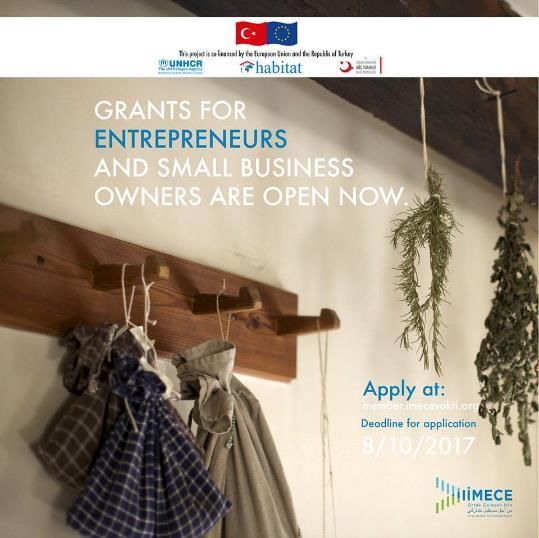
Exemption in agricultural and livestock workEntrepreneurship Start-ups Business Development Support Grants Licensing of non licensed businesses More than 6.500 companies in Turkey
Entrepreneurship
                   SYRIAN COMPANIES

                                                 1764
                                          1599

                                   1257
                                                        1192

                            489

     27     81       166

     2010   2011     2012   2013   2014   2015   2016   2017
Trainings Counselling
Counselling on
11.389 Work Permits and
Access to Labour
Market
Counselling on
34.864 Entrepreneurship
15.502
46.253Thank you
You can also read


