Uni-Eco Summer School 2021 The University of Dublin, Trinity College Schedule and Abstracts - 19th - 22nd July 2021
←
→
Page content transcription
If your browser does not render page correctly, please read the page content below
Uni-Eco Summer School 2021
The University of Dublin, Trinity College
          19th – 22nd July 2021

        Schedule and Abstracts

                                            1
Content links
Welcome message

The UNI-ECO partnership

Meet your hosts: the Trinity UNI-ECO team

Summer School schedule

Synopses of sessions:

          •   Tackling Community Change (sessions 1-3)
          •   Campus Best Practices (sessions 1-5)
          •   Green Challenges (sessions 1-4)
          •   E-learning modules (sessions 1-2)

                                                         2
Welcome message
We are delighted to welcome you to the first Summer School as part of the UNI-ECO
project. UNI-ECO aims to raise awareness about sustainability on university campuses,
and to foster cooperation and actions among all campus users (students, academic and
non-academic staff members).

In this first Summer School, we aim to learn from each other and foster action in
sustainability. Sessions are designed to:

   1.   Exemplify and share best practices at each University
   2.   Launch, test and evaluate E-learning training modules developed by the project
   3.   Showcase Green Challenge projects being carried out by students and staff
   4.   Enhance participants knowledge, skills and competencies (Tackling Community
        Change sessions)

How to access the Summer School
The Summer School sessions will be run as Zoom webinars or Zoom meetings
depending on the level of interaction in the sessions. The links will be emailed to all
registered participants in advance of the Summer School.

Registration closes on Thursday July 15th 2021

The UNI-ECO partnership: Contacts
UNI-ECO is a partnership between five European Universities, the UNIMED network of
Universities and an NGO (CESIE).

                                                                                          3
Contact people at each partner University:

                                                    Viktoria Mudra

                                             mudra.viktoria.21@gmail.com

                                                      Marta Perez

                                                   maperez@ub.edu

                                                    Alice Maumont

                                             alice.maumont@umontpellier.fr

                                                 Justine van den Bergh

                                                 j.v.vandenbergh@uu.nl

                                                     Paula Murphy

                                                   pmurphy3@tcd.ie

                                                                             4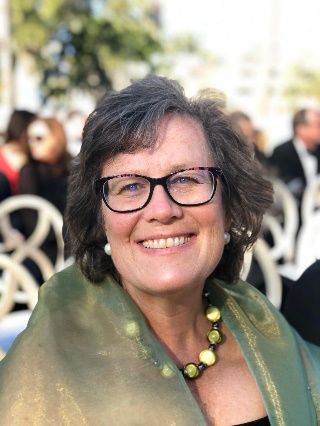
Meet your hosts: The Trinity UNI-ECO team
Dr. Adwoa Ofori: Adwoa is the co-ordinator of the Trinity UNI-ECO
team. She is a researcher and teaching fellow in the School of Natural
Sciences, specialising in African Development.

Michele Hallahan: Michele is a core part of the Trinity UNI-ECO team,
working on all aspects of the project. In particular Michele built and
delivers the E-learning module on Waste and Consumption and is co-
ordinator of the Green Challenges sessions. Michele is the
Sustainability Advisor to Trinity College, and a Permaculture Designer
and Lead Auditor on international environmental standards.

Dr Silvia Gallagher: Silvia is a core part of the Trinity UNI-ECO team and
played a key part in designing the Summer School. She leads on the
delivery of E-learning modules and is co-ordinator of those sessions.
Silvia is a Research Fellow with expertise in higher education
innovation, focusing on teaching and learning design, and online
learning.

Prof. Paula Murphy: Paula is the Trinity lead on the UNI-ECO project.
She was Sustainability Champion for the University during her time as
Registrar (2016-2020). She is a Biologist in the School of Natural
Sciences and has now returned to her academic role.

The core team are advised and supported by the other members of the Trinity UNI-
ECO Advisory Group: Prof Marcus Collier, Prof Quentin Crowley, Simone Cameron-
Coen (Civic Engagement Officer), Kieron McGovern, and three student members;
currently Iseult Sheehy, Rebecca Payling and Samantha Foley. We thank all past
student members.

We particularly thank Quentin Crowley for valuable input into the planning of the
Summer School. We thank all of our UNI-ECO partners for valuable input to the
planning and presentation of sessions, especially the UNI-ECO co-ordination team in
Montpellier

Summer School schedule
On the next page you will find a summary of all sessions at a glance. Click on each of
these sessions to find out more information about these sessions. This is followed by a
more detailed schedule for each day.

                                                                                      5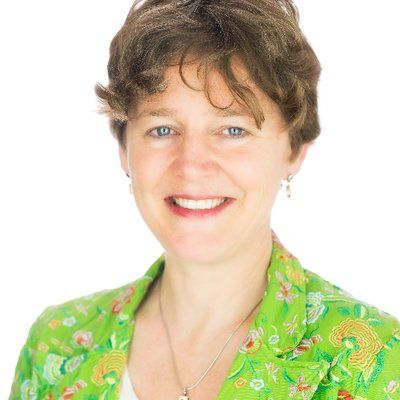
Uni-Eco Summer School; 19th to 22nd of July 2021: Schedule at a Glance

                          Please note: Indicated times are Irish Standard Time (IST) which is one hour behind Central European Time (+1 = CET) (e.g. the schedule
                                                                               begins on day 1 at 10.00 CET)

           Day 1: Monday 19/07/2021                       Day 2: Tuesday 20/07/2021                  Day 3: Wednesday 21/07/2021                       Day 4: Thursday 22/07/2021
             Challenging behaviours                          Reducing your waste                   Reducing your environmental impact                       Learning together

9.00 - 9.35                                                                                   9.00 - 9.35
Welcome Session                                                                               Campus Best Practices Sharing Session 3 (UM)

9.35 - 10.30                                                                                  9.35 - 10.45
Green Challenges Session 1                                                                    Green Challenges Session 3
10.30 -10.40                                                                                  10.45 - 10.55
Break                                                                                         Break
10.40 -11.15                                                                                  10.55 - 12.55
Campus Best Practices Sharing Session 1                                                       Tackling Community Change Session 3:
(Trinity)                                                                                     Community Challenge: How to reimagine
                                                                                              green spaces
11.15 - 13.15
Tackling Community Change Session 1: The
Psychology of Cooperation

                                               13.00 - 13.35                                                                                 13.00 - 14.25
                                               Campus Best Practices Sharing Session 2 (UU)                                                  Green Challenges Session 4

                                               13.35 - 14.25                                                                                 14.30 - 15.05
                                               Green Challenges Session 2                                                                    Campus Best Practices Sharing Session 4 (UB)
                                               14.25 - 14.35                                                                                 15.05 – 15.15
                                               Break                                                                                         Break
                                               14.35 - 15.15                                                                                 15.15 - 16.15p
                                               E-learning Modules Session 1                                                                  E-learning Module Session 2

                                               15.15 - 17.15                                                                                 16.15 - 16.45
                                               Tackling Community Change Session 2:                                                          Campus Best Practices Sharing Session 5
                                               Community Challenge: How to reduce                                                            (ELTE)
                                               consumption
TBC                                                                                           TBC                                            16.45 - 17.00
Student informal activities                                                                   Student informal activities                    Closing remarks from each partner

                                                                                                                                                                                       6
Expanded schedule by Day

Day 1: Monday 19/07/2021
Broad Theme for the day: Challenging behaviours

Time IST       Session title
(+1hr =CET)

9.00 - 9.35    Welcome session
               Welcome and overview of Summer School (Trinity; Paula
               Murphy)

               Overview of the UNI-ECO Project (Céline Delacourt-Gollain;
               Director of International Relations, UM)

9.35 - 10.30   Green Challenges Session 1:
               Presentation of staff and student Green Challenge projects
               across the partner Universities
                  • Bouge ta Finance (move your money) (UM)
                  • Sustainable Period Products (Trinity)
                  • Recycling game: “Where do you throw it?” (UU)

10.30 -        Break
10.40
10.40 -        Best Practices Sharing Session 1
11.15          Examples of best practices at each University
               Building a connected community (Trinity)

11.15 -        Tackling Community Change Session 1:
13.15          The Psychology of Cooperation
               Led by Dr Shane Timmons, Economic and Social Research
               Institute, Dublin, Ireland
               Format: presentation, discussion panel and open forum

Evening        Student informal activities (schedule to be confirmed (TBC))

                                                                              7
Day 2: Tuesday 20/07/2021
Broad Theme for the day: Reducing your waste

 Time IST        Session title
 (+1hr =CET)
 13.00 - 13.35   Best Practices Sharing Session 2
                 Examples of best practice at each University
                 Green Office UU: Community engagement in sustainable
                 development on campus. (UU)

 13.35 - 14.25   Green Challenges Session 2:
                 Presentation of staff and student Green Challenge projects
                 across the partner Universities
                 •    Student lab coat resale service (Trinity)
                 •    Ressourcerie Etudiante Solidaire (UM)
                 •    Waste free moving out (ELTE)
 14.25 - 14.35   Break
 14.35 - 15.15   E-learning Modules Session 1
                 Short presentations on each UNI-ECO e-learning module
                 followed by an interactive session on developing content
                 themes. (Trinity)

15.15 – 17.35    Tackling Community Change Session 2:
                 Community Challenge: How to reduce consumption
                 Led by Mindy O’Brien, Co-Ordinator VOICE Ireland
                 Format: introductory presentation, interactive sessions in
                 break out groups and wrap up with expert advice

                                                                              8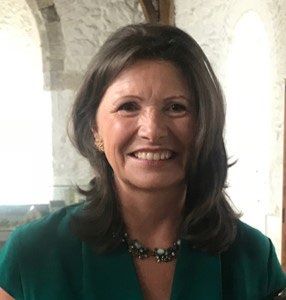
Day 3: Wednesday 21/07/2021
Broad Theme for the Day : Reducing your environmental impact

Time IST           Session title
(+1hr =CET)
9.00 – 9.35         Best Practices Sharing Session 3
                   Examples of best practice at each University
                   Sustainable Development and Social Responsibility working
                   group within Polytech Montpellier: origin, stakes and
                   examples of actions (UM)
9.35 - 10.45       Green Challenges Session 3:
                   Presentation of staff and student Green Challenge projects
                   across the partner Universities
                    • Eco-Calc (Trinity)
                    • Environmental Impact Label in the Canteen (UU)
                    • Planetary Health Diet at UB (UB)
                    • Sokszinu-kollegium Colourful Dormitory (ELTE)
10.45 - 10.55      Break
10.55 - 12.55       Tackling Community Change Session 3:
                   Community Challenge: How to reimagine green spaces
                   Led by Prof Marcus Collier, School of Natural Sciences, Trinity
                   Format: introductory presentation, interactive team work
                   sessions in break out groups and wrap up with expert advice
Afternoon/evening Student informal activities (schedule TBC)
(TBC)

                                                                            9
Day 4: Thursday 22/07/2021
Broad Theme for the day: Learning together

Time IST        Session title
(+1hr =CET)
13.00 - 14.25   Green Challenges Session 4:

                Interaction between Green Challenge teams; capturing the
                learnings (feedback from teams on challenges and Living labs)
                Announcement of winning team and feedback to all teams

14.30 - 15.05   Best Practices Sharing Session 4
                Examples of best practice at each University
                Sustainability through Service-Learning in Environmental
                Sciences: teaching in social responsibility (UB)
15.05 – 15.15 Break

15.15 - 16.15   E-learning Module Session 2
                SDG4 and engaging with the wider community (Trinity)

16.15 - 16.45   Best Practices Sharing Session 5
                Examples of best practice at each University
                Sustainability in action at ELTE (ELTE)
16.45 - 17.00   Closing remarks from each partner

                                                                           10
Tackling Community Change is a series of three sessions that aim to enable
participants (and partner institutions) to plan effective initiatives to tackle community change.
Session 1 is a priming session which raises awareness of the psychology of cooperation, which
should be considered in the planning of any initiative to tackle change on a community level.
Sessions 2 and 3 examine aspects of specific challenges; to reduce consumption and reimagine
green spaces. These challenges were chosen by the communities across partner institutions,
by vote.
-------------------------------------------------------
Tackling Community Change Session 1; Monday July 19th
11.15-13.15
The Psychology of Cooperation
This session will be led by Dr Shane Timmons, Research Officer in Behavioural
Science, Economic and Social Research Institute, Dublin, Ireland. Shane will be
joined by Prof Claire Kelly, School of Psychology, Trinity College Dublin.
Biography: Dr Shane Timmons is a cognitive psychologist working at the intersection of science
and policy with the ESRI’s Behavioural Research Unit (BRU). Before joining the BRU, Shane
completed his PhD in moral psychology at Trinity College Dublin. He currently leads the BRU’s
environmental research programmes, on topics such as the public’s understanding of climate
change, interventions to improve household waste management and experimental tests of
ways to communicate environmental risks. His research has been published in leading
psychology and public policy journals and has been featured in international media, including
CNN, the Wall Street Journal and Science News.
Synopsis of the session: Sustainability requires people to make sacrifices for the collective
good. This session will introduce the most effective strategies to promote this kind of
cooperation, as evidenced by decades of research in psychology and behavioural science.
Using insights from another ‘collective action problem’ – the COVID-19 pandemic – and data
from thousands of individuals, we will explore real-world drivers of cooperative behaviour
while identifying the main parallels and differences between the pandemic and the challenges
of sustainability.
11Tackling Community Change Session 2; Tuesday July 20th
15.15-17.15
Community challenge: How to reduce consumption?
This session will be led by Mindy O’Brien, Coordinator, VOICE (Voice of Irish
Concern for the Environment) Ireland
Mindy will be joined by an expert panel to lead discussions.
Biography: Mindy is an environmental attorney, trained in the USA and formerly a staffer in
the US Congress and has been working in the environmental sector for nearly 30 years. At
VOICE, she leads a team who focus on waste prevention initiatives, including the Conscious
Cup Campaign, We Choose Reuse and Sick of Plastic campaigns. She also sits on various
government working groups to develop waste policy, including the National Waste Prevention
Advisory Committee, the National Waste Action Group and the Deposit Refund Scheme
working group. VOICE is a national environmental charity that promotes the wise use of
natural resources and advocates for the transition to a circular economy.
Synopsis of the Session: Part 1: Mindy will make a presentation on current consumption
levels, as well as the resulting amount of waste that is generated in Ireland and how we
compare to other countries. She will also discuss the various solutions available to reduce
consumption and corresponding waste as well as outlining current policy proposals and trends.
What is goal 12 of the Sustainable Development Goals and what impact does it have on the
environment and society at large?
Part 2: Following from this presentation, there will be break out groups to discuss various
questions, such as:
1) Who is ultimately responsible for the amount of waste we generate?
2) What are the solutions?
a. In business
b. In the community
c. Individually
d. By the government
3) How can we continue to grow the economy while delinking such growth from material
consumption?
Part 3: Groups report back and final summary of findings are presented.
12Tackling Community Change Session 3; Wednesday July 21st
10.55-12.55
Community challenge: How to reimagine green spaces?
This session will be led by Prof Marcus Collier, School of Natural Sciences,
Trinity College Dublin.
Marcus will be joined by Johanna Varghese, Irish Green Building Council
Biography: Johanna manages two EU H2020 projects: SMARTER Finance Green Home Green
Mortgage and Turnkey Retrofit One stop shop energy retrofit platform. An architect and
regional & urban planner, Johanna was a Project Architect for mixed use developments and
then spatial planner on green infrastructure strategies for Dublin City. Other European projects
include TURAS for Dublin City Council ESPON COMPASS for University College Dublin and IN-
PREP disaster training preparedness platform for Carr Communications.
Biography: Marcus is fascinated by the human-nature interface and specialises in social-
ecological systems thinking. Marcus has researched, lectures, and written extensively on
contested social and ecological issues such as novel ecosystems and nature-based solutions.
Synopsis of the session: During COVID restrictions it was clear that there are many spaces in
cities that are limited in their potential and do not accommodate all citizens. Many spaces are
‘green deserts’, designed for single or niche usage and exclude many urban communities. This
session will look at the newer approaches to urban green spaces and nature-based solutions.
Participants will be asked to bring examples of urban spaces (using Google Street View) (either
on or off campus) to this workshop session where we will discuss a variety of issues that help
us to reimagine urban green spaces.
13Campus Best Practices is a series of five sessions, each sharing examples of
best practices at each partner University.
--------------------------------------
Best Practice Sharing Session 1; Monday July 19th
10.40-11.15
Engagement with Purpose – Using a bottom-up approach to drive policy
This session will be presented by:
Michele Hallahan LEED AP, MSc, ALCM,
Comhairleoir Inbhuanaitheacht/Sustainability Advisor,
Office of the Provost,
Trinity College Dublin
Synopsis.
Communication is key to engaging any population in a topic that impacts us all. Sensing the
urgency of the climate and biodiversity crises, Trinity has dedicated resources since 2017 to
strengthen and expand its communication and engagement with our university community as
part of an overall approach that links student and staff initiatives with central governance.
Trinity has employed a variety of strategies to communicate and engage our campus on
environmental sustainability topics, reaching into most areas of the university, such as
procurement, estates and facilities, student counselling, academia, accommodations, catering
and human resources.
Building on an annual sustainability report to College Board which sets targets and tracks
progress, and a revamped website for sustainability, Trinity established routes of
communication and engagement such as: sustainability guides for staff, students and
residents; a sustainability network of communication; subcommittees to work on sustainability
topics; a sustainability fund to finance projects across the university and a voting campaign to
engage staff and students in democratic decision making.
Join us for this ‘Best Practice’ presentation with Trinity’s Sustainability Advisor, Michele
Hallahan, to find out what tools Trinity has employed over the past four years and to hear
about some our successes and plans for the future.
14Best Practice Sharing Session 2; Tuesday July 20th
13.00 - 13.35
Green Office UU: community engagement in sustainable development
on campus
This session will be presented by:
Lorenzo Margiotta,
Digital Communications Coordinator, Green Office Utrecht University
and Justine van den Bergh,
Community Coordinator, Green Office Utrecht University
Synopsis
Since 2013, Green Office Utrecht University (GOUU) has worked to
inspire, empower and facilitate the community of Utrecht University to contribute to
sustainable development on campus. In this presentation, we will walk you through GOUU’s
proudest achievements, the challenges we faced and overcame, and the lessons we have
learned along the way. Lastly, we will present our vision for the future and how GOUU aims to
continue empowering and engaging our community in the sustainable development of Utrecht
University.
15Best Practice Sharing Session 3; Wednesday July 21st
9.00 – 9.35
ASAP: A Sustainable Approach by Polytech Montpellier
This session will be presented by:
Pr. Jean-Louis Bantignies,
Université de Montpellier,
Polytech Montpellier Engineering School
Synopsis
The engineering school Polytech Montpellier of the University of
Montpellier has been engaged in a sustainable development approach for 10 years. In this
presentation you will hear about how the approach has been structured since the beginning
and see some examples of actions in support of sustainable development.
16Best Practice Sharing Session 4; Thursday July 22nd
14.30 - 15.05
Sustainability through Service-Learning in Environmental Sciences:
teaching social responsibility
This session will be presented by:
Dra. Mireia Esparza
Section of Teaching and Learning of Experimental Sciences, Faculty of
Education, Universitat de Barcelona, Barcelona, Spain
Synopsis
Since the 2016-17 academic year, the subject of Sustainable Development in Environmental
Sciences degree works as a Service Learning Project: this is a project in which students learn
about sustainability while they are carrying out a service to the community. Students (around
60-70 per year) work in groups of four - jointly with social entities - to carry out different
projects related to environmental and/or social sustainability. The issues that have been
worked on to date are related to environmental education, recovering green areas in the city,
increasing the engagement of young people with ethical finance or tracing the route of the
electronic waste of the University. All these projects are a good way for the students to learn
how SDGs could be applied in a local way with a global vision and how their work can improve
their community.
17Best Practice Sharing Session 5; Thursday July 22nd
16.15 - 16.45pm
Sustainability in practice at Eötvös Loránd Tudományegyetem
This session will be presented by:
Viktória Mudra
Sustainability Coordinator, Eötvös Loránd University;
Sustainability Program Manager, Eötvös Loránd University Together for
the Environmentally Conscious Approach
Synopsis
University environmental projects are more successful, the more motivated our communities
are and broadly we target and involve a diverse set of communities in the long run. How can this
be achieved and what projects can / should involve students and staff at the university? What
are the advantages, disadvantages and difficulties of local initiatives and how can they be helped
by the University?
Such issues are addressed in the presentation with a full SWOT analysis and practical examples.
Achieved results and methods of application will also be presented by ELTE and its sustainability
related partner, ELTE Together for Environmental Consciousness Program.
UNI-ECO Summer University participants can learn about several aspects of sustainability
volunteering, but they will also be introduced to institutional environmental policy work, waste
reduction and the practical implementation of biodiversity within the university (animal
protection and local on-site composting).
By the end of the presentation, participants will also gain an insight into the benefits and context
of wider sustainability networking.
18Green Challenges Sessions: Overview
A series of four sessions to showcase Green Challenges Projects from across the Universities.
In March of 2021, Uni Eco launched a ‘Green Challenge’ programme at all five participating
universities to invite students and staff to develop solutions to improve sustainability at their
University campus, working toward the United Nations Sustainable Development Goals (SDGs).
The objective of the ‘Green Challenges’ campaign was to encourage campus users to get
involved in making their university more sustainable, by proposing projects as part of UNI-ECO
that promote good practices within the institution, and the exchange of ideas between the
partner universities.
The common themes for projects within ‘Green challenges (2021)’ were defined based on the
first part of the UNI-ECO project: the results of a ‘State of the Art on Sustainable Development
in Higher Education Institutions’ study, conducted across the partner institutions (2020) which
identified the priority areas for action.
The common themes of the call for projects within Green challenges were as follows:
1. Practices that will bring the university closer to a Zero Waste goal
2. Reducing the carbon footprint related to transport at the university
3. Actions to support and enhance biodiversity
4. Reducing the environmental footprint of catering at the university
Following a competitive call for ideas, 25 exciting Green Challenge projects were undertaken
by teams from across the five partner institutions.
10 of these projects have been selected by partner Institutions to show-case the work
underway as part of the Green Challenges initiative and will be presented in Sessions 1-3.
19Green Challenges Session 1; Monday July 19th
9.35 - 10.30
In this session we will hear from three project teams under the broad theme of “Challenging
Behaviours”
Each team will present their project (7 minutes max) followed by Question and Answers
Project 1: Bouge ta finance (‘Move your finance’) at University of
Montpellier (UM).
Team members: Nicolas Jampierre and Mathias André
Brief summary: This project has developed a programme of interviews and social media pieces
for students to help them understand what Green Finance is, and what it can do for a more
sustainable planetary future.
Project 2: Sustainable Period Products Initiative at Trinity College Dublin
(Trinity).
Team members: Georgia Dillon and Emma Bowie
Brief Summary: This project provides students with information on the availability of
sustainable period products and raises awareness of the amount of waste generated by
disposable products.
Project 3: Recycling Game: Where do you throw it? Utrecht University
(UU).
Team members: Gergő Sütő and Joël Beuerle
Brief Summary: The UU campus is equipped with lots of recycling bins, but it’s not always clear
where to throw an item. This recycling quiz is designed to educate people on how to recycle, in
a fun way!
20Green Challenges Session 2; Tuesday July 20th
13.35 - 14.25
In this session we will hear from three project teams under the broad theme of “Reducing your
waste”. Each team will present their project (7 minutes max) followed by Question and
Answers.
Project 4: Student lab coat resale service (Trinity).
Team members: Megan O’ Connor and Daniel O’Reilly
Brief summary: This project is developing a scheme for the collection, cleaning, and resale of
laboratory (lab) coats at a reduced cost, to encourage reuse by students and to prevent waste.
Project 5: Ressourcerie Etudiante Solidaire (UM).
Team Members: Nicolas Reynaud, Daphnee Van Heerswynghels, Louna Teisseire-Pabou, Jil
Heck, Antoine Pechoux, and Solène De Froberville
Brief Summary: Ressourcerie Etudiante Solidaire is a reuse project focused on salvaging
furniture and household electrical items, from UM students to resell to incoming students.
Project 6: Waste-free Moving Out (ELTE).
Team members: Krupp Szonja, Gergő Nagy, Zsófia Teleki, Dorina Kozma, Bálint Kriston, Péter
Gál and Katalin Élő
Brief Summary: This project offers sustainable containers (bags, boxes, etc) to students
moving out, and enables salvage/ reuse of materials.
21Green Challenges Session 3; Wednesday July 21st
9.35 - 10.45
In this session four Green Challenges teams will present their projects (7 min max
presentations) followed by questions and answers.
Project 7: Eco-Calc (Trinity)
Team Members: Emma Gallagher, Cillian Fogarty and Oisin McConway
Brief Summary: Eco-Calc is a website designed to help users keep track of and budget the
Carbon Footprint produced by their commute to and from college.
Project 8: Environmental impact label in the canteen (UU).
Team members: Gergő Sütő and Joël Beuerle
Brief summary: This project is designed to help people make low-impact food choices by
providing food labelling in their canteen. Making the best choice for the planet is not easy but
with this labelling system, the decision will be made easier.
Project 9: Planetary Health Diet at UB: towards a more sustainable
option (UB).
Team members: Andrea Rizzo, Anna Escobedo, Ana Moragues, Sara Sangüesa, and Lina Solarte
Brief Summary: This project is applying sustainable food criteria (e.g. buy local, less packaging)
to the catering at UB to reduce carbon footprint of food options.
Project 10: Sokszinu-kollegium/ Colourful Dormitory (ELTE)
Team members: Dorina Kozma, Viktória Mudra, Alex Barabás, Péter Gál, Hoang Nguyen Khanh
An, Ákos Hunyadi, Gabriella Mudra, and Dominik Tóth
Brief summary: Sokszinu-kollegium is engaging students and staff in the renovation of ELTE’s
native herb garden and biodiversity improvements to their bee pasture, including the hand
removal of ragwort, a noxious weed.
22Green Challenges Session 4; Thursday July 22nd
13.00 - 14.25
In our final Green Challenges session, we will hear from all of the Green Challenges teams in
attendance about what their experience was and what they learned from participating in the
Green Challenges and the online Living Labs platform.
Also, the winner team(s) of the Green Challenge programme will also be announced!
All the teams put a lot of hard work into bringing their ideas to life, and we look forward to you
joining us at this final session, to celebrate and recognise their contribution to making our
universities more innovative, creative and sustainable.
23E-Learning Module Session 1; Tuesday July 20th
14.35 - 15.15
This session will be led by Dr Silvia Gallagher, with
presentations from Michele Hallahan, Sustainability Advisor
from Trinity College Dublin, and Dr Jullien Drone Associate
Professor of Organic Chemistry and Biochemistry at the
University of Montpellier.
During this session, you will find out more information about our two eLearning modules,
Consumption and Waste, and Carbon Footprint. We will be asking for your input to help us
improve the content of our modules through a short collaborative session.
We encourage you to complete at least one of these modules prior to the session and you can
access them via these links:
• Consumption and Waste
• Carbon Footprint
24E-Learning Module Session 2; Thursday July 22nd
15.15 - 16.15
Lead by Dr Silvia Gallagher, this second session on our eLearning modules will focus on the
importance of SDG4 Quality Education in universities, and communicating and presenting our
next steps for the eLearning modules. We will be asking you to share your best practices for
sharing knowledge about sustainability to other staff and students, and showcasing our plans
for the future of our eLearning modules.
25You can also read


