University of Florida Language Literature and Culture Center for African Studies SSA 4905 Uhlelo lwezifundo zesiZulu Sabaqalayo Syllabus for ...
←
→
Page content transcription
If your browser does not render page correctly, please read the page content below
University of Florida
                      Language Literature and Culture
                         Center for African Studies
SSA 4905 Uhlelo lwezifundo zesiZulu Sabaqalayo (Syllabus for Beginning isiZulu)
                       Enkwhindla 2019 (Spring 2019)

                                                                                  1
SSA 4905 Uhlelo lwezifundo zesiZulu sabaqalayo (Syllabus for Beginning isiZulu)
(Fall 2018)
Uthisha (Instructor): Bonginkosi C. Gumbi
I-Imeyili (E-mail): bonginkosi.gumbi@ufl.edu
I-ofisi (Office): 442, Grinter Hall
Inombolo yocingo (Phone number): (352) 870 0988
Amalanga nezikhathi zamaklasi (Days and times for classes):
Amalanga (days): NgoMsombuluko, Lwesibili Lwesine NoLwesihlanu Lwesine (Monday, Tuseday,
Thursday and Friday)
Izikhathi (time): Sizovumelana nabafundi eklasini ngosuku lokuqala (will talk about this on our first class)
Iklasi (classroom): CBD 210
Izikhathi zeofisi (Office Hours): Sizovumelana nabafundi eklasini ngosuku lokuqala (will talk about this
on our first class)
2Izilimi zaSeningizimi Afrika (Languages of-South Africa)
South Africa consists of a population of about 57 million comprising many ethnic groups, each with their
own distinctive languages. In all there are 11 official languages and several dialectical variants. Among
these official languages is a group of Nguni languages (IsiZulu, IsiXhosa, siSwati, IsiNdebele), which are
spoken by more than 30 million people. Of all the Nguni languages, isiZulu is the most widely spoken,
followed by isiXhosa. Approximately 12 million South Africans can speak, read, and write isiZulu. The
majority of South Africans who cannot speak isiZulu fluently are at least able to understand it. One of the
advantages of learning isiZulu is that it can form the basis for understanding other Nguni languages. If
one can speak isiZulu, invariably can speak siSwati, isiXhosa, and isiNdebele with ease.
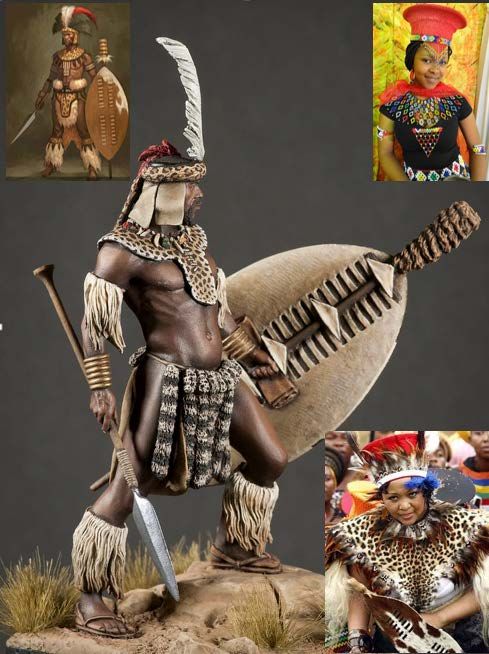
Umlando wesizwe samaZulu (History of the AmaZulu)
The history of the amaZulu can be traced back to the 18th century hero, Shaka Zulu, who, after the death
of his father, Senzangakhona, conquered many nations and amalgamated them under his reign, thus
creating a huge Zulu nation. Even after Shaka's death, the Zulu nation continued to grow considerably
under the leadership of Cetshwayo. The nation is well known for conquering the British at the Battle of
Isandlwana in 1879. This is a nation known for continually fighting the powers that threatened their
kingdom. To date, the amaZulu people remain the largest of all South African ethnic groups, followed
closely by the amaXhosa. The current president of South Africa Jacob Zuma comes from the Zulu nation.
UKUBALULEKA KOKUFUNDWA KWESIZULU
(RATIONALE FOR TEACHING AND LEARNING ISIZULU)
There are many reasons why learning IsiZulu and acquiring a global understanding of South Africa is of
utmost importance. First, the peaceful transformation of South Africa from the racist, apartheid society
has global implications in terms of international peace and stability and also in terms of global economic
trade. During the apartheid era many North American companies severed their ties with South Africa as a
form of economic sanctions to pressurize South Africa to change its undesirable policies of that time. The
independence of South Africa in 1994 brought about the lifting of the sanctions, resulting in a growing
interest in the country by business people, including North Americans who today invest millions of
dollars in South Africa. An example of this growing interest can be seen in coalitions such as South
Africa- U.S Business Forum, which is meant to increase business between these two countries. That this
coalition, and many others like it, flourishes manifests itself in the millions of North American
businessmen who fly to and back from South Africa every day. Undoubtedly, many of these business
people do their business with non-whites, the majority of whom converse in IsiZulu. It is with this idea in
mind that learning IsiZulu by American people who have interest in South Africa becomes crucial.
Another important factor is that prior to the independence of South Africa, Peace Corps opportunities
were not available in the country. It is only very recent that individuals who would like to go to South
Africa on Peace Corps were able to do so. There is a high probability that knowing IsiZulu would put
these Peace Corps volunteers at an advantage of communicating with South Africans, whether they are in
KwaZulu-Natal, Gauteng, Northern Cape, or in any province in South Africa. Some missionaries who
have done work in South Africa attest to the significance of knowing IsiZulu in a South African context.
3Included in the category of people who have found the knowledge of IsiZulu in South Africa to be
profound and of utmost importance are students who have been to different regions of this country to
conduct research and do other academic exercises like practicum. These students attest to the fact that
even a mere greeting in IsiZulu made a difference to how they were viewed and received in South Africa.
Many of those students who have taken the GPA (Group Projects Abroad) to SA have found their
knowledge of isiZulu to have paid dividends and they have gone back on their own and have amazing
stories to tell.
Course Description
Welcome to IsiZulu (also known as Zulu), a language spoken in the southern part of Africa, including
South Africa, Swaziland, Zimbabwe, Zambia, Lesotho, Mozambique and Malawi. In South Africa there
are about 38 million people consisting of numerous ethnic groups, each with their own unique languages.
There is a total of 11 official languages and several dialectical variants. Among these official languages is
a group of Nguni languages (IsiZulu, IsiXhosa, siSwati and IsiNdebele), which are spoken by over 20
million people.
IsiZulu is the most widely spoken of all the Nguni languages, followed by IsiXhosa. Although only
approximately 8 million people of South Africa can speak, read and write IsiZulu the majority of South
Africans who cannot speak IsiZulu fluently can understand it. One of the advantages of learning IsiZulu is
that it forms the basis for understanding other Nguni languages. IsiZulu is spoken by over 13 million
people of the world.
This course introduces learners to the language and cultures of the Zulu people and it will also integrate
the five Cs of the National Foreign Language Standards:
Communication, Cultures, Connections, Comparisons, and Communities. Towards the end of the
semester, there will be an African Languages Festival that will bring together students from different IU
African language classes to share language experiences. The class as a group will do a presentation of
their choice. Family and friends are invited, and food will be served.
Izincwadi Ezifunekayo (Books That are Required)
1. Muller, B. and Mthethwa, B. (1982). Sanibona I a Beginner’s Course in Zulu. (SN for short)
(Available in class) *******
Recommended Texts and Other Resources:
1. Mkhize, D. & Nxumalo, T. (2005). Masikhulume isiZulu. (Let’s speak series) NALRC Press,
Madison, WI. (KZ = Masikhulume isiZulu, for short) There is a copy in Library West Reserve.
2. Wilkes A. & Nkosi, B. (2010) Teach Yourself Complete Zulu (New Edition) by McGraw-Hill
Companies, Inc. (Available on Amazon)
3. Language Chimp (n.d.). Learn Zulu: Introductory Course Suitable for Beginners. MP3 Audio
Included (Amazon) (Available on Amazon)
4. Dent, G. R. and Nyembezi, C.L.S (1995) *Scholar’s Zulu Dictionary.
5. Mbeje, Audrey [Recommended text] (2005) Zulu Learner's Reference Grammar NALRC
Press, Madison, WI. A copy in Library West Reserve.
6. An online dictionary website: www.isizulu.net (very useful websites) *******
4Other supplemental resources may be provided as/if they become available
1. CDs, reading texts, and language texts and Bona & Drum isiZulu Magazines.
2. Audio for Sanibona 1 [Dialogues, Rhymes, Songs and Chants] (Mostly in class)-same as in B.
above here.
3. CD-ROM and Manual: Gowlett, D, et al (1999) Speak Zulu with Us.by Mother Tongues
Multimedia Development CC trading as African Voices.
Feature Films Sitcoms & Documentaries:
1. Emzini wezinsizwa
2. Sgudi Snayisi (uSdumo)
3. Ukwemula (Girls’ Rites of Passage Ceremony on video tape)
4. Ubambo
Isizulu Websites:
1. Websites by Zoliswa O. Mali: http://emt.bu.edu/tl512/tl512_spring_2008/zolimali/
2. http://ilovelanguages.org/zulu.php
3. http://ilovelanguages.org/zulu_vocabulary.php
4. http://ilovelanguages.org/zulu_grammar.php
Examples
(a) One on isiZulu Beadwork (Ubuhlalu) and other cultural aspects & the other on the importance
of cattle (Izinkomo) among the Zulu people
(b) Object Mover interactive online activities (linked to the main website stated above)
5. IsiZulu radio broadcasts on www.ukhoziFM.co.za
5The general orientation of this class is captured in the standards set by the American Council on the
Teaching of Foreign Languages (ACTFL). These are the five Cs, namely, communication, culture,
connections, comparisons, and communities. The goal of the class is communicative competence. This
will be achieved by applying the communicative language teaching approach whose main focus is
communication. Focus will also be placed on the other essential aspects of comprehensible
communication, namely language-related cultural knowledge, as well as linguistic competence, namely,
grammar, vocabulary and sentence structure.
Culture and grammar will be tackled in the context of communicative tasks learned. Within this
framework. This class will familiarize students with the basic structure of the IsiZulu language, and those
aspects of the culture that are intertwined with language use. Students will learn the structure of isiZulu as
they communicate in class. The goal of communication will be reached by the development of the four
language skills of listening, speaking, reading, and writing, as well as relevant, appropriate grammar
knowledge.
ACTFL Standards, the five Cs
Communication: Is at the heart of second language study, whether the communication takes place face-
to-face, in writing, or across centuries through the reading of literature.
Culture: Through the study of other languages, students gain a knowledge and understanding of the
cultures that use that language and, in fact, cannot truly master the language until they have also
mastered the cultural contexts in which the language occurs.
Connections: Learning languages provides connections to additional bodies of knowledge that may be
unavailable to the monolingual English speaker.
Comparisons: Through comparisons and contrasts with the language being studied, students develop
insight into the nature of language and the concept of culture and realize that there are multiple
ways of viewing the world.
Communities: Together, these elements enable the student of languages to participate in multilingual
communities at home and around the world in a variety of contexts and in culturally appropriate
ways.
6DESIRED GOAL:
At the end of the course, students are expected to communicate in IsiZulu to a level where they can
demonstrate a knowledge of IsiZulu in relation to Communication, Cultures, Connections,
Comparisons, and Communities.
Students are expected to reach the Novice High level of proficiency following guidelines given by the
American Council on the Teaching of Foreign Languages (ACFL).
COURSE LEARNING PERFORMANCE OUTCOMES
By the end of this semester will be able to communicate in IsiZulu using three modes of communication;
namely interpersonal, interpretive, and presentational.
Interpersonal Communicative mode
Students will use appropriate IsiZulu expressions to greet and of teachers and classmates and
native Zulus speakers.
Students will be able to give simple instructions in IsiZulu and participate in Zulu classroom
activities.
Students will be able share their likes and dislikes in with each other or with students in other
universities via texts/notes, letters, email etc.
Students will be able role play in isiZulu everyday situations, such as hosting and visiting friends,
buying groceries in a shop or market or ordering food at a restaurant.
Students will be able to describe colors and s food, clothing, types of dwelling places,
transportation and buildings.
Students ask and answer questions about topics such as family, school, animals, familiar objects,
and possessions.
Dramatize Zulu songs, dances and rhymes.
Interpretive Communication Mode
Students will be able follow simple oral Zulu instructions related to daily activities.
Students will be able respond to oral or written statements in IsiZulu on familiar topics in
authentic contexts, such as numbers, time of day, and weather reports.
Students be able to read or listen to descriptions and identify the corresponding pictures or
illustrations, such as people, animals, objects, places, common activities, weather and time of day.
Students identify the meaning from familiar songs, poems, videos, stories and folk tales.
Presentational Communication Mode
Prepare and present short illustrated personal descriptions of topics, like their home or their
family in IsiZulu.
In IsiZulu, students write or orally present simple short stories about themselves, their family
members, friends, classmates, and so on in simple sentences.
In IsiZulu, students will write or talk about their likes and dislikes.
In IsiZulu, students will write about or orally present about their daily activities.
In IsiZulu, students will write about and orally present about where they live, and present
information about themselves and their families.
7CULTURAL GOALS
Students will be able to use appropriate gestures and Zulu expressions for greetings and
interaction with the people in the real world.
Students will be able identify similarities and differences in the Zulu and American culture, in
terms of clothes, food, transportation, songs, dances, holidays, marriage and many other topics of
interest to the students.
PROFICIENCY LEVEL
At the end of the first semester, learners are expected to reach the Novice High Level of the ACTFL.
NOVICE MID
Speakers at the Novice-Mid level communicate minimally and with difficulty by using a number of
isolated words and memorized phrases limited by the particular context in which the language has been
learned. When responding to direct questions, they may utter only two or three words at a time or an
occasional stock answer. They pause frequently as they search for simple vocabulary or attempt to recycle
their own and their interlocutor’s words. Because of hesitations, lack of vocabulary, inaccuracy, or failure
to respond appropriately, Novice-Mid speakers may be understood with great difficulty even by
sympathetic interlocutors accustomed to dealing with non-natives. When called on to handle topics by
performing functions associated with the Intermediate level, they frequently resort to repetition, words
from their native language, or silence.
GRADING POLICY
A ....................................................95 – 100
A- .....................................................90 – 94
B+ .....................................................87 – 89
B .....................................................83 – 86
B- .....................................................80 – 82
C+ .....................................................77 – 79
C .....................................................73 – 76
C- .....................................................70 – 72
D+ .....................................................67 – 69
D ........................................................63 – 66
D-.......................................................60 – 62
EVALUATION POLICY
Attendance and class participation 20%
Assignments & homework’s 20%
Exam 30%
Final exam 30%
Exams:
Written Questions & Reading Questions
Academic integrity:
Plagiarism, that is unacknowledged use of someone else’s ideas, words or sentences, is illegal and
unacceptable. Academic integrity is taken seriously at UF as in all institutions of higher learning (see
website for policy on this). Everyone is encouraged to do the right thing so that we never have to deal
8with problems relating to this.
9Tentative schedule
Iviki Goal In class Role play (scenarios)
Topic/theme and
learning activities
Week 1 Ukuzethula Students and teacher will go Greetings, Introductions, and
7-11 Jan Nokuzikumbhuza through the class outline and cultural exchange.
mode of teaching isiZulu
7- General Students will be able to engage Activity 1: You are coming from
Introductions in a greetings dialogue. the library, you meet a classmate
and greetings Going over the syllabus; greet her/him.
Kubingelela Stating expectations clearly
ngesiZulu Introduction to IsiZulu Activity 2: You are coming into
Reading: the class for an isiZulu lesson,
Sanibona 1, greet your classmates.
pages 1-4
3 Sep Labor Day (no Labor Day (no class) Labor Day (no class)
class)
4 Sep Greetings in Students will be able to greet in Say you meet a friend during the
different times of the different times of the day. four different time of the day,
the days. Kusile. greet him/her according to the
Imini enhle. time of the day. But first tell us
Lishonile… which time of the day it is.
Busuku obuhle…
Greet one person, greet more than
Assignment 1 two people in different times of This is a home work to be
the day submitted before the next class
6 & 7 Sep Vowels and Students will be able to use
counting vowels and count from 0-20 in
Bonkhamisa no isZulu.
kubala A, E, I, O, U
Kunye, kubili, kuthathu,
kune,kuhlanu, kusthupha,
kuskhombisa,sishiyagalambili,
sishiyagalalunye, ishumi
10 & 11 Sep Self-introduction Self-introduction by saying the It’s the first day in your Zulu
Ukuzethula following class, briefly introduce yourself
Reading: Igama lami ngingu… to your classmates.
Sanibona 1, ngivela…
10pages 32-36 and nyalo ngihlala….
43- 45.
13 & 14 Sep Self-introduction Student will be able to talk about You have been with your host
Wafunda kuphi their educational background. family in South Africa for a
Ngafunda ihigh school week now. They would like to
Ngafunda ibachelors know more about you, they ask
Ngafunda imasters you to tell them about your
Nyalo ngifunda iPhD education background and
schools and universities you
Introduce yourself and tell us a bit attended
Assignment 2 about your back ground
This is a home work to be
submitted before the next class
17 & 18 Sep Self-introduction Students will be able to describe Briefly tell me about the rooms
Indlu yami the rooms in his/her room. in your house
Indlu yami inkhulu/ incane
Inamakamelo, igumbi
lekuhlala, ikhishi, umthoyi
14 & 17 Sep Self-introduction Student will be able to introduce Your roommate has seen a
Introducing their family member picture of your family on your
members of your Mina ngizalwa emadenin table, she wants to know your
family wamalunga angu family members by their names.
Reading: Ngino bhuti usisi umama Introduce them to him/her
Sanibona 1, ubaba
pages 12-15.
20 & 21 Sep Self-introduction Student will be able talk about Your friend is interested in
Daily activities their daily activities. visiting you. He/she calls and
Ukugeza ,ukugijima, ukuya asks you about your daily
eskoleni, ukushova activities. List at least 4 of your
ibhayisiki, ukukhuleka, daily activities
ukuphela, ukufunda,
ukufundisa,
24 & 25 Sep Self-introduction Students will be able to talk You just met a friend in a safari
Likes and activities they like and dislikes drive at Kruger National park,
dislikes Mina ngithanda she asks you tell her about things
Mina angithandi your like and dislikes. Tell her at
Review your lessons from lesson least 4 things you like and dislike
Assignment 3 one, write a complete
introduction.
1127 & 28 Shopping food Students will be able to buy and Imagine the next slide being a
Sep and drinks huddle for fruits from a street street market displaying in
Buying and market Durban and I am the owner. Buy
huddling fruits at Izithelo at least five fruits from my
a street market Ngingakusiza ngani market.
Reading: Ngithenga/ngafuna izithelo
Sanibona 1, Kubiza malini
pages 7-12 Nansi imali
Ngiyabonga
1 & 2 Oct Shopping food Students will be able to buy and Imagine the next slide being a
and drinks huddle for vegetables from a street market displaying in
Buying and street market Durban and I am the owner. Buy
huddling for Imfino at least five vegetables from my
vegetable at a Ngithenga/ngafuna imfino market.
street market Kubiza malini
Reading: Nansi imali
Sanibona 1, Ngiyabonga
pages 7-12
4 Oct Revision and Revision and reading (no class) Revision and reading (no class)
reading (no class)
5 Oct First exam First exam (Uhlolo lokucala) First exam (Uhlolo lokucala)
(Uhlolo lokucala)
8 & 9 Oct Shopping food Students will be able to buys 1. You are going to buy groceries
and drinks good tell peoples about goods at public, prepare a list of goods
Buying groceries they bought or good they are you would like to buy.
from a shop going to buy from the shop.
Reading: Ngithenga 2. You are inside publix you are
Sanibona 1, Ngithenge struggling to find some good part
pages 7-12 Ngiyotsenga of your shopping list in the shelf.
You decide to ask the shop
attendant. Tells her/him what
your buying at the store today.
3. Your parents gave you money
to do groceries at the store. You
went to Walmart to do your
shopping and when you get back
home they asked you to tell them
you what you bought. Tell them
1211 & 12 Oct Shopping food Students will be ale order food You are in a restaurant in Durban
and drinks from a restaurant waiting for your host family
Ordering food Amanzi, itiye, ubisi, ijusi, which is running late due to
and drinks in the unamanede, utjwala traffic. They called and asked
restaurant you to place orders for them. Tell
the waiter what you and your
host family member would like
to eat and drink when they get to
the restaurant.
15 & 16 Oct Family and Student will be able to tell You are at an interview at the
friends friends the name of their friends MDV. The interviewee asks you
Introducing and family members to tell him the name of your
family and Igama lobaba wami ngu family members
friends Igama lomama wami ngu
Igama lodadewethu ngu
Iigama lomfowethu ngu
18 & 19 Oct Family and Students will be able to tell Your friend asks you about your
friends friends about the ages of their siblings ages, tell him/her
Ages of siblings siblings in the family
Ngino bhuti amdala
Ngino sisi omncane
22 & 23 Oct Family and Students will engage in You are on a interview for a
friends dialogues that gives information scholarship the interviewee asks
Professions of about the work their family you to tell them about the
family members members are doing occupations of your family
Reading: Ubaba usebenza members
Sanibonani 1 umama usebenza
page 37-38 and umfowethu usebenza
45-46. udadewethu usebenza
25 & 26 Oct Lessons revision Revision and drilling Revision of all the scenarios
and drilling Visual interpretation Uzalo from Monday to Thursday this
episode week
Assignment 4 Saniboni 1
Page 47
Umsebenzi I, II
1329 & 30 Oct Family and Student will be able to introduce You just made a friend in your
friends their friends visit to the park tell you parents
Introducing a igama longanami ngu about your friend.
friend uhlala e
ufunda e
usebenza e
1 Nov Visual Students will watch and
interpretation interprete Sgud ‘s Snays in class
2 Nov Home coming (no Home coming (no class) Home coming (no class)
class)
5 & 6 Nov At home Students will be able to talk You are in the kitchen preparing
Kitchen utensils about utensils found in the super with you mother, list all
Reading: kitchen the utensils you will use.
Sanibonani 1
page 23
Assignment 5 Saniboni 1
Page 26
Umsebenzi I, II
8 Nov Revision and Revision and reading (no class) Revision and reading (no class)
reading (no class)
9 Nov Second exam Second exam (uhlolo lwesibili) Second exam (uhlolo lwesibili)
(uhlolo lwesibili)
12 Nov Veterans Day (No Veterans Day (No class) Veterans Day (No class)
class)
13 Nov At home Students will be able to talk
Kitchen activities about activities in the kitchen
Reading: Wenzani?
Sanibonani 1 Ngibhaka ikhekhe
page 21- 22 Ngipheka ukudla
Ngibilisa amanzi
Ngipheka imfino
15 Nov At home Student will be able to talk about
Serving food serving food for the family at any
Reading: time of the day.
Sanibonani 1 Deka itafula
page 24-25 Geza izitsha
16 Nov Animals Students will be able to talk
Domesticated about animals at home and pets
animals that they have at home.
14Inja, kati, inkhomo, imbuzi, imvu
19 Nov Animals Students will be able to talk You visited Kruger National
Wild animals about wild animals in game park yesterday tell your friend
reserves. what your r experience and what
Ibhubezi, indlovu, ingwe, bhejane animals was you saw
20 Nov Revision and Revision and reading (no class) Revision and reading (no class)
reading (no class)
22 Nov Thanks, giving (no Thanks, giving (no class) Thanks, giving (no class)
class)
23 Nov Third exam Third exam (uhlolo lwesithathu) Third exam (uhlolo lwesithathu)
(uhlolo
lwesithathu)
26 Nov Clothes and Student will identify colors
colors Kumnyama, kumhlophe, kubovu,
Colors kuluhlata, kumtfubi
27 Nov Inquiring about Students will be able to inquire You have been told that your
health about the health other people on friend is not doing well call to
Reading: daily basis. enquire about his/her condition
sanibonani Uyagula namhla, ngiphetwe
Pages 78- 81 yikhanda, isisu.
Assignment 6 Sanibona 1
Pages 93
Umsebenzi 1, 2 & 3
29 Nov Weather Students will be able to describe You are visiting South Africa for
Conditions the weather of the day the first time describe the
Reading: Linjani izulu, liyana, kuvungaza weather of the first day in south
Sanibonani 1 umoya, kuyashisa, lipholile, Africa.
page 51 – 58 liguqubele, liyaduma liyabaneka
Sanibona 1
Pages 60
Assignment 4 Umsebenzi 1, 2 & 3
30 Nov Modes of Students will be described the
transportation different modes of transport
Reading: Uhamba ngani, sitimela,
Sanibonani 1 ibhanoyi, iloli,ithekisi, sikebhe,
pages 59 umkhumbi, ugandaganda
153 Dec Vacation Student will be able to talk about You just a host family in the
Visiting the activities they did when they country side describe the
country side visited the country side experience you had and what you
Reading: Umsebenzi, ukusenga izinkomo, did during your visit.
sanibonani 1 ukulimala, umblele
pages 101-105
4 Dec Lesson revision Lesson revision and practicing Lesson revision and practicing
and practicing conversation (in class) conversation (in class)
conversation (in
class)
5 -7 Dec Reading and Reading and revision Reading and revision
revision
TBA (8 Dec) Final exam Final exam Final exam
16You can also read


