2018-2020 Continuous School Improvement Plan for Hendersonville Elementary School - Approved by majority vote on April 20, 2018. Mrs. Kerry ...
←
→
Page content transcription
If your browser does not render page correctly, please read the page content below
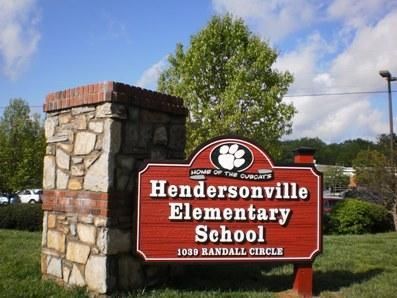
2018-2020 Continuous School Improvement Plan for
Hendersonville Elementary School
Approved by majority vote on April 20, 2018.
Mrs. Kerry Stewart, Principal
Mrs. Cara Brock, SIT
Chair
1
Table of Contents
2018-2020 Continuous School Improvement Plan for Hendersonville Elementary School
   Table of Contents
   Statement of Assurances
   School Improvement Team Membership
   Mission and Beliefs
      Henderson County Public Schools’ Mission Statement
      Henderson County Public Schools’ Guiding Principle
      Henderson County Public Schools’ Core Values
      School Vision Statement
      School Mission Statement
      School Beliefs (Core Values)
   School Profile & Narrative Summary
   New Initiatives at Our School
      iReady Math
      Freckle Education (ELA)
   Instructional Planning Time
      Duty Free Planning
      Duty Free Lunch
   Instructional Materials/Textbook Waiver
      Building-Level Waiver Request
   Conflict Resolution
   Strategic Goals
      We Value Excellence In
      Continuous Improvement
      Summary of Goals
   Area One Goals: Human Resources
      Human Resource Goal One
         Strategies to Achieve this Goal
         Measure of Success
         Persons Responsible
         Target Date
      Human Resource Goal Two
         Strategies to Achieve this Goal
         Measure of Success
         Persons Responsible
         Target Date
   Area Two Goals: Community and Family Engagement
      Community and Family Engagement Goal One
         Strategies to Achieve this Goal

                                                                                    2
Measure of Success:
Persons Responsible
Target Date
Community and Family Engagement Goal Two
Strategies to Achieve this Goal
Measure of Success
Persons Responsible
Target Date
Area Three Goals: Personalized Learning
Personalized Learning Goal One
Strategies to Achieve this Goal
Measure of Success
Persons Responsible
Target Date
Personalized Learning Goal Two
Strategies to Achieve this Goal:
Measure of Success:
Persons Responsible
Target Date
Area Four Goals: Safe and Nurturing Environments
Safe and Nurturing Environments Goal One
Strategies to Achieve this Goal
Measure of Success
Persons Responsible
Target Date
Safe and Nurturing Environments Goal Two
Strategies to Achieve this Goal:
Measure of Success
Persons Responsible
Target Date
Data Review
Student Achievement Data
Hendersonville Elementary School: End of Grade Proficiency Levels
Hendersonville Elementary School: 3rd, 4th and 5th Grade Benchmark Scores for
Math
3rd, 4th and 5th Grade Benchmark Scores for Reading
5th Grade Benchmark Scores for Science
NC Checkins
Needs Assessment
Community Information
Health
3Youth Behavior and Safety
Education
Economic Development
School Demographics
Percent Population Gender and Ethnicity
Percent Population LEP and Economically Disadvantaged
Hendersonville Elementary School
HCPS
North Carolina
Mobility
Hendersonville Elementary School
HCPS
Student Attendance
Hendersonville Elementary School Students in Violation of HCPS Attendance
Policy
HCPS Elementary School Students in Violation of HCPS Attendance Policy
Hendersonville Elementary School Students with Chronic Attendance
Difficulties
HCPS Elementary School Students with Chronic Attendance Difficulties
Section 1. Community and Context
Data Summary
Step 1. Study: Reflect on the data
Step 2. Plan: Identify purpose and desired outcomes
Step 3. Do: Implement intended outcomes
School Performance
School Performance Grades
2016-2017
2015-2016
2014-2015
Affinity Group Comparisons of Economically Disadvantaged Students (by
poverty)
2016-2017
2015-2016
Affinity Group Comparisons of EOG Proficiency, Grade Level Proficient (by
score)
2016-2017
2015-2016
2014-2015
Affinity Group Comparisons of EOG Reading 3-5 Proficiency (by overall
proficiency)
2016-2017
2015-2016
42014-2015
Affinity Group Comparisons of EOG Math 3-5 Proficiency (by overall
proficiency)
2016-2017
2015-2016
2014-2015
Early Grades Reading Comprehension and Skills
BOY Kindergarten, Percent Proficient or Above, TRC
BOY Kindergarten, Percent Above Proficient, FSF
Early Grades Reading Comprehension and Skills of EOY K-3, Percent Proficient
or Above, TRC
Hendersonville Elementary School
HCPS
Region 8
North Carolina
Early Grades Reading Comprehension and Skills of Early Literacy Measures:
Reading Fluency (EOY K-3, Percent Above, PSF (K), DORF Fluency (Gr 1,2,3))
Hendersonville Elementary School
HCPS
Region 8
North Carolina
Upper Grades Reading Comprehension of Overall Grade Level Proficiency
(EOG-GLP) by Grade Level
Hendersonville Elementary School
HCPS
North Carolina
Section 2. Whole School Student Achievement
Data Summary
Step 1. Study: Reflect on the data
Step 2. Plan: Identify purpose and desired outcomes
Step 3. Do: Implement intended outcomes
School Performance (Cont’d)
Upper Grades Reading Comprehension by Subgroup and Overall Grade Level
Proficiency (GLP) by Gender
Hendersonville Elementary School
HCPS
North Carolina
Upper Grades Reading Comprehension by Subgroup and Overall Grade Level
Proficiency (GLP) by Ethnicity
Hendersonville Elementary School
HCPS
North Carolina
5Upper Grades Reading Comprehension by Subgroup and Overall Grade Level
Proficiency (GLP) by Other Criteria
Hendersonville Elementary School
HCPS
North Carolina
Upper Grades Reading: Achievement Differences
By Gender
By Race and Ethnicity
By Other Subgroup
Reading Proficiency and Growth by Kindergarten Cohort
Reading Comprehension, TRC / EOG
Reading Growth, TRC or EOG
Section 3. Subgroup Student Achievement
Data Summary
Step 1. Study: Reflect on the data
Step 2. Plan: Identify purpose and desired outcomes
Step 3. Do: Implement intended outcomes
Student Growth
Upper Grades
School Reading
District Reading
School Math
District Math
School Science
District Science
Reading By Ability Quintile
School Reading 2016-17
School Reading 2015-16
School Reading 2014-15 (Previous Cohort)
District Reading 2016-17
District Reading 2015-16 (K-2 is Previous Yrs)
District Reading 2014-15 (Previous Cohort)
Math by Ability Quintile
School Math 2016-2017
School Math 2015-2016
School Math 2014-2015 (Previous Cohort)
District 2016-2017
District 2015-2016
Section 4. Student Growth
Data Summary
Step 1. Study: Reflect on the data
6Step 2. Plan: Identify purpose and desired outcomes
Step 3. Do: Implement intended outcomes
7Statement of Assurances
The School Improvement Plan has been developed and aligned to the requirements of the
following:
○ Henderson County School Board Policy 3430
○ Henderson County Public Schools Strategic Plan
○ Henderson County Public Schools Technology Plan
○ NC Accountability Model & ESSA
○ AdvancED School Accreditation Standards
8School Improvement Team Membership
Team Member Name Position Date Elected
Jennifer Ross Kindergarten 4/19/2018
Kim Fisher Second Grade 4/19/2018
Amanda Upton Fourth Grade 4/19/2018
Lori Hampton Assistant 4/19/2018
Kayla Lindsey Specialist 4/19/2018
Cara Brock First Grade 4/19/2018
SIT Chairperson
Stacia Kelley Third Grade 4/19/2018
Lindsey Skidmore Fifth Grade 4/19/2018
Kimberly Smith EC 4/19/2018
Kerry Stewart Principal 4/19/2018
Kristin Freeman, Jill Wallen Parent/PTO Representative 4/19/2018
Jeannie Elks Counselor 4/19/2018
Becky Strimple Title I 4/19/2018
The School Improvement Plan was approved by secret ballot vote on August 1, 2018.
9Mission and Beliefs
Henderson County Public Schools’ Mission Statement
Henderson County Public Schools will provide all students the opportunity to learn and
the encouragement to succeed in a safe environment. We will honor the individual and
nurture the
potential of all children.
Henderson County Public Schools’ Guiding Principle
The success of a child is the result of a collaborative partnership of school, child, parent
and community.
Henderson County Public Schools’ Core Values
● We are here for the children we serve.
● We value each child.
● We value the development of the whole child.
● We value a safe, supportive, and caring learning environment.
● We value respect, honesty, and integrity.
● We value the commitment of quality employees.
● We value effective learning through high quality instruction.
● We value the pursuit of excellence.
School Vision Statement
We will provide a solid academic foundation for each child. We will encourage and
empower students to achieve their academic best while emphasizing respectfulness and
responsibility for success in life.
School Mission Statement
We will be Honorable in Character, Engaged in Learning, and Successful each day!
School Beliefs (Core Values)
● We support children’s academic growth through a year round program.
● We provide a safe, nurturing environment for all learners.
● We recognize the potential of all learners.
● We maximize community/parental involvement.
10School Profile & Narrative Summary
Hendersonville Elementary School’s vision and mission statements are aligned with
21st
century learning structures, allowing the School Improvement Team (SIT) to establish
goals that will guide our efforts. Based on recent test and assessment data in grades K-5,
we determined the areas in which our efforts should be focused. By utilizing multiple
sources of data, we constructed goals that we would support and produce high student
achievement and growth. The goals in our School Improvement Plan target academic needs
specific to grades K-5, address 21st Century skills, and focus on school-wide safety and
learning environment needs. Data from the 3-5 Schoolnet Benchmark results, 3D Reading
program, EOG
scores, the EVAAS system (Education
Value Added Assessment System) and
formative assessment practices in the classrooms were utilized. The SIT also reviewed
results from the AdvancED Stakeholders’ Surveys completed by students, parents, and
teachers to determine needs specific to our school climate and structure. In addition, the
AdvancED School Annual Self-Assessment was utilized by the team, as well as the NC
Teacher Working Conditions survey. Our plan is aligned with the Henderson County Public
Schools District Plan.
Hendersonville Elementary is a year round school, built solely on reassignments
from other Henderson County schools through the use of the HCPS lottery system. To
continue to increase proficiency and growth rates, the following strategies continue to be
implemented. Some of the strategies include:
● Implementation of STEM ( Science, Technology, Engineering, Math) units
● Increase of Problem Based Learning
● Common planning time everyday
● ABC Specials rotation
● Media Specialist teaches library and computer skills
● Part-time Reading Specialist
● Math/STEM Specialist
● Title 1 Reading Specialist
● Implementation of the 7 Habits for Happy Kids
● Enrichment opportunities for students – Chorus, Chess, Bridge, Engineering, Lego
Robotics, K Kids, Safety Patrol etc.
Our staff and parents are committed to a total program that meets the varied needs
and interests of our students, while assuring that we offer a well-rounded elementary
school experience. This commitment ensures we strive to address the many changes before
us in supporting student learning.
11New Initiatives at Our School
In compliance with School Board Policy 3110, any new initiative or program must be
presented to the Board of Education as part of School Improvement Planning. Please
describe and provide a rationale for any new instructional programming being offered at
your school. If no new initiative or program is being implemented, you may omit/delete
this page.
iReady Math
iReady is an online tool to assess, monitor, review, and practice mathematics standards
and skills. Students will take a diagnostic pre-test to determine their level of mathematical
understanding. Students are able to work outside of their current grade level to
supplement classroom learning at remedial, maintenance, or advanced levels. iReady
provides tools for teachers to group students by overall math achievement levels or based
on specific skills for effective differentiation, enrichment, and remediation. Additionally,
it provides online and small group lessons for teachers to implement in their classrooms.
Freckle Education (ELA)
Freckle Education is an online tool to assess, monitor, and practice ELA skills. Students will
take a pre-assessment to determine their skill level. Students are able to practice outside of
their current grade level, which supports differentiation. Freckle provides tools for
teachers to group students by levels on different skills. Teachers can assign practice for
individual students based on their strengths and weaknesses. Freckle will be used in the
classroom and for at-home practice as well. The program provides teachers with regularly
updated student data to be utilized for differentiation, remediation, and enrichment in
instruction.
12Instructional Planning Time
Duty Free Planning
With the goal of providing five hours of instructional time per week as outlined in School
Board policy 3430, Hendersonville Elementary School will provide duty-free instructional
planning time for every full-time assigned classroom teacher each day, with a minimum of
three hours of planning time per week, based on G.S. 115C-301.1. The goal is to provide five
hours each week of duty-free planning time. This time is ensured by providing teachers
with at least thirty minutes of planning time daily during the instructional day, as well as
at least thirty minutes of morning or afternoon instructional planning following
non-instructional duties.
Duty Free Lunch
G.S. 115C-105.27 requires a duty free lunch period for every teacher on a daily basis. The
staff at Hendersonville Elementary School has chosen to structure supervision of students
at lunch in a way that best meets the need of each grade level and maximizes instructional
support by non-certified staff in the classroom. All staff will provide supervision for
students during lunch, and staff will provide duty free opportunities for one another as
possible.
13Instructional Materials/Textbook Waiver
Building-Level Waiver Request
School: Hendersonville Elementary LEA Number: 450 School Number: 333
Building-Level Waiver Information
Please insert the waiver you are requesting:
When funds allow and quality instructional materials are available, we are requesting the
flexibility to use state textbook funds to purchase texts/materials that are not on the
current state-approved adoption list.
Identify the law, regulation or policy from which you are seeking an exemption:
General Statute 115c-9b: Use of textbooks not adopted by the State Board of Education
Please state how the waiver will be used.
There are a limited number of textbook titles available on the state-approved textbook
list. This waiver allows us the flexibility to use state textbook funds to purchase texts that
are currently in use in the district, but are no longer available on state contract and for
texts that we already purchase off state contract. Additionally, the waiver would allow us
the flexibility to purchase texts off the state contract for courses for which there is no text
available.
Please state how the waiver will promote achievement of performance goals.
While teachers integrate many supplementary resources into classroom instruction,
student texts are basic and essential instructional materials.
14Conflict Resolution
In compliance with School Board Policy 3431, we take steps at our school to resolve conflict.
Our specific strategies include…
● Implementing the 7 habits (Covey)
● Cubcat Character Time everyday for 15 minutes
● Guidance lessons throughout the year
● Build and maintain relationships
15Strategic Goals
Henderson County Public Schools strives to provide a quality educational experience for all
students. We do so through strategic planning, collaboration and a commitment to our
mission, vision and values.
We Value Excellence In
Human
Resources
Community
and Family Engagement
Personalized
Learning
Safe
and Nurturing Environments
Where Every Piece Matters. Excellence to the Core.
Continuous Improvement
Valuing improvement, the following school-based goals and strategies represent strategic
priorities over the next two years.
Summary of Goals
H -Human Resources
● Support teacher learning by offering opportunities for staff to attend conferences
and visit other schools, increasing staff participation by 5%.
● Increase staff capacity by planning horizontally weekly and vertically each quarter.
C-
Community and Family Engagement
● Students will demonstrate 75% proficiency as 21st Century learners, based on NC
STEM rubric.
● HES will be at the modeled level for 90% of the overall STEM attributes.
P-
Personalized Learning
● Using personalized strategies, reading proficiency in grades 3-5, will increase from
79.2% to 85 %. In K-2 TRC scores for percentage of students at risk will decrease 5%.
Science EOG proficiency will increase from 90% to 95%.
● Using personalized strategies,math proficiency will increase from 93% to 95% in
grades kindergarten through second grade, and from 84% to 86% in third through
fifth grades
S-
Safe and Nurturing Environments
● Teacher satisfaction regarding an atmosphere of trust and mutual respect will
increase from 72% to 80%.
● 100% of staff will participate in HCPS safety procedures.
16Area One Goals: Human Resources
Human Resource Goal One
Increase staff capacity by planning horizontally weekly and vertically each quarter.
Strategies to Achieve this Goal
1. Teachers will plan weekly with their grade level.
2. Teachers will plan vertically four times a year.
3. PLCs will focus on data acquired from diagnostics and progress monitoring in the
newly implemented initiatives and collaborative planning to determine and drive
next instructional steps.
4. Training on above initiatives in iReady and Freckle will be provided for our
instructional assistants by the instructional coach.
Measure of Success
● Increase in student achievement
● Schoolwide common strategies evident in classrooms and learning
● Rigorous lesson plans
Persons Responsible
● Teachers
● Instructional Coach
● Principal
Target Date
June, 2019
Human Resource Goal Two
Support teacher learning by offering opportunities for staff to attend conferences and visit
other schools, increasing staff participation by 5%. (Teachers will be given the opportunity
to participate in the NCTIES, NCTTM, and ELA conferences during the school year. Two
opportunities will be given to staff to visit and collaborate with other high achieving
schools. Staff will visit one STEM business.)
Strategies to Achieve this Goal
1. Partner with a local STEM business
2. Partner with high achieving schools
3. Knowledge of PD opportunities
Measure of Success
● Student achievement
● Motivated teachers
● Teacher leadership in the county and collaboration at the school and county level
Persons Responsible
All staff
Target Date
June 2019
17Area Two Goals: Community and Family Engagement
Hendersonville Elementary School will prepare students to be 21st Century learners by
embedding technology into instruction, project based learning, and STEM (science,
technology, engineering, math) units including community and family engagement. We
will utilize available human resources from the community to support classroom learning.
Evidenced by July 2020, HES will be at the Model level for 90% of the overall attributes on
the N.C. Elementary School STEM Attribute Implementation Rubric, and will remain in the
top 3 elementary schools in Henderson County as measured by proficiency levels on the 5th
grade Science End of Grade Test.
Community and Family Engagement Goal One
Students will demonstrate 75% proficiency as 21st Century learners, based on NC STEM
rubric.
Strategies to Achieve this Goal
● Engage students in project based learning in weekly activities incorporating STEM
and two schoolwide units.
● Teachers will incorporate 21st century skills utilizing the engineering process to
promote critical thinking and problem solving within an environment of innovation
monthly.
● Provide opportunities for students and community to engage in activities that
incorporate STEM beyond the regular school day, such as Lego Robotics Club,
Engineering for Kids, Coding Cubcats, Lego Club and Drone Club.
Measure of Success:
● Attendance at STEM professional development
● Teacher LFS walk-throughs
● Availability of technology devices in classrooms, media center, and computer lab
● Student products
● Assessments
● Attendance at STEM nights
Persons Responsible
All staff, community and business partners, school partners
Target Date
June 2019
Community and Family Engagement Goal Two
HES will be at the modeled level for 90% of the overall STEM attributes.
Strategies to Achieve this Goal
1. Week(s) long school wide focus on integrating, Science, Technology, Engineering, and
Math.
Implementing units and integrating project based learning.
182. To engage the community in our STEM units and to present our STEM plan to
businesses and organizations and invite STEM professionals to collaborate with
teachers and students.
Measure of Success
● Student products
● Teacher plans
● Assessments
● Surveys
● Attendance
Persons Responsible
All staff, community and business partners, school partners
Target Date
June, 2019
Area Three Goals: Personalized Learning
Personalized Learning Goal One
Utilizing personalized learning strategies, reading proficiency in grades 3-5, will increase
from 79.2% to 85 %. In K-2 TRC scores for percentage of students at risk will decrease 5%.
Science EOG proficiency will increase from 90% to 95%.
Strategies to Achieve this Goal
1. During common planning time, teachers will vertically(quarterly) and horizontally
(weekly) collaborate to unpack/implement effective instructional strategies lesson
planning using:
o Bloom's Levels of Thinking
o Balanced Literacy Strategies
o DOK strategies.
o Reading and Math camps offered during intersession.
o Curriculum specialist will meet with targeted students each day
o Freckle Education/AR/ iReady
o Specialists- Title 1 and Reading
o Letterland Phonics program
o Emphasis on additional support with 4th grade reading
2. Four days a week, students will participate in Intervention/Enrichment small group
instruction.
3. Teachers, staff, and administrators will actively participate in PLCs that will clearly
define criteria that represent the attainment of content knowledge and skills that are
consistent across grade levels and courses to facilitate standards-based grading and
assessment practices.
Measure of Success
● 3-5 Benchmark assessments/Check ins
● 3-5 EOG scores and EVAAS
● Teacher LFS walk-throughs
19● MTSS
● Tutoring
● 3D Reading assessment
● Freckle Education data
● RTA (3/4 portfolio)
Persons Responsible
All staff
Target Date
June 2019
Personalized Learning Goal Two
Utilizing personalized learning strategies, math proficiency will increase from 93% to
95% in grades kindergarten through second grade, and from 84% to 86% in third through
fifth grades.
Strategies to Achieve this Goal:
1. During common planning time, teachers will vertically and horizontally collaborate
to unpack/implement effective instructional strategies such as:
a. Bloom's Levels of Thinking
b. DOK strategies.
c. iReady math
d. Specialists –math
e. Data notebooks
2. Four days a week students will participate in Intervention/Enrichment small group
instruction. Focus on 5th grade male students.
3. Staff will be given opportunities for professional development county and
schoolwide.
Measure of Success:
● iReady Math
● K-5 assessments
● 3-5 Benchmark assessments/Check Ins
● 3-5 EOG scores and EVAAS
● Teacher LFS walk-throughs
● MTSS process
Persons Responsible
All staff
Target Date
June 2019
20Area Four Goals: Safe and Nurturing Environments
Safe and Nurturing Environments Goal One
Teacher satisfaction regarding an atmosphere of trust and mutual respect will increase
from 72% to 80%.
Strategies to Achieve this Goal
● Increase in collaborative problem solving between administrator and teachers
● All staff will be treated in a fair and professional manner
● Administrator and teachers will participate in trust building activities and staff
fellowship opportunities.
● Teachers will be given opportunities to lead and participate in individualized
professional development.
● Confidentiality between staff members and administrator will be maintained.
● We will continue to implement the 7 Habits of Highly Effective People/Kids school wide
during Cubcat Character Time.
Measure of Success
Data from the next TWC survey
Persons Responsible
All staff including:
● Administrator
● Teachers
● Instructional assistants
Target Date
June 2019
Safe and Nurturing Environments Goal Two
100%
of staff will participate in HCPS safety procedures.
Strategies to Achieve this Goal:
1. Participate in school-wide review of all drills and practice the emergency procedures
with fidelity.
2. Safety team to meet once a month.
3. Complete School Safety Assessment Inventory and address any deficiencies or areas
of concern.
4. Staff member or SRO at entrance doors during arrival and dismissal.
5. Full time law enforcement presence during school hours.
Measure of Success
● Document emergency practice procedures
● Checklist for the safe and orderly assessments
● Monthly fire drills & inspection reports
● Yearly tornado and coded drills
● Safe schools report
21Persons Responsible
All staff
Target Date
June 2019
Data Review
We value making decisions based on data. The information that follows has been reviewed
by our stakeholders as we determined school goals.
Hendersonville Elementary School: End of Grade Proficiency Levels
Student Achievement Data
Hendersonville Elementary School: End of Grade Proficiency Levels
School Scho
3rd 4rd
5th
3rd
4th
5th Grade
5th
Year ol Math Math Math Reading Reading Reading Science
Perf Grad Grad Grade Grade Grade Grade Grade
orma e e Level Level Level Level Level
nce Level Level Profici Proficie Proficienc Proficien Proficiency
Grad Profic Profi ency ncy y cy
e iency cienc
y
2018-19 No No Data No Data No Data No Data No Data No Data No Data
Data
2017-18 B/84 85.7 83.8 82.6 69.8 83.8 84.0 91.3
2016-17 A+ 88.4% 82.6% 86.1% 89.8% 80% 84.7% 94%
2015-16 A+ 85.7% 84% 85.9% 84.4% 82.9% 84.5% 95%
2014-15 B 80.6% 85.1% 70.8% 79.2% 81.1% 66.7% 90.3%
2013-14 C 75.7% 79.7% 61% 82.4% 61.2% 66.2% 80.5%
Hendersonville Elementary School: 3rd, 4th
and 5th Grade Benchmark Scores for Math
School
3rd 3rd
3rd 4th
4th
4th
5th
5th
5th
Year Grade Grade Grade Grade Grade Grade Grade Grade Grade
Math Math Math Math Math Math Math Math Math
Quarte Quarter Quarter Quarter Quarter Quarter Quarter Quarter Quarter
r1 2 3 1 2 3 1 2 3
2018-19 No No No No No No No No No
Data Data Data Data Data Data Data Data Data
2017-18 79% No No No No No 79.8% No No
Data Data Data Data Data Data Data
2016-17 78% 82% 85.2% 78% 80.2% 79.5% 73% 79% 76%
2015-16 73.8% 76.6% 81.3% 75.9% 73.3% 80.3% 71.6% 76.8% 75.5%
2014-15 67.1% 78% 76.3% 71.9% 79.1% 79.1% 74.5% 59.9% 64.6%
223rd
, 4th and 5th
Grade Benchmark Scores for Reading
School
3rd 3rd
3rd 4th
4th
4th
5th
5th
5th
Year Grade Grade Grade Grade Grade Grade Grade Grade Grade
Readin Reading Reading Reading Reading Reading Reading Reading Reading
g Quarter Quarter Quarter Quarter Quarter Quarter Quarter Quarter
Quarte 2 3 1 2 3 1 2 3
r1
2018-19 No No No No No No 86.4% No No
Data Data Data Data Data Data Data Data
2017-18 80% 73% No 78% 85% No 86% 79.8% 81.75 %
Data Data
2016-17 84% 76% 70.2% 76% 80% 82.3% 87% 79% 80.6%
2015-16 82.3% 75.9% 68.2% 73.8% 79.5% 79.1% 87.2% 79.6% 80%
2014-15 79% 68.9% 73.3% 72.1% 76.6% 73.2% 73.2% 63.7% 77.6%
5th
Grade Benchmark Scores for Science
School Year Grade
5th Grade
5th Grade
5th
Science Science Science
Quarter 1 Quarter 2 Quarter 3
2018-19 No Data No Data No Data
2017-18 73.7% 81.9% No Data
2016-17 63% 69% 80.9%
2015-16 70.4% 71.9% 84.4%
2014-15 73.3% 76.4% 69.4%
NC Checkins
Year 4th 4th 4th 5th 5th 5th 4th 4th 4th 5th 5th 5th
Grade Grade Grade Grade Grade Grade Grade Grade Grade Grade Grade Grade
Math Math Math Math Math Math Readi Readi Readi Readi Readi Readi
Quart Quart Quart Quart Quart Quart ng ng ng ng ng ng
er 1 er2 er 3 er 1 er 2 er 3 Quart Quart Quart Quart Quart Quart
er 1 er 2 er 3 er 1 er 2 er 3
2018- 68.2 No No 73.8 No No 73.6 No No 76.9 % No No
19 Data Data Data Data Data Data Data Data
2017- 66.2 62.6 70.1 66.3 % 64 61.7 No No No 81.9% 78% 72.1%
18 Data Data Data
Year 3rd Grade Math Qtr. 1 3rd Grade Math Qtr. 2 3rd Grade Math Qtr.
3
232018-2019 60.3 No Data No Data
Needs Assessment
Community Information
(Source: North Carolina Roadmap of Need, NC Public School Forum)
Health
Child Food
Overall Ranking Teen Pregnancy No. Physicians Child Fatalities Child Obesity
Focus Insecurity
in NC (rank) (rank) (rank) (rank)
(rank)
2017 5 43 16 15 13 8
2016 6 47 15 33 12 8
2014 5 38 16 38 21 16
Youth Behavior and Safety
Juvenile Juvenile
Overall Ranking ST Suspensions Children in DSS Child Abuse and
Focus Delinquency Detention
in NC (rank) Custody (rank) Neglect (rank)
(rank) (rank)
2017 28 40 22 33 64 55
2016 21 18 25 44 60 60
2014 27 45 17 47 59 48
Education
3rd
Grade EOG
Overall Ranking Graduation Rate Percent Math 1 EOC ACT Score AMO Targets
Focus
in NC (rank) Proficient (rank) (rank) (rank)
(rank)
2017 11 9 28 33 17 9
2016 6 12 13 18 11 3
2014 8 15 13 23 11 16
Economic Development
Adults with
Median Single Parent
Overall Ranking Child Poverty Unemployment Bachelor’s
Focus Household Households
in NC (rank) Rate (rank) Degree
(rank) (rank)
(rank)
2017 6 26 6 3 18 9
2016 6 17 20 4 18 8
2014 8 15 13 23 11 16
24School Demographics
Percent Population Gender and Ethnicity
(Source: HCPS Principals Monthly Report 1)
Category 2013-2014 2014-2015 2015-2016 2016-2017
Male 55 54.2 52.1 51.5
Female 45.7 45.8 47.9 48.5
American Indian/Pacific 0 0 0 .5
Asian 1.4 1 .7 .7
Hispanic 6.9 5.9 4.9 4.9
Black 4.2 4.8 5.3 7.1
Multiracial 5.5 5.1 5.3 4.7
Total Minority 18 16.8 16.3 17.9
Percent Population LEP and Economically Disadvantaged
(Sources: HCPS LEP, School District Profile, Title I, and NCDPI School Nutrition PS YTD Data)
Hendersonville Elementary School
School 2013-2014 2014-2015 2015-2016 2016-2017
Language 2.3% 2.0% 1.6% 0.7%
Proficiency
Econ 35.5% 36.4% 35.1% 36.5%
Disadvantage
HCPS
Category 2013-2014 2014-2015 2015-2016 2016-2017
Language
9.7% 10.0% 9.8% 8.5%
Proficiency
Econ
Disadvantage 61.8% 60.4% 60.7% 61.8%
K-5
North Carolina
Category 2013-2014 2014-2015 2015-2016 2016-2017
Language
6.8% 7.2% No Data No Data
Proficiency
Econ
57.6% 52.8% 62.1% No Data
Disadvantage
25Mobility
The percent of students who joined and left our schools or district since the first day of school.
(Source: PowerSchool)
Hendersonville Elementary School
Category 2013-2014 2014-2015 2015-2016 2016-2017
(1) Initial Enrollments (E1) 443 449 436 431
(2) Other Enrollments (E2,R3, 20 5 3
R4) 0
(3) Total Enrollments (1) + (2) 463 454 439 431
(4) Total Withdrawals (W1, 22 13 17
W2, W3) 8
(5) Sum of Other Enrollments 42 18 20
and Withdrawals (2) + (4) 8
(6) Mobility Rate (5)/(1) 9.5% 4.0% 4.6% 1.9%
HCPS
Category 2013-2014 2014-2015 2015-2016 2016-2017
(1) Initial Enrollments (E1) 6437 6439 6451
6267
(2) Other Enrollments (E2,R3, R4) 463 414 263
243
(3) Total Enrollments (1) + (2) 6900 6853 6714
6510
(4) Total Withdrawals (W1, W2, W3) 632 610 558
508
(5) Sum of Other Enrollments and
1095 1024 821
Withdrawals (2) + (4) 751
(6) Mobility Rate (5)/(1) 17.0% 15.9% 12.7%
12.0%
Student Attendance
Hendersonville Elementary School Students in Violation of HCPS Attendance Policy
(Source: Powerschool, Ad Hoc Report, Department of Student Services)
Number
of
Number of Number of
Violator Total
Violators Violators
School Year Percent Percent s 35 Percent Violator Percent
17-20 21 – 27
Absence s
Absences Absences
s or
More*
2016-2017 6 1.4% 3 0.7% 3 0.7% 12 2.8%
2015-2016 6 1.4% 2 0.5% 2 0.5% 10 2.3%
2014-2015 9 2.0% 6 1.4% 1 0.2% 16 3.6%
26HCPS Elementary School Students in Violation of HCPS Attendance Policy
(Source: Powerschool, Ad Hoc Report, Department of Student Services)
* for 2016-2017 school year indicates number of violators with 28 or more absences.
Number
of
Number of Number of
Violator Total
Violators Violators
School Year Percent Percent s 35 Percent Violator Percent
17-20 21 – 27
Absence s
Absences Absences
s or
More*
2016-2017 183 3.0% 130 2.1% 61 1.0% 374 6.1%
2015-2016 240 3.8% 59 .9% 24 .4% 323 5.1%
2014-2015 220 3.5% 51 .8% 28 .4% 299 4.8%
2013-2014 198 3.1% 40 .6% 23 .4% 261 4.1%
2012-2013 205 3.3% 42 .7% 24 .4% 271 4.4%
Hendersonville Elementary School Students with Chronic Attendance Difficulties
(Source: Powerschool – Daily Absences Report (DDE), Department of Student Services)
Tier II Total
Tier I 19 to Tier III Chro
Tier I.I
8 36 37 or nic
9 to 18 Percen Percen Percen Percen
School Year absenc Percent abse more (Tier
absenc t t t t
es or nces abse II
es
fewer nces and
III)
2016-2017 306 72% 112 26% 8 2% 1 0.2% 9 2%
2015-2016 302 73% 105 25% 5 1% 2 0.5% 7 2%
2014-2015 288 67% 128 30% 10 2% 1 0.2% 11 3%
HCPS Elementary School Students with Chronic Attendance Difficulties
(Source: Powerschool – Daily Absences Report (DDE), Department of Student Services)
Tier II Total
Tier I 19 to Tier III Chro
Tier I.I
8 36 37 or nic
9 to 18 Percen Percen Percen Percen
School Year absenc Percent abse more (Tier
absenc t t t t
es or nces abse II
es
fewer nces and
III)
2016-2017 3979 64.8% 1864 30.3% 277 4.5% 25 .4% 302 4.9%
2015-2016 4135 65.8% 1884 30.0% 241 3.8% 23 .4% 264 4.2%
30.9
2014-2015 3877 65.1% 1837 212 3.6% 25 .4% 237 4.0%
%
27Section 1. Community and Context
Data Summary
As you complete this section, consider especially how your analysis addresses the needs of those children
who are failing, or are at-risk of failing, to meet the challenging State academic standards.
Step 1. Study: Reflect on the data
● Summarize the data on our school and our community
➢ Community health, education and economy
➢ Student Demographics
➢ Student Mobility
➢ Student Attendance
● What are the needs identified in this data and the implications for our school?
➢ Community health, education and economy
➢ Student Demographics
➢ Student Mobility
➢ Student Attendance
Step 2. Plan: Identify purpose and desired outcomes
● What are our goals as they relate to our conclusions in Step 1? (see current School Improvement Plan)
Step 3. Do: Implement intended outcomes
● What practices are already in place to address our goals in Step 2?
● What additional strategies should be implemented?
28School Performance
School Performance Grades
The School Performance Grade is comprised of the school’s Achievement Score (80%) and Growth Score
(20%).
(Source: State School Report Card)
2016-2017
Achievement
Category Perf Grade Perf Score Growth Status Growth Score
Score
Overall A+NG 85 Growth Met 87 77.4
EOG Reading A 85 No Data 85 No Data
EOG Math A 86 No Data 86 No Data
EOG Science No Data 94 No Data No Data No Data
2015-2016
Achievement
Category Perf Grade Perf Score Growth Status Growth Score
Score
Overall A + NG 86 Met 86 84.0
EOG Reading B 83 No Data 84 79.0
EOG Math A 85 No Data 86 81.0
EOG Science No Data No Data No Data 94 No Data
2014-2015
Achievement
Category Perf Grade Perf Score Growth Status Growth Score
Score
Overall B 80 met 79 82.8
EOG Reading B 76 No Data 76 75.3
EOG Math B 80 No Data 79 81.9
EOG Science No Data No Data No Data 90 No Data
29Affinity Group Comparisons of Economically Disadvantaged Students (by poverty)
Elementary Schools – Group 4
Our School Compared to similar schools in the top four like-sized districts in North Carolina
Demographics
Economically Disadvantaged Students (by poverty)
The percent of students enrolled in our district who qualify for free or reduced meal prices
(Sources: NCDPI, State Free and Reduced, adjusted for CEP, when available )
2016-2017
Fletcher Northside Mills River Hend-ville McDougle Marlow
Catawba
Category (Henderson (Chapel (Henderson (Henderson (Chapel (Henderson
(Lincoln)
) Hill) ) ) Hill) )
Percent of
Students
Classified as 45 53.6 39.8 36.5 36.3 34.4 27.7
Economically
Disadvantaged
2015-2016
Fletcher Northside Mills River Hend-ville McDougle Marlow
Catawba
Category (Henderson (Chapel (Henderson (Henderson (Chapel (Henderson
(Lincoln)
) Hill) ) ) Hill) )
Percent of
Students
Classified as 42.8 45.1 42.0 35.7 >35.0 37.1 30.3
Economically
Disadvantaged
30Affinity Group Comparisons of EOG Proficiency, Grade Level Proficient (by score)
(Source: State, District, School Level EOG & EOC Achievement Level)
2016-2017
Marlow Hend-ville McDougle Fletcher Northside Mills River
Catawba
Category (Henderso (Henderso (Chapel (Henderso (Chapel (Henderso
(Lincoln)
n) n) Hill) n) Hill) n)
All EOGs 83.8 86.5 47.5 72.1 74.4 60.2 79.5
2015-2016
Marlow Hend-ville McDougle Fletcher Northside Mills River
Catawba
Category (Henderso (Henderso (Chapel (Henderso (Chapel (Henderso
(Lincoln)
n) n) Hill) n) Hill) n)
All EOGs 87.2 86.4 80.4 70.9 74.4 65.1 81.6
2014-2015
Marlow Hend-ville McDougle Fletcher Northside Mills River
Catawba
Category (Henderso (Henderso (Chapel (Henderso (Chapel (Henderso
(Lincoln)
n) n) Hill) n) Hill) n)
All EOGs 86.1 79.1 77.9 76.3 71.0 66.4 64.2
31Affinity Group Comparisons of EOG Reading 3-5 Proficiency (by overall proficiency)
2016-2017
Fletcher Hend-ville Marlow McDougle Mills River Northside
Catawba
Category (Henderso (Henderso (Henderso (Chapel (Henderso (Chapel
(Lincoln)
n) n) n) Hill) n) Hill)
Reading 3 55.0 71.3 81.5 89.9 67.9 72.2 58.1
Reading 4 40.3 71.3 80.5 80.0 72.9 76.3 54.4
Reading 5 46.2 65.4 77.8 84.7 72.6 71.1 64.8
Reading 3-5 45.1 69.3 80.0 84.7 71.0 73.2 59.3
2015-2016
Fletcher Hend-ville Marlow McDougle Mills River Northside
Catawba
Category (Henderso (Henderso (Henderso (Chapel (Henderso (Chapel
(Lincoln)
n) n) n) Hill) n) Hill)
Reading 3 78.7 71.6 84.4 84.9 73.4 77.3 65.9
Reading 4 73.6 71.6 82.9 83.1 75.3 75.3 75.3
Reading 5 77.3 64.7 84.5 84.0 58.8 71.0 50.6
Reading 3-5 76.5 69.2 83.9 84.1 68.4 74.4 64.1
2014-2015
Fletcher Hend-ville Marlow McDougle Mills River Northside
Catawba
Category (Henderso (Henderso (Henderso (Chapel (Henderso (Chapel
(Lincoln)
n) n) n) Hill) n) Hill)
Reading 3 74.7 65.1 79.2 79.1 87.1 60.7 74.7
Reading 4 83.7 65.6 81.1 81.0 68.1 72.3 62.4
Reading 5 68.8 66.2 66.7 82.0 74.4 68.0 64.4
Reading 3-5 75.9 65.6 75.7 80.7 76.4 67.3 67.1
32Affinity Group Comparisons of EOG
Math 3-5 Proficiency (by overall proficiency)
2016-2017
Fletcher Hend-ville Marlow McDougle Mills River Northside
Catawba
2016-2017 (Henderso (Henderso (Henderso (Chapel (Henderso (Chapel
(Lincoln)
n) n) n) Hill) n) Hill)
Math 3 58.3 81.3 87.0 88.4 72.6 88.9 59.5
Math 4 45.2 77.5 83.2 82.7 67.1 81.7 57.0
Math 5 43.1 70.4 87.8 86.1 71.4 81.4 60.2
Math 3-5 48.2 76.3 85.8 85.6 70.6 83.9 58.9
2015-2016
Fletcher Hend-ville Marlow McDougle Mills River Northside
Catawba
2015-2016 (Henderso (Henderso (Henderso (Chapel (Henderso (Chapel
(Lincoln)
n) n) n) Hill) n) Hill)
Math 3 80.9 82.7 85.7 87.7 75.0 89.8 68.3
Math 4 80.5 65.5 87.1 84.4 71.9 81.7 74.2
Math 5 84.1 77.6 92.6 85.9 68.0 87.0 57.0
Math 3-5 81.8 75.2 86.2 88.1 71.2 86.1 66.5
2014-2015
Fletcher Hend-ville Marlow McDougle Mills River Northside
Catawba
2014-2015 (Henderso (Henderso (Henderso (Chapel (Henderso (Chapel
(Lincoln)
n) n) n) Hill) n) Hill)
Math 3 79.7 75.9 80.6 87.9 83.5 67.9 80.0
Math 4 86.0 73.3 85.1 89.3 63.7 78.7 55.4
Math 5 77.5 73.2 70.8 91.0 79.3 81.0 68.1
Math 3-5 81.2 74.2 78.9 89.4 75.2 76.3 67.6
33Early Grades Reading Comprehension and Skills
BOY Kindergarten, Percent Proficient or Above, TRC
(Source: Reading 3D, Comparing Populations: Dibels Next, Students enrolled on Test Day)
Group 2013-2014 2014-2015 2015-2016 2016-2017
School 64 77 55 54
HCPS 41 34 33 44
NC No Data 35 34 45
BOY Kindergarten, Percent Above Proficient, FSF
(Source: Reading 3D, Comparing Populations: Dibels Next, Students enrolled on Test Day)
Group 2013-2014 2014-2015 2015-2016 2016-2017
School 86 85 63 61
HCPS 51 56 57 55
Early Grades Reading Comprehension and Skills of EOY K-3, Percent Proficient or Above, TRC
(Source: Reading 3D, Comparing Populations: Dibels Next, Students enrolled on Test Day)
Hendersonville Elementary School
Grade 2013-2014 2014-2015 2015-2016 2016-2017
K 81 77 91 90
1 79 40 82 87
2 60 67 56 93
3 73 66 73 67
HCPS
Grade 2013-2014 2014-2015 2015-2016 2016-2017
K 76 73 76 67
1 69 59 62 52
2 69 71 62 55
3 73 75 73 61
Region 8
Grade 2013-2014 2014-2015 2015-2016 2016-2017
K 73 68 68 68
1 64 57 56 54
2 68 62 58 56
3 70 67 63 64
34North Carolina
Grade 2013-2014 2014-2015 2015-2016 2016-2017
K 69 63 65 67
1 60 50 51 52
2 62 56 53 55
3 64 61 60 61
Early Grades Reading Comprehension and Skills of Early Literacy Measures: Reading Fluency (EOY K-3,
Percent Above, PSF (K), DORF Fluency (Gr 1,2,3))
(Source: Reading 3D, Comparing Populations: Dibels Next, Students enrolled on Test Day)
Hendersonville Elementary School
Grade 2013-2014 2014-2015 2015-2016 2016-2017
K 89 87 99 94
1 79 64 92 87
2 66 79 71 75
3 75 67 81 70
HCPS
Grade 2013-2014 2014-2015 2015-2016 2016-2017
K 82 84 85 83
1 73 70 74 65
2 66 67 64 62
3 66 62 67 62
Region 8
Grade 2013-2014 2014-2015 2015-2016 2016-2017
K 8 86 86 86
1 68 66 68 64
2 65 64 64 62
3 64 64 63 63
North Carolina
Grade 2013-2014 2014-2015 2015-2016 2016-2017
K 80 81 83 83
1 67 66 66 65
2 63 62 63 62
3 62 61 61 62
35Upper Grades Reading Comprehension of Overall Grade Level Proficiency (EOG-GLP) by Grade Level
(Percent Proficient, Source: State School Report Card)
Hendersonville Elementary School
Subject Math Reading Science Math Reading Science Math Reading Science
and Year 2014-15 2014-15 2014-15 2015-16 2015-16 2015-16 2016-17 2016-17 2016-17
Grade 3 80.6 79.2 No Data 85.7 84.4 No Data 87.0 81.5 No Data
Grade 4 85.1 81.1 No Data 87.1 82.9 No Data 83.2 80.5 No Data
Grade 5 70.8 66.7 90.3 85.9 84.5 94.4 87.8 77.8 94.4
HCPS
Math Reading Science Math Reading Science Math Reading Science
Subject and Year
2014-15 2014-15 2014-15 2015-16 2015-16 2015-16 2016-17 2016-17 2016-17
Grade 3 74.2 62.8 No Data 79.0 67.4 No Data 76.8 64.7 No Data
Grade 4 70.1 67.8 No Data 70.8 69.8 No Data 70.6 70.0 No Data
Grade 5 69.8 64.4 72.1 74.8 66.7 83.4 72.7 67.0 82.6
North Carolina
Math Reading Science Math Reading Science Math Reading Science
Subject and Year
2014-15 2014-15 2014-15 2015-16 2015-16 2015-16 2016-17 2016-17 2016-17
Grade 3 61.7 59.0 No Data 64.6 57.7 No Data 63.6 57.8 No Data
Grade 4 56.1 58.8 No Data 57.2 58.0 No Data 58.6 57.7 No Data
Grade 5 57.5 53.0 64.6 60.4 55.4 71.6 60.3 56.6 70.1
36Section 2. Whole School Student Achievement
Data Summary
As you complete this section, consider especially how your analysis addresses the needs of those children who are
failing, or are at-risk of failing, to meet the challenging State academic standards.
Step 1. Study: Reflect on the data
● Summarize the data on our school and our community
➢ School Performance Grades
➢ Affinity Group Analysis
➢ BOY Kindergarten and K-3 Text Reading Comprehension
➢ Grades 3-5 End of Grade Assessments
● What are the needs identified in this data and the implications for our school?
● School Performance Grades
● Affinity Group Analysis
● BOY Kindergarten and K-3 Text Reading Comprehension
● Grades 3-5 End of Grade Assessments
Step 2. Plan: Identify purpose and desired outcomes
● What are our goals as they relate to our conclusions in Step 1? (see current School Improvement Plan)
Step 3. Do: Implement intended outcomes
● What practices are already in place to address our goals in Step 2?
● What additional strategies should be implemented?
37School Performance (Cont’d)
Upper Grades Reading Comprehension by Subgroup and Overall Grade Level Proficiency (GLP) by Gender
(Source: State School Report Card)
Note: percentage of subgroup that passed reading, math or science
Hendersonville Elementary School
3rd 5th 4th 5th 3rd 4th 5th
3rd Grade
Grade 4th Grade Grade Grade Grade Grade Grade Grade
Category (2015-
(2014- (2014-15) (2014- (2015- (2015- (2016- (2016- (2016-
16)
15) 15) 16) 16) 17) 17) 17)
Female 89.7 81.8 84.6 89.7 90.7 91.7 92.6 84.2 95.0
Male 73.3 84.1 71.0 80.3 81.4 85.5 85.7 78.4 83.3
HCPS
4th 5th 4th 5th 3rd 4th 5th
3rd Grade 3rd Grade
Grade Grade Grade Grade Grade Grade Grade
Category (2014- (2015-
(2014- (2014- (2015- (2015- (2016- (2016- (2016-
15) 16)
15) 15) 16) 16) 17) 17) 17)
Female 70.3 71.1 68.0 75.5 73.0 77.1 70.8 71.5 77.0
Male 66.8 67.0 69.5 70.8 67.7 73.0 70.7 69.1 71.3
North Carolina
4th 5th 4th 5th 3rd 4th 5th
3rd Grade 3rd Grade
Grade Grade Grade Grade Grade Grade Grade
Category (2014- (2015-
(2014- (2014- (2015- (2015- (2016- (2016- (2016-
15) 16)
15) 15) 16) 16) 17) 17) 17)
Female 62.5 59.1 59.6 63.1 59.2 63.7 62.2 58.8 63.7
Male 58.3 55.9 57.2 59.3 56.0 61.2 59.3 57.5 61.1
38Upper Grades Reading Comprehension by Subgroup and Overall Grade Level Proficiency (GLP) by Ethnicity
(Source: State School Report Card)
(Percentage of subgroup that passed reading, math or science)
Hendersonville Elementary School
4th 5th 4th 5th 3rd 4th 5th
3rd Grade 3rd Grade
Grade Grade Grade Grade Grade Grade Grade
Category (2014- (2015-
(2014- (2014- (2015- (2015- (2016- (2016- (2016-
15) 16)
15) 15) 16) 16) 17) 17) 17)
Asian No Data No Data No Data No Data No Data No Data No Data No Data No Data
Black 66.7 5.0 5.0 No Data 66.7 No Data No Data No Data 80.0
Hispanic 66.7 70.0 46.7 70.0 80.0 83.3 No Data 80.0 80.0
Two or
62.5 5.0 83.3 No Data No Data No Data No Data No Data No Data
More
White 83.9 84.4% 78.6 86.7 89.3 89.4 89.3 82.3 91.5
HCPS
4th 5th 4th 5th 3rd 4th 5th
3rd Grade 3rd Grade
Grade Grade Grade Grade Grade Grade Grade
Category (2014- (2015-
(2014- (2014- (2015- (2015- (2016- (2016- (2016-
15) 16)
15) 15) 16) 16) 17) 17) 17)
Asian 88.2 89.3 50.0 90.0 82.5 93.3 No Data 80.0 No Data
Black 58.3 42.3 42.7 54.4 53.3 54.2 52.6 44.8 58.7
Hispanic 52.4 55.7 54.4 61.1 57.1 65.5 58.2 58.9 62.5
Two or
64.9 56.4 74.2 57.3 63.5 61.0 63.8 53.9 61.2
More
White 75.7 76.5 74.8 80.5 77.0 81.1 77.8 78.1 80.5
North Carolina
4th 5th 4th 5th 3rd 4th 5th
3rd Grade 3rd Grade
Grade Grade Grade Grade Grade Grade Grade
Category (2014- (2015-
(2014- (2014- (2015- (2015- (2016- (2016- (2016-
15) 16)
15) 15) 16) 16) 17) 17) 17)
Asian 80.2 76.7 78.2 80.6 78.9 81.3 No Data 80.1 No Data
Black 42.6 38.3 38.6 44.3 39.1 44.5 43.5 39.1 44.5
Hispanic 48.5 45.4 45.6 50.2 46.6 52.7 49.5 47.1 52.2
Two or
62.1 57.5 59.8 62.2 58.1 62.4 63.0 59.2 63.5
More
White 72.8 70.4 70.9 73.4 70.4 74.0 73.4 71.4 74.4
39Upper Grades Reading Comprehension by Subgroup and Overall Grade Level Proficiency (GLP) by Other
Criteria
(Source: State School Report Card)
(Notes: percentage of subgroup that passed reading, math or science)
Hendersonville Elementary School
3rd 4th 5th 3rd 4th 5th 3rd 4th 5th
Grade Grade Grade Grade Grade Grade Grade Grade Grade
Category
(2014- (2014- (2014- (2015- (2015- (2015- (2016 (2016 (2016
15) 15) 15) 16) 16) 16) -17) -17) -17)
Econ Dis 85.0 72.0 86.0 77.8 82.3 74.2
Disadvantag 71.7 71.4 71.2
e
Students w/ 52.8 58.8 51.5 50.0 47.1 60.4
47.5 59.1 40.7
Dis
Limited Eng
No Data No Data No Data No Data No Data No Data No Data No Data No Data
Profi
Migrant No Data No Data No Data No Data No Data No Data No Data No Data No Data
HCPS
3rd 4th 5th 3rd 4th 5th 3rd 4th 5th
Grade Grade Grade Grade Grade Grade Grade Grade Grade
Category
(2014- (2014- (2014- (2015- (2015- (2015- (2016 (2016 (2016
15) 15) 15) 16) 16) 16) -17) -17) -17)
Econ Dis 58.9 58.5 58.5 64.4 60.6 67.1 60.6 61.4 66.2
Students w/ 32.1 28.6 31.5 35.4 27.7 31.8
Dis
31.4 23.8 28.9
DisDisw/Disa
bilities
Limited 52.8 36.1 33.8 49.3 24.0 21.6
English 47.1 28.2 29.0
Proficiency
Migrant 41.7 62.5 44.4 50.0 50.0 No Data No Data No Data No Data
North Carolina
3rd 4th 5th 3rd 4th 5th 3rd 4th 5th
Grade Grade Grade Grade Grade Grade Grade Grade Grade
Category
(2014- (2014- (2014- (2015- (2015- (2015- (2016 (2016 (2016
15) 15) 15) 16) 16) 16) -17) -17) -17)
Econ Dis 48.4 43.8 49.0 47.5 43.9 48.9
46.9 43.1 43.6
sadvantaged
Students w/ 27.2 23.2 26.7 28.9 24.4 27.1
Dis
26.9 23.3 23.0
w/Disabilitie
s
Limited 39.6 20.8 21.4 38.4 15.6 16.5
English 39.0 20.0 18.4
Proficiency
Migrant 42.8 36.6 28.4 41.6 34.8 No Data No Data No Data No Data
40Upper Grades Reading: Achievement Differences
(Source: Data Previous)
By Gender
3rd 4th 5th 3rd 4th 5th 3rd 4th 5th
Grade Grade Grade Grade Grade Grade Grade Grade Grade
Category
(2014- (2014- (2014- (2015- (2015- (2015- (2016 (2016 (2016
15) 15) 15) 16) 16) 16) -17) -17) -17)
Female 16.4 -2.3 13.6 9.4 9.3 6.2 6.9 5.8 11.7
Male -16.4 2.3 -13.6 -9.4 -9.3 -6.2 -6.9 -5.8 -11.7
By Race and Ethnicity
(Versus White)
3rd 4th 5th 3rd 4th 5th 3rd 4th 5th
Grade Grade Grade Grade Grade Grade Grade Grade Grade
Category
(2014- (2014- (2014- (2015- (2015- (2015- (2016 (2016 (2016
15) 15) 15) 16) 16) 16) -17) -17) -17)
No No No
Asian No Data No Data No Data No Data No Data No Data
Data Data Data
No No
Black 17.2 No Data No Data No Data 22.6 No Data 11.5
Data Data
No
Hispanic 17.2 14.4 31.9 16.7 9.3 6.1 2.3 11.5
Data
No No No
Two or More 21.4 No Data 4.7 No Data No Data No Data
Data Data Data
No No No
White No Data No Data No Data No Data No Data No Data
Data Data Data
By Other Subgroup
(Versus White)
3rd 4th 5th 3rd 4th 5th 3rd 4th 5th
Grade Grade Grade Grade Grade Grade Grade Grade Grade
Category
(2014- (2014- (2014- (2015- (2015- (2015- (2016 (2016 (2016
15) 15) 15) 16) 16) 16) -17) -17) -17)
Econ Dis 12.2 13.0 7.4 1.7 17.3 3.4 11.5 0 17.3
Students w/ 33.9 30.5 37.9 39.3 35.2 31.1
36.4 25.3 37.9
Dis
Limited Eng No Data No Data No Data No No No
No Data No Data No Data Data Data Data
Profi
No Data No Data No Data No No No
Migrant No Data No Data No Data
Data Data Data
41Reading Proficiency and Growth by Kindergarten Cohort
(Source, K-2: EVAAS, School Value Added, TRC, K-3: mClass, Comparing Populations, EOY TRC Proficient or
Above, 3-5: mClass, School Rep Card, Read EOG)
Reading Comprehension, TRC / EOG
Kindergarten 2016-201
2011-2012 2012-2013 2013-2014 2014-2015 2015-2016
Start Year 7
2010-2011 22 (1) 53 (2) 73 / 82.4 (3) 81.1 (4) 84.5 (5) -
2011-2012 46 (K) 42 (1) 60 (2) 66 / 79.2 (3) 82.9 (4) 84.7 (5)
2012-2013 No Data 70 (K) 79 (1) 67 (2) 73 / 84.4 (3) 80.0 (4)
67/89.9
2013-2014 No Data No Data 81 (K) 44 (1) 56 (2)
(3)
2014-2015 No Data No Data No Data 77 (K) 82 (1) 93 (2)
2015-2016 No Data No Data No Data No Data 91 (K) 87 (1)
2016-2017 No Data No Data No Data No Data No Data 90 (K)
Reading Growth, TRC or EOG
Kindergarten Start Year 2011-2012 2012-2013 2013-2014 2014-2015 2015-2016 2016-2017
2010-2011 - (1) - (2) 2.3 (3) -4.0 (4) 1.7 (5) -
2011-2012 - (K) - (1) - (2) 1.7 (3) -2.0 (4) 1.7 (5)
2012-2013 No Data - (K) - (1) -1.2 (2) 2.0 (3) -5.2 (4)
2013-2014 No Data No Data - (K) -3.7 (1) -1.0 (2) -1.1 (3)
2014-2015 No Data No Data No Data -0.0 (K) 11.1 (1) -4.7 (2)
2015-2016 No Data No Data No Data No Data -0.3 (K) 7.7 (1)
2016-2017 No Data No Data No Data No Data No Data -4.0 (K)
42Section 3. Subgroup Student Achievement
Data Summary
As you complete this section, consider especially how your analysis addresses the needs of those children who are
failing, or are at-risk of failing, to meet the challenging State academic standards.
Step 1. Study: Reflect on the data
● Summarize the data on our school and our community
➢ Grade Level Proficiency by Gender
➢ Grade Level Proficiency by Ethnicity
➢ Grade Level Proficiency by Other Criteria
➢ Grade Level Proficiency by Kindergarten Cohort
● What are the needs identified in this data and the implications for our school?
● Grade Level Proficiency by Gender
● Grade Level Proficiency by Ethnicity
● Grade Level Proficiency by Other Criteria
● Grade Level Proficiency by Kindergarten Cohort
Step 2. Plan:
Identify purpose and desired outcomes
● What are our goals as they relate to our conclusions in Step 1?
Step 3. Do:
Implement intended outcomes
● What practices are already in place to address our goals in Step 2?
● What additional strategies should be implemented?
43Student Growth
Upper Grades
(Source: EVAAS, School Value-Added Report)
School Reading
Grade 2013-2014 2014-2015 2015-2016 2016-2017
3 2.3 1.7 2.0 -1.1
4 -3.9 -4.0 -2.0 -5.2
5 -4.8 -0.3 1.7 1.7
Growth over Grades -2.1 -0.9 0.6 -1.5
District Reading
Grade 2013-2014 2014-2015 2015-2016 2016-2017
3 1.7 2.2 2.9 2.7
4 -1.1 -1.1 -1.1 -1.0
5 -0.9 1.3 1.3 1.1
School Math
Grade 2013-2014 2014-2015 2015-2016 2016-2017
3 No Data No Data No Data No Data
4 4.1 5.8 3.5 0.4
5 -7.9 -4.5 -2.5 -1.2
Growth over Grades -1.9 0.7 0.5 -0.4
District Math
Grade 2013-2014 2014-2015 2015-2016 2016-2017
3 No Data No Data No Data No Data
4 1.6 2.9 0.3 -1.7
5 -3.6 -0.5 0.8 0.9
School Science
Grade 2013-2014 2014-2015 2015-2016 2016-2017
5 1.4 4.9 2.6 3.6
District Science
Grade 2013-2014 2014-2015 2015-2016 2016-2017
5 0.8 1.1 2.2 2.1
44Reading By Ability Quintile
(Source: EVAAS, School Diagnostic Report)
School Reading 2016-17
Category Lowest Low-Mid Middle Mid-High Highest
TRC
No Data No Data -7.4 -3.1 -0.0
Kindergarten
TRC 1 No Data 10.9 9.3 6.0 7.9
TRC 2 No Data No Data -4.6 -5.3 -4.5
Reading 3 No Data No Data 0.8 1.3 -3.2
Reading 4 -8.0 -7.5 -1.3 -6.3 -4.7
Reading 5 5.1 No Data 1.9 -3.7 2.5
School Reading 2015-16
Category Lowest Low-Mid Middle Mid-High Highest
TRC
No Data 7.3 3.4 0.7 -7.8
Kindergarten
TRC 1 No Data 5.4 16.1 17.6 7.0
TRC 2 No Data 5.8 -5.1 -0.9 -5.5
Reading 3 No Data 0.4 2.7 3.7 2.3
Reading 4 -1.2 No Data -3.1 0.1 -4.3
Reading 5 No Data -3.3 4.5 2.8 -1.0
School Reading 2014-15 (Previous Cohort)
School Lowest Low-Mid Middle Mid-High Highest
Reading 3 -6.3 1.0 4.6 1.1 4.3
Reading 4 0.5 -2.8 -4.6 -7.7 -1.4
Reading 5 3.9 -0.2 5.2 -0.8 -0.7
District Reading 2016-17
Category Lowest Low-Mid Middle Mid-High Highest
TRC
-8.1 3.8 5.1 0.3 -5.5
Kindergarten
TRC 1 2.2 7.0 2.7 2.4 8.4
TRC 2 1.2 1.8 2.3 -0.7 0.5
Reading 3 3.7 4.0 2.8 2.5 1.7
Reading 4 -1.3 -0.2 -0.3 -2.0 -1.3
Reading 5 -0.1 1.1 0.1 1.3 2.0
45District Reading 2015-16 (K-2 is Previous Yrs)
Category Lowest Low-Mid Middle Mid-High Highest
TRC
-5.0 6.6 7.4 4.0 -3.6
Kindergarten
TRC 1 3.6 6.5 8.0 5.8 6.6
TRC 2 2.1 2.6 1.8 0.4 -0.6
Reading 3 3.2 2.6 2.0 2.6 2.6
Reading 4 0.6 -0.6 0.8 -0.2 -0.8
Reading 5 3.5 2.0 2.6 2.0 0.4
District Reading 2014-15 (Previous Cohort)
Category Lowest Low-Mid Middle Mid-High Highest
Reading 3 0.2 2.2 2.6 1.1 2.7
Reading 4 -0.3 -1.6 -1.3 -1.1 -0.0
Reading 5 3.5 1.1 2.4 1.4 -0.5
46Math by Ability Quintile
(Source: EVAAS, School Diagnostic Report)
School Math 2016-2017
Category Lowest Low-Mid Middle Mid-High Highest
Math 4 9.1 3.5 -0.7 -0.2 -2.1
Math 5 No Data -0.9 -0.9 0.8 -1.6
School Math 2015-2016
Category Lowest Low-Mid Middle Mid-High Highest
Math 4 7.5 2.5 9.6 1.4 1.8
Math 5 No Data -7.2 -1.9 -3.3 0.5
School Math 2014-2015 (Previous Cohort)
Category Lowest Low-Mid Middle Mid-High Highest
Math 4 No Data 7.6 6.4 4.8 5.2
Math 5 -4.3 -2.2 -2.1 -2.5 -8.8
District 2016-2017
Category Lowest Low-Mid Middle Mid-High Highest
Math 4 -0.9 -1.2 -1.5 -1.9 -1.9
Math 5 -0.6 0.2 1.3 1.2 1.8
District 2015-2016
Category Lowest Low-Mid Middle Mid-High Highest
Math 4 1.0 0.7 -0.2 -0.4 1.0
Math 5 1.6 2.2 0.8 0.6 0.3
District 2014-2015 (Previous Cohort)
Category Lowest Low-Mid Middle Mid-High Highest
Math 4 1.9 2.2 3.1 2.6 3.9
Math 5 -0.5 .2 1.5 -0.2 -1.1
47Section 4. Student Growth
Data Summary
As you complete this section, consider especially how your analysis addresses the needs of those children who are
failing, or are at-risk of failing, to meet the challenging State academic standards.
Step 1. Study: Reflect on the data
● Summarize the data on our school and our community
➢ Student Growth Upper Grades (Reading)
➢ Student Growth Upper Grades (Math)
➢ Student Growth by Ability Quintile (Reading)
➢ Student Growth by Ability Quintile (Math)
● What are the needs identified in this data and the implications for our school?
● Student Growth Upper Grades (Reading)
● Student Growth Upper Grades (Math)
● Student Growth by Ability Quintile (Reading)
● Student Growth by Ability Quintile (Math)
Step 2. Plan: Identify purpose and desired outcomes
● What are our goals as they relate to our conclusions in Step 1?
Step 3. Do: Implement intended outcomes
● What practices are already in place to address our goals in Step 2?
● What additional strategies should be implemented?
48You can also read


