Foundational Literacy Skills Plan Toolkit - April 2021 - TN.gov
←
→
Page content transcription
If your browser does not render page correctly, please read the page content below

Foundational Literacy
Skills Plan Toolkit
April 2021

Foundational Literacy Skills Plan

Table of Contents
 Overview...........................................................................................................3
 Submission & Review Timeline......................................................................5
 Components.....................................................................................................6
 Application Questions.....................................................................................8
 Rubric..............................................................................................................11
 Frequently Asked Questions........................................................................15
 Example Responses.......................................................................................19
 Appendices.....................................................................................................24

Office of Academics • 710 James Robertson Parkway • Nashville, TN 37243                                                   Pg i

Foundational Literacy Skills Plan

                                                                                    Left: Governor Bill Lee signs
                                                                                    Tennessee Senate Bill 7003

                                                                                    As enacted, enacts the
                                                                                    “Tennessee Literacy Success
                                                                                    Act”; requires LEAs to provide
                                                                                    foundational literacy skills
                                                                                    instruction, provide reading
                                                                                    interventions and supports,
                                                                                    and administer universal
                                                                                    reading screeners to students
                                                                                    in kindergarten through
                                                                                    grade three to improve
                                                                                    reading proficiency.

Overview
The Tennessee Literacy Success Act requires each         Each school district and public charter school
district and public charter school to submit a           must post its approved Foundational Literacy
Foundational Literacy Skills Plan. School districts      Skills Plan on the district’s web page within 10
and public charter schools must create a local           business days of approval. The department is
Foundational Literacy Skills Plan for students           also required to post all district and public
in kindergarten through fifth grade and submit           charter school plans on the department’s
the final approved plan to the department for            web page within 10 business days of approval.
approval by June 1st, 2021. A detailed submission
calendar is included in this toolkit.

     The Foundational Literacy Skills Plan includes six sections

       1 the amount of time devoted                       4   interventions and support
           to foundational literacy skills                    available to students,
           instruction and a description
           of how that time is used,                          a parent notification plan,
                                                          5   and
       2 the adopted foundational                             a professional development
           skills instructional materials,                6
                                                              plan focused on foundational
       3 the universal reading                                skills for K-5 teachers.
           screener selected,

Office of Academics • 710 James Robertson Parkway • Nashville, TN 37243                                        Pg 2
Foundational Literacy Skills Plan

After approval of the inaugural Foundational Literacy Skills Plan, each school district and public charter
school must re-submit its plan once every three years, unless the district or public charter school
demonstrates strong growth, in which case the district or public charter school could be authorized by
the department to submit a revised plan less frequently.

However, school districts and public charter            In addition, a school district or public charter
schools must submit a revised Foundational              school will not be required to submit a revised plan
Literacy Skills Plan more frequently than every         if both of the following occur:
three years if any of the following occurs:               • The district’s or public charter school’s district-
 • 4 grade TVAAS data for any school or schools
     th                                                     wide student growth data for fourth grade
   in the district reflect an attainment level of           English language arts for the two (2) Tennessee
   “significantly below expectations” immediately           comprehensive assessment program (TCAP)
   preceding the date on which the Foundational             test administrations immediately preceding
   Literacy Skills Plan or the revised plan is due;         the date on which the Foundational Literacy
   or                                                       Skills Plan or the revised plan is due reflects
                                                            an attainment level of “above expectations” or
 • The district-wide 4th grade English language
                                                            “significantly above expectations”; and
   arts TVAAS data for individual student
   subgroups, as defined by Tennessee’s Every             • The LEA’s or public charter school’s student
   Student Succeeds Act (ESSA), reflects an                 growth data for each individual student
   attainment level of “below expectations” or              subgroup, as defined by Tennessee’s ESSA
   “significantly below expectations” immediately           plan, for fourth grade English language arts
   preceding the date on which the Foundational             for the two (2) TCAP test administrations
   Literacy Skills Plan or the revised plan is due.         immediately preceding the date on which the
                                                            Foundational Literacy Skills Plan or the revised
                                                            Foundational Literacy Skills Plan is due reflects
                                                            an attainment level of “above expectations” or
                                                            “significantly above expectations.”

Office of Academics • 710 James Robertson Parkway • Nashville, TN 37243                                           Pg 3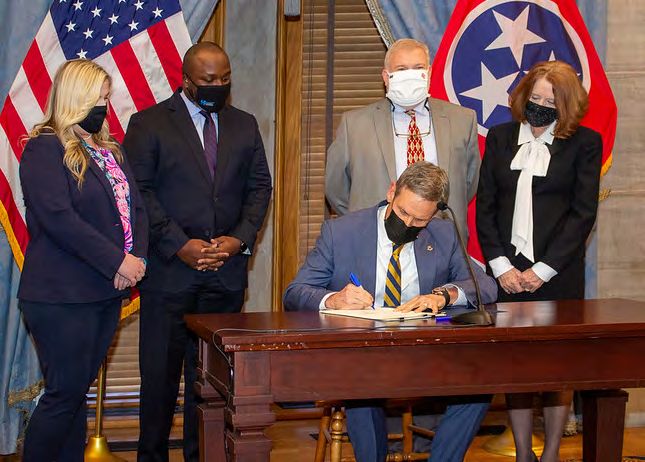
Foundational Literacy Skills Plan

Submission & Review Timeline
Date (2021)
            April 1        Application opens for Foundational Literacy Skills Plan Submissions

           May 14          All Foundational Literacy Skills Plans must be submitted for initial review

       May 17-21           Approvals sent and feedback provided to districts or public charter
                           schools needing to revise and resubmit plans

           May 24          Revisions submitted for second review

       May 24-28           Second review of Foundational Literacy Skills Plans with approvals or
                           feedback provided

            June 1         All districts and public charters have approved, submitted Foundational
                           Literacy Skills Plans

      Within 10            Plans are posted to the district’s or charter school’s website as well as
  business days            the department’s website
    of approval

Foundational Literacy Skills Plans will be reviewed by the early literacy team within the Academics and
Instructional Strategy Division. Reviewers will have normed training using the Foundational Literacy Skills
Plan Rubric found on page 10.

Should a district or public charter need to revise and resubmit their Foundational Literacy Skills Plan,
they can reach out to Rachael Ross at rachael.l.ross@tn.gov to set up a call to discuss questions from
their initial feedback.

Office of Academics • 710 James Robertson Parkway • Nashville, TN 37243                                    Pg 4
Foundational Literacy Skills Plan

Components
Component                 Overview of Requirements
Daily Foundational        The amount of daily time devoted to foundational literacy skills instruction and a
Skills Instructional      description of how the instructional time is utilized in grades K-5.
Time
                          The daily time should demonstrate that foundational skills instruction is the primary
                          form of instruction for English Language Arts in grades K-3.

                          Instruction should focus on an evidence-based method of teaching students to read
                          that includes phonemic awareness, phonics, fluency, vocabulary, and comprehension
                          that enables students to develop the reading skills required to meet Tennessee’s
                          academic standards.
Adopted Foundational      The English language arts textbooks and instructional materials adopted by the LEA or
Skills Instructional      public charter school and used to teach students to read are based on foundational
Materials                 literacy skills instruction. Each LEA and public charter school shall adopt and use
                          English language arts textbooks and instructional materials from the list approved for
                          adoption by the state board pursuant to § 49-6-2202, unless a waiver is granted to the
                          LEA or public charter school pursuant to § 49-6-2206.

                          LEAs and public charter schools using English language arts textbooks or instructional
                          materials from the list approved for adoption by the state board in 2019, or that
                          received a waiver pursuant to § 49-6-2206 to use English language arts textbooks or
                          instructional materials that were not included on the list approved for adoption in
                          2019, are not required to adopt or purchase additional English language arts textbooks
                          or instructional materials.

                          Verification of alignment to Tennessee’s academic standards is required by Jan. 1st,
                          2023 through a process determined by the Comptroller.
Universal Screener        The universal reading screener selected by the LEA or public charter school must:

                          Meet the dyslexia screening requirements and the universal screening requirements
                          established in Tennessee’s RTI² framework manual,

                          Be appropriate for students in PreK-3,

                          Be administered annually to K-3 students during each of the three administration
                          windows established by the department,

                          Be able to be offered to pre-kindergarten students.

                          Note: Each LEA and public charter school shall submit the results of each universal
                          reading screener administered to students to the department.

Office of Academics • 710 James Robertson Parkway • Nashville, TN 37243                                          Pg 5
Foundational Literacy Skills Plan

Component                 Overview of Requirements
RTI Reading
    2
                          The intervention structure will provide a description of the reading interventions and
Intervention Structure    supports that are available to students who are identified as “at-risk” for a significant
                          reading deficiency or identified with a significant reading deficiency on the universal
                          screener. These supports should include how personnel are deployed to provide
                          interventions for “at-risk” students. Reading interventions should be aligned to
                          students’ areas of need and designed to improve a student’s foundational literacy
                          skills for each student identified as having a significant reading deficiency. Intervention
                          structures as outlined in Tennessee’s Response to Instruction and Intervention (RTI²)
                          framework manual would be sufficient for this section of the plan.
Parent Notification       LEAs and public charter schools will provide Home Literacy Reports to notify and
Plan                      engage parents and families in the student’s literacy progress.

(Home Literacy            Home Literacy Reports must be sent after each administration of a universal reading
Reports)                  screener to the family of a student in any of the grades kindergarten through three
                          (K-3) identified as having a significant reading deficiency or “at-risk” for a significant
                          reading deficiency, and annually for grade 4 and 5 students for students identified as
                          having a significant reading deficiency or “at-risk” for a significant reading deficiency.

                          For students who are identified as “at-risk” for a significant reading deficiency or
                          students identified with a significant reading deficiency on the universal screener
                          in grades kindergarten through three (K-3), the immediate notification system must
                          include:

                           1. Information about the importance of a student being able to read proficiently
                              at the end of the third-grade level;

                           2. Reading intervention activities that the parent may use with their student at
                              home to improve reading proficiency; and

                           3. Information about the specific reading interventions and supports that the
                              LEA or public charter school recommends for the student, which may include
                              the interventions provided by the LEA or public charter school pursuant to
                              Tennessee’s RTI² framework manual.

                          Note: For students identified with the characteristics of dyslexia, parent notification
                          should include information and resources regarding dyslexia.

                          Districts can also choose to use the state’s Home Literacy Report system that will provide all
                          required reports in the spring of 2022.
PD Plan for Teachers      LEAs and public charter schools will provide a professional development plan for
                          teachers in any of the grades kindergarten through five (K-5), allowing teachers to
                          receive training in foundational literacy skills instruction.

                          Districts can also choose to use the state’s early literacy courses. The department shall
                          develop at least one (1) professional development course on foundational literacy skills
                          instruction that is available, at no cost, to teachers in kindergarten through grade five
                          (K-5) that may be used by teachers to earn professional development points.

Office of Academics • 710 James Robertson Parkway • Nashville, TN 37243                                              Pg 6
Foundational Literacy Skills Plan

Application Questions
Section                  Application Questions                                     Application Review Look-Fors
Daily Foundational       1. When reviewing your grades K-2 master schedule,         • Aligned with TN standards
Skills Instructional     how much time do your Kindergarten through                 • A minimum of 45 minutes of
Time                     second grade students spend in foundational skills           foundational skills instruction
                         instruction daily? What evidenced-based method               daily
                         is used to teach foundational skills in Kindergarten
                         through second grade? If you plan to make any              • Foundational skills instruction
                         changes or improvements for next year, please                is demonstrated as the
                         indicate those changes here. (Maximum 500 words).            primary form of instruction
                                                                                    • Includes explicit instruction
                         Attach grades K-2 master schedules representing              and student practice
                         daily instruction. You must include a sample of              in fluency, vocabulary,
                         school-based schedules representing 25% of                   phonemic awareness,
                         the schools within your district and providing an            phonics, and comprehension
                         overarching view of how foundational skills are
                         taught within your district.

                         NOTE: If you are a single charter school, you must
                         submit your individual K-2 master schedule.

                         2. When reviewing your grades 3-5 master schedule,         • TN standards-alignment
                         how much time do your third through fifth grade              (including morphology,
                         students spend in foundational skills instruction            grammar, spelling, writing,
                         daily? What evidenced-based method is used to                and fluency)
                         teach foundational skills in grades 3-5? (This can         • A minimum of 30 minutes of
                         include an integrated approach that meets the                dedicated foundational skills
                         foundational skills at this grade band.) If you plan to      instruction (can be embedded
                         make any changes or improvements for next year,              or isolated)
                         please indicate those changes here. (Maximum 500
                         words).                                                    • Evidence-based approach
                                                                                      used to teach foundational
                         Attach grades 3-5 master schedules representing              skills
                         daily instruction. You must include a sample of            • Includes explicit supports
                         school-based schedules representing 25% of                   for fluency, vocabulary, and
                         the schools within your district and providing an            comprehension
                         overarching view of how foundational skills are
                         taught within your district.

                         NOTE: If you are a single charter school, you must
                         submit your individual 3-5 master schedule.

Office of Academics • 710 James Robertson Parkway • Nashville, TN 37243                                             Pg 7
Foundational Literacy Skills Plan
Section Application Questions Application Review Look-Fors
Adopted Foundational 3. Grades K-2 Please use the drop-down menu to • Instructional materials are
Skills Instructional select your approved instructional materials (either on State Board of Education
Materials on the 2019 ELA adoption list or waiver) that your approved list and include
district uses for foundational skills instruction. complete alignment to
foundational skills standards
4. Grades 3-5 Please use the drop-down menu to
select your approved instructional materials (either • Instructional materials not
on the 2019 ELA adoption list or waiver) that your on the approved list have an
district uses for foundational skills instruction. approved waiver
• If the district chooses
If applicable, include your waiver. supplemental foundational
skills resources, supplemental
resources are aligned to
TN state standards and
fully address phonological
awareness and phonemic
awareness
Universal Reading 6. List the program you use for your universal • Selected screener complies
Screener reading screener in K-5. with the dyslexia screening
requirements established in §
Note: Please identify if you will use the state 49-1-229
universal screening option here.
• Selected screener complies
with the universal screening
requirements established in
Tennessee’s RTI² framework
manual
• Selected screener allows for
three screening assessments
yearly
RTI2 Reading 7. Describe the reading intervention and supports • Intervention schedules are
Intervention available for students identified as “at-risk” for aligned with expectations
Structure a significant reading deficiency or identified outlined in the RTI2 manual
with a significant reading deficiency. Include any • Interventions are evidenced-
information regarding Tier II, Tier III, RTI2 supports based and differentiated by
and/or additional supports the district provides for Tier II and III as required by
(Note: 1000 word
students that struggle with reading. (Maximum 500 the RTI2
maximum)
words)
• framework
Include a representative sample (about 25%) of • Interventions address
school-based intervention schedules that represent specific students’ skill gaps
how intervention occurs across the district. and progress monitor
specific gaps for student
improvement
• Data teams use progress
monitoring data to inform
decisions about duration,
material and intensity
changes when a student is
not showing progress
Office of Academics • 710 James Robertson Parkway • Nashville, TN 37243 Pg 8Foundational Literacy Skills Plan
Section Application Questions Application Review Look-Fors
Parent Notification 8. Describe how your district notifies or plans to • Explains student scores in
Plan: notify parents of students in grades K-5 if their child parent-friendly language
is “at-risk” for a significant reading deficiency or has a • Provides clear explanation
(Home Literacy significant reading deficiency based on the universal
Reports) of student skill gaps and the
reading screener results. Describe how you currently depth and extent of student
(or plan to) implement home literacy reports that need
will provide information on the importance of
being able to read by the end of 3rd grade, reading • Provides information
intervention activities for families, and the reading about how skill gaps will
interventions provided by the school. In addition, be addressed during
please include the frequency of parent notification intervention
and engagement. • Provides no-cost reading
activities to families to
(Maximum 500 words) support their child at home
Include a sample letter(s) for parents of K-3 students • Includes a clear plan to
and parents of 4-5 students. communicate with parents
three times a year in grades
K-3 and annually in grades 4
and 5
• Explains the importance of
reading proficiency by the
end of 3rd grade
PD Plan for Teachers 9. Describe how you will provide (or have provided) • Professional development
all K-5 teachers with professional development on provides deep training to
foundational skills. teachers on foundational
skills instruction grounded in
(Maximum 250 words) a phonics-based approach
Include a sample professional development calendar. • Be the equivalent of one week
• Include phonological
awareness, phonemic
awareness, phonics, fluency,
and vocabulary
• Requires teachers to
demonstrate knowledge and
competency
• Providers are experienced,
deeply trained in the
materials, and have a proven
track record of supporting
districts in foundational skills
instruction
• Should be absent of cueing or
MSV strategies
Office of Academics • 710 James Robertson Parkway • Nashville, TN 37243 Pg 9Foundational Literacy Skills Plan
Rubric
Instructions: Each indicator below must be present in the Foundational Literacy Skills Plan in order to be
approved by the department. Upon receiving feedback, any indicators that are highlighted in yellow need
to be added to the plan to resubmit. The notes section can be used to provide feedback.
Foundational
Literacy Does Not
Skills Plan Meet Meets Notes
Component Criteria for Success Expectation Expectation for LEA
• Instructional time includes a minimum
of 45 minutes of foundational skills
instruction
Daily
• Instruction is aligned to the TN state
Foundational standards
Skills All criteria All criteria
Instructional • Foundational skills instruction is are not met are met
demonstrated as the primary form of
Time:
instruction
Grades K-2
• Includes explicit instruction and student
practice in phonemic awareness, phonics,
fluency, vocabulary, and comprehension
• Master schedule indicates a minimum
Artifact 1: of 45 minutes of foundational skills
Grades instruction All criteria All criteria
K-2 Master • Foundational skills instruction is are not met are met
Schedule demonstrated as the primary form of
instruction
• Instructional time includes a minimum
of 30 minutes of foundational skills
Daily instruction (isolated or embedded)
Foundational • Instruction is aligned to the TN state
Skills standards and includes morphology, All criteria All criteria
Instructional grammar, spelling, writing, and fluency are not met are met
Time: • An evidence-based approach is used to
Grades 3-5 teach foundational skills
• Includes explicit supports for fluency,
vocabulary, and comprehension
Office of Academics • 710 James Robertson Parkway • Nashville, TN 37243 Pg 10Foundational Literacy Skills Plan
Foundational
Literacy Does Not
Skills Plan Meet Meets Notes
Component Criteria for Success Expectation Expectation for LEA
Artifact 2: • Master schedule indicates a minimum
Grades of 30 minutes of foundational skills
All criteria All criteria
instruction (isolated or embedded)
3-5 Master are not met are met
Schedule
• Selected instructional materials are on
approved state adoption list
• Instructional materials include complete
alignment to the TN foundational skills
Adopted standards
Foundational • If district chooses supplemental foundational
Skills skills resources, supplemental resources All criteria All criteria
Instructional are aligned to TN state standards and are not met are met
Materials: fully address phonological awareness and
phonemic awareness
Grades K-2
OR
• Instructional materials have approved
waiver
• Waiver is included
• Selected instructional materials are on
approved state adoption list
• If district chooses supplemental foundational
Adopted skills resources, supplemental resources
Foundational are aligned to TN state standards and
Skills fully address phonological awareness and All criteria All criteria
Instructional phonemic awareness are not met are met
Materials: OR
Grades 3-5
• Instructional materials have approved
waiver
• Waiver is included
• Universal Reading Screener is selected
• Complies with RTI2 screening requirements
outlined in Tennessee’s RTI2 framework
Universal manual All criteria All criteria
Reading
• Complies with the dyslexia screening are not met are met
Screener
requirements established in § 49-1-229
• Allows for three screening assessments
annually
Office of Academics • 710 James Robertson Parkway • Nashville, TN 37243 Pg 11Foundational Literacy Skills Plan
Foundational
Literacy Does Not
Skills Plan Meet Meets Notes
Component Criteria for Success Expectation Expectation for LEA
• Intervention schedules are aligned with
expectations outlined in the RTI2 manual
• Interventions are evidence-based and
differentiated based by Tier II and III
RTI2 Reading • Interventions address specific skill gaps
All criteria All criteria
Intervention and progress monitor for specific gaps
are not met are met
Structure • Data teams use progress monitoring
data to inform decisions about duration,
material, and intensity changes when a
student is not showing progress
• Intervention schedule is included
Artifact 3: • Intervention schedules are aligned with
expectations outlined in the RTI2 manual All criteria All criteria
Intervention
are not met are met
Schedule
• Parent Notification Plan details student
scores in parent-friendly language
• Provides clear explanation of skill gaps
Parent and the depth and extent of student need
Notification • Provides information about how those
Plan: Home gaps will be addressed during intervention
Literacy • Plan includes no-cost activities for families All criteria All criteria
Reports to support learning at home are not met are met
• Provides information on the importance of
3rd grade reading proficiency
• Includes clear plan to communicate with
parents three times a year in grades K-3
and annually in grades 4 and 5
• Sample letters (grades K-3 & 4-5) included
• Parent Notification Plan details student
scores in parent-friendly language
• Provides clear explanation of skill gaps
and the depth and extent of student need
Artifact 4:
• Provides information about how those All criteria All criteria
Sample Grades
gaps will be addressed during intervention are not met are met
K-3 Letter
• Plan includes no-cost activities for families
to support learning at home
• Provides information on the importance of
3rd grade reading proficiency
Office of Academics • 710 James Robertson Parkway • Nashville, TN 37243 Pg 12Foundational Literacy Skills Plan
Foundational
Literacy Does Not
Skills Plan Meet Meets Notes
Component Criteria for Success Expectation Expectation for LEA
• Parent Notification Plan details student
scores in parent-friendly language
• Provides clear explanation of skill gaps
and the depth and extent of student need
Artifact 5:
• Provides information about how those All criteria All criteria
Sample Grades
gaps will be addressed during intervention are not met are met
4-5 Letter
• Plan includes no-cost activities for families
to support learning at home
• Provides information on the importance of
3rd grade reading proficiency
• Professional Development (PD) Plan
provides deep training to teachers
in grades K-5 on foundational skills *PD plans that
instruction grounded in a phonics-based include providers
approach other than the
state need to be
• Includes training in phonological peer-reviewed
Professional awareness, phonemic awareness, phonics, by designated
Development fluency, and vocabulary All criteria All criteria district leaders
Plan for • Training providers are experienced with are not met are met group to
Teachers proven track record of supporting districts determine if all
• Teachers are required to demonstrate criteria are met
knowledge and competency
• Absent of cueing or MSV strategies
• Sample professional development
calendar is included
• Includes teachers in grades K-5
• Equivalent of one week
• Indicates who the trainers are and how
they are qualified
Artifact 6: PD All criteria All criteria
Calendar • Includes training in phonological are not met are met
awareness, phonemic awareness, phonics,
fluency, and vocabulary
• Indicates how teachers are required to
demonstrate knowledge and competency
Office of Academics • 710 James Robertson Parkway • Nashville, TN 37243 Pg 13Foundational Literacy Skills Plan
Frequently Asked Questions
1 When should I submit the Foundational Skills Literacy Plan?
All districts and public charter schools must have an approved Foundational Literacy Skills Plan submitted to
the department by June 1, 2021. You may begin submitting your Foundational Literacy Skills Plans as early
as April 1, 2021 to ensure the department has time to review, approve, or provide feedback for revisions.
There is a submission calendar in this toolkit on page 4 if you would like to submit early in order to ensure
time for feedback and revisions, if necessary.
2 What grade levels need to be included in the Foundational Literacy Skills Plan?
All districts and public charter schools serving students in grades Kindergarten through five must submit
a Foundational Literacy Skills Plan. Even if your school or district does not service all of these grades, you
must submit a plan for any of the grade levels (K-5) that are served in your building(s).
3 Does this law change the state’s current RTI2 requirements?
No. This law aligns the universal screener requirements of RTI2 with the Tennessee Literacy Success Act
and the Say Dyslexia Act to ensure coherence.
4 Does this law change the state’s Say Dyslexia law?
No. This bill aligns the universal screener requirements of RTI2 with the Tennessee Literacy Success Act
and the Say Dyslexia Act to ensure coherence.
Office of Academics • 710 James Robertson Parkway • Nashville, TN 37243 Pg 14Foundational Literacy Skills Plan
5 How often must a school district re-submit its Foundational Literacy Skills Plan?
Each school district and public charter school must re-submit its Foundational Literacy Skills Plan once
every three years, unless the district or public charter school demonstrates strong growth, in which case
the district or public charter school could be authorized by the department to submit a revised plan less
frequently.
The department is authorized to require a school district or public charter school to submit a revised
Foundational Literacy Skills Plan more frequently than every three years if any of the following occurs:
• Fourth grade TVAAS data for any school or schools in the district reflect an attainment level of
“significantly below expectations” immediately preceding the date on which the foundational
literacy skills plan or the revised foundational literacy skills plan is due; or
• The district-wide 4th grade ELA TVAAS data for individual student subgroups, as defined by
Tennessee’s ESSA plan, reflects an attainment level of “below expectations” or “significantly below
expectations” immediately preceding the date on which the foundational literacy skills plan or the
revised foundational literacy skills plan is due.
In addition, a school district or public charter school will not be required to submit a revised plan if both
of the following occur:
• The district’s or public charter school’s district-wide student growth data for 4th grade English
language arts for the two (2) Tennessee comprehensive assessment program (TCAP) test
administrations immediately preceding the date on which the foundational literacy skills plan or the
revised foundational literacy skills plan is due reflects an attainment level of “above expectations”
or “significantly above expectations”; and
• The LEA’s or public charter school’s student growth data for each individual student subgroup,
as defined by Tennessee’s ESSA plan, for 4th grade English language arts for the two (2) TCAP test
administrations immediately preceding the date on which the foundational literacy skills plan or the
revised foundational literacy skills plan is due reflects an attainment level of “above expectations”
or “significantly above expectations.”
6 What universal screener is required by the Tennessee Literacy Success Act?
The department will provide a free Tennessee universal reading screener, which may be used for all
of the following:
• To meet the requirements of the Act,
• To meet the screener requirements within the RTI2 framework,
• As a dyslexia screener, and
• As an approved alternative growth model for teacher evaluations.
Using the Tennessee universal reading screener for the above will likely consolidate the number of
different assessments needed in districts. LEAs and public charter schools also have the option to use
a locally adopted universal screener that is approved by the state board of education. The Act requires
districts and charter schools to continue to administer the Tennessee universal reading screener or a
universal reading screener approved by the state board of education to all students in grades K-3 three
times each year during three administration windows set by the department. LEAs and public charter
schools may also choose to administer the free Tennessee universal reading screener or a universal
reading screener approved by the state board of education to Pre-K students.
Office of Academics • 710 James Robertson Parkway • Nashville, TN 37243 Pg 15Foundational Literacy Skills Plan
7 Will there be an approved list of universal screeners?
The state is providing a free universal reading screener at no cost. The state is currently working with the
State Board of Education to determine the rulemaking and additional components necessary from this law.
8 When will the new, free Tennessee universal reading screener be available for district use?
The department anticipates the release of the Tennessee universal reading screener by the end of
May 2021.
9 How would a student be identified as having a significant reading deficiency?
When a student completes the universal screener three times a year, they may be identified in different
categories based on the universal screener results. “A significant reading deficiency” refers to students in
K through third grade who demonstrates a lack of significant progress and/or skills significantly below grade
level based on universal screening data. Specific scores that identify a student with a significant reading
deficiency will be determined through an equating process. For students in fourth or fifth grade, this would
include students scoring at “approaching” or “below” on the English language arts portion of the Tennessee
Comprehensive Assessment Program (TCAP) assessment.
10 How would a student be identified as “at-risk” of significant reading deficiency?
When a student completes the universal screener three times a year, they may be identified in different
categories based on the universal screener results. “At-risk of significant reading deficiency” refers to
students in K through third grade who has demonstrated limited progress in foundational literacy skills and/
or significantly less progress in comparison to his or her peers. Specific scores that identify a student to be
in the “at-risk” for a significant reading deficiency category will be determined through an equating process.
11 Are school districts required to report the results from the administration of the
Tennessee universal reading screener or a universal screener approved by the
state board of education to the department?
Yes. School districts and public charter schools must submit the results from universal reading screeners
to the department while maintaining compliance with the Family Educational Rights and Privacy Act (FERPA)
(20 U.S.C. § 1232g), § 10-7-504, and other applicable state and federal privacy laws. Screener results may not
be used to assign accountability determinations for any school or district.
12 What are the requirements for parent notification for students in grades K-3?
Upon identifying any K-3 student as having a significant reading deficiency or being “at-risk” for a significant
reading deficiency, school districts and public charter schools must notify the student’s parents in writing
and provide the parents with information on the importance of third grade reading proficiency, suggested
reading intervention activities that can be completed at home, and specific in-school reading interventions
and supports that the school district or charter school will provide for the student. In addition, for any
student who has been identified as having a significant reading deficiency or being “at-risk” for a significant
reading deficiency, school districts and public charter schools must notify the parents of the student’s
progress in foundational literacy skills after each universal reading screener administration for students in
grades K-3. An LEA or public charter may increase frequency of these parent notifications to meet the needs
of students, families, and communities. The law requires the statewide minimum.
Office of Academics • 710 James Robertson Parkway • Nashville, TN 37243 Pg 16Foundational Literacy Skills Plan
13 What are the requirements for parent notification for students in grades 4-5?
Upon identifying any 4-5 student as having a significant reading deficiency or being “at-risk” for a significant
reading deficiency, school districts and public charter schools must notify the student’s parents in writing
and provide the parents with information on the importance of third grade reading proficiency, suggested
reading intervention activities that can be completed at home, and specific in-school reading interventions
and supports that the school district or charter school will provide for the student. In addition, for any
student who has been identified as having a significant reading deficiency or being “at-risk” for a significant
reading deficiency, school districts and public charter schools must notify the parents of the student’s
progress in foundational literacy skills one time per year for students in grades 4-5. An LEA or public
charter may increase frequency of these parent notifications to meet the needs of students, families, and
communities. The law requires the statewide minimum.
14 Does the Act have new professional development requirements for teachers?
Teachers in kindergarten through fifth grade must complete at least one professional development course
on foundational literacy skills approved by the department by August 1, 2023. The department will develop
at least one professional development course, the Early Reading TN Training, to fulfill this requirement to
be made available at no cost. The Early Reading TN Training will be available as one week of asynchronous
learning in April 2021.
15 Do the week one and week two Early Reading TN Training series coursework within
Reading 360 “count” as an equivalent for the professional development requirement
referenced above?
Yes. This coursework provides the equivalent of two courses of foundational literacy skills. This professional
development is the equivalent of two full weeks of professional development points.
16 Does the Tennessee Literacy Success Act require districts to use Reading 360?
No. The Act outlines the Tennessee early literacy policy framework that ensures that all Tennessee children
learn to read using a foundational literacy skills approach grounded in phonics. The Act outlines four
requirements for foundational literacy skills for our state that include the Foundational Skills Literacy Plan,
the use of a universal screener for literacy tracking, the inclusion of foundational literacy skills in educator
preparation and leader preparation programs as well as assurances that LEAs will use high-quality materials
to teach foundational literacy skills. Reading 360 programming provides free and optional supports that
help districts provide high-quality early literacy instruction to children. Programming includes free and
optional teacher training, grants for implementation support, family at-home resources to support reading,
free and optional screeners and literacy assessment systems as well as a wealth of free digital early literacy
resources through the online literacy tool.
17 Where can families find a school district’s Foundational Literacy Skills Plan?
Each school district must post its Foundational Literacy Skills Plan, approved by the department, on the
district’s website. The department is also required to post all district plans on the department’s website.
Office of Academics • 710 James Robertson Parkway • Nashville, TN 37243 Pg 17Foundational Literacy Skills Plan
Example Responses
1 When reviewing your grades K-2 master schedule, how much time do your Kindergarten
through second grade students spend in foundational skills instruction daily? What
evidenced-based method is used to teach foundational skills in Kindergarten through
second grade? If you plan to make any changes or improvements for next year, please
indicate those changes here. (Maximum 500 words).
Our district uses a foundational skills curriculum grounded in reading science and aligned to Tennessee
ELA standards as approved by the state Textbook and Instructional Materials Quality Commission. This
curriculum uses foundational skills as the primary form of instruction and has a designated block of time
(60 minutes daily) for foundational skills instruction in grades K-2. This instructional time includes activities
that build phonological awareness, phonics practice, and fluency practice in addition to comprehension
and vocabulary work (“word work”). During that instruction, teachers explicitly teach a sound, the students
practice the sound aloud (learning how to produce pure sound), the teacher models writing the sound, the
students refer to their individual code chart on which they write the sound, then students apply the skill in
independent practice (small group or individual).
• /ee/ spelled ‘ee’ as in seed
For example, in the second nine weeks, students will know how to
decode separated digraphs and vowel digraphs and students will be • /ae/ spelled ‘a_e’ as in cake
able to learn and use the most common spellings for each sound • /ie/ spelled ‘i_e’ as in line
(as seen in the box to the right). Students have the opportunity to flex
• /oe/ spelled ‘o_e’ as in hope
these muscles when using decodable texts that are aligned with the
sounds taught in explicit instruction. • /ue/ spelled ‘u_e’ as in cube
Our improvements for next year are grounded in the continued designated time for teachers to collaborate
as they solve problems of practice (refine the opportunities to develop and practice writing skills, for
example) and as they internalize the instructional plan through unit-level and lesson-level preparation.
See Appendix A for a sample master schedule for grades K-2.
Office of Academics • 710 James Robertson Parkway • Nashville, TN 37243 Pg 18Foundational Literacy Skills Plan
2 When reviewing your grades 3-5 master schedule, how much time do your third through
fifth grade students spend in foundational skills instruction daily? What evidenced-based
method is used to teach foundational skills in grades 3-5? (This can include an integrated
approach that meets the foundational skills at this grade band.) If you plan to make any
changes or improvements for next year, please indicate those changes here. (Maximum 500
words).
Our district has an integrated literacy block for grades three (3) through five (5) grounded in reading science
and aligned to Tennessee ELA standards. Our curriculum materials are selected from those approved by the
state Textbook and Instructional Materials Quality Commission. During the integrated ELA block that meets
an evidence-based approach to applying foundational skills within daily lessons, our students receive a total
of 90 minutes of ELA instruction. Although the daily schedule is not the same each day, all daily instruction
includes components for knowledge-building (to build and improve the ability to comprehend complex texts
and apply that knowledge as they listen, read, write, think, and speak) for about 60 minutes per day and
foundational skills instruction that includes fluency, grammar, morphology, spelling, and writing for at least
30 minutes per day. Our adopted curriculum also engages students in work around fluency, vocabulary,
and comprehension. The fluency, vocabulary, and comprehension skills are not taught in isolation, but are
embedded within the lesson to ensure continuity, cohesion, and connection.
For example, our fourth grade students are now beginning the domain on The American Revolution. They
begin by briefly activating prior knowledge and read independently and/or aloud. After the daily read-
aloud (or independent reading in on-grade level, complex text), the students may summarize the content
(through a think-pair-share model), unpack the most essential vocabulary (“word work”), respond to a
series of scaffolded questions, and write a response to an inferential question that requires students to
use evidence from the text to support their answer. For example, in vocabulary lessons teachers provide
explicit support for vocabulary needed to access the complex text. In one lesson, the students study the
root “port” as in import, export, portable, etc. Students use their word knowledge as they engage in group
discussion and writing activities. Therefore, foundational skills instruction is embedded in all aspects of this
90-minute block and is dedicated to developing students’ holistic literacy approach to fluency, vocabulary,
and comprehension coherently as recommended by research.
See Appendix B for a sample master schedule for grades 3-5.
3 Grades K-2: Please use the drop-down menu to select your approved instructional materials
(either on the 2019 ELA adoption list or waiver) your district uses for foundational skills
instruction.
This answer is dependent on district adoption. If applicable, include your waiver.
4 Grades 3-5: Please use the drop-down menu to select your approved instructional materials
(either on the 2019 ELA adoption list or waiver) your district uses for foundational skills
instruction.
This answer is dependent on district adoption. If applicable, include your waiver.
Office of Academics • 710 James Robertson Parkway • Nashville, TN 37243 Pg 19Foundational Literacy Skills Plan
5 Optional: Please add any additional information if necessary.
Our district has adopted an approved curriculum for ELA instruction; however, we have chosen to
supplement in several ways. Our district will use the Tennessee Foundational Skills Curriculum Supplement
to further address foundational skills in daily instruction. This supplement allows us to focus more deeply on
the phonological awareness and advanced phonemic awareness skills that are crucial for success all the way
through second grade. We use the daily sounds-first activities as our daily warm up in all elementary schools
across the district. Students also have an extra set of “at-home” decodables. We encouraged our families to
order the “at-home decodables” through the state’s free ordering website. The at-home decodables allow
our students another round of practice with their families. The at-home decodables provide our families
with the sounds-supports to connect school and home practice, which adds additional reinforcement to
daily lessons.
6 Please list the program you use for your universal reading screener in K-5.
Note: Please ensure that the screener listed above complies with the dyslexia screening requirements
established in § 49-1-229 and with the universal screening requirements established in Tennessee’s RTI²
framework manual.
This is dependent on district contracting. The Tennessee universal reading screener is always an option.
7 Please describe the reading intervention and supports available for students identified
as “at-risk” for a significant reading deficiency or identified with a significant reading
deficiency. Include any information regarding Tier II, Tier III, RTI2 supports and/or additional
supports the district provides for students that struggle with reading. (Maximum 1000
words)
Note: The RTI2 framework may be helpful.
In the fall, students are given a universal screener (AIMSWEB) to determine which students have a significant
reading deficiency or are “at-risk”. Our grade-level teachers and principals review universal screener data
to determine which students score between the 0-25th percentile. Those students demonstrating need
are classified as in need of Tier II or Tier III instruction. Students classified as Tier II or Tier III are given a
diagnostic assessment to determine specific deficits in order to best assign students to a small group with
an intervention that will narrow skill gaps. Students receive daily, small-group intervention for at least 45
minutes in their area of greatest deficit.
We have research-based options for reading intervention support available to our students who are “at-risk”
and/or who have been identified with a significant reading deficiency. Our recently adopted ELA curriculum
contains an assessment and remediation guide in which teachers can find activities that directly address
skill gaps. They can tailor this to the needs of their RTI group of students. If that intervention is not proving
to be effective, more comprehensive, strategic interventions (such as SPIRE) become an option. Data teams
meet every 4 ½ weeks to determine if a change in the intervention or the person providing the intervention
is warranted. The data team also looks at other variables (attendance, engagement) as part of the decision-
making process before a change is made to the programming or provider.
Our students receive explicit instruction in their area of deficit in small groups using research-based
materials and strategies. These students are also screened using additional survey level assessments to
determine if they have characteristics of dyslexia. Students who do demonstrate those characteristics
Office of Academics • 710 James Robertson Parkway • Nashville, TN 37243 Pg 20Foundational Literacy Skills Plan
receive intensive intervention as outlined in the Say Dyslexia Law using programs that meet the law’s
requirements. Our district uses a research-based supplemental program as one intervention for students
with characteristics of dyslexia. Our district notifies families of students who demonstrate characteristics
of dyslexia. Families are notified that the SPIRE curriculum is used to support those students, as it is based
on the Orton-Gillingham approach of systematic, explicit, sequential, phonics-based instruction and is
considered a strong support for those students.
Intervention takes place daily during a grade-level time in the master schedule just for RTI. When students
are in their RTI groups, they work on activities and assignments that make them stronger in that skill. For
example, students who need instruction in comprehension may read a new text and answer scaffolded
questions, all related to the knowledge-building unit they are studying in Tier I instruction. For students who
need fluency support, they may receive intervention using the SPIRE program.
See Appendix C for a sample intervention schedule.
8 Please describe how your district notifies or plans to notify parents of students in grades
K-5 if their child is “at-risk” for or has a significant reading deficiency based on the universal
reading screener results. Describe how you currently (or plan to) implement home literacy
reports that will explain the importance of being able to read by the end of 3rd grade,
reading intervention activities for families, and the reading interventions provided by the
school. In addition, please include the frequency of parent notification and engagement.
(Maximum 1000 words)
Our district notifies parents in grades K-5 if their child is “at-risk” for or has a significant reading deficiency
(as evidenced by students scoring in the 0-25th percentile) immediately after the district’s schools complete
the fall universal screening. Students’ scores are communicated in parent-friendly language that provides
a clear explanation of student skill gaps and the depth and extent of student needs. The parents are told
what intervention their student will receive and the amount of time each day the student will receive
services. This is coupled with a description of the importance of being able to ready by the end of 3rd grade.
The district defines how students are assessed and what a “significant reading deficiency” means. Parents
are subsequently notified of their child’s progress, or lack of progress, after the 4 ½ week data team
meetings. In the parent notifications/communication, data teams note any changes being made if the child
is not showing sufficient progress as evidenced by progress monitoring and universal screening data as well
as recommended activities (that do not require purchased resources) that will support students in the area
of deficit (activities are not tailored by child, but tailored by skill deficit generally). These communications go
out to parents with students in grades K-3 three times annually and are shared in grades 4 and 5 annually.
Additionally, the ELA curriculum contains parent letters in the younger grades that outline the foundational
skills and knowledge domains for the coming week that will inform and equip parents to work with the child.
Families can better understand how to support their student(s) through questions about their texts and
through an awareness of what foundational skills their child(ren) are learning.
See Appendix D for a sample letter for grades K-3.
Office of Academics • 710 James Robertson Parkway • Nashville, TN 37243 Pg 21Foundational Literacy Skills Plan
9 Please describe how you will provide (or have provided all K-5 teachers with professional
development on foundational skills.) (Maximum 250 words)
Teachers in our district will participate in the free and optional Reading 360 Early Literacy Training series
developed by the Tennessee Department of Education. Our plan for providing PD for all K-5 teachers is as
follows:
April 2021 – All teachers of grades in grades Pre-K through five will engage in Week 1 of the Early Literacy
Training series, asynchronously. This training will focus on foundational reading development and
instruction and is grounded in a phonics-based approach. We will ensure that participating educators earn a
completion certificate prior to starting Week 2 work in June.
June 2021 – Our district has registered for the cohort-based, in-person training offered as Week 2 of the
Early Literacy Training series for all teachers in grade Pre-K through second. The participating teachers
will also include interventionists, special education teachers and elementary instructional coaches. This
week will emphasize practical classroom application of research findings around strong instruction in
phonological awareness, phonemic awareness, phonics, fluency, and vocabulary.
We plan to include grade three through five during the summer of June 2022.
See Appendix E for a sample professional development calendar.
Office of Academics • 710 James Robertson Parkway • Nashville, TN 37243 Pg 22Foundational Literacy Skills Plan
Appendix A: Grades K-2 Master Schedule
Grade K Grade 1 Grade 2
Teacher 1 Teacher 2 Teacher 3 Teacher 1 Teacher 2 Teacher 3 Teacher 4 Teacher 1 Teacher 2 Teacher 3
:00
8AM :05 Homeroom
:10
:15 Morning Meeting Morning Meeting
:20
:25
:30 Rotate:
:35
:40
L and L, Foundational
:45 Skills, Math
:50 Foundational Skills Foundational Skills
70 min
:55
:00
60 min 60 min
9AM :05
:10
:15
:20
:25
:30
:35 Rotate:
:40
:45
L and L, Foundational
:50 LIstening and Learning LIstening and Learning Skills, Math
:55
:00
60 min 60 min 70 min
10AM :05
:10
:15
:20
:25
:30
:35 Recess
Rotate:
:40
30 min RTI
:45 L and L, Foundational
:50
:55
50 min Skills, Math
:00
11AM :05 70 min
:10
:15
:20
:25
Math
:30 65 min
:35
:40
:45
Math
:50 65 min Related Arts
:55
:00
60 min
12PM :05
:10 Lunch
:15
:20
30 min
:25
:30 Lunch
:35
30 min Lunch
:40
:45
30 min
:50 RTI
:55
:00
55 min
1PM :05 Writing lab
:10
:15
30 min
:20 Related Arts
:25
:30 Writing lab 60 min
:35
:40
30 min
:45
:50 RTI
:55
:00
60 min
2PM :05 Recess
:10
:15
30 min
:20 Related Arts
:25
:30
60 min
:35 Writing lab Recess
:40
:45
30 min 30 min
:50
:55
Office of Academics • 710 James Robertson Parkway • Nashville, TN 37243 Pg 23Foundational Literacy Skills Plan
Appendix B: Grades 3-5 Master Schedule
Grade 3 Grade 4 Grade 5
Teacher 1 Teacher 2 Teacher 3 Teacher 1 Teacher 2 Teacher 3 Teacher 1 Teacher 2
:00
8AM :05 Homeroom
:10
:15
:20
:25
:30 LITERACY BLOCK:
:35
75 min RTI Related Arts
:40
:45
60 min 60 min
:50
:55 reading (30 min); grammar,
9AM
:00
:05
morphology, writing (45 min)
:10
:15
:20
:25
:30
LITERACY BLOCK:
:35 Related Arts 80 min
:40
:45
RTI 60 min
:50 45 min reading (30 min);
:55
10AM
:00 grammar, morphology,
:05
:10 writing (50 min)
:15
:20
:25
:30 LITERACY BLOCK:
:35 Related Arts 75 min
:40
60 min SS / SCI SPLIT BLOCK:
:45
:50
30 min
:55 reading (30 min); grammar,
11AM
:00
:05
morphology, writing (45 min)
:10 Recess
:15
:20
30 min
:25 MATH BLOCK:
:30
:35 75 min Recess
:40
30 min
:45
:50 fluency, practice, application RTI
:55
problem, concept development, 45 min
:00
12PM Lunch
:05 student debrief
:10
:15
30 min
:20
:25 Lunch
:30
:35
30 min
:40 Lunch MATH BLOCK:
:45
:50
30 min 75 min
:55
1PM
:00
:05 fluency, practice, application SS / SCI SPLIT BLOCK:
:10 Recess 45 min
problem, concept development,
:15
30 min
:20
:25
student debrief
:30
:35
:40
:45 MATH BLOCK:
:50
:55
80 min
2PM
:00
SOCIAL STUDIES /
:05
:10 SCIENCE BLOCK: SOCIAL STUDIES / fluency, practice,
:15
75 min SCIENCE BLOCK: application problem,
:20
:25 75 min concept development,
:30
:35 student debrief
:40
:45
:50
:55
Office of Academics • 710 James Robertson Parkway • Nashville, TN 37243 Pg 24You can also read


