Using Drones Inventory Counts Guide - warebase - FlytWare
←
→
Page content transcription
If your browser does not render page correctly, please read the page content below
ware
  base

         Guide
         Inventory Counts
         Using Drones
                    flytware.com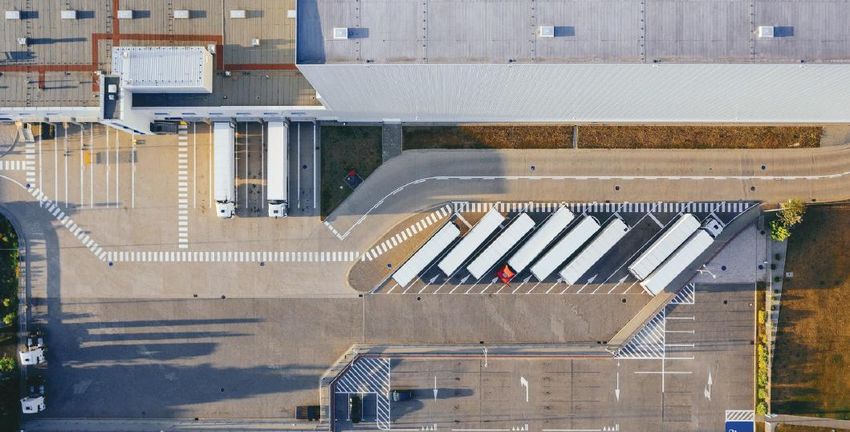
1

2020 Guide to Deploy Fully Autonomous Drones for Inventory Management
   in Warehouses, Distribution Centers, 3PL Sites & Air Cargo Facilities

As we bid adieu to 2019 and welcome the coming leap year, it’s an opportune moment to
highlight the trend in which supply chain automation is headed during the year MMXX. Automation
is an inexorable trend across industries, markets, and geographies – driven by labor shortages,
global competition, and technology innovation. Robots are becoming prevalent in factories as well
as offices, warehouses as well as homes, airports as well as highways. The logistics and supply
chain industry is a leading adopter of autonomous technologies – thanks to e-commerce. Market
projections for automation solutions range from tens of billions to hundreds of billions in the coming
decade – with large corporations as well as nascent startups vying for a piece of the supply chain
automation pie.

Autonomy Trends in Logistics & Supply Chain
The degree of autonomy is turning out to be the key consideration in logistics and supply chain
use-cases, since every manual involvement adds to the cost, safety risk, and performance
uncertainty. Whether it is fully autonomous container trucks that use highways alongside
manually-driven cars, or human-operated forklifts working alongside fully autonomous drones in
warehouses – the higher the degree of autonomy, the greater the business value realized from
automation.

Copyright (C), FlytBase, Inc. 2020                                                       flytware.com
2

Of course, capital expenditures play a crucial role in this trend – unless businesses can justify the
payback period, internal rate of return and return on investment, end-to-end automation will remain
a distant dream. Regulation adds a further level of complexity – flying unmanned aerial vehicles
over neighborhoods for delivering packages over the last mile will take years, if not decades,
because of stringent regulation – in light of security and privacy concerns.

Logistics & Supply Chain Technology Trends
Industry 4.0, Industrial Internet-of-Things (‘IIoT’) and similar phrases have rapidly entered common
parlance, even in the supply chain industry. Underneath these concepts lie the actual technologies
that promise to make things automatic, safe, cost-effective, highly scalable, real-time, mass customiz-
able and so on.

Below are examples of some such technologies and how they are being leveraged by logistics
and supply chain businesses:
     Automated ground vehicles (AGVs) that bring goods to warehouse associates in fulfillment
     centers, thus enable same-day delivery of online purchases,
     Artificial intelligence (AI) and machine learning (ML) techniques that enable rapid, accurate
     analysis – as well as a prediction – of consumer buying behavior and trends, and thus help
     optimize warehouse inventory,

Copyright (C), FlytBase, Inc. 2020                                                        flytware.com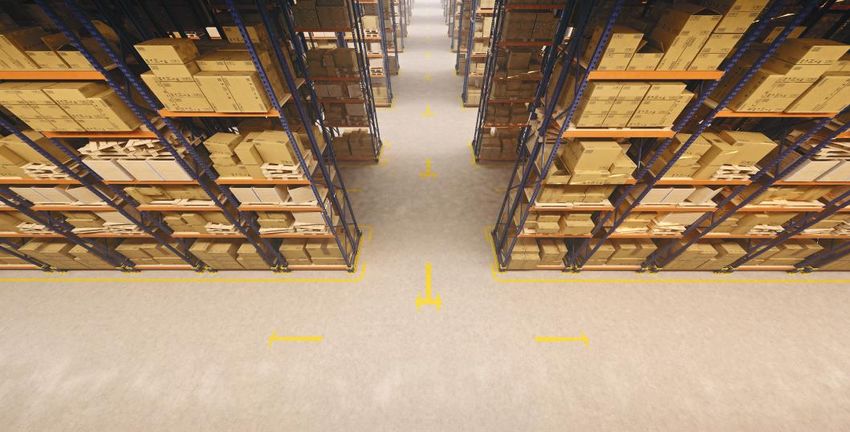
3

     Computer vision systems that help identify defects in manufacturing parts, in real-time, to
     address quality issues proactively,
     Image & video analytics for object, facial and other recognition which in turn enables use-cas-
     es such as yard management, theft prevention, and perimeter security,
     Pervasive sensors that help create highly accurate digital twins of logistics infrastructure and
     thus make preventive maintenance truly possible,
     Robots that not only assemble parts with high precision, but also independently conduct all
     material handling activities, and,
     Unmanned aerial vehicles (UAVs i.e. drones) that deliver goods, monitor logistics facilities,
     scan inventory and much more.

Drones & Supply Chain Trends in 2020: Information
You Need To Know
The past year has seen numerous announcements from the likes of Amazon, Google, UPS and
FedEx on their drone-based supply chain offerings – primarily focused on package delivery. Via
proof-of-concept projects and extensive pilot programs, these offerings have been developed,
tested and refined for broad adoption – not only from the technology and regulation requirements
but also from commercial and public acceptance points of view.

The FAA, via its integrated pilot programs, continues to be a key enabler of the commercial drone
industry – not only in the US, but also as a thought-leader for other countries keen on developing
this sector. The logistics and supply chain industry is a natural fit for drone adoption and
automation; utilisation of space (i.e. the third dimension) opens up innumerable use-cases that
heretofore couldn’t be explored due to being limited to ground transport – indoors and in the last
mile.

As UAV regulations slowly, but surely, enable drones to fly over crowds, at night and beyond the
visual line of sight (BVLOS), the logistics sector will benefit immensely from being able to substitute
fully autonomous drones for manually-operated vehicles. This progress in regulation will be
matched by advances in drone hardware (eg. battery life, reliability, stability) and intelligent
automation software (eg. navigation, perception, recognition).

Supply Chain Software – Intelligent Automation using Drones
Software for drone automation is expected to follow the same trend as we have seen in the (much
broader) personal computer and smartphone industries. Commoditization of hardware will be

Copyright (C), FlytBase, Inc. 2020                                                        flytware.com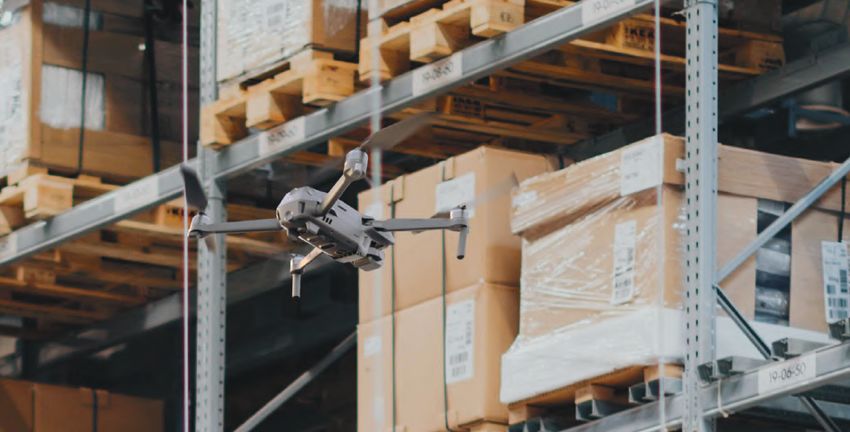
4

the central theme – across components ranging from computing and communication to batteries
and airframes. Value will steadily migrate up the technology stack, from hardware to software; and
within the software, from operating systems and middleware to high-level applications, analytics
and cloud-based collaboration.

The commercial drone industry has witnessed this trend since 2018, with vendors of custom drone
hardware biting the dust and/or pivoting to software-led solutions, and the emergence of global
competitors who have driven down hardware prices, while maintaining (or even improving) the
performance-safety-reliability specifications of such hardware. The ability to build intelligent
automation software that is hardware-agnostic, cloud-connected and API-driven is emerging as the
competitive edge for enterprise drone automation, in general – and for the logistics automation
use-case, in particular.

Supply Chain Strategy for Indoor Drone Adoption
Most of the media and public attention, when it comes to supply chain drones, has been on
last-mile package delivery. The appeal of getting your pizza delivered via an autonomous drone,
within minutes at your doorstep/rooftop, is undeniable. Yet, we rarely see drones flying around our
homes, offices, factories, highways or airports – anywhere in the world! Regulation and battery
technology are, of course, the root causes; exponential growth of commercial drone adoption
across supply chains will require large, sustained advances on both these fronts.

Copyright (C), FlytBase, Inc. 2020                                                     flytware.com

5

However, in the interim, there is a highly compelling business opportunity for drones in logistics –
that of indoor use of fleets of such fully autonomous drones, zigging and zagging around large
warehouses, distribution centers, air cargo facilities and third-party logistics sites.

By shifting the focus from regulatory obstacles to technology capabilities and business value, stake-
holders in the commercial drone industry are rapidly building solutions for indoor use-cases such as:

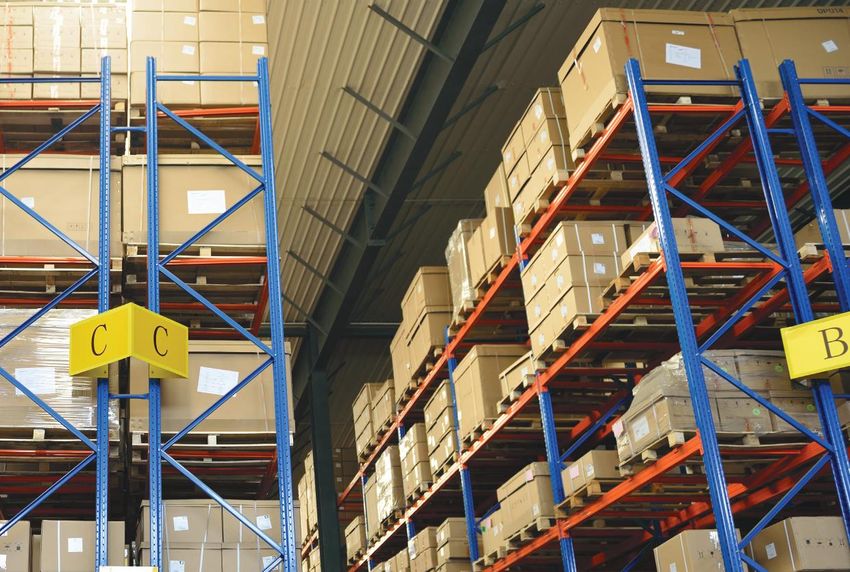
     Scanning front-facing barcodes on one-deep pallets stored in racks across hundreds of thou-
     sands of square feet in a typical large warehouse,
     Collecting top (aerial) views of bulk storage in multi-million square foot DCs that store air
     cargo, large appliances, heavy goods or chemical drums,
     Inspecting rooftops and perimeters aerially – and proactively detecting corrosion, intruders
     and potential threats to logistics facilities,
     Finding a ‘lost’ trailer or container in a very large yard, aerially and automatically, and
     Conducting a variety of audits – rapidly, efficiently, automatically, repeatedly – using video,
     image and barcode data collected by indoor drones.

Supply Chain Optimization Using Fully Autonomous
Drones
Stakeholders at warehouses and DCs tend to have different incentives and priorities when it comes
to drone adoption.

 Role                             Expectations from Warehouse Drone Solutions
 Warehouse GM                     Minimize the unavailability of aisles due to inventory cycle counts

 Head, Continuous Improvement     Improve operational metrics using reliable, scalable technology

 VP, Operations                   Improve fulfillment metrics and customer satisfaction

 Inventory Manager                Increase inventory accuracy via frequent, accurate updation of WMS data

 CFO                              Maximize space utilization & labor productivity, minimize pilferage & shrinkage

 Head, Digital Transformation     Deploy digitization, strategically, for top-line and bottom-line impact

 Manager, IT Infrastructure       Ensure data privacy, security, archival and availability

 Head, Innovation                 Complement in-house R&D efforts with state-of-the-art 3rd party innovation

 Systems Integration Consultant   Ensure seamless integration with warehouse management systems

 Inventory Auditor                Ensure timely internal audits & availability of reliable data for external audits

Copyright (C), FlytBase, Inc. 2020                                                                          flytware.com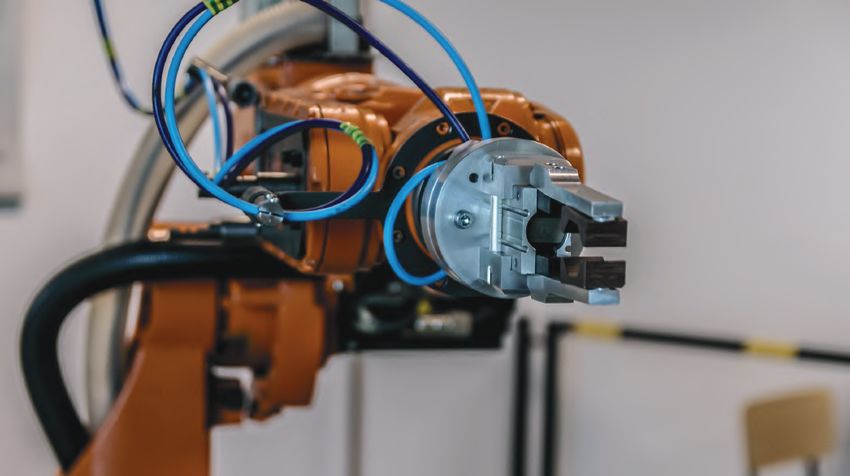
6

While the metrics may thus vary for supply chain optimization, fully autonomous drones can poten-
tially help improve many – or most – of them. We have already seen public announcement of PoC
& pilot deployments of aerial inventory scans at warehouses, DCs & air cargo facilities across the
world.

The consistent feedback from such early adopters can be summarized as follows:
     Fully (not partly) autonomous drone solutions are required for large-scale adoption of drones
     for inventory use-cases,
     Cost-effectiveness, frequency and reliability of aerially collected data are the key consider-
     ations in supply chain optimization using drones for cycle counts,
     Video & image data that can be archived and shared globally via the cloud is an important
     advance over traditional barcode scanners, and
     Autonomous drones for inventory are one piece of the overall supply chain automation trend
     – for them to create sufficient business value, their applicability must rapidly expand to multi-
     ple use-cases such as surveillance, security, inspection, and delivery.

Drones in Third Party Logistics (3PL)
Providers of third-party logistics (3PL) services have a unique position in the supply chain automa-
tion context – they have to balance their own operational priorities with the service-level agree-
ments (SLAs) that they have in place with their customers. The inherent tension in such arrangements
(eg. cost incurred by 3PLs of inventory counts vs. customers’ demand for higher frequency counts)
makes drone-based automation quite attractive for 3PL sites. In fact, 3PL providers have emerged
as the early adopters of aerial inventory counts using fully autonomous drones.

Copyright (C), FlytBase, Inc. 2020                                                       flytware.com
7
Underlying this increasing drone adoption by 3PLs are the following key factors:
To rapidly recoup their investments in real estate, warehouse owners/lessees are moving from
traditional aisles to very narrow aisles (VNAs), necessitating a more automated approach to
inventory operations,
To mitigate the safety, availability and reliability risks associated with manual inventory
operations, managers are piloting a variety of automation solutions ranging from wire-guided
lifts/trucks to AGVs and UAVs, and
To help differentiate themselves from other 3PL providers, CXOs at 3PL realize the need to
adopt technology innovation and create value-added services for their customers.
Drones in Air Cargo Facilities
It is ironic that while drone regulations are the most stringent around airports, air cargo facilities
have frequently experimented with manually-flown drones – for use-cases such as inspecting
runways for cracks, scanning pallet barcodes in rack storage areas, scanning aircraft surfaces as
part of maintenance routines, etc. Realizing the potentially large business value from such aerial
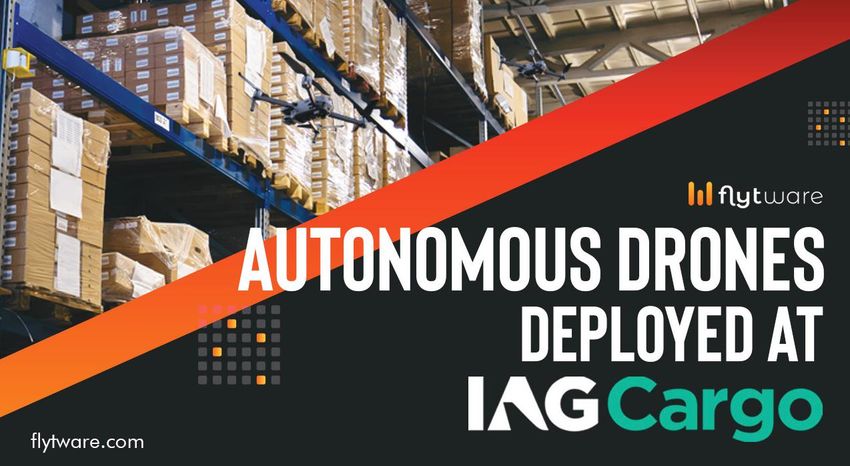
scans, air cargo and freight forwarding facilities are now deploying autonomous drone solutions –
indoors – with inventory counting as the focus.
Given the relatively high frequency of pallet movement, and the wide variety of barcodes in the air
cargo context, aerial inventory scans using drone fleets are turning out to be an ideal solution for
fast, high-frequent, cost-effective cycle counts. The impact of consumer-driven supply chains is most
Copyright (C), FlytBase, Inc. 2020 flytware.com8 felt by such facilities – who have to handle peak shopping seasons, same-day deliveries, high-value items in transit and the exponential growth in global e-commerce. Witness the recent news from IAG Cargo – the air cargo company that’s part of the same group that owns British Airways. In the words of their Head, Innovation – “We expect aerial inventory solutions to help increase worker productivity, improve location accuracy and increase the frequency of inventory counts. The combination of cost-effective hardware and intelligent automation software is turning out to be an ideal solution for automated inventory scans – better than RFID or AGVs. Reliability, scalability, and ease-of-use were the key considerations in our decision to trial aerial inventory scans – we look forward to a production-ready solution that can Copyright (C), FlytBase, Inc. 2020 flytware.com
9

Supply Chain Drone Trends in 2020
An apt phrase to capture one of the dominant supply chain automation trends for the year 2020
would be – intelligent, indoor, inventory drones – with emphasis on full autonomy.

Many of the PoC and pilot projects of drones in warehouses and DCs are expected to mature into
multi-site production deployments, primarily in the US and Europe – with 3PLs leading the way.
Expect to see public news of such successes, including deeper insights into the expected/realized
payback periods and business value from investments in drones for warehouse inventory
management.

Happy New Year!

The FlytBase team wishes you a Happy New Year & a safe, productive, profitable year 2020. We
look forward to supporting your drone projects as you drive the adoption of supply chain
automation across your enterprise. Creating value for you, and your customers remains our top
priority!

Copyright (C), FlytBase, Inc. 2020                                                   flytware.com
10

References

   Supply Chain Trends To Watch In 2019,
   https://www.forbes.com/sites/stevebanker/2019/01/05/supply-chain-trends-to-watch-in
   -2019/#3c600f10323d
   Supply chain digitisation trends: An integration of knowledge management,
   https://www.sciencedirect.com/science/article/pii/S092552731930249X
   Future of Supply Chains 2025,
   https://www.bsr.org/files/work/BSR_Future_of_Supply_Chains_Primer.pdf
   Robotics in Supply Chain,
   https://www.researchgate.net/publication/332539793_Robotics_in_Supply_Chain
   Six Key Trends Changing the Supply Chain Management Today,
   https://www.sdcexec.com/sourcing-procurement/news/10358095/six-key-trends-changi
   ng-the-supply-chain-management-today
   NextGen Supply Chain: The Robots are Here,
   https://www.scmr.com/article/nextgen_supply_chain_the_robots_are_here
   The Augmented Supply Chain,
   https://www.sciencedirect.com/science/article/pii/S187770581730053X
   Drones in Production, Supply chain and Logistics,
   https://www.irjet.net/archives/V5/i2/IRJET-V5I2465.pdf
   Towards an Autonomous Industry 4.0 Warehouse: A UAV and Blockchain-Based System
   for Inventory and Traceability Applications in Big Data-Driven Supply Chain Management,
   https://www.mdpi.com/1424-8220/19/10/2394
   Unmanned Aerial Vehicles in Civilian Logistics and Supply Chain Management,
   https://www.igi-global.com/book/unmanned-aerial-vehicles-civilian-logistics/210694
   AI & Robotics Automation in Consumer-driven Supply Chains,
   https://www.theconsumergoodsforum.com/wp-content/uploads/2018/04/201805-CG
   F-AI-Robotics-Report-with-PA-Consulting.pdf

              ware
                                                                               flytware.com
You can also read


