UTPB STEM Academy Early Childhood Literacy Proficiency District Plan 2021-2025 Kindergarten through 3rd Grade - 12/11/20 BONNIE VILLARREAL ...
←
→
Page content transcription
If your browser does not render page correctly, please read the page content below
UTPB STEM Academy
Early Childhood Literacy Proficiency
District Plan 2021-2025
Kindergarten through 3 Grade
                        rd

12/11/20
BONNIE VILLARREAL, READING COACH
MONICA ELIZONDO, ELEMENTARY PRINCIPAL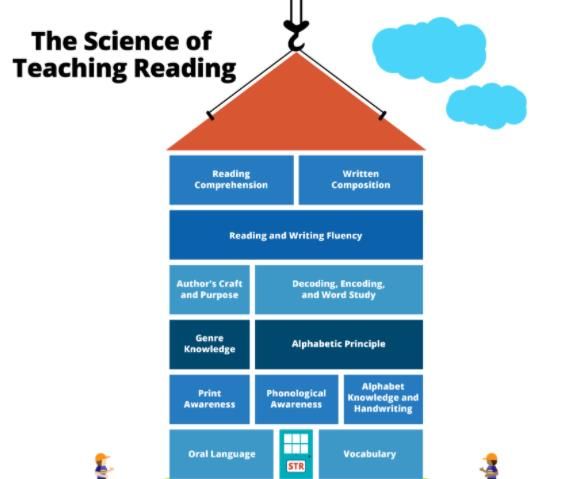
House Bill 3 (HB 3)
About Directives
Passed in 2019 by the 86th Texas The Science of Teaching Reading (STR)
Legislature Exam (TEC Sec.21048 (a-2))
Signed into law June 11, 2019 by
Governor Abbott Reading Standards for K – 3rd
Amends statute to require LEAs Grades (TEC Sec. 28.0062(a))
adopt Reading Academies
All K-3 teachers and principals
K-3 Phonics Curriculum must complete the Reading Academies
systematic direct instruction, by the 2021-2022 school year.
Use integrated reading instruments Certified Practices
Prioritize the placement of highly Phonics curriculum
effective teachers in K-2. Placement of highly effective
teachers in K-2
Integrated reading instruments
Reading Advisory Board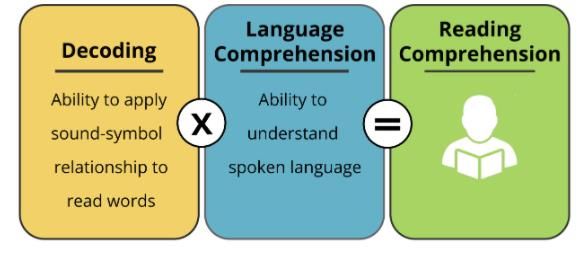
Rationale and Reason
Approximately 65% of Texas 4th &
8th grade students who participated in the 2019
National Assessment of Educational Progress (NAEP)
Reading Assessment scored BELOW Proficient.
HB 3 GOALS
STAAR
TEXAS PRIMARY READING INVENTORY (TPRI)

Background Information 3rd Grade Reading STAAR

    Correct     Does Not Meet      APPROACHES*             MEETS             MASTERS

   # Correct         0-17               18-25              26-28               29-34

   % Correct          50                75.53              82.35                100

   *In 2019, 81% of our 3rd grade students scored Approaches or better on the STAAR.
Board Outcome Goal 1: Early Childhood Literacy
The percent of 3rd grade students that score
MEETS* grade level or above on STAAR Reading will
increase from 48% to 60% by June 2025.
Yearly Targets (% MEETS on 3rd Grade Reading STAAR)
2019 2021 2022 2023 2024 2025
48 50 52 54 57 60
*Students must correctly score between 75.5% and 82% of the test to achieve MEETS grade
level.Board Outcome Goal 2: Closing the Gaps
3rd Grade Student Groups Yearly STAAR Reading Targets **
Year Black Hispanic White American Asian 2 or SPED ECO At ELL %
% % % Indian % % More % DIS % Risk
% %
2019 NA 39 51 NA * * * 20 * *
2021 * 41 53 TBD TBD TBD TBD 22 TBD TBD
2022 46 55 28
2023 52 58 35
2024 58 61 43
2025 63 63 50
**Targets are the percentage of students who are at the MEETS criteria on 3rd Grade Reading STAAR.PROGRESS MEASURING OUR GOALS TEXAS PRIMARY READING INVENTORY (TPRI) TEXAS KINDERGARTEN ENTRY ASSESSMENT (TX – KEA)
K – 3 Campus as a Whole
Board Outcome Progress Measure 1.1
Progress Measure 1.1: The percent of Kindergarten to Third Grade students that
score "Masters" on the End of the Year (EOY) Texas Primary Reading Inventory (TPRI) will
increase from 71% to 90% by June 2025.
                           K-3 Yearly Targets (% Masters on TPRI)
                 2020       2021      2022      2023      2024            2025
                  71         72        75        80           85           90

     Yr   Black Hispanic    White   Am. In/    Asian   2 or        SPED    ECO     At    ELL/LEP
            %       %        %      Alaskan     %      More         %       DIS   Risk      %
                                     Nat. %             %                   %      %
   2020   100      68        72        50        86      80         42      63    44     50/80
   2021   100      70        74        54        88      82         45      65    47     52/82
   2022   100      75        78        58        90      84         50      70    52     57/87
   2023   100      80        82        65        92      86         54      75    56     62/82
   2024   100      85        86        70        94      88         58      80    60     67/87
   2025   100      90        90        75        96      90         65      85    67     72/92
Kindergarten Specific
Board Outcome Progress Measure 1.2
Progress Measure 1.2: The percent of Kindergarten students that score "On-Track"
on End of the Year (EOY) TX-KEA* will increase from 70% to 90% by June 2025.

                        Kindergarten Yearly Targets (% "On-Track" TX -KEA)

                 2021           2022          2023           2024            2025
                 70             75             80             85              90

* EOY TX-KEA data will not be available until June 2021. At that time, we will set goals for
our subgroups.
Board Outcome Progress Measure 1.3
Progress Measure 1.3: The percent of Kindergarten students that score "Developed
in All Areas" on EOY TPRI will increase from 34% to 75% by June 2025.
Yearly Targets (% Developed in All Areas)*
2020 2021 2022 2023 2024 2025
34 40 45 55 65 75
* 2020 EOY TPRI data for subpopulations was not available. Once we receive those, we
will set our 5-year goals for each subgroup.Grades 1 – 3 Consecutively
Board Outcome Progress Measure 1.4
Progress Measure 1.4: The percent of First Grade students that score
"Developed in All Areas" on EOY TPRI will increase from 17% to 75% by June
2025.

                       Yearly Targets (% Developed in All Areas)*
           2020        2021        2022        2023         2024       2025
            17          40          45          55           65         75

 * 2020 EOY TPRI data for subpopulations was not available. Once we receive those, we
 will set our 5-year goals for each subgroup.
Board Outcome Progress Measure 1.5
Progress Measure 1.5: The percent of Second Grade students that score
"Developed in All Areas" on EOY TPRI will increase from 26% to 75% to by June
2025.
Yearly Targets (% Developed in All Areas)*
2020 2021 2022 2023 2024 2025
26 35 45 55 65 75
* 2020 EOY TPRI data for subpopulations was not available. Once we receive those, we
will set our 5-year goals for each subgroup.Board Outcome Progress Measure1.6
Progress Measure 1.6: The percent of Third Grade students that score "Developed in
All Areas" on EOY TPRI will increase from 8% to 65% by June 2025.
Yearly Targets (% Developed in All Areas)*
2020 2021 2022 2023 2024 2025
8 25 35 45 55 65
* 2020 EOY TPRI data for subpopulations was not available. Once we receive those, we will set
our 5-year goals for each subgroup.UTPB STEM Academy K-3rd Grade Literacy Plan
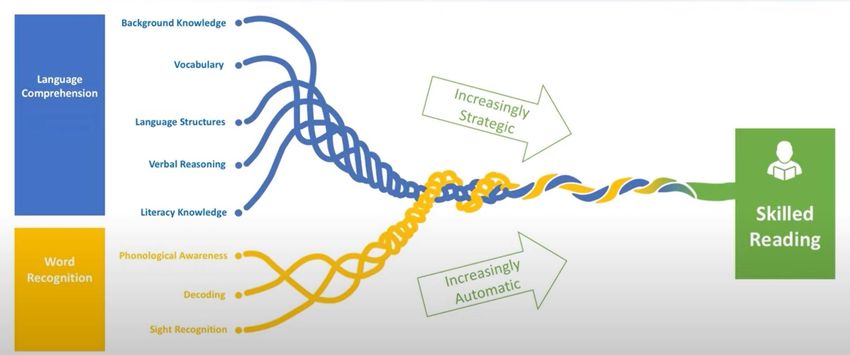
Simple View of Reading (1986)
Scarborough's Reading Rope (2001)
The Science
of Teaching
Reading
The heart of HB 3 and
the basis of all ELAR
professional
development for K-3
teachers.Targeted Professional Development
2020-2021 2021-2022 2020-2022
All Kindergarten – 2nd The other two 3rd Reading Coach will assist
Grade teachers, the grade teachers, the teachers with implementing
3rd Grade ELAR Special Education ELAR lessons by modeling,
teacher, district teacher, any new observations with constructive
Reading Coach, and teacher in K-3, and feedback, and lesson
the Principal will the Superintendent planning. Coach will help
attend the Reading will attend Reading teachers apply what they are
Academies Academies. learning in academies.
Reading Coach/Region 18 will
provide reading PD as neededReading Instruction K-3rd
Based on the science of teaching reading, instruction must include:
Large Group Instruction, Small Group Instruction, Independent Centers, and 1:1
Explicit instruction in Phonics w/opportunities to practice
Multi-Sensory literacy instruction
Small group and individual focused intervention lessons and activities based on BOY and MOY
TPRI screenings
Small group time includes Guided Reading, Decodable Text, iRead program HMH, and direct
instruction
Interventions include small group instruction and guided reading/writing in class, individual
conferences and instruction, after school tutorials
Differentiation of instruction in small groups and learning centers based on student data and
needs
Interventions, guided reading, and tutorials begin no later than October 1Certified Literacy Practice 1: Phonics Curriculum
1) Provide the use of phonics curriculum that uses systematic direct instruction in
Grades K-3.
For 2020-2021, STEM will use the phonics instruction in HMH, the new state approved
Phonics Program (still pending this information), and resources in TEKS Resource System.
Systematic: careful scope & sequence that follows a continuum of skill complexity, builds
upon previous learning, and includes review and repetition.
Direct Instruction: Letter-sound relationship or phonics skill is explicitly taught to students.
Includes scripted lessons, explanations, modeling, guided practice, & opportunities to
practice new learning with feedback.
Occurs in whole group, small group, or individual instructional setting
Multi-Sensory phonics instructionCert. Literacy Practice 2: Highly Effective K-2 Teachers
2) Prioritize placement of highly effective teachers in Grades K-2. Criteria for
highly effective teaching in K-2:
Performance observations and evaluations
Student performance data/ evidence of growth
Demonstrates experience w/differentiating for a variety of student needs.
Demonstrates experience w/ building a strong classroom community & positive
relationships w/ students & familiesCert. Literacy Practice 3: Integrated Reading Instruments *
3) Integrated reading instruments used to diagnose reading development and
comprehension to support each student in Grades K-3.
In-depth understanding of a student’s skill mastery, gaps, and growth
Diagnostic data that shows foundational skills and comprehension
*Literacy practices were certified in the 2019-2020 school year by completing an online TEA
survey/checklist of assurances. Parent education and activities
for home provided in summer
of 2020 for students enrolled in
Kindergarten Kindergarten in Fall 2020
Readiness Plan Two Summer “Introduction
to School” S'more Newsletters
• Only 58% of Texas provided by our kinder
students currently teachers and reading coach.
come to school Library Read-Alouds, activities,
Kindergarten summer “Introduction to
ready. Kinder” on campus events, and
free books spring and summer
of 2021
HEB Read 3 Program (will begin
in Summer 2021 or Summer
2022)Kindergarten Plan
TX-KEA Screener- Free to districts through CLI engage in 2020-2021
Designates Kindergarten Ready or Not Kindergarten Ready
Administered BOY, MOY, and EOY (within 3-week window)
Generates written parent reports after BOY
CLI engage reports district scores directly to TEA
Classroominterventions and formative classroom data collections
begin immediately after BOY and MOY
TPRI- Reading Assessment administered BOY, MOY, and EOY (EOY
Includes universal dyslexia screener)Reading Text Levels by Grade
Kindergarten Progress Monitoring
On-going letters and sounds, checks of letters and sounds taught and not
mastered
Phonological awareness checks of skills taught
Phonics skills checks
Sight word check lists
iRead online monitoring from HMH
Teacher observations
Work samples
Running Records every 6 weeks once student is reading checking accuracy,
fluency, and comprehension. (Grade based on reading on grade level)
Text Level A in October, B in November, C in January, D in April (all kinder students
to Level D by end of year)Assessments for Grades 1 & 2 TPRI: BOY Screener and Inventory First grade has MOY universal screener for Dyslexia by end of January Second Graders screened as appropriate MOY Progress Monitoring EOY Growth Measure HMH Growth Measure (used with students who are Reading) BOY, MOY, EOY Measures reading growth over the year HMH iRead Progress Monitoring
Progress Monitoring Grades 1 & 2

 Running Records every 6
                                  1st: Text Level D in              2nd: Text Level J in
   weeks once student is
                             September, E in October, F           September, Level K in         On-going letters and sounds
    reading checking
                            in November, G in January,             October, Level L in             checks of letters and
  accuracy, fluency, and
                             H in February, I in April, J in   January, Level M in April (all     sounds taught and not
 comprehension. (Grade
                             May (all 1st grade students       2nd grade students to Level              mastered
based on reading on grade
                              to Level J by end of year)            M by end of year)
          level)

 Phonological awareness                                                                           iRead online monitoring
                                Phonics skills checks             Sight word check lists
  checks of skills taught                                                                               from HMH

                               Teacher observations                   Work samples
Assessments and Progress Monitoring for Grade 3
TPRI
BOY Screener, MOY Progress Monitoring, EOY Growth
Interventions and activities linked to TPRI
HMH Growth Measure (used with students who are reading)
BOY, MOY, EOY
Measures reading growth over the year
Running Records
Every 6 weeks checking accuracy, fluency, and comprehension.
Students reading below grade level for progress monitoring.
Text Level M in September, N in October, O in January, P in April, (All 3rd grade
students to Level P by end of year.)
District BenchmarksYou can also read


