Web-Based Smartphone Algorithm for Calculating Blood Pressure From Photoplethysmography Remotely in a General Adult Population: Validation Study
←
→
Page content transcription
If your browser does not render page correctly, please read the page content below
JOURNAL OF MEDICAL INTERNET RESEARCH                                                                                           Holyoke et al

     Original Paper

     Web-Based Smartphone Algorithm for Calculating Blood Pressure
     From Photoplethysmography Remotely in a General Adult
     Population: Validation Study

     Paul Holyoke, PhD; Karthika Yogaratnam, MPH; Elizabeth Kalles, BSc
     SE Research Centre, SE Health, Markham, ON, Canada

     Corresponding Author:
     Paul Holyoke, PhD
     SE Research Centre
     SE Health
     90 Allstate Parkway
     Markham, ON, L3R 6H3
     Canada
     Phone: 1 4168923791
     Email: paulholyoke@sehc.com

     Abstract
     Background: Outside of a clinical setting, oscillometric devices make remote monitoring of blood pressure and virtual care
     more convenient and feasible. HeartBeat Technologies Ltd developed a novel approach to measuring blood pressure remotely
     after an initial blood pressure reading by a nurse using the conventional measurement method. Using a finger pulse oximeter, a
     photoplethysmogram wave is transmitted by Bluetooth to a smartphone or tablet. A smartphone app (MediBeat) transmits the
     photoplethysmogram to a server for analysis by a proprietary algorithm—the person’s current blood pressure is sent back to the
     smartphone and to the individual’s health care provider.
     Objective: This study sought to determine whether the HeartBeat algorithm calculates blood pressure as accurately as required
     by the European Society of Hypertension International Protocol revision 2010 (ESH-IP2) for validation of blood pressure measuring
     devices.
     Methods: ESH-IP2 requirements, modified to conform to a more recent international consensus statement, were followed. The
     ESH-IP2 establishes strict guidelines for the conduct and reporting of any validation of any device to measure blood pressure,
     including using the standard manual blood pressure instrument as a comparator and specific required accuracy levels for low,
     medium, and high ranges of blood pressure readings. The consensus statement requires a greater number of study participants
     for each of the blood pressure ranges. The validation of the accuracy of the algorithm was conducted with a Contec CMS50EW
     pulse oximeter and a Samsung Galaxy XCover 4 smartphone.
     Results: The differences between the HeartBeat-calculated and the manually measured blood pressures of 62 study participants
     did not meet the ESH-IP2 standards for accuracy for either systolic or diastolic blood pressure measurements. There was no
     discernible pattern in the inaccuracies of the HeartBeat-calculated measurements.
     Conclusions: The October 4, 2019 version of the HeartBeat algorithm, implemented in combination with the MediBeat app, a
     pulse oximeter, and an Android smartphone, was not sufficiently accurate for use in a general adult population.
     Trial Registration: ClinicalTrials.gov NCT04082819; http://clinicaltrials.gov/ct2/show/NCT04082819

     (J Med Internet Res 2021;23(4):e19187) doi: 10.2196/19187

     KEYWORDS
     blood pressure measurement; remote monitoring; hypertension

                                                                       monitoring whether those treatments are working [1,2]. To
     Introduction                                                      measure blood pressure accurately, standardized measurement
     Accurately assessing blood pressure is necessary for the proper   techniques, calibrated equipment, and valid interpretation of
     diagnosis of hypertension, implementing treatments and            readings are necessary [2-4]. Aneroid sphygmomanometers that
                                                                       are properly calibrated and maintained are considered to be at
     https://www.jmir.org/2021/4/e19187                                                        J Med Internet Res 2021 | vol. 23 | iss. 4 | e19187 | p. 1
                                                                                                             (page number not for citation purposes)
XSL• FO
RenderX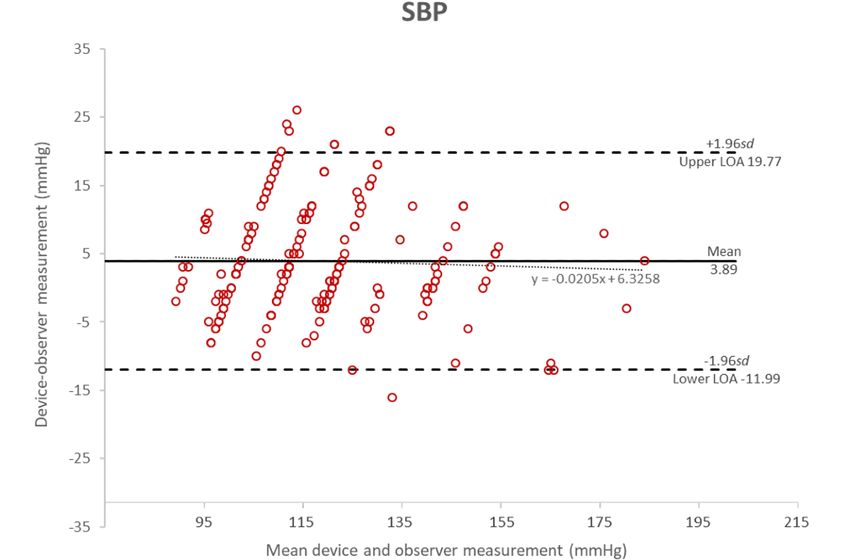
JOURNAL OF MEDICAL INTERNET RESEARCH                                                                                                Holyoke et al

     least as accurate as mercury-filled sphygmomanometers [5].           modifications to account for additional guidance from an
     However, such instruments are not convenient for remote              international consensus statement [11]. ESH-IP2 [10] requires
     monitoring or virtual (remote) care because they can be difficult    strict adherence to its method and reporting requirements, which
     for a person to self-administer.                                     are reflected in this report: to “ensure a uniform distribution of
                                                                          test pressures across a representative range,” 33 participants
     A novel approach to measuring blood pressure remotely has
                                                                          must be enrolled. Among the 33 participants, at least 10 must
     been developed (HeartBeat, HeartBeat Technologies Ltd). The
                                                                          be male and 10 must be female; all should be at least 25 years
     measurement is taken after an initial blood pressure reading
                                                                          of age; and between 10 and 12 participants must have blood
     using the conventional measurement method, supplemented by
                                                                          pressure readings within each of the following recruitment
     specific characteristics of a person (age, gender, height, weight,
                                                                          ranges—systolic blood pressure: below 130 mmHg, between
     and heart rate) to establish a baseline for the person. Unlike
                                                                          130 and 180 mmHg, above 180 mmHg; diastolic blood pressure:
     other devices [6-9], this approach uses a finger pulse oximeter
                                                                          below 80mmHg, between 80 and 130 mmHg, above 130 mmHg.
     that detects the changes in blood volume directly below the
                                                                          All potential participants must be screened against these criteria
     person’s skin and indirectly measures oxygen saturation in the
                                                                          and can be excluded if the gender criteria or age criteria are not
     blood. The resulting photoplethysmogram (PPG) wave is
                                                                          met, or if including them in the study would exceed the
     transmitted by Bluetooth technology to a smartphone or tablet.
                                                                          maximum number of participants in any of the recruitment
     The MediBeat (HeartBeat Technologies Ltd) smartphone or
                                                                          ranges.
     tablet app then transmits the PPG wave to a server where a
     proprietary algorithm analyzes the baseline measurement for          An international consensus statement group [11] reviewed the
     the person and the PPG waveform to calculate the person’s            adequacy of the number of participants in a variety of
     current blood pressure. The blood pressure measurement is then       established protocols, including that of the ESH-IP2, and
     transmitted to the person’s smartphone, and if applicable, to the    recommended that, to increase the power and accuracy of
     person’s health care provider’s devices.                             validation studies, at least 85 participants, rather than 33, should
                                                                          be included. To align with the consensus statement, the research
     The purpose of this study was to test whether the accuracy of
                                                                          team recalculated the ESH-IP2 requirement numbers to reflect
     the HeartBeat algorithm, available as of October 4, 2019 and
                                                                          the increased participant pool of 85. The recalculations are
     for a general adult population (ages 25 years and older), was
                                                                          reflected in the tables and discussion in this report.
     sufficient to seek regulatory approval when compared with a
     standard aneroid sphygmomanometer with stethoscope for               Devices
     measuring blood pressure.                                            The pulse oximeter (Contec CMS50EW, Contec Medical
                                                                          Systems Co Ltd [12]) used to capture and transmit PPG is shown
     Methods                                                              in Figure 1. The 8-bit Contec pulse oximeter is approved for
                                                                          use by Health Canada [13] and the US Food and Drug
     Protocol
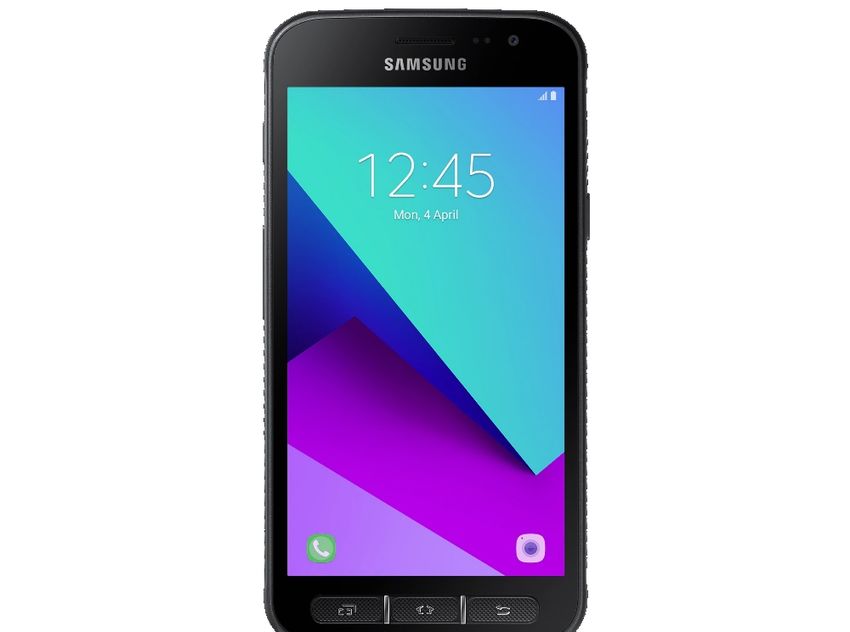
                                                                          Administration [14]. The smartphone used in this study (upon
     The European Society of Hypertension International Protocol          which HeartBeat’s MediBeat app was installed and used to
     revision (ESH-IP2) for the validation of blood pressure              transmit the data to HeartBeat servers and to receive and display
     measuring devices in adults [10] was followed, with                  the results) was a Samsung Galaxy XCover 4 (Figure 2).
     Figure 1. Contec CMS50EW.

     https://www.jmir.org/2021/4/e19187                                                             J Med Internet Res 2021 | vol. 23 | iss. 4 | e19187 | p. 2
                                                                                                                  (page number not for citation purposes)
XSL• FO
RenderX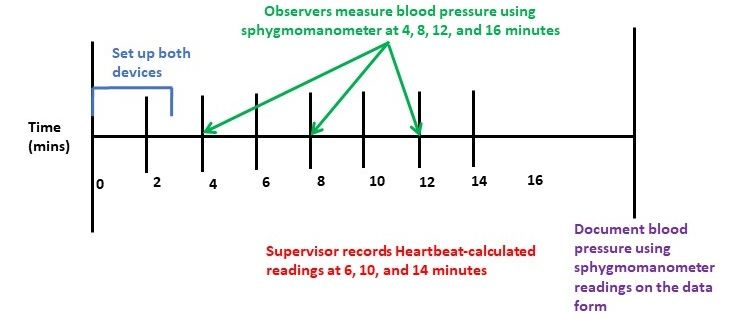
JOURNAL OF MEDICAL INTERNET RESEARCH                                                                                              Holyoke et al

     Figure 2. Samsung Galaxy XCover 4.

                                                                         of the observers while they interacted with a participant, which
     Recruitment                                                         allowed the observers to follow the instruments’ dials at eye
     Potential participants were recruited by mass email and offline     level from 40 mmHg to 180 mmHg. Multiple sizes of bladders
     posters at a single-site multistory office building in Markham,     (cuffs) were available for the sphygmomanometers to ensure
     Ontario, Canada, where they worked; participants provided           that 80% to 100% of each participant’s arm circumference could
     informed consent (Multimedia Appendix 1) and were scheduled         be encircled. The observers were also supplied with good quality
     for a measurement appointment during their working day by a         nonelectronic stethoscopes with well-fitted earpieces.
     member of the research team.
                                                                         The observers were instructed that, in the event that an abnormal
     Procedure                                                           blood pressure reading was detected (for example, if the blood
     Three registered nurses who had training and expertise in blood     pressure was outside clinically normal range for a specific
     pressure measurement carried out the measurements required          person), they were to remeasure the blood pressure using
     for this study between October 4, 2019 to November 22, 2019.        conventional means to determine if the abnormal reading was
     One nurse was the supervisor, and two nurses were the observers     accurate. If the abnormal blood pressure measurement was
     throughout the duration of the study. The nurses were trained       accurate, the nurse supervisor was to act according professional
     as per ESH-IP2 directives and were instructed on how to follow      standards. The abnormal blood pressure measurement should
     the protocol guidelines for data collection. Blood pressure         also be recorded on ESH-IP2 Form 2.
     measurements were recorded to the nearest 2 mmHg.                   Participants’ blood pressure measurements were taken in a room
     Two new sphygmomanometers (Prosphyg 775 Model, American             that was a comfortable temperature, without any noises or other
     Diagnostics Corporation [15]), whose components were checked        influences that would have caused disturbances, such as
     against one another and calibrated before the study, were used      telephones. The temperature in the room was the same as that
     as the reference instruments by the observers. With respect to      throughout the building—20 °C to 24 °C. All participants
     reliability and validity, the ESH-IP2 embeds an ongoing             participated in the study between the working hours of 9 AM
     reliability mechanism requiring that any individual participants’   and 4:30 PM. The pulse oximeter and the supervisor’s
     blood pressure readings be excluded from the analysis if the        smartphone were charged and tested each day prior to
     difference in readings from the two observer nurses differ by 4     interactions with participants. The MediBeat app was calibrated
     mmHg twice. The instruments were placed within one meter            for each participant as follows: (1) Reference data for the

     https://www.jmir.org/2021/4/e19187                                                           J Med Internet Res 2021 | vol. 23 | iss. 4 | e19187 | p. 3
                                                                                                                (page number not for citation purposes)
XSL• FO
RenderX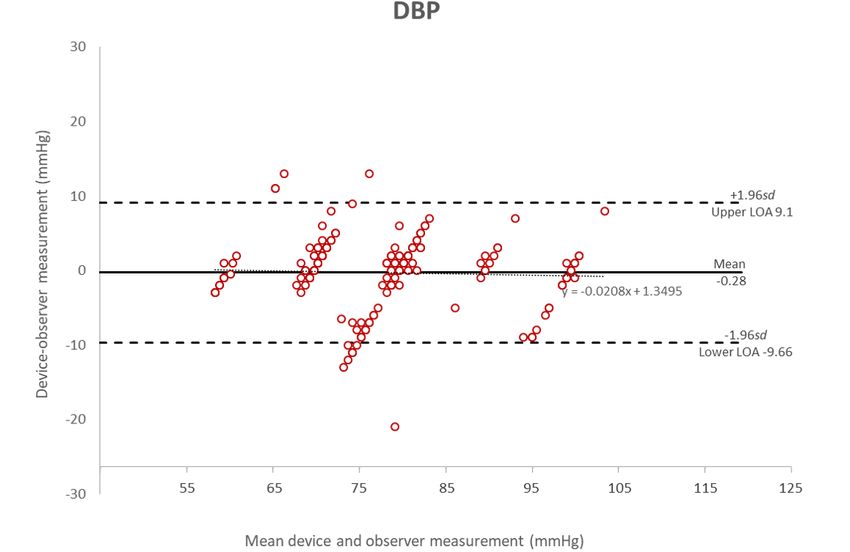
JOURNAL OF MEDICAL INTERNET RESEARCH                                                                                                      Holyoke et al

     individual (year of birth, height, weight, baseline manual blood            other observer’s readings and from the reading calculated by
     pressure reading, and heart rate) were entered. (2) The                     the HeartBeat algorithm. Each participant’s blood pressure was
     participant rested for 10 minutes while seated comfortably with             measured as illustrated in Figure 3. Each systolic blood pressure
     their legs uncrossed, back supported, and arm resting on the                measurement and each diastolic blood pressure measurement
     table at heart level. (3) The supervisor attached the finger pulse          calculated by the HeartBeat algorithm was compared with the
     oximeter to the participant’s index finger (on the opposite arm             nearest of the previous and next observer systolic and diastolic
     to the manual blood pressure cuff) and waited for a few seconds             measurements, respectively, and the difference between each
     until a stable signal was received and the device displayed both            HeartBeat-calculated measurement and the nearest observer
     the participant’s pulse and SpO2 (oxygen saturation) values. (4)            measurement was calculated. Every such difference was then
     Once the values were displayed, the supervisor initiated a new              classified in one of these error groups for each systolic and
     session on the smartphone to connect the phone to the Contec                diastolic measurements: 0-5 mmHg, 6-10 mmHg, 11-15 mmHg,
     device via Bluetooth. This connection started the 1-minute                  and >15 mmHg. The results were then compared with the
     calibration process, at which point each participant was asked              number of tolerable differences allowed by the protocol at both
     to remain still until the calibration had been completed                    the level of individual measurements (part 1) and at the level
     successfully.                                                               of the participants (part 2). The device gets an overall pass (an
                                                                                 acceptable level of accuracy) if it meets 4 pass criteria.
     Overseen by an independent supervisor, measurements were
     recorded by the two observers who were blinded from both the
     Figure 3. Timeline of measurement of blood pressure for each participant.

                                                                                 difficulty in recruiting hypertensive participants, that is,
     Ethics                                                                      individuals with both systolic and diastolic blood pressures in
     The study was reviewed and approved by the Southlake                        the high ranges. This is reflected in the overall distribution
     Regional Health Centre Research Ethics Board, Newmarket,                    (Figure 5 and Figure 6), in which most of the points fall below
     Ontario, Canada (007-1920).                                                 125 mmHg and 90 mmHg, for systolic and diastolic blood
                                                                                 pressures, respectively. By the time 105 participants had been
     Results                                                                     recruited, only 2 met the criterion for high systolic blood
                                                                                 pressure, and none met the criterion for diastolic blood pressure.
     A total of 105 individuals volunteered and were screened for                The modified criteria would have required between 26 and 31
     the study, of whom 62 participants met the ESH-IP2 criteria,                participants in the high blood pressure group to meet the
     and 43 were excluded (Table 1; adapted version of the                       protocol requirements. A calculation was performed to
     CONSORT flow diagram [16] in Figure 4). As required by the                  determine if it would be possible for the algorithm to achieve
     protocol, 5 participants out of the 105 were excluded because               a pass if additional participants with high blood pressure were
     the differences in the measurements by the observer nurses                  recruited, and there were a perfect match between their
     exceeded 4 mmHg twice for the same participant, 34 were                     HeartBeat-calculated measurements and standard measurements.
     excluded participants were excluded because their blood                     It was determined that such a result was not possible, and
     pressure measurements fell within ranges for which the protocol             recruitment was discontinued. Therefore, the study concluded
     quota had been fulfilled, and 4 participants were excluded                  before the required number of participants was reached. The
     because they were younger than 25 years of age. There was                   characteristics of participants are described in Tables 2 and 3.

     https://www.jmir.org/2021/4/e19187                                                                   J Med Internet Res 2021 | vol. 23 | iss. 4 | e19187 | p. 4
                                                                                                                        (page number not for citation purposes)
XSL• FO
RenderX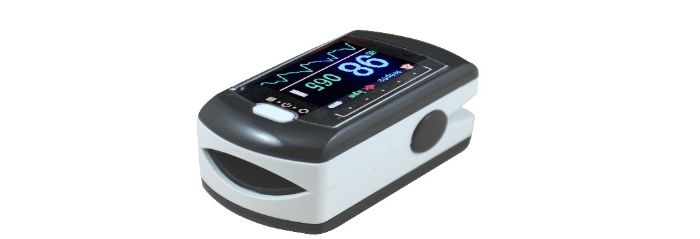
JOURNAL OF MEDICAL INTERNET RESEARCH                                                                                                          Holyoke et al

     Table 1. Participants screened, excluded, and recruited for the study.
         Reason for exclusion                                                                           Excluded, n                         Total, n
         Participants screened                                                                                                              105
         Participants excluded                                                                                                              43

             Ranges completea                                                                           34

             Range adjustment                                                                           0
             Arrhythmias                                                                                0
             Device failure                                                                             0
             Poor quality sounds                                                                        0
             Cuff size unavailable                                                                      0

             Observer disagreementb                                                                     5

             Distributionc                                                                              0

             Other reasonsc                                                                             4

         Participants recruited                                                                                                             62

     a
      Intake assessment placed them in ranges that had already been filled. The ESH-IP2 requires that the last participants to be recruited are the ones who
     are excluded.
     b
         Discrepancy >4 mmHg twice for the same participant; therefore, these participants were, in accordance with the ESH-IP2, excluded from the study.
     c
         Age
JOURNAL OF MEDICAL INTERNET RESEARCH Holyoke et al
Figure 5. Bland-Altman plot of the differences between the Heartbeat-calculated measurements and the manual measurements of systolic blood pressure.
Figure 6. Bland-Altman plot of the differences between the Heartbeat-calculated measurements and the manual measurements of diastolic blood
pressure.
https://www.jmir.org/2021/4/e19187 J Med Internet Res 2021 | vol. 23 | iss. 4 | e19187 | p. 6
(page number not for citation purposes)
XSL• FO
RenderXJOURNAL OF MEDICAL INTERNET RESEARCH Holyoke et al
Table 2. Blood pressure and medication details for initially screened participants.
Category Blood pressure (mmHg), range Medicationa No medication Total
Systolic blood pressure
Low-low 180 0 0 0
Diastolic blood pressure
Low-low 130 0 0 0
a
Participants taking medication for hypertension.
Table 3. Participant details.
Category Value
Sex, n
Male 13
Female 49
Age (years)
Mean (SD) 43.5 (11.2)
Range 25-66
Arm circumference (cm)
Mean (SD) 29.5 (4.2)
Range 23-40
Cuff size used, n
Small 0
Standard 61
Large 0
Missing data 1
Recruitment blood pressure (mmHg)
Systolic blood pressure
Mean (SD) 119.5 (18.9)
Range 90-180
Diastolic blood pressure
Mean (SD) 77.6 (10.6)
Range 57-110
Table 4 and Table 5 present the blood pressure readings by the readings across the recruited participants in the study. Table 5
international consensus statement’s predetermined levels. Table shows the range of differences by observers 1 and 2.
4 shows the distribution of systolic and diastolic blood pressure
https://www.jmir.org/2021/4/e19187 J Med Internet Res 2021 | vol. 23 | iss. 4 | e19187 | p. 7
(page number not for citation purposes)
XSL• FO
RenderXJOURNAL OF MEDICAL INTERNET RESEARCH Holyoke et al
Table 4. Blood pressure readings (3 per participant) after the initial screening measurement.
Overall range Lowa, n Mediumb, n Highc, n Maximum difference among highest and lowest
(mmHg) (low-high) totals in low, medium, and high ranges
Systolic blood pressure 90-180 150 30 6 144
Diastolic blood pressure 60-101 90 75 21 69
a
Systolic ≤130 mmHg; diastolic ≤80 mmHg.
b
Systolic 130 mmHg-160mmHg, diastolic 80 mmHg-100 mmHg.
c
Systolic ≥160 mmHg, diastolic ≥100 mmHg.
Table 5. Observer differences.
Range (low to high) (mmHg) Mean (SD) Repeated measurements
Systolic blood pressurea –3 to 3 0.0081 (0.4) —b
Diastolic blood pressurea –4 to 3 0.0000 (0.6) —b
a
Measurements are calculated by subtracting observer 1 measurements from observer 2 measurements.
b
There were no documented repeated measurements to calculate.
Table 6 shows the results in terms of each of the protocol requirements in both parts 1 and 2. Note that in this study, the
requirements. According to the ESH-IP2 standards, for an algorithm achieved a pass in only 1 category and a fail in 3
acceptable level of accuracy, a device must pass all the protocol categories, for an overall fail.
Table 6. Validation results.
Protocol requirements Range, n Pass or failJOURNAL OF MEDICAL INTERNET RESEARCH Holyoke et al
Figure 5 shows the Bland-Altman plots [17,18] of the pressure measurements are not sufficiently accurate. There was
differences in systolic blood pressure measurements between no discernible pattern in the inaccuracies in the
the MediBeat device and the manual observer measurements HeartBeat-calculated measures; therefore, the source of the
(y-axis) and the average of the 2 measurements (x-axis). Figure inaccuracies is not known.
6 shows the plots for the differences in diastolic measurements.
In both cases, the averages of the 3 MediBeat measurements Discussion
were plotted against their absolute differences from the manual
measurements for both systolic blood pressure (bias 3.89, LOA The Bland-Altman plots show that the October 4, 2019 version
–11.98 to 19.77) and diastolic blood pressure (bias –0.28, LOA of the HeartBeat algorithm, used in conjunction with a Contec
–9.66 to 9.09). Although values fall within the 95% confidence CMS50EW pulse oximeter, MediBeat app, and a Samsung
interval for both Bland-Altman plots, there is no statistically Galaxy XCover 4 smartphone, was not sufficiently accurate to
significant correlation between the HeartBeat-calculated blood meet ESH-IP2 standards for measuring the blood pressure of
pressure measurements and the manual measurements (systolic adults in the general population; therefore, as per the protocol,
blood pressure: r=0.04, P=.53; diastolic blood pressure: r=.04, it is not recommended for personal or clinical use in this
P=.54). This indicates that the HeartBeat-calculated blood configuration.
Acknowledgments
We would like to acknowledge the nurses who conducted the measurements for this study: Favour Onyido, RN, Laura Agborchi,
RN, and Valerie Mgbatogu, RN. We would also like to acknowledge the contributions of Brianna Croft, MMI, and Mary Lou
Ackerman, MBA, who helped with the logistics of this study, and of Grace Lui, MSc, who helped with the early phase of this
study.
Authors' Contributions
PH led the design of the study. KY and EK collected and analyzed the data. All authors contributed to the interpretation of the
results and reviewed and edited the manuscript. All authors read and approved the final version of the manuscript.
Conflicts of Interest
Two Contec pulse oximeters were supplied for the purposes of the study by HeartBeat Technologies Ltd. None of the authors
have any association with, or have received any personal benefit from, HeartBeat Technologies Ltd.
Multimedia Appendix 1
Information given during recruitment.
[PDF File (Adobe PDF File), 406 KB-Multimedia Appendix 1]
References
1. Lindsay P, Connor Gorber S, Joffres M, Birtwhistle R, McKay D, Cloutier L, Canadian Task Force on Preventive Health
Care (CTFPHC). Recommendations on screening for high blood pressure in Canadian adults. Can Fam Physician 2013
Sep;59(9):927-33, e393 [FREE Full text] [Medline: 24029505]
2. Kaczorowski J, Chambers LW, Dolovich L, Paterson JM, Karwalajtys T, Gierman T, et al. Improving cardiovascular health
at population level: 39 community cluster randomised trial of Cardiovascular Health Awareness Program (CHAP). BMJ
2011 Feb 07;342:d442 [FREE Full text] [doi: 10.1136/bmj.d442] [Medline: 21300712]
3. Nerenberg KA, Zarnke KB, Leung AA, Dasgupta K, Butalia S, McBrien K, Hypertension Canada. Hypertension Canada's
2018 guidelines for diagnosis, risk assessment, prevention, and treatment of hypertension in adults and children. Can J
Cardiol 2018 May;34(5):506-525. [doi: 10.1016/j.cjca.2018.02.022] [Medline: 29731013]
4. McAlister FA, Straus SE. Evidence based treatment of hypertension. Measurement of blood pressure: an evidence based
review. BMJ 2001 Apr 14;322(7291):908-911 [FREE Full text] [doi: 10.1136/bmj.322.7291.908] [Medline: 11302909]
5. Mercury versus nonmercury sphygmomanometers: a review of the comparative clinical effectiveness and guidelines.
Canadian Agency for Drugs and Technologies in Health. 2012. URL: https://www.cadth.ca/
mercury-versus-non-mercury-sphygmomanometers-review-comparative-clinical-effectiveness-and [accessed 2018-06-25]
6. Mena LJ, Félix VG, Ostos R, González AJ, Martínez-Peláez R, Melgarejo JD, et al. Mobile personal health care system
for noninvasive, pervasive, and continuous blood pressure monitoring: development and usability study. JMIR Mhealth
Uhealth 2020 Jul 20;8(7):e18012 [FREE Full text] [doi: 10.2196/18012] [Medline: 32459642]
7. Plante TB, Urrea B, MacFarlane ZT, Blumenthal RS, Miller ER, Appel LJ, et al. Validation of the instant blood pressure
smartphone app. JAMA Intern Med 2016 May 01;176(5):700-702 [FREE Full text] [doi: 10.1001/jamainternmed.2016.0157]
[Medline: 26938174]
8. Plante TB, O'Kelly AC, Urrea B, Macfarlane ZT, Appel LJ, Miller III ER, et al. Auralife instant blood pressure app in
measuring resting heart rate: validation study. JMIR Biomed Eng 2018 Nov 21;3(1):e11057. [doi: 10.2196/11057]
https://www.jmir.org/2021/4/e19187 J Med Internet Res 2021 | vol. 23 | iss. 4 | e19187 | p. 9
(page number not for citation purposes)
XSL• FO
RenderXJOURNAL OF MEDICAL INTERNET RESEARCH Holyoke et al
9. Mazoteras-Pardo V, Becerro-De-Bengoa-Vallejo R, Losa-Iglesias ME, López-López D, Palomo-López P, Rodríguez-Sanz
D, et al. Validation in the general population of the iHealth track blood pressure monitor for self-measurement according
to the European Society of Hypertension International Protocol Revision 2010: descriptive investigation. JMIR Mhealth
Uhealth 2019 Mar 19;7(3):e13137 [FREE Full text] [doi: 10.2196/13137] [Medline: 30888331]
10. O'Brien E, Atkins N, Stergiou G, Karpettas N, Parati G, Asmar R, Working Group on Blood Pressure Monitoring of the
European Society of Hypertension. European Society of Hypertension International Protocol revision 2010 for the validation
of blood pressure measuring devices in adults. Blood Press Monit 2010 Feb;15(1):23-38. [doi:
10.1097/MBP.0b013e3283360e98] [Medline: 20110786]
11. Stergiou G, Alpert B, Mieke S, Asmar R, Atkins N, Eckert S, et al. A universal standard for the validation of blood pressure
measuring devices: Association for the Advancement of Medical Instrumentation/European Society of
Hypertension/International Organization for Standardization (AAMI/ESH/ISO) collaboration statement. J Hypertens 2018
Mar;36(3):472-478 [FREE Full text] [doi: 10.1097/HJH.0000000000001634] [Medline: 29384983]
12. CMS50EW Pulse Oximeter. Contec Medical Systems Co Ltd. 2020. URL: https://www.contecmed.com/productinfo/602619.
html [accessed 2021-04-15]
13. Licence no.: 90629. Health Canada. URL: https://health-products.canada.ca/mdall-limh/information.
do?companyId_idCompanie=130273&lang=eng [accessed 2021-03-22]
14. K141362. U.S. Food and Drug Administration. URL: https://www.accessdata.fda.gov/scripts/cdrh/cfdocs/cfpmn/pmn.
cfm?id=K141362 [accessed 2021-03-22]
15. K962655. U.S. Food and Drug Administration. URL: https://www.accessdata.fda.gov/SCRIPTS/cdrh/devicesatfda/index.
cfm?db=pmn&id=K962655 [accessed 2021-03-22]
16. Schulz KF, Altman DG, Moher D, CONSORT Group. CONSORT 2010 statement: updated guidelines for reporting parallel
group randomised trials. PLoS Med 2010 Mar 24;7(3):e1000251 [FREE Full text] [doi: 10.1371/journal.pmed.1000251]
[Medline: 20352064]
17. Bland JM, Altman DG. Statistical methods for assessing agreement between two methods of clinical measurement. Lancet
1986 Mar 08;1(8476):307-310. [Medline: 2868172]
18. Bland JM, Altman DG. Measuring agreement in method comparison studies. Stat Methods Med Res 1999 Jun;8(2):135-160.
[doi: 10.1177/096228029900800204] [Medline: 10501650]
Abbreviations
ESH-IP2: European Society of Hypertension International Protocol revision 2010
LOA: limits of agreement
PPG: photoplethysmogram
SpO2: peripheral capillary oxygen saturation
Edited by G Eysenbach; submitted 07.04.20; peer-reviewed by C Calvo-Lobo, K Brunt, T McGough; comments to author 12.06.20;
revised version received 23.10.20; accepted 14.03.21; published 23.04.21
Please cite as:
Holyoke P, Yogaratnam K, Kalles E
Web-Based Smartphone Algorithm for Calculating Blood Pressure From Photoplethysmography Remotely in a General Adult
Population: Validation Study
J Med Internet Res 2021;23(4):e19187
URL: https://www.jmir.org/2021/4/e19187
doi: 10.2196/19187
PMID:
©Paul Holyoke, Karthika Yogaratnam, Elizabeth Kalles. Originally published in the Journal of Medical Internet Research
(https://www.jmir.org), 23.04.2021. This is an open-access article distributed under the terms of the Creative Commons Attribution
License (https://creativecommons.org/licenses/by/4.0/), which permits unrestricted use, distribution, and reproduction in any
medium, provided the original work, first published in the Journal of Medical Internet Research, is properly cited. The complete
bibliographic information, a link to the original publication on http://www.jmir.org/, as well as this copyright and license information
must be included.
https://www.jmir.org/2021/4/e19187 J Med Internet Res 2021 | vol. 23 | iss. 4 | e19187 | p. 10
(page number not for citation purposes)
XSL• FO
RenderXYou can also read


