Welcome to 5th Grade! 2020-2021 - Paulding County School District
←
→
Page content transcription
If your browser does not render page correctly, please read the page content below
Welcome to 5th Grade!
2020-2021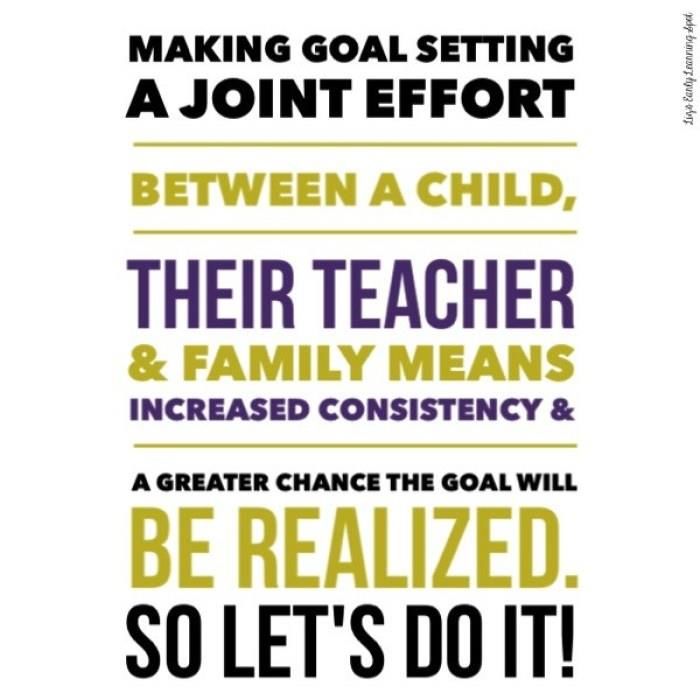
Tonight's Agenda (items to be discussed)
• Standards
• Curriculum
• Georgia Milestones
• District Assessments – RI/MI/DIBELS
• Classroom Assessments
• Grading
• Goal Setting
• Reading Resources
• Tech Tips
• Copyright Resources
• Contact Information

Grade Level Standards
• All lessons adhere to GA Standards of
  Excellence for all subjects
• Math –
   ➢ Unit 1
   ➢ Unit 2
   ➢ Unit 3
   ➢ Unit 4
   ➢ Unit 5
   ➢ Unit 6
   ➢ Unit 7
• ELA - https://www.georgiastandards.org/Georgia-
  Standards/Frameworks/ELA-Grade-5-
  Developmental-Progressions-R-W-SL-L.pdf
Curriculum
 Reading–
 Bookworms Reading – Shared, Interactive, DI

 Writing -
 Fifth Grade Rubrics for Narrative, Opinion, and Informational

 Math –
 Fifth Grade Number Talks Brochure
 Math Workshop
Georgia Milestones

• Overview of GMA –
   https://www.gadoe.org/Curriculum-Instruction-
   and-Assessment/Assessment/Pages/Georgia-
   Milestones-Assessment-System.aspx

   ▪ Study Resource Guides-
       ➢ 5th Grade
District Assessments –
•   The Reading Inventory is a low-stakes, classroom-based
    assessment designed to evaluate students’ reading ability,
    monitor their reading progress, and match students to books at
    their reading level.
•   The Reading Inventory is taken on a computer and lasts about
    20 minutes. The types of questions a student receives and the
    results that are reported are based upon the student’s grade
    level and reading level.
•   Test Administration – 4 times a year (August, October, January,
    May)
District Assessments –
• The Math Inventory is a computerized test that results in
  a score, or Quantile® , that indicates how well a student
  understands mathematical skills and concepts along a
  developmental continuum. A student who scores at the
  Proficient level by the end of the school year is
  considered to be performing on grade level and is on
  track to meet the demands of college and career by the
  end of high school.

• Test Administration – 3 times a year (August,
  December/January, May)
District Assessments –
•   Fluency is defined as the ability to read with speed, accuracy, and
    proper expression. In order to understand what they read, children must
    be able to read fluently whether they are reading aloud or silently.
    When reading aloud, fluent readers read in phrases and add
    intonation appropriately.

• Reading fluency is calculated by taking the total number
  of words read in one minute and subtracting the number
  of errors.

          Grade        1             2             3            4
          Level
          First         0-31         32-46         47-66            67+
          Second        0-64         65-86        87-103         104+
          Third         0-79         80-99        100-117        118+
          Fourth        0-94        95-114        115-132        133+
          Fifth        0-104        105-129       130-142        143+
Classroom Assessments • Parents will be notified of upcoming assessments through ClassDojo, Email, and/or Weekly Newsletters. • Green Assessment Folders will come home every other Wednesday so that you can track your student’s progress. • County Assessments will be utilized for 5th grade standards. • Reassessments will be given to students not showing mastery. • Reading and Math Fluency will be given on a 9-week basis.
Grading Scale
• Grades are on a 1-4 scale.
             4                           3                                2                            1
Exceeds Mastery:            Demonstrates Mastery:          Progressing Towards            Limited or Minimum
Student applies the skill   Student applies the skill or   Mastery: Student applies       Progress: Student has
or concept                  concept independently          the skill or concept with      limited ability to apply
independently and           and correctly;                 support/not independently;     the skill or concept,
correctly;                  communicates clear             communicates some              even with support;
communicates higher         understanding at grading       understanding but is not       communicates limited
level thinking or skill     term expectation. This is a    currently meeting grading      understanding and is
level significantly above   Satisfactory Score.            term expectation. This is an   not currently meeting
grading term                                               Unsatisfactory score.          grade term
expectation. This score                                                                   expectations.
is a Satisfactory score.

Progress Reports Issued:                                   Report Cards Issued:

November 13th – 2nd 9 weeks                                October 16th – 1st 9 weeks
March 19th – 3rd 9 weeks                                   January 5th – 2nd 9 weeks
June 2nd – 4th 9 weeks                                     March 19th – 3rd 9 weeks
                                                           June 2nd – 4th 9 weeks
Goal Setting
• G - Growth Leverage parent support: If
we want students (especially
• O - Ownership
our youngest ones) to set
• A - Awareness goals that have any personal
meaning, those goals need
• L - Learning
to be transferrable from
school to home. In this
sense, parents are a key
“Setting goals is the first
player. Goals that are
step in turning the invisible
meaningful for both students
into the visible.”
and parents are key in
-Tony Robbins fostering long-term growth.
-Journal of Research in
Childhood EducationGrade Level Goal Students will read fluently and comprehend at the grade level midpoint: 920 (Fifth Lexile Band: 830-1010) WAYS TO ASSIST AT HOME • Encourage your child read for 20 minutes every night. • Let your child log on to Education Galaxy. • Encourage your child to read aloud to practice fluency and expression. • Encourage your student to use reading strategies to develop comprehension. (Strategy resource)
Reading Resources
• https://lexile.com/parents-students/
    ➢ Click on
    ➢ Enter student‘s Lexile score and then select categories of
      interest to the student
    ➢ A list of book results on student’s Lexile level will be given

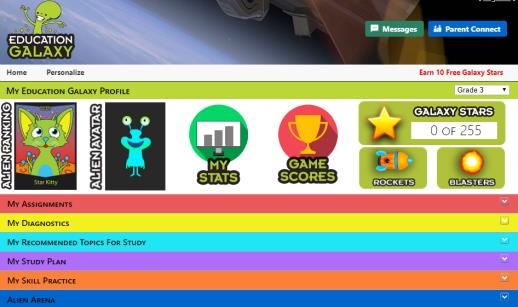
• Education Galaxy – www.educationgalaxy.com
    ➢ Students can practice Reading Standards in an engaging
      online setting.
    ➢ Student login – Student ID # + hes (i.e. 123456hes)
    ➢ Student Password – Student ID # (i.e. 123456)
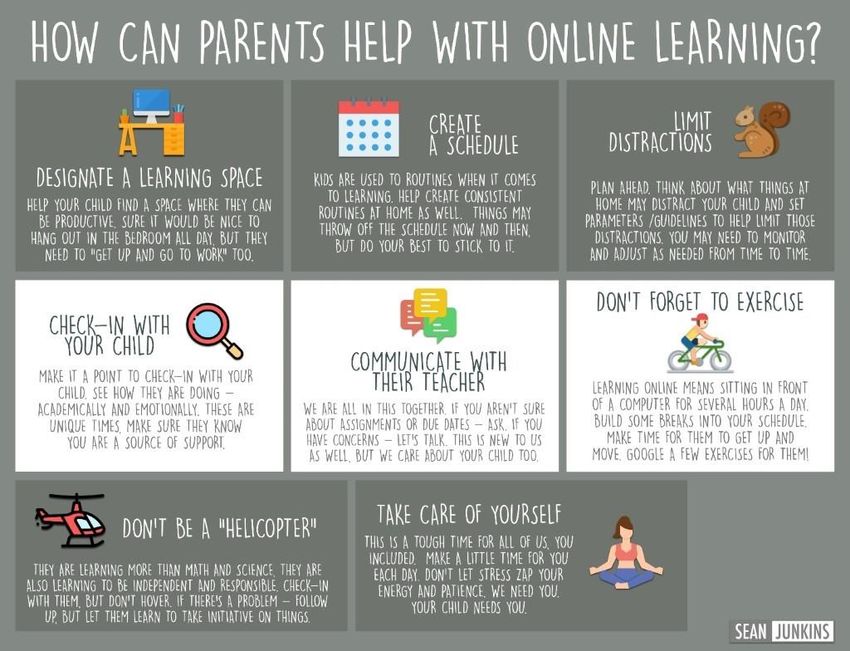
Tech Tips –Online Learning
Tech Tips – cont’d

• Canvas Student Login –
    ➢ Student login - Student ID # @paulding.k12.ga.us
        • (i.e. 12345@paulding.k12.ga.us)
    ➢ Student Password – first initial + middle initial + last initial and 4 digit
      birthday (month and day)
        • (i.e. abc0102)

• Canvas Parent Help Guides -
  https://community.canvaslms.com/t5/Observer-Guide/tkb-
  p/observer

• Information for Digital Learning Days – short term and/or long
  term (pivot) - https://www.paulding.k12.ga.us/Page/42513
What is Copyright?
Did you know that whenever you write a poem or story or even a paper for your class, or a drawing
or other artwork, you automatically own the copyright to it. Copyright is a form of protection given to
the authors or creators of "original works of authorship," including literary, dramatic, musical, artistic
and other intellectual works. What that means is that, as the author of the work, you alone have the
right to do any of the following or to let others do any of the following:
- make copies of your work;
- distribute copies of your work;
- perform your work publicly (such as for plays, film, dances or music);
- display your work publicly (such as for artwork, or stills from audiovisual works, or any
material used on the Internet or television); and
- make “derivative works” (including making modifications, adaptations or other new uses
of a work, or translating the work to another media).
In general, it is illegal for anyone to do any of the things listed above with a work created by you
without your permission, but there are some exceptions and limitations to your rights as a copyright
holder. One major limitation is the doctrine of “Fair Use”.
Student Guide for more information on copyright -
http://www.copyrightkids.org/cbasicsframes.htm
Parent Guidance for more information on copyright -
https://parentingdigital.com/parents-guide-copyright-fair-use/Contact Information Feel free to reach out to your child’s teacher with questions. Email or Class Dojo: Jason Brown – jcbrown@paulding.k12.ga.us Andrea Crabb – acrabb@paulding.k12.ga.us Laticha Kimble – lkimble@paulding.k12.ga.us Jennifer Warren – jwarren@paulding.k12.ga.us Emily Whitman – eewhitman@paulding.k12.ga.us You may also contact our Instructional Lead Teacher: Crystal Dankert – cdankert@paulding.k12.ga.us 678-838-2683 ext. 45024
You can also read


