Welcome to Heywood Community School - First Year Information Booklet 2020/2021
←
→
Page content transcription
If your browser does not render page correctly, please read the page content below
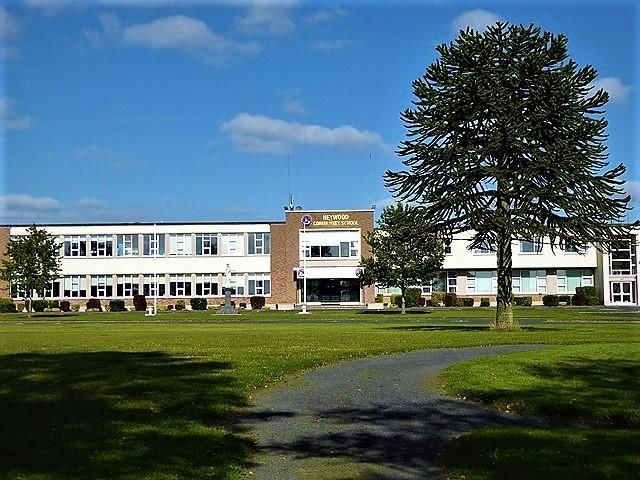
Welcome to Heywood
  Community School

First Year Information Booklet
          2020/2021

                                 1
Contents

1. Welcome.
2. Contact Information.
3. First Year Induction Programme.
5. Making the Transition from Primary to Secondary School.
6. Structure of the Day.
7. Helping your child make the Transition.
8. Organisation of First Year Students/ Subject options.
9. Guidelines for Remote Learning.
9. School Calendar 2020/21.

                                                             2
Welcome First Years to Heywood Community School.
               Year Head for First Years.

We extend a warm welcome to to all First year students 2020/2021 to Heywood Community
School. The transition from primary into secondary school is a big challenge for any young
person. In this transition, we are mindful of the wellbeing of all students in our care. This booklet
seeks to provide both parents and students with some information regarding subject options and
the Induction Programme for incoming First Year Students.

As a First Year student, you will find many things that are different from your primary school.
This can be both exciting and a little worrying at first. These feelings are very normal. Your
tutors , teachers and support staff understand this and will help you settle in to your new school.

It is important to do your very best in your studies while at the same time you should try and
become involved in as may aspects of school life as possible.
The holistic development of the person is a strong priority in Heywood Community School and
our vast array of extra curricular activities supports this philosophy. Many of our students have
excelled in the area of Sports, Music, the Arts and Public Speaking. This is an essential part of
your education and experience as a second level student.

It is important to show concern and respect for everyone you meet in our school. We all have a
responsibility to help make our school a safe and happy place for everyone. I hope this year and
the years ahead will be positive and enriching for you in Heywood Community School.

Mary Harrington                      Philip Bowe                            Peter Malone
Year Head for First Years.
Deputy Principal                       Principal                           Deputy Principal

                                                                                                      3
Contact Information.

School Address: Heywood Community School, Ballinakill, Co. Laois
                     E: info@heywood.ie
                       www.heywood.ie
                       Tel: 05787 33333

                              Contacts within the School

 Behaviour Management:         Year Head: Ms. Mary Harrington.

 Curriculum issues :            Ms. Mary Harrington/Mr. Peter Malone
                                Deputy Principals.

 Pastoral Care Issues:          Ms. Mary Harrington Year Head/ Class Tutor.

 Attendance:            Please monitor your son/daughter’s attendance on
                        Vsware using your pin on a regular basis.
                        Please contact Ms. Harrington to discuss any issues.

 Career Guidance:               Ms. Nicoli Reddington.
 School Chaplain:               Ms. Shona Killeen.

 Special Needs:             Ms. Mary Kehoe ( S.E.N. Co-ordinator).
 School Principal, Mr. Bowe will deal with more serious issues if necessary.

Text Messaging/Vsware : Please ensure that we have an up to date mobile number and
email address as we often send text messages/emails to make contact, send reminders etc. You
will receive your VSware username/password in August. Please keep safely as you will need this
to access school reports, monitor attendance, make subject choices and view timetable
throughout the year.

                       All contacts can be made through the school office
                           Office Hours : 8.45-3.45 Monday to Friday.

                                                                                             4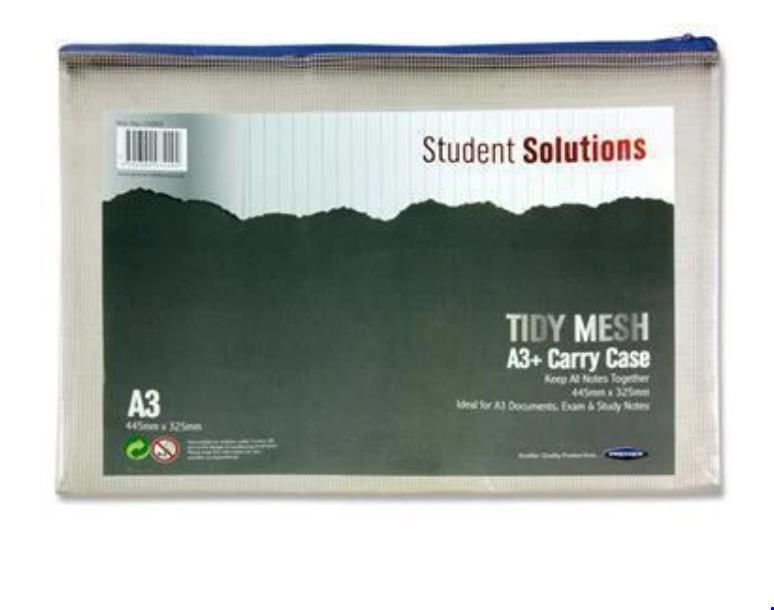
The Year Head.
Each Year group has a Year Head Teacher who they will meet each morning for assembly and
attendance. The Year Head has overall responsibility for the year group and deals with the
pastoral and behavioural issues in the year. They liaise with the tutor on a regular basis and
have a great deal of contact with the students. The Year Head for First Year 2020/2021 is Ms.
Mary Harrington, Deputy Principal.

What happens if I need to take my son/Daughter home early from school?

If you have made a medical appointment for your son/daughter, you should give them an
appointment slip from the back of the diary and give to Ms. Harrington at assembly in the
morning. We ask that when parents are calling to collect their son/daughter that they only present
themselves at the office at the time requested in the note ( preferably at the beginning or end of a
class period)- this will avoid having to disturb other classes by having to call them out early. All
students must be signed out in reception at the main office.

What happens if my child is ill in school?

The Year Head will telephone the parent/guardian and request that the student is collected from
school. Students are not permitted to phone home and request to be collected without speaking to
their year head. If a parent cannot come to the school they must make arrangements to have the
student collected. All students must be signed out at reception.

What do I do if my child is absent from school?

Parents are requested to telephone the year head if they feel their child will be absent for more
that two days. On their return to school following absence parents must ensure they have
completed the absence note from the school diary explaining the absence. This note will be
retained by class tutor/Year Head.

Induction Programme for Incoming First Years 2020/21.

First Year students will start their first day in Heywood Community School on Wednesday 26th
of August. The day will commence at 9.00am with a short prayer service for students and parents
followed by talk to parents and induction for students. The day will finish at 1.10p.m. There will
be no school transport on the first day so parents are requested to bring students to and from
school.

8.50a.m.     Assembly of First Year Students and their parents ( School Sports Hall)

9.00a.m.-9.30a.m.     Welcoming Prayer Service for students and parents ( School Sports Hall)

                                                                                                    5
9.30a.m.- 10.00a.m. First Years to First Year Social Area ( Principal’s Address to
students, Students meet Year Head and Tutors.
Presentation to Parents ( Triple P. Parenting Presentation).
Mr. Malone ( VSware)
10.00a.m First Year students are split into their base class groups and meet
with their Class tutors. The following information will be discussed:
Class Lists
Timetable
School Diary
Code of Behaviour
Internet usage Policy
Ice Breaker games with the Meitheal students.
11.00a.m. Refreshments in School Canteen.
11.20-1.00pm Tour of the school/Assigning of Lockers/School Photograph/Book Rental/
Meeting with Meitheal students.
1.00pm-1.10pm. Conclusion with Year Head and Tutors. Students are collected by parents.
What to expect?
1. Full School uniform to be worn on the First Day.
2. Bring any books that have been purchased – ensure they are labelled clearly with
your name and Year. You will receive your books if you have signed up with the
school book rental scheme.
3. Students will be provided with an individual timetable and locker. Students must
bring in their own lock and key. Always keep your locker locked.
4. All students will get a hardback school journal. – Write your timetable into the
journal and keep a copy of your timetable at home.
5. A snack and drink will be provided at 11.00am break
6. You will meet the Principal, the Deputy Principals, Guidance Counsellor, School
Chaplain, Year Head and Tutor.
7. The 6th Year Meitheal students will guide you through your first day and answer any
questions you may have from a student’s perspective.
Induction Programme for First Year Students.
In Heywood Community School we are committed to the welfare of all the students in our care.
In particular, we are committed to ensuring that each student gets the best possible start in their
new school and that the transition is as easy as possible for them.
6
Class Groups.

In First year we try to ensure that students have as much stability as possible. As in Primary
school, students will have a ‘base class group’ with whom they may have up to 75% of their
classes. This provides an ideal opportunity for them to get to know each other. In first year all
classes are mixed ability.

The Class Tutor.
Each class has a Class Tutor- a teacher who teaches the class group and meets them on a regular
basis. This constant contact means that new students have a person in school with whom they
have contact with each day and to whom they can talk if there is any problem with which they
need assistance.

The Year Head.
Each Year group has a Year Head Teacher who they will meet each morning for assembly and
attendance. The Year Head has overall responsibility for the year group and deals with the
pastoral and behavioural issues in the year.

Induction Day – 26th of August 2020.

First Year students begin on their own on the 26th of August. This day is an important orientation
day for the students. It allows them the chance to get to know their school, classrooms, meet
their tutor and some of their teachers before the other year groups arrive back in the school.

The Meitheal Team.

We have a student mentoring programme in Heywood called Meitheal. The Meitheal team are a
selected group of 6th year students who play an important role in helping new First Years make
the transition into secondary school. The Meitheal team will meet the First years during their
induction on the first day, give them a tour of the school and explain the running of the school.
The team share their roles and responsibilities with the students and let them know that they are
there for them should they ever need them.

The Meitheal team have been very successful in identifying and assisting with bullying issues.
Their presence and contact with the students have helped form new friendships and reassured
others during the transition period.

The Meitheal team work hard throughout the year to organise different activities and events for
the First Year students such as lunchtime clubs, Halloween and Christmas parties etc.

Guidance Counsellor
Heywood Community School has one Guidance Counselloer and a Chaplain, both of whom
work to support students during their time in the school. Class teachers, class tutors, year heads
and other members of management may refer a student to the guidance counsellor/School
                                                                                                     7
chaplain.. Parents may also contact a counsellor if the need arises. Students may also seek an
appointment with their guidance counsellor. Students who may be experiencing difficulties
settling, or students who are presenting with behavioural problems on an ongoing basis may
benefit from a session or a number of sessions with the guidance counsellor depending on the
nature of the issue. Students who experience loss due to bereavement or a separation would
benefit from a visit to the guidance counsellor. Guidance is also offered in other areas such as
difficulty with a subject or subjects, homework, bullying, conflict with peers and or adults or any
area that impinges in an unhelpful way on the life of the young person. The guidance service is
in place in order to support the student. Permission is always obtained from the relevant teacher
at the time of the appointment. Problems of a personal nature will be dealt with in a confidential
manner but in cases where the guidance counsellor perceives that the student may be at risk to
himself or herself or to others s/he will refer the student on to the relevant services. The guidance
counsellor also provides information on subject choices, course and career choices and all
students avail of these services as they move up through the secondary school system.
Making the Transition from Primary to Secondary School
Major Differences
Primary School Secondary School
- One Classroom - Different Classrooms for
different subjects.
- One Teacher - Different teachers for different
subjects.
- All your books are in your bag - Each Class is one hour long.
or on table/shelf - You will have a locker for your
books.
8- You will use your timetable to
help you organise what you
need for next two classes.
You will be provided with your timetable on the first day. It will show you how each of
your days will be divided. It will give you the subject, classroom and teacher for each class
period each day.
- Copy your timetable into your homework diary.
- Stick a copy on the inside of your locker.
- keep a copy at home.
Lockers and Books.
You will be assigned a locker on the first day where you will store all your books, folders,
copies, coats and other possessions. You will be aware from the Code of Behaviour, that
mobile phones must be switched off on arrival at school.
You are only permitted to use your locker at specific times…
-Before assembly each morning
-At morning break and lunch time
-Before you go home.
9Be sure to keep your locker key safe and have it with you at all times. Your tutor will have
a plan of your class lockers and may keep your spare locker key for you if required.
Please keep your locker locked at all times. Lock checks will take place by your Year Head
throughout the year. Please ensure not to leave any of your books or other personal items
on the floor in the locker area.
Organisation of Books in Locker
Organisation is something students finding difficult when coming into first year as each subject
has a couple of books or copies. In order to help student’s keep these organised we recommend
that they have a folder for each subject. We recommend you get the mesh reinforced folders as
they can rip otherwise and are not usable after a week or so (please see example in picture
below). Some students only need to use the folders for a few weeks and they know how to
organise their book but some students use the folders for first and second year. Everyone is
different.
10Structure of the School day.
Arrival- 8.50a.m. Go to your locker
Check your Timetable
Get you books, journal and any othe required materials for
your first two classes.
8.50a.m.- 9.00a.m. Assembly with Year Head in Canteen.
9.00am-10.00am Period 1 as per timetable.
10.00a.m-11.00a.m. Period 2 as per timetable.
11.00a.m.- 11.20a.m. Break.
Replace 1st set of books.
Check your timetable.
Pack books and required materials for
the next two periods as per timetable.
11.20a.m.-12.20p.m Period 3 as per timetable
12.20p.m.- 1.20p.m. Period 4 as per timetable.
1.20p.m.- 1.50p.m. Lunch
(First year students leave class 10 mins early for lunch each day)
Check Timetable
Pack books and required materials for
the final two periods as per timetable.
1.50pm-2.50p.m. Period 5 as per timetable
2.50p.m.-3.50p.m. Period 6 as per timetable.
3.50p.m. School Day ends.
Check Journal.
What books, copies, folders etc do I need for your homework?
Put these in your school bag.
Return others yo your locker/
11Lunchtime
The school canteen offers hot and cold lunches daily such as Spaghetti Bolognese, Baked potato,
chicken skewers, chicken curry, chicken wraps and salad rolls (made to order). Scones, Flapjacks,
soup and fruit are available during the 11.00a.m. break.
It is important to have a good breakfast and bring/purchase a lunch every day.
Helping Your Child make the Transition to Secondary School.
By the time a child reaches their final years in primary school, they will be totally familiar with
their school environment. They will know their teacher very well and be comfortable with the
people in their class. By sixth class they are the most senior class in their school, they will be
used to being given responsibility and they tend to be looked up to by the younger boys and girls.
In two short months, August sees the same students revert to being the most junior again, in a
brand new environment in a different location, with a differenr atmosphere. Change can be a
daunting task for any one of us but when you are 12 or 13 it is a change that requires time to
adjust to.
The important thing to remind parents is that children and teenagers are more resilient and
adaptable than we give them credit for . Within a short few weeks , their new surroundings
become more familiar and they will be moving from class to class with ease and confidence.
Constant routine become constant change.
The biggest change when entering secondary school is the constant change in the day to day
routine. From August, classes will be one hour in duration so a first year student could
potentially move from class to class up to 6 times a day. With each class change there will be a
change in class teacher. One tip to help your child cope with this is to write down the name of
the new teacher beside the name of the subject in their school diary.
There will be change of classrooms too. Depending on their subject choices, students will be
moving all around the school. Getting lost during the first few weeks will ne inevitable. Advise
your child to always stay with at least one other person from their class.. there is safety and
confidence in numbers!
12Homework:
• Allow 1.5 to 2 hours study/homework per evening, in first year.
• If the student is studying alone in the bedroom, check regularly to ensure that homework
is being done.
• Check the journal each night to ensure that the homework is being done.
• Check the school bag each night and ensure that the correct books and copies are there for
the next day. Check timetable for this.
• Do all written homework needed for class.
• Ensure that all study and recall homework is completed.
• If no written homework was assigned, read over what was done in class that day.
• Five to ten minute breaks between subjects being studied is a good idea.
• At the weekend, revise areas of work that need attention or that the student found difficult during
the week.
Extra –curricular activities.
Getting involved in extra-curricular activities is a great way for your son/daughter to get to know
more student in the school. Each student should find some activities they enjoy whether its
Drama, Choir or Sport. Taking part in such activities builds confidence, resilience and helps
them settle into the school environment better.
13First year Curriculum in Heywood Community School.
Students are generally allocated to classes in mixed ability. This means that students
are allocated to classes where there is a range of abilities. This
arrangement exists for all subjects with the exception of maths and Irish where a number of
higher level classes are created at the beginning of second year.
All first year students study the following core subjects.
1. English
2. Irish
3. Mathematics
4. History
5. Geography
6. Science
7. Civic, Social and Political Education (C.S.P.E.)
8. Religious education (RE)
9. Physical Education (PE)
10.Personal Development (SPHE)
11.A European Language French or German.
All first Year students will sample the following subjects in a short taster programme up
until October Mid-term Break 2020.
1. Art, Craft and Design
2. Business Studies
3. Home Economics
4. Wood Technology
5. Material Technology ( Metal)
6. Technical Graphics
7. Music
Art, Craft and Design.
First Years are introduced to basic Art, Craft and Design skills such as drawing, painting, using
colour, Lettering, graphic design, Craft and visual literacy. Students in first year will follow the
new JC Art programme introduced in 2017. Art is also offered as a Leaving Certificate subject so
students who like it can study it for a further two years.
Business Studies.
The specification focuses on improving students’ understanding of the business environment and
on developing skills for life, work and further study through the three inter-connected strands:
The Junior Cycle focuses on key skills, assessment and learning intentions. The learning
intentions for Business Studies are: Managing My Resources: the learning outcomes in this
element focus on developing students’ awareness, knowledge and understanding of the
fundamentals of personal finance, enterprise and economics.
14Exploring Business:this covers themes of globalisation, sustainable development and
consumerism. It enables students to reflect on the interconnectedness of business to the
economy, society and environment and encourages them to be active and responsible.
Using Skills for Business: This broadens students’ understanding by enabling them to
proactively apply their knowledge and skills to their own lives and in the dynamic business
environment.
Home Economics.
The new Home Economics syllabus is designed to provide students with the knowledge, skills
and attitude that will enable them to take control of their own lives at present and in the future. It
is concerned with the way individuals and families manage their resources to meet physical,
social and economic needs. Topics studied are: Food studies, Nutritional and Culinary skills,
Resource Management and Consumer Studies, Social and Health Studies and Textile Fashion
and Design. The Exam is structured as follows: Food Studies: 45%, Project 15% and Written
Exam 40%. Home Econonmics is a relevant and important subject for all young people. It
prepares students of both sexes for life in a consumer oriented society and provides a good
knowledge and skill based learning foundation for those seeking a wide range of careers. It leads
to Home Economics (Social and Scientific) for the Leaving Certificate.
Wood Technology.
Wood Technology is an interesting and useful subject. Half of the course is based on the study of
wood and trees and the various practical tools used in woodwork. The other half of the subject is
practical based, where students have the opportunity to make projects such as toy cars, boats,
desk organisers and more. Students will design a project from a brief, use freehand sketching to
communicate their ideas, prepare a working drawing and read design drawings and safely use a
range of hand and power tools. Students will follow a larger design brief , make a project and
produce a project folder for the JC Exam. This is worth 66%. The written exam is worth 34%.
Materials Wood Technology will be useful in the study of the other two technology subjects-
Technical Graphics and Metalwork as well as maths, Art and Science. It leads on to Construction
Studies for the Leaving Certificate.
Material Technology ( Metal)
Metalwork is one of the technology subjects offered at Junior Cycle. It is an activity-based
course focusing on metal, how to work with it and how to assemble different parts. Other
materials such as plastics and wood are also investigated and used in project work. You will be
working with basic electronic components too.
What will I learn in Metalwork?
how to read and follow a technical drawing,
skills in shaping, cutting and joining materials
15 how to use a wide variety of tools and machines correctly and safely, the properties of
different metals and how they are made
the importance of metal in our everyday lives
how to use the internet in your research.
learn how to apply a variety of decorative finishes to protect your work
learn about basic electronic components and how to construct simple electronic circuits.
The subject leads on to Engineering for the Leaving Certificate.
Technical Graphics.
Technical Graphics is one of the technology subjects offered at Junior Cycle. In Technical
Graphics you will learn how to represent 3-D objects on paper and on computer. Students will
develop problem-solving and creative thinking skills through the solution of graphical problems.
In this subject students:
produce neat drawings of everyday items
create models of recognisable items on the computer
use freehand sketching, colouring and shading to represent objects
make paper/cardboard cut-outs of items and use these to model items in 3-D
work on your own and as part of a group
use a textbook and worksheets
organise and maintain a folder of drawings and notes.
how to produce drawings using drawing equipment, freehand sketches and computers
how to read and interpret drawings and diagrams
how graphics relate to the design and manufacture of products.
Technical Graphics will be very helpful in the study of Materials Technology Wood,
Technology, and Metalwork as each of these subjects require you to make drawings of the pieces
you will be making. The problem solving and geometry studentsl learn in Technical Graphics
will prove very useful in Mathematics.
Technical Graphics helps students to think in a more logical and creative way. Students can
continue the subject with a module in Transition Year and Communications Graphics ( DCG) for
the Leaving Certificate.
Music
Junior Cycle Mucic looks at many areas such as music from other countries and eras, composing
music and performing. Students will become familiar with music through the ages, from classical
to rock and have the opportunity to take up an instrument of their choice. The Junior Cycle exam
is divided into three sections- written, listening and performance. Students who have a passion
for music will really enjoy the subject. Students can continue to study music for the Leaving
Certificate.
16In October students will choose two (2) of the above optional subjects.
Note: When filling out the subject choice form great care must be given to the order of
preference as this determines the subjects offered. Students are asked to select two subjects from
the above choice subject list and place them in order of preference, in case we are unable to offer
them their first three choices. Students will only study two subjects from the above choice
subject list.
All students is monitored to ensure that their potential is being realised.
This process involves examining the students’ performance in house exams and class tests and
through the use of formative assessment. Subject teachers are asked to complete progress reports
on performance and potential,
Following the Christmas assessments in 1st year, the students’ results are analysed. Any students
who are deemed to be underachieving are identified and appropriate interventions are put in
place.
TY student Rachel Foley receiving an Excellence Award from NUIM Maynooth for her
academic result in Junior Cycle Business Exam 2019.
17Guidelines for Remote Learning
(Please see full Remote Learning policy and Internet Acceptable User Policy under policies
section of school website)
First Year Students will commence a Digital Literacy module as part of their induction where
they will set up their own G-Mail and Google Classroom account.
Heywood Community School GMAIL accounts are set up for all student-teacher class
contact. Personal email addresses are not permitted.
Guidelines – Live engagement with teacher/ Remote Learning.
Make sure your device is fully charged.
Set up your device and materials in an appropriate location - noise free, etc.
Log onto the correct link/app. at the time requested by your teacher/timetable.
Be aware of what others may be able to view or hear around you/in the background.
Be ‘class ready’ - have the materials you will need in advance of going online.
While online:
Clarify with your teacher the work you have been assigned.
Clarify the due date for work assignments.
Write all assigned work into your Student Journal - this will help Parents/Guardians to support
you.
Take notes, as you go, on the important points of the lesson. Writing will help you to
understand the material and to stay more engaged in the learning.
Stay organised.
Attendance and General Behaviour.
Teachers will be keeping an attendance list/record of student’s participation during any period of
remote teaching and learning.
All students participating in online courses are expected to conduct their communications in a
respectful manner.
Circulating or publishing (including on the Internet) material recorded without consent with the
purpose of humiliating, undermining the reputation of or causing damage to another person,
whether considered a “joke” or not, may be considered as a serious breach of discipline.
Inappropriate language or behaviour will result in disciplinary action.
Remember that Remote Learning is not private. Think about the consequences of anything
you might write or post online. Student Responsibility and parental/ guardian monitoring is
essential where possible.
18General Advice from First Year Students 2019/2020.
‘Have a good breakfast ‘Get involved
before you come to ‘If you don’t know
in sports’ your way just ask
school’
someone’
‘Put a copy of ‘If you are forgetful have
your timetable a spare set of copies and
on your locker’ pencils/pens in your ‘Don’t worry
locker it will help’ about lockers’
‘Colour code your ‘Don’t be scared
‘Don’t be
folders and timetable so it’s actually great
nervous you
fun’
you just grab the folder will love it’
you need it saves time’
‘Be kind to
everyone’ ‘The other older students
don’t care that you are a
first year and don’t bother
‘You might not be you.- They actually will
friends with your old ‘Don’t exclude look out for you ’
primary school anyone’
friends but don’t
worry you will make
loads of new ones
‘Be
‘Be friendly with organised’
everyone, you’ll
never feel alone’
‘The first few weeks are tiring as
the classes are an hour long and
you are trying to find your way ‘Do your homework
around. But after three weeks the night it is given then
you’ll feel more settled and it’s you know you have it
no big deal’ done’
19School Calendar 2020/2021 ( Provisional)
FIRST TERM
th
Tuesday 25 August Return of all Staff
th
Wednesday 26 August First Year Induction/Welcoming Prayer Service for students/ parents/guardians
th
Thursday 27 August Staff Day (No School)
th
Friday 28 August 1st and 5th Year Classes begin
Monday 31st August Full School Timetable except Transition Year
rd
Thursday 3 September Transition Year Begins
th
Thursday 8 October Parents’ Association A.G.M. (8.00 p.m.)
th
Monday 12 October Final date for Assessment Tests (3rd & 6th Years)
Thursday 15th October Open Night for incoming First Years/Final date for 5 th Year Assessments.
Friday 16th October Foundation Day School Mass.
th
Tuesday 20 October Croke Parking Planning Evening
th th
Mon 26 -Fri 30 Oct. (incl.) MID-TERM BREAK
rd
Tuesday 3 November Parent/Teacher Meeting for 6th Years/Final date for 2nd Year Assessment Tests
Wednesday 11th November Parent/Teacher Meeting for 3rd Years
Thursday 26th November Parent/Teacher Meeting for 4th and 5th Years
Monday 30th November J. C. T. Whole School Planning Day (No School)
th
Friday 11 December Carol Service
Tue 15th – Friday 18 December Christmas House Exams for 1st , 2nd, 4th and 5th Years
h
Tues 22ndDec -Tuesday 5th Jan CHRISTMAS HOLIDAYS
SECOND TERM
th
Wednesday 6 January Second Term Begins
th
Wednesday 13 January Parent/Teacher Meeting for 1st Years
Tuesday 19th January Parent/Teacher Meeting for 2nd Years
Thursday 21st January Enrolment for Incoming First Years
Mon 1 – Frid 12 February
st th
Mock Examinations
th
Saturday 6 February Aptitude Tests for Incoming First Years
Mon 15 – Frid 19 February MID-TERM BREAK
th th
Thursday 25th February Talk to Parents of 3rd Years-Senior Cycle Options, incl. Transition Year Programme
Friday 5th March Final date for 5th Year Mid-term Assessments
Thursday 11th March Final date for 1st and 2nd Year Mid-term Assessments
Wednesday 17th March St. Patrick’s Day (No School)
th th
Thursday 18 - Friday 19 March No School
Mon 29th March – Frid 9thApril EASTER HOLIDAYS
THIRD TERM
Monday 12th April Third Term Begins
Tuesday 27th April Croke Park Planning Evening
Monday 3rd May Bank Holiday (No School)
Thursday 13h May Awards Ceremony
Thursday 20st May Graduation Ceremony
Tue. 1sth – Friday 4th June Summer House Exams 1 st , 2nd, 4th and 5th Years
Friday 4th June SUMMER HOLIDAYS
Wednesday 9th June State Exams Begin
209
21You can also read


