RULES FOR SCHOOL CYCLING EVENTS - Effective as at 1 January 2021
←
→
Page content transcription
If your browser does not render page correctly, please read the page content below
RULES FOR SCHOOL CYCLING
                               EVENTS
                           Effective as at 1 January 2021

A member organisation of

                                                            Page | 1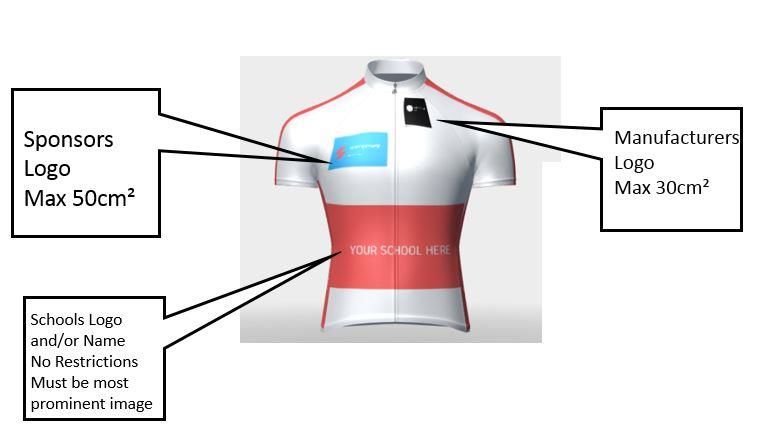
Table of Contents

  1. Section 1      INTRODUCTION                            Page 4

  2. Section 2      GENERAL RULES – ALL RIDERS AND EVENTS   Page 5

  3.                MINIMUM I MAXIMUM AGES                  Page 7

  4.                AGE GROUPS                              Page 7

  5.                SCHOOLS RACING UNIFORMS                 Page 8

  6.                HOME SCHOOLED STUDENTS                  Page 10

  7.                OVERALL POINTS TROPHIES                 Page 11

  8. Section 3      CHAMPIONSHIPS TITLES                    Page 12

  9. Section 4      ROAD AND TRACK SPECIFIC                 Page 13

  10.               COMPETITION TYPES                       Page 13

  11.               GENERAL R&T RULES                       Page 13

  12.               GEARING                                 Page 14

  13.               EQUIPMENT                               Page 15

  14.               TEAM TIME TRIALS                        Page 17

  15.               TRACK RACING                            Page 19

  16.               CRITERIUM                               Page 20

  17.               POINTS RACE (ROAD)                      Page 22

  18.               INDIVIDUAL TIME TRIAL (ROAD)            Page 23

  19. Section 5     TOUR SPECIFIC                           Page 24

  20. Section 6     MTB SPECIFIC                            Page 25

  21.               COMPETITION TYPES                       Page 24

  22.               GENERAL MTB RULES                       Page 24

  23.               EQUIPMENT                               Page 26

  24.               PROTECTIVE CLOTHING                     Page 27

  25.               CROSS COUNTRY (XCO)                     Page 27

  26.               DOWN HILL (DH)                          Page 28

  27.               TEAMS RELAY                             Page 29

  28.               ENDURO                                  Page 28

  29. Section 7     CYCLO-CROSS SPECIFIC                    Page 30

  30.               EQUIPMENT                               Page 30

  31. Section 8     DISPUTES PROCEDURE                      Page 32

                                                                      Page | 2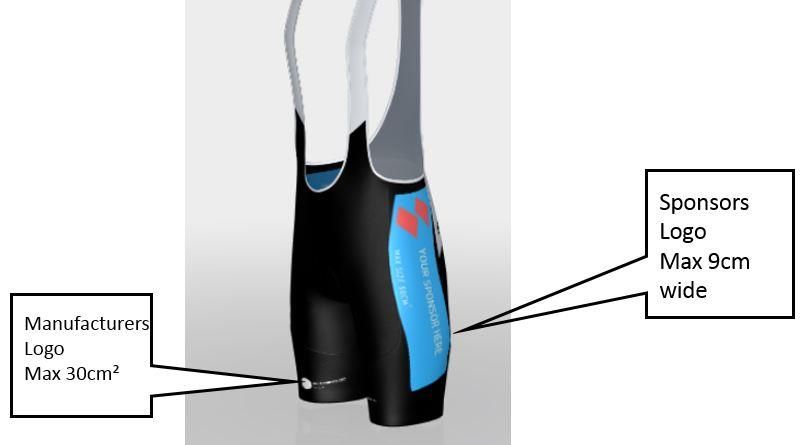
Section 9    APPENDIX 1 – ROLLOUT                        Page 33

Section 10   APPENDIX 2 – SCHOOL RACING UNIFORM          Page 34

Section 11   APPENDIX 3 – COMPOSITE TEAM                 Page 36

Section 12   APPENDIX 4 – PROTEST FORM                   Page 37

Section 13   APPENDIX 5 – CAPACITY EVENT ENTRY PROCESS   Page 38

                                                                   Page | 3
SECTION 1
1. INTRODUCTION
1.1 New Zealand Schools Cycling Association Incorporated (“CYCLING NEW ZEALAND
SCHOOLS”) is a member organisation of Cycling New Zealand. CYCLING NEW ZEALAND
SCHOOLS sets its rules, for school cycling events, in the interests of safety and to ensure
a level playing field in terms of equipment for the less skilled newcomers to cycle racing.
The emphasis is on enjoying the sport of cycling racing with peers, setting personal goals
and learning teamwork and skills.
1.2 These rules are not intended to be a complete code for school cycling events. Instead,
these rules have been approved by the Executive of the CYCLING NEW ZEALAND SCHOOLS
on the basis that school cycling events shall also be governed by CYCLING NEW ZEALAND
Road and Track, Mountain Bike New Zealand (MTBNZ) Rules and UCI Regulations as
modified by these rules provided that:
1.2.1 in the event of any conflict or inconsistency between these rules and the Cycling
New Zealand Road and Track, MTBNZ Rules and UCI Regulations, these rules shall
prevail; and
1.2.2 matters not covered by these rules will be considered by the Technical
Committee of CYCLING NEW ZEALAND SCHOOLS appointed from time to time
and any decisions will be guided by the CYCLING NEW ZEALAND Road and Track,
MTBNZ Rules, UCI Regulations and other applicable rules or regulations made by
CYCLING NEW ZEALAND or applicable to CYCLING NEW ZEALAND sanctioned
events.
1.3 These rules, and any applicable guidelines, must be notified to schools with the event
details in advance of the competition with encouragement to seek the appropriate help
so that students comply with all rules prior to their arrival at the event.
Page | 4SECTION 2
2. GENERAL RULES - ALL RIDERS AND EVENTS
2.1 All schools that compete in events sanctioned by CYCLING NEW ZEALAND SCHOOLS, must
have paid any annual subscription fee set or required to be paid by CYCLING NEW
ZEALAND SCHOOLS and any entry fee set by the event organiser prior to racing in the
relevant CYCLING NEW ZEALAND SCHOOLS event.
2.2 Riders shall be accepted into an event on the condition that the event terms and
conditions and H&S planning are agreed by their school.
2.3 Riders shall be accepted into an event on the condition that they race at their own risk
and under the rules of CYCLING NEW ZEALAND SCHOOLS.
2.4 Riders must be currently enrolled at and attending a school at the time of a particular
event. Home Schooled students should refer to Rule 6 for more details.
2.5 In accordance with NZSSSC Regulations all sanctioned schools events are SMOKE FREE.
Smoking is not permitted in the event area or on the course at any time.
2.6 All riders shall wear the colours of the school they are enrolled in, attending and
representing.
2.7 No helmet cameras or action cameras are permitted, both for practice and racing. All
such equipment not essential for racing purposes must be removed
2.8 All prize winners who take their place on the podium must wear either their school racing
uniform or regular school uniform, and without sunglasses or caps.
2.9 For mass start events, at the discretion of the organisers, riders may be organised on the
start line to ensure fair representation of each school. If requested (during the entry
process or at the event) schools will be required to provide their school’s rider rankings.
Page | 52.10 When a rider has won an individual trophy, unless specifically told otherwise, the trophy
must be returned to organisers as soon as possible after presentation. When a school
has won a team trophy, the school that the team attends may retain possession of the
trophy until the next contest and be responsible for its safekeeping. In the event that a
trophy is lost or damaged, the school concerned shall be responsible for replacing it.
2.11 All trophies shall be returned to CYCLING NEW ZEALAND SCHOOLS (or nominated event
organiser) on request prior to the next year’s event.
2.12 The trophies shall not be won outright and shall remain the property of the CYCLING
NEW ZEALAND SCHOOLS.
2.13 All schools must nominate and appoint a ‘Team Manager’ as the point of contact prior to
and during the event. This can be a member of staff or representative of.
2.14 The attendance at advertised event briefings is compulsory (unless specifically told
otherwise). Any schools who fail to be represented may have points deducted from the
overall schools total.
2.15 The Event Organiser specific to each event may determine specific regulations for their
event. These must not conflict with any mandatory elements of these rules and all such
specific regulations will be advertised to schools and riders prior to the event.
2.16 Riders must not use offensive or abusive language during the race, act in any anti-
sporting manner, be disrespectful to the event volunteers / officials or ignore the race
regulations.
2.17 Riders are not permitted to shortcut the course. The responsibility for following the
official route lies with the rider. If riders do not follow the official route they will be
disqualified.
2.18 Riders who do not finish the prescribed course must present themselves to an event
official as soon as possible to ensure the whereabouts of all riders is accounted for.
2.19 At designated Island events i.e. North Island Road, South Island MTB etc, entry is open to
any rider from any island, however, riders from the alternative island are not eligible for
placings, points, medals or titles; but will however be acknowledged if they receive a
placing.
Page | 62.20 Where an event (or part thereof) is anticipated to reach capacity, the capacity will be
published prior to entries opening and Capacity Event entry Process (Section 13,
Appendix 5) will be applied.
3. MINIMUM AND MAXIMUM AGES
3.1 All riders shall be (at a minimum) enrolled in Year 7 at an affiliated school in the year of
the race.
3.2 The maximum age a rider shall be is 19 in the year of the race (age is calculated as at 31
December in the year of the race).
4. AGE GROUPS
Individual Events
4.1 Under 13 (“U13”) riders must at a minimum be enrolled in Year 7 at an affiliated school
and not have had their 13th birthday prior to and including the 31st December in the
year of competition.
4.2 Under 14 (“U14”) riders must have had their 13th birthday between 1st January and 31st
December (inclusive) in the year of competition.
4.3 Under 15 (“U15”) riders must have had their 14th birthday between 1st January and 31st
December (inclusive) in the year of competition.
4.4 Under 16 (“U16”) riders must have had their 15th birthday between 1st January and 31st
December (inclusive) in the year of competition.
4.5 Under 17 (“U17”) riders must have had their 16th birthday between 1st January and 31st
December (inclusive) in the year of competition.
4.6 Under 20 (“U20”) riders must have had their 17th 18th or 19th birthday between 1st
January and 31st December (inclusive) in the year of competition.
4.7 All Riders shall race in their correct age group.
4.8 In the instance where two age groups are combined for racing, the presentation and
acknowledgements of each individual age group will be maintained.
Page | 7Team Events
4.9 Year 7 & 8 Teams – all team members must be enrolled in Year 7 and/or Year 8 in the year
of competition. If a Y7 & 8 category is offered, Y7 & 8 teams must compete in that
category.
4.10 Junior Teams - all team members must be under 16 on the 31st December in the year of
competition. At the discretion of the event organisers Y7 & 8 teams may be included in
this category where a Y7&8 category is not offered. A Y7 & 8 rider or riders from the
same school can be included in the Junior grade if necessary to complete a team. A
junior rider can not ride in a Year 7 & 8 team.
4.11 Senior Teams – at least one member must be 16 years or over and all members must be
under 20 on the 31st December in the year of competition for the team to be
considered ‘senior’. A Junior rider or riders from the same school can be included in the
Senior grade if necessary to complete a team. A senior rider can not ride in a Junior or
Year 7 & 8 team.
4.12 Teams of boys and girls shall be permitted to race in the boys’ event appropriate to the
age of the riders.
4.13 A rider may only ride in one age group and in one team per team event. In accordance
with Rules 2.15, 4.9, 4.10, and 4.11, schools can submit a written application to the
organisers to allow a rider to be part of a second team if the school has no alternative
riders in that age group.
4.14 Read more on the Cycling New Zealand Schools Rules on Composite teams in Section 11,
Appendix 3. Read more on the School Sport New Zealand eligibility regulations here.
5. SCHOOL RACING UNIFORMS
5.1 A school racing uniform must be in the relevant school's colours and the logo or name of
the school must be prominently displayed. In the event that a school does not have a
school racing uniform riders shall race in plain cycling top and shorts which should as
much as possible reflect the colours of that school. A top turned inside out will be
accepted as a plain riding top only if any trade team advertising, sponsors name or other
advertising is not visible.
Page | 85.2 Any sponsor's name and logo must be contained within a 9 cm (90mm) strip on the leg
of the shorts or skinsuit. It may also contain a (one) small discrete manufacturer’s logo.
5.3 Tops shall contain the name and/or logo of the school, and may contain a (one) small
discrete manufacturer’s logo. Any sponsor's name and logo must be contained within a
50 sq cm area anywhere on the top. The School name and/or emblem should be most
prominent. See Appendix 2.
5.4 Any sponsor displayed in accordance with Rule 5.2 and 5.3 must be a sponsor of the school
or team, not of individual riders, and must have genuinely contributed to the team’s
expenses.
5.5 No alcohol, tobacco, other drug, party pill, pornographic products, sports betting (or
other product that might damage the image of or is deemed to be unsuitable for Schools
Cycling) advertising may appear on any clothing worn by riders while competing in a
CYCLING NEW ZEALAND SCHOOLS sanctioned event.
5.6 No trade tops and/or shorts will be allowed.
5.7 In the event that a rider presents to the start line in an incorrect uniform they will not be
allowed to start unless they have changed into their relevant school racing uniform in
accordance with Rule 5.1.
5.8 The use of legwarmers and arm warmers in official school colours, black or white is
permitted at any time. There shall be no advertising or sponsors names on these
garments.
5.9 Further guidance on the regulations for school racing uniforms are set out in Appendix 2.
Page | 96. HOME SCHOOLED STUDENTS
6.1 Cycling New Zealand Schools accepts applications from Home Schooled students to
participate in its sanctioned events if they meet the School Sport New Zealand eligibility
regulations including providing evidence of a current MoE approval and are affiliated to
CYCLING NEW ZEALAND SCHOOLS.
6.2 For participation in individual cycling events:
6.2.1 Home- schooled students may participate in individual cycling events, but will not
be eligible for medals.
6.2.2 Parents of the students are required to enter the event as per the event entry
criteria and accept all the entry terms and conditions including providing current
evidence of MoE approval for Home Schooling.
6.2.3 It is recommended but not a requirement, that the student to be connected with
an affiliated school (or club).
6.2.4 Home-schooled students shall race in plain cycling top and shorts (no visible
branding or sponsors).
6.3 For participation in team cycling events:
6.3.1 Home-schooled students may be included in a Composite Team of an affiliated
school but the team will not be eligible for medals or points towards any overall
school award.
6.3.2 It is a requirement that the home-schooled student have been a part of the
affiliated school team for the season and not simply joining for the event.
6.3.3 The home-school student shall only be accepted in a composite team where the
school has insufficient riders to enter a full team. See Section 11, Appendix 3 of
Cycling New Zealand Schools Rules for more details.
6.3.4 The affiliated school principal of such teams is responsible for entering the event
as per the event entry criteria and accept all the entry terms and conditions
including providing to the event organiser with proof of current evidence of MoE
approval for the home-schooled student
6.3.5 Home-schooled students shall race in plain cycling top and shorts (no visible
branding or sponsors).
6.3.6 Read more on the Cycling New Zealand Schools Rules on Composite teams in
Section 11, Appendix 3. Read more on the School Sport New Zealand eligibility
regulations here.
Page | 107. OVERALL POINTS TROPHIES
7.1 At events where a ‘Top School’ title is awarded, a minimum of 2 trophies will be awarded
to:
- School teams which have the highest aggregate points across all nominated events
from their Year 9 – 13 riders.
- School teams which have the highest aggregate points across all nominated events
from their Year 7 -8 riders.
7.2 In the case of two (or more) teams being tied then the points from the final race shall
determine the winner. If two or more teams are still tied then the points from the
second to last race will determine the final outcome and so on until they can be
separated.
7.3 The Points and Trophies for each event will be published in the Event specific manual.
Page | 11SECTION 3
8. CHAMPIONSHIP TITLES
The following national championship titles are available in each age group at the nominated
events.
Title Event
National Road Race Champion National School Road Championships
National Points Race Champion National School Road Championships
National Team Trial Champions National School Road Championships
National Hill Climb Champion** Annual rotation between Northern and
Southern School Tour
National Individual Time Trial Champion** Annual rotation between Northern and
Southern School Tour
National Criterium Champion** Annual rotation between Northern and
Southern School Tour
National XC Champion National School MTB Championships
National DH Champion National School MTB Championships
National Teams Relay Champions National School MTB Championships
National Enduro Champion National School MTB Championships
National Super D Champion Not currently assigned to an event
National MTB Overall Individual Champion National School MTB Championships
National Cyclo-Cross Champion Not currently assigned to an event
** For more information Refer to Section 5 – Tour Specific Rules
Page | 12SECTION 4
9. ROAD AND TRACK SPECIFIC
The following regulations are specific to the road and track cycling disciplines. Where no specific reference
to any particular point or issue is set out, the General Technical Regulations of Cycling New Zealand Road &
Track and UCI will apply.
10. COMPETITION TYPES
These regulations incorporate the following distinct disciplines and specialties:
10.1 Road Race
10.2 Time Trial
10.3 Criterium
10.4 Criterium (with Intermediate Sprints)
10.5 Points Race (Road)
10.6 Hill Climb
10.7 Multi day Tours
10.8 All events conducted within an agreed track programme
11. GENERAL ROAD AND TRACK RULES
11.1 Riders must wear an approved helmet at all times.
11.2 Riders must keep both hands on the handlebars at all times during the race except when
drinking or signaling, until they have stopped following the conclusion of the race. At
least one hand should be on the handlebars during warm up and warm down. If it is
deemed to place the rider or others in danger or impede other riders; a breach of this
rule will result in mandatory disqualification.
11.3 Holding on to cables or a cable position without holding the handlebars during a race is
not permitted. Breach of this rule will result in mandatory disqualification.
11.4 Riders shall not intentionally cross the centre of the road when on open roads, whether
there is a white line or not. Breach of this rule will result in mandatory disqualification.
11.5 In the interests of riders’ safety, following cars or support vehicles or bicycles are not
allowed on any course during racing. If any supporter from a particular school is caught
infringing this rule it may result in their rider/team(s) incurring a penalty or being
disqualified.
Page | 1312. GEARING
12.1 A rollout with the relevant distances should be marked out and advertised as available
for riders to check their own gearing prior to racing.
12.2 Where there are gears on the cycle that are outside the gear restrictions for that age
group, the gears must be restricted by the limit screws on the front and/or rear derailleur
to prevent the use of any device that may alter the gears during the event.
Individual Events
12.3 Year 7&8 - maximum gearing with one complete turn of the pedals shall be 6.610 metres
roll out.
12.4 U13, U14, U15 and U16 - maximum gearing with one complete turn of the pedals shall be
6.610 metres roll out.
12.5 U17 - maximum gearing with one complete turn of the pedals shall be 7.0 metres roll out.
12.6 U20 (U18 and U19) - maximum gearing with one complete turn of the pedals shall be 7.930
metres roll out.
12.7 Gear checks to be carried out at the completion of the individual mass start races for the
first five place getters. Failure to report to the race commissaire/appointed official
immediately after the conclusion of the race shall result in disqualification.
Team Time Trial Events
12.8 All riders in Year 7&8 and U16 (Junior) teams are subject to a maximum gearing where
one complete turn of the pedals shall be 6.610 metres roll out.
12.9 All riders in U20 (Senior) teams are subject to a maximum gearing where one complete
turn of the pedals shall be 7.00 metres roll out.
12.10 Gear checks are to be carried out prior to time trial start for all competitors (See
Appendix 1 for details), but at the discretion of a race commissaire further gear checks
may be carried out after a team crosses the finish line.
Page | 1413. EQUIPMENT
Bicycles
13.1 Cycles used in road races shall be outfitted as per road code with the exception that
reflectors shall be optional and all bikes are required to have a front and back brake
(excluding track bikes).
13.2 Cycles used in track races shall be fixed wheel bicycle specifically designed for velodrome
track use only.
13.3 All Cycles must comply with current UCI technical specifications specific to their code.
13.4 Bicycles used in competition must be capable of safely and efficiently completing the task
and must, as a minimum, be mechanically sound, have efficient brakes on all wheels (road
only) and all reasonable steps must be taken to ensure the safety of the rider and others.
As part of the latter, bar plugs are compulsory.
13.5 Riders are permitted to use Disc Brakes. Riders competing on bikes with disc brakes
should be advised that this will compromise the ability of race officials to provide them
with support and therefore they use them in competition at their own risk.
13.6 If, in the opinion of the appointed Commissaire or Official, a bicycle fails to meet the
above criteria the rider must take immediate steps to ensure the necessary steps are
taken to remedy the shortcomings and ensure the Commissaires requests are met. Failure
to do so will result in exclusion from the competition.
Page | 15Wheels
13.7 Wheels must have a minimum of 16 spokes per wheel and have a rim depth no greater
than 45 mm.
13.8 Disc wheels are not permitted.
13.9 Fixed wheel shall not be permitted in Road Races.
13.10 Wheels containing carbon or composite rims and/or spokes are permitted as long as they
meet Rule 13.7, 13.8 and 13.9.
Handlebars
13.11 For Road races - standard one piece drop handlebars only are permitted. Triathlete-type
bars, aerobars including clip-ons, and bull horn bars are not permitted under any
circumstances.
13.12 For Track races - standard one piece drop handlebars are permitted for all grades. Aero
bars are permitted for U20 riders in team pursuit events only.
Helmets
13.13 The wearing of an approved helmet is compulsory. Helmets must comply with NZ Traffic
Regulations and be Standards approved.
13.14 Helmets must be worn at all times during warmup, racing, warmdown and at any other
time that the bike is being ridden and is making forward or backwards progression.
Page | 1614. TEAM TIME TRIALS
14.1 The starting draw shall be made by the organisers.
14.2 The starting order shall be seeded from the previous year’s results for the first 10 places
with the highest seeded team starting last.
14.3 Teams shall start at 2 minute intervals or such lesser interval as shall be determined by
the organisers after giving due regard to safety, number of entries, and other relevant
considerations.
14.4 In the event of a team being overtaken, that team shall keep to the left and avoid all
contact with the overtaking team. It is strictly forbidden to follow in the slipstream of
another team/rider or a vehicle by less than 25 metres. When overtaking a clear 2 metre
lateral gap should be maintained between the riders at all times.
14.5 Riders dropped from their teams may continue to the finish but must keep left at all
times and not interfere with any overtaking team.
14.6 Riders shall not be allowed external assistance in starting or racing other than holders at
the start line where these are provided by the organisers. There must be no physical
contact between riders.
14.7 Riders comprising a team shall be allowed to change cycles or parts between them.
14.8 Medals shall be presented to the riders who rode in the event. (For clarification: any rider
who proceeds past the 200 metre line is eligible for a medal.)
14.9 Composite teams made up of riders from different schools are permitted subject to the
requirements in Section 11, Appendix 3.
Page | 17Year 7 & 8
14.10 Teams may enter up to 6 riders, of whom 4 will contest the event and up to 2 may be
reserves.
14.11 Teams may consist of up to 4 riders to start the event, but there must be at least 3 riders
to finish and the time of the third rider will be taken as the team's time. (Teams may start
and finish with 3 riders).
14.12 One of the reserves may line up on the start line with the other 4 riders and ride the first
200 metres of the event (to be designated with a cone). In the event that one of the team
riders has a mishap in the first 200 metres, the reserve may replace that rider before the
200 metre mark.
Junior Girls and Boys (Under 16)
14.13 Teams may enter up to 6 riders of whom 4 will contest the event and up to 2 may be
reserves.
14.14 Teams may consist of up to 4 riders to start the event, but there must be at least 3 to finish
and the time of the third rider to finish will be taken as the team's time. (Teams may start
and finish with 3 riders).
14.15 One of the reserves may line up on the start line with the other 4 riders and ride the first
200 metres of the event (to be designated with a cone). In the event that one of the team
riders has a mishap in the first 200 metres, the reserve may replace that rider before the
200 metre mark.
Senior Girls and Boys (Under 20)
14.16 Teams may enter up to 7 riders of whom 5 will contest the event and up to 2 may be
reserves.
14.17 Teams may consist of up to 5 riders to start the event, but there must be at least 4 to finish
and the time of the fourth rider to finish will be taken as the team's time. (Teams may
start and finish with 4 riders).
Page | 1814.18 One of the reserves may line up on the start line with the other 5 riders and ride the first
200 metres of the event (to be designated with a cone). In the event that one of the team
riders has a mishap in the first 200 metres, the reserve may replace that rider before the
200 metre mark.
15. TRACK RACING
15.1 Number of Starters for Mass Start Events
a. U20: 250m track = 20 Riders
b. U17/U16/U15/U14/U13: 250m track = 16 riders
These numbers are guidelines and consideration can be given to limiting or increasing
starters depending on rider experience levels and type of event.
15.2 Distance Guidelines
AGE GROUP SCRATCH RACE POINTS RACE
U13 1000m-2000m 1500m-2500m
U14 1500m-2500m 2000m-3000m
U15 2000m-3000m 3000m-4000m
U16 3000m-4000m 4000m-5000m
U17 3000m-5000m 4000m-7500m
U20 4000m-7500m 4000m-10000m
15.3 Keirin
The following speed limits apply to Keirin events.
U15 Boys and Girls 25-40kph
U16/U17/U20 Girls 25-40kph
U16/U17/U20 Boys 25-45kph
Consideration can be given to offering the event to U14 and U13 riders if the appropriate
experience level is demonstrated
15.4 The following shall be considered recognised mishaps and dealt with in accordance with
Cycling New Zealand Road and Track rules : -
a legitimate fall
a puncture
the breakage of an essential part of the bicycle.
All other incidents are considered un-recognised mishaps.
Page | 1916. CRITERIUM RACING
16.1 The final places are determined by the classification at the finish of the last lap.
16.2 The event can be based on a set number of laps or a set amount of time. The number of
laps or time will be determined prior to the event.
16.3 A Commissaire or appointed official can adjust the number of laps or duration at any time
in the interest of the event and safety. The number of laps will be confirmed to the riders
on the start line.
16.4 A rider who has been lapped by the field or who falls so far behind as to be considered
out of contention may be removed from the race by a Commissaire/Appointed Official.
16.5 ‘During the Race’ Mishaps – Free Laps
16.5.1 In the case of a recognised mishap (as per Cycling New Zealand Road and Track
regulations), the riders involved shall be entitled to one or two free laps (to be
determined by the Commissaire/Appointed Official) on which to resume their
position in the race as at where they were at the moment of the mishap.
16.5.2 No free laps shall be permitted in the final laps of the event as decided by the
Commissaires/Appointed Official as confirmed at the Team Managers’ meeting.
16.5.3 Riders who have been allowed free laps shall not be penalised in the final
classification.
16.5.4 A rider who is ineligible for a free lap is responsible to make up any lost ground.
16.5.5 The penalty for fraudulent use of the free lap rule may include disqualification or
suspension.
16.5.6 A rider who is granted a free lap must return to the race in the position held at
the time a mishap occurred.
16.5.7 A rider who was in a group shall return at the rear of the same group on the next
lap.
Page | 2016.6 Repair Pits
16.6.1 Shall be placed on the circuit as confirmed at the Team Managers’ meeting with
neutral spares.
16.6.2 Riders must report to the closest repair pit immediately following the incident by
riding in the direction of the course.
16.6.3 A Commissaire/Appointed Official shall be placed in each pit area(s) to determine
if the mishap was a legitimate one and if the rider is entitled to a free lap.
16.7 Intermediate Sprints
16.7.1 Intermediate sprints can be included and shall take place on the finish line as
specified at the Team Managers meeting. In a Tour these points are counted
towards the Sprint Ace classification and are not counted towards the GC points
unless specified in the event rules.
16.7.2 Points will be allocated as follows for each Intermediate sprint (including the final
lap):
1st = 5pts
2nd = 3pts
3rd = 2pts
4th = 1pt
16.7.3 All sprints (including the final lap) have the same points allocated.
Page | 2117. POINTS RACE (ROAD)
17.1 The final placings are determined according to accumulated points won by riders during
the sprints and by taking laps.
17.2 The event can be based on a set number of laps or a set amount of time. The number of
laps or time will be determined prior to the event.
17.3 A Commissaire or appointed official can adjust the number of laps or duration at any time
in the interest of the event and safety. The number of laps will be confirmed to the riders
on the start line.
17.4 In the case of two (or more) riders being tied on points the rider taking the highest
placing in the final sprint takes the higher placing.
17.5 Intermediate sprints shall take place on the finish line as specified at the Team Managers
meeting.
17.6 Points will be allocated as follows for each Intermediate sprint (including the final lap):
1st = 5pts
2nd = 3pts
3rd = 2pts
4th = 1pt
17.7 All sprints (including the final lap) have the same points allocated.
17.8 A rider shall be considered to have gained a lap and be awarded 20 points when he or she
has caught up with the rear of the largest bunch as recognised by a
Commissaire/appointed official.
17.9 There are no free laps or Repair Pits available in the Points Race.
Page | 2218. INDIVDIUAL TIME TRIALS (ROAD)
18.1 The starting draw shall be made by the organisers.
18.2 Riders shall start at a minimum of 30sec intervals or as communicated in the event
manual or as agreed at the managers meeting .
18.3 Riders should report to the start at least 5 minutes prior to their designated start time. A
gear check should be done at the start.
18.4 Riders shall be held at the start by a designated holder, and shall be released at the
moment of starting. Time penalties can be enforced for a breaking the start.
18.5 Riders may not help one another or receive any other outside assistance.
18.6 In the event of a rider being overtaken, that rider shall keep to the left and avoid all
contact with the overtaking rider. It is strictly forbidden to follow in the slipstream of
another rider or a vehicle by less than 25 metres. When overtaking a clear 2 metre lateral
gap should be maintained between the riders at all times.
Page | 23SECTION 5
19. TOUR SPECIFIC
19.1 The Northern and Southern Tours are open to all riders from North and South Island
affiliated schools.
19.2 An entry to the Tour includes all nominated events in the Tour. No single event entry is
permitted.
19.3 The Tours are Points Based (not times) with points awarded based on the final placing in
each individual event. The Points available for each Tour are listed on the event website.
19.4 All riders must compete and finish all events within the tour to receive a final placing.
19.5 If a rider fails to compete and finish in any event, any points they had received from other
events are deemed void and are not counted towards GC. The points are not
redistributed.
19.6 Should a rider not be able to compete or finish in an event through injury, accident or
mechanical failure, at the discretion of the Chief Commissaire, if the incident was
sufficiently significant to prevent the rider completing the event, a start in the
subsequent event may be granted.
19.7 In the case of two (or more) riders being tied then the points from the final race shall
determine the winner.
19.8 The top 3 riders overall will be recognised.
19.9 Any nominated National Titles within the Tour (Refer 7.0) are open for any rider from any
island.
19.10 To receive the title (or placing) a rider must enter with the intention of competing in all
events in the Tour.
19.11 Should a rider not complete all events through injury, accident or mechanical failure the
National title may still be awarded to the rider if, at the discretion of the Chief
Commissaire, the incident was sufficiently significant to prevent the rider continuing the
event.
19.12 The Top 3 in these championship events will receive a championship medal.
Page | 24SECTION 6
20. MOUNTAIN BIKE (MTB) SPECIFIC
The following regulations are specific to the mountain bike disciplines. Where no specific reference to any
particular point or issue is set out, the General Technical Regulations of MTBNZ and UCI will apply.
21. COMPETITION TYPES
These regulations incorporate the following distinct disciplines and specialties specifically to Schools
Cycling:
21.1 Cross Country: XC
21.1.1 Cross Country Olympic: XCO
21.1.2 Cross Country Team Relay: XCR
21.2 Downhill: DH
21.2.1 Individual Downhill: DHI
21.3 Other types of mountain bike event.
21.3.1 Enduro: END
22. GENERAL MTB RULES
22.1 Race numbers must be displayed on the handlebars of the bicycle. Altering, cutting or
placing of unauthorised sponsor's logos on numbers may result in disqualification.
22.2 All riders must display their race numbers if riding the course on the official practice times
or on race day. Downhill riders will not be allowed on transport unless they have a
number attached to their bicycle.
22.3 External technical assistance can only be given in the feed/technical assistance zones.
Spare equipment and tools for repairs must be kept in these zones. Repairs and
equipment changes can be carried out by the rider themselves or with the help of a
teammate, team mechanic or neutral technical assistance.
22.4 In addition to technical assistance in feed zones, technical assistance is permitted outside
these zones only between riders who are members of the same School.
Page | 2522.5 Authorised technical assistance during a race consists of repairs to or the replacement of
any part of the bicycle other than the frame.
22.6 Bike changes are not permitted and the rider must cross the finish line with the same
handlebar number plate that they had at the start.
22.7 Riders are not permitted to willingly alter the course in any way. This includes moving
rocks, logs, tape or other natural obstacles.
22.8 Riders must act in a polite manner at all times and permit any faster rider to overtake on
their right, without deliberately obstructing them. Poor conduct may result in
disqualification.
22.9 Riders who get off their bikes to walk a section of the course must clear the course so
other riders can pass safely.
22.10 Riders in the DH event must complete a minimum of two (2) practice runs prior to the
first round of racing (seeding or race run).
22.11 No practicing is permitted on a course while a race is being conducted.
23. EQUIPMENT
Bicycle
23.1 Bicycles shall be outfitted as per road code with the exception that reflectors shall be
optional.
23.2 Bicycles must comply with current UCI technical specifications
23.3 Bicycles used in competition must be capable of safely and efficiently completing the task
and must, as a minimum, be mechanically sound, have two working brakes, one front and
one rear, and all reasonable steps must be taken to ensure the safety of the rider and
others. As part of the latter, bar plugs are compulsory.
23.4 If, in the opinion of the appointed Commissaire or Official, a bicycle fails to meet the
above criteria the rider must take immediate steps to ensure the necessary steps are
taken to remedy the shortcomings and ensure the Commissaires requests are met.
Failure to do so will result in exclusion from the competition.
Page | 2623.5 Riders must complete the entire race on the SAME bicycle upon which they started the
race/stage. Wheel changes are allowed.
23.6 There are currently no gear restrictions in MTB events.
Helmets
23.7 It is compulsory to wear a protective helmet when racing or training on the course and
such helmet must comply with the required safety standards defined in the MTBNZ
Technical Regulations.
23.8 Helmets must be worn and fastened at all times during warmup, racing, warmdown and
at any other time that the bike is being ridden and is making forward or backwards
progression.
23.9 A full face helmet is compulsory for Downhill and Enduro. The helmet must be properly
secured in both training and racing and should be fitted with a visor. The helmet must
have approved Safety Certification as per Section 6 in the MTBNZ Technical Regulations.
24. PROTECTIVE CLOTHING
The Protection Policy (Section 6) as part of the MTBNZ Technical Regulations - applies to all riders
competing in Cycling New Zealand Schools events.
25. CROSS COUNTRY
25.1 XC Feed Zone – Riders may receive food, drink and clean eyewear from assistants within
the designated feed zone at an event. Food, drink and glasses must be passed hand to
hand. Only one feeder per rider is permitted in the feed zone.
25.2 A Rider’s race ceases when the winner of their class finishes, i.e. riders complete their
current lap. Lapped riders continue to ride, and finish only when the first rider in their
class has completed the event. Commissaires may close the course if they feel most riders
have finished. Any riders left will retain placings at time of closure. Any riders withdrawn
by the Commissaires will receive a placing in the official results.
25.3 Course Access - Official sweepers and riders only are permitted to ride the course during
competition.
Page | 2725.4 A mass start will take place for each category. Categories may be combined for starts if
numbers determine.
25.5 As per 10.3.2 in the MTBNZ Technical Regulations unless stipulated in the Event Manual
relating to the event. The seeding order for XCO will be calculated as follows for events
recognized or sanctioned by CNZS:
- Defending National Champion
- UCI Ranking (U20 only)
- Most recent National Championship placing
- Most recent National series placing
- Most recent National Schools Championship placing
- All other riders
25.6 The remaining riders will be organized to ensure fair representation of each school.
School rankings may be provided at the time of registration
26. DOWNHILL
26.1 No riders are to use any transport other than the official transport supplied by the race
organisers for the official downhill practice or race day.
26.2 Official sweepers and riders only are permitted to ride the DH during practice and
competition.
26.3 As per 10.3.10 in the MTBNZ Technical Regulations unless stipulated in the Event Manual
relating to the event. The seeding order for DH will be calculated as follows for events
recognized or sanctioned by CNZS:
- Defending National Champion
- UCI Ranking (U20 only)
- Most recent National Championship placing
- Most recent National series placing
- Most recent National Schools Championship placing
- All other riders
26.4 The remaining riders will be run in schools groups. School rankings may be provided at
the time of registration.
Page | 2827. TEAMS RELAY
See also Reg 4 for Team Event eligibility.
27.1 Riders shall not be allowed external assistance in starting or racing other than holders at
the start line when these are not provided by the organizers.
27.2 There must be no physical contact between riders.
27.3 Riders comprising a team shall be allowed to change cycles or parts between them.
27.4 The format, grades and number of team riders will be as published in the event manual
for each event.
27.5 Composite teams made up of riders from different schools are permitted subject to the
requirements in Section 11, Appendix 3.
28. ENDURO
28.1 Each rider takes an individual start, the start interval between the riders is the decision of
the Commissaires but must be of 20 seconds at least.
28.2 A minimum of 3 timed stages must be raced
Page | 29SECTION 7
29. CYCLO-CROSS SPECIFIC
The following regulations are specific to the Cyclo-cross. Where no specific reference to any
particular point or issue is set out, the General Technical Regulations of UCI will apply.
29.1 Duration of events
Male and female riders will compete over the same duration at all age grades.
Grade Duration
U20 45 minutes
U17 30 minutes
U16 30 minutes
U15 30 minutes
U14 20 minutes
U13 20 minutes
29.2 The application of the 80% rule will be clarified for each grade in the event manual.
30. EQUIPMENT
Bicycles
30.1 Bicycles shall be outfitted as per road code with the exception that reflectors shall be
optional. Bicycles used in competition must be capable of safely and efficiently
completing the task and must, as a minimum, be mechanically sound, have two working
brakes, one front and one rear, and all reasonable steps must be taken to ensure the
safety of the rider and others. As part of the latter, bar plugs are compulsory.
30.2 There are currently no gear restrictions in Cyclo-cross events
Page | 3030.3 Equipment Regulations for U17, U16, U15, U14, U13
Dropped or straight handlebars are permitted
Bar ends and aero bars are not permitted
Fixed wheel bicycles are not permitted
Metal studs on tyres are not permitted
Electric Bikes are not permitted
No restrictions apply on tyre width
Mountain bikes, hybrid bikes, and single speeds are permitted as long as they
meet the requirements above.
30.4 Equipment Regulations for U20
Bike frame must be a traditional two triangle pattern
Dropped or straight handlebars are permitted
Bar ends and aero bars are not permitted
Fixed wheel bicycles are not permitted
Metal studs on tyres are not permitted
Electric Bikes are not permitted
Maximum 40mm tyre width is permitted width 40mm maximum (when inflated
and ready to race)
Helmets
30.5 NZ Safety approved helmets must be worn and fastened at all times during warmup,
racing, and warm down and at any other time that the bike is being ridden and is making
forward or backwards progression.
Equipment Changes
30.6 Spare equipment is permitted but not mandatory. Equipment changes (bicycles or wheels
only) must only occur in designated pits.
30.7 Outside assistance is permitted in the designated pit only
Page | 31SECTION 8
DISPUTES PROCEDURE
31.
31.1 No protest or appeal can be made against an assessment of a situation in races and/or
application of the competition regulations by the Commissaires' panel or an individual
Commissaire. For full definition refer to UCI Regulation 1.2.132.
31.2 Other Protests shall on behalf of a school, be in writing and on the form set out in
Appendix 4 and shall follow the process below.
31.3 Completed protest forms shall be filed at the designated protest point identified by the
organisers within 30 minutes of official notification of results, together with a fee of $50. This
may be refunded at the discretion of the disputes panel.
31.4 A disputes panel of no less than 3 and no more than 5 persons shall be named in the event
manual (one of whom shall be a CYCLING NEW ZEALAND SCHOOLS representative). The
convenor of the panel shall also be appointed and named in the event manual.
31.5 In the first instance the Chief Commissaire shall consider the matter, investigate and make a
decision he/she sees fit. The Chief Commissaire may pass the matter directly to the disputes
panel.
31.6 The convenor shall choose a panel of 3 (including the CYCLING NEW ZEALAND SCHOOLS
representative) from the named 5 panel members, ensuring that no member is
compromised or has a vested interest in the matter.
31.7 The convenor may co-opt others with suitable experience if required should the other named
panel members be unavailable or otherwise have an interest in the matter in dispute.
31.8 The disputes panel will collect evidence as required and make a decision as appropriate,
having regard to the guide for sanctions in the CYCLING NEW ZEALAND Road and Track
Racing/MTBNZ Rules, within a reasonable timeframe and the rider(s) shall be notified as soon
as possible.
31.9 The decision of the disputes panel is final and no appeals will be permitted.
31.10 The decision of the disputes panel must be in writing and contain the reasons for the decision.
31.11 All protests submitted through this process above will be reported to NZSSSC and they may
decide to take further action.
Page | 32SECTION 9
APPENDIX 1 - ROLL OUT
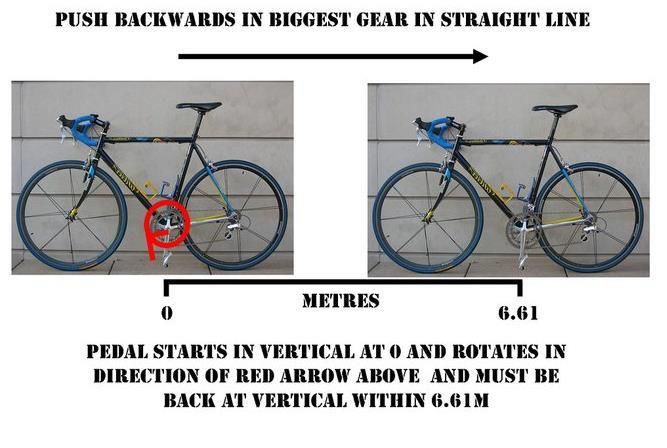
The diagram below sets out how to measure the roll out for 6.61 metre gearing.
The same procedure applies to the 7.00 and the 7.93 metre roll out except that the pedal must go from
vertical to vertical within 7.00 and 7.93 metres respectively.
Page | 33SECTION 10
APPENDIX 2 – SCHOOL RACING UNIFORMS
The school’s uniform must be in the school’s colours and the logo or name of the School must be prominently displayed
Many manufacturers include logos when custom uniforms for schools are manufactured. A (one) small discrete
manufacturer’s logo is permitted per uniform piece (a skinsuit is recognised as two pieces) There has been a trend to
larger logos which Cycling New Zealand Schools considers a form of stealth branding and is not permitted. A sponsors
name and/or logo must be contained within a 50sq cm area anywhere on the top.
Sponsors
Manufacturers
Logo
Logo
Max 50sq Max 30sq
cm cm
Shorts or bibs must be school colours or plain colours. Again a (one) discrete logo is permitted but again there has
been a trend to larger logos which Cycling New Zealand Schools considers a form of stealth branding and is not
permitted. As per Cycling New Zealand School Racing Uniform rules a Sponsor’s name and logo must be contained
within a 9 cm (90mm) strip on the leg.
Manufacturers
Logo
Max 30sq
cm
Page | 34Booties, Armwarmers and Legwarmers are permitted must be official school colours or either black
or white. There shall be no branding or sponsors names on these garments however a small discreet
manufacturers logo and/or a school name is however permitted.
.
Acceptable Unacceptable Acceptable Unacceptable
Page | 35SECTION 11
APPENDIX 3 – COMPOSITE TEAMS
1. Composite teams are accepted under the principals of Schools Sport NZ Eligibility-
Regulations.
2. Composite teams may be either girls or boys. A team made up of boys and girls should
ride as part of the boys’ event appropriate to the age of the riders .in road events only.
3. Each composite team must be entered in the name of a host school (which must be a
member of CYCLING NEW ZEALAND SCHOOLS).
4. A composite team is to start in one of the listed age grades as appropriate to the age
of the riders and the event.
5. Composite teams shall not be eligible for the National Championship title or medals in
the relevant grade.
6. Composite teams will be entitled to receive such recognition as CYCLING NEW
ZEALAND SCHOOLS shall determine for their placing as between other composite
teams in each grade, with the number of teams entitled to such alternative recognition
to depend on the number of composite teams in each grade.
7. The members of composite teams are not eligible to receive points for their respective
schools for any placing achieved in the relevant grade. Similarly, the results achieved
by a composite team will not accrue points for the relevant host school.
8. Composite teams may only be entered either by a host school where the school has
insufficient riders to enter a team OR through a pool system (where individual riders
who represent a school that does not have a team and who are entered for the
individual events may indicate that they are available to ride in a composite team) and,
subject to other riders also being available, will be placed in a composite team by
CYCLING NEW ZEALAND SCHOOLS prior to the event. In the latter case, the CYCLING
NEW ZEALAND SCHOOLS will appoint a host school for the purposes of the event.
9. All members of a composite team shall wear the school racing uniform of their own
school.
Page | 36SECTION 12
APPENDIX 4 – PROTEST FORM
Event:
Race:
Date:
Protesting School:
School Team Manager: ____________________
Mobile___________________________________________________
Email ________________
Name of Rider or Team:
Other Party (Rider, Team or Official):
Date/Time of Incident:
Location of Incident:
Nature of Incident (Brief Description):
Outcome Sought:
Organisers Use Only
Date/Time Protest Received:
Protest Fee ($50) Received/Held by: Official Receiving Protest:
Passed to Chief Commissaire (Date/Time)
Page | 37SECTION 13
APPENDIX 5 – CAPACITY EVENT ENTRY PROCESS
Where an event (or part thereof) is anticipated to reach capacity, the capacity will be published
prior to entries opening and the following process for entries will be applied:
The event capacity will be determined by reviewing (with the event organisers) the type of
event, venue, schedule, volunteer availability, support facilities and infrastructure etc. From
this, and using an average of attending schools in the previous years, a maximum number of
riders per school will be determined and advertised prior to entries opening.
Schools have until the advertised cut-off date to get their allocated number of entries in. A
waiting list will be used to gather any additional entries (on top of their allocation) from schools.
Schools who have not utilised their full allocation prior to the cut off will have deemed to have
waived their remaining entries and these will be passed to the waitlist.
If entries have not yet reached the maximum capacity after the cut-off date then any remaining
entries will be offered to those schools on the waiting list.
Riders not eligible for medals (home schooled and non-island riders in Island Championships)
will not be allocated automatic entries, they will be required to join the waitlist. Preference will
be given to riders eligible for medals on the waitlist.
CNZS reserves the right to determine which riders and/or schools from the waiting list will be
offered entries from first. In deciding on which riders/schools will be accepted into the event
(where entries exceed the maximum number allowed), CNZS may take into account any of the
following criteria:
Entries received by the advertised due date
Payments made by the advertised due date
Prior history of the school in participation at the particular event
Prior history of the school in support of the particular event (providing volunteers etc.)
Past performance of riders at the particular event and at other CNZS or CNZ events
The total number of riders entered into the particular event by that one school
The total number of riders entered into the particular age/gender category
Eligibility for medals
Page | 38You can also read


