WELCOME TO NORDICWAY 2 SWEDISH SHOWCASE
←
→
Page content transcription
If your browser does not render page correctly, please read the page content below
WELCOME TO NORDICWAY 2
  SWEDISH SHOWCASE

                         1
Magnus Hjälmdahl, Sweco   Sofie Vennersten, Drive Sweden

                            24.2.2021                      2
NordicWay 2 is a collaboration between public
and private partners in Finland, Norway, Sweden
and Denmark
Co-financed by the European Union
within the Connecting Europe Facility
programme 2017-2020

                                                  Picture: Wikimedia Common, S. Solberg J.
Agenda for the day
NordicWay 2 Swedish Pilot Presentation                Beyond NordicWay 2
10.00 – 11.30 CET                                     13.00 – 14.30 CET
An introduction to the Swedish Pilot in NordicWay 2   Panel discussions on topics concerning NordicWay 2
and its partners including presentations on:          and beyond including discussions on:
●The NordicWay 2 project                              ●Usefulness from a citizen and user perspective
●Interchange Architecture                             ●Potential and challenges with a platform for data
                                                       exchange
●Emergency Vehicles Approaching
                                                      ●The benefits and challenges of cooperation
●Traffic Signals
●Dynamic Environmental zones
●Access Control
●Road Works Warning

                                                            2/24/2021   Author                             4
NordicWay 2 Swedish Pilot Presentation
                                               Magnus Hjälmdahl, Sweco
Welcome and Opening of Showcase
                                             Sofie Vennersten, Drive Sweden

Introduction to NordicWay 2       Arne Lindeberg, Swedish Transport Administration

Architecture / Interchange                        Anders Fagerholt, Ericsson

Emergency Vehicles Approaching                   Kristian Jaldemark, Carmenta

Traffic Signals                                       Johan Östling, RISE

Dynamic Environmental Zones                      Mikael Ivari, City of Gothenburg

Access Control                                     Thomas Sjöström, Sweco

Road Works Warning                                  Alexander Paier, Kapsch

                                     24.2.2021                                       5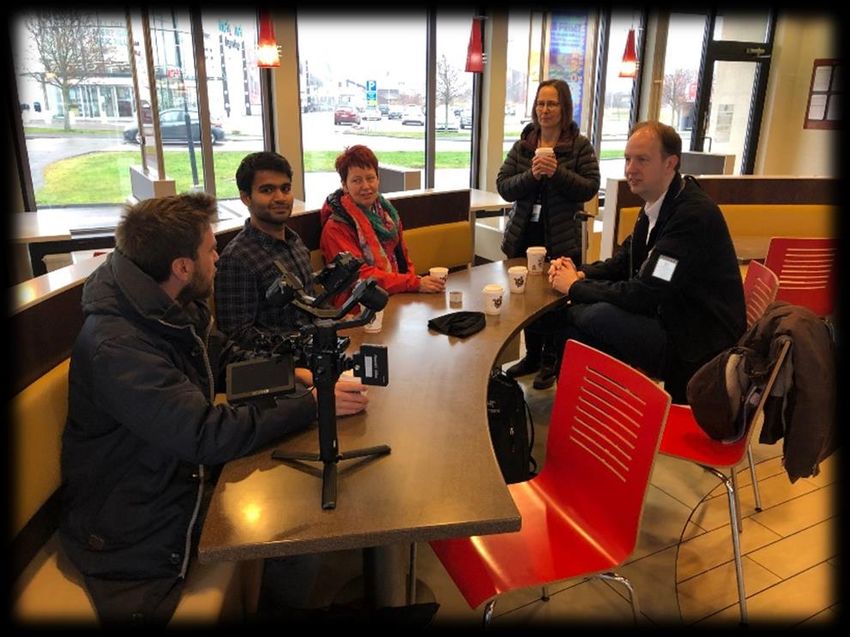
Beyond NordicWay 2

All panel discussions are led by Magnus Hjälmdahl and Sofie Vennersten and starts
with opening statements from the invited panelists
●Usefulness from a citizen and user perspective
 Kristina Bäck Jensen, City of Gothenburg
 Stina Carlsson, Volvo Cars Company
●Potential and challenges with a platform for data exchange
 Björn Selander, Swedish Transport Administration
 Kjell Persson, Swedish Transport Administration
●The benefits and challenges of cooperation
 Per Einar Pedersli, Norwegian Public Roads Administration
 Johnny Svedlund, Swedish Transport Administration
 Eva Boethius, Swedish Transport Administration
 Arne Lindeberg, Swedish Transport Administration

                                                 24.2.2021                          6
Some practical information

●The event is recorded and will be
 uploaded to
 www.nordicway.net/
 after the Showcase

●If you have colleagues that have
 difficulties joining – direct them to
 www.nordicway.net/
 and there is a link on the front
 page

                                         24.2.2021   7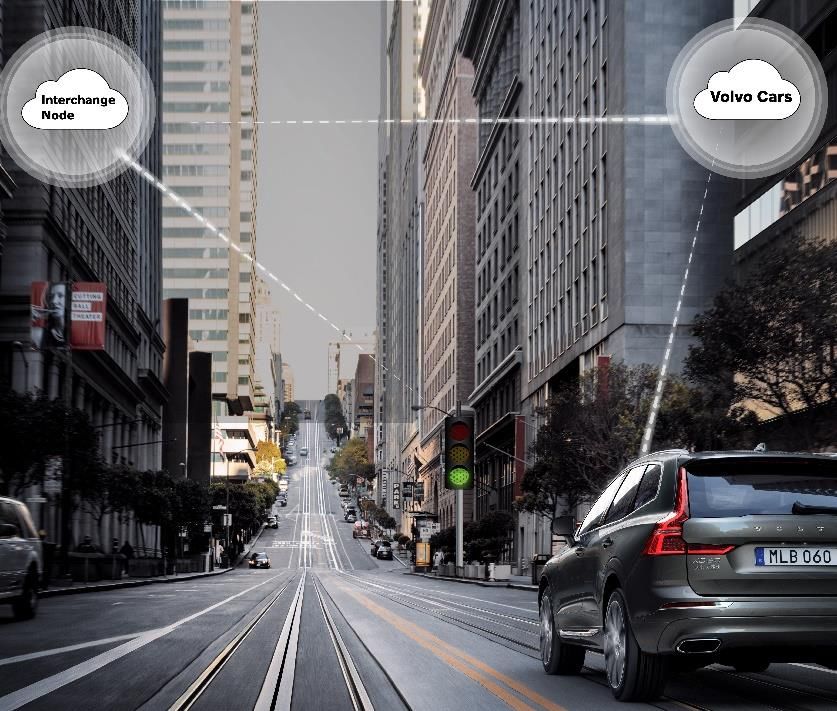
Interacting with the speakers

                                24.2.2021   8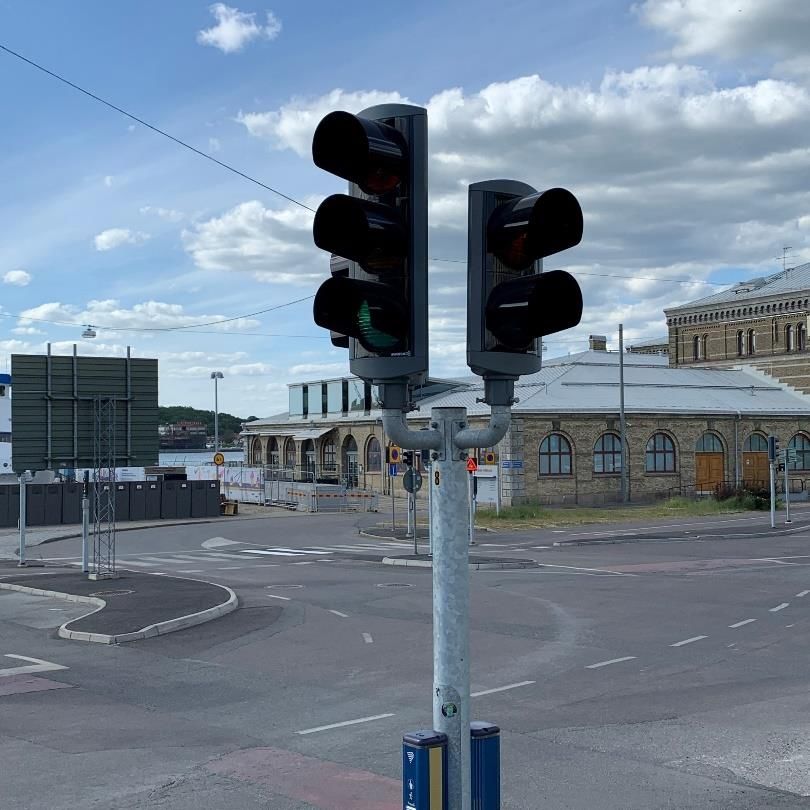
SESSION 1a
INTRODUCTION TO
  NORDICWAY 2

                  9
Arne Lindeberg
Swedish Transport Administration

                   24.2.2021       10
NordicWay 2 The Swedish pilot – Introduction Arne Lindeberg, Swedish Transport Administration
NordicWay 2 is a collaboration between public
and private partners in Finland, Norway, Sweden
and Denmark
Co-financed by the European Union
within the Connecting Europe Facility
programme 2017-2020

                                                  Picture: Wikimedia Common, S. Solberg J.
Strategic approach
● The connected vehicle - A functionality in the transport system
● Can facilitate a wide range of services
● Thus a substantial potential to improve transport system performance in terms
of efficiency, environmental aspects and traffic safety.
NordicWay approach
● Take advantage of cellular networks (long range communication)
• Avoid road side installations
• Better area (road network) coverage
● OEM channel to the car
● Information exchange back-end (interchange node)
● Short range communications as case specific solutions if necessary
● Cross-border cooperation and European cooperation
24.2.2021 13Scalable throughout Europe and beyond
24.2.2021 14Overview of the C-ITS services piloted in
Sweden within NordicWay 2
●EVA, Emergency Vehicle Approaching
●RWW, Road Works Warning
●Dynamic access control of designated infrastructure
●Dynamic environmental zones
●TTG, Time To Green
●GLOSA, Green Light Optimal Speed Advisory
●TSP, Traffic Signal Priority for designated vehicles (“BussPrio” in Uppsala)
24/02/2021 Footer 15Cooperating Transport and Road Administrations
Swedish Implementing Bodies
Expanding cooperation

● NordicWay       4

● NordicWay 2    13

● NordicWay 3   ~ 35

                        24/02/2021   Footer   18
24.2.2021 19
Anders Fagerholt
   Ericsson

           24.2.2021   20
Architecture / Interchange NW2 Swedish showcase Anders Fagerholt, Ericsson
Foundation for Nordic Way ITS

●Cellular communication (LTE) in most use cases
●Service providers
    •Automotive OEM´s
    •Cities
    •Swedish Transport Administration
    •Other service providers
●Backend (cloud) message exchange among all, end users anonymous (Service providers secret)
●Publish – subscribe in “real time” (50 ms – 100 ms – 500 ms)

                                                                                              22
Enablers
●Internet
●Service providers cloud connected vehicles and items (street furniure)
●AMQP – Advanced Messag Queing Protocol
•Pay load agnostic message exchange
●DATEX II messages
●ETSI messages
•DEMN, CAM (”warnings”)
•SPaT, MAP (”intersections and traffic lights)
•SSR, SSM (”signal priority messages”)
●C-Roads TF 4 for European harmonization
https://en.wikipedia.org/wiki/Advanced_Message_Queuing_Protocol
23Architecture (singel country)
Interchange – Specialized
SW entity that
OEM 2
Service incorporates an AMQP
Provider
AMQP
AMQP broker/client plus
Client
Client additional functionality
AMQP
AMQP BI AMQP Client
Client Broker
OEM 1 AMQP
Client
AMQP
Client
Road Operator
Road Traffic
Authority
Country / Region 1
BI, basic interface, ITS dataArchitecture (multi country)
Interchange – Specialized
SW entity that
OEM 2
Service incorporates an AMQP
Provider
AMQP
AMQP broker/client plus
Client
Client additional functionality
AMQP BI AMQP
Client Client AMQP
AMQP BI AMQP
Client Broke
Broker II
OEM 1 AMQP
Client
AMQP
Client
Road Operator
Road Traffic
Authority
Country / Region 1
Country / Region 2
II = Improved interface, control data, federation, service discoveryQUESTIONS FROM THE AUDIENCE
SESSION 1b
PILOT PRESENTATIONS
27Kristian Jaldemark
Carmenta
24.2.2021 28NordicWay 2 Emergency Vehicle Approaching Kristian Jaldemark, Carmenta
Task 2-Emergency Vehicle Approaching
●Mission - alert vehicles about emergency vehicles before the driver can perceive the
emergency vehicle through siren sound or visually
●Method – connect to emergency response system for emergency vehicle information and
create standardized C-ITS EVA warning messages for vehicle OEMs
●Technical Validation – Gothenburg as demo and test arena
●Societal Impact Validation - Simulator studies performed by VTI
24.2.2021 30Results –
Emergency Vehicle Approaching
●The complete ecosystem needed to provide a national EVA
C-ITS service in Sweden is tested and demonstrated
●From a technical point of view, the solution is validated
●Standardized solution, using ETSI and DATEXII standards
•Approved DATEXII extension
Emergency Vehicle Assignment Information
●Simulator Study on Effects of EVA warnings
https://datex2.eu/implementations/extension_directory/emergency-vehicle-assignment-information-extension
24.2.2021 Author 31VTI Simulator Study on EVA warnings
●Publication - In-Car Warnings of Emergency
Vehicles Approaching: Effects on Car Drivers’
Propensity to Give Way (Lidestam, Thorslund,
Selander, Näsman, 2020)
●Method - Ambulance passed participant three
times
•without EVAM
•EVAM in instrument cluster
•EVAM in instrument cluster and in center
console
https://www.vti.se/sv/publikationer/publikation/in-car-warnings-of-emergency-vehicles-approaching_1466493
24.2.2021 32VTI Simulator Study - Conclusions
●Findings - EVA warnings
•made drivers give way earlier
•learned to give way earlier even without an
EVA message
•was necessary for making inexperienced
drivers give way to an approaching
emergency vehicle on call
●Conclusion – to alert and instruct drivers how to
give way properly is beneficial for traffic safety
and for enabling time-efficient emergency
transports
24.2.2021 33Areas for Future Work
●Standardization and harmonization across EU
●Data sources and privacy issues for emergency vehicle information
●Behavior of warned drivers
●Automated Driving requirements
●Business Models
24.2.2021 34QUESTIONS FROM THE AUDIENCE
Johan Östling
RISE
24.2.2021 36NordicWay 2 Traffic Signals Johan Östling, RISE
Traffic signals
Our NW2 Pilots have proven that the traffic signal concept works in a very first technical set-up. The
NW2 infrastructure enables digital communication of status and geographical data in a standardised
way and with acceptable latency. We have tested with good results TTG, GLOSA and TSP (bus-
prio) services!
Time To Green,
Green Light Optimal Speed Advisory
Including all
societal values,
What remains? even the industry
● How does the C-ITS add value for the cities and the road authorities (local and national level)?
● How should and could a business model for the traffic signals concept be arranged? New roles, what mandate,
how to share the costs etc.?
● How to exchange more relevant data between the C-ITS world and the Public Transport world?
● All other services related to the traffic signals, e.g. Motorway Control Systems (MCS), Time to Red (TTR), Red
Light Violation Warning (RLVW), should be included.
● How to predict phase shifts for vehicle actuated traffic signals especially when certain priorities occur.
● From a detailed technical and collaborative perspective, there are areas to improve e.g. TTG predictions,
optimize technical solutions and robustness from the “intersection to the vehicle”.
24.2.2021 Johan Östling, RISE 38QUESTIONS FROM THE AUDIENCE
Thomas Sjöström
Sweco
24.2.2021 40NordicWay 2 Dynamic access control of designated infrastructure Thomas Sjöström, Sweco
Dynamic access control of designated infrastructure
Objective
●Demonstrate service that enable better use of existing infrastructure with active
steering and control of traffic in urban areas.
●Explore how to use available capacity
Pilot functionality
●Test truck on E4, Stockholm, requested access by CN to use bus lane. Traffic
operator granted or denied access depending on traffic conditions and vehicle
characteristics.
24.2.2021 42Future potential
●Technically the vehicles and infrastructure are ready for the service
●Define criteria to be fulfilled for a vehicle to use the buss lane or a dedicated lane
• Based on rules and policies from the city/road authority
• Criteria such as vehicle characteristics, traffic environment, vehicles important for society
●A powerful transport planning tool
• The full potential is a complete redesign of traffic management
• Enable flexible roads, with different use during different time
• A new service using same functionality is to access lanes for electrical charging roads
●Advanced dynamic geofencing enable access to lanes
• A traffic center can open-up or close lanes for a group of vehicles depending on the current
traffic situation without any explicit request from a specific vehicle.
24.2.2021 43QUESTIONS FROM THE AUDIENCE
Michael Ivari
City of Gothenburg
24.2.2021 45Dynamic Environmental Zones NW2 Swedish showcase Mikael Ivari, city of Gothenburg
Movie
Technical evaluation of service
●The dynamic environmental zone service is not
time critical in its essence.
●Round-trip latency of 10 seconds between the
GUI change and the actual response in the car
which is more than acceptable. This latency
compasses all individual steps in all systems.
31.05.2018 TrafikverketService ecosystem ●Eco system setup is policy dependant. Roles and responsibilities will vary with setup of the service. ●The legal framework for Environmental zones in Sweden does not include PHEV. ●Other incentive-based approaches are fully possible, with or without the participation of road authorities.
Lessons learned ●Cloud solutions works fine but robustness must be secured. ●Common integration tests improved project results. ●Data flow includes only the status of the zones and no privacy related information. ●Vehicle reporting back mechanisms were excluded from the pilot since there were no incentives implemented in the service.
Conclusions / Future challenges ●The possibilities with geofencing as a method for the road authority to provide digital dynamic traffic regulations is interesting and worth more investigation. ●Different implementation policies have been identified for dealing with low emission zones. ●Further research and development will be required to combine the existing static geofences with dynamic elements.
QUESTIONS FROM
THE AUDIENCE
Alexander Paier
    Kapsch

          24.2.2021   53
NordicWay 2 RWW - Reflections to the Pilot Alexander Paier, Kapsch
A9T9 RWW - The Project

● Content of the RWW message
   • RW warning, RW position, trace, traffic flow rule (pass to right/left)
● Planned RW data from STA to Interchange Node and OEM cloud
● No manual interaction required for triggering RWW
● True Hybrid solution
   • Short-range communication via ITS-G5
      • data format: DENM
   • Long-range communication via cellular
     • data format: DENM + DATEX II

                                                    24.2.2021                 55
A9T9 RWW - The Project
● Each single C-ITS equipped vehicle benefits from the warning → saving lives
● Constructive and very good cooperation between OEMs, system vendors, and
authority
● Important tasks
• Coordination between RWW generator and RWW consumer regarding services, data
formats, message management, …
• Coordination with TMA vehicle subcontractors for RWW unit installation → regulation
24.2.2021 56Possible
A9T9 RWW – What’s Next work for
NW3
● Produce specifications for procurement of road service vehicles, TMA vehicles,…
with C-ITS equipment (common on national and city level)
● How can national road operators (STA) and cities work together
● Combination with use cases HLN and Geofence
● Learning from project - state of the art today: control the digital signs via cloud-
based solution. → Cloud could also produce C-ITS messages as “bonus”
● User experience how to interpret information
● Enrichment of RWW data with planned RW data (speed limit, closed lanes,
extension of RW)
24.2.2021 57QUESTIONS FROM THE AUDIENCE
After lunch: Beyond NordicWay 2

All panel discussions are led by Magnus Hjälmdahl and Sofie Vennersten and starts
with opening statements from the invited panelists
●Usefulness from a citizen and user perspective
 Kristina Bäck Jensen, City of Gothenburg
 Stina Carlsson, Volvo Cars Company
●Potential and challenges with a platform for data exchange
 Björn Selander, Swedish Transport Administration
 Kjell Persson, Swedish Transport Administration
●The benefits and challenges of cooperation
 Per Einar Pedersli, Norwegian Public Roads Administration
 Johnny Svedlund, Swedish Transport Administration
 Eva Boethius, Swedish Transport Administration
 Arne Lindeberg, Swedish Transport Administration

                                                 24.2.2021                          59
LUNCH BREAK UNTIL 13.00
WELCOME TO NORDICWAY 2
  SWEDISH SHOWCASE

                         61
SESSION 2
BEYOND NORDICWAY 2
62Beyond NordicWay 2
All panel discussions are led by Magnus Hjälmdahl and Sofie Vennersten and starts
with opening statements from the invited panelists
●Usefulness from a citizen and user perspective
Kristina Bäck Jensen, City of Gothenburg
Stina Carlsson, Volvo Cars Company
●Potential and challenges with a platform for data exchange
Björn Selander, Swedish Transport Administration
Kjell Persson, Swedish Transport Administration
●The benefits and challenges of cooperation
Per Einar Pedersli, Norwegian Public Roads Administration
Johnny Svedlund, Swedish Transport Administration
Eva Boethius, Swedish Transport Administration
Arne Lindeberg, Swedish Transport Administration
24.2.2021 63Kristina Bäck Jensen Stina Carlsson
City of Gothenburg Volvo Car Cooporation
Usefulness from a public perspective
24.2.2021 64NordicWay 2 NW2 Swedish showcase Kristina Bäck Jensen, Urban Transport Administration, city of Gothenburg
Goals – Why do we participate?
❑ Traffic Signal & Infrastructure Owner   ❑ Influence digitalization of the city
❑ Gothenburg as Test Site                 ❑ Sustainable & Liveable City

                                               24.2.2021                           66
NW2 Findings 1(2)
1. Collaboration necessary to achieve Perspective Awarness
• The road authorities, the cities, the vehicle industry, the service providers and the academy need to work together with socio-technical
developments to suceed!
• Perspective Awarness is important
• Stakeholders may have different objectives and possibilities but quite often we also see synergies eg:
• Decreased Fuel Consumption – Decreased Emissions, Healthier environment
• Decreased No of starts and stops – Decreased Emissions, Smooth Traffic Flow, Less Congestion
• Different products – Same purpose
• Airbags for saving lives – Energy Absorbing Barriers for saving lives (Collaboration→enables optimization?)
• Different Technical solutions for different cities/areas
• Eg GLOSA*, a great function in cities or areas with fixed time traffic signals but not as useful in actuated systems where the
traffic signals are programmed to prioritize public transports.
This proves how important it is to work together, that we have a dialogue and bring in
different perspectives when developing socio-technical functions
24.2.2021 67NW2 Findings 2(2)
2. Enhanced Road Operator Services requires
vehicle probe data*
With access to vehicle probe data we could optimize our traffic
signals, improve passability and minimize travel time.
3. Beneficial financial terms and conditions to
local authorities enables cities to participate
Important to allow generous conditions in terms of financial
compensation and keep a sustainable perspective** for the
developed services or products.
4. Large scale demonstrations needed to evaluate
benefits - to prepare for future upscale
24.2.2021 68Future Challenges
How do we create a transparent and safe environment where both authorities and OEMs data can be
shared?
Business Model Technical Solution
• Responsibility – who is responsible for what? • Can technical requirements be defined before
- Data Development & Maintenance Business Model is decided?
- Quality Assurance & Storage • Requirements (latency, predictions etc)
• Who should have access to the data? • Standardized APIs
• How is the solution financed? • Security and Integrity*
24.2.2021 69Kristina Bäck Jensen Stina Carlsson
City of Gothenburg Volvo Car Cooporation
Usefulness from a public perspective
24.2.2021 70NordicWay 2 NW2 Swedish showcase Stina Carlsson, Volvo Car Corporation
NordicWay 2

Volvo Cars goal in the project is to
increase traffic safety and reduce
environmental impact with the use of
cellular network ITS systems.

                                       24.2.2021   Author   72
Usefulness of the services
• Emergency Vehicle Alert (study by VTI)
• Made driver give way earlier and supported
inexperienced drivers
• Beneficial for traffic safety and for enabling time-
efficient emergency transports
• Road Work Warning
• Support the driver, reduce risk of accidents
• Environmental geofence for hybrid vehicles
• Support zero emission zones for individuals or cities
• Predictive engine control
• Reduce fuel consumption and emissions and support
a smoother traffic flow
• Time To Green
• Support the driver, contribute to a smoother traffic flow
24.2.2021 Author 73NordicWay 2, findings
• Dialogue and collaboration between the
different actors in a triple helix manner.
• Focus to pilot a few defined use cases.
• Different infrastructure solutions in different
cities.
• Collaborative effort to create the services.
24.2.2021 Author 74Looking forward
Get the services to production:
• Acknowledge the work that the road owner
may need to perform.
• Update procurement specifications to support
C-ITS equipped contractor vehicles.
• Understand data sources and privacy issues
for emergency vehicle information.
• Keep the focus on a standardized data
exchange pattern for real-time data exchange
cloud to cloud.
24.2.2021 Author 75Björn Selander Kjell Persson
Swedish Transport Swedish Transport
Administration Administration
Platform for data exchange
24.2.2021 76NordicWay 2 Data exchange in the collaborative ITS ecosystem Björn Selander and Kjell Persson, Swedish Transport Administration
The differences between C-ITS and TTIS
C-ITS is aiming at driving assistance and autonomous driving rather than traffic-information.

                                                      24.2.2021                                 78
The differences between C-ITS and TTIS
C-ITS is aiming at driving assistance and autonomous driving rather than traffic-information.
Elaborated requirements on data exchange
●Trust
Establish trust and relationships between
partners in the ecosystem
●Information security
Establish a secure channel for information
between roadside and vehicle
24.2.2021 79The differences between C-ITS and TTIS
C-ITS is aiming at driving assistance and autonomous driving rather than traffic-information.
Elaborated requirements on data exchange Key activities
●Trust ● IT security
Establish trust and relationships between ● Regulations
partners in the ecosystem
●Information security
Establish a secure channel for information
between roadside and vehicle
24.2.2021 80From piloted services to production
Technology has matured in NW1 and NW2.
24.2.2021 Author 81From piloted services to production
Technology has matured in NW1 and NW2.
Elaborated requirements on data exchange
● Join four different ecosystems
Establish the ability to communicate (with trust)
between different stakeholders
● Actors position in different ecosystem is
challenged
Establish Producer, Consumer and Broker
24.2.2021 Author 82From piloted services to production
Technology has matured in NW1 and NW2.
Elaborated requirements on data exchange Key activities
● Join four different ecosystems
Establish the ability to communicate (with trust) ● Business models and revenue
between different stakeholders streams
● Actor responsibilities and regulations
● Actors position in different ecosystem is
challenged
Establish Producer, Consumer and Broker
24.2.2021 Author 83Swedish transport administration agenda
Two collaboration platforms to negotiate technology standards with regards to future
regulations in C-ITS standards.
● C-roads – Harmonisation of C-ITS services at EU-level
• Present a Nordic technical solution based on IP-connectivity and LTE-network for Day
1 and Day1.5 services with knowledge gained in NW.
● NW – Harmonisation of C-ITS services at Nordic level
• Pilot and test solutions in cooperation with the Nordic countries
• Build knowledge and a nordic cooperation strategy for C-ITS regulations in C-roads
• Collaborate with actors in all ecosystems to get closer to a real world implementation
24.2.2021 84C-Roads – Cooperation between European
Member States
● Focus on implementing C-ITS services
● Harmonised specifications for
• Cross-border information exchange
• Interoperability
• Specifications for both short-range
(ITS-G5) and long-range (cellular)
communication
24.2.2021 Author 85Long-range harmonisation
● Several different implementation
models in European pilots
● Harmonisation possible on
standards for back-end
communication
● C-ITS IP Based Interface Profile –
harmonised interface for cross-
border information exchange
24.2.2021 86Per Einar Pedersli Johnny Svedlund Eva Boethius Arne Lindeberg
Norwegian Public Swedish Transport Swedish Transport Swedish Transport
Roads Administration Administration Administration Administration
Cooperation
24.2.2021 87NordicWay 2 Cooperation - NPRA perspective Per Einar Pedersli
NPRA strategic goals

The Norwegian Public Roads Administration's international activities have three goals:

●It will provide us with new knowledge that will strengthen the professional
 development in the organization.
●It will provide better coordination of cross-border plans, projects and transports in the
 Nordic region.
●It shall contribute to regulatory development within the road and road traffic area
 in Norway by influencing and fulfilling obligations to implement EU regulations within
 the framework of the EEA agreement.

                                                         24.2.2021                           89
NordicWay2 fullfilling the strategic goals of NPRA
Goal: knowledge:
● cooperation between countries to handle such a big ITS-projects efficiently
and to ensure knowledge exchange
● Sharing of knowledge and best practices – competence building, this pays off
● NordicWay project goals match our need for new knowledge
Goal: coordination within the Nordic countries
● Nordic Way builds upon a solid and well-established network, 25 year long-
term cooperation
● Supporting each other whenever needed, possibility to share workload
● Coordination and harmonisation of common services – common
understanding
● All decisions based on consensus in PMB.
Goal: regulations
● Getting a stronger voice, common Nordic voice. Foto Pixabay
● Significant impact on EC development (Interchange Federation and services
under winter conditions)
24.2.2021 Author 90NordicWay 2 NW2 Swedish showcase Johnny Svedlund, Swedish Transport Administration
NordicWay 3 in numbers
• 1 Coordinator – Swedish Transport Administration
• 5 Beneficiaries:
• Infrastrukturdepartementet       (Swedish Ministry of Infrastructure)
• Statens vegvesen                 (The Norwegian Public Roads Administration)
• Liikenne- ja viestintäministeriö (Finnish Ministry of Transport and Communications)
• Vejdirektoratet                  (Danish Road Directorate)
• Trafikverket                     (Swedish Transport Administration)

• 35 Implementing Bodies under the Swedish Ministry of Infrastructure
• 5 under Finnish Ministry of Transport and Communications

• 5 years (2019-2023)
• 19 030 k€, where 50% is funded by EU

                                                          24.2.2021   Author            92
NordicWay 3, More of everything…
• More cities
• More users
• More vehicles
• More coordination between countries and pilots
• Continue on what is achieved
• Aim to create a common Nordic market by launching ”flagship pilots” for:
✓Geofencing
✓Traffic signals
✓Roadworks warning
✓Emergency Vehicle approaching
24.2.2021 Author 93NordicWay 2 NW2 Swedish showcase Eva Boethius, Swedish Transport Administration
International Collaboration
●International cooperation is key!
●NordicWay has proven to be a solid and well-established network (2015-2023)
●Collaboration between public and private partners in Finland, Norway, Sweden and
 Denmark paves the way for common understanding and competence sharing
●The project followed the policy guidance of the European Commission, and was supported
 via the Connecting Europe Facility (CEF) programme, managed by INEA.
●Still questions to be answered – roles, responsibilities, agreements in a changing
 environment
●Ready for further cooperation on new challenges and potential new CEF calls or other
 relevant European initiatives.

Thank you for the joint effort!

                                                   24.2.2021   Author                   95
Stay tuned!
For more information, contacts, upcoming
events and deliverables, visit:
https://www.nordicway.net/
96THANK YOU!
97You can also read


