What's New In
The 2nd Edition?
←
→
Page content transcription
If your browser does not render page correctly, please read the page content below
What's New In The 2nd Edition?

Disclosure Statement
• Faculty:
   • Jill Boulton
   • Kevin Coughlin
   • Deepak Manhas

We have no affiliation (financial or otherwise) with a pharmaceutical,
medical device or communications organization
Our Thanks To:
• Co Editors ACoRN 2021:         • ACoRN Steering and Education
   •   Jill Boulton                Committee Members
   •   Kevin Coughlin            • Many many other contributors and
   •   Debra O’Flaherty            reviewers
   •   Alfonso Solimano
                                 • Tireless ACoRN instructors in
• Major Contributors:              Canada and around the world
   • Debbie Aylward
   • Deepak Manhas
                                 • CPS Staff
                                    • Jackie Millette
   • Elene Vanderpas
                                    • Keisha Powell
• French Edition Contributors:      • Jennifer Strickland
   • Ahmed Moussa
   • Genevieve Piuze
Agenda
• The history of ACoRN
• Highlight what’s new in the second edition
• Present the ACoRN educational approach
• Discuss what’s next?
   • Provincial and regional launches
   • CPS Practice Point
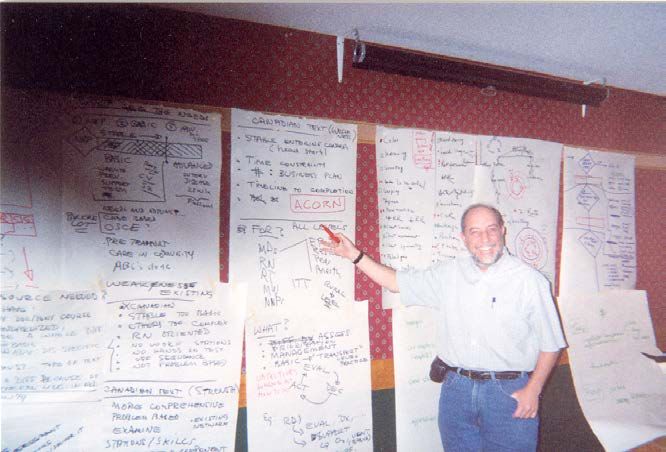
The history
 of ACoRN
  Jill Boulton, MD
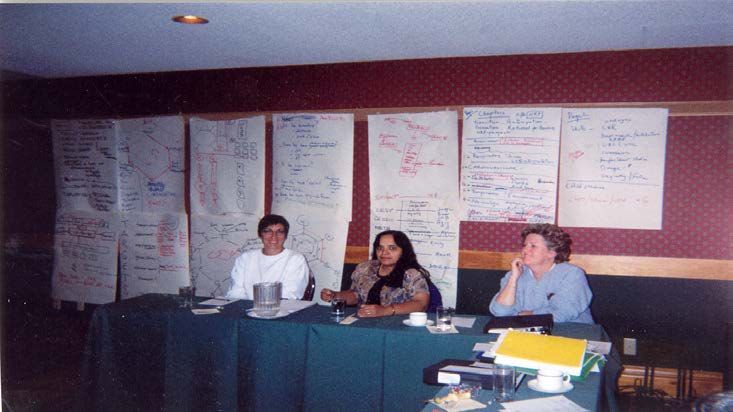
From NRP Steering Committee breakfast
at CPS annual meeting, Winnipeg 1999…

                                        2015
              X3
Huntsville 1999
                                                    I think I get it

                                     Calgary 2003

                  Explain How that
                  works again ?
Baby at risk
Unwell
Risk factors
Post-resuscitation
requiring stabilization

                  Resuscitation                           Support
                  Ineffective breathing
                  Heart rate < 100 bpm
                  Central cyanosis

                                                     Infection
                                                     Risk factor for infection
                                                     ACoRN alerting sign with *
                                                     Clinical deterioration

                     Respiratory                                              Thermoregulation
                    Laboured respiration*                                     T < 36.3 or > 37.2ºC axillary*
                    Respiratory rate > 60/min*                                Increased risk for
                    Receiving respiratory support*                            temperature instability

                                                        Problem List
                                                        Respiratory
                                                        Cardiovascular
                                                        Neurology
                                                        Surgical conditions
     Cardiovascular                                     Fluid & glucose                       Fluid & Glucose Management
     Pale, mottled, or grey*                            Thermoregulation                      Blood glucose < 2.6 mmol/L
     Weak pulses or low BP*                             Infection                             At risk for hypoglycemia
     Cyanosis unresponsive to O2                                                              Not feeding or should not be fed
     Heart rate > 220 bpm

                                                       Sequences

                                                     Consider transport

                     Neurology                                                    Surgical Conditions
                     Abnormal tone*                                               Anterior abdominal wall defect
                     Jitteriness                                                  Vomiting or inability to swallow
                     Seizures*                                                    Abdominal distension
                                                                                  Delayed passage of meconium
                                                                                  or imperforate anus

                                                        2012                                                                     2021

                                                                                                                                        7
• Remains prioritized based around
  Primary Survey
• Updates to clarify, add missing
  information asked for (i.e. HIE
  management, neural tube defects
  and jaundice)
• Sequences maintain same
  structure ‘ACORNS’
• Two new chapters:
   • Transition
   • Jaundice
Primary Survey       *

                         *
                 *
Consolidated Core Steps • Creation of the Consolidated Core Steps (CCS) to better fit with actual practice and decrease repetition between sequences • CCS are now performed in parallel with the Primary Survey by a second ACoRN provider
• Level of Risk identification:

• Consider consultation/transport
Alerting Signs

                     *

                             *
                 *

                 *           *

                 *           *
                         *
7 new, 7 altered Alerting
• Sequence Signs:
New Alerting Sign Replaces
Resuscitation Apnea, gasping or ineffective Ineffective breathing
breathing
Respiratory Receiving CPAP or ventilation* Receiving respiratory support
Cardiovascular Failed CCHD screen
Neurology Abnormal tone or activity* Abnormal tone*
Abnormal level of alertness*
Abnormal movements* Jitteriness/ Seizures*
At risk for HIE
Surgical Conditions Neural tube defect
Fluid & Glucose Unwell, not feeding, or should Not feeding or should not be fed
not be fed
Jaundice At risk for jaundice
Visible jaundice
Bilirubin at treatment level
Thermoregulation T 37.5℃ axillary* T 37.2℃ axillary*
HIE managementChapters • Critical knowledge and physiology points at start of each chapter rather than presented in cases • Useful tools for many of the sequences • Cases continue to illustrate flow through the ACoRN Process and Level of Risk determination
Sequences
• Reorganized with most
  acute/serious condition on the
  far left
• Some additional qualifiers to
  alter Organization of Care after
  Core Steps (e.g. glucose level in
 Neurology Sequence)
Sequences
• No significant change to Next Steps
• Still point where you exit the
  sequence on first run through to
  address next item on Problem List
• Consider the Level of Risk for each
  sequence
• Patients final level of risk is highest
  achieved in any sequence
What's new in the
 2nd edition?
    Kevin Coughlin, MD
Orientation to ACoRN Sequences
• Overall flow and structure of the
sequences has not changed
• Streamlined the Core Steps
• Re-organized Organization of Care so
most urgent is to the left of the
sequence
• First exit still at Next Steps
• Addition of Level of Risk assessment for
each sequenceResuscitation • Simplified • In line with ILCOR/NRP
Respiratory
• Respiratory support clarified as
  CPAP or ventilation
• SpO2 targets updated to 90-95%
• Respiratory Score remains the
  primary decision aid for
  Organization of Care
• Modifiers exist in this sequence
  that alter the organization of
  care if present or develop during
  the ACoRN process
Respiratory
• Respiratory support clarified as
  CPAP or ventilation
• SpO2 targets updated to 90-95%
• Respiratory Score remains the
  primary decision aid for
  Organization of Care
• Modifiers exist in this sequence
  that alter the organization of
  care if present or develop during
  the ACoRN process
Respiratory
• Respiratory support clarified as
  CPAP or ventilation
• SpO2 targets updated to 90-95%
• Respiratory Score remains the
  primary decision aid for
  Organization of Care
• Modifiers exist in this sequence
  that alter the organization of
  care if present or develop during
  the ACoRN process
Respiratory
• Respiratory support clarified as
  CPAP or ventilation
• SpO2 targets updated to 90-95%
• Respiratory Score remains the
  primary decision aid for
  Organization of Care
• Modifiers exist in this sequence
  that alter the organization of
  care if present or develop during
  the ACoRN process
Core Steps: Respiratory Score
• No major changes to previous
  respiratory score
Cardiovascular
• Added failed CCHD screen
• Clinical Assessment of Circulation
  table is primary decision aid for
  Organization of Care
• Differentiation of shock vs
  circulatory instability without
  shock
Cardiovascular
• Added failed CCHD screen
• Clinical Assessment of Circulation
  table is primary decision aid for
  Organization of Care
• Differentiation of shock vs
  circulatory instability without
  shock
Cardiovascular
• Added failed CCHD screen
• Clinical Assessment of Circulation
  table is primary decision aid for
  Organization of Care
• Differentiation of shock vs
  circulatory instability without
  shock
Cardiovascular
• Added failed CCHD screen
• Clinical Assessment of Circulation
  table is primary decision aid for
  Organization of Care
• Differentiation of shock vs
  circulatory instability without
  shock
Core Steps: Clinical Assessment of Circulation
Neurology
• Updated Alerting Signs including
  abnormal level of consciousness
  and ‘At risk for HIE’
• Encephalopathy Assessment
  table and initial glucose level are
  primary decision aids for
  Organization of Care
• Goals: early recognition and
  treatment of symptomatic
  hypoglycemia, seizures and HIE
• Includes direction for HIE
  management
Neurology
• Updated Alerting Signs including
  abnormal level of consciousness
  and ‘At risk for HIE’
• Encephalopathy Assessment
  table and initial glucose level are
  primary decision aids for
  Organization of Care
• Goals: early recognition and
  treatment of symptomatic
  hypoglycemia, seizures and HIE
• Includes direction for HIE
  management
Neurology
• Updated Alerting Signs including
  abnormal level of consciousness
  and ‘At risk for HIE’
• Encephalopathy Assessment
  table and initial glucose level are
  primary decision aids for
  Organization of Care
• Goals: early recognition and
  treatment of symptomatic
  hypoglycemia, seizures and HIE
• Includes direction for HIE
  management
Neurology
• Updated Alerting Signs including
  abnormal level of consciousness
  and ‘At risk for HIE’
• Encephalopathy Assessment
  table and initial glucose level are
  primary decision aids for
  Organization of Care
• Goals: early recognition and
  treatment of symptomatic
  hypoglycemia, seizures and HIE
• Includes direction for HIE
  management
Core Steps: Encephalopathy Assessment Table
Surgical Conditions
• Addition of open neural tube
  defect to
Fluid & Glucose
• Sequence is harmonized with
  CPS statement on hypoglycemia
  management
• Balanced between appropriate
  treatment and maintaining
  breast feeding
Fluid & Glucose
• Introduces simplified GIR
  calculation and maximal
  recommended fluid intakes to
  avoid dilutional hyponatremia
• Stepwise treatment
  recommendations
Fluid & Glucose
• Introduces simplified GIR
  calculation and maximal
  recommended fluid intakes to
  avoid dilutional hyponatremia
• Stepwise treatment
  recommendations
Jaundice Sequence
• New sequence to ACoRN
  introduced at providers’
  request
• 3 new Alerting Signs
• Core Step involved plotting
  bilirubin values on
  standardized curves
• Organization of Care depends
  on plotted results
Jaundice Sequence
• New sequence to ACoRN
  introduced at providers’
  request
• 3 new Alerting Signs
• Core Step involved plotting
  bilirubin values on
  standardized curves
• Organization of Care depends
  on plotted results
Jaundice Sequence
• New sequence to ACoRN
  introduced at providers’
  request
• 3 new Alerting Signs
• Core Step involved plotting
  bilirubin values on
  standardized curves
• Organization of Care depends
  on plotted results
Jaundice Sequence
• New sequence to ACoRN
  introduced at providers’
  request
• 3 new Alerting Signs
• Core Step involved plotting
  bilirubin values on
  standardized curves
• Organization of Care
  depends on plotted results
Thermoregulation
• Updated temperature range:
  36.5-37.5℃
• Added HIE management as both
  an Alerting Sign and Response
Thermoregulation
• Updated temperature range:
  36.5-37.5℃
• Added HIE management as both
  an Alerting Sign and Response
Infection Sequence
• Alerting Signs remain the same
• Reorganized based on the
  Infection Assessment Table
• Additional information in the
  chapter on common organisms
  causing EOS and LOS,
  biomarkers, non-bacterial causes
  of infection
Core Steps:
Infection
Assessment Table
The ACoRN Program
Additional Tools & Resources:
• Additional resource and tables
  in the textbook & appendices
• ACoRN: The Essential Guide
• The ACoRN Workbook
• ACoRN Simulations
• ACoRN Key Concepts
• ACoRN Skills
Resources for the ACoRN Instructor/Provider
• ACoRN: The Essential Guide
  • ’coles notes’ version of the text
  • forms essential materials in the
    reading lists we used to provide to
    those coming to an ACoRN course

  • meant to supplement the
    textbook
  • option for those providers who
    use an institutional library copy of
    the textbook
Resources for the ACoRN Instructor/Provider
• The ACoRN Workbook
• Replaces the laminates used
in the past
• Useful in the moment
• Include primary survey &
consolidated core steps,
sequences, core steps and
useful tools to navigate the
ACoRN processResources for the ACoRN Instructor/Provider
• ACoRN Key Concepts
• Brief 30 min talks
• Outline key learning concepts
• Developed/used based on need
• Anchors within the course agenda
• Examples:
• ACoRN 2nd Edition Updates
• Key Concepts of Transition
• Key Concepts of Neurology Sequence
• Key Concepts of Fluid & Glucose
SequenceResources for the ACoRN Instructor/Provider
• ACoRN Simulations
• Key component of the ACoRN
program
• Series of purpose-built simulation
scenarios to help instructor
navigate ACoRN providers through
learning the process
• 9-10 developed to date
• Template will be available to
instructors to develop your ownResources for the ACoRN Instructor/Provider
• ACoRN Skills
• Yet to be developed
• Many can be reused from past
edition
• Targeted to course/provider based
on need
• Chest Radiograph Interpretation
• Vascular Access (IO/UVC)
• Needle Thoracocentesis
• Chest Tube Insertion
• Blood Gas Interpretation
• CBCD InterpretationACoRN educational
approach
Deepak Manhas, MDEducational Supplements
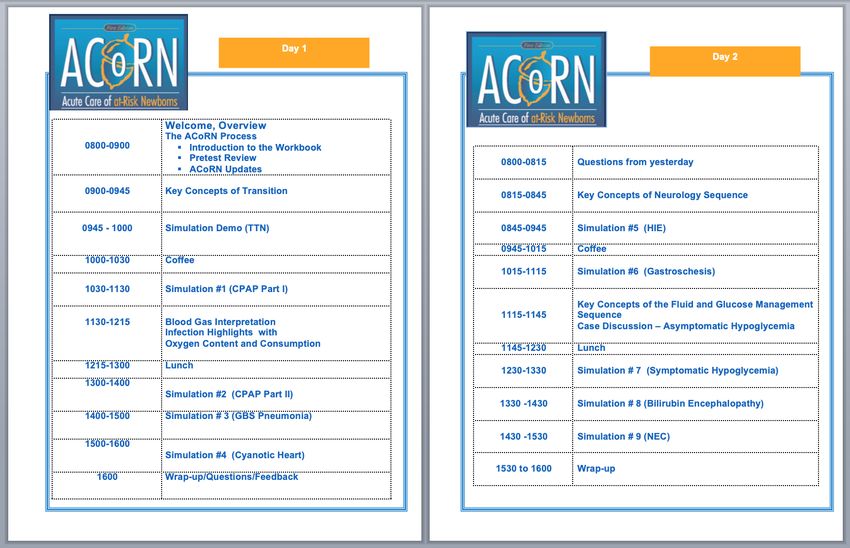
• Updated Textbook Cases
• Pre-Test
• Draft Agenda
• Workbook
• Laminates
• Simulation Scenarios
• Case
• Equipment and Images
• Debriefing
• Demo VideoACoRN Workbook • ACoRN Algorithms • ACoRN Tables • Level of Risk
Demo simulation video coming
soon to pedagogy@cps.ca
Administration of
ACoRN in Canada
    Kevin Coughlin, MD
ACoRN Providers and Instructors
• Will follow a process similar to NRP
• 3-year renewal process
• Online exam prior to attending a course
• Requirement for teaching to maintain status as Instructor
• ACoRN is meant to be taught in a multidisciplinary team
• Within the teaching team, the content knowledge and skills must be present
to teach the entire core content of the ACoRN course
• Current ACoRN Instructors who have taught within the last 3 years
(before COVID) will be eligible for update and renewal of statusACoRN Courses • Flexibility in how ACoRN is taught • There will be clearly identified core content that is necessary for a complete course • Additional materials will be provided for Instructors to use as add on modules based on a site/provider groups’ needs • Instructor resources including “Key Concepts” videos, Simulation and Debrief guides etc will be on the Instructor side of the ACoRN website
Newborn Stabilization in Canada
• It is recognized that newborn stabilization skills are variable across the
  country.
• CPS Practice Point in process identifying the need for a standard
  stabilization program (similar to NRP) across the country.
ACoRN: The Vision
• ACoRN 2nd Edition is an update of the already fabulous ACoRN Program
• Move to more of a simulation-based content delivery
• Increased interactive nature with participant driven learning through
  simulation, debrief and reflection
• Standardization and support of educational quality through the Key
  Concepts anchoring talks and Simulation Scenarios
• Increased flexibility in design and delivery of the content
   • Modular components with identified ‘Core Content’ and additional resources
     available to Instructors as needed based on site/learners needs
• Evaluation and assessment through online pretest and participation in
  simulations
Implementation Across the Country • Rolling out the new edition has been complicated by COVID • The change to increase the hands on, intensively simulation-based group learning nature of the 2nd edition pedagogy in this environment is further complicating things • Plan to reach out to each Regional/Provincial body to see how we can best support Instructor updates and roll out of the 2nd edition in the early fall. • We welcome your thoughts on how this can best be done
ACoRN: The Vision
• Goal today: to highlight the newly developed content for you, a group
  of experienced ACoRN Instructors/Providers

• We welcome feedback on things that you think will work and
  opportunities for improvement
• We thank you, in advance, for your participation!
Questions and Comments?
You can also read


