What You Need to Know About Financial Aid - Presented by Andi Schreibman Financial Aid Director Las Positas College
←
→
Page content transcription
If your browser does not render page correctly, please read the page content below

Na#onal
  Associa#on
  of
  Student


Financial
  Aid
  Administrators
  Presents
  …


    What You
  Need to Know
About Financial Aid

  Presented by Andi Schreibman
          Financial Aid Director
            Las Positas College

                                                  © 2018 NASFAA Slide 1
Topics We Will Discuss
• What is financial aid?
• Important terms to understand
• Categories, types, and sources of financial aid
• Application process and deadlines
• Tips for completing the Free Application for Federal Student
  Aid (FAFSA®)
• Special circumstances
• Awarding aid and Award Offers
• Strategies to minimize Expected Family Contribution
• Useful resources
• Answers to your questions
                                                    © 2018 NASFAA Slide 2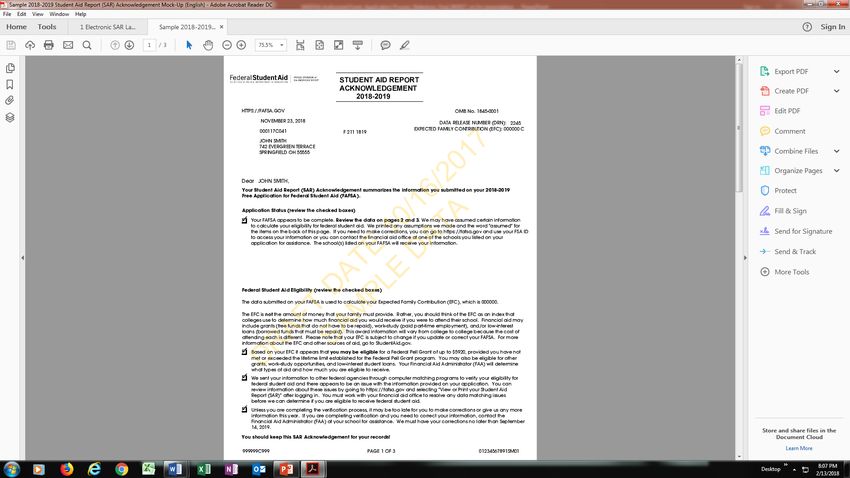
What is Financial Aid?

 Financial aid consists of
 funds provided to students
 and families to help pay for
 postsecondary educational
 expenses


                                © 2018 NASFAA Slide 3
What is Cost of Attendance (COA)?

       Estimation of expected costs

     Direct Costs           Indirect Costs

    Tuition and fees          Transportation

     Room and board           Miscellaneous
                              personal expenses

     Books and supplies

                                      © 2018 NASFAA Slide 4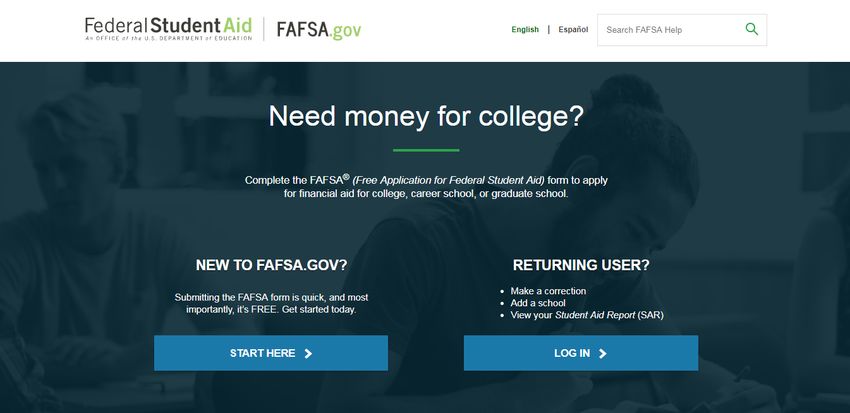
Comparing various College
            and University COAs
              LPC           CSUEB         UCB          Stanford
              (2018-19)     (2018-19)     (2018-19)    (2018-19)
Tuition       $1138         $ 6984        $14,184      *$50,703
& fees only
Ttl COA       $12,838       $18,686       $24,482      N/a
At home
Ttl COA    $21,082          $26,931       $31,306      *$71,587
Off campus
                *Families making less than $125,000 per year are
               guaranteed free tuition. Families making less than
              $65,000 per year receive free tuition, room and board.

                                                       © 2018 NASFAA Slide 5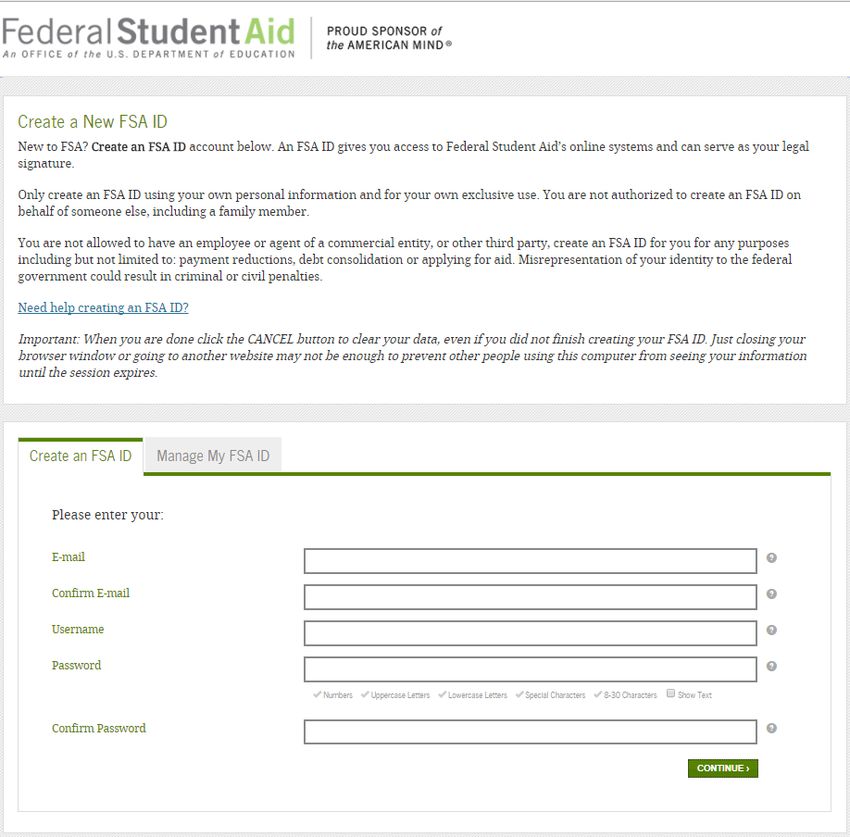
What is Expected Family Contribution
(EFC)?

                              Student
                            contribution
    Measurement of
     student’s and
   family’s ability to
  pay postsecondary
      educational
       expenses
                         Parent contribution
                         (for dependent students)

                                      © 2018 NASFAA Slide 6
What is Financial Need?

    Cost of attendance (COA)
   – Expected family contribution (EFC)
   = Financial need

                                 © 2018 NASFAA Slide 7
Categories of Financial Aid

     Need-based      Non-need-
        aid          based aid

                              © 2018 NASFAA Slide 8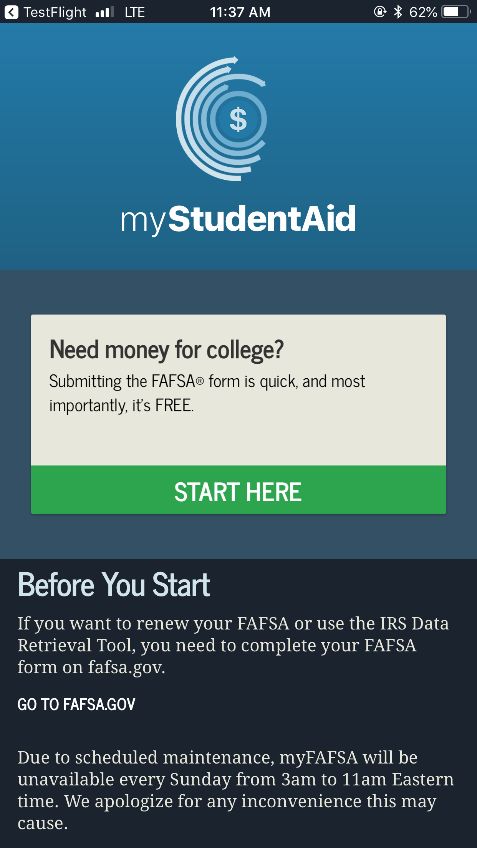
Types of Financial Aid

              Loans      Scholarships
Self-Help
  Aid                                        Gift Aid
                                              (Free)
            Work-Study
            Employment      Grants

                                        © 2018 NASFAA Slide 9
Sources of Financial Aid
                       Federal
                     Government

       Employers                   States

           Private            College and
           Sources            Universities

                                       © 2018 NASFAA Slide 10
Federal Government
Largest source of financial aid
Aid awarded primarily on the basis of financial need
Must apply each year using the FAFSA
Eligibility requirements must be met
© 2018 NASFAA Slide 11Grants
Loans Scholarships
Self-Help
Aid Gift Aid
(Free)
Work-Study
Employment Grants
© 2018 NASFAA Slide 12Free Money: Federal Pell Grants
Federal Pell Grant
l Largest source of financial aid, for very low income students
l Aid awarded primarily on the basis of financial need and Expected Family
Contribution (EFC).
l 2019-20 Pell Grant: maximum amount not yet determined by Congress
l For 2018-19: EFC must be 0 – 5486. Max Pell = $6095/year based on full-time
enrollment. Amount awarded varies with EFC. Amount actually received is
dependent on enrollment status (student receives less money if less than
fulltime)
l DID YOU KNOW: You will receive the same amount of a pell grant at any
college you attend; you don’t get more Pell grant at a more expensive college.
l Must apply each year using the FAFSA
13
© 2018 NASFAA Slide 13Free Money: Other Federal Grants
l Your college will determine which grants
you qualify for. Not all colleges partipate in
every federal program offered. You don’t
apply separately for federal grants.
G
l The FAFSA is the only application needed to
apply for all types of federal and state aid.
l A CSS Profile may be required in addition
(usually at private institutions) to determine
institutional aid provided by the college.
14
© 2018 NASFAA Slide 14California State Aid
Residency requirements usually apply
Award aid on the basis of both merit and need
Uses information from the FAFSA
Cal Grant Deadline March 2 of senior year
© 2018 NASFAA Slide 15Free Money: California State Aid
Entitlement Cal Grants
• Available
only
to
high
school
seniors
and
those
who
graduated
the
previous
school
year
• For
California
2-‐yr,
4-‐yr,
public,
private,
and
voca=onal
colleges
• Cal
Grant
A
and
B
pays
FULL
TUITION
at
a
CSU
or
UC,
@
up
to
$8056/year
for
private
ins=tu=on.
• Cal
B
recipients
also
receive
a
$1672
annual
grant
in
addi=on
to
full
tui=on
for
4
years.
• Cal
Grants
are
renewable
up
to
4
years.
The
tui=on
part
is
on
reserve
while
student
aQends
a
community
college
un=l
they
transfer
to
a
four
year
ins=tu=on.
• Consider
taking
15
units/semester
or
30
units/school
year
to
be
able
to
complete
a
four
year
program
within
the
=me
you
are
provided
a
Cal
Grant.
If
you
take
12
units
you
will
run
out
before
you
earn
your
degree.
16
© 2018 NASFAA Slide 16Free Money: Cal Grant
Entitlement Awards
Cal
Grant
A
Cal
Grant
B
For
high
school
seniors
and
For
high
school
seniors,
recent
recent
high
school
grads
high
school
grads
GPA
of
at
least
3.0
for
high
GPA
of
at
least
2.0
for
high
school
students
school
students
Family
income
and
assets
• Family
income
and
assets
below
state
ceilings
but
higher
below
state
ceilings
limit
than
Cal
Grant
B
• From
disadvantaged
or
low
income
families
Must
demonstrate
financial
need
17
© 2018 NASFAA Slide 17Eligibility for Cal Grants
• To
be
eligible
for
a
Cal
Grant,
the
student
must
also:
• be
a
U.S.
ci=zen,
eligible
nonci=zen,
or
eligible
under
CA
Dream
Act
(later
slide)
• be
a
California
resident
• aQend
an
accredited
California
college
or
university
at
least
half-‐=me
18 © 2018 NASFAA Slide 18State Cal Grant Entitlement Program
Cal Grant Income Ceilings for 2019-20
Family size Cal Grant A & C B
Dependent (2017 Income) (2017 Income)
Six or more $118,500 $65,100
Five $109,900 $60,300
Four $ 102,500 $53,900
Three $ 94,400 $48,500
Two $ 92,100 $43,000
Independent
Single, no dependents $37,600
19 Married,no other dependents $43,000
© 2018 NASFAA Slide 19
State Cal Grant Entitlement Program
  Cal Grant Asset Ceilings 2019-20


                                   ALL Programs


   Dependent
   students


   $79,300
             or independent
              students with
     dependents other
              than a spouse
Independent Students $37,700
Assets do not include equity in your home nor equity in a small
   business you own or funds in your retirement accounts.
                    20
                                                            © 2018 NASFAA Slide 20
California Dream Act
• California
regula=ons
allow
undocumented
students
who
aQended
a
CA
high
school
for
3
years
or
more
and
earned
a
diploma
or
equivalent,
to
qualify
for
‘AB540
status’.
This
status
allows
Dreamers
to
qualify
for
an
En=tlement
Cal
Grant,
Community
College
Registra=on
Fee
waivers,
college/university
grants
and
other
state
assistance
programs
and
services.
• Contact
the
public
college
admissions
office
to
submit
an
AB540
applica=on
and
high
school
transcript
when
you
decide
where
you
are
aQending.
AB540
status
will
save
you
thousands
of
dollars
in
enrollment
fee/
tui9on
charges,
and
will
make
you
eligible
to
receive
state
financial
aid
through
the
California
Dream
Act.
© 2018 NASFAA Slide 21Undocumented Students
Undocumented
students
apply
for
Cal
Grants
and
other
state
aid
by
submiHng
a
California
Dream
Act
Applica#on.
Be
sure
to
apply
for
AB540
status
when
you
apply
to
your
college
or
you
won’t
be
eligible
for
any
state
aid.
To
apply
for
aid,
file
a
CA.
DREAM
APPLICATION
instead
of
a
FAFSA
at
www.csac.ca.gov.
March
2nd
is
the
deadline
to
qualify
for
state
aid.
Other
educa=onal
resources
for
undocumented
students:
Contact
MALDEF
at
(213)
629-‐2512
(www.maldef.org)
Apply
for
all
scholarships
for
which
you
may
be
eligible
hQp://www.maldef.org/leadership/scholarships/index.html
Check
out
www.e4fc.org
22
© 2018 NASFAA Slide 222019-20 Cal Grant
Application Requirements
By
March
2,
2019,
complete
and
submit:
q Free
Applica=on
for
Federal
Student
Aid
(FAFSA)
at
www.fafsa.ed.gov
• If
eligible
under
Assembly
Bill
540
(AB540)
students
should
complete
the
California
Dream
Act
Applica#on
at
www.caldreamact.org
q Cal
Grant
GPA
Verifica=on
Form
at
www.csac.ca.gov
• Your
high
school
will
automa=cally
send
your
GPA
for
the
Cal
Grant
GPA
Verifica=on;
be
sure
your
school
has
your
correct
social
security
number.
23
© 2018 NASFAA Slide 23Check Your Cal Grant Status
By
opening
a
WebGrants
Account
a
student
can:
Check
Cal
Grant
award
status
24/7
Confirm
student’s
high
school
gradua=on
as
required
once
they
have
actually
graduated
Make
changes
to
Cal
Grant
school
choices
View
how
much
a
Cal
Grant
is
worth
at
different
California
colleges
and
universi=es
Create
a
WebGrants
account
at:
www.webgrants4students.org
2
© 2018 NASFAA Slide 24
4Free Money: California Middle Class
Scholarship (MCS)
• The
Middle
Class
Scholarship
(MCS)
assists
new
and
con=nuing
UC
and
CSU
undergraduate
students
with
family
incomes
and
assets
up
to
$171,000.
• To
apply,
students
must:
– Submit
2019-‐20
FAFSA
by
March
2,
2019
– AB540
students
submit
2019-‐20
CA
Dream
Act
Applica#on
– Note:
no
GPA
is
required
– AQend
a
CSU
or
a
UC
– Maintain
a
2.0
cumula=ve
college
GPA
• MCS
awards
vary
and
are
determined
by
the
CA
Student
Aid
Commission
• Students
can
only
receive
MCS
if
they
didn’t
receive
federal
or
state
grant
aid
• Qualifying
students
will
be
no=fied
by
the
California
Student
Aid
Commission
• Annual
awards
are
determined
by
the
California
Student
Aid
Commission
2
© 2018 NASFAA Slide
5 25Free Money:
California Chafee Grant
• The
California
Chafee
Grant
program
provides
up
to
$5,000
annually
to
current
and
former
foster
youth
for
college
or
voca=onal
training
at
any
accredited
college
in
the
U.S.,
based
on
available
funding
• To
be
eligible,
foster
youth
must
have
been
in
California
foster
care
on
their
17th
birthday
and
not
have
reached
their
22nd
birthday
before
July
1,
2019
• Current
and
former
foster
youth
are
encouraged
to
apply
during
their
senior
year
of
high
school
•
AB540
students
may
also
be
eligible
To
apply
for
a
Chafee
Grant,
file
a
2019-‐20
FAFSA
and
file
a
Chafee
applica=on
at:
www.chafee.csac.ca.gov
26 © 2018 NASFAA Slide 26Colleges and Universities
Award aid on the basis of both merit and need
Aid may be gift aid or self-help aid
Use information from the FAFSA and/or institutional
applications
Deadlines and application requirements vary by
institution - look for college’s ‘Priority Filing Deadline’
© 2018 NASFAA Slide 27Free Money: Community College Promise
Grant Fee Waiver Program
– Waives enrollment fees at all community colleges for CA
residents (value = $1104/year); no minimum enrollment
– File a FAFSA or DREAM App to qualify. Waiver is
automatically awarded if you qualify through need.
All CA resident students who have $1104 or more of financial
need receive an automatic fee waiver
Example: Las Positas College COA = $12,838
- EFC = $ -9100
NEED = $ 3738
Student qualifies for fee waiver because need >1104
28
© 2018 NASFAA Slide 28Free Money: ‘California Promise
Program’
– Only some ccc’s offer a ‘Promise Program’; it is
not offered at all schools
– When offered, all students must file a FAFSA or
DREAM App to qualify.
– Offered for the first year at participating schools
to all first-time full-time California resident
students who filed a FAFSA or
– Students with need get the Promise Grant Fee
Waiver, same as at all ccc’s. Students without
need get the Promise Program Fee Waiver.
29
© 2018 NASFAA Slide 29Completing your first two years at a California
Community College can be your best choice
o Students planning to transfer can complete 2 years at a
ccc at a much lower cost and transfer as a junior.
o Students intending to earn a Bachelors degree can sign
a Transfer Articulation Agreement through Counseling
which guarantees admission to the program/university of
their choice upon successful completion of the specified
courses in the agreement
o Despite the bad rap from uninformed opinions, CCC’s
actually offer a rigorous high quality education intended
by our state to meet the lower division requirements of
four year public institutions at a bargain price. They also
offer excellent career-technical training programs and
two year degrees which prepare students for the
workforce.
30
© 2018 NASFAA Slide 30Free Money:
College/Institutional Grants
Be mindful of PRIORITY FILING DEADLINES of
each college or you may miss out on $$thousands!
Each college has their own deadline by which you
must submit your FAFSA. DON’T MISS IT! Check
with each college or university you are considering
attending for their priority deadline.
l CSU State University Grant (SUG): calstate.edu
or csumentor.edu
l UC Grant: universityofcalifornia.edu
l Independent College Grants: aiccu.edu
31
© 2018 NASFAA Slide 31Scholarships
Scholarships
Loans
Self-Help
Aid Gift Aid
(FREE)
Work-Study
Employment Grants
© 2018 NASFAA Slide 32Private Sources
Foundations, businesses, corporations, churches,
civic, clubs, and charitable organizations, employers
Deadlines and applications procedures vary
Begin researching private sources early and continue
researching and applying each year
© 2018 NASFAA Slide 33Free Money: Scholarships
• Provider decides on
– Awarding criteria
– Application deadline
– Forms or applications
• Awards may be
– Merit-based
– Need-based or NOT
– Based on any other criteria determined by
donor
– Begin researching private aid sources early
and continue all through college
34
© 2018 NASFAA Slide 34Free Money: Scholarships
WHERE TO FIND THEM:
• Start with your High School Career Center
• Local section of Newspaper
• Organizations your family is connected to, including
parent’s workplace, church, unions, clubs, etc.
• Check your intended colleges’ financial aid/scholarship
website for opportunities
• Free online searches
• NEVER EVER PAY MONEY TO APPLY FOR A
SCHOLARSHIP!
35
© 2018 NASFAA Slide 35Private FREE Scholarship Searches
• FinAid on the Web: https://www.finaid.org
• FastWeb: https://www.fastweb.com
• Scholarship Resource Network Express:
https://www.srnexpress.com
• GoCollege: The Collegiate Websource:
https://www.gocollege.com
Hint:
use
a
separate
dedicated
email
address
when
using
scholarship
search
programs
to
avoid
spam!
36
© 2018 NASFAA Slide 36Work-Study Employment
Loans Scholarships
Self-Help
Aid Gift Aid
(Free)
Work-Study Grants
Employment
© 2018 NASFAA Slide 37Self-help Aid: Federal Work-Study
l Federal financial aid program, but funds are limited
l Money must be earned through work
l Must have financial need
l Job may be on or off campus. Work hours are
flexible with your class schedule.
l Each college has its own award policy, pay rates and
procedures for getting a job. If you are interested,
review your college’s financial aid website for
details and apply for a FWS job EARLY!
38
© 2018 NASFAA Slide 38Loans
Loans
Scholarships
Self-Help
Aid Gift Aid
(Free)
Work-Study
Grants
Employment
© 2018 NASFAA Slide 39Self-help Aid:
Federal Direct Student Loans
Loan is only in the student’s name, no co-signer.
Must be enrolled in at least 6 units.
Two types:
Federal Subsidized Direct Loan
§ For students with unmet financial need
§ Government pays interest while in school
Federal Unsubsidized Direct Loan
§ For all students; no financial need required
§ Student responsible for cost of interest while in
school
40
© 2018 NASFAA Slide 40Federal Direct Student Loans
l Annual and aggregate loan limits apply
l Must be enrolled at least halftime
l 6-month grace period after graduation before
repayment begins
l 10 – 30 year repayment period
l Interest currently 5.05% for both types of
loans. Interest changes every July 1.
l Repayment is deferred while in college at
least halftime
41
© 2018 NASFAA Slide 41Federal Parent Loans for Undergraduate
Students (PLUS)
Parents
of
dependent
undergraduates
can
borrow
up
to
the
total
cost
of
their
child’s
undergraduate
study,
less
any
other
aid
the
student
may
receive
•based
on
credit
record
•May
borrow
up
to
full
cost
of
aQendance
less
other
aid
offered
•Up
to
$2500
in
interest
paid
may
be
tax
deduc=ble
under
current
regula=ons
•Interest
fixed
at
7.6%;
origina=on
fee
=4.264%
•10
year
repayment
period
•Parents
can
defer
payment
un=l
student
graduates
college.
hQp://studentaid.ed.gov/types/loans/plus
42
© 2018 NASFAA Slide 42Private loans
■ May
or
may
not
carry
higher
interest
rates
and
fees
than
federal
loans
■ Typically
the
interest
rates
are
variable
■ Based
on
your
credit
ra=ng
and
debt-‐to-‐income
ra=o
■ May
require
a
co-‐signer
■ May
be
secured
■ Up
to
$2500
in
interest
paid
may
be
tax
deduc=ble
under
current
regula=ons
■ Best to use federal student loan programs first; if
you still need additional financing or terms are
better, then consider private loans.
43
© 2018 NASFAA Slide 43Applying for Financial Aid
FAFSA on the Web
The
2019-‐2020
FAFSA
on
the
Web
is
used
to
apply
for
financial
aid
for
the
school
year
beginning
Fall
2019.
You
may
complete
it
beginning
October
1,
2018.
www.fafsa.gov
44 © 2018 NASFAA Slide 44myStudentAid Mobile App
• Brand new
this year for
2019-2020!
• Mobile ability
to begin,
complete,
save, and
submit the
FAFSA
© 2018 NASFAA Slide 45Free Application for Federal
Student Aid (FAFSA)
• Collects demographic and financial
information for student and parent(s)
• Information used to calculate the expected
family contribution (EFC)
• Colleges use EFC to award financial aid
• Available in English and Spanish
© 2018 NASFAA Slide 46FAFSA Information & Tips
• File
no
later
than
March
2,
2019
to
qualify
for
the
Cal
Grant,
or
no
later
than
the
earliest
Priority
Filing
deadline
of
all
colleges
you
are
considering
aXending.
Some
colleges
are
earlier
than
March
2nd.
• You
must
file
a
new
FAFSA
every
year.
File
by
March
2
annually
to
retain
your
Cal
Grant,
otherwise
you
will
lose
it!
• Use
2017
income
informa#on.
Do
NOT
use
2018
income
informa9on
• Student
and
at
least
one
parent
whose
informa#on
is
reported
must
complete
and
sign
the
FAFSA
47 © 2018 NASFAA Slide 47Get a Federal Student Aid (FSA) ID
• FIRST STEP!
• Used for FAFSA completion
and allows access to certain
U.S. Department of Education
websites
• May be used by students and
parents throughout financial
aid process, including
subsequent school years
• Only the owner should create a
FSA ID
• Apply at
https://fsaid.ed.gov/npas/index.htm
© 2018 NASFAA Slide 48FAFSA on the Web (FOTW)
© 2018 NASFAA Slide 49Student Dependency Status
FAFSA asks questions to determine dependency status for Title IV federal
student aid (not IRS) purposes:
If all “No” responses, student is dependent. In general, most
students under age 24 are dependent for financial aid purposes
(regardless of who they live with or whether they were claimed
on taxes)
If “Yes” to any question, student is independent
Dependent students who have unusual and extenuating
circumstances such as abandonment, an abusive parental
situation, etc, may appeal to the college of attendance for an
override of their dependency status. Documentation is key!
© 2018 NASFAA Slide 50Who
is
considered
a
parent
for
the
FAFSA?
Biological
or
adop=ve
parent(s)
Include
both
same-‐sex
parents
Include
both
unmarried
parents
if
living
together
In
case
of
divorced
or
separated
parents
who
don’t
live
together,
provide
informa=on
about
the
parent
the
student
lived
with
more
in
the
last
12
months
Stepparent
(regardless
of
any
prenup=al
agreements),
if
currently
married
to
the
student’s
custodial
parent
51
© 2018 NASFAA Slide 51Who is Not a Parent for the FAFSA?
52
© 2018 NASFAA Slide 52IRS Data Retrieval Tool
• Allows for certain tax return information to be
transferred directly from the IRS database
• Participation is voluntary and student/parent
chooses whether or not to transfer data to FOTW
• IRS will authenticate taxpayer’s identity
• If tax record is found, IRS transfers information to
populate the FAFSA. Info on the FAFSA must match
the Tax return exactly or there won’t be a match
• Reduces documents requested by financial aid
office; ensures accuracy
© 2018 NASFAA Slide 53IRS Data Retrieval Tool
Certain tax filers cannot use the
IRS Data Retrieval Tool
Non-
Married married
Did not parent or
Marriage and filed as Neither
indicate on First three
date is Filed a head of married both
FAFSA a digits of the
January non-U.S. household, parent married
tax return SSN are
2017, or tax return or filed entered a parents
was 666
later separate valid SSN entered all
completed
returns zeroes for
the SSN
© 2018 NASFAA Slide 54Strategies for listing colleges for the School
Selection Section
List
a
California
college
or
university
first
(for
Cal
Grant
considera#on)
which
you
are
most
likely
to
aXend
Then
list
those
colleges
with
the
earliest
financial
aid
deadlines,
regardless
of
whether
they
are
in-‐state
or
out-‐of-‐state
Your
fafsa
info
is
sent
to
the
Ca.
Student
Aid
Commission
for
evalua#on
of
Cal
Grant
eligibility.
If
the
student
is
applying
to
more
than
ten
colleges,
wait
for
the
processed
Student
Aid
Report
(SAR)
and
then
add
addi#onal
colleges,
dele#ng
previous
colleges
if
necessary
NOTE: Each UC and CSU campus must be listed separately
55
© 2018 NASFAA Slide 55Signatures
• Required
– Student
– One parent (dependent students)
• Format for submitting signatures
– Electronic using FSA ID
– Signature page (print from website)
© 2018 NASFAA Slide 56Frequent FAFSA Errors
• Social Security Numbers
• Name doesn‘t match social security card
• Divorced/widowed/remarried parental information
• Income earned by parents/stepparents
• Untaxed income not reported properly
• U.S. income taxes paid (often deducted taxes
from W-2 are used)
• Household size
• Number of household members in college
• Real estate and investment net worth
© 2018 NASFAA Slide 57FAFSA Processing Results
CPS
College Student
© 2018 NASFAA Slide 58Student Aid Report (SAR) Acknowledgement
• A]er
the
student
completes
the
FAFSA,
a
SAR
will
be
sent
to
the
student
– An
electronic
SAR
Acknowledgement
will
be
sent
if
student
provides
an
e-‐mail
address
– A
paper
SAR
will
be
mailed
if
no
student
e-‐mail
address
is
provided
• An
electronic
copy
of
the
data
will
be
sent
to
each
college
or
university
listed
by
the
student
• Keep
a
copy
of
the
SAR
with
other
financial
aid
documents
• READ
THE
COMMENTS
ON
THE
FIRST
PAGE
CAREFULLY!
It
will
indicate
errors
to
be
corrected
and
ques#onable
answers
to
be
reviewed.
5
© 2018 NASFAA Slide 59
9Making Corrections
If necessary, corrections to FAFSA data may be
made by:
•Using FAFSA on the Web, if student has a FSA ID;
•Updating paper SAR; or
•Submitting documentation to college’s financial aid
office
•You cannot make corrections on the mobile app.
© 2018 NASFAA Slide 60Special Circumstances Appeals
Contact
the
Financial
Aid
Office
if
there
are
circumstances
which
affect
your
family’s
ability
to
pay
for
college
such
as:
Loss
or
reduc=on
in
parent
or
student
income
or
assets
since
the
base
year
reported
Death
or
serious
illness
in
family
Natural
disasters
affec=ng
parent
income
or
assets
such
as
wildfires,
floods,
or
mudslides
Unusual
medical
or
dental
expenses
not
covered
by
insurance
Reduc=on/loss
in
child
support
or
Social
Security
benefits
due
to
aging
out
or
other
reason,
or
of
other
untaxed
benefit
High
unreimbursed
dependent
costs
for
a
special
needs
child
Financial
responsibility
for
elderly
grandparents,
or
Any
other
unusual
circumstances
that
affect
a
family’s
ability
to
contribute
to
higher
educa=on
© 2018 NASFAA Slide 61Special Circumstances
• Conditions exist that cannot be documented with the
FAFSA
• Complete appeal form, or send written explanation and
documentation to your college’s financial aid office
• College will review and request additional information if
necessary
• Decisions are final and cannot be appealed to U.S.
Department of Education
• If approved, your Fin Aid Office can make adjustments to
income and assets which reduce EFC.
© 2018 NASFAA Slide 62What Happens Next?
Students
and
the
colleges
the
student
listed
receive
Student
Aid
Report
(SAR)
from
federal
processor
ê
Students
who
complete
FAFSA
and
Cal
Grant
GPA
Verifica#on
Form
receive
California
Aid
Report
(CAR)
ê
Students
and
families
review
SAR
and
CAR
for
important
informa#on
and
accuracy
of
data
ê
Colleges
match
admission
records
with
FAFSA
and
other
required
financial
aid
forms
to
determine
aid
eligibility
ê
Colleges
no#fy
students
if
addi#onal
documents
and
forms
must
be
submiXed
to
financial
aid;
financial
aid
award
no#fica#ons/offers
sent
to
students
ê
Always
contact
the
college
or
university
you
plan
to
aXend
for
important
deadlines
and
addi#onal
informa#on
63
© 2018 NASFAA Slide 63Basic Awarding • When your college receives and processes your fafsa information they will be able to determine your eligibility for financial aid and will make you an award offer. • Usually there is additional documentation or forms that must be submitted to ‘complete’ your financial aid file, in order to finalize your award for payment. • Free money is offered first (Federal and State grants, then institutional scholarships and grants), based on your eligibility, need and the college’s awarding policies. • Schools will award Federal workstudy and Loans after the free aid. You are not required to accept the workstudy or loans, but it is an option available to you. • You may still have unmet financial need when you receive your award offer.
Comparing your college choices
using financial aid offers
• Your
boQom
line
for
choosing
colleges
isn’t
the
cost
of
aQendance,
but
rather
the
net
actual
cost
to
you
and
your
family.
• Once
you
subtract
the
free
aid
(grants
and
scholarships)
from
your
cost
of
aQendance,
determine
how
much
of
the
net
bill
you
will
need
to
finance
through
loans
and
workstudy
or
your
own
funds.
This
is
what
you
need
to
understand
when
determining
affordability
in
making
a
college
choice.
• Be
aware
if
ins=tu=onal
grants
or
scholarships
offered
are
mul?-‐
year
or
not;
you
may
get
a
good
package
the
first
year
to
en=ce
you
to
a
college,
but
can
you
rely
on
the
same
for
the
remainder
of
the
years?
• Use
‘Evaluate
your
Financial
Aid
Offers’
form
at
end
of
handout
to
help
you
compare
various
college’s
financial
aid
offers
and
determine
which
college
is
your
least
net
cost
to
aQend.
65
© 2018 NASFAA Slide 65Federal Verification
Some
students
will
be
required
to
verify
the
informa=on
reported
on
the
FAFSA
If
selected
for
verifica=on,
the
tax
informa=on
of
federal
tax
filers
will
be
verified
through
The
IRS
Data
Retrieval
Process,
or
IRS
Tax
transcripts
if
requested
by
the
college
or
university
(Form
4506T)
Non-‐tax
filers
selected
for
verifica=on
may
be
asked
to
provide
Confirma=on
of
Non-‐Filer
status
leQer
from
the
IRS
(form
4506T)
Copies
of
W-‐2s,
1099s
or
other
income
documenta=on
from
each
employer,
if
any
income
was
earned
from
work
All
selected
aid
applicants
will
also
be
asked
to
verify
certain
demographic
data
listed
such
as
Household
size
and
number
in
college
n
© 2018 NASFAA Slide 66IRS Tax Return Transcript
Order your free IRS Tax Return Transcript at
www.irs.gov/individuals/get-transcript
• If
you
can’t
use
the
IRS
Data
Retrieval
Tool,
you
may
be
required
to
provide
an
IRS
Tax
Return
Transcript
if
selected
for
verifica=on.
You
should
order
the
Tax
Transcript
NOW
to
save
=me
later.
Copies
of
actual
tax
returns
will
not
be
accepted.
• The
online
tax
return
transcript
will
be
required
if
you
filed
taxes.
It’s
beQer
to
use
the
IRS
Data
Retrieval
Tool
if
you
are
permiQed.
• Otherwise,
you
will
need
to
obtain
a
tax
return
transcript
by
mail
sent
to
the
address
on
your
income
tax
return
67
© 2018 NASFAA Slide 67Summary of the Financial Aid
Process
• Be
sure
to
apply
for
financial
aid
(File
a
FAFSA
or
DREAM
APPLICATION)
this
year
and
every
year
as
soon
as
possible
on
or
arer
October
1
and
before
March
2nd
to
receive
the
best
financial
aid
award
possible
• Keep
a
copy
of
all
forms
submiQed
• Review
the
electronic
Student
Aid
Report
(SAR)
Acknowledgement
or
the
paper
SAR
sent
to
the
student,
make
correc=ons
if
needed
or
add
colleges
• Review
the
California
Aid
Report
(CAR)
when
you
receive
it
from
the
California
Student
Aid
Commission
to
determine
your
Cal
Grant
eligibility
• Watch
for
financial
aid
no=fica=ons
or
award
offers
from
colleges
to
which
the
student
has
been
admiQed.
• Submit
all
addi=onal
requested
documents
to
the
college
you
will
be
aQending
as
soon
as
possible.
Respond
to
emails
from
the
financial
aid
office…it
may
be
the
only
way
they
no=fy
you.
• ASK
QUESTIONS!
© 2018 NASFAA Slide 68Additional helpful federal resources
hXps://financialaidtoolkit.ed.gov/tk/resources/all.jsp#YourSearchResults
•11
Common
FAFSA
Mistakes
•12
Myths
About
the
FAFSA
Form
and
Applying
for
Financial
Aid
•3
Types
of
FAFSA
Deadlines
You
Should
Pay
AQen=on
To
•5
Things
to
Do
Arer
Filing
Your
FAFSA
Form
•7
Things
You
Need
Before
You
Fill
Out
the
2019–20
FAFSA
Form
•Arer
the
FAFSA:
What
Happens
Next
Video
•Am
I
Dependent
or
Independent?
•FAFSA
and
FSA
ID
Tips
for
Parents
Video
•How
to
Create
Your
FSA
ID
video
© 2018 NASFAA Slide 69Attached to the presentation…
• TOP
STRATEGIES
TO
MINIMIZE
EFC
(hints
for
ways
to
reduce
reported
income/assets
to
minimize
EFC)
• Evaluate
your
Financial
Aid
Offers
© 2018 NASFAA Slide 70Other useful resources
Federal Financial Aid Info Center: 1-800-433-3243
Federal Aid information page: www.studentaid.gov
IRS Tax Benefits for Education
http://studentaid.ed.gov/types/tax-benefits
California Student Aid Commission: www.csac.ca.gov
View your personal Cal Grant status: https://mygrantinfo.csac.ca.gov
Official Financial Aid Information Page: www.finaid.org/
Veterans Educational Benefits: www.va.gov/va.htm
© 2018 NASFAA Slide 71Good planning resources for
college
hQp://www.makingitcount.com/parents
Free
online
college
financing
and
money
skills
program
for
parents
and
students:
hQp://ul=matemoneyskills.com
© 2018 NASFAA Slide 72Need help completing your FAFSA?
Attend a Cash for College hands-on workshop
Get help completing a FAFSA or Dream
Application online
English and Spanish assistance provided
Amador Valley High School
February 21, 2019
6 – 8 pm
73 © 2018 NASFAA Slide 73Questions and
Answers
74 © 2018 NASFAA Slide 74You can also read


