WILL THE EU DOOM OUR OCEAN & FISHERS? - #StopHarmfulSubsidies #EMFF - assets ...
←
→
Page content transcription
If your browser does not render page correctly, please read the page content below
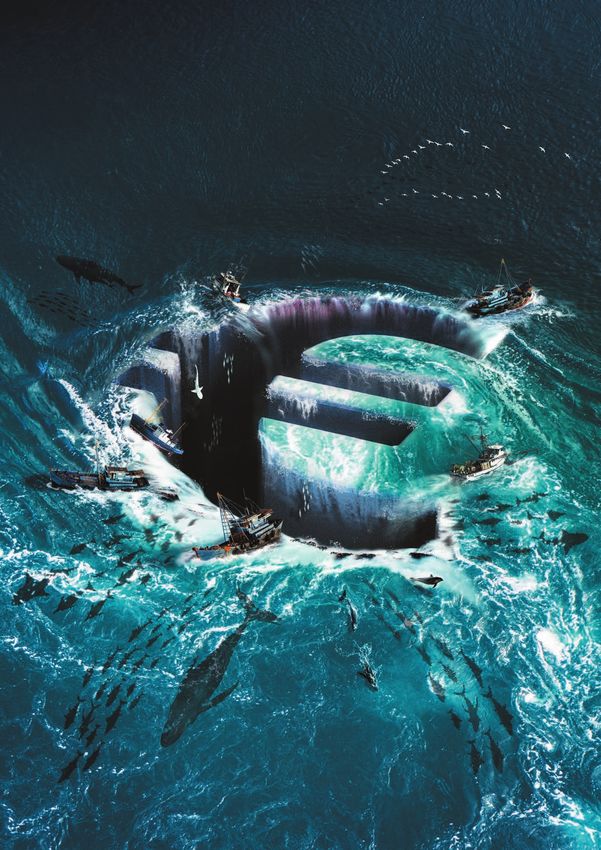
WILL THE
EU DOOM
OUR OCEAN
& FISHERS?
#StopHarmfulSubsidies
#EMFF
WILL THE EU DOOM OUR OCEAN AND FISHERS?                                            2

      C
                     apacity-enhancing subsidies are not compatible with
                     the objectives of environmental, social and economic
                     sustainability of the Common Fisheries Policy (CFP) of the
                     European Union (EU). In 2004, European institutions
        made a bold and historical move when they banned one of the
        most harmful fisheries subsidies (see page 7), those financing
        the construction of new vessels. With this decision, the EU became
        one of the leading voices on fisheries sustainability in international
        forums, and particularly within the World Trade Organization (WTO),
        which, since 2001, has been engaged in negotiations to secure a
        multilateral agreement banning harmful subsidies by 31 December
        2019, as mandated by the Sustainable Development Goal (SDG) 14.6.

          Fifteen years after the ban on construction subsidies, the status
          of some European fish stocks has improved. However, with fish
          biomass still low and overfishing still widespread, European
          institutions are on the verge of taking a spectacularly dramatic
          step backwards: both the European Parliament and Council
          of the EU (i.e. the Member States' fisheries ministers) want to
          re-authorise capacity-enhancing subsidies, as part of the next
          European Maritime and Fisheries Fund (EMFF, 2021–2027), most
          notably construction subsidies. If this decision were to go through,
          not only would the credibility of the EU at the international level be
          irremediably damaged, it would also pose a serious threat to the
          future of European marine ecosystems and the coastal communities
          whose livelihoods rely on them.
WILL THE EU DOOM OUR OCEAN AND FISHERS? 3
OUR RECOMMENDATIONS
TO AVOID DOOMING OUR
OCEAN’S AND FISHERS’
FUTURE
In line with the EU’s pledges to tackle R
eject harmful subsidies to
the issues of overcapacity and build new fishing vessels;
overfishing when reforming the CFP
both in 2003 and 2013, to bring an R
eject capacity-enhancing subsidies
end to harmful fisheries subsidies for the modernisation of vessels
when adopting SDG 14.6 in 2015, and and replacement of engines;
in continuity with a policy the EU E
nsure that >25% of the budget are
pioneered almost 15 years ago, we allocated to environmental
urge the European Parliament and protection, restoration, and marine
the Council of the EU to: knowledge;
I ncrease to >25% the budget
for control, monitoring and
data collection;
I ncrease transparency on how the
EMFF is used by beneficiaries so as
to avoid any detrimental misuse.
INVOLVING EUROPEAN CITIZENS
IN THE DEMOCRATIC PROCESS
At every stage of the decision-making process on the EMFF, EU citizens will have
the opportunity to call on key European decision-makers with the iPolitics platform.
https://ipoliticseu.bloomassociation.orgTRILOGUE NEGOTIATION
POSITIONS OF EUROPEAN EUROPEAN
COMMISSION
E
P
INSTITUTIONS AND NGOs
No construction subsidies. Re
CONSTRUCTION Support for the first acquisition of a su
second-hand fishing vessel by a young fis
OF NEW VESSELS
small-scale coastal fisher
ENGINE REPLACEMENT Subsidy available to small-scale Su
OR MODERNISATION coastal fisheries only ve
ON BOARD No investments that increase the In
INVESTMENTS fishing capacity or the ability to find fish all
fis
PORTION OF THE BUDGET
DEDICATED TO ENVIRONMENT No dedicated portion of the fund At
PROTECTION, RESTORATION AND to
KNOWLEDGE an
PORTION OF THE BUDGET
At least 15% of the budget dedicated At
DEDICATED TO CONTROL,
to control, monitoring and data to
MONITORING AND collection co
DATA COLLECTION
Permanent cessations with strict Pe
PERMANENT CESSATION OF conditions w
FISHING ACTIVITIES ve
Extraordinary cessations with strict Tr
EXTRAORDINARY CESSATION conditions ce
OF FISHING ACTIVITIES co
1 Small-scale coastal fishing means « fishing carried out by fishing vessels of an overall length of less than 12 metres and not using towed gear as listed in Article 2(1) of Council 3A
Regulation (EC) No 1967/2006 », i.e. trawl nets, boat seines, shore seines, and dredges. sup
2 Only grant this aid by financing not linked to costs + the fishing vessel is registered as active and has carried out fishing activities at seafor at least 120 days in each
of the last three calendar years.ONS — EMFF 2021-2027
EUROPEAN COUNCIL OF THE NGOS’
PARLIAMENT EUROPEAN RED
UNION LINES
Reintroduction of construction Reintroduction of subsidies No subsidies supporting or
subsidies for small-scale coastal incentivizing the construction for incentivizing the construction of new
fishing vessels 1 vessels below 24 meters by weakening fishing vessels
the conditions laid down by the
European Commission
Subsidy available to all fishing Subsidy available to all fishing No subsidies for the replacement or
vessels vessels below 24 meters modernisation of engines
Introduction of broad exceptions Introduction of broad exceptions No investments that increase the
h allowing investments that increase the allowing investments that increase the fishing capacity or the ability to find
fishing capacity or the ability to find fish fishing capacity or the ability to find fish
fish
At least 25% of the budget dedicated No dedicated portion of the fund At least 25% of the budget
to environment protection, restoration dedicated to environment protection,
and knowledge restoration and knowledge
At least 15% of the budget dedicated At least 15% of the budget dedicated At least 25% of the budget dedicated
to control, monitoring and data to control, monitoring and data to control, monitoring and data
collection collection collection
Permanent cessations with Permanent cessations with Maintain the strict conditions
weakened conditions on eligible weakened conditions on eligible laid down by the Commission for this
vessels vessels and implementation
requirements which has been called into question
t Transformation into ‘temporary Transformation into ‘temporary Maintain the strict conditions laid
cessations’ with weakened cessations’ with weakened conditions down by the Commission for this
conditions
of which has been called into question
3 Activities of the vessel stopped during at least 90 consecutive days + the economic losses resulting from the cessation amount to more than 30% of the annual turnover + the
support may be granted for a maximum duration of 6 months per vessel over 2021-2027 + type of cessationsWILL THE EU DOOM OUR OCEAN AND FISHERS? 6
ONGOING 20 YEARS OF
NEGOTIATIONS ON GLOBAL EFFORT
THE NEXT EMFF: TO BAN HARMFUL
A BIG STEP SUBSIDIES,
BACKWARDS THE EU THREATENED
CANNOT AFFORD BY THE EU
Every seven years, European institutions revise their The elimination of harmful fisheries subsidies has
'Multiannual Financial Framework' (MFF), the overall been a central topic of negotiations at the World
budget allocated to the different EU policies. As part Trade Organization (WTO) framework since 1998. There
of the revision, the European Commission published is growing evidence of detrimental impacts caused by
its proposal for the next EMFF (2021–2027) in June harmful subsidies on the state of marine resources that
2018. This structural fund will have a budget of ripples into negative social and economic consequences
more than EUR 6 billion and will determine the for fishing communities, food security, and political
future of how our ocean is managed and protected. stability. This has allowed the international community
Since the proposal’s publication, both the European to recognize and accept that cutting harmful subsidies
Parliament and the Council of the EU have established is crucial if we are to give a chance to sustainable and
their respective positions for the next EMFF, with all equitable fisheries.
three institutions due to find common ground and
In 2001, WTO Member States agreed to address the
adopt the next EMFF by the end of 2020.
issue of fisheries subsidies. 1 However, no agreement
While the original European Commission’s proposal has yet been reached despite the recognition of its
is far from perfect, it does represent a step in importance in many political declarations including
the right direction with incentivising a transition the Johannesburg Plan of Implementation (2002), 2
to fishing with lower environmental impact and high the Rio+20 Declaration of 2012, 3 and, more recently,
socio-economic value. It is also leaning towards the the SDGs for 2030 adopted by the United Nations
commitment made by the EU to respect the United in September 2015. 4
Nations' Sustainable Development Goals (SDGs),
After twenty years of negotiations, the WTO is about to
especially SDG 10 ‘Reduced Inequalities’, SDG 12
conclude a multilateral, global agreement to eliminate
‘Responsible Consumption and Production’, and SDG 14
harmful fisheries subsidies. The EU cannot choose
‘Life below water’. However, the faint progress offered
this historical moment to betray its ambitions
in the European Commission’s proposal is severely
and international commitments to secure more
jeopardised by the disastrous amendments made by
sustainable practices for the world's fisheries.
both the European Parliament and Council of the EU
to reintroduce harmful subsidies to build new vessels If the EU were to adopt the current amendments
and modernise existing ones. These amendments proposed by both the European Parliament and Council
not only represent a serious threat to the future of the EU for the next EMFF, it risks jeopardising
of EU communities and marine ecosystems, they a WTO agreement to eliminate harmful subsidies
also undermine the credibility and negotiation globally. Such a decision would signify to the world that
position of the EU at the international level by the EU is not standing by its commitments to the SDGs.
going against the United Nations’ SDGs.
1 WTO (2001) Ministerial Declaration — Adopted on 14 November 2001. 4 UN (2015) Sustainable Development Goal 14 — Conserve and sustainably use
the oceans, seas and marine resources for sustainable development.
2 UN (2002) Report of the World Summit on Sustainable Development.
3 UN (2012) Report of the United Nations Conference on Sustainable
Development.WILL THE EU DOOM OUR OCEAN AND FISHERS? 7
WHAT IS A ‘HARMFUL’ SUBSIDY?
Certain types of subsidies contribute to intended for sale (i.e. bycatch) or threatened/
fishing overcapacity (that is, too much endangered species.
technology and effort deployed to catch But not all subsidies are ‘harmful’. On the
finite fish stocks), and thus directly lead to contrary, certain subsidies lead to investment
overfishing. These subsidies are known as in natural capital assets. In stark contrast with
‘harmful subsidies’. They account for over ‘harmful’ subsidies, these ‘positive’ subsidies
60% of global fisheries subsidies (USD 22 ensure the optimum use of the finite resources
billion — around EUR 20 billion — annually). * of our ocean’s diverse species. They include,
They include any subsidy that reduces the for instance, subsidies aimed at improving
operational costs of the fishing sector such monitoring, control and surveillance programs
as building new vessels or increasing the of fishing vessels, fisheries research and
efficiency of fishing gear. They can also be development, and fishery habitat enhancement
subsidies provided to fishing companies and programmes.
vessels that engage in detrimental practices
such as marine habitat degradation, slavery,
* S umaila et al. (2019) Updated estimates and analysis of global fisheries
or that catch large proportion of species not subsidies, Marine Policy 109: 103695.
STATE OF EU FISH STOCKS
According to the latest data available, 69% of Catch
Maximum Sustainable
EU stocks remain under too much pressure to Yield (MSY)
maximise catches year after year (Maximum
Sustainable Yield, or MSY, which forms
the central pillar of the current CFP).* The
Mediterranean Sea is the most overexploited
EU area, with almost 90% of stocks currently
overfished.** When looking at additional
fisheries indicators, only 12% of EU fish stocks
are fished in such a manner that the sustainable Overfishing
Fishing
objectives of the CFP are respected.* effort
Fishing effort that maximises
catches year after year
* Froese et al. (2018) Status and rebuilding of European fisheries,
Marine Policy 93159-170.
** STECF (2019) Scientific, Technical and Economic Committee for
Fisheries — 60th plenary meeting report (PLEN-19-01), in: Ulrich
and Doerner (Eds.) Scientific, Technical and Economic Committee
for Fisheries (STECF), Ispra (Italy), p. 161.KEY FACTS
ON THE CURRENT EMFF
Harmful subsidies account for
33.8% of the planned funds,
and beneficial ones for 45.1%
(the rest being ambiguous, i.e. can be either one depending on
the use)*
€4.6
BILLION
Latvia, Hungary,
and Slovakia have
allocated the highest
proportion of harmful
subsidies (incl. national
Small-scale fishers received only 19.6% PLANNED counterpart), with
of the funds so far, although they account (2.2 ALLOCATED) 62.3%, 64.4%, and
for 85.5% of the EU fleet** FOR THE 2014-2020 PERIOD* 65.1% respectively*
2
1
3
Ireland Czech Republic
7.3%
Spain, France, and Italy
account for 41.3% of the
44.1% planned funds, with 21.7%,
41.3% 10.9%, and 10.9% respectively* 1
3
ACTUAL SPENDINGS
GREATLY VARY
BY MEMBER STATE, Spain, France, and Italy have
FROM 7.3%FOR allocated the most harmful
CZECH REPUBLIC subsidies (incl. national coun-
TO 44.1% FOR terpart), with 457.4, 267.6, and 2
1
IRELAND * 248.8 million euros respectively*
3
*D
ata from the European Commission, EMFF (2014–2020) as of 31/12/2018. ** EU fleet register, as of July 2019.You can also read


