Winter 2021 | No 81 - hobartcity.com.au/bushcare - City of Hobart
←
→
Page content transcription
If your browser does not render page correctly, please read the page content below
Winter 2021 | No 81

hobartcity.com.au/bushcare

Bushcare Roundup

                  Talia Sawers
                  Program Officer Bushcare

B  ushcare volunteers have
   taken advantage of the cooler
weather and its slower growing
conditions to ramp up efforts
in woody weed control across
Hobart’s bushland reserves.
Autumn saw many groups
targeting the prolific woody weeds
Spanish heath and gorse, and
considerable time and energy                     Fern Tree Bushcare volunteers controlling the invasive weed karamu.
has also been spent controlling
hawthorn.                                        bandicoot shelters.                           the soccer fence and starting to
The Friends of Wellington Park                   Fern Tree Bushcare remain                     restore another stretch of gnarly
have been busy ensuring foxglove                 focused on controlling holly,                 woody weeds!
doesn’t take hold of our iconic                  foxglove, pines and karamu.                   Works on the mountain bike
mountain, and maintaining their                                                                Troglodyte trail are complete.
grant-funded planting site in Lenah              Friends of McAulay Reserve put
                                                                                               Trackcare volunteers will return
Valley. When they aren’t removing                their ‘drill and fill’ skills into action
                                                                                               to the foothills of the mountain in
weeds they have been working on                  at Edith Avenue Reserve, and
                                                                                               winter as they commence works
and recently completed the Thark                 McAulay Reserve is now one step
                                                                                               on the Tip Top Track.
Ridge to Devils Throne walking                   closer to a healthy ecosystem
                                                 following the removal of 12 pine              We’re excited to be working
track on Tasmania Parks and
                                                 trees, funded by the Communities              with Tasmania’s rock climbing
Wildlife Service land.
                                                 Environment Program grant.                    community to protect and restore
Volunteers from Valley Street                                                                  climbing sites in Hobart and
Bushcare are continuing efforts                  Cornelian Bay Bushcare                        have been delighted to have the
to rid Providence Gully of forget-               volunteers were treated to a                  opportunity to work with UTAS
me-not and thistle as well as                    fascinating Aboriginal heritage               Landcare Society in their efforts to
controlling gorse in Leonard Wall                site induction along the foreshore,           care for French Street Reserve.
Reserve.                                         and are ready to recommence
                                                 works to protect and restore                  Our winter activities program
In addition to the usual suspects,                                                             includes something for everyone,
                                                 this ecologically and culturally
the Friends of Knocklofty have                                                                 including those who love planting!
                                                 significant area.
also been targeting thistles,                                                                  Keep an eye on hobartcity.com.
hawthorn, cotoneaster, ivy,                      Volunteers from Lambert Gully
                                                                                               au/bushcare-events for details
blackberry, forget-me-not, briar                 Bushcare concentrated their
                                                                                               of our native plant giveaways so
rose and euryops.                                woody weed control efforts in
                                                                                               you can create your own wildlife
Waterworks Valley Landcare                       the riparian zone of Bicentennial
                                                                                               sanctuary at home. We’ll also
expanded their works to                          Park and also invested some TLC               need all hands on deck to plant
McDermotts Saddle and                            into previous plantings in Lambert            1300 native seedlings at this year’s
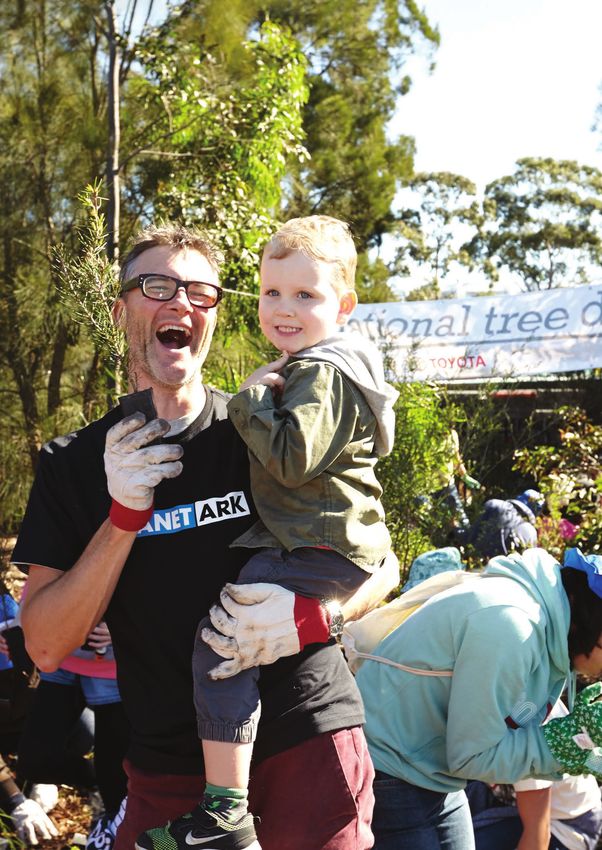
Ridgeway Bushcare combined                       Park.                                         National Tree Day event along the
their woody weed control activity                Congratulations to South Hobart               Hobart Rivulet. Hope to see you
with planting to create clusters of              Bushcare for completing works on              there!

                                                           Contact Us
                           Cover photo: Little             16 Elizabeth Street            P      03 6238 2884
                           penguin, Michael
                           Roberts.                        GPO Box 503,                   E      bushcare@hobartcity.com.au
                                                           Hobart 7001, TAS               W      hobartcity.com.au/bushcare
Bandicoot Times                                                      2                                             Winter 2021 | No 81
                                                                                                 facebook.com/cityofhobartbushcare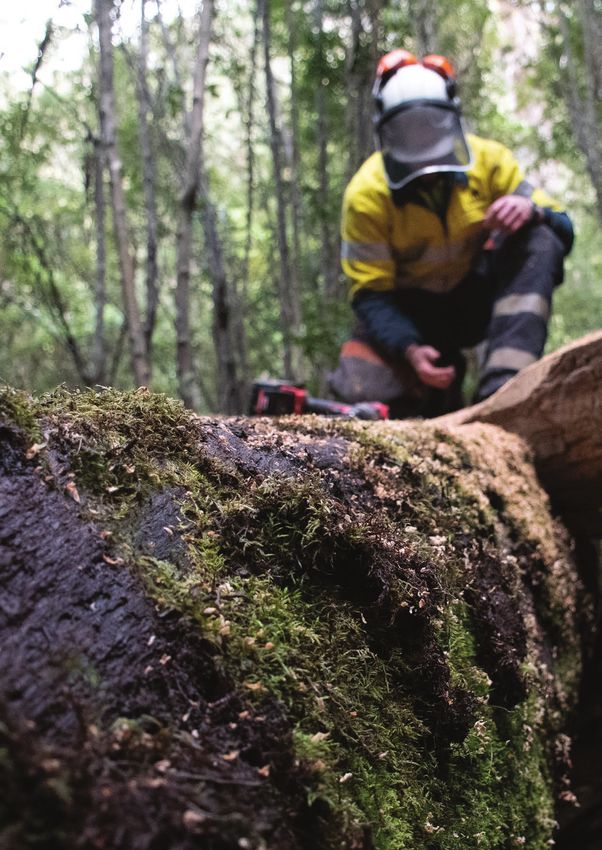
Greg helps stabilise the banks of a stream in Bicentennial Park with native plants at a recent Lambert Gully Bushcare working bee.

Our tireless Bushcare hero
honoured in Tassie awards
If you’ve walked an inch of
 Tasmania’s national parks, or
even the bushland tracks around
                                                for swift parrots, control weeds
                                                and create and maintain native
                                                bushland sanctuaries on school
                                                                                                gum woodlands in Bicentennial
                                                                                                Park.
                                                                                                The list of threatened native
Hobart, there’s a fair bet Greg                 grounds.
                                                                                                species that have benefited
Kidd was there before you.                      A jack of all trades in the                     from his work is a long one, and
He has spent an incredible two                  Bushcare field, his skills include              includes our local eastern barred
decades as a Wildcare volunteer,                weed control, remote area track                 bandicoots, swift parrots and the
and nearly as long as a Bushcare                construction and hut restoration,               Tasmanian devil.
volunteer. And his efforts, as well             lime washing, chain sawing, first
                                                aid and teaching.                               Greg is a vital cog in the local
as his patient and gentle manner
                                                                                                Bushcare machine, and we all
with fellow volunteers, have been               He has a special place in his heart             benefit from his generosity in
recognised in this year’s Tasmanian             for Bicentennial Reserve, Lambert               sharing his skills, his experience,
Volunteering Awards.                            Gully and of course kunanyi/Mt
                                                                                                and his sense of custodianship for
We’ve run the numbers at                        Wellington.
                                                                                                our natural heritage.
Bushcare and estimate Greg has                  Greg’s time in the field is priceless.
taken part in up to 400 Bushcare                                                                He is a more than worthy finalist
                                                It has led to real and long-lasting
activities over the years. A retired                                                            for this year’s Environment, Animal
                                                impacts on our environment,
teacher, he also volunteers                     including helping to significantly              Care and Conservation Volunteer
extensively at schools, and has                 reduce invasive weeds and                       Award.
helped students build nest boxes                protecting peppermint and black                 Thank you Greg.
Bandicoot Times                                                      3                                                 Winter 2021 | No 81
We’re so lucky these beautiful little penguins call the Derwent estuary home. Photo: Michael Roberts

SAFEGUARDING
OUR LITTLE DIVERS
O   nce a month, like
    clockwork, two dedicated
volunteers rise early and begin
                                               experience before starting an
                                               Honours course. Monitoring the
                                               Derwent’s little penguins was
                                                                                               monitoring work, which has
                                                                                               been running for almost two
                                                                                               decades.
a very special journey along                   the perfect opportunity.                        “Regular monitoring of the
the Derwent estuary’s western                  “We spend the day scrambling                    penguin colonies is critical to
shore.                                         over rocks, making our way                      understanding what’s happening
Their day takes them from                      through thick scrub to find each                in the local environment now
Hobart’s outskirts all the way out             nest, where we check for any                    and over time, and so that we
to Blackmans Bay and beyond.                   damage and note down whether                    can react quickly if any of our
On the way they visit tiny beach               there are eggs in the nest, if                  penguin nests are under threat,”
coves, fossick away in beach                   there are penguins present when                 says Zoe.
sheds and riverside gardens                    we visit, and note the condition                “It has also led to some really
and investigate the nooks and                  of the nest,” she says.                         important breakthroughs in our
crannies of rocky escarpments.                 “Sometimes debris has blocked                   understanding of the breeding
They carry with them a kit bag                 a nest site, or land slips can                  habits of the Derwent penguins
of pens, notepads and a desire                 damage a site, and if that’s the                – without it we would not
to help protect the smallest                   case we report it immediately so                know that as well as breeding
penguin in the world, the little               that either the City of Hobart or               in spring and summer, our
penguin.                                       Kingborough Council can fix the                 penguins also breed in winter.”
Today Zoe Bucher-Edwards has                   problem.                                        Volunteers check 20 to 30 nests
called in a favour, and instead of             “We also keep an eye out                        at each colony, and by the end
scouting penguin sites with her                for dog or cat attacks. It’s                    of the day have ticked off just
usual companion Jordy Monash,                  exhausting work, but also                       under 150 penguin nests.
her friend Meriem Daoui has                    exhilarating to know that we are                “At the end of the day I feel
volunteered to help.                           part of a project that is keeping               a huge sense of satisfaction
Zoe has just finished her degree               the Derwent’s penguins safe.”                   knowing that I have achieved
in environmental science and                   It’s impossible to underestimate                something greater than myself
wanted some real-life field                    the importance of this                          and that I am making a very

Bandicoot Times                                                     4                                           Winter 2021 | No 81
Good little divers
                                                                                      Weighing in at 1.5kg on average
                                                                                      and topping out at 30cm tall
                                                                                      little penguins are true seabirds.
                                                                                      Their flippers are wings shaped
                                                                                      for swimming and when they’re
                                                                                      in the water they can hit a top
                                                                                      speed of 6km/h. Their scientific
                                                                                      name, Eudyptula minor, means
                                                                                      ‘good little diver’ – and no
                                                                                      wonder, they can reach depths
                                                                                      of up to 70m beneath the
                                                                                      surface.
                                                                                      But it’s not easy being a
                                                                                      penguin when you share your
                                                                                      home turf with humans and
                                                                                      their idiosyncrasies, although
                                                                                      a penchant for secrecy goes a
Meriem and Zoe join Mathew Bartlett from the City of Hobart to survey local penguin   long way when you’re a little
colonies.                                                                             bird in a big city.
                                                                                      The Derwent’s little penguins
real contribution to science and              little penguins, but ongoing
                                                                                      usually nest in burrows or
the management of these little                monitoring of our colonies since
                                                                                      among rocks, but they’ve also
penguins,” says Zoe.                          2004 reveals these special little
                                                                                      been found hiding in people’s
                                              birds are only just hanging on
                                                                                      backyards or even shacking up
B-b-b-bird is the word                        for survival. The latest estimate
                                                                                      in boatsheds.
                                              puts the current Derwent
The Derwent’s penguins are                    estuary population at about 150         With each colony made up of a
a very special breed of birds.                individuals.                            small number of individuals they
Unlike many other penguin                                                             are highly vulnerable to a range
colonies in Australia, they have              Clearly, ongoing monitoring and
                                                                                      of threats, not the least of which
managed to keep a foothold in                 actions to protect our remaining
                                                                                      is roaming cats and dogs. Even
an increasingly urbanised world,              colonies are working, but the
                                                                                      venturing near a penguin colony
but the effort hasn’t come                    Derwent Estuary Program still
                                                                                      with your dog can put the little
without costs.                                considers our little penguins
                                                                                      birds in jeopardy, and even the
                                              as highly vulnerable and they
It is believed the Derwent                                                            best-behaved dog can leave a
                                              need all the help they can get to
estuary once supported more                                                           scent that attracts other dogs.
                                              ensure their numbers continue
than 1000 breeding pairs of                   to grow.                                continued next page ...

Bandicoot Times                                                    5                                            Winter 2021 | No 81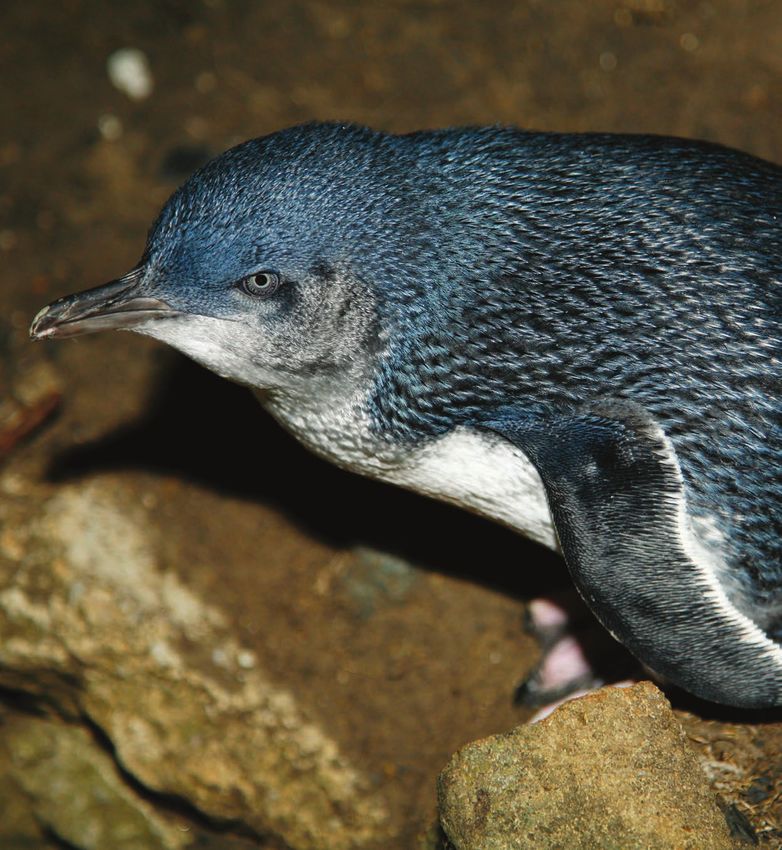
THEIR SURVIVAL
If you are near little penguins,
 please help keep them safe
by following these simple
                                     • L
                                        ook out for penguin
                                       nests before you
                                       ‘tidy up’ your backyard.
                                                                                         DEPENDS ON US!
precautionary measures:                Sometimes weeds protect
                                       nests from dogs and cats.
• Keep your dog away.
                                     • P
                                        lant prickly native plants
• D
   on’t take your dog to
                                       to keep dogs and cats away
  places with ‘No Dogs’ signs.
                                       from nests.
  Penguins might live there.
                                     • Do not go near a penguin!
• K
   eep your cat inside at night
  and if possible during the day.    Penguins are easily frightened,
                                     and they might bite if they
• K
   eep away from penguin
                                     get really scared. And even
  homes, especially at night.
                                     though they might look a little
• D
   on’t fish with gillnets or       dishevelled when moulting they
  throw away fishing                 don’t need our help, just time
  lines or tackle.                   alone.
• P
   ut litter in rubbish bins.
  Don’t use plastic bags.

And if people or dogs are           more native species has played                             the ongoing protection of the
on the beach at night their         a key role in giving the colony                            little penguins in the Derwent
presence is enough to scare off     the shelter, safety and space it                           estuary,” she says.
penguins returning home to          needed to grow.                                            “Not only do the project
feed their chicks.                  Also key to the success of                                 volunteers need passion and
In safe hands                       these colonies has been the                                commitment, which they have
                                    caring and watchful eyes                                   in spades, but they also need
Keeping the penguins safe           of neighbours, who keep a                                  to be highly disciplined and
hasn’t been easy, and relies on     lookout for threatening cats                               meticulous in how they gather
strong relationships between        and dogs, disturbance from                                 the data to ensure it meets the
councils, scientists, volunteers    beach parties and the impacts                              high standards required for the
and neighbours.                     of harsh weather patterns that                             scientific community.
Running for almost 20 years         can damage the fragile nesting                             “That’s why we’ll soon be asking
and facilitated by the Derwent      sites.                                                     for public donations to ensure
Estuary Program, the Derwent        Penguin colonies can be noisy                              our volunteers have all the
Estuary Little Penguin Project      at night, and sometimes a bit                              support they need to help keep
has been critical to ensuring       smelly, and so we thank these                              this project alive.”
the survival of the Derwent’s       neighbours dearly.
penguin colonies.                                                                              If you would like to support
                                                                                               this project and the work of its
Kingborough Council has faced       Where to from here?                                        wonderful volunteers keep an
very serious threats to its                                                                    eye on the UTAS website, which
                                    Kingborough Council’s Bridget
colonies from roaming dogs,                                                                    will soon have a donation portal
                                    Jupe has been a part of this
and at one site was forced to                                                                  via the SEA Sentinels Project at
                                    collaborative project for more
put up a dog-proof fence to                                                                    www.utas.edu.au/giving/give-
                                    than 12 years. She says the
protect penguin nests.                                                                         now.
                                    monitoring work carried out by
The City of Hobart has put in a     volunteers once a month is a                               You can also follow
huge amount of effort at one of     highly skilled undertaking, and                            @sentinelssea on Instagram
its most important nesting sites,   builds on one of the best little                           and Twitter, and the Derwent
building first ‘penguin igloos’     penguin datasets in the country.                           Estuary Program has great
and then wooden nest boxes to                                                                  information on little penguins:
                                    “The survey data generated by
provide safe breeding shelters                                                                 www.derwentestuary.org.au.
                                    the volunteers is essential to
for its birds. We are now seeing
this penguin colony, which at       The Derwent Estuary Program coordinates the Derwent Estuary Little Penguin Project and facilitates the Derwent
one point was on the brink of       Penguin Advisory Group, which includes the City of Hobart, Kingborough Council, Clarence City Council, NRM
                                    South, DPIPWE’s Marine Conservation Program, Tasmania Parks and Wildlife Service, Tasmanian Conservation Trust,
collapse, expanding in numbers.     Institute for Marine and Antarctic Studies (IMAS) and independent wildlife experts. The Penguin Advisory Group’s
                                    work includes overseeing monitoring of estuary penguins, analysing penguin data, providing advice to councils and
Stabilising the area by planting    individuals, and organising working bees.

Bandicoot Times                                               6                                                            Autumn            80
                                                                                                                            Winter 2021 | No 81
Cragcare volunteer Shumita helps clean tools after a working bee. Photo: Rosie Hohnen

Cragcare: The social climbers
C   ity of Hobart Cragcare is back
    in action with new convenors
and a whole lot of energy! After
a two-year hiatus, Cragcare has
returned to the Bushcare family
and the group is busily making
plans to care for Hobart’s much-
loved climbing sites.
Like any climber, Cragcare’s new
southern convenors Rosie Hohnen
and Michael Hitchcock have set
their sights high. The pair have
generated plenty of interest
among the climbing community
already and along with Steve
Postle have kick-started a
statewide Cragcare program, in                Cragcare volunteers planted almost 100 tussocks and shrubs at Fruehauf to help create
partnership with Wildcare.                    habitat for bandicoots and small birds. Photo: Rosie Hohnen
Here in Hobart, Cragcare aims to
provide an outlet for climbers to             popular climbing spot in South                for those on belay duties!
take on informed stewardship of               Hobart.                                       The group intends to continue
climbing routes, abseil landings,             After a successful two-year stint of          revegetating and caring for
approach tracks and link-up                   weeding, planting and picking up              Fruehauf, but their plans don’t
tracks.                                       litter, the group took a breather             stop there. Cragcare also hopes
Cragcare started in 2016 as an                while their plantings grew. Today,            to get stuck into caring for the
initiative of the Bushcare program            the former quarry on Hobart                   sensitive alpine environment on
to connect climbers with the City             Rivulet is a restored woodland,               kunanyi/Mt Wellington.
of Hobart and to work together                with flowering trees and shrubs               Keep an eye on wildcaretas.org.
caring for our local climbing                 providing habitat for local birds             au/events for upcoming Cragcare
areas – particularly Fruehauf, the            and bandicoots, as well as shade              working bees.
Bandicoot Times                                                   7                                                Winter 2021 | No 81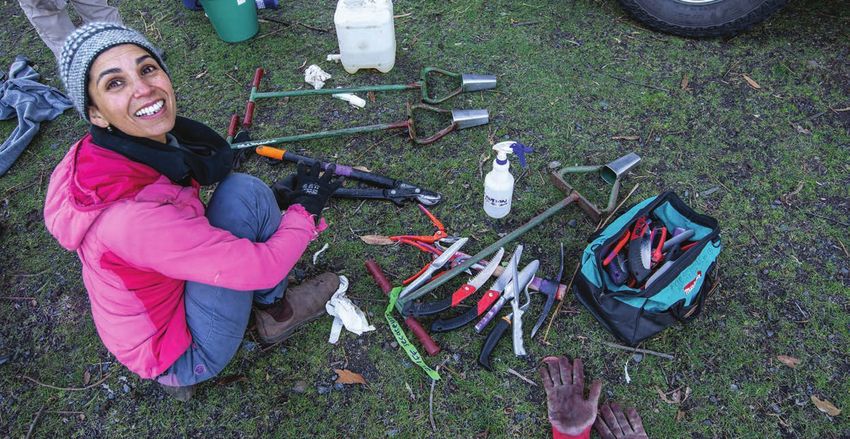
Weed Watch
                                                                                   stemmed thickets rather than
                                                                                   single trees. It supports less native
                                                                                   biodiversity than natural bushland,
                  Bec Johnson
                  Team Leader Bushcare                                             and harbours feral species such as
                                                                                   blackbirds and rabbits, reflecting
Hawthorn can be a beautiful                                                        a gradual ‘homogenisation’
                                                                                   or mixing of species between
small tree and in old Tasmanian
                                                                                   continents.
farming districts forms extensive
hedgerows. It’s a reminder of                                                      On the other hand, hawthorn
English landscapes and my English                                                  hedgerows in the UK form very
mum loved to see them crowding                                                     important habitat and are often
around the edges of bushland,            However, like many plants                 the last refuge for a range of
                                         away from their homeland,                 British birds, mammals and
especially in autumn.
                                         hawthorn lacks native predators           insects.
Hawthorn is known for its cultural       in Tasmania and has become a              It is fascinating to understand
and medicinal significance. The          weed. The slopes surrounding              the cultural and medicinal
berries (haws) are often taken as a      the Hobart Rivulet hold dense             significance of introduced plants,
natural remedy for blood pressure        thickets of hawthorn. It’s possible       but important to be aware of their
or heart health. Traditionally, the      the hawthorn originated from              impacts on the native ecology
tree was admired for its spring          hedgerows of small market                 of this country. It also makes us
flowers and life-giving qualities,       gardens on the north side of the          wonder how much knowledge
but was also thought to harbour          Rivulet.                                  we’ve lost about the cultural and
protective faeries who had to be         Growing out of its home range,            medicinal uses of indigenous
placated with offerings.                 hawthorn tends to create multi-           Tasmanian plants.

Talking trails and Trackcare                                                        Ready to grow
It’s been a big year of
 achievements for Trackcare, with
                                         We provided updates on several
                                         upcoming trail builds that the City
                                                                                    your own?
a keen crew of volunteers working
to bring two great mountain bike
                                         is planning, and chatted about
                                         the various challenges that COVID          G    etting involved in a local
                                                                                         community garden opens
                                                                                    up a world of opportunity for
trails into Hobart’s track network.      created. Those challenges have
                                         helped us shape a better program           everyone who wants to grow
In April, Trackcare held its annual                                                 their own food, while learning
catch-up event Talking Trails            with more chances for volunteers
                                         to learn key trail building skills, and    more about veggie gardening
and Trackcare, an evening of                                                        and getting to know your local
trail talk and information, and an       build solid, sustainable trails.
                                                                                    community.
opportunity for both new and             Over the past year the Trackcare
seasoned volunteers to hear about                                                   There are also significant health
                                         crew has grabbed shovels and
the program and have their say in                                                   and wellbeing outcomes from
                                         mattocks and sweated it out to
its future.                                                                         being involved in community
                                         formalise Yellow Hippo Track in            gardens.
A bunch of enthusiastic mountain         Knocklofty Reserve and Troglodyte
                                         Track in Bicentennial Park. Both           The City of Hobart has produced
bikers and trail users joined us at
                                         tracks are now part of the official        guidelines to help take you
Cascade Brewery to talk about
                                         trail network, thanks to the hard          through the process of creating
how the Trackcare program is
                                                                                    your own community garden, step
helping to get the community             work of the volunteers. Planning is
                                                                                    by step.
out onto our tracks and trails with      underway for our next sites, with
tools in hand, helping to build and      the crew heading over to improve           To get started, visit:
maintain the trails they love to         Tip Top Track, before tackling the         hobartcity.com.au/
ride.                                    formalisation of Upper Luge Track.         community-gardens

Bandicoot Times                                             8                                          Winter 2021 | No 81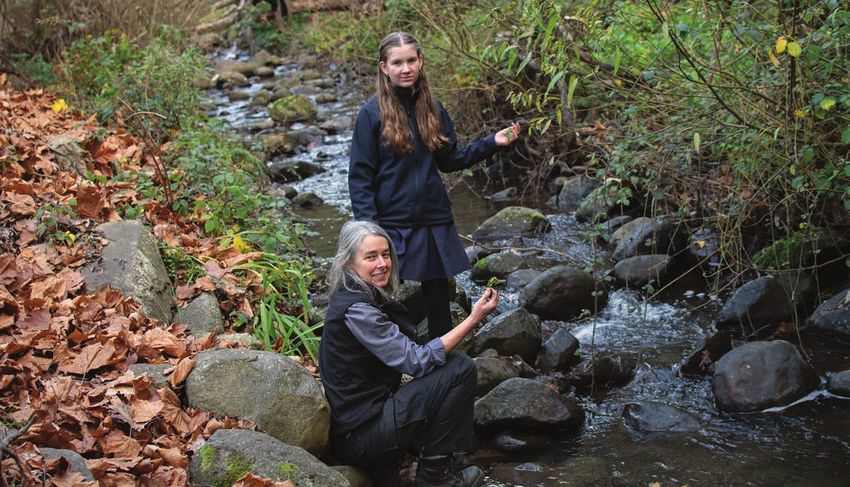
Emily and Bec investigate willow infestations on the Hobart Rivulet.

Award-winning project stems
tide of weedy willows
S  everal years ago a casual
   comment by Bushcare team
leader Bec Johnson about willow
                                                willow leaves have on water
                                                quality.
                                                                                       Research Investigation in their age
                                                                                       group and Most Promising Young
                                                                                       Scientists in their age group. They
                                                “Willows are deciduous, and so
trees took root in the active mind              unlike our native trees they drop      were the Tasmanian finalists in
of Emily Walter.                                all of their leaves every autumn –     the BHP Science & Engineering
                                                that’s millions of leaves going into   Student Awards 2021.
At the time Bec and Emily were
making bows and arrows from                     the watercourse,” Emily says.          Emily and Caitlin were two of
a willow tree at Cockle Creek.                                                         only five Australian students
                                                “This can lead to a whole range of
Years later, Emily’s idea matured                                                      selected to go to the USA in
                                                detrimental effects as the oxygen
into a national award-winning                                                          May 2021 to represent Australian
                                                is sucked out of our waterways.
project on the harm willows do to                                                      students and present their work
                                                “We tested for key water quality       at an international science fair.
waterways.
                                                indicators such as pH, turbidity       However, COVID meant no
As grade 10 students at St Mary’s               and dissolved oxygen levels,           free trip to the US but instead,
College, Emily and co-student                   and we found that willow leaves        getting up at midnight to present
Caitlin Marr submitted a STEM                   had a drastic impact on most of        their project online to judges in
project on the environmental                    these, in particular decreasing the    Arkansas. A poor swap!
impacts of crack willow on the                  dissolved oxygen.”                     The Hobart Rivulet was the source
Tasmanian landscape.                            Then followed an amazing string        of willows for their experiments.
Their project demonstrated                      of awards. Emily and Caitlin (the      Now that the willows are gone
through a controlled experiment                 crack willow team) received a gold     from some of this creek, Emily
how willow twigs grow much                      crest CSIRO award. They won            and Caitlin are keen to be
faster in water than in wet soil.               awards in the Tasmanian Science        involved in the community
They also looked into the impacts               Talent Search 2020 including Best      replanting day in August 2021.
Bandicoot Times                                                        9                                  Winter 2021 | No 81
Bandicoot Times 10 Winter 2021 | No 81
LOGAN’S RUN
L  ogan Higgins holds up an
   almost perfectly triangular
piece of rock he’s just found on
                                     The mountain and its weather
                                     have also left their marks on
                                     the North-South Track. Some
                                                                          weighing in at just under a tonne,
                                                                          were also threaded through
                                                                          the tall trees and edged into
the North-South Track as if he’s     of the larger log ramps have         place, ready for today’s final
struck gold.                         rotted away and need replacing.      adjustments.
Made of mudstone, each side is       Water moving over and through        As they engineer each new log
about 30 centimetres long, and       the track has undermined the         ramp into place you can see just
the rock is perfect for creating     integrity of some gravel-packed      how important the North-South
the dry stone walls that feature     sections.                            Track is to them. The merits of
so strongly along one of the most    And that’s why these two, as         each rock or stone used in the
popular mountain bike tracks on      well as Pete Schieck and Andrew      construction is first weighed
kunanyi/Mt Wellington.               Evans, are on the mountain           in the balance and, if found
“This sort of triangular rock is     one day after massive bags of        wanting, returned to the forest
my favourite,” he says. “It has      gravel, some weighing as much        floor. But if that rock meets
so many uses as we build stone       as 700kg, were dropped gently        their approval, like the almost
features into the track, and it      down through the forest canopy       perfectly triangular piece that lit
looks beautiful set into the wild,   by helicopter, each bag guided       up Logan’s eyes, then it will be
forested landscape.”                 into position by teams in constant   lifted into place, malleted into
                                     radio contact with the pilot.        position, and will become yet
Both Logan and Jeram Cowley,                                              another part of the track.
City of Hobart track workers,        Huge log sections, one giant
were part of the original teams
that built the North-South Track

                                        “ This
more than a decade ago, and
over the years they’ve watched                 sort of triangular rock is my
as nature has taken hold – moss
and lichen now form intricate,
                                          favourite. It has so many uses as we
green-soaked patterns across                 build stone features into the track,
many of the hand-crafted stone
walls that are a hallmark of this            and it looks beautiful set into the wild,
trail.                                       forested landscape.

Bandicoot Times                                      11                                      Winter 2021 | No 81
JOIN US ON
THE HOBART
RIVULET
Help restore Hobart Rivulet
and make a positive
difference to our local
environment. We aim to plant
1300 native seedlings, so will
need all hands on deck. Come
and collect a free native plant
to help you create your very
own habitat garden.
Everyone is welcome!
This is a COVID-safe event
and numbers are limited.
All participants must register.
WHEN
Sunday 1 August 2021,
10 am – 1 pm.
WHERE
Hobart Rivulet, between Tara
St bridge and MacFarlane St
bridge, South Hobart.
For more information
and to register visit:
hobartcity.com.au/events
Bandicoot Times 12 Winter 2021 | No 81You can also read


