MARIST BROTHERS INTERNATIONAL SCHOOL HEAD OF SCHOOL - Start Date: July 2022 Kobe, Japan marist.ac.jp
←
→
Page content transcription
If your browser does not render page correctly, please read the page content below
MARIST BROTHERS
INTERNATIONAL SCHOOL
      Kobe, Japan
  HEAD OF SCHOOL
  Start Date: July 2022
       marist.ac.jp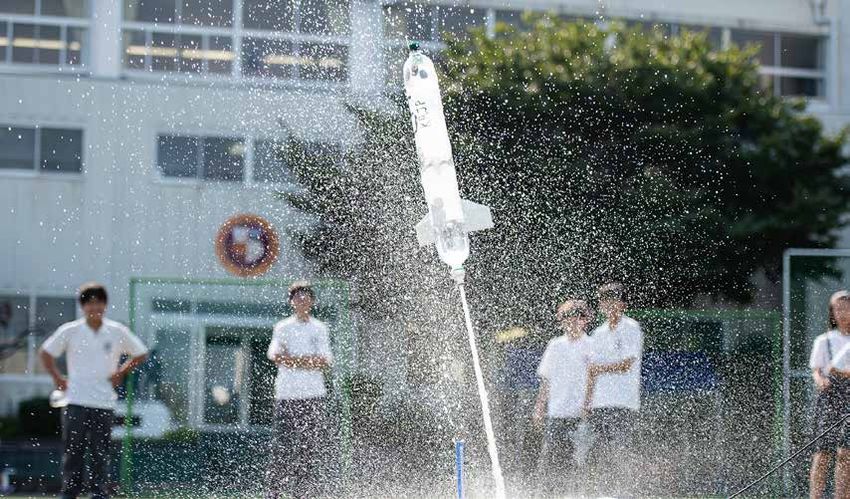
MISSION
Marist Brothers International School will make students our utmost priority and encourage them to
achieve their full potential by fostering spiritual growth, appreciating cultural diversity, and developing
a life-long love of learning. We will provide the opportunity for all stakeholders to develop a sense of
community, spirit, and pride in our school.

VISION
We educate students in a nurturing environment based on Catholic values and the traditions of the
Marist Brothers. We provide a rigorous program of study that prepares our students for higher education,
internationally and in Japan. Our students gain knowledge, communicate effectively, develop good
character, and become responsible citizens of a global society.

OVERVIEW
Marist Brothers International School (MBIS) is a private, college-preparatory school serving students from
Pre-Kindergarten to Grade 12. A small but diverse school, MBIS enrolls approximately 340 students who
collectively represent different cultural backgrounds. MBIS maintains a strong community that nurtures
a family atmosphere, and encourages warm and respectful student-teacher relationships. MBIS faculty,
staff, and families are joined by their commitment to support caring and capable students in every way
possible. MBIS graduates are widely celebrated for their drive to be engaged global citizens and their
belief in the power of cooperation; this is—in large part—due to the fact that MBIS strives to educate the
whole child and sees strong academics as one piece of what makes a complete education.

At this time, Marist Brothers International School seeks a new Head of School to assume the role in July
2022 as well as an Interim Head of School to begin July 2021. Capable candidates will be internationally
minded individuals who are senior instructional leaders with a PK-12 background. They will be strong
communicators and decision-makers that are accessible and visible. Finally, qualified candidates will be
relationship builders who unite and support all constituency groups as well as distributive leaders who
support capacity for change and improvement.

SCHOOL HISTORY
On September 17, 1951 the doors of the Marist School in Kobe opened for the first time. The student
body expanded rapidly, and soon outgrew the existing buildings and facilities. In 1955, a large new
building was constructed. At the time, it housed a two-story assembly hall with classrooms on the third
floor. Today this building still stands, and is primarily used for the school office, library, and cafeteria
facilities. By 1957, the student population passed 140, and it was time to expand again. In 1961 a new
wing was added with 14 classrooms.
                                                                                CARNEYSANDOE.COM          2
FAST FACTS
 Founded: 1951
 Enrollment: 340
 Student nationalities: 18
 Faculty and staff: 37 teachers, 3 admin, 7 staff
 Faculty holding advanced degrees: 47%
 Faculty nationalities: 9
 Operating budget: $5,432,667
 Financial aid awarded: $106,822

On January 17, 1995, the Great Hanshin earthquake struck, damaging the two classroom wings. With
amazing fortitude and determination, the community secured loans and funds that literally raised the
school from the ashes.

MBIS has remained steadfast throughout the economic recessions in Japan. The British curriculum was
replaced with an American one, and in 2017 the school added an international component, becoming
an IB World School, and offering the International Baccalaureate Diploma as a graduation pathway.
The school is ready to celebrate 70 years of service to the people of Kobe, and is poised to remain
strong for many, many years to come.

THE SCHOOL
Marist Brothers International School is committed to excellence in education, but firmly believes
that excellence means more than a rigorous curriculum. The school’s holistic approach includes a
dedication to building character and fostering a cohesive community, which, in turn, makes MBIS
students exceptional as they chart their unique courses through college and adulthood. Thus, character
and community are the heart and soul of MBIS; they are what constitute the Marist difference.

MBIS has been accredited by the Western Association of Schools and Colleges (WASC) since 1972
and became an IB World School in 2017. Additionally, MBIS is proud to be a member of and support
the East Asia Regional Council of Schools (EARCOS) and the Japan Council of International Schools
(JCIS). These accreditations carry great significance for MBIS; the school considers them an honor and
validation that its students are engaged global citizens and effective members of their communities.

                                                                            CARNEYSANDOE.COM         3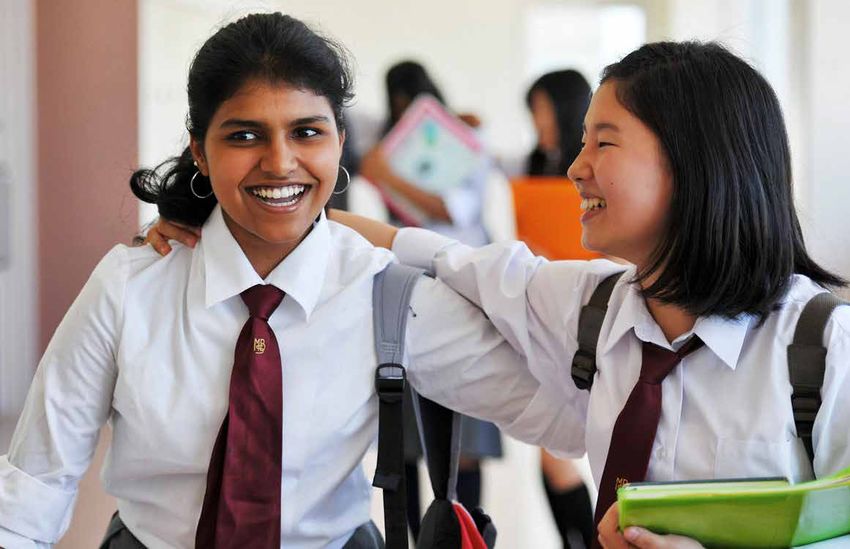
“You feel from teachers and students
 that there is heart and character.”
 – MBIS parent

ACADEMICS
Learning at MBIS begins in the Montessori classroom (ages 3-6), transitioning to the Elementary
School (Grades 1-6) and culminating in the Upper School (Grades 7-12). The whole-school, integrated
curriculum, is underpinned by the standards-based educational system (California Standards/Common
Core). Historically, the majority of MBIS students have gone on to attend colleges in North America, but
over the last decade there has been an increased diversity in placement. Recognizing this trend and
the need to fully prepare students for the demands of an interconnected world, MBIS implemented the
International Baccalaureate Diploma Program (grades 11-12) in 2017.

Montessori
The Montessori classrooms at MBIS provide highly stimulating environments where students can make
discoveries through sensory learning, develop mathematics skills, and nurture practical life skills. A
strong focus is placed on English language development through phonics, whole language building, and
group circle times conducted throughout the day. Learning is enriched through age-appropriate science,
culture, geography, and art activities. While English is the core language of instruction, Japanese-
speaking assistants provide language support and Japanese classes are part of the curriculum from
age 4. Ultimately, students learn to respect each other’s work and space and treat each other fairly.
They also take an active role in maintaining their classroom.

Elementary (Grades 1-6)
The Elementary program is designed to develop the whole child. The academic program focuses on
reading, writing, and mathematical skills, and includes comprehensive units on social studies and
science. This is complemented by courses taught by specialist teachers, including art, music, Japanese,
library, health, physical education, character education, and world religion.

                                                                             CARNEYSANDOE.COM          4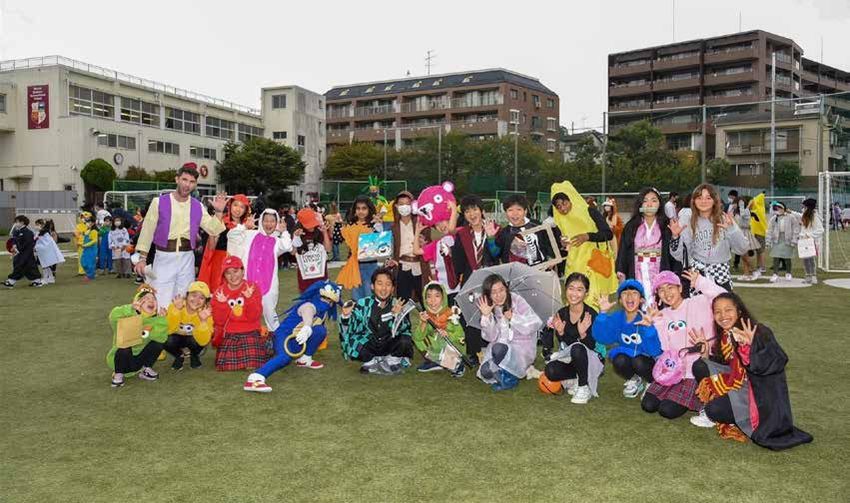
The core curriculum aligns to the California State and Common Core Standard but is adapted to suit
the needs of MBIS’s diverse, multicultural student body. Elementary grades utilize highly-regarded,
proven instructional programs, including Readers Workshop, Writers Workshop, and Words Their Way.
State-of-the-art digital assessment software is used to supplement classroom data and observations,
and provide an extra level of monitoring and support for all students.

All classes are taught in English, with the exception of Japanese language classes. Elementary
Japanese is divided into three levels, providing appropriate and engaging language learning for all
students. Intensive English Language Learner (ELL) classes are provided for students who require
additional support to reach mainstream levels of proficiency.

Upper School (Grades 7-12)
The Upper School is a rigorous—yet supportive—learning environment, intended to prepare every
student for success at college and beyond. A balanced selection of curricular and co-curricular activities
encourages the development of well-rounded individuals, strong in mind, body, and spirit. From Grade
7 to 10, students follow a typical high school academic program of core and elective classes. As with
the Elementary program, the core curriculum is based on the California State and Common Core
Standards, and adapted to suit the needs of MBIS’s diverse student body. It has also been designed to
focus on skills and content that provide a strong foundation and smooth transition into the final years of
high school, where students follow graduation pathways centered on the curriculum of the International
Baccalaureate Diploma Program.

Technology is leveraged to augment teaching and learning, rather than replace instruction. In the
Upper School, a bring-your-own-device (BYOD) program is in place for students in Grade 8 and above.
Students typically bring Apple Macbooks, but other platforms are supported. Students in lower grades
are supported with school-based laptops and iPads which are also used 1:1.

                                                                              CARNEYSANDOE.COM          5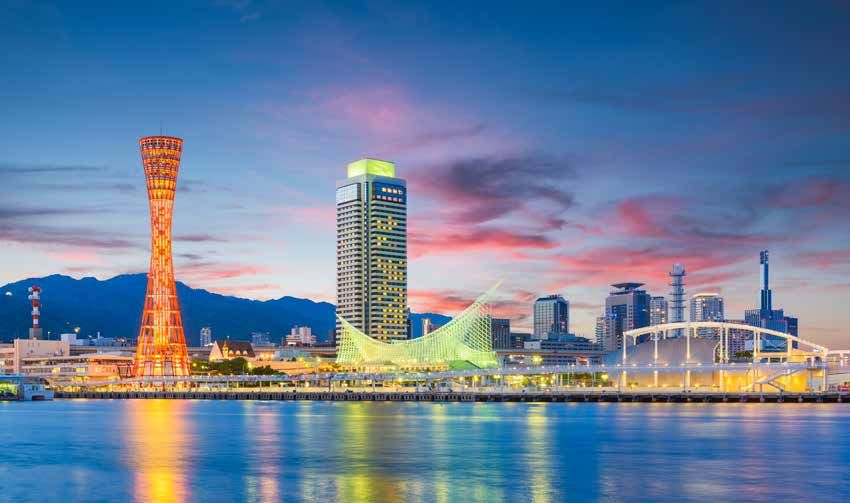
In addition to assisting with personal issues, the MBIS Guidance Counselor is available to help students
with academic and university questions. The college application process is individualized to the needs of
each student; however, general preparation classes and informational sessions, including presentations
and Q&A sessions for parents, are integrated into the school timetable and calendar. The IB Diploma
Coordinator provides guidance and support for students entering and within the IB Diploma Program.

THE ARTS
The Lower School visual art program emphasizes familiarizing students with a wide variety of studio
materials, processes, and a high level of fine motor dexterity. Through a variety of art activities, students
learn the fundamentals elements and principles of design such as line, texture, color, value, and balance.

Building off the work students have done at the Elementary level, the Upper School program develops
an in-depth understanding of the elements and principles of design. Students explore drawing, painting,
sculpture, textiles, collage, printmaking, and 3D design, while learning how to express their ideas by
using art as a form of communication.

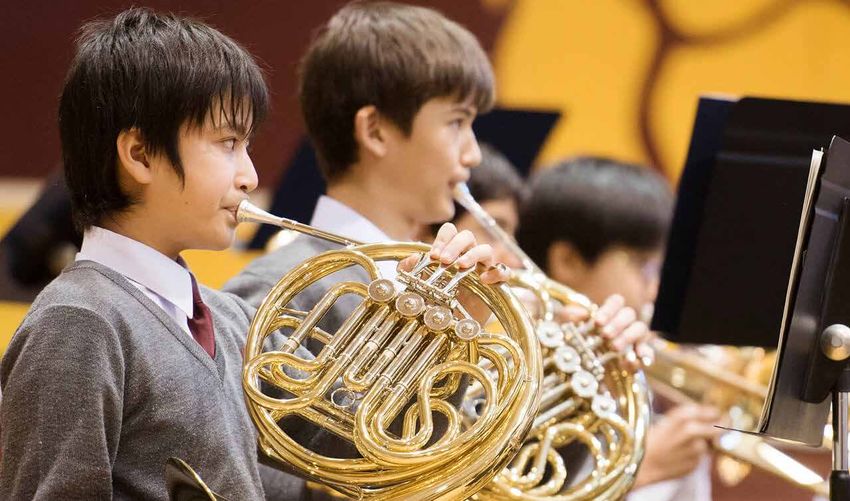
In addition to the visual arts, music plays an important role at MBIS. Concert band is a performance-
based course intended to further students’ music literacy skills through playing wind band or percussion
instruments. There are four major concerts during the year: at Food Fair, the Christmas Concert, the
Spring Concert, and on Founder’s Day. There is also an annual musical, the most recent being “The
Sound of Music.” Students also have the opportunity to learn and perform a solo at a festival.

                                                                                CARNEYSANDOE.COM           6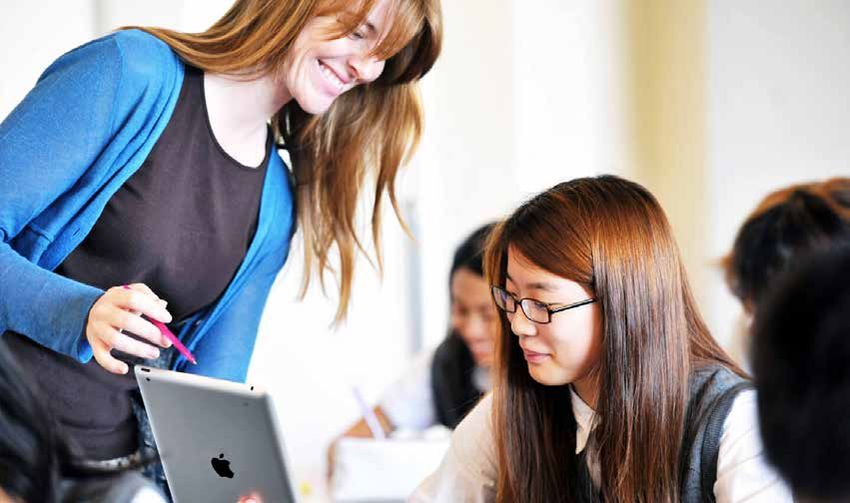
COLLEGE PLACEMENT
Recent matriculations include:

United States                     University of Southern           UK
Boston University                  California                      Canterbury Christ Church
Bucknell University               Walla Walla University            University
California State Polytechnic      Washington University            East London University
 University                       Xavier University                Imperial College London
Colgate University                                                 Middlesex University
Columbia University               Canada                           Sussex University
Florida Institute of Technology   Carleton University              Westminster University
Hawaii Pacific University         University of British Columbia
Lafayette College                 University of Ottawa             Australia
Massachusetts Institute of        University of Toronto            Bond University
 Technology                       University of Victoria           Melbourne University
Miami University                  University of Western Ontario    Queensland University of
Michigan State University         University of Windsor             Technology
New York University               York University                  University of Adelaide
Ohio State University                                              University of New South Wales
Penn State University             Japan                            University of Queensland
Portland State University         Aoyama Gakuin University         University of Sydney
Purdue University                 Asian Pacific University
San Diego State University        Doshisha University              Asia
San Francisco State University    Hyogo Iryou University           Chinese University of Hong
Savanna School of Art and         International Christian           Kong
 Design                             University                     City University of Hong Kong
State University of New York      Kansai University                Feng Chia University (Taiwan)
 (Albany)                         Keio University                  National Taiwan University
State University of New York      Kobe Jogakuin University         Singapore Management
 (Stony Brook)                    Kwansei Gakuin University         University
State University of New York      Kyoto University                 Soegijapranata Catholic
 (Buffalo)                        Kyushu University                 University (Indonesia)
Syracuse University               Lakeland College                 University of Hong Kong
University of California          Osaka University                 University of Malaya
 (Berkeley)                       Okayama University               Zhejiang Medical University
University of California (Los     Ritsumeikan University            (China)
 Angeles)                         Sophia University                The Hong Kong Polytechnic
University of Chicago             Temple University                 University
University of Cincinnati          Waseda University
University of Colorado
University of Florida             South Korea
University of Hawaii (Manoa)      Ewha Women’s University
University of Louisville          Kyung Hee University
University of Massachusetts       Seoul University
 (Amherst)                        Yonsei University
University of Pennsylvania

                                                                         CARNEYSANDOE.COM          7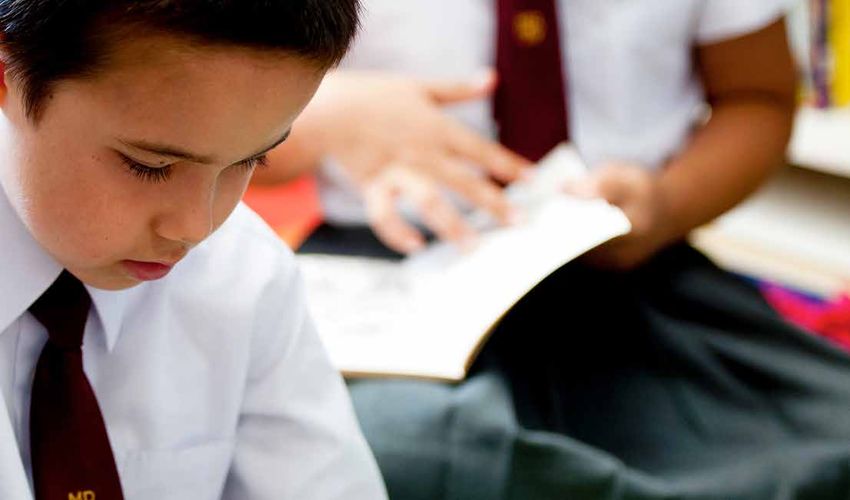
ATHLETICS
The Middle School (Grades 6-8) and Varsity (grades 9-12) programs offer opportunities to play five sports
over four seasons: volleyball, soccer, basketball, (boys) baseball and (girls) softball. As a member of
the Western Japan Athletics Association (WJAA), MBIS competes in regional leagues and tournaments
against other international and U.S.-based schools, as well as occasionally against teams from as far
away as Tokyo and Hokkaido. MBIS also hosts an annual Invitational Futsal Tournament for students in
Grades 3-6, competing against other international schools in the region.

Despite its relatively small size, the school has managed to acquire an impressive list of championships
throughout the years, while being widely recognized for good sporting conduct and good character.
Again, because MBIS is a small school, all students can “make the team” and, therefore, have the
opportunity to develop skills that will serve them well throughout their lives.

The MBIS athletic facilities include a full-size gym, well-stocked weight room, and a synthetic grass sports
field. Campus games and tournaments are organized by the very popular Marist Athletic Association
(MAA), providing opportunities for students to work behind the scenes, as well as on the court.

SCHOOL LIFE
Marist Brothers International School’s high quality academic programs are complemented by a wide
range of extracurricular and co-curricular programs, activities, and events, which serve to enrich the
learning of the whole child. Besides sports, MBIS offers a range of after-school club activities. In recent
years, these have included clubs such as skateboarding, cooking, cheerleading, glee club, calligraphy,
coding, board games, guitar, and chess. There is also a TEDx society, which has had two live events
in the last three years.
                                                                                CARNEYSANDOE.COM          8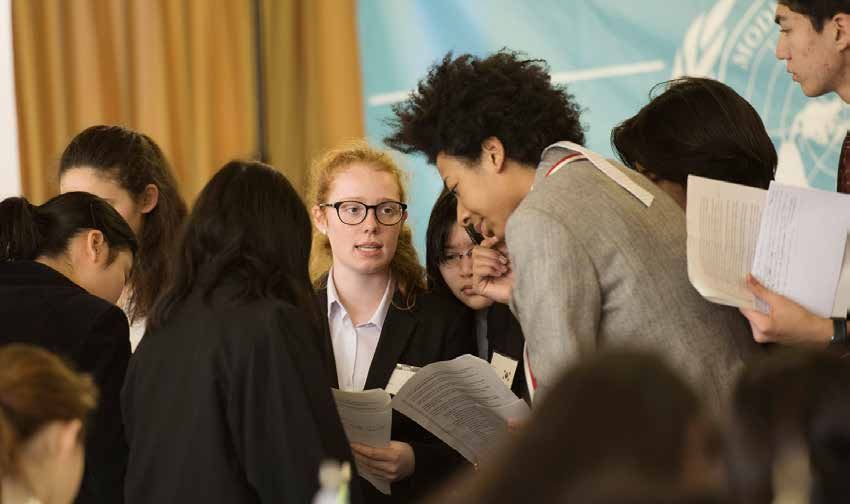
In Upper School, CAS (Creativity, Activity, and Service), part of the International Baccalaureate Diploma
Program) encourages and supports student-led activities, events, and clubs. Indeed, this has yielded
some of the most rewarding experiences at MBIS—students helping students—and includes tutoring
classes for those in the Elementary School. It has also increased the number of students who have
become active in protecting and preserving the environment.

For over 30 years, MBIS has hosted a Model United Nations (MUN) General Assembly, attended
by delegates from international schools around Japan. For many students, it becomes a keystone
program for both personal and academic growth; for some, it has been a stepping stone to a career in
international relations. In addition to the school’s own MUN, MBIS sends delegates to other events in
the Asia-Pacific region, including the Harvard MUN and Pacific MUN (Hawaii).

Other regular travel includes an annual Grade Six Camp, Upper School Ski Trip, Senior Trip, as well as
field trips in Kobe, the Kansai region, and to locations as far afield as Tokyo, Hiroshima, and Okinawa.
While MBIS sports teams typically play against other schools in the region, they too will occasionally
compete in invitational tournaments in other regions, or overseas. Likewise, while service-oriented
groups and organizations tend to have a local focus, it is not unusual for students to organize or
participate in trips or events held further afield.

The Marist Brothers International School Library is a literacy and research center serving the entire
school community. At present, the library carries over 30,000 print and digital books, newspapers, and
magazines. Combined with the school’s online subscription databases (including JSTOR, ProQuest
Central Student, World Book Online, and CultureGrams), MBIS students have access to more than 12
million academic journal articles, books, and primary sources.

                                                                             CARNEYSANDOE.COM          9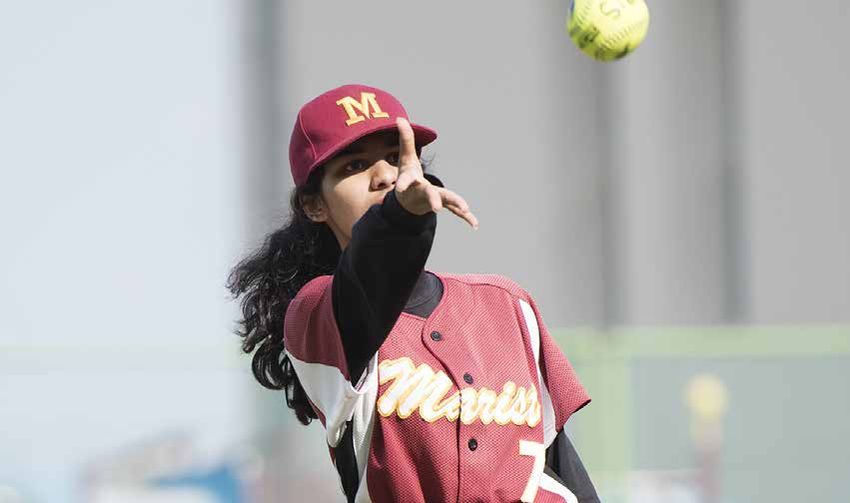
CAMPUS
Despite a relatively small campus (10,000 sq. m), MBIS features a large, modern Classroom Building,
which offers 20 classrooms spread over four levels. This building is ideally located just a few minutes’
walk from two mainline stations, and includes two science labs, two art rooms, and a guidance center.
The youngest students enjoy two large classroom spaces, purpose-built for Montessori education. The
smaller Administration Building was opened in 1951 and is due to be replaced by a state-of-the-art
building. Currently, it houses the school office, infirmary, library, faculty rooms, and cafeteria. The third
building on campus contains a large gymnasium, fitness room, and music room. The campus includes
two playgrounds, both covered with artificial grass. A small playground is adjacent to the Montessori
classrooms, and a larger field is near the Classroom Building. This field is large enough to host softball
games and is used as a playground by older students.

KOBE, JAPAN
Kobe is the capital of Hyogo Prefecture and one of Japan’s 10 largest cities. Located between the sea
and the Rokko mountain range, much of Kobe’s identity stems from the fact that it’s nestled in a spot
of exceptional natural beauty. Kobe was one of two of the first ports in Japan to open to the West and it
retains an international flavor mixing traditional and modern Japanese and Western influences.

Mount Rokko is the highest peak in the Rokko mountain range—the range that provides an iconic
green backdrop to the city of Kobe. Panoramic views of the heavily urbanized Hanshin region (Kobe
and Osaka) can be enjoyed from the mountain and are particularly spectacular around sunset. Kobe
residents are very proud of the million-dollar night view of the lights of the city and Kobe Bay. Another
instance of natural beauty in Kobe is Sorakuen. Sorakuen is a traditional Japanese landscape garden
                                                                               CARNEYSANDOE.COM           10
in the center of Kobe. Completed in the early 20th century, the garden used to be part of the residence
of Kodera Kenkichi, a former mayor of Kobe, but was opened to the public in 1941.
Kobe residents haven’t simply let mother nature create all of the city’s attractions, though. The Akashi
Kaikyo Bridge is, with a length of almost four kilometers, the world’s longest suspension bridge. Opened
in 1998, the breathtaking architectural feat spans the Akashi Strait (Akashi Kaikyo) between Kobe
and Awaji Island and is part of the Kobe-Awaji-Naruto Expressway, one of three expressways which
connect Honshu with Shikoku.
Attractions aside, Kobe makes the world a more delicious place and is revered internationally for its
beef. Kobe Beef is a prized Japanese delicacy and probably the most widely known regional specialty
food in Japan. The gastronomical delights continue in Kobe’s Nada district, which is Japan’s top sake
producing region. It has long been famous for its sake due to the availability of high-quality rice, suitable
water, and favorable weather conditions in the area.
Marist Brothers International School happens to be located in Suma, a quiet residential area in Kobe,
which captures perfectly what makes being in Kobe so pleasant: natural beauty and access. The school
is near both the mountains and the sea (and is quite close to Kobe’s most famous beach) and just down
the road from Suma Temple, a beautiful collection of temple buildings and pagodas, founded in 806.
Two train lines are within short walking distance. By the JR line, downtown Kobe is a mere 10 minute’s
commute, with a further 20 minutes to reach Osaka.
CARNEYSANDOE.COM 11OPPORTUNITIES AND CHALLENGES
The following are seen as opportunities for the next Head of School:
• Maintaining the family atmosphere that serves as the base of the strong community and that fosters
healthy relationships between all constituents in the school.
• Promoting the international nature of the school to celebrate diversity and foster cooperation,
empathy, and acceptance.
• Honoring the implicit Catholic values of the school and its mission which encourages students
“…to achieve their full potential by fostering spiritual growth, appreciating cultural diversity, and
developing a life-long love of learning.”
Challenges for the next Head of School will include:
• Developing the campus to provide the necessary facilities, infrastructure, staffing, and resources for
an optimal learning environment.
• Working in partnership with the governing body to implement best practices and stability in Board
governance for the long-term sustainability of the school.
• Co-creating a shared vision for the school that refreshes the school’s identity and energizes the
school community to have the optimal impact on students.
• Fostering a culture of trust, respect, and inclusion amongst the school community.
• Building curricular, co-curricular, and pedagogical initiatives to serve the whole child at every level
of their experience at MBIS.
• Facilitating joint WASC accreditation and International Baccalaureate (IB) evaluation visits,
scheduled for fall 2022.
• Implementing effective protocols for the systematic review of operational and resource management
functions that serve to support the mission and vision.
CARNEYSANDOE.COM 12• Utilizing ongoing coaching, mentoring, and feedback for staff to evaluate impact on learning and to
build a school of collaborative, empowered leaders.
• Exploring additional funding sources through fundraising, strategic partnerships, grant writing, and
other avenues to support the mission and create opportunities for students and staff.
DESIRED QUALITIES AND QUALIFICATIONS
• Visionary educational leader with a proven track record in PK-12.
• An experienced leader who can partner with, and strengthen, the governance structure.
• A person with high emotional intelligence who is friendly, accessible, and visible.
• Relationship builder who unites and supports all constituent groups.
• Strong communicator and decision-maker.
• A distributive leader who builds capacity for change and improvement.
• A person with experience in facility planning and the rebuilding of the physical plant.
• Internationally minded individual who has an appreciation for Japanese culture.
• A person who is familiar with best practices in technology; specifically its use and implementation
in a school setting.
TO APPLY
Interested and qualified candidates are invited to contact the consultants in confidence. Candidates will
ultimately need to submit the following materials as separate PDF documents:
• A cover letter expressing their interest in this particular position;
• A current résumé;
• A one-page statement of educational philosophy and practice;
• A list of five professional references with name, relationship, phone number, and email address of
each (references will not be contacted without the candidate’s permission) to:
Art Charles
Managing Associate, International Search
art.charles@carneysandoe.com
Karen Neitzel
Search Consultant
karen.neitzel@carneysandoe.com
Deb Welch
Senior Consultant
deb.welch@carneysandoe.com
CARNEYSANDOE.COM 13You can also read


