UNIVERSAL TRANSIT PASS - The Implications and Effects of Equitable Transit for Students - Concordia Student Union
←
→
Page content transcription
If your browser does not render page correctly, please read the page content below
INTRODUCTION

“Sed ut perspiciatis unde omnis iste natus error sit voluptatem   UNIVERSAL
accusantium doloremque laudantium, totam rem aperiam,
eaque ipsa quae ab illo inventore veritatis et quasi architecto   TRANSIT PASS
beatae vitae dicta sunt explicabo. Nemo enim ipsam voluptatem
quia voluptas sit aspernatur aut odit aut fugit, sed quia
consequuntur magni dolores eos qui ratione voluptatem
sequi nesciunt. Neque porro quisquam est, qui dolorem ipsum       The Implications and Effects of
quia dolor sit amet, consectetur, adipisci velit, sed quia non
numquam eius modi tempora incidunt ut labore et dolore            Equitable Transit for Students
magnam aliquam quaerat voluptatem. Ut enim ad minima
veniam, quis nostrum exercitationem ullam corporis suscipit
laboriosam, nisi ut aliquid ex ea commodi consequatur? Quis
autem vel eum iure reprehenderit qui in ea voluptate velit esse   Erin Campbell       Patrick Quinn
quam nihil molestiae consequatur, vel illum qui dolorem eum
fugiat quo voluptas nulla pariatur?”

                                                                  Last updated: March 2020

                                                                                  csu.qc.ca           @csumtl
TABLE OF
CONTENTS

Introduction............................................................................................................................................... 3

Methodologies.......................................................................................................................................... 4

What is the U-Pass Program?................................................................................................................ 5

Who Benefits From the U-Pass Program?........................................................................................... 5

Why should U-Pass Programs Be Put in Place?................................................................................. 6

Benefits for Universities and Transit Agencies................................................................................... 9

The University Institution and Transit Agency Benefits................................................................... 10

Quebec Sustainability Initiatives.......................................................................................................... 11

Concordia Context...................................................................................................................................12

      Indigenous Directions Action Plan................................................................................................................ 14

      Further University Contexts........................................................................................................................... 15

How should U-Pass programs be created and maintained?...........................................................16

      Implementation through Student Referendum......................................................................................... 16

      Program Advisory Committees...................................................................................................................... 18

Methods for Success...............................................................................................................................18

Further Program Recommendations...................................................................................................19

Conclusion................................................................................................................................................ 20

2                                                                                                                                        UNIVERSIAL TRANSIT PASS
INTRODUCTION

Student associations across Canada and Quebec are finding
creative ways to save students money, to reduce emissions,
and to improve public transportation on their campuses. Urban
transportation has become one of the most critical public
policy issues facing Canadian Cities, due to declining funding,
obstacles for the creation of new infrastructure and increasing
awareness of the social, economic, and environmental
problems caused by automobile usage.1 In response to these
problems, many universities and their student associations are
championing the development of sustainable and inclusive
initiatives to manage transportation needs and make transit
more affordable for students. Regarding increased equitability
through transit, the institution’s goals must consider the needs
and concerns of the student body surrounding accessibility,
mobility, sustainability, and finances.
Universal Transit Pass Programs (U-Pass) are projects that target
these principles by bringing students semesterly unlimited-
use transit pass at a significantly reduced cost. Developed
between transit authorities, educational institutions, and
student unions, the cooperative nature of this project requires
us as riders, administrators, and transit authorities to come
together to improve the quality and delivery of transit for all
passengers. Through the use of holistic approaches in the
creation of U-Pass programs, complex issues and challenges
facing commuters, such as economic stress and environmental
concerns are addressed. One of the most important objectives
for the Universal bus pass is accessibility in public transportation
infrastructure. Further, the U-Pass can better mobility for
individuals, who, as a result of financial limitations, reduced
physical mobility, or other external factors are restricted in
their abilities to navigate the city.2

UNIVERSIAL TRANSIT PASS                                                3
TABLE OF
CONTENTS

METHODOLOGIES

This report summarizes the practices, experiences, and benefits
of the Universal Transit Pass system, through the examination
of key driving factors, such as institutional commitments to
economic viability and accessibility. Providing a framework for
the creation, implementation, and outcomes of these programs,
the U-Pass will be explained in its benefits, who they affect,
why they are important to transit equity, and how they are
created. We look towards the development of these programs,
sustainability initiatives, and partnerships, through applied
research and municipal contractual agreements, allowing us to
see the effects of the U-Pass in its enhancement of operational
transit, environmental awareness, and cost savings.

4                                                                 UNIVERSIAL TRANSIT PASS

WHAT IS THE U-PASS PROGRAM?

The U-Pass is an unlimited use transit pass that is issued to         In the case of opt-out students, the common criteria include
eligible students and in some cases university staff. Charged          at least one of the following:
through a semesterly student fee, the U-Pass is able to come at a
reduced price, due to the inclusion of the majority of the student     •    tudents who are enrolled in courses that are identified as
                                                                           S
body in the program. With the exception of opt-out students,               off-campus or outside of the metropolitan area (typically
inclusive eligibility criteria cover most of the student body.             online or exchange courses).5
While the distinguishing characteristics of eligible students          •    art-time students (those who are enrolled in less than
                                                                           P
differ somewhat among programs, the most common criteria                   twelve credits in a given semester).6
for eligibility include:
                                                                       •    tudents who are registered with the university as having
                                                                           S
 •    ull-time students enrolled in twelve or more credits within
     F                                                                     a disability (in this context either the Concordia Access
     a given semester.3                                                    Centre for Students with Disabilities (ACSD), with Montreal’s
 •    ull-time students enrolled in at least one course located
     F                                                                     Paratransit system, or experiences other mobility issues
     on-campus.4                                                           (evaluated on a case-by-case basis).7

                                                                       •    tudents who are currently employed by the municipal
                                                                           S
                                                                           transit authority (for example the STM or ARTM).8

WHO BENEFITS FROM
THE U-PASS PROGRAM?

U-Passes can be highly beneficial to students, transit authorities,   America”, by Judith Bell and Larry Cohen:
and universities. If a program is supported by thorough open          “Our transportation system has an enormous impact on our way
communication and media in its creation and implementation,           of life, on the air we breathe, and the vitality of our communities.
the U-Pass will be successful in increasing student accessibility     Transportation choices influence personal decisions about
through more equitable and sustainable transit operations. This       where to live, shop, attend school, work, and enjoy leisure.”13
type of transit can be defined as environmentally conscious,
low cost, comprehensive, and caters to those with impaired            Since 1996, the number of Canadian commuters has risen by
mobility. Looking at student demographic groups, specifically         3.7 million to 15.9 million in (2016).14 Further, during the period
Statistics Canada’s youth ridership data (ages 15-24), it is shown    between 1996 and 2016, the number of commuters taking public
that almost half use a form of sustainable transportation.9           transit has grown by 59.5%15. For transit agencies, reducing the
Youth ridership is in the highest percentage of all age groups.10     cost of fares is one of the most effective ways to improve public
These proportions are, in large part, determined by accessibility     transit systems as it reduces accessibility gaps and improves
issues for people with lower levels of income and decreased           mobility for users.16 High fares disproportionately affect low-
access to vehicles11. Further, findings from a survey out of the      income families, students, and individuals who:
University of Wisconsin show that transit services influence
                                                                       •   Are most likely to rely on public transit to get around.17
students decisions of where to attend college, about 15% of
respondents indicating that having a program in place like the         •    eed to spend a higher proportion of their income on
                                                                           N
U-Pass would have a “major impact on their decision to attend              transportation costs.18
university in the future.”12
                                                                       •    an find transport costs to be barriers to education and
                                                                           C
As stressed in the text “The Transportation Prescription: Bold
                                                                           employment.19
New Ideas for Healthy, Equitable Transportation Reform in

UNIVERSIAL TRANSIT PASS                                                                                                                 5
WHY SHOULD U-PASS PROGRAMS
BE PUT IN PLACE?

U-Pass programs have been constructed with the goal of               As said by Judith Bell and Larry Cohen in the report “The
creating fair and positive transit experiences that benefit          Transportation Prescription: Bold New Ideas for Healthy,
students and the environment directly. Here, program equity          Equitable Transportation Reform in America” we must remember
is very closely tied to accessibility measurements in public         that:
transportation. Factors such as the centralized metropolitan         “Transportation policy is, in effect, health policy, environmental
nature of the university and a trip’s origin have great impacts      policy, food policy, employment policy, and metropolitan
on travel choice. As said by transportation educators, Robert        development policy, each of which bears on health
Cervero and Kara Kockelman, “A dense, mixed-use, pedestrian-         independently and in concert with the others. Long standing-
friendly downtown destination is more likely to induce transit       transportation and land use policies are at odds with serious
riding.”20
                                                                     health, environmental, and economic needs of the country and
This statement that is reflected in the 2017 Concordia Commuter      they have harmed low-income communities and communities
Habits Survey, with more people taking public transit to Sir         of colour especially. Forward-thinking transportation policies
George Williams than the Loyola campus, where driving is more        must promote healthy, green, safe, accessible, and affordable
prevalent, with only 62% of students taking transit to Loyola, as    ways of getting where we need to go.”31
opposed to the 79% of students using transit in their commute
to SGW.21
U-Pass programs aim for the reduction of air pollution, fossil
fuel consumption, and social segregation, as well as aiding
in the creation of more convenient spaces for riders.22 At the
University of British Columbia, the U-Pass has aided in the
expansion of transit services due to increased ridership. This has
allowed for greater campus accessibility through increases in the
frequency of buses and route changes.23 U-Pass programs also
allow students to experience improved mobility and reduced
costs of university attendance.24 As a means of shaping travel
demands, transit-oriented planning through U-Pass programs
have gained popularity in the past few years.25 Such programs
share the same main objectives, namely:

 •    educing the number of motorized vehicle trips made
     R
     (trip degeneration).26

 •    educing gasoline use, greenhouse gas emissions, other
     R
     air contaminants, noise pollution, and run off chemicals
     into freshwater supplies and ocean environments.27

 •   Reducing stress on parking infrastructure.28

 •   Increasing accessibility for transit users.29

 •   Improving transit agency performance.30

6                                                                                                       UNIVERSIAL TRANSIT PASS
COST AND SAVINGS OF THE U-PASS

The cost of the U-Pass varies at each university, though every
U-Pass program offers a significantly decreased cost to eligible
students. In the case of project implementation, university
bodies establish contracts with their respective local transit
authorities in order to provide reduced-fare transit to students.
This is done in part through annual or bi-annual fees paid
to the transit authority, financed through an added student
fee.32 The CSU gathered pricing information from 11 universities
across Canada. It found the average cost savings of the U-Pass
program as compared to standard (general public or non-
student) fares, is $58.62 per month or $230.88 per semester
(4 months).33
Financial considerations for students has been one of the
primary pillars in the popularity of these programs. Most often,
drops in transit ridership correlate to fare hikes. In the case of
Vancouver, ridership drops 3.8% for every 10% increase.34 Fare
increases in 1970, 1978, and 1987 were followed by a decrease
of 9 million, 7 million, and 13 million trips, respectively.35 In
order to measure the number of eligible students that use
the U-Pass regularly, the Transportation Research Board and
the Federal Transit Administration in 2018 published a report
entitled “College Student Transit Pass Program - A Synthesis of
Transit Practice”. The surveyors asked transportation agencies
and institutions the following question: “approximately what
percentage of the students have the pass?” 36 Responses from
around half of the transit agencies (53%) and one-third of
institutions (35%) reported that over 90% of eligible students
use the pass actively.37

BENEFITS FOR UNIVERSITIES
AND TRANSIT AGENCIES

U-Pass programs also help universities in attracting students
and transit authorities see increased usage and funding. For
example, there is reduced demand for on-campus parking,
improved university affordability for its students through the
avoidance of vehicle purchases, reduced travel expenses, as
well as increased student satisfaction.38 As for transit authorities,
a U-Pass program benefits it because it sees an increased
transit ridership, use of off-peak transit capacity, creation of
rider habits, and a stable form of revenue.39

UNIVERSIAL TRANSIT PASS                                                 7
QUEBEC SUSTAINABILITY
INITIATIVES

In the Major Initiatives to Foster Sustainable Mobility, written
in the Quebec Public Transit Economic Plan (2017-2018), the
provincial government has committed to, with the help of the
Autorité régionale de transport métropolitain (ARTM), the
provision of “major transportational initiatives to encourage
sustainable mobility through public transit.”40 Stating that these
initiatives consist of “preferential fares, including student fares,
which must apply to everyone regardless of age and place
of residence… the student discount must be available to all
age groups not solely to students 18 to 25 years of age, as is
currently the case.”41 The U-Pass would provide actionable
ways to realize these initiatives, through sustainable factors
like decreased transportation costs, increased ridership, and
equal transportation opportunities for all students.

8                                                                      UNIVERSIAL TRANSIT PASS
CONCORDIA CONTEXT

The association of Universities and Colleges in Canada has            Indigenous Directions Action Plan
recently established five key commitments to meet social
                                                                      Further, in “The Indigenous Directions Action Plan: Concordia’s
needs, one of which is the call to “cultivate engagement and
                                                                      Path Towards Decolonizing and Indigenizing the University
reach beyond institutions to create alliances, partnerships, and
                                                                      (2019)”, Concordia has been called to increase services for
initiatives of shared purpose”, to reduce and address climate risk,
                                                                      indigenous students. Charged with improving and creating
regulatory requirements, and issues of accessibility.42 It is under
                                                                      diverse, meaningful, and “additional services for Indigenous
these guidelines, that educational institutions can establish
                                                                      students beyond those already offered by the Aboriginal
new approaches to accessibility and offer better-operating
                                                                      Student Resource Centre ( ASRC)”, Concordia must act in ways
conditions through the revaluation of current transit funding
                                                                      that benefit Indigenous students directly.49 Specific services
and costs.43 In doing so, universities, student associations,
                                                                      requested include Indigenous-centric childcare, on-campus
municipalities, and transit authorities can work together to take
                                                                      housing, transportation access, and tutorial support.50 Services
steps that improve public transit service, increase affordability,
                                                                      that, in their application, build peer networks in the university
and better mobility in regards to transportation options on-
                                                                      and create stronger ties between Indigenous students and
campus.
                                                                      the institution, and are necessary to improve experiences
Looking at Concordia’s 2017 Commuter Habits Survey, the               within the university. When regarding the call to action for
apparent value of a potential U-Pass system at the university         transportation, the university and the Concordia Student Union
is evident. In the research of university transit patterns, a         can respond to demands for “equitable and fair accessibility to
representative group of 3,457 students, faculty, and staff            higher education”, with the improvement of transit service and
participated in the Concordia Commuter Habits Survey,                 reduction of cost barriers for Indigenous students through the
comprising 36 questions that collected respondents postal             U-Pass.51 Such programs are able to create timeline specific
codes, information about their commute, and demographic               pathways to enhancing Indigenous students’ accessibility within
information.44 The majority of these respondents marked SGW           the institution, and as a result, increase the admission, retention,
as their primary campus, the highest percentage of whom live          recruitment, and graduation rates of Indigenous students.52
between 3 and 10 km away.45 In general, the most commonly
used mode of transportation is public transit at 60%, followed by
walking and running at 15%, and single-occupancy automobile
use at 10% (during the Spring/Fall semesters).46 Out of the
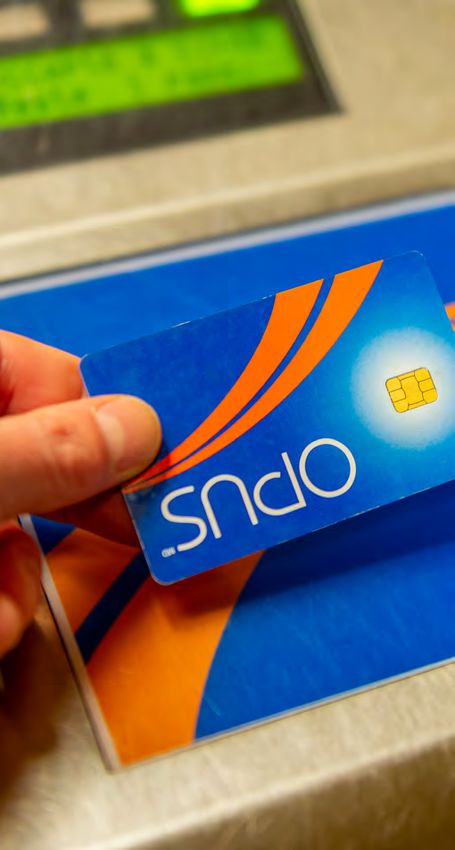
respondents, 59% have an OPUS card with fare paid monthly,
whereas 19% have a yearly OPUS or OPUS+ card.47 Overall,
students are most invested in travel time and accessibility
issues, many stating that public transit does not offer enough
flexibility and does not align with their needs.48

UNIVERSIAL TRANSIT PASS                                                                                                                 9
CONCORDIA STUDENT
UNION REFERENDUM
In April 2020, the Concordia Student Union put on the ballot Students overwhelmingly supported the CSU exploring
during their annual general election a referendum question bringing a U-Pass program to Concordia. Over 96% of members
about the Universal Transit Pass. The question was the voted in favour of the question while 4% voted no. U-Pass
following: programs are popular and well-known for their affordability
and for the impact they have on the environment. Concordians
The Universal Transit Pass (U-Pass) is a transit pass that
recognize this reality offered by the implementation of a
gives unlimited access to public transportation (STM, Exo,
U-Pass program. The results show this. Nevertheless, the
STL, etc) on a semesterly basis rather than on a monthly
Concordia students shall have a strong mandate in the
basis. The U-Pass program has the objective to: lower public
future to work with the relevant stakeholders, especially the
transportation costs for students, reduce the use of single
Association régionale de transport métropolitain (ARTM) and
rider vehicles, and improve public transportation around our
the Réseau express metropolitain (REM).
campuses. The CSU would like to explore the possibility of
implementing this program at Concordia University.
Question: Do you, as a student, agree with the Concordia
Student Union negotiating with the various stakeholders with
the understanding that a U-Pass program proposal will come
back to referendum for a vote in the future?53,54
Results
Voter Choices55 Number of Votes Percentage
Yes 1418 96.2%
No 56 3.8%
Total 1474 100%
10 UNIVERSIAL TRANSIT PASSFURTHER UNIVERSITY
CONTEXTS
When identifying successful U-Pass programs at other effective compared to regular RTC fares, costing $120.00 per
institutions, we can see the positive and sustained success of semester while a general non-student monthly pass costs
initiatives that provide practical reduced cost transportation $89.50.60
methods for students and staff. Specifically, looking at the Implemented in fall 2019, the LPU project resulted in 1,716,000
success of the University of British Columbia, whose Universal public transit trips made during this term.61 The RTC has seen a
Transit Pass was introduced in September 2003 generating 16% increase in student ridership while the STLévis recorded a
a 50% increase in transit ridership.56 The effects of the UBC rise of 18.9% since September 1st, 2019, despite a lack of ridership
U-Pass were almost immediate, by December 2003, single- increase over previous years.62 Additionally, Laval University
occupancy vehicle use was down 9% from 2002 while parking
has been able to tackle issues of parking and traffic congestion
demands have decreased by 20% (TransLink Board report, on campus through the implementation of the LPU. Over the
November 10th, 2003).57 In regards to the University of British course of the 2019 fall semester, there has been a decrease
Columbia’s Okanagan campus, the U-Pass program was of 21% in the sale of parking stickers on campus.63 Further
implemented in 2007 and renewed by a referendum held in indicating the direct benefits of the LPU as a means of reducing
2011 that was supported by 89% of students, as well as the single-occupancy vehicles on campus, the STLévis has also
Okanagan sustainability office.58 stated that the total number of daily drop-offs by bus on the
In Quebec, the Laissez-Passer Universitaire (LPU) program at the University campus has increased by 40% in the fall of 2019
Université de Laval should be noted for its success. Introduced as compared to the fall of 2018.64 Statistically, the LPU has
through a student referendum held in November 2018, the LPU helped achieve sustainability goals through more accessible
grants full-time Laval University students unlimited access to approaches to student transportation, and have demonstrated
the services of the Réseau de Transport de la Capitale (RTC) the attainability and successes of U-Pass programs within
and the Societe des Traversiers de Transport de Lévis (STLévis) institutional contexts.
for both fall and winter semesters.59 The LPU is extremely cost-
UNIVERSIAL TRANSIT PASS 11HOW SHOULD U-PASS PROGRAMS
BE CREATED AND MAINTAINED?
Implementation through Student Referendum Program Advisory Committees
These programs are most often put in place through student- The creation of an advisory committee is an integral part of the
run referenda, as they are financed by student fees. The student success of the U-Pass program. These groups work to ensure
union is responsible for raising the awareness of students the best interests of the students and proper maintenance of
through the presentation of clear and understandable the U-Pass. Committees of this nature reinforce and develop
information, preparation of the questions for said referenda, bylaws and rules concerning student affairs in ways that protect
and encouraging student participation in voting. It is the the interests and welfare of the student body as they relate
responsibility of the institution to partner with such student to the U-Pass Program. Looking at other University U-Passes,
associations regarding any changes that would affect the and their internal governing bodies, we can see the evident
student body or criteria for eligible and opt-out students. need for advisory and complaint committees to protect
Referendum questions should be clear, informative, concise, the best interests of program participants. At Simon Fraser
University, a specific program advisory committee was created
and provide background information regarding the subject.
upon the implementation of the U-Pass, with the intention
For example, the 2019 referendum question posed by the
that appointed members meet throughout the duration of
Simon Fraser Student Society on implementing a U-Pass is
the program to develop and reaffirm terms and agreements
the following:
as needed. Further, SFU’s advisory committee is responsible
The cost of a current adult transit pass for the Metro Vancouver for dispute resolution, as well as developing recommendations
region is $95.00 for one zone, $128.00 for two zones, and for program improvement as the U-Pass evolves and the needs
$174.00 for three zones. The Universal Transit Pass (U-Pass) of students change.
BC program represents a discounted transit fare for students in
Complaint and advisory committees are usually comprised of
Metro Vancouver and has existed since 2011. The current U-Pass
representatives from local transit authorities, the student body,
BC program price is $41.00 per month and has not changed
in 2 years, and the current contract is set to expire at the end university administrators, faculty, and the student union. As seen
of December 2019. There is a proposed five-year agreement at the Northern Alberta Institute of Technology, whose advisory
committee must be composed of one representative for each
between the Province of BC and TransLink to continue offering
of the parties involved. Done so to provide input on any issues
the U-Pass BC program starting January 2020, at all Metro
or dispute resolutions that arise respecting the U-Pass, with all
Vancouver public post-secondary institutions. The proposed
decisions being made by consensus. Advisory committees also
structure extends the current rate of $41.00 per month until
monitor the dissemination of information and the design and
April 30, 2020, then adjusts the rate to $42.50 per month
format of media as it relates to student awareness and program
beginning May 1, 2020. Thereafter, the rate would increase by
communications. Under these guidelines, the university and its
up to 2% per year rounded to the nearest $0.05. This structure
student associations must provide current information about
could continue past April 30, 2025, upon renegotiation or
the program and student eligibility to provide transparency.
renewal of the agreement.
Additionally, periodical surveys should be implemented
Are you in favour of continued participation in the U-Pass BC properly to monitor the program, identify potential issues,
program beginning January 1, 2020, at the following monthly and assess the experiences of students.66
rates?65
12 UNIVERSIAL TRANSIT PASSMETHODS FURTHER PROGRAM
FOR SUCCESS RECOMMENDATIONS
Sustainable program development relies on the inclusion I n the case of Concordia, we recommend the following,
and consideration of economic, social, and environmental when seeking the implementation of a Universal Transit Pass
circumstances to succeed, as it is the consideration of such program:
factors that U-Pass programs are best implemented. U-Passes
are most successful when they have the following characteristics: • A U-Pass program must include part-time students.
• Stable funding: the program must have a stable funding • ationale: Concordia students typically work jobs outside
R
source between the organizations involved. With U-Passes of the university, in some cases, full time, while going to
this is done through an additional student fee put into school. Concordia is a school that goes beyond.73 By
tuition expenses that cover the reduced cost of the pass.67 keeping a U-Pass open to part-time students, we can
continue challenging the status quo and make our school
• Broad support: a U-Pass program must have the support accessible for everyone. A U-Pass will help keep the cost
of all parties involved (students, faculty, administrators, of living and educational expenses for everyone.
municipalities, and transit agencies). It is the responsibility
of those executing the program to ensure that all parties • U-Pass program must include transit options beyond the
A
are aware of the benefits and mechanics of the program. bus and metro on the island of Montreal. A U-Pass should
This is typically done through administrators or committees include the incoming REM, commuter trains (Exo), and
dedicated to the program specifically.68 even off-island bus service (such as the Laval bus service
and the Longueuil bus service).
• I dentifiable benefits: actions must be taken to ensure the
safety, viability, and assets of the program so as to best • ationale: A U-Pass will only be useful to a huge contingent
R
serve the public. This is achieved through the dissemination of our student population if it includes the options that
of transparent information that is effectively marketed to students living in the West Island, Laval, the North Shore,
students every semester. This should be done through the and South Shore use. Furthermore, with Montreal vacancy
collection of tangible data, for example, surveys concerning rates for apartments at the lowest it has ever been, and
transit riders, parking demand, and financial affordability.69 apartment rental prices increasing, students will be looking
farther and farther away for affordable housing. This means
Partnership is an integral part of the U-Pass system. It their cost of transportation will increase. With the REM
requires the support of all parties involved to succeed. The under construction, having them included in the U-Pass
responsibilities of program maintenance differ between parties, program is a unique idea and a rare opportunity.
and as such, distinct roles for upkeep are detailed and are
usually dictated as such: • U-Pass at Concordia should also include the option for
A
students to extend their pass into the spring and summer
• ransit Agencies: Municipal transit organizations are
T semesters, rather than be available solely for the Fall and
responsible for tasks including operational planning of Winter semesters.
routes, scheduling, data collection, and fare structures.70
• ationale: The inclusion of spring and summer semesters
R
• Participating Institutions: Universities and student unions in the program has become a debate on campuses and
maintain the program through communication with transit their U-Pass programs. However, at Concordia, there is a
agencies regarding service and by influencing transit need. The university provides classes for both spring and
decisions through contractual agreements.71 summer semesters as well as conducting the “Summer at
Concordia” program, which attracts thousands of students
• S tudents: They play the most pivotal role in the
to both campuses. By giving students this option, the
implementation in the execution of these programs. Some
university has the opportunity to show its dedication to
ways in which students can and should participate are
educational affordability, and student support throughout
sitting on advisory committees, engaging with student
the entire year.
referenda, becoming involved with administrative and
program management positions, giving feedback to the
student union and transit authority, and partaking in further
U-Pass research.72
UNIVERSIAL TRANSIT PASS 13CONCLUSION
A U-Pass program at Concordia should include graduate It is under systems of unaffordable and impractical
students. transportation, that we must work collectively to dismantle
barriers within transit operation to better aid and optimize
Rationale: There are approximately 8000 graduate students
services for all users. Focuses on functional transportation
at Concordia. By adding this contingent to the undergraduate
equity must be made actionable priorities to universities,
population, the amount of people with access to a U-Pass would
student unions, and municipalities to increase resistance
total around 43000 students. Furthermore, by including the
against the social, economic, and environmental issues that
graduate population, Concordia students will be able to get
arise from inaccessible transit. Considering the impacts of
their transit pass at a lower price with the same coverage due
to larger collective bargaining power. U-Passes, as can be seen in their use at other institutions, it
is an effective tool for increasing transit use, reducing vehicle
traffic, minimizing parking demand and bettering transportation
services and affordability. Fulfilling student needs must be
actively addressed by institutions by implementing a U-Pass.
It is in the application of these programs that we as a university
can work towards a more universally accessible future in
transportation.
14
UNIVERSIAL TRANSIT PASS 14
UNIVERSIAL TRANSIT PASSTABLE 1: COMPILED
U-PASS DATA
Cost of Passes for Included Student Metropolitan
University Contact Information Cost of Pass Non-Students/ in Student Implemented Population Population
General Public Fees
Simon Fraser
upass@sfu.ca $164.00 per term 98.00$ monthly Yes 2016 34,990 377.141
University
University of Calgary supres@ucalagary.ca $151.00 per term $109.00 monthly Yes 2012 30,201 1,488,841
McMaster University webmaster @msu.ca $108.36 per term $100.00 monthly Yes 2015 30,117 527,765
University of
recept@feds.ca $98.60 per term $90.00 monthly Yes 2018 36,670 527,765
Waterloo
University of Alberta president@su.ualberta.ca $148.00 per term $94.25 monthly Yes 2017 37,830 1,411,945
University of Ottawa president@sfuo.ca $212.71 per term $119.50 monthly Yes 2011 42,587 1,411,945
Carleton University csua@csuaonline.ca $207.52 per term $119.50 monthly Yes 2012 30,416 1,377,016
University of $160.75 per
umsu@umsu.ca $102.05 monthly Yes 2016 29,987 825,713
Manitoba semester
University of British $164.00 per
office@ubcsuo.ca $98.00 monthly Yes 2015 65,012 377,414
Columbia semester
Sherbrooke
feus@usherbrooke.ca $120.60 per term $80.80 monthly Yes 2004 35,000 218,633
University
Western University info@westernusc.ca $84.58 per term $95.00 monthly Yes 2002 28,386 527,765
Université Laval aelies@aelies.ulaval.ca $120.00 per term $97.00 monthly Yes 2019 43,000 422,993
UNIVERSIAL TRANSIT PASS 15TABLE 2: MEAN COST SAVINGS
OF U-PASSES
Simon Fraser University ** does not have post-secondary rate University of Alberta
1 month 4 months 1 month 4 months
U-Pass cost $41.0074 $164.0075 U-Pass cost $37.0090 $148.0091
Regular cost $95.00 (Zone 1)76 $392.00 (Zone 1)77 Regular cost $94.2592 $377.0093
Savings on U-Pass $57.00 $228.00 Youth/Post-secondary
$86.0094 $344.0095
cost
Saving on U-Pass
$57.25 $229.00
(regular)
University of Calgary ** does not have post-secondary rate
1 month 4 months
University of Ottawa ** does not have post-secondary rate
U-Pass cost $37.2578 $151.0079
1 month 4 months
Regular cost $109.0080 $436.0081
U-Pass cost $64.7196 $212.7197
Savings on U-Pass $71.25 $285.00
Regular cost $119.5098 $478.0099
Savings on U-Pass $54.79 $265.29
McMaster University ** does not have post-secondary rate
1 month 4 months
Carleton University ** does not have post-secondary rate
U-Pass cost $27.09 82
$108.36 83
1 month 4 months
Regular cost $100.00 84
$400.00 85
U-Pass cost $51.88100 $207.52101
Savings on U-Pass $72.91 $242.20
Regular cost $119.50102 $478.00103
Savings on U-Pass $67.62 $270.48
University of Waterloo
1 month 4 months
University of Manitoba
U-Pass cost $24.6586 $98.6087
1 month 4 months
Regular cost $90.0088 $360.0089
U-Pass cost $26.68104 $160.75105
Savings on U-Pass $62.53 $250.12
Regular cost $102.05106 $408.20 107
Post-Secondary Cost $75.00 $300.00
Post-secondary cost $81.65108 $326.60109
Savings on U-Pass
$50.35 $201.40 Savings on U-Pass (from
(Post-secondary) $54.97 $219.88
post-secondary rate)
Savings on U-Pass Savings on U-Pass (from
$65.35 $261.40 $75.37 $301.48
(regular)
regular)
16 UNIVERSIAL TRANSIT PASSTABLE 2: MEAN COST
SAVINGS WITH U-PASSES CONT.
University of British Columbia
**does not have a post-secondary rate
1 month 4 months
U-Pass cost $41.00110 $164.00111
Regular cost $98.00 (zone 1)112 $392.00 (Zone 1)113
Savings on U-Pass $57.00 $228.00
Sherbrooke University
1 month 4 months
U-Pass cost $30.15114 $120.60115
Regular cost $80.80116 $323.20117
Reduced cost (21 and
$61.20118 $244.80119
under)
Savings on U-Pass
$31.05 $124.20
(reduced)
Savings on U-Pass
$50.65 $202.60
(regular)
Western University
1 month 4 months
U-Pass cost $21.15120 $84.58121
Post-Secondary $82.00122 $328.00123
Regular cost $95.00124 $380.00125
Savings on U-Pass
$73.85 $295.40
(regular)
Savings on U-Pass
$60.85 $243.42
(post-secondary)
UNIVERSIAL TRANSIT PASS 17ENDNOTES
1. Senft, Graham. “U-Pass at the University of British Columbia: Lessons 15. Statistics Canada. “Journey to Work: Key Results from the 2016
for Effective Demand Management in the Campus Context.” In Census.” The Daily, 29 Nov. 2017, https://www150.statcan.gc.ca/n1/
Emerging Best Practices in Urban Transportation Planning (A) Session daily-quotidien/171129/dq171129c-eng.html. p.1.
of the 2005 Annual Conference of the Transportation Association of
Canada, 1–22, 2005. p.2 16. Seider, Jeffrey. Value Case for Accessible Transit in Canada. Canadian
Urban Transit Association, 2013. 1-40. p.29.
2. Seider, Jeffrey. Value Case for Accessible Transit in Canada. Canadian
Urban Transit Association, 2013. 1-40. p.2. 17. The Effect of Bus Fare Increases on Low-Income Families. Report.
Urban Transport Group, 2010. 1-15. p.1.
3. U-Pass Funding Agreement, Dalhousie University - The University
of King’s College - The Halifax Regional Municipality, September 18. The Effect of Bus Fare Increases on Low-Income Families. Report.
9, 2005. p.4. Urban Transport Group, 2010. 1-15. p. 1.
4. Universal Pass Agreement, The City of Ottawa - University of Ottawa 19. The Effect of Bus Fare Increases on Low-Income Families. Report.
- Student Federation of the University of Ottawa - Graduate Students Urban Transport Group, 2010. 1-15. p. 1.
Association, September 1, 2015. p. 2.
20. Cervero, Robert, and Kara Kockelman. “Travel demand and the 3Ds:
5. U-Pass Agreement, The Student Union of the Nova Scotia College of Density, diversity, and design.” Transportation research. Part D,
Art and Design - The Halifax Regional Municipality, May 20, 2015. p. 6. Transport and environment 2.3 (1997): 199-219. p.201.
6. Universal Pass Agreement, The City of Ottawa - Carleton University, 21. Wang, Yuwei. “Summary Report of the 2017 Commuter Habits Survey”
September 1, 2015. p. 2. Survey. Department of Environmental Health and Safety, Concordia
University.
7. U-Pass Transit Agreement, The Northern Alberta Institute of Technology
Students Association - The City of Edmonton - Strathcona County - 22. Cervero, Robert, and Kara Kockelman. “Travel demand and the 3Ds:
The City of St. Albert - The City of Spruce Grove - The City of Fort Density, diversity, and design.” Transportation research. Part D,
Saskatchewan - The City of Leduc, September 1, 2017. p. 5. Transport and environment 2.3 (1997): 199-219. p.199.
8. U-Pass Transit Agreement, The Northern Alberta Institute of Technology 23. Falcon, Kevin. BC Transit Annual Report 2007/08. 2008, pp. 1–56, BC
Students Association - The City of Edmonton - Strathcona County - Transit Annual Report 2007/08. p.7.
The City of St. Albert - The City of Spruce Grove - The City of Fort
24. Han, Dahai, et al. “Elements of Successful Universal Student Transit
Saskatchewan - The City of Leduc, September 1, 2017. p.5.
Pass Programs from Planning to Implementation: A Benchmark Study.”
9. Statistics Canada. “Journey to Work: Key Results from the 2016 Transportation Research Record 2673.4 (2019): 833-843. p.834.
Census.” The Daily, 29 Nov. 2017, https://www150.statcan.gc.ca/n1/
25. Cervero, Robert, and Kara Kockelman. “Travel demand and the 3Ds:
daily-quotidien/171129/dq171129c-eng.html.
Density, diversity, and design.” Transportation research. Part D,
10. Statistics Canada. “Journey to Work: Key Results from the 2016 Transport and environment 2.3 (1997): 199-219. p.199.
Census.” The Daily, 29 Nov. 2017, https://www150.statcan.gc.ca/n1/
26. Cervero, Robert, and Kara Kockelman. “Travel demand and the 3Ds:
daily-quotidien/171129/dq171129c-eng.html.
Density, diversity, and design.” Transportation research. Part D,
11. Statistics Canada. “Journey to Work: Key Results from the 2016 Transport and environment 2.3 (1997): 199-219. p.199.
Census.” The Daily, 29 Nov. 2017, https://www150.statcan.gc.ca/n1/
27. Olsen, Dave. “17 Reasons (or More) to Stop Charging People to Ride
daily-quotidien/171129/dq171129c-eng.htm.
the Bus.” The Tyee. July 05, 2007. Accessed June 13, 2019. https://
12. Yu, Jie, and Edward Beimborn. College Student Transit Pass Programs. thetyee.ca/Views/2007/07/05/NoFares1/.
No. Project J-7, Topic SA-42. 2018. p.13.
28. Senft, Graham. “U-Pass at the University of British Columbia:
13. Bell, Judith E., and Larry Cohen. The transportation prescription: bold Lessons for effective demand management in the campus
new ideas for healthy, equitable transportation reform in America. context.” Emerging Best Practices in Urban transportation
PolicyLink, 2009. 1-36. p.9. Planning (A) Session of the 2005 Annual Conference of
the Transportation Association of Canada. 2005. 1-22. p.16
14. Statistics Canada. “Journey to Work: Key Results from the 2016
Census.” The Daily, 29 Nov. 2017, https://www150.statcan.gc.ca/n1/
daily-quotidien/171129/dq171129c-eng.html. p.1.
18 UNIVERSIAL TRANSIT PASSENDNOTES
29. Olsen, Dave. “17 Reasons (or More) to Stop Charging People to Ride 43. Bilodeau, Leanne, Jackie Podger, and Alaa Abd-El-Aziz. “Advancing
the Bus.” The Tyee. July 05, 2007. Accessed June 13, 2019. https:// Campus and Community Sustainability: Strategic Alliances in Action.”
thetyee.ca/Views/2007/07/05/NoFares1/. International Journal of Sustainability in Higher Education15, no. 2
(2014): 157-68. doi:10.1108/ijshe-06-2012-0051. p.160.
30. Yu, Jie, and Edward Beimborn. College Student Transit Pass Programs.
No. Project J-7, Topic SA-42. 2018. 1-140. p.1. 44. Wang , Yuwei. 2017 Concordia Commuter Habit Survey Report . 2019,
pp. 1–19, 2017 Concordia Commuter Habit Survey Report. 1-19. p.1.
31. Bell, Judith E., and Larry Cohen. The transportation prescription: bold
new ideas for healthy, equitable transportation reform in America. 45. Wang , Yuwei. 2017 Concordia Commuter Habit Survey Report . 2019,
PolicyLink, 2009. 1-36. p.9. pp. 1–19, 2017 Concordia Commuter Habit Survey Report. 1-19. p.2.
32. Senft, Graham. “U-Pass at the University of British Columbia: Lessons 46. Wang , Yuwei. 2017 Concordia Commuter Habit Survey Report. 2019,
for Effective Demand Management in the Campus Context.” In pp. 1–19, 2017 Concordia Commuter Habit Survey Report. 1-19. p.9.
Emerging Best Practices in Urban Transportation Planning (A) Session
of the 2005 Annual Conference of the Transportation Association of 47. Wang , Yuwei. 2017 Concordia Commuter Habit Survey Report. 2019,
Canada, 1–22, 2005. p.6. pp. 1–19, 2017 Concordia Commuter Habit Survey Report. 1-19. p.17.
33. See table 2: Mean Cost Savings of U-Pass. 48. Wang , Yuwei. 2017 Concordia Commuter Habit Survey Report. 2019,
pp. 1–19, 2017 Concordia Commuter Habit Survey Report. 1-19. p.17.
34. Olsen, Dave. “17 Reasons (or More) to Stop Charging People to Ride
the Bus.” The Tyee. July 05, 2007. Accessed June 13, 2019. https:// 49. The Indigenous Directions Action Plan: Concordia’s Path Towards
thetyee.ca/Views/2007/07/05/NoFares1/. Decolonizing and Indigenizing the University. 2019, pp. 1–38. p.26.
35. Olsen, Dave. “17 Reasons (or More) to Stop Charging People to Ride 50. The Indigenous Directions Action Plan: Concordia’s Path Towards
the Bus.” The Tyee. July 05, 2007. Accessed June 13, 2019. https:// Decolonizing and Indigenizing the University. 2019, pp. 1–38. p.26.
thetyee.ca/Views/2007/07/05/NoFares1/.
51. The Indigenous Directions Action Plan: Concordia’s Path Towards
36. Yu, Jie, and Edward Beimborn. College Student Transit Pass Programs. Decolonizing and Indigenizing the University. 2019, pp. 1–38. p.26.
No. Project J-7, Topic SA-42. 2018. 1-140. p.26.
52. The Indigenous Directions Action Plan: Concordia’s Path Towards
37. Yu, Jie, and Edward Beimborn. College Student Transit Pass Programs. Decolonizing and Indigenizing the University. 2019, pp. 1–38. p.26.
No. Project J-7, Topic SA-42. 2018. 1-140. p.26.
53. The referendum question may be accessed here (https://web.archive.
38. Han, Dahai, et al. “Elements of Successful Universal Student Transit org/web/20200420200142/https:/elections.csu.qc.ca/candidates/).
Pass Programs from Planning to Implementation: A Benchmark Study.”
54. One of the authors of this report, Patrick Quinn, was the drafter of the
Transportation Research Record 2673.4 (2019): 833-843. p.834.
referendum question.
39. Han, Dahai, et al. “Elements of Successful Universal Student Transit
55. The referendum question may be accessed here (https://web.archive.
Pass Programs from Planning to Implementation: A Benchmark Study.”
org/web/20200420200142/https:/elections.csu.qc.ca/candidates/).
Transportation Research Record 2673.4 (2019): 833-843. p.834.
56. Senft, Graham. “U-Pass at the University of British Columbia: Lessons
40. Public Transit: Major Initiatives to Foster Sustainable Mobility.
for Effective Demand Management in the Campus Context.” In
Gouvernement Du Québec, 2017, pp. 1–64. p.1.
Emerging Best Practices in Urban Transportation Planning (A) Session
41. Public Transit: Major Initiatives to Foster Sustainable Mobility. of the 2005 Annual Conference of the Transportation Association of
Gouvernement Du Québec, 2017, pp. 1–64. p.27. Canada, 1–22, 2005. p.13.
42. Bilodeau, Leanne, Jackie Podger, and Alaa Abd-El-Aziz. “Advancing 57. Senft, Graham. “U-Pass at the University of British Columbia: Lessons
Campus and Community Sustainability: Strategic Alliances in Action.” for Effective Demand Management in the Campus Context.” In
International Journal of Sustainability in Higher Education15, no. 2 Emerging Best Practices in Urban Transportation Planning (A) Session
(2014): 157-68. doi:10.1108/ijshe-06-2012-0051. p.158. of the 2005 Annual Conference of the Transportation Association of
Canada, 1–22, 2005. p.13.
UNIVERSIAL TRANSIT PASS 19ENDNOTES
58. Bilodeau, Leanne, Jackie Podger, and Alaa Abd-El-Aziz. “Advancing 71. Yu, Jie, and Edward Beimborn. “College Student Transit Pass Programs”.
Campus and Community Sustainability: Strategic Alliances in Action.” No. Project J-7, Topic SA-42. 2018. 1-140. p.40.
International Journal of Sustainability in Higher Education15, no. 2
(2014): 157-68. doi:10.1108/ijshe-06-2012-0051. p.162. 72. Yu, Jie, and Edward Beimborn. College Student Transit Pass Programs.
No. Project J-7, Topic SA-42. 2018. 1-140. p.40.
59. “Laissez-Passer Universitaire (LPU).” Laissez-Passer Universitaire |
Étudiants Actuels | Université Laval, www.ulaval.ca/etudiants-actuels/ 73. “Go Beyond.” Go Beyond, www.concordia.ca/about/strategic-
etudes/laissez-passer-universitaire. directions/9-directions/go-beyond.html.
60. “Fare Schedule.” RTC, www.rtcquebec.ca/en/rates-and-purchase/ 74. “What Is the U-Pass BC Program?” Simon Fraser University: Engaging
rates-and-passes/fare-schedule. the World , www.sfu.ca/students/upass/general.html.
61. “Le LPU Génère plus De 1,7 Million De Déplacements En Une Session.” 75. “What Is the U-Pass BC Program?” Simon Fraser University: Engaging
ULaval Nouvelles, 13 Jan. 2020, nouvelles.ulaval.ca/vie-universitaire/ the World , www.sfu.ca/students/upass/general.html.
le-lpu-genere-plus-de-17-million-de-deplacements-en-une-session-
76. “Fare Pricing.” TransLink, www.translink.ca/Fares-and-Passes/Fare-
171f4fc5cb5301b2309cc0942b1c038a.
Pricing.aspx.
62. “Laissez-Passer Universitaire (LPU).” Laissez-Passer Universitaire |
77. “Fare Pricing.” TransLink, www.translink.ca/Fares-and-Passes/Fare-
Étudiants Actuels | Université Laval, www.ulaval.ca/etudiants-actuels/
Pricing.aspx.
etudes/laissez-passer-universitaire.
78. “Who Is Eligible?” Ancillary Services, 8 Aug. 2019, www.ucalgary.ca/
63. “Le LPU Génère plus De 1,7 Million De Déplacements En Une Session.”
ancillary/parking/upass/who-eligible.
ULaval Nouvelles, 13 Jan. 2020, nouvelles.ulaval.ca/vie-universitaire/
le-lpu-genere-plus-de-17-million-de-deplacements-en-une-session- 79. “Who Is Eligible?” Ancillary Services, 8 Aug. 2019, www.ucalgary.ca/
171f4fc5cb5301b2309cc0942b1c038a. ancillary/parking/upass/who-eligible.
64. “Le LPU Génère plus De 1,7 Million De Déplacements En Une Session.” 80. “Calgary Transit.” Fares & Passes | Calgary Transit, www.calgarytransit.
ULaval Nouvelles, 13 Jan. 2020, nouvelles.ulaval.ca/vie-universitaire/ com/fares-passes.
le-lpu-genere-plus-de-17-million-de-deplacements-en-une-session-
171f4fc5cb5301b2309cc0942b1c038a. 81. “Calgary Transit.” Fares & Passes | Calgary Transit, www.calgarytransit.
com/fares-passes.
65. “Referenda.” Simon Fraser Student Society, http://sfss.ca/elections/
referenda/. 82. “FAQs.” FAQs | MSU McMaster Students Union, www.msumcmaster.
ca/info/faqs.
66. Han, Dahai, et al. “Elements of Successful Universal Student Transit
Pass Programs from Planning to Implementation: A Benchmark Study.” 83. “FAQs.” FAQs | MSU McMaster Students Union, www.msumcmaster.
Transportation Research Record 2673.4 (2019): 833-843. p.840. ca/info/faqs.
67. Han, Dahai, et al. “Elements of Successful Universal Student Transit 84. “Fares.” Burlington Transit, www.burlingtontransit.ca/en/fares/Fares.
Pass Programs from Planning to Implementation: A Benchmark Study.” aspx.
Transportation Research Record 2673.4 (2019): 833-843. p.834.
85. “Fares.” Burlington Transit, www.burlingtontransit.ca/en/fares/Fares.
68. Han, Dahai, et al. “Elements of Successful Universal Student Transit aspx.
Pass Programs from Planning to Implementation: A Benchmark Study.”
86. Fares.” Grand River Transit, www.grt.ca/en/fares-passes/fares.aspx.
Transportation Research Record 2673.4 (2019): 833-843. p.834.
87. Fares.” Grand River Transit, www.grt.ca/en/fares-passes/fares.aspx.
69. Han, Dahai, et al. “Elements of Successful Universal Student Transit
Pass Programs from Planning to Implementation: A Benchmark Study.” 88. Fares.” Grand River Transit, www.grt.ca/en/fares-passes/fares.aspx.
Transportation Research Record 2673.4 (2019): 833-843. p.834.
89. Fares.” Grand River Transit, www.grt.ca/en/fares-passes/fares.aspx.
70. Yu, Jie, and Edward Beimborn. “College Student Transit Pass Programs”.
No. Project J-7, Topic SA-42. 2018. 1-140. p.40. 90. “U-Pass.” University of Alberta, www.ualberta.ca/current-students/
upass.html.
20 UNIVERSIAL TRANSIT PASSENDNOTES
91. “U-Pass.” University of Alberta, www.ualberta.ca/current-students/ 111. “U-Pass / Compass Card.” UBC Campus & Community
upass.html. Planning,planning.ubc.ca/transportation/transit/u-pass-compass-
card.
92. “U-Pass.” University of Alberta, www.ualberta.ca/current-students/
upass.html. 112. “Fare Pricing.” TransLink, www.translink.ca/Fares-and-Passes/Fare-
Pricing.aspx.
93. “U-Pass.” University of Alberta, www.ualberta.ca/current-students/
upass.html. 113. “Fare Pricing.” TransLink, www.translink.ca/Fares-and-Passes/Fare-
Pricing.aspx.
94. “U-Pass.” University of Alberta, www.ualberta.ca/current-students/
upass.html. 114. “Laissez-Passer Universitaire (LPU).” Laissez-Passer Universitaire
|Étudiants Actuels | Université Laval, www.ulaval.ca/etudiants-actuels/
95. “U-Pass.” University of Alberta, www.ualberta.ca/current-students/ etudes/laissez-passer-universitaire.
upass.html.
115. “Laissez-Passer Universitaire (LPU).” Laissez-Passer Universitaire
96. “U-Pass.” University of Alberta, www.ualberta.ca/current-students/ |Étudiants Actuels | Université Laval, www.ulaval.ca/etudiants-actuels/
upass.html. etudes/laissez-passer-universitaire.
97. “U-Pass.” University of Alberta, www.ualberta.ca/current-students/ 116. “Tariffs - Urban Transport .” STS, www.sts.qc.ca/117-Tarifs---
upass.html. Transporturbain.html.
98. “Fares.” Fares | OC Transpo, www.octranspo.com/en/fares/. 117. “Tariffs - Urban Transport .” STS, www.sts.qc.ca/117-Tarifs---
Transporturbain.html.
99. “Fares.” Fares | OC Transpo, www.octranspo.com/en/fares/.
118. “Tariffs - Urban Transport .” STS, www.sts.qc.ca/117-Tarifs---
100. “Student Experience Office.” U-Pass, carleton.ca/upass/
Transporturbain.html.
costinformation/.
119. “Tariffs - Urban Transport .” STS, www.sts.qc.ca/117-Tarifs---
101. “Student Experience Office.” U-Pass, carleton.ca/upass/
Transporturbain.html.
costinformation/.
120. “Bus Pass.” Society of Graduate Students (SOGS), Western
102. “Fares.” Fares | OC Transpo, www.octranspo.com/en/fares/.
University,sogs.ca/buspass/.
103. “Fares.” Fares | OC Transpo, www.octranspo.com/en/fares/.
121. “Bus Pass.” Society of Graduate Students (SOGS), Western
104. “U-Pass.” UMSU, umsu.ca/services-and-support/u-pass/. University,sogs.ca/buspass/.
105. “U-Pass.” UMSU, umsu.ca/services-and-support/u-pass/. 122. “Fares.” London Transit Commission, www.londontransit.ca/faresand-
passes/fares/.
106. “Winnipeg Transit.” Transit Fares, winnipegtransit.com/en/fares/say-
hello-to-peggo/transit-fares/. 123. “Fares.” London Transit Commission, www.londontransit.ca/faresand-
passes/fares/.
107. “Winnipeg Transit.” Transit Fares, winnipegtransit.com/en/fares/say-
hello-to-peggo/transit-fares/. 124. “Fares.” London Transit Commission, www.londontransit.ca/faresand-
passes/fares/.
108. “Winnipeg Transit.” Transit Fares, winnipegtransit.com/en/fares/say-
hello-to-peggo/transit-fares/. 125. “Fares.” London Transit Commission, www.londontransit.ca/faresand-
passes/fares/.
109. “Winnipeg Transit.” Transit Fares, winnipegtransit.com/en/fares/say-
hello-to-peggo/transit-fares/.
110. “U-Pass / Compass Card.” UBC Campus & Community
Planning,planning.ubc.ca/transportation/transit/u-pass-compass-
card.
UNIVERSIAL TRANSIT PASS 21You can also read


