YEAR 10 CURRICULUM HANDBOOK | 2019 - Peninsula Grammar
←
→
Page content transcription
If your browser does not render page correctly, please read the page content below
YEAR 10 CURRICULUM HANDBOOK | 2019
“ T H E AV E R A G E
 T E AC H E R
 EXPLAINS
 CO M P L E X I T Y;
 THE GIFTED
 T E AC H E R R E V E A L S
 S I M P L I C I T Y. ”
 R O B E R T B R A U LT

YEAR 10 CURRICULUM | 2019

YEAR 10 CURRICULUM | 2019

CONTENTS

Welcome to Year 10                   2   CORE SUBJECTS                     9    YEAR 10 ELECTIVES              19
Heads of Department                  3   English                           9    Design Technology               19
                                         Foundation English               10    Drama - One Way or Another     20
Y E A R 1 0 AT P E N I N S U L A         English as an additional language 10   Enterprise and Entrepreneurship 20
GRAMMAR                              5
                                         English as an additional language      Food Technology                 21
The Year 10 curriculum               5   - extra English                   11   International Commerce (Asia
Victorian Certificate of Education   6   Mathematics                       11   and the States)                 21
Selecting a study program            6   Core Mathematics (Methods)        11   Languages – Chinese (VSL)      22
Pathways to Years 11 & 12            6   Core Mathematics (Further)        12   Languages - French             22
Assessment and Reporting             7   Core Mathematics (Advanced)       12   Media Studies -
                                         Foundation Mathematics            13   The Next Big Thing             23

                                         Recommended pathways for               Music Production and Technology
                                         Mathematics, Years 10-12         14    - The Music Entrepreneur        23

                                         Science                           15   Photography                    24

                                         History                           15   Studio Arts                    24

                                         Geography                         16   Visual Communication Design    25

                                         Social Justice and Ethics         16
                                         Inspiring Me Investigations       17
                                         Physical Education                17   VC E E L E C T I V E S         27
                                                                                Biology Unit 1                 27
                                                                                Biology Unit 2                 28
                                                                                Business Management Unit 1     28
                                                                                Business Management Unit 2     29
                                                                                Computing Unit 1               29
                                                                                Computing Unit 2               30
                                                                                Legal Studies Unit 1           30
                                                                                Legal Studies Unit 2            31
                                                                                Psychology Unit 1               31
                                                                                Psychology Unit 2              32

                                                                                        2019 | YEAR 10 CURRICULUM    1
WELCOME TO
    YEAR 10

    The Senior Years begin with a bridge, one that links the       revision, discussion, debate and working with others. At
    Middle Years to the VCE. Study Scores, Study Designs,          times it calls for action and detail and facts; at other times
    ATARs, SACs and GATs all sound like jargon and acronyms        it calls for listening, contemplating big ideas and periods
    from another world. Yet, on closer inspection, they are        of quiet reflection. Good learners understand that with
    not so foreign. Be it Year 10 or Year 12 one thing remains     curiosity and effort they grow and their knowledge and
    constant: learning.                                            skills continue to develop. They understand that learning is
                                                                   about constant development and growth.
    Learning can start tentatively. It covers ground that is
    unfamiliar. If it was merely a repeat of what we already       As students enter the Senior Years it is important to
    knew, we would call it ‘knowing’. Learning is something        remember that a genuine love of learning, a growth mind-
    altogether different. At its best it is a magnificent voyage   set, the ability to work with and learn from others and the
    of discovery, a journey from the known to the unknown          capacity to work independently will serve them as well in
    and we are taken to a place unimagined where we find           Year 10 as it will in their VCE. The experiences, knowledge
    passion and inspiration. It is not an easy journey. There      and skills that our students gained in the middle years
    are moments of frustration and bewilderment, periods           have formed the platform for successful senior studies.
    where no progress appears to be made. Then, somehow,           The School moves from the Victorian Curriculum in Year
    it all makes sense and we see the world with a renewed         10 to the Victorian Certificate of Education at Year 11 and,
    clarity and purpose. Learning starts with questions…then       although the VCE has all sorts of expectations attached
    it raises more questions. Learning is infinite - and that is   to it, one is simply a progression from the other. Both
    what makes it so marvellous. The best minds understand         have key skills and knowledge. Both have assessments
    that true learning is never stagnant, never conquered and      to monitor student progress. Both are based on good
    never definitive. There are always new discoveries to be       learning practice. The key difference, of course, is that the
    made, new perspectives to consider and new ideas to            VCE has examinations. Typically, these carry 50 per cent
    contemplate.                                                   of a student’s overall grade and they do take on a greater
                                                                   significance. This - and the sheer volume of work expected
    As much as the knowledge and skills that they take from        at Year 12 - is the key difference at the senior level.
    their learning, great learners learn about themselves.
    They understand what motivates them, what makes them           When students sit the examination at the end of Year 12
    curious and what they need to work on to be successful.        what do they bring to this task? They bring an inquiring
    They know their weaknesses as well as their strengths.         mind, a love of learning and a curiosity that has been
    They discover that they can adapt to new situations and        shaped by hard work, self-discipline and an understanding
    they begin to understand the ability they have when            of what makes them the learner that they are. They bring
    they put their mind to it. Successful learners learn how       not one year’s work to their VCE examination, they bring a
    to learn. They understand that learning is a skill that has    young lifetime.
    to be worked at; despite appearances, it does not come
                                                                   Year 12 is not another world; it is merely the other end of
    naturally. It starts with an open mind, curiosity and an
                                                                   the bridge.
    attitude that the world is a wondrous place worth finding
    out about. It requires all sorts of ways of thinking and
    imagining but it also calls for discipline, self-discipline.
    It requires effort and persistence; it involves targets and    Craig Townsend
    timelines and strategies and deadlines. It requires study,     Deputy Head of Pre Senior and Senior Years – Learning
                                                                   and Curriculum

    The Year 10 Curriculum handbook is produced for students       The handbook draws on some information published
    of Peninsula Grammar entering Year 10 in 2019, and their       by the Victorian Curriculum and Assessment Authority
    parents. The handbook provides detailed information            (VCAA). The VCAA website at www.vcaa.vic.edu.au is a
    regarding the academic program offered at Year 10,             further source of information regarding the VCE.
    including descriptions of the elective choices from which
                                                                   Questions regarding the Year 10 academic program or
    students are invited to build their program of study.
                                                                   the VCE at Peninsula Grammar can be directed to the
    Information is also provided regarding the development of
                                                                   following Year 10 staff.
    pathways for study through to Years 11 and 12.

2 YEAR 10 CURRICULUM | 2019
YEAR 10 STAFF
                                             MRS SHARYN CURTIS
                                             Head of Senior Years -
                                             9788-7638
                                             scurtis@peninsulagrammar.vic.edu.au

             MR CRAIG TOWNSEND                                               DR JOSIE MONRO
             Deputy Head of Senior Years -                                   Year 9 Program Coordinator
             Learning and Curriculum                                         9788-7790
             9788-7620                                                       jmonro@peninsulagrammar.vic.edu.au
             ctownsend@peninsulagrammar.vic.edu.au

             MRS SUE BARLOW                                                  MR BLAIR COOPER
             Head of Pre Senior Year 9                                       Director of VCE Studies
             9788-7670                                                       9788-7851
             sbarlow@peninsulagrammar.vic.edu.au                             bcooper@peninsulagrammar.vic.edu.au

H E A D S O F D E PA R T M E N T

            MRS CLARE COLLINS                                               MISS JACINTA RICHARDS
            Head of Art, Technology and Design                              Head of Humanities
            ccollins@peninsulagrammar.vic.edu.au                            jrichards@peninsulagrammar.vic.edu.au

            MR GARY VAN DEN ELSEN                                           MME AXELLE MATHOT
            Head of Chinese                                                 Head of French
            gvandenelsen@peninsulagrammar.vic.edu.au                        amathot@peninsulagrammar.vic.edu.au

            MR ROBERT SAVIGE                                                MS LINDA HOGAN
            Head of Classroom Music                                         Head of EAL
            rsavige@peninsulagrammar.vic.edu.au                             lhogan@peninsulagrammar.vic.edu.au

            MR SAM MACKIE                                                   MR DAVID GOW
            Head of Drama                                                   Head of Physical Education
            smackie@peninsulagrammar.vic.edu.au                             dgow@peninsulagrammar.vic.edu.au

            MR BRENDAN CIAN                                                 REV. MARK SWEENEY
            Head of English                                                 Head of Religious Education
            bcian@peninsulagrammar.vic.edu.au                               msweeney@peninsulagrammar.vic.edu.au

            MRS ANITA SAAVEDRA                                              MS TRACEY FLETCHER
            Head of Commerce                                                Head of Science
            asaavedra@peninsulagrammar.vic.edu.au                           tfletcher@peninsulagrammar.vic.edu.au

            MR DARREN SMYTH
            Head of Mathematics
            dsmyth@peninsulagrammar.vic.edu.au

                                                                                              2019 | YEAR 10 CURRICULUM   3
“ YO U W I L L E I T H E R
 S T E P F O R WA R D
 I N TO G R OW T H , O R
 YO U W I L L S T E P
 B A C K WA R D I N T O
 S A F E T Y. ”
 A B R A H A M M A S LOW

4 YEAR 10 CURRICULUM | 2019
YEAR 10 AT
PENINSULA GRAMMAR

THE YEAR 10 CURRICULUM                                        ELECTIVE BLOCK
                                                              Students may select one of the following options:
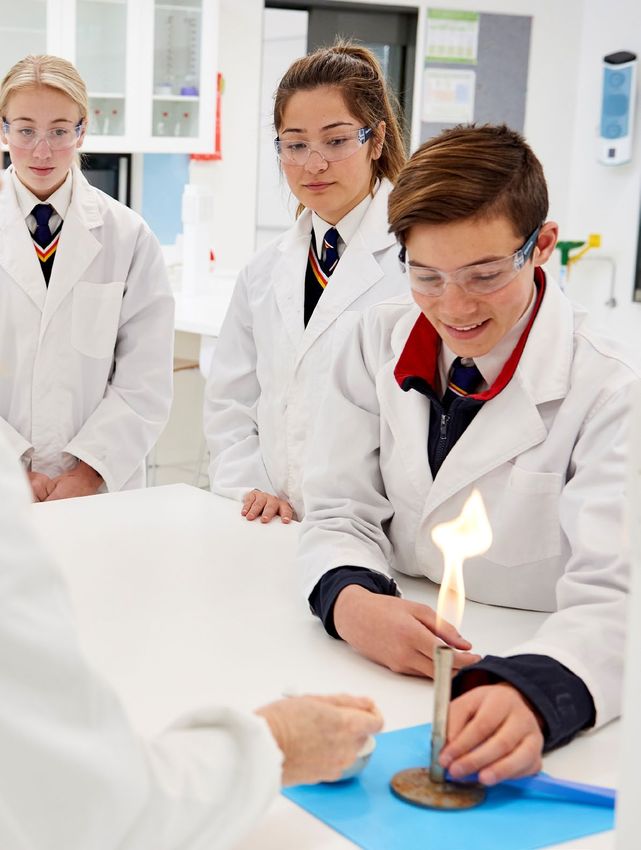
The Year 10 academic program
                                                              -- A Unit 1 & 2 subject:
consolidates core skills in the disciplines                             Biology
of English, Mathematics, Science and                                    Business Management
Humanities and offers students the chance                               Legal Studies
                                                                        Computing
to begin to specialise in areas of ability                              Psychology
and interest. As they pursue their passions
                                                              -- A language
and interests and develop the skills to                                *Chinese
make them robust, independent learners,                                French
students begin to build their pathways                                 * studied through correspondence through the
through to the final years of secondary                                Victorian School of Languages
education.                                                    -- Two additional electives including:
                                                                       Design Technology
Fundamentally, the Year 10 academic program offers                     Drama - One Way or Another
students the opportunity to build a program of study that              Enterprise and Entrepreneurship
interests them and meets their needs.                                  Food Technology
                                                                       International Commerce (Asia and the States)
The Year 10 program provides students with:
                                                                       Languages - Chinese (VSL)
-- A strong foundation in preparation for entering the VCE             Languages - French
   program                                                             Media Studies - The Next Big Thing
                                                                       Music Production and Technology - The Music
-- A variety of learning experiences and environments that             Entrepreneur
   challenges them to develop vital 21st Century learning              Photography
   skills                                                              Studio Arts
-- Opportunities to explore their passions and interests               Visual Communication Design.
   through subjects linked to future pathways.
                                                              YEAR 10 INSPIRING ME INVESTIGATIONS
Victorian Certificate of Education (VCE) subjects are
offered to students for the first time, allowing those with   The Year 10 Inspiring Me Investigations seek to capture
clearly identified pathways to pursue their interests.        the imagination and interest of our Year 10 students. They
                                                              are centred on problem finding and problem solving skills
CORE SUBJECTS                                                 inspiring our students to think actively, logically, socially
                                                              and creatively. It is these four themes that form the
Over the course of the year all students will study the       structure of our Inspiring Me Investigations offering many
following core subjects:                                      possibilities for individual growth.
-- English                                                    Each term our students will undertake a study in one of the
-- Mathematics                                                four themes. They will be challenged to generate a driving
                                                              question based on an interest or area of passion and then
-- Science                                                    look to create a solution.
-- Humanities                                                 Where students are passionate about a subject they will
                                                              make the most of opportunities presented and will strive to
-- Ethics and Social Justice
                                                              do their very best in all that they undertake. In Year 10 we
-- Inspiring Me Investigations                                know this is particularly important.

-- Physical Education.

                                                                                            2019 | YEAR 10 CURRICULUM         5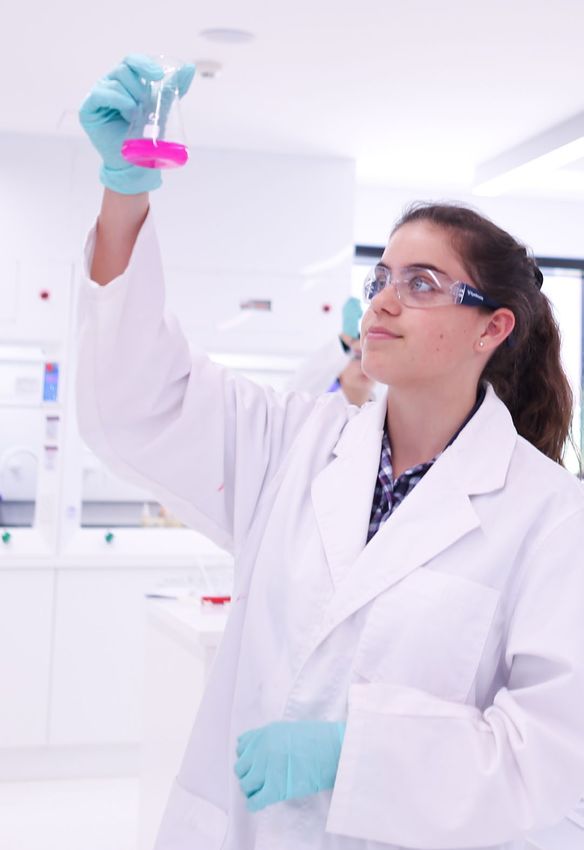
VCE PREPARATION                                                 -- Student interest; classes which do not attract sufficient
                                                                       student interest will not proceed
    Our Year 10 program is focused on preparing our students
    for their VCE journey through the development of robust,        -- Teacher availability; some classes may not be able to
    independent learners ready for the challenge of VCE. All           proceed if a suitable teacher is not available
    Pathways in Year 10 lead to the option of studying a Unit 3
                                                                    -- Timetabling that might prevent students from studying
    & 4 Subject in Year 11. This means that all Year 10 students
                                                                       certain combinations of subjects
    who attain an overall B average have the option to study
    one of the available Unit 3 & 4 subjects in Year 11 and will    -- Resource limitations; some subjects have a quota
    have the skills and learning habits required to succeed.           restriction due to limitations on the resources required
                                                                       eg. PDT Furniture, CAD CAM.
    The Inspiring Me electives enable our students to be better
    prepared for VCE. VCE study designs now place a stronger        In selecting their study program for Year 10 at Peninsula
    focus on problem solving, application of knowledge and          Grammar students should:
    self-directed investigations. Our rigorous Inspiring Me
    electives aim to develop these skills in our students by        -- Select studies in which they are interested
    exposing them to similar forms of assessment and tasks          -- Consider what electives they studied in Year 9 and
    prior to their VCE journey.                                        whether they would like to continue or broaden their
                                                                       study in that area
                                                                    -- Consider whether they will undertake a Unit 3 and 4
    T H E V I C T O R I A N C E R T I F I C AT E                       study at Year 11 and what the appropriate pathway is to
                                                                       that study (Note: this may or may not be by selecting
    O F E D U C AT I O N                                               a VCE subject as some Unit 3 & 4 subjects can be
    The Victorian Certificate of Education is a two-year (four         undertaken without the Unit 1 & 2)
    semester) program of study, in Years 11 and 12. Typically,      -- Be aware of the implications of any requirements of
    Year 11 subjects are designated Units 1 and 2 studies, whilst      tertiary courses or careers in which the student is
    the Year 12 subjects are designated Units 3 and 4. At              interested
    Peninsula Grammar, some students elect to undertake a
    Unit 1 and 2 study in Year 10.                                  -- Ensure that they are performing at a high level
                                                                       across their academic program with a B average or
    Five Unit 1 and 2 studies will be made available to Year 10        demonstrating growth across the current academic year
    students in 2019: these are Biology, Business Management,          if they wish to undertake a Unit 1 and 2 study in Year 10.
    Computing, Legal Studies and Psychology.
    Each VCE unit lasts for one semester and represents
    approximately 100 hours of work, of which 50-60 hours is
    class time.
                                                                    PAT H WAY S T O Y E A R S 1 1
                                                                    AND 12
    Units 3 and 4 are designed to be studied by Year 12
    students but these studies may also be undertaken by            For most students the Year 10 elective program offers
    students in Year 11. Units 3 and 4 must be taken as a           the opportunity to pursue areas of passion and interest.
    sequence.                                                       Others may undertake a VCE Unit 1 & 2 subject in Year 10.
                                                                    Students will, under normal circumstances, only elect to
    To complete the Victorian Certificate of Education
                                                                    study a VCE Unit 1 & 2 subject at Year 10 if they intend to
    students must satisfactorily complete a minimum of 16
                                                                    study the VCE Unit 3 & 4 of the same subject in Year 11.
    units of study which include a minimum of three units from
    the English group, which must include Units 3 and 4 of an       The selection of two Unit 3 and 4 studies in Year 11 is not
    English.                                                        advised: the workload, together with the student’s four
                                                                    other subjects, can compromise a student’s achievement.
                                                                    Six studies in Year 12 is a very heavy study program and is
                                                                    very rarely advised.
    S E L E C T I N G A S T U DY
    P R O G R A M AT Y E A R 1 0                                    Restrictions may be applicable to a student’s desired study
                                                                    plan due to:
    Students select between one and two electives to study          -- Timetable restrictions (particularly for students
    at Year 10; the precise number will be dependent upon              who request a change to their study program at the
    whether they select to study a language or a VCE elective          commencement of the new year)
    which are offered as full year subjects.
                                                                    -- Class size limitations in some subjects.
    Initially, students will be asked to select their preferred
    four electives and four alternate electives. Every endeavor     The following table provides the options and pathways for
    will be made to enable students to study their desired          students to the study of a Unit 3 & 4 at Year 11.
    electives; however, in some instances, students may instead
    be offered one or more of their alternate selections.
    All subjects are offered subject to the following
    constraints:

6 YEAR 10 CURRICULUM | 2019
YEAR 10                                                              YEAR 11

  VCE Biology Units 1 & 2                                              VCE Biology Units 3 & 4

  VCE Business Management Units 1 & 2                                  VCE Business Management Units 3 & 4

  Advanced Mathematics                                                 VCE Further Mathematics Units 3 & 4

  VCE Computing Units 1 & 2                                            VCE Computing: Informatics Units 3 & 4

  VCE Psychology Units 1 & 2                                           VCE Psychology Units 3 & 4

  VCE Legal Studies Units 1 & 2                                        VCE Legal Studies Units 3 & 4

*VCE Media Studies is only available to select students as       ASSESSMENT OF VCE SUBJECTS
part of a Year 12 course.
                                                                 Unit 1 and 2 assessment is graded on a 10 point scale,
A common study program at Year 10, 11 and 12 would               A+ - E in accordance with other subjects at Year 10. This
consist of:                                                      grading is for learning purposes and provides students
                                                                 with an indication of their learning progress and level of
-- Year 10 - one Unit 1 & 2 study, or, appropriate preparation
                                                                 achievement; a student’s achievement at the Unit 1 and 2
   subject
                                                                 level has no bearing on the calculation of their Australian
-- Year 11 - one Unit 3 & 4 (a continuation from Year 10);       Tertiary Admission Rank (ATAR) that is calculated at the
   five Unit 1 & 2 studies                                       end of Year 12 based on their achievement in Unit 3 & 4
                                                                 subjects.
-- Year 12 - five Unit 3 and 4 studies.
                                                                 SATISFACTORY COMPLETION – S AND N
                                                                 All VCE subjects require specified learning outcomes
ASSESSMENT AND REPORTING                                         to be achieved; outcomes for each respective VCE
                                                                 study are listed together with the subject information
Grades in Year 10 are awarded according to the following
                                                                 in the pages that follow. If a student completes work
standards. Students are assessed on their performance
                                                                 set by their teachers and demonstrate that the learning
against the objectives and assessment criteria established
                                                                 outcomes have been achieved they will be deemed to have
for each task.
                                                                 satisfactorily completed the unit. This decision is made by
                                                                 the School and reported to the Victorian Curriculum and
 A+              90 – 100%       Well above the relevant         Assessment Authority (VCAA) as S (satisfactory) or N (not
                                 State achievement               satisfactory). Students receive an S or an N for all units, be
 A               80 – 89%
                                 standard                        they at the 1 & 2 or 3 & 4 level.
 B+              75 – 79%        Above the relevant State        It should be noted that the awarding of an S or N for a
                                 achievement standard            given unit is entirely discreet from a student’s level of
 B               70 – 74%
                                                                 achievement.
 C+              65 – 69%        Meeting the relevant State
                                 achievement standard            INDIVIDUAL LEARNING PLANS
 C               60 – 64%
                                                                 Students assigned an Individual Learning Plan (ILP) work
 D+              55 – 59%        Approaching the relevant        to their own set of objectives based on their unique
                                 State achievement               learning needs. These students receive ‘starred’ grades
 D               50 – 54%
                                 standard                        indicating their performance against their ILP objectives as
                                                                 set out in the table below:
 E+              40 – 49%        Not yet at the relevant
                                 State achievement
 E               0 – 39%                                          A*        Outstanding performance against ILP
                                 standard

 NA                              Not Assessed                     B*        Exceeding expectations of ILP

                                                                  C*        Meeting expectations of ILP

NA (Not Assessed) is recorded where a student has been            D*        Approaching expectations of ILP
unable to complete a task due to absence, illness or other
extenuating circumstances.                                        E*        Not yet meeting expectations of ILP

All assessment tasks are created whereby a ‘C’ is
considered the proficiency of skills expected at that given
year level according to the relevant Victorian curricula.

                                                                                                 2019 | YEAR 10 CURRICULUM        7
“A N Y F O O L C A N
 K N O W. T H E
 POINT IS TO
 U N D E R S TA N D . ”
 ALBERT EINSTEIN

8 YEAR 10 CURRICULUM | 2019
CORE
SUBJECTS

ENGLISH

SUBJECT DESCRIPTION                                              ASSESSMENT

The year in English is divided into three key sections. The      -- Analysing and Presenting Arguments: analysing how
first section covers the Australian novel Jasper Jones and          language is used to support arguments in the media;
develops students’ skills in analysing and exploring texts          persuasive writing task; contribution to an inter-class
through essay writing. In the middle section, students              debate;
thematically explore a ‘Big Idea’. There are three ‘Big Ideas’   -- Big Ideas: understanding of the individual texts;
for students to choose from: Dystopia; Survival; and Reality        engagement with the key ideas; comparison of the texts
Vs Fantasy. For their respective theme, students study two          within the context of the Big Ideas;
texts: a novel or biography and a feature film. Developing
strong ideas around the theme, students complete a               -- Creating and Transforming: a creative and an analytical
comparison of the texts. The final section of the course            response to the set text;
deals with the art of constructing effective arguments.          -- Examination.
Students analyse arguments created by other writers
and, using what they have learned, construct their own
arguments in both written and verbal form.                       RESOURCES
                                                                 R. Johnstone, Analysing and Presenting Argument.
AREAS OF STUDY
                                                                 C. Silvey, Jasper Jones.
-- Reading, Creating and Transforming: In Term 1, all
                                                                 Big Ideas novel.
   students will study the common text Jasper Jones, with
   a focus on developing both Creative and Analytical
   responses. These are critical skills for both VCE Studies     PATHWAYS TO FUTURE STUDY
   in English                                                    This course is designed to offer students a thorough
-- Big Ideas: The ‘Big Idea’ units will take place during        preparation for the study of both English and English
   Terms 2 and 3 The focus of the ‘Big Ideas’ Units will be      Literature in Year 11. Students contemplating Literature will
   the exploration in depth of a key theme. Students will        be advised of the most suitable Big Ideas Unit.
   be invited to present their personal perspectives on the
   theme through a range of collaborative and individual
   tasks that will also vary around their Listening, Writing
   and Speaking skills
-- Analysing and Presenting Arguments: In Term 4, all
   classes will study the construction of arguments and
   examine how language and visual techniques can be
   used to support those arguments. Students will analyse
   persuasive texts and, from there, construct their own
   arguments.

                                                                                               2019 | YEAR 10 CURRICULUM         9
F O U N D AT I O N E N G L I S H ENGLISH AS AN ADDITIONAL
Admission to this subject is coordinated by The
L A N G UAG E
Department of Learning Support.
Department: English as an Additional Language
Foundation English is studied concurrently with core
English and is a full year subject studied as part of a SUBJECT DESCRIPTION
student’s elective program.
The Year 10 EAL course addresses the content and
Foundation English is a VCE accredited course at the standards of the Australian Curriculum, as well as
Units 1 & 2 level. It is designed for students needing to consolidating skills and knowledge that will be needed
consolidate basic literacy skills. The course is aimed for VCE study. This subject is only available for students
at developing the confidence of students who have of a non-English speaking background who meet the
encountered difficulty with aspects of the core English requirements for enrolment in the VCE as an EAL study.
program throughout Middle Years and who have clearly
defined programs with the Department of Learning AREAS OF STUDY
Support.
Analysing and Presenting Argument – In both Semester
Students will read short stories, print media texts and 1 and 2, all classes will study how arguments are made
view documentary films. Basic skills exercises, derived in a variety of contexts. Students will work on their oral
from these texts, will be completed by the students. presentation skills and note-taking. They will then analyse
Paragraphing, sentence structure and spelling will be media texts and compose their own persuasive texts.
the focus of these activities. Contemporary literature
and issues will determine the texts to be used. Students Text Response – Students will study two set texts with
will be required to develop written responses within the a focus on preparing them for the requirements for the
classroom environment to prepare them for the demands Reading and Responding Area of Study in VCE. The
of examinations. second semester study will include comparison between
texts.
Students will complete all tasks during timetabled periods.
Revision and review will form the basis of homework. Listening skills – Throughout the year, students will
develop their listening skills to improve their ability
to comprehend spoken texts and demonstrate an
understanding of why people make the language choices
they do. This will help prepare students for listening tasks
in VCE as well as improve their listening effectiveness in
other subjects.
ASSESSMENT
Analysing and Presenting Argument
-- Short answer questions
-- Analytical essay
-- Oral presentation
-- Written argument
TEXT RESPONSE
-- Scene or passage analysis
-- Analytical essay
-- Creative writing.
LISTENING
-- Short answer questions.
There will be an examination at the end of each semester.
RESOURCES
T. Winton, Blueback.
M. Haddon, The Curious Incident of the Dog in the Night-
Time.
PATHWAYS TO FUTURE STUDY
This course is designed to offer a thorough preparation for
the study of VCE EAL Units 1 & 2.
10 Y E A R 1 0 C U R R I C U L U M | 2 0 1 9ENGLISH AS AN ADDITIONAL C O R E M AT H E M AT I C S
L A N G UAG E - E X T R A E N G L I S H (METHODS)
Extra English is offered as a compulsory full year subject
for EAL students. SUBJECT DESCRIPTION
This subject is designed to provide support to EAL Core Mathematics (Methods) is provided as the most
students in all areas of the curriculum. There is a focus appropriate mathematics for the majority of students.
on academic language, grammar and writing skills. It is The course emphasises ‘by hand’ methods rather than
expected that the students will work with the teacher, ‘calculator’ methods and begins to explore the algebraic
individually and in groups. There is no formal assessment and graphical elements of Mathematics. Together these
for this subject. areas open a vast array of Mathematical concepts, ideas
and investigations.
AREAS OF STUDY
-- Number and Algebra including the topics of exponents,
M AT H E M AT I C S surds, linear and quadratic graphs, linear and quadratic
equations, expanding and factorising
The Mathematics program at Year 10 provides four courses
catering for the breadth of student needs: -- Measurement and Geometry including trigonometry
Core Mathematics (Methods), Core Mathematics (Further), -- Statistics and Probability.
Advanced Mathematics and Foundation Mathematics (VCE
Foundation Mathematics Units 1 & 2). ASSESSMENT
The Mathematics Department assist all students in -- Topic Tests
determining the appropriate level of mathematics for
study at Year 10. -- Problem Solving and Projects
-- Homework Sheets
-- Bookwork.
There will be an examination at the end of the semester.
RESOURCES
Essential Mathematics for the Australian Curriculum Year
10 & 10A.
CAS calculator (Casio ClassPad).
PATHWAY TO FUTURE STUDY
Students successfully completing this subject are able to
study the full suite of VCE Mathematics subjects at Years
11 and 12 including VCE Mathematical Methods Units 1-4
and VCE Specialist Mathematics Units 1 - 4. This level of
mathematics keeps all tertiary pathways open for students.
2019 | YEAR 10 CURRICULUM 11C O R E M AT H E M AT I C S C O R E M AT H E M AT I C S
(FURTHER) ( A D VA N C E D )
Enrolment in this course is coordinated by the
SUBJECT DESCRIPTION Mathematics Department and is determined by
Core Mathematics (Further) is provided for students consideration of a student’s results (topic tests and
who found difficulty in the Year 9 Mathematics course. examinations) and the content of the student’s workbook;
The course places an emphasis on ‘calculator’ methods record of completing and submitting tasks; interest in
above ‘by hand’ methods and focuses on the practical and learning and studying mathematics; work ethic.
applicable elements of mathematics. Algebra techniques
play only a small part of this course. SUBJECT DESCRIPTION
The course caters for the highly able mathematician
AREAS OF STUDY and introduces many new topics and content areas; it is
-- Number and Algebra including the topics of exponents, provided as an opportunity for acceleration at Year 10
surds, linear graphs, linear equations and consumer and offers a significant challenge. There is an emphasis on
mathematics algebraic skills, algorithms and structured solutions.
-- Measurement and Geometry including trigonometry
AREAS OF STUDY
-- Statistics and Probability with an emphasis on statistics.
-- Arithmetic including the topics of number systems,
sequences and series
ASSESSMENT
-- Data Analysis and Simulation including the topic of bi-
-- Topic Tests variate statistics
-- Problem Solving and Projects -- Algebra including the topic of advanced algebra and
-- Homework Sheets linear modelling
-- Bookwork. -- Geometry and Trigonometry including the topics of
coordinate geometry and trigonometry.
There will be an examination at the end of each semester.
ASSESSMENT
RESOURCES
-- Topic Tests
Essential Mathematics for the Australian Curriculum Year 10
& 10A. -- Problem Solving and Projects
CAS calculator (Casio ClassPad). -- Homework Sheets
-- Bookwork.
PATHWAY TO FUTURE STUDY
There will be an examination at the end of each semester.
This course of mathematics is structured to provide
students a strong foundation in many of the topic RESOURCES
areas studied in VCE Further Mathematics Units 1 - 4.
Undertaking this course limits a student’s pathways for Essential Advanced General Mathematics.
mathematical study at Years 11 and 12 and is not suitable CAS calculator (Casio ClassPad).
for students intent on studying VCE Mathematical
Methods Units 1 - 4 or VCE Specialist Mathematics Units
1 - 4. Consequently it places some restriction on tertiary
PATHWAY TO FUTURE STUDY
pathways that may require VCE Mathematical Methods as Typically, students who complete this course would
a pre-requisite. undertake VCE Mathematical Methods Units 1-4 in Years
11 and 12 and Specialist Mathematics Units 1 and 2 in Year
11. Many go on to also study VCE Specialist Mathematics
Units 3 & 4 in Year 12; VCE Further Mathematics Units 3 &
4 is also a possible subject for study. This course allows
students to keep all tertiary pathways available.
12 Y E A R 1 0 C U R R I C U L U M | 2 0 1 9F O U N D AT I O N M AT H E M AT I C S PATHWAY TO FUTURE STUDY
(VCE FOUNDATION MATHEMATICS UNITS Typically, students completing Foundation Mathematics
1 & 2) do not continue with their study of mathematics in Years 11
and 12. Students should therefore be aware of the following
Enrolment in this subject is coordinated by the implications:
Mathematics Department with the Department of
Learning Support and is not available to all students. -- University courses requiring Year 12 Mathematics will not
be accessible directly on completion of Year 12
SUBJECT DESCRIPTION -- Several university courses require Year 11 General
Mathematics and do not accept Foundation
Foundation Mathematics is a VCE accredited course at Mathematics. These include Primary Teaching at all
the Units 1 & 2 level. The course is aimed at developing the universities and, IT, Business, Nursing and Midwifery
confidence of students who have encountered difficulty courses at Monash University
with aspects of the core Mathematics program throughout
the Middle Years and for whom other VCE Mathematics -- The Defence Forces Trades Scholarships do not accept
would be prohibitively difficult. It is designed to Foundation Mathematics
consolidate basic numeracy skills, emphasises ‘calculator’
-- There are several university courses (Nursing,
methods above ‘by hand’ methods and focuses on ‘real
Psychology, Business) that do not require General
world’ situations of Mathematics.
Mathematics but would be difficult for students without
a reasonable background in mathematics.
AREAS OF STUDY
Any student potentially studying Foundation Mathematics
-- Budgeting should consult with the Careers Department and their
-- Travel: Domestic and Overseas VTAC Guide to ensure they are aware of the implications of
doing so.
-- Finance
-- Numbers.
ASSESSMENT
-- Topic Tests
-- Problem Solving and Projects
-- Homework Sheets
-- Bookwork.
RESOURCES
Foundation Mathematics.
CAS calculator (Casio ClassPad).
2019 | YEAR 10 CURRICULUM 13R E C O M M E N D E D PAT H WAY S
F O R M AT H E M AT I C S , Y E A R S
10-12
The following flow chart represents the typical pathways
for Mathematics in the Senior Years.
PENINSULA GRAMMAR RECOMMENDED PATHWAYS THROUGH VCE MATHEMATICS
The following flow chart maps the most popular combinations of units in VCE Mathematics
YEAR 10 YEAR 11 YEAR 12
Foundation Mathematics
Core Mathematics Further
or VCE GENERAL MATHEMATICS UNITS 1 & 2 FURTHER MATHEMATICS UNITS 3 & 4
Core Mathematics Methods
Core Mathematics Methods FURTHER MATHEMATICS UNITS 3 & 4
or VCE MATHEMATICAL METHODS UNITS 1 & 2 and/or
Advanced Mathematics MATHEMATICAL METHODS UNITS 3 & 4
VCE MATHEMATICAL METHODS UNITS 1 & 2 FURTHER MATHEMATICS UNITS 3 & 4
and/or
Core Mathematics Methods and MATHEMATICAL METHODS UNITS 3 & 4
with or without
VCE SPECIALIST MATHEMATICS UNITS 1& 2
SPECIALIST MATHEMATICS UNITS 3 & 4
FURTHER MATHEMATICS UNITS 3 & 4
VCE MATHEMATICAL METHODS UNITS 1 & 2
and/or
and
MATHEMATICAL METHODS UNITS 3 & 4
Advanced Mathematics
with or without
VCE SPECIALIST MATHEMATICS UNITS 1& 2
SPECIALIST MATHEMATICS UNITS 3 & 4
VCE MATHEMATICAL METHODS UNITS 1 & 2
Advanced Mathematics and MATHEMATICAL METHODS UNITS 3 & 4
FURTHER MATHEMATICS UNITS 3 & 4 *
Before students choose their Year 11 and 12 Mathematics subjects they should refer to The VTAC Guide which lists Mathematics pre-requisites for all tertiary courses
offered.
* By Invitation Only
* For this combination of units students will need to
undertake some supplementary study with respect to
assumed knowledge and skills for Area of Study 1 for
Further Mathematics Units 3 and 4 .
14 Y E A R 1 0 C U R R I C U L U M | 2 0 1 9SCIENCE HISTORY
SUBJECT DESCRIPTION SUBJECT DESCRIPTION
The Science course provides opportunities for students This core History course is one semester in length. Under
to develop an understanding of important scientific the Australian Curriculum, Year 10 History is a study of ‘The
concepts and processes. The intention behind this course Modern World and Australia’. Students continue to develop
is to develop the scientific knowledge, understandings skills relating to historical questioning and research,
and skills of students to help them to make informed analysis of sources and perspectives, and the ability to
decisions about local, national and global issues and to communicate historical understanding.
participate in science-related careers. Students will be
involved in activities in which they can discover scientific AREAS OF STUDY
phenomena that will promote their curiosity about the
world around them. In doing this, they will develop critical -- World War - focusing upon the war in the Pacific;
and creative thinking skills and challenge themselves to significant events, the experiences of Australians, and
identify questions, apply new knowledge, explain scientific impacts
phenomena and draw evidence-based conclusions using -- Rights and Freedoms - the struggle for rights and
scientific methods. The wider benefits of this ‘scientific freedoms for Aboriginal and Torres Strait Islander
literacy’ include providing students with the capability peoples, and the US Civil Rights Movement
to investigate the world around them and the way it has
changed and continues to change as a result of human -- The globalising world - the changing nature of popular
activity. culture in Australia and the world from the end of World
War II until the present.
AREAS OF STUDY
ASSESSMENT
-- Physics: students study movement and concepts of
displacement, velocity and acceleration. They apply -- Document analysis
relationships between force, mass and acceleration
-- Written responses
to predict changes in the motion of objects as well
as the concept of energy conservation, transfer and -- Essay.
transformation within systems
There will be an examination at the end of each semester.
-- Biology: students examine the processes that underpin
heredity and evolution. Students develop questions RESOURCES
and hypotheses and conduct appropriate methods of
scientific investigations Jacaranda Humanities Text (History and History Atlas).
-- Chemistry: students analyse the way in which the
PATHWAY TO FUTURE STUDY
periodic table organises elements and use experiments
to understand a variety of chemical reactions This course provides both knowledge and skills which will
assist in the study of VCE Units 1 & 2 Twentieth Century
-- General Unit: students choose a unit based on Chemistry
History and Units 3 & 4 Revolutions. Research and critical
and Physics or based on Biology and Psychology
analysis skills will also provide important skills for a variety
depending on their choice of subjects in Year 11 and their
of other subjects, including Units 3 & 4 Global Politics and
interests in the various sciences.
VCE Religion and Society.
ASSESSMENT
-- Practical reports in Physics, Chemistry and Biology units
-- Tests on each topic.
There will be an examination at the end of each semester.
PATHWAY TO FUTURE STUDY
Students who complete the Science course are well
placed to take any of the VCE Science subjects in Year 11.
If students intend to pursue the study of VCE Chemistry
Units 1 & 2 or VCE Physics Units 1 & 2 it is strongly
recommended that they choose the appropriate general
unit at the end of Year 10 and that they choose one of the
Year 10 Electives in which they can complete a Science-
based project.
2019 | YEAR 10 CURRICULUM 15GEOGRAPHY SOCIAL JUSTICE AND ETHICS
SUBJECT DESCRIPTION SUBJECT DESCRIPTION
This core Geography course is one semester in length. Choosing which values to live by in principle and practice
In line with the Victorian Curriculum, it seeks to broaden is fundamental to being human. Ethics is a discipline
students’ learning by focusing upon issues for the future that investigates the various methods for making ethical
on local, national and global scales. decisions. In this unit students survey various approaches
to ethical decision making and then explore at least two
AREAS OF STUDY religious traditions in detail. They explore contemporary
ethical issues in the light of their investigations into ethical
-- Environmental change and management - sustainability
decision making and ethical perspectives and apply them
and environmental management plans, and a focused
to contemporary social justice issues.
study of marine environments
-- Geographies of human wellbeing - understanding AREAS OF STUDY
human wellbeing and development, including global
variations. -- Definition of ethics
-- Perceptions and values
ASSESSMENT
-- Analysing ethical arguments
-- Geographical and research reports
-- Buddhism
-- Data analysis tasks
-- Islam.
There will be an examination at the end of each semester.
ASSESSMENT
RESOURCES
-- Investigative/research based task on the ethics of a
Jacaranda Humanities online texts (Geography and Atlas) social justice issue/s of the student’s choice
to be purchased as part of Jacaranda bundle, as per the
booklist. -- Group Work: Collaborative based learning multimedia
presentation
PATHWAY TO FUTURE STUDY -- Tests.
This subject provides an introduction to many
geographical skills which will be helpful for studying VCE PATHWAY TO FUTURE STUDY
Geography Units 3 & 4. This course will provide students with a foundation in
knowledge and skills to pursue Religion and Society Unit
3 & 4.
16 Y E A R 1 0 C U R R I C U L U M | 2 0 1 9INSPIRING ME that enable them to become independent learners. The
Inspiring Me Investigations provide our Year 10 students
I N V E S T I G AT I O N S with the challenge and opportunity to develop and
refine these vital keys to VCE success. The Inspiring Me
Departments: Science, Humanities, Mathematics, Investigations also prepare our students for a life beyond
Commerce, Drama, Physical Education, English, ICT, Art, the classroom, into a world that is rapidly changing and
Technology and Design, Religion, Music… constantly evolving.
SUBJECT DESCRIPTION
Developing driving questions, following personal interests
and passions, working in teams to create a product that
is not possible working alone, thinking critically, being P H Y S I C A L E D U C AT I O N
creative, using ICT to communicate big ideas outside the
classroom, adapting knowledge to new situations, making SUBJECT DESCRIPTION
mistakes and learning from them, testing ideas, applying
established disciplines to reach new understanding ... these The Year 10 Physical Education curriculum presents
are the skills that excite students and prepare them for a students with the opportunity to explore a range of
future that is rapidly changing. Inspiring Me Investigations lifestyle activities which include: golf, assorted target
are conducted each term under four broad themes: Active sports, mixed doubles tennis, self-defence and dance.
Thinker, Creative Thinker, Logical Thinker and Social It also allows students to take on a wider range of roles
Thinker. Students are challenged to think like a sports beyond the traditional role of player, through various
scientist, architect, inventor or a political lobbyist, wherever Sport Education units. In these units all students get the
their imagination and passions take them! opportunity to be an umpire, scorer, captain and coach for
their teams. Much of the assessment follows a Teaching
AREAS OF STUDY Personal and Social Responsibility model.
-- Active Thinker: students think like a sports scientist, AREAS OF STUDY
sports journalist, psychologist, statistician, coach, health
promotion adviser, nutritionist, athlete, player manager… Semester 1
-- Creative Thinker: students think like a designer, -- Games for Life - golf, assorted target sports, mixed
architect, photographer, theatre designer, film director, doubles tennis
song writer, actor, artist, festival promoter, recording
-- Sport Education - volleyball and Basketball.
label, community broadcaster…
Semester 2
-- Logical Thinker: students think like a scientist, inventor,
innovator, futurist, mathematician, engineer, analyst, -- Self-defence and individual conditioning
consultant, accountant, financial planner…
-- Dance
-- Social Thinker: students think like a historian, UN
ambassador, town planner, entrepreneur, philosopher, -- Sport Education - Touch Rugby.
journalist, activist, lobbyist, global leader, lawyer,
politician… ASSESSMENT
-- Teaching - Personal and Responsibility Model rubric
ASSESSMENT
-- Self reflection
-- collaborative project
-- Practical performance and Game Smart Activities.
-- reflection journal
-- peer appraisal. PATHWAY TO FUTURE STUDY
This course uses language and discusses theory that is
RESOURCES relevant to VCE Physical Education Units 1-4.
Laptop computer.
PATHWAY TO FUTURE STUDY
Students are equipped to be independent learners ready
to tackle Unit 1-4 VCE studies with confidence. The new
VCE Study Design calls for students to develop their own
investigations and reach their own conclusions. Inspiring
Me Investigations target these skills in our students. VCE
students need to be resilient and independent learners,
they need to meet deadlines and work under pressure.
They also need to study collaboratively and learn from
one another. The VCE also requires students to think for
themselves and develop disciplines and learning routines
2019 | YEAR 10 CURRICULUM 17“A W E L L E D U C AT E D M I N D W I L L A LWAY S H AV E M O R E QUESTIONS THAN A N SW E R S .” HELEN KELLER 18 Y E A R 1 0 C U R R I C U L U M | 2 0 1 9
YEAR 10
ELECTIVES

D E S I G N T E C H N O LO GY                                   ASSESSMENT
                                                                -- A design folio, which documents the inspiration,
Department: Art, Design and Technology
                                                                   exploration and development of ideas.

SUBJECT DESCRIPTION                                             -- Construction of the final product.

Do you see yourself as a Designer &/or Engineer at a            -- Evaluation of the design process and final product.
tertiary or professional level? Feel the need to find purpose
for the information you learn in class to solve ‘real world’    RESOURCES
problems? Year 10 Design Technology will provide you with
a ‘hands-on’ opportunity to do just that! Using the Design      -- Current Laptop (PC preferred)
Process and various technologies you will not only be able      -- External Mouse
to problem solve but also extend your creative potential
and give lasting relevance to theories and answers, that        -- USB Flash Drive.
have up until now, only resided in textbooks.
                                                                PATHWAY TO FUTURE STUDY
AREAS OF STUDY                                                  This course will provide students with a foundation in skills
-- Practical exploration of scientific principles               and knowledge to pursue subjects like VCE Product Design
                                                                and Technology and Physics. This course may also lead to
-- Understanding the relationship between ideas, materials,     tertiary courses related to design such as industrial design
   systems and processes                                        and other engineering related courses.
-- Knowledge of materials - properties and characteristics
-- Joining systems - various materials
-- Structures – strengths of materials
-- Production planning - sequence of operations
-- Drawing skills – visualisation techniques used in the
   design and manufacturing process
-- CAD/CAM – 3D printing and laser cutting, as part of the
   design and manufacturing process
-- Occupational Health and Safety related to the school
   workshop situation
-- Mechanical and electrical systems.

                                                                                             2019 | YEAR 10 CURRICULUM          19
D R A M A - O N E WAY O R A N O T H E R ENTERPRISE AND
Department: Drama
ENTREPRENEURSHIP
(PENINSULA GRAMMAR SHARK TANK)
SUBJECT DESCRIPTION
Department: Commerce
Two choices lie ahead – VCE Drama or Theatre Studies. Which
do I choose? Can I do both? This unit helps you make that SUBJECT DESCRIPTION
choice. In the first part of the course you will experience the
creative process of actors, designers, technicians and a director The world of work is changing rapidly, and we need a
taking a playscript and putting on a show - Theatre Studies. In range of skills such as enterprising behaviour, leadership
the second part of the course, you will explore the imaginative and innovation. This subject explores how industries are
play-making process of improvisation and scriptwriting, comedy changing and how innovation and problem is critical to get
and drama, where you invent your own characters, settings and ahead in today’s global marketplace. Students will come
narratives to tell your own stories or say something about the up with an idea, and create a product or service that is
world you want to say - Drama. different and unique. They will research the likelihood of
success and pitch their idea to a panel.
AREAS OF STUDY
AREAS OF STUDY
THEATRE STUDIES: -- What it means to be enterprising. Enterprising
-- Actor: discover what skills are required to be an actor and behaviours that transfer into work, life and business
create characters for the stage or screen opportunities.
-- Director: work with actors, designers and a script to bring -- The changing work landscape – how business
your ideas to life environments change in Australia and globally
-- Designer: explore the role of sets, props, costumes, make-up, -- Global markets. Skills needed to be successful on a
lights, sound and technology global scale. How students can participate as active
citizens locally, nationally and globally
-- Production: investigate the ways a company works together
to plan, develop and present a show. -- Explore innovation and how to create and maintain
a competitive advantage in the market, including the
global market
DRAMA:
-- Implementation of the $20Boss program – opportunity
-- Construction: discover improvisation, scriptwriting, blocking,
to plan, budget and market an entrepreneurial idea
editing, research and brainstorming
-- Coming up with a ‘big idea’. Creation of a product or
-- Performance: discover how we refine the acting and staging
service to pitch to a panel
of your ideas for an audience
-- Social enterprises – involvement in the Ygap 5c
-- Watching other people’s work: discuss how we construct
campaign and the Thank You Ambassador program
and present performance work and then look at how the
professionals do it. -- Financing a small business – bank loans to ‘Go Fund Me’
and ‘Crowd Sourcing’.
ASSESSMENT
ASSESSMENT
-- Making: the Practical work. Teacher observation on how you
approach practical activities -- Test on key terminology and current case studies and
issues
-- Presenting: the Performance work. Assorted performance
tasks across each unit -- Research report on the changing work landscape and
how innovation and entrepreneurship is important in
-- Responding: the reflective work. Assorted oral and written
today’s workplaces
tasks that reflect on the work of the class and the work of
professional theatre groups. -- ‘Shark Tank’. The pitch and reflection on success.
RESOURCES PATHWAY TO FUTURE STUDY
-- OneNote folder will be set up with links to all resources This course will provide students with a foundation in
VCE Units 1 & 2 Business Management, Accounting and
-- Students will need to record and upload performance work
Economics.
(laptop/phone/memory stick).
PATHWAYS TO FUTURE STUDY
This course leads to VCE Theatre Studies 1 – 4 and/or Drama
1- 4. It is designed for students interested in any further study
that fosters collaborative and creative processes, for example
advertising and Film Studies. The course leads students to the
Performing Arts: as an actor, director, writer, producer, technician
or designer. Drama develops creative skills and knowledge that
ties into any course requiring the development of an idea into
something bigger.
20 Y E A R 1 0 C U R R I C U L U M | 2 0 1 9F O O D T E C H N O LO GY I N T E R N AT I O N A L C O M M E R C E -
Department: Design and Technology
A S I A A N D T H E S TAT E S
Department: Commerce
SUBJECT DESCRIPTION
Food Technology brings our students into the kitchen to SUBJECT DESCRIPTION
prepare – and enjoy – their culinary creations. Practical
Understanding globalisation and global business is critical
skills and healthy choices are blended in an investigation
in today’s world. This subject focuses on two important
of nutrition and connecting to others through food. As
global regions in international business and economics,
a design subject, students utilise the design process to
Asia and the United States of America. The Asian region
make decisions, solve problems and develop critical and
holds exciting opportunities for students in relation to work
creative responses to the practical concerns of individuals,
and business. Despite the huge impact of Asian countries,
families and communities. Students make choices about
the United States remains important to Australia also.
the food they cook and they evaluate the influences on the
This subjects looks at values, culture, business etiquette,
ingredients and cooking methods they use in the creation
economies and politics and explores how countries such
of their own products. The Year 10 Food Technology
as China and the United States of America work with
course covers a lot of the basic assumed knowledge
Australia, equipping students with strong skills so they can
from both a practical and theoretical point of view that is
be successful global citizens.
required for VCE Food Studies.
AREAS OF STUDY
AREAS OF STUDY
-- Understand globalisation and the business and personal
-- Technologies and Society: critically analyse social, ethical
opportunities available around the world
and sustainable considerations
-- Explore Asian culture and differences in language,
-- Technologies Context: investigate principles of food
history and economics. Research two of the world’s
safety, preservation, preparation, presentation and
largest economies, China and India
sensory properties of food and the influence of this on
the creation of food for healthy eating -- Analyse the relationship between Australia and Asia in
relation to politics, trade and big business
-- Creating Design Solutions: apply design thinking and
innovation solutions to create a food product that meets -- Understand the skills needed to work and live in Asia, to
a specific need and success criteria successfully trade and do business with a range of Asian
countries
-- Personal, Social and Community Health: evaluate health
information from a range of sources and apply to health -- Research the USA as our second largest trading partner
decisions and situations. and compare our business relationship with countries in
Asia
ASSESSMENT -- Explore business etiquette in the USA and look at
-- Design tasks examples of success stories of Australians in the US
-- Production skills -- Research the political impact of the USA and China and
the influence this has on other countries.
-- Safety and hygiene standards
-- Examination. ASSESSMENT
-- A test on globalisation and the cultural and business
RESOURCES skills needed to work globally.
-- School branded apron -- A research task on the skills and capabilities needed to
-- Plastic container. succeed in China and the USA.
-- A report on current issues in the USA and how this
PATHWAYS TO FUTURE STUDY impacts on both Asia and Australia.
A study of Food Technology at Year 10 leads to further
study of Units 1-4 VCE Food Studies in Years 11 and PATHWAY TO FUTURE STUDY
12. Career paths include: dietitian, food scientist, food This course will provide students with a foundation in
technologist, quality manager, chef, food writer, food skills and knowledge to pursue VCE Business Management
stylist, kitchen designer, author and event manager. Units 1 & 2, VCE Economics Units 1 & 2 and/or VCE Global
Politics Units 3 & 4.
2019 | YEAR 10 CURRICULUM 21L A N G UAG E S FRENCH
Department: Languages
Chinese and French are offered as full year subjects.
The study of a language therefore constitutes two of
a student’s four possible selections in their elective SUBJECT DESCRIPTION
program. Students will continue along the pathway to becoming
a global citizen as they will increase their ability to
communicate by refining and improving their listening,
CHINESE speaking, reading and writing skills in a variety of
situations. A language stands out on a resume and can
Department: Victorian School of Languages for Chinese open many doors internationally.
SUBJECT DESCRIPTION AREAS OF STUDY
This course will teach the vocabulary and grammatical -- Continued development of key language skills: listening,
aspects which are related to the real life situations such as speaking, reading and writing in a variety of authentic
shopping, making phone calls, eating as a house guest or contexts with the goal of enabling students to use
in a Chinese restaurant as well as the weather conditions. French effectively and appropriately
-- Further development of intercultural understanding as
AREAS OF STUDY students look at differences between, and features of,
their own culture in comparison with the francophone
-- Speaking and conversing - students learn to
world and gain an increased awareness of their own
communicate and express themselves verbally using the
individuality and their place within the wider community
vocabulary and sentence structures
-- Increased understanding of French grammar and
-- Listening and responding - students listen to
structure which can help to reinforce the study and
conversations about daily activities in Chinese-speaking
understanding of English and enable students to become
community life, interpret and obtain information from
effective communicators both verbally and in the written
spoken texts, as well as responding to the questions
form
asked
-- Topics will include: school life and relationships, travel
-- Reading and responding - students read a variety of text
and culture in the francophone world.
types, such as dialogues, letters, notes, diary entries etc
-- Writing - students experience the writing of characters ASSESSMENT
in the correct stroke order, recognise and follow
the character formation rules, and produce more -- Regular vocabulary and grammar tests
complex sentences and paragraphs using some logical -- Assessment in the four key skills each semester -
conjunctions students will be expected to read and listen for gist
-- Grammar - more grammatical elements are introduced as well as note key points in texts and audio material;
at this level, such as word classifications, complex participation in role-plays, interviews and oral
sentences, grammatical particles indicating tense and presentations; demonstrate understanding of grammar
aspect. and structure and write in an increasing variety of text
types.
ASSESSMENT There will be an examination at the end of each semester.
-- Listening test after each unit of study
RESOURCES
-- Speaking test after each unit of study
Textbook and Workbook.
-- Reading test after each unit of study
Language Perfect Internet Vocabulary exercises.
-- Writing test after each unit of study.
PATHWAY TO FUTURE STUDY
RESOURCES
This course is a pre-requisite for students who wish to
-- Nihao Book 2, and Workbook, e-Text and e-Work continue with the study of French into VCE. Students
will also be offered the opportunity to participate in the
-- Dr. Zhou’s Rhymes Book 2 and Worksheets
Notre Dame French Exchange in Year 11. Intercultural
-- Language Perfect understanding and language skills are some of the
essential skills and knowledge needed for effective
-- Quizlet.
participation in a world which is becoming increasingly
culturally and linguistic diverse.
PATHWAY TO FUTURE STUDY
This course is a pre-requisite for students wishing to study
VCE Chinese.
22 Y E A R 1 0 C U R R I C U L U M | 2 0 1 9You can also read


