Year Book 2016 European Association for Chemical and Molecular Sciences
←
→
Page content transcription
If your browser does not render page correctly, please read the page content below
European Association for Chemical
and Molecular Sciences

Year Book 2016
TABLE OF CONTENTS        1

                                                                                                                          EDITORIAL	                                                                              2

                                                                                                                          ACKNOWLEDGEMENT5

                                                                                                                          EUCHEMS EXECUTIVE BOARD	                                                                6

                                                                                                                          EUCHEMS GENERAL ASSEMBLY	                                                               8

                                                                                                                          POLICY INITIATIVES	                                                                     9

                                                                                                                          EUCHEMS AWARDS	                                                                        14

                                                                                                                          EUCHEMS CHEMISTRY CONGRESSES	                                                          16

                                                                                                                          EUCHEMS RECOGNISED EVENTS	                                                             18

                                                                                                                          EUCHEMS MEMBER SOCIETIES	                                                              21

                                                                                                                          EUCHEMS PROFESSIONAL NETWORKS	                                                         24

                                                                                                                                      Division of Analytical Chemistry	                                          24

                                                                                                                                      Division of Chemical Education	                                            24

                                                                                                                                      Division of Chemistry and the Environment	                                 24
Publisher and Copyright
                                                                                                                                      Division of Chemistry in Life Sciences	                                    24
European Association for Chemical and Molecular Sciences (EuCheMS) aisbl
Rue du Trône 62                                                                                                                       Division of Computational and Theoretical Chemistry	                       25
1050, Brussels, Belgium                                                                                                               Division of Food Chemistry	                                                25
+32 2 289 25 67, +32 2 289 26 90
                                                                                                                                      Division of Green and Sustainable Chemistry	                               25
www.euchems.eu
secretariat@euchems.eu                                                                                                                Division of Inorganic Chemistry	                                           26

                                                                                                                                      Division of Nuclear and Radiochemistry	                                    26
The Editors                                                                                                                           Division of Organic Chemistry	                                             26
Dr. Nineta Hrastelj Majcen, Marta Kucza, Bruno Vilela
                                                                                                                                      Division of Organometallic Chemistry                                       27

                                                                                                                                      Division of Physical Chemistry	                                            27
Every effort has been made in preparing this publication. Nevertheless, the authors, editors and publisher disclaim all               Division of Solid State and Materials Chemistry	                           27
liability for the accuracy of information, references and recommendations and for any printing errors.
                                                                                                                                      Working Party on Chemistry and Energy	                                     28

All rights reserved (including those of translating in other languages). No part of this publication may be reproduced                Working Party on Chemistry for Cultural Heritage	                          28
in any form – by photoprinting, microfilming, or any other means – nor transmitted or translated into a machine lan-                  Working Party on Ethics in Chemistry	                                      28
guage without written permission of the publisher.
                                                                                                                                      Working Party on History of Chemistry	                                     29

© EuCheMS aisbl                                                                                                                       European Young Chemists´ Network	                                          29

ISBN 978-2-9601655-3-1
                                                                                                                          ANNUAL REPORTS OF EUCHEMS PROFESSIONAL NETWORKS	                                       30

© Cover image: Sergey Nivens - Fotolia. All other images © EuCheMS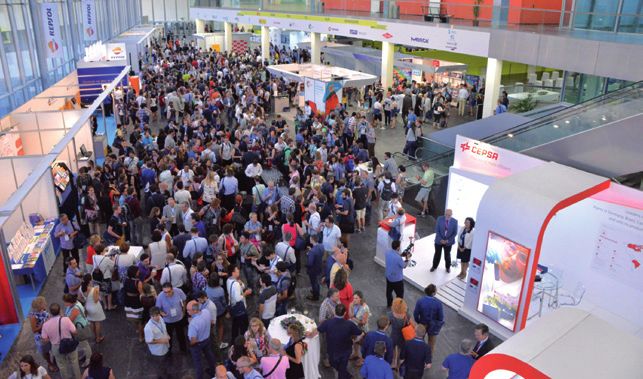
2 EDITORIAL 3
Welcome to the President). He did a wonderful job putting EuCheMS on a va. Finally, it was also a great pleasure for me to lecture on We have continued to advise the European Parliament and
EuCheMS 2016 Yearbook! sound footing, building its reputation, establishing the of- wood conservation at the biennial International Congress of Commission and are delighted that Executive Board mem-
fice in Brussels and more recently heading the team that the EuCheMS Working Party on Chemistry for Cultural Herit- ber, Wolfram Koch, has been appointed to the High Level
2016 has been an exciting and produced the white paper on solar driven chemistry, which age in Brussels in April and to attend the EYCN Delegates Group on Open Science and that Nicola Armaroli, Chair of
busy year. The high point has to was launched at the Seville ECC. We are delighted that Pilar Assembly in Guimarães, which coincided with the First Eu- the Working Party on Chemistry and Energy is a member
be the 6th EuCheMS Chemistry Goya has joined the Presidential Council. She was elected ropean Young Chemists Meeting. of Commission Missions on the circular economy. We also
Congress (ECC) in Seville, which President-Elect by the General Assembly in Seville and will held a highly successful workshop on solving antibiotic re-
attracted around 2000 people become President in January, 2018. Franco de Angelis also Having sorted out the internal structures of EuCheMS, es- sistance in the European Parliament jointly with the Euro-
from all over Europe and beyond. Peter Edwards (Chair of finished his term as Treasurer at the end of 2016. He has pecially as a result of the new constitution, developed by pean Federation of Medicinal Chemistry.
the Scientific Committee) and Carlos Negro (Chair of the Lo- been a master at making sure we have enough money to a team headed by Ulrich Schubert, we have started to try
cal Organising Committee) contrived to put on a spectacular do what we want without depleting necessary reserves. His to build collaborations with other organisations outside Eu- I started by discussing ECC in Seville and I shall finish by
celebration of Chemistry in the wonderful FIBES Conference chairing of the Task Group on EuCheMS Funding has had rope. As mentioned, we have begun discussions with IUPAC looking forward to the next ECC, which will be in Liverpool,
Centre on the outskirts of the exhilarating city of Seville. The a significant positive impact, which has allowed us to be and at the General Assembly in Seville signed a Memoran- UK 26 – 30 August, 2018. The Royal Society of Chemistry,
scientific programme started with one Nobel Prize Winner, bolder in what we do and to employ, in addition to Nineta dum of Understanding with the American Chemical Society, who remain fully committed to EuCheMS despite the deci-
Dick Schrock, wound its way through all areas of chemistry, Hrastelj Majcen (General Secretary) and Bruno Vilela (Public which represents a similar number of individual chemists sion of the UK to leave Europe, are already planning an ex-
beautifully explained, and finished with Ben Feringa giving Affairs Officer), Irina Simon, who looked after the financial as EuCheMS. The MoU commits us to working together citing celebration of chemistry in all its diverse and wonderful
a delightful exposition of molecular machines, for which he administration. Sadly, Irina decided to return to Romania, whilst protecting one another’s interests. Already, we have facets.
was awarded the Nobel Prize in Chemistry only a few weeks but we are very grateful for what she has done. Marta Kucza presented a joint session at the ECC in Seville and another
later, along with Jean-Pierre Sauvage and Sir Fraser Stod- took over has tasks, but will also be involved in other on preparing for employment in a global economy that will At the General Assembly in Seville, it was decided that ECC-
dart, three Europeans, two of them still working in Europe. EuCheMS activities. Eckart Rühl is taking over Treasurer’s take place at the ACS Fall Meeting 2017 in Washington DC. 8 will be held in Lisbon, 30 August – 3 September, 2020.
The social programme was also spectacular with a delightful tasks and moves from very ably representing the Divisions Senior ACS members attended the ECC and EuCheMS at-
tour of the Alcazar by the light of the (almost) full moon. on the Executive Board. Antonio Laganà also represented tended the ACS Fall Meeting. We are committed to support- I would like to express my deepest thanks to Nineta, Bruno,
the Divisions, but his term of office has come to an end and ing our young chemists working together especially through Irina and Marta for all the very hard work they put into ensur-
At the Congress, we signed The Seville International Chem- we thank him warmly for his many useful interventions and the Young Chemists Crossing Borders scheme, which al- ing that EuCheMS runs smoothly and that EuCheMS Brus-
istry Declaration, which highlights the importance of chem- his special interest in Open Science. We welcome Artur Silva lows reciprocal visits of young chemists to the ECC and sels News Updates is interesting and comes out regularly
istry to the modern world and calls upon the development of (Portugal) and Christophe Copéret (Switzerland) to the Ex- ACS meetings. on time. I wish them and all of you my very best wishes for a
a better understanding of and continued support for chem- ecutive Board from January. very successful and interesting 2017.
istry in all nations. The full text is available at www.euchems. More broadly, we are a sponsoring society for the Atlantic
eu/seville-international-chemistry-declaration-2016 where We continue to try to strengthen the links between the Eu- Basin Chemistry Conference, ABC Chem, which will take
the declaration is open for others to sign. CheMS Secretariat and Executive level and the Professional place in Cancun, 24 – 27 January, 2018. This conference
Networks (Divisions, Working Parties, Member Societies has been designed to allow chemists in Africa, Brazil, Can-
36 Presidents of EuCheMS Member Societies or their and Supporting Members), to the list of which we are de- ada, Europe, Mexico, the rest of South America and the US
deputies, also signed The Seville Declaration on the use of lighted to welcome in 2017 the European Federation of Me- to learn much more about what is going on in the different
chlorine in warfare (http://www.euchems.eu/seville-declara- dicinal Chemists (EFMC). countries and to start to build collaborations. We look for- David Cole-Hamilton
tion-use-chlorine-warfare/), where they deplored the use of ward to meeting some of you there. President, EuCheMS
chlorine in Syria or anywhere else and called on those re- I have had the pleasure of addressing the Norwegian Chemi
sponsible for its use to be brought to justice. On the subject cal Society in Oslo where I was very graciously welcomed by
of chemical weapons, EuCheMS has been working to try to Harald Walderhaugh and Øyvind Mikkelsen. I also spoke at
support the brave stand taken by Ehud Keinan, President of the XX Mendeleev Congress on Pure and Applied Chemistry
the Israeli Chemical Society, who wrote an open letter to the in the remarkable city of Ekaterinburg, where they honour
Prime Minister of Israel calling on him to ratify the Chemical Tsar Nicolas II, Lenin and Boris Yeltsin. It was a pleasure to
Weapons Convention. Israel is one of only four nations not have discussions with Aslan Tsivadze, President of the Men-
to have ratified the Convention and the only one to have deleev Society, Thisbe Lindhorst, President of the GDCh
signed but not ratified. and Natalia Tarasova, President of IUPAC, amongst others.
I very much enjoyed presenting EuCheMS at the 25th an-
Seville also marked the last meetings of Ulrich Schubert’s niversary celebrations of The Association of Chemical and
6 years on the EuCheMS Presidential Council (3 years as Pharmaceutical Industry of the Slovak Republic in Bratisla-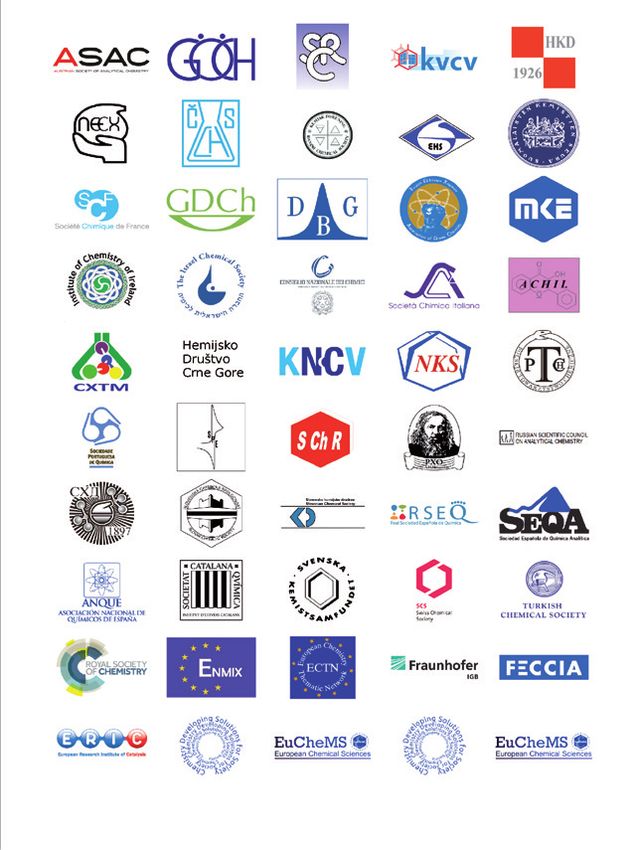
4                                                                                                                                                                                                     ACKNOWLEDGEMENT    5

    Thank you!                                                                                                              Acknowledgement
                                                                                                                            EuCheMS would like to thank all who made their contribution to the 2016 EuCheMS Year Book.

    We would like to express our heartfelt gratitude to Prof. Ulrich Schubert and Prof. Francesco de Angelis, two members
    of the EuCheMS Presiding Council who finished their terms in 2016, for their time, unceasing support, and relentless
    commitment to EuCheMS.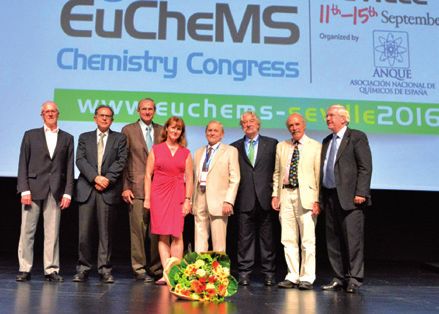
6      EUCHEMS EXECUTIVE BOARD                                                                                                                                                    EUCHEMS EXECUTIVE BOARD   7

    EuCheMS Executive Board

    The Executive Board is responsible for managing the scientific, educational and professional activities of EuCheMS.   Appointed member
                                                                                                                          Professor Wolfram Koch
    The composition of the Executive Board includes the President, Vice-President, the Treasurer, members elected         German Chemical Society
    by the General Assembly and other members appointed by the Executive Board to provide special expertise.              Email: w.koch@gdch.de

                                                                                                                          Appointed member
    President                                                   Elected member                                            Prof. Antonio Laganà
                                                                                                                          Società Chimica Italiana
    Professor David Cole-Hamilton                               Dr. Philippe Garrigues
                                                                                                                          Email: lagana05@gmail.com
    Royal Society of Chemistry                                  Société Chimique de France
    Email: djc@st-andrews.ac.uk
                                                                Email: p.garrigues@ism.u-bordeaux1.fr
                                                                                                                          Appointed member
    Vice-President                                              Elected member                                            Dr. Robert Parker
                                                                                                                          Royal Society of Chemistry
    Professor Ulrich Schubert                                   Dr. Pilar Goya
                                                                                                                          Email: parkerr@rsc.org
    Austrian Chemical Society                                   Spanish Royal Society of Chemistry
    Email: uschuber@mail.zserv.tuwien.ac.at                     Email: pgoya@iqm.csic.es

                                                                                                                          Appointed member
    Treasurer                                                   Elected member                                            Professor Francisco Javier Pérez Trujillo
                                                                                                                          Asociación Nacional de Químicos de España
    Professor Francesco De Angelis                              Professor Ivanka Popović
                                                                                                                          Email: fjperez@anque.es
    Italian Chemical Society                                    Serbian Chemical Society
    Email: francesco.deangelis@univaq.it                        Email: ivankashd@tmf.bg.ac.rs

    Elected member                                              Elected member
    Professor Bogusław Buszewski                                Professor Livia Simon Sarkadi
    Polish Chemical Society                                     Hungarian Chemical Society
    Email: bbusz@chem.umk.pl                                    Email: sarkadi@mail.bme.hu

                                                                                                                          EuCheMS Secretariat
    Elected member                                              Elected member
                                                                                                                          General Secretary                           Administrative Assistant
    Professor Pavel Drašar                                      Professor Saskia van der Vies
                                                                                                                          Dr. Nineta Hrastelj Majcen                  (part time)
    Czech Chemical Society                                      Royal Netherlands Chemical Society
                                                                                                                          Email: Nineta.majcen@euchems.eu             Irina Simion
    Email: Pavel.Drasar@vscht.cz                                Email: s.m.vander.vies@vu.nl
                                                                                                                                                                      Email: Irina.simion@euchems.eu

    Elected member                                              Appointed member                                          Public Affairs Officer                      Administrative Assistant
    Professor Michael Dröscher                                  Professor Sergio Facchetti                                Bruno Vilela                                (part time)
    German Bunsen Society                                       National Council of Chemists                              Email: Bruno.vilela@euchems.eu              Marta Kucza
    for Physical Chemistry                                      Email: s.facchetti@chimici.it                                                                         Email: marta.kucza@euchems.eu
    Email: m.droescher@t-online.de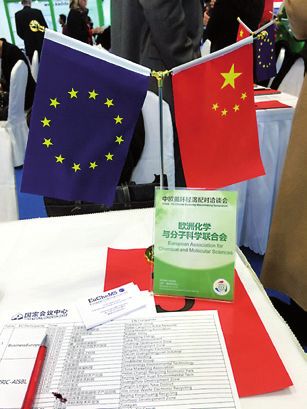
8      E U C H E M S G E N E R A L A S S E M B LY                                                                                                                                                                              POLICY INITIATIVES                       9

    EuCheMS General Assembly                                                                                                      Policy Initiatives

    The General Assembly, the governing body of EuCheMS, meets annually and defines the general policy of                         EuCheMS Policy Initiatives                                            stakeholder group composed of 25 members, is to advise
    EuCheMS. It is composed of a representative from each of the member societies and member organisations.                                                                                             the Commission on how to advance open science by pro-
                                                                                                                                  Being conscious about the role of chemistry in society, Eu-           viding input, namely from researchers and publishers, in for-
    2016 EuCheMS General Assembly, Seville, Spain                                                                                 CheMS is constantly seeking for better ways to create links           mulating and implementing open science policy.
                                                                                                                                  between citizens, politicians and chemists, and to show
    EuCheMS 2016 General Assembly took place on 10 – 11                                                                           what chemistry has to offer in preparing sound legislation,           Public Consultations
    September 2016, at the Seville Chamber of Commerce,                                                                           in providing solutions for our present environmental and
    Sevilla, Spain.                                                                                                               wellbeing challenges, in creating new products, or simply to          EuCheMS is playing an active role in the European policy-
                                                                                                                                  share a vision for the future or the enthusiasm that chemists         making process by responding to chemistry-related open
    The General Assembly meeting was kindly hosted by our                                                                         have for their research.                                              consultations published by the European Commission. It
    four Member Societies – Asociación Nacional de Químicos                                                                                                                                             is important to mention that 2016 marked a significant in-
    de España (ANQUE), Real Sociedad Española de Química                                                                          In 2016, we successfully nominated a representative for a             crease in the interactions with EuCheMS Members in order
    (RSEQ), Sociedad Española de Química Analítica (SEQA),                                                                        Commission high-level advisory group, collaborated with               to prepare EuCheMS responses to consultations.
    and Societat Catalana de Química (SCQ).                                                                                       several Members of the European Parliament, organised ex-
                                                                                                                                  tremely well-received science-policy workshops, answered              Please replace the paragraph with: Regarding the European
    This year’s Assembly left an important societal mark with the                                                                 many public consultations, published a visionary paper on             Commission’s public consultation on antimicrobial resist-
    Sevilla Declaration on the Use of Chlorine in Warfare, where                                                                  solar-driven chemistry, brought forward two declarations              ance (AMR), EuCheMS called for more awareness and more
    chemists from all over Europe called for the responsible use                                                                  on responsible chemistry, participated in European Com-               research, two points which currently integrate the new Euro-
    of chlorine, a chemical used in our everyday life that can be                                                                 mission delegations, and many other activities. At the same           pean Commission action plan on AMR.
    used as a terrible chemical weapon.                                                                                           time, we refreshed one of the tools we use to communicate
                                                                                                                                  these activities, the monthly Brussels News Updates news-             In its answer to the consultation on the Modernisation Agen-
                                                                                                                                  letter. With all these activities, 2016 was definitely a particu-     da for Higher Education in the European Union, EuCheMS
                                                                                                                                  larly active year in terms of policy initiatives and in setting the   provided its views on the current strengths and weaknesses
                                                                                                                                  foundations for many future actions, always having in mind            of higher education in the EU, on the priority areas where
                                                                                                                                  the role of chemistry in society.                                     those in charge of higher education should focus their atten-
                                                                                                                                                                                                        tion, and on how the EU should support efforts to improve
                                                                                                                                  EuCheMS at Open Science Policy Platform                               higher education.

                                                                                                                                  EuCheMS representative Prof. Wolfram Koch, Member of                  Funding was also a concern in these consultations. Eu-
    Also during the General Assembly, EuCheMS and the                Salzer and included the participation of Antonio Cammarota   the EuCheMS Executive Board, was selected for the High-               CheMS has provided input on Horizon 2020 priorities for
    American Chemical Society signed a Memorandum of Un-             (DG Employment, European Commission), and Bradley Miller     Level Advisory Group “Open Science Policy Platform”. The              “Nanotechnologies, Advanced Materials, Biotechnology,
    derstanding, where both Parties agreed to work together to       (American Chemical Society).                                 group was announced in May by European Commissioner                   and Advanced Manufacturing and Processing”; and also to the
    “promote the ethical use of chemistry” and “collaborate for                                                                   Carlos Moedas at the Competitiveness Council in Brus-                 “Science with and for Society” Work Programme 2018 – 2020.
    the good of the chemical enterprise, of their members, and       The open session included a contribution by Prof. Sir John   sels and met twice during 2016. The mandate of this multi-
    of the subject of chemistry” in such areas as events, sur-       Holman, President of the Royal Society of Chemistry, about                                                                         Finally, EuCheMS responded to the public consultation on
    veys, lobbying, ethics and safety, global challenges, exchange   RSC´s commitment to European research and the future of                                                                            the Joint Programming on Metrology Research, (EMRP and
    programmes, the public understanding of chemistry, among         chemistry.                                                                                                                         EMPIR), a topic in which chemistry plays a major role.
    others.
                                                                     Finally, this General Assembly signalled the growth of Eu-                                                                         Science-Policy Workshops
    At the open sessions of the General Assembly, a session on       CheMS with the acceptance of a new Supporting Member,
    the upcoming 2nd European Employability Survey of Chem-          the European Federation of Medicinal Chemistry (EFMC),                                                                             With the purpose of bringing together the scientific commu-
    ists and Chemical Engineers was chaired by Prof. Reiner          thus bringing to 47 the number of EuCheMS Members.                                                                                 nity and policy makers, and to showcase the solutions that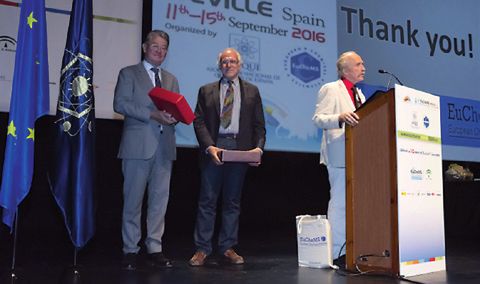
10 POLICY INITIATIVES POLICY INITIATIVES 11
chemists can offer to society, EuCheMS has organised two Missions on Circular Economy Declarations
workshops during the course of 2016 and several panels
during the 6th EuCheMS Chemistry Congress in Seville. Following earlier EuCheMS initiatives on the circular econ- Seville Declaration on the Use of Chlorine in Warfare
omy the European Commission (EC) invited EuCheMS to “We, the Member Societies of the European Association for
Science: How Close to Open? be part of the EC Delegations to Chile and to China that Chemical and Molecular Sciences (EuCheMS), deplore the
This workshop, which took place in Amsterdam on 5 April took place in April and November, respectively. Dr. Nicola Ar- use of chlorine in the Syrian conflict or any other and call
2016, was organised on the occasion of the Open Sci- maroli, Chair of the EuCheMS Working Party on Chemistry upon the international community to bring to justice those
ence Conference organised by the Dutch Presidency of the and Energy, was EuCheMS representative at these missions responsible for the misuse of chlorine.”
Council of the EU. This event looked into present and future led by Environment Commissioner Mr. Karmenu Vella and
intellectual property boundaries in chemistry research and Mr Daniel Calleja, EC Director-General for Environment. It was with these very concrete words that Chemical Socie-
debated questions such as which model should be used for Speakers of Solving Antibiotic Resistance with MEP Paul Rübig and ties in Europe deplored the use of Chemical weapons and
David Cole-Hamilton (from left to right: Lloyd Czaplewski, Chemical
peer-review publishing, who owns research data and how to Biology Ventures Ltd; MEP Paul Rubig, STOA Chair; Chris Schofield,
The scope of these missions was to deepen relationships called for the misusers of chlorine to be brought to justice.
share it, and which approach is better for creating innova- University of Oxford; Philippe Glaser, Institut Pasteur; David Cole- and align policies on the circular economy between EU and
Hamilton, EuCheMS)
tive products and services. Many different approaches were these countries. With Chile being one of the strongest South
defended, but all participants agreed in one point: whatever MEP-Scientists Pairing Scheme American economies and China being the world’s second
choices are made, they must be beneficial for the progress biggest economy, the adoption of circular economy meas-
of science and society. The MEP-Scientists pairing scheme, which is run by the ures is both an economic opportunity and an environmental
Science and Technology Options Assessment (STOA) of need.
the European Parliament, aims to allow Members of the
European Parliament (MEPs) to know more about science
and how it may help in Parliamentary business as well as
to allow scientists to become more aware of what MEPs
do. EuCheMS is currently represented in this scheme by
Prof. David Cole-Hamilton, EuCheMS President, paired with
MEP Catherine Stihler, and by Prof. Pavel Drašar, Member
of EuCheMS Executive Board, paired with MEP Pavel Poc.
Panel discussion with the speakers of Science: How Close to Open? Under the scope of this scheme, researchers and MEPs had The Seville International Chemistry Declaration 2016
(from left to right: Steffen Pauly, Springer; Cristina Todasca, University
Politehnica of Bucharest; Wolfram Koch, GDCh; David Cole-Hamilton, the chance to exchange ideas and follow each other’s work The Seville International Chemistry Declaration 2016 high-
EuCheMS, Emma Wilson, Royal Society of Chemistry; José Cotta, DG twice during 2016. lights the importance of chemistry to the modern world and
Connect, European Commission; Eva Wille, Wiley-VCH)
David Cole-Hamilton and calls upon the development of a better understanding of and
Catherine Stihler, MEP continued support for chemistry in all nations. This declara-
Solving Antibiotic Resistance tion was first signed in Seville at the 6th EuCheMS Chemistry
During this Science and Technology Options Assessment Congress on September 13th, 2016, having as its first sig-
(STOA) Working Breakfast co-organised by the European natories Carlos Negro (Foro Química y Sociedad President
Parliament´s STOA, EuCheMS, and the European Federa- and Co-Chairman of ECC6), Jean Marie Pierre Lehn (No-
tion of Medicinal Chemistry on 28 April 2016, researchers bel Laureate), Antón Valero (President of Spanish Chemical
and several Members of the European Parliament analysed Industry Federation), Ehud Keinan (President of EuCheMS
the global challenge of antimicrobial resistance and weight- Member, the Israel Chemistry Society), Robert Parker (CEO
ed the pros and cons of possible solutions, namely more of the EuCheMS Member, the UK Royal Society of Chemis-
research coordination in this field. This workshop attracted try) and Hartmut Frank (University of Bayreuth, and Chair of
Pavel Drašar
a large participative audience including six MEPs and was EuCheMS Working Party of Ethics in Chemistry).
chaired by Paul Rübig MEP, Chair of STOA. Pavel Poc, MEP EuCheMS at a networking session during the mission to China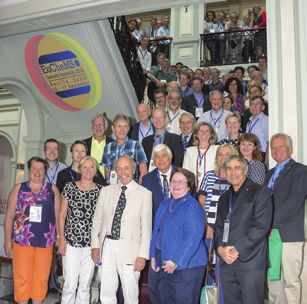
12       POLICY RELATED ACTIVITIES                                                                                                                                                                                    POLICY INITIATIVES   13

     As the declaration clearly states it in its initial paragraph, “In         i.e. to put the scientific focus on how to use sunlight to arrive   innovative scientific and technological endeavour. It will have
     spite of the fact that chemistry is invisible to most, it is the           at new chemicals. The final document is solely based on sci-        huge environmental, societal and economic benefit. A broad
     basis for practically all the scientific, technological and inno-          entific arguments and not so much on commercial aspects.            and inclusive action (European platform) driven by chem-
     vation advances that enable humankind to progress. With-                   The EuCheMS Executive Board followed this recommenda-               ists is needed to accomplish this ambitious goal. Realising
     out chemistry’s important and continuous contribution, we                  tion and considered such an activity as highly relevant for         solar-driven chemical technologies requires an integrated
     would not have been able to achieve the life expectancy                    the general goals of EuCheMS.                                       and synergetic approach and strong support for basic and
     and quality of life we have today.” The full text is available at                                                                              applied research. It will take several decades to reach all the
     www.euchems.eu/seville-international-chemistry-declaration-                On 9 October 2015, a group of experts, nominated by Eu-             goals, but short-term and intermediate results will already
     2016 where the declaration is open for everyone to sign.                   CheMS and national funding agencies, gathered in Berlin             generate huge benefits.
                                                                                upon invitation of Deutsche Forschungsgemeinschaft (DFG).
                                                                                Nicola Armaroli (CNR Bologna), Vincent Artero (Université           The White Paper (www.euchems.eu/wp-content/uploads/
                                                                                Grenoble Alpes, CNRS and CEA), Gabriele Centi (Univer-              2016/10/161012-Solar-Driven-Chemistry.pdf) was finalized
                                                                                sity of Messina), Angela Dibenedetto (University of Bari), Leif     in September 2016 and first presented at the European
                                                                                Hammarström (University of Uppsala), Guido Mul (University          Chemistry Congress in Seville. It is currently disseminated
                                                                                of Twente), Christopher Pickett (University of East Anglia),        on a European level through the distribution channels of
                                                                                Sven Rau (University of Ulm) and Joost N. H. Reek (Uni-             EuCheMS and DFG, as well as nationally through the Eu-
                                                                                versity of Amsterdam) presented and discussed their views           CheMS member societies and national funding organizations.
                                                                                on different future prospects of generating base chemicals
                                                                                and fuels directly from air components (CO2, N2) and water
                                                                                with solar radiation as the energy source. Ideally, such man-
                                                                                made, ecologically friendly systems should be more efficient
     The first signatories of the Seville International Chemistry Declaration
     2016 from left to right: Robert Parker, Hartmut Frank, Carlos Negro,       than their natural counterparts.
     Jean Marie Pierre Lehn, Ehud Keinan, Antón Valero, with Jorge Alcalde
     (moderator, Quo magazine)
                                                                                The presentations and intense discussions were summarized
                                                                                in a first draft of a White Paper, which was subsequently re-
     The White Paper on “Solar-driven Chemistry”                                fined and focused in several steps by the same group of
                                                                                experts. The goals of the White Paper are, among others, to
     EuCheMS and Cefic started at the end of the year 2011 a
     discussion on a joint initiative with the original working ti-             •   elaborate on the vision to produce fuels and base chemi-
     tle Artificial Photosynthesis to create a document as input                    cals with solar radiation as the energy source
     for European research programs and possibly a European                     •   summarize the state-of-the-art and scientific/technical
     platform on this topic. In the years 2012 and 2013 several                     options for implementation
     expert meetings took place in Brussels, with participants                  •   identify scientific/technical gaps of knowledge
     both from science and industry, during which the discussion                •   have a realistic timescale for reaching all the goals, show-
     shifted towards Circular CO2 Economy.                                          ing the benefits of intermediate results also
                                                                                •   demonstrate the huge environmental, societal and eco-
     In a brainstorming meeting in December 2014 with a number                      nomic impact
     of experts from different European countries continuation of               •   call for a broad and inclusive action at the European level
     this activity by EuCheMS took place. A EuCheMS-only doc-                       and strong support for basic and applied research
     ument should focus on a long-term vision and basic science
     and be broader than just artificial photosynthesis. The group              The conclusions of the White Paper can be summarized as
     suggested Solar-Driven Chemistry as a new working title,                   follows: “Solar-driven chemistry” is an ambitious long-term
14       EUCHEMS AWARDS                                                                                                                                                                                                                              EUCHEMS AWARDS                              15

     EuCheMS Awards

     2016 European Union Contest for Young                                    EuCheMS Award for Service                                        EuCheMS Lecture Award                                                    Silver Medal (ex equo) went to Ruben Dario Costa Riquelme,
     Scientists (EUCYS) EuCheMS Special Prize                                                                                                                                                                           Friedrich-Alexander-Universität Erlagen-Nuernberg, Germa-
                                                                              The winners of the 2015 EuCheMS Award for Service are            The EuCheMS Lecture Award 2015 winner is Prof. Ursula                    ny, and to Daniele Leonori, Manchester University, U.K.
     Christian Schärf, Paul Rathke, and Friedrich Wanierke, from              Professor Helena Grennberg and Professor Anthony Smith.          Röthlisberger (Ecole Polytechnique Fédérale de Lausanne),
     Germany, are the winners of the 2016 EUCYS EuCheMS                                                                                        a role model for women in science. Prof. Ursula Röthlisberg-             At the PhD level, the Gold Medal went to Giulio Ragazzon,
     Award with their project entitled “Alpha-aluminium oxide-                                  Helena Grennberg                               er received the award for her outstanding contributions in               University of Bologna, Italy, and the Silver Medal went to
     based gemstones: Development of a chemical synthesis                                       Professor Helena Grennberg is a Professor      computational chemistry and in promoting science at the                  Mercedes Zurro de la Fuente, Regensburg Universitat, Ger-
     process prompted by current mining conditions”. The award                                  of Organic Chemistry at Uppsala Universi-      European level. She organized a number of European con-                  many.
     was given during the 28th edition of the EUCYS which took                                  ty, Sweden. Her research interests include     ferences. Prof. Röthlisberger is a world-wide recognized
     place in Brussels, 15 – 20 September 2016.                                                 topics from organometallic chemistry, or-      expert in the field of first-principles based computer simula-           The Award was organized by Bruno Pignataro. The advi-
                                                                                                ganic nanomaterials and catalysis. Helena      tions and associate editor for Journal of Chemical Theory                sory Board was constituted by Camille Oger (EYCN), Mi-
                                                                              Grennberg has served the chemical community in Europe            and Computation (ACS), one of the leading journals in the                chael Terzidis (EYCN), Ilya V. Vorontyntsev (EYCN), Sergio
                                                                              in many respects. Among the prominent positions she held         field.                                                                   Facchetti (CNC), Michele Pavone (SCI), Javier Pérez-Trujillo
                                                                              are chairperson of the EuCheMS Division of Organometal-                                                                                   (ANQUE) and the General Organization was due to Camillo
                                                                              lic Chemistry, member of the EuCheMS Executive Board             European Young Chemist Award                                             Sartorio (University of Palermo, Italy).
                                                                              (2007 – 2013), Scientific Chair of the 5 European Chemistry
                                                                                                                     th

                                                                              Congress in Istanbul 2014, President of the Swedish Chemi-       The European Young Chem-
                                                                              cal Society (since 2012). She has a clear and forward-look-      ist Award (EYCA) is intended to
                                                                              ing vision, a broad perspective and well-defined positions on    showcase and recognise the
                                                                              many issues relevant to the chemical community in Europe.        excellent research being carried
                                                                              Her critical approach to solving problems, her reliability and   out by young scientists working
                                                                              the combination of team-player as well as leadership abili-      in the chemical sciences.
                                                                              ties contributed to a high degree to shaping the profile of
     From left to right: Paul Rathke, Friedrich Wanierke, Christian Schärf,
     Nineta Hrastelj Majcen                                                   EuCheMS. The award ceremony for Prof. Grennberg took             The Italian Chemical Society (SCI)
                                                                              place during the 6th EuCheMS Chemistry Congress in Seville,      and the Italian Consiglio Nazion-
     Mining gemstones damages the environment and often oc-                   Spain, 11 – 15 September 2016.                                   ale dei Chimici (CNC) sponsored       EuCheMS president awards Maria Escudero-              Sergio Facchetti (CNC) awards Giulio Ragazzon,
                                                                                                                                                                                     Escribano, the winner at the 35 years old level.      the winner at the PhD level.
     curs under dehumanising conditions. Christian Schärf, Paul                                                                                the initiative as in the previous
     Rathke and Friedrich Wanierke hypothesised that, because                                   Anthony Smith                                  editions which took place under
     rubies and sapphires are a mixture of aluminium oxide and                                  Professor Anthony Smith had a key role         the patronage of EuCheMS, the
     certain metals, it might be possible to produce the gem-                                   in establishing, organizing, and co-ordi-      EuCheMS Chemistry Congress,
     stones themselves. The trio experimented with various melt-                                nating the European Chemistry Thematic         and the European Young Chem-
     ing and crystallisation processes, and thoroughly analysed                                 Network Association (ECTN) from 1996           istry Network (EYCN). Also, this
     the synthesis progression and the powder particles and                                     onwards. This included six successful pro-     year ANQUE (Asociacion Nation-
     crystals that formed. The young researchers came to the                  posals within the EU Socrates frame, each for 3-year-fund-       al de Quimicos de España), as
     conclusion that nature is a highly skilled chemist. They suc-            ing from the European Commission. The network represents         organizer of the 6th ECC, added
     ceeded in creating tiny ruby monocrystals but the path to                a large consortium with 109 partners from 28 EU countries,       a remuneration for special men-
     creating a large gemstone in the lab proved more difficult               the Republic of Serbia, the Former Yugoslav Republic of-         tions given from the Jury.
     than anticipated.                                                        Macedonia, and third countries.
                                                                                                                                               At the 35 years old level, the Gold
                                                                                                                                                                                     A group photo at the EYCA award ceremony during the closing ceremony of 6th ECC in Seville. From right
                                                                              The award was given to Prof. Smith by Prof. Franco De            Medal went to Maria Escudero-         to left: Bruno Pignataro, Raffaele Riccio, Frederique Backaert, Sergio Facchetti, Javier Garcia-Martinez,
                                                                              Angelis, on behalf of EuCheMS, on 25 April 2016 at the           Escribano, Technical University       Federico Bella, Bill Morandi, Filippo Monti, Silvia Osuna, David Cole-Hamilton, Mercedes Zurro de la
                                                                                                                                                                                     Fuente, Giulio Ragazzon, Ernesto Castañeda, Ruben Dario Costa Riquelme, Daniele Leonori, Maria
                                                                              ECTN General Assembly in Gdańsk.                                of Denmark, Denmark, and the          Escudero-Escribano.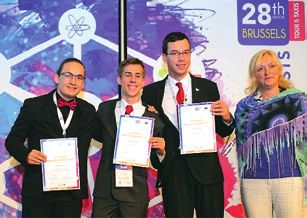
16      EUCHEMS CHEMISTRY CONGRESSES                                                                                                                                                                 EUCHEMS CHEMISTRY CONGRESSES                                       17

     EuCheMS Chemistry Congresses

     ECC6                                                             session oral speakers and 270 short oral presentations. In    ists Network and the EYCN did a fantastic job in develop-         effort and contributions from the Scientific and Local (host)
     6th EuCheMS Chemistry Congress                                   addition to all the oral presentations, there were approxi-   ing their own programme and populating it with speakers,          Organising Committees. We are enormously grateful to their
     11 – 15 September 2016                                           mately 1000 posters presented during the two main poster      workshops and advice sessions. Of particular note here is         dedication to making ECC-6 a success, it would not have
     Seville, Spain                                                   sessions. Ultimately, the success of a conference depends     the Science Café event they organised in a bar in the centre      happened without them. They worked hard throughout the
                                                                      upon the quality of the science presented by the speakers     of Seville which was enormously entertaining, very well at-       two-year period since ECC-5 and their voluntary contribu-
     The 6 EuCheMS Congress in Seville, 11 – 15 September,
           th
                                                                      and poster presenters and this was certainly excellent at     tended (to full capacity) and was a great forum for collecting    tion is very much appreciated indeed. The organisation of
     was a great success further establishing the tradition that is   ECC-6, thanks are due to all presenters.                      young and established scientists in an informal environment.      the venue, the physical delivery of the Congress and or-
     becoming the figure-head Chemistry Conference in Europe.                                                                                                                                         ganising all the various EuCheMS committee and Divisional
                                                                      As well as the main programme, there were several parallel    A noteworthy innovation introduced in ECC-6 is the concept        meetings was primarily due to the hard work of the Local Or-
     More than 2000 people attended the Congress during the           symposia and events that were well attended and very well     of masterclasses. Two masterclasses aimed especially at           ganising Committee who did a fantastic job. The venue was
     five days. The 8 parallel Themes, each broadly representing      received by their audiences. These included a round-table     younger chemists and intended to present a broad overview         marvellous, bright, spacious and with excellent facilities. The
     a specific disciplinary focus, provided session space for the    discussion on carbon dioxide, its management and associ-      of a key field by an established and respected practitioner of    catering and support systems were also excellent and the
     delivery of a total of approximately 840 oral presentations.     ated scientific and political issues, a Symposium in honour   that field were presented and very well received.                 Venue staff were approachable and very helpful working
     The introduction of ‘short oral’ slots considerably increased    of the 250 anniversary of John Dalton which included a
                                                                                 th
                                                                                                                                                                                                      hard to ensure a smooth delivery of the Congress.
     the opportunity for oral presentations and these were pri-       very entertaining slam session of presentations by young      In balance, along with the more traditional programme of-
     marily offered to younger scientists and authors of highly       scientists and a workshop on Responsible Research and         fering of parallel sessions and symposia, the introduction of     We need to continue to work towards raising the profile of
     regarded poster applications. As well as a series of excellent   Innovation in education.                                      short orals to main programme sessions, the Science Café,         EuCheMS Congresses and ensuring their success as the
     main Plenary presentations and presentations by National                                                                       and the masterclasses all contributed to a very successful        major conference activity in European Chemical Sciences
     and International Award Winners, there were approximately        There was also a comprehensive and well attended paral-       conference that was very much enjoyed by all.                     and I am very much look forward to the next, ECC-7 in Liv-
     30 Topic Plenaries, 110 invited and keynote speakers, 420        lel symposium organised by the European Young Chem-                                                                             erpool in 2018.
                                                                                                                                    The complexity of the programme was a challenge to organ-
                                                                                                                                    ise with over 800 speaking slots across all the categories
                                                                                                                                    coupled with the need to achieve the best balances across         Peter Edwards,
                                                                                                                                    all interest groups and stakeholders. This required constant      Chair of ECC-6 Scientific Committee
18 EUCHEMS RECOGNISED EVENTS EUCHEMS RECOGNISED EVENTS 19
2016 EuCheMS 2017 EuCheMS
Recognised Events Recognised Events
10th European Winter School on Physical Organic Kemiportalen – Analysdagarna 23rd Conference on Isoprenoids e-WISPOC 2017 – 11th European Winter School on
Chemistry – e-WISPOC 2016 Umeå, Sweden Minsk, Belarus Physical Organic Chemistry
Bressanone, Italy 14 – 17 June 2016 4 – 7 September 2016 Bressanone, Italy
31 January – 5 February 2016 Website: http://kemiportalen.nu Website: http://isoprenoids-23.basnet.by/ 29 January – 3 February 2017
Website: http://www.chimica.unipd.it/wispoc/pubblica Website: www.chimica.unipd.it/wispoc
ISOS 2016 – International Summer School JCO – Journées de Chimie Organique
I Convegno del Grupo Interdivisionale di Chimica on Organic Synthesis “A. Corbella” Palaiseau, France 25HSKIKI – 25th Croatian Meeting of Chemists and
per le Energie Rinnovabili – ENERCHEM-1 Gargnano, Italy 7 – 9 September 2016 Chemical Engineers with international participatio
Florence, Italy 12 – 17 June 2016 Website: http://www.jco2016.com/ Porec, Croatia
18 – 20 February 2016 Website: http://www.corbellasummerschool.unimi.it/ 19 – 22 April 2017
Website: http://www.enerchem-1.it ECRICE – European Conference on Research Website: http://www.25hskiki.org
4th EuCheMS Inorganic Chemistry Conference – in Chemical Education
13th Chemistry Conference for Young Scientists – EICC-4 Barcelona, Spain Circular Economy in Drugs
ChemCYS 2016 Copenhagen, Denmark 7 – 10 September 2016 Valleta, Malta
Blankenberge, Belgium 2 – 5 July 2016 Website: http://ecrice2016.com 5 May 2017
16 – 18 March 2016 Website: http://www.eicc-4.dk Website: http://www.euchems.eu/events/circular-
Website: http://www.chemcys.be/ 16th Ružička days – International conference 16th economy-drugs
16 Conference on Molten Salts and Ionic Liquids
th
Ružička days: “Today Science – Tomorrow Industry”
Bruner Workshop 2016 – Fabrizio Bruner Memorial Vienna, Austria Vukovar, Croatia Glyphosate: Harmless Chemical or Silent Killer?
Workshop on Environmental LC-MS 03 – 08 July 2016 21 – 23 September 2016 Brussels, Belgium
Urbino, Italy Website: http://www.euchem2016.org/welcome/ Website: http://www.ptfos.hr/ruzicka 10 May 2017
6 – 8 April 2016 Website: http://www.euchems.eu/events/glyphosate-
Website: http://brunerworkshop2016.uniurb.it ExTech’2016 / ISSS’2016 IASOC 2016 – XVII Session of Ischia Advanced harmless-chemical-silent-killer/
Toruń, Poland School of Organic Chemistry
11th DA – 11th Delegates Assembly of EYCN 03 – 06 July 2016 Naples, Italy Inorganic days – Inorganic chemistry days
Guimarães, Portugal Website: http://www.extech-isss2016.pl/ 25 – 29 September 2016 Nynäshamn, Sweden
26 – 30 April 2016 Website: http://www.iasoc.it 12 – 14 June 2017
Website: http://11da.eventos.chemistry.pt ChemCH2016 – Chemistry for Cultural Heritage 2016 Website: http://www.oorgan.se
Brussels, Belgium Café Chimique on the Future for Collaborative
5th PYCheM and 1st EYCheM – 5th Portuguese 06 – 07 July 2016 Research and Innovation in Europe ISOS 2017 – International Summer School
Young Chemists Meeting (5th PYCheM) and Website: http://org.kikirpa.be/chemch2016/ Brussels, Belgium on Organic Synthesis “A. Corbella”
1st European Young Chemists Meeting (1st EYCheM) 24 January 2017 Gargnano, Italy
Guimarães, Portugal IX International School on Organometallic Chemistry Website: http://rscbelgium.blogspot.si/p/the-public- 18 – 22 June 2017
26 – 29 April 2016 “Marcial Moreno Mañas” perceptions-of-chemistry-and.html?m=1 Website: http://www.corbellasummerschool.unimi.it
Website: http://5pychem.eventos.chemistry.pt San Sebastián, Spain
06 – 08 July 2016 30th EFFoST International Conference: Targeted ICCE 2017 – 16th EuCheMS International Conference
Analytica Conference Website: http://school2016.orfeo-cinqa.es/ Technologies for Sustainable Food Systems on Chemistry and the Environment
Munich, Germany Vienna, Austria Oslo, Norway
10 – 12 May 2016 NRC9 – 9th International Conference on Nuclear and 28 – 30 November 2016 18 – 22 June 2017
Website: https://www.gdch.de Radiochemistry Website: http://www.effostconference.com Website: http://www.icce2017.org
Helsinki, Finland
IWSG – 8th International Workshop on 29 August – 2 September 2016 Bienal 2017 – XXXVI Biennial Meeting of the
Science Gateways Website: http://nrc9.it.helsinki.fi Spanish Royal Society of Chemistry (RSEQ)
Rome, Italy Barcelona, Spain
08 – 10 June 2016 9th AES 2016 – 9th Asian-European Symposium on 25 – 29 June 2017
Website: https://sites.google.com/a/nd.edu/iwsg2016/ Metal-Mediated Efficient Organic Synthesis Website: http://www.bienal2017.com
home Stockholm Sweden
4 – 7 September 2016
Website: http://aes2016.se20 EUCHEMS RECOGNISED EVENTS EUCHEMS MEMBER SOCIETIES 21
EuCheMS Member Societies
7th EuroVariety – 7th European Variety in University 3rd EuGSC – 3rd EuCheMS Congress on Green and Austrian Chemical Society Estonian Chemical Society
Chemistry Education Sustainable Chemistry Gesellschaft Österreichischer Chemiker (GÖCH) Eesti Keemia Selts
Belgrade, Serbia York, UK
28 – 30 June 2017 3 – 6 September 2017 President: Prof. Herbet Ipser President: Prof. Margus Lopp
Website: http://www.chem.bg.ac.rs/eurovariet Website: http://www.york.ac.uk/3EUGSC Website: www.goech.at Website: http://ecs.kbfi.ee/Engl.html
ISSNP 2017 – International Summer School EuCOMC 2017 – 22nd European Conference Austrian Society of Analytical Chemistry Finnish Chemical Societies
on Natural Products on Organometallic Chemistry Österreichische Gesellschaft fur Analytische Kemiska sällskapet i finland /
Naples, Italy Amsterdam, The Netherlands Chemie (ASAC) Suomen Kemian Seura
3 – 7 July 2017 9 – 13 September 2017
Website: http://www.issnp.org Website: http://www.eucomc2017.amsterdam President: Prof. Wolfgang Buchberger President: Prof. Jari Yli-Kauhaluoma
Website: www.asac.at/default.aspx Website: http://kemianseurat.fi/kemia
EuroAnalysis WiFo 2017 – GDCh-Wissenschaftsforum Chemie
Stockholm, Sweden 2017 Walloon Royal Society of Chemistry French Chemical Society
28 August – 1 September 2017 Berlin, Germany Société Royale de Chimie Société Chimique de France
Website: www.euroanalysis2017.se 10 – 14 September 2017 President: Prof. Thierry Randoux President: Prof. Gilberte Chambaud
Website: http://www.wifo2017.de Website : www.src.be Website: www.societechimiquedefrance.fr
11ICHC – 11th International Conference
on the History of Chemistry
Trondheim, Norway Royal Flemish Chemical Society German Chemical Society
29 August – 2 September 2017 Koninklijke Vlaamse Chemische Vereniging Gesellschaft Deutscher Chemiker (GDCh)
Website: http://www.ntnu.edu/11ichc (KVCV)
President: Prof. Dr. Thisbe K. Lindhorst
President: Dr. Christophe De Bie Website: www.gdch.de
ISOC 2017 – International School of Organometallic Website: www.kvcv.be
Chemistry: Organometallic chemistry: from theory to
applications German Bunsen Society for Physical
Croatian Chemical Society
San Benedetto del Tronto, Italy Chemistry
Hrvatsko Kemijsko Društvo
2 – 9 September 2017 Deutsche Bunsen-Gesellschaft für
Website: http://d7.unicam.it/isoc/home President: Prof. Srđanka Tomić-Pisarović Physikalische Chemie e.V.
Website: www.hkd.hr/index-en.html
President: Prof. Dr. Joachim Sauer
Website: www.bunsen.de
Pancyprian Union of Chemists
Παγκύπρια Ένωση Επιστημόνων Χημικών Association of Greek Chemists
Ένωση Ελλήνων Χημικών
President: Dr Christina Valanidou
Website: www.chemistry.org.cy President: Mrs. Triantafyllia Sideri
Website: www.eex.gr
Czech Chemical Society
Č eská Spolecnost Chemická Hungarian Chemical Society
Magyar Kémikusok Egyesülete
President: Prof. Jan John
Website: www.csch.cz President: Prof. Dr. Livia Simon Sarkadi
Website: www.mke.org.hu
Danish Chemical Society
Kemisk Forening Institute of Chemistry of Ireland
Instituid Ceimice Na Héireann
President: Prof. Stefan Vogel
Website: www.chemsoc.dk President: Dr. Margaret Franklin
Website: www.chemistryireland.org22 EUCHEMS MEMBER SOCIETIES EUCHEMS MEMBER SOCIETIES 23
Israel Chemical Society Polish Chemical Society Slovenian Chemical Society Royal Society of Chemistry
הימיכל תילארשיה הרבחה Polskie Towarzystwo Chemiczne Slovensko kemijsko društvo
President: Prof. Sir John Holman
President: Prof. Ehud Keinan President: President: Prof. Jerzy Błażejowski President: Prof. Venčeslav Kaučič Website: www.rsc.org
Website: www.chemistry.org.il Website: www.en.ptchem.pl Website: www.chem-soc.si
National Council of Chemists Portuguese Chemical Society Spanish Royal Society of Chemistry
Consiglio Nazionale dei Chimici Sociedade Portuguesa de Química Real Sociedad Española de Quimica
President: Prof. Nausicaa Orlandi President: Prof. Artur Silva President: Prof. Jesús Jiménez-Barbero
Website: www.chimici.it Website: www.spq.pt Website: www.rseq.org
Italian Chemical Society Portuguese Electrochemical Society Spanish Society for Analytical Chemistry
Società Chimica Italiana Sociedade Portuguesa da Electroquímica Sociedad Española de Química Analítica (SEQA)
President: Prof. Raffaele Riccio President: Prof. Luísa Margarida Martins President: Prof. Elena Dominguez
Website: www.soc.chim.it Website: http://cqe.ist.utl.pt/speq Website: www.seqa.es
Association of Chemists of Luxembourg Romanian Chemical Society National Association of Chemists of Spain
Association des Chimistes Luxembourgeois Societatea de Chimie din Romania Asociación Nacional de Químicos de España
(ANQUE)
President: Mr. Albert Lambert President: Prof. Sorin Roșca
Website: www.achil.lu Website: www.schr.org.ro President: Prof. Ernesto Castañeda
Website: www.anque.es
Society of Chemists and Technologists of
Mendeleev Russian Chemical Society Catalan Chemical Society
Macedonia
Societat Catalana de Quimica
Сојуз на хемичарите и технолозите на President: Prof. Aslan Tsivadze
Македонија Website: www.chemsoc.ru President: Prof. Carles Bo
Website: http://blogs.iec.cat
President: Prof. Zoran Zdravkovski
Website: www.pmf.ukim.edu.mk/PMF/
Chemistry/sojuz.htm Russian Scientific Council on Analytical Swedish Chemical Society
Chemistry Svenska Kemistamfundet
Chemical Society of Montenegro
President: Prof. Yuri Zolotov President: Prof. Helena Grennberg
Hemijsko Društvo Crne Gore
Website: www.chemsoc.se
President: Prof. Zeljko Jačimovič
Serbian Chemical Society Swiss Chemical Society
Српско хемијско друштво (СХД) Société Suisse de Chemie –
Royal Netherlands Chemical Society Schweizerische Chemische Gesellschaft
President: Prof. Živoslav Tešić
Koninklijke Nederlandse Chemische Vereniging
Website: www.shd.org.rs/HtDocs/SHD/ President: Dr. Alain De Mesmaeker
(KNCV)
SHD-index.htm Website: www.swiss-chem-soc.ch
President: Prof. Floris Rutjes
Website: www.kncv.nl Slovak Chemical Society Turkish Chemical Society
Slovenská chemická spolocnost Türkiye Kimya Dernegi
Norwegian Chemical Society
President: Prof. Viktor Milata President: Prof. Dr. Bahattin Yalçın
Norsk Kjemisk Selskap (NKS)
Website: www.schs.chtf.stuba.sk Website: www.turchemsoc.org
President: Prof. Øyvind Mikkelsen
Website: www.kjemi.no24 EUCHEMS PROFESSIONAL NETWORKS EUCHEMS PROFESSIONAL NETWORKS 25
EuCheMS Professional Networks
EuCheMS Professional Networks are platforms in their own fields of expertise and promote collaboration with
Division of Computational and Theoretical Chemistry
other European and international organisations. Among others, the Professional Networks organise high quality
scientific conferences in chemical and molecular sciences and interdisciplinary areas. The Division of Computational and Theoretical Chemistry networks the EuCheMS
members exploiting the pervasive nature of computer science and technologies to
enhance research and education in chemistry, molecular and materials sciences.
Division of Analytical Chemistry Computational Chemistry research provides new understanding and development
Chair: Prof. Antonio Laganà
of procedures for simulating, designing and operating systems ranging from atoms
The EuCheMS Division of Analytical Chemistry is a network of chemical societies Email: lagana05@gmail.com
and molecules to interactions of molecules in complex systems such as cells and
and their members working in all fields of analytical sciences. It gives a voice to living organisms. In this respect the division promotes the development of virtual
the interdisciplinary field of analytical sciences. It is based in Europe and aims at research and education communities fostering collaborative activities between
close links to related institutions all over the world. theoreticians and experimentalists, academics and professionals, teachers and
Chair: Prof. Paul Worsfold
Email: P.Worsfold@plymouth.ac.uk students seeking innovation in all the production sectors where chemistry plays
a part.
Division of Chemical Education
The EuCheMS Division of Chemical Education has two goals: to look for new
Division of Food Chemistry
activities to promote chemical education research and practice in Europe and to The EuCheMS Division of Food Chemistry aims are to represent food sectors of
improve the dissemination of information between countries. To achieve those national chemical societies at European level; to be recognised as a European
goals the Division is running biannually alternately two conferences: ECRICE - authority in all matters concerning food chemistry and to promote and harmonize
Chair: Dr. Iwona Maciejowska
European Conference on Research in Chemical Education (even years) and teaching of food chemistry within food science across Europe.
Email: iwona.maciejowska@uj.edu.pl Chair: Prof. Marco Arlorio
EuroVariety - European Variety in University Chemistry Education (odd years).
Email: marco.arlorio@uniupo.it
Division of Chemistry and the Environment
Division of Green and Sustainable Chemistry
The overall aim of the EuCheMS Division of Chemistry and the Environment is to
promote and support co-operation in the area of chemistry and the environment The Division of Green and Sustainable Chemistry is a network of members of
issues amongst the European chemical societies and their members. EuCheMS societies working in all fields of chemistry related to “The invention,
design and application of chemical products and processes to reduce or to
Chair: Prof. Santiago Luis eliminate the use and generation of hazardous substances”.
Chair: Prof. Nicholas Gathergood
Email: luiss@uji.es
Email: nicholas.gathergood@ttu.ee The Division aims at becoming the key forum for discussion and promotion of
any initiatives at the scientific, technical and political level to advocate the leading
Division of Chemistry in Life Sciences role of chemistry in contemporary green research. It further looks for synergies
with other EuCheMS Divisions and WPs on topics of common interest. The main
The general aim of the EuCheMS Division of Chemistry in Life Sciences is to
objective is to organize conferences and workshops on energy related topics
promote active collaborations, maintain effective communication, and disseminate
in cooperation with other scientific, industrial and political stakeholders at the
knowledge among chemists in Europe working in the broad area of chemistry for
European as well as national levels.
life sciences. Achievement of these goals is pursued through networking activities,
Interim Chair: Prof. Anna Bernardi Moreover, the Division aims to support activities, to organize platforms, attract
organization of conferences and schools.
Email: anna.bernardi@unimi.it funding, enhance networking and promote education related to Green and
Sustainable Chemistry in Europe.26 EUCHEMS PROFESSIONAL NETWORKS EUCHEMS PROFESSIONAL NETWORKS 27
Division of Inorganic Chemistry Division of Organometallic Chemistry
The EuCheMS Division of Inorganic Chemistry provides a forum for the The Division of Organometallic Chemistry will continue being an active, trusted,
interdisciplinary field of inorganic chemistry and its applications. The Division aims and sustainable voice of EuCheMS on any matters relating to the large and in-
at close links all over the world. It also aims to motivate national chemical societies terdisciplinary field of fundamental and applied organometallic chemistry, provid-
Chair: Prof.Anna Trzeciak to promote inorganic chemistry in their countries and to become the focal point Chair: Professor Jan Čermák ing and coordinating activities such as congresses, schools and workshops of
Email: anna.trzeciak@chem.uni.wroc.pl of inorganic chemists in Europe. The Division promotes the dissemination of Email: cermak@icpf.cas.cz interest for students, researchers and others interested in or actively employing
inorganic chemistry through its biennial conference, or dedicated initiatives within organometallic chemistry.
the EuCheMS Chemistry Congress, and supports high level education through
specialist schools and the production of dedicated books and other publications.
Division of Physical Chemistry
The EuCheMS Division of Physical Chemistry aims to strengthen the interaction of
Division of Nuclear and Radiochemistry
physical chemists throughout Europe. The EuCheMS Division of Physical Chem-
The Division of Nuclear and Radiochemistry is a network of scientists working istry integrates and coordinates its scientific activities with respective national and
in nuclear and radiochemistry throughout Europe. Cooperation with relevant Chair: Prof. Eckart Rühl international activities of its members. The EuCheMS Division of Physical Chem-
supranational bodies such as IUPAC and IAEA as well as with journals and Email: ruehl@zedat.fu-berlin.de istry strongly supports focused scientific meetings which are organized by active
Chair: Prof. Jon Petter Omtvedt newsletters provides a broad network reaching also outside Europe. The main members in Physical Chemistry. Furthermore, the EuCheMS Division of Physical
Email: j.p.omtvedt@kjemi.uio.no objective of the DNRC is to contribute to the advancement of nuclear and Chemistry aims to increase the networking and communication among its active
radiochemistry in Europe. Furthermore, DNRC strives to harmonise education and members, which is expected to lead to a higher level of coordination and com-
training in all aspects of nuclear and radiochemistry. munication resulting in integration of topical national events into the EuCheMS
Physical Chemistry Community.
Division of Organic Chemistry
Division of Solid State and Materials Chemistry
The EuCheMS Division of Organic Chemistry is currently composed of
representatives from 27 member societies and has gained international The Division of Solid State and Materials Chemistry is covering a highly
recognition within the chemistry community. Since its creation, the Organic multidisciplinary area of research, which embraces major sub-disciplines of
Chair: Prof. Veronique Gouverneur Division has been pro-active at various levels and was involved in the organization chemistry such as inorganic, organic, physical, theoretical and analytical chemistry,
Email: veronique.gouverneur@ of numerous satellite symposia at the European Chemical Congresses. The Chair: Prof. Martin Jansen and bridges to physics and engineering. Research in solid state and materials
chem.ox.ac.ukl Division also endorses on a regular basis a series of well-established and high- Email: m.jansen@fkf.mpg.de chemistry is not exclusively motivated by the quest for knowledge but is ultimately
profile Conferences and Schools. application-oriented, and thus has strong ties with industrial chemistry. As one
basic objective, the Division aims to bring together the various sub-disciplines
However, the EuCheMS Organic Division hallmark activity is the creation of the
of the field, coordinating all activities with those of the already existing national
Young Investigator’s Workshop (YIW) to further promote and recognize academic
associations. In particular, the Division is running biannually pertinent conferences
excellence in organic chemistry within (and outside) Europe. This annual event
and is striving to organize symposia during the EuCheMS Chemistry Congresses
is deliberately held close to either the European Chemical Congress (EEC) or
in the intermittent years. Finally, the Division aims to enhance networking and
the European Symposium on Organic Chemistry (ESOC), as we encourage the
promote education related to solid state and materials chemistry in Europe.
attendees of the YIW to attend these events.You can also read


