Yolo Agriculture Willett Garden of Learning
←
→
Page content transcription
If your browser does not render page correctly, please read the page content below
Willett Garden of Learning
Yolo Agriculture
Activity:
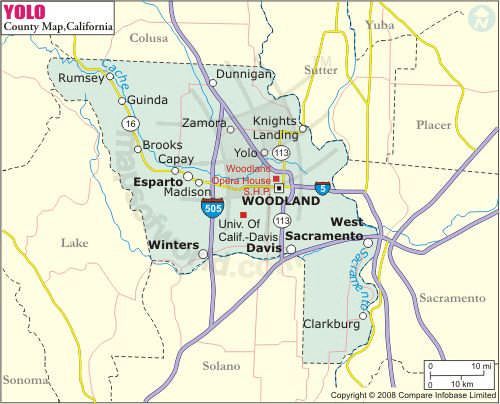
Learn about what is grown in Yolo County
(emphasis on Processing Tomatoes and
Farmers’ Markets & CSAs).
Optional Supplies:
Word search
Coloring sheets
Crayons (from classrooms) or pens
Pencils
Blank paper
How to proceed:
There is no real activity for this lesson.
Provide as much information as the students are interested in. Encourage it to be interactive – this is
a local topic and hopefully the students will see a connection between themselves and the food
produced locally. For example, have the kids seen any of the crops growing? Have any of their
family/friends worked in local farming or processing? Do they get a CSA box or shop at the Farmers
Market?
Spend any additional time doing:
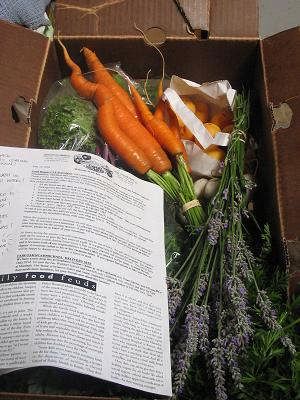
Brainstorm meal ideas using this week’s CSA box (Leeks, carrots, broccoli, spinach, butternut
squash, oranges, lemons, potatoes, chard, radicchio)
Brainstorm foods that use processing tomatoes.
Discuss the differences between how processing tomatoes and CSA produce are picked,
processed, and distributed.
Have students draw foods that are grown in Yolo.
Word search (http://www.thepotters.com/puzzles/fruit.html,
http://www.thepotters.com/puzzles/farm.html).
Read “I Bought A Pet Tomato” poem (http://www.poemhunter.com/poem/i-bought-a-pet-
tomato/). Have students draw a pet tomato.
Coloring pages.
Printouts will be provided for links above.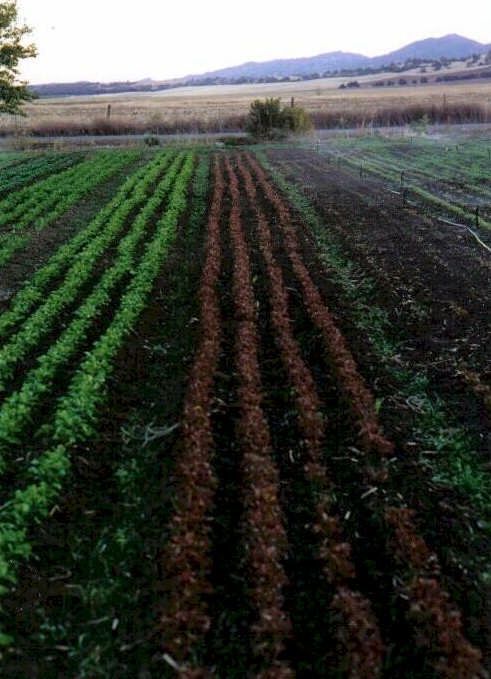
Yolo Crops (2008)

                                Other
                     Sunflowers                      Processing
                                                     Tomatoes
                       Wheat
         Organic Production

       Almonds & Walnuts

                                                         Alfalfa Hay
                  Seed Crops

                      Wine Grapes             Rice

Crop Information:

Total agricultural commodities produced $527 million. (Includes plants and also cattle, dairy, etc.)

Top crops:
      Processing tomatoes: $105 million
      Alfalfa Hay: $73 million
      Rice: $58 million
      Wine Grapes: $42 million

Note that there are microconditions even within this small area. I don’t have any data on this, but from
what I’ve seen, the rice is grown in the flood areas near the Sacramento River (around the causeway)
and wine grapes are grown near the delta around Clarksburg.

Processing tomatoes were not always so dominate in Yolo agriculture. They became the largest crop
in Yolo in the 1960s. In the 1950s, some of the largest crops were barley ($13M), tomatoes ($9M),
beets ($9M), rice ($6M), alfalfa hay ($6M), corn ($3M), almonds ($4M).

The produce that is grown in Yolo county comes to our homes in different ways. On one end of the
spectrum, processing tomatoes go to processing plants and end up in our homes as ketchup &
spaghetti sauce. On the other end, produce can be purchased from the Davis Farmers’ Market or
CSA subscriptions, where the food is grown locally and comes to us directly from the farmer.

Sources:
Yolo County 2008 Crop Report
(http://www.yolocounty.org/Modules/ShowDocument.aspx?documentid=9792)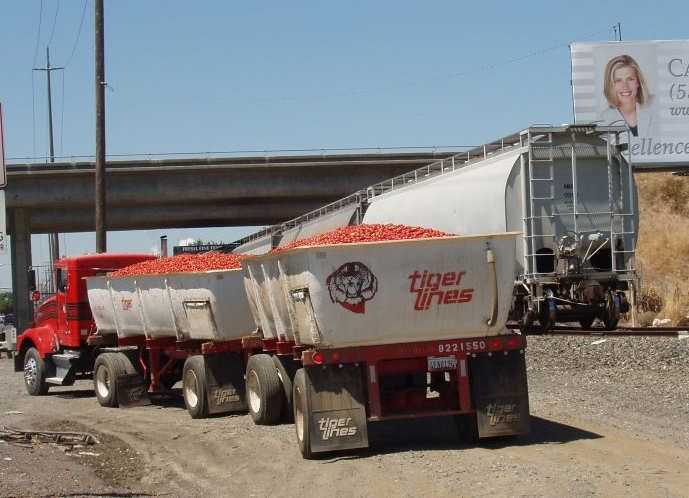
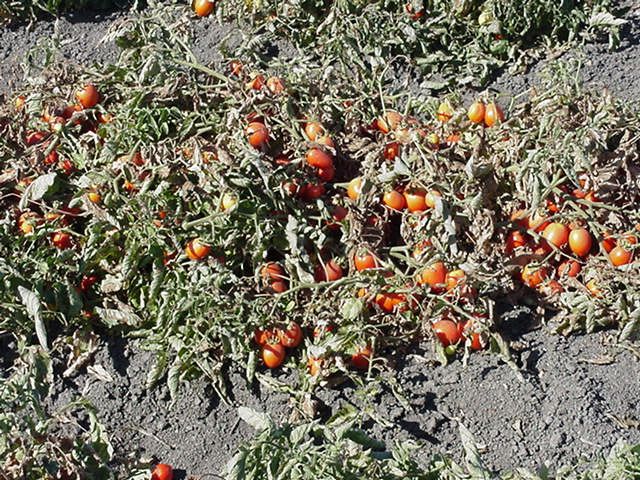
Processing Tomatoes:

Processing tomatoes are processed for canning and sauces. (They are not the same variety of
tomatoes that we buy fresh in the stores.)

Over 90% of the processing tomatoes in the US are from California. (California produces nearly half
of the worlds processed tomatoes.)
11% of that is from Yolo County (41% from Fresno Co., 12% San Joaquin Co.)

Tomato Canneries
The Hunt-Wesson Cannery was built in Davis in 1963 and closed in 1999. (Was located on Covell,
just east of the railroad overcrossing. Kids may know it as where the Emerson carnival was held.)
Campbell Soup Company Cannery is in Dixon.
The Pacific Coast (PCP) cannery is located in Woodland near Main St and Hwy 113, across the road
and railroad from OSH & Ross. (This was previously a Del Monte facility until 2000.) 20% of the
tomatoes they process are grown in a 10 mile radius of the cannery; The remaining 80% are grown
within 20 miles.

Store tomatoes vs processed tomatoes
There are an incredible amount of differences between store bought tomatoes and tomatoes that are
processed for canning and sauces. One of the first and most important is that processed tomatoes
are picked ripe and red. In contrast, fresh market tomatoes are picked green and some of the fresh
tomatoes are gassed with the fruits own natural ripening hormone called ethylene to promote
consistent ripening. The second is that processed tomatoes are used immediately, from the moment
of picking less than 6 hours pass until the tomato is in the can. Third, processing tomatoes are
completely machine harvested, the only humans needed are for picking out stray vines and any rare
tomatoes that are moldy or crushed.

Square Tomatoes
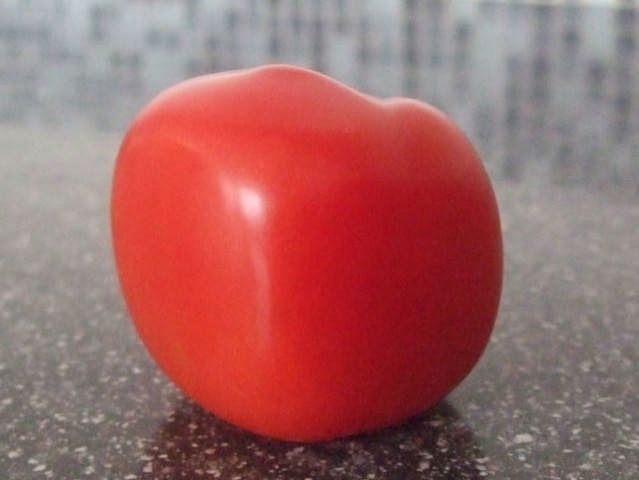
Gordie “Jack” Hanna was a UC Davis professor who
helped revolutionalize the tomato industry. In the early
1950s, there was a lack of labor to manually harvest
tomatoes in California. In the 1950s, Jack Hanna bred a
tomato that was firmer skinned and less rounded (so it
wouldn’t roll off the conveyors), which was dubbed the
“square tomato”. He then went on to work on a
mechanical harvesting machine. By 1962, 85% of
California’s tomatoes were machine harvested.

Personal note: My husband was part of this transition. As
a high school student, he picked tomatoes in Davis as a
summer job. By the time he was a UC Davis student, the machine harvesters had taken over. He held
jobs on the harvester (manually picking out the green tomatoes) and in the Hunt-Wesson factory.
Picking & Processing
To avoid the daytime heat, tomatoes growers often
harvest the crop after sunset. Mechanical harvesters
move through the fields picking the entire tomato plant
and shaking the tomatoes
off the vine. Specially designed electronic sensors on the
harvesters sort the ripe, red tomatoes from the vine and
transfer them into a gondola pulled by a tractor following
alongside. The tomatoes are immediately transported
from the fields by trucks, which can hold approximately
50,000 pounds of tomatoes (about 300,000 tomatoes. 6
X 50,000). Trucks haul the crop to a nearby state-
controlled grading station to be graded, then on to a
tomato processing plant where they are peeled, sliced,
diced, or sauced into the familiar canned tomato products seen on store shelves.
Misc
Why are tomato trucks uncovered? Time. During the height of the season, California tomato
growers are producing 40,000 tuckloads of tomatoes per week! The other main reason is that
since tomato harvest is in the summer covering the trucks could result in the tomatoes being
damaged by the trapped heat.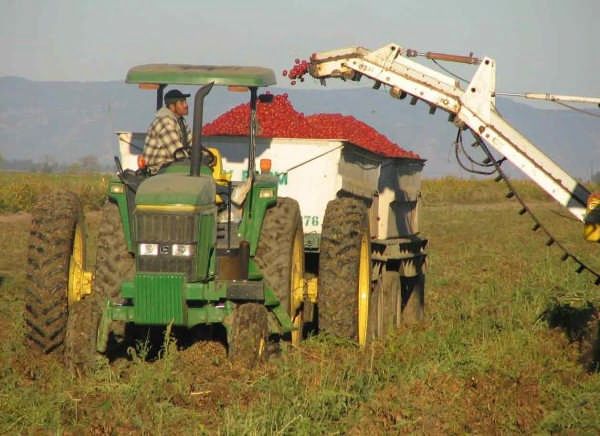
California's tomato season is in its peak from July through September when harvesters run 24
hours a day. The season, however, actually runs a full six months, beginning in June and
running all the way through November
Are tomatoes fruits or vegetables? Technically a tomato is a fruit, since it is the ripened ovary
of a plant. But in 1893 the supreme court ruled in the case of "NIX v. HEDDEN" tomatoes were
to be considered vegetables.
Among all vegetables except potatoes, tomatoes contribute the greatest amount of nutrients to
the American diet. Each man, woman and child in America consumes almost 80 pounds of
tomatoes every year
Sources:
http://www.yolocounty.org/Modules/ShowDocument.aspx?documentid=9792
http://www.ctga.org/index.php?option=com_content&view=article&id=26&Itemid=25
http://www.atasteofyolo.com/featured-personalities/yolo-countys-star-crop---processing-
tomatoes.html
http://www.pcoastp.com/doc.aspx?page=id|5098
http://www.cfaitc.org/Commodity/pdf/ProcessingTomato.pdf
http://en.wikipedia.org/wiki/Gordie_C._Hanna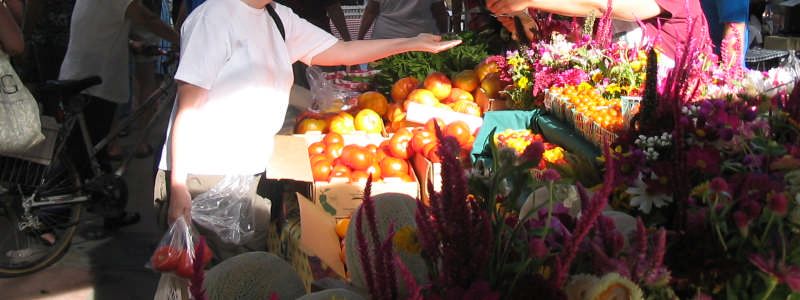
Farmers’ Markets & CSAs:

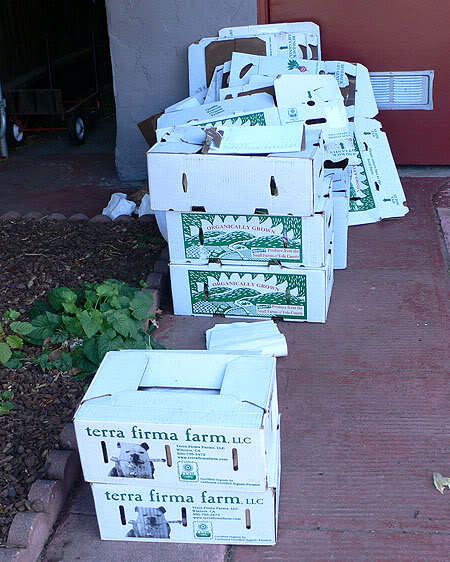
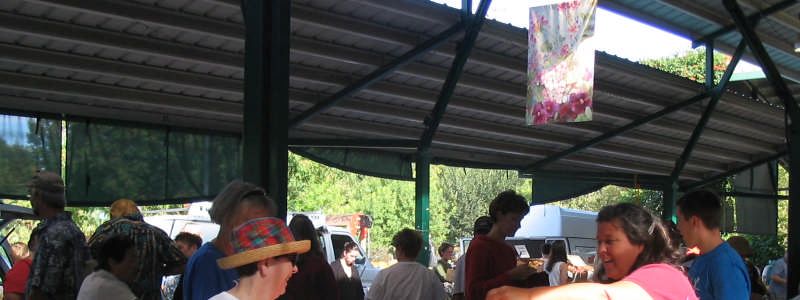
Both Farmers’ Markets and CSAs tend to be sell from small,
organic farms that grow a variety of products. Buying from these
sources, the produce you get is what is in currently in season
where you live. (Very different from a grocery store, where the
produce is shipped from around the world.)

Background on Certified Farmers’ Markets
Until 1977, regulations required farmers to properly pack size,
and label their fresh fruits, nuts, and vegetables in standard
containers to transport and sell in markets anywhere other than the farm site. Certified farmers'
markets in 1977, by Department regulations, exempted farmers from packing, sizing, and labeling
requirements.

The Direct marketing of agricultural products through CFM's benefits the agricultural community and
consumers. CFM's provide a flexible marketing alternative without disrupting other produce marketing
systems. The high quality and fresh produce brought to the CFM's by its' producers creates a diverse
market and also provides the consumer with opportunity to meet the farmer and learn how their food
supply is produced.

CFM's provide a great opportunity for small farmers to market their products without the added
expenses of commercial preparation. This increases their net income and makes it possible for them
to stay in business.
Community Supported Agriculture (CSA)

Community Supported Agriculture consists of members or "share-holders" of a farm or garden who
cover the anticipated costs of the farm operation and farmer's salary. The consumer joins a CSA
program and purchases, in advance, a share of the farm’s crop, and in exchange is provided a part of
the crop each week, delivered to a predetermined pick-up spot, usually near the customer’s home or
work-site.
Sources:
http://www.yolocounty.org/Index.aspx?page=1198
http://www.atasteofyolo.com/yolo-farms/yolo-countys-community-supported-agriculture-csa.html
http://www.goodhumus.com/pages/pic%20page.htm
You can also read


