ZARAGOZA / THE CROSSROADS
←
→
Page content transcription
If your browser does not render page correctly, please read the page content below
ENGLISH

ZARAGOZA
/ THE CROSSROADS
CHOOSE YOUR PATH. ITS PIVOTAL LOCATION HAS SEEN THE
PROVINCE OF ZARAGOZA SHINE WITH THE LIGHT OF VARIOUS
DIFFEERENT CULTURES THROUGHOUT THE COURSE OF ITS HISTORY.
/2
     Cover: photograph by Jiuguang Wang (7th in the Wiki Loves Monuments Competition 2012) available under license CC-BY-SA 3.0
CHOOSE YOUR PATH. THE PROVINCE OF ZARAGOZA IS A GROUP OF
  TERRITORIES WHOSE PRIVILEGED LOCATION HAS ENABLED THEM TO
  LEARN AND BENEFIT FROM ALL THEIR CULTURES. SNAKING THROUGH

Choose   your path
  LAND WHICH CHANGES SKIN FROM WOODED MOUNTAINS TO DESERTED
  STEPPE, FROM UPLANDS TO VALLEYS, THE RIVER EBRO IS THE
  BACKBONE OF THE PROVINCE OF ZARAGOZA.

 / ZARAGOZA
  THE CROSSROADS
  This river has watched various different cultures come and go,
  leaving their enduring legacy of historical monuments. The idea of
  a historical crossroads is what best defines these lands, which link
  Spain with Europe and the Mediterranean with the Cantabrian.
  Zaragoza, the crossroads. Successive civilisations have shaped
  the character of its inhabitants as friendly, charming and open.

  < La Aljafería.
  Interior of La Seo.
  La Sierra del Moncayo.
  Statue of Caesar Augustus, founder of the city of Zaragoza.
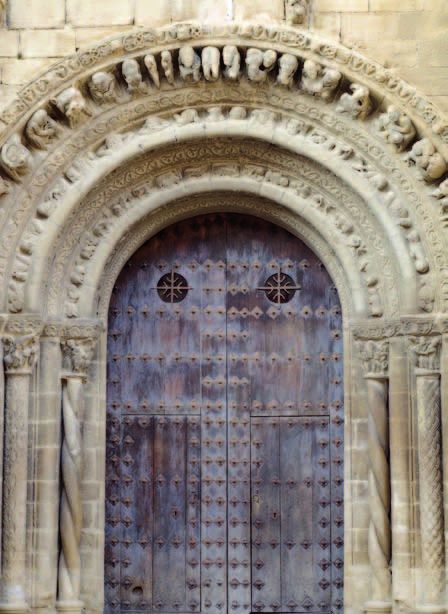
  Entranceway of Santa María in Uncastillo.

                                                                         /3   /3
“    FROM UPLANDS TO VALLEYS, THE RIVER EBRO IS THE
     BACKBONE OF THE PROVINCE OF ZARAGOZA. THIS
     RIVER HAS WATCHED VARIOUS DIFFERENT CULTURES
     COME AND GO, LEAVING THEIR ENDURING LEGACY OF
                                                                 “
     HISTORICAL MONUMENTS.

     MUST-SEES
     This icon indicates tourist attractions of outstanding beauty or interest, which
     should not be missed.

     TO BE DISCOVERED
     This icon indicates less well-known tourist attractions which are equally
     interesting.

/4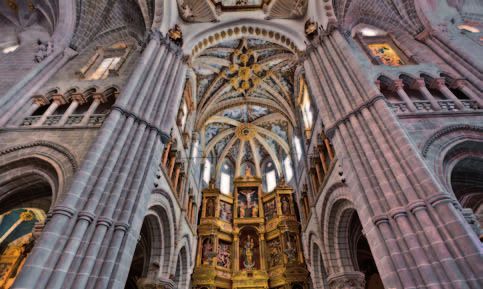
01/                                                                        02/
 ZARAGOZA,                                                                  ZARAGOZA,
 THE CROSSROADS                                                             PROVINCIAL CAPITAL
 Successive civilisations have                                              More than two thousand years
 shaped the character of its                                                of history have created a great
 inhabitants as friendly, charming                                          melting-pot of cultures and a
 and open.                                                                  dynamic and modern city.

                                     03/
                                     LAS CINCO VILLAS                   1
                                     Getting to know the extensive
                                     cultural and natural heritage of
                                     this region is a lesson from the
                                     past in enjoying the present.

04/                                                                         05/
EL MONCAYO                                                                  CALATAYUD AND
A mountain with the name of                                                 DAROCA
a person, an assortment of                                                  This is Mudejar territory.
landscapes, a setting full of                                               Historic cities looking
legends and a historic heritage                                             out from their walls onto
that cries out for more than just                                           prosperous lands with an
one visit.                                                                  exceptional location.             Zaragoza Museum. Prado Museum collection. Image: José Garrido.

                                     06/
                                     OTHER PLACES TO
                                     VISIT
                                     And there’s more: the
                                     province has a great
                                     diversity of scenery in a land
                                     characterised by its startling
                                     contrasts.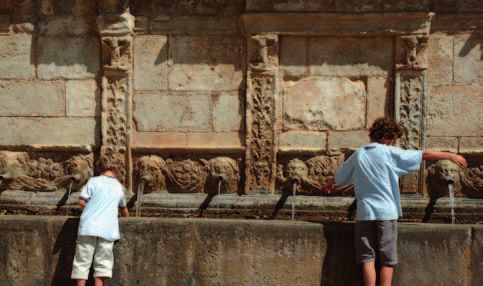
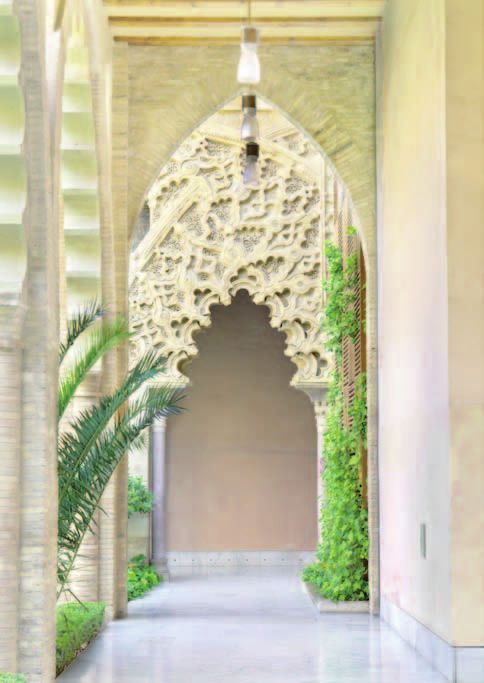
La Aljafería Palace.                                          Patio de la Infanta (IberCaja building).

HAIL CAESAR! MORE THAN TWO THOUSAND YEARS OF HISTORY HAVE
CREATED A GREAT MELTING-POT OF CULTURES AND A DYNAMIC AND
MODERN CITY.

/ ZARAGOZA, PROVINCIAL
CAPITAL
In Zaragoza there’s no time to get bored be-                      group of Mudejar towers stand out: San Pablo, la Mag-
cause there’s always something enjoyable to                       dalena, San Gil and San Miguel, all UNESCO World Her-
do. How about a stroll around the remains of                      itage sites. And the distinguishing features of this style
                                                                  are also stamped on many of the surrounding villages:
the Roman city?                                                   Alagón, Utebo, Monzalbarba, Peñaflor, La Puebla de
Beside the enormous stones of the sturdy walls, the               Alfindén and Alfajarín, amongst others.
statue of the emperor Augustus looks over the city
                                                                  The city’s prosperity during the Renaissance is evident
that he founded. At the other end of the Plaza de las
                                                                  in the buildings which take you by surprise as you turn
Catedrales is the underground Museum of the old Ro-
                                                                  every corner in the historic quarter. La Lonja and pal-
man Forum and close by, next to the River Ebro, is the
                                                                  aces such as Sástago, los Luna, Montemuzo, Torrero,
Museum of the old Roman river port. In the old quar-              Morlanes and above all the spectacular Patio de la In-
ter, you can visit the Museum of the Public Baths and             fanta are examples of this thriving period in the city’s
nearby, that of the Theatre, one of Hispania’s biggest            past.
auditoriums.
                                                                  Who hasn’t heard of Goya? Zaragoza is the perfect place
But if Zaragoza flourished in Roman times, it would               to get a close view of his works, such as the frescos
do so again under Moorish rule. In the 11th Century,              decorating some of the domes and supports of the Ba-
Saraqusta became the political and cultural capital of            silica del Pilar and the murals in the nearby Carthu-
a prominent taifa (Moorish prinicpality) of Al-Andalus.           sian monastery of Aula Dei. The Museum of Zaragoza
You can see this for yourself walking through the pa-             has devoted one of its most important sections to his
tios of the palace of La Aljafería, one of the crowning           works, and in the Ibercaja Camón Aznar Museum you
achievements of hispano-islamic art and currently the             can see his series of etchings and an interesting collec-
seat of the Aragon Regional Government. The beautiful             tion of paintings. There is also a portrait of Fuendetodos
interlace and mulitfoil arches of its patio de Santa Isabel       painted by the artist in the Diocesan Museum.
combine with the murmur of the water and the aroma
of oranges, transporting you to the world of the Thou-            1/ El Pilar.                           3/ Wall of La Parroquieta.
sand and One Nights. In the silhouette of the old city, a         2/ La Seo del Salvador.                4/ Tapestry Museum of La Seo

/6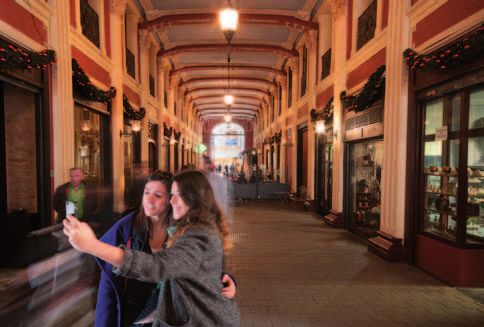
1/
 / THE BASILICA
 OF EL PILAR
 AND LA SEO
 On the banks of the Ebro rises the unmistakable out-
 line of the Basilica of el Pilar, the quintessential icon
 of Zaragoza. Spain’s largest baroque place of wor-
 ship, it is also an important pilgrimage destination,
 forming part of the Ruta Mariana. And there are ar-
 tistic treasures to be found inside: the Santa Capilla,
 with the image of the Virgin Mary, the alabaster al-
 tarpiece by Damián Forment, the magnificent Coro
 Mayor (choir) and the marvellous frescos decorating
 the cupolas, especially the two painted by Goya.
 Just a few metres from El Pilar is the splendid Ca-
 thedral of San Salvador, La Seo, an eclectic com-
 bination of artistic styles. An outstanding feature of
 the exterior is the wall of the chapel of San Miguel,
 a masterpiece of Zaragoza Mudejar and inside is a
 Gothic main altarpiece of multicoloured alabaster.
 Its Tapestry Museum houses an extraordinary and
 unique collection of Flemish tapestry.
 .
                                                             2/
      4/

3/

                                                              Posibilidad de visitas guiadas
                                                              + Info: www.diocesisjaca.org
                                                                  974 36 21 85/ 974 35 63 78
 /7
The city’s collection of museums is completed by the
Pablo Gargallo and Pablo Serrano Museums, both de-
voted to contemporary sculpture.
In Zaragoza, Modernist architecture is evident mainly in
private dwellings and is particularly noticeable in the deco-
ration of their facades. Good examples can be seen along
the Paseo Sagusta and in the main streets of the old quar-
ter. There are also interesting civic buildings such as the
Central Market and the bandstand of the Parque Grande.
This park, also known as the José Antonio Labordeta
Park, together with the Parque del Agua, are the lungs
of the city, where locals stroll and enjoy sporting activities.
Zaragoza is a modern and dynamic city, bustling with
economic and social activity. It is also a renowned con-
ference location, renovated and improved after the In-
ternational Exhibition of 2008. The Pabellón Puente,
Torre del Agua, Acuario and the Aragon Conference
Centre make up its splendid legacy of infrastructures.
Zaragoza also offers a superb range of shopping centres,
above all its Puerto Venecia, awarded the MAPIC 2013
prize for the world’s best leisure and shopping centre.
Fiestas in Zaragoza have proper nouns: Pilar, round Oc-
tober 12 with the famous Flower and Fruit Offerings,
                                                                  Modernist building in the Central Market.
declared to be National Touristic Interest, and the Holly
Week, International Touristic Interest.
                                                                  / Etching by Goya. Self-portrait.
                                                                  2/ Calle Alfonso I, bustling with activity.
                                                                  3/ Pasaje del Ciclón, with its bars and restaurants

       ZARAGOZA’S TAPAS

One of the best ways to enjoy Zaragoza’s super atmosphere is to
take a tour of its varied and delicious culinary specialities.
The area most famous for its tapas is in the old quarter, in par-
ticular the area of el Tubo and the plazas of Santa Marta, San
Miguel and Santa Cruz, where you can find both traditional es-
tablishments with a long history and new places showcasing im-
agination and good taste.
But in a city li ke Zaragoza, it would be unfair to limit yourself to
the oldest areas. There are many other districts with a range of
atmospheres and different things to offer, such as the University
area, with its throng of students. Every year in Zaragoza, there
are tapas competitions to test the imagination of the chefs and
the loyalty of the customers. Thanks to these contests, tempt-
ing creations are developed which combine high-quality produce
with painstaking presentation.

Guided culinary tours from Zaragoza
Tourism: Saborea Zaragoza y Chocotour
More Info:       902 14 20 08 www.zaragoza.es

/8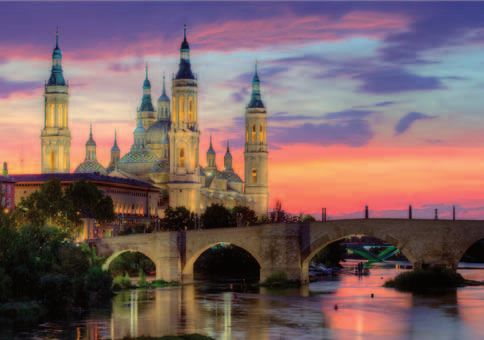
1/        2/

3/

     Callejuelas en el pueblo de Albarrcín

                                             /9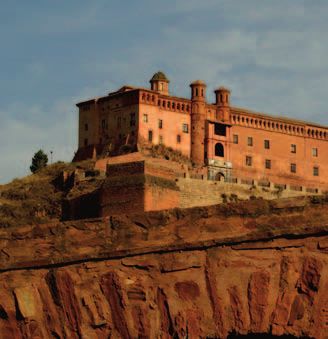
ZARAGOZA

                                                                                                           Fotografía: Agustin Martínez
      MUSEUMS

      Roman Museums
      Museum of the Public Baths of
      Caesar Augustus
      Museum of the Forum of Caesar Augustus
      Museum of the River Port of Caesar Augustus
      Museum of the Theatre of Caesar Augustus

      Pablo Gargallo Museum
      Museum dedicated exclusively to the work of
      the Aragonese sculptor Pablo Gargallo.

      Camón Aznar Museum                                   José Antonio Labordeta Park.
      Dedicated to painting, with works ranging from
      the 14th to the 20th Century. Of special interest
      is the Goya gallery which contains his four great
      series of etchings.

      Museum of Zaragoza
      This museum has sections devoted to Antiquity
      and Fine Arts.
      The Ethnology and Ceramics sections are
      housed in the Casa de Ansó and Albarracín in
      the José Antonio Labordeta Park.

      IAACC Pablo Serrano
      The Pablo Serrano Aragonese Institute of Art
      and Contemporary Culture is dedicated to not
      only Aragonese but national and international
      contemporary culture and the Aragonese               Zaragoza conference centre, in the Expo area.
      sculptor whose name it bears.

      Diocesan Museum of Zaragoza
      Romanesque, Gothic, Mudejar and Renaissance
      rooms, with important architectural features
      recovered from the restoration of the
      Archbishop’s Palace.

      Museum of Fire and Firefighters
      A collection which ably illustrates the reality of
      firefighters of yesterday and today.

      Educational Museum of Origami
      Meeting place for aficionados of paper-folding
      from all around the world. Located in the
      Centro de Historias de Zaragoza.
                                                           Floral tribute during the Fiestas del Pilar.

      More info:      902 14 20 08 and 902 47 70 00
                                                                        FURTHER INFORMATION
                                                                        www.zaragozaturismo.es

/10
/ LAS CINCO
VILLAS
YOU’VE GOT A DATE WITH HISTORY.
GETTING TO KNOW THE EXTENSIVE
CULTURAL AND NATURAL HERITAGE OF
THIS REGION IS A LESSON FROM THE
PAST IN ENJOYING THE PRESENT.
The sky over Tauste seems to rest on the slender
Mudejar tower of the Church of Santa María. Its
crenellations give it a fortified appearance, typical
of the region. The town’s other important church
is San Antonio Abad, with a startling mix of
artistic styles..
Ejea de los Caballeros, regional capital, is a busy town
with another traditional fortress-style church, San Sal-
vador, standing out on its skyline. Its interior has a mag-
nificent main altarpiece, one of Spain’s most notable sur-
viving examples of the international Gothic style.
The town’s other churches, including Santa María de la
Corona, are also worth a visit.
Sádaba has a splendid maze of streets, with solemn
buildings and some beautiful mansions with projecting
eaves. The elegant Church of Santa María, a fine exam-
ple of Aragonese Gothic, draws the eye with its slender
tower. On the other side of the river, the spectacular 13th-
century castle dominates the town with its seven towers.
There are also Roman remains, such as the Mausoleums
of los Atilios and La Sinagoga.
Uncastillo is one of Aragon’s most charming settle-
ments. At its highest point, there are remains of its outer
walls, from which emerge its 13th-century keep. The
town maintains its medieval flavour with its seven Ro-
manesque churches. Of these, the 12th-century Church
of Santa María la Mayor stands out for the beautiful capi-
tals in its apse, its splendid facade and its unusual for-
tress tower. It is one of the best examples of the Roman-
esque. San Martín de Tours, Religious Art Centre of the
Pyrenean Foothills, and San Juan, with its 13th-Century
Byzantine paintings are also must-sees.
< Entranceway of the Church of Santa María in Uncastillo.
/11Palatial mansions, such as the Renaissance Town Hall, the Sos del Rey Católico is one of Aragon’s most beautiful vil-
Gothic Palace of Martín el Humano and the Marketplace lages, one of those places that inspires you to seek out the
complete the roll-call of the town’s historic monuments. signs of its past.
To the south of the Santo Domingo mountains is Luesia, one The Medieval Area of Sos is comprised of handsome stone
of the area’s prettiest localities and a starting point for a vari- houses, wooden eaves, facades with dressed white stone
ety of excursions whether hiking, cycling or horse-riding. The and coats-of-arms, Gothic and Renaissance windows and
town has splendid Aragonese Renaissance buildings featur- cobbled streets.
ing high galleries and carved wooden eaves, such as can be At the top of the village rises the castle’s 12th-century Keep
seen on the Town Hall. The old Jewish quarter is interest- and at its feet, the lanes and alleyways of the old Jewish
ing and still retains the synagogue’s entrance archway. The Quarter lead down the hill. Step by step, you can discover
Romanesque also leaves its mark on the Churches of San places like the Main Square, the arcade-lined marketplace,
Salvador, with its marvellous entrance, and San Esteban. the Renaissance Town hall and grand mansions, such as
Biel is a lovely town located in the equally lovely surround- the Palace of Sada, where Ferdinand El Católico was born and
ings of the Santo Domingo Mountains. Spreading out from the Español de Niño Palace.
the central 11th-century castle is a delightful group of houses,
both humble and palatial. Together with the old Jewish quar-
ter, this makes for a pleasant stroll. 1/ Ejea. Church of San Salvador. 4/ Los Aguarales de Valpalmas.
2/ Sádaba Castle. 5/ Santo Domingo Mountains.
3/ Pigalo Pothole in Luesia.
1/   2/

3/   4/

5/
/12ROMAN SITE OF
LOS BAÑALES
Los Bañales is one of Aragon’s most significant Roman ar-
chaeological sites, located barely 15 km from Uncastillo. It
is a settlement dating from the 1st to the 4th centuries, di-
vided into two zones: the remains of a village of indigenous
origin and a built-up area. In the latter, the bath-house is
the best of its type in Aragon. An aqueduct was built to bring
water to the settlement, of which 32 large stone pillars of
uneven size remain.
Tours: Fundación Uncastillo
More Info: www.fundacionuncastillo.com
976 67 91 21
Outstanding examples of its Romanesque heritage are the
Churches of San Martín de Tours and San Esteban. The
latter, begun in the 11th Century, has a beautiful collection
of Gothic frescos in its crypt.
Sos del Rey Católico is a starting point for a route through
the Val D’Onsella, which is well worth discovering. This
is a valley with half a dozen small and evocative villages
such as Navardún, with its slender medieval tower,
Urriés, Lobera D’Onsella and Longás, where the charm
of rural life meets that of the Pyrenean foothills
FURTHER INFORMATION
www.comarcacincovillas.com
See icons, p.27
Streets and view of Sos del Rey Católico.
/13ENTER A WORLD OF MAGIC.
A MOUNTAIN WITH THE NAME OF
A PERSON, AN ASSORTMENT OF
LANDSCAPES, A SETTING FULL OF
LEGENDS AND A HISTORIC HERITAGE
THAT CRIES OUT FOR MORE THAN JUST
/ EL MONCAYO ONE VISIT.
Upriver from Zaragoza, you can make out
in the distance the unflinching stare of an
enormous, “solitary mountain”, which the
Romans called “mons Caius”. And as you
approach, it seems to grow.
Arriving at Borja, of Celtiberian origin, don’t miss the old
Jewish quarter and its streets lined with manor houses,
convents, Renaissance palaces and places of worship, es-
pecially its magnificent collegiate church. Five kilometres
away, you can also visit the Santuario de la Misericordia.
The Castle of Trasmoz, at the foot of Moncayo, has been
the inspiration for several legends. In the popular imagina-
tion, it has been transformed into a place of witches and
their covens, perhaps because it was once a place where
money was counterfeited. There is a splendid view of the
valley from its keep.
It is not surprising that during his stay in the nearby
Monastery of Veruela, the poet Gustavo Adolfo Béquer
was inspired to include some of its legends in his work
Desde mi celda (‘From my Cell’).
But now it is time to let yourself be bewitched by the
Nature Park of El Moncayo, the highest point of the Sis-
tema Ibérica range.
Trasmoz Castle.
/14Nature Park of El Moncayo
Dominating the steppes of the Ebro Valley and the páramos of Its rich biodiversity includes a wide range of animal life, especially
Castile, both Aragonese and Castilian, this Nature Park has two birds, with more than 100 species logged.
very different faces.
Its northern aspect, colder and wetter, is a place for country
walks uphill through woods of oak, beech and pine until you FURTHER INFORMATION
reach the summit, where you can look out over a spectacular www.turismotarazonayelmoncayo.es
panorama.
Añón de Moncayo, Litago, Lituénigo, San Martín de Moncayo
and Alcalá de Moncayo are all charming villages. INFORMATION OF INTEREST
Its southern (or ‘hidden’) aspect is less well-known, despite AND RECOMMENDATIONS
the Mediterranean charm of its limestone hills, caves, crags and Visitor Centres of Agramonte and Añón del Moncayo.
gorges. In this area, you can find picturesque villages like Puru-
josa, perched on a crag, and Calcena, hidden within woodlands Check the weather forecast before setting off on any
and ravines. mountain activity.
A DAY IN THE MONASTERY
OF VERUELA
In Vera de Moncayo, at the foot of the mythical mountain,
is the Cistercian monastery of Veruela, one Aragon’s most
important monastery complexes.
Veruela is surrounded by a turreted wall, lending it the air
of a fortress. A romantic tree-lined avenue allows entry
through the wall and leads to the imposing main entrance
of the church, decorated with archivolts. The interior is
comprised of three naves with ribbed vaults, one leading
to the beautiful cloister which is the jewel of the monas-
tery. This has a Gothic lower section and a richly decorated
plateresque upper gallery. Opening onto the cloister are
several chambers such as the Gothic lavatorium, the refec-
tory, the scriptorium and the chapter house, with a splen-
did entranceway and ribbed vaults.
Before leaving the complex, you can visit the Wine Muse-
um of the Campo de Borja Denominación de Origen, which
has an interactive exhibition on the local wine-producing
tradition
Guided tours can be arranged.
Closed Tuesdays.
976 64 90 251/
/ TARAZONA
BISECTED BY THE RIVER QUEILES,
TARAZONA HAS A RICH HERITAGE AND
IS ONE OF ARAGON’S PRETTIEST AND
MOST UNUSUAL TOWNS.
The Cathedral of Sant María de la Huerta is
a beautiful example of Gothic architecture,
enriched with Mudejar elements.
There is also the unusual octagonal old Bull Ring, the
town hall, with its impressive Renaissance facade, and
other monuments such as the Church of la Magdalena
and the Palacio Episcopal. A fine end to your walk is
to explore the narrow and winding alleyways of the old
Jewish quarter, part of the Red de Juderías de España
2/
(Network of Spanish Jewish Quarters).
Tarazona also has an original and highly popular fiesta,
El Cipotegato, on the 27th August and designated of
National Tourist Interest.
1/ Town hall facade. 3/ Tarazona fiestas. Cipotegato.
2/ General view. 4/ The cathedral interior,
3/
TARAZONA CATHEDRAL
Regarded as the Sistine Chapel of the Spanish
Renaissance, the cathedral has undergone resto-
ration to regain its former splendour. The original
French Gothic building was embellished in the
14th Century with Mudejar additions. Inside there
are surprisingly beautiful grisaille murals and
16th-century ribbed vaults. No less interesting is
the cloister, whose windows are decorated with
plasterwork in geometric designs.
A real jewel, well worth a visit.
Guided tours. Tickets on sale at the
entrance to the cathedral.
More Info: www.tarazonamonumental.es
Tourist office: 976 64 00 74
/16WINE TOURISM
IN THE PROVINCE
There is a different way to get to know this region: sip
by sip, uncovering the secrets of its wine.
Many vineyards organise activities teaching how to ap-
preciate not only this important product but also a local
way of life.
The Cariñena Denominación de Orígen is the old-
est and it maintains a careful balance of tradition and
response to new consumer demands. Don’t miss the
fascinating Wine Museum in Cariñena, where you can
immerse yourself in this sensual world.
D.O. Calatayud wines are smooth and balanced,
well-suited to the palates of the current market. The
museum of this designation of origin is in the Piedra Sampling the wines of the province.
Monastery.
The monks of the Monastery of Veruela were the first
in the area to cultivate the Garnacha variety, which is
perfectly adapted to the climatic characteristics of the
Campo de Borja D.O. and gives it a unique character.
Here you can visit the Campo de Borja Wine Museum.
+ Info: www.docarinena.com
www.docalatayud.com
www.docampodeborja.com
Old vines in Cariñena.
4/
6 /17Contradanza de Cetina, an unusual fiesta of Regional Tourist Interest. Mudejar style Tobed Church
THIS IS MUDEJAR TERRITORY. HISTORIC CITIES LOOKING OUT FROM THEIR
WALLS ONTO PROSPEROUS LANDS WITH AN EXCEPTIONAL LOCATION.
/ CALATAYUD AND DAROCA
The history of Calatayud dates back to the foun- Following the River Jiloca, you can find the churches of
dation of the Roman Bíbilis, whose site a few Maluenda and Morata de Jiloca, with an impressive exte-
kilometres from the city makes for an interest- rior. And beside the River Jalón stand the handsome tow-
ers of Ateca, La Almunia, Lumpiaque, Urrea de Jalón
ing visit. The Castle of Ayub, from which the city and Ricla, and churches such as Épila, Belmonte de
derives its name, is from the Moorish era. Gracián and Tobed.
Moorish influence lasted for centuries and is still visible in In Nuévalos, there is the famous and splendid Piedra
excellent Mudejar works of art. These include the church- Monastery. There are also spectacular ravines and steep
es of San Andrés, San Pedro de los Francos and Nuestra canyons in Las Hoces del Jalón, downriver from Calat-
Señora de la Peña, as well as the collegiate churches of ayud, and also along the River Mesa in the Jaraba area.
Santa María and Santo Sepulcro.
Not far away, several thermal spas can be enjoyed in
You can feel the medieval atmosphere while wandering Alhama de Aragón, Paracuellos de Jiloca and Jaraba.
the narrow, winding streets of the old Jewish quarter. The With modern facilities perfect for relaxation, they are set
Church of San Juan el Real contains supports painted by in prime natural locations which are also ideal for hiking.
the young Goya.
The Contradanza de Cetina is a unique and spectacular
Mudejar buildings, with their beautiful exterior and interior part of the Fiesta de San Lorenzo on the 19th May. Under
decoration, can be seen in many of the area’s localities. the full moon, eight men with flaming torches, dressed in
The following are just a few. costumes reminiscent of skeletons, dance under the di-
Down the River Ribota are Torralba de Ribota, Cervera de la rection of a ‘devil’.
Cañada and Villarroya de la Sierra, with their fortified church-
es, and the church and tower of Aniñón. In the Aranda Valley,
you can discover the coffered ceilings of the castle of Mesones
de Isuela, the palace of Pope Luna in Illueca and Traditional FURTHER INFORMATION
Mudejar plasterwork inside the church in Brea de Aragón. www.comarcacalatayud.es
/18/ WALKING AROUND
THE PIEDRA MONASTERY
REVEL IN NATURE IN A PLACE OF DAYDREAMS, WHERE THE SOUND
OF THE WATER GUIDES YOU THROUGH A SURPRISING LANDSCAPE.
This old 12th-century Cistercian monastery is lo-
cated in a park where the River Piedra has spent
millennia carving the rock into stunning waterfalls
and caves.
This nature park is a fantastical garden created by the
river, with a succession of varied and beautiful water-
falls. The Lago del Espejo, cascada Caprichosa, Baño
de Diana and Cola de Caballo, a waterfall of 50 metres
in height, behind which the spectacular Gruta Iris cave
is hidden, will transport you to paradise.
The park is home to dense riverside woodlands and
an ecosystem of enormous diversity, with numerous
animal and plant species, and a great variety of huge
hundred-year-old trees.
You can complete your walk with a guided tour of the
12th-century Cistercian monastery. In high season, you
can also enjoy bird of prey exhibitions.
Open all year.
Guided tours of the monastery: 902 19 60 52
More Info: www.monasteriopiedra.com
/19 /19SPAS WITH HISTORY
In the foothills of the Spanish Pyrenees, water
and rock have created beautiful scenery which
make a perfect place for relaxation and hydro-
therapy treatments.
Since ancient times, the spas of Alhama de
Aragón, Jaraba and Paracuellos de Jiloca have
used their mineralised medicinal waters in the
prevention and treatment of pain. Complement-
ed by medical services and first-rate facilities,
they currently provide a wide variety of special-
ised treatment.
And what’s more, these spas have been trans-
formed into complete relaxation centres where
you can take a break from the stresses of daily life.
Their marvellous natural surroundings are also
perfect for activities such as hiking and cycling.
In all, modern facilities and a welcoming atmos-
phere create a tranquil environment which is the
perfect setting for thermal treatments.
More Info: www.balneariosdearagon.com
PALACE OF POPE LUNA
IN ILLUECA
Crowning the village on a rocky spur is the
palace where Pope Bendict XIII was born and
grew up.
Its original structure dates back to the 14th
Century, showing the Italianate influence that
so influenced the Aragonese Renaissance
style.
Inside there is splendid baroque-Mudejar
plasterwork decoration and outstanding cof-
fered ceilings. Of particular interest is the
magnificent decoration of the 15th-Century
Sala Dorada, the staircases, the Sala de los
Arcos and the chapel.
+ Info: www.comarcadelaranda.com
Guided tours: Tourist Offices
Illueca: 976 82 02 70
Brea de Aragón: 976 82 41 41
/20Crossing through Daroca’s gateways takes us
back into bygone ages. The Portal de Valencia,
Puerta Baja and Puerta del Arrabal gateways,
LAGUNA
which guard the entrances through the city DE GALLOCANTA
wall, offer a majestic welcome.
Inside, the historic area has a splendid old Jewish quarter. Situated on a plain at 1,000 metres in alti-
The collegiate church of Santa María holds the Sagrados tude is a wetland area unique in Spain for
Corporales, central to the 13th-century tradition of the Mira- its biological diversity.
cle of Daroca. Its strategic location means that every
You can also visit the Romanesque church of San Miguel, year various species of aquatic bird use
with extraordinary and highly coloured Gothic murals. The the lagoon as an overwintering site or as
churches of San Juan de la Cuesta and Santo Domingo de a migration stop. It is particularly famous
Silos are two beautiful examples of 12th-century Roman- for its large concentrations of cranes,
esque buildings, finished in the 13th century with Mudejar travelling to warmer climes for the winter.
styling. Lining the steep streets are mansions like the Pala- A great number of other aquatic birds are
cio de los Luna, with remarkable projecting eaves. dispersed throughout the wetlands. And
there is an Interpretation Centre with a
The area is home to one of the most important and com-
fascinating interactive exhibition, as well
plete collections of Gothic painting in the world. There are as waymarked routes and lookout points
altarpieces of great beauty such as those of Langa del Cas- for bird-watching.
tillo, Retascón, Villarroya del Campo, Lechón and Anen-
to. Also of artistic interest are the magnificent examples of
Mudejar art found in the churches of Longares, Paniza,
Encinacorba, Mainar, Villar de los Navarros, Herrera de
Guided tours and walks:
los Navarros, Villarreal de Huerva and Romanos, with
elaborately decorated bell towers. Gallocanta Regional Tourist
Office: 976 80 30 69
Close by is the Laguna de Gallocanta, Spain’s largest
closed-drainage lagoon and an important place of refuge Laguna de Gallocanta visitor centre:
and nesting site for migratory birds, especially cranes. 978 73 40 31
Every spring and autumn, they arrive in their thousands,
flying in tight formation.
FOLLOWING PAGE
FURTHER INFORMATION 1/ Church of San Miguel 3/ Puerta Baja in Daroca.
www.comarcadedaroca.com in Daroca. 4/ Climbing in Las Hoces del
2/ Migas de Romanos, fiestas de Río Piedra.
San Bartolomé. 5/ Fuente de los 20 caños
Cranes at Gallocanta ” in Daroca.1/ 2/ 3/ 4/ 5/
/OTHER PLACES
TO VISIT
SOUTH OF ZARAGOZA
Between the Ebro and Huerva rivers lies a
wildly beautiful landscape which holds fasci-
nating discoveries.
By the banks of the Huerva is Botorrita, location of the
Archaeological Site of Contrebia Belaisca, a Celtiberian
settlement inhabited during the 5th and 1st centuries B.C.
Muel is famous for its traditional pottery. Walking its pic-
turesque streets, you will soon come across numerous pot-
ter’s workshops. And a workshop school, which includes an
exhibition room, keeps the village’s tradition alive.
The Muel Municipal Park, located at the foot of a natural cliff
and enlivened by the waterfalls of the River Hueva, makes
for a pleasant and restful stroll. The dam of the old Roman
reservoir serves as a retaining wall for the lake and as the

                                                                                                                                 Archivo de la Diputación Provincial de Zaragoza
foundations of the Ermita de la Virgen de la Fuente, which
boasts four supports painted by Goya.
Very close by is Fuendetodos, birthplace of the great art-
ist. Here, you can visit the house where he was born, which
has an exhibition of furniture and objects of the era, as well
as the Museum of Etching, where his four most important
series are exhibited.
Fuendetodos still has its neveros, used in the past for stor-
ing winter snow and converting it to ice. Also of interest is
the Espacio de Naturaleza FuendeVerde, aimed at educat-
ing and informing the general public about the environment,
via various activities.
In Azuara, there are remains of the Roman Villa Rustica de
la Malena, whose period of glory dates back to the 4th cen-
tury. The mosaics, which extend over 1,000 metres square,
are its most impressive feature. Contact the local council for
permission to visit.
Around Belchite, you can explore the stunning natural
scenery of Las Estepas, in the Refugio de Fauna Silvestre
La Lomaza and the Bird Reserve of El Planerón.

                                                                  Fuendetodos, Goya’s birthplace.
            FURTHER INFORMATION                                   Traditional pottery in Muel.
            www.campodebelchite.com                               El Planerón Bird Reserve, paradise for great bustards.

                                                                                                                           /23
1/ 2/
Sergis Blog. Creative Commons
HE OLD TOWN OF
BELCHITE
The ruins of old Belchite have been
preserved as a memorial to the
Spanish Civil War and the brutality of
all armed conflict.
Its silhouette, still stubbornly stand-
ing, creates a vivid impression. It
is an overwhelming experience to
roam its silent ruined streets with
their sunken roofs and at the same
time reflect on the horror that was
suffered here not so long ago.
Access to the site is possible only by
guided tours organised by the tourist
office in the new town of Belchite, on
the other side of the road.
Guided tours, daytime or evening
Belchite Tourist Office:
976 80 30 69
More Info: www.belchiteturismo.com
/24LOWER EBRO
When Spain’s greatest river seems almost like
a sea, every meander can surprise you with a LOS GALACHOS
DEL EBRO
gift for the senses..
In Zaragoza, the ox-bow lakes, known locally as gala-
chos, provide shelter to ecosystems of great environ- Los galachos del Ebro are ox-bow lakes
mental importance. formed by a change in the river’s course
or a rise in its level. They have clear wa-
Downriver from Zaragoza, beside Escatrón, the Ebro be-
ter with a diversity of aquatic flora and
gins to twist lazily around the Monastery of Rueda. This is
fauna, and riverside woodlands.
one of the most important Cistercian monastery complex-
es built in Europe between the 12th and 13th centuries. The Juslibol lake, on the left bank of the
There is a simple and breath-taking elegance to its church, Ebro and within the municipal area of
cloister, slender Mudejar tower and the enormous 16-me- Zaragoza, is highly scenic, with an im-
tre waterwheel from which the monastery gets its name. pressive riverside forest at the foot of
an imposing rock wall. Guided walks.
Further downriver are the Saladas de Chiprana, wetlands
important for their variety of ecosystems and diversity of The lakes of Alfranca de Pastriz, La
birdlife. And next is the important town of Caspe. The col- Cartuja y el Burgo de Ebro, are pro-
legiate church of Santa María la Mayor stands in the up- tected under the status of Managed
per part of the town and makes up part of a magnificent Nature Reserve.
citadel, together with the remains of the medieval Castle The Alfranca lake, 15 km from Zarago-
of Bailío. This was where the famous Compromiso de za, is the best preserved, with more
Caspe (Caspe Agreement) was negotiated. than 200 species of bird.
The town stands on the banks of the so-called Sea of
Aragon (Mar de Aragón), with 500 km of inland coastline,
created by the Mequinenza dam. This is one of the most Galacho de Juslibol: Department of
important European destinations for fishing and wa- Environmental Education. 976 72 42 41
ter sports. Species such as catfish, black bass, pike and
zander have put the Mar de Aragón on the global radar, El Carrizal Tourist train, which links
and anglers come from all corners of the continent. Zaragoza with the Juslibol lake.
902 477 000. March-June.
At the other end of the Mar de Aragón is Mequinenza,
location for all types of water sports, including Olympic Galacho de la Alfranca:
rowing. Dominating the town is one of Aragon’s grandest Guided tours: Alfranca International Centre
Gothic castles.
for Water and the Environment.
And in the nearby village of Fabara is the well preserved 976 10 58 40.
2nd-century Roman Mausoleum.
Fishing for catfish in the Mar de Aragón.
1/ Cistercian monastery complex of Rueda.
2/ Mequinenza reervoir or Mar de Aragón.
FURTHER INFORMATION
www.comarcabajoaragoncaspe.com
/25/ PROVINCE Salvatierra
OF ZARAGOZA
de Esca
JACETANIA
Sigüés
A Pamplona
Mianos
Ruesta Artieda
Camino de Santiago
Undués
A Sangüesa de Lerda Bagüés
Sos del Rey Urriés Pintano
Católico Isuerre
Navardún
Longás
Lobera de
Onsella
Biel
Luesia
Castiliscar
Uncastillo
Layana Asín
Sádaba Orés El Frago
Biota
Ardisa
Luna Valpalmas
Ejea de los Puendeluna
Caballeros Erla Piedratajada
Marracos
CINCO VILLAS
NAVARRA Sierrra de Luna
LA RIOJA Las Pedrosas
A Pamplona
A Logroño Castejón de
A Bilbao Valdejasa
TARAZONA Y Novillas
EL MONCAYO Tauste
Mallén
Tarazona
A Soria Torrellas El Buste Pradilla Zuera
de Ebro
Agón Gallur San Mateo
San Martín de la Lituénigo Borja Luceni Remolinos ZARAGOZA de Gállego
Virgen del Moncayo Magallón
Cabañas
Trasmoz Vera de Alberite de San Juan de Ebro Leciñena
Moncayo Bulbuente Ainzón Pedrola RESERVA Villanueva
PARQUE NATURAL Mº de Veruela Alagón NATURAL de Gállego
DEL MONCAYO RIBERA La Joyosa DIRIGIDA Perdiguera
Añón de Moncayo ALTA Figueruelas
Fuendejalón DE LOS SOTOS
Sobradiel Y GALACHOS
Talamantes CAMPO DEL EBRO Grisén
Utebo DEL EBRO LOS MONEG
DE BORJA Pleitas Pinseque Cartuja
CASTILLA Y LEÓN Tabuenca
Plasencia
de Jalón
Bárboles de Aula Dei
Villamayor
Farlete
Purujosa Bardallur de Gállego
Urrea de Jalón
La Puebla de Alfindén Monegri
Trasobares
Pomer Calcena
Lumpiaque Rueda de Jalón Pastriz Alfajarín
A Soria ARANDA ZARAGOZA Nuez de Ebro
Tierga Épila La Muela
Aranda de Cuarte de El Burgo Villafranca de Ebro
Oseja Salillas
Torrelapaja Moncayo
de Jalón VALDEJALÓN Huerva RESERVA de Ebro
Malanquilla Jarque NATURAL
Berdejo Mesones de Isuela Lucena Cadrete DIRIGIDA
Bijuesca Gotor de Jalón María de Huerva DE LOS SOTOS
Clarés Nigüella Y GALACHOS Osera de Ebro
de Ribota Illueca Brea de Ricla Calatorao Botorrita DEL EBRO
Aragón Fuentes Pina de E
Sestrica Chodes de Ebro
Torrijo de Villarroya
de la Sierra
CAMPO DE Mozota
la Cañada Morés Morata La Almunia CARIÑENA Muel
Jaulín
Mediana
Aniñón de Jalón Valmadrid de Aragón
Torralba Saviñán de Doña Godina Alfamén Quinto
Villalengua de Ribota Mezalocha
Cervera de El Frasno Alpartir Longares
COMUNIDAD la Cañada La Puebla
Almonacid
DE CALATAYUD de la Sierra
Villanueva de Albrtón
Embid de Huerva
Santa Cruz Fuendetodos
de Ariza de Grío Cosuenda Cariñena
Pozuel Tobed
de Ariza Ateca Terrer Calatayud Aguarón Belchite
Codo La Za
Ariza Belmonte
Contamina de Gracián Tosos Azaila
Aguilón Almonacid Almochuel
Paracuellos Encinacorba
Cetina Carenas Valtorres de Jiloca Miedes Codos Paniza de la Cuba
Monreal Alhama Azuara
de Aragón de Aragón
de Ariza Letux
Munébrega Aladrén
A Madrid
Torrehermosa Morata Fuentes de Jiloca Herrera de Samper
Ibdes Olvés de Jiloca Torralbilla los Navarros CAMPO DE del Salz Lécera
Nuévalos Montón Langa Vistabella
Alconchel Alarba del Mainar Villareal
BELCHITE
de Ariza Jaraba Villafeliche Castillo de Huerva
Sisamón Monasterio de Piedra
Acered Atea Murero
Luesma Villar de los
Navarros TE
Calmarza Badules Moyuela
Abanto Fombuena
Romanos
CAMPO DE Plenas Moneva
Cimballa DAROCA Daroca
Cubel Balconchán Lechón
Used Anento
Aldehuela San Martín
de Liestos del Río
CASTILLA - Torralba de
Santed
LA MANCHA los frailes
RESERVA NATURAL
Gallocanta
DIRIGIDA DE LA LAGUNA
DE GALLOCANTA
Las Cuerlas
/26TELEPHONE NUMBERS
FOR INFORMATION ICONS
ALAGÓN 976 61 18 14 Capitales
ZARAGOZA Provincialde provincia
capitals
ALHAMA DE ARAGÓN 976 84 01 36
Daroca Capitales
BELCHITE 976 83 07 71 Regional de comarca
capitals
BORJA 976 85 20 01 Utebo Poblaciones
Localities withdemore
másthan
de 2.000
2,000 habitantes
inhabitants
976 85 29 47)
Torrellas Otras
Otherpoblaciones
localities
BREA DE ARAGÓN 976 82 41 41
CALATAYUD 976 88 63 22 Autopistas de peaje
Toll motorways
CASPE 976 63 65 33
Carreteras desdobladas/autovías
Dual carriageways/motorways
DAROCA 976 80 01 29
Carreteras nacionales
National highways
EJEA DE
LOS CABALLEROS 976 66 41 00
Red básica de carreteras
Regional road network
976 67 74 74
Otras carreteras
GALLOCANTA 976 80 30 69 Other roads
GOTOR 626 345 202 Vías de ferrocarril
Railways
ILLUECA 626 345 202
Límites comarcas
JARABA 976 87 28 23 Regional borders
JARQUE 626 345 202 Camino de Santiago
Way of St James
MEQUINENZA 974 46 41 36 Espacios Naturales Protegidos
Protected Natural Spaces
OSEJA 626 345 202
Parques y espacios de ocio
SIGÜÉS 948 88 70 37 Parks and leisure areas
SOS DEL Paradores de Turismo
Tourist Paradors
REY CATÓLICO 948 88 85 24
Conjunto histórico
TARAZONA 976 64 00 74 Historic site
HUESCA 976 19 90 76 Castillos y fortificaciones
Castles and fortifications
TAUSTE 660 789 431
Monasterios
UNCASTILLO 976 67 90 01 Monasteries
ZARAGOZA 976 20 12 00 Catedrales, colegiatas
Cathedrals, collegiate churches
GROS 902 14 20 08
Vinos D.O.
976 28 21 81 D.O.Vineyards
Balnearios
illo 976 78 09 82 Spas
Ruta de Goya
Goya Route
Ruta Mariana
La Almolda Ruta Mariana
A Barcelona
Bujaraloz Aeropuertos
Ebro
Airports
BAJO CINCA Ruta de los Iberos en el Bajo Aragón
RIBERA BAJA BAIX CINCA Lower Aragon Route of the Iberians
DEL EBRO
Gelsa
Velilla Mequinenza
UNESCO world
Patrimonio heritage
Mundial site:
de la UNESCO:
de Ebro
Cinco
Olivas ElThe Way ofdeStSantiago
Camino James
Sástago
aida
Mº de Rueda Mudejar
Arte art
mudéjar
Escatrón Chiprana
Fayón
Caspe
RESERVA NATURAL Nonaspe
DIRIGIDA DE
LAS SALADAS BAJO ARAGÓN-CASPE
DE CHIPRANA Fabara
BAIX ARAGÓ-CASP Bilbao
ERUEL Maella
CATALUÑA
A Tarragona Huesca
Zarag oza
Barcelona
Madrid Teruel
Valencia
902 477 000
365 DAYS/10 am until 8 pm. SevillaZARAGOZA, THE CROSSROADS ZARAGOZA, PROVINCIAL CAPITAL LAS CINCO VILLAS EL MONCAYO CALATAYUD AND DAROCA OTHER PLACES TO VISIT
You can also read


