Zoo Partners Program - 2015 Autumn Report - Asia Programs Photo Stephen Belcher - AAZK
←
→
Page content transcription
If your browser does not render page correctly, please read the page content below
2015
  Zoo
  Partners
  Autumn
  Report
  –
  Asia
  Programs
   1

                                                                   International
  Rhino
  Foundation


        Zoo
  Partners
  Program


                                                                                  Photo
  ©
  Stephen
  Belcher


       2015
  Autumn
  Report
  –
  Asia
  Programs
2015
Zoo
Partners
Autumn
Report
–
Asia
Programs
2
International
Rhino
Foundation
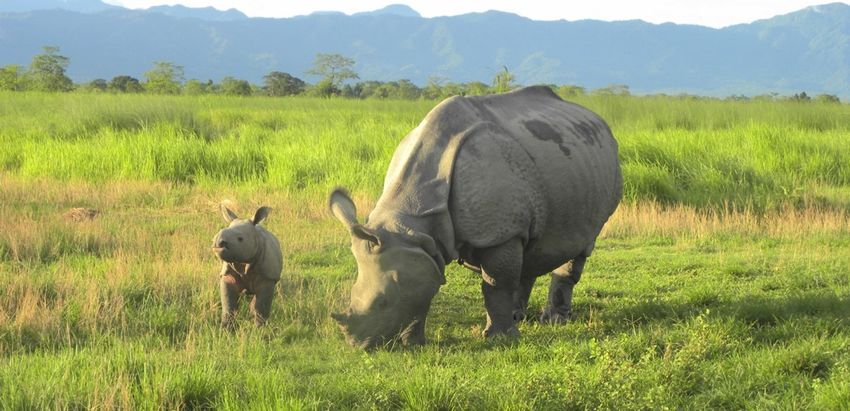
Indian
Rhino
Vision
2020
Photo:
WWF-‐India
Good
news
from
Assam’s
Manas
National
Park
–
in
mid-‐July,
a
translocated
female
gave
birth
to
the
program’s
11th
rhino
calf!
This
calf
is
the
last
surviving
offspring
of
rhino
#2,
one
of
the
first
rhinos
translocated
to
the
park,
and
the
last
of
the
program’s
breeding
males.
Poachers
killed
rhino
#2
last
year.
The
ongoing
political
insurgency
movement,
credited
with
the
last
two
poaching
losses,
led
the
Indian
Rhino
Vision
2020
(IRV
2020)
partners
to
hold
off
moving
any
other
animals
to
the
park
until
security
issues
are
resolved.
The
report
from
the
IRV
2020
Population
Modeling
Workshop
held
in
November
2014,
convened
by
the
Government
of
Assam,
the
IRF,
WWF,
the
IUCN
Conservation
Breeding
Specialist
and
Asian
Rhino
Specialist
Groups,
will
shortly
be
available
for
download
from
the
IRF
website.
The
workshop
was
developed
to
review
progress
with
IRV
2020
translocations
to-‐date
(a)
discussing
and
determining
the
real
numbers
needed
for
the
long-‐term
success
of
the
IRV
2020,
taking
into
account
the
Manas
poaching
losses;
(b)
modeling
predicted
population
growth
rates
and
the
numbers
of
rhinos
needed
to
make
the
translocations
successful;
and
(c)
discussing
ways
to
deal
with
known
threats
as
well
as
unforeseen
events.
The
workshop
focused
primarily
on
Manas
National
Park
and
the
next
reintroduction
site,
the
Laokhowa-‐Burachapori
complex,
but
other
areas
also
were
discussed
and
modeled.
The
next
translocations
are
planned
for
later
this
year;
at
least
six
greater
one-‐horned
rhinos
from
Kaziranga
National
Park
will
be
moved
to
Laokhowa-‐Burachapori.
Preparations
are
well
underway
for
these
moves
-‐
we’ll
keep
you
posted
as
the
details
for
the
translocations
are
finalized.
IRF
India
Intelligence
Specialist
Report,
Quarters
1-‐3
For
the
past
5
years,
the
IRF
has
discreetly
employed
an
Intelligence
Specialist
in
India,
who
operates
across
Assam.
His
remit
is
to
develop
intelligence
networks
focusing
in
the
IRV
2020
investment
areas,
primarily
Manas
2015
Zoo
Partners
Autumn
Report
–
Asia
Programs
3
International
Rhino
Foundation
National
Park
and
the
Burachapori-‐Laokhowa
Wildlife
Sanctuaries,
the
site
for
the
next
translocations.
Below
are
highlights
from
this
year’s
Quarterly
reports.
Quarter
1.
The
intensity
of
rhino
poaching
peaked
in
the
last
quarter
of
2014
and
unfortunately
continued
in
the
first
three
months
of
2015
with
toll
of
ten
rhinos
(from
Kaziranga
National
Park).
Though
this
is
tragic,
it
is
less
than
the
beginning
of
2014
when
13
rhinos
were
slaughtered.
In
2013,
17
rhinos
were
lost.
The
year
began
with
apprehension
of
a
surrendered
United
Kukigram
Defence
Army
(UKDA)
militant
who
had
taken
up
rhino
poaching
during
the
past
few
years.
Our
Intelligence
Specialist,
through
his
network,
obtained
access
to
a
camera
trap
image
of
the
poacher
in
action
inside
the
Kaziranga
National
Park.
The
park
authorities,
despite
having
the
photograph,
could
not
initiate
any
investigations
and
instead
suppressed
the
incident
for
reasons
better
known
to
them.
Rahul
shared
the
same
with
Karbi
Anglong
police
in
complete
secrecy
back
in
June
2014.
The
person
was
identified
through
the
police
profile
dossiers;
however,
he
was
not
traced
until
early
January
2015.
The
poacher
was
arrested
and
admitted
he
had
poached
two
rhinos
in
2014.
He
was
then
taken
to
Kaziranga
for
a
scene-‐of-‐crime
detection,
which
matched
evidence
from
the
two
poaching
incidences.
As
the
modus
operandi
of
poaching
changes,
approach
of
investigations
also
has
to
change.
It
is
no
longer
a
direct
battle
of
enforcement
vs.
crime.
Indirect
methods
also
need
to
be
applied
and
to
do
so
our
Intelligence
Specialist,
in
consultation
with
the
Karbi
Anglong
police,
met
with
the
local
Kuki
tribes
with
that
of
the
poachers’
Paite
tribe
from
Manipur
at
the
Manja
Police
Station.
Invited
were
all
social,
surrendered,
and
over-‐ground
militant
groups
of
Karbi
Anglong
District
to
make
them
aware
of
rhino
conservation
and
benefits
of
saving
wildlife.
They
were
requested
not
to
harbor
poachers
from
adjoining
states
of
Manipur
and
Nagaland
who
come
with
vested
interests
but
leave
a
bad
name
for
the
local
community.
The
result
was
a
resolute
commitment
from
the
groups
to
provide
information
to
stop
wildlife
crime.
The
idea
behind
such
meeting
was
not
only
to
garner
support
but
also
to
send
a
message
to
poachers
that
free
access
to
the
remote
village
routes
and
local
support
might
be
a
bit
more
difficult
and
the
locals
may
even
hand
them
over
to
the
police
Quarter
2.
Only
two
rhinos
were
poached
from
April
–
June;
this
improvement
can
be
attributed
to
the
hard
work
of
our
Specialist
and
his
colleagues.
For
the
same
quarter
in
2014
and
2013,
six
rhinos
each
were
lost.
However,
one
concern
still
remains
that
out
of
the
12
rhinos
poached
during
the
first
6
months,
10
were
poached
inside
Kaziranga,
which
historically
has
been
the
hardest-‐hit
rhino-‐bearing
area.
There
has
been
an
improvement
in
political
will
with
the
new
forest
minister
in
place.
There
has
been
a
sincere
cohesive
effort
by
the
Forest
Department
as
well
as
the
Special
Task
Force
of
the
Police
Department
that
has
sent
some
strong
signals
to
Manipur
that
has
somewhat
unnerved
the
parties
behind
the
region’s
rhino
horn
trade.
One
of
the
most
noteworthy
initiatives
taken
up
by
the
Special
Task
Force
was
to
serve
arrest
warrants
in
the
name
of
the
traders
(identified
by
our
Intelligence
Specialist)
to
the
Manipur
Police.
Arrest
warrants
are
legal
instruments
that
cannot
be
ignored
for
a
very
long
time
and
the
Manipur
police
at
one
point
or
the
other
had
to
comply
with
the
legal
procedure.
We
suspect
that
word
of
the
arrest
warrants
reached
the
traders
through
their
communications
channels;
most
seem
to
have
gone
underground
and
reduced
their
operations.
Along
with
this,
another
possible
reason
that
may
have
also
played
its
part
in
reduction
of
poaching
is
perhaps
killing
of
several
Para-‐military
personnel
by
National
Socialist
Council
of
Nagaland
–
K
(NSCN-‐K,
a
militant
faction
that
split
off
from
the
NSCN
in
1988)
cadres
in
Manipur
after
they
decided
to
withdraw
themselves
from
Naga
militant
groups
in
cease
fire
with
the
Government
of
India.
The
backlash
of
the
attack
was
severe
and
has
resulted
in
restriction
of
movement
and
frequent
frisking
and
checking
of
people
and
property
by
the
armed
2015
Zoo
Partners
Autumn
Report
–
Asia
Programs
4
International
Rhino
Foundation
forces
as
well
as
police
all
along
the
international
border
of
Manipur
and
Myanmar
as
well
as
state
borders
of
Assam,
Nagaland
and
Manipur.
Quarter
3.
Although
much
progress
can
be
reported
for
each
quarter,
intelligence
groundwork
often
takes
time
to
mature
and
‘bear
fruit.’
This
quarter
is
filled
with
good
results
of
the
work
that
was
initiated
sometime
back.
Only
one
rhino
poaching
in
this
quarter
is
certainly
an
indication
of
that.
In
one
such
instance,
two
cases
of
poaching
(one
rhino
case
and
one
deer
poaching
case)
resulted
in
convictions
of
2
and
7
years
respectively
in
two
different
districts
of
Assam.
Court
cases
in
general
take
a
long
time
to
come
before
a
judge
and
in
case
of
wildlife
offences;
convictions
are
hard
to
come
by.
In
these
two
instances,
the
judgment
came
in
record
time.
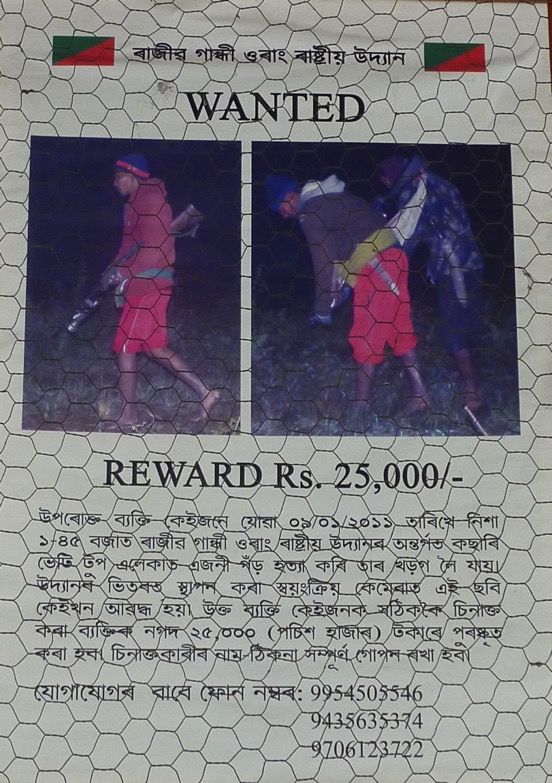
One
of
the
cases
dates
back
to
2011,
when
camera
traps
inside
the
Rajiv
Gandhi
Orang
National
Park
with
rifles
caught
two
poachers
(photo
right).
Subsequent
to
the
discovery
of
the
photographs
one
rhino
was
also
killed
a
few
days
late.
While
the
poachers
absconded,
the
forest
staff
led
ably
by
the
Deputy
Field
Officer
of
Orang
investigated
the
case.
Local
communities
identified
the
perpetrators
and
along
with
increased
administrative
pressure,
caused
the
poachers
to
surrender,
along
with
their
weapons.
The
case
continued
with
depositions
and
cross
examinations
and
suddenly
in
the
second
half
of
April
2015,
the
case
came
up
for
judge’s
examination
and
by
July
2015
came
the
judgment
convicting
the
accused
and
handed
a
2-‐year
year
Rigorous
Imprisonment
and
a
fine
of
Rs.25,000
each
(about
$385).
The
second
case
of
Deer
poaching
in
Nameri
National
Park
in
Sonitpur
District
is
perhaps
the
fastest
conviction
case.
Three
deer
poachers
were
arrested
in
their
homes
and
based
on
their
confession,
locally
made
guns
used
for
poaching
were
discovered
hidden
inside
the
Nameri
National
Park.
The
case
came
up
for
deposition
in
November
2014
and
then
came
up
for
argument
only
in
July
2015
and
in
the
same
month
the
accused
were
convicted
and
sentenced
to
7
years
of
Rigorous
Imprisonment
along
with
a
Rs.50,000
fine
each
($768).
To
expand
the
network
of
informants,
our
Intelligence
Specialist
visited
Manas
National
Park
and
surrounding
areas
from
where
Leopard
and
Clouded
Leopard
skin
seizures
have
been
reported
in
the
last
few
months.
The
cat
skin
trade
has
significantly
increased
and
the
Indo-‐Bhutan
borders
are
being
used
to
smuggle
out
the
contraband
(Manas
shares
a
border
with
Bhutan).
It
is
possible
that
the
gang
or
rhino
poachers
are
continuously
‘oiling’
their
system
from
the
money
derived
from
cat
skin
trade
to
keep
the
gang
members
engaged.
Although
much
time
has
passed
after
the
last
rhino
poaching
incident
in
Manas,
these
gangs
are
still
pursuing
illegal
trade
in
wildlife
and
if
caught,
the
agencies
concerned
may
well
be
able
to
implicate
them
on
the
rhino
poaching.
2015
Zoo
Partners
Autumn
Report
–
Asia
Programs
5
International
Rhino
Foundation
Sumatran
Rhino
Conservation
Conservation
Planning
In
February,
funded
by
a
Disney
Reverse
the
Decline
grant
to
the
IRF,
along
with
WWF,
and
the
Indonesian
Ministry
of
Environment
and
Forestry,
IRF
and
our
Indonesian
partner
Yayasan
Badak
Indonesia
(YABI)
convened
a
small
group
of
experts
for
a
Sumatran
Rhino
Population
Viability
Assessment
workshop,
facilitated
by
the
IUCN
Conservation
Breeding
Specialist
Group.
The
preliminary
questions
explored,
given
our
best
estimates
of
Sumatran
rhino
biology
and
the
threats
in
their
environment
were:
• how
viable
do
we
think
remaining
populations
are?
• which
threats
do
we
most
need
to
manage?
• how
successful
do
we
have
to
be?
• what
management
strategies
are
likely
to
be
most
successful?
Sumatran
rhinos
now
are
found
in
only
four
wild
sites
(Gunung
Leuser,
Way
Kambas,
and
Bukit
Barisan
Selatan
National
Park),
and
in
central
Kalimantan.
Population
estimates
range
from
94
-‐138
animals,
with
the
best
guess
estimate
being
roughly
112
animals.
These
are
found
in
at
least
ten
subpopulations
containing
2-‐50
rhinos
each.
Additoinally,
there
are
five
captive
rhinos
(5
at
the
SRS,
1
at
the
Cincinnati
Zoo1,
and
3
non-‐reproductive
animals
in
Sabah,
Malaysia).
The
Sumatran
rhino
was
recently
declared
extinct
in
the
wild
in
Malaysia.
How$viable$are$our$sub.popula0ons?
Results
of
the
VORTEX
Likely$to$recover$under$
modeling
conducted
at
the
FULL$PROTECTION
workhsop
showed
that
40
growing
populations
of
less
35
than
15
and
populations
30
Future$is$uncertain$
without
growth
of
less
than
25 –$depends$on$
40
show
a
1
in
20
or
20
ability$to$grow
greater
likelihood
of
15
extinction
over
100
years
10
even
in
absence
of
human-‐ Likely$to$go$ex0nct$
mediated
threats.
The
if$leO$alone
5
0
figure
right
shows
the
Func0onally$
PZ
g
K
t
ng
g
iri
pi
$
$
e1
e3
es
in
an
W
ap
em
I
to
$W
S_
bl
on
on
various
population
numbers
kil
.K
ex0nct
eu
m
.K
BB
l.Z
l.Z
GL
ar
GL
Ta
.B
GL
am
Ka
Ka
S_
GL
.S
BB
and
delineates
the
GL
likelihood
of
recovery.
The
Minimum Maximum
blue
bars
indicate
the
lower
end
of
the
population
estimates
with
the
green
bar
representing
the
highest
population
estimates.
These
results
point
to
the
immediate
need
to
enhance
protection
for
the
larger
populations
while
at
the
same
time
consolidating
populations
(e.g.,
moving
animals
from
the
smaller
populations
to
the
larger
ones)
or
moving
reproductively
viable
animals
into
the
managed
breeding
program
at
the
Sumatran
Rhino
Sanctuary.
This
will
be
an
enormous
task,
but
we
believe
these
actions
hold
the
best
chance
for
the
species’
survival.
The
report
from
the
workshop
will
be
available
online
soon.
1
Harapan,
the
last
Sumatran
rhino
in
the
US,
will
be
moving
to
the
Sumatran
Rhino
Sanctuary
in
early
November.
2015
Zoo
Partners
Autumn
Report
–
Asia
Programs
6
International
Rhino
Foundation
Two
additional
strategic
planning
sessions,
funded
by
the
Disney
Reverse
the
Decline
grant,
were
also
conducted
in
March.
These
exercises
brought
together
not
only
rhino
experts
from
around
the
globe
but
also
the
wide
range
of
stakeholders
necessary
for
the
species
recovery
plan
to
succeed.
These
sessions
identified
a
number
of
critical
actions,
including:
• continuing
existing
protection
• developing
Intensive
Protection
Zones
(i.e.,
no-‐go
zones)
within
the
park,
which
are
heavily
guarded
and
monitored.
• consolidating
smaller
populations
either
into
larger
ones
or
moving
them
(if
reproductively
viable)
to
the
Sumatran
Rhino
Sanctuary
• expanding
the
Sumatran
Rhino
Sanctuary
so
that
it
can
accommodate
more
animals
• developing
a
communications
strategy
to
build
Sumatran
rhino
champions
in
Indonesia
and
globally
• working
closely
with
local
communities
so
that
they
benefit
economically
from
the
presence
and
protection
of
rhinos
Sumatran
Rhino
Funding
In
our
last
Zoo
Partners
Update,
we
reported
that
IRF,
along
with
WWF
and
Conservation
International,
was
instrumental
in
securing
approval
of
an
$11.2
million
Debt-‐for-‐Nature
Swap
amendment
to
help
save
Sumatran
rhinos
under
the
U.S.
Tropical
Forest
Conservation
Act
(TFCA).
The
objectives
of
this
new
funding
are
to
continue
and
enhance
the
conservation
of
tropical
forests,
focusing
on
key
areas
for
Sumatran
rhinos
and
tigers.
Matching
funds
totaling
$
560,000
were
required
to
secure
the
TFCA
funding
(roughly
a
1:20
return
on
investment).
The
Cincinnati
Zoo
and
Botanical
Garden
generously
contributed
$50,00
of
these
match
funds.
The
$11.2
million
will
be
used
to
support
strengthening
institutions
responsible
for
national
park
management
and
forest
conservation,
improved
management
and
governance
of
key
protected
areas,
including
engaging
all
key
stakeholders,
protection
and
management
of
Sumatran
rhinos,
tigers,
and
orangutans
along
with
other
threatened
species,
and
increasing
the
awareness
of
local
people
and
governments.
The
TFCA
funds
are
ready
to
be
released
this
fall:
YABI
has
submitted
their
proposal
for
a
portion
of
funds
for
Way
Kambas;
WCS
is
taking
the
lead
on
the
proposal
for
Bukit
Barisan
Selatan
(BBS),
and
the
Leuser
International
Foundation
for
Gunung
Leuser.
The
$11.2
million
will
be
shared
among
the
three
organizations
and
the
three
parks.
The
German
government
also
is
providing
a
7
m
Euro
grant
to
WCS
for
Bukit
Barisan
Selatan
National
Park
–
Our
partner
Yayasan
Badak
Indonesia’s
(YABI)
role
will
primarily
focus
on
protection
in
an
Intensive
Protection
Zone
to
be
created
in
the
park.
Rhino
Protection
Units
(RPUs)
The
RPU
program
celebrated
its
20th
anniversary
this
summer.
Through
our
on-‐the-‐ground
partner,
Yayasan
Badak
Indonesia,
IRF
employs
Sumatran
RPUs
in
Bukit
Barisan
Selatan
National
Park
(7
units;
est.
40-‐50
rhinos)
2015
Zoo
Partners
Autumn
Report
–
Asia
Programs
7
International
Rhino
Foundation
and
Way
Kambas
National
Park
(5
units;
est.
35
rhinos),
all
with
strong
support
from
IRF
Zoo
Partners,
most
notably
the
American
Association
of
Zoo
Keepers
(AAZK),
the
Cincinnati
Zoo,
Fossil
Rim
Wildlife
Center,
the
International
Rhino
Keeper’s
Association,
Los
Angeles
Zoo
and
others.
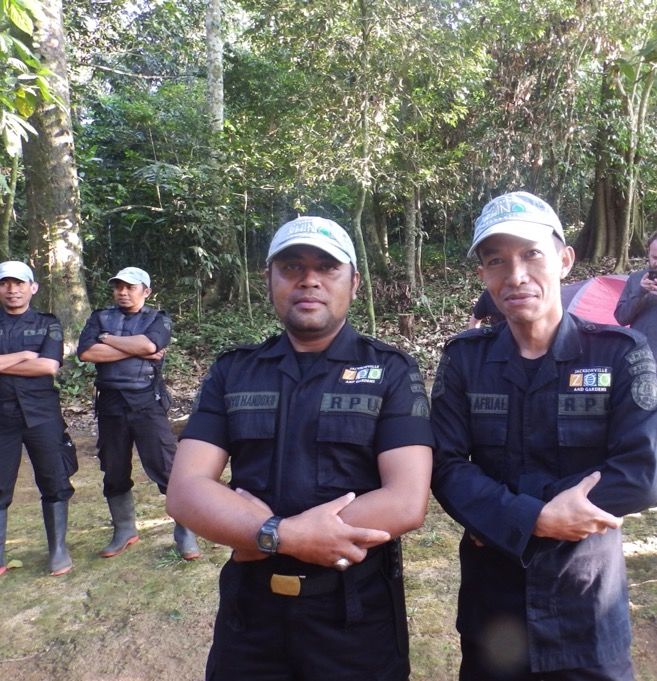
The
Jacksonville
Zoo
has
‘adopted’
an
RPU
in
Bukit
Barisan
Selatan
National
Park
(photo
right),
fully
funding
all
their
costs
for
salaries
and
operations.
The
teams
proudly
wear
the
Zoo’s
logo
on
their
uniforms.
Each
RPU
costs
roughly
$40,000
per
year
–
perhaps
your
zoo
might
consider
following
Jacksonville’s
model
and
adopting
an
RPU?
The
RPUs
continue
to
patrol
and
survey
several
thousand
kilometers
per
year
in
each
national
park,
both
on
foot
and
by
boat,
all
the
while
monitoring
rhino,
tiger,
elephant
and
tapir
populations
through
direct
sightings,
footprints,
feces,
wallows,
and
evidence
of
feeding.
RPUs
also
gather
evidence
of
illegal
activities,
including
encroachment
to
build
hunting
camps
and
plant
cash
crops,
setting
snares
for
large
and
small
mammals,
laying
traps
for
birds,
illegal
fishing,
logging,
the
collection
of
non-‐timber
forest
products,
and
setting
fires
to
burn
off
old
vegetation
and
create
fresh
browse
for
game
animals
such
as
sambar
deer.
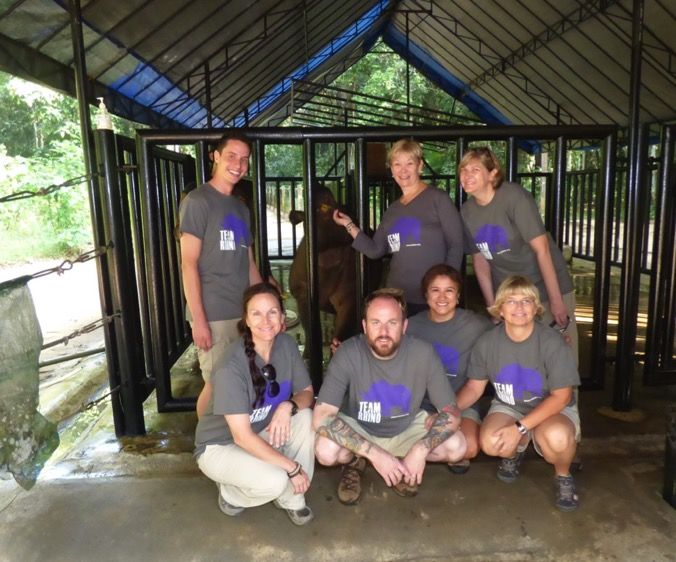
AAZK
Bowling
for
Rhinos
Trip
to
Indonesia
As
is
our
tradition,
the
IRF
hosts
two
of
the
top
four
winners
from
the
American
Association
of
Zookeepers
Bowling
for
Rhinos
initiative
on
a
trip
to
Indonesia
each
year.
From
July
30
through
August
10,
the
IRF
hosted
two
AAZK
Bowling
for
Rhinos
winners
on
a
12-‐day
trip
to
Indonesia:
Teresa
Randall
and
Robbie
Clark
(San
Diego
Zoo).
Dr.
Susie
Ellis
led
the
group,
which
visited
Way
Kambas
(and
the
Sumatran
Rhino
Sanctuary),
Bukit
Barisan
Selatan,
and
Ujung
Kulon
National
Parks.
2015
Zoo
Partners
Autumn
Report
–
Asia
Programs
8
International
Rhino
Foundation
Photo
above
upper
L-‐R
clockwise
–
Robbie
Clark
(San
Diego
Zoo),
Rosa
the
Sumatran
Rhino
(SRS),
Susie
Ellis
(IRF),
Tamara
Lookabaugh
(an
educator
from
Oklahoma
City),
Teresa
Randall
(Oklahoma
City
Zoo),
Marisa
Elizalde
(Lincoln
Park
Zoo),
Chad
Harmon
(Disney’s
Animal
Kingdom
and
founder
of
the
Horns
and
Heroes
art
project
that
benefits
IRF),
Jill
Harmon
(Disney’s
Animal
Kingdom).
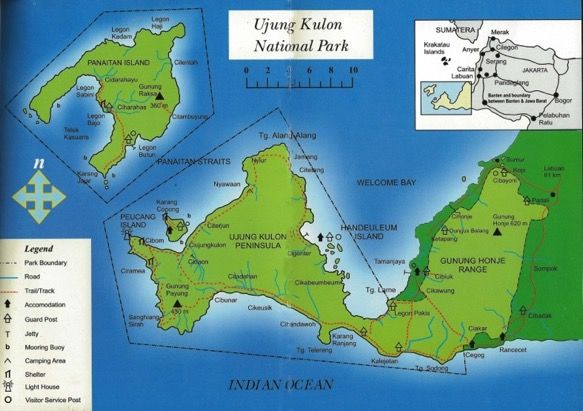
Javan
Rhino
Conservation
Indonesia’s
Ujung
Kulon
National
Park
is
bordered
by
water
to
the
north,
west
and
south
(map
right).
Its
eastern
boundary
adjoins
agricultural
lands
of
Banten
Province,
one
of
Indonesia’s
most
heavily
populated
regions.
Thus,
there
is
continuous
pressure
on
its
tropical
forest
habitat
and
wildlife.
Human
encroachment,
necessitated
the
removal
of
illegal
settlements
from
the
national
park
by
government
authorities
several
years
ago,
however,
a
low
level
of
illegal
activities
(e.g.,
fishing,
bird-‐trapping,
small-‐scale
timber
Photo
courtesy
of
Stephen
Belcher
extraction,
forest
product
gathering)
still
occur.
Monitoring
Javan
Rhinos
New
hope
for
Javan
rhinos
is
reflected
in
recent
video
footage
of
a
young
Javan
rhino
calf
caught
on
video
by
the
Ujung
Kulon
National
Park
authority
https://www.youtube.com/watch?t=30&v=H_4ZWmDaMmU.
Two
years
ago,
IRF
and
WWF
donated
140
video
camera
traps
to
the
park,
which
at
that
time
was
only
partially
covered
by
camera
traps.
The
new
cameras
2015
Zoo
Partners
Autumn
Report
–
Asia
Programs
9
International
Rhino
Foundation
allowed
the
Ujung
Kulon
team
to
set
camera
in
grids
throughout
the
entire
park.
The
most
recent
data,
verified
by
the
IUCN
Asian
Rhino
Specialist
Group,
show
that
there
are
between
57
and
61
animals
(three
of
them
were
difficult
to
tell
apart).
Ujung
Kulon
documented
three
new
calves
recently,
including
the
one
in
the
video
mentioned
above,
bringing
the
minimum
number
of
Javan
rhinos
to
60.
In
February
this
year,
the
IRF,
YABI,
WWF,
the
IUCN
Asian
Rhino
Specialist
Group,
and
the
Government
of
Indonesia
convened
a
Javan
Rhino
Population
and
Habitat
Viability
Assessment
workshop.
Affiliated
by
the
IUCN
Conservation
Breeding
Specialist
Group,
the
participants
identified
a
number
of
key
actions
to
Photo
©
Stephen
Belcher
recover
the
species.
The
report
will
be
finalized
over
the
next
month
and
posted
to
the
CBSG
as
well
as
the
IRF
website.
Several
key
actions
are
needed
immediately,
including
ramping
up
protection.
Currently,
YABI
operates
four
Rhino
Protection
Units
(RPUs)
in
the
254-‐acre
(1,026
square
km)
UKNP.
Each
four-‐man
unit
spends
between
15-‐
20
days
in
the
field
each
month,
monitoring
threatened
wildlife,
de-‐activating
traps
and
snares,
identifying
and
apprehending
illegal
intruders
(including
poachers
and
encroachers),
and
investigating
crime
scenes,
thus
preventing
or
reducing
the
loss
of
wildlife.
We
plan
to
add
a
fifth
RPU
in
2015.
Prospects
for
Javan
rhino
population
growth
also
are
linked
to
habitat
restoration
efforts
focusing
on
the
removal
of
an
invasive
palm
species
(Arenga
obtusifolia).
Presently,
only
about
40%
of
Ujung
Kulon
National
Park
is
considered
suitable
habitat
for
Javan
rhinos
because
of
this
species.
YABI
is
authorized
to
remove
the
pesky
species
only
in
the
JRSCA
in
the
eastern
portion
of
the
park;
we
are
now
working
to
secure
permission
from
the
Indonesian
government
to
remove
the
palm
from
other
areas.
Since
the
project’s
inception,
78
hectares
of
the
invasive
Arenga
palm
have
been
cleared,
removing
a
canopy
species
that
inhibits
vegetative
growth
on
the
forest
floor
and
allowing
native
rhino
food
plants
to
recolonize.
To
date,
more
than
150
people
from
surrounding
communities
have
been
hired
to
cut-‐and-‐clear
the
palms,
as
well
as
construct
a
perimeter
fence
to
prevent
encroachment,
and
to
build
three
guard
posts
as
well
as
a
base
camp
for
the
RPU
force.
With
just
a
small
area
cleared,
we
have
seen
remarkable
results
-‐
the
number
of
Javan
rhinos
that
now
use
JRSCA
habitat
has
increased
from
two
to
nine
individuals.
We
will
continue
to
seek
funding
to
continue
Arenga
removal
in
other
areas
of
the
park
so
that
rhino-‐friendly
habitat
can
increase.
An
assessment
of
potential
translocations
sites
has
just
been
completed,
with
the
report
in
progress.
The
JRSCA
area
is
intended
to
be
the
launch
site
for
moving
a
subset
of
the
population
to
a
new
site,
so
that
the
“eggs
are
not
all
in
one
basket.”
2015
Zoo
Partners
Autumn
Report
–
Asia
Programs
10
International
Rhino
Foundation
Zoo
Partner
Fundraising
Events
and
Programs
We
are
humbled
by
all
that
our
Zoo
Partners
do
to
enable
their
growing
support
for
rhino
conservation.
This
funding
represented
almost
one-‐third
of
IRF
revenue
in
2014.
Zoo
Partners
support
the
IRF
through
a
variety
of
events
and
activities,
including
Quarters
for
Conservation,
conservation
grants
and
other
fundraisers.
Many
American
Association
of
Zoo
Keepers
(AAZK)
chapters
participate
in
annual
Bowling
for
Rhinos
events,
while
the
International
Rhino
Keeper
Association
(IRKA)
publishes
a
calendar
and
hosts
Cinco
de
Rhino
celebrations;
both
groups
donate
the
the
proceeds
to
rhino
conservation.
And
more
and
more
zoos
and
aquariums
are
hosting
special
Cinco
de
Rhino
and
World
Rhino
Day
events
that
raise
both
awareness
and
much-‐needed
funding.
If
your
institution
hasn’t
yet
contributed
to
rhino
conservation
in
2015,
please
consider
using
the
form
on
the
last
page
of
this
report
to
do
so.
IRF
2014
Annual
Report
IRF’s
2014
Annual
Report
is
now
available
in
hard
copy
or
online
(beginning
tomorrow)
at
www.rhinos.org/annual-‐reports/2014-‐annual-‐report/.
If
you
have
not
received
a
hard
copy
and
would
like
one,
please
email
Alex
Hausler
(a.hausler@rhinos.org).
We’re
proud
of
being
lean.
93%
of
your
contribution
goes
directly
to
field
programs.
2015
Zoo
Partner
Support
-‐
1
January
through
30
September
2015
Akron
Zoological
Foundation
Knowlsey
Safari
Park
American
Association
of
Zoo
Keepers
Knoxville
Zoological
Gardens
Blank
Park
Zoo
Foundation
Little
Rock
Zoo
Brevard
Zoo
Maryland
Zoological
Society
Buffalo
Zoo
Milwaukee
County
Zoo
CERZA
Zoo
Conservation
Ocean
Park
Conservation
Foundation,
Hong
Kong
Chester
Zoo
Opel
Zoo
Cincinnati
Zoo
&
Botanical
Garden
Oregon
Zoo
Columbus
Zoological
Park
Association
Potter
Park
Zoo
Dallas
Zoo
Management
Reid
Park
Zoological
Society
Detroit
Zoological
Society
San
Diego
Zoo
Global
Walt
Disney
Co.
Foundation
San
Francisco
Zoological
Society
Disney
Conservation
Fund
Save
the
Rhino
Dublin
Zoo
Southwick’s
Zoo
(Earth
Foundation)
Erie
Zoological
Society
Taronga
Conservation
Society
Australia
Fort
Worth
Zoological
Association
Tulsa
Zoo
Management,
Inc.
Fossil
Rim
Wildlife
Center
(Earth
Promise)
Virginia
Zoological
Society,
Inc.
Greenville
Zoo
Wilhelma
Zoo
Stuttgart
Henry
Vilas
Park
Zoo
Zoo
Atlanta
Houston
Zoo,
Inc.
Zoo
Basel
International
Rhino
Keeper
Association
Zoo
Miami
Jacksonville
Zoological
Society
Zoological
Association
of
America
Thank
you!
2015
Zoo
Partners
Autumn
Report
–
Asia
Programs
11
International
Rhino
Foundation
Zoo
Partners
Membership
Form
Contact
______________________________
Zoo
__________________________________________________
Position
______________________________
E-‐mail
_______________________________________________
Phone/Fax
________________________
Rhino
Conservation
Grant
___
$10,000
___
$5,000
___
$2,500
___
$1,000
Other
(amount)
________
We
encourage
your
institution
to
give
an
unrestricted
gift
so
that
we
can
put
funds
to
work
where
they
are
needed
most.
If
your
zoo
wishes
to
restrict
its
support
to
a
particular
project
(or
projects),
please
enter
the
name(s)
from
the
list
below:
__________________________________________________________________________
Operation:
Stop
Poaching
Now
(southern
Africa)
Zimbabwe’s
Lowveld
Rhino
Trust
Botswana
Black
Rhino
Reintroduction
Indian
Rhino
Vision
2020
Indonesian
Rhino
Protection
Units
Sumatran
Rhino
Sanctuary
Javan
Rhino
Study
and
Conservation
Area
For
additional
information
regarding
IRF
programs
or
support
opportunities,
please
contact:
Susie
Ellis
(s.ellis@rhinos.org)
or
Alex
Hausler
(a.hausler@rhinos.org).
Membership
Forms
and
Rhino
Conservation
Grants
can
be
mailed
to:
International
Rhino
Foundation
201
Main
Street,
Suite
2600
Fort
Worth,
Texas
76102
www.rhinos.orgYou can also read


