Distance Education Handbook 2017 2018 - Los Angeles ...
←
→
Page content transcription
If your browser does not render page correctly, please read the page content below

Distance Education
    Handbook

   2017 – 2018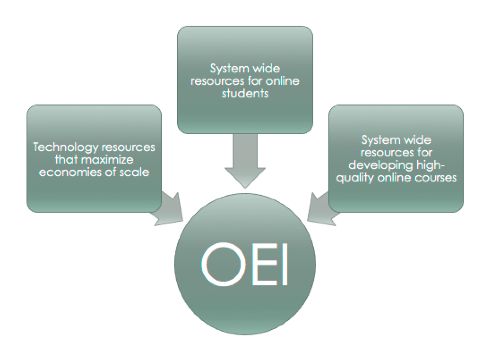
LASC Distance Education Handbook 2017 – 2018

      Approved by the Distance Education Committee on October 16, 2017
        Approved by the LASC Academic Senate on November 14, 2017

Table of Contents:

Introduction and Purpose……………………………………………………………………..Page 2
Distance Education Definitions……………………………………………………………..Page 3
The Online Education Initiative (OEI)……………………………………………………Page 5
Training and Requirements for Teaching Online/Hybrid Courses…………….Page 7
Assistance for Online Instructors and Professional Development……….…….Page 8
Making the Most of Canvas……………………………………………………………………Page 9
Regular Effective Contact in Online Courses………………………………………….Page 11
Instructor Attendance and Class Activity in Online/Hybrid Courses………..Page 14
Accreditation Requirements…………………………………………………………………Page 15
Accessibility in Online Courses and Section 508 Compliance………………….Page 16
Assistance for Online Students…………………………………………………………….Page 18
Adding Students to an Online Course……………………………………………………Page 19
Online Course Enrollment…………………………………………………………………..Page 20
Curriculum Development/DE Approval Process…………………………………….Page 21
Evaluations………………………………………………………………………………………..Page 22
Appendix A: LASC Regular Effective Contact Policy………………………………Page 23
Appendix B: LACCD Online Absentee Policy…………………………………………Page 27

 LASC Distance Education Handbook                                           1
Introduction and Purpose Distance Education has been consistently growing at LASC. Enrollment in online classes has been steadily increasing at LASC. In 2010-2011, enrollments in online courses accounted for 5.6% of the college’s total enrollments, and that number has been increasing every year. In 2015-2016, enrollments in online courses accounted for 10.8% of the college’s total enrollments. This upward trend is expected to continue as more and more students seek the flexibility and convenience of online courses. In February 2015, the California Community Colleges (CCC) Online Education Initiative (OEI) announced its intent to award Instructure Inc. (Canvas) the contract to provide an online course management system and related services to community colleges statewide. In spring 2016, LASC started transitioning to using Canvas by Instructure as the Course Management System with a small pilot program. In summer 2016, LASC started using Canvas as the exclusive Course Management System. LASC currently has 24/7 access to Canvas technical support via phone. The purpose of the LASC Distance Education Handbook is to provide resources and information to online and hybrid instructors and instructors who are interested in teaching online and/or hybrid courses. The hope is that this Handbook will allow instructors to provide better instruction and contribute to student success. Thank you to the Distance Education (DE) Committee for their input, time, and energy that went toward creating this Handbook. Please see the Distance Education Committee website for more information or if you are interested in participating in the DE Committee: http://portal.lasc.edu/as/DECom/SitePages/Home.aspx LASC Distance Education Handbook 2
Distance Education Definitions

According to 34 Code of Federal Regulation (CFR) §602.3 Distance Education
means:

Education that uses one or more of the technologies listed in paragraphs (1)
through (4) to deliver instruction to students who are separated from the
instructor and to support regular and substantive interaction between the
students and the instructor, either synchronously or asynchronously. The
technologies may include:
       (1) the internet;
       (2) one-way and two-way transmissions through open broadcast, closed
       circuit, cable, microwave, broadband lines, fiber optics, satellite, or
       wireless communications devices;
       (3) audioconferencing; or
       (4) video cassettes, DVDs, and CD-ROMs, if the cassettes, DVDs, or CD-
       ROMs are used in a course in conjunction with any of the technologies
       listed in paragraphs (1) through (3).

What distinguished Distance Education from Correspondence Education is
regular and substantive interaction between the students and instructor, and the
instructor should initiate this interaction.

Online Courses

An Online course is offered 100% online. Students are not required to meet face-
to-face for office hours, homework, tests, and distribution of resource materials
or any other course component. An online course shall utilize features of the
Learning Management System, such as Course Documents, Discussion Boards,
Virtual Classrooms, Groups, Assignments, External Links, Digital Drop Boxes
and Grade Books, etc. All course instruction, materials, assignments, and
discussions are posted and completed online. Online courses require of the
student and instructor the same amount of course work and hours outside of the
classroom as traditional courses.

Hybrid Courses

If one or more class sessions (up to 50%) is replaced with online content and/or
activities, it is considered a Hybrid course. Teaching is a combination of face-to-
face meetings and online teaching (not to exceed 50%). A Hybrid course can
utilize features of the Learning Management System, such as Course Documents,
Discussion Boards, Virtual Classrooms, Groups, Assignments, External Links,
Digital Drop Boxes and Grade Books, etc. The course can be offered during
regularly scheduled class times or with Online components that replace some of
the regularly scheduled class meetings. Notice of face-to-face class sessions will
be given by instructors in their syllabus. Hybrid courses are noted as such in the
schedule of classes.


   LASC Distance Education Handbook                                             3
Web-Enhanced Courses A web-enhanced course is a face-to-face class that utilizes the web or a Canvas course shell for resource materials, instruction, the course syllabus, and the uploading of assignments only. Classes must meet as scheduled on campus. No in-class time can be substituted for time spent on Canvas or online. Any required use of technology will be stated in the course syllabus. LASC Distance Education Handbook 4
The Online Education Initiative (OEI)

According to the Online Education Initiative (OEI) website, “The Online
Education Initiative (OEI) is a collaborative effort among California Community
Colleges (CCCs) to ensure that significantly more students are able to complete
their educational goals by increasing both access to and success in high-quality
online courses.”

The OEI is sponsored by the Foothill-De Anza Community College District, in
partnership with the Butte-Glenn Community College District and its CCC
Technology Center at Butte College as recipients of a $56.9 million five-year
grant disbursed by the California Community College Chancellor’s Office
(CCCCO). The Online Education Initiative represents a comprehensive and
collaborative program that leverages best practices and technology to
significantly increase the opportunity for higher education degree attainment in
California.

The OEI is composed of high quality online courses, resources for online
students, and technology resources:

Through the OEI, all California Community Colleges currently have paid access to
the Canvas Learning Management System.

The Course Design Rubric for the Online Education Initiative is an especially
helpful document for assessing the effectiveness of your online course design.
The rubric can be found at: http://ccconlineed.org/wp-
content/uploads/2015/11/oei-ocdr_r1-20150501-CC-license.pdf

 LASC Distance Education Handbook                                                  5
For more information about the OEI and the resources available for faculty,
please go to http://ccconlineed.org/


   LASC Distance Education Handbook                                         6
Training and Requirements for Teaching Online/Hybrid Courses

Senate Policy on the Minimal Training Required for Online and Hybrid Faculty:

       Effective September 12, 2017, the minimal training for teaching online and
       hybrid includes: @ONE Introduction to Online Teaching and Learning
       and the @ONE Introduction to Teaching with Canvas or the
       equivalent. Instructors who have been teaching online within LACCD in
       other LMSs should complete the @ONE Introduction to Teaching with
       Canvas. Instructors who have training and experience teaching online
       from other districts can petition for equivalency through their campus DE
       Coordinator.

       Instructors who were already Canvas trained and certified before
       September 12, 2017 are grandfathered in and are not required to complete
       the second @ONE course, Introduction to Online Teaching and Learning.

       Faculty who are using Canvas for face-to-face classes are still only required
       to take the @ONE Introduction to Teaching with Canvas course.

There are three ways to take the courses above:

   •   Complete the courses with LASC’s DE Coordinator and earn a score of at
       least 80%. To learn more about Canvas training at LASC, contact Jessica
       Drawbond at drawbojn@lasc.edu or see the latest training offered by
       clicking on the “Canvas Training” link at
       http://www.lasc.edu/faculty_staff/FacultyandStaff.html

          o Participants who finish the course with at least 80% will earn forty
            hours of flex time for each course (to be verified with Professional
            Development Coordinator for Introduction to Online Teaching and
            Learning).

   •   Complete the courses at another school in the LACCD and earn at least
       80%. If you do this, please make sure to email your Canvas certificates to
       Jessica Drawbond at drawbojn@lasc.edu.

   •   Complete the courses through @ONE and earn at least 80%. Each @ONE
       course costs $65 and more information can be found at
       http://www.onefortraining.org/


   LASC Distance Education Handbook                                               7
Assistance for Online Instructors and Professional Development Canvas Resources All instructors must use Canvas for online and hybrid classes, and it is the instructor’s responsibility to keep up-to-date in Canvas. Canvas has an impressive library of resources available at https://community.canvaslms.com/community/answers/guides/ For Canvas-related questions, all LASC faculty also have 24/7-access to the Canvas Support Helpline at 1-844-303-5591. LASC DE Resources Distance Education best practices workshops and webinars are available throughout the semester. Informational announcements and professional development opportunities will be shared regularly through LASC email. There are also many resources for faculty teaching online or hybrid courses at http://www.lasc.edu/students/classes-areas-of-study/online_classes/Faculty- Online-Support.html, including an Online Faculty Step-by-Step Checklist, which can be found at: http://www.lasc.edu/students/classes-areas-of- study/online_classes/Checklist-for-Online-Instructors-.pdf For help with Canvas or designing an effective online or hybrid course, please contact Distance Education Coordinator Jessica Drawbond at drawbojn@lasc.edu or (323) 241-5370. @ONE Resources @ONE is an organization that is supported by a grant from the Chancellor's Office, California Community Colleges (CCC). According to the @ONE website, “@ONE’s programs provide training and online resources for free - or at a very low cost - thanks to funding from the California Community College Chancellor's Office Telecommunication and Technology Infrastructure Program (TTIP).” @ONE offers one-hour webinars; multiple-week, instructor-led online courses (most of which are $65 for California Community College faculty); and self-paced training. For more information on the classes and services offered by @ONE, please see their website at http://onefortraining.org/ LASC Distance Education Handbook 8
Making the Most of Canvas

Instructors are expected to make use of the following tools in Canvas:

    •   Home Page: The home page is the first thing students will see when they
        click on a course. As of July 2017, the home page defaults to the Modules
        page. However, instructors have several options when it comes to
        choosing a home page for their online courses. Options include:
            o Course Activity Stream: This will show a stream of recent activity
               and interactions in the course
            o Pages Front Page: Instructors can set a Content Page as the home
               page in order to display text or videos
            o Course Modules: This will take students directly to the Modules
               page, where instructors can organize course content
            o Assignments List: Students will be taken directly to a list of
               upcoming assignments
            o Syllabus: Students will be taken to the Syllabus page where
               instructors can link to a syllabus document and/or copy and paste
               the text of the course syllabus. The Syllabus area also shows
               upcoming due dates at the bottom of the page.

    •   Modules: It is highly recommended that instructors organize their
        content into Modules. Course Modules organizes the course into modules,
        or sections. Modules helps outline the course and shows the assignments
        or tasks required throughout the course. Modules can be organized by
        topic (for example, a history class may have an 1800-1850 module, 1850-
        1900 module, etc.); unit (Unit 1 module, Unit 2 module, etc.); or by week
        (Week 1 module, Week 2 module, etc.). Once a module is created, content
        can be added such as Content Pages, Assignments, Discussions, and
        Quizzes.

    •   Announcements: Announcements should be used throughout the
        semester to remind students of important deadlines or events in the class
        or to share information that is relevant to course content.

    •   Syllabus: It is a good idea for instructors to both copy and paste the
        content of the syllabus in the Syllabus area and to link to a document
        (PDF) of the syllabus that students can download and print. The syllabus
        must state the approved course SLOs and clear course policies. Please see
        a sample online course syllabus at: http://lasc.edu/students/classes-
        areas-of-study/online_classes/Sample_Online_Syllabus.pdf

    •   Grades: The Gradebook helps instructors easily input and distribute
        grades for students. Grades for each assignment can be calculated as
        points, percentages, complete or incomplete, pass or fail, GPA scale, and
        letter grades. Only graded assignments, graded discussions, graded
        quizzes, and graded surveys that have been published appear in the

 LASC Distance Education Handbook                                                   9
Gradebook. Instructors should be providing thorough, individualized
feedback to students throughout the term.
• Quizzes: Canvas offers many testing options through Quizzes. Quizzes can
be graded (worth points) or ungraded. There are many options for
question type in Quizzes, including multiple-choice, fill in the blank, short
answer, and essay question. Quizzes can also be timed or untimed. It is
important to not rely on only multiple-choice quizzes, as instructors
should be giving thorough, individualized feedback to students
throughout the term.
• Assignments: Assignments should also be used to evaluate student
performance in a course. Assignment options include having students
submit a file upload, text entry, or media recording. Again, instructors
should be providing thorough, individualized feedback on assignments
throughout the semester.
• Discussions: Discussions are a very important part of the course and allow
for student-student and instructor-student interaction. Robust discussion
forums on academic topics should be a part of every course, and
instructors should participate in the discussions to respond to students
and keep the discussion on track. It's a good idea to try to respond to at
least 50% of student posts in each discussion. Discussions should occur
regularly (weekly) and be graded/worth points.
• Chat: The Chat tool can be used for real-time conversation with course
users. Any user in the course can participate in a chat conversation and
view all chat content. A user must be actively viewing the chat tool to
appear in the chat list. You may consider posting chat hours in the course
calendar or syllabus to let students know when you are available in Chat.
• Conferences, ConferNow, ConferZoom, and CCCConfer: Instructors have
several options when it comes to hosting web conferences in online
courses. Conferences is the tool that Canvas uses, but instructors also
have access to the options available through the California Community
Colleges Chancellor's Office. For more information about web
conferencing options, please see the Prezi presentation at:
https://prezi.com/05ttt5ysepl1/lasc-online-synchronous-student-
contact/?utm_campaign=share&utm_medium=copy
LASC Distance Education Handbook 10Regular Effective Contact in Online Courses
Regular substantive/effective contact means that, in online classes, there should
be instructor-initiated contact that is regular (frequent), thorough, and academic
in nature.
It is essential that instructors have regular effective contact (also sometimes
referred to as regular substantive contact) with students in an online or hybrid
course. Regular effective contact is one of the major things that distinguishes an
online or hybrid course from a correspondence course.
In November 2016, the LASC Academic Senate passed LASC’s Regular Effective
Contact Policy, which outlines the kind of asynchronous and synchronous
interaction required in online and hybrid classes and the required frequency of
this interaction. The full policy can be seen at:
http://www.lasc.edu/students/classes-areas-of-
study/online_classes/LASC%20Regular%20Effective%20Contact%20Policy.pdf
or in Appendix A.
For the purposes of Department of Education program reviews and for
accreditation purposes, we have to be able to show that our DE courses are not
being taught like correspondence courses. There should be instructor-initiated
contact between students and instructors that goes beyond just instructors
posting assignments/quizzes and students posting submissions. Additionally,
instructors should be reaching out to students regularly. It should not be that the
student initiates the only contact between instructor and student.
If you are currently teaching online or will be teaching online in the near future,
please review your courses and make sure that you are meeting the guidelines
outlined in the Regular Effective Contact Policy above.
In particular, you want to make sure that you have the following procedures in
place:
• Measures for instructor-initiated regular effective contact to determine
that students are accessing and comprehending course material and that
they are participating regularly in the activities in the course. At the very
least, the number of instructor contact hours per week that would be
available for face-to-face students should also be available, in a
combination of synchronous and asynchronous modes, with students in
the DE format (more details on this in the Regular Effective Contact Policy
above).
o Instructors need to make certain that there are measures for
instructor-initiated regular effective contact incorporated into their
online and/or hybrid course design and delivery.
o Regular effective instructor contact means that the instructor must
keep in contact with students on a consistent and timely basis to
LASC Distance Education Handbook 11both ensure the quality of instruction and verify the student's
performance and participation. Weekly announcements will not
count as weekly contact.
• Provide a variety of assessments and thorough, individualized feedback.
There should be regular, thorough, academic, individualized feedback for
each student. Therefore, assessments should go beyond just multiple-
choice quizzes and feedback should be more thorough and in-depth than
phrases like, "Good work." Additionally, it is important to make the
feedback specific to each student’s work rather than copying and pasting
the same feedback for every student.
• To ensure student-student and instructor-student interaction, robust
discussion forums on academic topics should be a part of every course,
and instructors should participate in the discussions to respond to
students and keep the discussion on track. It's a good idea to try to
respond to at least 50% of student posts in each discussion. Discussions
should occur regularly (weekly) and be graded/worth points.
• Each online course shell should include a course syllabus that clearly
states the approved SLOs and course policies. Syllabi should include an
Online Attendance Policy that states what constitutes an absence in the
online or hybrid course (i.e. how often do students need to log in and
participate in the class?).
• All online courses should include a first week check-in assignment that
students must complete either in the first few days or first week of the
term. This will allow instructors to identify and drop non-participating
students before the census date.
• As much as possible, all interaction should take place in Canvas so that it
is easy to document and access. Any work or interaction that occurs
outside of Canvas (for example, submissions to a publisher website, a web
meeting through CCC Confer, or feedback given to a student through
email) should be documented. You can keep records of publisher website
activity or email interaction and do things like record or take screenshots
of web conferences or Chat activity. This is the kind of documentation we
will need to provide for program review or accreditation purposes.
For policies, workshops, and resources regarding Regular Effective Contact in DE
courses, please go to: http://www.lasc.edu/students/onlineservices/Regular-
Effective-Contact-in-DE-Courses.html
For more information on regular effective contact expectations, please visit:
https://wcetfrontiers.org/2016/09/30/interpreting-regular-and-substantive-
interaction/
LASC Distance Education Handbook 12For ideas on how to ensure regular effective contact please see the Prezi presentation at: https://prezi.com/e9uwvtlx8neg/maintaining-regular-effective- contact-in-online-classes/?utm_campaign=share&utm_medium=copy LASC Distance Education Handbook 13
Instructor Attendance and Class Activity in Online/Hybrid Courses

Because regular effective contact is a requirement for all online and hybrid
classes, absence of regular meaningful contact can be considered an "absence."

The Los Angeles Community College District (LACCD) has a policy of weekly
interaction on the part of instructors. If you are unable to interact for more than
one week of the semester, you must take that time as sick or vacation leave.
Forms for reporting those absences are available online.

When students complain of lack of contact/response from instructor, the
Division Chair or Department Head needs to be notified and he/she needs to
investigate the situation. The instructor can be asked to provide documentation
of instructor/student interaction to determine the amount, the regularity, and the
type of meaningful contact that took place.

Multiple complaints regarding lack of regular meaningful contact should be
forwarded to the appropriate Division Chair or Department Head. If there is
substantial evidence of multiple “absences” and lack of meaningful contact, the
instructor can be removed from the list of approved distance education
instructors.

Please see Appendix B for the full LACCD Online Absentee Policy.


  LASC Distance Education Handbook                                              14
Accreditation Requirements

The Accreditation Commission for Community and Junior Colleges (ACCJC)
determines the accredited status of an institution. Part of the evaluation process
includes an evaluation of a college’s distance education courses. More than a
third of the ACCJC’s Guide to Evaluating and Improving Institutions
accreditation Standards include requirements for distance education. The full
Guide can be found at:https://accjc.org/wp-content/uploads/Guide-to-
Evaluating-and-Improving-Institutions_May2017.pdf

ACCJC Requirements for Online/Hybrid Instructors

Many of the distance education requirements are the responsibility of the
institution and are beyond the responsibility of an individual instructor, but there
are requirements that are instructor-specific:

   •   Online/hybrid instructors are to maintain regular effective contact in
       online/hybrid courses (see the “Regular Effective Contact in
       Online/Hybrid Courses” section for more on this).
   •   All instructors assess SLOs and discuss the results with colleagues to
       identify improvements to courses.
   •   All classes follow the Course Outline of Record. The means of instruction
       varies between online and face-to-face, but the content and objectives are
       the same.
   •   The Standards require that we serve all our students. You can help make
       students aware of the many services available online.
   •   Distance education instructors are expected to follow good teaching
       practices including those identified by our accrediting commission.


  LASC Distance Education Handbook                                             15
Accessibility in Online/Hybrid Courses and Section 508 Compliance
Accessibility in Online/Hybrid Courses
We are required by law to make sure that online and hybrid courses are made
accessible to students with disabilities. It’s also just good practice to think of the
diverse group of learners you will serve when designing an online class.
Just as in a face-to-face class, Disabled Students Programs and Services (DSPS)
may contact you on behalf of a student, or you may have a student come to you
with DSPS accommodations. Canvas makes it easy to do things like give a student
extra time on a test, and you can contact the DE Coordinator if you need help
ensuring that you are meeting a student’s accommodations.
Section 508 Compliance
Section 508, an amendment to the United States Workforce Rehabilitation Act of
1973, is a federal law mandating that all electronic and information technology
developed, procured, maintained, or used by the federal government be
accessible to people with disabilities. According to the Access Board’s website,
www.access-board.gov, “The United States Access Board’s Section 508 Standards
apply to electronic and information technology procured by the federal
government, including computer hardware and software, websites, phone
systems, and copiers.”
In distance education courses, this means that course content needs to be
accessible to students with varying abilities. Designing accessible online/hybrid
courses means, among other things:
• Ensuring that documents and content pages can be read by screen readers,
which are used by students with visual impairments. Part of this includes
providing alt text for all images used.
• Ensuring that videos are captioned for students who are hard of hearing.
Resources for Ensuring Accessible/Section 508 Compliant Online and Hybrid
Courses
• Resources from the Online Education Initiative (OEI): The OEI
has created a really helpful site that includes documents and videos that
explain how to create accessible Canvas pages, documents, and media. The
information is housed in a Canvas course that you can access by going to:
https://ccconlineed.instructure.com/courses/98
• LASC's Accessibility Resources: LASC DE also has several resources
for creating accessible DE courses. There is a Prezi presentation about
creating accessible online courses available at:
LASC Distance Education Handbook 16https://prezi.com/mlco8ref9wi0/supporting-diverse-learners-and-
creating-accessible-online-c/?utm_campaign=share&utm_medium=copy
For a Web Accessibility Guidelines document that explains how to create
accessible Canvas pages, Word documents, PDFs, and more, please see:
http://lasc.edu/students/onlineservices/Web_Accessibility_Guidelines_L
ASC_pg.pdf
• 3C Media Solutions: 3C Media Solutions is an organization that
supports the media needs of the California community colleges. One
service they offer is video captioning. If you submit a video file (not a
YouTube link), a real person will caption your video for you for free as long
as the video will be used for a community college class. To use this service:
o Create a 3C Media Solutions account and log in at
http://www.3cmediasolutions.org/
o Click "Media" and upload your video
o Click "Details & Options" for that video
o Click "DECT Captioning Grant" to request captioning
o There are more details on using 3C Media Solutions in the Prezi
presentation above
LASC Distance Education Handbook 17Assistance for Online Students All LASC students have 24/7-access to the Canvas Support phone line at 1-844- 303-5591. For any issues that the Canvas Support team cannot assist with, students will be referred to the DE Coordinator. Additionally, there are resources for students taking online and hybrid courses at http://lasc.edu/students/onlineservices/index.html LASC Distance Education Handbook 18
Adding Students to an Online Course

   •   Starting in fall 2017, all adds will be done through permission numbers.
       Instructors will be given permission numbers in PeopleSoft about 48
       hours before the term starts (they are located below the roster for a class in
       PeopleSoft). Instructors can give permission codes to students that they
       approve to add the class. Permission numbers are specific to the
       course/section.

   •   Also starting in fall 2017, all courses will now have a waitlist. Waitlisted
       students should be added to online courses first. In order to add a student
       from the waitlist to an online course, email the student a permission code
       for that class.

Note: PeopleSoft will automatically draw from the waitlist to add a student if a
spot becomes available (i.e. another student drops or is dropped) more than 48
hours before the term starts. 48 hours prior to the term start, the waitlist is
frozen, and permission numbers are needed to add a full course.

   •   If a student who is not on the waitlist would like to add an online class,
       they will email you through their @student.laccd.edu email address. If you
       approve the add, you will email the student back with a permission
       number to add the class. The student will then add himself/herself online
       using the permission number.

   •   Students will see the course in Canvas the day after they are added to a
       course. Similarly, if a student is dropped from your course, that change
       will be reflected in Canvas the next day.


  LASC Distance Education Handbook                                              19
Online Course Enrollment Article 40 of the AFT Contract states, “[Distance Learning] DL class size shall be consistent with Article 12. DL class size shall not exceed 40. Class size limits shall only be raised with the prior approval of the assigned faculty member in consultation with the department/division chair and the appropriate vice president or designee. Beginning at the point a class reaches its enrollment limits, students may only be added with the permission of the course’s assigned faculty member.” For any concerns about course enrollment, please contact your department chair. All online courses should include a first week check-in assignment that students must complete either in the first few days or first week of the term. This will allow instructors to identify and drop non-participating students before the census date. LASC Distance Education Handbook 20
Curriculum Development/DE Approval Process

Title 5, Section 55206, requires that each proposed or existing course, if delivered
by distance education, shall be separately reviewed and approved according to a
District’s certified approval process. The decision to offer a course through
Distance Education is made on a course-by-course basis with consideration to
course content, student needs, and the flexibility of the mode of delivery.
Instructors and departments should seriously consider whether a course is
appropriate for distance education.

Regardless of mode of delivery, a course follows a single Course Outline of
Record (COR). Updating a COR (including adding an addendum) or creating a
new course requires the formal approval of the Curriculum Committee. In order
to be offered in an online or hybrid format, a course must include an approved
DE Addendum.

The DE Addendum assures that the educational objectives of the course can
indeed be achieved via distance delivery and it makes clear how instructors will
maintain regular and substantive contact and interaction between themselves
and students as required by Title 5, Section 55204. The DE Addendum form can
be found in section VIII of a COR in the Electronic Curriculum Development
system at https://ecd.laccd.edu/ when you click on “Edit this Course.”

To propose an online or hybrid course, start by speaking with your department or
division chair, whose approval is required on all curriculum forms. In some
divisions, you may need to show the support of the entire division faculty.


   LASC Distance Education Handbook                                            21
Evaluations

All faculty are evaluated on a regular basis. According to Article 19 of the AFT
Contract, “The excellence of the institution depends on the quality of its faculty
members. Faculty evaluation is a method of addressing faculty performance.
Meaningful evaluations can enhance faculty performance and promote excellence
by providing positive reinforcement, constructive advice, specific
recommendations for improvement and professional growth.”

Please review the Article 19 and the evaluation form in Appendix C—Section II,
“Student Evaluation of Online Instructor,” to understand what is required for an
acceptable evaluation.

Department chairs can contact the DE Coordinator to arrange access to online
courses for evaluation purposes.


  LASC Distance Education Handbook                                           22
Appendix A

                      Regular Effective Contact Policy
                      Los Angeles Southwest College

Background
There are several regulations that address the need for regular effective contact
between online instructors and students.

Title 5 Regulations

In 2008, the California Community Colleges Chancellor's Office published the
Distance Education Guidelines. These guidelines are derived from the California
Education Code, Title 5, and most specifically, from the Title 5 article governing
distance education, Title 5, Division 6, Chapter 6, Subchapter 3, Article 1.

55204. Instructor Contact.

In addition to the requirements of section 55002 and any locally established
requirements applicable to all courses, district governing boards shall ensure
that:

   (a)    Any portion of a course conducted through distance education includes
          regular effective contact between instructor and students, through
          group or individual meetings, orientation and review sessions,
          supplemental seminar or study sessions, field trips, library workshops,
          telephone contact, correspondence, voice mail, e-mail, or other
          activities. Regular effective contact is an academic and professional
          matter pursuant to sections 53200 et seq.
   (b)    Any portion of a course provided through distance education is
          conducted consistent with guidelines issued by the Chancellor
          pursuant to section 409 of the Procedures and Standing Orders of the
          Board of Governors.

Subdivision (a) stresses the responsibility of the instructor in a DE course to
initiate regular contact with enrolled students to verify their participation and
performance status. The use of the term “regular effective contact” in this context
suggests that students should have frequent opportunities to ask questions and
receive answers from the instructor of record.

The last published Distance Education Guidelines, March 2004, issued by the
Chancellor pursuant to section 409 of the Procedures and Standing Orders of the
Board of Governors, as referenced in subdivision (b), establishes the principle
that for DE courses there are a number of acceptable interactions between
instructor and student, not all of which may require in-person contact. Thus,


  LASC Distance Education Handbook                                                23
districts and/or colleges will need to define “effective contact”
including how often, and in what manner instructor-student
interaction is achieved. It is important that institutions document regular
effective contact and how it is achieved. Since regular effective contact was
declared an academic and professional matter, this documentation must include
demonstration of collegial consultation with the academic senate, for example
through its delegation to the local curriculum committee. A natural place for this
to occur is during the separate course approval process (see section 55206) as
well as during faculty evaluations, student surveys, and program review.
Documentation should consist of the inclusion of information in applicable
outlines of record on the type and frequency of interaction appropriate to each
DE course/section or session. Local policies should establish and monitor
minimum standards of regular effective contact.
ACCJC “Policy on Distance Education and on Correspondence Education”
Distance Education means (34 C.F.R. § 602.3.):
Education that uses one or more of the technologies listed in paragraphs (1)
through (4) to deliver instruction to students who are separated from the
instructor and to support regular and substantive interaction between the
students and the instructor, either synchronously or asynchronously. The
technologies may include:
(1) the internet;
(2) one-way and two-way transmissions through open broadcast, closed
circuit, cable, microwave, broadband lines, fiber optics, satellite, or
wireless communications devices;
(3) audioconferencing; or
(4) video cassettes, DVDs, and CD-ROMs, if the cassettes, DVDs, or CD-
ROMs are used in a course in conjunction with any of the technologies
listed in paragraphs (1) through (3).
One of the major distinctions between Distance Education and Correspondence
Education, according to the ACCJC, is the regular and substantive
interaction that needs to take place between the students and the instructor.
Los Angeles Southwest College Policy
All distance education courses at Los Angeles Southwest College, whether hybrid
or fully online, will include weekly effective contact as described below:
1. Initiated interaction and frequency of contact: Instructors will
regularly initiate interaction with students to determine that they are
accessing and comprehending course material and that they are
participating regularly in the activities in the course. Distance education
courses are considered the “virtual equivalent” of face-to-face courses.
Therefore, the frequency of the contact will be at least the same as would
LASC Distance Education Handbook 24be established in a regular, face-to-face course. At the very least, the
number of instructor contact hours per week that would be
available for face-to-face students will also be available, in a
combination of synchronous and asynchronous modes
discussed below in #3, with students in the distance education
format. Contact shall be distributed in a manner that will ensure that
regular contact is maintained, given the nature of asynchronous
instructional methodologies, over the course of a week and should occur as
often as is appropriate for the course. A response time of 24-48 hours,
Monday through Friday, is expected. It must be clear whether or not the
instructor will be available after hours or on weekends and holidays.
Instructors should clearly state in the syllabus how long students should
expect to wait for a reply to emails and/or phone calls.
2. First week activities: During the first week of the term, instructors
must:
a. Publish their course shells on the first day of the term
b. Post the course syllabus on the campus Learning Management System
(LMS) on the first day of the term
c. Send out a welcome letter and/or announcement (recommended: send
out two working days before the start of the semester); see example
Welcome Letter at http://www.lasc.edu/students/classes-areas-of-
study/online_classes/Welcome%20Letter%20Info%20and%20Exampl
e.pdf
d. Include a check-in assignment (examples: syllabus quiz or introduction
discussion forum) that students must complete during the first week.
This will allow instructors to identify and drop non-participating
students before the census date.
3. Type of contact: Weekly contact with students will occur through some
combination of the following:
a. Orientation materials/welcome letter or video
b. Weekly announcements in the course management system
c. Graded (worth points), threaded discussion boards within the course
management system with appropriate instructor participation (Q&A
forums are helpful but should be used in conjunction with graded
forums about course content)
d. Email contact within or outside of the course management system
(response to student emails should be within 24-48 hours, Monday
through Friday)
e. Timely personalized feedback for student work (recommended within
7-10 days)
f. Instructor response to student work in progress
g. Participation in online group collaboration projects (e.g. Canvas
Collaborations, group blogs, group discussions, wikis)
LASC Distance Education Handbook 25h. Face-to-face informal meetings (e.g. review sessions)
i. Field trips or class outings
j. Opportunity for synchronous questions and answers in a chat room
k. Synchronous contact through web conferencing
4. Synchronous contact: Part of the weekly effective contact instructors
have with students should be synchronous. Instructors should have
synchronous contact with students for at least 20 minutes per standard
hour in order to answer questions and offer guidance as a kind of online
“office hours.”
The course syllabus should clearly state when and how this contact will
occur. Examples include:
a. Opportunity for synchronous questions and answers in a chat room
such as the Chat feature in Canvas
b. Web conferencing through Canvas Conferences, ConferNow,
CCCConfer, or other virtual meeting platforms
LASC Distance Education Handbook 26Appendix B
LACCD Online Absentee Policy
1. Title V - 55376. Instructor Contact.
... district governing boards shall ensure that:
(a) All approved courses offered as distance education shall include regular
effective contact between instructor and students, through group or
individual meetings, orientation and review sessions, supplemental
seminar or study sessions, field trips, library workshops, telephone
contact, correspondence, voice mail, e-mail, or other activities.
(b) All distance education courses shall be delivered consistent with
guidelines issued by the Chancellor pursuant to Section 409 of the
Procedures and Standing Orders of the Board of Governors. Regular
effective contact is an academic and professional matter pursuant to Title 5
'53200.
2. Absence of regular meaningful contact can be considered an "absence."
Definition is valid for both students and faculty.
3. Meaningful regular contact may include, but is not limited to the following
examples done at least once a week for a full semester class or within 48
hours for a short-term class:
• submitting/grading assignments (students/faculty)
• participating in discussions (students/faculty)
• responding to emails / phone calls (students/faculty)
• attendance at scheduled chats (students/faculty)
• adherence to scheduled events in the syllabus (students/faculty)
• logging into the virtual classroom, reviewing messages and
responding to messages (students/faculty)
• Web conferences or other live events scheduled for the class
(students/faculty)
• On-campus events or other locations where instructor and students
meet for class; i.e. museum, observatory, etc. (students/faculty)
4. When students complain of lack of contact / response from instructor, the
Division Chair or Department Head needs to be notified and he/she needs
to investigate the situation. The instructor can be asked to provide
documentation of instructor/student interaction to determine the amount,
the regularity, and the type of meaningful contact that took place.
5. It is recommended that the Distance Education (DE) instructor define in
his/her syllabus what constitutes an “absence” in the class and the policy
for being dropped due to absences. When a student has multiple absences,
the instructor can drop the student from the class in the same way the
LASC Distance Education Handbook 27student would be dropped from a class that meets on campus due to
excessive absences.
6. Multiple complaints regarding lack of regular meaningful contact should
be forwarded to the appropriate Division Chair or Department Head. If there is
substantial evidence of multiple “absences” and lack of meaningful contact, the
instructor can be removed from the list of approved distance education
instructors.
LASC Distance Education Handbook 28You can also read


