2019/20 Competition figures - Deutsche Bahn AG
←
→
Page content transcription
If your browser does not render page correctly, please read the page content below
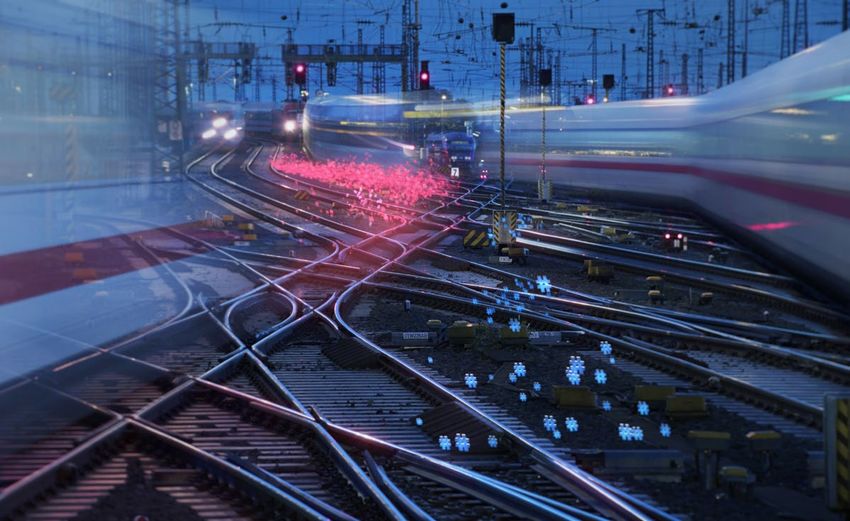
2019/20 Competition figures
The crisis has clearly shown the
                                         importance of rail to passenger trans-
                                         port and to the logistics systems that
                                         supply the economy. Even in excep-
                                         tional circumstances, the rail industry
                                         can ensure stable and extensive provi-
                                         sion of essential mobility and logistics
                                         services. Railways must continue to
                                         be part of the solution in overcoming
                                         the coronavirus crisis and reviving
                                         the economy. The economic stimulus
                                         package passed by the German
                                         government provides an important
                                         impetus in this respect.
Dear readers,
                                         Rail is key to active climate protection
We witnessed a year of mixed for-        and sustainable mobility. It is a fun-
tunes on Germany’s railways in 2019.     damental part of the German Climate
Amid continuing strong inter- and        Action Plan 2050 and the European
intramodal competition and a slow-       Green Deal. At Deutsche Bahn, we
ing economy, German rail passenger       continue to plan for growth and are
transport gained market share.           maintaining our investment and re-
Rail freight, meanwhile, saw its         cruitment work as part of Strong Rail,
share of the market decline. It was a    DB’s overarching strategy.
similarly mixed picture for European
rail traffic.                            Sincerely,
                                         Ronald Pofalla
In 2020, the effects of the Covid-19
pandemic have presented the entire
transport sector with major challenges
to tackle.

                                                                                    3
Contents                                                                     Contents

               06 Passenger transport        26 Infrastructure
               06 German market              26 Use of the rail network
               10 Long distance rail            in Germany
                   in Germany
               12 Regional and local rail
                   in Germany                30 Environment
               14 European market           30 Rail’s contribution
                                                 to protecting the environment

               16 Freight transport
               17 German market              34 Transport performance data
               20 Rail freight transport        since 2014 at a glance
                   in Germany                34 Passenger transport
               22 European market           35 Freight transport
                                             35 Infrastructure

4                                                                                           5
Passenger transport Passenger transport
German market
2019/20
Transport volume in the German passenger
transport market rose slightly in 2019,
with rail achieving the highest growth rate.
The coronavirus pandemic has had a
substantial impact on the market in 2020.
Slump in 2020 following moderate volume) rose by 0.1 percentage
growth in 2019: In 2019, transport points to 8.9%. The number
volume in Germany rose by an esti- of passengers was up 2% to
mated 0.9% to 1,126 billion passen- 2.9 billion.
ger kilometres (2018: 1,115 billion).
Extensive measures to contain the Future performance: The
coronavirus pandemic led to a slump coronavirus pandemic will have
in demand for all modes of transport a major impact on the market
from mid-March 2020. in 2020. A preliminary estimate
by the German Federal Statistical
Rail raises market share in 2019: Office puts the decline in pas
In 2019, rail recorded the strongest senger numbers for the month
growth in transport volume of all of March at around 40% year
modes of transport (increase of 2.1% on year. An even sharper impact
to 100 billion passenger kilometres). is expected in April before the
The expansion of long distance rail market increasingly stabilises in
services contributed to this. Rail’s the subsequent months.
market share (measured in transport
6 7
Passenger transport                                                                                                                                                                    Passenger transport

  Market share of private motorised  Decline in air travel: Transport                                     Market performance in 2019 compared with       Modal split in 2019
transport stagnates: A 1.6% fall in        volume for German domestic flights                              previous year (measured in transport volume)   (measured in transport volume)

fuel prices and a 1.4% increase in the     fell by 1.5% in 2019. Market share
                                                                                                                                                                      6.4   0.9
vehicle population bolstered demand        remained unchanged at 0.9%. In                                                                                            PRT2   Air3
for private motorised transport in         Spring 2020, airlines dramatically                                                                                 8.9                          83.8
                                                                                                                                                              Rail                         PMT1
2019. Transport volume increased by        reduced their services due to the
an estimated 0.9%, while market share      pandemic. Compared with the previ-
held steady at 83.8%. In 2020, private     ous year, the number of passengers
                                                                                                                                                                                                       1) Private
motorised transport will benefit from      on German domestic flights was                                                                                                                                  motorised
further falls in fuel prices and the       down roughly 70% and 99% in March                                         +2.1%
                                                                                                                                                                            %
                                                                                                                                                                                                           transport
                                                                                                                                                                                                       2 Public road
need for social distancing. Despite this, and April respectively.                                           +0.9%                      +0.9%                                                               transport
initial estimates for the full year antic-                                                                                                                                                             3 Air travel
                                                                                                                              –1.5%              0.0%
ipate a 15% fall in transport volume.                                                                                                                                                                     (domestic in
                                                                                                            Total     Rail              PMT¹     PRT²                                                      Germany)

     Market share for public road                                                                                                                                                                Sources: Destatis, DB
                                              Transport volume in Germany                                                       Air³
      transport declines: In 2019, public     (in billion passenger kilometres)          2018     2019¹
      road transport reached the previous
                                              Private motorised transport                934.8    943.2
      year’s volume of around 72 billion
      passenger kilometres. Market share      Rail passenger transport                    98.2    100.2
      fell to 6.4% (2018: 6.5%). Lower        Public road transport                       72.1     72.1
      demand for scheduled long distance
                                              Air travel (domestic in Germany)            10.3     10.1
      bus services was partly behind this
      drop, with the number of passengers     Total                                    1,115.4   1,125.7
      falling by 8.0% to 21 million (2018:
      23 million). Temporary suspension
      of services during the coronavirus
      crisis will further reduce the volume   1 Provisional, partly estimated, figures rounded
      in 2020.                                Sources: Destatis, DB

8                                                                                                                                                                                                                        9
Passenger transport                                                                                                                                           Passenger transport

 Long distance rail                                                                      including on the Berlin–Munich
                                                                                         line, and stimulus from the wider
                                                                                                                                  Collapse in demand due to
                                                                                                                                   coronavirus pandemic: In April,
 in Germany in 2019/20                                                                   economy. Capacity utilisation             the number of passengers on
                                                                                         remained stable as train capacity         DB’s long distance services was
                                                                                         increased.                                approximately 10% to 15% of the
      Transport volume grows in the            New passenger record for DB:                                                      normal level, with services reduced
       long distance market: Transport           A total of 150.7 million passengers,    More trains, more services: In           by around 25%. From mid-May,
       volume rose by around 4% in 2019          including many new customers,            2019, DB Long Distance expanded          DB gradually increased services
       to 44.7 billion passenger kilometres.     travelled on DB’s ICE, IC and EC         its services on routes with particu-     again in response to demand.
       The number of passengers grew             trains in 2019. That was more than       larly strong demand, such as Berlin–     FlixTrain suspended operations
       by 1.9% to over 151 million. In           ever before. Transport volume rose       Munich, Berlin–Frankfurt am Main         in mid-March. The Berlin-Cologne
       2020, a sharp decline in patronage        by 3.1% to 44.1 billion passenger        and Hamburg–Rhine/Ruhr. New              and the Cologne-Hamburg
       is expected due to the coronavirus        kilometres. This was primarily           ICE 4 trains gradually joined the        services were its first routes
       pandemic.                                 driven by the expansion of services,     fleet, with more than 40 of them in      to resume in late July.
                                                                                          operation since the end of 2019.
                                                                                          FlixTrain expanded its German long      Rail set to return to growth:
                                                                                          distance train network to 25 cities      Looking ahead, rail transport
                                                                                          in 2019 and planned a new Hamburg–       will return to a path of growth.
                                                                                          Stuttgart connection for 2020.           Expanding long distance services
                                                                                                                                   is part of the DB corporate strat-
                                                                                         Strong start to 2020: A total of         egy, Strong Rail. The goal is to
                                                                                          23.7 million passengers used DB’s        grow the number of long distance
                                                                                          long distance trains in the first        passengers to 260 million a year.
                                                                                          two months of 2020. This was an          To achieve this, DB Long Distance
                                                                                          increase of 8.4% year on year.           will progressively expand its
                                                                                          An expansion of services with the        vehicle fleet and train services.
                                                                                          2020 timetable change boosted
                                                                                          demand, as did a reduction in VAT
                                                                                          on long distance tickets as part of
                                                                                          the German government’s climate
                                                                                          package.
10                                                                                                                                                                                   11
Passenger transport
Regional and local rail Market shares in regional transport1
(measured in train services ordered)
in Germany in 2019/20
Deutsche Bahn
Other railways
High competitive pressure in a (down 0.6% on 2018). However, the
growing market: There is intense number of passengers rose by 1.7%
competition for contracts in regional to 1,972 million.
transport throughout Europe. The
market in Germany is set to grow 25 competitive tenders: Client
further in the coming years. As part bodies concluded 25 contract award 33% 35% 36%
of the German government’s climate procedures in 2019, encompassing
protection policies, funding for re- around 88 million train kilometres
gional and local transport services a year. DB Regio won 15 contracts 67% 65% 64%
will increase by a total of EUR 5.2 (around 65% of the train kilometres
billion between 2020 and 2031. awarded). Around 49% of the train
2017 2018 2019 2
The coronavirus pandemic has had kilometres newly awarded were
a negative impact in 2020. already operated by DB Regio. This Sources: Federal Network Agency, DB by up to 90% during the lockdown.
means that the company gained 1 Figures rounded; 2 estimated The local public transport asso
Higher market share for competi- more train kilometres than it lost ciations expect revenue losses of
tors: In 2019, DB Regio’s compe to competitors. around EUR 5 billion in regional
titors further increased their share of key workers and enabling a rapid and local passenger transport in
of the train kilometres provided in Ensuring mobility despite a slump increase in service levels after the 2020. They welcome the German
regional and local rail passenger in demand: During the lockdown restrictions were relaxed. For a government’s one-off EUR 2.5 billion
transport from 35% (2018) to an imposed in Spring 2020 to contain time, 90% fewer passengers were increase in funding for regional and
estimated 36%. the coronavirus, transport companies travelling in rural areas, while local transport services and the
continued to offer up to 75% of their numbers were down by 60% to confirmation that the federal states
DB Regio increases patronage: regular service level despite declining 80% in cities. will also invest their own funds.
At 41.6 billion, passenger kilometres passenger numbers. This meant that To implement the rescue package,
at DB Regio in 2019 were slightly extensive public transport remained Rescue package for bus and rail the German government has notified
below the previous year’s level available, ensuring the mobility services: Farebox revenues fell Brussels of a federal framework for
12 regional transport support. 13
Passenger transport Passenger transport
European market of European railway companies.
The closure of borders between
paths in Spain. Trenitalia, RENFE
and FlixTrain planned to operate
Rail passenger transport in 2019/20 EU countries brought international in France, and FlixTrain had
passenger traffic to a virtual stand- also announced its entry into the
still. At national level, traffic fell Swedish market for 2020.
Higher transport volume in 2019: Coronavirus slows growth: The sharply as a result of the contain-
Switzerland’s SBB (+5.8%), CD in scope and duration of the various ment measures taken by member Setting the right direction: The
the Czech Republic (+5.6%), France’s measures taken by EU member states and the recommendation that European Commission has re
SNCF (+5.1%) and Poland’s PKP states to tackle the coronavirus people minimise use of public trans- affirmed its commitment to the
(+5.0%) saw major growth in trans- pandemic have differed depending port. Data from the Community of Green Deal, which aims to make
port volume in 2019. SNCF had on how much each country was European Railway and Infrastructure the EU climate neutral by 2050.
lost ground due to strikes in 2018 affected. The measures have sig Companies (CER) shows a decline In order for the railways to play
(-3.9%). nificantly disrupted the operations of more than 80% in some countries. their role in implementing the EU
climate protection strategy, they
Future performance: The extent must remain efficient and competi-
to which European rail traffic will be tive. CER is calling for a flexible
Performance of rail passenger transport in Europe in 2019 affected by the coronavirus pandemic approach to the rules on state aid
(measured in transport volume, percentage change year on year) in 2020 as a whole will depend on in the rail sector so that compensa-
+ 5.8% + 5.6% how quickly the railways can return tion for coronavirus-related losses
+ 5.1% + 5.0% to normal operations and implement can be provided quickly. It has also
+ 3.3% planned market activities. Spain’s argued that measures to overcome
RENFE, for example, had planned the economic crisis should support
+ 1.3% + 1.2%
to expand its low-cost high-speed the climate-friendly development
rail offering under the AVLO brand of the transport system. CER is
in 2020. Various rail companies championing investments in rail
NF in
CF e
CD ic
SN ium
PK nd
nd
were preparing to enter the French infrastructure and digitalisation
DB ny
SN ranc
bl
RE Spa
1
la
rla
E
a
CB
P
u
lg
rm
Po
ep
F
B e
Be
and Spanish long distance markets. projects. These will benefit the rail-
SB itz
Ge
hR
Sw
ec
SNCF, Trenitalia, Talgo/Globalia and ways as well as European citizens,
Cz
1 DB excluding Arriva Sources: UIC, DB Air Nostrum had requested train the economy and the climate.
14 15
Freight transport Freight transport
German market
in 2019/20
Freight transport increased only slightly in
2019, due to low economic growth. Its future
performance will depend on how quickly the
economy recovers from the declines caused by
the pandemic.
Weak growth in 2019: With growth Rail freight traffic declines: In 2019,
of 0.6% in 2019, the German eco the volume of rail freight fell by an
nomy expanded more slowly than estimated 2.8%. This was mainly due
in the preceding years (2018: 1.5%, to falling demand from industries
2017: 2.5%). Freight transport such as steel, chemicals and automo-
performance rose by 0.4% to an tive manufacture, which make exten-
estimated 698 billion tonne kilo sive use of rail freight services. In
metres. The German economy addition, some traffic shifted back
is expected to shrink by more than to inland waterway transport, which
6% in 2020, which will consider- had lost business to the railways in
ably reduce demand for freight 2018 due to low river levels. In 2020,
transport. For 2021, the German industrial production, and with it
government is forecasting economic demand for transport, has collapsed
growth of at least 5%. due to the coronavirus crisis. Initial
estimates put the decline in rail
transport volume for 2020 as a whole
at around 12%.
16 17
Freight transport Freight transport
Railways safeguard supplies: In the advantages of the rail freight
Spring 2020, the railways recorded system, which can combine large Modal split in 2019 One-off effect on inland water-
growth in the transport of essential volumes of goods and transport (measured in transport volume) way traffic: In 2019, inland water-
goods such as foodstuffs, packaging them with comparatively low ways recorded a considerable
7.3 2.5
and hygiene and medical products, manpower. One freight train can Inland navigation Pipelines increase in transport volume of
including the supplies needed to transport as much as around 8.5% after the previous year’s
make them. The crisis demonstrated 50 lorries can. 18.1 72.1 slump caused by low river levels.
Rail Road
However, this did not fully
compensate for the decline seen
in 2018 (transport volume down
Performance on the German freight transport market 15.5%). Another double-digit
(billion tonne kilometres, percentage change year on year) 0.4%
% decline in volume sold is emerging
in 2020 due to the coronavirus
crisis.
0.4%
694.7 (e) 697.6 (e)
Competition intensifies: In
2019, inland waterway transport
500.6 (e) 502.7 (e) increased its market share again
Sources: Destatis, DB
to 7.3% (2018: 6.8%); however,
–2.8% this remained significantly below
8.5% Falling fuel prices bolster road
the 2017 figure (8.0%). Rail’s
2.3% haulage: With estimated growth market share fell to 18.1% (2018:
130.0 126.4 (e) in transport volume of 0.4%, road 18.7%), while road haulage stag-
haulage in 2019 remained roughly nated at 72.1%. The coronavirus
46.9 50.9
17.2 17.6 at the previous year’s level. In crisis is resulting in fiercer compe-
2020, further falls in fuel prices tition. Excess capacity and sharp
2018 2019 2
2018 2019 2018 2019 2018 2019 2018 2019
Rail1 Road3 Inland navigation Pipelines Total market4 due to the crisis will boost the falls in fuel prices are increasing
competitiveness of road freight. pricing pressures.
1 Data revision by the German Federal Statistical Office, applied retroactively from 2016 The estimated decline in transport
2 provisional; 3 provisional, estimated (e); 4 provisional, estimated (e) volume is around 10% and is there-
Sources: Destatis, DB fore smaller for road than for rail.
18 19Freight transport Freight transport
Rail freight transport ressure from intramodal compe-
P
tition remains high: DB’s compe
limate targets require a shift to
C
rail: In order to avoid a shift back
in Germany in 2019/20 titors sold an estimated 70.5 billion to road transport as the economy
tonne kilometres in 2019 (2018: recovers, the industry associations
71.4 billion tonne kilometres). are calling for economic measures
Falling demand for transport: Performance by freight operating companies They expanded their market share and assistance to overcome corona
The volume sold by rail freight (transport volume in billion tonne by 0.9 percentage points to 55.8% virus-related losses. They want
kilometres)
companies in Germany fell by 2.8% (2018: 54.9%). these policies to help to expand
in 2019. Weaker economic growth Deutsche Bahn climate-friendly rail’s share of the
reduced the demand for transport Competitors Industry associations call for German freight transport market
% Competitors’ market share
in cyclical sectors such as steel and stabilisation package: During the towards the 25% target set by
automotive manufacture. Transport crisis, freight operators have con government. Compared with road
volume declined at both DB and tinued to run transport services haulage, rail freight reduces green-
non-DB rail companies. despite underused capacity and house gas emissions by 80% per
high fixed costs, thereby helping to tonne kilometre. Without such a
55.8%
Major losses in 2020: In addition guarantee vital supplies. To ensure modal shift, it will not be possible
to the industrial recession, which 2019 55.8 70.5 these businesses remain viable, to meet the reduction targets for
has continued beyond late 2019 industry associations are calling for transport emissions.
54.9%
and early 2020, coronavirus-related action to stabilise freight companies’
production stoppages in industry, 2018 58.6 71.4 economic position. Such measures
declining fuel demand and a drop in include expanding reductions in
52.5%
traffic at seaports led to a slump in track access charges and moving
rail transport services from March 2017 62.3 68.9 swiftly to introduce reductions in
2020 onwards. Growth in transport facility charges. To enable railways
of essential goods was not high Sources: Destatis, DB
to compete with road haulage,
enough to compensate for the falls which is benefiting from much lower
in other areas. For 2020 as a whole, fuel prices, the industry associa-
a double-digit decline in transport tions are calling on government to
volume is expected at rail freight reduce the burden from electricity
companies. tax, renewable energy reallocation
charges and emissions trading.
20 21Freight transport Freight transport
European market
Rail freight transport in 2019/20
Transport volume declines: The predominantly due to a catch-up
volume sold in European rail freight effect following extensive industrial
fell by 3.2% in 2019. The main action in 2018.
causes were the weak performance
of industries that make extensive Performance in 2020: The spread
use of rail freight services (steel, of the coronavirus around the
chemicals, automotive manufacture) world has led to a global slump
and the continuing decline in coal in production and demand, which
transports. is affecting every transport and
logistics market. In its spring fore-
Losses at most European freight cast, the European Commission
operators: The majority of rail expects the EU economy to shrink
freight operating companies experi- by 7.5% in 2020 and to grow by
enced falls in transport volume in 6% in 2021. These economic
2019. Poland’s PKP Cargo (down fortunes will determine how freight
14.4%) and CD Cargo in the Czech transport performance fares.
Republic (down 10.9%) saw particu-
larly marked declines. After high Crisis demonstrates advantages
growth rates in previous years, the of rail: The railways are capable
economic slowdown and reduced of transporting large volumes of
coal traffic had a major impact here. freight over long distances with
At DB Cargo, the decline of 3.7% little manpower. Unlike road haul-
in 2019 was less severe than the age, international rail freight did
previous year’s fall of 4.8%. France’s not face major restrictions or
Fret SNCF increased its transport congestion during the period of
volume by 7.0% in 2019. This was border closures.
22 23Freight transport
Climate protection remains a key shoulder their role in implementing
challenge: Under the Green Deal, the EU’s climate change strategy if
transport-related emissions are to they can get through the crisis and
be reduced by 90% by 2050 (com- invest in growth and innovation.
pared with 1990 levels). This means
shifting a considerable portion of Railways need support: Data from
freight traffic within the EU, 75% of the Community of European Railway
which is currently carried by road, and Infrastructure Companies (CER)
onto the rail network and inland shows that European rail freight
waterways. The railways can only operating companies lost an average
Performance by selected freight operating companies in Europe in 2019¹
(measured in transport volume, percentage change year on year)
of 25% of their freight volumes traffic management and train
and revenues in the space of two control system on the European
months during the current crisis. freight corridors, and the
CER is calling for the swift creation Europe-wide migration to a
of a European stabilisation fund digital automatic coupling (DAC)
lic
p
ou
o b
and a reduction in track access and system, have the potential to
rg d
rg pu
+7.0%
Gr
Ca an
Ca any
Ca Re
B erl
o
o
o
il ia
P d
facility charges. It also wants to see make railways much more com
rg
o
rg
PK olan
CD zech
SB itz
RE ain
DB erm
Ra ustr
rg
Ca
E
Ca
Sw
NF
Sp
G
P
A
less distortion of competition, for petitive. DAC can reduce costs
C
example in taxation and the alloca- and transport time and enable
SN ce
–1.9% tion of external costs, and faster the efficient digitalisation of
et ran
–3.7% –3.7%
CF
Fr F
–5.7% expansion of infrastructure. rail transport. Common European
–10.9% frameworks and financial incen-
–14.4% Seizing digital opportunities: The tives will be critical to rapid
introduction of the ERTMS/ETCS migration.
1 Figures as of: May 2020 Sources: Eurostat, UIC, companies
24 25Infrastructure Infrastructure
Use of the
rail network
in Germany in 2019/20
There was further growth in the DB network’s
operating performance in 2019. Non-DB-Group
rail companies accounted for a third of the total
volume. Demand for train paths has fallen in
2020 due to the coronavirus pandemic.
Higher demand for train paths
in 2019: Operating performance
on DB’s rail network rose by 0.5%
in 2019 to 1,090 million train-path
kilometres (2018: 1,085 million
train-path kilometres). The growth
was mainly due to increased
demand for train paths in long
distance transport and additional
orders in regional transport.
Non-DB rail companies continue
growth: The share of operating
performance attributable to non-
DB-Group rail companies on DB’s
network climbed to 33.8% in 2019
(2018: 32.2%). DB’s competitors
requested a total of 368.2 million
26 27Infrastructure
train-path kilometres. This was 5.4% Operating performance on the DB network
more than in the previous year. (million train-path kilometres)
Demand from DB companies fell by Total
1.9% to 722.1 million train-path Non-DB-Group railways
kilometres. + 0.5%
Strong competition: The continued
1,085 1,090
growth in competition on the rail-
way is clear from the number of 800
applications for train paths by non-
DB companies for the 2020 working + 5.4%
timetable. Their share has risen to 400
over 39% in regional transport and 349 368
over 37% in freight transport.
0
2018 2019
Train path cancellations during
the coronavirus crisis: As a result Source: DB
of the crisis, client bodies and trans-
port companies have reduced the sion of long distance services and Record investment initiative: Modernisation push with Digital
provision of passenger and freight reduced track access charges in DB and the German government Rail for Germany: The large-scale
transport services. DB Netz waived freight transport. are investing EUR 12 billion in rollout of the European Train Control
all fees for train path cancellations rail infrastructure in 2020 alone – System (ETCS), and the digitalisa-
during the acute phase of lockdown DB Netz increases infrastructure more than ever before. DB Netz tion of signalling technology, are the
(mid-March to early May). capacity: As part of DB’s Strong is using this funding to modern- basis for digitalising railway opera-
Rail strategy, DB Netz will expand ise the rail network, including tions. The initial phase of Digital Rail
Recovery this year: As the economy capacity by 30% (around 350 mil- stations and electrical power for Germany includes the Stuttgart
recovers, demand for train paths will lion train-path kilometres) over the systems. Out of a total of 13,000 metropolitan area, the Cologne–
pick up again over the remainder coming years. This will create the construction measures started Rhine/Main high-speed line and the
of 2020, bolstered by measures such infrastructure needed for rail to in 2020, fewer than 1% had to Scandinavian–Mediterranean trans-
as increased funding for regional capture a larger share of the trans- be postponed or cancelled due European corridor.
and local transport services, expan- port market. to the coronavirus.
28 29Environment Environment
Rail’s contribution Climate-friendly rail
(Greenhouse gas emissions [CO2e¹] in grams per person/tonne and kilometre in Germany²)
to protecting the environment
DB long distanceEnvironment Environment
E-mobility by rail: No other mode Quiet freight traffic: By the end Green rail Quiet wagons
of transport has electrified on the of 2020, DB’s entire freight wagon (share of green electricity in the traction In 2020, DB Cargo Deutschland will equip
power network) more freight wagons with modern “whisper
same scale as the railway. With more fleet in Germany will be fitted with brakes”. By the end of the year, the entire
60%
than 90% of its transport volume modern composite brake blocks active fleet will have been retrofitted.
powered by electricity, rail accounts known as whisper brakes. This will 2019
for the largest market share of mark the completion of the wagon That’s an impressive
e-mobility in Germany. upgrade programme. Around
61,000 freight wagons
100%
58,000 of the DB freight wagons
High share of renewable energy: in service had been fitted with 2038
No other means of mass transport whisper brakes by the end of 2019.
can switch completely to renewable
energy as quickly as rail. In 2019, Lineside measures reduce noise
green electricity already made up levels: By the end of 2019, noise
60% of DB’s traction power. The abatement measures had been put
next target is a share of 80% by in place along some 1,850 kilome-
2030, and green electricity is due tres of particularly noisy track. Retrofitting since 2013
to supply 100% of DB’s traction These involved lineside changes 100%
power by 2038 at the latest. such as noise-protection barriers
and sound-insulating windows 60,000
Noise control: By retrofitting freight in buildings near tracks. Noise 58,000 in 2019
wagons and implementing noise abatement along a total of 2,000
protection measures on railway kilometres of line will be com- 40,000
lines, we are fostering acceptance pleted by the end of 2020.
among local residents for a modal
shift to rail. The aim is to halve 20,000
Investment by DB Cargo:
railway noise by 2020 for people EUR 200 million
living along DB rail lines.
2014 2016 2018 2020
Source: DB
32 33Transport performance data since 2014 at a glance Transport performance data since 2014 at a glance
Freight transport
Transport volume
in Germany in billion
tonne kilometres 2014 2015 2016 2017 20183 20194
Rail 112.6 116.6 128.9 5
131.2 130.0 126.4 (e)
Road 452.9 466.0 479.6 486.0 500.6 (e) 502.7 (e)
Inland navigation 59.1 55.3 54.3 55.5 46.9 50.9
Pipelines 17.5 17.7 18.8 18.2 17.2 17.6
Total market 642.1 655.6 681.0 694.4 694.7 (e) 697.6 (e)
Passenger transport
Sources: Destatis, DB
Transport volume
in Germany in billion
passenger kilometres 2014 2015 2016 2017 2018 2019¹ Infrastructure
Rail 91.0 91.7 94.2 95.5 98.2 100.2 Operating performance
in Germany in million
Public road transport 71.3 72.6 73.7 71.4 72.1 72.1 (e) train-path kilometres 2014 2015 2016 2017 2018 2019
Private motorised transport 935.0 945.7 965.2 935.72 934.8 943.2 (e) On the network 1,044 1,054 1,068 1,073 1,085 1,090
Air travel (domestic in Germany) 10.0 10.1 10.5 10.4 10.3 10.1 Of which non-DB-Group customers 261 290 322 331 349 368
Total market 1,107.2 1,120.2 1,143.5 1,112.9 1,115.4 1,125.7
Source: DB
Sources: Destatis, DB 1 2019 data provisional, partly estimated (e)
2 Methodological changes by the Federal Statistical Office from 2017
3 Road and total market data for 2018 provisional, estimated (e)
4 Road, rail and total market data for 2019 provisional, partly estimated (e)
5 Data revision by the Federal Statistical Office, applied retroactively from 2016
34 35Publishing details
Deutsche Bahn AG Image credits:
Economic, Political and Deutsche Bahn AG/Christian Bedeschinski (page 4), Deutsche Bahn AG/
Regulatory Affairs Axel Hartmann (pages 6–7), Deutsche Bahn AG/Max Lautenschläger
Potsdamer Platz 2 (pages 9, 26–27, 29, 34), Deutsche Bahn AG/Oliver Lang (pages 10, 23,
10785 Berlin, Germany 25), Deutsche Bahn AG/Uwe Miethe (page 13), Deutsche Bahn AG/
Michael Neuhaus (page 16), Deutsche Bahn AG/Volker Emersleben
No liability for errors or omissions. (pages 21, 34), Deutsche Bahn AG/Faruk Hosseini (page 30), Deutsche
Last modified: June 2020 Bahn AG/Günther Bauer (page 34)You can also read


