2019 EU PLEDGE MONITORING Nestlé TOP LINE REPORT - Nestle
←
→
Page content transcription
If your browser does not render page correctly, please read the page content below
2019
CONFIDENTIAL REPORT

     EU PLEDGE MONITORING
                               Nestlé
                      TOP LINE REPORT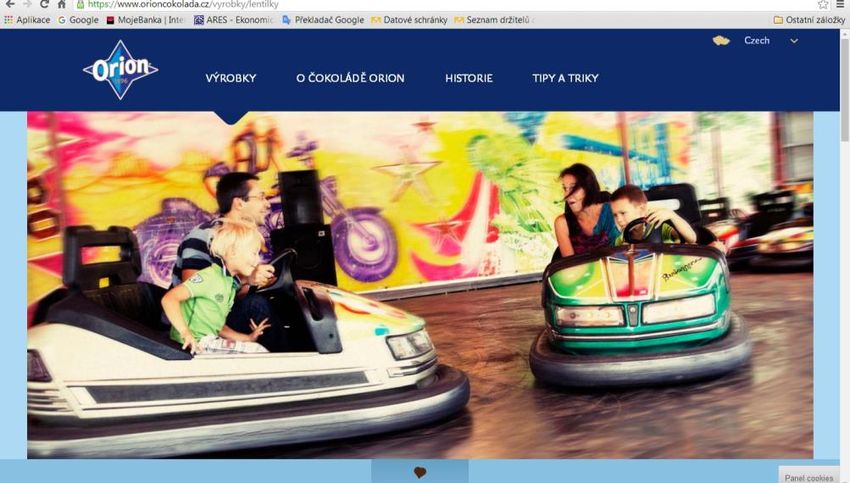
2019 EU Pledge Survey

     EASA
     The European Advertising Standards Alliance (EASA) is the single authoritative voice of
     advertising self-regulation in Europe. EASA promotes high ethical standards in commercial
     communications by means of effective self-regulation for the benefit of consumers and
     business. For further information, please visit: www.easa-alliance.org.
     As a non-profit organisation based in Brussels, EASA brings together national advertising self-
     regulatory organisations and associations representing the advertising industry in Europe.

     EASA contact information
     Lucas Boudet, Director General- lucas.boudet@easa-alliance.org
     Orestis Kouloulas, Project Officer - orestis.kouloulas@easa-alliance.org
     Tudor Manda, Project and Compliance Assistant – tudor.manda@easa-alliance.org

     Copyright
     The complete or partial reproduction of this publication is forbidden without the prior express
     written permission from the EU Pledge Secretariat.

     Compiled in
     January 2020

                                                    1
2019 EU Pledge Survey
Table of Contents
Introduction ................................................................................................................................ 3
Project Overview ........................................................................................................................ 4
Methodology .............................................................................................................................. 6
Note on the Methodology .......................................................................................................... 8
Executive Summary .................................................................................................................... 9
1. Brand-Owned Websites ........................................................................................................ 10
1.1 Sample of Brand-Owned Websites ..................................................................................... 10
1.2 Age screening & Parental Consent ..................................................................................... 11
1.3 Licensed Characters, Tie-ins & Celebrities .......................................................................... 11
1.4 Games & Entertainment Activities ...................................................................................... 12
1.5 Animations: Sound Effects & Videos ................................................................................... 13
1.6 Toys Used as Premiums/Prizes ........................................................................................... 13
1.7 Compliance with the EU Pledge Criteria ............................................................................. 14
1.8 Detailed Analysis of Brand Websites Breaching the EU Pledge Commitment .................... 14
1.9 Compliance with Advertising Codes/Laws .......................................................................... 17
1.10 Links to social media profiles ............................................................................................ 17
2. Brand-Owned Social Media Profiles...................................................................................... 18
2.1 Sample of Brand-Owned Social Media Profiles................................................................... 18
2.2 Accessibility......................................................................................................................... 19
2.3 Licensed Characters, Tie-ins & Celebrities .......................................................................... 20
2.4 Games & Entertainment Activities ...................................................................................... 21
2.5 Contests, Competitions & Promotional events ................................................................... 22
2.6 Animations: Videos and Photos .......................................................................................... 23
2.7 Language & Interaction....................................................................................................... 24
2.8 Primary Appeal of Brand Social Media Profiles to under-12s ............................................. 25
2.9 Compliance with Advertising Codes and National Laws ..................................................... 25
2.10 Links to other social media profiles .................................................................................. 26
3. Pilot on Influencer Marketing ............................................................................................... 27
22019 EU Pledge Survey
Introduction
EASA was commissioned by the EU Pledge Secretariat to review several food and beverage
brand websites and social media profiles belonging to the EU Pledge1 member companies, and
independently check compliance with the EU Pledge criteria as well as with the self-regulatory
codes and national advertising laws.
The goal of the project was to determine whether the reviewed company-owned websites and
social media profiles were compliant with the relevant EU Pledge commitment.
Compliance with the EU Pledge commitment, for brand websites and social media profiles, is
determined on the basis of whether:
• The website or social media profile features marketing communications;
• If these marketing communications promote food or beverage products, as opposed to
a brand in general;
• Such food and beverage products meet the EU Pledge common nutritional criteria;
• Such marketing communications are designed to be targeted primarily at children
under 12.
Advertising self-regulation experts were requested to think from the perspective of a child
younger than 12 while reviewing brand websites and social media profiles and to keep in mind
what a child of this age would find interesting and attractive. Special attention had to be paid
to specific aspects of the websites and social media profiles that would make them appealing
to under 12-year-olds.
In order to offer unbiased, independent, and accountable results, a ‘consumer-oriented
approach’ was drawn up by the EASA Secretariat in collaboration with the EU Pledge Secretariat
and Pr. Verónica Donoso, the independent reviewer of the exercises that were conducted
between 2011-2016. The 2019 methodology was adapted by EASA, the EU Pledge Secretariat
and Professor Liselot Hudders2, the independent reviewer of this exercise. The role of the
independent reviewers is to verify that appropriate criteria have been set up in the
1 The EU Pledge is a voluntary commitment of leading food and non-alcoholic beverage companies to limit their advertising to
children under 12 to products that meet specific nutritional standards. The EU Pledge is a response from industry leaders to
calls made by the EU institutions for the food industry to use commercial communications to support parents in making the
right diet and lifestyle choices for their children. The EU Pledge programme is endorsed and supported by the World Federation
of Advertisers.
2 Liselot Hudders is an assistant professor at the department of communication sciences at Ghent University and a postdoctoral
fellow of the FWO at the marketing department. She teaches courses on Consumer Behavior, Communicative Skills and
Organizational Psychology and she serves as ad hoc reviewer for journals as Journal of Happiness Studies, Journal of
Adolescence, and Journal of Brand Management and for conferences as EMAC, and ICORIA. She participated in many
international conferences and published in various international journals. Her research interests include Persuasive
Communication, Consumer Behavior and Advertising Literacy. Her research focus lays on how consumption affects an
individual's well-being. In particular, she is conducting research on how materialism and luxury consumption, green
consumption practices, and food consumption may contribute to an individual's happiness (both for children and adults). In
addition, she investigates how children and youngsters cope with (new) advertising techniques. She is particularly interested
in 1) how minor's advertising literacy can be improved, using advertising cues and advertising literacy training sessions and 2)
how parental mediation and peer influences moderate these effects.
32019 EU Pledge Survey
methodology, to perform quality checks on SROs’ reviews, testify on the correctness of the
monitoring procedure, and sign off on the EASA top line report.
Project Overview
Experts from 8 European self-regulatory organisations (SROs) were invited by EASA and the EU
Pledge Secretariat to conduct the monitoring exercise and assess the appeal of marketer-
owned websites and social media profiles to children under the age of 12. The eight chosen
SROs represent different systems in terms of size (big vs. small SROs), location (geographical
coverage) and maturity (new vs. old systems).
List of the participating countries
SRO - Country
CRPR - Czechia
ARPP - France
DWR - Germany
SEE - Greece
IAP - Italy
SRC - Netherlands
AUTOCONTROL - Spain
Ro. - Sweden
Below is a list of the EU Pledge member companies.
List of the EU Pledge member companies
EU Pledge member companies
Amica Chips Lorenz Snack-World
Arla Foods Mars
Bel Group McDonald's
Burger King MOM
Coca-Cola Mondelēz
Danone Nestlé
Ferrero PepsiCo
General Mills Royal Friesland Campina
Intersnack Unichips-San Carlo
Kellogg's Unilever
KIMs Zweifel Pomy-Chips
42019 EU Pledge Survey
Self-regulation experts from the 8 SROs reviewed a sample of 253 items, including national
brand websites3 and social media profiles of EU Pledge company members.
Number of websites and social media profiles reviewed per country
Country Websites Facebook Instagram YouTube Social Media Total
CRPR - Czechia 14 5 6 6 17 31
ARPP - France 11 7 8 5 20 31
DWR - Germany 11 7 8 6 21 32
SEE - Greece 12 6 8 6 20 32
IAP - Italy 12 6 8 6 20 32
SRC - Netherlands 12 5 9 6 20 32
AUTOCONTROL - Spain 14 4 6 8 18 32
Ro. - Sweden 15 6 4 6 16 31
Total 101 46 57 49 152 253
Experts were also asked to review, as part of a separate pilot monitoring, 5 influencer profiles
per country. These influencers were provided to EASA by the EU Pledge member companies,
thus ensuring that the influencers and companies engaged in a commercial relationship.4 The
table below indicates which country monitored which company’s influencer profiles. In total,
40 influencer profiles were monitored. However, in order to maximise the number of posts
reviewed, SROs were asked to find profiles that worked with more than one company, and thus
monitor several posts from one influencer profile. This increased the number of posts reviewed
to 76, of which 8 posts were found to promote products that are compliant with EU Pledge
nutrition criteria and were consequently left out of the monitoring exercise. Overall, a total of
68 influencer profiles’ posts were reviewed and analysed. The analysis of this part can be found
on page 27.
SROs reviewed 1 post from 1 influencer profile that Nestlé has confirmed working with. The
promoted product was non-compliant with the applicable nutritional criteria.
Company’s influencer profiles reviewed for each country
Netherlands
Nestlé 1 Instagram
3 Where available, at least 1 website per company.
4 Not all EU Pledge member companies provided influencer profiles.
52019 EU Pledge Survey
Methodology
The EU Pledge Secretariat provided EASA with a list of all products promoted by the EU Pledge
member companies in the selected markets. The list indicated whether these products met the
applicable nutritional criteria set out in the EU Pledge Nutrition White Paper. From this, EASA
compiled a list of websites and social media profiles that promoted products that did not meet
the nutritional criteria. Based on EASA’s list, the self-regulatory experts selected websites and
social media profiles to review based on an agreed-upon and balanced quota. The latter was
designed with the intent of having all companies proportionally represented across all digital
platforms. When making their selection, reviewers were requested to consider products
popular amongst children in their country.
For the influencer pilot monitoring, the EU Pledge secretariat provided EASA with a list of
influencers each member company worked with during 2019. EASA then asked the self-
regulatory organisations to select profiles that promoted non-compliant products with the
applicable nutritional criteria, and to especially choose the ones that may be most appealing
and popular with children under the age of 12.
To offer unbiased, independent, and accountable results, a ‘consumer-oriented approach’ was
drawn up by the EASA Secretariat in collaboration with the EU Pledge Secretariat and Dr.
Verónica Donoso, the independent reviewer of the 2011-2016 exercises. The methodology was
revised in 2019 by EASA, the EU Pledge Secretariat, and the current independent reviewers
Professor Liselot Hudders.
The questionnaire for the websites asked the self-regulatory experts if the website being
reviewed contained elements such as games and entertainment activities5, animations sound
effects and videos, licensed characters6 and toys, and to decide if these were in their view
primarily designed for children under 12. Reviewers then had to judge if these elements, in
conjunction with the creative execution of the website (i.e. simplicity of language, use of font
size and typeface, use of colours, etc.), were clearly intended to make the marketing
communication(s) on the website primarily appealing to under-12s.
Several websites contained features to screen the age of the visitor and the reviewers were
asked to note if a website contained such features. However, this element was not considered
to be sufficient to ensure compliance if the marketing communications on the website were
clearly designed to appeal primarily to children under 12.
Based on the level of appeal of the creative execution to under-12s as well as the overall
findings reported by the self-regulatory experts, the reviewers determined the final compliance
of the websites with the EU Pledge criteria.
5
A game/entertainment activity is an activity engaged for diversion or amusement. A non-exhaustive list of
games/entertainment activities are: online interactive games, casual/social games, puzzles, board games, role-playing games,
trivia, card games, racing, arcade, colouring sheets, activity sheets, do it yourself activities, etc.
6
Characters acquired externally and linked for example to films, cartoons or sports.
62019 EU Pledge Survey
The questionnaire for the social media profiles asked the experts if the reviewed profiles
allowed children under 12 access without registration7 and if they featured licensed characters,
games/entertainment activities, animations/sound effects/videos, contests and promotional
events, and to decide if the reviewed profiles were primarily designed for children under 12.
Reviewers then had to judge if these elements, in conjunction with the overall look and feel of
the social media profile, were clearly intended to make the marketing communication(s)
primarily appealing to under-12s.
The questionnaire for the influencer profiles asked the SROs what type of posts the influencer
was publishing and how often they were posting about food and beverage products. They were
then asked to select at least one post per profile that showcases a product from the EU Pledge
companies and to analyse whether the post included techniques that may render it appealing
to children under 12. Such factors included language, humour and writing style, the visuals, film
tie-ins, and animations displayed on the post, and whether there were any games, promotional
actions, or toys attached.
Beyond websites’ compliance with the EU Pledge and the primary appeal of social media
profiles to children under 12, the experts also flagged any items on the reviewed websites,
social media profiles, and influencer profiles, that potentially breached any applicable
advertising codes or relevant legislation.
The following were considered:
• ICC Framework for Responsible Food and Beverage Marketing Communications;
• Relevant advertising standards and national sectoral codes;
• Relevant advertising laws.
All reviews were performed by experts from national self-regulatory organisations. EASA’s role
in the project was to ensure that the results were reported on in a consistent manner.
7 Given the fact that children under 13 are not allowed to create a profile on Facebook, Instagram, and YouTube, the
questionnaire included a question aimed at checking if the pages of this social media platforms were accessible without
registration and if they included language that encouraged the interaction or active participation of children under 12.
72019 EU Pledge Survey
Note on the Methodology
In collaboration with the EU Pledge Secretariat and independent reviewers Professors Liselot
Hudders and Dieneke Van de Sompel, EASA has taken great care to ensure that the results of
this project are objective and consistent. They have – as explained above – developed a detailed
methodology which was applied by all self-regulatory experts when assessing brand websites
and social media profiles.
However, although it may be relatively easy to determine if a website, social media or
influencer profile appeals to children in general, it is much harder to determine if a website,
social media or influencer profile is designed to appeal primarily to children younger than the
age of 12. As a result, the decisions of the self-regulatory experts retain an unavoidable degree
of subjectivity, although it is informed by their extensive day-to-day professional experience.
Readers are requested to bear this in mind.
82019 EU Pledge Survey
Executive Summary
Brand-Owned Websites:
• A total of 101 national brand websites were reviewed, 7 of which belonged to Nestlé;
• 85.7% of the brand-owned websites were compliant with the EU Pledge commitment –
1 out of 7 breached the commitment;
• All 7 Nestlé websites reviewed (100%) were compliant with the relevant advertising
codes and laws.
Brand-Managed Social Media Profiles:
• A total of 152 social media profiles were reviewed, 9 of which belonged to Nestlé;
• All 9 social media profiles reviewed (100%) were compliant with the EU Pledge;
• All 9 social media profiles reviewed (100%) were compliant with the relevant local
advertising rules and laws.
Influencer Profiles Pilot:
• A total of 40 influencer profiles were reviewed, 1 of which belonged to Nestlé;
• The Nestlé influencer profile reviewed (100%) was compliant with the EU Pledge
commitment and the relevant advertising codes or advertising laws.
92019 EU Pledge Survey
1. Brand-Owned Websites
1.1 Sample of Brand-Owned Websites
A total of 7 Nestlé websites were reviewed by the experts. The table below provides an
overview of the number of websites that were reviewed per country.
Number of websites reviewed per country
Country Nestlé
Czechia 2
France 1
Germany 1
Netherlands 1
Spain 2
Total 7
102019 EU Pledge Survey
1.2 Age screening & Parental Consent
Only one of the 7 Nestlé social media profiles contained a mechanism to screen the visitor’s
age before allowing access to the online content. Although relevant, this element was not a
crucial factor deciding over the compliance of the profile. The respective profile displayed a
field where the user must enter their date of birth.
Age-gate mechanisms on social media profiles (N=7)
Age-gating
mechanism,
N=1, 14.3%
No age-gating
mechanism,
N=6, 85.7%
1.3 Licensed Characters, Tie-ins & Celebrities
The reviewers found no website, or children’s section(s) of websites, featuring licensed
characters or film tie-ins as means to promote food or beverage products.
112019 EU Pledge Survey
1.4 Games & Entertainment Activities
The reviewers identified entertainment activities and/or games on 2 reviewed websites of the
7. In one instance, the reviewers judged the game to be primarily targeting children younger
than 12, with the game actively promoting the product.
Number of websites featuring entertainment activities & games (N=7)
Primarily
appealing to
children under
12, N=1, 50%
No games, N=5, Games, N=2,
71.4% 28.6% Not primarily
appealing to
chidlren under
12, N=1, 50%
The respective profile was flagged as being primarily appealing to children under 12 because
of the following factors:
• A child younger than 12 could easily follow the instructions to play the game;
• The game/entertainment activity is colourful/cartoon-like and uses
drawings/animations, etc. that are appealing to children under 12;
• The player is either collecting or working with the product itself.
122019 EU Pledge Survey
1.5 Animations: Sound Effects & Videos
The experts found that none of the 7 reviewed websites displayed animations, sound effects or
videos.
1.6 Toys Used as Premiums/Prizes
The reviewers didn’t identify any website that used toys as premiums to promote a food or
non-alcoholic beverage products.
132019 EU Pledge Survey
1.7 Compliance with the EU Pledge Criteria
In order to determine whether a website was designed to target primarily children under the
age of 12, and subsequently to assess if the marketing communications were intended to
appeal primarily to under-12-year-olds, all previously identified elements had to be considered
together. This included the use of animations, sound effects and videos, entertainment
activities and games, toys or licensed characters, as well as the creative execution of the
website, meaning the overall impression of the website’s design (the use of colours, typeface,
font size, language, etc.).
Decisive factors in judging the appeal of a website to young children were the usability of the
websites (i.e. ease of navigation), simplicity of language, font size, colour schemes and the level
of entertainment offered on the websites.
After careful review, the experts concluded that 1 of the 7 Nestlé websites breached the EU
Pledge commitment.
Compliance rate for Ferrero’s brand websites with the EU Pledge commitment (N=7)
In breach, N=1,
14.3%
Compliant, N=6,
85.7%
1.8 Detailed Analysis of Brand Websites Breaching the EU
Pledge Commitment
142019 EU Pledge Survey
Orion Website (CZ)
✓ Product promotion
Age screening
Licensed characters
✓ Games
✓ Photos/Videos
Toys/Premiums
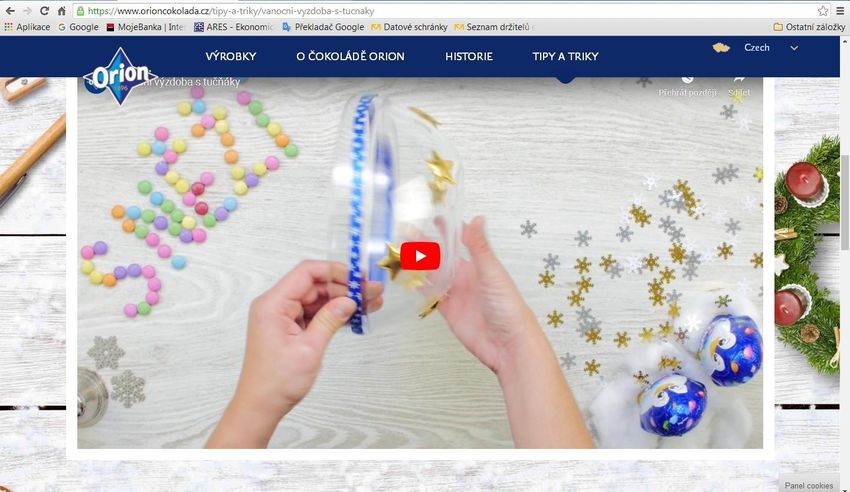
The Nestlé Czech website for Orion was considered non-compliant due to a combination of
several factors. The self-regulatory organisation found that the video instruction manual for
creating Christmas decorations using the product’s packaging was particularly appealing to
children younger than 12. Although Christmas is not a festivity that is per se targeted to
children, the aura around Christmas, the merry festive period, and the presentation of exciting
gifts have always appealed to young children. Moreover, the various animations that are used
and the do-it-yourself decoration seem to target primarily children. Combined with the overall
feel of the website, the Czech SRO judged the website to be in breach of the EU Pledge
commitment.
URL: https://www.orioncokolada.cz/
The main page features a family of four enjoying driving bumper cars.
152019 EU Pledge Survey
Online video shows instructions to create a Christmas decoration using the product
162019 EU Pledge Survey
1.9 Compliance with Advertising Codes/Laws
The reviewers were also specifically asked to judge the websites against their national
advertising legislation and self-regulatory codes, and flag elements that could be considered in
breach of such regulations.
No website was identified as being in breach of advertising regulations.
1.10 Links to social media profiles
A majority of 4 websites out of the 7 reviewed displayed links to brand-managed social media
sites (Facebook, Instagram, Twitter, YouTube). No links to mobile apps were found.
Number of websites featuring links to brand-managed social media profiles (N=7)
No social media
links, N=3, 42.9%
Social media
links, N=4, 57.1%
172019 EU Pledge Survey
2. Brand-Owned Social Media Profiles
2.1 Sample of Brand-Owned Social Media Profiles
A total of 152 social media profiles were reviewed by experts, out of which 9 belonged to
Nestlé. 3 of the 9 were brand-managed Facebook pages, 2 were brand-managed Instagram
profiles, and 4 were brand-managed YouTube accounts. The tables below provide an overview
of the number of social media profiles that were reviewed per country and per platform.
Number of social media profiles reviewed per country and per platform (N=9)
Country Nestlé
Czechia 2 Platform Nestlé
France 1 Facebook 3
Germany 1 Instagram 2
Greece 1 YouTube 4
Italy 1 Total 9
Netherlands 1
Spain 1
Sweden 1
Total 9
182019 EU Pledge Survey
2.2 Accessibility
Only one of the 9 Nestlé social media profiles contained a mechanism to screen the visitor’s
age before allowing them access to the online content. Although relevant, this element was not
a crucial factor deciding over the compliance of the profile.
Age-gating mechanisms on social media profiles (N=9)
Age-gating
mechanism,
N=1, 11.1%
No age-gating
mechanism,
N=8, 88.9%
192019 EU Pledge Survey
2.3 Licensed Characters, Tie-ins & Celebrities
1 out of the 9 reviewed social media profiles featured licensed characters and tie-ins from
popular films and series. The SRO judged, however, that the character’s display on the profile
was not primarily appealing to children younger than 12.
Number of social media profiles featuring licensed characters, tie-ins or celebrities (N=9)
Not primarily
No licensed Licensed appealing to
characters, N=8, characters, N=1, children under
88.9% 11.1% 12, N=1, 100%
202019 EU Pledge Survey
2.4 Games & Entertainment Activities
The reviewers identified entertainment activities and games on 3 of the 9 reviewed social
media profiles. The reviewers considered one of these social media profiles to appeal primarily
to under-12s via its games and entertainment activity. These were actively promoting the
product on the social media platform.
Number of social media profiles featuring entertainment activities & games (N=9)
Primarily appealing to
children under 12, N=1,
33.3%
No games, N=6, Games, N=3,
66.7% 33.3% Not primarily
appealing, N=2,
66.7%
The respective profile was flagged as being primarily appealing to children under 12 because
of the following factors:
• The game/entertainment activity is easy enough to be played by children younger
than 12;
• (The game/entertainment activity is colourful/cartoon-like and or uses
drawings/animations, etc. that are appealing to children under 12;
• (A child younger than 12 could easily follow the instructions to play the
game/entertainment activity;
• The instructions are concise (they are short and do not contain much text);
• The instructions contain more visuals/animations than written text.
It has not escaped the attention of the self-regulatory experts that, although children younger
than 12 are most likely able to follow the instructions in the videos for the various activities,
children younger than 6 may not find it as straightforward.
212019 EU Pledge Survey
2.5 Contests, Competitions & Promotional events
5 reviewed Nestlé social media profiles included contests, competitions or promotional events.
One profile of these 5 displayed promotional content that was deemed to be primarily
appealing to children under 12, and it was actively promoting the content.
Number of social media profiles featuring contests and/or competitions (N=8)
Primarily appealing
under 12, N=1, 20%
Promotional
No promotional content, N=5,
content, N=4, 55.6% Not primarily
44.4% appealing,
N=4, 80%
The respective profile was flagged as being primarily appealing to children under 12 because of
the numerous gifts that users can win via the competitions. There are competitions with some
100 scooters, 100 bicycles and helmets, and 100 Lenovo Mirage starring Star Wars characters
in a VR simulation game. The SRO found all these prizes primarily appealing to children.
222019 EU Pledge Survey
2.6 Animations: Videos and Photos
2 of all reviewed Nestlé social media profiles featured videos and/or photos that were
considered to be primarily appealing to under-12s. Both profiles were promoting the product
through the videos and animations.
Number of social media profiles featuring videos/photos (N=9)
Primarily
Animations appealing to
No animations, displayed, N=2, children under
N=7, 77.8% 22.2% 12, N=2, 100%
The respective profiles were flagged as being primarily appealing to children under 12 because
of the following factors:
• The photos and/or videos contain characters based on movies, video-games, and
books etc. that children under 12 typically like (e.g. Disney, Hello Kitty etc.);
• The photos and/or videos are interactive and easy for children younger than 12 to
understand;
• The photos and/or videos are colourful/cartoon-like and use effects that are appealing
to children under 12.
232019 EU Pledge Survey
2.7 Language & Interaction
One social media profile was identified with using language that was deemed to primarily target
children under 12.
However, no profile displayed comments from children younger than 12, nor did the SROs find
the social media profile to encourage interaction from young children.
Number of social media profiles that included language targeting children under 12 (N=9)
Language directly
targeting children
under 12, N=1,
11.1%
Language not
directly targeting
young children,
N=8, 88.9%
The respective profile was flagged as being primarily appealing to children under 12 because
the language that used is plain and easy to understand by young children.
242019 EU Pledge Survey
2.8 Primary Appeal of Brand Social Media Profiles to under-
12s
In order to determine whether a social media profile was designed to target primarily under-
12s, and subsequently to assess if the marketing communications were intended to appeal
primarily to under-12s, all previously identified elements had to be considered together. This
included the presence of videos and photos, entertainment activities and games, contests,
competitions and promotional events, and licensed characters, as well as the language and/or
level of interaction of the page.
After careful assessment, the reviewers judged that no profile was primarily appealing to
children under the age of 12, and thus all reviewed social media profiles were compliant with
the EU Pledge commitment.
2.9 Compliance with Advertising Codes and National Laws
None of the 9 reviewed social media profiles featured elements that would render the profile
in breach of advertising codes or relevant national advertising laws.
252019 EU Pledge Survey
2.10 Links to other social media profiles
Only 1 of the reviewed social media profiles included links to other brand-managed social media
sites (Facebook). No profile had links to brand-owned mobile apps.
Links to other social media profiles (N=9)
Social media
links, N=1, 11.1%
No social media
links, N=8, 88.9%
262019 EU Pledge Survey
3. Pilot on Influencer Marketing
The 2019 monitoring exercise also included a pilot monitoring on influencer marketing.
The purpose of the pilot was to provide an overview on the use of influencers by EU Pledge
companies in order to identify if the promotion done by the influencers could potentially be
problematic and be found in breach of the EU Pledge commitment in the future. For the scope
of this pilot exercise, the self-regulatory organisations monitored if:
o the influencers were officially endorsed by the EU Pledge companies and were
promoting non-compliant products;
o the post of the influencers appeared to be primarily targeting children under 12 and/or
o the post was intended to target children under 12.
Due to the nature of this exercise, the judgement of the influencers’ posts was from a subjective
point of view. This led to a difficult overall analysis of the results.
Experts from the SROs reviewed a sample of 40 influencer profiles that were officially endorsed
by the EU Pledge companies.8 SROs only analysed profiles that promoted non-compliant
products with the applicable nutritional criteria. Out of these 40 profiles, 1 profile belonged to
Nestlé, namely an Instagram account promoting products non-compliant with the applicable
nutritional criteria.
In order to minimise the subjectivity, a specific checklist had been developed to help SROs
understand what was primarily appealing to under 12s when reviewing the influencers’ profiles;
The reviewers were thus asked which of the following techniques were used by the influencer
to appeal to children under 12:
o Language/Writing style - the influencer uses words and/or expressions clearly directed
at children, i.e. plain and easy language that an under-12-year-old can easily
understand, language belonging to children’s talk/slang;
o Visuals - i.e. there are animations, cartoons and/or colourful illustrations in the
influencer’s post;
o Games - the influencer’s post contains games to play that a child under 12 would like,
i.e. playing video games, crafting, cooking, etc;
o Promotional actions - the influencer’s post contains challenges and/or contest to win
prizes/toys that a child under 12 would like;
o Humour - i.e. jokes that children under 12 would find funny;
o Toys - the influencer’s post discusses toys, and/or the influencer is unboxing and/or
playing with and/or reviewing the toys;
o Movies/TV shows/apps - the influencer is reviewing the latest kids’ movies, TV shows,
web series and apps.
No such techniques were identified in the influencer’s posts.
8 Not all EU Pledge member companies provided a list of officially endorsed influencers.
272019 EU Pledge Survey
The profile was not considered to be primarily targeting children under 12; it was deemed
compliant with the EU Pledge commitment. The reviewers have, however, noted that the post
was targeting children’s parents.
The SRO also remarked that the transparency disclosures in the post’s description, which are
useful to inform viewers of the sponsored nature of the post, were clear enough and in line
with self-regulatory standards.
282019 EU Pledge Survey
Report compiled by
European Advertising Standards Alliance
Rue des Deux Eglises 26
1000 Brussels, Belgium
info@easa-alliance.org
easa-alliance.org
@AdvertisingEASA
29You can also read


