2019 European and international affairs - Shape Join - Wirtschaft München
←
→
Page content transcription
If your browser does not render page correctly, please read the page content below
European and
international affairs
2019
Shape   Join   Cooperate
EUROPA UND INTERNATIONALES 2019

Contents
               04 Regions and their influence – municipalities for Europe’s future
               05 Travelling new paths together

06             Shape

               07 Sustainable Development Goals in Munich
               08 Mayor Reiter signs European cities’ open letter for more climate protection
               09 Cities want a more sustainable and fairer European future
               10	Sustainable urban development in Europe – the Leipzig Charter 2020
                   Urban Agenda for the EU: Facilitating innovative public procurement
               11 Equality: EU Charter and the new action plan for Munich

12             Join

               13	Let‘s talk about Europe!
                   Brexit: Yes? No? Maybe?
               14 2019 European elections
               15 Munich and Bordeaux for a strong Europe
               16 Citizen Panel – Munich’s citizens recommend ...
               17 Europe Day and Europe Weeks 2019

20             Cooperate

               21 		EUROCITIES:
               			 2019 Annual Conference in Prague
                		 Munich honoured at the 2019 Awards
               22		 2019 Economic Development Forum in Munich
               23		 Working group Public Services and Public Procurement
               24 		 Mayors’ summit on the future of Europe
               		Working groups Young People and Culture and Art in Public Space
               25 		 Working group Waste and Circular Economy
               26 		 Mobility forum: automated and networked driving in Munich
               		Working group Creative Citizenship
               27 Council of European Municipalities and Regions
               28 Smarter Together: Towards the future
               30 Re-thinking mobility: CIVITAS ECCENTRIC
               31 Promoting cycling with the CIVITAS Handshake
                   METAMORPHOSIS
               32 New innovation community EIT Urban Mobility
                   LOS_DAMA! as finalist of the REGIOSTARS Awards 2019
               33 LOS_DAMA! – Green infrastructure for better living
                   ASTUS: More intensive use of living space, less CO2
               34 C40 Cities: #TheFutureWeWant
                   Energy Cities 2019
               35 Change the Power – (Em)Power to Change
               36 Circular economy in the construction sector – EU project URGE

               Cover:
               Impressions of the box-hunting game “kreuz & quer” from the
               METAMORPHOSIS and Smarter Together projects

2
37 Effects of EU agricultural policy reform on the Stadtgüter München
         One Young World Summit 2020 in Munich
     38 Open Government Day 2019: Digitalisation works!
         Erasmus+
     		 initial and continuing education in Europe with Erasmus+ and IBK
     39		 „Europe and Art“
     		 Exchange with Nice
     40		 Generation Europe
     		 Erasmus+ and digital transformation in educational institutions
     41 USA for you
         Europe in the classroom
         City administration becomes European
     42 School for Everyone
         Training in Munich – fit for Europe and the world
     43 Munich Employment and Qualification Programme at the OECD
         Diversity Award for the City of Munich
     44 German-Czech exchange on integration work
         Donations for Notre-Dame
     45 DIALOOGKREATIV with Amsterdam
     46 City trainees at the Maggio di Fiore in Cervia
         European Creative Cities Monitor 2019
     47 Artist exchange with East Asia
         Mayors for Peace
     48 Municipal development cooperation
     49 Development cooperation for refugees
     50 FiBA 2: Refugees in Work and Training
     51 COMING HOME devises quality standards
         DRIM – sharing information on migration in the Danube region
     52 Start of a joint project cooperation with Gharb Irbid, Jordan
     53 Climate partnerships with the Asháninka in Peru, with Cape Town and Harare
     54 Joint project with Kasserine, Tunisia
         Annual work shadowing as part of the Baladiya project

55   Publication details and Photo credits

                       Up-to-date and further information is
                       available at muenchen.de/europa

                                                                                     3
EUROPEAN AND INTERNATIONAL AFFAIRS 2019

Regions and their influence
Municipalities for Europe’s future

                                    Clemens
                                    Baumgärtner,
                                    Head of the City of
                                    Munich’s Department
                                    of Labor and Econo-
                                    mic Development

In 2019, the City of Munich’s European work was shaped              In the spirit of Munich‘s position on the white paper, we
by two main focal points: the intensive discussion about,           have also, in addition to #munich4EUROPE, continued the
firstly, the future of Europe, and secondly the policies of         events surrounding Europe Day on 9 May. With the “Ci-
the EU, the national governments and the cities, particularly       tizens’ Dialogue on the Future of Europe” we launched a
with respect to climate goals.                                      very successful and well-attended series of events in the
                                                                    programme of Munich‘s europe direct information center
Against this backdrop, the Mayor of Munich and numerous             (EDIC). The events involve discussions on the European
other European mayors, heads of district administration             Union and its development as well as on the work and
and heads of local government signed an open letter to the          impact of the European Parliament. Everyone is invited to
European Council and its member states in which great               contribute ideas, questions and suggestions. The questions
emphasis was placed on climate protection commitments.              are as contemporary as they are controversial: European
The letter’s signatories want to see the EU and all European        elections, Brexit and climate change.
institutions commit to a long-term climate strategy with the
goal of reducing net emissions to zero by 2050.                     I believe that with the approach detailed in the white paper
This desire is in line with the aims of Ursula von der Leyen,       Munich has laid out a clear path for European cooperation
the new President of the European Commission, who has               on the municipal level. Likewise, at the annual conference
proposed a European “Green Deal”. The aim is to make                of the EUROCITIES network in Prague in autumn 2019, the
Europe the first carbon-neutral continent. The strategies           message was clear: Cities want to contribute to the EU and
for achieving this goal involve investing in innovation and         it is therefore important to listen to them. After all, they of-
research, re-shaping the economy and updating legislation           fer a lot in terms of creative solutions and joint learning. We
governing industry.                                                 want to continue along this path with the City of Munich as
                                                                    a reliable partner.
One focal point of Munich’s EU Agenda 2019 was to
strengthen the role of cities in a European context. The
City Council laid the groundwork for this back in October
2018 when, to complement the white paper on the future
of Europe, it published an additional paper detailing Mu-
nich’s official position. “The future of Europe is in the cities’
hands” is Munich’s answer to the question of how the EU
ought to develop from this point. The paper confidently lays          City Council Commission on Europe
out a path for greater municipal participation and responsi-
bility in the EU’s political processes. After all, Europe begins      Voting members in 2019:
where politics and citizens are closest to one another – in             Clemens Baumgärtner, Head of the Department of
cities and local communities. Cities play a key role in many            Labor and Economic Development (since March 2019)
areas and are capable of implementing solutions to deal                 Beatrix Burkhardt, CSU
with urgent issues.                                                     Dr. Manuela Olhausen, CSU
                                                                        Ulrike Boesser, SPD
For this reason, Munich also places a high value on munici-             Jens Röver, SPD
pal perspectives and expertise when it comes to develop-                Anja Berger, Die Grünen – rosa Liste
ment cooperation. Strategies are jointly developed in model             Gabriele Neff, FDP
projects and international partnerships. Munich is active on            Sonja Haider, ÖDP
the international stage when it comes to vocational educati-
on, entrepreneurship and climate protection, for example in           The heads of the local government departments and
the form of climate alliances and cooperation with the cities         the head of the city‘s Managerial Board are consultative
of Kiev, Harare and Cape Town.                                        members.

04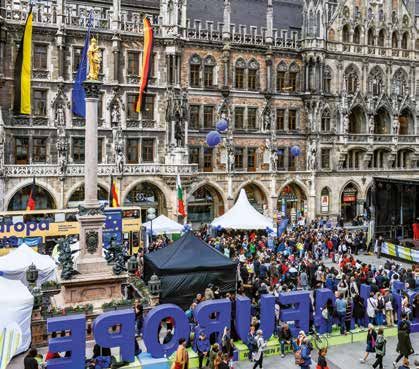
Travelling new paths together

                                  Henriette Wägerle,
                                  Head of European
                                  Affairs at the City of
                                  Munich’s Department
                                  of Labor and Econo-
                                  mic Development

It was an exciting, turbulent and eventful year for Europe      Our recipe for success when it comes to forward-looking
and the world: In May 2019, EU citizens voted for their new     projects: Via the close cooperation of the city’s administra-
Parliament. Ursula von der Leyen became President of the        tive departments with Munich’s universities – which always
EU Commission and announced the “Green Deal”, which             achieve top marks in academic rankings –, with commit-
aims to make Europe the first carbon-neutral continent by       ted companies and innovative start-ups, as well as with
2050. The United Kingdom, under its newly-elected Prime         Munich’s citizens, we test new mobility concepts, persuade
Minister Boris Johnson, officially left the EU on 31 January    owners of apartments to modernise their buildings and
2020. On a global level too, new paths were laid: With the      develop digital solutions in which the city guarantees data
Africa-Europe Alliance, the EU aims to raise over EUR 500       protection. Munich and its European partners are also
million for sustainable investments and jobs in countries       testing recycling and upcycling methods and thus taking a
bordering the EU and in Africa. According to the Federal        first step towards a circular economy. The district cooling
Government, the Agenda 2030 will heavily influence Ger-         project in the inner city is also supported by the EU. We join
man policies. At the United Nations Climate Summit Federal      forces with educational institutions and cultural stakehol-
Minister Müller appealed for a global increase in both speed    ders to promote a creative and cooperation-based exchange
and ambition when it comes to implementing the Sustaina-        of ideas. All these topics also form part of our projects with
ble Development Goals (SDGs).                                   partner municipalities in Africa and the Middle East. The
                                                                focus on migration and displacement in the field of interna-
The Annual Report shows clearly that in the EU and on the       tional cooperation is being further developed.
international stage, via our networks, many working groups
and at the European Commission’s Urban Agenda confe-            Cooperation that crosses diverse organisations, sectors
rences, we have played an active part in implementing the       and countries will also be the guiding principle for 2020: In
SDGs and shaping the focal points of municipal develop-         December, the City Council announced that Munich aims
ment cooperation. At the EUROCITIES annual conference           to become carbon-neutral by 2035. To this end, the city’s
in Prague the Munich-based project AKIM (All-Party Conflict     departments will contribute to European and international
Management) won the EUROCITIES Award 2019. Within the           projects.
city administration we worked closely with colleagues from
all departments, with partners from civil society and from
the fields of science and industry. Via numerous events,
projects and statements, we helped to implement the aims          City Council Commission for
of the urban development strategy Perspective Munich, the         Municipal Development Cooperation
Integrated Action Programme for Climate Protection (IHKM)
and the action plan Flucht und Entwicklung (Migration and         Voting members in 2019:
Development).                                                       Clemens Baumgärtner, Head of the Department of
Together with EUROCITIES and Munich-based stakeholders              Labor and Economic Development (since March 2019)
that are active on the European stage, Munich‘s europe              Beatrix Burkhardt, CSU
direct information center (EDIC), a joint project of the City       Dr. Manuela Olhausen, CSU
of Munich and the European Commission, provided detailed            Ulrike Grimm, CSU
information about the European elections, motivated people          Dr. Constanze Söllner-Schaar, SPD
to participate and used “citizens’ dialogues” to successfully       Ulrike Boesser, SPD
engage in discussion and debate with Munich citizens. The           Dominik Krause, Die Grünen – rosa Liste
#munich4EUROPE campaign, launched in 2019, invited                  Gabriele Neff, FDP
people to join the “Hymn to Europe” at the Gasteig and              Brigitte Wolf, Die Linke
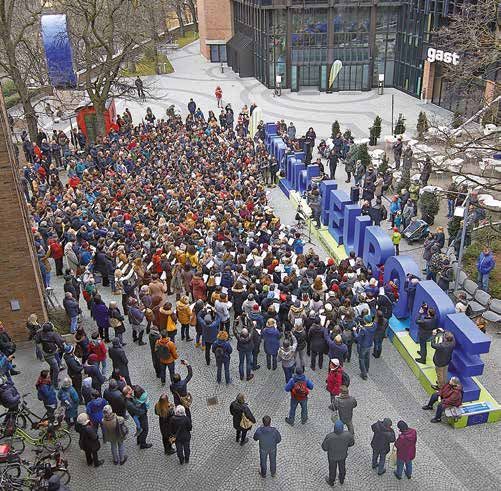
completed its tour at Marienplatz on Europe Day. Munich’s
position as a major European city again became clear on 23        Gabriele Köhler, Eva-Maria Heerde-Hinojosa and
May, when over 65% of its German and EU citizens who              Heinz Schulze continue as consultative members.
were eligible to vote participated in the European elections.

                                                                                                                            05
EUROPEAN AND INTERNATIONAL AFFAIRS 2019

     Shape

     Munich has a voice in
     Europe and in the world.
     The city plays an active
     role in shaping decisions
     which are made on a
     European or international
     level and which affect the
     citizens of Munich.
06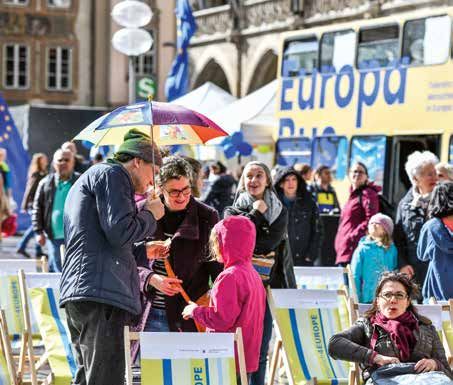
Shape

The Sustainable Development Goals in Munich
Munich sets the course:                                                                Leading the way in 2019
“Green Deal”, Agenda 2030 and SDGs                                                     The City of Munich had already introduced some steps to
                                                                                       help achieve the Sustainable Development Goals before
The Munich City Council sent a clear signal by declaring a                             the emergency was declared. The Department of Urban
climate emergency on 18 December 2019. The declaration                                 Planning and Building Regulation is currently updating the
put the City of Munich on the same path as the EU Com-                                 “Perspective Munich” with a focus on the SDGs and their
mission, which in December 2019 under its new President                                integration into the guidelines. In addition, the Department
Ursula von der Leyen set out the European policy initiatives                           of Health and the Environment is issuing a new sustaina-
for greater climate protection known as the “European                                  bility report and reshaping the programme for sustaina-
Green Deal”. By signing an open letter, Munich’s Mayor Die-                            ble development. The action programme “Education for
ter Reiter also underlined the city’s intentions. Munich aims                          Sustainable Development” (ESD) is also being developed
to be among the first carbon-neutral cities in Europe.                                 up to 2022. For the second time, Munich was placed in the
                                                                                       highest ESD municipality category by the German UNESCO
The City of Munich adjusted its climate targets accordingly.                           Commission and the Federal Ministry of Education and
The City Council has commissioned an update of the tar-                                Research (BMBF). An additional highlight of the year took
gets and measures for mid-2020. Munich is thus following                               place on 4 February with the 1st Munich Sustainability Con-
the path of the EU Commission. Above all, the “European                                gress, with Mayor Dieter Reiter as patron.
Green Deal” stands for greater climate protection, an EU
that is equipped for digitalisation, a sustainable approach to                         What’s more, in November 2019 the City Council held
migration, and an increased role for Europe in world affairs.                          hearings on the “Circular Economy” and the “Agenda 2030
                                                                                       and Sustainable Development Goals”. Experts joined the
Die EU will:                                                                           discussion on how to heighten awareness of these issues.
                                                                                       The aim is for political actors to join forces with urban socie-
                                                                                       ty, business and science to develop the vision of a circular
                                                                                       economy in Munich. In this way, the City of Munich aims
                                                                                       to contribute to the Agenda 2030 and to systematically and
                                                                                       effectively implement the SDGs.

to achieve          to protect human life   to help companies     to ensure a          Outlook
carbon-neutrality   as well as plants and   become global         fair and inclusive
by 2050             animals by reducing     leaders in the area   transition
                                                                                       On both the municipal and the European level, many initial
                    pollution               of clean products                          steps have been taken to work towards the climate targets.
                                            and technologies
                                                                                       What is required in 2020 is for initial programmes and
                                                                                       strategies to be developed which will make achieving these
                                                                                       ambitious targets a genuine possibility.
Source: © European Union, 1995–2020

First carbon-neutral continent
The “European Green Deal” sees Europe aiming to become
the first carbon-neutral continent by 2050. The EU has also
set itself the ambitious interim target of reducing greenhou-
se gases by 55 percent by 2030. If the target is reached, it
means the EU will be complying with both the Paris Climate
Agreement and the Sustainable Development Goals (SDGs)
of the Agenda 2030 and the Urban Agenda for Europe. The
European Parliament also wants the EU Commission to do
more to tackle climate change. On 28 November 2019, a
large majority agreed to declare a climate and environment
emergency for the EU.

Open letter to the European Council
But more is required! Numerous major European cities
from the EUROCITIES network addressed an open letter to
the European Council demanding greater commitment to
climate protection and the Paris climate targets (COP 21).
The letter calls on the heads of state and government to
commit to a long-term, joint climate strategy and to reduce
net emissions to zero by 2050. Mayor Dieter Reiter added
his signature to the letter, which, prior to the summit in
Sibiu in early May 2019, was signed by over 200 European
cities representing over 62 million citizens.                                          Sustainable Development Goals (SDGs)

                                                                                                                                                    07
EUROPEAN AND INTERNATIONAL AFFAIRS 2019

Mayor Reiter signs open letter from European cities
calling for greater climate protection
210 cities, including Munich,
                                                          93 % of                       93 % of                     79 % of
signed a letter to the Euro-                              Europeans                     Europeans have              Europeans
pean heads of state and go-                               see climate                   adopted at least            believe that
                                                          change as                     one strategy to             climate protec-
vernment calling for specific                             a serious                     tackle climate              tion strategies
steps to make the EU carbon-                              problem                       change                      will lead to
neutral by 2050.                                                                                                    innovation

                                             Source: © European Union, 1995–2020
Munich is committed to implementing
the Paris climate protection targets
and calls for a carbon-neutral Europe     Cities are capable of dealing with               Council on 24 October 2018. Unfortu-
by 2050. Mayor Dieter Reiter added        climate change                                   nately, at the summit in Sibiu in May
his signature to a document from the      For Clemens Baumgärtner, who heads               2019, the European heads of state and
EUROCITIES network calling on the         Munich’s Department of Labor and                 government were not able to agree on
European heads of state and govern-       Economic Development, “cross-border              a binding roadmap for achieving clima-
ment to make a clear commitment at        climate protection is a good example             te neutrality in Europe by 2050. The
the summit in Sibiu in Romania.           of the significance that the European            new EU Commission President Ursula
                                          Union and the international coopera-             von der Leyen therefore resurrected
Net-zero emissions by 2050                tion of cities has for the well-being of         the climate initiative of the previous
On 9 May 2019, the European heads         citizens.” The cities’ ability to respond        Commission under Jean-Claude
of state and government met in Sibiu      to climate change is decisive when it            Juncker and, after taking up her role in
in Romania. At the summit, the future     comes to fulfilling international obligati-      December 2019, immediately set out
of the EU following the European Par-     ons with respect to the global climate           a comprehensive plan for a thorough
liament election was on the agenda.       targets contained in the Paris Agree-            societal and economic transition in
The EUROCITIES and CEMR (Council          ment. The City of Munich also set itself         the form of a “European Green Deal”.
of European Municipalities and Regi-      this target in the Integrated Action             This Green Deal sees the EU member
ons) networks used the occasion to        Programme for Climate Protection                 states commit to achieving climate
ask governments to make a clear com-      (IHKM), which was passed by the City             neutrality by 2050.
mitment to the climate targets which
were agreed at the 2015 UN Climate
Conference in Paris. 210 European
cities signed an open letter addres-
sing the issue. They urge member
states to take specific steps to make
the EU carbon-neutral by 2050. With
this letter, EUROCITIES supports the
position of the European Commission
as set out in the publication “A clean
planet for all” from 28 November 2018.
In these documents the European
Commission details a roadmap for a
fair and integration-based European
climate strategy and states its commit-
ment to sustainability and resilience.
The aim must be to halve CO2 emissi-
ons by 2030 so as to achieve net-zero
emissions by 2050.

08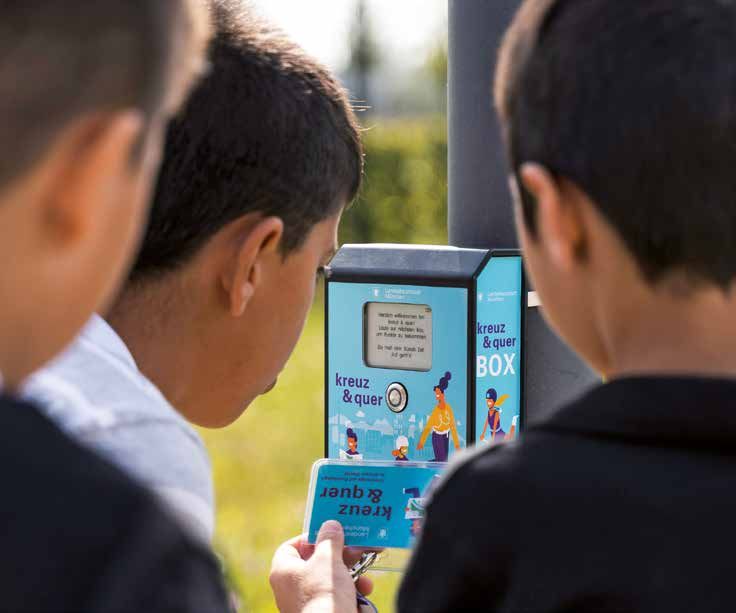
Shape

Cities call for a fairer and more sustainable
European future
Open letter to the European Council and its member states

      President of the European Council,
      Heads of States and Governments of the European
                                                                       Union Member States,

     We, the undersigned mayors and heads of local govern
                                                             ments have come together to urge the Heads of States
     Governments of the Member States to commit the                                                                and
                                                        European Union (EU) and all European institutions
     climate strategy with the objective of reaching net-zer                                               to a long-term
                                                             o emissions by 2050 – when they meet at the Future
     conference in Sibiu, Romania on 9 May, 2019.                                                               of Europe

      The urgency of the climate crisis requires immediate
                                                             action, stepping up our climate ambition and pursuin
      to keep global temperature rise below 1.5°C by mid-ce                                                           g every effort
                                                             ntury, as evidenced by the Intergovernmental Panel
     Change Special Report on Global Warming of 1.5°C. Curren                                                       on Climate
                                                                  t energy and climate policies in place globally, set the
     on a global warming pathway of 3°C. We are remind                                                                     planet
                                                           ed of the inadequacy of our response to climate change
     sands of young people demonstrating each week on                                                                 , by the thou-
                                                           the streets of European cities - and around the world.
     let the status quo jeopardise their future and those of                                                         We cannot
                                                             millions of European citizens. We owe it to the next
     to make more ambitious commitments to address climate                                                          generation
                                                                   change at all levels of government and in every aspect
     European policy-making. We acknowledge and suppor                                                                       of
                                                              t the positions of the European Parliament and of the
     to pursue net-zero emissions as the only viable option                                                            Commission
                                                              for the future of Europe and the world. Now, we believe
     European Council has a unique opportunity to deliver                                                                that the
                                                             this vision.
    We ask you to step up the EU’s climate commitments
                                                        , to show global leadership and drive ambition to make
    and rapid progress in the implementation of the Paris                                                      appropriate
                                                          Agreement.
     We urge you to:
     - Develop a just and inclusive European long-term
                                                            climate strategy that enhances resilience and
       ensures emissions in the EU peak by 2020, more than
                                                                  halve by 2030 and reach net-zero by 2050;
    - Enhance the 2030 EU climate and energy targets
                                                            and Nationally Determined Contribution to
       ensure a resilient, rapid and just energy transition in
                                                                 line with the above goals;
    - Align the next EU long-term budget with this strateg
                                                                 y, remove fossil fuel subsidies and mainstream
       climate action as a priority across all funding program
                                                                   mes; and
    - Commit all member states to binding net-zero emissio
                                                                   ns reduction targets and the above goals.
    We the mayors and heads of local governments stand
                                                             ready to support and contribute to the climate leaders
    Europe, as the impacts of climate change threaten the                                                                hip of
                                                              fair, equal and enduring access to opportunities that
    European cities offer. More than 9,000 cities have joined                                                           our great
                                                                 the Global Covenant of Mayors for Climate and Energy
    which nearly 8,000 in Europe. Many of us are already                                                                    , of
                                                             committed to achieving net-zero emissions by 2050
   in place city climate plans compatible with the Paris                                                               and have put
                                                            Agreement - many more are working towards it. Collect
   are paving the way towards 2050 with impactful actions                                                                ively, cities
                                                                 by 2030 and by developing integrated strategies and
   ambitious sectoral commitments. These include bold                                                                      adopting
                                                            objectives to advance towards zero waste by 2030, to
   carbon standards in all buildings by 2050, to move toward                                                           meet  net-zero
                                                                  s 100% renewable electricity by 2035 and 100% renewa
   energy in cities by 2050, and finally to deliver inclusiv                                                                  ble
                                                            e climate action that benefits all citizens equitably.
   We, as mayors and heads of local governments, can play
                                                                a central role in delivering on the 1.5°C goal of the Paris
   ment, by developing and implementing ambitious local                                                                     Agree-
                                                               plans and working with citizens, business and civil society
   achieve sustainable change. However, we need an enablin                                                                       to
                                                                  g European framework and action by national govern
   guarantee long-term stability, determination and resourc                                                                 ment to
                                                                 es to support our climate efforts.
   We hope that our leadership will inspire you to raise
                                                          your ambition and give you confidence that net-zero
   mid-century is not only necessary and desirable – it                                                          emissions by
                                                         is achievable if we work together. We encourage you
   responsibility, and we, the mayors, will share the task                                                      to embrace this
                                                           of implementing it, for the benefit of European citizen
   wider world.                                                                                                    s and the

                                                                                                                                         09
EUROPEAN AND INTERNATIONAL AFFAIRS 2019

Sustainable urban development in Europe –
the Leipzig Charter 2020
Germany prepares for Presidency of the Council in the second half of 2020

As President of the EU Council in the     which forms the basis for cooperation       Outlook for 2020 and beyond
second half of 2020, Germany plans        between the EU, the member states           The coming year will determine how
to revive the 2007 Leipzig Charter on     and the cities in fourteen topic-based      the future of the Urban Agenda and its
Sustainable European Cities. To this      partnerships for the “Urban Agenda          relationship to the Leipzig Charter will
end, since 2018, discussions have         for the EU”. Then, in December 2019,        be shaped. By now, many cities have
been taking place in which the princip-   European Commission President               placed climate protection and imple-
les, trends and challenges to date have   Ursula von der Leyen announced the          mentation of the SDGs near the top of
been analysed. The City of Munich         “European Green Deal”. The question         their urban development agenda. For
is directly involved in the national      as to how cities deal with digitalisa-      example, in December 2019, the City
process via the Department of Urban       tion and its far-reaching effects on life   Council stated its goal of making Mu-
Planning and Building Regulation,         and the economy also still requires         nich carbon-neutral by 2035. Munich
while EUROCITIES is involved on the       clarification.                              will continue to actively support the
European level.                                                                       process.
                                          Two initiatives
Greater socio-political and ecologi-      The Leipzig Charter on the one hand
cal requirements                          and the “Urban Agenda for the EU”
The first basic report from 2018 on       on the other – what is the connection
the continued development puts it as      between these two initiatives? What
follows: “The principles of the Leipzig   differentiates them and how do they
Charter are as relevant today as they     complement each other? While the
were ten years ago. Sustainable and       Leipzig Charter is primarily focused on       The Leipzig Charter
integrated urban development must         the principles of sustainable integrated
be understood as a cross-sectoral,        urban development and (thus far) on           In 2007, the 27 ministers respon-
collective task of various governmental   the particular significance of disadvan-      sible for urban development in Eu-
and non-governmental stakeholders.”       taged urban districts in EU member            rope adopted the “Leipzig Charter
What is new are the political frame-      states, the “Urban Agenda for the EU”         on Sustainable European Cities”.
work conditions and the significantly     provides a working programme for im-          It contains two key messages:
greater socio-political and ecological    proved coordination of various sectoral
challenges. These are reflected in po-    EU policies and their compatibility with      1. Integrated urban development
licy obligations and frameworks which     the urban environment.                           should be strengthened throug-
have arisen in recent decades, above                                                       hout Europe.
all in the Paris Climate Agreement
and the United Nations Sustainable                                                      2. Disadvantaged urban districts
Development Goals (SDGs), as well as                                                       fulfil important functions in the
the “New Urban Agenda” adopted at                                                          context of cities as a whole.
the Habitat III Conference. Ministers
from EU member states also adopted
the “Pact of Amsterdam” in 2016,

Urban Agenda for the EU:
Facilitating innovative public procurement
A seven-step action plan aims to make it easier for Euro-       ping urban procurement strategies to workshops, European
pean cities’ administrative bodies to promote innovation        competence centres and financing. The partnership, which
when it comes to procurement and tenders. The City of           comprises representatives from cities, states, organisations
Munich is involved in a partnership for innovative public       and the EU Commission, is active within the framework of
procurement which developed the action plan. One result is      the EU’s Urban Agenda. Since 2017, this working method
the creation of a handbook which covers the legal aspects       has been offering practical solutions in the area of EU law,
of procuring innovative products and services. In 2020, the     financing and the exchange of knowledge.
partnership wishes to detail the desired impact of the action
plan. In addition to the handbook, the steps cover issues
ranging from support for experts and politicians in develo-

10
Shape
Equality: EU Charter and the
new action plan for Munich
In May 2016, based on a resolution of the Munich City Council, Further information
Mayor Dieter Reiter signed the European Charter for Equality The 1st Action Plan of the City of
of Women and Men in Local Life. Munich for the Equality of Women and
Men can be downloaded (in German)
The European Charter was adopted by the Council of European Municipali- at www.muenchen.de/gst > Europäi-
ties and Regions (CEMR) as well as its partners and lays out a comprehensive sche Charta zur Gleichstellung von
framework programme for gender equality in all areas where local government Frauen und Männern or ordered as a
policy action is needed. Signing the charter represents a public commitment to printed brochure from gst@muenchen.
principles such as the fundamental right to equality among women and men and de.
incorporating the gender perspective in all policy-related activities via gender
mainstreaming. By signing the charter, Munich committed to implementing the
charter’s objectives in an action plan.
Consultations
67 strategies to promote equality
On 3 July 2019, the Equal Opportunities Office for Women presented the 1st Consultations are an important
Action Plan for the Equality of Women and Men to the City Council. The plan, for means of participation at the EU
the period 2019–2021, contains 67 diverse strategies from the city’s departments Commission. Individuals and
and committees whose focus is promoting gender equality. Such strategies institutions can get involved in the
include: ongoing process of developing EU
legislation and programmes. In
A pilot project for internships for female pupils in male-dominated occupations. 2019, the City of Munich participa-
Aim: Female pupils from secondary and upper secondary schools complete ted in four consultations: Gender
interesting (compulsory) internships in male-dominated occupations which equality, two consultations on the
stimulate their interest in the respective field and provide experience which future of the EU research pro-
benefits their further training (Munich computer networking centre it@M). gramme “Horizon Europe” as well
Analysis of the requirements and barriers to labour market integration of fema- as a consultation on Services of
le refugees. Aim: Generate knowledge about conditions for improved labour General Economic Interest (SGEI).
market integration of female refugees in Munich (Department of Labor and
Economic Development). In the consultation on gender
Create six “oral history” videos to document and raise awareness of women’s equality, the City of Munich
fight for equality (Munich City Archives). assessed the current situation and
possible priorities in future EU
Focal points of the action plan gender policies. Two consultations
The action plan focuses on gender assessment, the city as employer, gender dealt with the form of the next EU
competence, public procurement and contracting, gender-specific violence: research framework programme
prevention, protection and support, involvement in policy-making and the life of “Horizon Europe”, which focuses
civil society, public space, city and local planning, reflection upon and dismantling on future city-based projects re-
of gender stereotypes, gender-inclusive approaches as well as third gender and lating to carbon neutrality. During
intersectionality (overlapping and interdependency of disadvantages). Equal Op- these consultations the city stated
portunities Officer Nicole Lassal said: “We will support the implementation of the its position on key topics and drew
action plan and present the assessment on its project experience to make
of the plan to the City Council in 2022. suggestions for simplifying the
In 2020, we will introduce Munich’s 1st implementation procedure. In the
Gleichstellungsst
für Frauen elle
Equal Opportunities Monitoring to the City Europäische Ch consultation on Services of Ge-
Council. The aim is create transparency arta neral Economic Interest, Munich
zur Gleichstellu
regarding equal opportunities for women ng von warmly welcomed the possibility
Frauen und Män
and men in Munich.” 1. Aktionsplan
ne rn of public funding in social hou-
der Landes
hauptstadt Mün
2019 – 2021 chen
sing which conforms to state aid
law. In its assessment, the City
of Munich expressed its wish for
broad discretionary powers for the
authorities of the member states.
Cover of the European Charter for Equality
of Women and Men. 1st Action Plan of the
City of Munich 2019–2021
11EUROPEAN AND INTERNATIONAL AFFAIRS 2019
Join
Munich is characterised
by a spirit of openness
and solidarity. The city
administration transmits
these values to society in
the form of interaction and
dialogue.
12Join
Let‘s talk about Europe!
“Europe should matter to all of us!”
Since June 2019, Munich‘s europe direct information center to demonstrate Euro-
(EDIC) has a new manager: Jenny Paul is a committed pean diversity in Munich.
European who has already been promoting the idea of Eu- Because after all, Europe
rope in civil society for several years, including as Managing should matter to all of
Director of the pro-european association United Europe e.V. us!”
Following many years in England and Berlin, she has since
returned to her home city of Munich, where she is,toge- Further information at
ther with the entire EDIC team and numerous cooperation muenchen.de/europe-direct New EDIC Manager Jenny Paul
partners, enthusiastically working to ensure that Europe
remains high on the city’s agenda. “Europe is close to my
heart, because for me it highlights that however big our
differences may be, there is always a way to reconnect
with each other.” Ms Paul wants people to be enthusiastic
about Europe. “Europe is part of everything and everyone Opening hours
of us. To me, the EDIC‘s job is not only to inform Munich’s
citizens about Europe but to also give them the chance to Munich‘s europe direct information center (EDIC) is
meet and exchange views on European topics. As such, we open to all interested parties from Monday to Thurs-
invite everyone living in Munich to join us and each other day afternoon. It regularly organises events with a
in talking about Europe, Let‘s talk about Europe („Europa European focus, to which everyone is welcome to
zum Mitreden“) is one of many new regular events open to join. The EDIC welcomes all visitors, whether they
anyone, irrespective of their prior knowledge on the topic. come with a specific question or simply with a desire
Europe is already an integral part of everyday life in Munich, to talk about Europe, and is happy to provide advice
and so part of what we do is to bring the city’s numerous and assistance also in English.
pro-European stakeholders together. Jointly we will be able
Brexit: Yes? No? Maybe?
Citizens intensly discuss Europe’s possible future without the United Kingdom
Brexit was everywhere in 2019. Interest in the topic was also clearly felt in the Yes to the EU in Germany
europe direct information center (EDIC), which is why the organisation set up va- Brexit reinvigorated the discussion
rious events, including „Let‘s talk about Europe“, in which Brexit and the future of about Europe. Rarely before have so
the UK were discussed. Participants were strongly divided on the issue of whet- many people considered the pros
her the United Kingdom should remain or leave. Aspects such as the relationship and cons of an EU membership. Or
between the UK and Europe and the role of the media in the Brexit referendum examined the question as to why a
were discussed during the debate. In its European cinema event „Kino Europa“ Europe that goes far beyond trade and
Munich‘s EDIC subsequently showed the moving film “I, Daniel Blake” by the financial matters may nevertheless be
renowned British director Ken Loach. worthwhile. During the aforementio-
ned „Let‘s talk about Europe!“ event,
Pro-European Britons participants‘ opinion as to whether
The flow of questions to the EDIC about Brexit was unrelenting. In many cases, Germany should also hold a referen-
people were not so much seeking specific answers about trade and tax issues dum on its EU membership, was split..
as asking, even years after the referendum itself took place, how it could ever However, the follow-up question as
come to this. . The City of Munich, and in particular the Foreigners Office within to whether Germany should remain
the Department of Public Order (KVR), was relentlessly providing information to in the EU, met with a resounding Yes
British people living in Munich. In addition to offering advice on an individual ba- from all participants. The „Let‘s talk
sis, it organised several events to ensure that everyone affected by the issue was about Europe!“ („Europa zum Mit-
adequately informed about their options. Thanks to Brexit, the Federal Republic reden!“) event takes place every two
of Germany seems to have acquired quite a number of new German citizens. The months and focuses on various topics.
same is true for Munich where, since the referendum, several hundred Munich The discussion is held in German.
citizens with British passports have since acquired a German one.
Further information at muenchen.de/
europe-direct 13EUROPEAN AND INTERNATIONAL AFFAIRS 2019
2019 European elections
More than 65 percent! Munich’s highest European elections
turnout to date
In May 2019, Europe was visible everywhere in Munich. Whether taking the un-
derground, watching television or going for a walk in the city, you were certain to
encounter appeals to vote in the 2019 European elections. And the appeals suc-
ceeded! With a record voter turnout of 65.4 percent, more people from Munich
voted than at any time since the first European elections in 1979. In comparison,
only around 45 percent of Munich‘s citizens voted in the previous European
elections in 2014.
Informative election campaigns Number of visitors to the EDIC
One reason for the record voter turnout is certainly the numerous activities under- keeps rising
taken by the City of Munich’s European cooperation partners and stakeholders, To the EDIC team it became rather
who all urged people to vote. Such activities included the #munich4EUROPE cam- obvioius that nobody wanted to google
paign with its 20-metre long #munich4EUROPE proclamation as well as numerous the European elections after the event
events which focused on Europe. Civil society also came up with plenty of crea- – everyone wanted to be informed in
tive ideas for the elections, ranging from beer mats with slogans like “Europa ist advance. In the end, it was a diverse
auch Dein Bier” (“Europe is also your beer”, meaning Europe should matter to you range of events, reports and promotio-
too), postcards with the message “Whatever you vote, vote Europe”, demonstrati- nal campaigns that led to the satisfy-
ons with tens of thousands of people or the immense number of European flags ingly high voter turnout. And the high
during the Streetlife Festival. The European institutions themselves were also crea- demand for information and the possi-
tive. For example, the European Parliament together with thousands of volunteers bility to discuss Europe hasn‘t broken
and the memorable slogan “This time I’m voting” urged people to participate in off since. Munich‘s EDIC, located in
the elections. Before the elections took place, Munich‘s europe direct information the Munich City library within the Gas-
center (EDIC) and the Munich Adult Education Centres (MVHS) informed hundreds teig, is as busy as never before.
of citizens about the background to the European elections and how the EU actual-
ly works. The number of people seeking advice on the elections also rose drama-
tically, and many Munich citizens attended the “Europa Stammtisch” events, at
which representatives from individual parties debated their positions.
diesmal.pdf 1 20.11.18 23:09
Communal Services Department promotional events
The Communal Services Depart- I’m voting because...”, they were
ment was happy to lend its support able to explain to colleagues why,
to the European Parliament’s “This this year, making their voice heard
time I’m voting” campaign ahead of in the European elections was
the European elections. Numerous especially important.
measures drew attention to the elec-
für_alle.pdf 1 20.11.18 23:10
tion: The entrance area of the ad-
ministrative building at the Roßmarkt
was decorated in a European theme.
Postcards from the “This time I’m
voting” campaign were distributed
in the Department along with the
request to use them to encourage
friends and family to vote. In her
monthly video address to staff, Kri-
stina Frank, Head of the Communal
Services Department, spoke about
the European elections and urged
people to vote and thus help shape
the future of Europe. In the days
immediately preceding the elec-
tion, staff members were given the
chance to share their views via the
intranet. Under the title “This time
14Join
Munich and Bordeaux for a strong Europe
Munich’s Mayor, Dieter Reiter, welcomed his
counterpart from the French partner city Bor-
deaux, Mayor Nicolas Florian. Together they
called for a strong and united Europe and
therefore urged voters to participate in the
European election on 26 May.
The two mayors issued the following joint statement: “Bor-
deaux and Munich have been partner cities since 1964. This
long and solid partnership is based on many dynamic local
stakeholders, such as associations, cultural institutions,
consulate generals, as well as the commitment of munici-
pal employees, especially in the areas of student exchange
programmes, culture and business. Today, just a few days
before the important election day, with nothing less than For a strong Europe: Mayors Dieter Reiter and Nicolas Florian
the future of Europe at stake, our meeting here in Munich
stands for the close friendship between Germany and the European Union. If voters fail to turn out and citizens
France, the shared values of democracy and solidarity, and are apathetic there is a risk of even more nationalists and
the idea of a strong and united Europe.” populists. It is clear that Europe must change, but citizens
need to be at the heart of this change. We therefore want to
Statements from the two mayors reiterate how important the right to vote is and to appeal to
Mayor Reiter added: “A united Europe is the basis for all citizens in France and Germany to make sure their voice
peace, freedom, stability and economic strength. At the is heard in these elections!”
European elections on 26 May, the citizens of the EU
have the possibility to determine the future direction of
Europe. Go out and vote! Be part of the commitment to a
strong and democratic Europe. Every vote counts!” Mayor
Florian put it as follows: “26 May 2019 is a key date for
Munich sings for Europe
We all know the feeling: The
famous song “Imagine” by John
Lennon inspires most people to
sing along a bit. But what the Go
Sing Choir managed to do as part
of the #munich4EUROPE campaign
in front of the Gasteig heightened
the goosebump factor even more.
At the end of February 2019, more
than 600 people gathered in front
of the 20-metre long proclamation
#munich4EUROPE to sing together
for solidarity and a positive Euro-
pean future. The city’s #munich4EU-
ROPE campaign, which ran for
one and a half years, emphasised
Europe’s importance to Munich.
#munich4EUROPE presented Mu-
nich as an open-minded, European
metropolis at numerous events and
on social media. The 600 singers
who gathered in front of the Gas-
teig were rewarded with the sense
that sometimes a small song can
bring positive change to the world:
“Imagine all the people …”
15EUROPEAN AND INTERNATIONAL AFFAIRS 2019
Citizen Panel – Citizens of Munich recommend …
As part of the Cities4Europe campaign, the City of Munich and 17 other cities, together with
the EUROCITIES network and the European Commission, worked to strengthen citizen parti-
cipation. The cities invited citizens to get involved in debates on the future of Europe, then pas-
sed on the results to the EU Commission in the form of recommendations and ideas during an
online consultation.
A total of 1,265 citizens in 18 European countries discussed The result was three recommendations from each area:
a series of topics in order to develop recommendations for Security
future measures the EU could use to create new links bet- standardised European legislation on asylum and immig-
ween Europe and its citizens. The aim was also to identify ration
topics that are close to people’s hearts. The participants binding, cross-border cooperation to tackle crime on a
want to see a greener Europe with stronger social rights local level
and educational opportunities for everyone. Europe-wide data protection, e.g. protection of IT in-
frastructure (physical as well as software components),
On 24 January 2019, the European Affairs Team in the product security norms and controls for software, cont-
Department of Labor and Economic Development, together rolling of algorithms, rules for T&Cs of platforms as well
with Munich‘s europe direct information center (EDIC), invi- as stronger regulation and controlling of larger platforms
ted citizens to partake in a dialogue on the future of Europe. Education
The event took place in cooperation with EUROCITIES and more lessons about Europe in schools and universities as
additional partners. well as Europe as an independent subject
strengthening and promoting European student ex-
Security, education and economic development change programmes for all types of schools as well as
The aim of the dialogue was to develop recommendations introducing a social EU year
for the future of Europe. Around 85 participants discussed Europe-wide recognition of school leaving certificates
three topics which are also relevant to Munich: Security, and training qualifications
education and economic development. The City Councillors Economic development
Sonja Haider and Dr. Manuela Olhausen, members of the fairer economic distribution in Europe, e.g. for small and
Pro-Europe Network of Munich & Upper Bavaria, as well as medium sized enterprises (SMEs), social equilibrium
experts from various city departments and representatives within the economy; Europe-wide unemployment insu-
from the EU Commission moderated the discussion at a rance and unemployment registration; guarantee of basic
total of nine topic-based tables: In direct dialogue, the citi- social services in the areas of employment, housing and
zens were able to voice their desires and proposals for the educatio
future of Europe. Following the workshop discussions, the European government with its own finance minister,
participants from all nine groups came together to select budget and standardised tax rate
the best ideas. expansion of the social market economy on the EU level
(e.g. EU minimum wage)
Network meeting of
Munich’s EU stakeholders:
2019 with a focus on the
European elections
The City of Munich invited experts
and committed Europeans to
engage in dialogue at the network
meeting of the city’s European
stakeholders on 31 January 2019.
This year, too, in Munich’s Town
Hall, participants quickly came up
with numerous ideas for how to
encourage high voter turnout in the
election, while proposals for new
joint projects were also gathered.
A solid foundation for a successful
European year!
16Europe Day and
Europe Weeks
2019 –
Impressions
17EUROPEAN AND INTERNATIONAL AFFAIRS 2019
Europe Day and Europe Weeks 2019
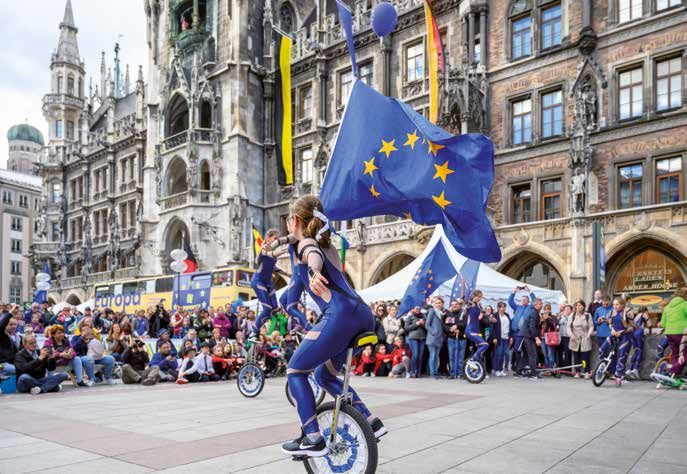
On 9 May, the City of Munich and its partners held the biggest celebration yet on Marienplatz
and the surrounding streets to mark the founding of the EU. The Europe Day was also the
highlight of the Europe Weeks, which took place for the second time in Munich from 2 to 16
May.
On 9 May, Munich celebrated the anniversary of the founding speech of the EU,
given by the French Foreign Minister Robert Schuman in 1950. The “Schuman
Declaration” laid the foundation for the modern European Union. Shortly before
the European elections on 26 May 2019, the occasion had particular resonance,
as it allowed the city to demonstrate its close ties to the European community.
Mayor Dieter Reiter welcomed thousands of people with an interest in Europe
on Marienplatz and officially opened a diverse programme incorporating politics,
culture and entertainment. High-ranking representatives from Munich, the Bava-
rian Minister for Culture Michael Piazolo and European Members of Parliament
also joined in the celebrations.
Topic-based tents and entertainment programme
For the first time, it was also possible to experience the celebrations on Kaufin-
gerstraße, Rosenstraße and part of the Rindermarkt. Three large tents, each dedi-
cated to a particular topic, invited people to join the discussion and get involved.
Visitors were also able to obtain information and participate in activities at the
stands of numerous pro-European organisations and associations. The Bavarian
State Chancellery organised a raffle with plenty of great prizes. The main prize
was a trip to Brussels. On Marienplatz an international entertainment programme
was offered, involving music, dance, acrobatics as well as talks and discussions
about Europe, including with the Romanian Consul General Julia Ramona Chiriac.
Speaking from the heart
Contact persons from the International Cooperation in Education Team at the
Department of Education and Sports as well as representatives from major
EU-funded urban projects, such as CIVITAS ECCENTRIC, Smarter Together
and LOS_DAMA! were also present and happy to answer questions. They also
showed visitors how EU funds help to maintain the high standard of living in and
around Munich as well as to expand the role of innovation. In the Europa Bus the
Bavarian Minister for Culture, Michael Piazolo, talked to pupils about various Euro-
pean topics. In the Town Hall’s Prunkhof visitors were able to pin their visions and
messages for Europe on a huge blue heart. The #munich4EUROPE sign on Ma-
rienplatz provided an ideal opportunity to take a selfie and show it to the world on
social media. The European climbing pyramid also attracted a lot of interest.
During the Europe weeks, the Angel of Peace
and the Allianz Arena were lit up in the European
colours of blue and yellow.
18Join
Record participation
The big day concluded with live music from Ecco DiLorenzo “Smart & handso-
me”. 2019 saw a record number of stakeholders and institutions participating in
Munich’s Europe Day. A total of over four hundred people took to the stage, while
hundreds of other participants were present at the stands. The Europe Day was
organised by the City of Munich together with the European Parliament’s liaison
office in Munich, the European Commission’s Representation in Munich, the Eu-
ropa-Union München and also, for the first time, the Bavarian State Chancellery.
The Abendzeitung München newspaper was also involved and helped, among
other things, to make the blue heart concept possible.
Europe Weeks
Although the Europe Day on Marienplatz was the main event of the celebrations
on 9 May, other events also took place in Munich from 2 to 16 May. These events
were held as part of the Europe Weeks and ranged from discussion evenings
and talks to hands-on activities. As a result, young and old alike could experience
Europe in Munich and the entire city bathed in the European colours of blue and
yellow – and not only because of the elections that were held just a short time
later.
19EUROPEAN AND INTERNATIONAL AFFAIRS 2019
Cooperate
Cities and city networks
in Germany, Europe and
worldwide: Munich cultiva-
tes an intensive, open ex-
change and jointly imple-
ments projects.
20Cooperate
EUROCITIES: 2019 Annual Conference in Prague
The EUROCITIES Annual Conference took place in Prague from 20 to 22 November 2019
under the slogan “Cities at a crossroads – transformation and renewal in cities”.
The conference focused on questions relating to new EU
policies and the transformation of cities: How can real
urban life be maintained in the historical centres of modern
European cities, and can new life be breathed into cities
and a new purpose be found for old municipal and industrial
locations which no longer serve their original purpose? In
her opening remarks, EUROCITIES Secretary General Anna
Lisa Boni welcomed around 400 urban experts who had
gathered for the Annual Conference 2019 with the following
words: “It’s incredible to witness how all cities across Euro-
pe are transforming, every day.” The Munich delegation was Political session at the EUROCITIES Annual Conference in Prague
led by Clemens Baumgärtner, Head of the Department of
Labor and Economic Development, and comprised the City
Council Commission on Europe with the City Councillors Ul-
rike Boesser, Beatrix Burkhardt, Sonja Haider, Gabriele Neff,
Dr. Manuela Olhausen, Dr. Constanze Söllner-Schaar and
Sebastian Weisenburger as well as representatives from the
city departments.
Key topics
The plenary debates focused on the following four topics:
Renewing the city, so as to make cities today great pla-
ces to live, work and play – in a sustainable waye Munich delegation
Tourists everywhere! caught between the benefits tou-
rism brings and the problems it creates Key findings of the meeting of EUROCITIES members
The digital future – combining the power of data and the The conference delegates also voted for the EUROCITIES
power of people whilst protecting personal rights Executive Committee. The four new mandates went to
The transformation of society – managing a changing Nantes, Stockholm, Vienna and Warsaw. As Stockholm was
political environment and empowering citizens in making once again elected to the Executive Committee, its Mayor
decisions about their communities Anna König Jerlmyr continues as EUROCITIES President.
In a private meeting, 70 politicians discussed how they Change to statutes after Brexit
could optimally work together with the new European In response to Brexit, the EUROCITIES members overw-
Commission. As the governmental level which is closest to helmingly agreed to adopt a change to the statutes which
citizens, cities must be a key element in a solution which would allow cities which are not in an EU member state
bridges the gaps between all the people living in Europe. to nevertheless have a place on the Executive Committee.
The participants discussed the state of play and what future In addition, the members agreed on six new goals for the
can be envisaged for the Urban Agenda for the EU. network from 2020 to 2024: inclusiveness, prosperous
local economies, a healthy environment, vibrant and open
public spaces, addressing global challenges such as climate
change, and ensuring cities are fit for the future.
Munich honoured at the 2019 Awards
Munich’s European work was honoured twice at the EURO- spaces, where police intervention would be disproportio-
CITIES Awards 2019: The AKIM (All-Party Conflict Manage- nate. The jury praised AKIM for the low demands made on
ment) project from the Department of Social Services beat both staff numbers and budget. AKIM is unique in Germany
all other applicants to win first prize in the “Innovation” but its success is already inspiring similar projects. Clemens
category. Meanwhile, the “Urban Update Pasing” project Baumgärtner, Head of the Department of Labor and Econo-
was shortlisted in the category “Cooperation”. AKIM helps mic Development, accepted the award on behalf of the City
to solve conflicts on public squares, streets and open of Munich and offered the following words of thanks: “This
21You can also read


