2020 faculty in perspective - Faculty of Engineering and the Built Environment - TUT
←
→
Page content transcription
If your browser does not render page correctly, please read the page content below

Tshwane University   Faculty of Engineering and
of Technology
We empower people
                         the Built Environment

 2020 faculty in perspective
Message
                                                                                      by the
CONTENTS                                                                              Dean
Message by the Dean......................................................... 1        THE FACULTY OF ENGINEERING AND THE BUILT ENVIRONMENT

Gap innovation competition 2018 winners................................ 2             (TUT) is excited about the rollout of the new qualifications aligned with
                                                                                      the Higher Education Qualification Subframework (HEQSF), namely
Influential duo making waves in Industrial Design....................... 2
                                                                                      the Bachelor of Architecture (B Arch), Master of Architecture (M
Come rain or shine, the weather station will lead the way............ 3               Arch), Master of Building Science (M BuiSc), Master of Engineering
International programme delivers 31 new graduates................... 4                (M Eng), Doctor of Engineering (D Eng) and Bachelor of Engineering
Rising star reaches top 100 ................................................. 4       Technology (B EngTech) degrees, Higher Certificates (HCs), and
                                                                                      other new qualifications across all disciplines in the Faculty. Our eight
Engineering duo off to study in Italy....................................... 5
                                                                                      departments create a vibrant presence at the Pretoria and eMalahleni
64-year old beats the odds to qualify..................................... 5
                                                                                      campuses and are ready for the HEQSF rollout.
Lifelong learning is the order of the day at Fame Lab.................. 6
                                                                                      TUT would like to emphasise that all phasing-out qualifications are still
A win cast in stone!........................................................... 6     accredited by and registered on the National Qualifications Framework
General Electric stepped in................................................. 6        (NQF) and that they remain valid and recognised by the Department
Geomatics students exposed to entrepreneurship....................... 7               of Higher Education and Training (DHET), the Council on Higher
                                                                                      Education (CHE), the South African Qualifications Authority (SAQA),
Engineering explores alternative means of teaching.................... 7
                                                                                      professional bodies, industry, employers and other stakeholders.
Electrical students benefit from alumnus’ generosity .................. 8
                                                                                      We work closely with industry to deliver well-rounded students. We
Teacher at heart, surveyor by profession................................. 8
                                                                                      not only link with industry through the advisory committees of our
Industrial Design grabs first prize in Sasol competition................. 9
                                                                                      departments, but also through a hub called the IndustryGrid. This hub
Engineering keeps up with new generation of students................ 10               houses our graduate employment office, enables us to showcase our
Global corporation awards bursaries to Engineering students......... 10               technological achievements, and provides a space where staff and
                                                                                      students can interact with government, municipalities, parastatals and
Using technology to fight crime............................................ 11
                                                                                      all kinds of businesses, including small, medium and micro enterprises
SODECIA South Africa......................................................... 11
                                                                                      (SMMEs).
Geomatics celebrate top achievers........................................ 12
                                                                                      We are just as proud of our centres, institutes, technology stations and
Twins receive identical qualifications..................................... 12
                                                                                      incubators (CITSIs), which are the Technology Station in Electronics
Centres, institutes, technology stations and incubators (CITSIs)...... 14             (TSE), the Technology Station in Chemicals (TSC), the Institute for
Centre for Energy and Electric Power (CEEP)............................ 14            Advanced Tooling (IAT), the Centre for Energy and Electric Power

F’SATI highlights 2019........................................................ 15     (CEEP), the French-South African Institute of Technology (FSATI), the
                                                                                      Institute of Nano-engineering (INER) and the Composites Innovation
Community projects.......................................................... 22
                                                                                      Centre (CIC). The CITSIs are used as a platform for contract work
Cooperative Education....................................................... 27       and research, as a support mechanism for SMMEs needing technical
Industry Grid................................................................... 28   assistance, as a vehicle for training undergraduate and postgraduate
Research 2019................................................................. 30     students, and for the delivery of short learning programmes (SLPs).

2019 niche areas.............................................................. 34     I invite you to take hands with us to ensure that we keep delivering well-
                                                                                      rounded and competent graduates for the engineering sector.

                                                                                      Prof Josiah Munda
                         Compiled by:
                                                                                      Acting Executive Dean
                         Zelda Janse van Rensburg, Faculty Marketer,
                         Faculty of Engineering and the Built Environment, TUT
                         Language editing:
                         Ingrid Swanepoel, Language Practitioner
                         Layout, design and printing:
                         Monika van der Westhuizen, Printing Services, TUT
                         We want to express a word of thanks to all contributors
                         to the writing and editing of articles.
                         IMAGES: Freepik; Shutterstock; Unsplash
Gap innovation competition 2018
winners
 A TREASURE TROVE OF IDEAS was added to the Gauteng Province’s
 arsenal to boost the economy and find new solutions when The
 Innovation Hub – a subsidiary of the Gauteng Growth and Development
 Agency (GGDA) – announced the winners of the Gauteng Accelerator
 Programme (GAP) Innovation Competition in November 2018.
 Dr Nico Steyn and Tsholofelo Modise from TUT’s Department of Elec-
 trical Engineering received the second prize in the Medical Division to
 the value of R200 000 in seed funding as well as business incubation
 benefits at The Innovation Hub. They entered their innovation, a smart
 robotic rollator used for gait mobility and motion rehabilitation practices,
 in the Medical Division of the Competition.
 The winners comprise innovators, researchers and entrepreneurs who
 are working on novel ideas that will improve the efficiency of government
 service delivery, increase the competitiveness of the local economy, and
 enhance the quality of life of ordinary citizens.
 The GAP categories are ICT, Medical, Biosciences, Green Economy and
 Township Economy. Since its inception in 2011, the five categories of
                 GAP have attracted more than 2 200 entries and in-
                 vested over R13 million in seed funding and incubation
                 support to over 76 start-ups.
                   In selecting the finalists, an independent panel of
                   judges considered business strategy, technology,
                   market, the team, and impact of technology.
                   “Innovation is an important ingredient in improving
                   the competitiveness of an economy, and government
                   should play a role in creating an enabling ecosystem
                   to foster innovation and entrepreneurship,” said MEC
 Maile, MEC for the Department of Economic Development, Environment,
 Agriculture and Rural Development.
 “We are excited about the winners selected by the adjudication panel;
 the innovations in all the categories for this year’s GAP Innovation Com-
                                                                                Wolkberg Casting Studio team, from the left are Graeme Bramley,
 petitions will improve the lives of the majority of our citizens and play an   Ramielle de Jager and Reando Potgieter.
 important role in advancing services in the private and public sectors.
 The winners will be incubated at The Innovation Hub’s business incu-
 bation programmes and receive specialist product development support
 from the Climate Innovation Centre, mLab, BioPark and the eKasiLabs
 facilities, which are located in the townships,” said Advocate Pieter Holl,
                                                                                  Influential duo
 Acting CEO of The Innovation Hub.
                                                                                 making waves in
                                                                                Industrial Design
                                                                                REANDO POTGIETER AND GRAEME BRAMLEY, TUT Industrial
                                                                                Design graduates and founders of Wolkberg Casting Studio, have
                                                                                become renowned innovative entrepreneurs shifting preconceptions
                                                                                about concrete. Casting Studio launched Limesite as its unique material
                                                                                to make stoneware – a versatile and aesthetically pleasing material
                                                                                that can be used for surfaces, lighting, tiles and
                                                                                many other uses. Ramielle de Jager recently joined
                                                                                them in their endeavour. Her passion for innovation
                                                                                and business expertise added a new dynamic
                                                                                to the team. Ramielle has more than 10 years of
                                                                                experience in new product development and product
                                                                                management with some of South Africa’s leading
                                                                                brands. Wolkberg is a proudly African brand that sets
                                                                                itself apart by embracing individuality and focusing
                                                                                on the needs of tomorrow’s world today.

        Dr Nico Steyn and Tsholofelo Modise received the second
        prize at the 2018 GAP Innovation Awards (Medical Division)
        category.

    2       Faculty of Engineering and the Built Environment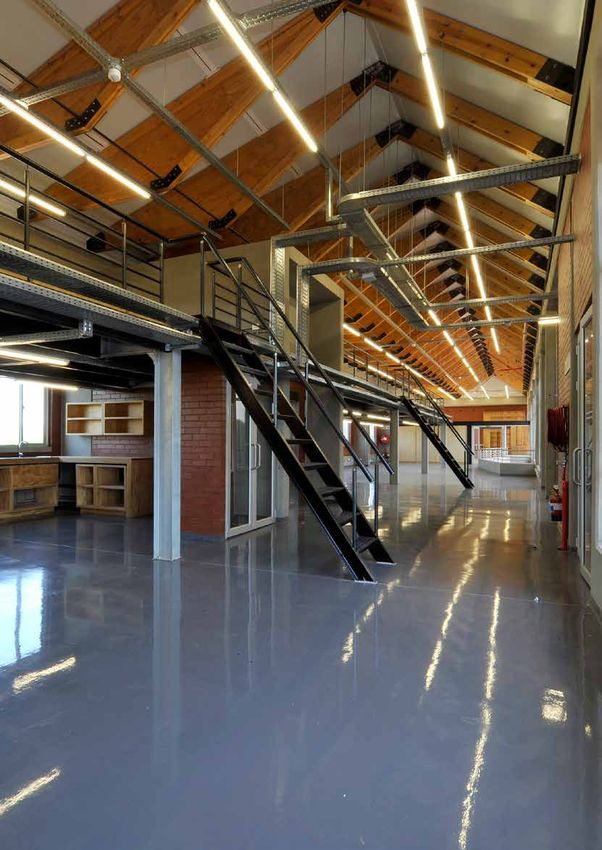
Co m e r a i n o r s h i n e ,
                   the weather station will lead the way
IN RECENT YEARS, concerns have been growing about the impact of              research, climate and technical services, as well as forecasting and
climate change on weather conditions. With TUT being the number one          training. It provides an opportunity for students to acquire specific skills,
university of technology in the country and on the continent, it is to be    to contribute in the provision of weather-related services and to develop
expected that the institution would be at the forefront of innovation. On    specific products for various sectors, industries and
Wednesday, 17 April 2019, history was made with the launch of an ex-         communities, as well as enhancing the preparedness
cellent accredited meteorological weather station on TUT’s premises.         of decision-makers.”
This made TUT the only university in the country to boast such a facility.   Prof Van Staden added that, looking at the bigger
The availability of a mobile application to the TUT community makes          picture, TUT empowers its students for the world
smart sense. The downloadable South African Weather Service’s mobile         of work. “Storms that affect many countries present
application, Weather Smart, will provide warnings and alerts about           particular challenges and they have no regard for
hazardous weather as well as site-specific forecasts to anyone on campus.    political boundaries. Hence, our students will be able
Speaking at the launch, Prof Lourens van Staden, Vice-Chancellor and         to use the skills they acquire during their training at
Principal, said: “The partnership between the South African Weather          the weather station – especially in exploring storm
Service and TUT will link the classroom and industry. It will result in      behaviour – to serve the country, the continent and even the world.”
knowledge sharing and create many other opportunities such as                According to Prof Van Staden, higher education has a unique opportuni-
                                                                             ty to collaborate with industry partners and conduct research to assist in
                                                                             solving real-world problems. “The signing of the memorandum of under-
                                                                             standing (MoU) with the South African Weather Service and the launch
                                                                             of TUT’s own weather station today is such an opportunity.”
                                                                             The benefits of the automated weather station (AWS) commissioned at
                                                                             TUT by the South African Weather Service (SAWS) are far reaching.
                                                                             The AWS has been built using ISO 9001 Total Quality Management prin-
                                                                             ciples, to withstand the harsh Southern African weather conditions that
                                                                             include hot and dry spells, excessive dust storms and lightning as well
                                                                             as the corrosive environment.
                                                                             Located at the Pretoria Campus, the AWS will primarily monitor local
                                                                             weather conditions, which will assist management to understand weather
                                                                             conditions for decision-making purposes, especially as an early warning
                                                                             of imminent lightning storms during sport events.

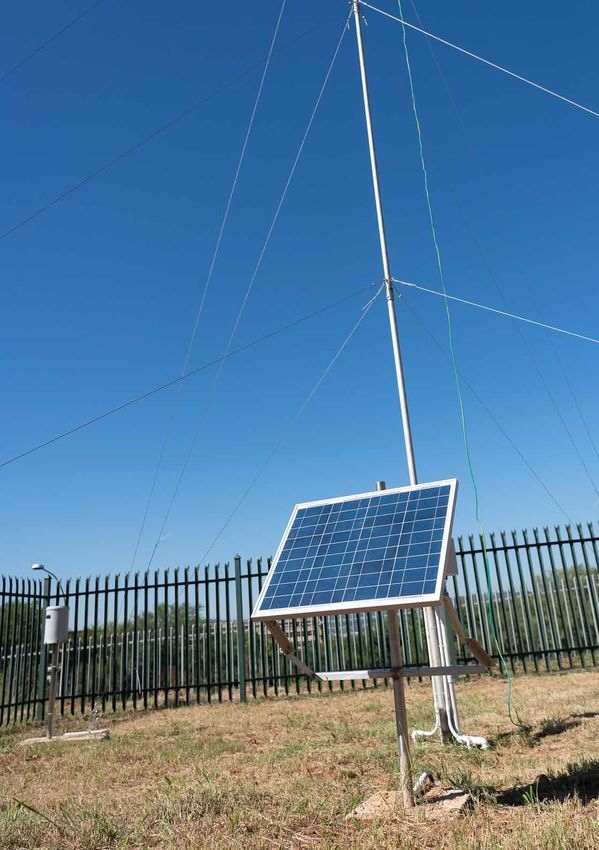
     Relative humidity, temperature
     and radiation shield with
     rain gauge in the background.

                                                                                                                 10 m mast and solar panel.

   AWS enclosure (control box) and antenna.

                                                                                                                 Faculty in Perspective | 2020     3
Rising star
                                                                                reaches
                                                 Dr Nico Steyn,
                                                 senior lecturer at
                                                 the Department
                                                 of Electrical
                                                                                top 100
                                                 Engineering
                                                                                CONTENDING WITH THOUSANDS of other applicants from across the
                                                                                country, Celumusa Magagula, a B Tech: Mechanical Engineering stu-

International
                                                                                dent, made it through the first two phases of the prestigious GradStar
                                                                                selection process to reach the top 100.
                                                                                GradStar, featuring Dr David Molapo as patron, is a
                                                                                programme that gives students an opportunity to be

programme                                                                       recognised as the country’s potential future leaders
                                                                                and to connect with employers. The top 100 students
                                                                                representing the 10 leading universities in the country

delivers
                                                                                had to participate in a number of workshops to
                                                                                determine if they have what it takes to be a leader.
                                                                                Sharing his experiences on his journey to the top 100,
                                                                                Celumusa said he thoroughly enjoyed every step of the

31 new graduates
                                                                                way. Talking about the workshops, he explained what
                                                                                they entailed:
                                                                                The Fasken Workshop: A Towering Problem, to test
                                                                                if you have what it takes to Step Up. Candidates were
                                                                                given an opportunity to display their leadership and in-
                                                                                novation skills through teamwork and thinking out of the
A group of 31 successful academics who completed the 2019 Vocational            box.
Teacher Education Programme at the Haaga-Helia University of Applied            Epiroc Workshop: When the WHY is clear, the HOW is easy. The ac-
Sciences based in Finland were awarded their qualifications at the Theu-        tivities included creating your personal brand statement, understanding
nis Bester Hall, Pretoria Campus, on 4 May 2019.                                your personal brand and your “legacy”, how to introduce yourself and
The collaboration between South Africa’s biggest university of technol-         your skill set to a prospective new boss in 30 seconds, and an interactive
ogy, TUT, and the Haaga-Helia University of Applied Sciences in Finland         session using a board game design and Roadmap.
has been playing a vital role in changing the face of local entrepreneur-       DHL Workshop, popularly known as The Big Yellow Machine, is all
ship. A memorandum of agreement (MoA), signed in 2017, has been                 about speed and efficiency of time-sensitive and fragile shipments. The
guiding the rollout of the project, which is among the first of its kind in     example they were given was transporting a sensitive human organ
Finland. The Haaga-Helia University of Applied Sciences and TUT col-            (specimen shipment) on the African continent. DHL to co-ordinate start
laborate, among other things, in the development of education support-          to end of the transportation cycle and thinking out of the box with creative
ing entrepreneurial skills, teacher exchange and research and develop-          solutions.
ment projects. Since the introduction of the programme, 80 academics
                                                                                According to Celumusa, the GradStar experience was a real revelation
have already undergone training and received qualifications.
                                                                                in terms of future decision-making in the stream that he wishes to follow.
Dr Nico Steyn of the Department of Electrical Engineering was one of the        “The exposure to different companies was quite enlightening, because I
graduates under the Haaga-Helia International Programme. As a senior            had no idea that companies I was familiar with actually offered opportuni-
lecturer at the Department for over 15 years, he says that the programme        ties in my chosen field,” he concluded.
hosted by lecturers from the Finnish institution was of a high standard
and definitely changed his teaching views and teaching approach. He
adds that it is necessary to move to a student-centred learning environ-
ment. Critical thinking and carefully balancing lecturing and facilitating in
the teaching practice should be emphasised. The programme runs over
a period of one year and comprises multiple local contact workshops,
online coursework, and counselling and guidance sessions.
Many studies have demonstrated that academics who have a sound
grounding in their chosen disciplines as well as in pedagogical skills
make the best teachers and contribute immensely to the improvement of
student success in higher education.
The purpose of the University Capacity Development Programme
(UCDP) is to transform teaching, learning and research in order to
achieve enhanced quality, success and equity in universities.

                                                                                Celumusa Magagula at the recent GradStar event.

   4       Faculty of Engineering and the Built Environment
Engineering duo off to study in Italy
TWO STUDENTS from the Department of Architecture, S’tefan van                  the Department of Architecture, commented: “Tertiary education in ar-
Vuuren and Khutso Chuene, are currently completing their Master’s              chitecture should promote learning at a global level
studies at the Università degli Studi di Salerno (UNISA) in Italy. The duo     while building capacity to address local challenges
received scholarships from UNISA after an international call for prospec-      and needs. We believe the UNISA-UNC-TUT trian-
tive students.                                                                 gulation initiative creates unique opportunities for
The Architecture Department is an active participant in an inter-university    young students and academics from designated
“triangulation” collaboration. The participants are UNISA in Italy, the Fac-   target groups.
ulty of Architecture at the Universidad Nacional de Córdoba (UNC) in           The triangulation collaboration contributes to skills
Argentina, and TUT.                                                            development, the revision of teaching curricula and
A delegation from UNISA visited the Architecture Department in March           the improvement of teaching material.”
2019. During their stay in Pretoria, Prof Salvatore Barba, engineer and
                                                                               Prof Caroline Khoathane, Assistant Dean (centre),
project leader of the UNISA programme, and 18 colleagues presented a           with staff and students from the Department of
workshop for TUT staff and students. Prof Jacques Laubscher, Head of           Architecture and the Italian delegation.

                               64-year old beats the odds to qualify

                                                 s A Y n E V ER!
                                           NEVER
                                                                                               at TUT and commenced her journey with the institution in
                                                                                               2003. It was not plain sailing, but she refused to give up.

                                                                                               Over the seven years during which she was enrolled, she
                                 FOR MORE THAN 40 YEARS, this has been the motto               faced many challenges, including financial difficulties,
                                 of 64-year-old Randeka Nghonyama, who received her            and failed some modules due to age-related challenges,
                                 National Diploma in Electrical Engineering at a spring        being in class with younger students and running an
                                 graduation ceremony on 17 October.                            entire family while studying full-time. In 2010, she finally
                                                                                               decided to take a break, but returned in 2017.
                                 Due to her home circumstances, she could not finish
                                 high school when she was a child, but she completed           Randeka said she was excited to finally graduate
                                 Grade 9 at the age of 40 and matric at the age of             and receive her National Diploma. Her plans include
                                 43. She dearly wanted to study nursing and applied            furthering her studies and looking for employment with
                                 at a number of universities, but without success.             the hope of inspiring others to follow their dreams and
  Randeka Nghonyama.             She then applied for admission to Electrical Engineering      never look back.

                                                                                                                  Faculty in Perspective | 2020     5
A WIN
General
n stone
Electric
cast i
ARCHITECTURE STUDENTS once again Presentation, scooping another R7 500. Victor
stepped in
A DONATION was received from General
Electric (GE), ALSTOM, South Africa repre-
sented by Ms Matsiliso Eseu, the GE General
made the University proud at the annual Mokaba, her lecturer, was overwhelmed Manager (HR) to the amount of R1, 097,799
Caesarstone Student Designer Competition with his students’ performance at this year’s to assign to bursaries for 38 BTech students
held in Cape Town at the end of 2018. competition. in the Department of Electrical Engineering at
eMalahleni Campus on 31 October 2019.
One of the Department of Architecture’s star In addition to Dean, Nathan Kabinga, Morné
students, Dean Smuts, was named overall Pienaar and Jade Myburgh also tried their luck Dr. Bolanle Abe, the Academic Manager of the
winner and bagged an all-expenses paid trip at the competition. department and Mr. Philip Tshubwana a lec-
for her and her lecturer to any design fair in the turer in the department conveyed their grati-
“Their hard work has certainly paid off,” tude to GE for their thoughtful and generous
world. The prize is worth R100 000.
says Victor. contribution. The event is unique being the first
She also received the prize for the Best
time students in the department will have such
an opportunity. “We are excited about General
Electric intervention, it will go a long way in as-
sisting most of the disadvantaged students in
the department to continue with their studies”
Prof Jaco Jordaan who represented the Cam-
pus Director during the occasion also thanked
GE for the given opportunity.
The scheme target to give bursaries to more
students in the year 2020. Interested students
were advised to apply through the company’s
website.
Dr Abe would like to thank Tshwane University
of Technology, Electrical Engineering staff for
their support and General Electric for their ded-
ication to seeing this project come to fruition.
Lifelong
learning
is the order of the
day at
Fame Lab
LIFELONG LEARNING can be defined
as an “ongoing, voluntary, and self-
motivated” pursuit of knowledge for
either personal or professional reasons.
The main objective of the annual
Fame Lab competition is to enable
students to exchange knowledge and
to practise public speaking. This year,
the Fame Lab competition took place
at the Business School on 15 March.
By participating in these events,
students not only enhance their social
inclusion and personal development,
but also learn how to be competitive and
make themselves employable. Xolani
Skhosana and Trevor Shihundla, both
M Tech: Industrial Engineering students,
took the lead when they presented their
ideas to the audience and judges in their
Architecture student, Dean Smuts, is the overall winner of the annual Caesarstone Student field of study.
Design Competition. With her is her lecturer, Victor Mokaba.
6 Faculty of Engineering and the Built Environment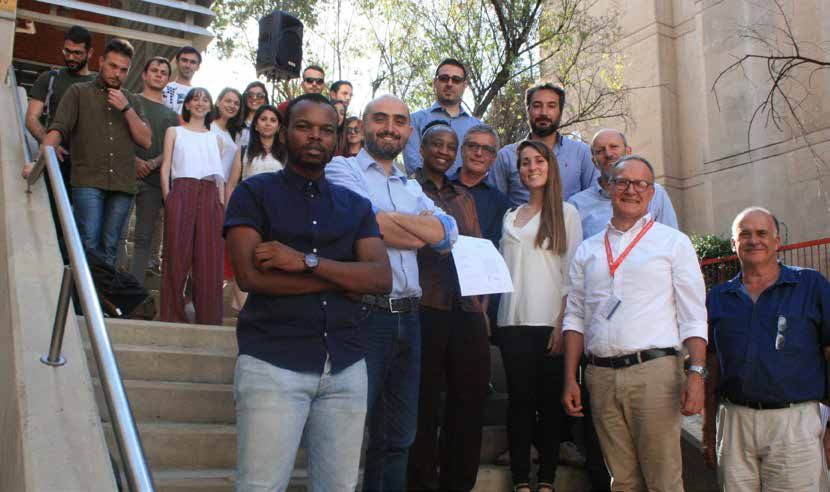
Geomatics students
exposed to entrepreneurship
THE DEPARTMENT OF GEOMATICS at
the Faculty, in partnership with the Northern
Provinces branch of the South African
Geomatics Institute (SAGI), hosted a two-day
workshop on productivity at TUT’s Prestige
Auditorium on 4 and 5 April 2019.
Kovilen Reddy, Head of the Department of
Geomatics, gave the attendees insight in
the qualifications offered in the Department
and elaborated on the phased-out NATED
151 qualifications. He also summarised the
future of the Department and touched on
the practical methods that industry could
use to accommodate students in need of
work-integrated learning (WIL) and to build a
database for WIL placements. Furthermore,
he highlighted the available sponsorship
opportunities to strengthen industry-academic
relationships.

    Photo right: Arrie van Niekerk (guest speaker)
  redefining productivity and explaining ways to
                                 improve business.

                                                         Engineering explores
                                                         alternative means of
                                                     teaching
                                                              THE IMPROVEMENT OF student success rates requires
                                                             new teaching methods.

                                                           The Faculty took the lead in this regard when it presented
                                                           a Blended Learning and Flipped Classroom workshop
                                                           from 28 to 29 January 2019. Prof Nathalie Chalier from
                                                           the Katholieke Universiteit te Leuven, Belgium, led the
                                                           workshop. She is an expert on teacher training and the
                                                           utilisation of technology. Her presentation focused on

                     i n g
                                                           e-learning, and included concepts of integrating interactive

          “Lear d  n                                       videos in a blended and flipped classroom environment.

                                                           She demonstrated how to develop an interactive video

                         e
                                                           lesson plan with the use of open source platforms. With

           p r e s e n t                                   the digital learning system, students will have the luxury to

         e
                                                           learn anytime, anywhere, and will be able to prepare for a

  will b un way”
                                                           lecture in advance. By using these methods, students will
                                                           be able to set their own pace to master their study material.
                                                           Prof Chalier stated that this method would also broaden the

      i n a f                                              students’ perspective.

                                                           “Learning will be presented in a fun way, and inspire
                                                           students to take part and perform well in their assignments,”
                                                           she concluded.

                                                                                       Faculty in Perspective | 2020   7
TEACHER AT HEART, SURVEYOR BY PROFESSION
                                    GAUTENG CADASTRAL SPATIAL DATA MANAGER                      “I still pinch myself with disbelief and gratitude every
                                    at the office of the Surveyor-General in Gauteng, Fani      now and again, wondering if this is really me and if it’s
                                    Motimone, does not see himself anywhere else than in        not the last chapter, but the blessings keep on,” he said.
                                    the Land Development space. “I gave up seeing myself        As an advocate for African solutions for African chal-
                                    elsewhere,” he indicated.                                   lenges, he now sees many opportunities for the new
                                    Motimone’s career at TUT started in 2000 with the           breed of professionals. Having
                                    bridging programme then called the Technology Access        completed his master’s degree,
                                    Programme (TAP), as part of the four-year programme         he is planning to pursue his
 Fani Motimone, a TUT               to obtain a National Diploma in Electrical Engineering.     PhD in integrated development
 Geomatics alumnus and              However, during the TAP career information session he       planning for land reform through
 Gauteng Cadastral Spatial
 Data Manager at the                learned about a career in land surveying.                   infrastructure investment.
 office of the Surveyor-            He completed his TAP year successfully, all the while       Motimone, who is a teacher by
 General.
                                    battling to pay his class fees. Things started going bet-   heart, sees opportunities for
                                    ter when the then Department of Land Affairs awarded        future graduates in entrepre-
                                    him a bursary to study land surveying. He obtained his      neurship through research. Science and technology are
                                    National Diploma in Surveying at TUT in 2004, and           the future that every graduate should be looking into.
                                    that was the beginning of his success story. Because        “It doesn’t necessarily mean that everyone must be a
                                    of the hardship he had been through, he decided that        businessman, but it requires us to see an opportunity of
                                    he would do his best at all times to be a great man and     economic growth and job creation by being innovative
                                    father, and to be an inspiration to his three sons and in   in our respective professions,” he concluded.
                                    his profession.

                             Electrical students benefit
                              from alumnus’ generosity
MOTIVATED BY A PASSION to give something back to upcoming                      such as Profibus, Interbus and Industrial Ethernet, for which it offers a
generations of students, Soh Mntambo, Electrical Engineering alumnus,          low-cost remote I/O solution.
recently visited his alma mater to share his 13 years of industry experience
                                                                               With this real hands-on exposure to a remote I/O solution, students
and knowledge with Process Instrumentation IV undergraduate students.
                                                                               quickly gained valuable skills that are essential in the ever-growing
             Soh is currently employed as an Industrial Networking             automation industry. When these students enter the workplace, and also
             Engineer at ifm – South Africa. Ifm is an international           if they are already employed, they could apply these skills to industrial
             German company that specialises mainly in the automation          sensor and actuator network designs, fault-finding and maintenance.
             industry. In the course of his career, he has also worked at      The course is the same AS-Interface course that industry attendees
             companies such as Siemens, Festo and ABB.                         are exposed to during training. The attendees received an attendance
             Soh, with the help of his former lecturer, Dr Nico Steyn, se-     certificate endorsing that a professional expert and a leading company in
             nior lecturer at the Department and lecturer for the Process      the field of industrial networks presented the workshop.
             Instrumentation IV B
             Tech students and
             the Department of
             Electrical Engineer-
             ing (DEE), initiated
an actuator sensor interface (AS-
interface technologies) workshop
for 24 B Tech students over two
Saturdays. Students were given
first-hand exposure to the practi-
cal AS-Interface industrial network
solution that is used in program-
mable logic controllers (PLCs)
and distributed control systems
(DCSs).
It is designed for connecting field
input/output (I/O) devices in dis-
crete manufacturing and process
applications, using single two-
conductor cables. AS-Interface
is a networking alternative to the
hard wiring of field devices. It can
be used as a partner network for
higher-level fieldbus networks,

   8       Faculty of Engineering and the Built Environment
ARMSA 2019 winners
From left
Azel Viljoen (UJ) with her
‘Immune Dune’ device (to
retain beach sand) in third
place,
Onkgopotse Mothibo (TUT)
for her ‘Uncapped’ design
to allow safer jet ski fishing,
in second place; and Denzill
Bothma (TUT) for his ‘Beach
Muncher’,
a system with a roller scoop
for cleaning beaches,
in first place.
Industrial Design grabs first prize in Sasol competition
TWO TUT STUDENTS, Denzill Bothma and Onkgopotse Mothibe, moulded product that protects the beaches from coastal erosion.
walked away with first and second prize in the annual Sasol Student Second place was awarded to Onkgopotse Mothibe
Design Competition. Four finalists were chosen from the 43 Industrial from TUT with her ‘Uncapped Buoyancy Pontoon’.
Design student entries from TUT and the University of Johannesburg. Onkgopotse redesigned a rib kit stabiliser for jet skis
Every year, the Association of Rotational Moulders of South Africa that improves the buoyancy for jet ski fishing, a recently
(ARMSA) organises a design competition that is sponsored by SASOL’s introduced extreme sport practised along the South
Polymer Tech Centre. This year’s brief for the competition was to create African coastline.
a product that demonstrated an appreciation of the many advantages There has always been an intense rivalry between TUT
of the rotational moulding process, which could be used in applications and UJ’s Industrial Design Department for the first prize
on beaches, whether for leisure, environmental care or other purposes. at the annual Sasol Student Design Competition, but
Judges consisting of experts in the field of rotational moulding expected TUT’s second-year Industrial Design student Denzill
students to identify a real-life problem around the theme by designing an Bothma took this year’s prize. Denzill designed the
original but also a commercially viable solution. ‘Beach Muncher’ to be pulled behind a tractor to quickly
The announcement of the winners of this year’s Sasol Student Design clean dirty beaches that were polluted by events such as floods, illegal
Competition coincided with the international conference of the Affiliation dumping and solid waste flushed out from the ocean, and also by litter
of Rotational Moulding Organisations (ARMO) at Sun City on 17 Sep- left behind by people visiting the beaches.
tember 2019. The conference goers were so favourably impressed by At the prize-giving, Nick Aggett, senior technical specialist at Sasol who
the strategies the students applied in their problem solving that many of has been coordinating the design events for over a decade, said “Every
them offered their business cards to students interested commercialising year we are more amazed by the students’ innovations.”
their products.
Sasol Student Design Competition winner of 2019, Denzill Bothma
TUT’s Jaco van Heerden received a commendation for his ‘Wave Ezee’ said, “I would like to thank ARMSA for the opportunity to engage
pontoon design which adds stability to a surfboard when beginner with experts in industry. We have huge respect for our lecturers
surfers learn to surf. who share their knowledge, and support and motivate us to perform
Azel Viljoen from UJ came third with her ‘Immune Dune’, a rotational exceptionally well.”
“COLLABORATE OR COLLAPSE,” were the words of Prof Ben van accommodate students from TVET colleges that adhered to the admis-
Wyk, Executive Dean of the Faculty of Engineering and the Building sion requirements of programmes offered at the FEBE.
Environment (FEBE), during his closing remarks at the Tshwane Kobus Vorster, Manager of Electronic Manufacturing Services,
Engineering Education Forum (TEEF) held on 27 August. This event presented evidence of successful projects that focused on skills for job
was hosted at the Industry Grid in Building 13. creation. An SLP on appliance repair offered in rural areas is one of the
One of the major concerns raised was the unpreparedness of technical success stories. This course gives unemployed youth an opportunity to
subject teachers at schools and technical colleges. A portfolio of the latest generate an income by delivering a service to their communities through
Short Learning Programmes fixing faulty appliances, and
(SLPs) that are offered by the has had great results.
Technology Station in Elec- The day concluded
tronics (TSE) was shared with with a resolution that
the audience. more should be done to
Representatives were invited eradicate unemployment.
to discuss their specific needs For this purpose, different
for SLPs with the relevant par- stakeholders with the same
ties at the different technology goal in mind were encouraged
stations at the FEBE. to collaborate and create
The articulation of students synergy in their endeavour
from TVET colleges to pro- to implement high-impact
grammes offered at the FEBE initiatives and projects.
was discussed. Prof Ben em-
phasised that he was keen to
Faculty in Perspective | 2020 9ENGINEERING
KEEPS UP WITH
NEW GENERATION
OF STUDENTS
“ALBERT EINSTEIN IS WIDELY CREDITED with saying the definition
of insanity is doing the same thing over and over again, but expecting
different results. Unfortunately, this is also a common mind-set among
many lecturers. I’m not saying that they are lazy and without any passion,
but they may find themselves stuck in a rut when it comes to changing
with the new generation students,” writes Antonie Smit, lecturer at Young Engineering duo, Antonie Smith and Tobie Olivier,
the Department of Electrical Engineering. This young up-and-coming are keeping up with a new generation of students by
academic successfully developed online course material with colleague, developing online course material for the Faculty of
Engineering and the Built Environment.
Tobie Olivier.
“Far too often I find myself trying to repeat the same methodology of
teaching I received while I was at university, not realising that it is in-
effective and outdated. My colleague, Tobie Olivier, and I went on an
adventure at the beginning of the semester, recording our full syllabi for
the subject Software Design II.
Our Executive Dean, Prof Ben van Wyk, encouraged the entire Faculty
to follow in his footsteps by recording videos and
making extra material available to our students. Little
did we know the success that we would achieve. We
produced 35+ videos available to our students by
using the YouTube platform. Why? Because that is
the platform that the new generation of students use
each and every day. YouTube has changed the world
as we know it. Students no longer go to the library to
consult books. They go to Google and YouTube to
find the answers. I know the hard-core book fanatics
are terrified of the idea, but that is the reality and we
need to change with it. Back to the videos: We used
Camtasia (available to all TUT staff) to record the PC YouTube statistics indicating the use of the videos over
screen and our faces at the same time. By using a the span of Semester 1, 2019. The blue line indicates the
actual view time in minutes, per day, and the red vertical
green backdrop, we were able to filter out the green, lines the practical evaluations.
and overlay the face image onto the video. The result
was just stunning. A professional looking video with a
limited amount of effort.
After the videos were uploaded onto YouTube, we could start following
the view time. It started out slowly, but to our amazement, it picked up
quite a bit. At the end of the semester, with 200 students in our class, we
have over 20K minutes of watch time and 10K views. We also noticed
that quite a number of students illegally download the videos from You-
Tube and distribute them via USB (we don’t care, as long as they watch
it!). It is also interesting to see how the viewing increased just before
evaluations. We had five practical evaluations throughout the semester
(see graph).
We can blame poor schooling every time we have a low pass rate, but
if we believe and dig deep, we can really make a difference, even if
the students are not up to standard. The education environment is also
changing and we need to accept the fact that change is inevitable. You A screen shot of one of the YouTube
can change with the future, or you die in the past.” videos with Antonie presenting.
Global Corporation awards bursaries to Engineering students
FIVE B TECH: MECHANICAL ENGINEERING STUDENTS recently re- alumni, 50% of them in the Maintenance Department (Electrical, Mechani-
ceived bursaries to the value of R100 000 from SODECIA Automotive, a cal and Mechatronics disciplines) and 100% in Manufacturing Engineering
global supplier of automotive parts, through its collaboration with TUT’s (Continuous Improvement, Project Management, Process Management).
Advancement and Partnerships Office (APO). According to Ferreira, SODECIA is considering the possibility of enroll-
During the cheque handover, SODECIA thanked the University for cul- ing some of its staff members at TUT to develop them academically.
tivating professionalism in its students. SODECIA’s General Manager, Danie Ferns, Acting Director of APO, said: “TUT really appreciates the
André Ferreira, said, “In our experience, TUT students are professionals R100 000 SODECIA bursary donation.
with clear future goals. For them, it is not only about money, but also to The APO would like to thank SODECIA for its ongoing commitment to
gain experience, learn, and be exposed to the industry.” assist needy students and we look forward to a continuing mutually ben-
According to SODECIA, its staff currently comprises more than 90% TUT eficial relationship with the company.”
10 Faculty of Engineering and the Built EnvironmentUsing technology to fight crime
SOUTH AFRICA is one of the countries in the world with the worst crime
statistics. News platforms and social media are flooded with reports of
disgusting criminal activities on a daily basis. Over and above having to
live facing the possibility of a gunshot, residents also live in the fear of
being defrauded of their money by cyber crooks.
These unprecedented levels of crime have left communities resorting to
Carel Coetzee.
forming their own security clusters; some unfortunately using the illegal
mob justice systems to punish suspected criminals. It is clear that the XON’s experience in the physical and network security space combined
country needs innovative and effective methods to address this scourge with NEC’s world-class technology in physical and cyber security
before it is too late. solutions culminated in the creation of the Cyber Defence Operation
Carel Coetzee, CEO of ICT Solutions provider, XON, says technology is Centre. “We are the only security services provider on the continent that
the only way to win the battle against physical and cybercrime. focuses on the exciting space where the physical and the cyber worlds
meet, where we combine cybersecurity intelligence and information
Carel is a TUT Electrical Engineering graduate
gathered from social media to complement physical solutions like facial
with a strong background in the field and extensive
recognition.”
experience in operations management gained
at Centera, Qdata Networks and several other Carel’s penchant for entrepreneurship was evident from a young age,
organisations. Carel identified a gap in the market in having been involved in a couple of small ventures in his teenage
1996 and set about filling it. “I resigned from Qdata years – ventures which helped pay the bills as a scholar and student
Networks to start XON when I saw an opening in file – before starting XON more than 20 years ago. “What motivates me is
and printer sharing. To enable this, computers had the challenge of uncovering an opportunity and creating something out
to be networked for both local area networks and of it,” he says.
wide area networks. Email, which was also relatively
Disclaimer:
new at that time, presented a huge opportunity for This is the revised version of the article originally published
enterprise email and scheduling solutions, on which on www.theceomagazine.com on 18 June 2018.
we planned to capitalise.”
SODECIA South Africa
THE ONLY UNIT in Africa is based in Silverton, Pretoria. It com- TUT’s Advancement and Partnerships Office (APO). At the function are,
menced business in August 2012, as a components supplier for FORD from left: Danie Ferns – Acting Director, Advancement and Partnerships
Office (APO); Beethoven Barros – Facilities Project Manager at SODECIA;
Motor Company South Africa. In February 2017, Ford awarded the Dr Lodewyk Beneke – HOD: Department of Mechanical Engineering,
Unit a Q1 certification, an award for suppliers that consistently produce Mechatronics and Industrial Design; André Ferreira – General Manager
at SODECIA; Nthabiseng Ratlogo – Departmental Administrator at the
high-quality parts that meet customer requirements as well as delivery Department of Mechanical Engineering, Mechatronics and Industrial
targets. Design; Letsholo Dumisi – Manufacturing Engineer Analyst at SODECIA
and Pearl Seakamela, Senior Development Officer at APO.
Faculty in Perspective | 2020 11Geomatics celebrate top achievers
FEW THINGS IN LIFE are more motivating than to have consistently good gratitude for the support I received from the staff of this Department on
performance recognised. Since being recognised and acknowledged for my academic journey knows no end. I am confident that my consistently
one’s achievements is a tremendous motivator in striving for excellence, good academic performance will assist me to be just as successful in my
staff members from the Department of Geomatics future endeavours.”
have, over time, established a culture of honouring Kovilen Reddy, Head of the Geomatics Department, commended the
their students’ accomplishments. other students who were awarded for subject excellence and for overall
At the end of October, the Department recognised semester and year performance. “Awards like these serve as a motivator
14 academic achievers at the Department’s Annual for students and for employers who seek potential employees who excel
Excellence Awards Ceremony. In addition to in certain knowledge areas. I want to congratulate all recipients of the
Certificates of Excellence, the 14 best achievers also top awards and I want to remind those of you who did not receive awards
received specially made glass trophies. this time round that your success is also noted and not any less worthy.
It speaks volumes about commitment and dedication to In addition, to those who are struggling or perhaps failing, the Department
average a staggering 15 distinctions over three years is here to support you all the way to the end of your studies. Remember,
of study, completed in the minimum time. Galaletsang Motsoakae, an S4 failure should be regarded as a steppingstone, and not a blockage, to
Geomatics student who received the award for Top Achiever, said, “My your ultimate success at TUT,” Reddy said.
The recipients of awards sharing the moment with staff from the Department of Geomatics. Top Achiever, Galaletsang Motsoake, showing off all his
accolades.
TWINS RECEIVE IDENTICAL QUALIFICATIONS
FOR A SPLIT SECOND, one could have thought that you were seeing double, but two identical
looking young women did really receive identical qualifications during the recent Spring
Graduations at the Pretoria Campus. They were the 25-year-old twins, Mary and Johanna
Tloubatla, who proudly walked across the stage to receive their B Tech degrees in Civil
Why did you choose to study the same course?
We have the same interests in everything we do and we both love civil engineering.
We didn’t see ourselves studying anything else.
What influenced you both to choose studying civil engineering?
We chose civil engineering because it is a broad field with a lot of job opportunities.
Civil engineering influences where people work, relax, learn and live.
You become part of helping society to become more advanced by developing infrastructure to
meet challenges brought on by new technologies, population growth and climate change.
Have you always been in the same class?
Yes, at school we were always given the option to choose which class we wanted to go to and
we chose to stick together. We only separated when we got to varsity.
25-year-old Johanna and Mary Tloubatla
What is your most unforgettable campus memory? after being awarded the same degree.
Chilling at the Hockey Café with our friends after writing a difficult test and joking about how
tough the test was.
How do you feel about graduating together?
We are very happy that we can share this beautiful day.
What are the two weirdest questions your classmates ever asked you?
Can we hear each other’s thoughts? Would we mind sharing a boyfriend?
How does your close bond influence your other social relationships?
We are close, but at the same time we have our own identities.
There are things we do separately and we live apart.
12 Faculty of Engineering and the Built EnvironmentFaculty in Perspective | 2020 13
C ENTRES, INSTITUTES, TECHNOLOGY STATIONS AND INCUBATORS (CITSIs)
          INNOVATION is an inexhaustible engine for economic development.                Developments include Ph adjustment, viscosity balancing, emulsification,
          The Faculty has several centres, institutes, technology stations and          preservation and other corrections of physical and chemical parameters
          incubators (CITSIs) that make use of innovation to contribute to socio-       required to render a product of the approved quality.
          economic development in our region and country. We host three of              The TSC’s services include:
          the 18 technology stations in the country, which are supported by the         • Applied research and formula development
          Technology Innovation Agency (TIA), an initiative of the Department of        • Product evaluation and quality testing
          Science and Innovation.                                                       • Product testing and analysis
          The stations operate as businesses and are sustainable CITSIs in the          • Product optimisation
          Faculty. They primarily support small and medium enterprises (SMEs)           • Chemical safety audits
          and communities with product development, manufacturing and training          • Work-integrated learning (WIL) programmes
          needs. The Technology Station in Electronics (TSE) operates within            • Specialised training services
          the electronics, mechanical, mechatronics, ICT and advanced manufac-
          turing disciplines.                                                           The Institute for Advance Tooling (IAT) is based at TUT’s Soshanguve
                                                                                        South Campus, and focuses on product and skills development in tooling
          The TSE’s services include:
                                                                                        for various sectors.
          • Applied research and product development (electronic and mechatronic)
                                                                                        The IAT’s services include:
          • Manufacturing services (3D printing, laser cutting, electronic manufac-
                                                                                        • Applied research, product development and prototyping
            turing)
                                                                                        • Tool design and manufacturing
          • IR4 technologies for manufacturing process optimisation
                                                                                        • Advanced CNC machining (5-axis high-speed milling)
          • Skills for jobs training programmes
                                                                                        • Part inspection/measurement with a coordinate measuring machine
          • Specialised training programmes
                                                                                          (CMM)
          • Work-integrated learning (WIL) programmes
                                                                                        • Technical support
          • Project management and consultation services
                                                                                        • Work-integrated learning (WIL) programmes
                               The TSE has a footprint at the TUT Pretoria Campus       • Specialised training services
                               and at the CSIR to improve industry and community
                                                                                        Dr SJ Jacobs, the Assistant Dean: Industrial Liaison, Special Projects,
                               interaction in support of socio-economic develop-
                                                                                        and Work-integrated Learning, who is also the Director of the TSE and the
                               ment.
                                                                                        Project Manager for the Chair in Intelligent Manufacturing, commented
                               The Technology Station in Chemicals (TSC),               as follows: “Education is the key to socio-economic development of our
                               based at the Ga-Rankuwa Campus of TUT, offers            region and the greater South Africa. The technology stations in the Faculty
                               a wide range of services that are designed to as-        have world-class technology platforms with dedicated and committed
                               sist manufacturing companies in maintaining and          staff members. The capability of the stations contributes towards the
                               enhancing the quality of their products.                 socio-economic development of industry and communities through
                               The TSC conducts applied research and develop            industry-based research, product development and skills programmes in
                               products in line with the SABS/SANS standards, and       communities. The Faculty strives to increase collaboration with industry,
                               according to the customers’ specification.               communities and government, to the benefit of all in South Africans.”

          C entre for Energy and Electric Power (CEEP)
          Solar energy source maximisation controller
          THE ENERGY SOURCE maximisation controller is a product developed by
          Dr Popoola and his team at the Centre, which addresses the solar system
          implementation affordability issue for residential households, especially rural
          dwellers. The control method is hinged on the applicability of the occupants’
          energy consumption pattern, prioritisation of the household electrical loads, state
          of charge of the storage facility (battery) and sizing of the system.
          The system primary microcontroller contains the solar energy maximisation
          algorithm which determines the portion of the load to be supplied by the solar
          system based on the SOC information, the time of use, the actual solar power
          generated by the solar panels and the load utilisation in the household. A variety
                                                                                                           Images of the solar maximisation controller.
          of algorithms can be loaded in the IC to suit the specific applications.

          Green energy bicycle for rural communities
          THIS PROJECT AIMS TO address the electricity issues faced by, especially, rural communities and
          the disenfranchised rural youth population. The bicycle that has been developed generates power
          from solar and kinetic energy, that is, by means of a solar system and dynamo placed on the bicycle
          wheels that charge when the wheels turn. The energy generated by these two sources is used to
          charge a set of batteries installed on the bicycle for later use. The maximum output power of the
          bicycle is sufficient to keep a LED bulb shining for five to six hours, as well as a cell phone charger
          and a radio or portable TV.
          The product benefits include a clean mode of transportation and a clean source of energy for
          the rural populace to use and to support their means of livelihood, especially in the case of local
CITSI’s

          informal business owners. It could also eliminate the need for paid battery charging services for poor
          households, contribute to the reduction of paraffin used, with the related health issues, ease access
          to information, and support education in the areas concerned. The product design and development                     Green energy bicycle.
          were funded by SAFCEI, the Lutheran World Federation and BROT.

            14       Faculty of Engineering and the Built Environment
F ’SATI HIGHLIGHTS 2019
F’SATI EXECUTIVE MANAGEMENT BOARD MEETING,
PARIS, FRANCE VISIT OF THE FRENCH AMBASSADOR TO TUT
THE CHAMBER OF COMMERCE AND INDUSTRY Paris-Ile-de-France THE NEW FRENCH AMBASSADOR to South Africa, HE Aurélien
Region hosted the biannual F’SATI Executive Management Board Lechevallier, visited TUT to meet the Vice-Chancellor, Prof Lourens van
meeting in Paris on 3 July 2019. Executive management members from Staden. During their discussions, the successes of the collaborations
TUT, CPUT, UPEC, the CCI-IDF, the NRF and the Ministry of Foreign between South Africa and France were highlighted; in particular, the
Affairs attended the meeting. impact of the F’SATI programme, which has been in existence for
more than 20 years. Based on what has already been achieved, the
Ambassador emphasised the need for the programme to contribute even
more towards growth and development over the next 20 years. He was
accompanied by the Counsellor for Cooperation and Cultural Action,
Mr Bruno Asseray, the Scientific Attaché, Dr Moncef Meddeb, and the
Attaché for Innovation, Dr Mathieu Bécue.
Prof Lourens van Staden, TUT Vice-Chancellor, with Dr Mgwebi, DVC:
RIE, and F’SATI Executive Management Board members at the Paris EMB
meeting.
STAKEHOLDER FUNCTION
WITH TUT EXECUTIVE IN FRANCE
TUT’S VICE-CHANCELLOR, Professor Van Staden, and the Deputy
Vice-Chancellor for Research, Innovation and Engagement, Dr Thandi
Mgwebi, hosted a stakeholder function in France with TUT’s partner,
ESIEE, and CPUT to meet their French partners, alumni and current
TUT students in France. The meeting was an opportunity to discuss
TUT’s engagement and internationalisation agenda and to meet TUT HE Aurélien Lechevallier and TUT VC, Prof Lourens van Staden, with the
delegation from the French Embassy and TUT staff.
students who are currently based in France.
ARTIFICIAL INTELLIGENCE EXPO 2019
THE FIRST ARTIFICIAL INTELLIGENCE (AI) Expo (AI ExpoAfrica) took
place at the Century City Conference Centre in Cape Town, South Africa,
on 4 and 5 September 2019, and focused on real-world applications and
trends driving the artificial intelligence economy in Africa while seeking
to build an AI business-focused community across the continent. As part
of its strategy for innovation, the Embassy of France in South Africa,
together with Business France SA, La French Tech, Université de
Prof Van Staden, Prof Nhlapo and Dr Mgwebi with ESIEE and F’SATI staff
and F’SATI TUT students at the function in France. Bordeaux and Rhoban, took part in the AI Expo to showcase French
expertise. Prof Karim Djouani was a member of a panel at the AI Expo
that discussed how new initiatives could serve as a model for the Fourth
SARCHI CHAIR SEMINAR 2019 Industrial Revolution innovation and growth in Africa. The F’SATI TUT
start-up, Augmented Mobility, also participated in the event.
F’SATI HOSTED a SARChI Chair Seminar from 28 to 29 October
2019, with Prof Amir Fijany, retired Professor from the Jet Propulsion
Laboratory, NASA, USA; Prof Eric Monacelli from the UVSQ/LISV
Laboratory in France; and Abderraouf Benali, also from the UVSQ/
LISV Laboratory in France. The topics of the seminar included Artificial
Intelligence and Non-linear Machine Learning (geometric deep learning),
Wearable Robot Design and Control, and the Internet of Things and
Living Lab Design for Assistive Living.
Prof Karim Djouani on the 4IR panel at the AI Expo 2019.
Staff and students at the SARChI Seminar.
F’SATI
Prof Josiah Munda, Assistant Dean for Research in the Faculty of
Engineering and the Built Environment, with the SARChI Chair, Prof Djouani, Prof Karim Djouani, Prof Francois Rocaries and Dr Nico Steyn at the AI Expo
visiting professors and TUT staff. 2019.
Faculty in Perspective | 2020 15TUT STAFF AND STUDENT VISITS TO ESIEE
THROUGH THE Erasmus+ Mobility Interchange for Credits programme
that was approved between TUT and ESIEE Paris in 2017, a number of
staff and students have visited ESIEE. One of them was Prof Shengzhi
Du of the Department of Electrical Engineering at TUT, who spent a week
at ESIEE. The objective was to develop collaborations with counterparts
at ESIEE in the fields of image processing and brain-computer interface
applications.
AUGMENTED MOBILITY START-UP
DURING 2018 two prototype designs were finalised at F’SATI TUT,
namely an augmented driving assist wheelchair and a robotic rollator.
The prototypes were developed to demonstrate the concept and use
of systems such as assistive technologies for persons with disabilities.
The robotic rollator was presented as an innovative approach to gait
rehabilitation practices at the Gauteng Acceleration Programme (GAP)
hosted by the Innovation Hub. This innovation won second price in the
GAP Medical Division and was awarded R200 000 towards an incubation
programme for a four-year period. As a result, a start-up company,
Augmented Mobility, was registered and is currently in its incubation
Dr Yves Blanchard (ESIEE), Ms Adri Coetzer (TUT) and two TUT master’s
students at ESIEE.
During May 2019, Mrs Adri Coetzer, the Faculty of Engineering and the
Built Environment’s Faculty Research Officer, spent a week at ESIEE
to attend training sessions on research activities, internationalisation,
commercialisation, and doctoral schools.
Two master’s students from TUT attended a five-month semester at
ESIEE between September 2018 and February 2019, and two other
master’s students spent five months at ESIEE between February and
June 2019. These students completed the equivalent of 30 ECTS credits
during their stay at ESIEE.
VISIT OF TUT STAFF TO FRANCE Dr Nico Steyn and Ms Tsolofelo Modise, a doctoral student and TUT staff
member, in the middle, at the GAP Competition awards.
WITH THE OBJECTIVE OF furthering the collaboration between TUT
and its French academic partners, a number of visits took place during
2019. In October 2019, Dr Edgar Nesamvuni and Prof Kobus Jonker Chair in Intelligent Manufacturing overview
visited UPEC and ESIEE. The objective was to develop partnerships
Dr SJ JACOBS, the TUT Project Manager for the Chair in Intelligent
between the Faculty of Management
Manufacturing, stated that “the purpose of the Chair is to identify and
Sciences at TUT and its French
support industry-based research projects and skills development
counterparts. They also discussed the
programmes to strengthen and accelerate industry and academic
possibility of hosting staff and students,
collaboration in the automotive and electronic manufacturing sectors”.
of modules being offered jointly by TUT,
UPEC and ESIEE, and of developing The Chair has five different Work Packages (WPs), with various projects
collaborative master’s programmes in the Work Packages supporting the purpose of the Chair. Each of these
between TUT and France in the future. packages has Work Package Leaders (WPL) who are responsible for the
Dr Coneth Richards and Dr Nico Steyn execution of the projects identified in these packages, and who report to
also visited France as part of missions the Chair and TUT Project Manager. The work packages are:
supported through the French Embassy • Work Package 1: Intelligent manufacturing: Student support
to develop collaborations between TUT,
• Work Package 2: IoT/Industry 4.0 technology demonstration
UVSQ and ESIEE.
• Work Package 3: IoT/Industry 4.0 skills development
Dr Richards visited the Institut des
sciences et techniques des Yvelines • Work Package 4: Incubation and component localisation
(ISTY) of UVSQ in October 2019, • Work Package 5: Skills development: Rapid product development
and spent some time with Prof Kamal
Projects grouped into Work Packages have detailed activities, time-
Meghriche, Head of
frames, milestones, deliverables, budgets, responsible parties and per-
the Department of
formance measures or indicators.
Mechatronics at ISTY
UVSQ. Dr Jacobs added: “It is evident that a need exists to better understand
the current and future skills requirements related to Industry 4.0 in the
workplace in order to position the academic environment to deliver
programmes that can support and enhance a broad range of engineering
and manufacturing industries.”
The Chair in Intelligent Manufacturing will conduct research in the fields of
(1) intelligent manufacturing, (2) industry 4.0 technology demonstration,
F’SATI
(3) industry 4.0 skills development programmes, (4) incubation and
component localisation, and (5) rapid skills development with rapid
Dr Coneth Richards and Prof Kamal Meghriche product development.
during the visit to ISTY UVSQ.
16 Faculty of Engineering and the Built EnvironmentYou can also read


