2020 Mackay Local Disaster Management Group - Local Disaster Management Plan Version: 5.0
←
→
Page content transcription
If your browser does not render page correctly, please read the page content below
2020 Mackay Local Disaster
Management Group
Local Disaster Management Plan
Version: 5.0
TABLE OF CONTENTS

1.   Approval Of Plan                                1      9.   Australian Government Level                    19

2.   Review And Renew Plan                           1      10. Description Of The Population And Environment   20

3.   Document Control                                2           10.1 Geography And Topography                  20

     3.1 Amendment Control                           2               10.1.1 Geography                           20

     3.2 Amendment Register                          2               10.1.2 Topography                          20
                                                                 10.2 Climate And Weather                       21
4.   Distribution List                               3
                                                                 10.3 Population                                21
     4.1 Information Management And                  3
     Information Privacy                                         10.4 Society                                   22
                                                                 10.5 Industry And Development                  22
5.   Administration And Governance                   4
                                                                 10.6 Community Capacity                        23
     5.1 Authority To Plan                           4
                                                                 10.7 Major Industry                            24
     5.2 Responsibilities Under The Plan             4
                                                     4               10.7.1 Business Sector                     24
     5.3 Purpose Of The Plan
     5.4 Objectives Of The Plan                      5               10.7.2 Industrial Sector                   25

     5.5 Compliance Of The Plan                      5               10.7.3 Tourism Sector                      25

     5.6 Strategic Policy Statement                  6           10.8 Education                                 25

     5.7 Emergency Management Assurance              6               10.8.1 Schools                             25
         Framework                                                   10.8.2 Higher Education                    25
     5.8 Integration With Council’s Corporate Plan   6           10.9 Sport And Recreation                      26

6.   Mackay Regional Council Local Disaster          7           10.10 Major Events                             26
     Management Group
                                                            11. Critical Infrastructure                         27
     6.1 Establishment                               7           11.1 Emergency Services                        27
     6.2 Membership                                  7           11.2 Medical Facilities                        27
         6.2.1   Chairperson                         8           11.3 Government Buildings And Facilities       27
         6.2.2   Deputy Chairperson                  9           11.4 Major Roads                               27
         6.2.3   Local Disaster Coordinator (Ldc)    9           11.5 Rail                                      27
         6.2.4   Deputy Local Disaster Coordinator   9           11.6 Airport                                   28
         6.2.5   Local Disaster Management Group     9           11.7 Seaport                                   28
                 Core Members
                                                            12. Essential Services                              29
         6.2.6   Local Disaster Management Group     10
                                                                 12.1 Water Supply And Dams                     29
                 Advisors
                                                                     12.1.1 Referable Dams                      29
     6.3 Disaster Management Arrangements            10
                                                                     12.1.2 Water Supply                        29
     6.4 Functions Of The Group                      11
                                                                     12.1.3 Electricity                         30
     6.5 Roles And Responsibilities                  12
                                                     17              12.1.4 Gas Supply                          30
     6.6 Meetings And Quorum
     6.7 Training And Exercising Of Members          18              12.1.5 Sewerage                            30
         And Others                                                  12.1.6 Telecommunications                  30
     6.8 Reporting                                   18     13. Hazardous Sites                                 30
         6.8.1   Routine Business Reporting          18		 14. Disaster Risk Assessment                          31
         6.8.2   Disaster Operations Reporting       18		     14.1 Hazards                                      31
7.   District Disaster Management Group              19		        14.2 Risk Assessment                           31
8.   Queensland Disaster Management Committee        19		        14.3 Risk Treatment                            32
15. Prevention                                      32     		       17.6.1 Communication                   40
    15.1 Compliance With Legislation, Regulations   32     		       17.6.2 Receipt Of Warnings             40
         And Standards                                     		       17.6.3 Issue Of Warnings               41
    15.2 Hazard Specific Planning                   32     		       17.6.4 Standard Emergency Warning      41
    15.3 Building Codes And Building-Use            33                     System (Sews)
         Regulations And Standards                             17.7 Financial Considerations               41
    15.4 Land-Use Planning                          33         17.8 Coordination And Support Capability    41
16. Preparedness                                    34		       17.9 Impact Assessments                     42
    16.1 Event Coordination                         34         17.10 Media Management                      42
    16.2 Capacity Building                          35         17.11 Accessing Support And Allocation Of   42
		 16.2.1 Community Awareness And                   35               Resources
  		      Education                                      		 17.12 Providing Support                        42

17. Response                                        36         17.13 Disaster Declaration                  43

    17.1 Activation                                 37         17.14 Resupply                              43

    17.2 LDMG Activation Levels                     37         17.15 Hazard Specific Arrangements          43

                                                    38         17.16 Hazard Specific Support Agency        43
    17.3 LDCC Structure
                                                               17.17 Functional Lead Agency                44
    17.4 Public Warning Systems                     38
                                                               17.18 Functional Support Agency             44
    17.5 Emergency Planning                         38
                                                            17.19 Coordination                             45
		      17.5.1 Local Plans                          38
		      17.5.2 Operational Sub Plans                38		18. Recovery                                       45
        17.5.3 Functional Lead Agency Plans         39		  18.1 Recovery Sub Plan                           46
        17.5.4 Community Emergency Plans            39  		     18.1.1 Scope                                46
    17.6 Concept Of Operations For Response         40     19. Definitions And Abbreviations               47
1. APPROVAL OF PLAN

    This Local Disaster Management Plan has been prepared by the Mackay Local Disaster Management group on
    behalf of Mackay Regional Council as required under Section 57 of the Disaster Management Act 2003 (the Act).

    In accordance with Section 80(1)(b) of the Act, approval has been given to this plan by the Mackay Regional Council on
    ________________
     12 February 2020 when the plan was adopted by resolution _____________
                                                               ORD-2020-43

      Jason Devitt Digitally signed by
                        Jason Devitt
    _________________________________________		                 _________
                                                                    28    /_________
                                                                               02 		 /_______________
                                                                                           2020

    Jason Devitt                                                Date
    Local Disaster Coordinator
    Mackay Local Disaster Management Group

    _________________________________________		                 _________
                                                                    27    /_________
                                                                               02 		 /_______________
                                                                                           2020

    Cr. Gregory Williamson                                      Date
    Chairperson
    Mackay Local Disaster Management Group

    2. REVIEW AND RENEW PLAN
    This plan will be reviewed or renewed at least once annually as per Section 59 of the Act with relevant amendments
    made and distributed.

    In accordance with Section 59(2) of the Act, the effectiveness of the plan must be reviewed at least once a year.
    This may take the form of a disaster management exercise or in the event of the activation of the Local Disaster
    Management Group (LDMG) in response to an emergency.

1
3. DOCUMENT CONTROL

3.1 Amendment Control
Mackay Local Disaster Management Plan version history

  VERSION                   DATE                                    COMMENTS

  1.0                       November 2011                           First Edition

  2.0                       October 2012                            Reviewed and Updated

  3.0                       May 2016                                Reviewed and Updated

  4.0                       August 2016                             Reviewed and Updated

  4.1                       November 2017                           Review and updated

  5.0                       January 2020                            Full review and update

3.2 Amendment Register
The current version of the Mackay LDMP is: Version 5.0 – January 2020.

Mackay Regional Council welcomes feedback from the residents, visitors and others regarding this disaster
management plan. Feedback, recommendations and proposals to amend this plan should be forwarded to:

By mail:        The Chief Executive Officer
		              Attention: Emergency Management Program
		              Mackay Regional Council
		              PO Box 41
		              MACKAY QLD 4740

In person:      At the nearest Mackay Regional Council Client Service Centre.
		              A list of the Centres can be found at; http://www.mackay.qld.gov.au/contact/contact_council

By email:       council@mackay.qld.gov.au

Amendments to the plan must be endorsed by the Mackay LDMG and approved by Mackay Regional Council, under
the provisions of the Act, before they can be implemented.

Once approved by Council, new and amended versions of the plan will be registered in the Amendment Record along
the new version number. For minor and/or administrative amendments, only the number after the decimal point will
change.  For amendments incorporating significant change or rewrite, the primary version number will change.

Changes to contact details, position names or titles are considered only minor amendments and are not required to
be endorsed by the LDMG or Council.

                                                                                                                    2
4. DISTRIBUTION LIST

      POSITION                                           COPY

      LDMG Chair/Deputy                                  Electronic or Hard Copy

      Local Disaster Coordinator                         Electronic or Hard Copy

      LDMG Executive Group                               Electronic Copy

      LDMG Members                                       Electronic Copy

      LDMG Advisory Members                              Electronic Copy

      Mackay Regional Council Website                    Uploaded to website

      DDMG DDC/XO                                        Electronic Copy

    This plan, excluding the confidential annexes and supporting documents, is available for public viewing online at
    https://www.mackay.qld.gov.au and can be downloaded from this website in read only portable document format (PDF).

    Printed copies of the plan, excluding the confidential annexes and supporting documents, are available for viewing
    at Council Client Service Centres. A list of these Centres can be viewed online at http://www.mackay.qld.gov.au/
    contact/contact_council.

    Printed copies of the plan, excluding the confidential annexes and supporting documents, are available for purchase
    at cost recovery, and may be ordered through:

    Mail:           The Chief Executive Officer
    		              Attention: Emergency Management Program
    		              Mackay Regional Council
    		              PO Box 41
    		              MACKAY QLD 4740

    4.1 Information Management and Information Privacy
    Recipients of this plan must take all reasonable steps to ensure that operational information is adequately
    safeguarded and that the confidentiality of operational information is maintained.

    Operational information, including contact lists, must be stored securely and protected against unauthorised access,
    use, modification, disclosure or misuse.

    Recipients must not intentionally access files, registers or any other document that contains operational information
    unless it is necessary for their duties. Where access is necessary for work purposes, recipients must not disclose
    operational information to an unauthorised person.

    Recipients must ensure that documents or files containing operational information are not left where unauthorised
    persons can access the information.

3
5. ADMINISTRATION AND GOVERNANCE

5.1 Authority to plan
This plan has been prepared by the LDMG for the Mackay Regional Council under the provisions of Section 57(1) of
the Act.

5.2 Responsibilities under the plan
Effective management of any disaster relies on strong coordination arrangements, consultative decision making,
collaboration and a shared responsibility which is achieved through supporting relationships, trust and teamwork
between individuals, agencies and the community.

For the purposes of this plan a disaster is defined as a serious disruption in a community caused by the impact of an
event that requires a significant coordinated response by the state and other entities to help the community recover
from the disruption. A serious disruption is defined as:

•   Loss of human life or illness or injury to humans, or

•   Widespread or severe property loss of damages, or

•   Widespread or severe damage to the environment.

In accordance with Section 30(f) of the Act, the Mackay LDMG is responsible for managing disaster operations within
the Mackay Region under the policies and procedures defined by the Queensland Disaster Management Committee
(QDMC).

Under Section 34A of the Act, the Chairperson is responsible for managing the business of the group and to ensure,
as far as practicable, that the group performs its functions, and to report regularly to the relevant district group and
the Chief Executive of the department about the performance of the local group of its functions.

Under Section 36 of the Act, the Local Disaster Coordinator has the functions of coordinating disaster operations for
the local group, reporting regularly to the local group about disaster operations and to ensure as far as practicable
that any strategic decisions of the local group about disaster operations are implemented.

While there are no specific powers granted to the Chairperson under the Act, it is the responsibility both of this
position and the Council to prepare and make available its resources in the event of a disaster. Additionally, external
agencies will also make available their resources as referenced within the LDMG roles and responsibilities summary
within this plan.

5.3 Purpose of the plan
The purpose of the LDMP is to detail the arrangements for the coordination and management of operations and
resources and to minimise adverse impacts that threaten the safety of our community prior to, during and after a
disaster event. This disaster management plan adopts comprehensive, all hazards, all agencies approach to disaster
management.

The LDMP has not been developed for the management of commonly occurring incidents which are within the
capacity of the functional lead agency with a threat specific role.  However, if requested by the District Disaster
Coordinator (DDC) or a functional lead agency, elements of the LDMP may be activated in support of a lead agency
responding to a major incident.

                                                                                                                           4
5.4 Objectives of the plan
    The overall objective of this plan is to outline the disaster management arrangements for the Mackay Regional
    Council area. This plan ensures a clear direction of disaster management priorities, resource allocation and
    accountability, supported through sound business continuity, performance management reporting and corporate
    risk management processes.

    The individual objectives of this plan are:

    Prevention

    •   Increase adherence to and introduction of systems and regulations that reduce disaster risks

    •   Investigate and implement strategies and initiatives to eliminate or reduce the impact of the effects of hazards on
        the community using emergency risk management processes

    Preparedness

    •   To increase community safety and resilience through public awareness, information and education to encourage
        an all agency, all hazards approach to disaster management within the region

    •   To identify resources and initiatives to maximise the region’s disaster response capability

    •   Develop continuity plans to address response and recovery issues

    •   To enhance the capability of disaster management agencies by encouraging participation in training and
        exercises, equipment acquisition programs and the building of relationships

    Response

    •    To provide effective, efficient and coordinated management of disaster response efforts during a disaster event to
        minimise the impact of a disaster event in the Mackay region

    •   To consider support to communities, other than Mackay, who may be impacted by a disaster, within the broader
        arrangements of the QDMA

    Recovery

    •    To ensure that the recovery priorities of our community are identified and met across the functional areas of
        economy, environment, human and social, building and transport

    •   To ensure that recovery operations contribute to an increase in community resilience

    5.5 Compliance of the plan
    Mackay Regional Council is committed to ensuring that the region’s disaster management arrangements comply
    with the provisions of the Act.

    Mackay Regional Council has ensured that this LDMP is consistent with the Queensland Prevention, Preparedness,
    Response and Recovery Disaster Management Guideline 2018 and is consistent with the Queensland State Disaster
    Management Plan, Mackay District Disaster Management Plan and any threat specific and functional policies, plans
    and guidelines issued by government agencies.

    This LDMP is supported by various sub plans to support specific functional areas of responsibility of disaster
    management.

5
5.6 Strategic policy statement
This plan has been specifically developed to align to the Queensland Disaster Management 2016 Strategic Policy
Statement, which is available for viewing online at: https://www.disaster.qld.gov.au/dmp/Documents/Strategic-
Policy-Statement.pdf.

5.7 Emergency Management Assurance Framework
This plan aligns with the principles, standards and assurance activities found in the EMAF, available online at:
https://www.igem.qld.gov.au/assurance-framework/Pages/default.aspx

5.8 Integration with Council’s Corporate Plan
Within the Mackay Regional Council’s Corporate Plan 2016-2021, Council has committed to continue to enhance
community safety as part of its commitment to Community Health and Wellbeing which includes:
Build community preparedness and responsiveness to emergencies and natural disasters.

The Mackay Regional Council Corporate Plan is available to view online at http://www.mackay.qld.gov.au/__data/
assets/pdf_file/0008/213839/MRC_Corporate_Plan_2016-2021_WEB.pdf

                                                                                                                   6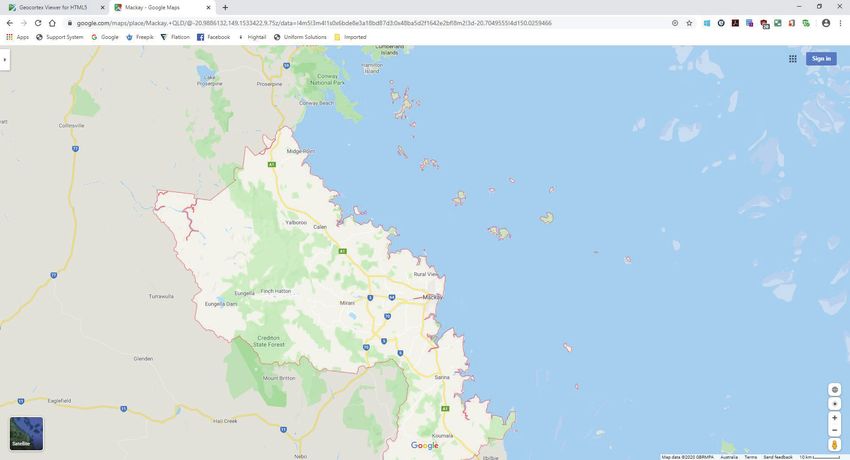
6. MACKAY REGIONAL COUNCIL LOCAL DISASTER
       MANAGEMENT GROUP

    6.1 Establishment
    Under Section 29 of the Act, the Council has established the Mackay Regional Council Local Disaster Management Group.

    6.2 Membership
    The following members form the Executive Group for the Mackay LDMG.

      POSITION
      Cr Greg Williamson
      Cr Amanda Camm
      Cr Karen May
      Cr Kevin Casey
      Mackay Regional Council Chief Executive Officer
      Mackay Regional Council Director Engineering & Commercial Infrastructure
      Mackay Regional Council Director Development Services
      Mackay Regional Council Director Client & Customer Services
      Mackay Regional Council Emergency Management Coordinator
      Mackay Regional Council Director of Organisational Services

    The following members form the Mackay Local Disaster Management Group.

      POSITION                                                             ROLE
      Mayor                                                                Chairperson
      Deputy Mayor                                                         Deputy Chairperson
      Director Engineering & Commercial Infrastructure                     Local Disaster Coordinator
      Chief Executive Officer                                              Deputy Local Disaster Coordinator
      Director Organisational Services                                     Deputy Local Disaster Coordinator
      MRC Director Community & Client Services                             Local Recovery Coordinator
      MRC Director Development Services                                    Deputy Local Recovery Coordinator
      MRC Executive Officer                                                Deputy Local Recovery Coordinator
      MRC Emergency Management Coordinator                                 Core Member
      MRC Emergency Management Officer                                     Core Member
      Councillor Karen May                                                 Core Member
      Councillor Kevin Casey                                               Core Member
      Manager Corporate Communications & Marketing                         Core Member
      Mackay State Emergency Service Local Controller                      Core Member
      Queensland Police Service Officer/s In Charge                        Core Member
      Queensland Fire & Emergency Services (Area Commander)                Core Member
      Officer in Charge Mackay Police Station                              Core Member
      Queensland Ambulance Service (Operations Manager)                    Core Member

7
The following members are Advisory members of the group.
POSITION ROLE
Australian Red Cross Advisor
Queensland Fire & Emergency Services Emergency Management
Advisor
Coordinator
Department of Communities, Disability & Seniors Advisor
Department of Education Advisor
Queensland Fire & Emergency Services Rural Fire Area Director Advisor
Mackay Airport Pty Ltd Advisor
Mackay Health & Hospital Services Advisor
Mackay Regional Council Water & Waste Services Advisor
Mackay Regional Council Community Lifestyle Advisor
Maritime Safety Queensland Advisor
Northern Queensland Primary Health Network Advisor
North Queensland Bulk Ports Advisor
Optus Advisor
Telstra Advisor
NBN Co Advisor
Department of Transport & Main Roads Advisor
Sunwater Advisor
The Salvation Army Advisor
Queensland Parks and Wildlife Services Advisor
The following members are Observers members of the group.
POSITION ROLE
Aurizon Observer
RACQ CQ Rescue Observer
Mackay Regional Council Governance & Safety Manager Observer
Councillor Justin Englert Observer
6.2.1 Chairperson
In accordance with Section 34 of the Act, there is to be a Chairperson appointed to the local group appointed by
Council. The Chairperson of the LDMG is the Mayor of Mackay Regional Council.
Section 34A of the Act outlines the functions of Chairperson of a local group:
• To manage the business of the group;
• To ensure, as far as practicable, that the group performs its functions;
• To report regularly to the relevant district group, and the chief executive of the department, about the
performance by the local group of its functions.
86.2.2 Deputy Chairperson
Under Section 34 of the Act, Council appoints a Deputy Chairperson, to assist or act as the Chairperson as required.
The Deputy Chairperson is the Deputy Mayor of the Mackay Regional Council.
6.2.3 Local Disaster Coordinator (LDC)
Under Section 35 of the Act, the Chairperson of the LDMG after consulting with the Chief Executive appoints a Local
Disaster Coordinator for the group. In accordance with Section 36 of the Act, the LDC has the following functions:
• Coordinate the disaster operations for the local group;
• Report regularly to the local group about disaster operations;
• To ensure, as far as practicable, that any strategic decisions of the local group about disaster operations are
implemented.
The Mackay Regional Council Director of Engineering & Commercial infrastructure, is the appointed Local Disaster
Coordinator LDC for the Mackay LDMG.
6.2.4 Deputy Local Disaster Coordinator
In addition to the positions required under the Act, Council appoints persons as Deputy LDC’s to ensure that the
group has enough capacity to conduct and maintain 24 hour operations for extended periods. A Deputy LDC assumes
the full responsibilities and authorisations of a LDC while undertaking the LDC role.
Council has appointed the following personnel as Deputy LDC’s:
• Chief Executive Officer, Mackay Regional Council
• Director Organisational Services, Mackay Regional Council
6.2.5 Local Disaster Management Group Core Members
In accordance with Section 33 of the Act, the local group consists of the persons prescribed by a regulation to be
members of the group. Along with the Chairperson and Deputy Chairperson of the group, Council appoints persons
as members of the LDMG provided they have the necessary expertise or experience to assist the group to undertake
its functions. Membership of the LDMG shall mean and include any person acting in the capacity of any of the
appointed members.
Council’s Emergency Management Program maintains a register of the LDMG’s current membership and contact
details.
In accordance with Section 37 of the Act, at least once a year the LDC will provide the Chief Executive
(Commissioner, Queensland Fire and Emergency Services) and the Mackay District Disaster Coordinator with an
updated membership list with contact details.
96.2.6 Local Disaster Management Group Advisors
In addition to its core members, the LDMG may invite participants from a range of entities, such as industry and
community organisations to participate in the business of the group in an advisory capacity, as required.
While advisor input is considered by members in their decision making, meeting resolutions will only be carried
by member consensus and advisors will not be included in the calculation of a quorum. While involved with the
business of the group, these people will receive minutes and activation alerts issued during an event.
Council’s Emergency Management Program maintains a register of the LDMG’s advisors and their contact details.
6.3 Membership
The Mackay LDMG is part of Queensland’s tiered disaster management arrangements, which comprises local,
district and state levels as shown below.
These disaster management arrangements enable a progressive escalation of support and assistance through each
tier as required.
National Arrangements State Arrangements
Local
Disaster
Local Management
Government Group Local
Local Disaster
Coordination Centre
District Disaster Management Group District
District Disaster Coordination Centre
State
Government State
Queensland Disaster Management Committee
State Disaster Coordination Centre
Australian Attorney-General’s Department
Government Australian Government Crisis Coordination Centre
106.4 Functions of the group
In accordance with Section 30 of the Act, this group has the following functions:
(a) To ensure that disaster management and disaster operations in the Mackay Local Government Area are
consistent with the State group’s strategic policy framework for disaster management for the State,
(b) To develop effective disaster management, and regularly review and assess the disaster management,
(c) To help the Council prepare a local disaster management plan,
(d) To identify, and provide advice to the District Disaster Management Group about support services required by the
local group to facilitate disaster management and disaster operations within our Local Government Area,
(e) To ensure the Mackay community is aware of ways of mitigating the adverse effects of an event, and preparing
for, responding to and recovering from a disaster,
(f) To manage disaster operations in the Mackay Local Government Area under policies and procedures decided by
the state group,
(g) To provide reports and make recommendations to the District Disaster Management Group about matters
relating to disaster operations,
(h) To identify, and coordinate the use of resources that may be used for disaster operations in the Mackay Local
Government Area,
(i) To establish and review communications systems in the group, and with the Mackay District Disaster
Management Group, for use in disaster management operations,
(j) To ensure information about a disaster in the Mackay Local Government Area is promptly given to the Mackay
District Disaster Management Group,
(k) To perform other functions given to the group under the Disaster Management Act 2003,
(l) To perform a function incidental to a function mentioned in items (a) to (k).
116.5 Roles and Responsibilities
The LDMG recognises that agencies listed in this section have various disaster management responsibilities.
Other departments and agencies not listed may also be involved to support response and/or recovery activities, as
required.
Whilst the responsibilities are current at the time of publication of this plan, it is acknowledged that State
Government departmental changes may alter these responsibilities.
ORGANISATION ROLES AND RESPONSIBILITIES
Functions as allocated to the group
Disaster management and support to agencies
The collection, collation, evaluation and dissemination of information relating to the current
and predicted status of the disaster
The coordination of assessment activities to determine the impact of a disaster
Local Disaster The acquisition and provision of human and physical resources, facilities, services and materials
Management The making of local policy level decisions, where required, if existing arrangements are not
Group enough to support the disaster response
The briefing of elected and appointed officials on disaster related issues in the local area
The various reporting of summary information to provide situational awareness to all
involved in coordination and support activities
The management of public information among agencies and other coordination groups to
ensure consistency in messages
The provision of immediate and short term relief and recovery provisions for persons who
may be threatened, distressed, disadvantaged, homeless, evacuated or otherwise affected
Local Recovery because of a disaster event
Group
The coordination of activities beyond immediate welfare support and includes physical repair
and reconstruction, personal rehabilitation
Responsibilities as documented within the Act
Mackay Ensure continuity of essential local government services during events
Regional Appoint a Liaison Officer to maintain communication between Council and LDCC
Council Request and provide assistance through the local group as required during disaster operations
Provide support to the DDMG with performing the functions of the local group
Functional Lead Agency for the containment and eradication of animal and plant diseases
Coordinate efforts to prevent, respond to, and recover from plant and animal pests and
diseases and invasive plants and animals
Provide advice on livestock welfare
Collaborate with stakeholders with shared responsibilities and other organisations to
facilitate prevention, preparedness, response and recovery strategies and priorities for
Department of animal welfare management within a community
Agriculture and Provide advice in relation to agriculture, fisheries and forestry disaster impacts
Fisheries Coordinate destruction of stock or crops in an emergency pest / disease situation
Administer DRFA relief measures including agriculture industry recovery operations as
required
Lead the reporting on the disaster impact assessments on the agricultural sector, including
economic losses and expected recovery
Report on the possible impact seasonal conditions and climate events will have on the
agricultural sector
12ORGANISATION ROLES AND RESPONSIBILITIES
Coordinate the Agriculture Coordination Group with agricultural industry groups to provide
information about the effect that a disaster event has on the agriculture, fisheries and
forestry industries and the issues that individuals and businesses are facing in responding to
Department of and recovering from a disaster event
Agriculture and Engage with industry on preparedness for climate risks and aid with economic recovery
Fisheries
Assist agriculture and fishery industries in prevention and preparedness though normal
business operations and service provision to industry and the communities
Participate in DDMGs
Functional Lead Agency for human and social recovery
Advice and assistance to the LDMG as required during disaster operations
Coordinate and/or provide human and social recovery information and/or resources to
support Local and District Disaster Management Groups.
Enable access to information and/or coordinated government and non-government human
and social recovery services through a range of service delivery channels which may include:
– promotion and/or referral to local community services
Department of – 1800 recovery hotline
Communities, – grants portal
Disability – multi-agency recovery hubs
Services and – community recovery information and referral centres
Seniors – case coordination of vulnerable persons
– outreach teams
Purchase extraordinary human and social recovery services when local capacity is exhausted.
Facilitate matching and enabling of EV CREW registered volunteers
Enable the matching of donated goods and offers of assistance
Enable access to emergency and temporary accommodation assistance
Administer SDRA and DRFA financial relief measures for eligible individuals
Manage the Queensland Government’s Community Recovery “Ready Reserve”
Maintain the safety and wellbeing of students, staff and volunteers who work or participate in
DoE schools, institutions and workplaces
Ensure that all state schools, regional offices and other workplaces have a documented
emergency response plan
Ensure that all DoE regional offices and key workplaces have a tested business continuity plan
Ensure that DoE is prepared to respond to and recover from, disasters and emergencies
Department of Facilitate the return of affected state schools to normal operations as soon as safe and
Education practicable following an event
Facilitate the transition of DoE facilities to cyclone shelters, places of refuge and evacuation
centres as required or directed (maintenance commitments for places of refuge and evacuation
centres and other additional information can be found at det.qld.gov.au/emergency-management)
Contribute to the state-wide response to disasters and emergencies as required
Provide workplace health and safety advice, information and awareness about electrical,
chemical, asbestos and general safety matters in the lead up to, during and following
cyclones, storms, floods and other disasters
Regulate the operation of energy and water supply industries
Responsible for maintaining and developing a readiness for energy and water supply
Department emergencies, regardless of the hazard type (all hazards). These energy emergency supply
of Natural responsibilities cover the electricity, liquid fuels and natural gas sectors, and involves:
Resources, – Develop and implement energy policies and plans to improve the protection and
Mines and resilience of Queensland energy systems
Energy – Develop the capability to coordinate action to mitigate against energy supply
deficiencies during any emergency event (including a terrorist incident)
– Facilitate actions within, and across, the energy sectors in response to an emergency event
13ORGANISATION ROLES AND RESPONSIBILITIES
The Department’s water emergency responsibilities include:
Department
– Ensure emergency action plans are in place for referable dams to ensure appropriate
of Natural
action is taken in the event of incidents or failures of the dams
Resources,
– Exercise dam safety emergency powers if needed to minimize the risk of failure of a
Mines and
dam or to minimise the consequences of failure
Energy
– Oversight of drinking water and recycled water incident management
Functional Lead Agency for the environmental recovery
Provide oiled wildlife response, traditional owner liaison, environmental and shoreline
assessments and waste management advice and approvals for ship-sourced pollution at sea
Provide information and advice with respect to regulated (tailings, contaminated water) dam
locations, and coordinate expert advice on regulated dam safety and integrity
Department of Provide expert environmental advice in disasters
Environment Provide for the safety of national parks and agency owned recreational centre users
and Science including issuing warnings in extreme conditions, closing areas where necessary and
coordinating evacuations with QPS
Provide advice on the management of national parks and expert knowledge of national parks
to responding agencies
Lead firefighting on the protected areas and State forest where there is no threat to life or
property
Department
of State Functional Lead Agency for economic recovery
Development,
Manufacturing Advise the LDMG, request and provide assistance through the local group, as required, during
Infrastructure disaster operations
and Planning
Functional Lead Agency for transport systems
Functional Lead Agency of roads and transport recovery
Functional Lead Agency for ship-sourced pollution where it impacts, or is likely to impact, on
Queensland Coastal Waters
Department of Provide information and advice on the impact of disruptive events on road, rail, aviation and
Transport and maritime infrastructure as it affects the transport system
Main Roads Enable an accessible transport system through reinstating road, rail and maritime infrastructure
Assist with the safe movement of people as a result of mass evacuation of a disaster affected
community
Ensure the capability of logistics related industries are appropriately applied to disaster
response and recovery activities
Maintenance and/or restoration of electrical power supply
Energy
Advise the LDMG and the public in relation to electrical power issues, including safety advice
Queensland
for consumers
(Ergon Energy)
Request and provide assistance through the local group, as required, during disaster operations
Functional Lead Agency responsible for terrorism response, crash and search and rescue
Provide executive support to the QDMC
Preserve peace and good order
Prevent crime
Queensland
Management of crime scenes and potential crime scenes
Police Service
Provision of disaster victim identification capability
Conduct investigation pursuant to the Coroners Act
Provide for the effective regulation of traffic
Coordinate evacuation operations
14ORGANISATION ROLES AND RESPONSIBILITIES
Control and coordinate search and rescue operations
Manage the registration of evacuees and associated inquiries in conjunction with the
Australia Red Cross
Provide security for damaged or evacuated premises
Queensland Respond to and investigate traffic, rail and air incidents
Police Service Coordinate the review and renewal of the SDMP
Command the SDCC on activation
Command the SDCC capabilities of operations and intelligence on activation
Advise the LDMG, request and provide assistance through the local group as required during
disaster operations
Lead agency for the response functions of Public Health, Mental health, medical services
and mass casualty management
Primary agency for heatwave, pandemic influenza, biological and radiological incidents
Develop health-focused disaster and emergency preparedness, response and recovery plans
with in the local context
Develop and maintain disaster and emergency health response capability and capacity within
the local area
Implement business continuity plans and arrangements to maintain health services during
disasters and emergencies
Mackay Health Work across the local and district health sector including aged care facilities, private
& Hospital facilities, primary health and community care providers to ensure ‘whole of health’
Services arrangements are in place
Provide local health disaster and emergency incident information to the public and disaster
management stakeholders and develop and disseminate public health messaging
Provide a local clinical response to mass casualty management (with QAS)
Provide recovery mental health support to affected communities (with DCDSS)
Provide Public health and environmental health advice and support to local governments and
affected communities and industries
Provide environmental health risk assessment advice to other agencies, local government
and industries
Provide local communicable disease surveillance and response arrangements
Provide, operate and maintain ambulance services
Access, assess, treat and transport sick and/or injured persons
Protect persons from injury or death, during rescue and other related activities
Coordinate all volunteer first aid groups during major emergencies and disasters
Queensland
Provide and support temporary health infrastructure where required
Ambulance
Service Participate in search and rescue, evacuation and victim reception operations
Participate in health facility evacuations
Collaborate with Queensland Health in mass casualty management systems
Provide disaster, urban search and rescue, chemical hazard, biological and radiological
operations support with specialist logistics and specialist paramedics
Administer DRFA relief measures
When requested, support the QFES with rapid damage assessments of housing in disaster
Queensland impacted areas
Reconstruction Undertake damage assessments of public infrastructure in collaboration with local
Authority governments
Liaise with local governments and state agencies to gather information to ensure DRFA
disaster activations meet Commonwealth Government criteria
15ORGANISATION ROLES AND RESPONSIBILITIES
Tele-
communication Telephone and internet communication restorations
providers Provision of communications facilities
(Optus/Telstra/ Advise the LDMG, request and provide assistance through the local group as required during
NBN/ disaster operations.
Vodaphone)
Functional Lead Agency for structural, bushfire and chemical / hazmat incidents
Provide advice, chemical analysis and atmospheric monitoring at relevant incidents.
Provide mass and technical decontamination capability.
Provide rescue and search functions and perform other operations to help and protect
injured persons from danger or potential danger.
Distribute and develop warnings to disaster management stakeholders and communities
Facilitate and authorise Emergency Alert campaigns to provide advice and warnings to
communities affected by disasters and emergency situations (when the functional lead agency)
Prepare guidelines to inform local governments and district and state groups of disaster
management related matters
Establish and maintain arrangements between the state and the Commonwealth about
matters relating to effective disaster management
Ensure disaster management and disaster operations are consistent between plans,
policies, standards and guidelines
Ensure that persons performing functions under the Disaster Management Act 2003 in
relation to disaster operations are appropriately trained
Provide advice and support to the state group and local and district groups in relation to
disaster management and disaster operations
Ensure the collaborative development of the Queensland Emergency Risk Management
Framework and the state-wide risk assessment
Ensure the SDCC is maintained to a state of operational readiness
Queensland Fire Maintain situational awareness and reporting capability and capacity through the SDCC
& Emergency Watch Desk
Services Lead the planning and logistics capabilities in the SDCC and support the staffing models of
other capabilities
Emergency supply acquisition and management of supplies and services in support of
disaster operations
Resupply of essential goods (food and basic commodities) to temporarily isolated
communities, properties and individuals
Ensure the capability and capacity of Disaster Assistance Response Teams (DART) to assist
communities affected by disasters or emergency situations
Undertake damage assessment function (residential and commercial structures) as soon as
practical post disaster / emergency situation and provide findings to disaster management
stakeholders
Develop and distribute community warnings for bushfires, structure fires and chemical sincidents
Emergency supply to communities
Resupply of communities, properties and individuals
Damage assessments of structures
Disaster Assistance Response Teams
Rescue disciplines for, swift water, vertical, trench, confined space, road traffic crash and
structural collapse
Advice and support to local, district and state groups
Ensure SDCC operational readiness
Facilitation of emergency alert and SEWS
16ORGANISATION ROLES AND RESPONSIBILITIES
Assistance to the community preparation for, response to and recovery from an event
Public education
Rescue of trapped or stranded persons
Search operations for missing persons
State Emergency repair and protection of damaged or vulnerable buildings
Emergency Assistance with debris clearance
Service First aid support
Traffic control support
Assistance with communications
Assistance with lighting
Advice to the LDMG and assistance as required during disaster operations
6.6 Meetings and Quorum
In accordance to the Disaster Management Regulation 2014, the members of the LDMG must meet at least once in
every six months at the times and places decided by the chairperson of the group.
Under Section 13 Disaster Management Regulation 2014, a quorum for the group is set at one half of the number of
members plus one or, if one half of the number of members is not a whole number, the next highest whole number.
There are provisions for members to appoint a proxy member as prescribed under Section 14 Disaster Management
Regulation 2014:
1) A member of a disaster management group may, with the approval of the chairperson of the group, appoint by
signed notice another person as his or her deputy;
2) The deputy may attend a group meeting in the member’s absence and exercise the member’s functions and
powers under this Act at the meeting;
3) A deputy attending a group meeting is to be counted in deciding if there is a quorum for the meeting.
The following details of actions taken, and issues discussed by the LDMG are distributed to Core, Advisory members
and Observers of the LDMG:
• Meeting minutes
• Meeting schedules
• Meeting agendas
• Agency reports on emergency risk management and mitigation initiatives/strategies (e.g. disaster management
studies), training, planning and other relevant disaster management activities.
176.7 Training and Exercising of Members and Others
In accordance with Section 33(2)(b) of the Act, all members of the LDMG are to ensure they have the qualifications
and experiences to be a member of the LDMG group. The training offered to LDMG members will align to the
Queensland Disaster Management Training Framework.
Disaster management training and exercises develop the capability of all agencies with a role in disaster
management through the acquisition and testing of knowledge, skills and competencies.
Council’s Emergency Management Program, in partnership with other lead functional agencies, will provide a
program of disaster related training and exercises.
6.8 Reporting
Agency representatives will provide agency specific information relative to disaster management to the local group
for routine and disaster operations.
6.8.1 Routine Business Reporting
In accordance with Section 34 of the Act, there is to be a Chairperson appointed to the local group appointed by
Council. The Chairperson of the LDMG is the Mayor of Mackay Regional Council.
• Changes in details for agency contact arrangements
• Submission of agency reports (written or verbal), in accordance with the State’s reporting template, for meetings
of the LDMG, summarising:
o Agency Status
o Agency Operations or Mitigation Undertaken
o Agency Disaster Management Training
o Agency Risks/Gaps
o Any Other Matters.
6.8.2 Disaster Operations Reporting
• Changes for LDMG members, agency representatives, advisors and/or invitees contact information
• Summary information regarding agency planning and preparation strategies
• Impact assessment information relative to the agency’s infrastructure and core business activities, including
community impacts
• Agency resource availability, deployments (in and out of area), requirements, offers of support
• Short, medium and long term issues arising from disaster operations including recovery operations
• Situation reports (SITREPS) summarising the current and forecast hazard analysis, community impacts and
strategies being undertaken to manage the disaster operation
187. DISTRICT DISASTER MANAGEMENT GROUP
Established under Section 22 of the Act, District Groups comprise of representatives from regionally based
Queensland government agencies which can provide and coordinate whole of government support and resource gap
assistance to communities.
The District Group performs a support function within the disaster management arrangements by providing support
and assistance to the LDMG, when requested by the local group. In accordance to Section 23 of the Act, the District
Group carry out a number of functions relating to disaster management. The primary functions are to:
• Ensure the disaster management and disaster operations in the Disaster District are consistent with the State
Group’s strategic policy framework for disaster management for the state;
• Develop effective disaster management for the district, including a district disaster management plan and to
regularly review and assess disaster management arrangements;
• Ensure the community is aware of ways of mitigating the adverse effects of an event, and preparing for,
responding to and recovering from a disaster.
The Mackay Disaster District encompasses the Mackay, Whitsunday and Isaac Local Government Areas.
8. QUEENSLAND DISASTER MANAGEMENT COMMITTEE
The Queensland Disaster Management Committee (QDMC) is established under Section 17 of the Act and is the
peak disaster management policy and decision making body in Queensland, directly responsible for outcomes to the
Premier. Under the Act, the main functions of the State Group are to:
• Develop a strategic policy framework for disaster management for the State,
• Ensure an effective disaster management system is developed and implemented for the State,
• Ensure effective arrangements between the State and the Australian Government on matters relating to effective
disaster management are established and maintained,
• Identify resources within and outside the State that may be used for disaster response operations,
• Provide reports and make recommendations to the Minister about matters relating to disaster management and
disaster operations, and
• Prepare a State Disaster Management Plan.
9. QUEENSLAND DISASTER MANAGEMENT COMMITTEE
At an Australian Government level, the Department of Home Affairs is the responsible agency for coordinating
assistance to States and Territories.
Further information on disaster management arrangements at the Australian Government level is available in the
SDMP and can be found at www.disaster.qld.gov.au.
1910. DESCRIPTION OF THE POPULATION AND ENVIRONMENT
10.1 Geography and Topography
10.1.1 Geography
The map below shows the local government area represented by the Mackay Regional Council.
The Mackay region forms part of the Mackay Disaster District and is bound by the local governments of Isaac and
Whitsunday Regional Councils.
10.1.2 Topography
Most of the populated Mackay region is low lying, having an average elevation of less than 10 meters AHD adjacent
the coast, leading westward to the Connors, Clarke and Broken Ranges, the latter supporting the community of
Eungella with a sprinkling of mountainous peaks throughout the remainder. These ranges separate the upper range
area where beef and dairy cattle are the main industry and the lower coastal rich soils where sugar cane growing is
the main primary industry.
The significant topographical feature is the Pioneer River which is fed from a 1,500 sq.km catchment in the Pioneer
Valley and includes the major tributary of Cattle Creek and discharges to the Pacific Ocean via a path through the
centre of Mackay. Distribution of sand sediments discharging at the river mouth extend some 2.5 km offshore, south
to Bakers Creek and north to Slade Bay.
Tide variation at Mackay is 6.58 metres, 150 km north of Broadsound which receives the highest tide on the east coast of
Australia at 9.00 metres. A section of south east Mackay residential area can be subject to tide inundation, being up to
300 mm below Highest Astronomical Tide and rises to approximately 11.00 metres AHD at the Mackay Base Hospital.
As well as the Pioneer River, the region comprises other rivers and streams such as the O’Connell River, Bakers
Creek, Sandy Creek, Alligator Creek and Plane Creek which passes through the township of Sarina with numerous
other small streams discharging to the coast.
A system of earth and block wall levees have been installed along either side of the Pioneer River. As well, levees
have been installed at Finch Hatton to protect the township from flooding in Cattle Creek.
2010.2 Climate and Weather
A subtropical weather pattern historically of hot/wet summers and mild/dry winters produces an average
temperature of 24oC which makes an ideal location for attracting tourists and permanent residents. Temperature
range in winter is between 5oC and 22oC and summer 2oC to 38oC with atmospheric conditions generally very
humid. Rainfall is seasonal, with the heaviest falls occurring during the summer months, November to April,
extreme rainfall events are usually associated with tropical cyclones/lows. The Mackay region comes under the
influence of tropical cyclones, on average, once every two years, though direct hit coastal crossings are not common.
The average yearly rainfall for Mackay is 1,570mm.
Mackay Regional Council acknowledges that climate change is increasing the levels of risk within our area. Council
actively promotes sustainable practices and responds to climate change in council operations and planning
referencing the following documents;
• Mackay Regional Council Climate change Adaptation Policy
• Mackay Regional Council 2016 – 2010 Corporate plan
• Mackay Regional Council Corporate Environmental Sustainability Strategy
• Emergency Management Sector Adaptation Plan for Climate Change
10.3 Population
Prior to the coal mining boom commencing in the late 1960’s, the Mackay region supported a stable population
based around the sugar industry which covered a large proportion of the region due to its favourable topography and
climate. Population growth was steady with most mining personnel being housed in their local townships, however
with the demand for coal dictating expansion in the industry (existing mines, new mines and port expansions),
new operational and industrial strategies have turned the focus to utilising Mackay as the residential centre and
maintenance hub for the industry.
As at 30 June 2016:
• The estimated resident population of the region was 117,703 persons
• 20.6 per cent of persons in the region were aged 0 to 14 years, 66.2 per cent were aged 15 to 64 years and 11.7 per
cent were aged 65 years and over.
• The median age for the region was 37 years, an increase of 1.3 year over the five year period from 30 June 2011
to 30 June 2016.
• The region had 5,909 persons who stated they were of Aboriginal or Torres Strait Islander origin, representing
5.1 per cent of the total population.
• The region had 23,360 persons who stated they were born overseas (20.3 per cent of the total population) and
91,609 persons who stated they were Australian born (79.7 per cent of the total population).
• The region had 3,204 persons born overseas who stated that they spoke a language other than English at home
(13.7 per cent of the overseas born population).
• There was a total of 30,331 families in the region. Couple families with children was the dominant family type
(13,150 families). There were 4,573 one parent families, accounting for 15.1 per cent of all families in the region.
Further demographic details can be found at Australian Bureau of Statistics – www.abs.gov.au
2110.4 Society
As at 30 June 2016 the region had:
• 17,587 persons aged 15 years and over whose highest level of schooling was year 11 or 12 (or equivalent),
representing 19.3 per cent of all persons aged 15 years and over.
• 37,141 students completing a Certificate III or higher educational course.
• 16,976 volunteers aged 15 years and over, representing 18.6 per cent of total persons aged 15 years and over.
10.5 Industry and Development
As at June 2016:
• The region had 40,674 occupied private dwellings. Of these private dwellings, 34,580 were separate houses, 3,425
were semi-detached and 1,878 were apartments. 27.9 per cent of the occupied private dwellings in the region
were fully owned, 36.4 per cent were being purchased and 31.5 per cent were being rented.
• The region had 32,900 dwellings with an internet connection, or 80.9 per cent.
• The region had 2,015 occupied private dwellings with no motor vehicles, or 5 per cent of all occupied private
dwellings.
2210.6 Community Capacity
During disaster events Council has a significant response and recovery capacity, which includes:
• Employment of approximately 1,200 personnel including:
o 3 Emergency Management staff
o 1 Temporary Recovery Officer
o 1 Temporary Resilience Officer
o 1 SES Local Controller.
• A separate levy is collected to provide for the provision of emergency response facilities, supply of equipment and
provide monies to undertake disaster mitigation works.
The following emergency services, which maintain stations within the region:
• Queensland Ambulance Service
• Queensland Fire and Emergency Services
• Queensland Police Service
There are numerous volunteer organisations that contribute to the region’s disaster management arrangements
including:
• State Emergency Service (SES)
• Rural Fire Queensland
• Queensland Surf Lifesaving Clubs
• Voluntary Marine Rescue
• St John Ambulance
• RACQ CQ Rescue
• Australian Red Cross.
Community service organisations also provide a contribution disaster management arrangements:
• Australian Red Cross
• Adventist Development and Relief Agency (ADRA)
• Lifeline
• RSPCA
• Salvation Army
• St Vincent de Paul Society
• Meals on Wheels
• Community Service Clubs
• North Queensland Primary Health Network.
In addition to maintaining a strong volunteer capacity, the Local Disaster Management Group encourages residents
of the community to be self reliant for at least three days during disaster events.
2310.7 Major Industry
10.7.1 Business Sector
REGISTERED BUSINESS BY INDUSTRY
2016 CENSUS
Males Females Persons
Agriculture, Forestry and Fishing 1,389 455 1,844
Mining 5,691 827 6,516
Manufacturing 2,653 776 3,425
Electricity, Gas, Water and Waste Services 402 112 516
Construction 3,287 636 3,922
Wholesale Trade 1,475 492 1,969
Retail Trade 1,719 3,535 5,252
Accommodation and Food Services 1,127 2,171 3,297
Transport, Postal and Warehousing 2,535 806 3,343
Information Media and Telecommunications 135 156 289
Financial and Insurance Services 174 523 701
Rental, Hiring and Real Estate Services 386 480 863
Professional, Scientific and Technical Services 1,004 1,163 2,161
Administrative and Support Services 629 903 1,532
Public Administration and Safety 1,173 1,147 2,318
Education and Training 769 3,165 3,933
Health Care and Social Assistance 819 4,823 5,647
Arts and Recreation Services 161 250 406
Other Services 1,594 1,009 2,604
Inadequately described/Not stated 1,409 794 2,202
Total 28,518 24,213 52,732
The Mackay region has several major business and shopping precincts, which are supported by restaurants and
extensive clusters of high density living.
Major shopping centres in the Mackay region include:
• Caneland Central, Mangrove Road, Mackay
• Mount Pleasant Shopping Centre, Phillip Street, Mount Pleasant
• Northern Beaches Shopping Complex, Eimeo Road, Rural View
• Sydney Street Markets, Sydney Street, Mackay
• Parkside Plaza Mackay, Bridge Road, West Mackay
• Ooralea Shopping Centre, Boundary Road, Ooralea
• Walkerston Shopping Centre, Creek Street, Walkerston
• Sarina Shopping Centre, Sarina Beach Road, Sarina.
2410.7.2 Industrial Sector
There are numerous industrial areas throughout the region, including but not limited to mining, manufacturing and
agricultural. Major industrial sites include:
• Paget
• Mackay Harbour
• Glenella
• Slade Point
• Hay Point
• Sugar mill sites at Racecourse, Marian, Sarina, Farleigh and Pleystowe.he Mackay Regional Council Director of
Engineering & Commercial infrastructure, is the appointed Local Disaster Coordinator LDC for the Mackay LDMG.
10.7.3 Tourism Sector
The Mackay region is a regional, state and national tourism hub with tourism being economically significant at all
levels. Visitors to the community pose additional challenges during a disaster in that:
• Potentially large numbers of visitors need to be considered during disaster and potential evacuation
• Cultural and linguistic diversity needs to be considered when communicating in the event of a disaster
• Their awareness to being prepared for any given disaster situation may be limited.
10.8 Education
10.8.1 Schools
The Mackay region has numerous schools, private and public, that offer educational services to young people.
TYPE STATE NON-STATE TOTAL
Primary 35 8 43
Secondary/combined 7 6 13
Special schools 1 1 2
Early Childhood 32
Total 45 15 92
Source: https://schoolsdirectory.eq.edu.au/
10.8.2 Higher Education
Mackay is host to two providers of higher education:
• James Cook University, Mackay Campus, Bridge Road, West Mackay
• CQ University Mackay City, Sydney Sreet, Mackay.
25You can also read


