2020 Postgraduate Fellowship Networking Resource - Interviews with Recent Postgraduate Fellows Congress 2020 Directory of Fellowship Organizations
←
→
Page content transcription
If your browser does not render page correctly, please read the page content below

2020
Postgraduate
Fellowship
Networking
Resource
              ache.org
• Interviews with Recent
  Postgraduate Fellows
• Congress 2020 Directory of
  Fellowship Organizations

                  Connected
                  Inspired
                  Empowered    1
The Postgraduate Fellowship Experience was set to take place on March 24, 2020, in conjunction
with ACHE’s annual Congress on Healthcare Leadership. Due to COVID-19 and the
cancellation of the 2020 Congress on Healthcare Leadership, this resource was put together to
grant students insight into postgraduate administrative fellowship opportunities from many
sites that offer these fellowships.

The Postgraduate Fellowship Experience developed through a collaboration of the American
College of Healthcare Executives (ACHE), Association of University Programs in Health
Administration (AUPHA), and the National Council on Administrative Fellowships (NCAF) is
a great way for you to identify the best fit for your postgraduate fellowship. Not only will your
fellowship organization help to develop you as a future healthcare leader, but you will also help
to strengthen your host organization and the profession of healthcare leadership.

Postgraduate administrative fellowships can provide exceptional opportunities to advance the
next generation of leaders. These hands-on experiences for early careerists provide unparalleled
access to operations, governance, strategic planning and community services in various
healthcare settings.

For additional information about the Postgraduate Fellowship Experience, please contact:
(312) 424-9317 or adminfellow@ache.org.

                                                                                         2
TABLE OF CONTENTS

American College of Healthcare Executives………………………………………………………. 4
Association of University Programs in Health Administration……………………………………. 5
National Center for Healthcare Leadership / National Council on Administrative Fellowships….. 6
ACHE Career Resource Center…………………………………………………………………….. 7
Interview with Recent Postgraduate Fellows…………………………………….…...…................. 8

Registered Fellowship Organizations:

American College of Healthcare Executives………………………………………………………. 17
Ann & Robert H. Lurie Children's Hospital of Chicago…………………………………………… 18
Brigham and Women's Hospital…………………………………………………………………… 19
Children's Hospital Los Angeles…………………………………………………………………… 20
Dana-Farber Cancer Institute………………………………………………………………………. 22
Denver Health……………………………………………………………………………………… 23
Froedtert……………………………………………………………………………………………. 25
Hartford HealthCare……………………………………………………………………………….. 26
Henry Ford Health System………………………………………………………………………… 27
Houston Methodist…………………………………………………………………………………. 28
Indiana University Health………………………………………………………………………….. 29
Kaiser Permanente…………………………………………………………………………………. 31
Main Line Health…………………………………………………………………………………... 32
Massachusetts General Hospital…………………………………………………………………… 33
Mercyhealth………………………………………………………………………………………... 34
Michigan Medicine………………………………………………………………………………… 35
Northwestern Medicine…………………………………………………………………………….. 36
OhioHealth…………………………………………………………………………………………. 37
Rochester Regional Health…………………………………………………………………………. 38
Rush University Medical Center …………………………………………………………………… 39
Sanford Health……………………………………………………………………………………… 40
Spectrum Health System…………………………………………………………………………… 41
Stanford Children's Health- Lucille Packard Children's Hospital Stanford……………………….. 42
Texas Children's Hospital………………………………………………………………………….. 43
The Guthrie Clinic…………………………………………………………………………………. 44
The University of Texas Medical Branch………………………………………………………….. 45
Thomas Jefferson University Hospitals……………………………………………………………. 46
Trinity Health………………………………………………………………………………………. 47
UNC Health Care…………………………………………………………………………………… 48
University Hospitals……………………………………………………………………………….. 50
University of Chicago Medicine…………………………………………………………………… 51
UPMC……………………………………………………………………………………………… 52
UW Health…………………………………………………………………………………………. 53
Vanderbilt University Medical Center……………………………………………………………... 55
Veteran’s Health Administration Graduate Healthcare Administrative Training Program……...… 57
Yale New Haven Health System…………………………………………………………………… 58

                                                                                         3
We are your trusted partner
                                                          We’re here to help you achieve your personal
                                                          best while making healthcare safer, more
                                                          accessible and affordable to all. Together we
                                                          are meeting today’s challenges with bold, new
                                                          solutions.

                                        About ACHE
For over 85 years, the American College of Healthcare Executives (ACHE) has focused on one mission—
advancing leaders and the field of healthcare management excellence. We are the professional home to more
than 48,000 healthcare executives who are committed to integrity, lifelong learning, leadership and diversity
and inclusion.

                                                       With        today’s     rapidly-changing    healthcare
                                                       environment, ACHE remains more committed than
                                                       ever to being the preeminent professional society
                                                       leaders can count on to help them gain valuable
                                                       knowledge to improve health for their patients and
                                                       their communities. In addition, through an established
                                                       network of 77 chapters members have access to
                                                       networking, education and career development at the
                                                       local level. Members also can earn the prestigious,
                                                       gold standard FACHE® credential, signaling board
                                                       certification in healthcare management.

Through The Foundation of The American College of Healthcare Executives, excellence is advanced with
ongoing research and education, including the annual Congress on Healthcare Leadership. Each year over 4,000
participants gather to benefit from groundbreaking research and thought leadership, policy updates, and
actionable innovations championed by their peers. The Foundation’s publishing division, Health
Administration Press (HAP), is one of the largest publishers of books and journals on health services
management, including textbooks for college and university courses. ACHE is also known for its magazine,
Healthcare Executive.

Our commitment to educate, engage and inspire our members as they lead and serve hospitals, healthcare
organizations and systems will never waver.

                            Learn More About ACHE

       ache.org                                Connect                              Membership
                               American College of Healthcare Executives           Jobs at ACHE
    About ACHE                    300 S. Riverside Plaza. Suite 1900
                                         Chicago, IL, 60606
        FACHE                           Phone: (312) 424-9400                Career Resource Center
                                          contact@ache.org
  Learning Center                                                                     Chapters

                                                                                               4
Association of University Programs in Health
Administration
1730 M Street NW, Suite 407, Washington, DC 20036
Office Phone: (202) 763-7283
Website: www.aupha.org

                                               About AUPHA
The Association of University Programs in Health Administration (AUPHA) is a global network of
colleges,
universities, faculty, individuals and organizations dedicated to the improvement of health and healthcare
delivery
through excellence in healthcare management and policy education. Its mission is to foster excellence and
drive
innovation in health management and policy education, and promote the value of university-based
management
education for leadership roles in the health sector. It is the only non-profit entity of its kind that works to
improve
the delivery of health services – and thus the health of citizens – throughout the world by educating
professional
managers. AUPHA's membership includes the premier baccalaureate, master's and doctoral degree
programs
health     in
       administration    education in the United States, Canada, and around the world. Its faculty and
individual
members represent more than 400 colleges and
universities.

                      Our Vision                                               Our Mission
    To be recognized as the global leader in advancing         AUPHA fosters excellence and innovation in
      higher education and scholarship in healthcare           health management and policy education, and
             management and health policy.                                   scholarship.

                                                  Our Values
AUPHA achieves excellence and innovation in health management and policy education by embracing
diversity and providing opportunities for learning and collaboration.

                      AUPHA believes that excellence in education leads to excellence in healthcare
   Excellence         management practice, and ultimately leads to improved quality, efficiency and
                      accessibility in healthcare delivery.
                      AUPHA promotes innovation, encourages the adoption of new strategies, and
   Innovation         disseminates best practices in healthcare management and policy education.
                      AUPHA collaborates in the generation and translation of research and the integration of
 Collaboration        theory and practice in interprofessional work environments.
                      AUPHA believes diversity --in people, in programs and in perspectives --is essential for
    Diversity         an effective interprofessional workforce.
                      AUPHA pursues continual learning to advance and share knowledge, to foster the
    Learning          development of pedagogy, and to improve teaching and practice.

                                     Learn More About AUPHA

      Be sure to visit the AUPHA website to learn more about Why AUPHA Matters

                                                                                                        5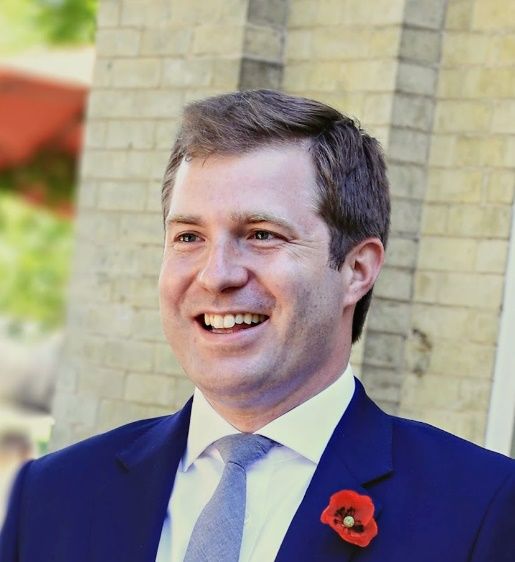
The National Center for Healthcare Leadership
(NCHL) is a not-for-profit organization that
works to ensure that high-quality, relevant, and
accountable leadership is available to meet the
needs of 21st century healthcare. Our vision is
to optimize the health of the public through
leadership and organizational excellence.
NCHL advances healthcare leadership by
addressing critical issues facing today’s leaders.
We champion three premier membership
programs including the Leadership Excellence
Networks (LENS), US Cooperative of The National Council on Administrative
International Patient Programs (USCIPP), and Fellowships (NCAF) is a platform for recruitment
National Council on Administrative Fellowships of administrative fellows. In doing so, NCAF
(NCAF). Each of these programs supports its allows for a uniform and coordinated
members through collaboration, education, and recruitment process, helps organizations access a
research to help them achieve their business national pipeline of the next generation of healthcare
goals as they pursue excellence and solutions. industry leaders, and brings fellowship sites and
graduate health management programs together to
share ideas and best practices.
NCAF offers a centralized application service,
known as NAFCAS to simplify the application
process for fellowship applicants and administrative
fellowship sites.
The NAFCAS 2020-2021 has two application
IMPORTANT RESOURCES cycles.
Applicant Instructions
http://bit.ly/NAFCAS2020Instructions NAFCAS Application Cycle 1 will run
from June 10, 2020-October 1, 2020
NAFCAS Applicant Portal
NAFCAS Application Cycle 2 will run
https://nafcas.liaisoncas.com/
from November 23, 2019-Feburary 1,
Fellowship Site Directory 2020*
http://bit.ly/NCAFAdministrativeFellowships
2020 FAQS
https://bit.ly/2UCKvAz
View Participating NCAF &
NAFCAS Members Here
Application deadlines may vary for fellowship sites during NAFCAS Cycle 2. If a fellowship site has
indicated a “rolling” deadline, they will accept applications on a first come, first serve basis. NCAF
recommends applying sooner rather than later.
6
Career
   Resource
    Center
We are digitally offering some of our tools and resources designed specifically for
emerging healthcare leaders. We are offering a series of hour-long webinars that
will be made available for viewing on our                 Career Resource Webinars for
Students page.      Webinar       recordings    will    be    available    mid-May. Let
ACHE’s Career Resource Center help you maximize your competitive edge with
our new digital offerings that will support your growth and help propel your career
forward. Take a look at our other offerings on our Career Resource Center website.

                             Job Interviewing Skills
                             This hour-long recorded webinar is geared toward students
                             and early careerists and will cover effective job interviewing
                             techniques and strategies that will help boost your chances of
                             landing that job.

CareerEDGE SE Plus
A demonstration of ACHE’s CareerEDGE Student Edition by
our Career Resource Center. We will demonstrate our unique,
interactive and comprehensive tool for planning and
managing your career. We will show you how to use the
included assessments, a strategic career planning framework,
job site links and more to help you navigate this evolving
healthcare marketplace.

                     Give Your Resume a Competitive Edge
                     In today’s competitive marketplace, it’s not enough to have a good
                     resume, you want it to stand out among the rest. Discover common
                     pitfalls and best practices to help maximize your results when sharing
                     your resume in pursuit of new opportunities.

LinkedIn Shorts
This is an hour-long tutorial on how to amplify the effectiveness of
your professional LinkedIn page. Recruiters and employers both use
LinkedIn to source candidates for employment. We will offer tips
and tricks to help you build your online professional brand that will
help you open doors to connections and opportunities you may not
have had before.
                                                                                      7
Interviews with Healthcare Administration Postgraduate Fellows

Fellowship: Johns Hopkins Medicine
Year: 2017-2019
                         Samuel Boadu Jr. holds a Master of Public Health degree from Boston
                         University School of Public Health and dual Bachelor of Science
                         degree from Syracuse University in Biology and Public Health with a
                         minor in Forensic Science.

                           His interests lie within the realms of healthcare both local and
                           international, community development, educational opportunity, and
                           cultural competency and sensitivity.

                           Sam is currently the Division Administrator for Pulmonary and
                           Critical Care Medicine as well as Sleep Medicine at Johns Hopkins
                           University. He also serves as the President Elect for the Baltimore
                           Chapter of National Association of Health Services Executives
Samuel Boadu Jr.           (NAHSE), Board Chair for Expanding Boundaries International, and
Division Administrator,
                           Board Member for Civic Works and Mikey’s Miracle Foundation.
Pulmonary Critical Care
Johns Hopkins Medicine

Fellowship: Vizient Inc.
Year: 2018-2019
                           Alyzeh Haider is currently a Product Manager in the Product Strategy
                           and Management department at Vizient Inc. based out of Chicago, IL.
                           Prior to this role, she was a fellow under the Data Analytics and
                           Informatics Department at Vizient Inc. As a fellow, she focused on
                           research analytic projects, performance improvement collaboratives,
                           corporate strategy, custom analytics for member requests, and helped
                           market and enhance Vizient’s current tools. Alyzeh’s time as s fellow
                           allowed her the opportunity to learn the skills required to analyze
                           clinical and operational data and present it to member hospitals and
                           team members. After completing the yearlong fellowship in July 2019,
                           Alyzeh accepted a role as a Product Manager. In this role, she is
                           responsible for the vision and business decisions for one of Vizient’s
Alyzeh Haider              proprietary software solutions.
Product Manager,
Product Strategy and
                           Alyzeh completed her Bachelors in Health Management and Policy
Management Vizient Inc.
                           from Saint Louis University in 2015 and earned her Master in Health
                           Administration from the Sloan Program in Health Administration at
                           Cornell University in 2018.

                                                                                       8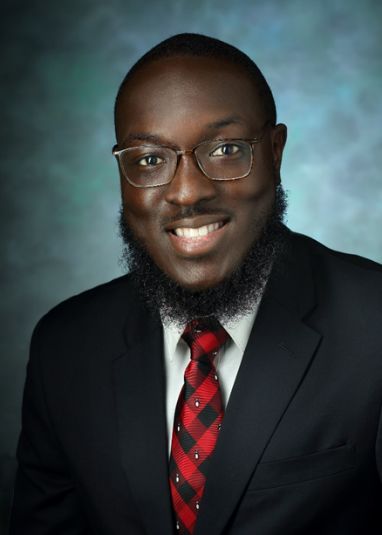
Fellowship: Barnes-Jewish Hospital
Year: 2019-2021
                         Andrew Schuette is a David A. Gee Administrative Fellow at Barnes-
                         Jewish Hospital working to improve patient outcomes while learning
                         from our country’s best healthcare leaders. Originally from a small
                         town (pop. 118) in rural Kentucky, Andrew cultivated his work ethic
                         and compassion for others laboring in the fields. He spent a decade in
                         practice as an audiologist at Henry Ford Health System, Massachusetts
                         General Hospital, and Washington University School of Medicine in
                         St. Louis, caring for thousands of patients before transitioning to
                         administration to scale his impact on healthcare.

                         In his first few months as a fellow, he’s already reduced waiting times
                         for victims of violence, increased MyChart enrollment, and secured
Andrew Schuette          funding for support staffing for cancer patients. His writing has
David A. Gee             appeared in STAT News and JAMA Otolaryngology - Head / Neck
Administrative Fellow    Surgery. Andrew holds an Au.D. from the University of Louisville and
Barnes-Jewish Hospital   an MBA from Washington University in St. Louis.

                                                                                     9
I received some great advice to focus on only a
                                                      few fellowships. That allowed me to step back to
                                                      examine what I was looking for beyond just the
                                                      fellowship. My wife and I discussed what was
                                                      important to us—being close to our families,
                                                      access to nature, and our careers. We decided that
                                                      I would apply to sites in the Midwest, exclusively
Q: What motivated you to apply                        at Academic Medical Centers. This created a
for your administrative                               clear focus in the application process that
                                                      allowed me to tailor each application.
fellowship?

               SB: Coming from a science
               undergraduate program and then a
               Public Health graduate program, I
               thought the Fellowship offered a
               great fail-safe training ground to
test the waters of my education to truly identify
where I found myself in the landscape of
healthcare administration. My want for a really
diverse experience and Hopkins leadership being
okay for me to pilot rotations outside the bounds
of the traditional program is really what sold the
program for me. When I asked to do things that
were unprecedented or I had interest in, it was
always intriguing to fellowship leadership and
the steering committee worked to curate the
multiple experiences I desired.

             AH: I was motivated to apply for a
             fellowship because I wanted a
             transitional role before I dove into a
             full-time position. After my
             masters, I felt that I needed more
work-place experience and a fellowship seemed
like a great opportunity to gain working
experience while still continuing to have an
educational aspect to my role.

               AS: Though I spent nearly a
               decade in practice as an
               audiologist,    I    needed     an
               experience that would prepare me
               for success as a healthcare leader
outside my clinical discipline. As I evaluated
options after my MBA, it became clear that an
administrative fellowship was that experience.

                                                                                          10
capacities. Additionally, the chance to work so
closely with senior leadership at a very agile time
in one’s career really creates an invaluable
experience. I learned and tried so many different
versions of my leadership style throughout my
fellowship. The most challenging part of my
Q: What were the best and most fellowship was actually a component that I very
challenging parts of your much desired when looking into Fellowship
fellowship experience? programs. The program at Hopkins is project
rotation based, by that you have 8-10 weeks to
AS: Transitioning from a clinical complete projects before moving onto your next
role to administration was rotation. There are many times where you’ll
challenging. Before the carryover projects that require more time but also
fellowship, my value was defined the expectation is a fellow should at least make
as the quality of care I provided meaningful contribution to the project before
and how many patients I saw. In the fellowship, rotating out of a certain area. Inevitably, that
I struggled to understand how I was creates a sense of constantly competing against a
contributing to the organization. After taking clock. Fortunately, preceptors are very
a step back, I realized I was building a understanding and are aware of competing
foundation of experiences with our leaders responsibilities but as a fellow you of course
and front-line staff that would prepare me want to do a good job so you sometimes enact
for success. Those experiences led me to start unnecessary anxiety.
working on a diverse set of projects within
several months that allowed me to contribute AH: The best part of the Vizient
well outside my previous clinical scope. fellowship was that this was an
The best part of my fellowship has been the incredibly unique experience.
time I’ve spent with our support staff. Greg Since this fellowship was focused
Patterson, BJH’s Former VP of Facilities, made on Healthcare Analytics, I was
a practice of working alongside his able to learn how to analyze and understand
frontline staff to understand their work and hospital data. This was very different than a
get to know them. He allowed us to have the traditional Healthcare Administration fellowship
same experience during our rotation with because it was mainly focused on big data as
his team. My co-fellow, Winston Wright, opposed to the operational and strategic
and I delivered meals to patients, cleaned functions of a facility. Another unique
hospital beds and patient rooms, transported experience about this fellowship was that I was
patients, completed work-orders, and sterilized exposed to many hospitals and health systems
surgical instruments. Spending time with our that use Vizient for their data analytics. Instead
team members showed us that we’re all clinical of being exposed to just once facility, I was able
whether you’re a nurse putting in a central to work with many different AMC’s and
line or a housekeeper cleaning the room to community hospitals and get insight into how
prevent infections. I’d encourage every fellow they operate. However, since this year-long
to seek out similar experiences to stay fellowship mainly focused on analytics, there
connected to our front-line team members. was a large learning curve. Since I had very
minimal experience in analyzing hospital data, I
had to do a lot of research and understanding in
SB: The best part of the order to tell accurate stories with the data I was
fellowship at Hopkins is the analyzing.
opportunity to have a decent
attempt at tangentially learning a
health system in 2 years, which I 11
don’t believe is possible when serving in otherSB: I always advise applicants to
find what is most unique about the
organization they are looking into
and see if there is a connection to
their personal story. The best way
I believe one can stand out in an interview and
Q: What do you think made your application pool is by remaining authentic, in
application stand out? Or any doing so it makes it pretty clear when an
tips/tricks for a student organization is a good fit for the applicant despite
considering to apply. rankings. In my application, I spoke about my
connection to the rationale behind the inception
of the institution; to collocate a school of
AH: I think one of the main medicine and hospital as well as Johns Hopkins’
things that made my application desire to provide quality healthcare to the city of
stand out is that I reached out to Baltimore despite sex, age or color which was
the current fellows at the time. very progressive for the time and is a personal
Showing the current fellows that passion of mine.
I had an interest in this fellowship and Vizient
allowed me to make a connection with them so
when my application was submitted, they knew
who I was and that I was interested.
My advice for students considering applying to
Vizient’s fellowship, or any other fellowship, is
to make a connection with the current fellows.
This way, when you apply to the fellowship, the
fellows already have a sense of who you are and
can vouch for you as the application cycle
begins.
AS: For your application, my
best advice is to focus on just a
few fellowships. This will allow
you to speak to each one in your
cover letter and personal
statement, making your application stand out.
Sites are looking for any reason to put your
application in the “no” pile—a generic
application will do that.
For your essay questions, it is easy to focus on
having the “right” answer. In healthcare, things
are much grayer. We are interested in
understanding how you think more than any
“right” answer.
When preparing, do informational interviews
and get to know the fellows. Ask lots of questions
about culture. The goal is to build a career within
an organization, not just get a fellowship.
12AS: I was asked many standard
interview questions (e.g., tell me
about your weaknesses). Most
interviewers asked to tell my
story. Otherwise, my interviews
were conversational. Once you’re onsite, the
team has decided you’re qualified. The purpose
Q: What questions did they ask of being there is to figure out if you want to work
you in the finalist interview? together. Don’t forget you’re interviewing them
too!
SB: The Johns Hopkins
Medicine interviews consist of 2
rounds; an e-interview and in
person onsite interview with our
Fellowship Steering Committee.
It is the belief that candidates who apply to the
Johns Hopkins Fellowship are competitive and
capable to do well anywhere and it is really the
Steering Committees job to discern between
qualified candidates and candidates whom would
be a good fit for the organization.
AH: Some questions that I was
asked during my finalist interview
were:
- How well do you work with
others? (You work very closely with your co-
fellow on a lot of projects)
- What is your experience in analyzing data? If
you don’t have much experience, are you willing
to learning Tableau, SASS, Python, etc.?
- Tell us about a project you completed during
grad school or in an internship where you worked
with data.
The finalist interview consisted of four 30-
minute interviews. One with the fellowship
mentor (The SVP of Data Analytics at Vizient),
one with someone from upper management that
you will do at least one project with, and the last
two were with the two current fellows.
13Q: What do you know now that
you wish you knew when you
applied?
AS: I feel fortunate and humbled
to be a fellow. The only thing I’d
tell myself is that we’re all people
and we’re more than our titles.
Take time to get to know folks in
the application and interview process—it’s an
opportunity to build lasting connections even if
you don’t get the fellowship.
I had a non-traditional pathway to my fellowship.
No one in my MBA class was in healthcare, let
alone applying to a fellowship. If I didn’t get a
fellowship, I would have just done something
else. For those in MHA programs, there is more
pressure. My suggestion would be to remind
yourself that a fellowship does not pre-determine
success or failure; it’s simply a road that some go
down while others take a different path.
SB: The individuals you interview
with will become lifelong friends.
Look into onsite interview dates in
advance, I had to cancel some
interviews because of conflicts.
AH: I think if I were to have
gained more experience in
analyzing data and learning more
software tools during graduate
school, that would have made my
application stand out more - not just for the
Vizient fellowship, but for other fellowships and
jobs as well. Healthcare is heavily moving
towards using data analytics to make informed
decisions and I think if I were to have had more
experience with data, my application would have
definitely stood out more.
14husband I aspire to be while making a significant
contribution to our hospital. I keep sight of
what’s most important by only attending one
evening event during the week, working from
home once a month, and having a quarterly
daddy-son day with my son. It’s easy to lose
Q: How was/is the working yourself along the way. I’m fortunate to have an
dynamic with your preceptors, amazing wife and mentors who also recognize
and host site? Did you have time the importance of family while promoting my
outside of the fellowship for professional success.
personal activities? What types of
volunteering did you do? SB: Working with the preceptors
I had was awesome, everyone I
AH: My relationship with my ever worked with availed
preceptor/mentor was very easy themselves to the proximity of
going. He was able to connect me cellphone number exchanges and
to individuals that I wanted to text messages that included emoji’s from time to
work with and was incredibly time. At Hopkins, it is our mission to remain
supportive when it came time to make a decision cutting edge and a way in which to do that is by
of what I wanted to do after the fellowship. professional conferences and career
development. I attended 5 conferences during my
Vizient as a company focuses a lot on a healthy fellowship and obtained 3 certificates. I also was
work-life balance. Throughout the year, I was mentored to get involved in my community and
able to work from home once a week, and had availed the opportunity to participate in volunteer
plenty of time for personal activities after work events during work hours. I became a mentor
and on the weekends. through the Thread Program, a step coach at
multiple schools throughout the city and an
For volunteering, Vizient as a company requires
emerging leader through the Maryland branch of
we complete at least 15 hours of volunteering a
United Way.
year. I participated in a few activities such as
cleaning up local parks and beaches,
volunteering at the food bank, and making snack
bags and hygiene kits for different groups.
AS: I’m fortunate to have a great
preceptor, Christi Longnecker,
VP of Siteman Cancer Center.
She’s the first person I went to
professionally when my wife and
I received some difficult personal news. Because
of our bond and connection, I have her support
and she has my trust. I believe building a strong
personal relationship with your preceptor is as
important as the professional one.
As a new father, one of my concerns was work-
life balance. I took this experience as an
opportunity to figure out how to be the father and
15AS: Five years ago, I was a
single audiologist. Today, I’m a
husband and father completing
my administrative fellowship at
Barnes-Jewish Hospital. I didn’t
plan all of this five years ago; instead, I had a
Q: What has happened with your clear sense of my values, desired contribution,
career since you left your and got lucky in many ways.
fellowship? If you are still in the I don’t have a desired position five years from
fellowship where would you like to now; much of that is beyond my control. Instead,
end up in 5 or more years after its I want to continually increase my contribution by
building better and more humane systems to
completion? empower team members. Some key areas I plan
to focus on are supporting our cancer patients,
increasing adoption of innovative technology,
SB: I am coming up on my 1-year and building new patient care programs.
mark since graduating from the
fellowship and my post
fellowship job placed me exactly
where I wanted to be;
administration within the Department of
Medicine working on critical care patients and
those battling chronic diseases as opposed to
episodic care. I landed my dream job as Division
Administrator for Pulmonary & Critical Care
Medicine and Sleep Medicine. That was only
after applying and interviewing both internally
and externally and having a Program Director
that unbiasedly wanted me to find the best role
for me whether that was to be at Hopkins or
elsewhere. I currently have a phenomenal boss
and clinical leader, which further heightens my
job satisfaction – it’s hard to think of working for
anyone else as of right now. I love that it remains
important to my superiors that I continue my
community engagement. I now sit on four
nonprofit boards! I am of course open to career
advances but am not sure what will be next
professionally. Academically, it is my intent to
apply and gain admission into a PhD program in
the near future.
AH: After the fellowship, I
accepted a fulltime position as a
Product Manager at Vizient in the
Product Strategy and Management
department. I hope to continue to grow at Vizient
in the next 5 years.
16American College of Healthcare
Executives
300 S. Riverside Plaza. Suite 1900. Chicago, IL 60606
Stuart A. Wesbury, Jr. Postgraduate Fellowship URL:
https://www.ache.org/career-resource-center/special-
groups/resources-for-students-and-early-careerists/wesbury-postgraduate-fellowship
Stuart A. Wesbury, Jr. Postgraduate Fellowship Description:
Since its founding in 1933, the American College of Healthcare Executives has worked toward its goal of
improving society's health status by advancing healthcare leadership and management excellence.
Today, ACHE is the premier professional society for healthcare executives, with a continually growing
membership base now numbering more than 40,000 individuals. ACHE is dedicated to helping
healthcare executives realize their career potential through professional development programs and
services; a prestigious credentialing program; unparalleled educational offerings; award-winning books
and journals on healthcare management; groundbreaking research; and public policy initiatives.
The Stuart A. Wesbury Jr. Postgraduate Fellowship was established in 1991 to further postgraduate
education in healthcare and professional society management. The fellowship was named in honor of
Stuart A. Wesbury Jr., PhD, LFACHE, ACHE president from 1979 to 1991.
Fellowship Purpose
ACHE's fellowship program has four primary purposes:
• To provide in-depth exposure to a broad range of association management issues and
one-on-one interaction with senior-level executives.
• To allow the fellow to assume responsibility for selected administrative tasks.
• To develop the fellow's decision-making and problem-solving skills as they relate to
complex organizational activities.
• To provide the fellow with an opportunity to explore particular issues of importance to
ACHE and its members.
Fellowship Program
The one-year fellowship program will provide an opportunity for the fellow to work in all major ACHE
divisions, including Communications and Marketing, Executive Office, Finance & Administration, Health
Administration Press, Management Information Systems, Member Services, Professional Development
and Regional Services. The fellowship program's content will be developed around organizational needs
and the fellow's special interests. Attendance at ACHE seminars and conferences and key association
meetings is part of the fellowship. ACHE President and Chief Executive Officer Deborah J. Bowen,
FACHE, CAE will serve as preceptor for the fellowship program.
17Ann & Robert H. Lurie Children's
Hospital of Chicago
225 E Chicago Ave, Chicago, IL 60611
Lurie Children's Administrative Fellowship URL:
https://www.luriechildrens.org/en/for-healthcare-professionals/education/fellowships-training-
programs/administrative-fellowship/
Lurie Children's Administrative Fellowship Description:
Ann & Robert H. Lurie Children’s Hospital of Chicago provides superior pediatric care in a setting that
offers the latest benefits and innovations in medical technology, research and family-friendly design. As
the largest freestanding pediatric provider in the region with a 135-year legacy of excellence, Lurie
Children’s is an academic pediatric healthcare leader committed to providing unsurpassed healthcare
for children and educating future healthcare leaders. Our Administrative Fellowship Program fulfills that
commitment by providing analytical, financial and leadership experiences to diverse, emerging healthcare
leaders in a dynamic environment to achieve a healthier future for every child.
The one-year administrative fellowship is a project-based program which allows fellows the opportunity
to gain exposure to all facets of the organization. Administrative fellows work closely with the senior
leadership teams on projects that address operational and strategic initiatives. The project-based
structure allows fellows to tailor the experience to their interests, while supporting the mission of Lurie
Children’s.
Along with project work, fellows attend leadership and board meetings and are encouraged to
supplement their experience with additional meetings, shadowing and partaking in other activities across
the hospital.
Ann & Robert H. Lurie Children’s Hospital of Chicago is a top-tier academic pediatric healthcare
institution. As such, the Fellowship program allows for future healthcare leaders to develop their skillset
in this unique and enriching environment, while highlighting the individual’s skillset and allowing
unique opportunities for continued growth. The goal of the program is to prepare the Fellow for
immediate success in their next role, and eventual success in healthcare leadership, while promoting a
culture that embraces the Power of All values.
Objectives
The objectives of the fellowship include:
• Postgraduate experiential learning and professional growth through projects,
shadowing/observations, leadership meetings, and conferences
• Contribution to the organization through projects based on personal interest and
organizational goals
• Fostering mentor/mentee relationships with the senior executive team
18Brigham and Women's Hospital
15 Francis Street AB116, Boston MA 02115
Deland Fellowship in Health Care and Society Fellowship URL:
https://www.brighamandwomens.org/about-bwh/deland-fellowship/description
Deland Fellowship in Health Care and Society Fellowship Description:
The Deland Fellowship is a one-year administrative experience which prepares professionals to be
leaders of health care institutions. All throughout the year, Fellows are exposed to the operations of an
academic and community-based medical center. They develop the skills which are fundamental to their
professional development as healthcare professionals.
The Fellowship is based at the Brigham and Women’s Hospital and at the Brigham and Women's
Faulkner Hospital, world leaders in patient care, medical education and research, community
engagement and major teaching hospitals of Harvard Medical School. The fellowship experience is
further enhanced by the hospitals' membership in the Partners HealthCare System, which was founded
with Massachusetts General Hospital. This integrated system, one of the largest in Massachusetts, is
advancing the field of health care through innovative and collaborative clinical programs, teaching and
research initiatives.
Through project-based learning guided by senior leaders, Deland Fellows focus on effective ways to
bridge the worlds of science and medicine and administration. Fellows pursuing administrative roles
gain an in-depth understanding of the clinical aspects of healthcare; and those who have a clinical
background explore the principles of management, operations and finance. Due to its flexible
curriculum, the Fellows have the choice of working on a variety of projects to further define their areas
of interest.
Deland Fellows work with administrators, faculty and staff at the Brigham and Women’s Hospital, the
Brigham and Women's Faulkner Hospital and their affiliates on projects which are compatible with and
tailored to their background and interests. Opportunities for study include:
• Hands-on exposure to clinical work, including physician and nursing rounds, observing
clinical procedures and quality rounds
• Experience in management, finance, operations, marketing and community relations
• Experience working within an integrated health care system of academic and community-
based hospitals
• Participation in high-level meetings and assignments to special projects
• The Deland Fellowship is a distinctive and unique learning opportunity which is well suited to
mid-career applicants who may have had previous experiences in related fields.
19Children's Hospital Los Angeles
4650 W Sunset Blvd, Los Angeles, CA 90027
Children's Hospital Los Angeles Administrative Fellowship URL:
https://www.chla.org/administrative-fellowship
Children's Hospital Los Angeles:
Founded in 1901, Children’s Hospital Los Angeles (CHLA) is one of the nation’s leading children’s
hospitals and is acknowledged worldwide for its leadership in pediatric and adolescent health. CHLA is
one of only 10 children’s hospitals in the nation—and the only children’s hospital on the West Coast—
ranked in all 10 pediatric specialties by U.S. News & World Report. CHLA is ranked #6 nationally and #1
in California on the magazine’s 2018-2019 Honor Roll of children’s hospitals.
As an academic medical center, CHLA is a premier teaching hospital and has been affiliated with the
Keck School of Medicine of the University of Southern California since 1932. It is also home to The Saban
Research Institute where principal investigators and researchers conduct basic, clinical and translational
studies; TSRI is among the top 10 recipients of NIH research funding among freestanding children's
hospitals. In addition to many recognitions for clinical care, CHLA is designated as a Magnet hospital by
the American Nurses Credentialing Center (ANCC) for its quality patient care and nursing excellence.
Fellowship Description:
The Administrative Fellowship at CHLA provides a broad range of health care administration
experiences over the course of the 12-month program. The Fellowship offers a rotation-based experience
with projects geared towards the Fellow's areas of interest and needs of the enterprise.
The Fellow participates in and leads prioritized and challenging enterprise initiatives, an approach
intended to help the Fellow develop marketable project management, analytical, leadership and
interpersonal skills. Understanding the importance of professional mentorship, the Fellow meets
regularly with executive and enterprise-wide leadership. Ultimately, through visible, tangible project
work and network development, the Fellowship aims to identify promising candidates for future
leadership positions within CHLA.
The Fellow reports directly to the President and Chief Executive Officer of CHLA and is supported by the
Fellowship Program Director. Each rotation has an executive sponsor who will help define projects,
create goals, and obtain results over a two-to-three-month period. This structure aims to provide a well-
rounded understanding of organizational settings distinct in their challenges and function within CHLA.
Throughout the Fellowship, the Fellow has the opportunity to shadow key leaders of the organization and
attend high level executive leadership meetings. The Fellow experiences different managerial and
leadership styles to develop an understanding of his or her own personal style.
20Potential department rotations may include:
• Accounting • Government Affairs
• Ambulatory Operations • Health System Development
• Clinical Operations • Human Resources
• Clinical Service Lines • Information Systems
• Community Affairs • Marketing &
• Compliance Communications
• Decision Support Services • Quality & Safety
• Education Administration • Research Administration
• Facilities Management • Revenue Cycle Management
• Finance • Strategic Services
• Foundation & • Supply Chain Management
Philanthropy
21Dana-Farber Cancer Institute
450 Brookline Avenue, Boston, MA 02215
1. Administrative Fellowship
2. Cell Therapies Management Fellow
Fellowship URL:
https://www.dana-farber.org/for-physicians/education-and-training/fellowships-and-training-
programs/administrative-fellowship-program/
Fellowship Description:
The Administrative Fellowship is a one-year program designed to provide high potential
individuals with the opportunity to further develop their leadership style and analytical skills
while gaining expertise in areas across the Institute. The Fellowship Program is grounded in
ambulatory care training and administration.
The Dana-Farber Administrative Fellowship provides:
• Knowledge of organizational dynamics gained from working with senior leadership
throughout the Institute
• An opportunity for inexperienced managers to obtain an applied foundation in financial
management, ambulatory care management, research administration, human resources
administration, facility, and strategic planning
• An understanding of the common values shared by all health care professionals at Dana-
Farber
• Advanced experience directed towards preparing fellows for administrative leadership
positions in research/academic medical institutes
22Denver Health
777 Bannock St, Denver, CO 80204
Denver Health Administrative Fellowship Program Fellowship URL:
https://www.denverhealth.org/for-professionals/office-of-education/graduate-programs/administrative-
fellowship
Denver Health Administrative Fellowship Program Fellowship Description:
The Denver Health Hospital Authority (DHHA) Administrative Fellowship Program is a year-
long, project – and rotation based fellowship that allows the Fellow to work on a wide variety of
projects throughout the enterprise. The Fellow will serve as project manager or provide project
support on multiple projects throughout the year, while rotating through different clinical and
administrative services. The full-time paid position provides future healthcare executives with
opportunities to gain an in-depth understanding of hospital and clinic based healthcare
operations in an academic medical center environment. Fellows who successfully complete the
program will be eligible for a non-competitive appointment at Denver Health.
As an administrative fellow, you will be exposed to all operations at Denver Health. Leadership
will be available to help guide the experience with emphasis on the fellow’s interests and
professional development. The approach is meant to prepare the fellow for a successful career in
healthcare administration.
Functional Rotations
• Ambulatory Care • Behavioral • Rocky Mountain Poison &
• Orthopedics Health/Correctional Drug Control
• Surgery Care • LGBT Center of
• Emergency Department • Care Management Excellence
• Pulmonary Services • Public Health • Information Technology
• Perioperative Services • Finance • Language/Interpreter
• Department of • Revenue Cycle Services
Medicine • Public Health • Technology
• Pharmacy • Patient Access • Access/Patient Contact
• Lab • Support Services Center
• Radiology • Human Resources • Security
• Paramedics • Denver Health Medical • Lean
• Women and Children Plan
• Outpatient Behavioral • Innovation and
Health Analytics
• Engineering
23Assignments
Project work may be proposed by senior
leaders, the fellow, or service line
directors. Managers may also submit
projects taking place within their department. These submissions are reviewed jointly by the
Associate COO and the fellow to determine involvement and scope of the project.
Professional Development
The Denver Health Administrative Fellowship carries the mission of preparing the fellow to
excel in their career. Senior leadership will guide the fellow’s experience to further develop
competencies in health care administration. Professional competencies will be advanced
through the following functions:
• Planning and Organizing: Project management, organizational and prioritization of
assignments from the preceptor
• Analysis and Decision Support: Provide data analysis and interpretation related to
projects or initiatives
• Reporting/Data Management: Preparation and distribution of reports with financial and
non-financial impact to projects or business operations
• Relationship Management: Building and maintaining positive working relationships
throughout the organization that enable efficient leadership through projects involving
change management or complex cross-departmental collaboration
24Froedtert & Medical College of Wisconsin
9200 W. Wisconsin Ave. Milwaukee, WI 53226
Froedtert & Medical College of Wisconsin Administrative Fellowship URL:
https://www.froedtert.com/administrative-fellowship
Froedtert & Medical College of Wisconsin Administrative Fellowship Description:
The Froedtert & Medical College of Wisconsin Administrative Fellowship Program is a two-year, project
based program that provides comprehensive training and development for individuals seeking a
leadership career in health system administration.
Fellows are provided with an in-depth understanding of academic medical center operations through
exposure to various clinical and administrative areas. In addition to gaining robust contextual and
functional knowledge, fellows take part in multiple hands-on learning experiences through immersions
in various clinical and core service departments to gain competency in the skill-sets, processes, and tools
required of medical practice management.
Under the direction of the fellowship mentors, the fellow will support key initiatives and projects in each
area. The fellow will also participate in senior leadership meetings as appropriate and work as part of
multi-disciplinary teams and independently to advance Froedtert & MCW health network's key strategic
goals.
The primary goal of the program is to develop participants, through measurable demonstration of
healthcare operations knowledge and skill-set competency, to successfully assume leadership roles in
health system administration. Fellows will complete projects designed to strengthen administrative and
leadership skills. The Froedtert & MCW Administrative Fellow will:
• Lead projects that develop analytical, leadership, finance, and health care operations skills.
• Demonstrate attention to detail, consistency, and meets multiple deadlines in a timely manner.
• Exhibit an understanding of health care administration, medical practice management, and an
understanding of the Froedtert & MCW organizational structure and mission.
• Work effectively both independently and as part of a multi-disciplinary team.
• Act as a self-starter and demonstrate a willingness to take on new and challenging leadership
roles, as well as non-leadership projects and deliverables.
• Build effective health care management skills and the ability to work with administrative leaders,
as well as physician and clinical leaders.
25You can also read


