2020 US tour teacher & venue resource - Monkey Baa
←
→
Page content transcription
If your browser does not render page correctly, please read the page content below
A MONKEY BAA THEATRE COMPANY PRODUCTION

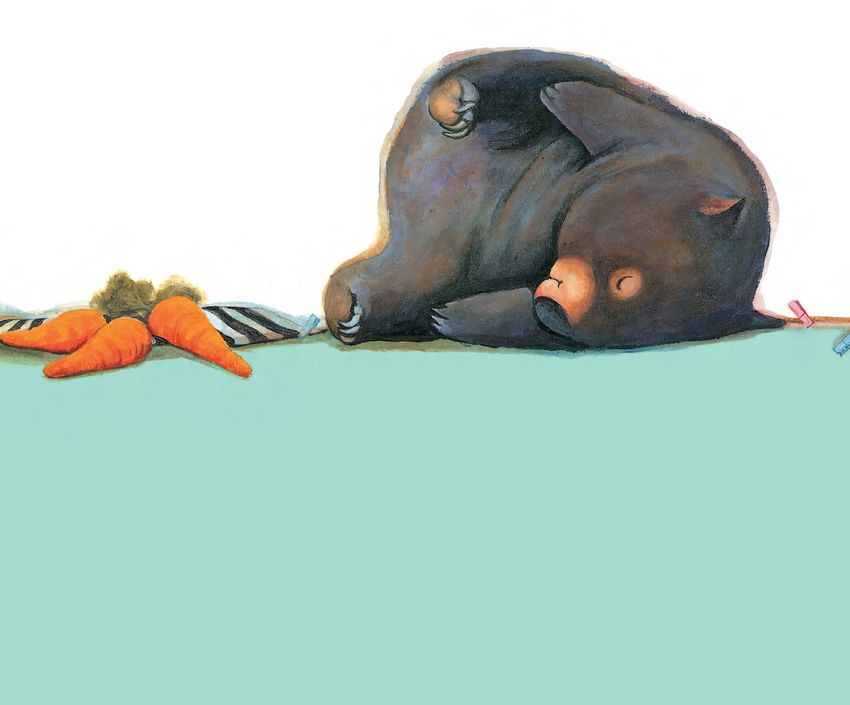
                            © Introspective Bear, 2002, from Diary of a Wombat by Jackie French and Bruce Whatley.
                                                                     Published by HarperCollins Publishers Australia.

             BASED ON THE BOOK BY
        JACKIE FRENCH & BRUCE WHATLEY

                CONCEPTUALISED
BY EVA DI CESARE, SANDRA ELDRIDGE & TIM MCGARRY

                 2020 US tour
              teacher & venue
                     resource
OUR MISSION
                                                                  IS TO EXHILARATE YOUNG MINDS,
                                                                  HEARTS AND IMAGINATIONS
                                                                  BY CREATING AND SHARING
about                                                             EXCEPTIONAL AUSTRALIAN THEATRE
                                                                  NATIONALLY AND INTERNATIONALLY.
monkey baa
theatre
company
Monkey Baa was formed in Sydney, Australia
23 years ago by Sandra Eldridge, Eva Di Cesare
and Tim McGarry (pictured right).
In 2017, Tim departed the company for new horizons
and Sandie and Eva continue their collaboration
to deliver the company’s exciting artistic vision,
alongside our incredible staff and production team.

Monkey Baa is Australia’s widest reaching
touring company for young people,
having conducted over 28 national tours to
135 regional and remote communities across every
state and territory of Australia, 5 international tours
and over 2,500 performances, engaging with over
1.5 million young people!

Youth are at the centre of what we do: theatre provokes empathy,
imagination, respect and understanding, allowing us all to see the world
from different perspectives. Young audiences, as equal citizens, deserve the
same dexterity, depth and rigour in theatre creation and presentation that adult
audiences demand. We tell stories that embrace social and cultural connectivity,
celebrate Australia’s rich cultural heritage, challenge and inspire. Accessibility to a theatrical experience
is deeply important to us.

We believe that rural and regional young audiences should have the same opportunities as their city cousins
to engage with excellent theatre, so we continue to tour from the bush to the coast and across the seas.
An integral part of our exciting process is our collaboration with young people from a work’s inception right
through to the opening performance, their voices reflected in the work we create for them. Through our
popular arts education programs we are committed to building confident, thriving communities, empowering
young people to self-expression, self-awareness and self-determination.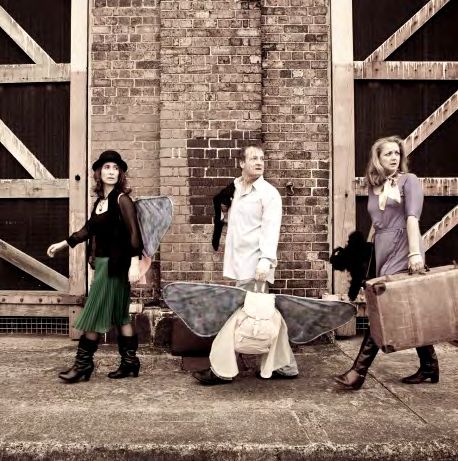
about
                                       the book’s
                               author & illustrator
JACKIE FRENCH: AUTHOR
Jackie French is an Australian author, historian, ecologist, 2014-2015 Australian Children’s Laureate,
2015 Senior Australian of the Year and an honorary wombat (part-time). Jackie has written over 200 books,
some of which have sold millions of copies and won over 60 awards in Australia and internationally!

Jackie was born in Sydney and grew up on the outskirts of Brisbane, however she now lives in the
Araluen Valley where she researches the species that live in the surrounding bush land around her home.
Jackie has passionately written many environmental publications, and advocates for the protection of
endangered species. When Jackie isn’t writing, she enjoys lunch with friends, harvesting fruit from her
own trees, reading to her grandkids, trying to find her glasses, and eating dark chocolate.

Jackie is dyslexic and a patron of literacy programs across Australia, with a wide and deep experience in
learning differences, support methods, and their outcomes for students. Jackie is a passionate advocate
for equal education opportunities.

For more information about Jackie visit her website www.jackiefrench.com

BRUCE WHATLEY: ILLUSTRATOR
Bruce jumped into the unknown world of picture books after a career in advertising as an illustrator
and art director working in London and then Sydney. Since 1992 Bruce has written and/or illustrated
over 80 children’s picture books. Though based in Australia, his work is published internationally,
and in 2014 was included in the Bologna Children’s Book Fair Exhibition.

His main inspiration has been his family, who feature in several of his
earlier picture books. His wife Rosie Smith has often been co-author
on many of his projects. He uses a variety of illustration mediums,
including: gouache, pen and ink, pencil, oils, water colour and
more recently CGI software. His aim is to entertain
and surprise the reader with illustration styles that
vary considerably depending on the text and
the age group of his audience.

For more information about Bruce
visit his website brucewhatley.com
about the show:
              things to know before
                   you see the show
			                                                 THERE ARE 4 PERFORMERS ON THE STAGE
                                                                 (NOT INCLUDING PUPPETS):
			                     There are 3 actors in the show, and one cellist. The performers are Michael Cullen,
                             Samantha (Sam) Hickey and Kailah Cabanas. The ‘cellist is called Mary Rapp.
              Mothball appears on stage as a puppet. The Mothball puppet you will see on stage is large,
             and it is worthwhile informing students the puppet wombat is larger than a real life wombat.

                                                               THE WOMBAT’S ‘VOICE’ IS A ‘CELLO:
 Mothball’s character is represented by a puppet, but her ‘voice’ is characterised by a musical instrument
      called a ‘cello. You will also hear the actor operating the puppet make sounds with her voice such
                as grunting or breathing, and the actor is wearing a microphone to amplify these sounds.

                                                     THERE IS BARELY ANY SPOKEN DIALOGUE:
                                       The book is written as a diary, which is not usually a spoken form of text.
 It is also a diary as if written by Mothball the wombat - and wombats cannot speak (as far as we know...)
                          So in the production, instead of giving the wombat the ability to speak like a human,
                                 the ‘cello music becomes Mothball’s ‘voice’, and the human characters speak.
                               They do not say very much though! So, much of the text, emotion, atmosphere
                                                and story are created by music, and other theatrical elements.

                                           THERE ARE SOME SURPRISES IN THE SET DESIGN:
                     Students can spot some of the surprising and interesting things that the set can do,
         and some surprising things that happen with the puppets! There are moving elements to the set,
                    such as parts that revolve to show a change of place. Perspective and scale are also
                  manipulated through use of puppetry and through the set design. It’s useful to discuss
                    how time passing and changes in setting can be created on stage through changing
                                                costume, lighting, sound, set configuration and/or music.
JOI
                                              N
                                         who -THE D
                                                i
                                         Cre s as
                                                        OTS
                                             ate
                                        fo r    d es leep
                                           Mo n     p e   ?
                                        Bru    key cially
                                           ce W Baa b
                                                hat     y
                                                    ley

@ ILLUSTRATION BY BRUCE WHATLEY, 2016
COL
                                                 OU
                                              M      RI
                                         Cre     E IN N G
                                            ate      !
                                        fo r   de
                                           Mon specia
                                        Bru   key      lly
                                           ce W Baa b
                                               hat     y
                                                   ley

@ ILLUSTRATION BY BRUCE WHATLEY, 2016
GROUP
       SION
DISCUS Y                DRAW A LINE BETWEEN THE JOB TITLE & MATCHING DESCRIPTION
        T
  ACTIVI

                           activity: who does
                          what in the theatre?
      makes the
final decisions about                              SET &              writes the
    what you see              ACTOR               COSTUME           original music
 on stage: the ‘boss’                             DESIGNER           for the show
     of the show

                                                                     conceives the
   decides what
                                                                   ideas & oversees
  colours & types                                 PUPPET
                            COMPOSER                              construction of the
   of lights shine                                MAKER             set, costumes &
    on the stage
                                                                  props for the show

     designs &
                                                                    manages all the
  constructs the
                                                  LIGHTING        technical elements
 puppets & repairs          DIRECTOR
      puppets                                     DESIGNER             on stage
                                                                     & backstage
   if necessary

    shapes the
 movement of the            PUPPETRY
                                                   STAGE            performs the
 actors & puppets          & MOVEMENT
  on stage to help                                MANAGER         show on the stage
                            DIRECTOR
   tell the story

                                                                     selects sound
                                                                  effects & manages
                                        SOUND                        all the levels
                                       DESIGNER                   (volume) of all the
                                                                   sounds you hear
                                                                        on stage
make & create:
colour mixing activity
COLOUR PALETTE
The set & costume designer collaborates to create the physical world of the play - the set, costumes, and
props. One of the tools available to the designer is colour. Diary of a Wombat has a disctinct colour palette,
and the design reflects this palette on the stage. Designer Imogen Ross worked with the book’s
colour palette in mind as she chose the colours appearing on stage, in both the set and the costumes.
ARRANGE COLOURS TO CREATE A COLOUR MIXING CHART SHOWING
THE RESULTS OF MIXING TWO (OR MORE) COLOURS TOGETHER
RED PURPLE YELLOW
GREEN BLUE BROWN
ORANGEresearch: wombat investigation SET YOUR STUDENTS AN ASSIGNMENT TO RESEARCH THE DIFFERENT CHARACTERISTICS OF A WOMBAT. THEY CAN CHOOSE TO PRESENT THEIR FINDINGS AS A POWERPOINT PRESENTATION OR A POSTER. Here are some key inquiry questions for their research: • What do Wombats eat? • Where do Wombats live in the wild? • How big are Wombats? • What sounds do Wombats make? • Are Wombats at risk of extinction? • How many different types of Wombats are there? • What are the physical characteristics of a Wombat? • What is the scientific name of a Wombat? WEBSITE RESOURCES Australian Wildlife Protection Council https://awpc.org.au/wombats/ WIRES (NSW Wildlife Information, Rescue and Education Service) https://www.wires.org.au/wildlife-info/wildlife-education/wombats Australia Zoo https://www.australiazoo.com.au/our-animals/mammals/wombats/ Australian Museum https://australianmuseum.net.au/learn/animals/mammals/common-wombat/ Australian Geographic https://www.australiangeographic.com.au/topics/wildlife/2015/09/northern-hairy-nosed-wombat/ Encylopedia Britannica https://www.britannica.com/animal/wombat WWF Posters and school resources http://www.wwf.org.uk/get-involved/schools/resources
You can also read


