2021 POSTGRADUATE STUDENT GUIDE - ANU College of - ANU College of ...
←
→
Page content transcription
If your browser does not render page correctly, please read the page content below
2 0 2 1 P O S T G R A D U AT E
  STUDENT GUIDE

ANU College of
Science
WHY ANU?

Our students                         Our University                             Our graduates              6
                                                                                                           Nobel Prize winners
25,500                               #1                                          #5                        among our staff
                                                                                                           and alumni
total number                         university                                  most employable
of students                          in Australia1                               graduates in Australia1

5 star                               #29                                         #66
rating for                           university                                  most employable
staff-to-student ratio 3             in the world1                               graduates in the world1

6,000                                #12                                         $5k
students living                      most international                          higher average salary
on campus                            university in the world 2                   for ANU graduates 4

1. QS World University Rankings 2020 2. Times Higher Education Rankings 2019
3. Good Universities Guide 2020 4. Graduates in full-time employment in the medium-
term compared to national median, Graduate Outcomes Survey 2018
CONTENTS

Postgraduate coursework programs                                                   2
Postgraduate research                                                              4
Our degrees                                                                        6
> Master of Biotechnology                                                     10
> Master of Earth Sciences (Advanced)                                         11
> Master of Science in Earth Sciences                                         12
> Master of Energy Change                                                     13
> Master of Environment                                                       14
> Master of Environmental Science                                             15
> Master of Forestry                                                          16
> Master of Mathematical Sciences (Advanced)                                  17
> Master of Science Communication                                             18
> Master of Science Communication Outreach                                    19
> Master of Science in Agricultural Innovation                                20
> Master of Science in Astronomy & Astrophysics                               22
> Master of Science in Biological Sciences                                    22
> Master of Science in Nuclear Science                                        23
> Master of Science in Precision Instrumentation                             24
   & Measurement
> Master of Science in Quantitative Biology                                  25
   and Bioinformatics
> Master of Science in Quantum Technology                                     26
> Master of Science in Theoretical Physics                                    27
Canberra                                                                      28

Please note that this student guide is correct as at time of printing and should
be used as a guide only. For the most up-to-date information please visit the
ANU website.

                                          2021 Postgraduate Student Guide          1
P O S T G R A D U AT E C O U R S E W O R K
PROGRAMS

Postgraduate coursework programs                                     For more information, visit
                                                                     anu.edu.au/study/scholarships
A major component of a postgraduate coursework degree
program is attendance at lectures and tutorials; examinations;       How do I apply?
and the submission of assessments such as essays
and assignments.                                                     Domestic students apply for postgraduate coursework programs
                                                                     through the University Admissions Centre at
Some postgraduate coursework programs also include a                 uac.edu.au.
research component.
                                                                     The closing date for semester one entry is the end of January,
Our postgraduate coursework programs result in the awarding of       and the closing date for semester two entry is the end of June.
the following qualifications:
                                                                     International students can apply for postgraduate coursework
Graduate certificate:                                                programs and find more information about closing dates
Approximately 24 units, or six months of full-time study.            online at
                                                                     anu.edu.au/study/apply/international-applications-
Graduate diploma:                                                    undergraduate-and-postgraduate
Approximately 48 units or one year of full-time study.
                                                                     How long does it take to finish a Masters
Master degree:                                                       degree?
Approximately 96 units, or two years of full-time study (or less
                                                                     A Master degree from ANU usually takes two years of full-time
with credit).
                                                                     study to complete, but most programs can be fast-tracked with
Master (Advanced) degree:                                            recognition of previous study in a related discipline.
Approximately 96 units, or two years of full-time study (or less
                                                                     Can I get credit for previous study?
with credit). Includes a 24-unit equivalent supervised sub-thesis.
                                                                     Your prior study might count towards your Master degree,
Am I qualified to apply?                                             meaning you can complete the degree in less than two years.
All PG programs require at minimum completion of an                  If you have an Australian undergraduate degree (or international
Undergraduate degree to apply for a postgraduate coursework          equivalent) in a related field, you might get up to six months’
program. In most cases it will need to be in a cognate (related)     credit towards your Master degree.
discipline.
                                                                     If you have an Australian undergraduate degree with honours (or
Each program has specific application requirements. For more         international equivalent) in a related field, or a graduate diploma
information, see the detailed program descriptions in this guide.    in a related field, you may be eligible for up to 48 units (1 year)
                                                                     of credit, leaving you with only one year of full-time study to
When can I start?                                                    complete your Master degree.
Most degree programs have two intakes per year and can be            Graduate certificate and graduate diploma awards are available
started in either semester one (mid- to late February) or semester   as exit options in circumstances where the two-year Master
two (mid-July).                                                      degree cannot be completed.
For more information, see the detailed program descriptions in       For more information about your program, see the detailed
this guide.                                                          descriptions in this guide.

How much does it cost?
Fees for domestic and international students can be found in
each of the program descriptions in this guide. Please note the
fees listed are indicative only as they are dependent on your
course selection and are subject to change.

Are scholarships available?
Some of our research schools offer scholarships for specific
programs. Information about these scholarships can be found in
the program descriptions in this guide.
There are a number of ANU scholarships available to domestic
and international students, as well as external scholarships
managed by organisations outside of the University.

2    ANU College of Science
English Language Requirements                                      Test                         Regular Degree Programs
You must provide evidence of English language proficiency                                       (including Exchange and Study
required for admission to ANU.                                                                  Abroad)
                                                                   Academic IELTS               An overall score of 6.5 with at least 6 in
You may meet this requirement if your tertiary studies were
                                                                                                each component of the test
entirely taught and assessed in English during the past
two years.                                                         TOEFL1** –                   A score of 570 with TWE* score of 4.5
                                                                   paper-based test
If you are an international student and you completed your
                                                                   TOEFL1** –                   A score of 80, with a minimum of
English studies more than two years ago, you will need to
                                                                   internet-based test          20 in Reading and Writing and 18 in
provide an English proficiency test certificate, such as the
                                                                                                speaking and Listening
International English Language Testing System (IELTS) or the
Test of English as a Foreign Language (TOEFL).                     Cambridge                    80 (Grade A)
                                                                   CAE Advanced
English language preparation                                       PTE Academic                 Overall 64, minimum score of 55 in
                                                                                                each section
The ANU Access English program is a 10-week course offered
by ANU College. The course runs four times a year and is
designed so that you can finish the course in time to start your   Test                         Australian National Internships
studies at ANU. You must already have an IELTS (or recognised                                   Program & MChD program
equivalent) score of 6.0, with a minimum score of 5.5 in all       Academic IELTS               An overall score of 7.0 with a minimum
bands, to gain entry to the course.                                                             6.0 in each component of the test.
For all information on English language requirements visit:        TOEFL1** –                   A score of 600 with a TWE* score of
https://www.anu.edu.au/study/apply/english-language-               paper-based test             5.0.
requirements                                                       TOEFL1** –                   An overall score of 100, with a
                                                                   internet-based test          minimum of 22 in each component of
                                                                                                the test.
                                                                   Cambridge                    An overall score of 185 with a minimum
                                                                   CAE Advanced                 of 169 in all sub-skills.
                                                                   PTE Academic                 An overall score of 70 with a
                                                                                                minimum score of 60 in each of the
                                                                                                communicative skills.
                                                                   *TWE = Test of Written English
                                                                   **The TOEFL institutional code for the ANU is 0506. Applicants may use this
                                                                   code to report their TOEFL results to the university.*

                                                                   Contact ANU College
                                                                   T +61 2 6125 6688
                                                                   W anucollege.edu.au
                                                                   CRICOS Code: 01682E

                                                                                                           2021 Postgraduate Student Guide       3
P O S T G R A D U AT E R E S E A R C H

We offer Doctor of Philosophy (PhD) and Master of Philosophy (MPhil) postgraduate
research programs across a range of disciplines in science.
Our postgraduate research students have access to cutting-edge research facilities
and work alongside some of the world’s most influential and innovative academics.

Pathways to a PhD                                                   Earth, marine and planetary sciences:

If you are interested in a PhD but your previous studies do not     Our research in Earth sciences focuses on the physical and
include a research component, you can consider an advanced          chemical Earth processes ranging from those that led to the
Master degree, which combines coursework and research.              Earth’s formation and shaped its subsequent evolution, to
Upon completion, you will have the skills to continue your          processes impacting on our current environment. Our research
research career and the academic qualifications needed to           is multidisciplinary and encompasses the physical sciences,
apply for a PhD.                                                    geology, and biology.

You can find more information about our advanced Master             Environment and resource management:
programs in the postgraduate coursework section of                  Our research students collaborate with world-renowned
this guide.                                                         academic leaders in a wide range of topics spanning
                                                                    environment and society, including conservation biology,
Postgraduate research areas                                         landscape ecology, interdisciplinary environmental studies,
Astronomy and astrophysics:                                         sustainability science, global change, environmental policy and
                                                                    economics, forest science and geography.
The research interests of our staff include planetary science,
cosmology, instrumentation, observational and theoretical           Evolution, ecology and genetics:
aspects of extra-solar planets, stellar atmospheres and             Research in evolution, ecology and genetics is a broad-based
evolution, the interstellar medium, globular clusters, galactic     program that aims to provide students with a diversity of
structure, the Magellanic clouds, normal galaxies, active           opportunities and training in biological research, and encourages
galaxies, radio sources, quasars, and cosmology.                    graduates to take advantage of the rich and diverse community
Biomedical science and biochemistry:                                of biologists engaged in teaching, research, environmental
                                                                    management and policy formulation in Canberra.
We offer research projects in a range of biological systems,
which involve fundamental investigations and applications of        Mathematical and computational sciences:
molecular, physiological, cellular, developmental and genetic       Broad research areas include advanced computation and
processes in animals, plants, micro-organisms and viruses.          modelling; algebra and topology; analysis and geometry;
Chemistry:                                                          applied and nonlinear analysis; astronomy and astrophysics;
                                                                    mathematical physics; statistical science; and stochastic
Our research groups work in areas from a wide spectrum              analysis. Students have the choice of studying mathematics
of chemistry, including computational chemistry, materials          and statistics in their own right and/or applying them in
science and protein structure and function. A large number of       other disciplines.
international scientists visit the groups each year, contributing
to research projects, the extensive seminar series and              Physics:
graduate lecture courses.                                           The underlying impetus of our research in physics is a belief
                                                                    in the fundamental importance of physics to all of science.
                                                                    Research areas include applied mathematics, materials
                                                                    engineering, quantum science, optics and theoretical physics.
                                                                    Students have access to some of Australia’s most important
                                                                    installations, such as the only Heavy Ion Accelerator and centre
                                                                    for nuclear research in the country.

4    ANU College of Science
Plant sciences:                                                     How to apply for a PhD or an MPhil
Research in plant sciences serves as a focal point for graduate
                                                                    STEP 1:
students interested in the broad range of research in plant
biology that exists in the scientific community in Canberra.        Expression of interest
Students have the opportunity to work on research incorporating     Prospective research students first need to identify a research
photosynthesis and plant energy biology; plant environmental        project and find an academic supervisor.
biology and functional ecology; plant genetics and gene
regulation; and plant-microbe interactions.                         If you are not sure which area of research or supervisor matches
                                                                    your interest please complete an expression of interest online at
Science communication:                                              science.anu.edu.au/hdr-expression-interest
Research in science communication is for graduates with an
interest in how science is communicated to diverse non-scientific   STEP 2:
audiences. Students may examine a scientific issue from a public    Academic supervisor
communication perspective, investigate how a particular medium
                                                                    Email your academic supervisor directly to enquire about
works to engage people with science, or explore scientists’
                                                                    projects and supervision. You may also submit a short
experiences with communication.
                                                                    research proposal.
                                                                    Once an academic supervisor has been confirmed to support
                                                                    your application you may proceed to step three.

                                                                    STEP 3:
                                                                    Scholarships
                                                                    A number of scholarships are available and are awarded on a
                                                                    merit basis. You can also talk to your academic supervisor about
                                                                    other sources of funding you might access to assist with living
                                                                    expenses and tuition fees.
                                                                    Please note, international research scholarships are
                                                                    only awarded to the most outstanding students and are
                                                                    extremely competitive.
                                                                    Scholarship applications can be made when completing the
                                                                    program application process, step four.

                                                                    STEP 4:
                                                                    Application
                                                                    Applicants should apply online at
                                                                    anu.edu.au/study/apply/anu-postgraduate-research-
                                                                    domestic-and-international-applications

                                                                                                        2021 Postgraduate Student Guide   5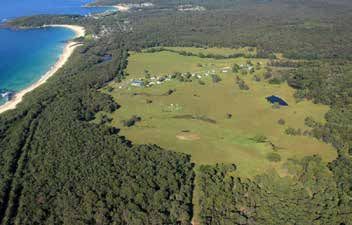
OUR DEGREES

DEGREE NAME                    DESCRIPTION

Master of Biotechnology        Place yourself at the forefront of innovation, engineering organisms to address issues of food
                               security, disease and climate change. Study alongside our leading researchers who work on issues
                               of global importance in areas of biochemistry and molecular biology in the biomedical, animal and
                               plant sciences.
Master of Biotechnology        The Advanced program incorporates up to a year-long research project supervised by an academic.
(Advanced)

Master of Earth Sciences       In this program students will delve into the complex systems and processes that shape our planet,
(Advanced)                     at Australia’s leading academic research institution for Earth sciences. Study courses from different
                               Earth science disciplines and undertake training on how to gather data and interpret results, before
                               undertaking a research project supervised by an academic.
Master of Energy Change        Climate change is one of the greatest challenges of the 21st century, and can only be solved with a
                               worldwide transition to carbon-free forms of energy. In this interdisciplinary degree, you’ll tailor a suite
                               of courses suited to your individual interests, skills and aspirations, developing your expertise in the
                               relevant policy, legal, technological, environmental and regulatory aspects of energy change.
Master of Energy Change        The Advanced program incorporates up to a year-long research project supervised by an academic.
(Advanced)
Master of Environment          Equip yourself with the skills to tackle the big environmental problems facing contemporary and future
                               society. You could choose to specialise in biodiversity conservation, climate science and policy, disaster
                               studies, environmental policy, environmental studies and human ecology, geography, natural resource
                               management, sustainability science or water science and management.
Master of Environment          The Advanced program incorporates up to a year-long research project supervised by an academic.
(Advanced)
Master of Environmental        You’ll be studying at one of the top 10 universities in the world for environmental science, developing
Science                        your breadth of knowledge in environmental science and its applications, and depth in aspects of one
                               or more of the biological, earth and environmental or ecological environmental sciences.
Master of Environmental        The Advanced program incorporates up to a year-long research project supervised by an academic.
Science (Advanced)
Master of Forestry             This program reflects the diversity of perspectives needed for effective forest resource management.
                               You will take courses that develop your knowledge in either the science and methods or policy and
                               management aspects of forestry and sustainable forest management.
Master of Forestry             The Advanced program incorporates up to a year-long research project supervised by an academic.
(Advanced)
Master of Mathematical         Study a variety of courses tailored to your interests and needs, ranging from pure mathematics
Sciences (Advanced)            to mathematical modelling, computational mathematics and applications of mathematics, as
                               well as courses in related disciplines such as statistics, computer science, financial mathematics
                               and econometrics.
Master of Science              In this contemporary degree, you’ll join Australia’s founding and leading science communication
Communication                  institution, and be taught by some of world’s leading science communicators. Combining theoretical
                               and practical aspects of science communication, you’ll delve into topics including science in the
                               media, science and public policy, ethics of science and cross-cultural science communication.
Master of Science              This life-changing program is one-of-a-kind: you’ll gain specialist education in science communication
Communication Outreach         performance and exhibition design, including using science media across platforms, engaging varied
                               audiences with science and managing science centres.
                               You’ll also spend 12 weeks of the year travelling to remote and regional areas of Australia presenting
                               the Shell Questacon Science Circus to school children and teachers.
Master of Science in           Globally, agriculture will need to feed over nine billion people by 2050. With a changing climate and
Agricultural Innovation        increasing competition for land, water and energy resources, the agricultural sector will need to find
                               innovative ways to do more with less.
Master of Science (Advanced) The Advanced program incorporates up to a year-long research project supervised by an academic.
in Agricultural Innovation

6   ANU College of Science
DURATION      SEMESTER
                         ENTRY REQUIREMENTS                                                                    UAC CODE          CRICOS CODE
(FULL TIME)   INTAKE

2 years       1&2        A Bachelor degree or international equivalent with a minimum GPA of 5.0/7.0, with 830701                082279A
                         at least eight courses in a cognate area, including a minimum of two courses in
                         chemistry. The GPA requirement must be met by both the program as a whole, as
                         well as by the eight courses in a cognate area.
2 years       1&2        A Bachelor degree or international equivalent with a minimum GPA of 5.5/7.0, with 830702                082280G
                         at least eight courses in a cognate area, including a minimum of two courses in
                         chemistry. The GPA requirement must be met by both the program as a whole, as
                         well as by the eight courses in a cognate area.
2 years       1&2        A Bachelor degree or international equivalent with a minimum GPA of 5.0/7.0, with 830782                082288M
                         at least eight courses in a cognate discipline.

2 years       1&2        A Bachelor degree or international equivalent with a minimum GPA of 5.0/7.0, with 830776                082291E
                         at least eight courses in a cognate area.

2 years       1&2        A Bachelor degree or international equivalent in a cognate discipline with a          830777            082292D
                         minimum GPA of 5.5/7.0.
2 years       1&2        A Bachelor degree or international equivalent with a minimum GPA of 5.0/7.0           830715            082293C

2 years       1&2        A Bachelor degree or international equivalent with a minimum GPA of 5.5/7.0.          830716            082294B

2 years       1&2        A Bachelor degree or international equivalent with a minimum GPA of 5.0/7.0, with 830785                082297K
                         at least eight courses in a cognate area.

2 years       1&2        A Bachelor degree or international equivalent in a cognate discipline with a          830786            082298J
                         minimum GPA of 5.5/7.0.
2 years       1&2        A Bachelor degree or international equivalent with a minimum GPA of 5.0/7.0.          830722            082299G

2 years       1&2        A Bachelor degree or international equivalent with a minimum GPA of 5.5/7.0.          830723            082300J

2 years       1&2        A Bachelor degree or international equivalent in a cognate discipline with a          830788            082337G
                         minimum GPA of 5.5/7.0.

2 years       1&2        A Bachelor degree or international equivalent with a minimum GPA of 5.0/7.0, with 830749                082350K
                         at least eight courses in a cognate area.

1 year        1 only     A Bachelor Honours degree, Graduate Certificate, Graduate Diploma or international Direct               083816F
                         equivalent with a minimum GPA of 5.0/7.0, with at least eight courses in a cognate applications
                         area. Successful assessment of suitability based on a supplementary form, two      only
                         referee reports and interview/audition.

2 years       1&2        A Bachelor degree or international equivalent in a cognate discipline with a                            0101483
                         minimum GPA of 5.0/7.0. with at least 8 courses in a cognate discipline with a
                         grade point average of at least 5.0/7.0 in these courses.
2 years       1&2        A Bachelor degree or international equivalent with a GPA of 5.5/7.0. with at least                      0101484
                         8 courses in a cognate discipline with a grade point average of at least 5.5/7.0 in
                         these courses.

                                                                                                               2021 Postgraduate Student Guide   7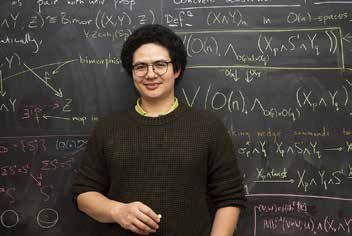
OUR DEGREES

DEGREE NAME                  DESCRIPTION

Master of Science in         This program covers a broad range of areas including astrophysical techniques and computing,
Astronomy & Astrophysics     planetary science, stellar astrophysics, galaxies and cosmology. Some of these courses will provide
                             opportunities to contribute to research by analysing telescope data, developing theoretical models, or
                             testing of new astronomical instrumentation.
Master of Science            The Advanced program incorporates up to a year-long research project supervised by an academic.
(Advanced) in Astronomy
& Astrophysics
Master of Science in         This program allows you to specialise in a particular area of biology such as biomedical sciences,
Biological Sciences          ecology and evolution, genetics, and plant sciences. Alternatively, you can utilise the program to
                             provide a broad overview of biological sciences today. Our practical classes build on your traditional
                             technical knowledge while developing your skills in new cutting-edge experimental techniques.
Master of Science            This program offers a research component which provides the student an opportunity to conduct
(Advanced) in                hands-on research in a laboratory of a research scientist/supervisor.
Biological Sciences
Master of Science in         This program delves into the complex systems and processes that shape our planet at a time when
Earth Sciences               understanding it has never been more important.
Master of Science in         Students will study the fundamentals and applications of nuclear science, including materials analysis,
Nuclear Science              dating techniques, nuclear medicine, and nuclear energy. The degree is a mix of coursework and projects,
                             comprising individual and group-based research. You will develop the scientific background you need for
                             informed debate on nuclear issues, without advocating a particular position.
Master of Science            The Advanced program incorporates up to a year-long research project supervised by an academic.
(Advanced) in Nuclear
Science
Master of Science in         In this program students have the opportunity to learn the most advanced techniques for studying
Precision Instrumentation    the heavens, the Earth, and everything in-between. The interdisciplinary expertise students acquire
& Measurement                will impact on diverse areas of fundamental scientific research as well as industrial applications. The
                             degree is a mix of coursework and projects, comprising individual and group-based research.
Master of Science            The Advanced program incorporates up to a year-long research project supervised by an academic.
(Advanced) in
Precision Instrumentation
& Measurement
Master of Science in         This program provides students with experience in the use of methods and tools to organise and analyse
Quantitative Biology         biological data, statistically, mathematically and computationally. The course caters to a range of students
and Bioinformatics           including students who have come from an undergraduate biological degree, by providing the appropriate
                             mathematical and programming skills; to students with a more quantitative undergraduate background, by
                             providing the necessary background in biology and biological data and analyses.
Master of Science            The Advanced program incorporates up to a year-long research project supervised by an academic.
(Advanced) in Quantitative
Biology and Bioinformatics
Master of Science in         This program equips you with the required skills and knowledge of the scientific, technical, business
Quantum Technology           and societal aspects of quantum technology to be highly competitive in the emerging quantum
                             industries of the present day and of the future.
Master of Science            The Advanced program incorporates up to a year-long research project supervised by an academic.
(Advanced) in Quantum
Technology
Master of Science in         This program brings students to the cutting edge of research in an interactive training environment,
Theoretical Physics          being taught by some of the world’s leading theoretical physicists. You will discover the breadth of
                             theoretical physics, including how non-linear dynamics can be applied to complex problems.
Master of Science            The Advanced program incorporates up to a year-long research project supervised by an academic.
(Advanced) in
Theoretical Physics

For detailed admission requirements check the Programs and Courses website
    programsandcourses.anu.edu.au

8   ANU College of Science
DURATION SEMESTER
ENTRY REQUIREMENTS UAC CODE CRICOS CODE
(FULL TIME) INTAKE
2 years 1&2 A Bachelor degree or international equivalent with a minimum GPA of 5.5/7.0, with 830760 0101476
at least eight courses in a cognate discipline with a minimum GPA of 5.5/7.0.
2 years 1&2 A Bachelor degree or international equivalent with a minimum GPA of 5.5/7.0, 830761 0101477
with at least eight courses in a cognate discipline with a minimum GPA of 5.5/7.0.
Completion of ASTR3005 Astrophysics Research Topic or equivalent.
2 years 1&2 A Bachelor degree or international equivalent with a minimum GPA of 5.0/7.0, with 830706 096439G
at least eight courses in a cognate area.
2 years 1&2 A Bachelor degree or international equivalent with a minimum GPA of 5.5/7.0, with 830707 096440D
at least eight courses in a cognate area.
2 years 1&2 A Bachelor degree or international equivalent with a minimum GPA of 5.0/7.0, with 830781 0101480
at least eight courses in a cognate discipline with a minimum GPA of 5.0/7.0.
2 years 1&2 A Bachelor degree or international equivalent with a minimum GPA of 5.0/7.0, with 830750 099254D
at least eight courses in the fields of Physics or Engineering with a minimum GPA
of 5.0/7.0.
2 years 1&2 A Bachelor degree or international equivalent with a minimum GPA of 5.5/7.0, with 830740 099251G
at least eight courses in the fields of Physics or Engineering with a minimum GPA
of 5.5/7.0.
2 years 1&2 A Bachelor degree or international equivalent with a minimum GPA of 5.0/7.0, with 830747 099248B
at least eight courses in the fields of Physics or Engineering with a minimum GPA
of 5.0/7.0. Mathematics at least to the level of MATH2305.
2 years 1&2 A Bachelor degree or international equivalent with a minimum GPA of 5.5/7.0, with 830748 099249A
at least eight courses in the fields of Physics or Engineering with a minimum GPA
of 5.5/7.0. Mathematics at least to the level of MATH2305.
2 years 1&2 A Bachelor degree or international equivalent with a minimum GPA of 5.0/7.0, with 830737 096439G
at least eight courses in a cognate area.
2 years 1&2 A Bachelor degree or international equivalent with a minimum GPA of at least 830738 096440D
5.5/7.0, with at least eight courses in a cognate area.
2 years 1&2 A Bachelor degree or international equivalent with a minimum GPA of 5.0/7.0, 830741 099252F
with at least eight courses in the fields of Physics and/or Engineering and/or
Mathematics with a minimum GPA of 5.0/7.0.
2 years 1&2 A Bachelor degree or international equivalent with a minimum GPA of 5.5/7.0, 830752 099253E
with at least eight courses in the fields of Physics and/or Engineering and/or
Mathematics with a minimum GPA of 5.5/7.0.
2 years 1&2 A Bachelor degree or international equivalent with a minimum GPA of 5.0/7.0, 830753 0101481
with at least eight courses in the fields of Physics and/or Engineering and/or
Mathematics with a minimum GPA of 5.0/7.0.
2 years 1&2 A Bachelor degree or international equivalent with a minimum GPA of 5.5/7.0, 830754 0101482
with at least eight courses in the fields of Physics and/or Engineering and/or
Mathematics with a minimum GPA of 5.5/7.0.
2021 Postgraduate Student Guide 9MASTER OF BIOTECHNOLOGY
Key facts
Duration: Two years full-time (or less with credit)
Semester intake: Semester 1 or 2
Indicative annual domestic fee: $32,256.00
Indicative annual international fee: $48,384.00
UAC code: 830701 / 830702 (Advanced)
CRICOS code: 082279A / 082280G (Advanced)
Cognate disciplines: Biochemistry, Molecular Biology
and Gene Technology
#50 in the world and #3 in Australia for Biological Sciences* FACILITIES
*QS World University Rankings 2020 Joint Mass Spectrometry Facility
Admission requirements The Joint Mass Spectrometry Facility (JMSF) was created in
2016 by the Research School of Chemistry and Research
A Bachelor degree or international equivalent with a GPA
School of Biology to consolidate and grow mass spectrometry
of 5.0/7.0 and at least eight courses in cognate disciplines
facilities at ANU. In partnership with the CSIRO Black Mountain
including a minimum of two courses in the field of chemistry.
campus, the JMSF is supporting research in the greater
The GPA requirement for this program must be met by both
Canberra region as an important aspect of the Science and
the program as a whole, as well as by the eight courses in a
Industry Endowment Fund (SIEF) supported Analytical Precinct.
cognate area.
Eligibility for credit
Applicants with a Bachelor degree or Graduate Certificate in MASTER OF BIOTECHNOLOGY
a cognate discipline may be eligible for up to 24 units (one (ADVANCED)
semester full-time) of credit. Applicants with a Graduate Diploma
or Honours in a cognate discipline may be eligible for up to 48 Admission requirements
units (one year full-time) of credit.
A Bachelor degree or international equivalent with a GPA
Program description of 5.5/7.0 and at least eight courses in cognate disciplines
including a minimum of two courses in the field of chemistry.
The Master of Biotechnology is a coursework program that
provides a pathway for science graduates with background Eligibility for credit
knowledge in biochemistry, molecular biology and chemistry to
Applicants with a Bachelor degree or Graduate Certificate in
acquire new knowledge, or extend and update their theoretical
a cognate discipline may be eligible for up to 24 units (one
and practical understanding of modern biotechnology.
semester full-time) of credit. Applicants with a Graduate
Throughout the program, students have many opportunities to Diploma or Honours in a cognate discipline may be eligible
interface with scientists who are advancing research in areas of for up to 48 units (one year full-time) of credit.
biochemistry and molecular biology in the biomedical, animal
and plant sciences. Program description
Career opportunities The Advanced program incorporates a research project
supervised by an academic, and is a gateway to further
A Master of Biotechnology degree provides students with research, such as a PhD.
opportunities to carry out research in basic, medical or
A scholarship is offered to international students
agricultural sciences in university, industry or government
pursuing a PhD who receive the highest mark in the
research institutions. Opportunities exist in scientific sales,
Advanced program.
pharmaceutical and pathology companies, or in government and
public service positions. A Master of Biotechnology (Advanced)
can lead to a PhD.
science.anu.edu.au/study/masters/master-biotechnology
10 ANU College of ScienceMASTER OF EARTH SCIENCES
(ADVANCED)
Key facts
Duration: Two years full-time (or less with credit)
Semester intake: Semester 1 or 2
Indicative annual domestic fee: $32,256.00
Indicative annual international fee: $48,384.00
UAC code: 830782
CRICOS code: 082288M
Cognate disciplines: Earth & Marine Sciences, Physics,
Chemistry, Biology, Computer Sciences, Astronomy
& Astrophysics, Physical Geography, Mathematics,
Engineering
STUDENT PROFILE
#9 in the world and #7 in Australia for Earth & Marine Science*
*QS World University Rankings 2020 Karina Tuveng
Master of Earth Sciences (Advanced)
Admission requirements
“For my research project, I’m part of a team looking at climate
A Bachelor degree or international equivalent with a minimum change that took place 40 to 50 million years ago, when the
GPA of 5.5/7.0, with at least eight courses in a cognate discipline Earth transitioned from ‘greenhouse’ to ‘icehouse’.
with a grade point average of at least 5.5/7.0 in these courses.
“We are analysing the geochemical processes that took place
Eligibility for credit in the ocean at the time by looking at small microorganisms
called Foraminifera, collected from 40-million-year-old
Applicants with a Bachelor degree or Graduate Certificate in sediments on the ocean floor.”
a cognate discipline may be eligible for up to 24 units (one
semester full-time) of credit. Applicants with a Graduate Diploma
or Honours in a cognate discipline may be eligible for up to 48 A number of scholarships are on offer to the best international
units (one year full-time) of credit. and domestic students. Domestic students, including those who
are successful in obtaining a Commonwealth Supported Place,
Program description may apply for a scholarship offered by the Research School of
Earth Sciences.
Earth science deals with complex systems and processes that
shape our planet. Pressing issues such as the safe supply of Career opportunities
water, resources and energy, climate change, sea level rise
as well as natural hazards are all intimately related to Earth A Master of Earth Sciences (Advanced) degree gives you the
sciences. Courses from different Earth science disciplines and opportunity to gain a wide range of knowledge and skills that
training on how to gather data and interpret them are offered, as are relevant for employment in industry, government agencies,
well as expert supervision for your extensive research project. education, as well as for further university studies. It is an
excellent qualification for pursuing a career at geosciences
agencies or within mineral & hydrocarbon exploration, natural
resource management, environmental monitoring, data sciences
and the energy sector. The program is also an ideal pathway to a
PhD in Australia or at leading institutes around the world.
science.anu.edu.au/study/masters/master-earth-sciences
2021 Postgraduate Student Guide 11MASTER OF SCIENCE IN EARTH
SCIENCES
Key facts
Duration: Two years full-time (or less with credit)
Semester intake: Semester 1 or 2
Indicative annual domestic fee: $32,256.00
Indicative annual international fee: $48,384.00
UAC code: 830781
CRICOS code: 0101480
Cognate disciplines: Earth & Marine Sciences, Physics,
Chemistry, Biology, Computer Sciences, Astronomy
& Astrophysics, Physical Geography, Mathematics,
Engineering
ACADEMIC PROFILE
#9 in the world and #7 in Australia for Earth & Marine Science* Professor Gordon Lister
*QS World University Rankings 2020
Tectonicist and Structural Geologist
Admission requirements “When people ask me how old a rock is, I just laugh. The
A Bachelor degree or international equivalent with a GPA of mistake most people make is they think a rock has an age.
5.0/7.0 and at least eight courses in ta cognate discipline with a But a rock has a history.
GPA of 5.0/7.0 in those courses. “This one was on an ancient beach 1.74 billion years ago. It
reached about 450-500 degrees centigrade deep in the Earth
Eligibility for credit and it was stretched, like chewing gum.”
Applicants with a Bachelor degree or Graduate Certificate in
a cognate discipline may be eligible for up to 24 units (one
semester full-time) of credit. Applicants with a Graduate Diploma
or Honours in a cognate discipline may be eligible for up to 48
units (one year full-time) of credit.
Program description
As a Master of Science in Earth Sciences student, you’ll delve
into the complex systems and processes that shape our
planet at a time when understanding it has never been more
important. You’ll be studying at Australia’s leading academic
research institution for Earth sciences, ranked 9th in the world
(QS, 2018). We have a reputation for international leadership
and innovation, focused on developing new methods,
whether experimental, analytical or computational. You’ll study
courses ranging from computational geosciences to analytical
techniques, biogeochemistry, experimental petrology, geobiology,
geochemistry, geochronology, geophysics, ocean and climate
change and planetary sciences. FACILITIES
Sensitive High Resolution Ion Microprobe (SHRIMP)
Career opportunities: The Sensitive High Resolution Ion Microprobe (SHRIMP) is
A Master of Science in Earth Sciences gives you the opportunity a mass spectrometer used for in-situ analysis of geological
to gain a wide range of knowledge and skills that are relevant for materials. Developed at ANU, SHRIMP has revolutionised
employment in industry, government agencies and education. geochronology and is an important tool for understanding early
It is an excellent qualification for pursuing a career in tectonics, Earth history. There are now 15 SHRIMP instruments installed
geochronology, mineral exploration and hydrocarbon exploration. across the world, including Australia’s only SHRIMP, at ANU.
science.anu.edu.au/study/masters/master-science-earth-sciences
12 ANU College of ScienceMASTER OF ENERGY CHANGE
Key facts
Duration: Two years full-time (or less with credit)
Semester intake: Semester 1 or 2
Indicative annual domestic fee: $32,256.00
Indicative annual international fee: $48,384.00
UAC code: 830776 / 830777 (Advanced)
CRICOS code: 082291E / 082292D (Advanced)
Cognate disciplines: Biology, Chemistry, Economics,
Engineering, Environmental Studies, Law, Mathematics,
Physics, Political Science, Sociology
#21 in the world and #2 in Australia for Environmental Sciences* STUDENT PROFILE
*QS World University Rankings 2020
Megan Ward
Admission requirements Master of Energy Change
A Bachelor degree or international equivalent with a GPA of “I’m doing the Master of Energy Change part-time in
5.0/7.0 and at least eight courses in cognate disciplines. conjunction with working for the ACT Government,
and I’m finding the program very flexible and
Eligibility for credit accommodating. It’s also a great fit with what I’m doing
Applicants with a Bachelor degree or Graduate Certificate in and is informing how I do my job.”
a cognate discipline may be eligible for up to 24 units (one
semester full-time) of credit. Applicants with a Graduate Diploma
or Honours in a cognate discipline may be eligible for up to 48
units (one year full-time) of credit.
Program description MASTER OF ENERGY CHANGE
(ADVANCED)
The Master of Energy Change is an interdisciplinary coursework
program that allows you to develop a program of advanced
Admission requirements
learning suited to your individual interests, skills and aspirations
in the area of energy change. A major key to addressing climate A Bachelor degree or international equivalent with a GPA of
change is the need for a world-wide change to carbon-free 5.5/7.0 and at least eight courses in cognate disciplines.
forms of energy production.
Eligibility for credit
Career opportunities
Applicants with a Bachelor degree or Graduate Certificate in
The need for energy change is well-established yet there are a cognate discipline may be eligible for up to 24 units (one
relatively few people with an effective overview or the multi- semester full-time) of credit. Applicants with a Graduate
disciplinary skills needed to effectively contribute to this complex Diploma or Honours in a cognate discipline may be eligible
issue. Depending on the area of study and specialisation, our for up to 48 units (one year full-time) of credit.
graduates find work in government, policy, scientific research,
development and aid organisations, multi-national companies, Program description
and many other exciting fields. The Advanced program is also a
pathway to more advanced study. The Master of Energy Change (Advanced) is a multi-
disciplinary coursework and research degree which will
provide you with both a strong basis in the fundamental
areas related to energy change, as well as allowing you to
undertake advanced courses and research in areas suited
to your individual interests.
science.anu.edu.au/study/masters/master-energy-change
2021 Postgraduate Student Guide 13MASTER OF ENVIRONMENT
Key facts
Duration: Two years full-time (or less with credit)
Semester intake: Semester 1 or 2
Indicative annual domestic fee: $32,256.00
Indicative annual international fee: $48,384.00
UAC code: 830715 / 830716 (Advanced)
CRICOS code: 082293C / 082294B (Advanced)
Cognate disciplines: Anthropology, Asia Pacific Studies,
Biodiversity, Biology, Climate Change, Conservation
Biology, Development Studies, Earth Science,
Ecology, Environmental Policy, Environmental Science, GRADUATE PROFILE
Environmental Studies, Forestry, Geography, Human
Ecology, Indigenous Australian Studies, Natural Resource Mae Noble
Management, Policy Studies, Population Studies, Public Master of Environment (Advanced)
Health, Resource Management and Environmental
“I was working in the marine ecology field, and I realised that
Science, Science Communication, Sociology, Soil
the social aspect of conservation was often lacking. I believe
Science, Sustainability Science, Sustainable Development,
there is a lot of potential for applied conservation to include
Urban Planning, Water Science
people’s input and involvement at multiple levels”
#21 in the world and #2 in Australia for Environmental Sciences*
*QS World University Rankings 2020
Admission requirements Career opportunities
A Bachelor degree or international equivalent with a GPA of You can choose from a range of careers as diverse as the
5.0/7.0. environment itself. Many of our graduates are employed in
policy-making within local, state and federal governments,
Eligibility for credit water resource management, environmental management,
urban planning and sustainability, climate change adaptation
Applicants with a Bachelor degree or Graduate Certificate in consulting, and applied research science.
a cognate discipline may be eligible for up to 24 units (one
semester full-time) of credit. Applicants with a Graduate Diploma
or Honours in a cognate discipline may be eligible for up to 48 MASTER OF ENVIRONMENT (ADVANCED)
units (one year) of credit.
Admission requirements
Program description
A Bachelor degree or international equivalent with a GPA of
The Master of Environment degrees allow you to develop
5.5/7.0.
a program of advanced learning suited to your individual
interests and skills in environment and sustainability. A broad-
Eligibility for credit
ranging suite of courses from across the University provides
exposure to current perspectives on environmental issues and Applicants with a Bachelor degree or Graduate Certificate in
approaches. Areas of interest include environmental science a cognate discipline may be eligible for up to 24 units (one
and management, social and ecological linkages, environmental semester full-time) of credit. Applicants with a Graduate
economics and governance, environmental policy, and Diploma or Honours in a cognate discipline may be eligible
integrative approaches to research and analysis. for up to 48 units (one year full-time) of credit.
You will also develop depth of knowledge in a selected
disciplinary area. Available specialisation options include:
Program description
biodiversity conservation, climate science and policy, In the Advanced program you will develop research
environmental policy, environmental studies and human ecology, expertise through completing a substantial research project
geography, natural resource management, sustainability science, supervised by an academic, which constitutes appropriate
and water science and management. research training for a PhD.
science.anu.edu.au/study/masters/master-environment
14 ANU College of ScienceM A S T E R O F E N V I R O N M E N TA L S C I E N C E
Key facts
Duration: Two years full-time (or less with credit)
Semester intake: Semester 1 or 2
Indicative annual domestic fee: $32,256.00
Indicative annual international fee: $48,384.00
UAC code: 830785 / 830786 (Advanced)
CRICOS code: 082297K / 082298J (Advanced)
Cognate disciplines: Biology, Earth Science, Ecology,
Environmental Science, Geology, Marine Science
FACILITIES
#21 in the world and #2 in Australia for Environmental Sciences*
*QS World University Rankings 2020 Kioloa Coastal Campus
The 348-hectare ANU Kioloa Coastal Campus is one of
Admission requirements Australia’s premier field stations, offering a diverse ecology
A Bachelor degree or international equivalent with a GPA of which encourages research across all scientific disciplines.
5.0/7.0 and at least eight courses in cognate disciplines.
Eligibility for credit
MASTER OF ENVIRONMENTAL SCIENCE
Applicants with a Bachelor degree or Graduate Certificate in (ADVANCED)
a cognate discipline may be eligible for up to 24 units (one
semester full-time) of credit. Applicants with a Graduate Diploma
Admission requirements
or Honours in a cognate discipline may be eligible for up to 48
units (one year full-time) of credit. A Bachelor degree or international equivalent with a GPA of
5.5/7.0 and at least eight courses in cognate disciplines.
Program description
Eligibility for credit
Our Master programs in environmental science are designed
to build on your prior knowledge to extend and deepen your Applicants with a Bachelor Degree or Graduate Certificate in
understanding in one or more of the biological, Earth, and a cognate discipline may be eligible for up to 24 units (one
environmental and ecological sciences. You will also develop semester full-time) of credit. Applicants with a Graduate
your knowledge across the environmental sciences. Diploma or Honours in a cognate discipline may be eligible
for up to 48 units (one year full-time) of credit.
Career opportunities
Program description
This program is for those students wanting to increase their
scientific and professional expertise for careers in many aspects The Advanced program focuses on completing a substantial
of environmental science, including environmental policy, research project supervised by an academic, which
management, administration, industry, services and research. constitutes appropriate research training for a PhD.
Examples of roles of our graduates include: Technical Officer,
CARE International; Manager, National Water Commission;
Assistant Director, EcoTrust; Research Associate, Scripps
Institution of Oceanography (USA); and Researcher, Wildlife
Conservation Society.
science.anu.edu.au/study/masters/master-environmental-science
2021 Postgraduate Student Guide 15MASTER OF FORESTRY
Key facts
Duration: Two years full-time (or less with credit)
Semester intake: Semester 1 or 2
Indicative annual domestic fee: $32,256.00
Indicative annual international fee: $48,384.00
UAC code: 830722 / 830723 (Advanced)
CRICOS code: 082299G / 082300J (Advanced)
Cognate disciplines: Ecology, Environmental Policy,
Environmental Science, Environmental Studies,
Forestry, Natural Resource Economics, Natural Resource
Management, Resource Management
STUDENT PROFILE
#32 in the world and #3 in Australia for Agriculture & Forestry*
*QS World University Rankings 2020 David Stock
Master of Forestry (Advanced)
Admission requirements
“I have a background in straight science so it was really
A Bachelor degree or international equivalent with a minimum
interesting for me to do some forest management courses,
GPA of 5.0/7.0.
looking at how you balance the ecologically best option with
what’s applicable in the real world. ANU does a great job
Eligibility for credit at that balance between science and society.
Applicants with a Bachelor degree or Graduate Certificate in
a cognate discipline may be eligible for up to 24 units (one
semester full-time) of credit. Applicants with a Graduate Diploma
or Honours in a cognate discipline may be eligible for up to 48
units (one year full-time) of credit. MASTER OF FORESTRY (ADVANCED)
Program description Admission requirements
Forestry encompasses the planning and management of natural A Bachelor degree or international equivalent with a GPA of
forests and woodlands, plantations and agroforestry through the 5.5/7.0.
practical application of scientific, economic and social principles.
Sustainable management of forest resources requires both Eligibility for credit
short-term management of variability and the ability to plan for
the long-term sustainability of forest ecosystems. Applicants with a Bachelor degree or Graduate Certificate in
a cognate discipline may be eligible for up to 24 units (one
Our forestry degree programs offer flexible, advanced learning semester full-time) of credit. Applicants with a Graduate
to develop your knowledge and skills in forestry and the forest Diploma or Honours in a cognate discipline may be eligible
sciences and their relationship to other land management for up to 48 units (one year full-time) of credit.
disciplines. The broad scope of the program reflects the
diversity of perspectives needed for effective forest resource Program description
management, and the choice of courses within forestry sub-
disciplines develops your knowledge in either the science and The Advanced program focuses on completing a substantial
methods or policy and management aspects of forestry. research project supervised by an academic, which
constitutes appropriate research training for a PhD.
Career opportunities
Our graduates go on to careers in forestry and natural resource
management and science. Roles include forest researchers,
managers, rangers, technicians and policy specialists, and are
also employed in a range of consulting roles in the government
and private sectors.
science.anu.edu.au/study/masters/master-forestry
16 ANU College of ScienceM A S T E R O F M AT H E M AT I C A L S C I E N C E S
(ADVANCED)
Key facts
Duration: Two years full-time (or less with credit)
Semester intake: Semester 1 or 2
Indicative annual domestic fee: $32,256.00
Indicative annual international fee: $48,384.00
UAC code: 830788
CRICOS code: 082337G
Cognate disciplines: Mathematics, Statistics,
Mathematical Economics, Mathematical Finance, Actuarial
Studies, Computer Science, Bioinformatics
#39 in the world and #3 in Australia for Mathematics* GRADUATE PROFILE
*QS World University Rankings 2020
Ivo Vekemans
Admission requirements Master of Mathematical Sciences (Advanced)
A Bachelor degree or international equivalent with a GPA of Ivo is a self-described blackboard evangelist.
5.5/7.0 and at least eight courses in cognate disciplines.
“Let’s start with the senses: a blackboard looks better, it
Eligibility for credit sounds better, it feels better, it smells better and it probably
tastes better.
Applicants with a Bachelor degree or Graduate Certificate in
a cognate discipline may be eligible for up to 24 units (one “When you’re communicating mathematics, it’s not just about
semester full-time) of credit. Applicants with a Graduate Diploma doing an info-dump, it’s about the process. If you lecture with a
or Honours in a cognate discipline may be eligible for up to 48 whiteboard marker, you write too quickly. With chalk, you write
units (one year full-time) of credit. more slowly and more neatly.”
Program description Career opportunities
This Advanced program enables students to upgrade their Examples of roles of our graduates include: Associate,
expertise in the mathematical sciences, either as a route to Quantitative Applications Division at Macquarie Group; Lecturer,
further study of mathematical sciences, or to upgrade their Sanata Dharma University (Indonesia); and Visiting Assistant
quantitative skills in areas that are rapidly becoming more reliant Professor of Managerial Economics and Decision Sciences,
on advanced techniques from the mathematical sciences, such Kellogg School of Management (USA).
as the biological and computational sciences.
Students can take a variety of courses ranging from pure
mathematics to mathematical modelling, computational
mathematics and applications of mathematics, as well as
courses in related disciplines such as statistics, computer
science, financial mathematics and econometrics. The program
can be tailored to the interests and needs of each student as
much as possible. Past students have completed research
projects in various branches of pure mathematics, as well as
in applications including economics, epidemiology, financial
mathematics and computational astrophysics.
This program includes a substantial research project supervised
by an academic, which constitutes appropriate research training
for a PhD.
science.anu.edu.au/study/masters/master-mathematical-sciences
2021 Postgraduate Student Guide 17M A S T E R O F S C I E N C E C O M M U N I C AT I O N
Key facts
Duration: Two years full-time (or less with credit)
Semester intake: Semester 1 or 2
Indicative annual domestic fee: $32,256.00
Indicative annual international fee: $48,384.00
UAC code: 830749
CRICOS code: 082350K
Cognate disciplines: Mathematical Sciences, Physics and
Astronomy, Chemical Sciences, Earth Sciences, Biological
Sciences, Environmental Studies, Other Natural and Physical
Sciences, Information Technology, Engineering and related
Technologies, Health, Education, Communication and Media
STUDENT PROFILE
Skye Zhu
Admission requirements Master of Science Communication
A Bachelor degree or international equivalent with a GPA of “I have a Bachelor degree in science education and have
5.0/7.0 and at least eight courses in cognate disciplines. experience teaching science but I didn’t like the way I
communicated with the students. It seemed quite boring.
Eligibility for credit The Master program has taught me to be more engaging in
Applicants with a Bachelor degree or Graduate Certificate in the way I communicate. Before I came here I would use lots
a cognate discipline may be eligible for up to 24 units (one of technical terms to show how much I knew about science.
semester full-time) of credit. Applicants with a Graduate Diploma Now I use plain English so the audience can understand me,
or Honours in a cognate discipline may be eligible for up to 48 and I include stories to relate the science to their daily lives.”
units (one year full-time) of credit.
Program description Career opportunities
Graduates have found careers as communications officers
The Master of Science Communication is a coursework program
for scientific organisations such as CSIRO, science-oriented
with a significant research project. Taught by some of Australia’s
government departments, university departments and
leading science communicators, the program combines
businesses. Examples of roles of our graduates include:
theoretical and practical aspects of science communication,
Senior Medical Writer, Health Interactions; Physics Science
including courses on science in the media; science
Communicator, University of Sydney; Senior Policy Officer,
communication on the web; ethics, issues and consequences
Department of Industry, Innovation and Science; Freelance
of science; science and public policy; and cross-cultural
Journalist; and Radio Host, ABC Canberra.
science communication.
Research projects have looked at a range of key issues in the
relationship between science and the rest of society, such as
attitudes to controversial science, use of rhetoric in science
communication, and cutting edge use of new technology to
communicate science.
The program is ideal for people interested in becoming
professional science communication officers and managers, or in
gaining skills in communicating their own science.
science.anu.edu.au/study/masters/master-science-communication
18 ANU College of ScienceM A S T E R O F S C I E N C E C O M M U N I C AT I O N
OUTREACH
Key facts
Duration: One year full-time
Semester intake: Semester 1 only
Indicative annual domestic fee: Commonwealth
Supported Place
Indicative annual international fee: $48,384.00
CRICOS code: 083816F
Cognate disciplines: Science, Engineering and Technology
degrees including Mathematical Sciences, Physics and
Astronomy, Chemical Sciences, Earth Sciences, Biological
Sciences, Environmental Studies, Other Natural and Physical
Sciences, Information Technology, Engineering and Related
Technologies, Health and Education STUDENT PROFILE
Nate Byrne
Master of Science Communication Outreach
Admission requirements
“The coursework whipped me into shape from an academic
A Bachelor Honours degree, Graduate Certificate, Graduate point of view, and made sure I’d be ready to write some
Diploma or international equivalent with a minimum GPA of government or strategic policy, and back myself with solid,
5.0/7.0, with at least eight courses in a cognate area. Successful academically rigorous stuff.
assessment of suitability is based on a supplementary form, two
referee reports and interview/audition. Application closing date is “Being on the road with the Science Circus really let me hone
October 30 each year. my skills in communication. I’ve always liked talking, but it
taught me how to talk with more meaning, refine my message,
Program description and be concise and understandable to a wide audience.”
The Master of Science Communication Outreach is an
internationally well-regarded qualification unlike any other. Further information
Our education experiences are hosted at Questacon and
All students in the program who are Australian citizens or
ANU, with scientists and science communicators giving
permanent residents are financially supported by a scholarship
lectures and presentations based on cutting-edge research in
that is paid fortnightly throughout the program. In the previous
science communication.
year the scholarship was valued at $340 per week. An additional
You will develop skills in public speaking; presentation and travel allowance of $25 per day is paid when on mainstream tour
media; public relations; exhibition design and communication and $30 per day when touring in remote regions. This is exempt
research; team work strategies; as well as developing expertise from income tax. The exact scholarship value for next year is still
in presenting science and technology to students. to be determined.
Your enrolment is conditional on meeting the requirements of the
Career opportunities
Working with Vulnerable People Check. On a case by case basis
You will have the opportunity to sample diverse careers at the (depending on the destination of tours), students will be required
interface of science and the community, including travel to to complete and pass additional checks for further States and
remote and regional areas of Australia while staffing the Shell Territories as deemed appropriate by the program convener.
Questacon Science Circus.
You could go on to join our graduates in roles such as presenting
science-based TV and radio, writing for science publications;
organising and performing in international events like the
Edinburgh International Science Festival; managing social media
for peak bodies, or communicating about health science and
research for institutions.
science.anu.edu.au/study/masters/master-science-communication-outreach
2021 Postgraduate Student Guide 19You can also read


