29 OCT - 12 DEC TOURING NATIONALLY - The Royal New Zealand ...
←
→
Page content transcription
If your browser does not render page correctly, please read the page content below
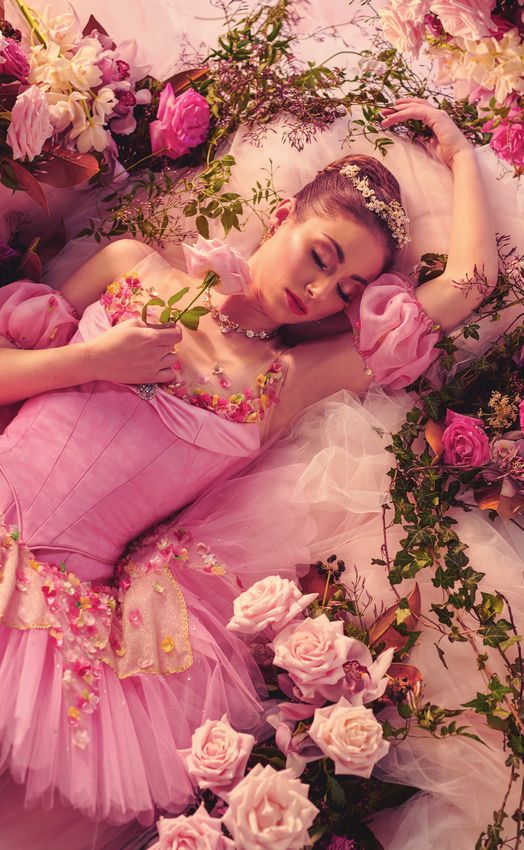
29 OCT – 12 DEC
TOUR ING NAT IONAL LY
SEASON SPONSOR   SUPPORTED BY   NATIONAL TOURING
                                PARTNER
CONNECT WITH US
rnzb.org.nz              Vodafone is proud to keep the Royal New Zealand Ballet connected,
facebook.com/nzballet    whether we’re in Wellington or out on the road. Vodafone has launched
twitter.com/nzballet     the next generation of mobile technology – 5G*. To learn about what
instagram.com/nzballet   this means for you and your businesss visit vodafone.co.nz/5G.
youtube.com/nzballet     *5G is live in parts of Auckland, Wellington, Christchurch and Queenstown

Choreography after Marius Petipa                   Lighting design Randall G Chiarelli
Music Pyotr Ilyich Tchaikovsky                     assisted by Jeremy Fern

Staging Patricia Barker                            Projection design and realisation POW Studios

assisted by Clytie Campbell, Laura McQueen         Wig and make-up design Amy McLennan
Schultz and Nicholas Schultz                       Conductor Hamish McKeich
Dramaturgy Michael Auer                            Orchestras Orchestra Wellington, Christchurch
Costume design Donna Jefferis                      Symphony Orchestra, Auckland Philharmonia
                                                   Orchestra
Scenic design Howard C Jones

R O YA L N E W Z E A L A N D B A L L E T

Artistic Director Patricia Barker                  Teagan Tank, Levi Teachout, Leonora
Executive Director Lester McGrath                  Voigtlander, Caroline Wiley, Sophie Williams.

Ballet Masters Clytie Campbell, Laura McQueen      Todd Scholar Callahan Laird
Schultz, Nicholas Schultz                          Friedlander Foundation Scholars Jamie Delmonte,
Principals Allister Madin, Paul Mathews,           Lara Flannery.
Mayu Tanigaito, Nadia Yanowsky*.                   Apprentices Georgia Baxter, Maggie Bryan,
Principal Character Artist Loughlan Prior          Ella Chambers.

Soloists Sara Garbowski, Kate Kadow, Kihiro        Guests Macy Cook, Jake Gisby, Joshua Guillemot-
Kusukami, Shaun James Kelly, Katherine Minor,      Rodgerson, Jemima Scott, Edward Smith, George
Kirby Selchow, Joseph Skelton, Laurynas Vėjalis.   Thomson.

Artists Cadence Barrack, Luke Cooper, Vincent      Students from the New Zealand School of Dance
Fraola, Ana Gallardo Lobaina, Madeleine            Dane Head, Zachary Healy, Tessa Karle, Oskar Teme.
Graham, Calum Gray, Jack Lennon, Annaliese         *On parental leave.
Macdonald, Olivia Moore, Harry Peterson,           For casting, please see the screens and free cast sheets
Christian Renforth, Katherine Skelton,             available in the foyer
Tēnā koutou katoa and welcome to The Sleeping Beauty!

          Although we haven’t been asleep for a               Later on in this programme we acknowledge,
          hundred years, it certainly feels far too long      with great pleasure, our many personal
          since we’ve been able to perform for you, live      supporters and especially our Partner a
          onstage, in theatres around Aotearoa.               Dancer supporters, members of the Dress
          The Sleeping Beauty is of course a much-            Circle, the Friends of the RNZB, supporters
          loved fairy tale, but its story of love, hope and   of our Annual Appeal, and supporters of the
          reawakening to a bright future feels                Ballet Foundation of New Zealand, including
          especially relevant this Christmas.                 the En Pointe Patrons. We would also like to
                                                              make special mention of the generosity of
          There may be no tangle of thorny vines
                                                              the Friedlander Foundation, including, in
          between us and the outside world, but this is
                                                              2020, the funding of our inaugural
          a different Sleeping Beauty from the one
                                                              Friedlander Foundation Scholars.
          which we first announced back in September
          2019. It has nonetheless been a joyful              Lastly, a special welcome, and sincere thanks,
          collaboration between artists largely based         to Ryman Healthcare residents and staff. This
          here in New Zealand, connected through the          is the sixth year of Ryman’s relationship with
Welcome

          wonders of technology with colleagues               the RNZB, and the third Christmas season
          overseas. Between them they have brought            that they have chosen to sponsor, bringing
          decades of knowledge and experience, and            happiness and more than a touch of sparkle
          love for this beautiful classical ballet, to the    to ballet lovers of all ages, all over Aotearoa.
          creation of this new production.                    We are so happy to be back, and hope that for
          The baby Aurora is blessed by benevolent            you and for your fellow audience members,
          fairies, and we too have a wonderful group of       The Ryman Healthcare Season of The
          supporters. A special mention, and sincere          Sleeping Beauty marks the start of a truly
          thanks, to the Ministry for Culture and             wonderful festive season, a chance to make
          Heritage, Manatū Taonga, National Touring           new memories with family and friends and to
          Partner Pub Charity Limited, Major Media            share the joy of the living arts that we all love.
          Partner MediaWorks, Wellington Partner              Meri Kirihimete me ngā mihi o te tau hou!
          Wellington City Council, Northern Partner
                                                              P A T R I C I A B A R K E R | Artistic Director
          Foundation North and Telecommunications             L E S T E R M C G R A T H | Executive Director
          Partner Vodafone.
Merry Christmas everyone!

What a year! Congratulations to the Royal           are passionate about the performing arts.
New Zealand Ballet for not only surviving but       We love the hard work that goes in, and we
thriving in one of the toughest years in its        know that 2020 has been harder than most.
67-year history. How do we know the ballet
                                                    Ryman Healthcare has been a long-term
is thriving? Because the RNZB is rolling out
                                                    supporter of the Royal New Zealand Ballet
one of the most beautiful fairy tales of all
                                                    because our residents and their families love it.
time in an ambitious programme that will
undoubtedly bring great joy to thousands of         We know plenty of them will be heading
young and older New Zealanders.                     along to see The Sleeping Beauty, and we’ve
                                                    got a special treat in store for those who
The Sleeping Beauty is the perfect way to
                                                    can’t make it.
celebrate the festive season.
                                                    For those of you reading this – you’re in for a
And we’re pleased, after such a tough year, to
                                                    treat. Sit back and enjoy the magic.
be able to assist the ballet to bring this
beautiful and visually spectacular ballet to you.   On behalf of all our 11,700 residents and our
                                                    team of 6,000, I hope you enjoy this magic
 The RNZB is more than just a company of
                                                    Christmas show.
talented dancers and dedicated artists. The
company is also made up of a group of               GORDON MACLEOD
                                                    Chief Executive, Ryman Healthcare
hardworking and dedicated individuals who
last act – the perfect opportunity for a young
                                                    dancer to enjoy a few moments of fun
                                                    onstage. Later on, I was privileged to
                                                    perform as Aurora – one of the greatest
                                                    roles for any classical dancer. It’s truly iconic,
                                                    and one of the roles that comes to define
                                                    you as a dancer, as it has everything – so
                                                    much bravura, so many balances, so many
                                                    variations, she’s the beating heart of the
                                                    story. I am excited to see the young women
                                                    of the Royal New Zealand Ballet taking on
                                                    this special role, and I know that each will
                                                    bring a special gift of beauty to Aurora.
                                                    I took on the challenges of staging this new
                                                    full-length production amidst the restrictions
                                                    of lockdown, with no touching and the
Based on Perrault’s original fairy tale,            dancers confined to small bubbles. With Dani
and with Tchaikovsky’s gorgeous                     unable to work with us as planned, a
music, The Sleeping Beauty is an                    wonderful family of creative people, almost
                                                    all based in New Zealand, have helped me to
iconic classical ballet. It’s also a
                                                    bring this beautiful ballet to the stage.
wonderful story, and from the
                                                    Michael Auer, as dramaturg, has brought his
beginning, we wanted our new                        great knowledge of the ballet and especially
production to be about story-telling,               the power of music to tell the story, to the
with the beloved old tale unfolding                 production. My ballet masters Clytie
                                                    Campbell, Laura McQueen Schultz and
clearly, and magically, before your eyes.

Like every good story, there’s a battle
between good and evil, and real drama when
they clash – but there is also true love, and a
vision of better times ahead.
The unique circumstances of this year meant
that our original choreographer, Danielle Rowe,
a dear friend of mine and of the Royal New
Zealand Ballet, was unable to travel to New
Zealand to work with the company. Many of
the elements of Dani’s vision of The Sleeping
Beauty, especially the way the story unfolds,
are in the finished ballet – she is truly one of
the good fairies, with us in spirit always.
The Sleeping Beauty has long been a part of
my life as a dancer, and as an artistic director.
My first solo role was as the White Cat in the      L E F T TOP, BOT TOM / Patricia Barker and Stanko Milov
                                                    in Act III of The Sleeping Beauty, Pacific Northwest Ballet,
                                                    photograph by Angela Sterling. Drawing by Howard C Jones
                                                    for the Royal New Zealand Ballet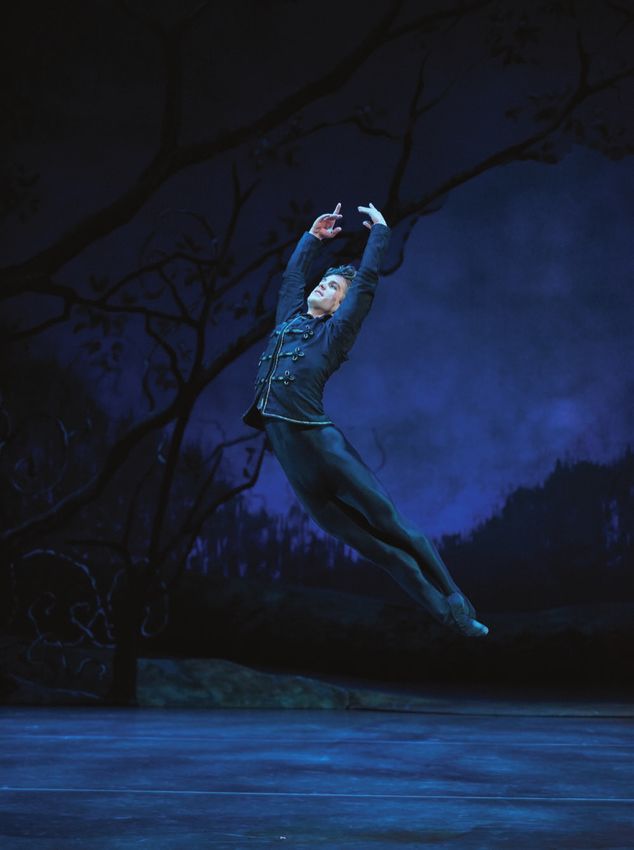
Nick Schultz have kept me on task and have                 For this production of The Sleeping Beauty
kept everything moving forward in the                      I did not want the costumes to be set in a
rehearsal room. Costume designer Donna                     particular period. I wanted to create our
Jefferis and scenic designer Howard C Jones                own fantasy world that has its own sense of
have created a true fairy-tale world, and                  style: straight from a child’s story book perhaps.
Andrew Lees and the whole RNZB                             I took details from different costume history
production team have brought every aspect                  periods and mixed them with a more modern
of the production to vivid life. Our lighting              silhouette. As well there is no shying away
designer, Randall Chiarelli, has worked                    from the fact that it is a ballet and I made
remotely from Seattle, aided in New Zealand                use of a lot of tulle in the skirts.
by Jeremy Fern and Daniel Wilson. It is a joy
                                                           My colour palette starts with a peach spring
to have Hamish McKeich back in the studio
                                                           summer rose garden look, then moves into
and on the podium. I could not have had a
                                                           an autumnal colour scheme and finishes with
better group of artists to work alongside
                                                           a winter theme: all white with lots of glitter
– thank you all.
                                                           and sparkle. I hope this moves the audience
This Sleeping Beauty has been a beacon of                  through the story and supports the dancers
hope for everyone at the Royal New Zealand                 as they bring the many characters to life.
Ballet this year. Every department has been
                                                           I would like to thank Kaarin Slevin, Head of
working diligently, with hope, to bring this
                                                           Costume Construction at Toi Whakaari, whose
beautiful ballet to the stage, and to you, our
                                                           students have put so much time and hard work
audience throughout Aotearoa. Our passion
                                                           into making some of the costumes you will see
is for live performance, and to be onstage,
                                                           onstage, and last and most of all to thank my
contributing to the artistic life of our
                                                           creative and supportive team who have been
country: well, there’s nothing better.
                                                           with me through this adventure.
Have a very merry Christmas, and a Happy
                                                           D O N N A J E F F E R I S | Head of Costume
New Year to you all,

P A T R I C I A B A R K E R | Artistic Director

ABOVE / Costume sketches for Carabosse and Aurora by Donna Jefferis
The story
CHARACTERS

The King                         Ruler of the Kingdom of the Rose
The Queen                        His consort
Aurora                           Their daughter
The Master of Ceremonies         Organiser of events, inviter of guests...
The Lilac Fairy                  The most powerful fairy in the Kingdom of the Rose
Her Cavalier
Carabosse                        Fairy of Misrule, unloved and uninvited
Her Cavalier
Fairy of Generosity
Fairy of Honesty
Fairy of Serenity
Fairy of Joy                     Bringers of gifts and blessings to Aurora
Fairy of Curiosity
Fairy of Clarity
Their Cavaliers
Ladies of the Court
Gentlemen of the Court
Children                         Pages, garland dancers, Lilac Fairy's attendents
Nurses
Carabosse’s minions
Suitors                          Four young princes who come to court Aurora
Prince Désiré                    A lonely prince, seeking friendship and love
The Duchess                      Part of the Prince’s hunting party, she aspires to marry him
Ladies of the hunting party
Gentlemen of the hunting party
The White Cat
Puss in Boots
Princess Florine                 Guests at Aurora and Désiré’s fairy tale wedding
The Bluebird
Little Red Riding Hood
The Wolf
CHAPTER ONE
A sunny morning, early spring                        Just as the Lilac Fairy stepped forward to
A princess, born to Queen and King                   offer her final blessing, Carabosse, the Fairy of
Music, dancing, trumpets play                        Misrule, long banished from the kingdom,
A joyful royal christening day                       arrived at the castle gates to demand why she
                                                     had not been invited to the royal christening.
Aurora is by fairies blessed
                                                     Chaos ensued as the King, terrified of the
But there’s an uninvited guest...
                                                     trouble that Carabosse would bring, berated
Once upon a time, in a faraway land, full of         his Master of Ceremonies for leaving such an
fragrant gardens, beautiful meadows and              important guest – even one whom he would
shady woodland, the King and Queen                   prefer never to see – out of the celebrations.
welcomed a special baby daughter. The
                                                     As the Fairies circled around the royal couple
young couple had longed and longed for a
                                                     and their precious daughter, Carabosse
child, and the Princess Aurora was not only
                                                     stormed into the room accompanied by evil
an enchanting baby, full of smiles and
                                                     minions who jostled and taunted the petrified
laughter, but would one day grow up to rule
                                                     guests. Carabosse then offered her ‘gift’: a
the Kingdom of the Rose.
                                                     fearsome prophecy that on her 16th birthday,
In the spring sunshine, the courtiers assembled      the Princess Aurora will prick her finger on a
to celebrate the royal birth. Princess Aurora        cursed spindle and die.
was presented to the court, who would one
                                                     The King and Queen were racked with grief
day would become her royal subjects. Fairies
                                                     and horror, but as Carabosse continued to
arrived from the four corners of the kingdom,
                                                     taunt the family, the Lilac Fairy, who was yet
from the heights of the mountains and the
                                                     to give her gift to the baby princess, returned.
depths of the valleys, to present special gifts to
                                                     She faced down Carabosse, who wilted in the
the little Princess: Generosity, Honesty,
                                                     face of her dignity and goodness, and promised
Serenity, Curiosity, Clarity and Joy. From the
                                                     that, though indeed the princess would prick
heart of the kingdom came the Lilac Fairy,
                                                     her finger on an enchanted spindle on her 16th
most powerful and beloved of them all.
                                                     birthday, she would not die. Instead, she would
Together they bestowed the gifts, with their
                                                     fall asleep for a hundred years, lying safely in
blessings, that would help the young princess,
                                                     peace until wakened by a kind, gentle and brave
in time, become a wise and loving Queen.
                                                     soul whom she could love with all her heart.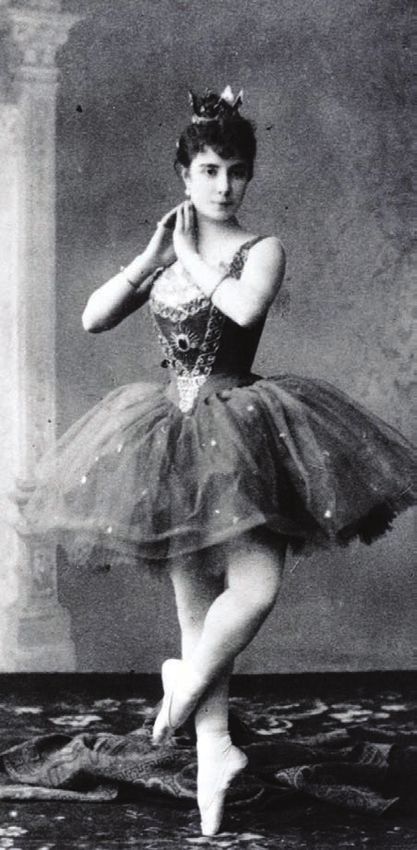
The King and Queen thanked the Lilac Fairy as,       Together, they attacked the fourth suitor,
humiliated, Carabosse and her minions departed       allowing Carabosse’s henchman, transformed
to plot their revenge. The day’s joy was restored    through evil magic, to take his place.
and everyone joined as one to celebrate              Aurora’s arrival at her birthday was heralded by
Aurora’s christening and her happy future.           the fragrant flowers of early summer, borne
CHAPTER TWO                                          aloft by the children of the court and by the
                                                     special friends who had accompanied her since
A birthday party, summer sun
                                                     childhood. She was glad to meet the young
Four princes come – will she choose one?
                                                     princes and welcomed them all with great
A rose from each, how sweet they smell
                                                     dignity. The King and Queen beamed with
Aurora thinks, and chooses well                      pride at their beautiful grown up daughter.
But wrong – the curse comes back to bite
                                                     As the ceremonies of welcome ended, Aurora
Aurora, King and Queen – goodnight...
                                                     was transfixed by the magnificent rose held
The years passed, and Princess Aurora grew           by the fourth prince: Carabosse’s henchman.
from a baby to a little girl, and from a girl to a   Smiling, she took it from him, only to prick her
young woman, poised to step into her royal           finger on the spindle concealed within.
future. She was blessed with kindness,               Aurora stood still, confused and upset.
intelligence and grace, and her sweet smile          Carabosse, her mischief managed, slipped out
brought sunshine to every room she entered.          of sight. The King and Queen now realised
As Aurora’s 16th birthday approached, the King       that the hurt had been caused by the spindle
and Queen planned a special celebration. All         and not merely a thorn and were filled with
the court came to celebrate, and four suitors        fear. Aurora seemed fine, then suddenly the
from beyond the borders of the Kingdom were          poison began to take effect. Filled with panic
invited to join them, in the hope that one           and pain, she fell to the ground, unconscious.
might, in time, become Aurora’s husband, and         The King and the three princes rushed towards
Prince Consort of the Kingdom of the Rose.           the fourth prince, only for Carabosse and her
On the morning of the birthday party, as             minions to reveal themselves, triumphant that
Aurora’s suitors approached the palace gardens,      the curse had done its work and the slight of
Carabosse, whose appetite for cruel mischief         16 years ago had been avenged. As the crowd
and revenge had not diminished, returned. With       cowered in fear, and amid the chaos the Queen
her was her henchman, and her minions.
desperately tried to wake Aurora, Carabosse A hundred years after Aurora’s birthday, as the
and her minions vanished. first flush of autumn colours deepened in the
When all seemed lost, a gentle breeze forest, a royal hunting party set out. Prince
heralded the arrival of the Lilac Fairy. She Désiré had of late been melancholy, and the
reassured the sobbing Royal couple that their young lords and ladies of his court tried every
beloved Aurora was not dead, but merely day to distract him, with hunting and dancing,
asleep. With time, and with love, she would picnics and games. Nothing worked – the Prince
awake, and happiness would reign once more. just wanted to be alone with his thoughts. Tired
of the courtiers’ chatter, he asked his page to
Aurora was put to bed and the King, Queen send them all back to his castle.
and courtiers composed themselves for
At last, as night fell, Prince Désiré was alone
sleep also, drifting off into an enchanted
in the forest. He was so lonely – and how he
slumber that the Lilac Fairy cast all over the
wished he could meet someone to share his
Kingdom. As the Fairies stood guard, vines
empty life. Suddenly, the Lilac Fairy appeared
began to grow and twine around the palace,
to him. The Prince was not used to magic,
protecting all within from every kind of harm
but he soon realised that the Lilac Fairy was
until awakened by a brave and loving heart.
real and, even better, that she could help
CHAPTER THREE him. She asked him if he had ever been in
A forest glade, the leaves drift down love, and when he replied, sadly, no, she
A lonely prince, who wears a frown showed him a vision of Aurora.
He needs good friends to share his life The other Fairies joined the Lilac Fairy and told
But more than that, perhaps a wife? the Prince the story of Aurora, how beautiful
The Lilac Fairy shows the way: and kind she was, and how her enchanted
A noble quest – he’ll save the day! sleep could only be ended by one who was
brave enough to defeat the evil magic. As the
The years again flew by, and the once- Prince hung on their every word, the vision of
flourishing Kingdom of the Rose was all but Aurora appeared, and danced with the Prince.
forgotten, no more than a legend of a Emboldened by love, and happier than he
princess and a palace hidden in the heart of a had felt in years, he resolved to end the
tangled forest of thorny vines.enchantment and save the beautiful princess CHAPTER FOUR
who had so touched his heart. The happiest of wedding days
The Lilac Fairy warned that love would not Full of friendship, gifts and grace
be enough. In order to break the enchantment, Stories, laughter, solemn vows
Prince Désiré would have to defeat Carabosse Love and kindness triumph now
and her minions who even now patrolled The timeless story onward goes
the borders of the palace gardens, thwarting
In our sweet Kingdom of the Rose
any attempt to enter. To aid him in his quest,
the Fairies gave the Prince a magic sword, and And so it came to pass that the Princess Aurora
vowed to protect him. and her Prince Désiré, after their first friendship
had indeed deepened into true love, were to be
As Prince Désiré approached the spot where
married and the whole court assembled for a
the vines grew thickest, the air grew cold, and
grand celebration.
he found it hard to breathe. Carabosse and her
minions could be seen circling in the dim light, The first to arrive were the Fairies, followed by
and attacked the Prince, stealing his sword. guests from the realms of Fairy Land beyond
The Fairies flew to his aid and Carabosse was the Kingdom of the Rose: Princess Florine and
beaten back, allowing the Prince to cut her Bluebird, Puss in Boots and the White Cat,
through the vines and approach the palace. As and Red Riding Hood and the Wolf.
the last vine was cut, Carabosse was defeated. The Lilac Fairy blessed the happy couple
She disappeared, never to be seen again in the and then, with great solemnity, the King
Kingdom of the Rose. married them.
As the sun rose, Prince Désiré ran to Aurora’s In the depths of winter, and with the promise of
side. He embraced her, kissing her tenderly many springs and summers to come, a new chapter
as she awoke. As King, Queen and courtiers began in the story of the Kingdom of the Rose.
began to stir around them, both Prince and The days of Aurora and her Prince, their children
Princess felt that, having met in their dreams, and their children’s children were filled with magic
they were destined to be together. and joy, blessed by fairies and happy ever after.
Floral border design
by Siobhan Clark,
Homegrown CreativeTchaikovsky and The Sleeping Beauty Piotr Ilyich Tchaikovsky was born in Votinsk in 1840, one of the seven children of a middle-class family with a tradition of military and government service careers. Although the young Piotr showed musical talent from an early age, there were at that time very few avenues for a young man, without a private income, to forge a career in music. It was not a profession held in high regard. While encouraging his efforts as a pianist and Portrait of Tchaikovsky (detail) by Nikolai Kuznetsov, 1893, composer, Piotr’s parents decided that he Tretyakov Gallery, Moscow should pursue a career in law, with a view to musical talent, both in performance and in becoming a civil servant. At the age of ten, he composition. Tchaikovsky was able to develop was sent to board at the Imperial Institute of his personal voice as a composer, combining Jurisprudence’s preparatory school in St established European forms such as the Petersburg, more than a thousand miles from symphony with Russian influences. He was not home. After two years at the school, he spent of the Russian nationalist school of a further seven completing his legal studies composers, such as Balakirev, Mussorgsky and at the Institute. Borodin, who scorned formal, European-style Although law was his focus, Tchaikovsky training, but neither was he as conservative as continued to study music and to learn the his teachers. Fortuitously, his development as piano throughout his time at school, as well a composer coincided with a growing as attending opera performances. On appreciation of fine music at the Imperial graduating, at the age of 19, he was court and among the wider Russian public, appointed to a junior role at the Ministry of and by the late 1860s his works had started to Justice, where he remained for three years. be performed and published. Then, in 1862, he joined the inaugural class of On graduating in 1865, Tchaikovsky was the St Petersburg Conservatory, under the appointed as Professor of Music Theory at the directorship of Anton Rubinstein. The new Moscow Conservatory. He combined his Conservatory had been founded with the academic duties with music criticism, express intention of fostering Russian travelling widely, and with a particular interest
in opera. He continued to compose, and          first truly Russian ballet, combining
public performances of his works became         Tchaikovsky’s symphonic score with Petipa’s
more frequent and were by and large             refined choreography, which melded the
well-received. He composed operas on            French tradition carried to Russia by the
traditional Russian themes (Voyevoda,           great ballet master and the spectacular style
Vakula the Smith, Oprichnik) symphonies,        of popular Italian ballets, all with a healthy
concerti, chamber music and songs.              dose of Imperial grandeur.
In 1875, he composed his first ballet, Swan     Vsevolozhsky had approached Tchaikovsky in
Lake. The Moscow premiere in 1877 was not       1888 with the idea of adapting Charles
a success and was closely followed by a         Perrault’s La Belle au bois dormant as a ballet,
short-lived and disastrous marriage.            beginning in the mid-16th century and, after
Tchaikovsky left Russia, supported by the       the hundred years’ sleep, reaching its climax
patronage of the wealthy Nadezhda von           at the court of Louis XIV, the ‘Sun King'
Meck, whose generosity over the next 13         acknowledged as the father of ballet in
years enabled Tchaikovsky to devote his life    France. The three collaborators met and
to composition. Although the composer and       corresponded frequently as the ballet took
his patron never met, Tchaikovsky and Von       shape, and Tchaikovsky often visited Petipa at
Meck exchanged more than 1,000 letters and      home, playing through his work in progress on
became intimate friends. Tchaikovsky            the piano while Petipa plotted the
dedicated the Fourth Symphony, completed        choreography using papier-mâché figures and
in 1878, to her, also finishing Eugene Onegin   his dining room table as the stage.
and the Violin Concerto the same year.          The first Aurora, Carlotta Brianza, was the
Tchaikovsky travelled in Russia and abroad      only ‘foreigner’ to be engaged by the
for the next three years. His reputation as a   Imperial Theatres in 1889 – 90, her arrival
composer continued to grow, and he found        coinciding with the growth of Russian
new appreciation for his work at home. The      nationalism at the Imperial Court. She was
1812 Overture, completed in 1880 around the     not noted for her acting ability, but for her
25th anniversary of the coronation of Tsar      lightness and virtuosity, which the critic
Alexander II, appealed to Russian patriotism,   Skalkovsky likened to that of a young
and in 1884, Tchaikovsky returned to live in    panther – Petipa was perhaps alluding to
St Petersburg. His works enjoyed favour at      this when he choreographed Aurora’s first
the Imperial court, and he was awarded the      entrance as a pas de chat.1 Other members
Order of St Vladimir, as well as a hereditary   of the original cast included Pavel Gerdt as
title. In 1885, he was granted a lifetime       Prince Désiré, well past his prime (he had
annual pension of 3,000 roubles through         made his debut in 1860) but much loved by
Ivan Vsevolozhsky, Director of the Imperial     audiences, Enrico Cecchetti as Carabosse
Theatres. It was Vsevolozhsky who               and the Bluebird, and Marie Petipa, the
commissioned The Sleeping Beauty.               choreographer’s daughter, as the Lilac Fairy.
The Sleeping Beauty, first performed in 1890,   Petipa’s choreography combined the strength
was a three-way collaboration between           and virtuosity of the Italian dancers who had
Vsevolozhsky, who proposed the scenario,        brought so much to the Imperial Ballet, with
Tchaikovsky, and Marius Petipa. It was the      the Russian grandeur of Tchaikovsky’s score, to
create a new style of ballet. While the
choreography is immensely difficult, the steps
are tied to the music and so part of a larger,
almost symphonic structure: never bravura for
bravura’s sake. Aurora’s balances in the Rose
Adage are not mere showing off, they show the
young princess’s confidence and readiness to
assume her place in the royal succession.
Modest Tchaikovsky recalled his brother’s
appreciation of every aspect of the production:
‘the miracles of elegance, luxury, originality in
the costumes and scenery, and with the
inexhaustible grace and variety of Petipa’s
fantasy.’ And if Tsar Alexander III failed to
appreciate the ballet’s significance,
commenting dryly that it seemed to him ‘very
nice’, the public was enchanted: The Sleeping
Beauty was performed more than twenty times
in 1890 – 91, accounting for more than half of
the ballet performances that season. Modest
wrote to the composer: Your ballet has become
a kind of obsession… people have ceased saying
to each other ‘How are you?’ Instead, they ask,
‘Have you seen The Sleeping Beauty?’’2
In her 2010 book on the development of
ballet, Apollo’s Angels, American critic
Jennifer Homans writes that: ‘It was not
merely that Sleeping Beauty was a powerful
symphonic score that stood on its own merits,
without Petipa’s dances. What mattered was
the way that the music worked on the human
body and spirit. Even today, Tchaikovsky’s
music pushes dancers to move with a fullness
and subtlety that few other composers then
or since have inspired. It is no accident that
Tchaikovsky’s music was initially perceived by
some as too operatic or big or difficult for the
                                                    Photograph of Carlotta Brianza as Aurora,
public, and especially the dancers, to fathom.      photographer unknown, 1890
Human bodies did not – never had – moved
                                                    1
                                                        Quoted by Meisner, Nadine, Marius Petipa: The Emperor’s Ballet
that way before. And yet the chance was also            Master, Oxford University Press, 2019, p226.
perfectly natural, scaled to St Petersburg and          Quoted by Homans, Jennifer, Apollo’s Angels, a history of ballet,
                                                    2

                                                        Granta Books, 2010, p279.
their own lives.’3                                  3
                                                        Homans, Jennifer, Apollo’s Angels, a history of ballet, Granta
                                                        Books, 2010, p278.
Marius Petipa
Marius Petipa (1818–1910) is one of
the most influential figures in classical
ballet. His choreography forms the
basis of almost all productions of The
Nutcracker, The Sleeping Beauty,
Swan Lake, Giselle, Don Quixote, La
Bayadère and Coppélia, and may be
considered the backbone of any
classical ballet company’s repertoire.
Petipa was born in Marseilles. His mother,
Victorine Grasseau, was an actress and his
Marius Petipa, photographer unknown
father, Jean Petipa, was a dancer and
distinguished ballet master. Following in his dancers routinely received higher pay than
father’s footsteps, and indeed those of his Russian performers. In May 1847 Petipa
elder brother Lucien (1815 – 1898), who arrived in St Petersburg with the promise of
became a star of the Paris Opéra Ballet, a contract. He was duly appointed to the
creating, among others the role of Albrecht Imperial Theatres as a premier danseur and
in Giselle, Petipa began dancing in his father’s mime, on a one-year contract, and remained
travelling company aged nine. Aged 16 he in Russia for the next 63 years.
joined Théâtre Nantes, where he also Petipa made his Russian debut as principal
created his first ballets. He studied in Paris dancer and ballet master of the Imperial
with Auguste Vestris, regarded as the Ballet (now known as the Mariinsky), starring
greatest male dancer of his time, before in his own re-staging of Joseph Mazilier’s
going on to perform as a dancer around Paquita. His breakthrough as a
France, in the USA, and in Spain. choreographer came in 1859 with his
In the mid-19th century, St Petersburg was a production of The Pharaoh’s Daughter, and in
magnet for foreign dancers, musicians and 1869 he was made Chief Choreographer of
other artists, attracted by the large and the Imperial Theatres. In addition to creating
well-subsidised Imperial companies and by original works such as Don Quixote (1869)
the generous contracts on offer: foreign and La Bayadère (1877), he restaged existingworks, including Jean Coralli and Jules for 41 years. He created more than 50 original
Perrot’s Giselle (1884) and Arthur Saint- ballets, staged versions of 19 other ballets and
Léon’s Coppélia (1884). created dances for 37 operas. At the time of
He made elaborate plans and undertook the Sleeping Beauty premiere, Petipa’s
historical research for his ballets, which Imperial Ballet numbered 212 dancers: 143
sometimes had exotic settings, such as the women and 69 men. His theatre and school
fashionable ‘Indian’ exoticism of La Bayadère, were the incubator for the global spread of
and the Ancient Egypt of The Pharaoh’s ballet in the 20th century, with a direct line to
Daughter. Petipa also established structures companies including Diaghilev’s Ballets
in ballet which are still used today, such as Russes, Ninette de Valois and The Royal Ballet,
the standard pattern for a pas de deux: a Marie Rambert and Ballet Rambert, and
duo, a woman's solo, the man's solo, and a George Balanchine and New York City Ballet.
brilliant final duo to pull it all together.
He worked closely with composers and was
well-known for his detailed instructions,
specifying, mood, style, metre and length so
that the music fitted seamlessly with his
choreographic structure. Petipa’s
collaborations with Tchaikovsky, the greatest
Russian composer of his age and well-
established as a serious composer of
symphonies and operas, helped to elevate
the status of ballet from spectacular
entertainment to high art.
Petipa’s 1890 production of Tchaikovsky’s The
Sleeping Beauty was followed by productions
of the composer’s The Nutcracker (1892) and
Swan Lake (1895), both created with Lev
Ivanov (1834 – 1901). His last great work was
Raymonda (1898), before he retired in 1903.
Marius Petipa served four Emperors and was
Chief Ballet Master of the Imperial Theatres
Title page of the programme for the New
Zealand Ballet’s silver jubilee production of
The Sleeping Beauty, 1978The origins of
The Sleeping Beauty
The story of The Sleeping Beauty is Like many folk and fairy tales, the ‘original’
stories of the maiden who pricked her finger
perhaps the classic ‘princess’ fairy
and fell asleep are a lot darker than the
tale. Known to millions the world pastel-toned tales that we are now most
over through the 1959 Disney familiar with.
animated feature and the Sleeping The French civil servant, academician and
Beauty Castle at Disneyland, aspects author Charles Perrault (1628 – 1703) is
generally thought of as the father of the fairy
of the story can be traced as far
tale. Perrault established this new genre of
back as the 14th century. stories, written for aristocratic audiences and
underpinned by strong Christian morals, with
his Stories or Tales from Past Times, with
Morals or Mother Goose Tales, published in
Paris in 1697. In it were included The Sleeping
Beauty, Cinderella, Puss in Boots, Bluebeard,
Little Red Riding Hood and several other tales.
Perrault’s stories were largely original, rather
than folk tales, and were intended for
sophisticated adults, not children. He was
inspired by a variety of sources, and for The
Sleeping Beauty, principally the Pentamerone,
a collection of tales by the mid-17th century
Italian poet Giambattista Basile. Basile’s Sun,
Moon and Talia includes many of the
elements of Perrault’s Sleeping Beauty
although with much darker twists including
rape, murder and cannibalism.
Perrault’s version is close to the familiar ballet
narrative, with seven fairies invited to a
princess’s christening and a curse from the
evil fairy accidentally left out of the festivities:
the princess shall one day prick her finger on
a spinning wheel and die. The seventh fairy
Dorothea Ashbridge as Carabosse, The Sleeping Beauty, 1972Katherine Skelton and Joshua Guillemot-Rodgerson in rehearsal, photograph by Stephen A’Court modifies the curse, saying that the princess German roots, Jacob and Wilhelm Grimm will not die but will fall asleep for a hundred considered that there was a connection with years, until woken by a kiss from a king’s son. the Germanic Brunhild, the shield maiden A century later, the sleeping princess having stabbed by Odin with a ‘sleeping thorn’ in the been safely protected by a thicket of thorny 13th century Volsunda Saga. Brunhild was briars, this comes to pass, and the prince and however not woken by a kiss but by the hero princess fall in love and are married. Sigurd cutting open her chain mail. This is however just the first half of Perrault’s The 19th century brought a renewed interest story and ‘happily ever after’ takes a little in folk tales and fairy tales, and the story of longer, with the royal couple having to The Sleeping Beauty has inspired new works overcome the machinations of the Prince’s of art ever since: operas by Michele Carafa mother, who is an ogress determined to kill (1825) and Engelbert Humperdinck (1902), a and eat the prince and princess’s two four act ballet (1829) by Jean-Louis Aumer, children, Aurore (Dawn) and Jour (Day), as to a score by Ferdinand Hérold, Debussy’s well as the princess herself. Helped by a Pavane de la Belle au bois dormant from his kindly cook, the ogress is tricked and Mother Goose Suite (1910), poems by Alfred, ultimately perishes in a barrel full of vipers! Lord Tennyson, and countless re-tellings in The Brothers Grimm adapted The Sleeping collections of fairy tales and re-imaginings in Beauty for their 1812 collection, calling the novels, by authors as diverse as Neil Gaiman story Little Briar Rose. Their version ended and Anne Rice. Most recently, the Disney live with the arrival of the prince, and the princess action film Maleficent (2014) features the evil had a name for the first time: Rosamund. fairy from Perrault’s original tale, together Although Perrault’s story did not have strong with Princess Aurora.
An iconic ballet
Petipa’s Sleeping Beauty has been a                   sketches only, were written down by the
                                                      régisseur Nikolai Sergeyev, who left Russia in
constant presence on the ballet stage
                                                      1918, and worked with the Ballets Russes
almost since its creation. Notable                    and subsequently with Ninette de Valois at
productions include Diaghilev’s 1921                  her Vic-Wells Ballet in London, which
The Sleeping Princess; produced in                    became The Royal Ballet. Sergeyev’s
                                                      notations, now held in the Harvard Theatre
London with lavish designs by Leon
                                                      Collection have become valuable resources
Bakst, it almost bankrupted the                       for choreographers seeking to reconstruct
Ballets Russes.                                       Petipa’s ballets as he himself may have seen
                                                      them, including Alexei Ratmansky’s
After the Russian Revolution, Petipa’s
                                                      production of The Sleeping Beauty, staged
choreography was able to be restaged in the
                                                      for American Ballet Theatre in 2015.
West through a notation system developed
by a young dancer in St Petersburg, Vladimir          The Royal Ballet’s 1946 production of The
Stepanov. His notations, some detailed, some          Sleeping Beauty, designed by Oliver Messel,

Guest Artist Stella Abrera as Aurora in the RNZB’s   Former Principal Guest Artist with the RNZB Gillian
The Sleeping Beauty, 2011, photograph by Evan Li     Murphy as Aurora in the American Ballet Theatre
                                                     production by Kevin McKenzie, Gelsey Kirkland and
                                                     Michael Chernov, photograph by Rosalie O’Connor
F RO M LE FT, C LO C KWI S E / Costume design for the Wolf in the Ballets Russes’ 1921 production of The Sleeping
Princess, by Leon Bakst. Guest artists Aidar Akhmetov and Anna Dorosch in the RNZB’s production of The Sleeping Beauty
by Kim Brandstrup, 1998, photograph by Stephen A’Court. The closing moments of the New Zealand Ballet’s production of
The Sleeping Beauty by Philip Chatfield, 1978, with Patricia Rianne and Jon Trimmer, photograph by John Ashton
re-opened the Royal Opera House, Covent from the old world had passed permanently
Garden, after the Second World War, with away, and it caused an extraordinary feeling of
Margot Fonteyn as Aurora and Robert uplift when it was suddenly appreciated that
Helpmann as both Carabosse and the Prince. perhaps they had not entirely vanished.’5
The production had, and still has, huge Five decades later, the Lilac Fairy, played by
symbolic importance for the company. The Darcey Bussell, symbolically put the Covent
first night gala, recalled Ninette de Valois, Garden theatre to sleep as it closed for a
‘smelt bravely of mothballs’4 and was attended major redevelopment, re-opening
by the royal family, Prime Minister Clement triumphantly in 1999. On a sombre note, the
Attlee and the full cabinet. John Maynard House Manager’s report on 17 March this year
Keynes wrote in a letter to his mother that stated: ‘In the spirit of the Lilac Fairy, we have
‘Many people had come to fear in their put the House to sleep, ready to be re-
hearts… that all the grace and elegant things awakened when this crisis is over. Good night.’
4
Quoted by Zoë Anderson in The Royal Ballet 75 Years, Faber and Faber, London, 2006, p90.
5
Quoted in Apollo’s Angels, ibid, p425.A rare and
special ballet
The Sleeping Beauty has been a part Majesty’s Theatre in Auckland in August
1953. It appeared, inter alia, alongside
of the Royal New Zealand Ballet’s story
excerpts from Act II of Swan Lake and
since the company’s foundation year, Fokine’s pre-war showpiece, created for the
yet it has not graced New Zealand great Nijinsky, Le Spectre de la Rose. Both
stages with the same frequency as the ‘Bluebird’ and Spectre de la Rose
showcase powerfully athletic yet refined
The Nutcracker, or even Swan Lake.
male dancing; it is tempting to think that the
Unusually, for the RNZB at least, The Sleeping inclusion of these works in this early
Beauty is not a production that stays in the programme, danced by Poul Gnatt himself,
repertoire with regular revivals – like Swan was designed to give New Zealand audiences
Lake or Giselle – but can remain unseen for a vision of ballet that was a far cry from little
decades, and only a handful of dancers in the girls in church halls on Saturday mornings.
company today have performed The Sleeping
In 1962, Philip Chatfield and Rowena Jackson
Beauty in New Zealand before now.
staged the grand pas de trois from Act III as
The Sleeping Beauty, with its large cast of part of the company’s opening season and
named characters, challenging choreography subsequent spring tour, but it was not until
(all the versions ever staged by the RNZB 1965 that the New Zealand Ballet staged a
have had Petipa’s steps at their heart) and full production of The Sleeping Beauty.
expectations of elaborate costumes and The 1965 production, presented as part of
scenery (with the story unfolding over more the winter season, was staged by Russell
than a hundred years, fashions change!), is a Kerr and designed by Raymond Boyce, who
major undertaking for any ballet company. For by then had also created designs for the New
this reason, a new production is often chosen Zealand Ballet’s first full productions of
to mark important moments in the life of a Petrouchka (1964 – after Benois), The
company, showcasing like no other ballet the Nutcracker (1963) and Giselle (1965) as well
depth of talent that it can bring to the stage, as excerpts from Coppélia (1964) and Kerr’s
in both performance and production. own Prismatic Variations (1960). Sets and
The New Zealand Ballet’s founder, Poul costumes for all were sadly destroyed in the
Gnatt, staged the celebrated ‘Bluebird’ pas fire which swept through the company’s
de deux from Act III of The Sleeping Beauty Thorndon warehouse in 1967.
in the company’s second-ever season, at HisClytie Campbell adjusts her Carabosse headdress for the 2011 production by Greg Horsman, designed by Gary Harris, photograph by Ross Brown 1972 saw a rarity: The Sleeping Beauty, This beautiful new production is traditional at specially created and staged for Television heart, pays homage to Petipa at all the right New Zealand. The production, staged by Bryan moments and is packed full of brilliant dancing.’ Ashbridge, was the first full-length ballet ever 2011 saw the premiere of the RNZB’s most shown on New Zealand television, and recent production of The Sleeping Beauty, featured Dorothea Ashbridge as Carabosse. with choreography after Petipa staged by Unfortunately, no recording survives. ballet master Greg Horsman, and designs by In 1978, the New Zealand Ballet celebrated former Artistic Director Gary Harris. The its 25th birthday with – what else – a new ballet came together under the watchful eye Sleeping Beauty. The production was staged of newly-appointed Artistic Director Ethan by Philip Chatfield and designed by David Stiefel and guest teacher Fiona Tonkin. Taylor, and starred Patricia Rianne as Aurora, Elements of the classic story-book design with Jon Trimmer as her Désiré. The were executed by Wellington’s Weta production was an outstanding success, with Workshop, riding high on the success of The Philip Chatfield commenting, somewhat Lord of the Rings, and the making of the ruefully, that it was the first time that the production was immortalised, reality company had ever ended a season with television-style, in the second series of The money in the bank! Secret Lives of Dancers. More than 42,000 It was not until 20 years later than the (by people saw the production around New then) Royal New Zealand Ballet staged a new Zealand. A specially adapted version of Act Sleeping Beauty. Artistic Director Matz Skoog III, Aurora’s Wedding, was staged at the CBS commissioned Danish choreographer Kim Arena in Christchurch, less than ten months Brandstrup and designer Craig Givens to after the Canterbury earthquakes. Greg create a new version; one of the first ‘major’ Horsman left the Royal New Zealand Ballet in productions to have its premiere at the RNZB’s 2012 to take up a new role at Queensland new home at Wellington’s St James Theatre. Ballet, and his production has now been Sunday Star Times critic Rod Biss described it staged there several times to great acclaim. as ‘…one of the company’s finest achievements.
Our young
performers
A special welcome – and our heartfelt thanks – to the young dancers from
around Aotearoa who are joining us onstage for The Ryman Healthcare
Season of The Sleeping Beauty.

W E L L I N G T O N | Amelia Maguire, Ashley Lewis,         I N V E R C A R G I L L | Aaliyah Jack, Caitlin Checketts,
Ava Cvetkovic, Blake Russell, Carter Craig, Catja           Dani Kramers, Emily Howley, Hannah Forsyth, Haylee
Whitehead, Charlie Murray, Chloe Zhao, Coco Giera,          Springford, Holly Scarlett, Ingrid Fleming, Lachie
Danielle Wu, Eleanor Henry, Elizabeth Longhurst, Ewan       McGregor, Liam Templeton, Luna Zhang-Thomas,
Riches, Finley Barnes, Freya Matthews-Borshevsky,           Matilda Stevens, Natalie Smith, Pyper Brown, Samantha
Harriet Mak, Isabella Wallace, Isla Evans, Isla O’Connor    Smith, Shiloh Waddell, Sonya Versteynen, Sophia
Williams, Jade Tufele, Jayden Salla-Haines, Jing Yi Han,    Metzler, Sophie Purdon, Sophie Wylie.
Kaylee Smith, Kyra McWhinnie, Liam Brick, Lucy Foy,
                                                            PA L M E R S T O N N O R T H | Aily Abdollahi, Alana
Lucy Meijer, Maia Mclaughlan, Marco Russell, Matilda
                                                            Holroyd, Alexandra Pedley, Amelia Simpson, Anna
Down, Matilda Wallace, Matthew Woodley, Niamh
                                                            Boyes, Cameron Greer, Chelsea Callaghan, Chloe
Mason, Ocian Kerehoma, Peyton Luamanu, Rosemary
                                                            Bethwaite, Devon Wei Sung Zhou, Harriet Jackson, Isla
Buyck, Ruby Fay Taylor, Shanwen Tan, Taleisha Dayal,
                                                            Cabuay, Jiho Lee, Malaya Hinks, Manawa Te Wiki,
Taylor Conway, Thea Cory, Victor Qiao, Yoshiharu
                                                            Marcail Rosson, Maya Becker, Mia Leigh, Molly Fletcher,
Daniel Kusunoki, Yulia Itadani.
                                                            Murphie Hunt, Naida Tuthill, Paityn Angove, Shanel
C H R I S T C H U R C H | Abigail Croft, Alex Ellwood,      Maree Penman.
Annabel Addison, Annie McAra Young, Bonnie Graves,
                                                            N A P I E R | Alfie Kuklinski, Aliya Stratford, Amber
Carlos Miller, Carys McDonald, Charlotte Kyle, Chloe Teo,
                                                            Idiosolo, Amelia Tapsell, Arielle Duytshoff, Catalina
Dylan O’Keefe, Emily Calvert, Emmy Sandford, Freya Hall,
                                                            Bianca Camero, Dani-Kate Sneddon, Ella-Rose Brooker,
Gabe Wells, Gabriella Barr, George Keene, Hatsumi Yuge,
                                                            Emily Ede, Emma Lu, Felix Topp, Grace Wootton,
Isabella Bower, Isabella Yee, Isla Marshall, Jordan Yang,
                                                            Haruka Wallis, Isla Carew, Jade Moller, Jean Sharpe,
Juliet Hsu, Kristian Martin-Blackwell, Lia Manning,
                                                            Lea Shand, Livia Laird, Molly Jones, Piper Golds,
Malakhi Dunn, Margaux Turner, Matilda Farr, Mia Gin,
                                                            Scarlett Chambers, Summer Olsen.
Neve Aitken, Nina Janiero Hammett, Nova Gainsford,
Olivia Pons, Phoebe Nyman, Pixie Clark, Ruby Cleverley,     A U C K L A N D | Adelaide Ouwejan, Aliza Song, Amelia
Samara McCartney, Sara Yu, Seth Smedick, Spencer            Ozaki, Ann Kyle, Asia Mohammad, Athena House, Belle
Keoghan, Tamati Graham, Tavatualau Limuloa, Willem          Hartley, Benji Groen, Brooke McMahon, Caitlin Caird,
Fisher, Xavier Eveleigh, Zoe Croot.                         Chloe Liu, Chloe-Leigh Wiggett, Cicley Warman, Coco
                                                            Poole, Daphne Laker, Edie Warman-Clough, Ella Dron,
D U N E D I N | Angus Carr, Annabel Harridge, Asher
                                                            Ethan Bygrave, Hannah Yun, Havana Thomson, Isabella
Armstrong, Bronte Beker, Chelsea King, Cienna Hearle,
                                                            Lucia Goff, Isabelle Mahoney, Jai Elphick-Moon, Janice
Grace Thomas, Hannah Thomas, Hermione Sparks,
                                                            Chen, Janita Chen, Jemima Pears Scown, Jessica Ding,
Isabel Martin, Jackson Hamilton, Jessica Reid, Luke
                                                            Jovina Zhu, Kathy Fang, Katie Shi, Koharu Iino, Lauren
Gendall, Lydia Peters, Matthew Lemon, Mia Grace
                                                            Wycherley, Nicholas Cowie, Oscar Cowie, Paris-Lily
Cohen, Mia Lily Waite, Olivia Buchanan, Olivia Mei,
                                                            Foster, Sabrina Liu, Sebastian Lewis, Sophie Lane,
Shrishti Singh, Sophie Wagner, Vinnie Vickers.
                                                            Sophie Power, Sophie Wood, Tamsyn McCamish, Willow
                                                            Elliott-Lowe, Yilin Zhao, Yolanda Zhu.
Sara Garbowski and Joseph Skelton in rehearsal, photograph by Jeremy Brick
OUR CHILDREN COME FROM: PA L M E R S T O N N O R T H | Maximum Dance
Zone, Dance Works, MasterClass Dance Studios, The
W E L L I N G T O N | Dream Academy of Performing
Rose Academy, Maureen Ax School of Dance, Dance
Arts, Jennifer Evans Dance Academy, Mary Rodgers
Unlimited, Whanganui Ballet and Dance Academy,
Ballet Academy, Dance Plus, Wellington Ballet Studio,
Michelle Glover Academy of Dance, Alison’s Studio of
Extreme Dance, Fiona Haines Dance Academy, Kāpiti
Dance.
Dance Centre, LA Dance Wellington, En Pointe, Chilton
Dance Centre, Wellington Dance and Performing Arts N A P I E R | Nadine Antoinette School of Dance,
Academy, Instep Dance Studio, ODA Dance Studio. Heather Brunsdon School of Dance, Taupo Academy of
Dance, Dance Avenue, Deborah Lees Dance, Dance
C H R I S T C H U R C H | Southern Ballet Theatre,
Central Taupo, Anne Samson School of Ballet, Diana
Convergence Dance Studios, Canterbury Ballet,
Shand Studio, Briar Horrocks Studio.
Silhouette Studios, Aroura Dance Studio, Levings
Dance Company, Gravity Dance Studio, Dance with A U C K L A N D | Philippa Campbell School of Ballet,
Aimee, Sharon Howells School of Dance, Agape Dance Talbot Dance Academy, Classical Coaching School, MEBA,
Academy, The Selwyn School of Dance, Linda Simons Cameron Ballet Academy, Danceville, Papilio – The Friday
School of Dance, Jenna McKenzie School of Dance. School, Devonport School of Dance, Limelight Dance
Academy, Northern School of Performing Arts, Draper
D U N E D I N | Dunedin School of Ballet and Dance,
Academy of Dance, Dance West, The Dance Corner,
Meena Dance, Point Central, Dance Wanaka, Bennett
Rhythm n Steps Dance Academy, Interfusion Dance
School of Ballet and Jazz, Let’s Dance Studio.
Studio, Dance Avenue, Stow Austin Studio.
I N V E R C A R G I L L | La Muse, Ainge School of Dance.
A S P E C I A L T H A N K YO U T O T H E T E A C H E R S A N D S C H O O L S W H O H AV E
A S S I S T E D W I T H L O C A L R E H E A R S A L S F O R O U R YO U N G P E R F O R M E R S .
C H R I S T C H U R C H | Glenn Harris - Southern Ballet School and Theatre
D U N E D I N | Meredith Walker - Bennett School of Ballet and Jazz
I N V E R C A R G I L L | Hana Skeggs - La Muse
PA L M E R S T O N N O R T H | Emma Carey - Maximum Dance Zone
N A P I E R | Nick Skelton - Heather Brunsdon School of Dance
A U C K L A N D | Amanda Cowie and Philippa Campbell - Philippa Campbell School of BalletBIOGRAPHIES
DONNA JEFFERIS AMY MCLENNAN
Costume designer Make-up and wig designer
Donna Jefferis has had a 30+ year career in Amy McLennan is a Wellington based make-up artist,
costume for theatre and dance in both New with 20 years’ experience working in all aspects of
Zealand and the United States. After graduating the make-up industry. After completing her Diploma
with an MFA in Theatrical Design from the in Film & Television Make-up, she commenced her
University of Georgia, Donna returned to New career on the M.A.C Cosmetics counter which honed
Zealand in the mid-1990s and has worked her skills in beauty make-up.
consistently in theatre, films, and ballet in both Later she diversified into film, television and theatre
countries. Donna spent her early career primarily and have worked on many major International films
in theatre creating costumes for productions at including King Kong, The Hobbit, The Ghost in The
Downstage Theatre and Circa Theatre in Shell and Slow West. She has also worked on
Wellington, for which she won three Chapman numerous New Zealand films and television series.
Tripp Costume Designer of the year awards. She
Amy enjoys all aspects of make-up. She loves
also spent seven seasons working at the critically
working with current beauty products to create
acclaimed Colorado Shakespeare Festival in
beautiful wedding and fashion looks. She is very at
Boulder, Colorado. After twelve years teaching
home on a film set, standing by on actors, working
costume construction at Toi Whakaari as well as
with wigs and special effects make-up. She also
designing and managing the costumes for the
enjoys the behind the scenes work of making hair
New Zealand School of Dance, she made the
pieces, drawing and creating tattoo transfers. She
move to the Royal New Zealand Ballet in 2018.
puts professionalism, commitment and care into any
Since then she has also worked with the Texas
make-up role she takes on.
Ballet Theatre in Fort Worth, Texas and Tulsa
Amy has a strong interest in cruelty free, ethical,
Ballet in Tulsa, Oklahoma. Donna is thrilled to
natural and organic make-up and carries products in
have the opportunity to design her first full length
alignment with these values in her kit, alongside the
ballet, offered and supported by Patricia Barker.
big and trusted brands such as M.A.C, Bobbi Brown,
Donna gives credit to her remarkable workroom
Stila and Nars. She is happy to speak with clients
team, without whom, none of the amazing
about 'greening' their makeup and skincare routines.
costumes could make it to the stage.
Alongside her make-up artistry, Amy also works as
an illustrator, creating botanical and nature inspired
images for private and commercial clients. Amy
recently had her second child, Amos, and has a
gorgeous four-year-old named Sabine.H OWA R D C J O N E S RANDALL G CHIARELLI
Scenic designer Lighting design
Since 1996 he was the Director of Scene American Randall G. Chiarelli has devoted a career to lighting for
Painting, Assistant Dean of Academics and on dance, much of it with Pacific Northwest Ballet in Seattle Washington.
the Design faculty at the University of North He has also done works for American Ballet Theatre, Boston Ballet,
Carolina School of the Arts. He retired from Houston Ballet, and San Francisco Ballet, among other companies.
teaching in 2018. Before that he was one of the His collaborators include choreographers Glen Tetley, Kent Stowell,
founders of Cobalt Studio, an apprentice Susan Stroman, Justin Peck, and Christopher Wheeldon. In addition
painting studio in New York. He was recognized to lighting for dance, Mr. Chiarelli has created lighting for musical
in 2000 in Boston with the Elliott Norton Award artists, Tony Bennett, Ella Fitzgerald, and Ray Charles.
for his body of work in the New England area
and in 2005 received an honourable mention for
scene design in the World Stage Design Expo.
Last year he was honoured by USITT as a
distinguished educator for scenic artists. He has
designed over 300 shows over the course of his
career. He has designed at the Royal Ballet and
Opera of Romania, North Shore Music Theatre,
Pittsburgh Civic Light Opera, Missouri Repertory
Theatre, State Ballet of Missouri, North Carolina
Dance Theatre, Eglevsky Ballet, Ballet Trocadaro,
JEREMY FERN
Weston Playhouse, NC Shakespeare Festival,
American Heartland Theatre, Goodspeed Opera
Assistant to the lighting designer
and the Coterie Theatre.
Jeremy has been involved in the lighting business for the last 15 years.
He has primarily designed for theatre and dance, working with
companies including Atamira Dance Company, Auckland Theatre
Company, Black Grace Dance Company, Douglas Wright Dance
Company, Indian Ink Theatre Company, New Zealand Opera, Okareka
Dance Company, Red Leap Theatre Company and Silo Theatre.
His work has been seen throughout New Zealand and in Australia, the
United States, Mexico, Japan, Hong Kong, Korea and The
Netherlands. Jeremy’s work has been part of a New Zealand exhibit
in the Prague Quadrennial, and he has lit New Zealand showcases for
two world expos, in Japan and China.
Jeremy first worked with the RNZB on The Piano: the ballet in 2018.You can also read


