A Manifesto for Trans Inclusion in the Indian Workplace - BY NAYANIKA NAMBIAR WITH PARMESH SHAHANI
←
→
Page content transcription
If your browser does not render page correctly, please read the page content below
A Manifesto for
  Trans Inclusion in
the Indian Workplace
  B Y N AYA N I K A N A M B I A R
  W I T H PA R M E S H S H A H A N I

            December 2018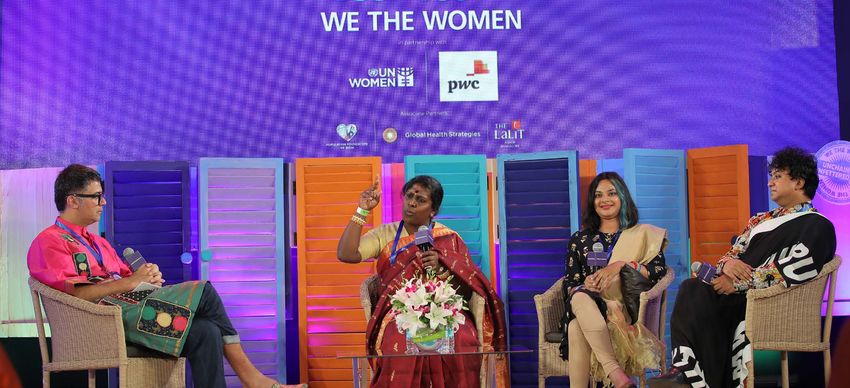
Research & text: Nayanika Nambiar with Parmesh Shahani
Design: Mukta Pai

Special thanks: Nisaba Godrej, all our wonderful colleagues
at the Culture Lab and Godrej at large especially the D&I,
Corporate Communication and GCPL Design teams; and to
all those we interviewed for this paper and who shared their
thoughts and resources with us so generously

2
Table of Contents

I) Introduction and scope of this paper..................................................................................5

II) A manifesto for trans inclusion in the Indian workplace................................................ 9

PART 1: BACKGROUND: CULTURE, STATE, SOCIETY AND THE LAW................................9
a. What is trans – meaning and cultural background in India.................................................10
b. Legal and social context................................................................................................................13
c. Work on trans inclusion at the state level across India........................................................ 17

PART 2: THE BUSINESS CASE FOR LGBTQ INCLUSION
AT INDIAN COMPANIES........................................................................................................... 21
a. LGBTQ inclusion can make you money.....................................................................................22
b. Innovation and talent are found in inclusive workplaces....................................................23
c. LGBTQ messaging helps you improve your PR and keep up with millennials.............. 27

PART 3: TRANS INCLUSION AND OUR RECOMMENDED STRATEGY...............................35

PART 4: CASE STUDIES AND RESOURCES YOU CAN USE................................................57
a. Kochi Metro.......................................................................................................................................58
b. VLCC....................................................................................................................................................59
c. Lalit Hotels.........................................................................................................................................59
d. Tata Steel ........................................................................................................................................... 61
e. Thoughtworks.. .................................................................................................................................62
f. Third Eye Cafe...................................................................................................................................64

Acknowledgements...................................................................................................................71
References .................................................................................................................................72
Appendices................................................................................................................................80
Annexures..................................................................................................................................84

                                                                                                                                                         3
4
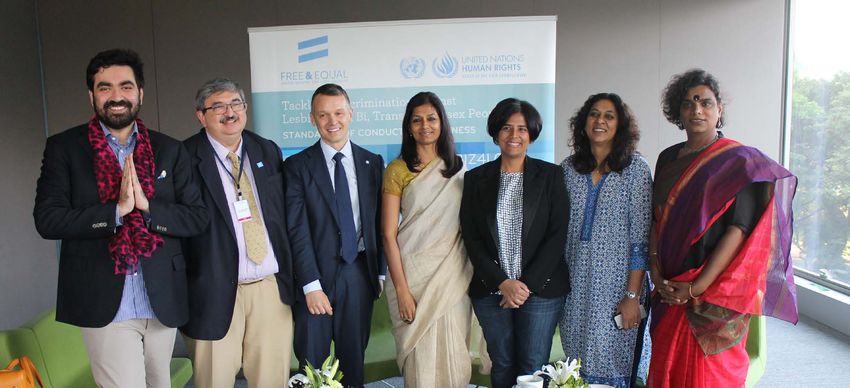
The launch of the United Nations Standards of Conduct for Business in tackling discrimination against lesbian, gay, bi, trans and intersex
(LGBTI) people, at the Godrej headquarters in Vikhroli, Mumbai (2017).

                                         Introduction
                                          and scope
                                         of the paper

                     “Inclusivity does mean innovation. The more
                      inclusive you are, the more debates you can
                    have, the less hierarchy you have, the faster it
                    is to recover from failure… If you say everyone
                     should ‘talk like me, look like me, be like me,
                       have the same background as me’ – I don’t
                       think that would work well for companies.”

                                          -NISABA GODREJ
                             Chairperson of Godrej Consumer Products Ltd.

This paper aims to bring to light the position and circumstances of trans people in
Indian society and how corporate India can take action. While it is important to bring
about change, the paper does not dwell only on the social need for transformation,
but also provides a strong business case for adopting LGBTQ friendly policies and
branding. The final section of the paper details a simple strategy which can be easily
adopted in all companies in India for trans inclusion. There are companies already
doing great work in this area. This paper takes the best practices from them and
breaks down methods in which inclusive policies can be implemented by others.

                                                                                                                                       5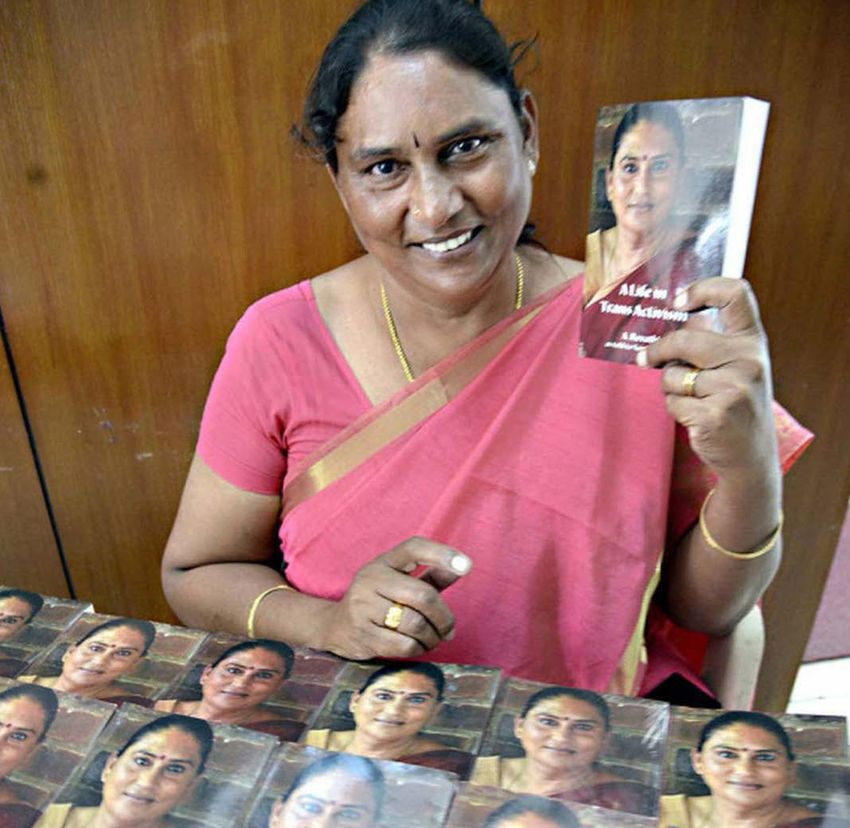
Being inclusive will prove to be beneficial     within Godrej and with those who follow
for any stakeholder that chooses to             our work - we thought this paper would
embark on this journey. Our paper outlines      serve as a useful toolkit for anyone that
just some of these benefits: money,             might be interested. Our vantage point at
publicity, and innovation. We hope that         the Lab – a cultural space located within
over the course of reading this paper           the umbrella of a large company – gives
you will come to realize - like we have         us the unique opportunity to speak to
- that inclusion will bring a company           corporate India and also members of the
immense dividends to businesses.                LGBTQ community. Our continued LGBTQ
Since the approximately 40 corporate            programming has earned us credibility
representatives present at the 2017             within the queer community and with
launch of the UN Standards of Conduct           queer NGOs and community organizations
for Business report for LGBTQ inclusion,        over the years. We have been energized
the number of companies exploring               by the fact that Godrej has decided to
LGBTQ inclusive policies has only steadily      adopt some of our suggestions over the
increased. With this paper, we hope to          years. This support has given our team
provide some direction to companies that        a further incentive to work towards trans
are joining the fore and looking to make        inclusion. With this paper, we’re trying
a change. We also hope that it will be of       to influence other companies in India to
interest to a general audience that cares       embark on the journey towards equality
about LGBTQ issues in India and wants to        alongside us.
make a difference.
                                                Initially we were going to write this as a
Why are we writing this paper?                  paper for LGBTQ inclusion. But during
The draconian law Section 377, which            the course of our research, as we dug
criminalises homosexuality, was read            even deeper and spoke to more people
down by a bench of five judges in               working in this field, we realized that while
the Honourable Supreme Court on 6               LGBTQ inclusion has already gained some
September, 2018. We started writing             traction in the business world, a focus
this paper in June 2018 during the legal        on trans-specific policies is necessary
existence of Section 377, and as of the         because trans employees are known to
landmark judgement on 6 September,              face a distinctly different set of challenges
2018 we realize that its importance has         in the workplace that are not a part of the
increased manifold. While the law now           lesbian, gay or bi experience. According
supports the community, there is a world        to the National Human Rights Commission
of difference between decriminalization         Report on the living conditions of
and true equality, and we firmly believe        transgender people, 92% of India’s
that corporates have a role to play in          trans people are unable to participate
bridging this gap. It is time now to shift      in any economic activity. Less than half
our attention to the battles we still need      of them have access to education, and
to fight in a post-377 India – there is still   62% of those that do, face abuse and
a long way to go.                               discrimination. Moreover, only 2% live with
                                                their families (Dailyhunt, 2018). We want
Our motivations for writing this paper          to make sure that trans people can, at
stem from our firm belief in equality for       the very least, not view their workplace
the most marginalized sections of our           as a site of discrimination. Further, we
population. Being part of the Godrej            believe that a focus on the inclusion and
India Culture Lab and witnessing the            meaningful participation of trans persons
mindset change that our programming             will lead to greater confidence among
has brought about over 7 years - both           both employers as well as not so visible

6
LGBTQ populations to reach out to each
other. We hope that this will then prompt
employers to consider engaging with and
hiring a whole range of sexual and gender
minorities.

Please consider this paper and the
slideshow that accompanies it as a work in
progress. We have written it for both - the
LGBTQ community and corporate India -
with the hope that it will be an evolving
project as we get further inputs from
stakeholders along the way.

Methodology

Primary sources:
With a total of 30 interviews, this paper
was written with the valuable inputs of
various stakeholders – whether it was
activists, D&I consultancies, community-
based organisations or corporate
respondents. The primary research for this
paper came from people that are situated
in varied professional spheres but are all
involved and committed to the inclusion
of trans people in the workplace.

Secondary sources:
This paper has collated relevant
information from reports, books and
articles. The references can be found
at the end of the paper. In addition, we
have attended conferences, roundtables
and webinars and been participant
observers in the queer ecosystem for 7
years. For instance, we were proud to
host the UN launch of the Corporate
Standards of Conduct in 2017 at Godrej.
Our participation in this ecosystem
has shaped our overview as well as our
recommendations.

                                              7
8
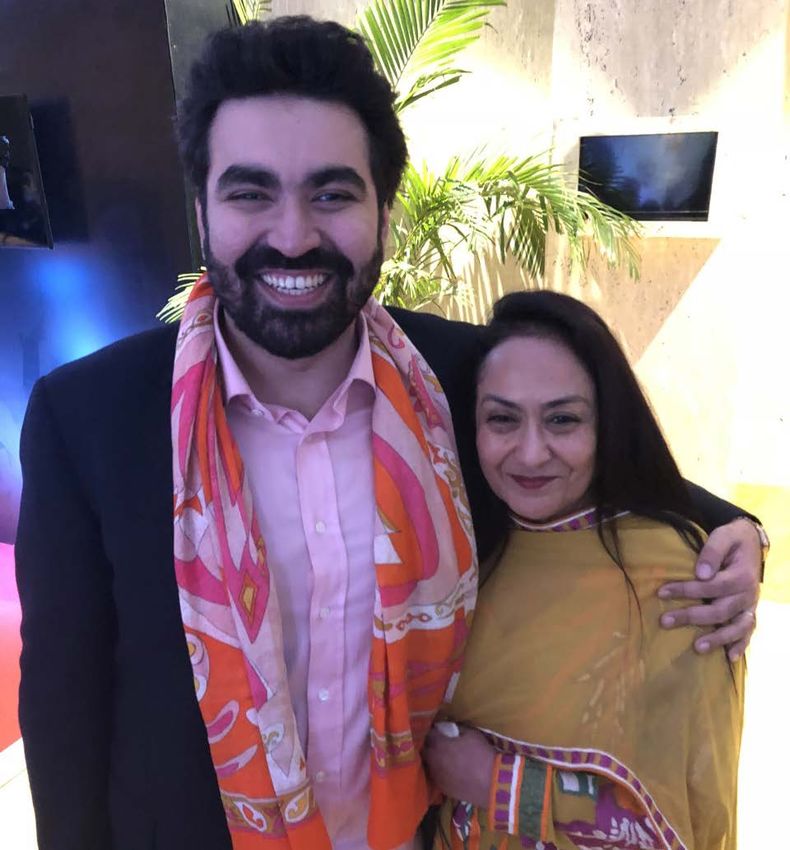
Parmesh Shahani from Godrej India Culture Lab in conversation with trans activists Akkai Padmashali from Ondede, Anubhuti Banerjee
from Tata Steel and Anindya Hajra from Pratyay Gender Trust at We The Women, 2018.

                          A manifesto for
                         trans inclusion in
                       the Indian workplace
                             Part 1. Background:
                            Culture, state, society
                                 and the law

                            “The state is constantly policing my
                            bread and butter, housing, clothing,
                             education, employment, marriage,
                             privacy and sexual performances.
                            Who is the government to decide my
                                      identity for me?”

                                               -AKKAI PADMASHALI
                                                Trans rights activist

                                                                                                                                 9
A protest to end the discrimination against trans people in Bengaluru in 2016.
Picture from www.hrw.org/news/2017/07/25/making-transgender-rights-reality-india

a. What is transgender?                                                whose gender identity is aligned with the
Meaning and cultural                                                   one they are assigned at birth.
background in India:
                                                                       Gender identity: A person’s internal,
                                                                       deeply held sense of their gender. For
KEY DEFINITIONS:                                                       transgender people, their own internal
Firstly, here is a basic understanding of                              gender identity does not match the sex
what it means to be trans, since you’re                                they were assigned at birth. Most people
going to be reading nearly 80 pages                                    have a gender identity of man or woman
about trans people here onwards!                                       (or boy or girl). For some people, their
                                                                       gender identity does not fit neatly into
Transgender persons: Those individuals                                 one of those two choices. Unlike gender
who are socially, legally and medically                                expression (see below) gender identity is
categorized as being either male or                                    not visible to others.
female, but who assert that this is not
their self-identity and/or expression.                                 Gender expression: External
Transgender people may or may not be                                   manifestations of gender, expressed
intersex (Sampoorna, 2017). It is a self                               through a person’s name, pronouns,
stated identity.                                                       clothing, haircut, behaviour, voice, and/
                                                                       or body characteristics. Society identifies
Intersex persons: Those individuals                                    these cues as masculine and feminine,
who have atypical sex characteristics                                  although what is considered masculine or
[anatomical, chromosomal, hormonal,                                    feminine changes over time and varies by
etc.] that do not conform to the                                       culture. Typically, transgender people seek
social, legal and medical categories of                                to align their gender expression with their
being either male or female. Intersex                                  gender identity, rather than the sex they
people may or may not be transgender                                   were assigned at birth.
(Sampoorna, 2017).
                                                                       Genderfluid: It is a gender identity that
The following definitions from GLAAD.org                               refers to a gender which varies over
(n.d.) explain key terms used in the paper:                            time. A gender fluid person may at any
                                                                       time identify as male, female, neutrois,
Cisgender: A term used to describe                                     or any other non-binary identity, or
people who are not transgender, those                                  some combination of identities. Their

10
gender can also vary at random or vary Kinnar: The term for hijras in north India.
in response to different circumstances.
Gender fluid people may also identify Aravani: The term for hijras in Tamil Nadu.
as multigender, non-binary and/or The meaning of the term ‘Aravani’ literally
transgender (Gaysifamily.com, 2017). means a person who worships Lord
Aravan. It is an ethno-religious group.
Gender Dysphoria: In 2013, the American
Psychiatric Association released the fifth Kothi: The judgement describes kothis as
edition of the Diagnostic and Statistical a heterogeneous group, because it refers
Manual of Mental Disorders (DSM-V) which to cis men who show varying degrees of
replaced the outdated entry “Gender being effeminate. They prefer to take the
Identity Disorder” with Gender Dysphoria, feminine role in same-sex relationships,
and changed the criteria for diagnosis. though many kothis are bisexual. Some
Gender dysphoria is a conflict between hijras identify as kothi as well, while not all
the individual’s assigned gender and the kothis identify as hijra or even transgender.
gender with which the individual identifies. They do not live in separate communities.
Globally, trans people are known by Shiv-shakthis: Typically referring to a
many different names. In Latin America, community of trans people in Andhra
a travesti is a person who has been Pradesh who are ‘married to’ the gods,
assigned male at birth and who has a particularly Lord Shiva. They work
feminine, transfeminine, or “femme” typically as astrologers or spiritual healers.
gender identity. In Thailand and Laos the The ethno-religious group is guarded by
term kathoey is used to refer to male- gurus who induct disciples and train them
to-female transgender people. In the for the work.
Phillipines, Bakla is a Tagalog term used
to refer to an array of sexual and gender Jogti/Jogtas and Jogappas: In
identities, but mainly that of a man who Maharashtra and Karnataka, jogtas and
cross dresses (“Global Terms – Digital jogtis refer to male and female servants
Transgender Archive.”, n.d.). Even in India, who dedicate (or are made to dedicate)
the terminology differs across regions. The their lives to gods in different temples.
following terms from Johari (2014) show They refer to male-to-female transpeople
the heterogeneity in the vocabulary used who devote themselves to the service of
across India to refer to trans people. a particular god. Shubha Chacko from
Solidarity Foundation says that most
Hijra: According to the 2014 NALSA Jogti/Jogtas and Jogappas do not identify
judgement, (which we will talk about as hijras. In fact, there is a danger of the
later in the paper) hijras are biological hijra identity wiping out other identities.
males who reject their masculine identity
and identify either as women, or “not- Transman: A transman is a man who
men”, or “in-between man and woman” was assigned female at birth. The
or “neither man nor woman”. However, label of transgender man is not always
intersex people are also a part of hijra interchangeable with that of transsexual
gharanas. In India, hijras tend to identify as man, although the two labels are often
a community with its own initiation rituals used in this way. Many trans men choose
and professions (like begging, dancing at to undergo surgical or hormonal transition,
weddings or blessing babies). They even or both to alter their appearance in a
have their own secret code language, way that aligns with their gender identity
known as Hijra Farsi, which is derived from (Community Business, 2018). Trans men
Persian and Hindustani. are often termed as the minority within the
11minority, because the narrative around the
trans experience is centred around trans
women. While hijras have a community, a
safe space that they can turn to, trans men
often do not have one and don’t know
others experiencing Gender Dysphoria like
they are. Violence and corrective rape are
common among trans men in India, but
The Transgender Persons (Protection of
Rights) Bill, 2016 only mentions the word
‘trans-man’ once and does not address any
specific issues that the community faces
(Sarfaraz, 2016). Government officials have
often refused to change a transman’s sex
in their documentation because according
to them, the rule only applies to the Hijra
community (Sarfaraz, 2016).
Ardhanarishvara is a composite androgynous form of the Hindu
deities Shiva and Parvati
Picture from www.fineartsamerica.com
A VERY BRIEF BACKGROUND TO
TRANS PRESENCE IN INDIAN CULTURE
In Indian mythology, trans people are
found in various Hindu texts, such as
the Mahabharata -Arjuna cross dressing
as the teacher Brihannala, the change
in Shikhandi’s gender, Ardhanarishvara
as the androgynous composite form of
Shiva and Parvati. In some versions of the
Ramayana, there are references to King
Ila who spent half of his life as a man
and the other as a woman (Gupta and
A. Revathi is a Bengaluru-based writer and trans activist Murarka, 2009). There are mentions of
Picture from www.thehindu.com/news/cities/bangalore/A-life-
long-battle-to-transcend-gender-boundaries/article14617588.ece
trans people in the Kamasutra, an ancient
Indian Hindu text about human sexual
“Transmen are a highly behaviour, and they can also be identified
invisibilised and marginalised in ancient Hindu temple carvings.
gender minority. Most people
are not even aware that such a Today, in certain parts of India, trans
group exists. And sadly, even people hold the position of blessing
newborn children and newlyweds- this is
most members of the hijra called badhai (Michelraj, 2015). However,
community do not accept them. in Kerala and in the North-East this is not
I feel the plight of transmen is, in a common practice among trans women.
many ways, worse than male to Their semi-divine status today is owed to
female transpersons.” a popular tale from the Ramayana, where
Lord Rama, a major Hindu deity, blessed
-A. Revathi, A Life in Trans Activism trans people since they waited for him for
(Kundu, 2017) the entire period of his exile. Many trans
12people refer to this tale to emphasize everyone, particularly members of the
their value and status in society. transgender community. In this section
Trans people in India have a recorded we’re going to follow the legal battles
history of nearly 4000 years. They of the trans community till the present
were known to have played a role in the day – the 2014 National Legal Services
Ottoman Empire and Mughal empires Authority v. Union of India judgment,
in medieval India. They held important the Transgender Persons (Protection of
positions in court such as those of Rights) Bill of 2016, the Right to Privacy
generals, administrators, and advisors. judgment, as well as the repealing of
Many travelers have documented the Section 377 in 2018.
elevated status of trans people in the
Mughal empire, specifically in harem i) National Legal Services Authority
management. They also guarded the vs. Union of India judgment (2014)
tomb of the Prophet according to the The landmark judgment in the case of
British traveler Eldon Rutter’s travelogue National Legal Services Authority vs
in 1925 (Rowchowdhury, 2018). Union of India and others was game-
changing for the transgender community.
Unfortunately, the British era Criminal Not only did it mandate that a trans
Tribes Act of 1871 persecuted trans person be allowed to self-identify as the
people and relegated them to the margins gender of their choice, but it also stated
of society. The Act pronounced the entire that SRS (Sex Reassignment Surgery)
community of Hijra persons as innately was not a prerequisite for identifying as
‘criminal’ and ‘addicted to the systematic trans. Trans people were to be treated
commission of non-bailable offences’. as a socially and economically backward
The Act mandated the registration and class and provided reservations for jobs
surveillance of trans people, and they and educational institutions (Sheikh, n.d.).
could be arrested without warrant,
sentenced to imprisonment up to two The Central and State governments
years, fined or both (Michelraj, 2015). were to provide for separate bathrooms,
However, we believe that our country is targeted healthcare services in hospitals
uniquely positioned at this moment in and operate HIV sero-surveillance centres
time to correct history after decades of for trans people. The judgment also
persecution and this paper is a humble mandated social welfare schemes, public
attempt in this direction. awareness and gender sensitisation.
However, even in 2018, most of these
changes are yet to be implemented. The
b. Legal and social context NALSA judgment was not a complete
victory for the community (Sheikh, n.d.).
TRANS PEOPLE AND THE LAW TODAY:
Now that we’ve given you a very brief
history of trans people in India, let
us take you through the major legal
milestones that affect their lives today.
Aside from the Criminal Tribes Act of
1871, Section 377 of the Indian Penal
Code was framed during the British rule
in 1861. It criminalized sexual acts, even
between consenting adults, that are
against the ‘order of nature’. This includes Transgender activist Laxmi Narayan Tripathi speaking at the Godrej
non-procreative sex and affects nearly India Culture Lab
13ii) Transgender Protection of Rights Bill male or female, but who assert that
(2016) this is not their self-identity and/or
Following the NALSA judgment, there expression. Transgender people may or
have been several versions of the may not be intersex” (2017). Additionally,
bill proposed. The 2014 version was the process of applying for a gender
introduced by Tiruchi Siva, a Dravida identity certificate mandates a district
Munnetra Kazhagam Rajya Sabha MP. level screening committee to decide who
It was passed in the Rajya Sabha, but is trans, by way of medical examination.
it wasn’t introduced in the Lok Sabha. This physical examination is a violation of
The Ministry of Social Justice and the NALSA judgment which granted the
Empowerment then drafted another right to self-identify gender irrespective
version of the Bill in 2015. Many of hormonal therapy or gender affirming
organisations working on trans rights surgeries. It also doesn’t recognise hijra
responded to the draft bill and offered families of adoption and criminalizes
strong recommendations. It was by far begging - which will result in an increase
the weakest version of the Bill, because it in family and police violence and abuse
was unclear on affirmative action for the (YP Foundation, 2018). Moreover, it does
community and mandated that a state- not outline any employment schemes
level authority would decide whether to or healthcare programmes for the
give someone a transgender certificate or community.
not (“Rights of Transgender Persons Bill
2014 | Orinam”, 2015). From 2016 and 2017, trans collectives
deposed in front of a Parliamentary
What the Bill did get right: Standing Committee on Social Justice
The Bill penalizes violence against about the ways in which this version of
the transgender community, disallows the bill is inadequate (Anasuya, 2017).
discrimination in employment, As of December 2018, the Bill was
recruitment and promotion and set to be re-introduced in Parliament
declares them as a backward class. after incorporating most of the
recommendations made by the Standing
What the Bill did not get right: Committee report of July 2017 - such as
The Bill contains an unscientific definition changing the definition of ‘transgender’.
of the word ‘transgender’. It says that a However, it still remains silent about
transgender person is someone who is reservations and the right to partnership
“neither wholly female nor wholly male, and marriage (Nair, 2018).
or a combination of female and male,
or neither female nor male; and whose iii) The Right to Privacy Judgment (2017)
sense of gender does not match with In August 2017, the Supreme Court
the gender assigned to that person at concluded that the right to one’s
the time of birth, and includes trans men sexual orientation is at the core of the
and trans women, persons with intersex fundamental rights outlined in Articles 14,
variations and gender queers.” 15 and 21 of the Constitution.
The Bill conflates transgender and Kothari (2017) writes that sexual
intersex categories. Sampoorna, orientation rights aren’t limited to
a collective of Trans and Intersex LGB groups but inextricably linked to
Indians, offers the following definition: transgender and intersex persons as well.
“Transgender persons are those The Court also held that “The rights of
individuals who are socially, legally and the lesbian, gay, bisexual and transgender
medically categorised as being either population are real rights founded on
14sound constitutional doctrine. They inhere homelessness due to family abuse leads to
in the right to life. They dwell in privacy many trans people living an ‘illegitimate’
and dignity. They constitute the essence existence with families of adoption. What
of liberty and freedom. Sexual orientation follows is an overview of some of the
is an essential component of identity.” major societal challenges that India’s trans
It held that “Equal protection demands community faces today.
protection of the identity of every
individual without discrimination.” This i) Discrimination by the family
includes the right to one’s self-identified Gendered expectations from children lead
gender identity as upheld by the NALSA v. to trans children being scolded, abused and
Union of India judgment. even assaulted by their family members.
Due to shame and disgust, parents may
iv) The end of Section 377 (2018) even disown or evict their child, fearing for
In a landmark judgment on September their marital prospects and the continuance
6, 2018, the Supreme Court read down of their family line. (Community Business,
Section 377 as a law that violated 2018). A study by the National Institute
the dignity and privacy of the LGBTQ of Epidemiology surveyed 60,000
community. Among others, trans activists transgender people across 17 states,
such as Akkai Padmashali and Uma including Tamil Nadu. It found that a large
Umesh petitioned against it, and The Chief percentage of the population received no
Justice of India Deepak Misra pronounced support from their biological family (Times
Section 377 as “irrational, indefensible of India, 2016). To exacerbate this problem,
and manifestly arbitrary”. It is a huge step the 2016 Bill doesn’t recognize families of
forward for trans people on their road to adoption that often keep trans children
legal recognition, but it is also the removal safe from violence and requires that a trans
of an obstacle for corporates and other child stay with their natal family.
stakeholders. Inclusion efforts were often
curtailed due to the misconception that ii) Violence and societal rejection
Section 377 criminalised it or criminalised
LGBTQ identities, but now nothing stands
VIOLENCE AGAINST
in the way of an organisation that wants to TRANSGENDER INDIANS
work towards being more inclusive. (BY PERPETRATOR)
Physical Sexual Emotional
SOCIETAL CHALLENGES OF
TRANS PEOPLE IN INDIA
16.79%
We feel it is important to situate trans
RESPONDENTS WHO FACED VIOLENCE
13.40%
12.90%
people in our cultural and social moment
11.30%
to be able to understand the unique
9.60%
9.20%
8.80%
difficulties faced by trans people in India.
8%
In 2011, a national census was carried out
5.90%
5.80%
to estimate the transgender population in
3.70%
the country. The Census reports showed
1.30%
the total number of trans people in
India to be around 4.9 lakh (Nagarajan, ST R AN GE R C L I E N T B O Y FR I E N D / PAR T NE R O T HE R S
2014). Activists insist that this estimate is
Graph source: Swasti Health Resource Centre, 2017
conservative, because trans people may
also identify as female or male (within the One of the biggest perpetrators of
binary) and may not record themselves violence against the community are the
as transgender. Aside from this, police and law-enforcing authorities. The
152011 census revealed that 52% of trans to its income generating capacity. The
people surveyed face violence from the jamaat system is a cohabitating system for
police (Times of India, 2016). Violence transwomen that proves to be a support
and extortion is often experienced by system. Moreover, one of the reasons
trans people in sex work by clients and reported by hijras for taking up sex work
even the police due to the criminalisation is to save money to undergo gender-
of sex work in the country (Chakrapani, affirmative surgery (Chakrapani, Newman
Newman and Noronha, 2018). In reality, and Noronha, 2018). Since private facilities
even trans people who are not soliciting are unaffordable, individuals often go to
are thought to be involved with sex work unqualified doctors - and yet the cost
and are arrested by the police - this does of that is about 10,000 rupees. This may
not require a warrant to arrest or search. be paid for by the hijra guru. Individuals
Anti-beggary laws also penalize traditional often go to the senior hijra (dai amma)
livelihoods of the trans community. The for this procedure as well. Urological
Indian government publishes annual complications such as fistulas and urethral
statistics about crimes against men obstructions arise from these unofficial
and women, but it doesn’t do the same procedures (Chaturvedi, 2017). And yet,
for trans people. A survey conducted these gharanas provide transwomen with a
by the Swasti Health Resource Centre safe space where people understand their
(a Bengaluru-based non-profit group) needs – this is why it proves difficult to
interviewed 2169 trans people from bring them into mainstream employment
Maharashtra, Tamil Nadu and Karnataka. channels.
It revealed that 40% of trans people
have experienced sexual abuse in India
before turning 18. It begins as early as
age 5, and continues even after childhood
(Chaturvedi, 2017). Spouses/partners are
also perpetrators of violence towards a
trans person - they are often not seen as
victims of domestic abuse.
iii) Poor literacy
Formal education is also hard to come Lalit Salve (left) and K Prithika Yashini (right)
Pictures from zeenews.india.com and www.indiatimes.com
by due to severe bullying and teasing
making studying impossible in school.
The 2011 census data revealed that 48%
of the trans population was literate and
that 58% dropped out of school before
the 10th grade (YP Foundation, 2018).
Anjali Gopalan of Naz Foundation says
these numbers are unsurprising due to the
amount of discrimination and harassment
trans students face (Times of India, 2014).
Swati Baruah (left) and Shanavi Ponnuswamy (right)
Pictures from www.yourstory.com and www.theprint.in
iv) Issues relating to gender
affirmation surgery Despite this tumultuous legal scenario,
A lack of family support, financial support, there are trans people trailblazing and
and educational background leads lending visibility in several walks of life
transwomen into the jamaat system, in contemporary India. Lalit Salve from
where they might take up sex work due Maharashtra is a constable and trans
16man who fought for leave for his surgery of these progressive states but to also
(The Wire, 2018). K Prithika Yashini from issue a call to action for other states to
Tamil Nadu, is the first transwoman sub- learn from the exemplary work being
inspector in India (Gupta, 2018). Swati done by their counterparts. The following
Baruah is Assam’s first transgender are some of the state-sponsored schemes
Lokpal judge (Mirror Now, 2018). Sathyasri and initiatives that emerged out of the
Sharmila became the first transgender NALSA judgment (UNDP, 2017a;
lawyer to register with the Bar Council of YP Foundation, 2018).
Tamil Nadu and Puducherry (Mandhani,
2018). M Monisha, from Belagavi, has Tamil Nadu
created history by becoming the first trans • Free registration of lands and ration
person to be appointed in the secretariat cards
(The Times of India, 2018). West Bengal • Offers soft loans to insentivise the
constituted a trans development board establishment of businesses
with Manobi Bandhopadhyay (the first • Vocational training
transgender principal of a college) as • Free health insurance
the vice chairperson (YP Foundation, • The first state in India to implement
2018), and finally, Shanavi Ponnuswamy is a transgender welfare board in 2008.
fighting against the government-owned They are called Aravani Welfare boards.
airline Air India’s discriminatory hiring However, it does not recognise trans men
practices (Mantri, 2018). and a physical examination is required
We believe that the time has come for for the issue of ID cards
several more Prithikas and Swatis, and
that the corporate world can certainly be Kerala
a part of facilitating this societal change. • By 2017, both Cochin and Trivandrum
We’re going to see how in just a few pages had welfare boards. They also included
from now. trans men, but their schemes are still in
their initial phases
• Formed a state Transgender Cell for
c. Work on trans inclusion at the skilling and training
state level across India • Issues ID cards by a committee headed
by the District Collector. This committee
EFFORTS ACROSS STATE includes members from the community,
GOVERNMENTS IN INDIA The District Health Officer, the Joint/
Before we delve into how corporates can Assistant Director Social Welfare, a
help bring about this change, let’s take representative from an NGO and a
a look at the existing efforts made by psychiatrist
state governments across the country. • Offered scholarships for school and
India is a federation of 29 states and higher education
often the laws relating to trans people in • The University of Kerala has a trans
some states are more progressive than policy which prohibits and safeguards
those implemented at the Centre. State against ragging and discrimination. It
governments implemented the following also offers special facilities, awareness
schemes and programmes for the programmes and barrier-free access to
community that were seen as big steps education
towards trans inclusion - among these • Teachers have been trained and
were healthcare services, loans, skilling sensitised in 2467 schools
programmes and more. • Offered pension for trans individuals
above the age of 60
Our intention here is to honour the work • Kochi Metro Rail Limited (KMRL)
17authorities came forward offering jobs announced schemes or activities
to transgender persons in housekeeping, specifically for the community
customer care and crowd management • Schools from class 8-10 have
sections introduced chapters on what it means
to be transgender in their curriculum, so
Karnataka as to sensitise students, parents as well
as teachers
• Special provisions for healthcare have
been provided through Thursday OPD
that is reserved for trans people in
medical colleges and hospitals
• 2% reservation for housing schemes
through Indira Awas Yojana
• Free SRS to be provided in
government hospitals
The state and central governments have
Picture from www.thelogicalindian.com a key role to play in trans inclusion, but
• Akkai Padmashali’s organisation we believe corporate stakeholders can
‘Ondede’ has also joined hands with complement their efforts and in some
the Election Commission (EC) in cases even lead the way. We hope
conducting awareness programs for the that this paper will give you enough
transgender community (Goled, 2018). examples of these efforts and urge you
She says, “There are more than one lakh to implement your own version of trans
transgenders in the state and in this inclusion in your organisation. We’re
elections, more than 10,000 of them going to give you a plan of action in just
would be participating. We hope that a few pages from now!
this number increases in the coming
years.”
• Offered a pension scheme for trans
individuals from the ages 18 to 64
Odisha
• Issue of BPL cards and free housing
schemes
• Provided 100 days of paid work
annually
• Entitled to 5kg of food grains under
India’s National Food Security Act
• Pensions and loans to start up
businesses
Chhattisgarh
• Eleven departments i.e. Health,
Higher Education, Women & Child
Development, Social Welfare, Technical
Education, School Education, Home,
Panchayat and Rural Development,
Urban Development, Public Relations
and General Administration have
18Bengaluru Pride & Karnataka Queer Habba, 2016
Picture from www.nammapride.lgbtq.co.in
1920
Nayana Udupi, a transwoman and marketing associate, led the way for trans inclusivity in Thoughtworks, Bengaluru.
Picture from livemint.com

                           A manifesto for
                          trans inclusion in
                        the Indian workplace
                       Part 2. The business case
                         for LGBTQ inclusion
                         at Indian companies

                              “I’m very proud of being the first out
                                      lesbian CEO in India.”

                                            -RADHIKA PIRAMAL
                                    Vice Chairperson of VIP Industries Ltd.

                                                                                                                    21
A still from Anouk’s ‘Bold is Beautiful’ advertisement from 2015
Now that you’ve seen the struggles faced a. LGBTQ inclusion can make
by the trans community, we’re going to you money
tell you how you can alleviate it. But first
- we’re going to show you how you have India’s LGBTQ economy is largely
nothing to lose as a business when you untapped, and our research shows
decide to be inclusive. In fact, the data that it has enormous potential. In most
we have gathered shows us that there populations, around six percent of the
are several benefits to being an inclusive adult population is LGBTQ. Applying
company. that to India suggests that just under
$200 billion (six percent of GDP) can
In this section we will present the case for be assumed to be earned income from
LGBTQ inclusion at large – as there are India’s estimated 45 million LGBTQ
several instances of how it has worked in people (Firstpost, 2014). Marginalisation
corporate India’s favour. We will then zero and discrimination always carry heavy
in on trans inclusion and the strategies costs: they shrink the existing pool of
a company can adopt when hiring trans talent, restrict markets and slow down
people. Before we do that, let’s look at the economic growth. A 2016 World Bank
data for an LGBTQ business case. report that looked at 39 countries found
a clear link between marginalisation
If not from a humanitarian perspective, and loss in GDP. In particular, it placed
then companies are beginning to look at India’s loss in GDP due to homophobia
LGBTQ inclusion as a decision that makes and transphobia up to $32 billion, or
business sense. If the private sector can 1.7% of our GDP (Radcliffe, 2016). Lee
be a driver of social change where the Badgett, author of World Bank report,
government is inadequate, then they can believes that India’s loss in GDP is
emphasize their commitment to employee actually far more than the reported
comfort, safety and well-being. In other 1.7% (Patel, 2014):
words, focussing on LGBTQ employment “Other kinds of costs that are not in
for corporations isn’t just good from a the study include the brain drain cost;
welfare and upliftment angle, but also people leaving India because of the
makes good business sense. We will now stigma of being a LGBT person [...] So
tell you how LGBTQ inclusion can bring there are lots of things I cannot take
you talent, innovation, great publicity, help into account. If I could, it would simply
you build an even better company brand add to my estimate and make it larger;
and earn you lots of money. It’s a win-win that’s why I believe my numbers are
scenario, all the way! conservative.”
22b. Innovation and talent are
found in inclusive workspaces
In this section, we explore why the
best and brightest minds are drawn to
companies with an inclusive environment.
Picture from www.eshe.in
“India is far behind in tapping
into Pink/LGBTQIA tourism that
has been a major contributor to
the US and Brazilian economy.”
-Keshav Suri, Executive Director of
The Lalit Hotels
To substantiate the above quote, there is
enough research to show that the power
of the global LGBTQ market should
be harnessed. As of 2015, the Global
Spending Power of LGBT consumers “Inclusivity does mean
was estimated at $ USD 3.7 trillion - 4.6 innovation. The more inclusive
trillion per annum. (LGBT Foundation,
you are, the more debates you
2018; LGBT Capital, 2015). This is not
inclusive of those who identify as allies can have, the less hierarchy you
of the community- friends and families of have, the faster it is to recover
LGBTQ individuals that support them and from failure… if you say everyone
the community. The LGBT Foundation should ‘talk like me, look like
in Hong Kong has calculated that if the
me, be like me, have the same
LGBT community worldwide were a
country, it would be the fourth largest background as me’ – I don’t
economy in terms of GDP (2018). think that would work well for
companies.”
Moreover, The Gallup World Poll (a survey -Nisaba Godrej, Chairperson of Godrej
conducted in 160 nations) asks whether Consumer Products Ltd.
or not the place in which a person lives
is “a good place for gays and lesbians”. DIVERSITY AT THE WORKPLACE
Economist Richard Florida and Charlotte All the data shows that Nisaba is right.
Mellander correlated this data with GDP Inclusion and diversity are, in fact,
per capita. They found a significant correlated with greater perceived
positive correlation between the two (.72) innovation. Employees who perceive
(Florida, 2014). that their organization is committed to
diversity, and who feel included, are 83%
Aside from capital, can there be other more likely to see their company as one
reasons for a company to invest in the that “develop[s] innovative solutions”
LGBTQ community? Yes! This brings us to (Open for Business, 2015). The Tata
talent and innovation. Group is working towards having 25%
23of its Tata Steel workers from diverse
groups by the year 2020. Of this, 5% will
be from the LGBT+ community. “There
has certainly been a generational shift
in opinion on this subject,” said Harish
Bhat, Managing Director and CEO of Tata
Global Beverages. “The LGBT lifestyle… is
a perfectly natural space that exists in our
world” (Mukherjee, 2017).
This is the global research that’s reaching
Apekshit Khare (left) from Godrej Properties Ltd.
India - from the Fortune 500 companies,
the top 50 believe that they benefit from “Same sex partner benefits
a diverse workforce because they’re able make me feel that the top
to produce better ideas (Deloitte, 2011).
management at my company
Diverse Research and Development teams
are shown to perform better as well.
really cares about the LGBT
Kellogg Insight’s 2010 study shows that community.”
mixed groups do better than homogenous - Apekshit Khare from Godrej
groups due to alternative perspectives Properties Ltd.
and “more careful processing of
information”. A survey of 285 companies According to a survey commissioned
in the UK found that for more than half by Vodafone from Out Now Consulting
the respondents, recruitment was the in 2018, 83% of more than 3000 LGBT+
most cited monetary benefit of diversity people would prefer to work with visible
inclusion policies (Open for Business, LGBTQ leaders. According to Hewlett
2015). Companies like Ford Motor Co, and Yoshino’s 2016 study, 72% of allies
Alcoa, BP, Goldman Sachs have already say they are more likely to accept a job
seen the benefits of LGBT inclusive at a company that’s supportive of LGBT
policies because it makes the company employees.
come across as forward thinking and
meritocratic (Open for Business, 2015). LGBTQ communities are also forming
across business schools in India -
Emerging markets are currently intensely such as IIM Bangalore’s QUEst. This is
engaged in the ‘war for talent’ – according because students are now discussing
to McKinsey (2012). In India’s fast paced how inclusivity affects mental health
and competitive market where the and productivity (Ghosh, 2018). Kevin
pressure on wages and demand for talent Burns, co-author of the report ‘Creating
is high, companies doing business in India Inclusive Workplaces for LGBT Employees
risk losing out if their diversity policies in India’ (2012) and project manager
on LGBTQ inclusion aren’t updated and at Community Business says that “...
in line with global standards. This is Companies have a critical role to play in
especially important for the services and creating workplace environments that are
information sector where India competes safe and open — and that it makes sound
on a global scale. Companies that aren’t business sense for them to do so. After
a part of this change will also risk losing all, if people feel they can bring their
talent to companies that welcome diverse whole selves to work they will be happier
employees and are mindful of their needs and more productive” (ET Bureau, 2012).
(Banerji, Burns and Vernon, 2012). Keshav Suri of The Lalit Group of Hotels
has introduced an LGBT and disabled
24friendly policy at The Lalit and has visible Vanitha Narayanan, managing partner
trans hires across The Lalit properties. of IBM Global Business Services
He, too, vouches for greater productivity says, “Creating a culture where LGBT
and commitment to the job in an inclusive employees are valued, empowered to
workplace. think freely and encouraged to express
themselves fully, frees our colleagues to
A review of the top 50 Fortune 500 think creatively, producing dramatic and
companies found productivity to be innovative outcomes for our clients”
one of the most frequently mentioned (ET Bureau, 2012).
commercial benefits for adopting LGBT
inclusive policies (The Williams Institute,
2011). Non-discrimination policies INCLUSION AND THE CITY
foster “Good Samaritan” behaviours, To be able to attract the best talent in
which means being proactively helpful the country, inclusive companies have
and willing to go ‘the extra mile’ at to make the city they’re situated in a
the workplace. (Organ, Podsakoff and ‘desirable’ destination. Human capital is
MacKenzie, 2006). an essential component of metropolitan
economic growth. Why are cities
A survey conducted by MINGLE (2012) important for business? About 600 urban
in India also draws a link between a more centers generate 60% of global GDP -
open environment for LGBT employees clearly, cities are major drivers of global
and attraction and retention. Openly economic growth. 45% of world economic
gay employees have greater trust in growth from 2007 to 2025 is likely to
their employers, are more likely to have come from competitive, emerging market
entrepreneurial aims in the future, have cities i.e. India’s metros.
greater satisfaction with their rate of (Open for Business, 2015).
promotion, feel more loyal to their
organisation and are more likely to We see Bengaluru as a prime example of
continue with the same company for a inclusive corporate culture. It contributes
greater period of time - as compared to 10% to the country’s GDP and the tech
their closeted counterparts. sector is worth $150 billion. Immigrants
make up 70% of the population and 50%
are a migrated student population. With
nearly 400+ multinational corporations,
it is certainly a talent hub. Bengaluru also
embodies an LGBT friendly city - the
Bangalore Queer Film Festival has been
running for 9 years, Bangalore Queer
Pride and Karnataka Queer Habba are
some of the biggest LGBT celebrations in
the country. The city is a model for how
Picture from www.vogue.in/content/radhika-piramal-lesbian-gay- tolerance attracts economic activity for
rights-in-india-lgbtq-activism/
companies that now compete on a global
“LGBTQ+ individuals are just level and contribute to income growth
(Open for Business, 2015).
looking for legitimacy, and
corporates can definitely work Urban centers usually require a range
towards that” (Meghani, 2017). of differently skilled individuals and
- Radhika Piramal, Vice Chairperson professionals. Scientists, lawyers,
of VIP Industries Ltd. designers, as well as people involved in
25education, technology and the arts are Until Section 377 was read down in
known as the ‘Creative Class’ because September 2018, India was facing similar
they innovate, create technologies backlash due to the discriminatory
and new ideas, and are also skilled at colonial-era Section 377. The IIT Petition
problem solving. They usually come from filed in 2018 has several alumni citing
a background of formal education and Section 377 as the reason for a brain
draw from a knowledge base to perform drain among IIT alumni. The petitioners
their creative economic role. There are were all members of the Lesbian, Gay,
“3Ts” that will attract the Creative Class. Bisexual and Transgender community
Talent (a highly educated population), and are a part of Pravritti, an informal
Technology (the infrastructure necessary pan-IIT LGBT group with more than
to facilitate their work) and Tolerance 350 members.
(a diverse community with a culture of
tolerance and acceptance). “S377 has also further
contributed to the brain drain
The Creative Class is drawn to cities
that are liberal and tolerant, and the
of several LGBT petitioners from
presence of a strong, involved LGBTQ the IITs across industries. LGBT
community signals just that. Diverse alumni in India have chosen
populations foster innovation, lateral sectors or companies with
thinking, and the development of fertile
progressive policies over those
ground for new ideas to take root
(Florida, 2002).
that might have provided better
career trajectories or in STEM
Corporate values that reflect tolerance, fields which are instrumental
acceptance and inclusion attract an in building a modern and
international workforce as well as
strong India.”
international investment because they
indicate a presence of ‘quality of life’ -IITians move Supreme Court against
factors. An increase in Foreign Direct Section 377 (Orinam Section 377, 2018)
Investment is also seen as a positive
outcome of these initiatives, according Tony Christopher, a senior technology
to Deloitte (2014). lead at Infosys writes that many of his
queer friends considered applying to
Work- related migration has seen an Canada for Permanent Residence due to
increase by one third since 2000, the anti-discrimination laws there (2018).
according to a UN report (Open for
Business, 2015). A part of this migration is In Open for Business (2015), Pallav
because of discrimination. Reports claim Patankar from Humsafar Trust says-
that significant emigration specifically “After [the re-criminalization of
as a result of anti-LGBT laws and culture
homosexuality] a lot of software
has taken place in India, Jamaica, Nigeria,
Russia and Uganda. According to Waverly
professionals left the country,
Deutsch et al (2016) there is a clear and this isn’t good for the
migration away from intolerant locales industry, and it isn’t good for
towards pro-diversity states and cities. the country. They are talented
In their sample, American states that are
individuals in a global working
looked upon as intolerant lost most or all
of their LGBT entrepreneurs before they
environment, and they have a
established their businesses. new set of expectations.”
26To monitor whether a company is truly Indian industry bodies such as FICCI
inclusive, various indices, awards and and CII are already having LGBTQ
benchmarks have been applied in the conversations in their annual conclaves.
corporate world. Community Business, At the October 2018 “Queering the Pitch”
a Bengaluru-based D&I consultancy, has conference in Delhi, Sangita Reddy,
devised a benchmark exercise that will Joint Managing Director of the Apollo
help companies understand diversity and Hospitals Group, and Vice President of
inclusion best practices. This will aid them FICCI (Federation of Indian Chambers
in assessing their own delivery on certain of Commerce and Industry) said that
parameters and formulate a strategy to corporate India was just beginning
go forward. Awards such as the ‘Employee to navigate LGBTQ inclusion in the
Network Award’ and the ‘LGBT+ Inclusion workplace. Companies are now seeing that
Award’ will help to raise the profile of a having progressive policies towards their
company’s D&I strategy, engage other key LGBTQ employees and supporting LGBTQ
stakeholders and attract the best talent causes helps in attraction and retention of
(‘D&I, In India Best Practice Benchmark & better quality staff.
Awards’, 2018)
In America, The Human Rights Campaign c. LGBTQ messaging helps you
Foundation’s 16th edition of the Corporate improve your PR and keep up
Equality Index found 609 American
with millennials
business scoring a 100 percent rating on
all criteria as well as earning the title of Now that we have seen what LGBTQ
“Best Place to Work for LGBTQ Equality.” inclusion means for capital and for
Fortune 500 companies and hundreds of talent attraction, let’s take a look at how
public and private medium to large sized it affects one of the most intangible -
concerns were evaluated in this CEI. The and yet the most valued and measured
number of 100 percent rated companies aspects of the business case - one’s
has increased exponentially since 2002, reputation. India’s values are changing
the year of the first CEI (Human Rights rapidly – which means there is a new
Campaign Foundation, 2018). consumer base that companies are
catering to. We believe that companies
99% of the 947 CEI-
that exhibit and demonstrate inclusion
participating businesses can gain favour in the eyes of forward-
thinking millennials and the rest of the
changing country.
By 2020, Millennials and Gen Y are pro-
jected to be 50% of the workforce and
by 2025 they are expected to make up
75% of the workforce (Donston-Miller,
2016). In this age of the ‘personal being
political’, India’s new generation is slow-
ly developing into an ethical consumer
82% of all Fortune 500 base. They make choices based on causes
companies
they identify with and support. Millennials
2018 inclusion of fundamental protections in want their purchases and the brands they
company non-discrimination policies
endorse to reflect their politics – which
Graph source: Supporting the journey: gender transition in the
is inseparable from their identity (Boston
global workplace by IBM and HRC, 2018 Consulting Group, 2014).
27KV Sridhar, former chief creative officer In 2013, the Supreme Court read
of advertising agency Leo Burnett and down a verdict that decriminalized
now founder of marketing agency Hyper homosexuality in India. Despite the
Collective says (Tandon and Thomas, legal scenario at the time, that year saw
2017) – brands supporting the LGBTQ movement
“(The youth) don’t want to be by criticizing the judgment. Fastrack
used the critical moment of public
left out of social decisions, such
outrage by running an ad that asked
as politics, that impact them their viewers to ‘come out of the closet’
directly […] they want purpose, and ‘move on’. This ad was aired during
and to feel like they are part of the IPL tournament in 2013, earning
something big and important, the ad about 3.8 million impressions
(ESPNcricinfo, 2013).
even when shopping for tea or
timepieces.” The income on Titan watches rose from
FY 2012 to FY 2013, and the Titan annual
This new India sees brands going for report (2013) states that: “Fastrack
advertising approaches that are centered ran impactful marketing campaigns for
around social causes rather than product- each of its product categories and had
driven approaches. successful activations… Its edgy style of
communication resonates with the youth
Procter and Gamble’s Vicks Touch of across the length and breadth of India.”
Care campaign was centred around trans
motherhood and featured trans rights
activist Gauri Sawant. It was aired during
one of the most watched Hindi television
shows (‘Kaun Banega Crorepati’, the
Indian version of ‘Who Wants To Be a
Millionaire?’) with an average viewership
of 37.21 million (zaprmedialabs, 2017).
It also received national as well as
international press coverage. According to A screengrab from Fastrack’s ‘Move On’ advertisement, 2013
Pinto (2018), sales in health and hygiene In 2018, when Section 377 was
products rose from FY 2016 to FY 2017. unequivocally struck down by the
P&G’s 2016-2017 annual report states that Supreme Court of India, a number of
“..growth was driven by a strong focus on Indian companies - nearly 70 - openly
brand fundamentals and equity building supported the judgement online. Google,
campaigns like #TouchOfCare” (Procter Facebook and Youtube introduced
and Gamble, 2017). rainbow pride colours into their
homepage, profile pictures and logos
and tweeted about the judgement. Other
brands such as IndiGo, Starbucks, HBO,
Nykaa, L’Oreal, Café Cofee Day, Discovery
Networks, Swiggy, Ola, KFC, Star TV,
Zee TV, Colors, GoAir and Titan Eyeplus
also tweeted about it and expressed
solidarity (Malvania, 2018). Hashtags
such as #LoveIsLove and #Section377
were trending and used by companies
A screengrab from Vicks - Generations of Care #TouchOfCare, 2017 across the country. The e-commerce
28You can also read


