A Partnership of Trust: Dell Supply Chain Security
←
→
Page content transcription
If your browser does not render page correctly, please read the page content below

A Partnership of Trust:
     Dell Supply Chain Security
     © 2020 Dell Inc.

                              © 2020 Dell Inc. or its subsidiaries. All Rights Reserved. Dell, EMC and other trademarks are trademarks
                                  of Dell Inc. or its subsidiaries. Other trademarks may be trademarks of their respective owners.

                                                                                                                                         1
Internal Use - Confidential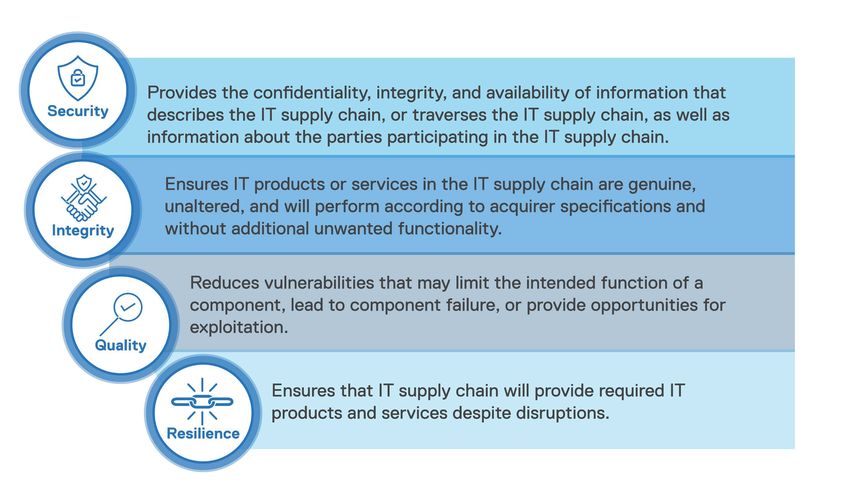
Table of Contents

     Introduction: Why Supply Chain Security Matters ............................................... 3
        The Dell Supply Chain ................................................................................................... 3
     Security in the Dell Supply Chain ........................................................................... 4
        Information Security ..................................................................................................... 4
        Personnel Security ........................................................................................................5
        Physical Security ...........................................................................................................5
     Integrity in the Dell Supply Chain ........................................................................... 5
        Hardware Integrity ........................................................................................................ 6
        Software Integrity ......................................................................................................... 6
     Design and Develop ................................................................................................. 6
        Dell Secure Development Lifecycle ............................................................................ 7
        Dell Firmware Digital Signing ....................................................................................... 8
        Penetration Testing ...................................................................................................... 8
        BIOS Protections .......................................................................................................... 8
        Chassis Intrusion ........................................................................................................... 9
        Additional Built-In Security Measures: Dell Servers, Storage, and Client ............. 9
        Additional Built-In Security Measures: Dell PCs ....................................................... 9
     Source ..................................................................................................................... 11
        Supplier Relationship Management ........................................................................... 11
     Make ....................................................................................................................... 12
        Resilience in the Dell Supply Chain ........................................................................... 13
     Deliver .................................................................................................................... 13
        Above and Beyond: How Dell Protects Products During Delivery........................ 13
     After Delivery ......................................................................................................... 14
     The 24/7 Approach: Continuous Improvement................................................... 14
     Resources .............................................................................................................. 16

                                                                                                                                          2
Internal Use - Confidential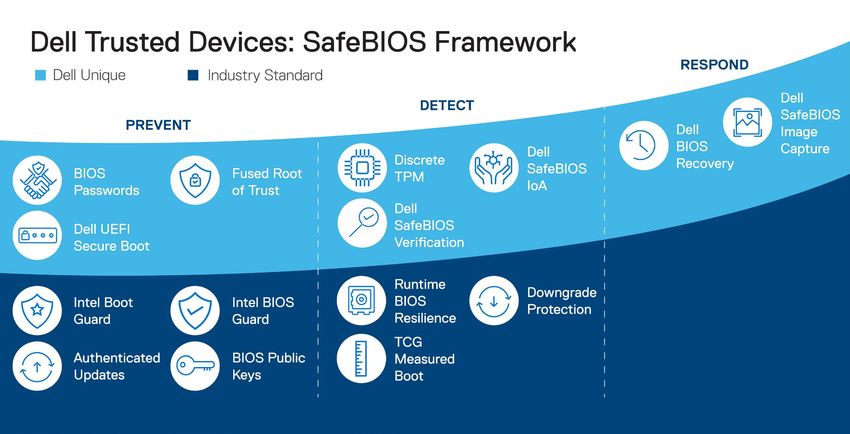
Why Supply Chain Security Matters
     Information technology is creating a more connected world, and our dependence on technology for all
     aspects of our lives continues to increase. According to a recent study performed by Accenture, businesses
     expect 5G to revolutionize network evolution, underlining technology security concerns. This extraordinary
     growth of digital connectivity, and the demand for supporting infrastructure and client endpoints, has
     driven dynamic and globalized IT supply chains.
     However, the advanced technology and sophisticated logistics networks that support this connectivity are
     facing unprecedented attacks, which risk undermining the trust on which growth, prosperity, and
     international relations rest. Complicating matters further, the complexity, sophistication and potential
     impact of attacks also have increased substantially over time. A single incident can lead to operational
     disruptions, lost revenue, compromised data, diminished productivity and a tarnished brand or corporate
     reputation. For these reasons, customers are rightly seeking assurance that the technology products they
     purchase have not been tampered with or maliciously modified,
     jeopardizing their ability to protect the data they intend to store and
     process on those devices.
     The security of IT hardware and the supply chain that supports its              Dell constructed
     production and delivery has never been more at the forefront of our           its business model
     customers’ minds. In Four Keys to Navigating the Hardware Security
     Journey by Futurum, they noted that 44% of organizations said they
                                                                                   with a partnership
     have had at least one Hardware-Level or BIOS attack during the prior          of trust among its
     12 months, making securing IT hardware a priority.                            people, customers,
     These reasons drive our focus at Dell Technologies on creating and               and suppliers.
     maintaining world-class supply chain security measures. A safe and
     trusted environment reduces systemic risk while increasing the
     security of the supply chain ecosystem. Dell constructed its business
     model with that environment in mind through the creation of a
     partnership of trust among its people, customers, and suppliers. The two-way collaboration Dell has with
     key stakeholders in a diverse supply base – both upstream and downstream – enables us to deliver the
     best value and technology to customers while leveraging our agility, integrity, and ingenuity.

     The Dell Supply Chain
     Dell takes a holistic approach to protecting its supply chain and delivering solutions that customers can
     trust. Dell’s strategy of “defense-in-depth” and “defense-in-breadth” involves multiple layers of controls to
     mitigate threats that could be introduced into the supply chain. These controls, along with effective risk
     management, help establish supply chain security.
     There are several capabilities that are valued at Dell when determining what controls should be
     implemented throughout each phase of the supply chain. These capabilities are security, integrity, quality,
     and resilience.

                                                                                                              3
Internal Use - Confidential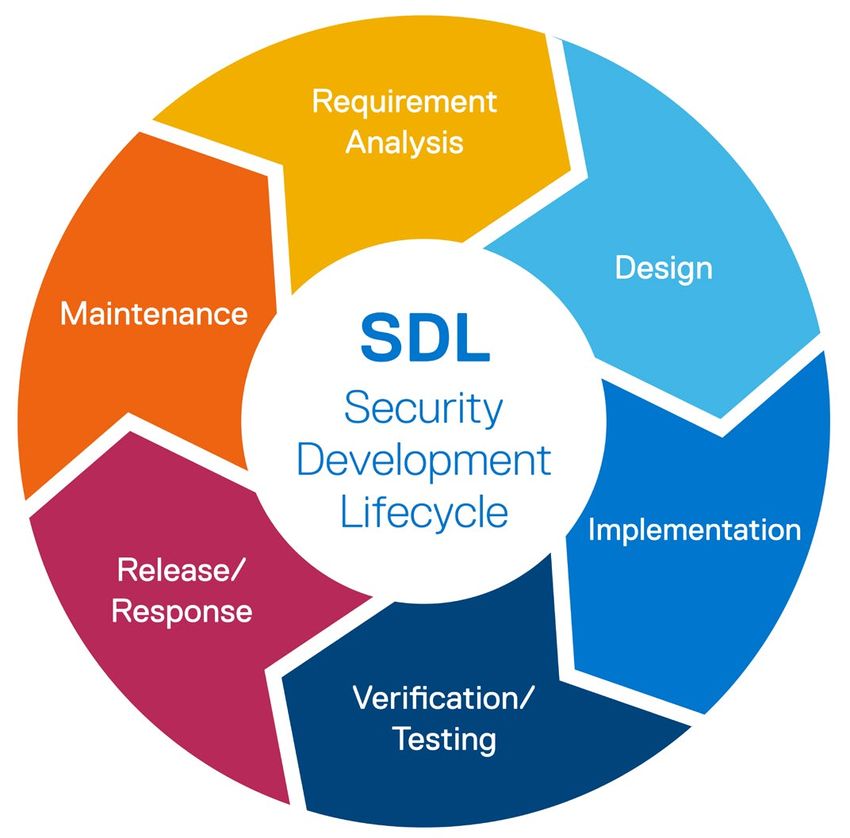
Security in the Dell Supply Chain
     Dell Technologies takes a holistic and multifaceted approach to protect its supply chain and delivering
     solutions that customers can trust. Whether it’s a desktop, laptop, server, or a data storage array, product
     features are conceived, designed, prototyped, implemented, set into production, deployed, maintained and
     validated with supply chain security as a top priority.
     Supply chain security is the practice and application of preventive and detective control measures that
     protect physical assets, inventory, information, intellectual property and people. Addressing information,
     personnel, and physical security helps provide supply chain security by reducing opportunities for the
     malicious introduction of malware and counterfeit components into the supply chain.

     Information Security
     Through the normal course of business, Dell collects and uses information about products, solutions,
     suppliers and partners throughout the supply chain lifecycle. Numerous measures are used to guard
     sensitive information against exposure and exploitation. For example, data transfers between Dell and its
     partners use a combination of encryption methods and private communication channels. Secure protocols
     and encapsulation technologies are also used in accordance with industry best practices, where
     appropriate. Production lines have also been designed and built to manage the ability to transfer
     information.
     Dell’s internal network environment and associated assets are secured through controls such as virus
     detection, strong password enforcement, email attachment scanning, system and application patch
     compliance, intrusion prevention, and firewalls. Additional controls have been implemented to protect
     against malware and misuse of assets.

                                                                                                              4
Internal Use - Confidential
Dell also employs the principles of “separation of duties” and “least privilege” to guide key controls
throughout the supply chain, which help prevent misuse of data access across the business. These
principles ensure that access to sensitive information is only granted to individuals to the degree needed to
perform their assigned duties.
Personnel Security
Screening employees and restricting employee rights to access, use, and manipulate company data, assets
and resources provide needed assurance that internal security efforts will be effective. Dell policy requires
employees throughout the supply chain, including those at contract suppliers, to go through a pre-
employment suitability screening process. This process includes security background checks, drug
screening, identity verification, and application information verification as applicable and permissible by law.
Dell employees maintain a culture of security and must undergo annual security awareness and compliance
training, which is designed to mitigate the risk of behavior that may put products at risk throughout the
supply chain. Employees are also encouraged to remain informed of the latest security developments
throughout the year by reading corporate newsletters, internal and external security websites and
customer whitepapers, attending seminars, participating in corporate security awareness campaigns, and
taking additional online courses and video training. Additionally, they, along with employees and contractors,
must sign and agree to confidentiality provisions that protect intellectual property, customer information,
and other sensitive data not only during their tenure as employees but also after they leave.
Physical Security
Facilities where Dell products are designed, built, customized, or shipped to customers must meet specified
Transported Asset Protection Association (TAPA) facility security requirements, including the use of
closed-circuit cameras in key areas, access controls, and continuously guarded entries and exits. Additional
controls are applied at Dell and supplier-managed facilities and for air, rail, and ocean shipments to address
the variety of risks faced across transportation modes and regions. Some of these protections include
tamper-evident packaging, security reviews of shipping lanes, locks or hardware meeting required
specifications, and container integrity requirements. GPS tracking devices may also be placed on any
container and monitored until confirmation of delivery.
Dell also maintains certification with the United States Customs and Border Patrol’s Customs-Trade
Partnership Against Terrorism (C-TPAT). This logistics security program is recognized as compatible with
similar programs around the world, including the Authorized Economic Operator (AEO), Canada’s Partners
in Protection, and Singapore’s Secure Trade Partnership programs. While the primary focus of those
programs is to prevent contraband from crossing borders illegally, the required protections also guard
against tampering with products being imported.
Integrity in the Dell Supply Chain
Supply chain integrity helps ensure that the product received by the customer is the product the customer
expected, and it operates as intended. An important feature of supply chain integrity is the development of
a baseline specification of hardware and software that is preserved securely and later used as a reference
to verify that no unauthorized modifications have been made.
5
Internal Use - ConfidentialHardware Integrity
Dell has a variety of quality control processes to help minimize the risk of counterfeit components
infiltrating our supply chain. Dell’s new product introduction process verifies that materials are sourced only
from Dell’s approved vendor list and match the bill of materials. Parts are procured directly from the
Original Design Manufacturer (ODM) or Original Component Manufacturer (OCM).
Dell’s Quality Management System verifies ongoing compliance to engineering specifications and
processes, including sourcing from approved vendors. Material inspections during production help identify
components that are mismarked, deviate from normal performance parameters, or contain an incorrect
electronic identifier. To enable appropriate traceability, all key components are uniquely identified by a serial
number label or marking, a Dell-prescribed Piece-Part Identification (PPID) label, or an electronic identifier
that can be captured during the manufacturing process. Additionally, Dell maintains ISO 9001 certification
for quality control practices at all global manufacturing sites. Adherence to these processes and controls
helps minimize the risk of counterfeit components being embedded within Dell products.
Software Integrity
Software engineering best practices integrate security throughout the development process for any code,
including operating systems, applications, firmware, and device drivers. Dell reduces opportunities for the
exploitation of software security flaws by incorporating secure development lifecycle measures throughout
the Design and Development process. These measures are tightly aligned with Software Assurance Forum
for Excellence in Code (SAFECode) guidelines 1 and ISO 27034 2.
Proactive verification, validation, and security testing activities throughout the lifecycle help to ensure
secure software and reduce the likelihood of malware or coding vulnerabilities being inserted into software.
A robust cybersecurity program improves software integrity by preventing unauthorized access to source
code and minimizing the potential for malware to be introduced into a product before it is shipped to the
customer.
Design and Develop
As hardware products are designed and the software code is developed to enable the hardware to perform
its functions as designed, Dell prioritizes the practice of intrinsic security. This practice includes processes
and policies that ensure security features are implemented at the time of product hardware and software
inception and continue throughout the development cycle. In essence, it is security that is ‘built in’.
1
https://safecode.org/
2
https://www.iso.org/standard/44378.html
6
Internal Use - ConfidentialDell Secure Development Lifecycle
Dell’s Secure Development Lifecycle (SDL) defines security controls that Dell product teams adopt while
developing new features and functionality. Dell collaborates through many industry standard venues such
as Software Assurance Forum for Excellence in Code (SAFECode) 3, Building Security In Maturity Model
(BSIMM), and IEEE Center for Secure Design to ensure that industry practices are followed.
Dell’s SDL includes both analysis activities and prescriptive proactive controls around key risk areas. The
analysis activities, such as threat modelling, static code analysis, scanning and security testing, are
integrated to discover and address thousands of potential security defects throughout the development
lifecycle. It helps mitigate many common design weaknesses in the software and in web applications,
including unauthenticated code updates, exposed/enabled debug interfaces, insecure default settings and
hard-coded passwords. Our SDL leverages tools that have been developed by industry and public-private
partnerships to identify and address new and existing weakness and vulnerabilities discovered over time in
code, to include the CVE (Common Vulnerabilities and
Exposures) 4 and CWE (Common Weaknesses
Enumeration) 5 published by MITRE, the OWASP
(Open Web Application Security Project) Top 10 6, and
the SANS Top 25 Most Dangerous Software Errors 7.
The Dell SDL governs the design and testing of all
software and firmware. When engineers begin
designing new features and functionality, they are
required to follow a set of strict procedures defined by
the SDL, which limit the opportunity for the product
to be corrupted. During product design, the
engineering team creates threat assessments and a
model to determine what the threat surface is and
where testing should be focused after the code is
developed. Once they have created and refined the
code, they must follow a rigorous three-part testing
process. Typically for the engineers developing
software or firmware, this starts with a static code
analysis—an automated process which uses special
tools for finding and fixing defects. The second phase The Dell Software Development Lifecycle
of the testing process features a comprehensive approach, where a team of engineers conducts a line-by-
line reading of the source code. It is rigorous work that usually points to previously unknown mistakes in the
code rather than malicious activities; however, it provides further assurance that the source code has been
designed in a safe way.
Towards the end of the design stage, risk assessments are conducted using special tools to scan for known
security vulnerabilities, and, when finalized, verify that the threat model was accurate. Finally, a team of
3
https://safecode.org/
4
https://cve.mitre.org/
5
https://cwe.mitre.org/
6
https://owasp.org/www-project-top-ten/
7
https://www.sans.org/top25-software-errors
7
Internal Use - Confidentialexpert hackers is sometimes directed to undertake penetration testing—depending on the outcome of the
threat assessment and model. This red team may find potential vulnerabilities that were missed in the
earlier phases. These findings are mitigated again based on risk, so that any additional identified exposure
has been documented and corrected.
Additional information on Dell’s Secure Development Lifecycle can be found on the Dell Security and Trust
Center.
Dell Firmware Digital Signing
One potential threat to any supply chain is the risk of unauthorized code or data modifications. Dell
engineers add a cryptographic digital signature to software, application, and firmware to enable
confirmation of authenticity and integrity—a process known as code signing.
The process follows these steps:
• Dell’s Core BIOS is architected and developed predominately in the US for Dell Commercial Client
products (OptiPlex, Latitude, Precision and XPS Notebooks) and Dell servers and storage.
• PC and data center infrastructure OEMs, including Dell, incorporate chipset and BIOS firmware
components provided by technology partners.
• Select platform-specific features are developed and technology partner firmware is integrated into
Dell Core BIOS by Dell’s firmware development team in Taiwan.
• Final production BIOS builds and digital signing are performed on all commercial systems physically
located within Dell facilities in the U.S.
Penetration Testing
Penetration testing, or “pentesting”, has become synonymous with mature security practices across the
industry. Dell leverages in-house teams and external vendors to pentest its PCs, servers and storage
devices while these products are still in the engineering phases of development. These tests focus on
physical access and are prioritized based on risk assessments of individual components integrated into the
device.
BIOS Protections
The BIOS is firmware which facilitates the hardware initialization process and transition control to the
operating system. In effect, it controls the device, so if an attacker managed to corrupt the BIOS, they
would be able to gain control of the device because of the BIOS’s unique and privileged position within the
device architecture.
Dell has implemented procedures across our commercial servers and PCs in accordance with NIST SP 800-
147, BIOS Protection Guidelines. They specify that only signed and authorized BIOS should run on the
system and include security guidelines and management best practices which prevent the BIOS from
attack.
Dell deploys silicon-based security and cryptographic hardware root of trust to authenticate server and
storage booting and firmware updates. Read-only encryption keys are burned into the silicon microchips of
processors used in Dell designs so that they cannot be altered or erased. At power on, the chip verifies that
the BIOS code is legitimate. This technology significantly mitigates the risk of undetected BIOS modification
and reduces the risk of pre-boot malware or unwanted functionality.
8
Internal Use - ConfidentialAdditionally, BIOS safeguards have been created that comply with SP 800-193 NIST standards. These
ensure that unauthorized BIOS and firmware code simply cannot run. If the code is somehow replaced with
malware, the device won’t function. This resilience is intended to last for the device’s lifespan, from
deployment to decommissioning.
Chassis Intrusion
With Dell PowerEdge products, if the chassis has been opened, an entry is registered with the Integrated
Dell Remote Access Controller (iDRAC)—a specialized microcontroller that sits on the motherboard and
allows administrators to update and manage the system, even when the server is turned off—and this
makes it possible to track the source of the intrusion.
Similarly, many Dell commercial client devices include a chassis intrusion capability that can be monitored
via management tools, including Microsoft SCCM and Dell Command Suite.
Additional Built-In Security Measures: Dell Servers, Storage, and Client
Dell PowerEdge servers have enjoyed robust security for many years. Dell EMC 14th Generation PowerEdge
are “cyber-resilient,” meaning they have a hardened server design for protecting against, detecting and
recovering from cyberattacks. The latest servers also have reliable recovery features that ensure any
firmware-based cyberattacks can be overcome with little or no interruption to the business. For example,
the iDRAC allows customers to backup and restore a PowerEdge server’s configuration and firmware with
minimal effort, should the motherboards fail or become corrupted and need to be replaced.
Like servers, Dell client and storage platforms employ similar strong security measures required to protect
our customers and our customer data. DellEMC PowerStore, PowerScale, PowerProtect, and PowerMax
platforms have followed applicable security standards, including NIST SP800-193 specification of detect,
protect, and recover for the “cyber-resilience” features that were implemented. The latest storage
platforms employ one of the strongest hardware root of trust (HwROT) authentication algorithms, for
securing the BMC and other processors used within the storage platforms to support their longer service
life. Similarly, with the enablement of secure Unified Extensible Firmware Interface (UEFI) boot features
and cryptographic signing, HwROT ensures that malicious or unauthorized BIOS, firmware, drivers or
application code simply cannot be installed or run within the storage platforms.
Additionally, the new generation of Dell data storage devices—PowerMax and PowerStore—are being
fitted with additional lines of defense in the shape of Trusted Platform Module (TPM)-by-default, data-at-
rest and data-in-flight encryption and configuration locking. Typically, stored data is protected by
passwords, firewalls, basic encryption, and anti-virus software, but the PowerMax and PowerStore have
data-at-rest encryption that is validated to the Federal Information Processing Standard (FIPS) 140-2. It
encrypts the data and delivers integration with external key managers, enabling customers to simplify
security through a centralized key management platform.
Additional Built-In Security Measures: Dell PCs
Dell has invested in innovative and world-class technologies to secure commercial PCs. Some of these
features are more applicable to PCs in use than in production, but some features can be used during the
production process to provide a higher level of assurance and prevent potential malware intrusion.
These built-in security features include:
• Off-Host SafeBIOS Verification – A secure verification of the BIOS image against a Dell-hosted off-
host source.
9
Internal Use - Confidential• Dell SafeID with ControlVault – Provides hardened storage of end user credentials - the highest-
value target for attackers - in a single chip.
• Indicators of Attack – Detects advanced endpoint threats using behavior-based threat detection at
the BIOS level.
• SafeBIOS Image Capture – If a compromised BIOS image is detected, it is captured and stored
securely on the PC for retrieval and analysis to determine the nature of the attack.
Dell commercial PCs incorporate a TPM, which coordinates with the BIOS during the UEFI boot process to
maintain the authenticity of BIOS measurements, most importantly a Root of Trust for Measurement
(RTM) and a Root of Trust for Reporting (RTR). The Trusted Computing Group (TCG) Measured Boot
uses the PC’s TPM as a protected storage area for storing hashes of BIOS and firmware code that is
loaded and executed in the boot process. The TPM is designed to store these events in a secure way that
can be verified post-boot through a process called attestation.
Dell BIOS supports two independent and persistent ‘tags’ to allow customers to discover and verify devices
in their infrastructure. The Service Tag is programmed into the BIOS non-volatile RAM during the
manufacturing process and is locked in place for the life of the system. This allows the device to be
identified for general asset management and service or warranty support. The Asset Tag is also stored in
BIOS NVRAM and can be set, changed or cleared by the customer. The BIOS Administrator password can
be used to provide control of authorization to modify the Asset Tag.
10
Internal Use - ConfidentialSource
Once a design has been completed, it is ready to be transformed Quality control in the
into a finished product. Dell directly manages approximately half of Dell Supply Chain is
the global manufacturing sites it utilizes, while also working with a
range of partner companies who supply additional manufacturing equally as important as
facilities as well as raw materials and individual components. Dell’s security and integrity in
supplier selection process includes a rigorous onboarding process
a secure supply chain.
that involves several key procedures to ensure each meets our high
standards for integrity, security, quality, and reliability. These This capability is crucial
suppliers are vital to successfully delivering high-quality products
and mitigating the rising number of security threats. Dell remains in the Source and Make
thorough in the selection process, with the goal of selecting not just phases. Processes and
a supplier, but a partner. controls in place reduce
Supplier Relationship Management potential vulnerabilities
Dell’s supplier selection process begins with the commodity and opportunities for
managers preparing a target list of suppliers who align to the exploitation.
broader category strategy including country, region, cost, financial
health, quality needs, and more. Next, each is sent a very detailed
set of product specifications, where they must provide a clause-by-
clause response, showing how they could meet the specifications.
Those suppliers then undergo an in-depth Quality Process Audit (QPA), which includes a stringent security
assessment. The QPA is conducted on site and evaluates the end-to-end activities at the location. The
security requirements often go beyond industry standard in order to meet Dell’s standards. Second, a
“bench” level test of the devices that can be supplied is conducted —for instance, the motherboards or
hard drives are evaluated. Typically, this involves a reliability demonstration test and a comprehensive
destructive physical analysis, where each device is broken into its component parts. Third, the supplier’s
component or device is placed into the finished desktop, server or other product in order to see how it
performs.
As a routine part of our Supplier Relationship Management (SRM) strategy and approach, strategic
suppliers must undergo periodic performance reviews. They are judged using a preset and comprehensive
list of criteria, including cost, delivery, innovation, security, and adherence to Dell’s strict principles, which
are a condition of doing business. Typically, supplier factories are assessed against Dell’s expectations, and
they are audited. Dell will assist with corrective actions when necessary and support the supplier in building
new capabilities.
Our collaborative approach with partners in our supply chain spans many direct and sub-tier supplier
facilities. In 2019, Dell assessed 310 factories across 15 countries, audited for compliance with the sector-
wide Responsible Business Alliance (RBA) code of conduct, which is a set of social, environmental, and
ethical industry standards. Dell also developed a comprehensive set of Supply Chain Security Standards for
our Logistics Service Provider (LSP) and Original Design Manufacturing (ODM) partners, who also undergo
audits to ensure adherence to the Standards. These standards cover requirements in areas such as
sourcing, cybersecurity, physical security, security management systems and are also used to measure
against future Dell suppliers. Through our continuous improvement model spanning numerous supply chain
focus areas, we partner with suppliers and provide robust capability building programs to enable suppliers to
build their own in-house capabilities.
11
Internal Use - ConfidentialThe toughest customer teaches us the most, which is why Dell is constantly challenging its suppliers to
refine their practices in security, quality, efficiency, logistics, and excellence.
These initiatives focused on sustainability, responsibility, integrity, quality, and resilience have allowed Dell to
build stronger ties with our suppliers, providing customers with greater levels of assurance.
Make
Today, there are numerous global sites that produce approximately 49 million Dell PCs every year for tens
of millions of customers in 180 countries. Dell directly manages about half of these factories. However,
whether they are managed by Dell, Original Design Manufacturers (ODM) or contract manufacturers, all
are required to meet the Transported Asset Protection Association’s (TAPA) facility security requirements
as well as comply with Dell Supplier Security Standards.
These standards cover:
Sourcing Security— with requirements for the management of component
1 sourcing, inventory controls, software/firmware security, and counterfeit mitigation
Cybersecurity—with requirements on the supplier’s management of their own digital
2 infrastructure from network security, encryption, patch and vulnerability to incident
management and reporting
Physical Security—with requirements for the protection of physical assets, both in
3 transit and at the manufacturing facility, by means of access controls, documentation,
and other related procedures
Security Management Systems—with requirements for how suppliers should
4 incorporate security into their overall operations, including but not limited to
maintaining proper certifications, hiring practices, and security training.
In addition to the security practices in the manufacturing facilities, we ensure that all the parts,
components, and raw materials that arrive to the site are genuine, authentic, and new. The parts for Dell
products are procured directly from the OCMs (Original Component Manufacturers) or an authorized
reseller of the OCM on the approved vendor list. Once the necessary components have been acquired,
they are handled through robust processes designed to minimize the risk of counterfeit components being
embedded in hardware products, or malware being inserted into software or firmware. For example, Dell
sites implement specific motherboard and SMT assembly controls. Quality Engineers continuously augment
and refine processes that inspect and verify motherboard parts and guarantee trusted personnel operate
SMT lines. After motherboards are assembled, there are robust processes to verify the motherboards are
manufactured as designed.
One of those controls in place for servers and client products is a requirement to affix a unique Piece Part
Identification Number (PPID) label to specific high-risk components so that Dell can identify, authenticate,
and track. These PPID numbers contain information about the supplier, the part number, the country of
12
Internal Use - Confidentialorigin, and the date of manufacture. Once assembled into the end product, the PPIDs for those
components are recorded and associated with the unique system tracking identification number to provide
a history of the as-built configuration.
For certain smaller form factor components like processors and memory, as well as components used in
storage and networking products that do not leverage the PPID labeling requirements, these components
are uniquely labeled and identified by their OCMs either through serial numbers or electronic identifiers
(EIDs) and that information is also associated with the unique system identifier for each of those products.
From a quality standpoint, those controls allow Dell to monitor trends in performance for certain suppliers
or lot codes. From an integrity and security standpoint, they allow authentication of the components prior
to final assembly.
The core of this process is a series of inspections during production that help identify components that are
mismarked, deviate from normal performance parameters, or contain an incorrect electronic identifier.
Every system is functionally tested during the production process with the goal of closing any gaps in
defensive measures to ensure that Dell products meet or exceed customer expectations and operate as
intended.
Resilience in the Dell Supply Chain
Dell’s global footprint, flexibility, and supplier relationships are key to the resilience of our supply chain. In
addition to our focus on continuous improvement in security, we have established business continuity, crisis
management, and disaster recovery programs across our operations. Through our program, Dell takes
strategic steps to identify and mitigate risk, including performing business impact analysis and
testing. Dell maintains resilience and continuity of supply plans for critical operations and supplier locations
and actively considers alternate locations as a part of our sourcing strategy. Through trusted relationships,
and high standards of responsibility and integrity for ourselves and across our supply chain network, we
drive reliable manufacturing our stakeholders can trust.
Deliver
The delivery of a product to the customer is the last stage of our supply chain process. Once a product is
finished, it is either shipped directly from the factory to the customer, or it is routed to one of the many
fulfilment hubs operating around the world. To get the product to the customer, Dell works with numerous
trusted logistics providers by air, land, and sea that help fulfill more than 220,000 orders daily by carrying
millions of products—enough to fill 45,000 sea containers every year and 2.1 cargo jets every day. Each of
our logistics service providers is required to conform with TAPA freight security requirements or similar
regional guidelines.
Above and Beyond: How Dell Protects Products During Delivery
A feature of Dell logistics security program is a series of risk management command-and-control centers
located around the world that are staffed 24/7 with experts who can draw on the latest information about
transport hotspots and track shipments using various monitoring technologies to ensure products reach
their destination without disruption. The command centers collate real-time data and other information
about planned routes to be taken by road vehicles. Specialists monitor various sensors on truck and cargo
assets with an eye towards the changing threat levels in different regions, providing information that can
13
Internal Use - Confidentialbe used to make decisions about the required level of security. With this intelligence, the command center
specialists can advise on in-transit security risks for the suppliers responsible for moving Dell products.
For dedicated loads carrying Dell freight, logistics service providers are obligated to use tamper-evident
seals and door locking mechanisms. Additionally, a variety of tracking devices are offered ranging from
telematics data, imbedded GPS, Bluetooth tags, and other covert trackers equipped with radio frequency
technology for recovering stolen assets. These can alert the control centers if there are any unauthorized
stops or route deviations. If requested and approved, the experts can even order an armored truck or a
security escort to accompany it and, in an emergency, they can send in a dedicated Emergency Response
Team (ERT). Just as cybersecurity defenses are tested by commissioning penetration tests from
professional hackers, Dell tests transport and logistics security by commissioning simulations with
shipments to test the control center’s response and reaction protocols.
In addition to security offerings, Dell can offer more services that further ensure integrity and document
custodial control through the product’s journey to its destination. Initially developed for a unique Supply
Chain Program, these services are now available to others. For example, the products stowed in the trucks
can be put into boxes that are sealed with security tape that leaves telltale signs if they have been cut or
removed. Additionally, the boxes themselves can then be placed into pallets where the standard metal
crimps are removed and replaced by special reinforced strapping. Once the pallets are loaded on to the
truck, the doors can be safely locked with a serial numbered bolt seal that is verified by the customer upon
arrival.
After Delivery
Once our customers receive their Dell product, the security program does not end there, because new
vulnerabilities—particularly software- and firmware-related—are discovered regularly across the industry.
For this reason, Dell established a Product Security Incident Response Team (PSIRT), which is responsible
for coordinating the response and disclosure for all identified product vulnerabilities. The goal is to provide
customers with timely information about newly identified vulnerabilities and ways to mitigate their impact.
Typically, software or firmware updates are released to customers as new threats are encountered. These
updates might relate to our products or non-Dell products that customers use on Dell systems. Dell ensures
that all updates to critical components—including BIOS, iDRAC, network adaptors and power supplies—
are cryptographically signed by Dell. When combined with the hardware root of trust and the chain of trust
that validates each component in the software and firmware, this update protection provides a strong
cyber-resilient defensive boundary for Dell products.
The 24/7 Approach: Continuous Improvement
Dell’s supply chain security process is continuously evolving with the threat landscape. Dell is guided by the
Supply Chain Risk Management framework that outlines how risks are mitigated and how security
objectives must be met. The framework sets out how Dell continuously improves by responding to a range
of factors, including changing threats, new legislative requirements, and new customer requirements and
concerns.
14
Internal Use - ConfidentialInternally, Dell hosts numerous cross-functional security governance forums that constantly review existing
threats and scan the horizon for potential threats. Externally, Dell follows the belief that we are “stronger
together” by sending Dell supply chain assurance experts to work with trusted industry groups and public-
private partnerships in the development of industry standards and regulatory requirements, often taking a
leadership role. Because security touches so many different vendors, Dell participates in industry-wide
groups to collaborate with other leading vendors in defining, evolving and sharing best practices on product
security that further enhance the secure development of all IT products.
Examples of Dell industry collaboration include:
• Dell, through its EMC entity, co-founded and currently chairs the Board of Directors of The
Software Assurance Forum for Excellence in Code (SAFECode: https://www.safecode.org). Other
board members include representatives from Microsoft, Adobe, SAP, Intel, Siemens, CA and
Symantec. SAFECode members share and publish software assurance practices and training.
• Dell is an active member of the Forum of Incident Response and Security Teams (FIRST:
https://www.first.org). FIRST is a recognized global leader in incident and vulnerability response.
• Dell was among the nine companies that were first assessed by the Building Security In Maturity
Model (BSIMM: https://www.bsimm.com/) project in 2008 and has continued to be part of the
project. A Dell representative is part of the BSIMM Board of Advisors.
• Dell employees were founding members of the IEEE Center for Secure Design, which was launched
under the IEEE cyber security initiative to help software architects understand and address
prevalent security design flaws.
Dell participates in industry wide engagements with governmental agencies around the world. One of the
recent engagements with the potential to help address these threats throughout the ICT (Information and
Communications Technology) sector is the U.S. Department of Homeland Security’s (DHS) ICT SCRM
(Supply Chain Risk Management) Task Force. The Task Force consists of 20 federal partners as well as 20
companies across the IT and Communications sectors. Additionally, Dell is supporting NIST’s National
Cybersecurity Center of Excellence (NCCoE) in creating a guide through the project Validating the
Integrity of Computing Devices.
While the industry groups and public-private partnerships are tremendously helpful in raising the bar for the
industry, Dell’s most important initiatives are typically identified through direct collaboration with our
customers. From our earliest days, it has been a hallmark of Dell to listen to, learn from, and deliver for our
customers. Dell now has a vast sales force, with some 43,000 employees who actively engage and interact
with customers worldwide. Dell hosts Executive Briefing Programs that provide customers the opportunity
to engage directly with Dell’s top leaders, designers, technologists, and engineers to explore ideas,
strategize and share insights.
Security is deep in our DNA. We provide security through every stage of the supply chain: from designing a
product, through sourcing the components and making the product, to delivering it to the customer. Our
aim, as it has been since Michael Dell founded the company in 1984, is to deliver trustworthy products
straight out of the box and into the hands of our valued customers.
15
Internal Use - ConfidentialResources
1. Supply Chain Assurance Whitepaper, 2018
2. Dell PowerEdge Security in Server Design, DellEMC 2017
3. Dell Security and Trust Center
4. Dell ISO Certifications
5. Dell Trusted Device
6. Dell Technologies Trusted Device Whitepaper, 2020
7. Dell SafeID
8. Dell.com/Security
9. Dell Signed Firmware Update (NIST SP800-147)
10. NIST SP800-193
11. NIST SP800-161
© 2020 Dell Inc. or its subsidiaries. All Rights Reserved. Dell, EMC and other trademarks are trademarks
of Dell Inc. or its subsidiaries. Other trademarks may be trademarks of their respective owners.
16
Internal Use - ConfidentialYou can also read


