A Virtual Reality Resident Training Curriculum on Behavioral Health Anticipatory Guidance: Development and Usability Study
←
→
Page content transcription
If your browser does not render page correctly, please read the page content below
JMIR PEDIATRICS AND PARENTING                                                                                                                    Herbst et al

     Original Paper

     A Virtual Reality Resident Training Curriculum on Behavioral
     Health Anticipatory Guidance: Development and Usability Study

     Rachel Herbst1,2, PhD; Tiffany Rybak1, PhD; Andrea Meisman3, MA; Monica Whitehead1,2, PhD; Brittany Rosen2,3,
     MEd, PhD, CHES; Lori E Crosby1,2, PsyD; Melissa D Klein2,4, MEd, MD; Francis J Real2,4, MEd, MD
     1
      Division of Behavioral Medicine and Clinical Psychology, Cincinnati Children's Hospital Medical Center, Cincinnati, OH, United States
     2
      Department of Pediatrics, University of Cincinnati College of Medicine, Cincinnati, OH, United States
     3
      Division of Adolescent and Transition Medicine, Cincinnati Children’s Hospital Medical Center, Cincinnati, OH, United States
     4
      Division of General and Community Pediatrics, Cincinnati Children’s Hospital Medical Center, Cincinnati, OH, United States

     Corresponding Author:
     Rachel Herbst, PhD
     Division of Behavioral Medicine and Clinical Psychology
     Cincinnati Children's Hospital Medical Center
     3333 Burnet Ave
     MLC 3015
     Cincinnati, OH
     United States
     Phone: 1 513 517 1092
     Email: rachel.herbst@cchmc.org

     Abstract
     Background: Behavioral health disorders have steadily increased and been exacerbated by the COVID-19 pandemic. Though
     behavioral health disorders can be successfully mitigated with early implementation of evidence-based parent management
     strategies, education for pediatric residents on behavioral health anticipatory guidance has been limited to date, with training
     challenges compounded by the physical distancing requirements of the COVID-19 pandemic. Virtual reality (VR) simulations
     provide an opportunity to train residents on this complex competency by allowing deliberate practice of necessary skills while
     adhering to current social distancing guidelines.
     Objective: This study explored the usability of a VR-based behavioral health anticipatory guidance curriculum for pediatric
     residents.
     Methods: This mixed methods study included 14 postgraduate third-year pediatric residents who completed the behavioral
     health anticipatory guidance VR curriculum. Residents completed the MEC Spatial Presence Questionnaire to assess immersion
     in the virtual environment. Semistructured interviews were used to elucidate residents’ perspectives on the curriculum’s content
     and format. The interviews were analyzed using conventional content analysis.
     Results: Quantitatively, residents reported a high degree of immersion, spatial presence, and cognitive involvement. Most
     residents (11/14, 79%) agreed or strongly agreed that it seemed as though they took part in the action of the simulation. Qualitatively,
     two themes emerged from the data: (1) the curriculum expands behavioral health anticipatory guidance and motivational interviewing
     knowledge and skills and (2) VR technology is uniquely positioned to develop competence. These themes revealed that the
     curriculum expanded their current level of knowledge and skill, addressed training gaps, and was applicable to all residents.
     Additionally, residents experienced VR as immersive, feasible, realistic to the clinic setting, and a safe space to practice and learn
     new skills.
     Conclusions: Pilot data indicates that VR may be an effective tool to teach pediatric residents behavioral health anticipatory
     guidance, meeting a current gap in medical education training. This VR curriculum is particularly relevant in the context of the
     COVID-19 pandemic given the increased behavioral health concerns of families.

     (JMIR Pediatr Parent 2021;4(2):e29518) doi: 10.2196/29518

     KEYWORDS
     resident education; virtual reality; behavioral health promotion; COVID-19

     https://pediatrics.jmir.org/2021/2/e29518                                                                JMIR Pediatr Parent 2021 | vol. 4 | iss. 2 | e29518 | p. 1
                                                                                                                            (page number not for citation purposes)
XSL• FO
RenderX
JMIR PEDIATRICS AND PARENTING Herbst et al
facilitating enhanced communication skills, promoting
Introduction social-emotional development in training, and incorporating
Background mental health specialists in teaching clinics to ensure learners
engage in mental health care [18]. In fact, the American Board
The behavioral health trajectory of children and youth in the of Pediatrics emphasizes the importance of pediatric providers
United States is troubling [1,2], with 15% of children currently in preventing and managing behavioral health by inclusion in
diagnosed with a behavioral health disorder that affects their several entrustable professional activities (EPA; EPA-6 [medical
mental and physical health during childhood and into adulthood home] and EPA-9 [mental/behavioral health problems]) [20].
[3,4]. The emergence of behavioral health concerns begins early Ideally, residents would demonstrate competence prior to
in life, as do behavioral health promotion opportunities [5,6]. graduation and board certification.
The development of behavioral health disorders may be
mitigated with the implementation of evidence-based parenting Despite these recommendations and research supporting the
strategies that address typical childhood behaviors. Although primary care provider’s role in behavioral health promotion,
the COVID-19 pandemic has limited traditional sources of limited guidance exists regarding the development of behavioral
caregiver support, such as social networks, pediatric primary health anticipatory guidance skills [8,9]. Effective evaluation
care remains a safe and trusted setting to address behavior of curricula aimed at developing these competencies is crucial
concerns and decrease parental stress using evidence-based to effective skill acquisition. Direct observation is a common
behavioral health anticipatory guidance [7]. Behavioral health strategy to assess residents’ skills and provide feedback;
anticipatory guidance refers to recommendations that a clinician however, it can be challenging to predict when behavioral
shares with a caregiver to support optimal child development concerns might naturally arise during the course of a clinical
and health, such as introducing and modeling the concept of encounter. Moreover, limitations on supervising clinicians’ time
praise to reinforce behaviors. Behavioral health anticipatory and productivity makes direct observation less feasible in
guidance can serve as a powerful tool to mitigate negative real-world settings. In addition, the COVID-19 pandemic has
outcomes when coupled with motivational interviewing skills, further limited opportunities for direct observation due to social
which enhance motivation for action [1,2]. Despite its potential distancing guidelines and decreased patient encounters for
for significant impact on childhood health, curricula that routine preventative care [7]. Inadequate preparation in
effectively train providers on administering behavioral health delivering behavioral health anticipatory guidance holds unique
anticipatory guidance have been limited to date, providing an implications for medical trainees, as research indicates that
opportunity to use novel technology to address this educational deficient training negatively impacts future care provision
gap. [17,21].
Prior to the COVID-19 pandemic, behavioral concerns Technology may offer opportunities to address current barriers
constituted more than 30% of pediatric primary care encounters to residents’ education on administration of behavioral health
[6,8,9]. The COVID-19 pandemic has exacerbated child anticipatory guidance while adhering to public health measures
behavioral health disorders due to increased family stress, during the COVID-19 pandemic. Virtual reality (VR), a
isolation, and financial hardship [10]. Similarly, disruption of computer-generated environment where users interact with
routines is expected to increase the prevalence and severity of graphical characters called avatars, has demonstrated success
behavioral concerns [7,11,12]. This context coupled with with clinician training on communication skills including
increased caregiver stress may result in caregivers not delivering bad news, addressing vaccine hesitancy, and working
responding to behaviors in the most effective manner. These within interprofessional teams [22-24]. Within VR, a facilitator
factors suggest that, now more than ever, behavioral concerns designs different scenarios based on specific training needs to
will present in the primary care setting. Thus, ample promote deliberate practice, a goal-oriented method for skill
opportunities exist to engage in behavioral health promotion development. Deliberate practice, characterized by engaging in
and prevention efforts. the task, receiving immediate feedback, then repeating the task
while incorporating this feedback [25], has demonstrated
Bright Futures is the American Academy of Pediatrics’ set of effectiveness in pediatric education but has not been evaluated
evidence-based anticipatory guidelines for pediatric primary in behavioral health training [26,27].
care in health promotion in the context of family-centered care
[13]. However, current pediatric residency training infrastructure Implementation and evaluation of resident training on behavioral
regarding the development and evaluation of behavioral health health anticipatory guidance using VR is novel; thus, usability
anticipatory guidance skills remains insufficient to prepare testing, defined as factors affecting participants’ experience in
pediatric residents to effectively and efficiently identify, using the device for its intended purpose, is an important first
promote, and manage common pediatric behavioral health step to understand its strengths and weaknesses and determine
concerns [14-16]. This training gap impedes resident if the curriculum is achieving its aims [28-32]. Thus, we
competence in applying social-behavioral science to patient conducted a mixed methods study assessing the usability of our
care while attending to contextual factors, counseling families, VR curriculum, Promoting Resilience and Emotional health
and effectively communicating with diverse patient populations through Virtual Education iN Training (PREVENT), which
[17-19], as recommended by the American Academy of provides a virtual environment for deliberate practice of
Pediatrics and the Accreditation Council of Graduate Medical providing behavioral health anticipatory guidance, among a
Education. The American Academy of Pediatrics encourages cohort of postgraduate third-year pediatric residents. Exploring
residents’ perspectives on PREVENT is critical to assessing its
https://pediatrics.jmir.org/2021/2/e29518 JMIR Pediatr Parent 2021 | vol. 4 | iss. 2 | e29518 | p. 2
(page number not for citation purposes)
XSL• FO
RenderXJMIR PEDIATRICS AND PARENTING Herbst et al
potential to support skill acquisition and address the educational caregiver avatars regarding typical behavior concerns for a
gap related to training on this important topic in childhood 3-year-old child. All scenarios featured a caregiver with
health. concerns about tantrums causing stress and an expressed desire
for behavior management strategies. Each scenario was
Study Goals associated with learning objectives related to specific behavioral
This mixed methods, single-site study explores the usability health anticipatory guidance and motivational interviewing
and utility of PREVENT—a novel behavioral health training skills (Multimedia Appendix 1). A collaborative team of
curriculum that uses VR simulations—to address current pediatricians, psychologists, experts in health professional
educational gaps related to behavioral health anticipatory education, and technologists developed the scenarios in an
guidance skills. We hypothesized that residents would find the iterative fashion that employed a specific algorithm for each
VR training curriculum useful, immersive, and applicable to scenario to promote standardization of the experience between
clinical practice. learners.
Methods The virtual visits occurred in an environment that replicated an
actual examination room. The caregiver and child avatars were
Study Setting and Participants designed to reflect common caregiver and patient demographics
and characteristics at our primary care center, including physical
The study was conducted in an institution with one of the largest
appearance (ie, race, gender), spoken language, and nonverbal
pediatric residency training programs in the country, which
cues. Avatars assumed a range of body positions to indicate
trains approximately 204 residents per year. The urban pediatric
different emotions, and audio was recorded and synchronized
primary care clinic at which the usability testing occurred is the
with the avatars’ facial expressions and mouth movements.
continuity clinic site for approximately 84 residents and serves
Across the three scenarios, the resident participant counseled
as the medical home for 19,000 patients, with approximately
the avatar family on behavioral concerns and the avatar caregiver
33,000 visits annually. The patients are predominantly African
responded in real time in a realistic manner driven by a single
American (75%) and publicly insured (90%). Approximately
facilitator (FJR). As the COVID-19 pandemic meant that
40% of graduating residents pursue a career in general
residents could not participate in person via a VR headset, all
pediatrics.
sessions were completed on Zoom, a cloud-based
Pediatric postgraduate third-year residents were eligible to videoconferencing service that allows screen sharing and secure
participate. Recruitment was limited to senior residents due to recording. Participants accessed Zoom via an internet-capable
their familiarity with common behavioral health concerns in device (eg, laptop, tablet, mobile phone) and were able to view
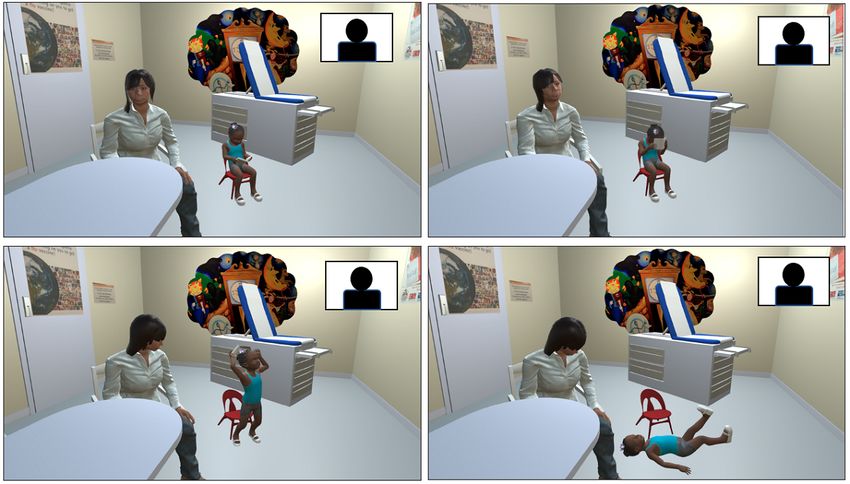
primary care and willingness to provide their perspective on the virtual environment and interact with the avatars (Figure 1).
PREVENT’s ability to meet behavioral health training gaps. Following each scenario, the resident received feedback from
Participants were informed that this was an educational study the facilitator (FJR) about their demonstration of learning
that was not tied to their evaluation process in the resident objectives. If residents did not meet the learning objectives for
training program. The study was deemed exempt by the the case, they repeated the case to deliberately practice specific
Cincinnati Children’s Hospital Medical Center’s institutional skills by incorporating the facilitator’s feedback [25]. The
review board. Consent was obtained from each participant prior scenarios were scaffolded to increase in difficulty and
to participation. complexity, building on the participant’s baseline skills over
time. Details of the scenarios and corresponding learning
Resident Training Curriculum objectives are described in Multimedia Appendix 1. The three
PREVENT used VR simulations as the primary educational scenarios and corresponding feedback were completed in
strategy to enhance learners’ competence in behavioral health approximately 30 minutes.
anticipatory guidance and foundational motivational
interviewing skills. Motivational interviewing skills were Participation in virtual patient simulators via a computer screen
included in the curriculum as successful administration of is consistent with the approach of many prior VR curricula
behavioral health anticipatory guidance requires use of targeting communication skills [23]. Our team previously
motivational interviewing to build rapport and enhance demonstrated the impact of immersive 3D VR training on
motivation for action. Preparation to participate in the VR residents’ communication skills related to addressing influenza
simulations included the review of four 15-minute didactic vaccine hesitancy; however, the benefits of 3D versus 2D virtual
presentations, which provided content on development, environments for medical communication training in this
behavioral management, and motivational interviewing population require further investigation [22].
principles. For the VR simulations, participants counseled
https://pediatrics.jmir.org/2021/2/e29518 JMIR Pediatr Parent 2021 | vol. 4 | iss. 2 | e29518 | p. 3
(page number not for citation purposes)
XSL• FO
RenderXJMIR PEDIATRICS AND PARENTING Herbst et al
Figure 1. PREVENT included real-time interaction with an avatar family via the Zoom teleconferencing platform. Avatars were able to assume a
number of different body positions including the ability for the child avatar to throw a tantrum during the clinical encounter. PREVENT: Promoting
Resilience and Emotional health through Virtual Education iN Training.
Qualitative
Data Collection
The principal investigator (RH), a psychology postdoctoral
Following the completion of the PREVENT curriculum,
fellow (TR), and a research assistant (AM) analyzed the
participants completed the MEC Spatial Presence Questionnaire
interview data using an inductive approach via conventional
to assess presence and immersion in the virtual environment
qualitative content analysis as outlined by Hsieh et al [39]. This
[33]. This instrument uses a 5-point Likert scale ranging from
methodological approach mirrors traditional thematic analysis
strongly disagree (1) to strongly agree (5). The instrument has
as it focuses on identification of repeated patterns of meaning
prior validity evidence and has previously been used to assess
across a data set and differs from summative content analysis,
immersion in virtual medical curricula [34].
which focuses primarily on counts and quantification of data
A semistructured interview guide was used to assess residents’ [40].
perceptions of the usability of PREVENT (Multimedia Appendix
All three individuals have had advanced training related to
2). Interview guide questions were adapted from usability testing
behavioral health and have prior experience conducting
literature [35-37]. The interview primarily queried participants
qualitative research. The researchers independently reviewed
about three topics: (1) residents’ preparation for, learning from,
20% of the interviews to obtain an overall framework of
and recommended changes to the curriculum, (2) usability of
residents’ experiences with PREVENT. The researchers
Zoom (eg, ease of participation and use of technology), and (3)
subsequently coded the key concepts in this subset of transcripts
ability to be immersed in VR and any associated side effects of
that aligned with the interview questions [39]. Once the data
the technology. At the end of each interview, the researcher
were independently coded from the subset, the researchers
confirmed all relevant information had been included to ensure
discussed preliminary findings, as the use of multiple analysts
the quality and accuracy of the data. All interviews were
to contribute to the development of codes enhances the findings’
recorded, transcribed, verified for accuracy, and entered into
credibility [41]. Codes were added or revised to reflect emerging
the qualitative analysis software ATLAS.ti (ATLAS.ti Scientific
patterns in the data. After the development of consensus around
Software Development GmbH) [38].
these initial codes, the researchers independently coded the
Statistical Analysis remaining transcripts. Coding led to the formation of categories
and subsequently principal themes. Differences between
Quantitative researchers were resolved by discussing the underlying meanings
We used descriptive and summary statistics for participant of categories, revisiting the data, and reflecting on underlying
demographics and scores on the MEC Spatial Presence elements to reach consensus. Saturation was reached when no
Questionnaire. new codes emerged. Coding checks (ie, ongoing comparisons
of independent coding, discussions to rectify differences) with
two independent coders resulted in eventual consistency of
https://pediatrics.jmir.org/2021/2/e29518 JMIR Pediatr Parent 2021 | vol. 4 | iss. 2 | e29518 | p. 4
(page number not for citation purposes)
XSL• FO
RenderXJMIR PEDIATRICS AND PARENTING Herbst et al
greater than 90%, indicating further review was not necessary of participants’ perceptions [41]. One resident participant
[41]. reviewed the categories following data analysis to assess
alignment with their personal experience of having completed
To promote credibility, the researchers reflected on potential
the PREVENT curriculum (ie, member checking).
sources of bias. These included the researchers’ mental health
training and emphasis on promoting behavioral health—which
may have influenced the clarifying questions asked during the
Results
interviews and interpretation of participant responses—and the Overview
researchers’ role in developing and implementing PREVENT.
The principal investigator completed an independent audit of A total of 36 categorical pediatric postgraduate third-year
20% of transcripts to verify the credibility of the coding. Using residents were eligible to participate and 14 (39%) enrolled in
two independent coders and credibility checks with participants the study to complete PREVENT and provide data regarding
were strategies employed to address and minimize potential its usability. Participants had a mean age of 29.4 years (Table
bias and positionality while optimizing accurate representation 1). Of the 14 participants, 11 were female (79%), 11 were
Caucasian (79%), and 10 were non-Hispanic (92%).
Table 1. Participant demographic data (N=14).
Characteristic Participants
Age (years), mean (SD) 29.4 (2.6)
Sex, n (%)
Male 3 (21)
Female 11 (79)
Race, n (%)
Caucasian 11 (79)
Asian 1 (7)
Other 1 (7)
Prefer not to answer 1 (7)
Ethnicity, n (%)
Hispanic 1 (7)
Non-Hispanic 13 (93)
strongly disagreed that they felt they could do things with the
Quantitative objects in the virtual presentation (Multimedia Appendix 3).
On the MEC Spatial Presence Questionnaire, 100% of residents
(14/14) agreed or strongly agreed that they could devote their Qualitative
whole attention to the VR experience. There were 11 residents In this study, two themes emerged from the data: (1) the
(79%) who agreed or strongly agreed that the VR experience PREVENT curriculum expands behavioral health anticipatory
captured their senses and that it seemed as though they actually guidance and motivational interviewing knowledge and skills
took part in the action of the presentation. A total of 8 residents and (2) VR technology is uniquely positioned to develop
(57%) reported that it felt like they were actually in the competence. These themes encompassed residents’ perspectives
environment of the presentation. There were 12 residents (86%) on the purpose of PREVENT, the curriculum’s structure, and
who agreed or strongly agreed that the VR presentation activated the use of the VR modality for instruction. Table 2 provides an
their thinking. In addition, 7 participants (50%) disagreed or overview of themes, categories, and codes, as well as supporting
participant quotes.
https://pediatrics.jmir.org/2021/2/e29518 JMIR Pediatr Parent 2021 | vol. 4 | iss. 2 | e29518 | p. 5
(page number not for citation purposes)
XSL• FO
RenderXJMIR PEDIATRICS AND PARENTING Herbst et al
Table 2. Qualitative results from resident interviews.
Theme, category, and code Supporting participant quotes
Theme 1. PREVENTa expands behavioral health anticipatory guidance and motivational interviewing knowledge and skills
Category 1. Building on previous experiences and didactic knowledge
Beyond medical school curriculum • “The general MI [motivational interviewing] concepts - we learned that in med school. But trying
to incorporate in family interactions, that’s next level that I really liked. That was new for me.”
• “So all of the things that I feel really knowledgeable about with medication management and things
are not always the most common things that parents are worried about or concerned about. So
having a little bit extra after medical school to help give real advice could be helpful.”
Preparedness for activity • “Pre-clinic [didactic] teaching definitely gets the baseline and I have it fresh in my mind. So, for
the spanking example, I remember that lecture pre-clinic, and then I had a parent who spanked, so
I could immediately use what was just learned.”
Category 2. PREVENT addressed training gaps
Helpful and practical • “I was pleasantly surprised with what we were able to do. By the second visit, there seems to be
about four to five sort of set responses... At the same time, I know that visits can go different ways,
and so by the last visit when the kid was acting up, I was very pleasantly surprised by that, because
I'm like, okay, let me reset here and figure out what I want to do next. And I think that's a very re-
curring theme in clinic, where you're like, okay, that was a curveball. For example, when you threw
the corporal punishment on me, I wasn't expecting to talk about this. Let me go back and bring out
what I like to do in these cases.”
Length of experience • “It was very engaging and active participation on my part. I was able to address multiple skills in
the time. So, I thought it was just right.”
Depth of content and skills • “I liked when you were coaching us, like what to talk about and just kind of reviewing briefly dif-
ferent methods of trying to like redirect, trying to ignore, things like that. It was giving a refresher
as well as giving examples. It was like nice and short and sweet, not too long, but high yield.”
Scaffolding and repetition • “It was super helpful. Going from visit to visit made this scenario [say] can you add this into the
mix? It's a little challenging to integrate things, and it's also an immediate technique to improve
yourself. Because hopefully someone is coming in and asking open ended questions, asking permis-
sion [then] let's work on redirection. Let's work on these other techniques. Integrating that as you're
going forward can only be helpful, because oftentimes it's easy [for the preceptor] to say ‘next time,
try not to do this, this, and this.’ Then you just don't practice it.”
Category 3. Unique benefits of PREVENT
Safe • “I think it creates this safe space where, even if I know you’re listening, I’m just focused on ‘this
is the roleplay I’m doing. I don’t know this cartoon person. They’re not judging me.’”
• “I liked that it was not real patients. Sometimes I think experimenting on real people feels wrong
or just a little bit icky feeling, so it was nice to be able to practice and make mistakes when the
stakes were lower.”
Recommend and applicability • “I recommend [PREVENT] because this was a positive experience. It was a minimal time commit-
ment, it doesn’t have the social pressure of real people, and I was able to gain new skills in a short
amount of time.”
• “It's good practice and you get feedback that could change your practice. If you were going into
private practice, you'd probably be having a lot more of these conversations than I've had as a resi-
dent. And I would not feel prepared to be having those conversations.”
Applicability to all pediatric resi- • “Even if they’re not going to be primary care physicians, they should all have these skills and they
dents can utilize them in all the different [pediatric] specialties.”
Theme 2. Virtual reality technology is uniquely positioned to develop competence
Category 4. Technology was feasible
Ease of use • “I love how you've transitioned over for our VR. It gives us a lot of flexibility in what we're able
to do and especially because you have us [the residents] really engaged in the curriculum/software,
you know.”
• “I actually haven’t used Zoom before this, and so I just like downloaded it, and it was super easy.”
https://pediatrics.jmir.org/2021/2/e29518 JMIR Pediatr Parent 2021 | vol. 4 | iss. 2 | e29518 | p. 6
(page number not for citation purposes)
XSL• FO
RenderXJMIR PEDIATRICS AND PARENTING Herbst et al
Theme, category, and code Supporting participant quotes
Facilitation of activity • “I like to see a diagram of things, so I thought that visualizing [resident feedback] in a slide was
really nice.”
Transportability • “It [was transportable] specifically for me on maternity leave, but more for the whole coronavirus,
this works well. It could be good things for people to use to continue [to learn].”
• “Really easy, and it took away barriers. [For people] wanting to do it, it was more flexible. I’m on
my ER rotation now, so I have time in between shifts, so it was an easy enough way to participate.”
Side effects • “No, no side effects. It all worked out great.”
Zoom compared to virtual reality • “Yeah, and [VR] was neat, because you could control looking around the room, and maybe espe-
cially in this scenario, where the kid is like having those behaviors... But I still felt it was effective
on Zoom.”
Category 5. Realism of virtual reality similar to clinic and aided learning
Immersive environment • “It's immersive enough that you're like, ‘all right, I'm taking this seriously.’ I'm in this visit. This
is a real set of responses that I might get and let me see how I might address that. That's why I seri-
ously appreciate this curriculum.”
• “I actually really liked that it mimicked PPC [clinic], because it just felt more comfortable, even
the office looking the same... It just made it feel less like intimidating than going into some random
like standardized room so I liked that it mimicked what we do every week at PPC [clinic].”
Interactive and engaging • “The interactive nature of it [is helpful], so it’s not just reading off a script. They’re actually giving
you different responses depending on what you ask. So, a little bit more flexible than just a set
script.”
Nonverbals/body language • “I think I didn’t pick up on like a huge amount from the parent. I think there was some that just
showed that she was kind of interacting with me, but I didn’t get a huge sense of like ‘Oh, she’s
leaning in now, so she’s more engaged like, oh, she’s pulling away, so she’s less.’ But the tantrum
that the child had in clinic was well done.”
a
PREVENT: Promoting Resilience and Emotional health through Virtual Education iN Training.
least experience in coming out of medical school, but it's
Theme 1: PREVENT Expands Behavioral Health [behavioral concerns] a super frequent problem with patients
Anticipatory Guidance and Motivational Interviewing in the primary care setting.” In addition, participants indicated
Knowledge and Skills that the didactic teaching on motivational interviewing and
Overview behavioral health anticipatory guidance provided sufficient
foundational knowledge to prepare them to participate
Participants articulated how the curriculum built upon their
meaningfully in the VR scenarios.
previous experiences in medical school and residency to develop
competence in managing common behavioral presenting Category 2: PREVENT Addressed Training Gaps
concerns. This theme captured how the unique structure of Participants shared the unique benefits of VR as an educational
PREVENT, with the inclusion of both behavioral health strategy. Anchored in the recognition that the motivational
anticipatory guidance and motivational interviewing skills in a interviewing and behavioral health anticipatory guidance skills
singular curriculum, the use of deliberate practice, and safe and used in VR are directly translatable to actual clinical experience,
accessible VR technology, was crucial to PREVENT’s usability. participants described how PREVENT met learning goals and
Residents also indicated awareness of their prior limited skills scaffolded skill development. One participant shared “I think
in behavioral health anticipatory guidance and motivational it was a great practice strategy for refreshing me on what I
interviewing, which made them doubt their competence to already know but then getting more of those [motivational
support families’ behavioral health concerns prior to interviewing and behavioral health anticipatory guidance]
participation in PREVENT. Theme 1 encompassed three skills.” Specifically, participants noted that the length of the
categories. experience, depth of content and skills, and structured repetition
Category 1: Building on Previous Experiences and Didactic over increasingly challenging scenarios provided opportunities
Knowledge for deliberate practice that enhanced their motivational
interviewing and behavioral health anticipatory guidance
Participants described how PREVENT expanded their
competences.
motivational interviewing and behavioral health anticipatory
guidance knowledge and skills beyond previous educational Category 3: Unique Benefits of PREVENT
activities. Specifically, they described limited medical school Participants indicated that the training met their educational
training, while noting these are the topics that “we have the needs and VR provided an opportunity to learn in a safe space:
https://pediatrics.jmir.org/2021/2/e29518 JMIR Pediatr Parent 2021 | vol. 4 | iss. 2 | e29518 | p. 7
(page number not for citation purposes)
XSL• FO
RenderXJMIR PEDIATRICS AND PARENTING Herbst et al
“I liked that it was not real patients…sometimes I think because of COVID-19 restrictions, was well received and
experimenting on real people feels wrong or just a little bit icky reported as sufficiently immersive for the specific learning
feeling, so it was nice to be able to practice and make mistakes objectives of PREVENT.
when the stakes were lower.” In addition, participants highly
Participants underscored PREVENT’s applicability to all levels
recommended the training for other residents, describing
of pediatric residents, regardless of training year or pediatric
PREVENT’s applicability to all pediatric residents. “I wish I
subspecialty, and reported that PREVENT expanded their
had this during intern year ... I [am] actually trying to put this
competence to meet the behavioral health needs of families with
into practice and I could have gotten further [with my skill
young children. This is particularly crucial with recent increased
development] ... I could have learned throughout my residency
family stress and the higher prevalence of behavioral health
by really advancing my motivational skills.”
concerns secondary to COVID-19 [7]. This curriculum could
Theme 2: VR Technology is Uniquely Positioned to be applicable and generalizable to other programs. The VR
Develop Competencies modality provided portability and transferability that
circumvented the barriers associated with traditional face-to-face
Overview training in the context of physical distancing due to the
This theme captured how PREVENT’s VR technology increased pandemic. Due to its convenience and acceptability, VR
engagement through immersion and created an ideal learning programs may continue to be applicable to resident training
environment that was easy to access and use, uniquely after physical distancing restrictions are lifted. This study
facilitating residents’ development of skills and competencies. provided preliminary support for the effectiveness of
Theme 2 encompassed categories 4 and 5. transitioning VR from a 3D platform (VR headset) to a 2D
platform (Zoom) for communication training given the reported
Category 4: Technology Was Feasible
sufficiency of attention allocation and spatial presence among
Participants outlined the benefits of VR. Specifically, they noted participants.
that VR is easy to use, comfortable to engage in across various
settings (eg, at home, in a clinic room), and the Tantrums are a common presenting concern, but few
behind-the-scenes facilitation was minimally apparent. All opportunities exist to scaffold skills needed to coach a caregiver
participants denied VR side effects. Finally, they reported that through managing a tantrum. Through PREVENT’s novel use
the VR experience via Zoom was sufficiently immersive and of VR, we provided residents with an immersive and realistic
engaging. Those with previous VR experience perceived this educational opportunity to develop motivational interviewing
VR training via Zoom as equally effective to VR training using and behavioral health anticipatory guidance skills, which are
a 3D-mounted headset. important and commonly used skills, but ones with limited prior
opportunities to practice. The VR environment also enables the
Category 5: Realism of VR Similar to Clinic and Aided in integration of motivational interviewing and behavioral health
Learning anticipatory guidance skills, which are required concurrently
Participants commented on the unique aspects of VR as an in actual clinical practice. The structure of increasingly complex
educational modality. Specifically, participants described how scenarios with feedback between scenarios, a key element of
the immersive environment of PREVENT made interactions deliberate practice, allowed for scaffolding of learning. Although
feel realistic. They indicated that this experience was augmented deliberate practice may require more infrastructure and resources
by the interactive nature of the avatars, such as avatar responses than other educational modalities attempting to promote
to participants’ language. Finally, some participants indicated behavior change (eg, webinars) [42,43], this approach (deliberate
that the nonverbal communication of the avatars felt realistic, practice) appears to be a critical component of PREVENT’s
while others reported that the nonverbal communication was perceived effectiveness.
subtle and that they desired more pronounced body language.
The safe learning environment of PREVENT was an
unanticipated study finding. Residents described their sense of
Discussion incompetence and imposter syndrome prior to PREVENT. They
Principal Results described the expectation to use motivational interviewing and
behavioral health anticipatory guidance skills, which are
Results from this usability study demonstrated PREVENT’s challenging skills to implement, as anxiety-provoking when
applicability to common presenting concerns and ease of use limited opportunities for skill development exist. PREVENT
among pediatric residents. Quantitatively, resident participants offers a strategy to decrease resident stress through scaffolded
in PREVENT reported a high level of immersion, spatial experiences and a framework to use for collecting history and
presence, and cognitive involvement. Qualitative data indicated implementing interventions. The VR environment can help
that residents perceived PREVENT as effective in expanding shape resident skills that resemble real-life encounters in a safe
their behavioral health anticipatory guidance and motivational environment without patients, thus decreasing anxiety during
interviewing knowledge and skills by providing the appropriate practice and potentially decreasing stress when experienced in
breadth and depth of content and effectively employing an actual clinical setting.
deliberate practice to promote skill development. Residents
indicated that the curriculum was applicable to real-world Limitations and Strengths
practice and balanced the depth of skill development with a This article has several limitations. First, as a single-site study,
feasible length of training. The use of Zoom, which arose our results may lack transferability to other settings with
https://pediatrics.jmir.org/2021/2/e29518 JMIR Pediatr Parent 2021 | vol. 4 | iss. 2 | e29518 | p. 8
(page number not for citation purposes)
XSL• FO
RenderXJMIR PEDIATRICS AND PARENTING Herbst et al
different types of learners and resources. However, since we study is particularly pertinent to the COVID-19 pandemic, given
reached saturation with our qualitative results, we believe these that our methods were executed virtually.
may be transferable. Second, we only investigated the use of
VR on behavioral health anticipatory guidance so our results
Comparison With Prior Work
may not be generalizable to other behavioral or mental health The curriculum meets training gaps identified by the pediatric
conditions. Third, as a pilot study, we investigated the usability residency training leadership, aligning with calls for action from
of VR as an educational tool for behavioral health anticipatory American Academy of Pediatrics and American Board of
guidance and motivational interviewing training but did not Pediatrics for common factors approaches to emerging
collect data on residents’ actual performance with patients. behavioral health concerns [15,17,18,20]. PREVENT builds
Finally, a social desirability bias may have been present during competence in teaching parental behavioral health management
qualitative interviews, despite attempts to minimize this bias skills that have been exclusively taught through parenting
by emphasizing that honest responses would promote residents’ programs [44] and are vital to meeting family needs in the
ability to help cocreate curriculum adaptations. Additional context of primary care. PREVENT also aligns with the calls
research is needed to study PREVENT’s effectiveness and for increased prevention and positive parenting in primary care
impact on resident competence. through the development and implementation of training
initiatives [5].
Due to these limitations, our next steps include performing a
randomized controlled trial of our intervention to provide Finally, the use of VR in medical education to increase health
efficacy data. Longitudinal data and patient-reported outcomes care providers’ communication skills and subsequently change
will generate crucial learnings about the short- and long-term practice behaviors and impact health outcomes has been
impact on skill development and behavioral health promotion. documented in vaccine uptake, although it has not been applied
Future multisite trials will provide data about the generalizability to behavioral health anticipatory guidance until now [22]. A
and transferability of the curriculum to other training sites. The recent systematic review of virtual patient simulators reported
development of artificial intelligence is an important future step that effective curricula emphasized scaffolding and human
as it will eliminate the need for a human facilitator in the VR feedback, positive features of PREVENT identified by our
environment, allowing scalability and potentially decreasing participants [23]. This work also underscores the importance
cost. Finally, future research could explore testing PREVENT of usability testing of VR applications prior to real-world
with scenarios focused on other behavioral health presenting deployment to establish quality and safety measures of the
concerns (eg, picky eating, sleep). approach [31]. Our mixed methods design to usability testing
may provide a practical roadmap for others.
Despite these limitations, our study has several strengths. First,
we used semistructured interviews, which allowed us to obtain Conclusions
both a breadth and depth of information about the content of PREVENT provides promising usability data that VR may be
the curriculum and the process of delivering PREVENT. We an effective tool to train pediatric residents on behavioral health
believe the interview guide explored important aspects of both anticipatory guidance and motivational interviewing skills. The
the curriculum and the VR experience itself. Second, we were curriculum aligns with calls to action in the medical education
able to establish both credibility and trustworthiness in robust training community. Finally, the curriculum’s focus is of
ways while reducing bias. Third, we selected an appropriate increased importance in the context of COVID-19, as traditional
expert population for usability testing. Finally, we believe our face-to-face training opportunities are limited, while family
behavioral health needs are increased.
Acknowledgments
This work was supported by the Cincinnati Children’s Hospital Medical Center’s Procter Scholar Program.
Conflicts of Interest
None declared.
Multimedia Appendix 1
Virtual reality scenarios were scaffolded with increasing complexity and difficulty over time to allow demonstration of advanced
skills.
[DOC File , 66 KB-Multimedia Appendix 1]
Multimedia Appendix 2
Usability postcurriculum questions.
[DOC File , 67 KB-Multimedia Appendix 2]
https://pediatrics.jmir.org/2021/2/e29518 JMIR Pediatr Parent 2021 | vol. 4 | iss. 2 | e29518 | p. 9
(page number not for citation purposes)
XSL• FO
RenderXJMIR PEDIATRICS AND PARENTING Herbst et al
Multimedia Appendix 3
The MEC-Spatial Presence Questionnaire, an instrument for assessing immersion in a virtual environment, utilizes a 5-point
Likert scale from strongly disagree (1) to strongly agree (5). Individual item and subscale scores for resident participants in
PREVENT indicated a high level of attention allocation, spatial presence, and cognitive involvement.
[DOC File , 99 KB-Multimedia Appendix 3]
References
1. National Academies of Sciences, Engineering, and Medicine, Division of Behavioral and Social Sciences and Education,
Board on Children, Youth, and Families, Committee on Fostering Healthy Mental, Emotional, and Behavioral Development
Among Children and Youth. The National Academies Collection: Reports funded by National Institutes of Health. Fostering
Healthy Mental, Emotional, and Behavioral Development in Children and Youth: A National Agenda. Washington, DC:
National Academies Press (US); 2019.
2. Catalano RF, Kellogg E. Fostering Healthy Mental, Emotional, and Behavioral Development in Children and Youth: A
National Agenda. J Adolesc Health 2020 Mar;66(3):265-267 [FREE Full text] [doi: 10.1016/j.jadohealth.2019.12.003]
[Medline: 32029200]
3. McCain MN, Mustard JF, Shanker S. Early years study 2: Putting science into action. Toronto, Ontario: Council for Early
Child Development; 2007.
4. National Research Council, Institute of Medicine. In: Connell ME, Boat T, Warner KE, editors. Preventing Mental, Emotional,
and Behavioral Disorders Among Young People: Progress and Possibilities. Washington, DC: National Academies Press
(US); 2009.
5. Boat TF, Land ML, Leslie LK, Hoagwood KE, Hawkins-Walsh E, McCabe MA, et al. Workforce Development to Enhance
the Cognitive, Affective, and Behavioral Health of Children and Youth: Opportunities and Barriers in Child Health Care
Training. NAM Perspectives 2016 Nov;6(11):1. [doi: 10.31478/201611b]
6. Boat TF, Land ML, Leslie LK. Health Care Workforce Development to Enhance Mental and Behavioral Health of Children
and Youths. JAMA Pediatr 2017 Nov 01;171(11):1031-1032. [doi: 10.1001/jamapediatrics.2017.2473] [Medline: 28873132]
7. Brooks SK, Webster RK, Smith LE, Woodland L, Wessely S, Greenberg N, et al. The psychological impact of quarantine
and how to reduce it: rapid review of the evidence. Lancet 2020 Mar 14;395(10227):912-920 [FREE Full text] [doi:
10.1016/S0140-6736(20)30460-8] [Medline: 32112714]
8. Dosman C, Andrews D. Anticipatory guidance for cognitive and social-emotional development: Birth to five years. Paediatr
Child Health 2012 Feb;17(2):75-80 [FREE Full text] [doi: 10.1093/pch/17.2.75] [Medline: 23372397]
9. Leslie LK, Mehus CJ, Hawkins JD, Boat T, McCabe MA, Barkin S, et al. Primary Health Care: Potential Home for
Family-Focused Preventive Interventions. Am J Prev Med 2016 Oct;51(4 Suppl 2):S106-S118 [FREE Full text] [doi:
10.1016/j.amepre.2016.05.014] [Medline: 27498167]
10. Valenzuela J, Crosby LE, Harrison RR. Commentary: Reflections on the COVID-19 Pandemic and Health Disparities in
Pediatric Psychology. J Pediatr Psychol 2020 Sep 01;45(8):839-841 [FREE Full text] [doi: 10.1093/jpepsy/jsaa063] [Medline:
32770180]
11. Hoagwood KE, Purtle J, Spandorfer J, Peth-Pierce R, Horwitz SM. Aligning dissemination and implementation science
with health policies to improve children's mental health. Am Psychol 2020 Nov;75(8):1130-1145. [doi: 10.1037/amp0000706]
[Medline: 33252950]
12. Leff RA, Setzer E, Cicero MX, Auerbach M. Changes in pediatric emergency department visits for mental health during
the COVID-19 pandemic: A cross-sectional study. Clin Child Psychol Psychiatry 2021 Jan;26(1):33-38. [doi:
10.1177/1359104520972453] [Medline: 33183097]
13. Hagan J, Shaw J, Duncan P, editors. Bright Futures: Guidelines for Health Supervision of Infants, Children, and Adolescents
(4th ed). Elk Grove Village, IL: American Academy of Pediatrics; 2017.
14. Crosson FJ, Leu J, Roemer BM, Ross MN. Gaps in residency training should be addressed to better prepare doctors for a
twenty-first-century delivery system. Health Aff (Millwood) 2011 Nov;30(11):2142-2148. [doi: 10.1377/hlthaff.2011.0184]
[Medline: 22068407]
15. Green C, Hampton E, Ward MJ, Shao H, Bostwick S. The current and ideal state of mental health training: pediatric program
director perspectives. Acad Pediatr 2014;14(5):526-532. [doi: 10.1016/j.acap.2014.05.011] [Medline: 25169164]
16. McMillan JA, Land M, Leslie LK. Pediatric Residency Education and the Behavioral and Mental Health Crisis: A Call to
Action. Pediatrics 2017 Jan;139(1):e20162141 [FREE Full text] [doi: 10.1542/peds.2016-2141] [Medline: 28011943]
17. Foy JM, Green CM, Earls MF, Committee On Psychosocial Aspects Of Child Family Health Mental Health Leadership
Work Group. Mental Health Competencies for Pediatric Practice. Pediatrics 2019 Nov;144(5):e20192757 [FREE Full text]
[doi: 10.1542/peds.2019-2757] [Medline: 31636143]
18. Green CM, Foy JM, Earls MF, Committee On Psychosocial Aspects Of Child Family Health Mental Health Leadership
Work Group. Achieving the Pediatric Mental Health Competencies. Pediatrics 2019 Nov;144(5):e20192758 [FREE Full
text] [doi: 10.1542/peds.2019-2758] [Medline: 31636144]
https://pediatrics.jmir.org/2021/2/e29518 JMIR Pediatr Parent 2021 | vol. 4 | iss. 2 | e29518 | p. 10
(page number not for citation purposes)
XSL• FO
RenderXJMIR PEDIATRICS AND PARENTING Herbst et al
19. Pediatrics Program Requirements and FAQs. Accreditation Council for Graduate Medical Education. 2020. URL: https:/
/www.acgme.org/Specialties/Program-Requirements-and-FAQs-and-Applications/pfcatid/16/Pediatrics [accessed 2021-03-15]
20. Entrustable professional activities for general pediatrics. The American Board of Pediatrics. 2013. URL: https://www.
abp.org/entrustable-professional-activities-epas [accessed 2021-06-18]
21. Committee on Psychosocial Aspects of Child and Family Health Task Force on Mental Health. Policy statement--The future
of pediatrics: mental health competencies for pediatric primary care. Pediatrics 2009 Jul;124(1):410-421. [doi:
10.1542/peds.2009-1061] [Medline: 19564328]
22. Real FJ, DeBlasio D, Beck AF, Ollberding NJ, Davis D, Cruse B, et al. A Virtual Reality Curriculum for Pediatric Residents
Decreases Rates of Influenza Vaccine Refusal. Acad Pediatr 2017;17(4):431-435. [doi: 10.1016/j.acap.2017.01.010]
[Medline: 28126612]
23. Lee J, Kim H, Kim KH, Jung D, Jowsey T, Webster CS. Effective virtual patient simulators for medical communication
training: A systematic review. Med Educ 2020 Sep 22;54(9):786-795. [doi: 10.1111/medu.14152] [Medline: 32162355]
24. Liaw SY, Ooi SW, Rusli KDB, Lau TC, Tam WWS, Chua WL. Nurse-Physician Communication Team Training in Virtual
Reality Versus Live Simulations: Randomized Controlled Trial on Team Communication and Teamwork Attitudes. J Med
Internet Res 2020 Apr 08;22(4):e17279 [FREE Full text] [doi: 10.2196/17279] [Medline: 32267235]
25. Ericsson KA, Krampe RT, Tesch-Römer C. The role of deliberate practice in the acquisition of expert performance.
Psychological Review 1993 Mar 21;100(3):363-406. [doi: 10.1037/0033-295x.100.3.363] [Medline: 5637250]
26. Hunt EA, Duval-Arnould JM, Nelson-McMillan KL, Bradshaw JH, Diener-West M, Perretta JS, et al. Pediatric resident
resuscitation skills improve after "rapid cycle deliberate practice" training. Resuscitation 2014 Jul;85(7):945-951. [doi:
10.1016/j.resuscitation.2014.02.025] [Medline: 24607871]
27. Taras J, Everett T. Rapid Cycle Deliberate Practice in Medical Education - a Systematic Review. Cureus 2017 Apr
19;9(4):e1180 [FREE Full text] [doi: 10.7759/cureus.1180] [Medline: 28540142]
28. Ginsburg AS, Tawiah Agyemang C, Ambler G, Delarosa J, Brunette W, Levari S, et al. mPneumonia, an Innovation for
Diagnosing and Treating Childhood Pneumonia in Low-Resource Settings: A Feasibility, Usability and Acceptability Study
in Ghana. PLoS One 2016;11(10):e0165201 [FREE Full text] [doi: 10.1371/journal.pone.0165201] [Medline: 27788179]
29. Jake-Schoffman DE, Silfee VJ, Waring ME, Boudreaux ED, Sadasivam RS, Mullen SP, et al. Methods for Evaluating the
Content, Usability, and Efficacy of Commercial Mobile Health Apps. JMIR mHealth uHealth 2017 Dec 18;5(12):e190
[FREE Full text] [doi: 10.2196/mhealth.8758] [Medline: 29254914]
30. Real FJ, Meisman A, Rosen BL. Usability matters for virtual reality simulations teaching communication. Med Educ 2020
Nov;54(11):1067-1068. [doi: 10.1111/medu.14314] [Medline: 32914443]
31. Zhang T, Booth R, Jean-Louis R, Chan R, Yeung A, Gratzer D, et al. A Primer on Usability Assessment Approaches for
Health-Related Applications of Virtual Reality. JMIR Serious Games 2020 Oct 28;8(4):e18153 [FREE Full text] [doi:
10.2196/18153] [Medline: 33112243]
32. Herbst RB, Burkhardt MC, Filigno SS, Kerr A, Boat TF. Innovative pediatric resident training in behavioral health and
communication: Pilot study results. Clinical Practice in Pediatric Psychology 2021 Jan 21:1. [doi: 10.1037/cpp0000388]
33. Vorderer P, Wirth W, Gouveia F, Biocca F, Saari T, Jäncke L. MEC spatial presence questionnaire (MEC-SPQ): Short
documentation and instructions for application. Report to the European Community, Project Presence: MEC (IST-20-37661).
2004. URL: https://academic.csuohio.edu/kneuendorf/frames/MECFull.pdf [accessed 2021-06-22]
34. Zackoff MW, Real FJ, Cruse B, Davis D, Klein M. Medical Student Perspectives on the Use of Immersive Virtual Reality
for Clinical Assessment Training. Acad Pediatr 2019;19(7):849-851. [doi: 10.1016/j.acap.2019.06.008] [Medline: 31201953]
35. WAI Site Usability Testing Questions. 2003. URL: https://www.w3.org/WAI/EO/Drafts/UCD/questions.html [accessed
2021-05-15]
36. Mosadeghi S, Reid MW, Martinez B, Rosen BT, Spiegel BMR. Feasibility of an Immersive Virtual Reality Intervention
for Hospitalized Patients: An Observational Cohort Study. JMIR Ment Health 2016 Jun 27;3(2):e28 [FREE Full text] [doi:
10.2196/mental.5801] [Medline: 27349654]
37. Lanoue S. Writing your user test plan: Open-ended vs. specific tasks and questions. 2015. URL: https://www.usertesting.com/
blog/open-ended-vs-specific-tasks-and-questions [accessed 2021-06-18]
38. Atlas.ti. URL: https://atlasti.com/product/what-is-atlas-ti/ [accessed 2021-02-15]
39. Hsieh H, Shannon SE. Three approaches to qualitative content analysis. Qual Health Res 2005 Nov;15(9):1277-1288. [doi:
10.1177/1049732305276687] [Medline: 16204405]
40. Braun V, Clarke V. Using thematic analysis in psychology. Qualitative Research in Psychology 2006 Jan;3(2):77-101.
[doi: 10.1191/1478088706qp063oa]
41. Lincoln Y, Guba E. Naturalistic Inquiry. Newbury Park, CA: Sage; 1985.
42. Rosen BL, Bishop JM, McDonald SL, Kahn JA, Kreps GL. Quality of Web-Based Educational Interventions for Clinicians
on Human Papillomavirus Vaccine: Content and Usability Assessment. JMIR Cancer 2018 Feb 16;4(1):e3 [FREE Full
text] [doi: 10.2196/cancer.9114] [Medline: 29453187]
43. Rosen BL, Bishop JM, Anderson R, Real FJ, Klein MD, Kreps GL. A content analysis of HPV vaccine online continuing
medical education purpose statements and learning objectives. Hum Vaccin Immunother 2019;15(7-8):1508-1518 [FREE
Full text] [doi: 10.1080/21645515.2019.1587273] [Medline: 30932718]
https://pediatrics.jmir.org/2021/2/e29518 JMIR Pediatr Parent 2021 | vol. 4 | iss. 2 | e29518 | p. 11
(page number not for citation purposes)
XSL• FO
RenderXJMIR PEDIATRICS AND PARENTING Herbst et al
44. Perrin EC, Leslie LK, Boat T. Parenting as Primary Prevention. JAMA Pediatr 2016 Jul 01;170(7):637-638. [doi:
10.1001/jamapediatrics.2016.0225] [Medline: 27182902]
Abbreviations
EPA: entrustable professional activities
PREVENT: Promoting Resilience and Emotional health through Virtual Education iN Training
VR: virtual reality
Edited by A Radovic-Stakic; submitted 14.04.21; peer-reviewed by C Green, S Badawy, MD, MS, A Johnson; comments to author
05.05.21; revised version received 19.05.21; accepted 28.05.21; published 29.06.21
Please cite as:
Herbst R, Rybak T, Meisman A, Whitehead M, Rosen B, Crosby LE, Klein MD, Real FJ
A Virtual Reality Resident Training Curriculum on Behavioral Health Anticipatory Guidance: Development and Usability Study
JMIR Pediatr Parent 2021;4(2):e29518
URL: https://pediatrics.jmir.org/2021/2/e29518
doi: 10.2196/29518
PMID: 34081601
©Rachel Herbst, Tiffany Rybak, Andrea Meisman, Monica Whitehead, Brittany Rosen, Lori E Crosby, Melissa D Klein, Francis
J Real. Originally published in JMIR Pediatrics and Parenting (https://pediatrics.jmir.org), 29.06.2021. This is an open-access
article distributed under the terms of the Creative Commons Attribution License (https://creativecommons.org/licenses/by/4.0/),
which permits unrestricted use, distribution, and reproduction in any medium, provided the original work, first published in JMIR
Pediatrics and Parenting, is properly cited. The complete bibliographic information, a link to the original publication on
https://pediatrics.jmir.org, as well as this copyright and license information must be included.
https://pediatrics.jmir.org/2021/2/e29518 JMIR Pediatr Parent 2021 | vol. 4 | iss. 2 | e29518 | p. 12
(page number not for citation purposes)
XSL• FO
RenderXYou can also read


