Acción de emergencia en el marco de la pandemia - COVID-19: Pidola
←
→
Page content transcription
If your browser does not render page correctly, please read the page content below
Acción de emergencia en el marco de la pandemia
                               COVID-19:

                               Emergency action in the frame of the COVID 19
                               pandemic:

ENERGÍA PARA LA EDUCACIÓN
E INFORMACIÓN DE NIÑOSY
NIÑAS EN EL ÁREA RURAL NO
ELECTRIFICADA

  ENERGY FOR EDUCATION AND
INFORMATION DISTRIBUTION FOR
   STUDENTS IN RURAL AREAS
     WITHOUT ELECTRICITY

         Cochabamba, enero,
         2021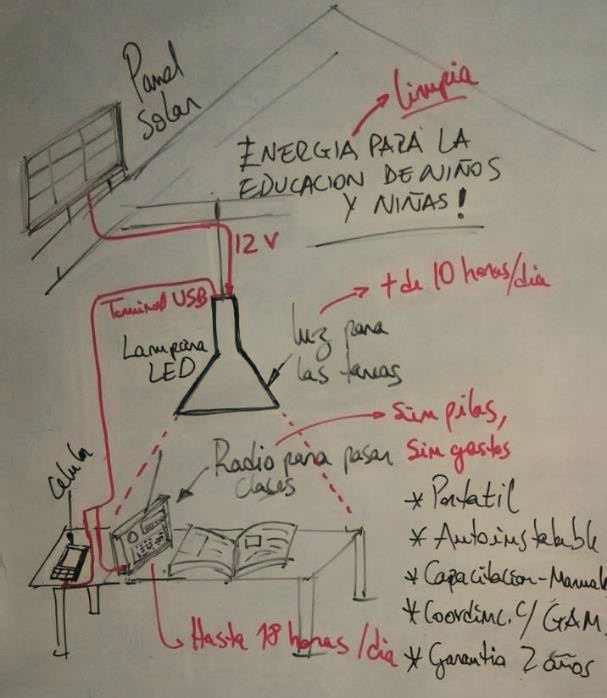
CONTEXTO                                                                      CONTEXT
          • La emergencia sanitaria ha suspendido                 • The health emergency has suspended in-person classes
            las clases presenciales en colegios a                   throughout Bolivia. The government has determined that
            nivel nacional en 2020 y en 2021 se                     distance classes will begin via radio in rural areas in 2021.
            iniciara clases a distancia en el área rura
                                                                  • The Ministry of Education is in the process of approving the
          • El Ministerio de Educación esta en proceso de           regulations and curriculum for virtual classes.
            aprobar los reglamentos para clase
            virtuale                                              • The Plan for this program will utilize the Internet, Television and
          • Se prevé usar Internet,Televisión y Radio, en           Radio, depending on the coverage and access in each area. In
            función de la cobertura. En el área rural dispersa      the rural areas, radio will be the most widely used medium.
            con seguridad, la radio será el medio mas
            utilizad                                              • Rural families without access to electricity will need to
                                                                    batteries, candles, lighters, and firewood to meet their energy
          • Las familias rurales sin acceso a electricidad
            cubren sus demandas de energía con pilas, velas,        demands.
            mecheros y leñ
                                                                  • The Pandemic is already limiting the income and potential
          • La Pandemia limita los ingresos de las familias por     earning of families as a result of restrictions on mobility and
            restricciones de movilización                           access to inputs and markets.
            acceso a insumos y mercados
o

     s

                a

                               y

                                     s

                                           l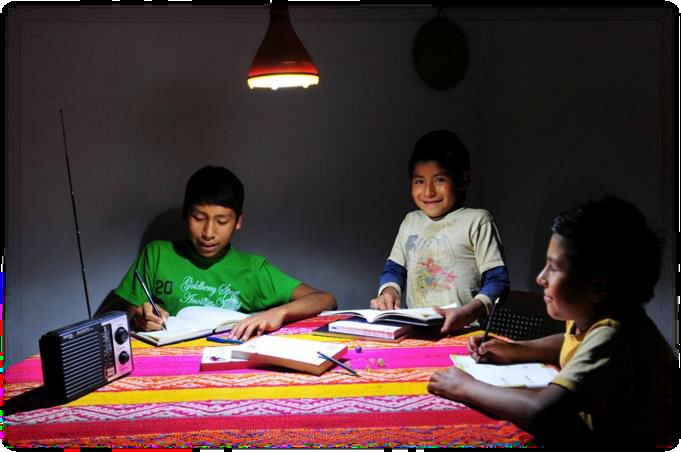
Social:
          • The biggest barrier to fighting the pandemic is the lack of information and communication
             with rural communities and families.
          • Students are not able to participate in classes due to infrastructure limitations (energy).
          • Delayed educational development of children.
          • Possible abandonment of the school year by students as a result of the lack of access to
             energy, internet, and infrastructure to support learning.
          Economic:
          • Batteries represent up to 70% of household energy expenditure on energy.
          • Pressure for higher expenses on the family economy to provide electricity and resources at
PROBLEM      home that students would otherwise receive at school.
          • The pandemic limits the earning potential of families due to mobility restrictions and poor
S            access to inputs and markets.
          Technical:
          • Many rural areas have no access to the electricity grid and the government does not have a
             timeline for when access may be available.
          • Intensive consumption of batteries, candles, firewood, and lighters.
          • Families do not have access to renewable energy technologies in their homes.

          Environmental:
          • The smoke from candles and lighters causes visual and bronchopulmonary disorders.
          • The use of batteries and waste are highly polluting.
          • There are no systems for disposal or recycling.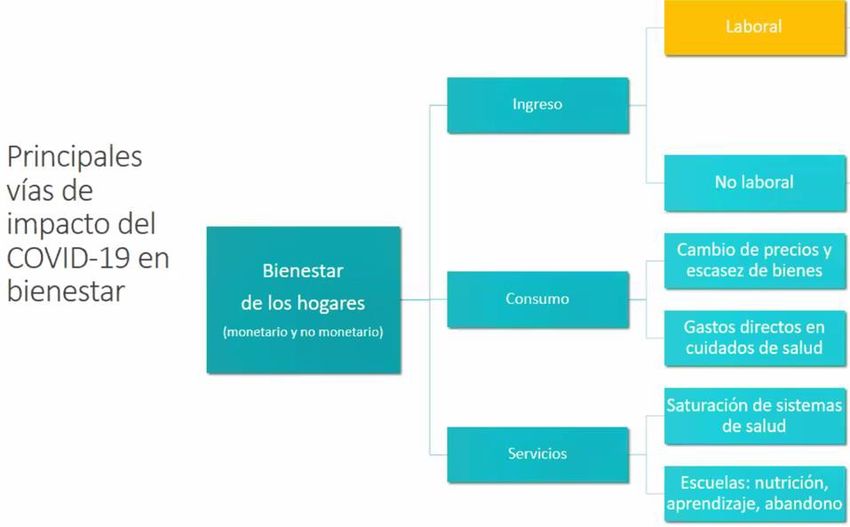
IMPACTOS COVID-19 SOBRE NIÑO@S EN EL ÁREA RURAL
                          • Nutrición, aprendizaje, abandono escolar

                          • Sin energía, no se podrá acceder a las clase

                          • Posibles conflictos por el uso del aparato de
                            radio
                          • Cuarentena afecta mas a niñ@s y jóvenes

                                                                       SDSN,
                                                                       2020
                         Estimación de niñ@s sin acceso a la energía,
                         y consiguientemente a la información y
                         educación
                        Nivel          Hogares rurales co     Niñ@s en área rural si
                                       niñ@s sin electricidad acceso a electricidad
                        Nacional             132.300                 294.900
Banco Mundial,
                        Cochabamba            24.500                  54.600
2020
         n

              n

                   s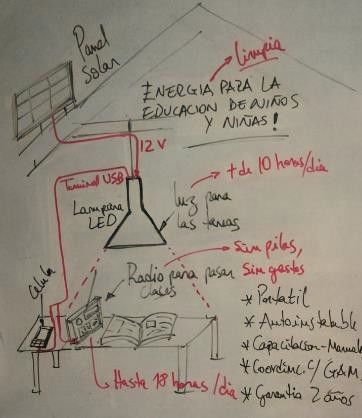
IMPACTS OF COVID 19 ON CHILDREN IN THE RURAL AREA
• Lack of access to nutrition, learning,
                                                          Quarantine vulnerability due to geography:
  and increased school dropout
  without the ability for students to                     •    Rural areas have little if any access to online
  attend in-person classes at the                              classes
  schools.                                                •    Very low electricity coverage
• Without power, classes will not be                      •    Too few base stations to distribute cell or
  accessible to rural families.                                internet / satellite signal
• Potential for inter-familial conflicts                  •    Poor telephone coverage
  over the use of the radio devices.

                           Estimation of children without access to energy, and consequently
                                     limited access to information and education:
                        LEVEL                Rural Homes without      Rural Homes without
                                             access to electricity    access to electricity
                        Bolivia / National         132,300                  294,900
                        Cochabamba                  24,500                  54,600
CRITERIOS DE CONSTRUCCIÓN DE LA SOLUCIÓN
          CRITERIA FOR THE SOLUTION

                                                           It must be autonomous:
 The solution must be        It must maintain a level of
                                                           operational without
 able to address the         quality to be functional
                                                           external intervention or
 problem (slide 3) quickly   over time and wear and
                                                           supervision.
 (in 30 to 60 days).         tear, and the solution
                             needs to meet minimum
                             requirements of service.
 It must be economical;                                    Does not use
                             Must effectively provide
 the lower the cost the                                    consumable energy
                             light to read and do
 higher the coverage and                                   (such as batteries,
                             homework, radio to listen
 number of families                                        combustible resources,
                             to classes, and offer cell
 served.                                                   or similar).
                             phone for communications.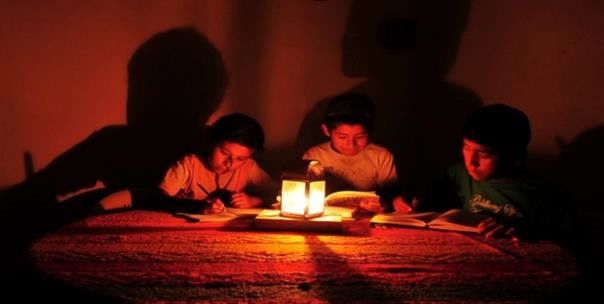
OBJETIVO:                                                          OBJECTIVES:
                                                             • Select the focus areas by level of poverty,
  Proporcionar un kit de energía solar que                     predisposition of the Municipality to co-
  apoye prioritariamente la educación a                        finance, and potential for additional funding/
  distancia e información de niños y niñas de
  familias rurales sin acceso a la red eléctrica               donors.
  y altos niveles de pobreza, en la emergencia
  sanitaria COVID - 19
                                                             • Design logistics that allow the kits to reach
                                                               isolated and scattered rural families in poor
• Seleccionar las áreas de intervención por nivel de           conditions, with municipal agreements and
  pobreza, predisposición del Municipio a co-                  commitments in place to ensure support and
  financiar, focalización de los financiadores                 funding.
• Estructurar la logística que permita llegar con los kits   • Structure a financing system with multi-
  a las familias rurales aisladas y dispersas e
                                                               institutional participation.
  condiciones institucionalmente válidas, con acuerdos
  y compromisos municipale                                   • Provide a solar energy kit that primarily
• Diseñar un sistema de financiamiento con                     supports distance education opportunities to
  participación multi institucional                            students from rural families without access to
                                                               electricity.
                        s

                                          n
• Uso de la radio por al menos 10 horas al día (para educación) y de
                             otras 8 horas para informació
REQUISITOS
                           • Iluminación de una superficie con calidad suficiente para leer,
MÍNIMOS PARA                 escribir, y realizar actividades educativa
ATENCIÓN A NIÑOS
                           • Cargado de celular (al menos 2 celulares por día
Y NIÑAS EN
                           • Solución autónoma y segur
EDUCACIÓN E
                           • Solución autoinstalable, y de uso intuitivo
INFORMACIÓN

                                • Radio use for at least 10 hours a day (for education) and
 REQUIREMENTS                     another 8 hours for information
                                • Illumination of a surface with sufficient quality to read,
FOR PARTICIPATION                 write, and carry out educational activities
                                • Cell phone charged (at least 2 cell phones per day).
                                • Autonomous and secure solution
                                • Self-installing solution, and intuitive to use
       a

            n

                 s

                      )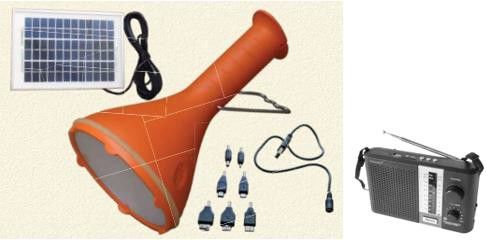
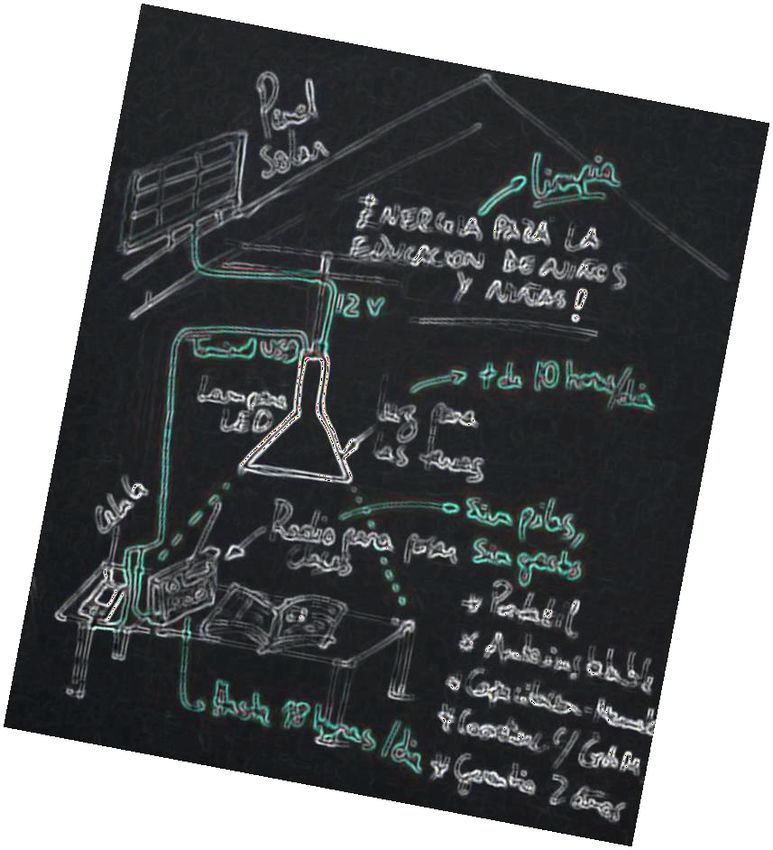
PROPUESTA:
      KIT SOLAR
AUTÓNOMO PARA
    EDUCACIÓN A
  DISTANCIA CO
          RADIO
                PROPOSAL:
AUTONOMOUS SOLAR KIT FOR
   EDUCATION AT A DISTANCE
             WITH A RADIO
                N
ESPECIFICACIONES TÉCNICAS
               Advantages:
•   eliminates the use of batteries,
                                                                          Technical Specifications
    candles, lighters, or firewood for     Equip                                   Equipment:
    light                                1 Panel Fotovoltaico de 5 Wp               1 Photovoltaic Panel: 5Wp
                                         1 Picolampara Phocos (patente alemana)
•   lighting levels are equivalent to                                               1 Phocos Picolamp (solar lamp) LED 120
                                         LED 120 lumen Vida útil de 50.000 horas
    having 12 candles lit                1 Cargado de celular US                      lumen 50,000-hour lifespan
•   provides pro lighting                1 Adaptador con pilas                        Includes a USB charging port
    approximately:                       tontas para radio 1
        • 5 hours, strong light          Radio receptor de                          1 Adapter for powering the radio
        • 15 hours, intermediate light   mesa USB AM/FM                             1 USB AM / FM table radio receiver
                                         Manual de instalación
        • 55 hours, low light            y operación Garantía                       Users' manual and 1 year warranty
•   Water resistant                      de 1 años
•   Portable (the whole set weighs
    approximately 1 kg)
•   The picolamp battery can be
    recharged with any 12 V source
    (solar panel, 12 V battery, car
    charger, etc.)
    o

                      B
COSTOS ESTIMADOS:1000 FAMILIAS (2300 NIÑ@S) Included in the $112 USD
Estimated Cost for 1,000 Families (~2,300 students) Price: Complete Coordination w/
1,000 Familias 785 Bolivianos per Family System kit Municipalities
785 bs/familia ($112 USD)
785,000 Total Bs
• Bs 200: from Energetica
$112,287 Total $US (25.5%) Prioritizatio Visits to
Aporte Cofinanciamiento n of areas communities for
en (%) • Bs 155: from Local
Government Municipalities
and promotion
Bs.
(19.7%) communities
ENERGÉTICA
200 Usuarios 25.5% Counterparty
• Bs 430: from Sources to be Equipment
Gob. Autónomo Identified such as partners contribution
Delivery and
155 Municipal 19.7% and donors (54.8%) management installation
400 Fuente a identificar 54.8%
785 Total 100% Technical
Tiempo de implementación: 60 días Implementation time: 60 days. Training to
Simultaneous work in up to 10 users Assistance
Trabajo simultaneo hasta 10
Municipio Municipalities. for 2 years
Minimum work unit: 100 kits per
Unidad de trabajo mínima: 100 kits / Municipality.
Municipio
s
-RESULTADOS ESPERADOS EXPECTED RESULTS:
• Niñ@s y sus familias tendrá acceso a información • Children and their families will have access to
sobre la pandemia provocada por la COVID-19, los information about the pandemic caused by COVID 19.
cuidados y acciones preventivas, lo que permitirá These kits will improve communication regarding care
subir el nivel de conocimiento sobre esta and preventive actions, improve knowledge about this
enfermedad disease
• En el momento que se active la educación a
• As soon as distance education is activated, children will
distancia, los niñ@s tendrán acceso irrestricto a
have unrestricted access to this form of communication,
este medio de comunicación, sin el costo y la
limitación que significa las pilas without the cost and limitation of batteries.
• Se generará un ahorro en las familias al no comprar
• Savings will be generated for families as they will no
pilas por el uso de la radio, aliviando el stress longer need to purchase batteries for the use of the
económico agravado por la pandemia de la radio, flashlights, lamps, and other devices, thus
COVID-19, considerando el alto costo de las pila relieving some financial stressors.
• El alcance del proyecto puede ampliarse la • The scope of the project can be extended to cover up to
cobertura hasta 10.000 familias sin problemas y 10,000 families already approved at the National Level
a nivel nacional
.
.
s¿QUIÉNES SOMOS? ABOUT US:
• ENERGÉTICA es una organización no gubernamental • ENERGÉTICA is a non-governmental organization that has
que tiene mas de 25 años de trabajo en campo en more than 25 years of work in the field of renewable
energías renovables y la energía solar en específico energies and solar energy specifically
(www.energetica.org.bo) (www.energetica.org.bo)
• Una de sus áreas de trabajo es facilitar el acceso • One of its areas of work is to facilitate universal access to
universal a la energía a familias que no se energy for families in areas not serviced by the electricity
encuentra en áreas de cobertura de la red eléctric grid.
• The company has experience in the field of solar energy,
• La institución tiene experiencia el campo de la energía
solar, la energías renovables, la
renewable energy, energy planning, development,
planificación energética, el desarrollo, la innovación technological innovation, support (operations and
tecnológica y el medio ambiente. maintenance), and sustainability.
• Tiene relaciones vigentes con 32 Municipios en el • ENERGÉTICA has current relationships with 32
área rural con población dispersa y no Municipalities in rural areas with a dispersed populations
electrificada, con varias agencias de cooperación, far from the electrical grid, with various governmental
y otras instituciones de desarrollo and cooperative agencies, and other development and
nonprofit institutions.
aGRACIAS POR SU ATENCIÓN
Contacto: Miguel Fernandez:
celular y whatsapp : +591 717 35
miguel@energetica.org.bo www.energetica.org.
123 boYou can also read


