Advanced Computer Networks - Brighten Godfrey Fall 2011 cs 538 fall 2011 - Philip Brighten Godfrey
←
→
Page content transcription
If your browser does not render page correctly, please read the page content below
Advanced Computer Networks
                    cs 538 fall 2011

                                        Brighten Godfrey
                                        pbg@illinois.edu

                                                Fall 2011

slides ©2010-2011 by Brighten Godfrey except photographs (from Computer History Museum) and unless otherwise noted
Today

        Course Overview
        Internet History
          Your Future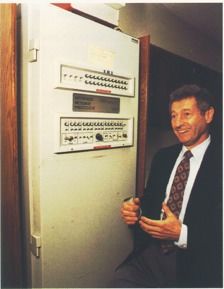
This course
•   is instructed by Brighten Godfrey (pbg@illinois.edu,
    3128 Siebel)
•   takes place Tue & Thu, 3:30 - 4:45 pm, in 1302 Siebel
•   comes with FREE office hours: currently, Tuesdays
    after class and by appointment
•   has a web site: http://www.cs.illinois.edu/~pbg/
    courses/cs538fa11/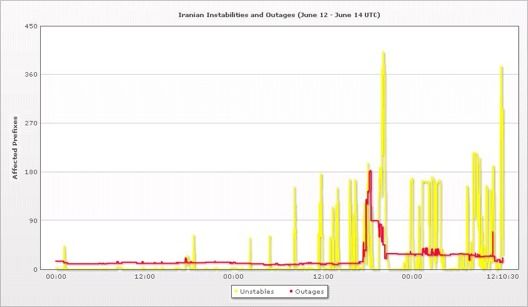
Your instructor
•   Ph.D. from UC Berkeley, 2009
•   Dissertation on improving resilience and
    performance of distributed systems by taking
    advantage of heterogeneity
•   Research interests:
    •   Reliable, flexible, and efficient networked systems
    •   Algorithms for and analysis of distributed systems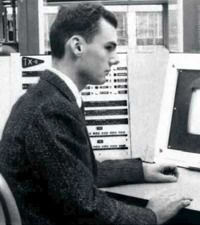
Course goal
•   Prepare ourselves to perform high-quality research
    advancing the field of networking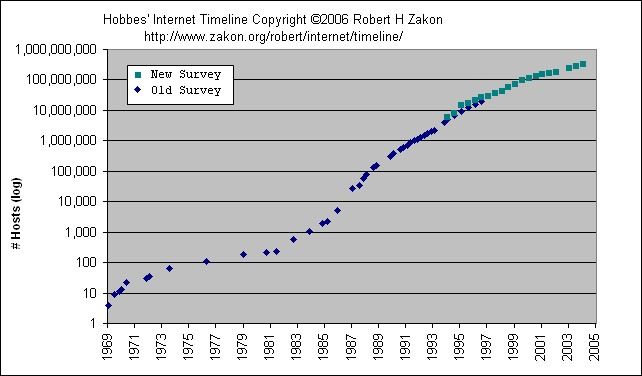
Course components
•   Networking literature
    •   The classics
    •   The challenges
    •   The latest
•   Research project
•   How to read, criticize, and present research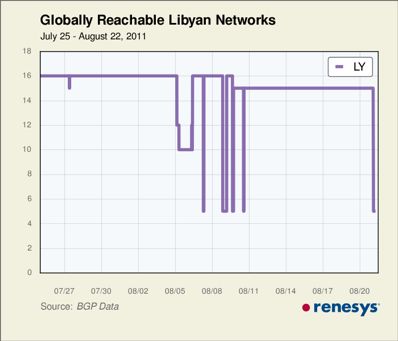
Major topics
•   Core architecture
    •   Classic Internet architecture
    •   Congestion control
    •   Forwarding
    •   Routing
    •   Naming
•   Making it work well
    •   Reliability, scalability, selfishness, security
•   Domain-specific networks
    •   Enterprise, data center, P2P, wireless
Requirements & grading
• Project (45%)
• Midterm presentation (10%)
• Final paper (20%)
• Final poster presentation (15%)
• Assignments, quizzes (15%)
• Paper reviews (15%)
• Paper presentations (15%)
• Class participation (10%)1. Project
• Research project that could be developed into a
conference submission
• Work alone or in groups of two
• Project topics
• Explore your own ideas
• Next lecture: some suggestions
• Steps
• Project proposal (3 weeks from now)
• Midterm presentation
• Final poster presentation and paper2. Readings
• Generally one or two papers per lecture
• Submit a review on the wiki by 11:59pm the night
before we discuss the paper
• For each paper, a review is
• At least 2 comments
• About one paragraph (longer is not better)
• Don’t just repeat what we already read in the
paper!3. Topic presentations
• 20 minute presentation on one topic in the course
• 10 minutes of “depth” on one paper, including key
concepts, techniques, results, and your criticism
• 10 minutes of “breadth” comparing to 2-3 other
papers and the required reading
• 20 minutes of discussion during/after
• At least 2 days before it happens, meet with me to
show me your presentation4. Assignments • 2-3 homeworks or quizzes during the semester
5. Class participation
 •   Comment, question, and interact!
 •   Discuss on the course wiki
Today

        Course Overview
        Internet History
          Your Future
Visions
• Vannevar Bush, “As we
may think” (1945): memex
• J. C. R. Licklider (1962):
“Galactic Network”
• Concept of a global
network of computers
connecting people with
Bush
data and programs
• First head of DARPA
computer research, Licklider
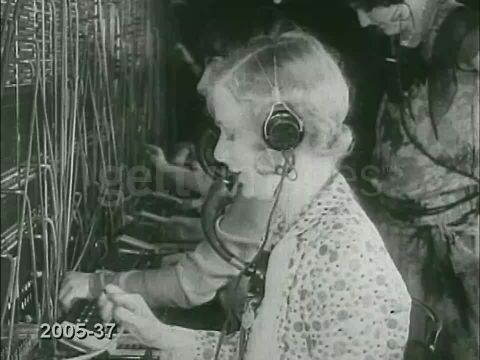
October 1962Circuit switching
1920s
1967
[Getty Images] [US Air Force]1961-64: Packet switching
Datagram packet
Circuit Switching
switching
Physical channel carrying stream of Message broken into short packets,
data from source to destination each handled separately
Three phase: setup, data transfer,
One operation: send packet
tear-down
Packets stored (queued) in each
Data transfer involves no routing router, forwarded to appropriate
neighbor1961-64: Packet switching
• Leonard Kleinrock: queueing-theoretic
analysis of packet switching in MIT Ph.D.
thesis (1961-63) demonstrated value of
statistical multiplexing
• Concurrent work from Paul Baran
(RAND), Donald Davies (National Kleinrock
Physical Labratories, UK)
Circuit switching Packet switching:
multiplexed
Time
Time Baran1965: First computer network
• Lawrence Roberts and Thomas Merrill
connect a TX-2 at MIT to a Q-32 in
Santa Monica, CA
• ARPA-funded project
• Connected with telephone line – it
works, but it’s inefficient and expensive –
confirming motivation for packet
switching
RobertsThe ARPANET begins
• Roberts joins DARPA (1966),
publishes plan for the ARPANET
computer network (1967)
• December 1968: Bolt, Beranek,
and Newman (BBN) wins bid to
build packet switch, the Interface
Message Processor
• September 1969: BBN delivers
first IMP to Kleinrock’s lab at
UCLA
An older Kleinrock
with the first IMPARPANET comes alive
Stanford Research Institute
(SRI)
“LO”
Oct 29, 1969
UCLAARPANET grows
• Dec 1970:
ARPANET
Network Control
Protocol (NCP)
• 1971: Telnet, FTP
• 1972: Email (Ray
Tomlinson, BBN)
• 1979: USENET
ARPANET, April 1971ARPANET grows
ARPANET to Internet

•   Meanwhile, other networks such as
    PRnet, SATNET deveoped

•   May 1973:Vinton G. Cerf and Robert
    E. Kahn present first paper on
    interconnecting networks

•   Concept of connecting diverse
    networks, unreliable datagrams,
    global addressing, ...                      Cerf

•   Became TCP/IP

                                         Kahn
TCP/IP deployment
• TCP/IP implemented on mainframes
by groups at Stanford, BBN, UCL
• David Clark implements it on Xerox Application
Alto and IBM PC Presentation
• 1982: International Organization for Session
Standards (ISO) releases Open Transport
Systems Interconnection (OSI) Network
reference model
Data Link
• Design by committee didn’t win Physical
• January 1, 1983: “Flag Day” NCP to OSI Reference
TCP/IP transition on ARPANET Model’s layersGrowth from Ethernet
• Ethernet: R. Metcalfe and
D. Boggs, July 1976
• Spanning Tree protocol:
Radia Perlman, 1985
• Made local area
networking easy
Metcalfe
PerlmanGrowth spurs organic change
• Early 1980s: Many new
networks: CSNET, BITNET,
MFENet, SPAN (NASA), ... Mockapetris
• Nov 1983: DNS developed by
Jon Postel, Paul Mockapetris
(USC/ISI), Craig Partridge
(BBN) Postel
• 1984: Hierarchical routing:
EGP and IGP (later to become
eBGP and iBGP)
PartridgeNSFNET
• 1984: NSFNET for US higher
education
NSFNET backbone, 1992
• Serve many users, not just one
field
• Encourage development of
private infrastructure (e.g.,
backbone required to be used
for Research and Education)
• Stimulated investment in
commercial long-haul networks
• 1990: ARPANET ends
• 1995: NSFNET decommissionedExplosive growth!
In hostsExplosive growth!
In networks
(Colors correspond
Internet forwarding table size
to measurements
from different
vantage points)
Year [Huston ’10]po r e
o k , TH
kart
Be
, SG
a , ID
iji n
Ta
100E
g,
ip e
V
E
CN
11 0
i, T
Se
la
di
ou
A
W
vo
0E
l,
12 I
st
K
ok
S
R
,R A
U
E
To 13
0
ky
o,
JP A
0E
I
14
Sy
N
dn
ey
,A
A
U
E 0E
15
[Huffaker, claffy,
Hyun, Luckie,
C
Lyu, CAIDA]I P v 4 & I P v 6 I N T E R N E T T O P O L O G Y M A P J A N U A RY 2 0 0 9
AS-level INTERNET GRAPH
Bangk
Sing
, IN
Ja k
ap o r
i, I N
o k , TH
art a
b ay
Be
e , SG
Delh
iji n
B om
, ID
Ta
90E
100E
AE
80E
g,
ip e
V
E
CN
11 0
i, T
Se
i,
70
la
E
ab
di
ou
A
W
Dh
vo
E
l,
1 20 I
st
60
K
u
E
ok
S
R
Ab
,R
A
U
E
To 13
0
50
ky E
o, U
JP A
,R w L
co,I
0E
os
I
iv TR
14
M v
40
Sy l A r a,
E
N
dn
ey T e nka A
,A A v, U , ZA
A
e a
U Ki to r i
E 0E
e FI
5
1 Pr k i,
30 A
lsin, BG
E
e
H f ia L
C
E
So s a w, P
a r SE
FU
4755(TATACOMM) W l m,
O
0E
38809(NXGNET) kh o
16
9304 (Hutchison)
3904 Stocnna, AT
R R
20E
Vie
7575(AARNET) n , DE
B erl i
I O
10026(Asia Netcom) 8395(COMSTAR) NO
Oslo,
170E
furt, DE
C P
2516(KDDI) F r a n k
20485(JSC)
10 E
A
E
Brussels, BE
Paris, FR
180E/W
7714(TelstraClear) 3320(Deutsche Telekom) 8928(Interoute)
London, UK
1299(TeliaNet) 702(MCI)1273(CW)
0
3356(Level 3) 5459(London IX)
3549(Global Crossing) Dublin, IE
701(UUNET) 1239(Sprint) 12989(HWNG)
170 W
Alges,
PT
2914(NTT)
10W
2828(XOXO) 6677(ICENET)
3561(Savvis) 4320(Embratel)
W
160
7843(Road Runner)
20
577(Bell Canada)
W
US
lu lu,
H on o
W
50
1
30
W
0W
14
40
W
S
O
R
U io
13
0W
50 T
de
Ja
[Huffaker, claffy,
W
H
ne
ir
0W A o,
12
B
Bu
A 60
W M
R
S
C
,U
E
en
N
Hyun, Luckie,
I R
US
0W O
os
se
11 R 70WI
E R C
Jo
T A
S
B os
M
Ai
A H
o,
S
Otta
,U
100W 80W
W ash
re
Houston, U
n
ie g
US
90W
T oron
Sa
ton
nix
s,
Chicago, US
nD
wa ,
AR
ver,
Lyu, CAIDA]
, US
e
ingto
Pho
Sa
to, CA
CA
De n
n, U SExplosive growth!
In complexity
Autonomous System BGP router
IP router
Routing protocols
LAN LAN
eBGP, iBGP
switch
ethernet ...
MPLS, CSPF,
segment
hub
OSPF, RIP, ...
spanning tree
+ learning
broadcastExplosive growth!
In devices & technologies In applications
65 million times as many devices Morris Internet Worm (1988)
Link speeds 200,000x faster World wide web (1989)
NATs and firewalls MOSAIC browser (1992)
Wireless everywhere Search engines
Mobile everywhere Peer-to-peer
Tiny devices (smart phones) Voice
Giant devices (data centers) Radio
... Botnets
Social networking
Streaming video
The results of your class projects!Huge societal relevance
Routing instabilities and outages in Iranian prefixes
following 2009 presidential election
Affected prefixes
Friday Saturday Sunday
June 12 June 13 June 14 [James Cowie,
Renesys Corporation]
2009Huge societal relevance
Routing instabilities and outages in Georgian prefixes
following 2008 South Ossetia War
Affected prefixes (%)
Fri, Aug 8, 2008 [Earl Zmijewski,
Renesys Corporation]Huge societal relevance
Reachability to Lybia
Reachable prefixes
July - August 2011 [James Cowie,
Renesys Corporation]Top 30 inventions of the last 30 years
Compiled by the Wharton School @ U Penn, 2009
1. Internet/Broadband/World Wide 15. Online Shopping/E-Commerce/
Web Auctions
2. PC/Laptop Computers 16. Media File Compression
3. Mobile Phones 17. Microfinance
4. E-Mail 18. Photovoltaic Solar Energy
5. DNA Testing and Sequencing/ 19. Large Scale Wind Turbines
Human Genome Mapping 20. Social Networking via Internet
6. Magnetic Resonance Imaging (MRI) 21. Graphic User Interface (GUI)
7. Microprocessors 22. Digital Photography/Videography
8. Fiber Optics 23. RFID
9. Office Software 24. Genetically Modified Plants
10. Non-Invasive Laser/Robotic Surgery 25. Biofuels
11. Open Source Software and Services 26. Bar Codes and Scanners
12. Light Emitting Diodes (LEDs) 27. ATMs
13. Liquid Crystal Displays (LCDs) 28. Stents
14. GPS 29. SRAM/Flash Memory
30. Anti-Retroviral Treatment for AIDSSo we’re done! ... right?
• Core protocols changed little, but the context has...
• Criminals and malicious parties
• Everyone trying to game the system
• Incredible growth
• Constant mobility
• Extreme complexity
• ...and fixing the net involves fundamental challenges
• It’s distributed
• Components fail
• Highly heterogeneous environments
• Must get competing parties to work togetherToday
Course Overview
Internet History
Your FutureYour (near-term) future
• Thursday Aug. 26: Grand Challenges in computer
networking; project, project topic suggestions
• Next week: Internet architecture technical overviewYou can also read


