Advances in secure (ASP).NET development - break the hackers' spirit - Alexandre Herzog IT Security Analyst - Compass Security AG
←
→
Page content transcription
If your browser does not render page correctly, please read the page content below
Advances in secure
(ASP).NET development -
break the hackers' spirit
Alexandre Herzog
IT Security Analyst – Compass Security AG

                                       Application Security Forum - 2013
                                                       Western Switzerland

                                   15-16 octobre 2013 - Y-Parc / Yverdon-les-Bains
                                   http://www.appsec-forum.ch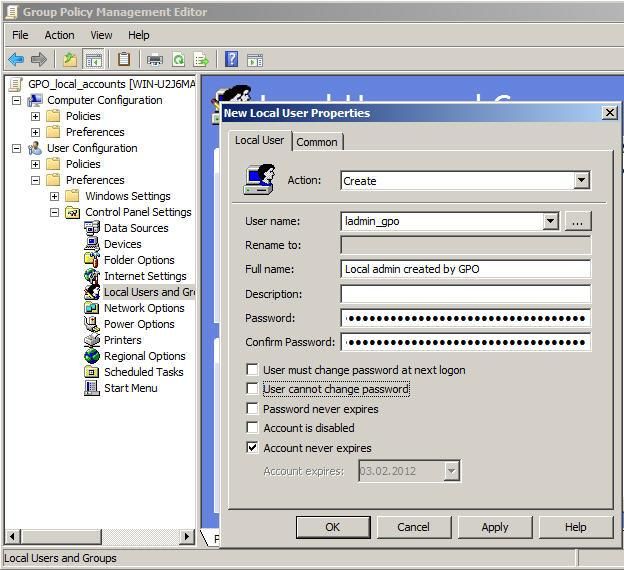
2
Agenda
Introduction to .NET
Configuration of (ASP).NET applications
New features of (ASP).NET 4.5
Key security points of application lifecycle
– Development
– Deployment
– Operations
– Third party component review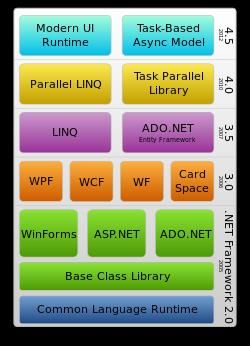
3 Aim of this talk Discover the (ASP).NET framework and its limitations Give you a set of points to observe for your next (ASP).NET application release No discussion about the code The focus is on applications, not infrastructure nor Microsoft’s Security Development Lifecycle. This talk won’t be too technical, just enough to cover these points

4 Bio of Alexandre Herzog Vaudois exilé d’abord en Valais, then Wellington (NZ) und jetzt Zürich Mainly worked for banks as sysadmin / developer Just finished my MAS in Information Security (LU) Author of several security advisory – Including CVE-2013-1330 patched in MS13-067 Currently working as IT Security Analyst for Compass Security AG in Bern & Rapperswil/Jona
5
Agenda
Introduction to .NET
Configuration of (ASP).NET applications
New features of (ASP).NET 4.5
Key security points of application lifecycle
– Development
– Deployment
– Operations
– Third party component review6 Introduction to .NET The .NET Framework is a development platform for building apps for Windows, Windows Phone, Windows Server, and Windows Azure. It consists of the common language runtime (CLR) and the .NET Framework class library, which includes classes, interfaces, and value types that support an extensive range of technologies. The .NET Framework provides a managed execution environment, simplified development and deployment, and integration with a variety of programming languages, including Visual Basic and Visual C#. [MS_DotNet_Def]
7

Introduction to .NET
The .NET Framework is a development platform for building
apps for Windows, Windows Phone, Windows Server, and
Windows Azure.
It consists of the common language runtime (CLR)Thisand    the is
                                                     framework
.NET Framework class library, which includes classes,
                                                installed by default
                                                on any Windows
interfaces, and value types that support an extensive   range of
                                                device. It’s also
technologies.                                   used for Silverlight.
The .NET Framework provides a managed execution
environment, simplified development and deployment, and
integration with a variety of programming languages,
including Visual Basic and Visual C#.
[MS_DotNet_Def]
8
Introduction to .NET
The .NET Framework is a development platform for building
apps for Windows, Windows Phone, Windows Server, and
Windows Azure.
It consists of the common language runtime (CLR) and the
.NET Framework class library, which includes classes,
interfaces, and value types that support an extensive range of
technologies.
The .NET Framework provides a managed execution
environment, simplified development and deployment, and
integration with a variety of programming languages,
including Visual Basic and Visual C#.
[MS_DotNet_Def]
[Wiki_Components]9
Introduction to .NET
The .NET Framework is a development platform for building
apps for Windows, Windows Phone, Windows Server, and
Windows Azure.
It consists of the common language runtime (CLR) and the
.NET Framework class library, which includes classes,
interfaces, and value types that support an extensive
Enhances range
the security of
(e.g. no
technologies. buffer overflow is possible).
The .NET Framework provides a managed execution
environment, simplified development and deployment, and
integration with a variety of programming languages,
including Visual Basic and Visual C#.
[MS_DotNet_Def]10
Introduction to .NET
The .NET Framework is a development platform for building
apps for Windows, Windows Phone, Windows Server, and
Windows Azure.
It consists of the common language runtime (CLR) and the
.NET Framework class library, which includes
You canclasses,
also compile F#,
interfaces, and value types that support an extensive
IronPython, range
IronRuby, of
J# etc…
technologies. [Wiki_IL_Lang]
The .NET Framework provides a managed execution
environment, simplified development and deployment, and
integration with a variety of programming languages,
including Visual Basic and Visual C#.
[MS_DotNet_Def]11
Introduction to .NET
Sounds like Java!
Yes, because
– It’s byte code => the code can be reversed
– Multiplatform (can also run on Linux using Mono)
No, because
– Different versioning scheme
• All versions of .NET but 1.0 are still supported
• Supported versions get security patches (1.1, 2.0, 3.0, 3.5, 4.0, 4.5)
– The .NET framework is pre-installed on Windows12
Introduction to .NET
.NET also features runtime Trust Level
– An app running with Trust Level set to medium cannot
e.g. access the registry or files outside the app’s folder
[MS_Trust]
– This is not related to the Windows Mandatory Integrity
Control (MIC)
Close interaction of ASP.NET with IIS
.NET is not (yet?) as targeted / vulnerable as Java
You can compile .NET code on any Windows device13
Agenda
Introduction to .NET
Configuration of (ASP).NET applications
New features of (ASP).NET 4.5
Key security points of application lifecycle
– Development
– Deployment
– Operations
– Third party component review14
Config of (ASP).NET applications
Typical configuration
– Proxy settings – ViewState parameters
– Cryptographic keys – Trace configuration
– Cookie settings – Request validation
– Compilation details – Application settings
– Error handling –…
– Retail mode – See
• [MS_AspNet_config]
– Trust level • [MS_Net_config]
– Database connections • [HL_Decompile]15 Config of (ASP).NET applications Configuration is based on .config files For .NET executables, the config hierarchy is – Server level config (machine.config) – Application specific config ([AppName].exe.config) – Optional user settings (roaming.config & user.config)
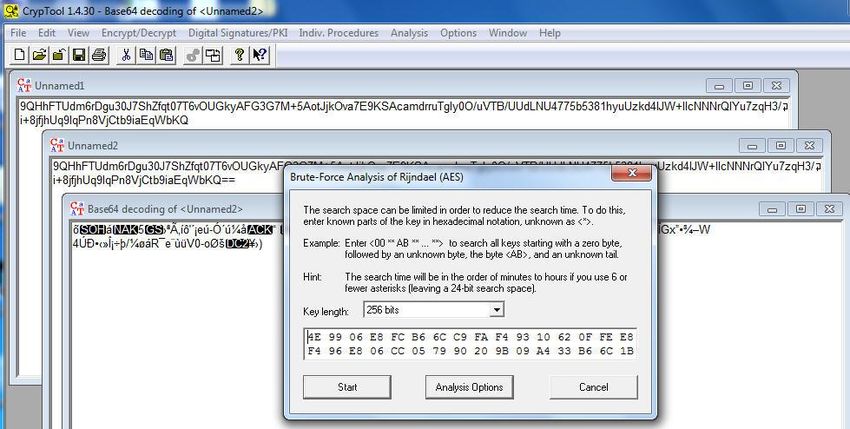
16 Config of (ASP).NET applications Configuration is based on .config files For .NET executables, the config hierarchy is – Server level config (machine.config) – Application specific config ([AppName].exe.config) – Optional user settings (roaming.config & user.config) Do not use Group Policy Preferences to distribute configurations in your Windows domain! – For more details see [CSNC_GPP]
17
Config of (ASP).NET applications
Config hierarchy for ASP.NET code
– Server level config (machine.config & web.config)
– Web site (web.config)
– ASP.NET application and subfolders (web.config)
– Further details available in [ASPNET_config]
IIS configuration is also involved for ASP.NET code
• %windir%\system32\inetsrv\config\ApplicationHost.config18
Config of (ASP).NET applications
Source:
[CP_net_config]19
Config of (ASP).NET applications
The configuration can be locked at any level
[MS_lock_config]
The configuration on the server level is
dependent of the .NET version and CPU
architecture
• %systemroot%\Microsoft.NET\Framework[64]\[version]\CO
NFIG
It is possible to encrypt sections of the
configuration file (only useful for web.config files)
[MS_enc_config]20
Config of (ASP).NET applications
Why encrypt the configuration file?
– Limits the impact of file inclusion issues or leaking
code / configuration files
– An attacker first needs to execute a command on the
web server before being the config is in clear text
Recommended sections to encrypt
–
–
– Any other settings where keys, passwords or endpoint
information is stored21
Agenda
Introduction to .NET
Configuration of (ASP).NET applications
New features of (ASP).NET 4.5
Key security points of application lifecycle
– Development
– Deployment
– Operations
– Third party component review22
New features of (ASP).NET 4.5
Microsoft is continuously improving .NET
– Task based async model
– Enhanced Strong Naming for Windows Store apps
– WebSockets, etc
Especially security relevant is that
– The standalone Anti-XSS library is now integrated
– Several changes occurred in the handling of
cryptography23
New features of (ASP).NET 4.5
Why such crypto improvements in version 4.5?
– “Cryptography in the Web: The Case of Cryptographic
Design Flaws in ASP.NET” research of [Duong_Rizzo]
– Padding oracle attack patched by Microsoft for all
versions in MS10-070
– All details of these changes in (ASP).NET 4.5 are
described in [MS_Improv_1] to [MS_Improv_3]24
New features of (ASP).NET 4.5
Visible impact of (ASP).NET 4.5
– Several changes are opt-in
• Action is required!
– ViewState fields will be encrypted
– Some compatibility with ASP.NET 2.0 may/will be lost25 New features of (ASP).NET 4.5 Extract of the appendix of this talk:
26 New features of (ASP).NET 4.5 Do these changes justify migration to .NET 4.5? – YES absolutely – Several defence in-depth mechanisms were added
27
Agenda
Introduction to .NET
Configuration of (ASP).NET applications
New features of (ASP).NET 4.5
Key security points of application lifecycle
– Development
– Deployment
– Operations
– Third party component review28
Key security points of app lifecycle >
Development
Why not use this opportunity to start setting up a
Security Development Lifecycle for your apps?
[MS_SDL]29
Key security points of app lifecycle >
Development
Why not use this opportunity to start setting up a
Security Development Lifecycle for your apps?
[MS_SDL]
Source http://www.microsoft.com/security/sdl/30
Key security points of app lifecycle >
Development
Why not use this opportunity to start setting up a
Security Development Lifecycle for your apps?
[MS_SDL]
Source http://www.microsoft.com/security/sdl/31 Key security points of app lifecycle > Development Develop on .NET 4.5 (especially for web apps) and for a medium trust level whenever possible Use the free Microsoft SDL tools while developing – FxCop [MS_FxCop] & CATNET [MS_CATNET] Do not turn off security features – Request Validation, ViewState MAC, … Do not rely on client side only validation or include/hide secrets in client side applications Teach best practices to your developers…
32 Key security points of app lifecycle > Deployment Lock down the server and app configuration Consider an obfuscator for your client side apps – Executable or Silverlight only Do not use GPPs to distribute configurations! Consider reducing the trust level of your app whenever possible Perform a general server hardening (OS & IIS) – Again, this “infrastructure” part is not covered here
33 Key security points of app lifecycle > Operations Run ASP.NET 4.5 with medium trust apps[MS_Trust_expl] Encrypt sensitive sections of the web.config file Manage the cryptographic keys you use! – Web.config encryption & ASP.NET features (Machine Key) Patch the server & configure IIS adequately Communicate – Be ready in case of a (security) incident – All technical stakeholders should come together…
34 Key security points of app lifecycle > Third party component review The same recipes apply: – As it’s just byte code, let’s decompile the application! Loi sur le droit d’auteur Art. 21 Décryptage de logiciels 1 La personne autorisée à utiliser un logiciel peut se procurer, par le décryptage du code du programme, des informations sur des interfaces avec des programmes développés de manière indépendante. Elle peut opérer elle-même ou mandater un tiers. 2 Les informations sur des interfaces obtenues par le décryptage du code du programme ne peuvent être utilisées que pour développer, entretenir et utiliser des logiciels interopérables, pourvu qu'une telle utilisation ne porte pas atteinte à l'exploitation normale du programme ni ne cause un préjudice injustifié aux intérêts légitimes de l'ayant droit.
35
Key security points of app lifecycle >
Third party component review
The same recipes apply:
– Audit source code & configuration
– Audit assemblies with static analysis tools
– Run the component with the lowest possible trust
level
– Regenerate all keys / secrets shipped by the vendor
Manage the component by
– Monitoring for security patches
– Update it periodically36
Agenda
Introduction to .NET
Configuration of (ASP).NET applications
New features of (ASP).NET 4.5
Key security points of application lifecycle
– Development
– Deployment
– Operations
– Third party component review37
Conclusion
Top security issues in .NET include Solved by configuration
(server or app)
– Application information leak Static code analysis
No secrets in the code!
• Verbose error messages Consider an obfuscator
• Secrets stored within the code (executable or Silverlight)
Education of devs, code
– Injections review & static analysis
• SQL injections due to unsafe database requests
– Unsafe application settings Education of devs,
code and config review
• Unencrypted communication No secrets in the code!
Rely on Windows auth.
• Unsafe distribution of credentials
when possible38
Conclusion
Top security issues in ASP.NET include
Configure this field to
– Application information leak be encrypted or
• Secrets stored in the ViewState migrate to ASP.NET 4.5
• Verbose error messages Hardening / lockdown
of the configuration
– Unsafe application settings (server or app)
Static code analysis
• Session cookie parameters
Encryption of
• Request validation disabled configuration file
• Unencrypted configuration file
Education of devs, code
– Injections review & static analysis
• XSS due to user inputs in JS or HTML attributes
• SQL injections due to unsafe database requests39
Conclusion
.NET is a secure framework following
the SD3+C principle[MS_SD3C]:
– Secure by Design, Secure by Default, Secure in
Deployment, and Communications
Your applications can also benefit from this
security during their lifecycle
This talk focused on application security
– You still have to harden your infrastructure (OS & IIS)!40 Questions?
41

Danke/Merci/Thank you!

Contact:
   alexandre.herzog@csnc.ch

   Company blog   http://blog.csnc.ch/
   LinkedIn       http://ch.linkedin.com/in/alexandreherzog/
   G+             https://plus.google.com/u/1/109572456864701444940/

   Slides         http://slideshare.net/ASF-WS/presentations
42
References (1/2)
[MS_DotNet_Def] http://msdn.microsoft.com/en-us/library/w0x726c2.aspx
[Wiki_Components]
http://upload.wikimedia.org/wikipedia/commons/thumb/d/d3/DotNet.svg/250px-DotNet.svg.png
[Wiki_IL_Lang] http://en.wikipedia.org/wiki/Category:.NET_programming_languages
[ASPNET_config] http://msdn.microsoft.com/en-Us/library/ms178685.aspx
[CP_net_config] http://www.codeproject.com/Articles/19675/Cracking-the-Mysteries-of-NET-2-0-
Configuration
[CSNC_GPP] http://blog.csnc.ch/2012/04/exploit-credentials-stored-in-windows-group-policy-
preferences/
[HL_Decompile] http://media.hacking-
lab.com/largefiles/7205/Paper_DisassembleDotNetClient_v2.0.pdf
[MS_lock_config] http://msdn.microsoft.com/en-us/library/ms228167(v=vs.100).aspx
[MS_AspNet_config] http://msdn.microsoft.com/en-us/library/zeshe0eb(v=vs.85).aspx
[MS_Net_config] http://msdn.microsoft.com/en-us/library/1fk1t1t0.aspx
[Duong_Rizzo] http://www.ieee-security.org/TC/SP2011/PAPERS/2011/paper030.pdf43
References (2/2)
[MS_Improv_1] http://blogs.msdn.com/b/webdev/archive/2012/10/22/cryptographic-
improvements-in-asp-net-4-5-pt-1.aspx
[MS_Improv_2] http://blogs.msdn.com/b/webdev/archive/2012/10/23/cryptographic-
improvements-in-asp-net-4-5-pt-2.aspx
[MS_Improv_3] http://blogs.msdn.com/b/webdev/archive/2012/10/24/cryptographic-
improvements-in-asp-net-4-5-pt-3.aspx
[MS_enc_config] http://msdn.microsoft.com/en-us/library/dtkwfdky(v=VS.100).aspx
[MS_SD3C] http://msdn.microsoft.com/en-us/library/ms995349.aspx
[MS_SDL] http://www.microsoft.com/security/sdl/default.aspx
[MS_FxCop] http://www.microsoft.com/en-us/download/details.aspx?id=6544
[MS_CATNET] http://www.microsoft.com/en-us/download/details.aspx?id=5570
[MS_Trust] http://msdn.microsoft.com/en-us/library/tkscy493(v=vs.85).aspx
[MS_Trust_expl] http://msdn.microsoft.com/En-Us/library/wyts434y.aspx
[MS_Run_45] http://blogs.msdn.com/b/webdev/archive/2012/11/19/all-about-httpruntime-
targetframework.aspx
[MS_Trust_HowTo] http://msdn.microsoft.com/en-us/library/ff648344.aspx44 Configuration checklist This checklist is by no means complete. It’s just the starting point of your configuration journey… Depending on your situation, you may want to configure these settings on a server (e.g. machine.config) and lock them or on an application level (web.config)
45
Configuration checklist
List of configuration which should be forced on an
integration / production server
In the machine.config for all .NET versions
[…]46
Configuration checklist
List of settings which are secure by default. They
should not be disabled in configuration or code:
– For the configuration section
• Property enableEventValidation should stay true
• Property enableViewStateMac should stay true
• Property validateRequest should stay true
– For the configuration section
• Property enableCrossAppRedirects should stay disabled
• Property protection should stay all47
Configuration checklist
List of settings which are secure by default. They
should not be disabled in configuration or code:
– For the configuration section
• Property enabled should stay false
– For the configuration section
• Property mode should stay RemoteOnly or On
– For the configuration section
• Property debug should stay false
All these properties are set to a safe value if48
Configuration checklist
If you run ASP.NET 4.5
– Ensure section enables all new feature
with attribute targetFramework="4.5"[MS_Run_45]
– Once done, ensure the following config sections are
either absent or set to the following values:
•
•
•
– Configure AntiXSS to be the default encoding routine49
Configuration checklist
Trust level and their impact [MS_Trust_HowTo]
– Example of a web app running with medium trust
– This web application would not be able to
• Call unmanaged code.
• Call serviced components.
Restrictions due to high
trust level
• Write to the event log.
• Access Microsoft Message Queuing queues.
• Access ODBC, OleDb, or Oracle data sources. Additional restrictions
• Access files outside the application directory.
due to medium trust level
• Access the registry.
• Make network or Web service calls
(allowed URLs can be defined)You can also read


